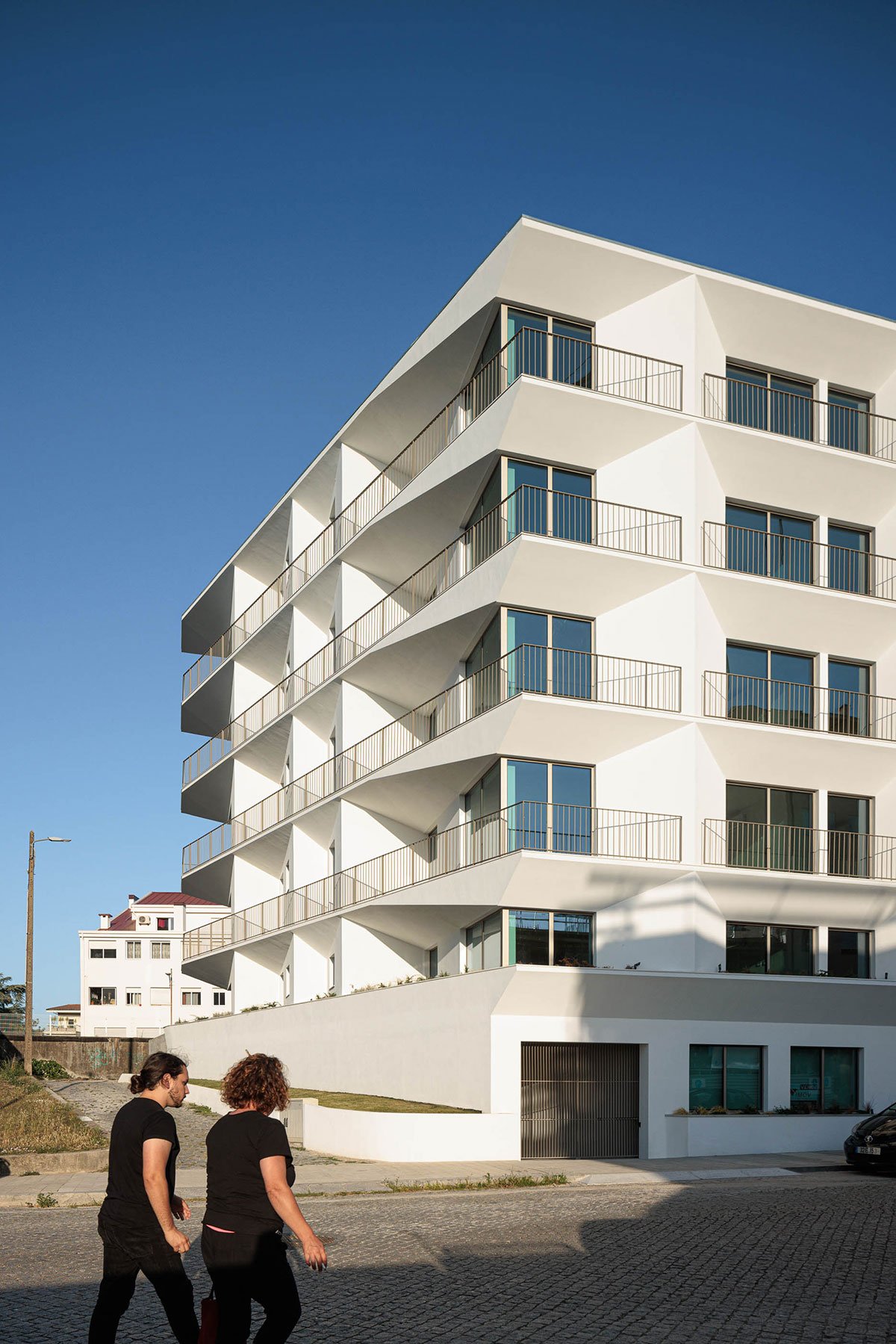
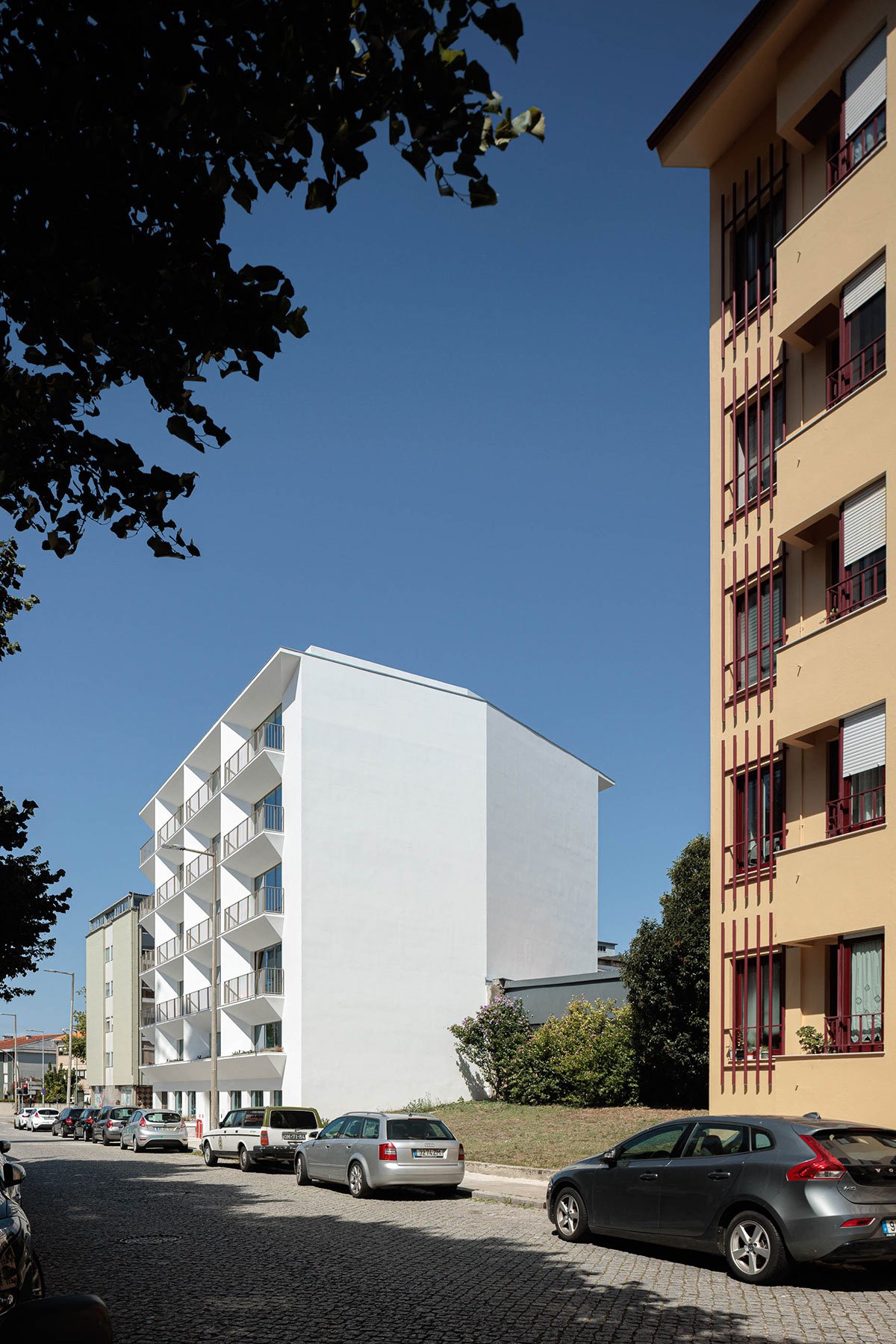
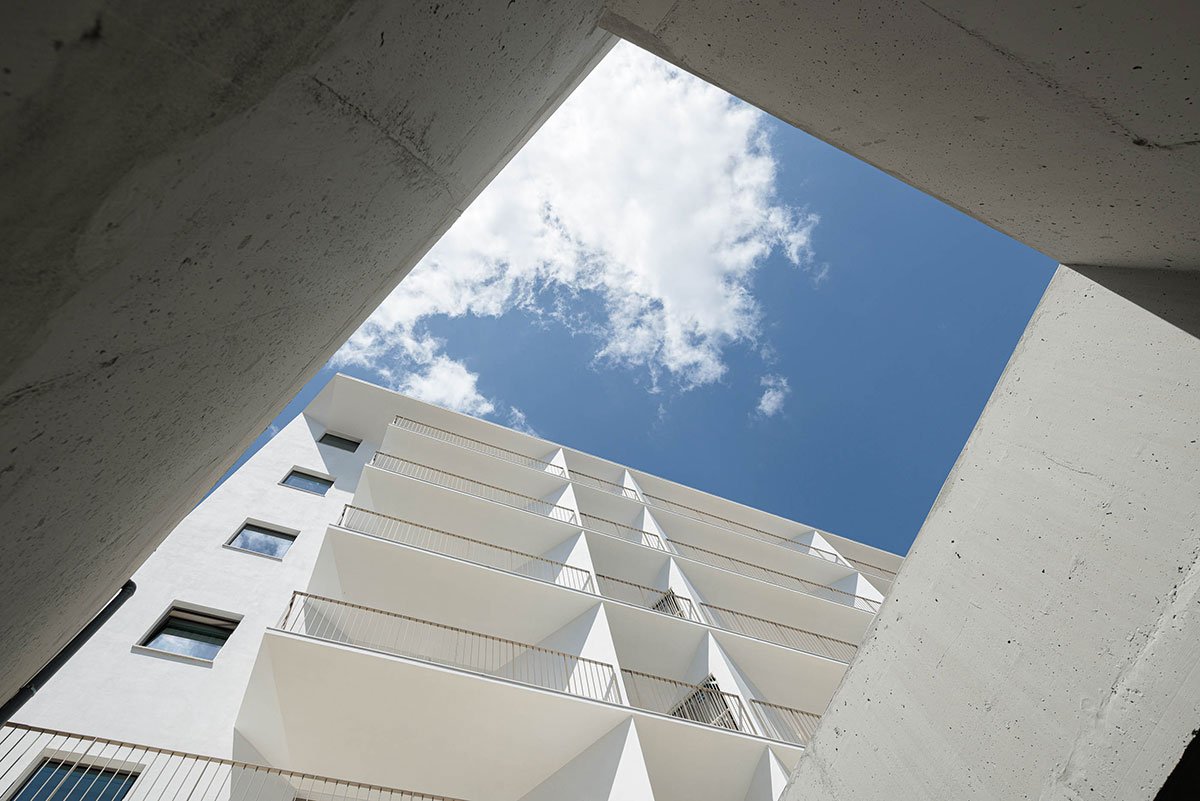
Excerpt: Varandas de Salgueiros, a housing project by Floret Arquitectura, stands out for its contemporary forms, whose distinctive composition results from the morphology of the plot, allowing the exploration of solid and void forms that create divisions between balconies. The building’s materials and colors were chosen for their simplicity and sobriety, aiming to balance its distinctive design and focus on its formal dynamics.
Project Description

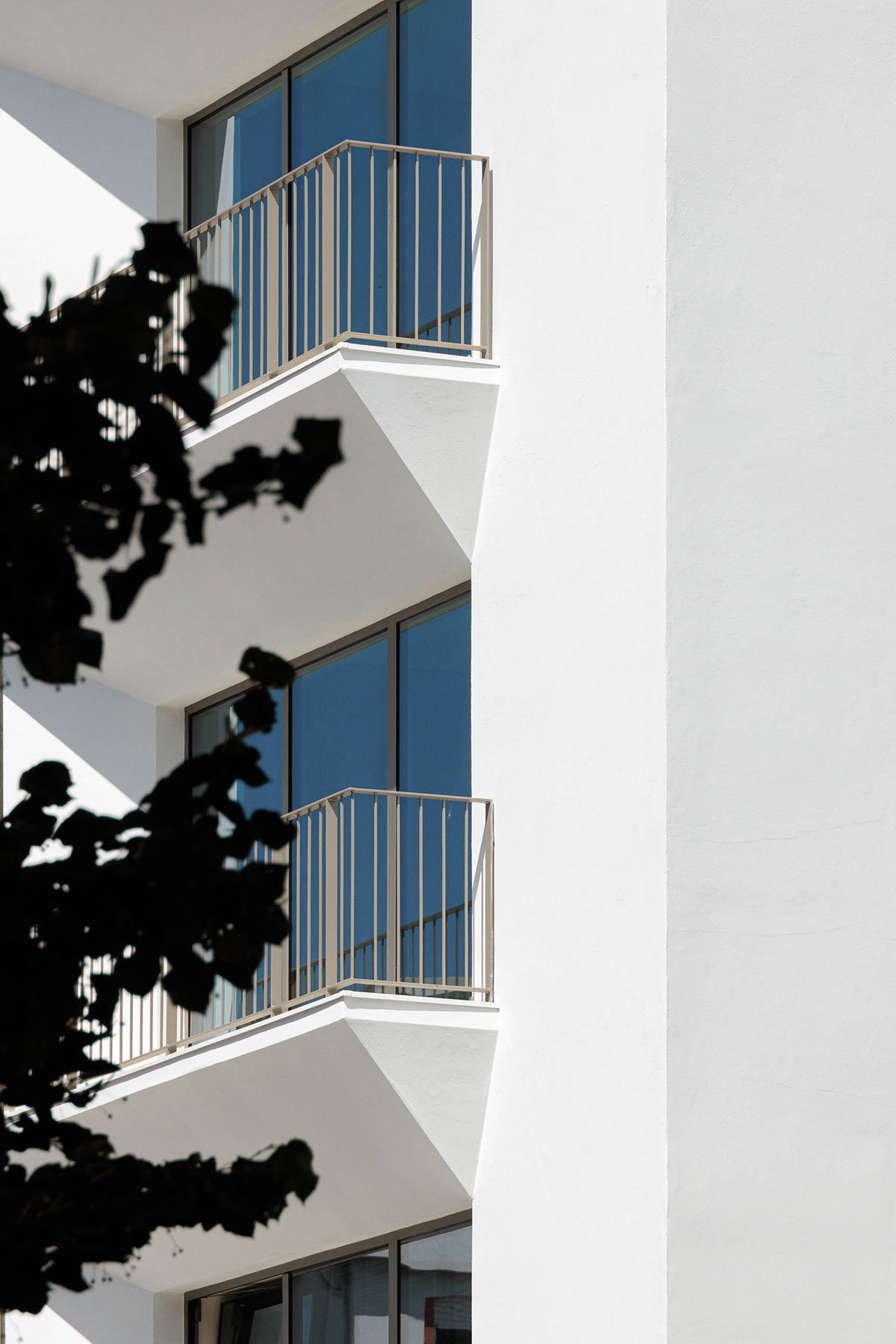
[Text as submitted by architect] The building is located in the city of Porto, Portugal, in a residential area near the city center. The construction stands out for its contemporary forms, whose distinctive composition results from the morphology of the plot, allowing the exploration of solid and void forms that create divisions between balconies.


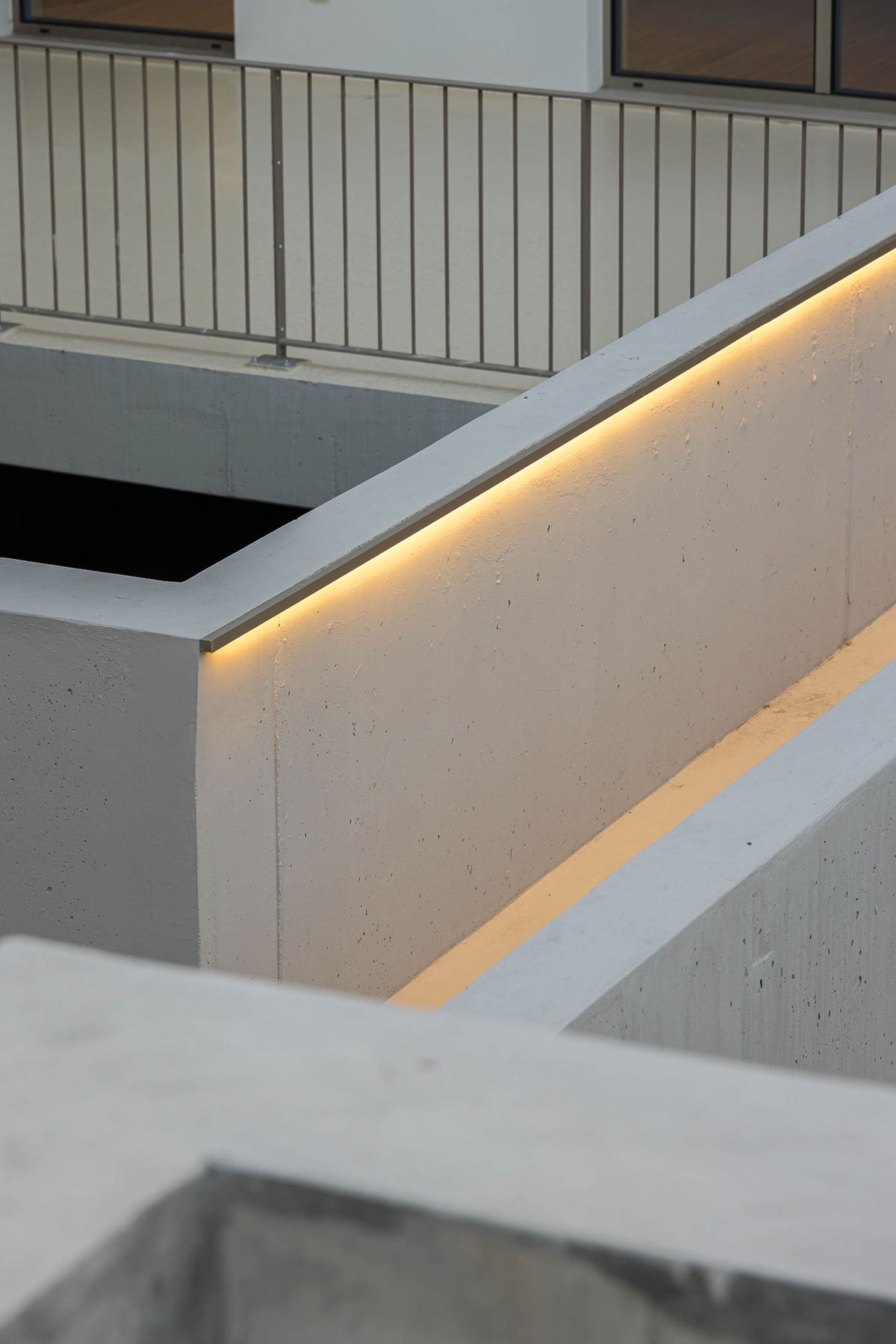
To ensure harmony with the surroundings and balance its distinctive design, the materials and colors of the building were chosen for their simplicity and sobriety, with the aim of diverting the observer’s attention to the formal dynamics created by its shape. At night, these forms are enhanced by carefully studied lighting that precisely reinforces the irregularities that characterize the facade. Divided into six floors, this building comprises seventeen apartments ranging from T2 to T3 typologies, with west or east-west orientation.
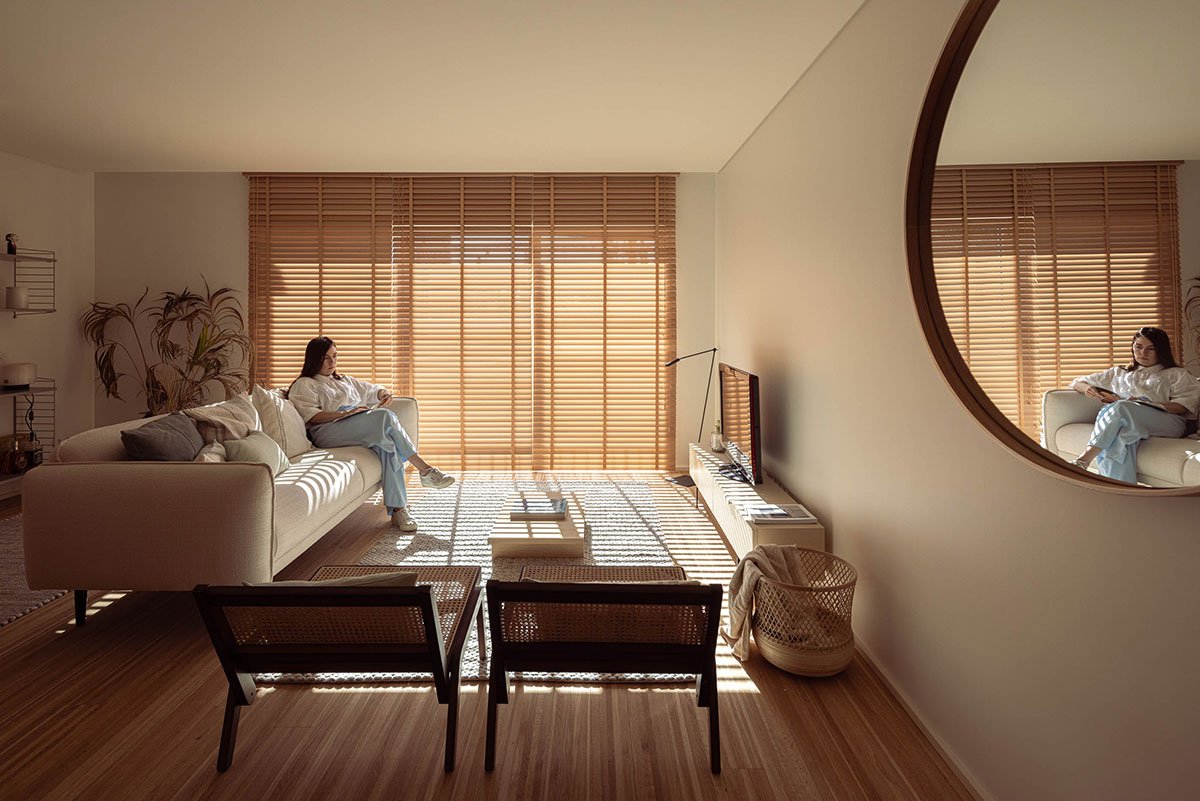


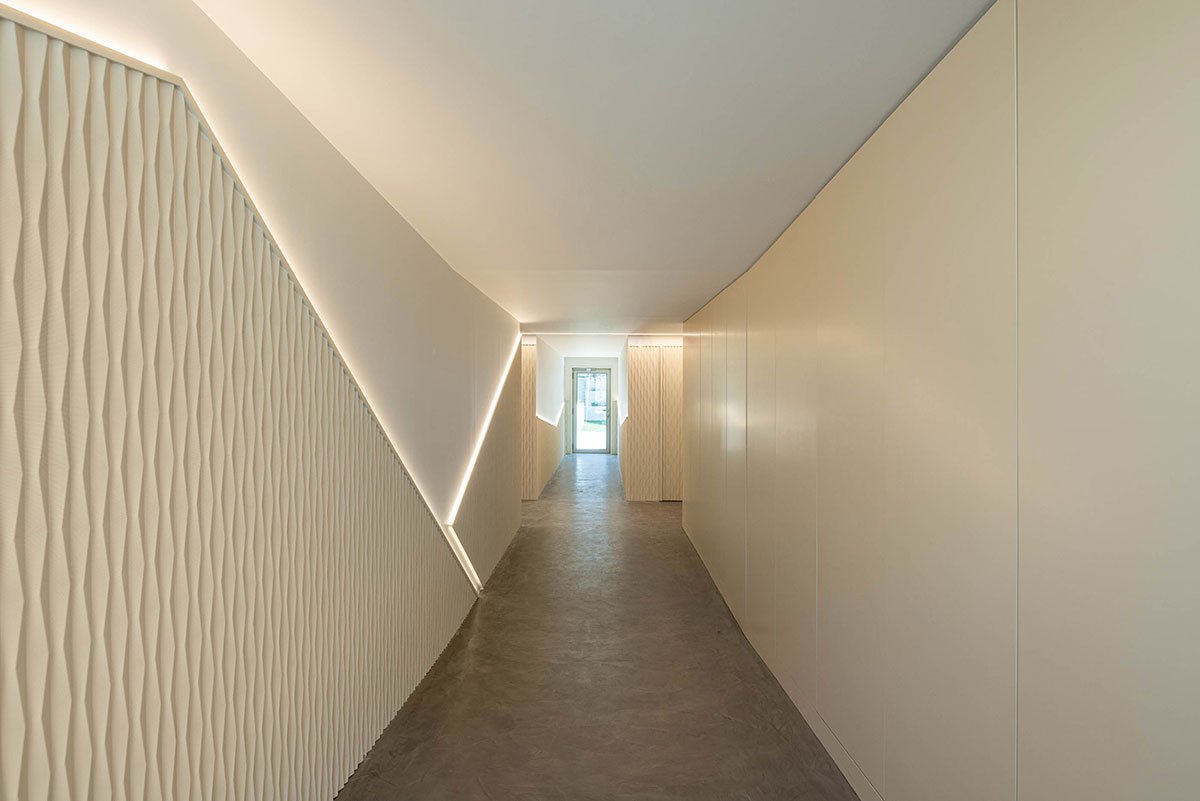
These apartments are characterized by their spacious areas designed for the long-term habitation of small families. All units have private balconies. The distribution of the apartments is carried out through a central block designed to maximize the interior space of the apartments, ensuring that circulation areas are functional and minimized. In the basement, there is a private parking lot with 21 parking spaces. Although this space is located below the building, it is open to the courtyard, allowing for constant ventilation and connection of the volume with the outdoor area.


The courtyard is characterized by its steep topography, transformed into a set of levels that, although being a common area, allows for a more private use of its various outdoor spaces by the building’s residents. It mainly consists of green areas with surrounding vegetation.
Drawings


Images