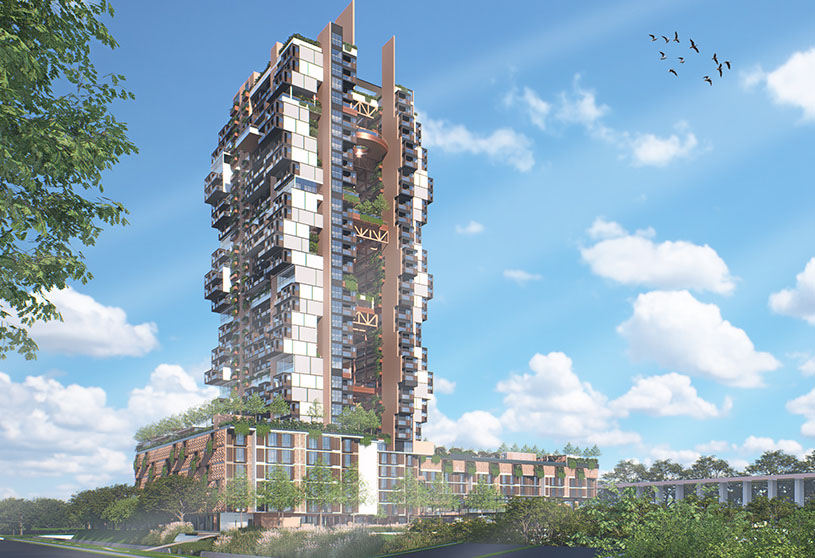
Excerpt: ‘A Dead Mall’s Fantasy’ is an architecture thesis by Yash Ghorecha from the Kamla Raheja Vidyanidhi Institute of Architecture and Environmental Studies (KRVIA) that challenges us to reconsider the role of architecture in addressing the consequences of consumerism. The project transforms an abandoned mall into a recycling facility and a data center, with the aim of challenging and subverting traditional notions of what a mall represents.
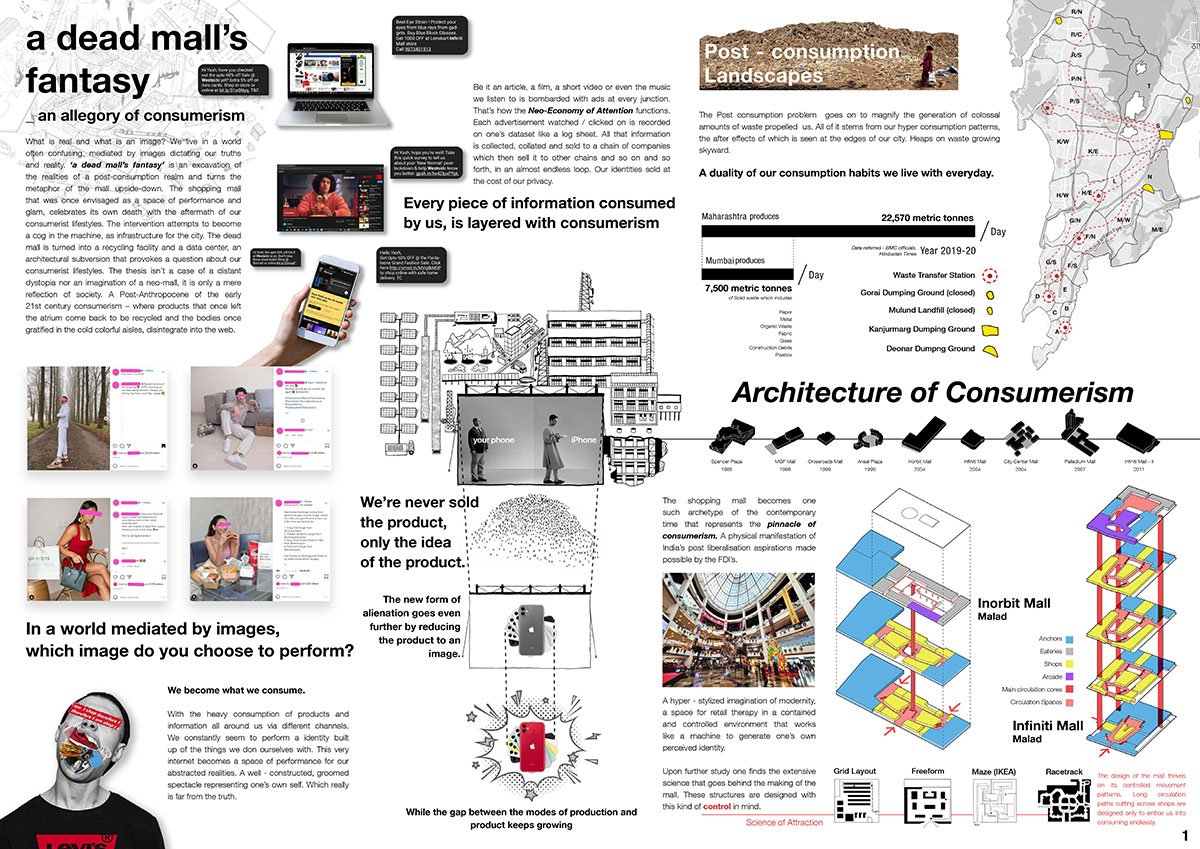
Introduction: What is real & what is an image? We live in a world often confusing, mediated by images dictating our truths and reality. Obsessed by the consumerist imagery, we become what we consume. This treachery, that is the control on consumption and the colossal amounts of waste generated by us; lie behind the capitalist image. ‘A Dead Mall’s Fantasy’ is an excavation of the realities of a post-consumption realm and turns the metaphor of the mall upside-down. The shopping mall that was once envisaged as a space of performance and glam, celebrates its own death with the aftermath of our consumerist lifestyles.
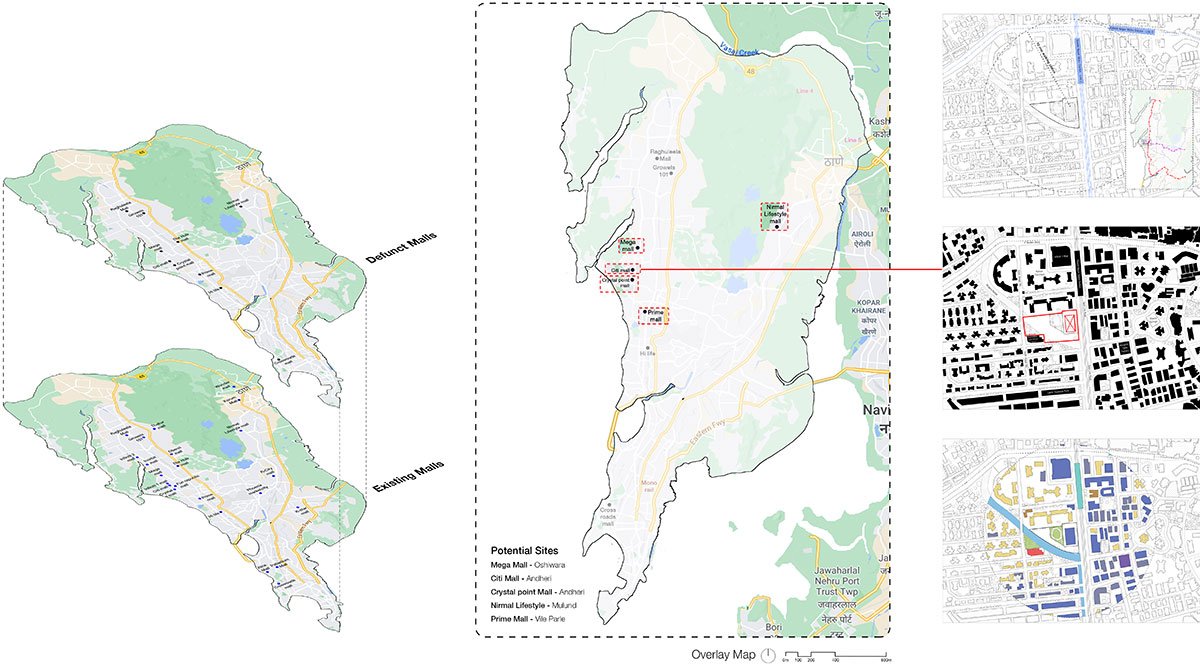
The hypothesis reimagines Citi Mall, one of Mumbai’s oldest shopping centers, as a post-consumerist architectural experiment. Once a bustling hub of commerce and consumerism, the mall has fallen into disuse, becoming a symbol of the unsustainable nature of the very lifestyle it once promoted. By transforming this “dead mall” into a recycling facility and a data center, the project seeks to challenge and subvert traditional notions of what a mall represents.
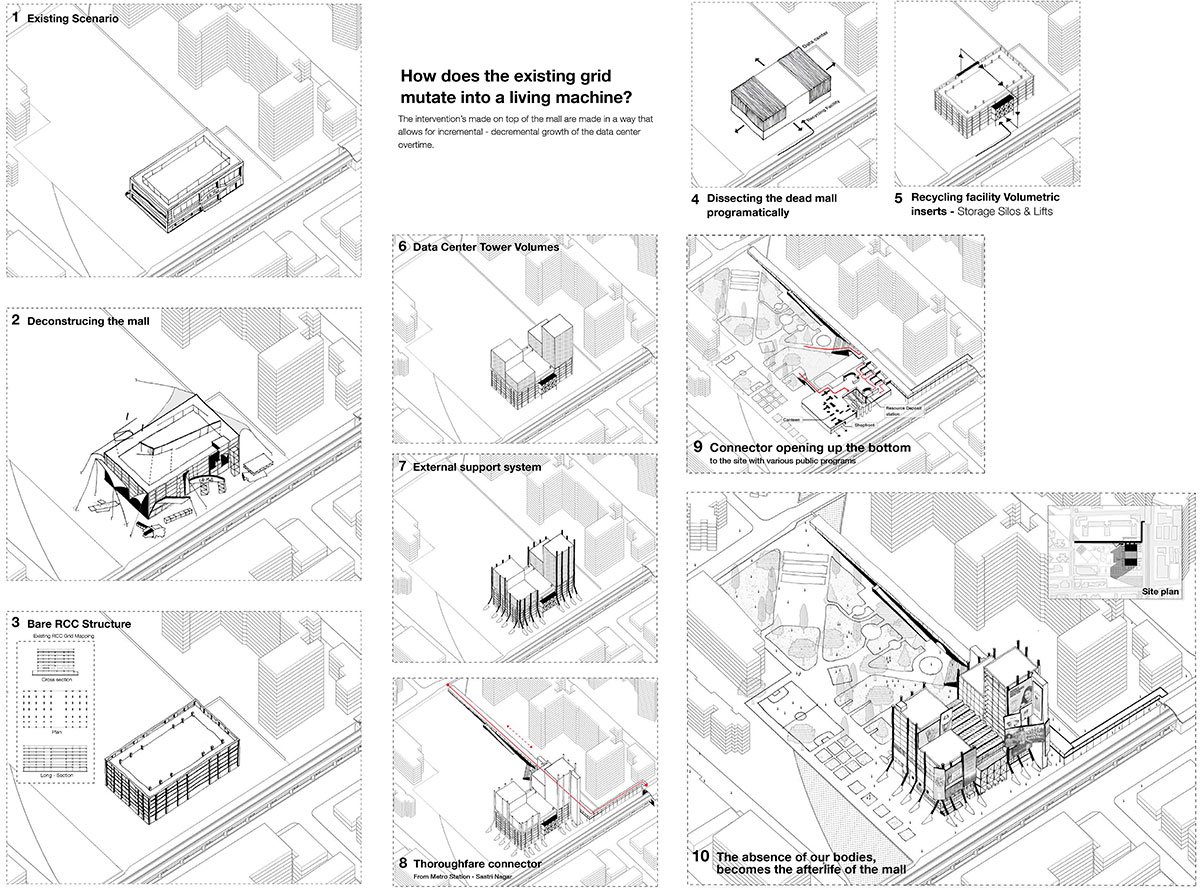
Design Process
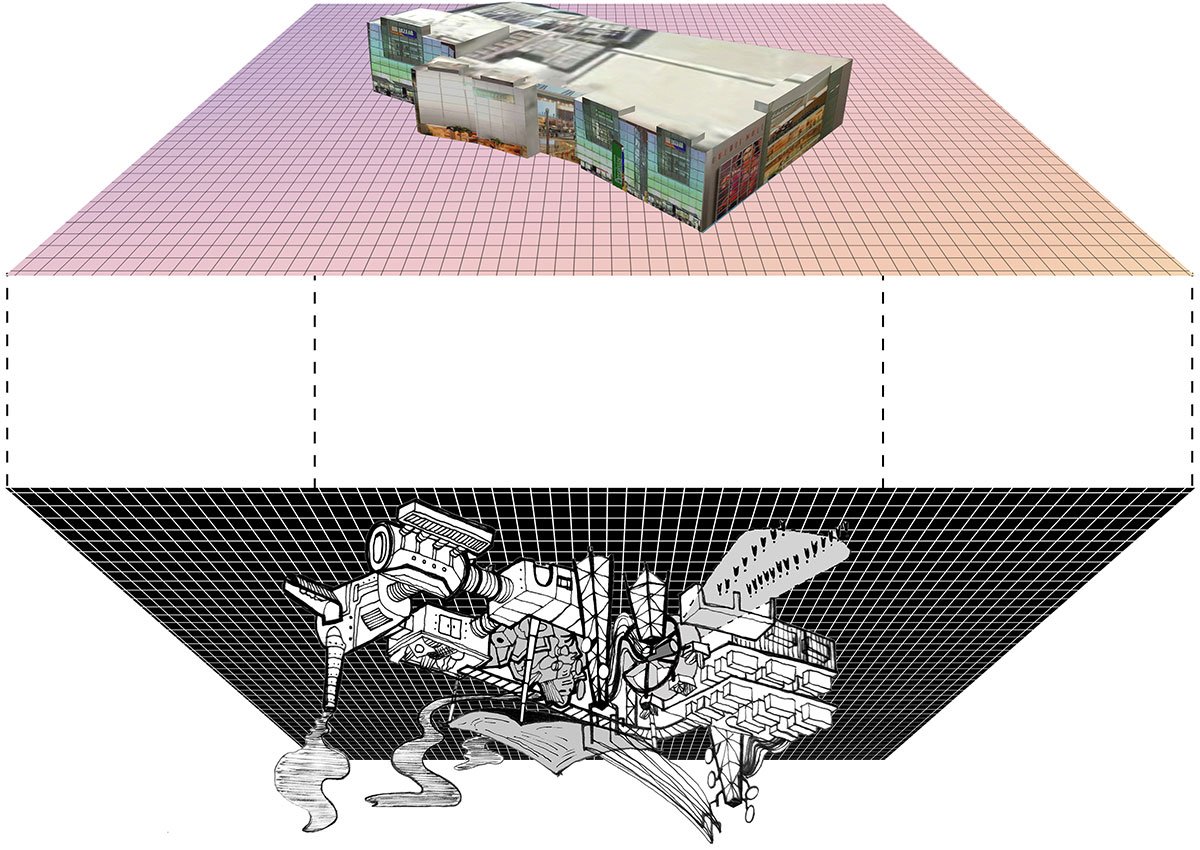
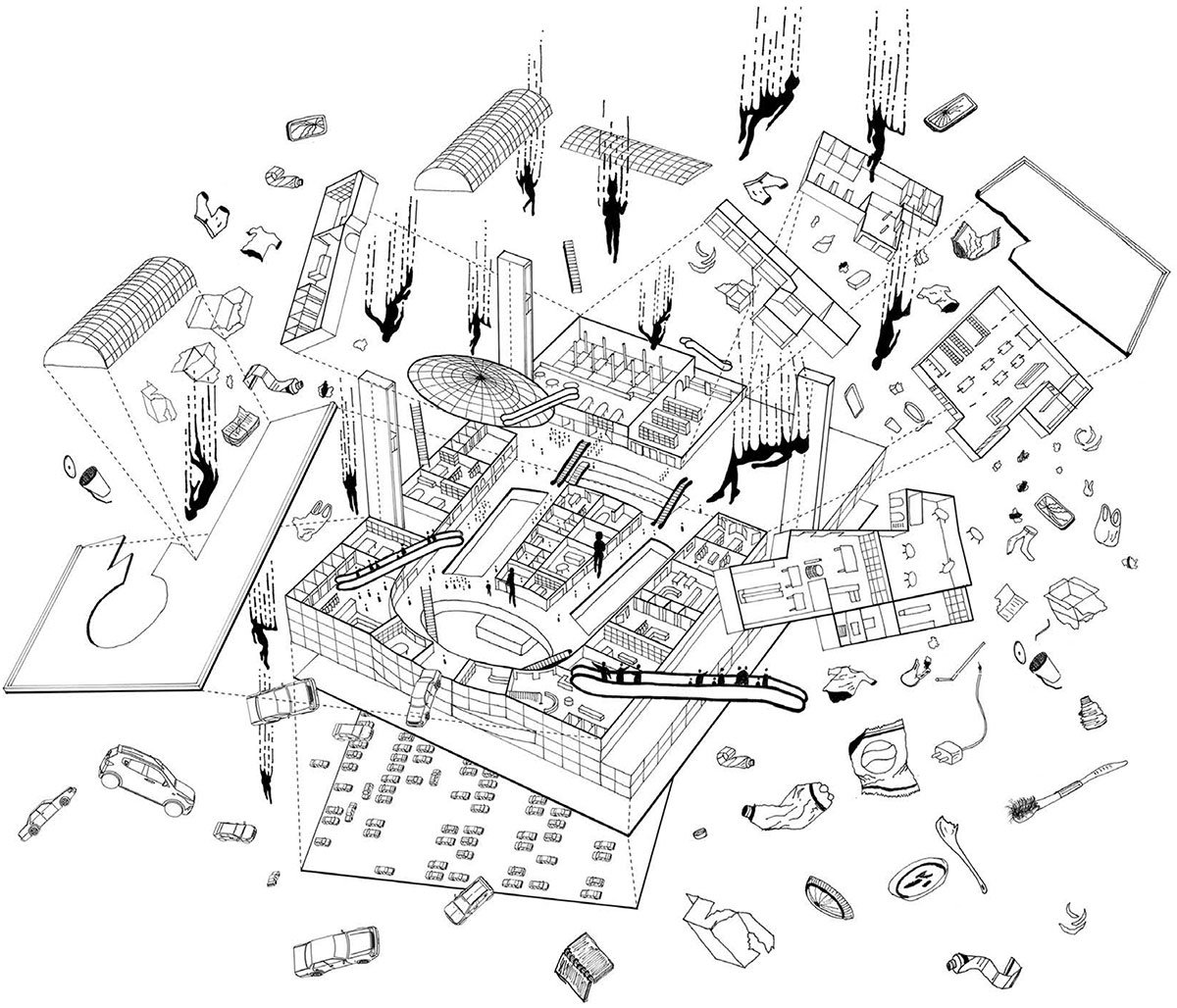
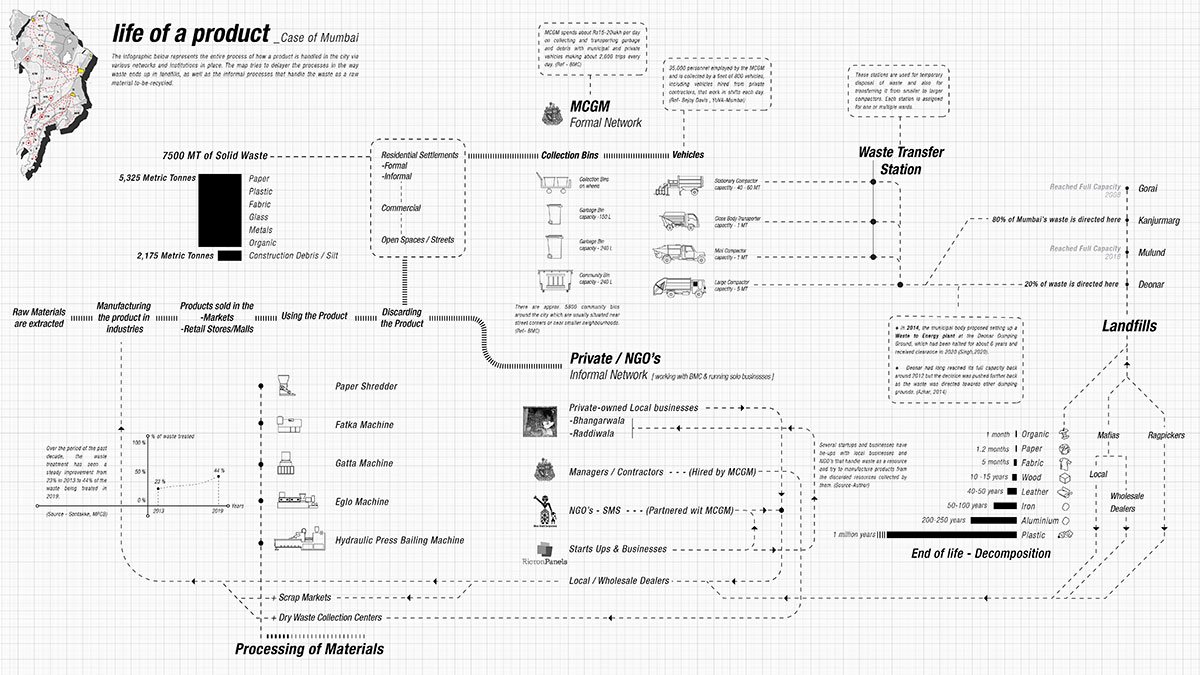
Deconstructing the mallWaste Disposal Channels
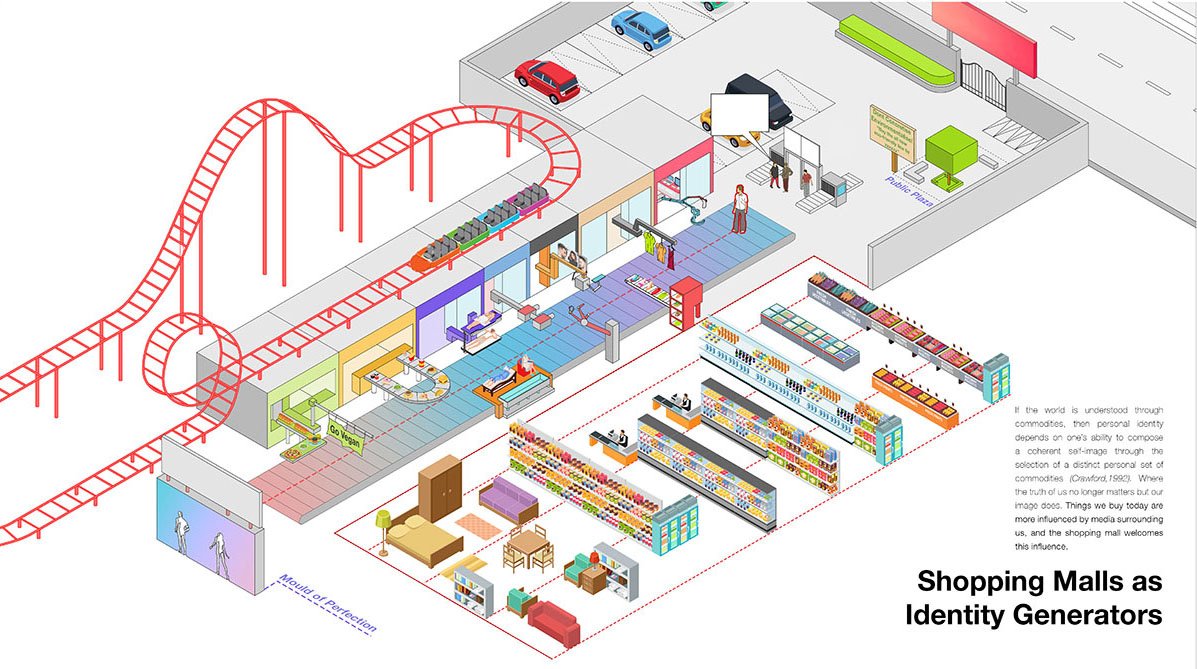
The project draws from the idea that in a world dominated by consumerist imagery, our perceptions of reality are often mediated and distorted by the images we consume. As consumers, we are not just influenced by what we buy but are also defined by it.
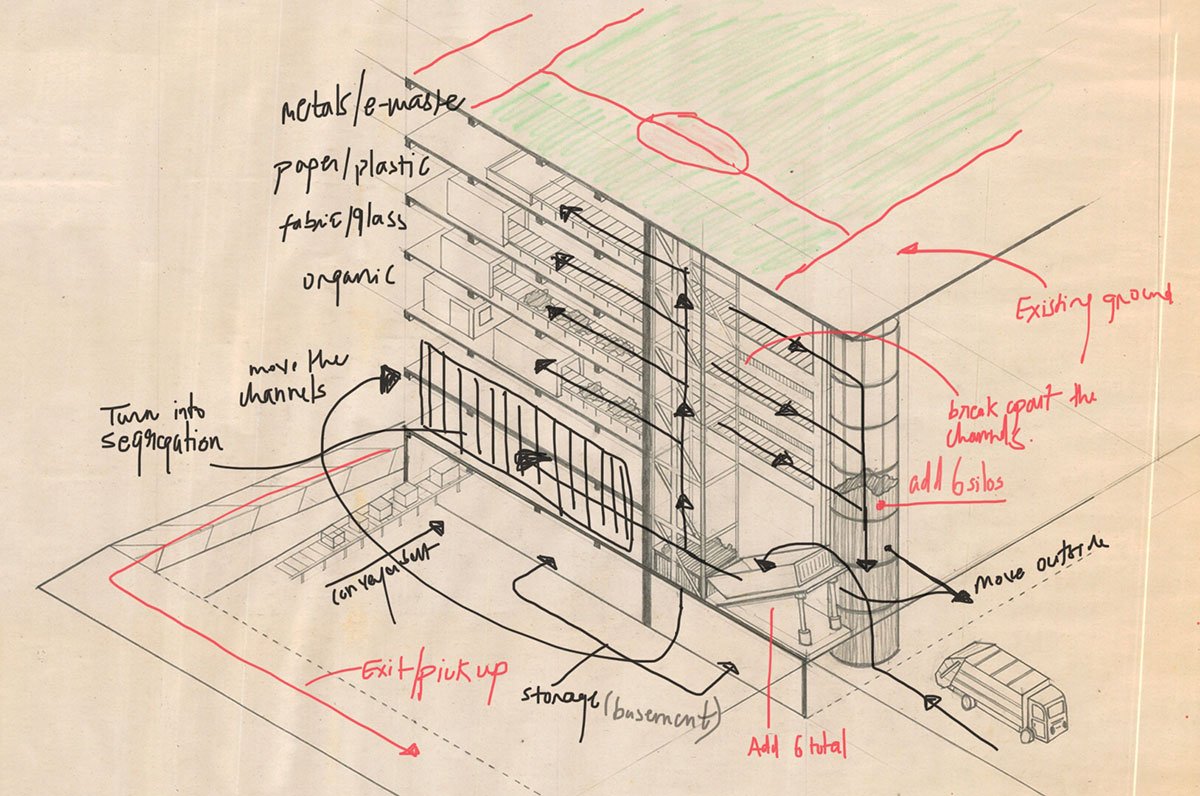
Design DevelopmentWorking sketch
The thesis asserts that behind the glossy facade of consumerism lies a hidden treachery: the unchecked consumption that leads to enormous waste generation and environmental degradation. The “dead mall” becomes a powerful metaphor for this reality, a space once bustling with life and glamor now reduced to a hollow shell, reflecting the consequences of our consumer-driven lifestyles.
Final Outcome
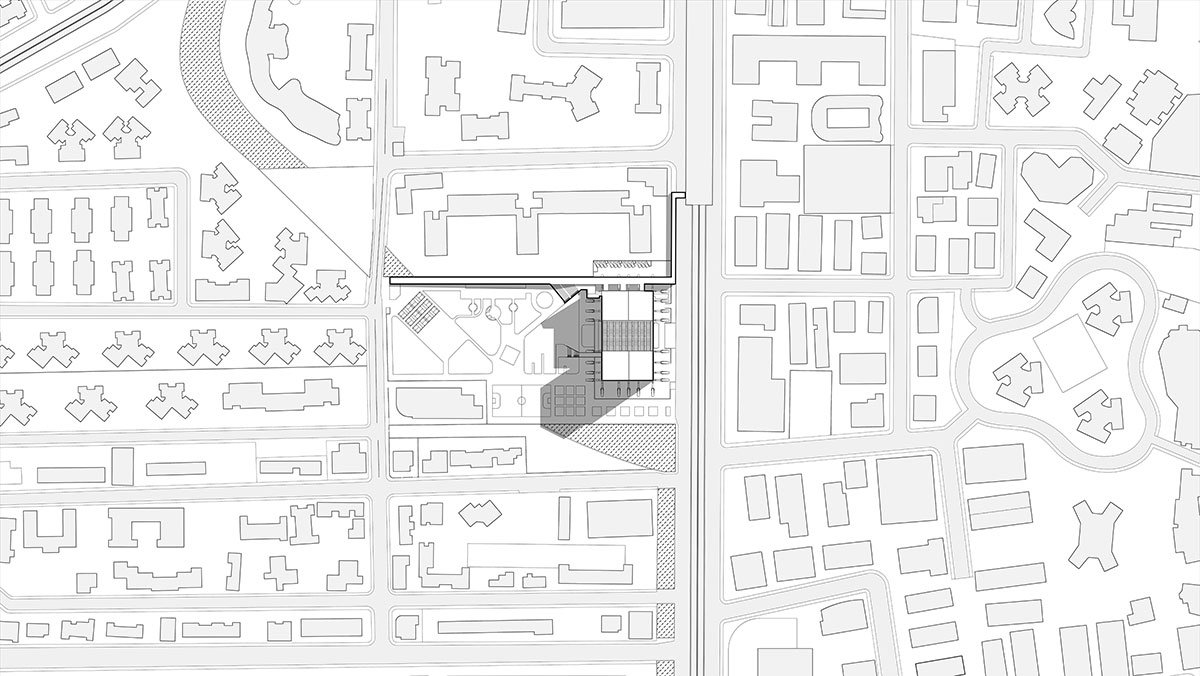
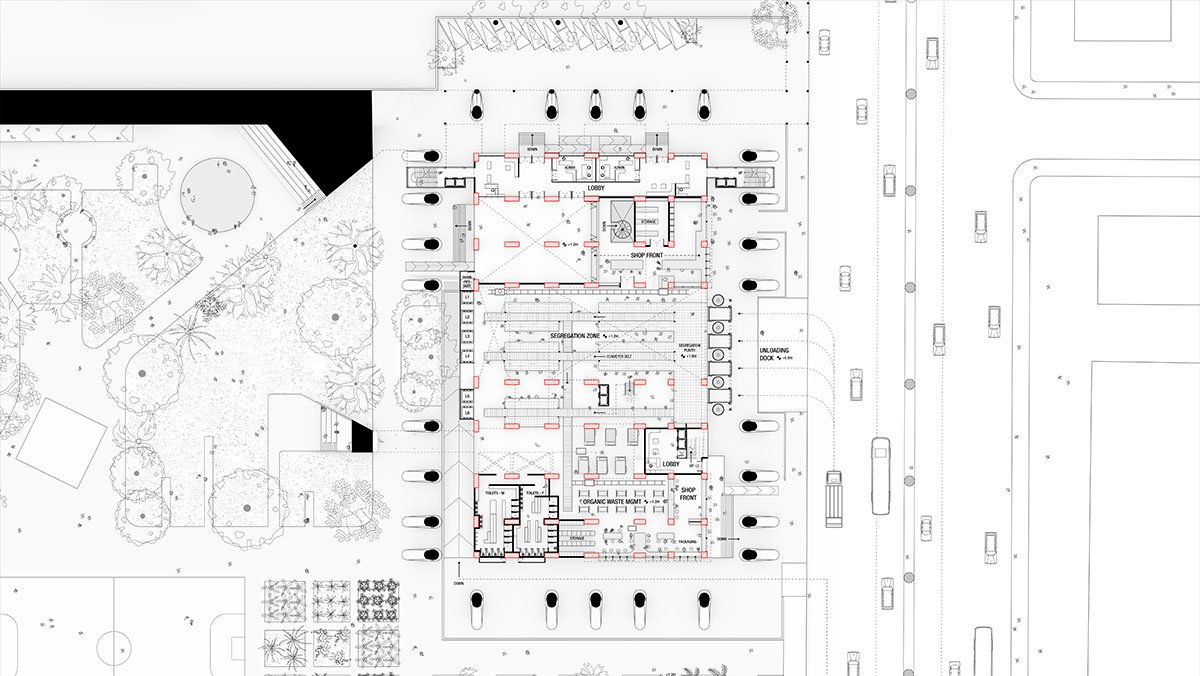
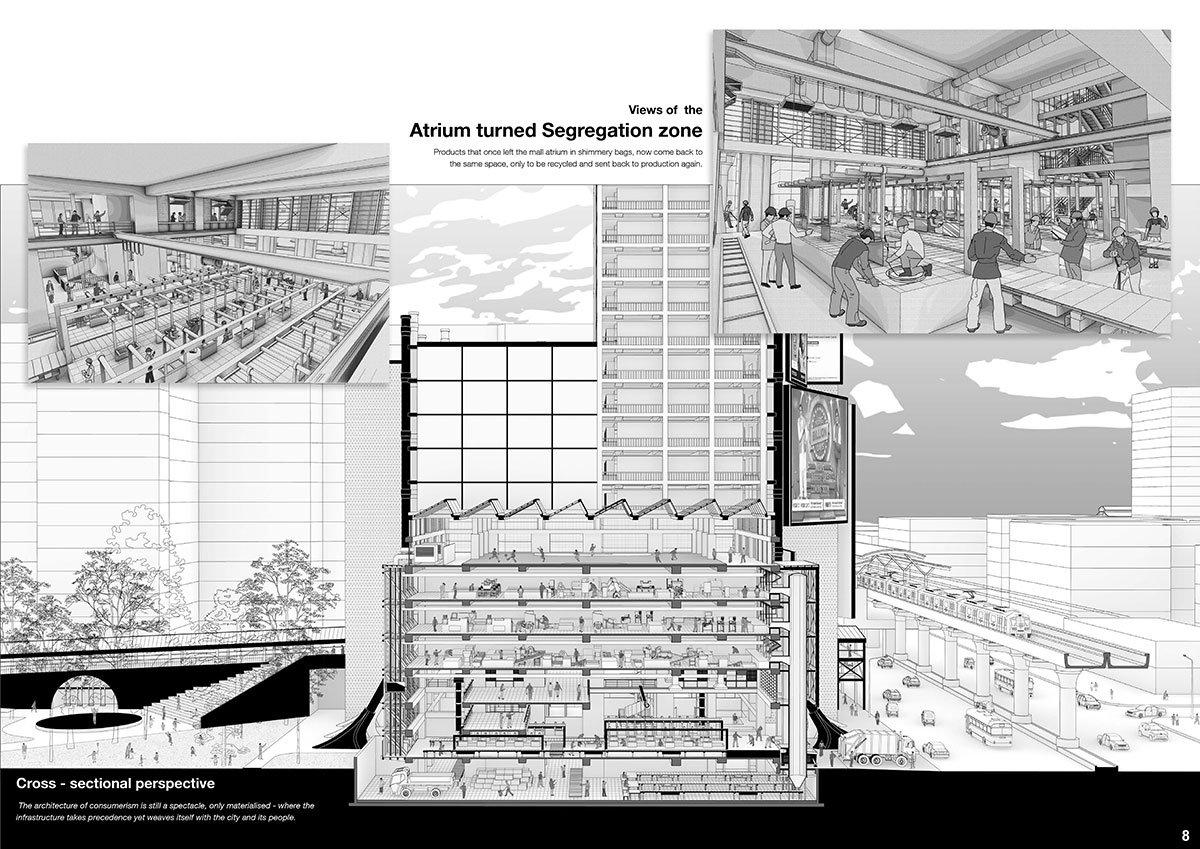
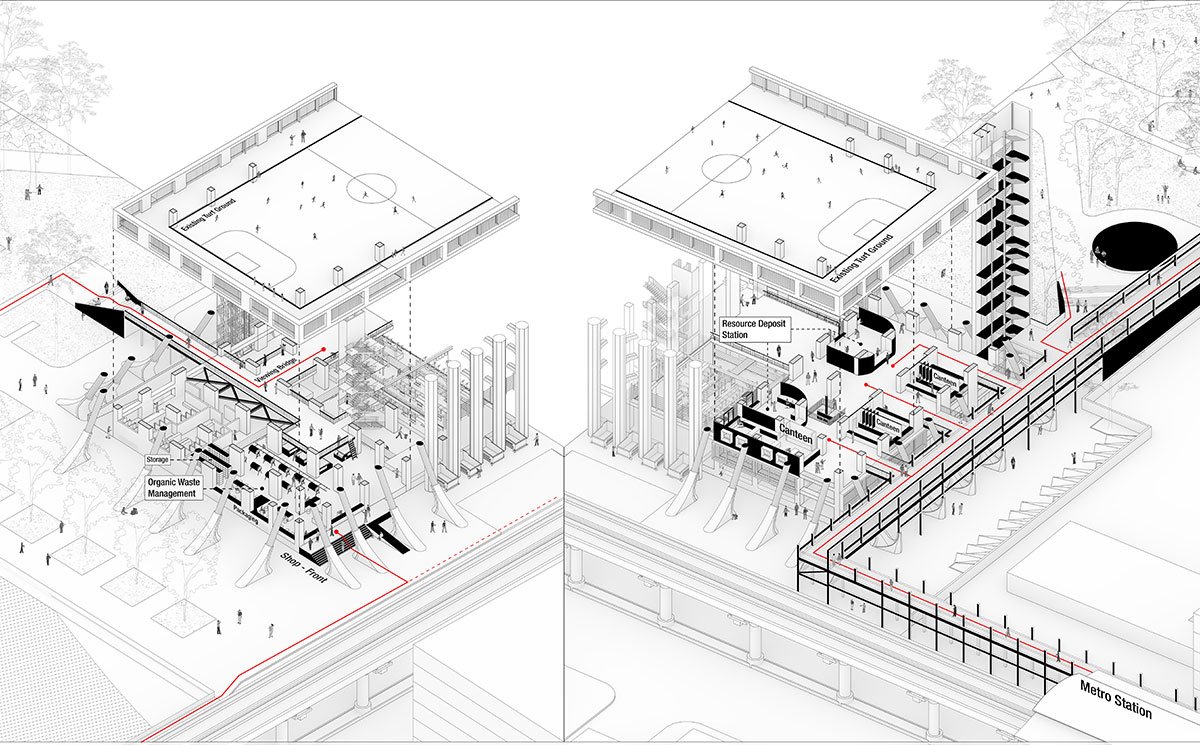
Site PlanGround Floor PlanSection and Views
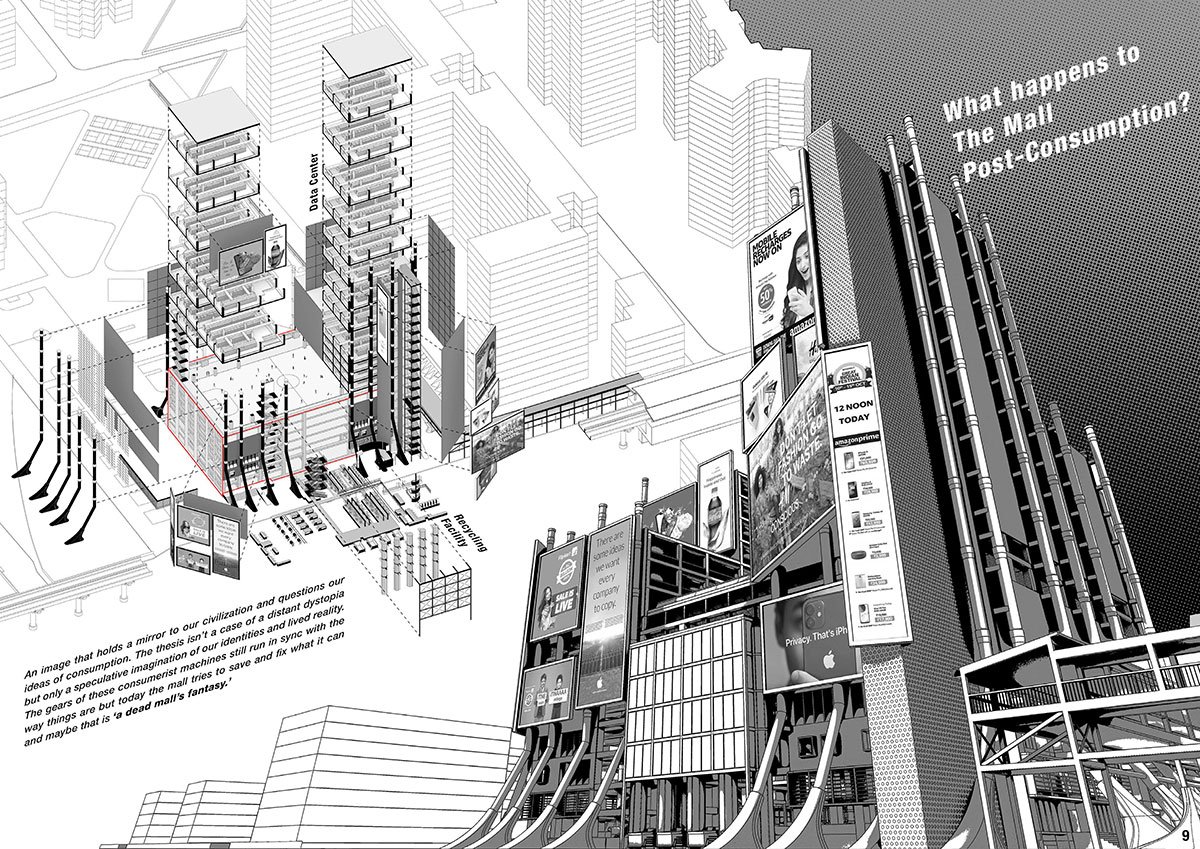
The thesis explores the potential of a dead mall to evolve into a space that serves a new, more purposeful role in society. By recycling the waste generated by consumerism and supporting the infrastructure of our increasingly digitized world, the mall takes on a new identity. It shifts from being a space of spectacle and superficial value to one that generates tangible, functional use-value. This transformation is not presented as a distant dystopia or a utopian vision but as a reflection of the present moment—a critique of the Anthropocene era where the detritus of our consumer habits is repurposed into something new.
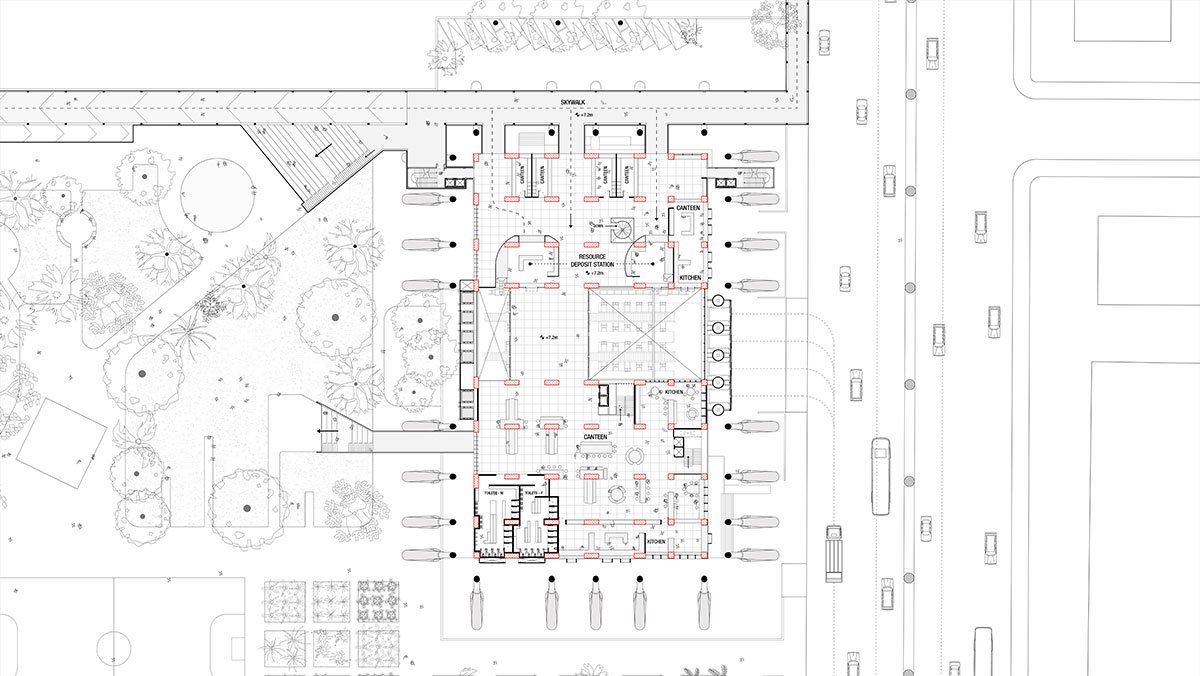
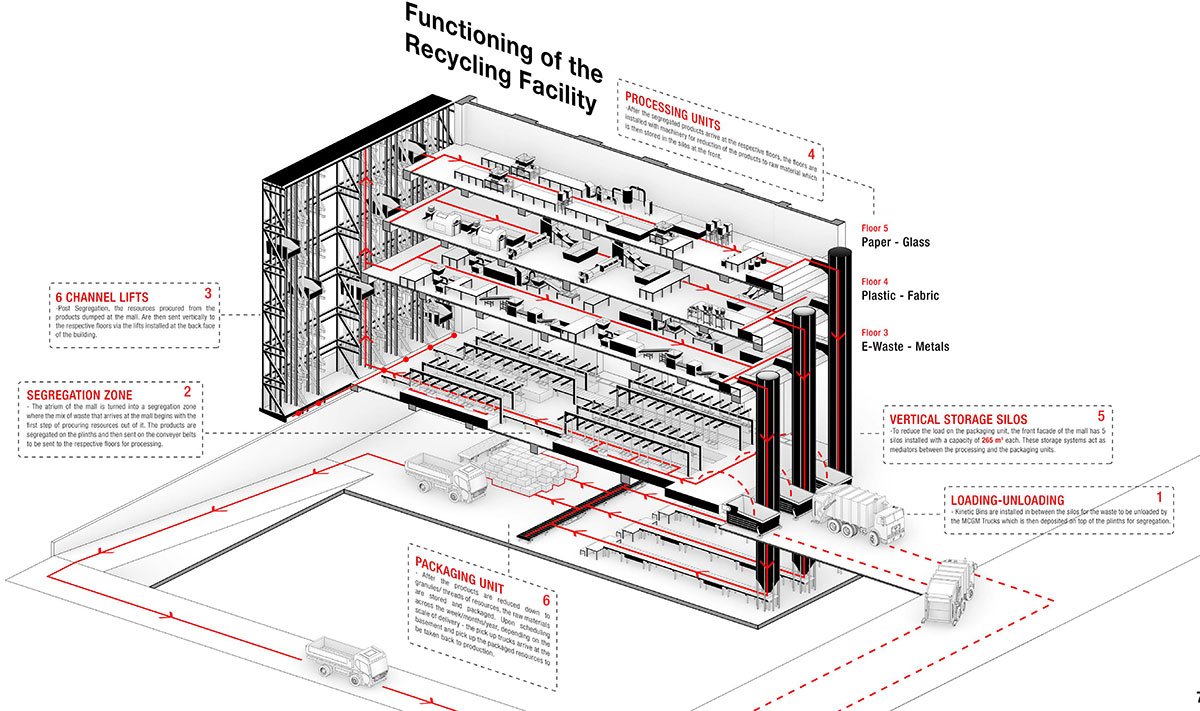
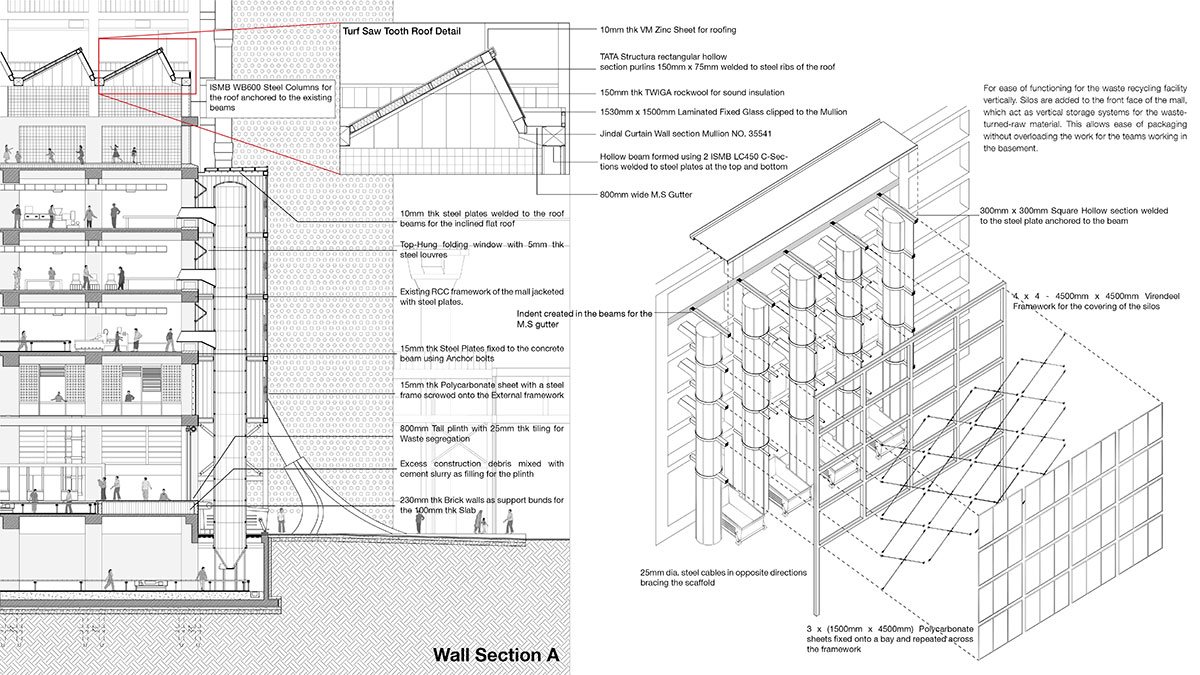
First Floor PlanExploded AxonometricDetails
The project acts as a mirror to contemporary society, illustrating the cyclical nature of consumption and waste. The once vibrant mall, a temple of consumerism, now houses the remnants of its own legacy. Products that once graced its aisles return to be recycled, and the consumers who once filled its corridors are now represented by the data generated by their digital footprints. The thesis paints a picture of a Post-Anthropocene society where the physical and digital realms of consumerism intertwine, and the once-celebrated spaces of capitalism are repurposed to serve a new, more sustainable function.
DetailsView
Conclusion: “A Dead Mall’s Fantasy” is a project that challenges us to reconsider the role of architecture in addressing the consequences of consumerism. It transforms a dead mall into a recycling facility and data center, questioning the sustainability of our current lifestyles and suggesting a future where consumerism spaces are repurposed to address the issues they created.
[This Academic Project has been published with text submitted by the student]
Site Context
Design Process
Final Outcome
To submit your academic project for publication at ArchiDiaries, please visit the following link >> Submit
Get the best of ArchiDiaries, directly in your inbox.
We use cookies on our website to give you the most relevant experience by remembering your preferences and repeat visits. By clicking “Accept All”, you consent to the use of ALL the cookies. However, you may visit "Cookie Settings" to provide a controlled consent.
This website uses cookies to improve your experience while you navigate through the website. Out of these, the cookies that are categorized as necessary are stored on your browser as they are essential for the working of basic functionalities of the website. We also use third-party cookies that help us analyze and understand how you use this website. These cookies will be stored in your browser only with your consent. You also have the option to opt-out of these cookies. But opting out of some of these cookies may affect your browsing experience.
Necessary cookies are absolutely essential for the website to function properly. These cookies ensure basic functionalities and security features of the website, anonymously.
Cookie
Duration
Description
cookielawinfo-checkbox-analytics
11 months
This cookie is set by GDPR Cookie Consent plugin. The cookie is used to store the user consent for the cookies in the category "Analytics".
cookielawinfo-checkbox-functional
11 months
The cookie is set by GDPR cookie consent to record the user consent for the cookies in the category "Functional".
cookielawinfo-checkbox-necessary
11 months
This cookie is set by GDPR Cookie Consent plugin. The cookies is used to store the user consent for the cookies in the category "Necessary".
cookielawinfo-checkbox-others
11 months
This cookie is set by GDPR Cookie Consent plugin. The cookie is used to store the user consent for the cookies in the category "Other.
cookielawinfo-checkbox-performance
11 months
This cookie is set by GDPR Cookie Consent plugin. The cookie is used to store the user consent for the cookies in the category "Performance".
viewed_cookie_policy
11 months
The cookie is set by the GDPR Cookie Consent plugin and is used to store whether or not user has consented to the use of cookies. It does not store any personal data.
Functional cookies help to perform certain functionalities like sharing the content of the website on social media platforms, collect feedbacks, and other third-party features.
Performance cookies are used to understand and analyze the key performance indexes of the website which helps in delivering a better user experience for the visitors.
Analytical cookies are used to understand how visitors interact with the website. These cookies help provide information on metrics the number of visitors, bounce rate, traffic source, etc.
Advertisement cookies are used to provide visitors with relevant ads and marketing campaigns. These cookies track visitors across websites and collect information to provide customized ads.

![Factory[n]Certainty: Redefining Industrial Architecture Through Work, Life, and Community | Bachelors Design Thesis](https://archidiaries.com/wp-content/uploads/2026/09/Siam-Rahman_APR_feat_img.jpg)