Home » Academic projects » Why Can’t We Live Together: Traditional Dutch bedstee, Reimagined as a Contemporary Solution to Housing Crisis | Architecture Thesis on Urban Housing
Why Can’t We Live Together: Traditional Dutch bedstee, Reimagined as a Contemporary Solution to Housing Crisis | Architecture Thesis on Urban Housing
Excerpt: ‘Why Can’t We Live Together’ is an architecture thesis on urban housing by Trevor Bbanda from the ‘Canterbury School of Architecture & Design – UCA’ that reimagines the traditional Dutch bedstee in a contemporary context. Through its modular and adaptable design, the project creates a harmonious blend of private and communal spaces, fostering both social interaction and individual privacy. It challenges conventional housing models and invites us to reconsider how we design spaces for collective living in the future.
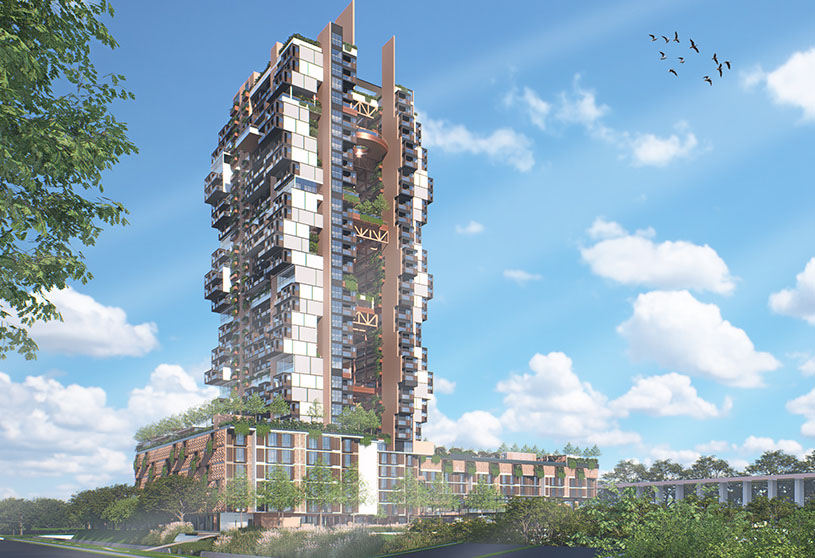
Introduction: The concept for this project emerged from a critical analysis of Pieter de Hooch’s painting, which revealed the potential of the classic Dutch bedstee reimagined as a contemporary response to the current housing crisis and urban space shortages. This project centres the bedstee structure as the core component, proposing a radical rethinking of shared living spaces. Constructed with sustainable Cross-Laminated Timber (CLT) in a spacious, double-heighted, hardwood-framed structure, these bedstees provide modular, adaptable, and effective living spaces.Enscape,
The title of the project reflects its primary focus on community and urban living. The design attempts to create highly convivial spaces that balance private and communal living by reimagining the traditional bedstee. A harmonious balance of social interaction and solitude is fostered by this thoughtful spatial arrangement, which guarantees intimate connections between private bedstees and communal spaces. The apartment designs provide a creative and sustainable housing solution, redefining the concept of home in the modern city and answering the question, “Why Can’t We Live Together.” The objective of this building is to enable people to rethink the way we build.
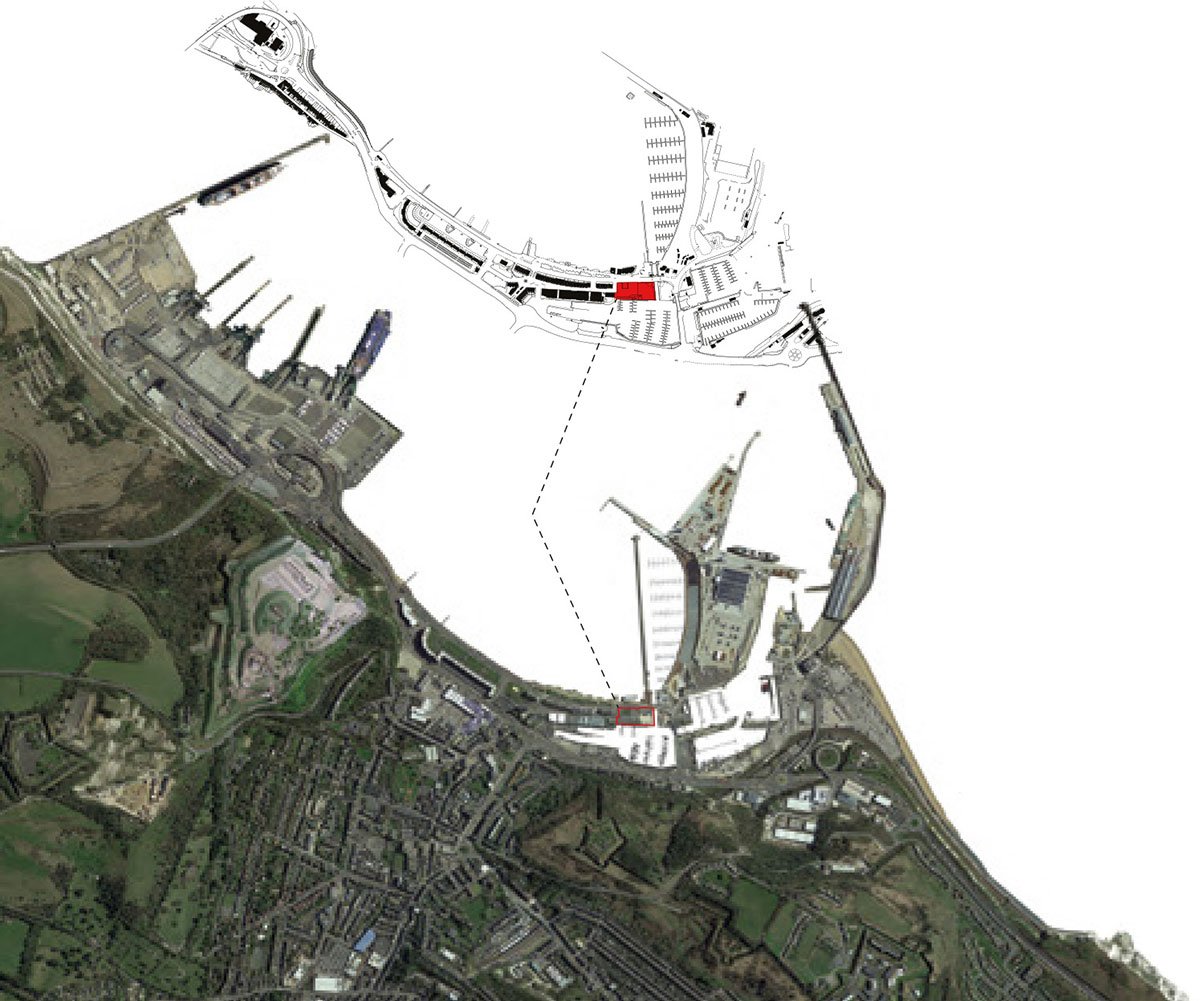
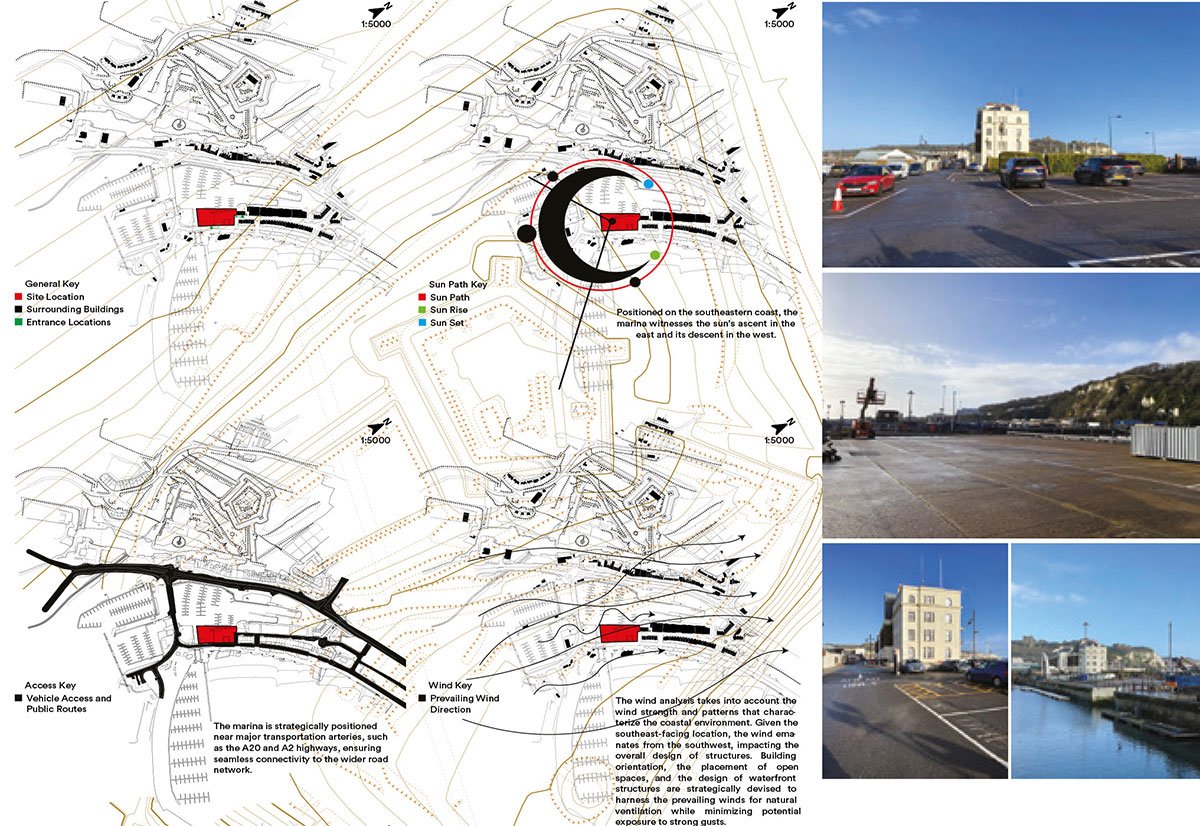
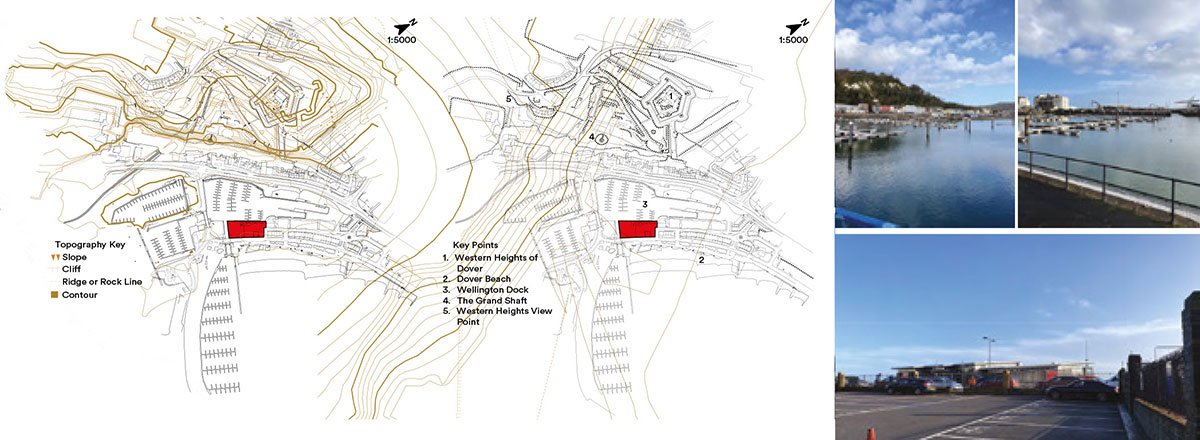
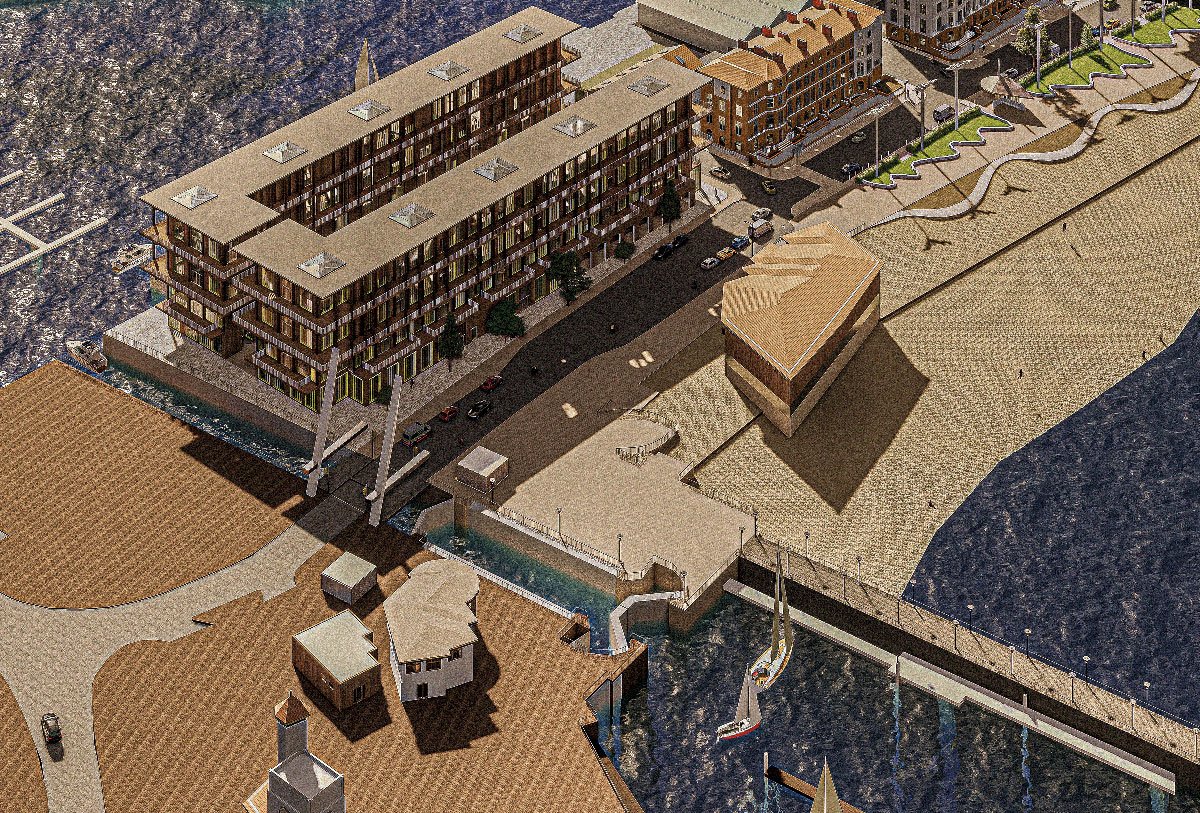
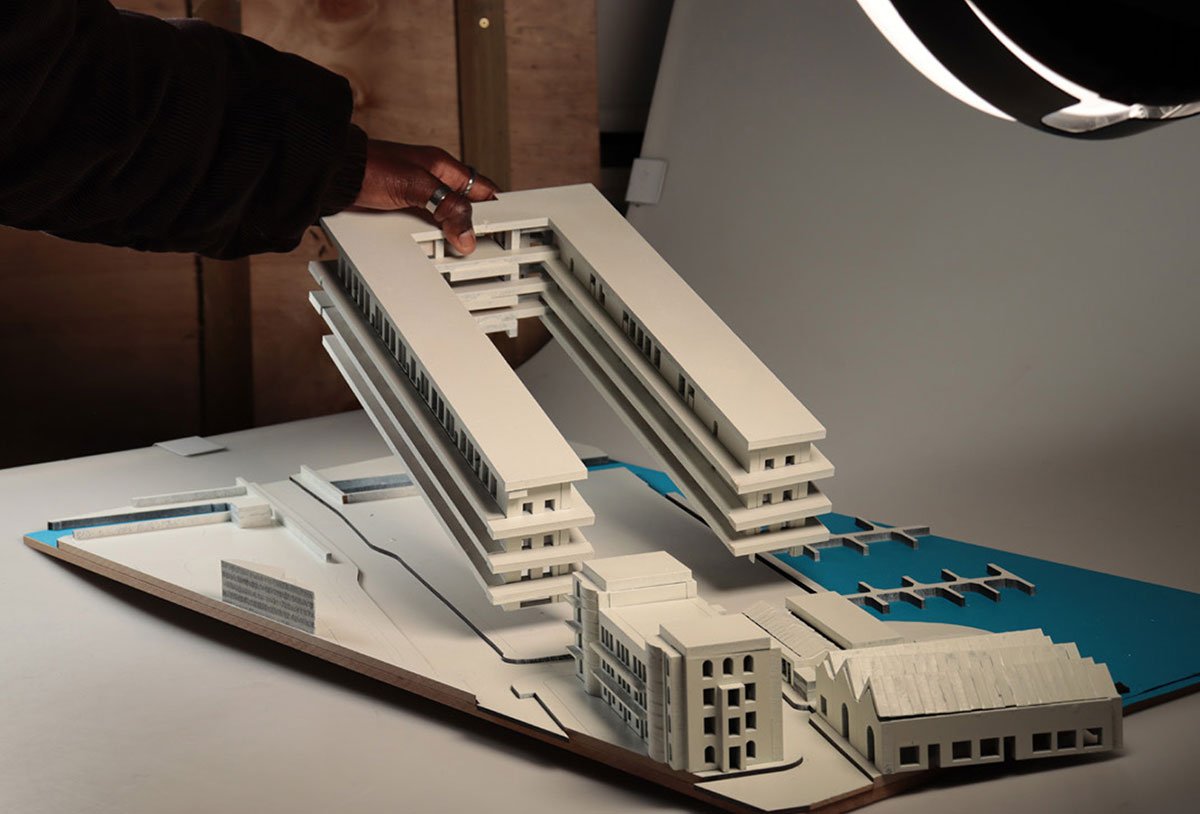
The project is located in Dover’s Wellington Dock, an ideal location that offers the contextual and spatial advantages required for a project of this scope. The site is well suited to support the variety of uses incorporated into the design, as it provides easy access to public transport, recreational amenities, and essential services due to its close proximity to Dover’s central amenities.
ContextSite Analysis
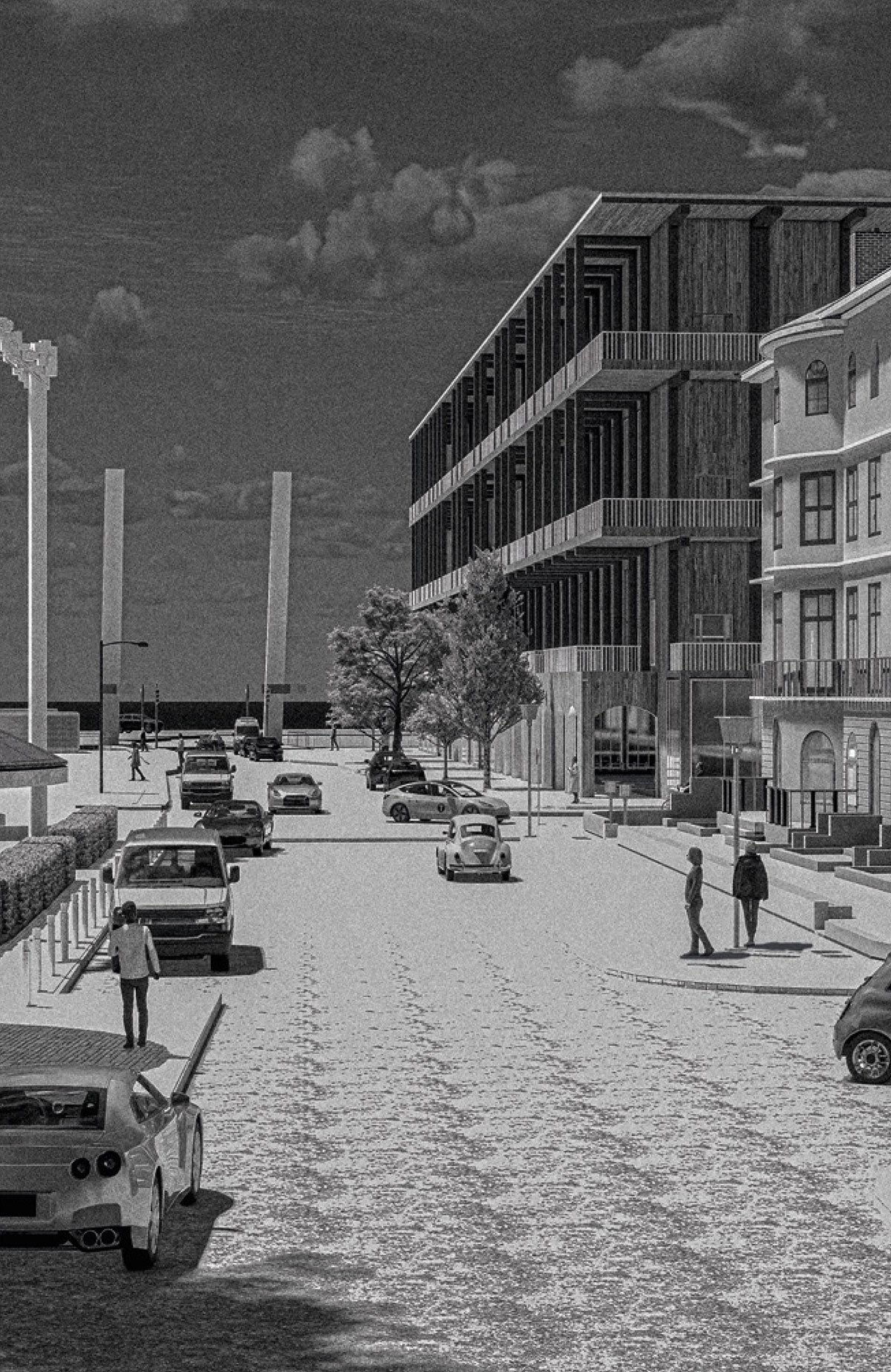
The vast area of Wellington Dock offers enough room for a major architectural project, facilitating the integration of varied functions, from ground floor commercial spaces, such as restaurants, boat garages, parking lots, and offices, to residential apartments with creative bedstee spaces. The 5,000-square-meter site allows for high ceilings and spacious outdoor amenities, including garden areas and a Multi-Use Games Area (MUGA), enhancing the building’s connection to the waterfront and promoting an active community.
Site Analysis
With Dover’s historic and coastal character as its backdrop, the project makes use of the dock’s serene atmosphere as well as the town’s lively energy. The location not only helps the project operate efficiently, but it also creates a unique living environment by merging the tranquility of waterfront views with the dynamism of urban life.
Design Process
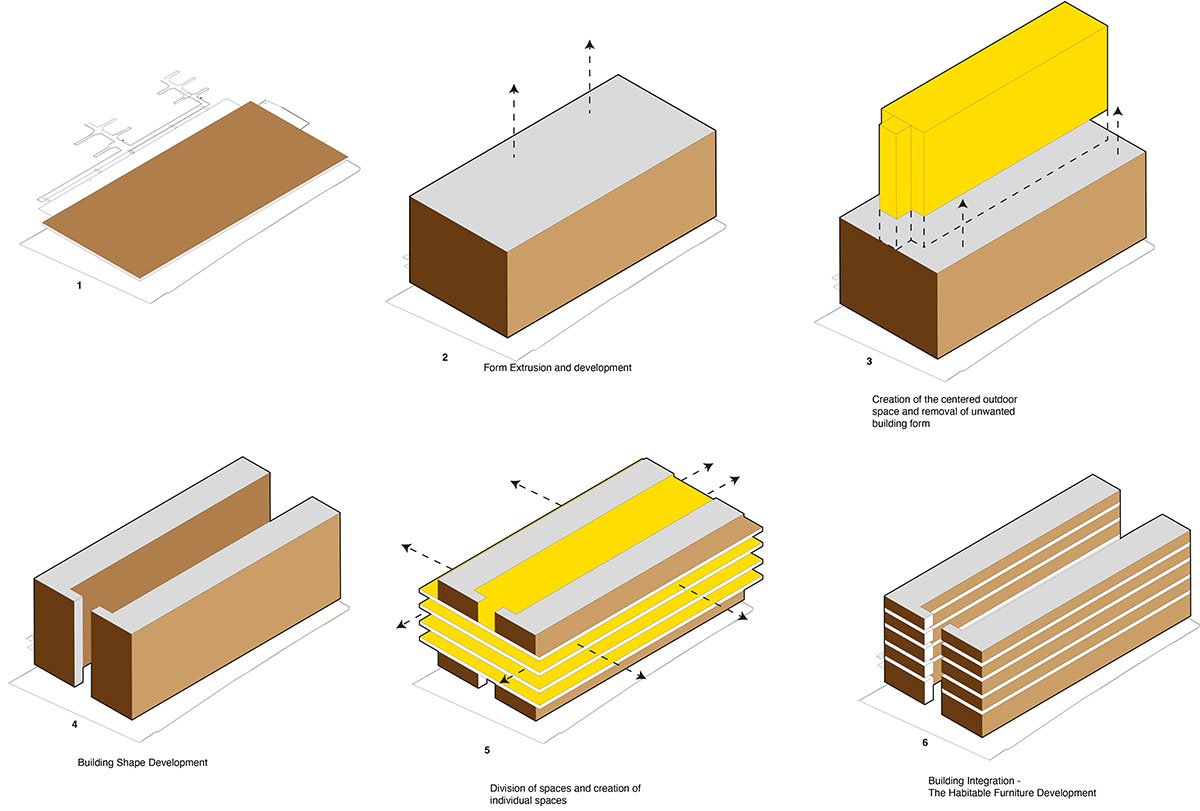
Programme and Form Development
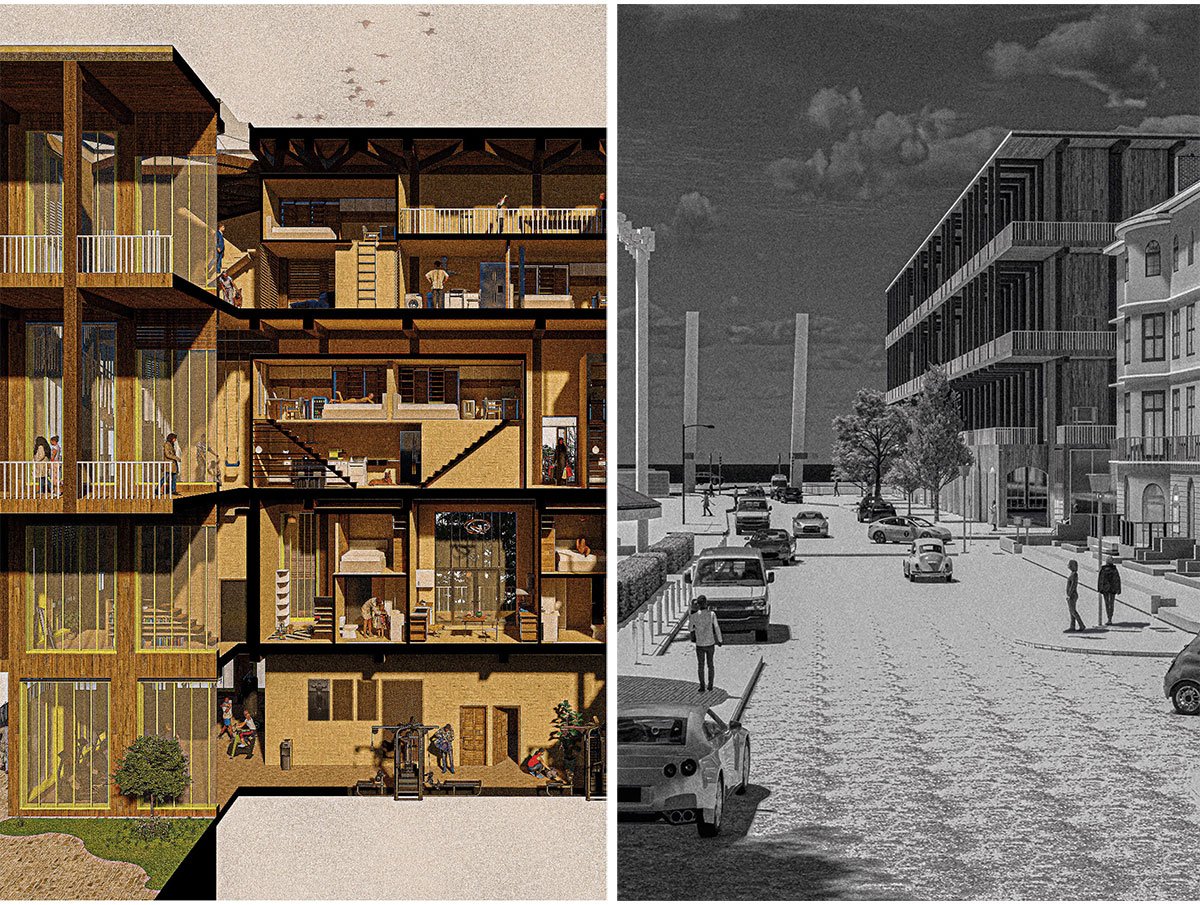
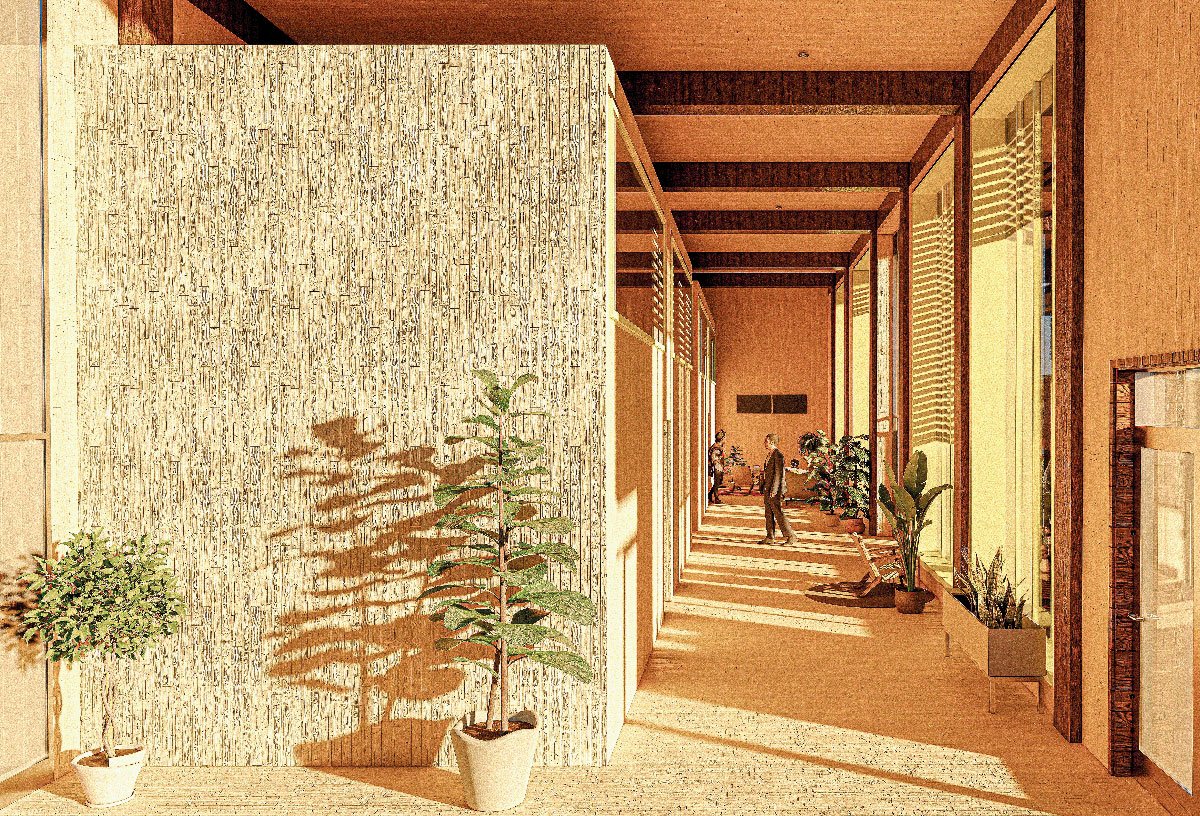
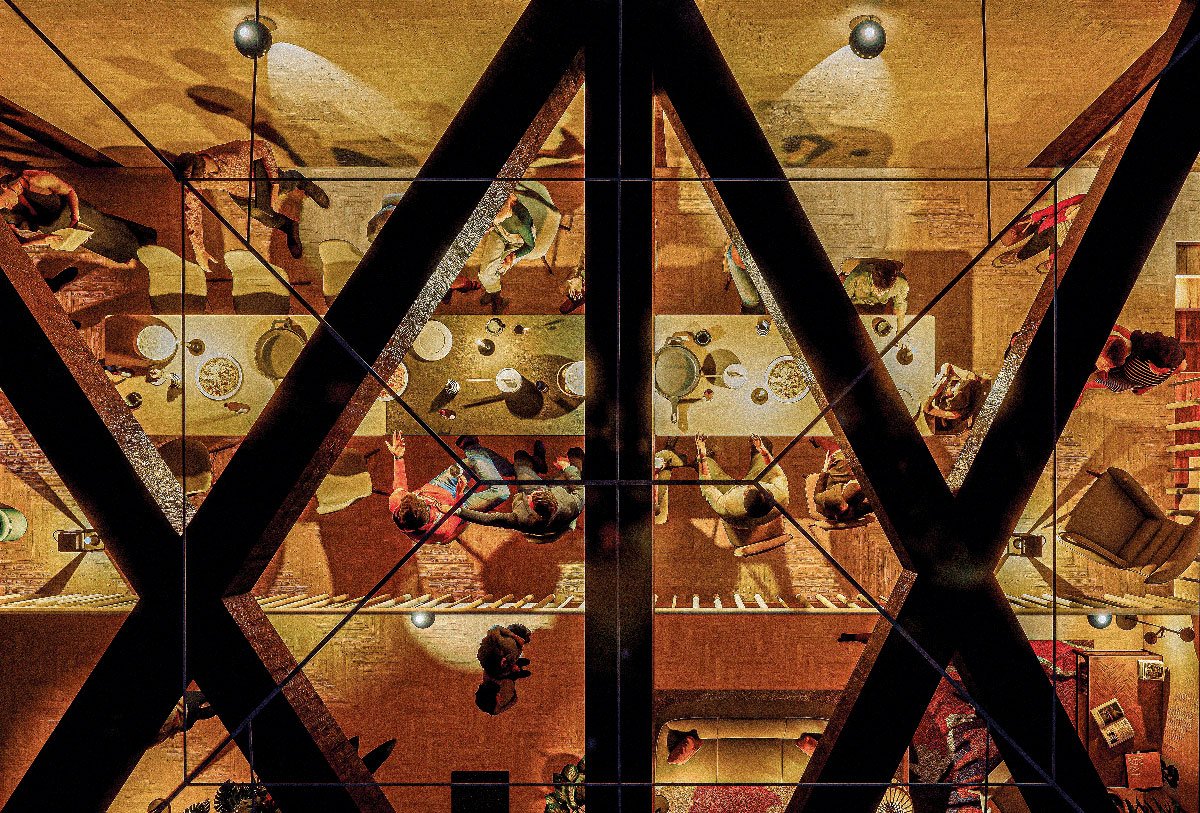
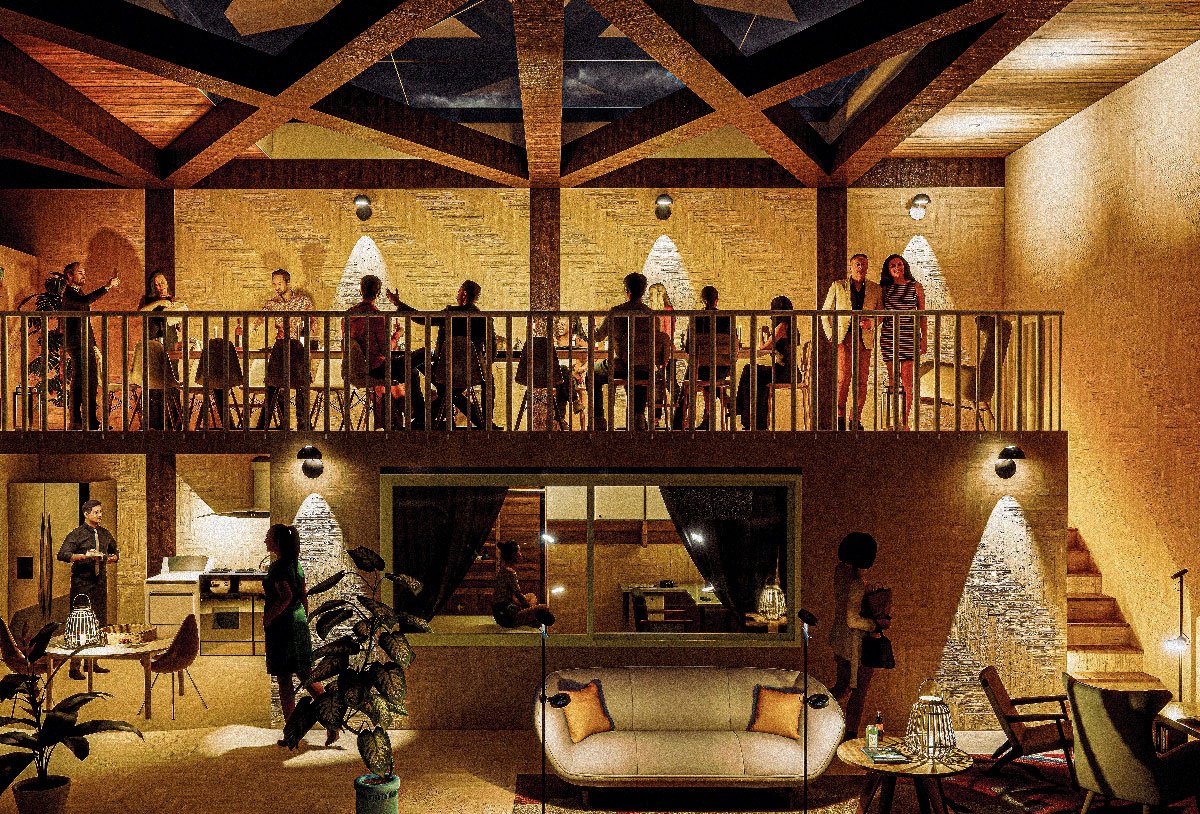
The Bedstee architecture project was designed with an emphasis on fostering a warm, communal atmosphere by incorporating high ceilings that maximize openness and natural light. Central to the design are bedstees—custom alcove beds inspired by traditional Dutch styles—which are treated as independent “objects” rather than static fixtures, merging practicality with artistic expression. Thoughtfully arranged within the vertical space, each bedstee maintains a distinct character while contributing to a harmonious overall design. This layout strikes a balance between privacy and social interaction, creating a shared environment that also respects individual retreats.
Final Outcome
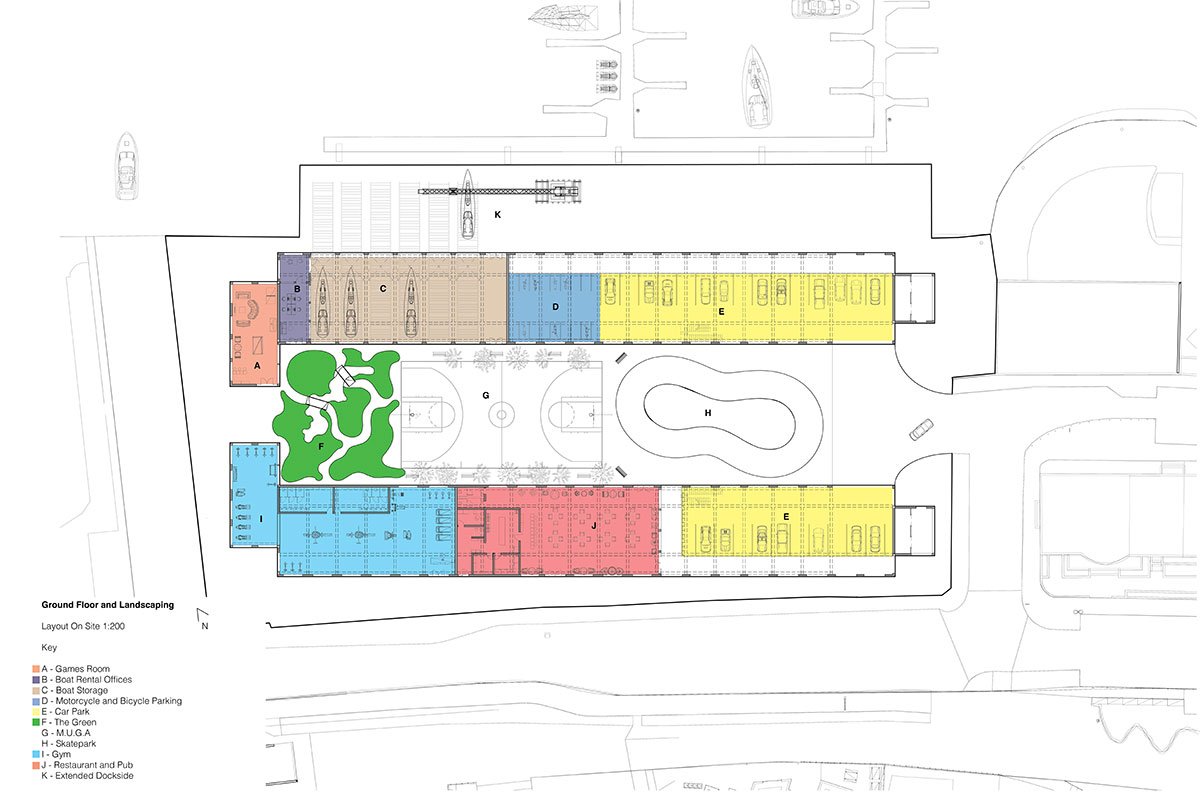
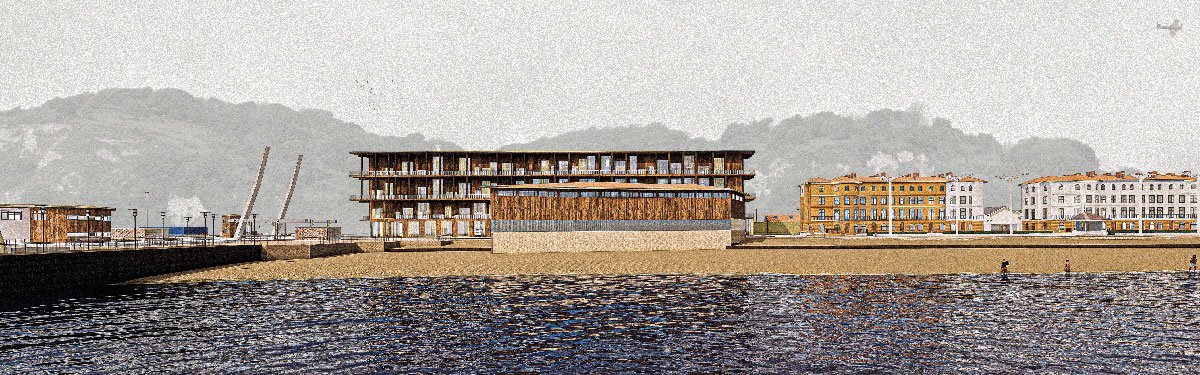
Ground Floor PlanElevation
The final outcome of the Bedstee architecture project is a lively, multi-functional apartment building featuring diverse bedstee designs across its residential floors. These bedstees, integrated as distinct architectural elements, create a playful balance between semi-public and private spaces. This design fosters a sense of community by encouraging resident interaction while preserving opportunities for personal retreat, blending shared living with intimate, individualized experiences.
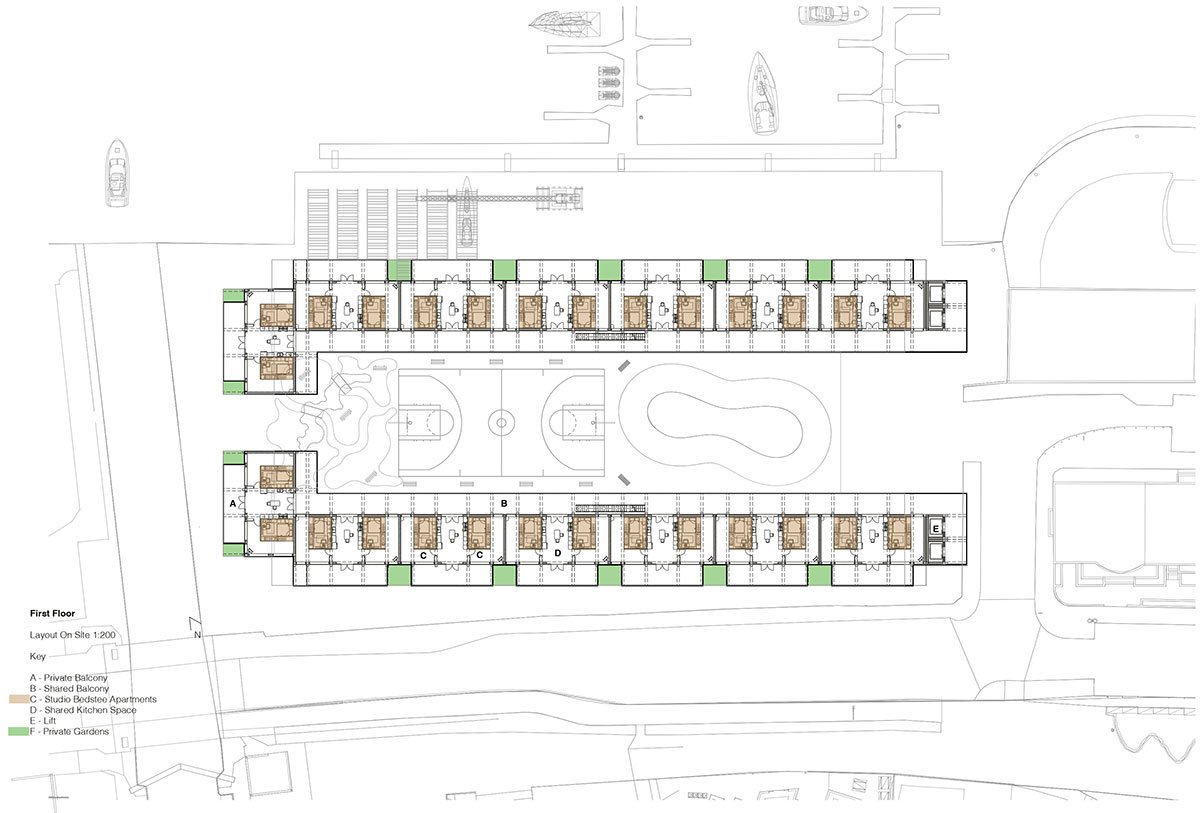
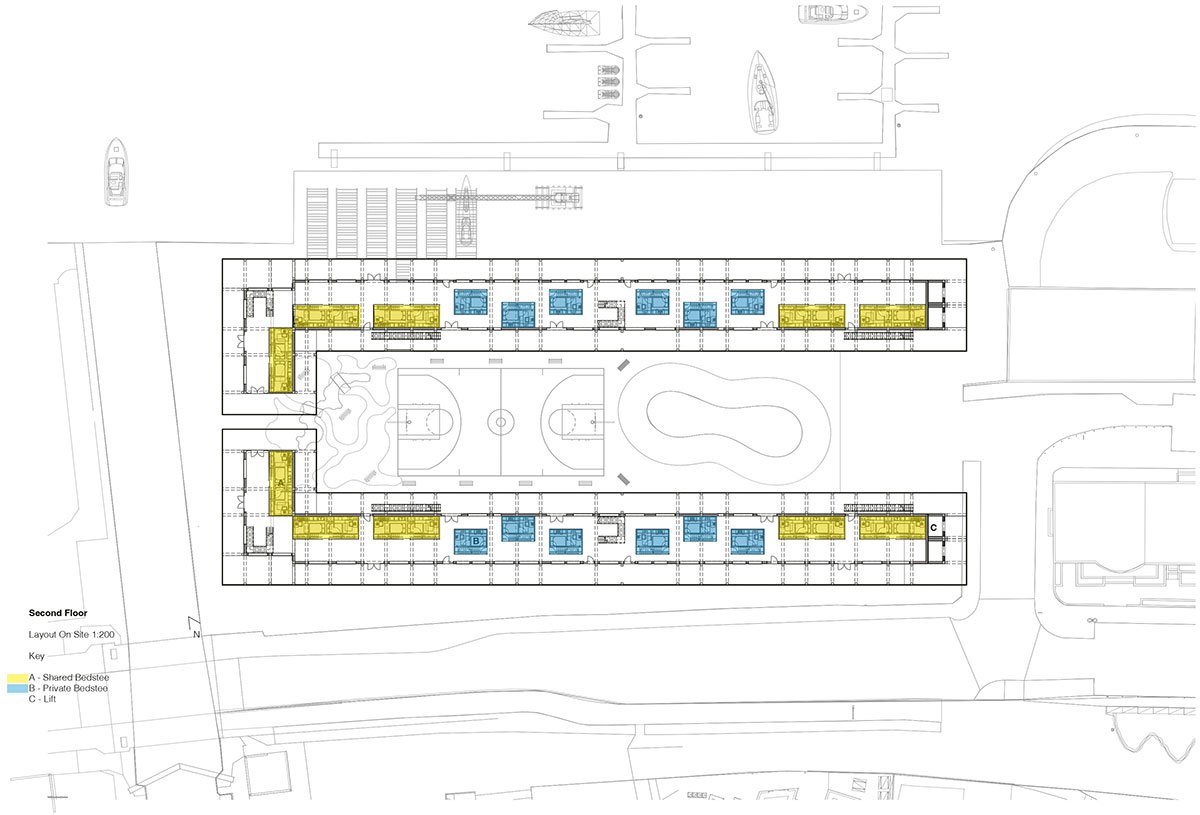
First Floor PlanExternal Internal SectionSecond Floor Plan
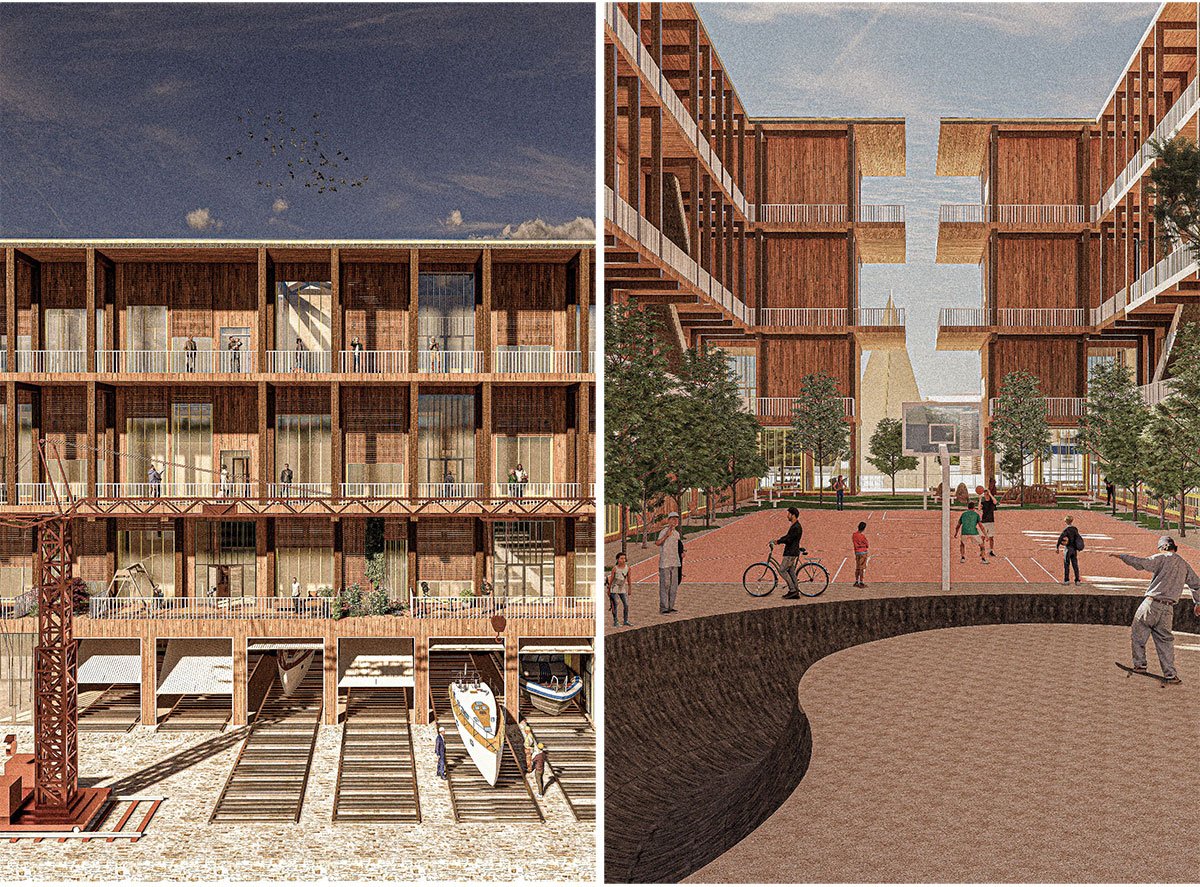
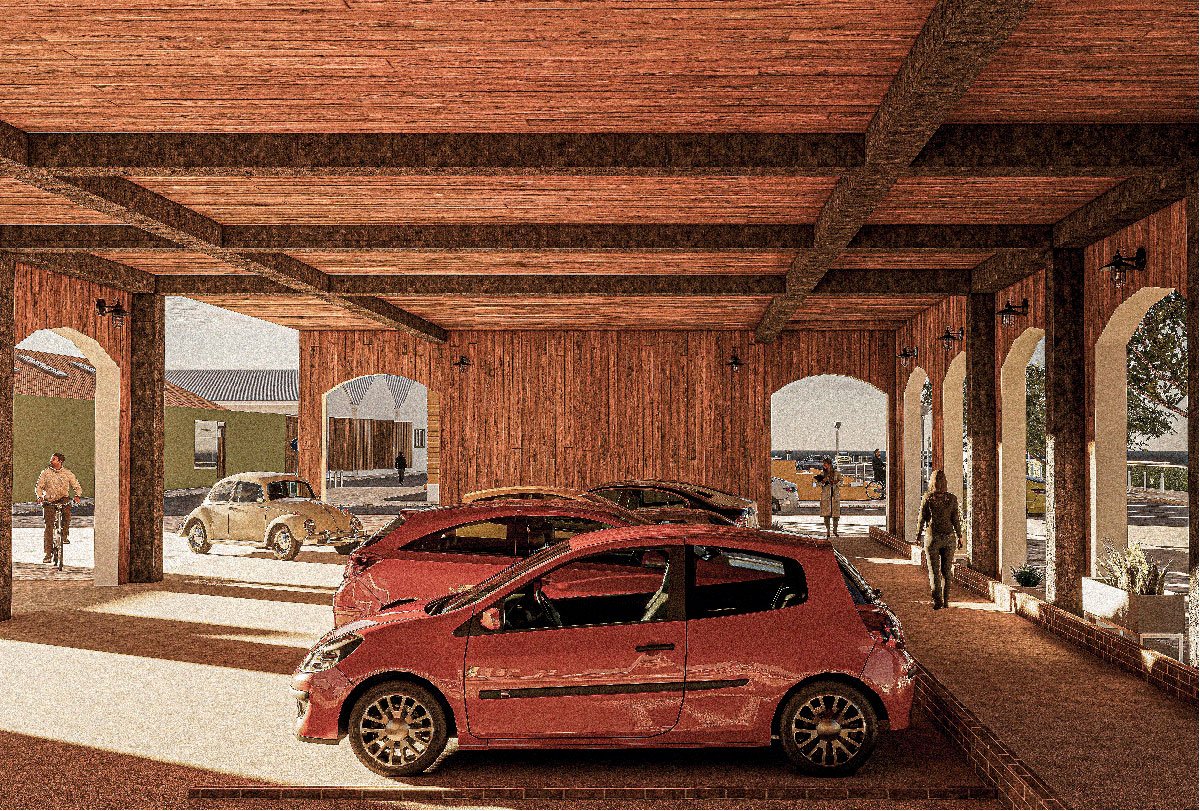
The building’s design combines functionality and community focus. The ground floor hosts car parking, restaurants, boat garages, and offices, creating a vibrant, self-sufficient hub. Above, residential apartments showcase varied bedstee designs that celebrate individuality while maintaining a unified aesthetic. This mixed-use approach strengthens the building’s relationship with the waterfront and urban surroundings, transforming it into a dynamic ecosystem that blends work, leisure, and social interaction, embodying modern communal living.
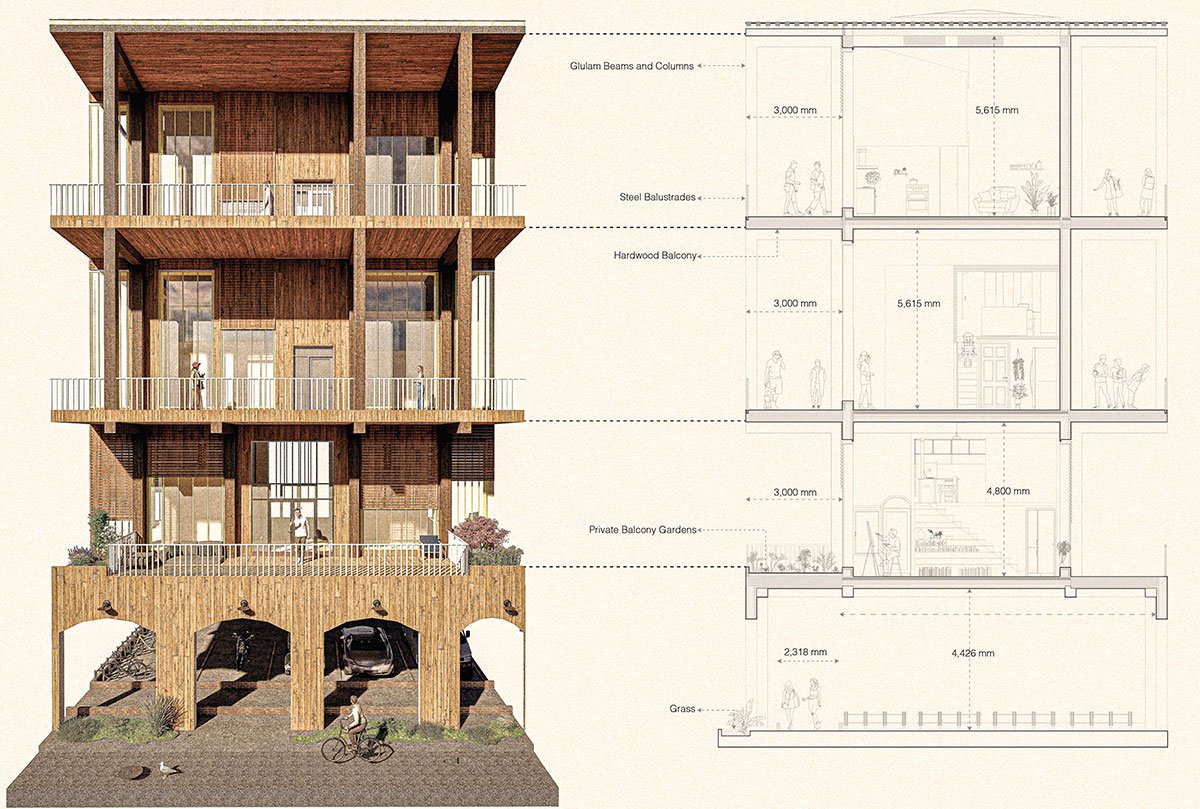
Third Floor PlanBedstee Layout on Each Floor1 TO 5 Details
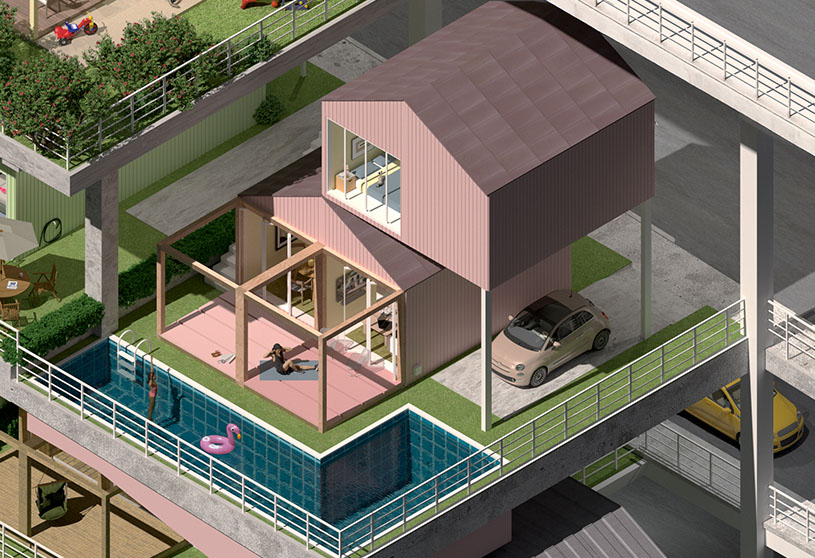
Each bedstee unit functions as a compact micro-apartment, designed to maximize space efficiency and privacy while encouraging community through shared spaces and visual connections. The double-height ceilings introduce vertical integration, enhancing the flow of light and creating an open atmosphere. Strategically placed common areas act as social hubs, fostering interaction and building a sense of belonging among residents.
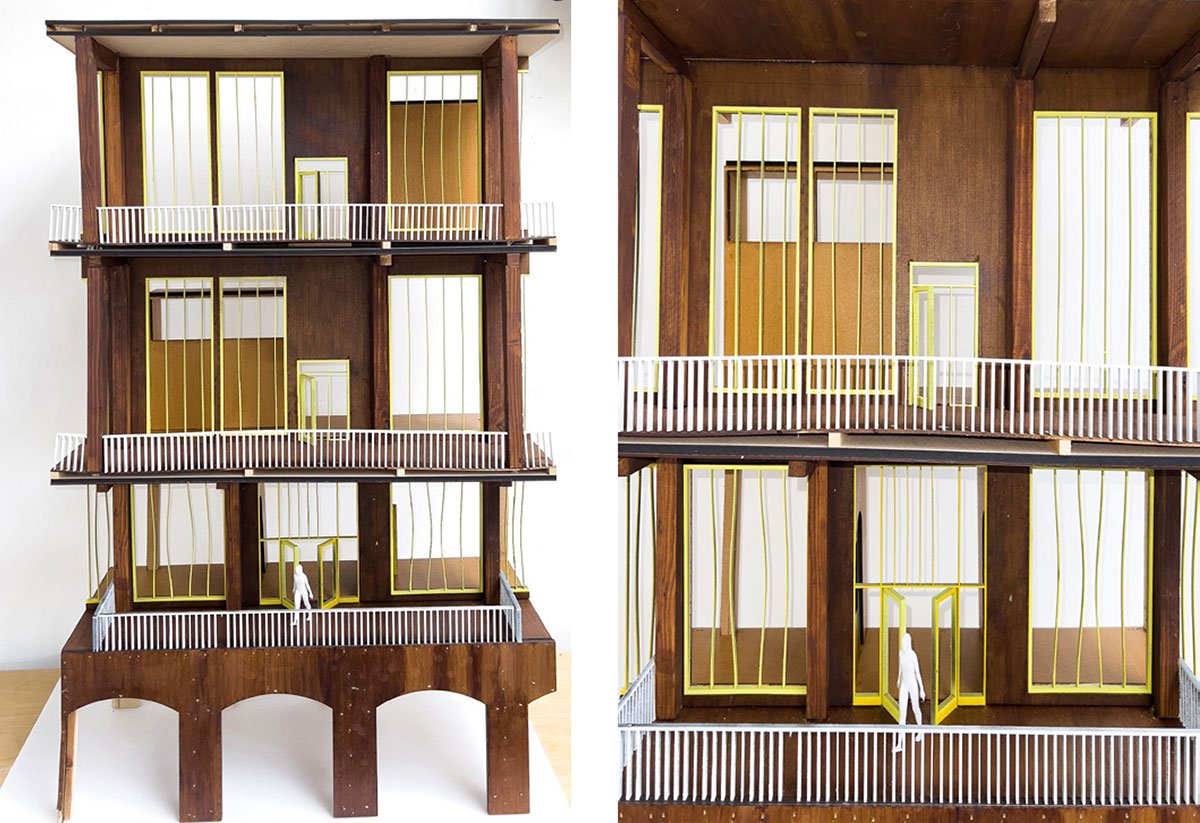
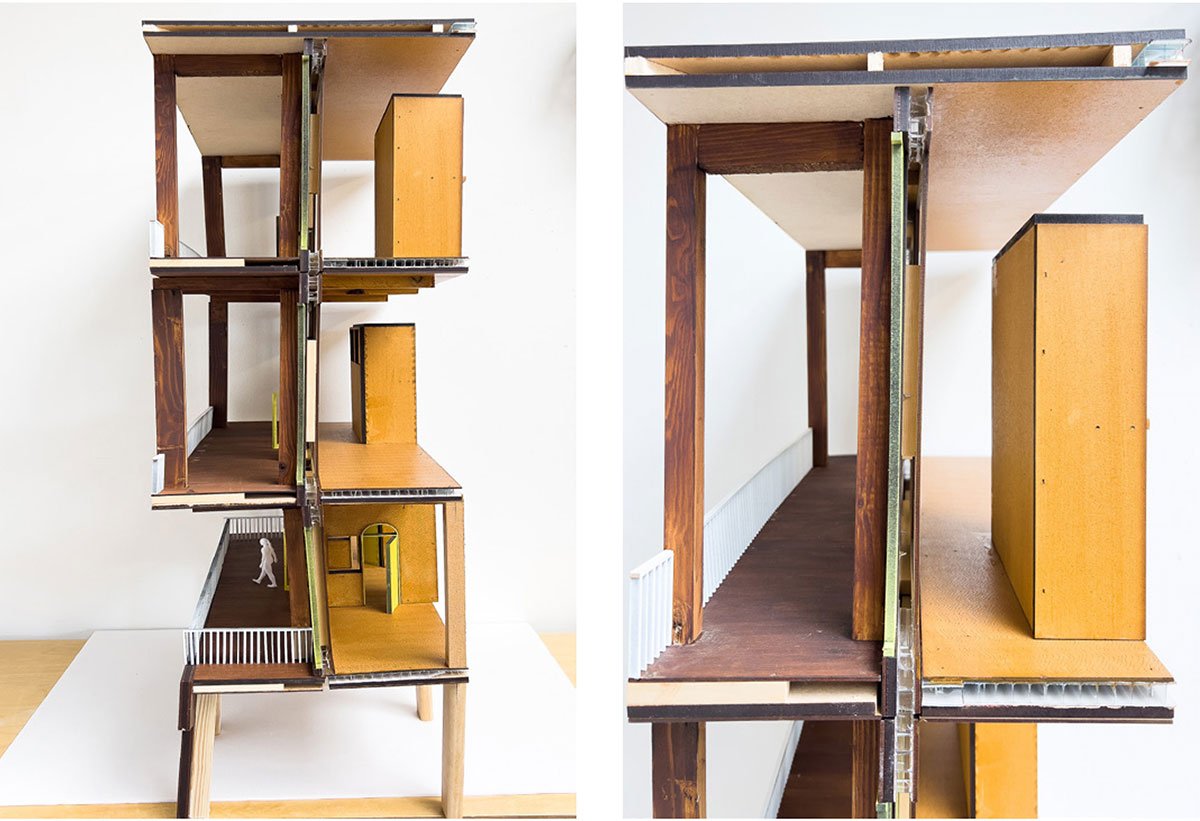
Detail ModelBedstee Design 1
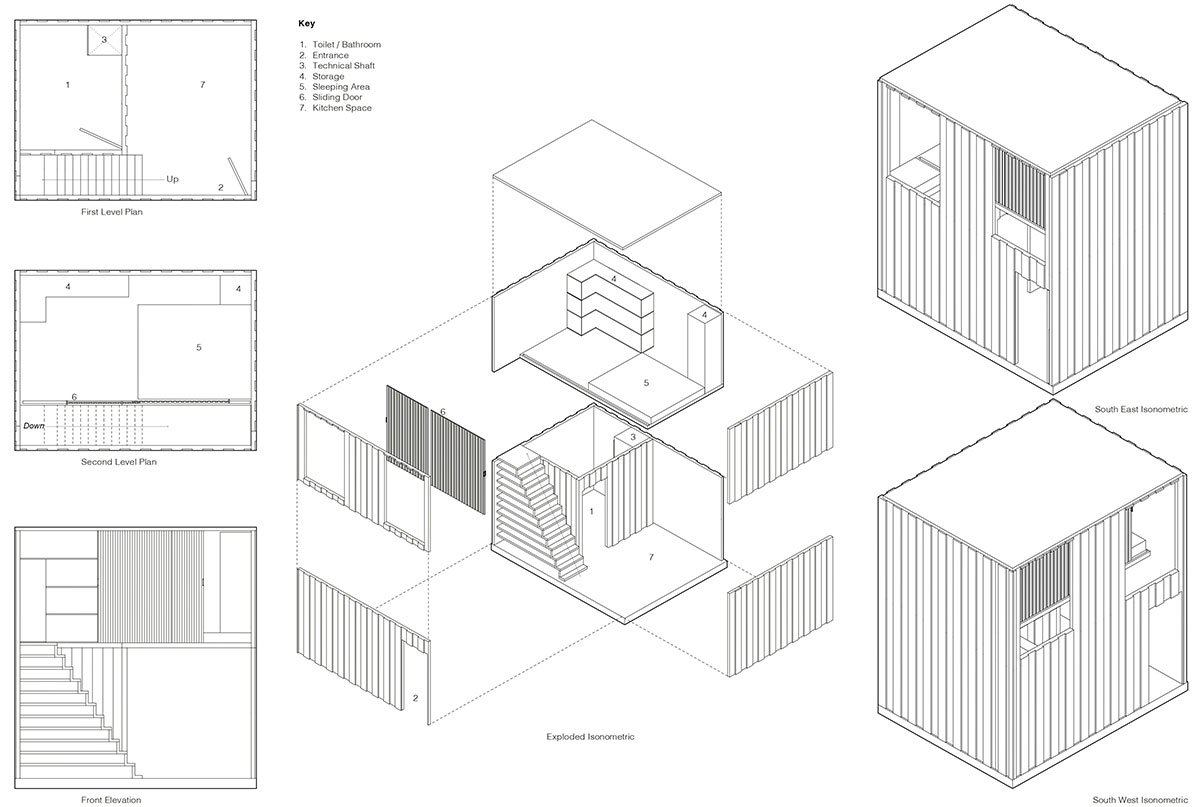
Bedstee Design 1: The bedstee features a modern two-story design that combines elegance and functionality. It features a tiled black-and-white bathroom with hidden technical features, a compact wooden staircase leading to an upper-level sleeping area with built-in closets, sliding doors for privacy, and a glass cutout for natural light. The design is both space-efficient and minimalist, offering a contemporary, functional solution for compact living.
Bedstee Design 2Detail Model
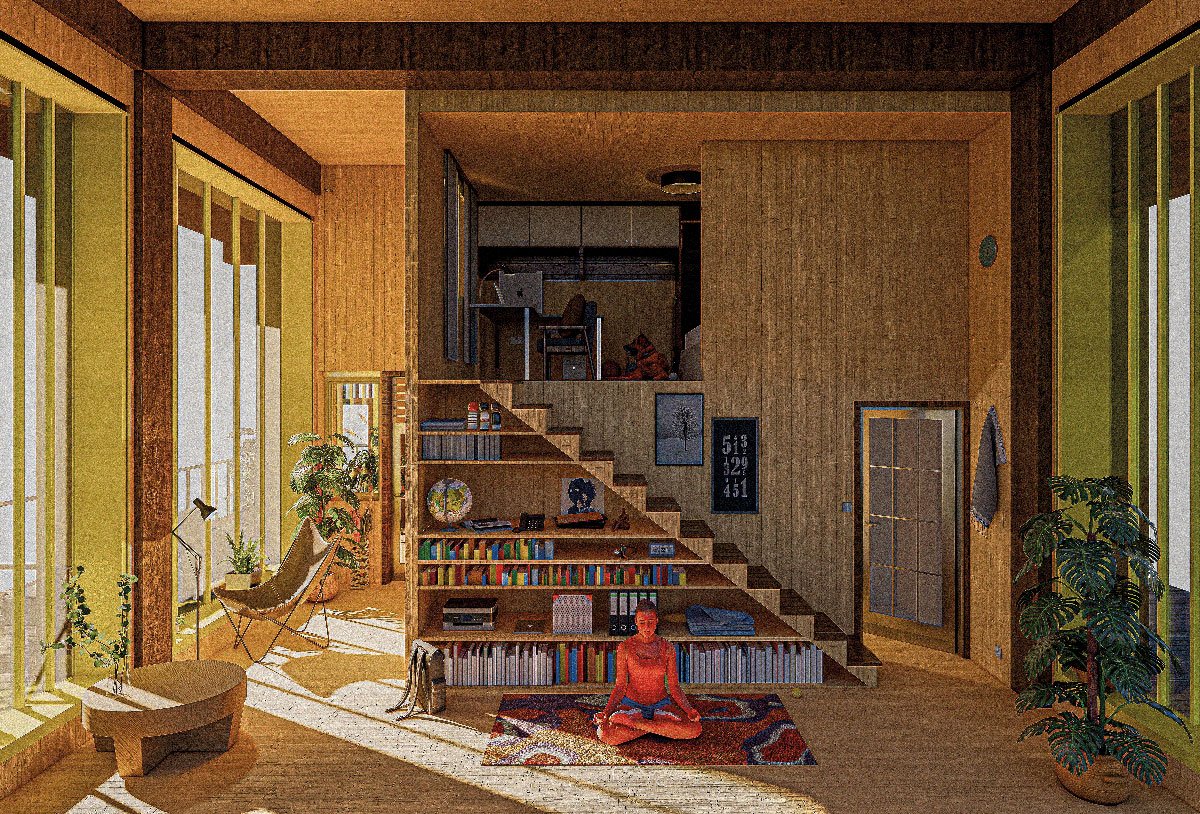
Bedstee Design 2: The ground floor includes a black-and-white tiled bathroom and an open kitchen adorned with acrylic tiles, offering a functional cooking space. Wooden stairs lead to a first-floor sleeping alcove with built-in closets and thin wooden sliding doors, adding warmth and versatility. Large windows above the stairs connect the interior to the outdoors, enhancing openness. Space efficiency is further achieved with bookshelves integrated beneath the stairs.
Bedstee Design 3Bedstee View
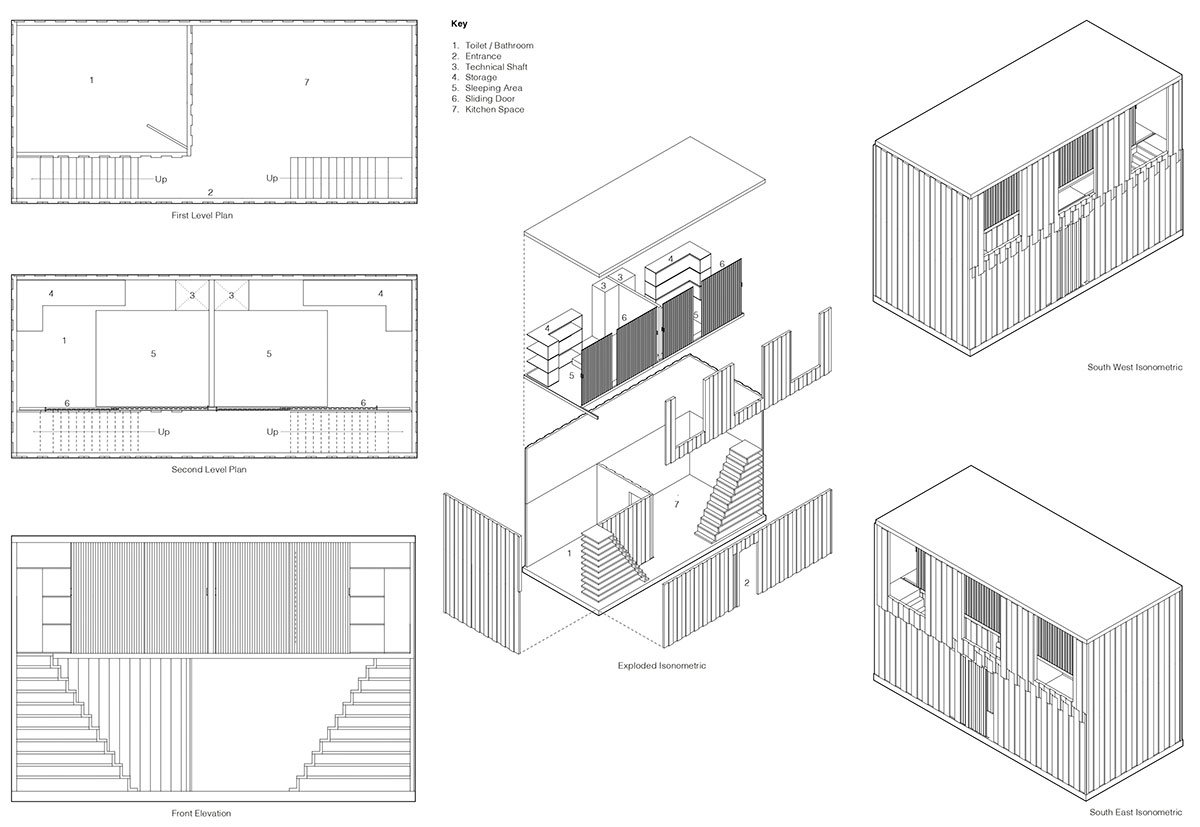
Bedstee Design 3: The two-story modern bedstee design offers a functional and aesthetic solution for shared living. The ground floor includes a black-and-white tiled bathroom and an open kitchen for two. Wooden stairs lead to upper sleeping alcoves, each with built-in storage and divided by a wooden wall for privacy. Sliding wooden doors provide warmth and flexibility, while large glass windows above the stairs connect occupants to the outdoors. Additional storage beneath the stairs maximizes space, making this design a thoughtful and efficient shared living arrangement.
Bedstee Design 4: The bedstee design provides an inclusive solution for individuals with limited mobility, enabling independent living. It includes a wheelchair-accessible bathroom with a bath, toilet, and sink. The raised sleeping alcove ensures easy access, with ample space for wheelchair navigation. Thin wooden sliding doors add privacy and warmth, while essential furniture like closets and tables are arranged around the bedstee to maximize functionality and accessibility.
Detail ModelDock Render | Muga ViewGarden View
The building’s design seamlessly integrates with nature, featuring access to an outdoor garden and a Multi-Use Games Area (MUGA). These spaces extend the indoor environment, combining recreation, relaxation, and greenery to enhance well-being. High ceilings and large windows strengthen the visual connection between indoors and outdoors, creating a harmonious balance between vibrant communal areas and tranquil private spaces. The Bedstee project thus transcends traditional housing, delivering an enriching experience of spatial harmony and collective living.
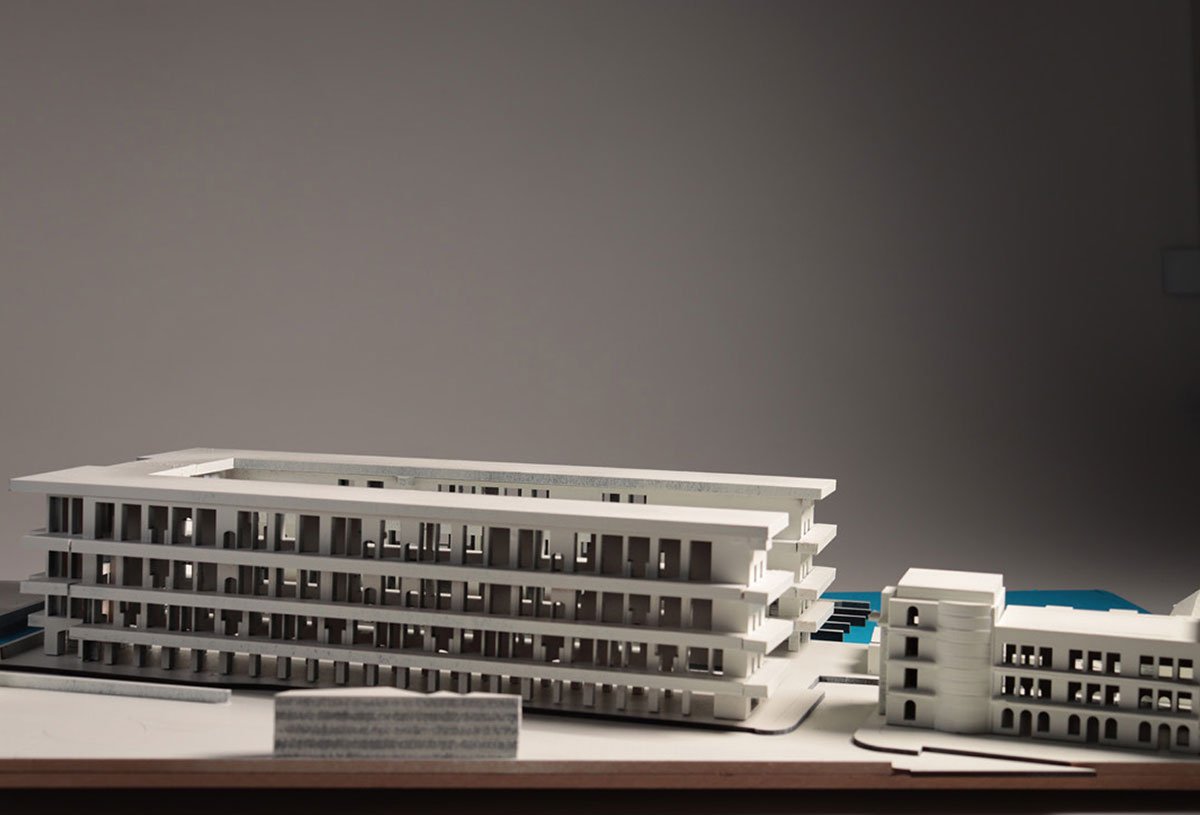
Overall ModelAerial View
Conclusion: The project reimagines the traditional Dutch bedstee to address the modern housing crisis. Its modular design creates a harmonious blend of private and communal spaces, promoting social interaction and individual privacy. This innovative approach challenges conventional housing models and encourages a reconsideration of collective living spaces for the future.
[This Academic Project has been published with text and images submitted by the student]
Site Context
Design Process
Final Outcome
To submit your academic project for publication at ArchiDiaries, please visit the following link >> Submit
Get the best of ArchiDiaries, directly in your inbox.
We use cookies on our website to give you the most relevant experience by remembering your preferences and repeat visits. By clicking “Accept All”, you consent to the use of ALL the cookies. However, you may visit "Cookie Settings" to provide a controlled consent.
This website uses cookies to improve your experience while you navigate through the website. Out of these, the cookies that are categorized as necessary are stored on your browser as they are essential for the working of basic functionalities of the website. We also use third-party cookies that help us analyze and understand how you use this website. These cookies will be stored in your browser only with your consent. You also have the option to opt-out of these cookies. But opting out of some of these cookies may affect your browsing experience.
Necessary cookies are absolutely essential for the website to function properly. These cookies ensure basic functionalities and security features of the website, anonymously.
Cookie
Duration
Description
cookielawinfo-checkbox-analytics
11 months
This cookie is set by GDPR Cookie Consent plugin. The cookie is used to store the user consent for the cookies in the category "Analytics".
cookielawinfo-checkbox-functional
11 months
The cookie is set by GDPR cookie consent to record the user consent for the cookies in the category "Functional".
cookielawinfo-checkbox-necessary
11 months
This cookie is set by GDPR Cookie Consent plugin. The cookies is used to store the user consent for the cookies in the category "Necessary".
cookielawinfo-checkbox-others
11 months
This cookie is set by GDPR Cookie Consent plugin. The cookie is used to store the user consent for the cookies in the category "Other.
cookielawinfo-checkbox-performance
11 months
This cookie is set by GDPR Cookie Consent plugin. The cookie is used to store the user consent for the cookies in the category "Performance".
viewed_cookie_policy
11 months
The cookie is set by the GDPR Cookie Consent plugin and is used to store whether or not user has consented to the use of cookies. It does not store any personal data.
Functional cookies help to perform certain functionalities like sharing the content of the website on social media platforms, collect feedbacks, and other third-party features.
Performance cookies are used to understand and analyze the key performance indexes of the website which helps in delivering a better user experience for the visitors.
Analytical cookies are used to understand how visitors interact with the website. These cookies help provide information on metrics the number of visitors, bounce rate, traffic source, etc.
Advertisement cookies are used to provide visitors with relevant ads and marketing campaigns. These cookies track visitors across websites and collect information to provide customized ads.













![Factory[n]Certainty: Redefining Industrial Architecture Through Work, Life, and Community | Bachelors Design Thesis](https://archidiaries.com/wp-content/uploads/2026/09/Siam-Rahman_APR_feat_img.jpg)