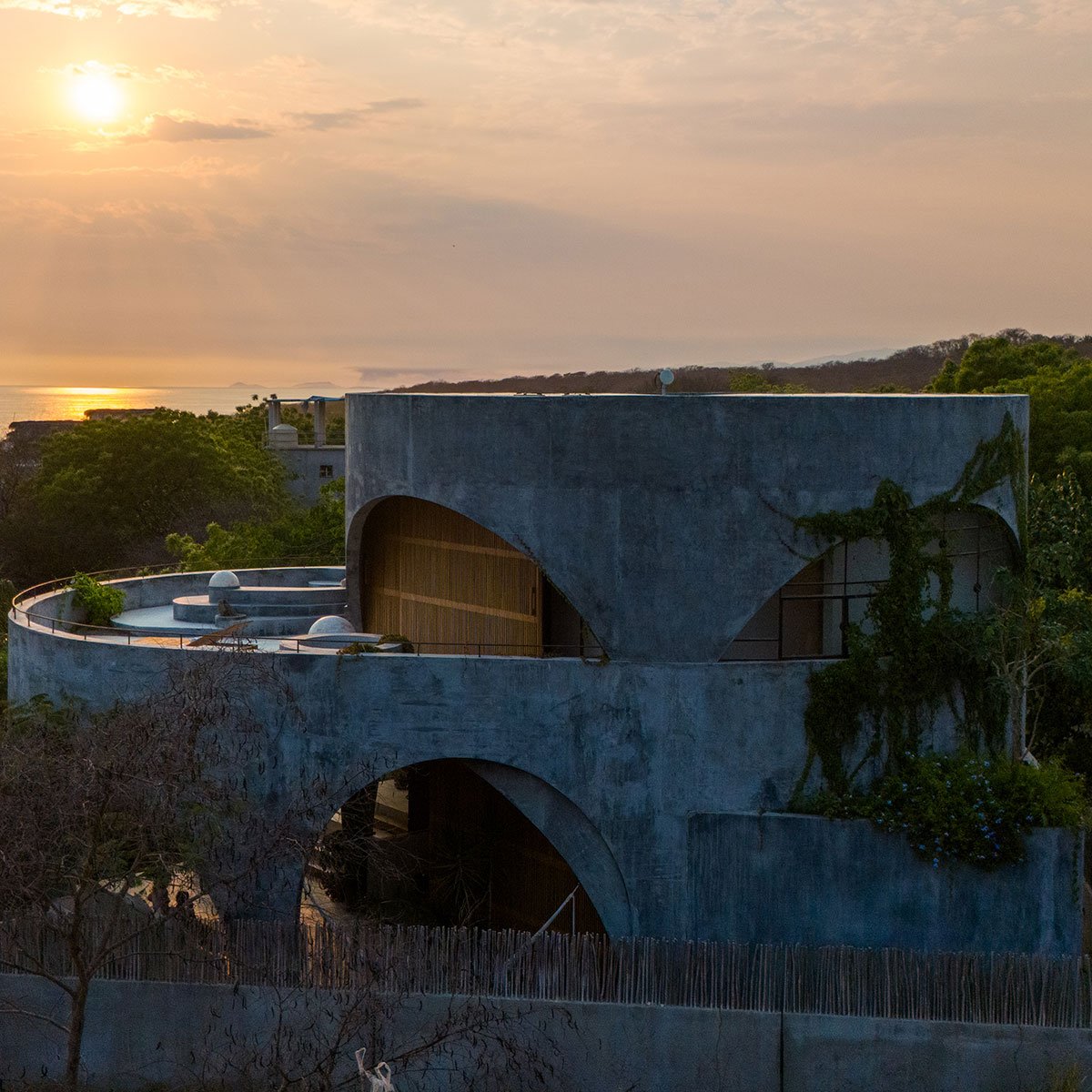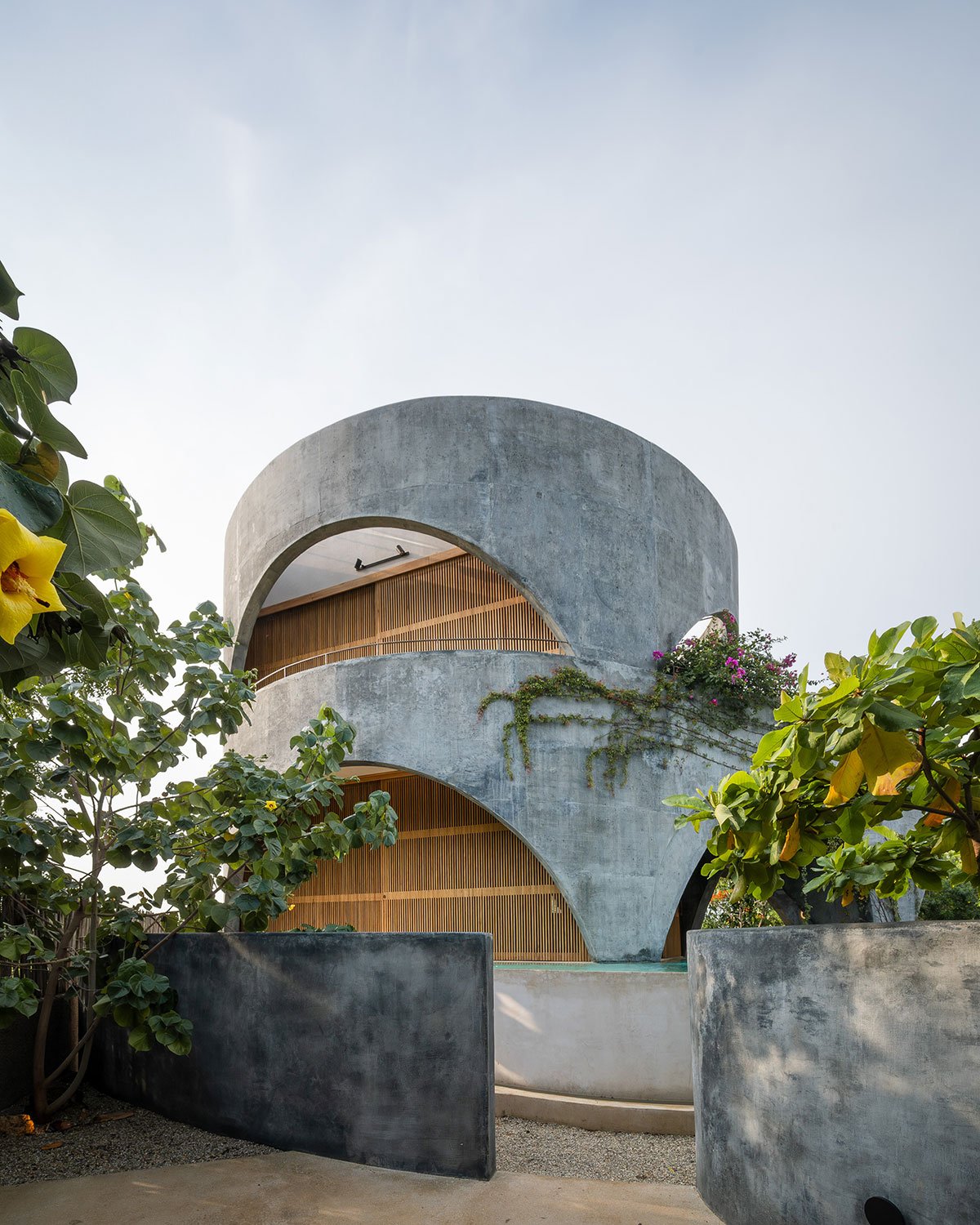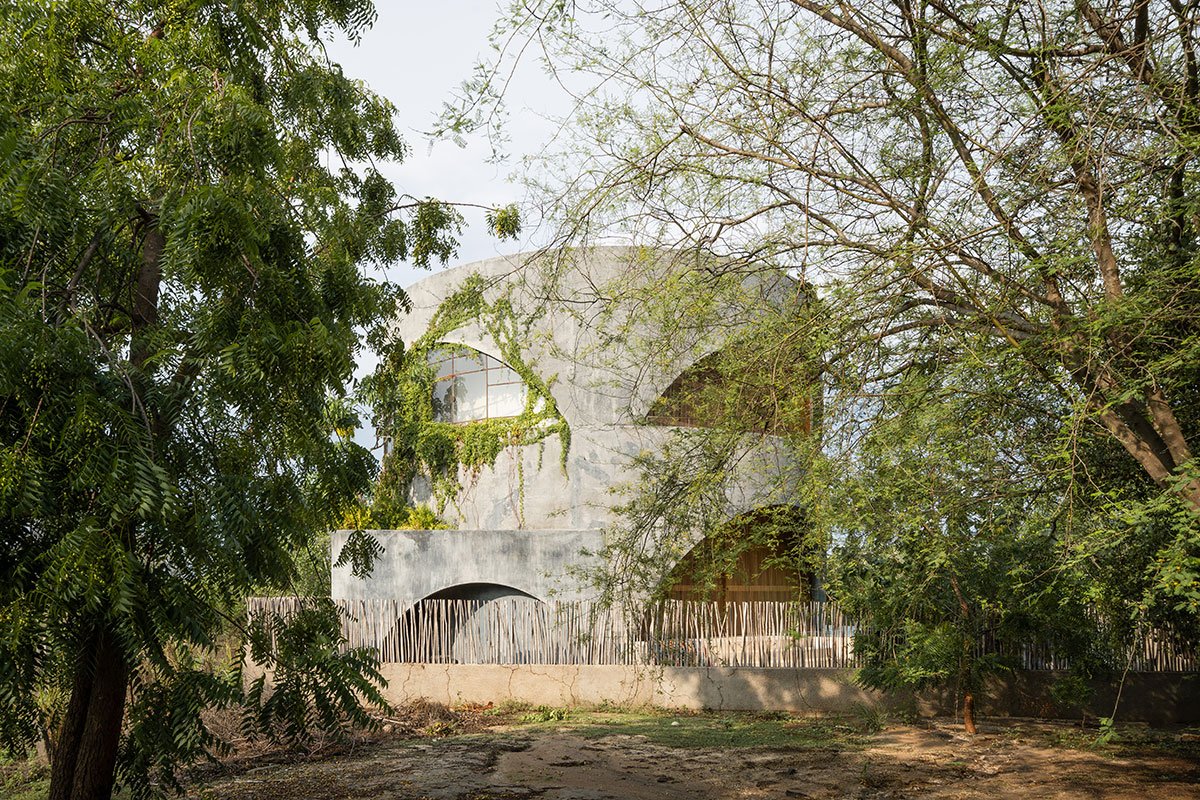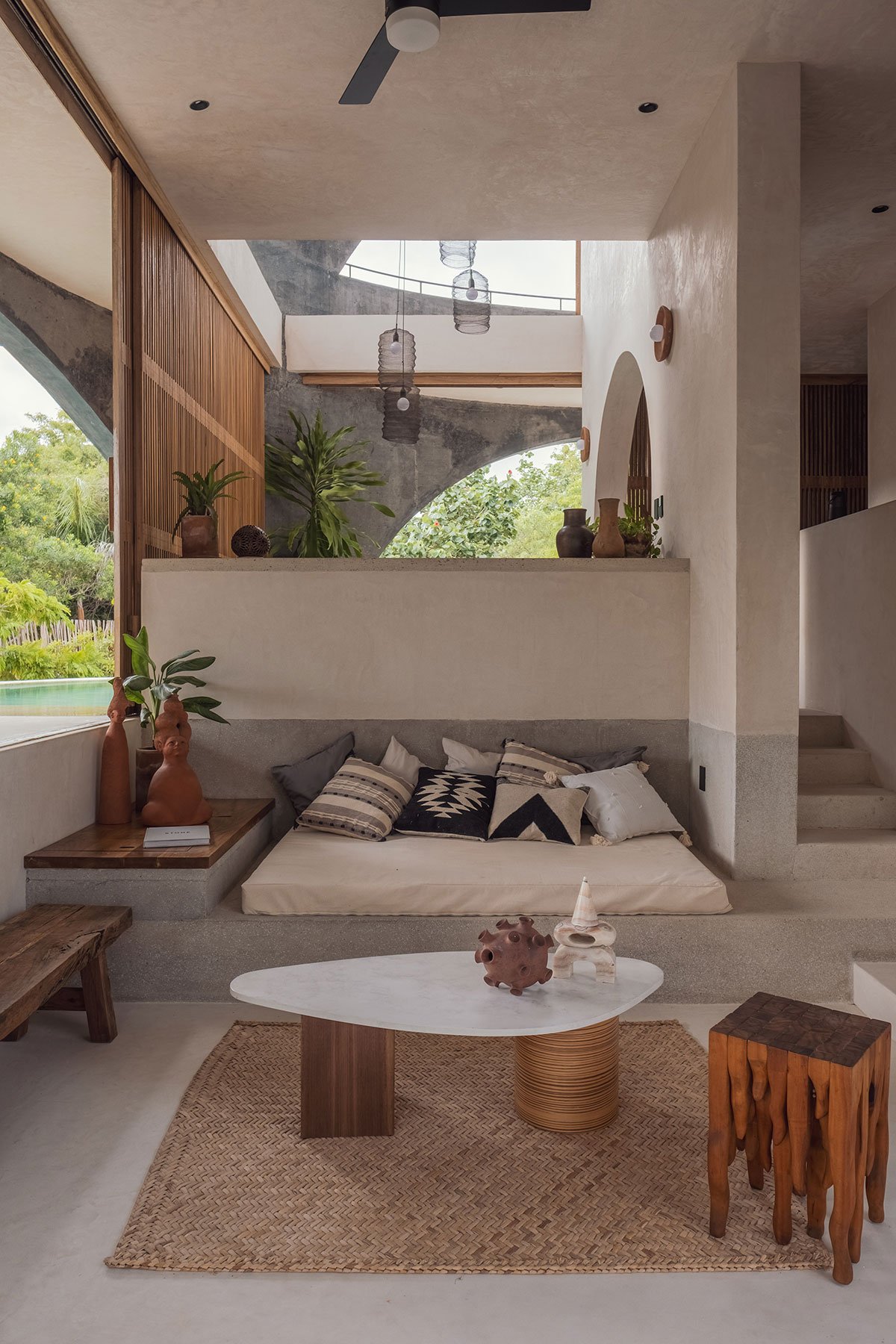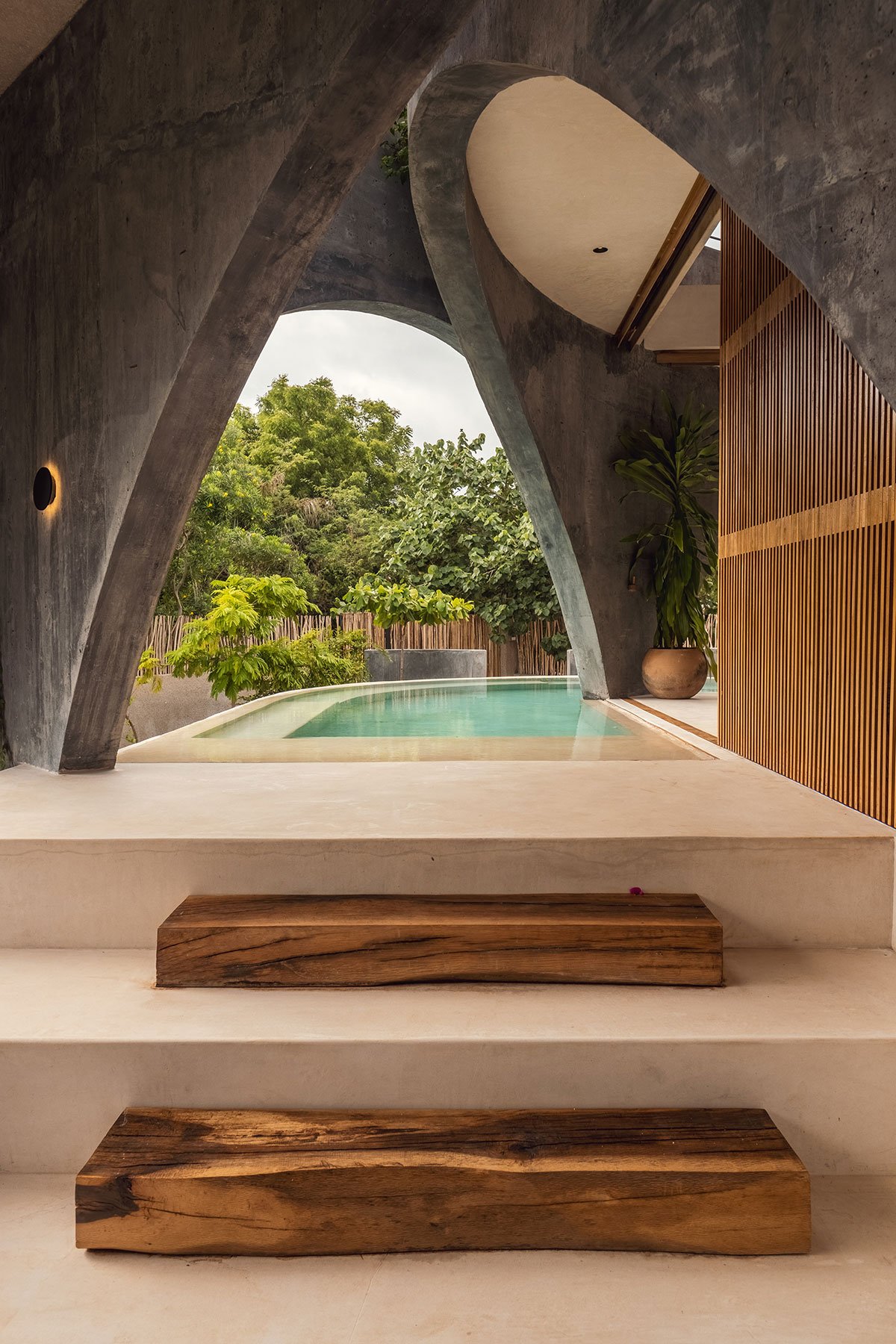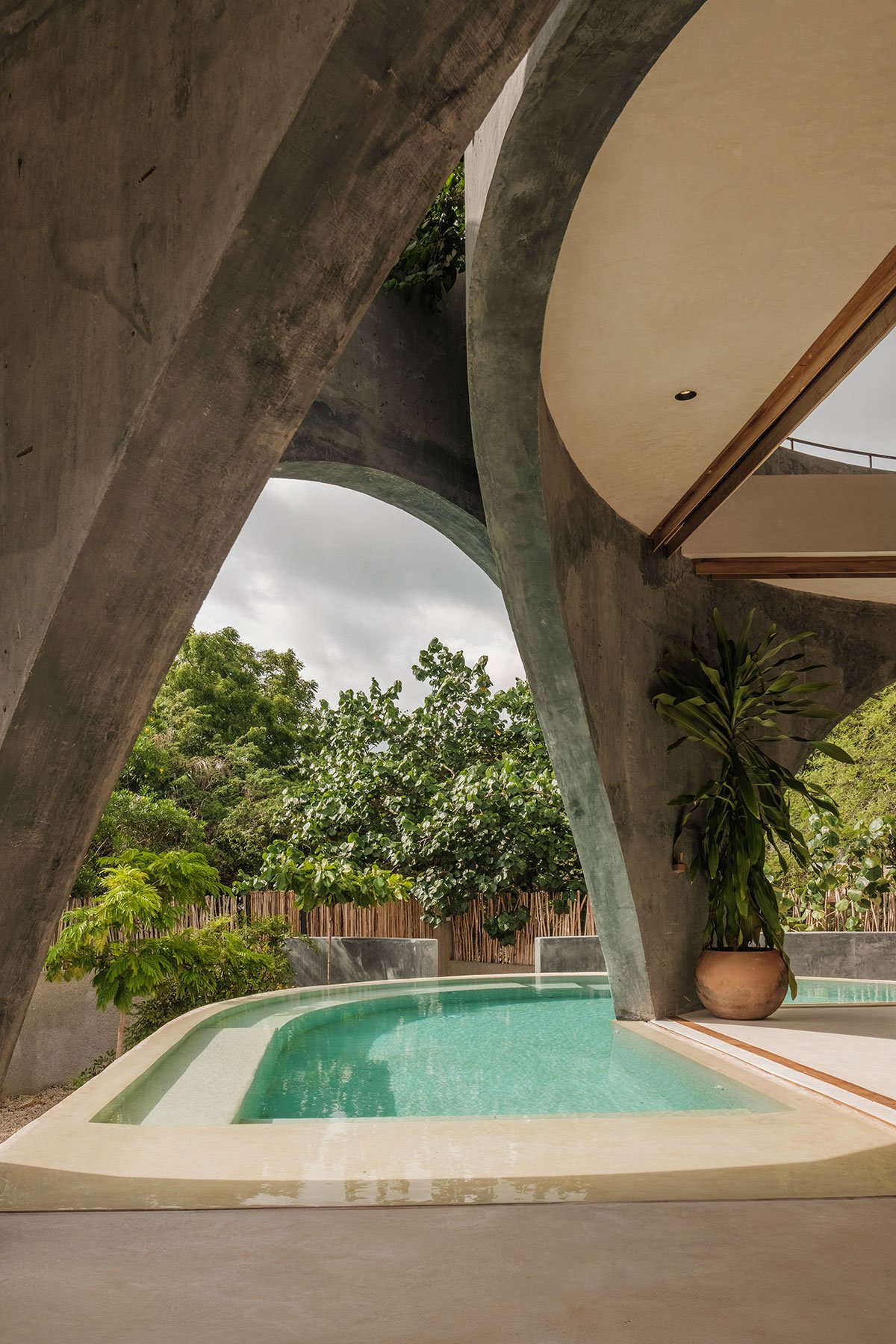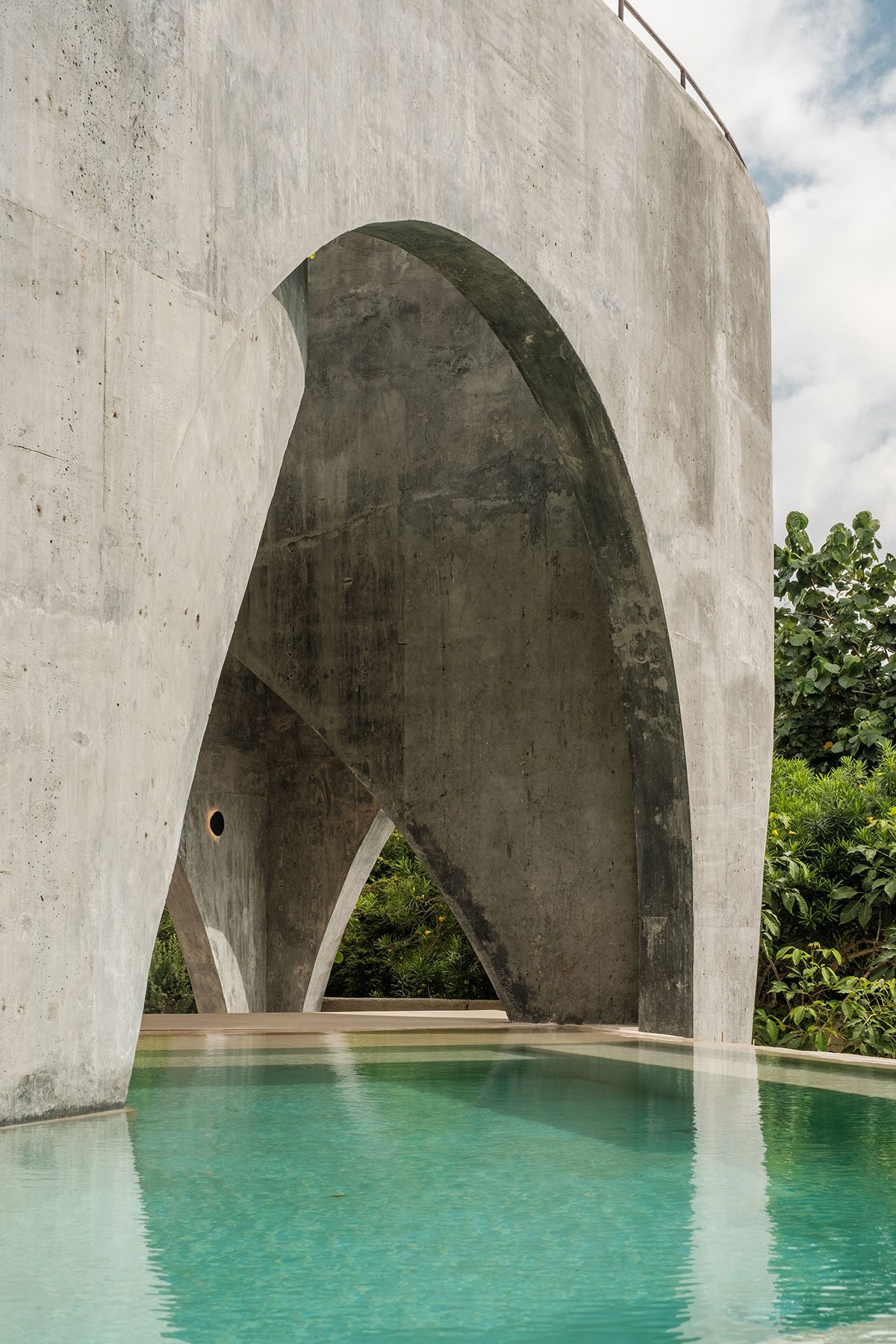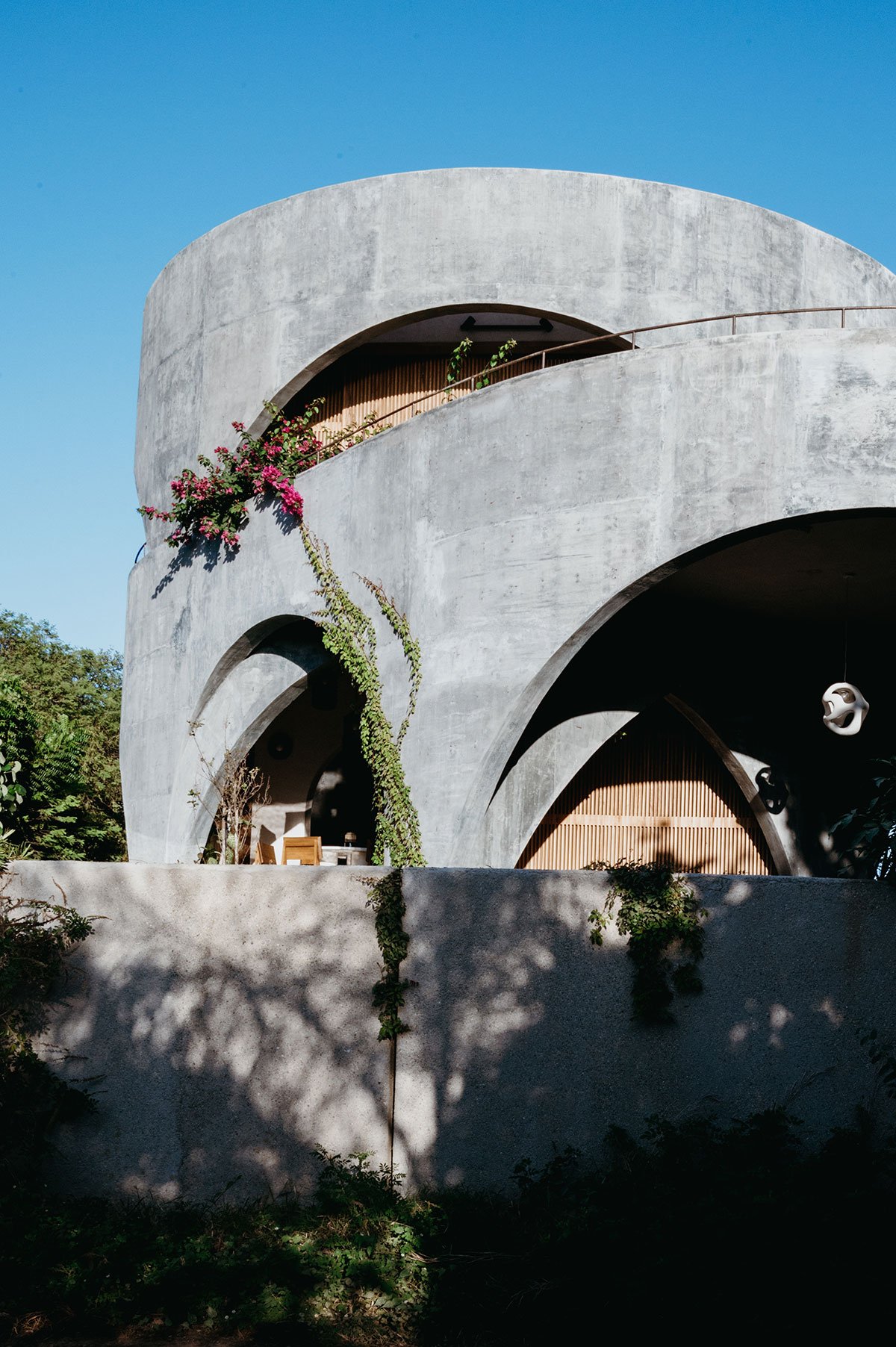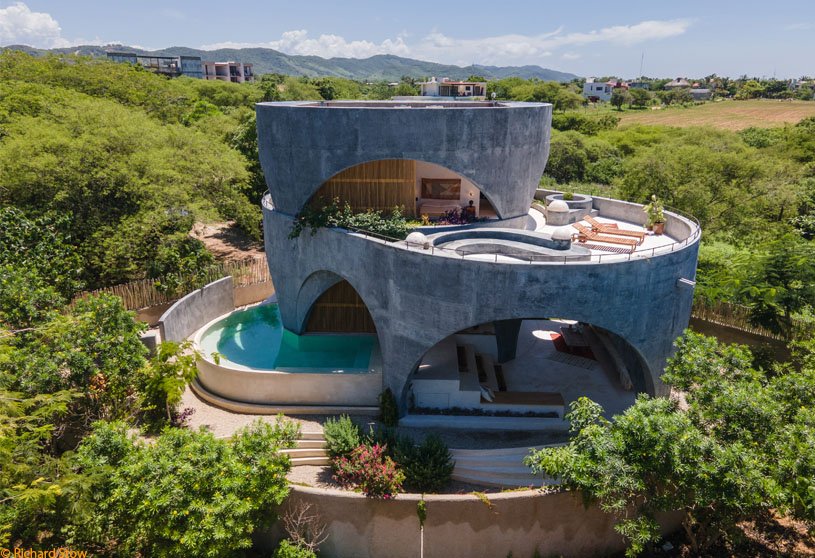
Excerpt: Casa Toro, designed by Estudio Carroll, features a distinctive geometry that adapts to the land, seamlessly integrating with nature. Its two cylindrical volumes form a blue concrete structure inspired by the ocean, with an open design that fosters seamless interaction between residents and nature. Inspired by wind and sea currents, the project prioritizes energy efficiency while offering a tranquil, harmonious retreat.
Project Description
[Text as submitted by architect] In an era where global temperatures are rising year by year, the responsibility of architects and designers to contribute to energy-efficient projects becomes essential. This responsibility was the guiding light that illuminated our vision when we were given the opportunity to create a residence for a couple who longed for their own corner of paradise on the Oaxacan coast.


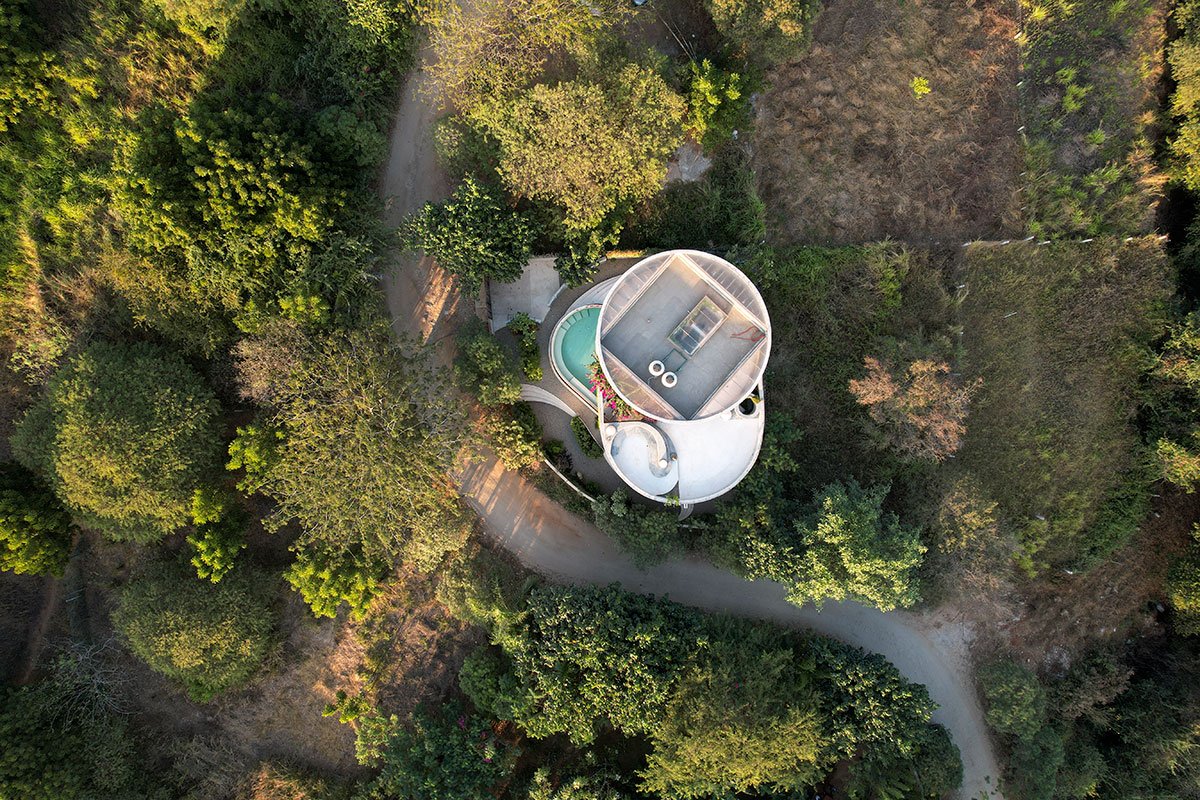
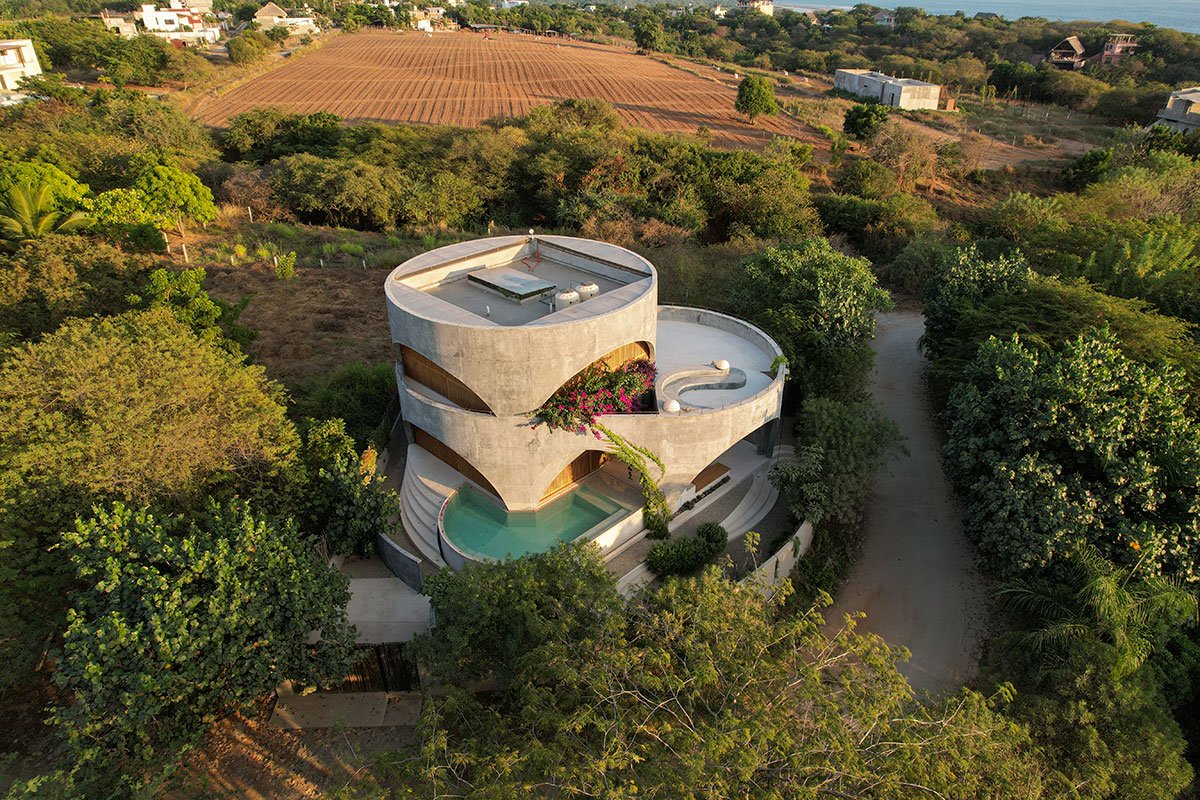
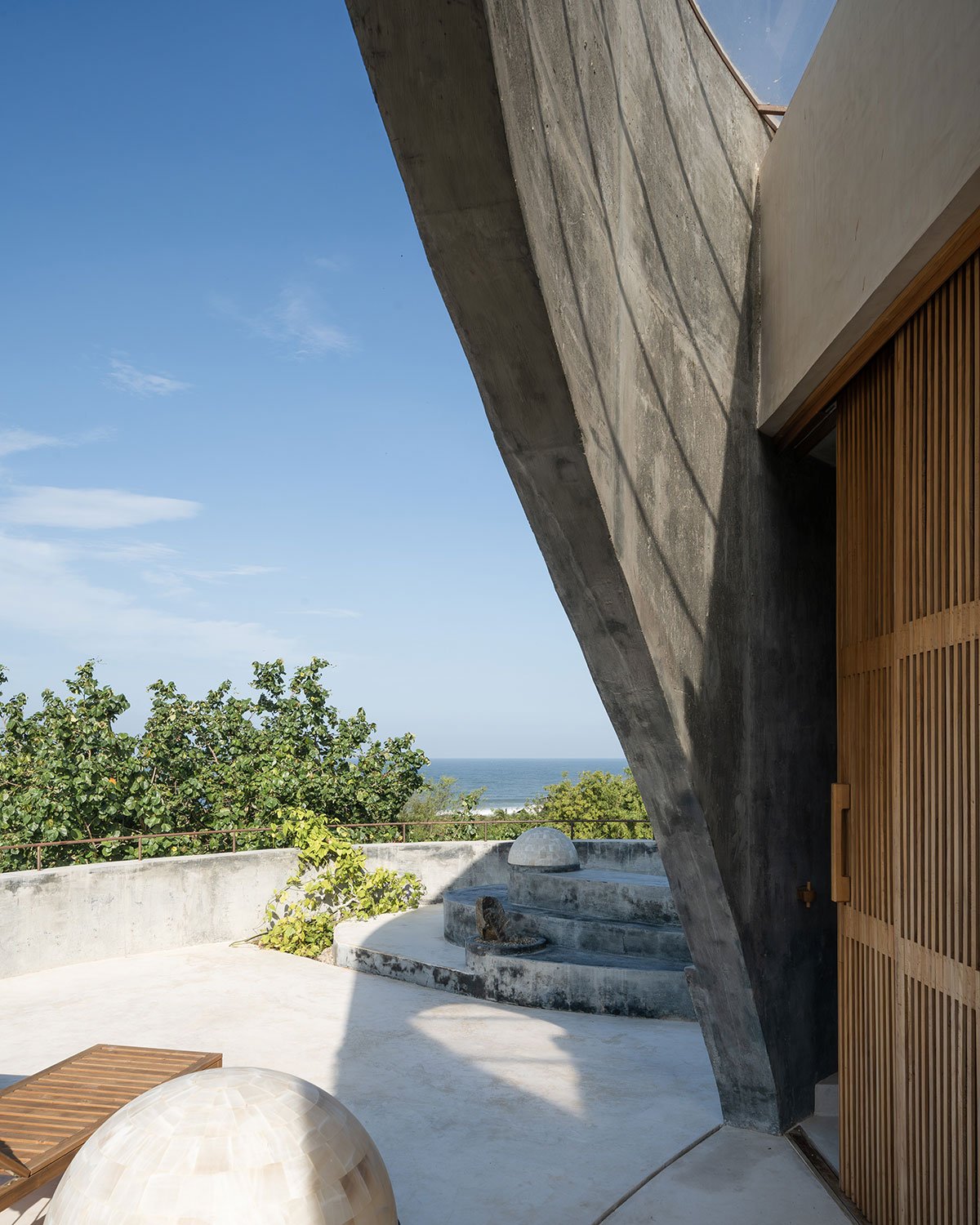
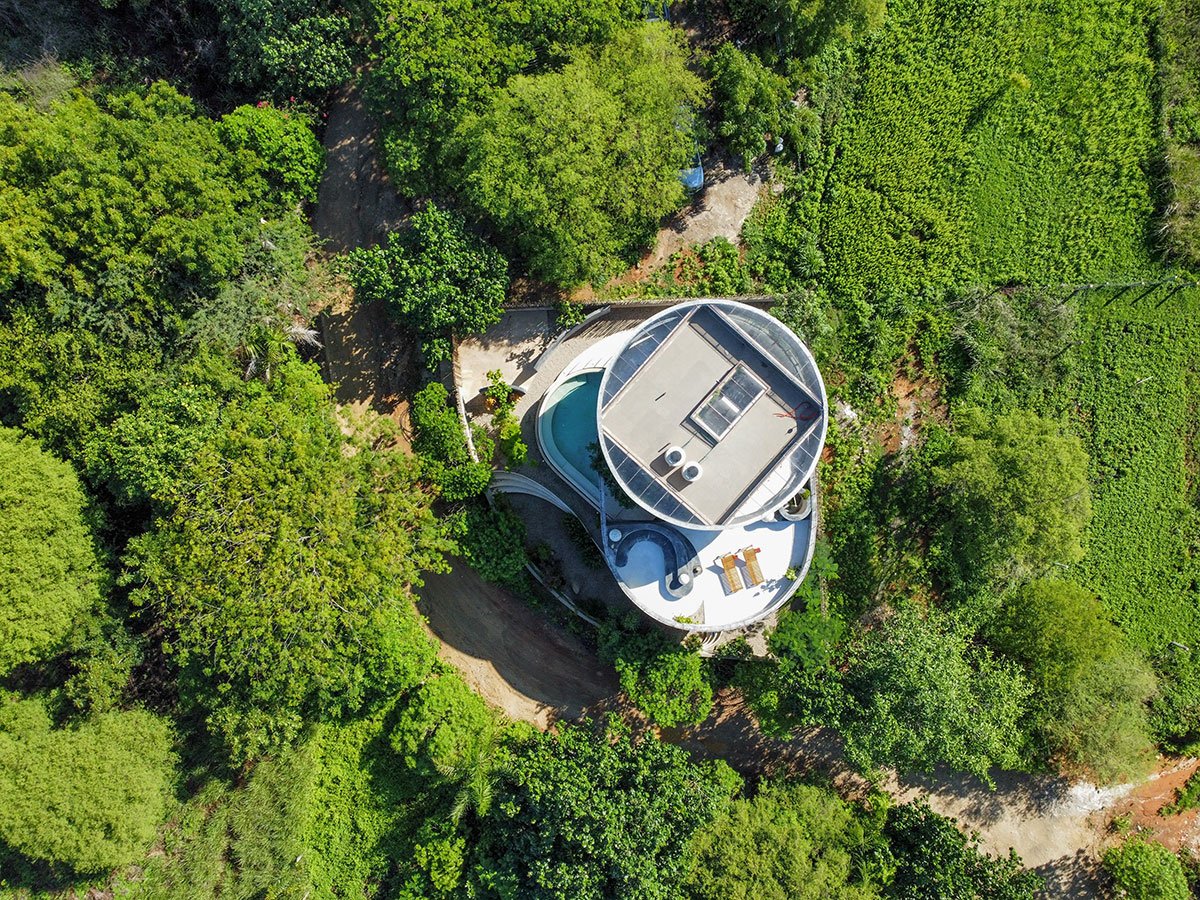
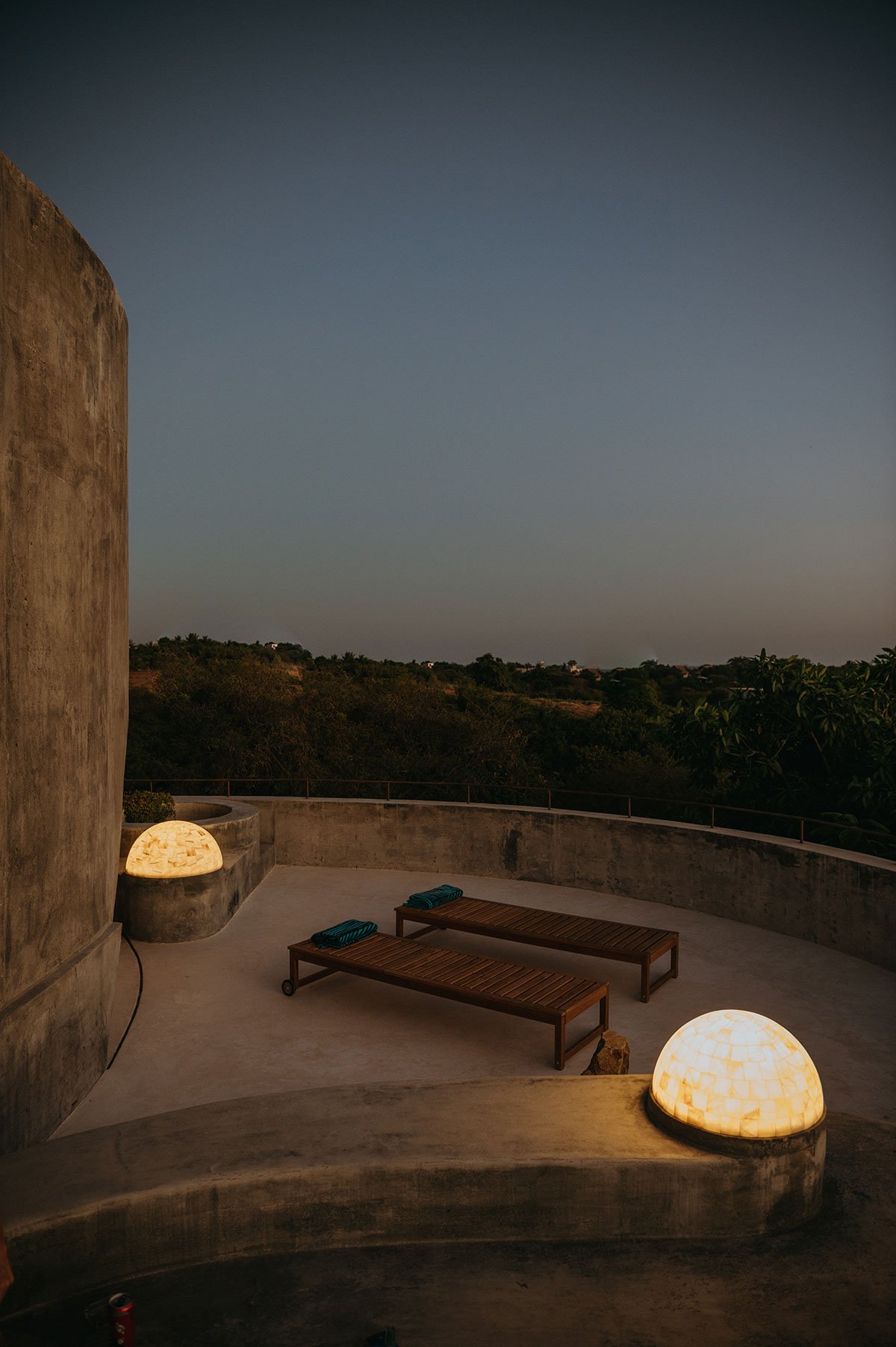
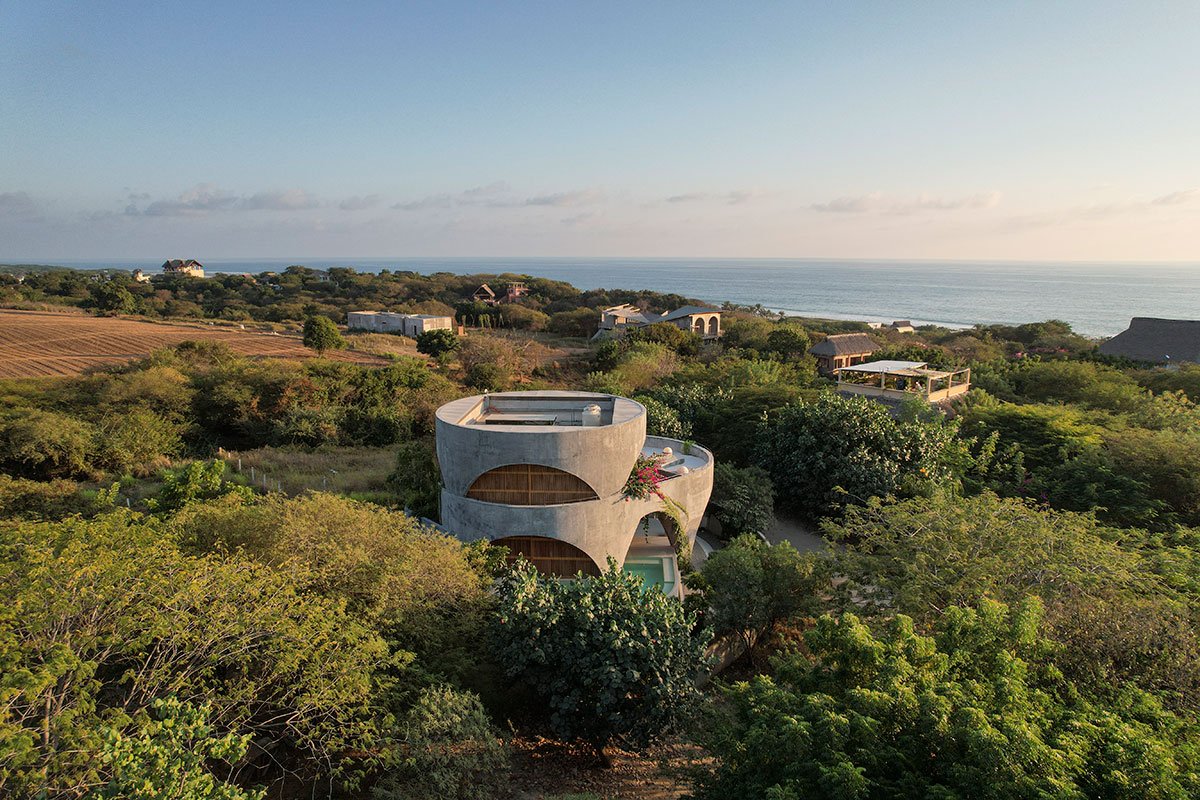
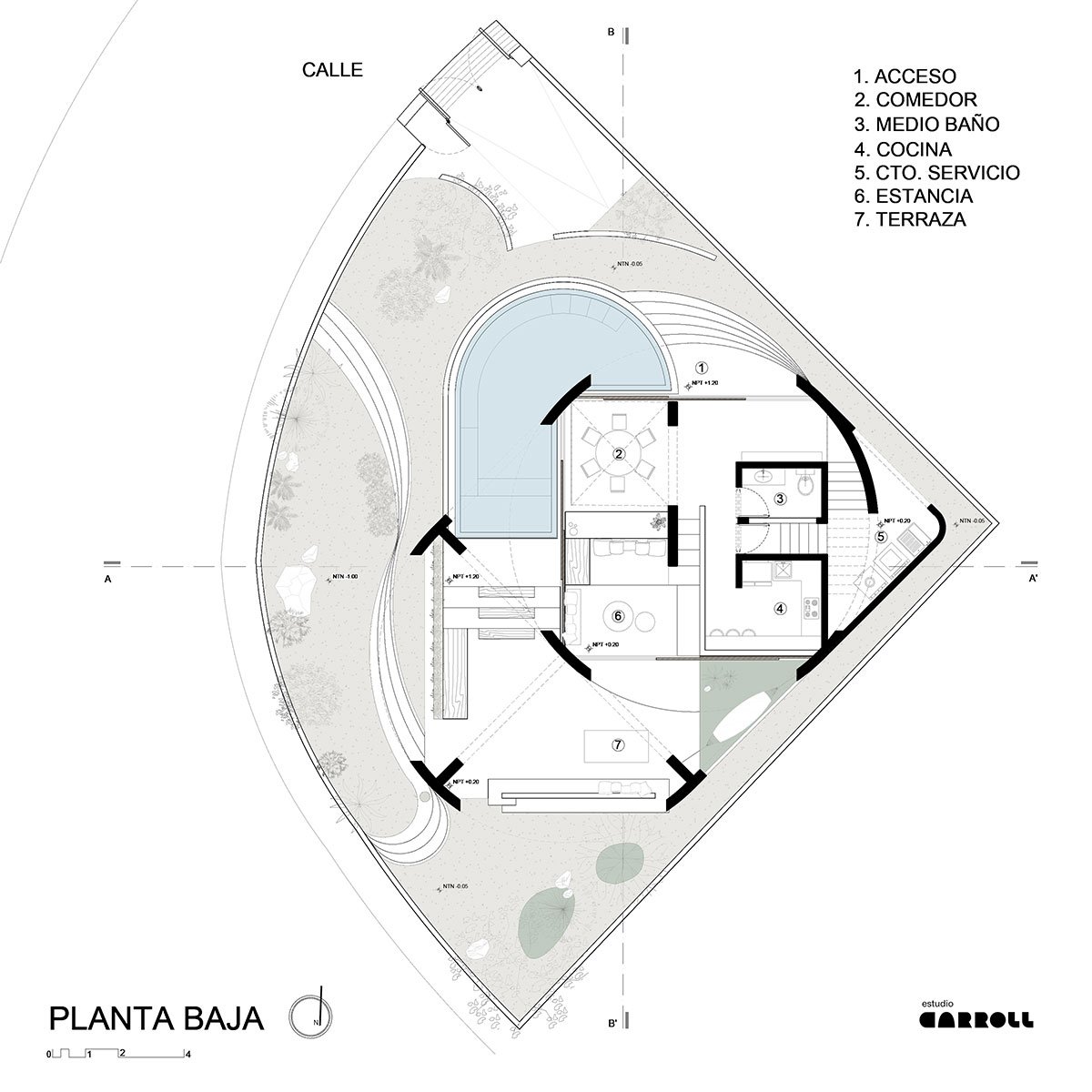
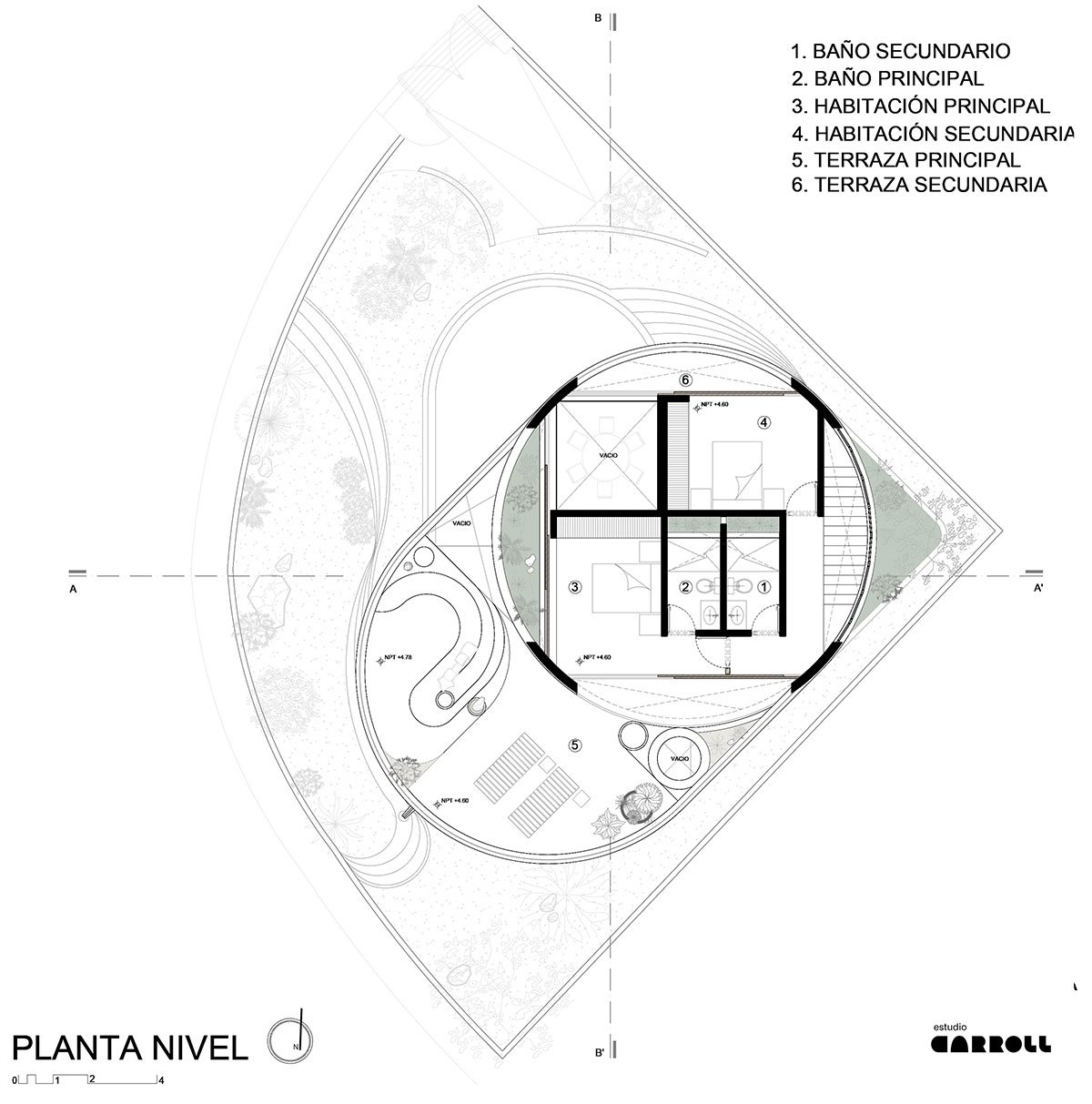
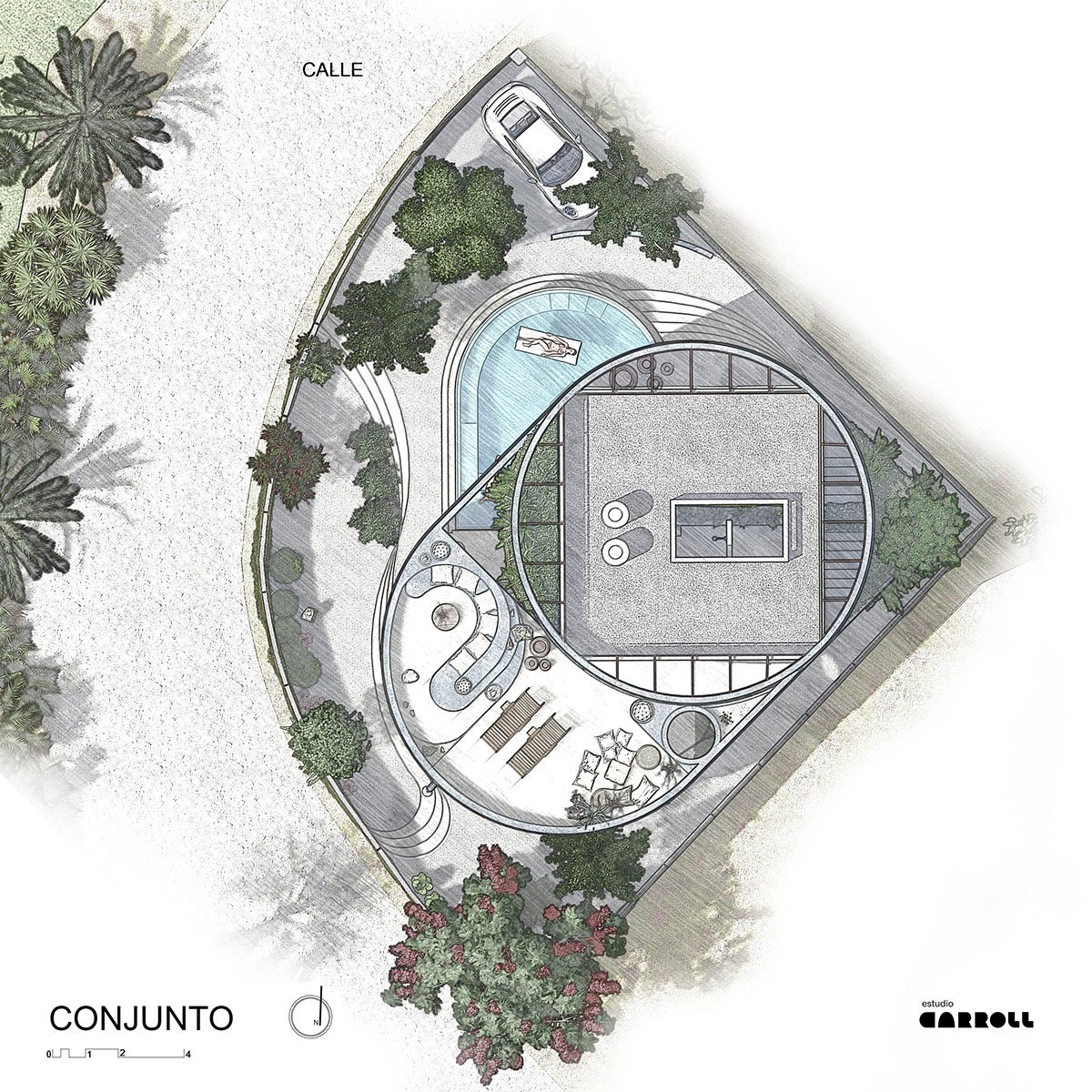
This house, with approximately 250 square meters of construction, is located in La Barra, a region characterized by rugged terrain. This very terrain offered us an exceptional location, elevated enough to provide sea and mountain views practically from the street. The 357 square meter plot has a distinctive shape defined by vertices pointing to the north and south, meeting at a right angle to the east, while in the west, they gently merge in a curve that offers us a panoramic view of almost 180° of the sea.

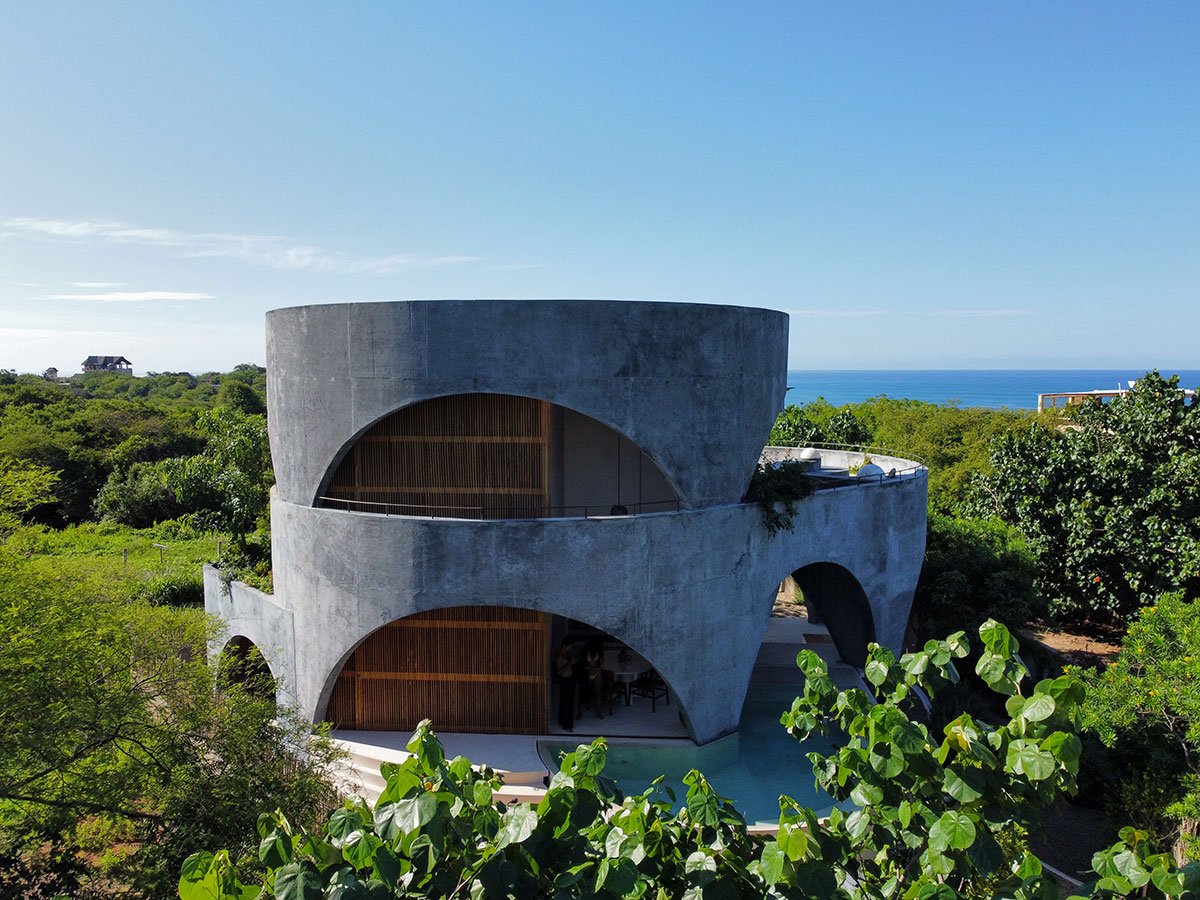
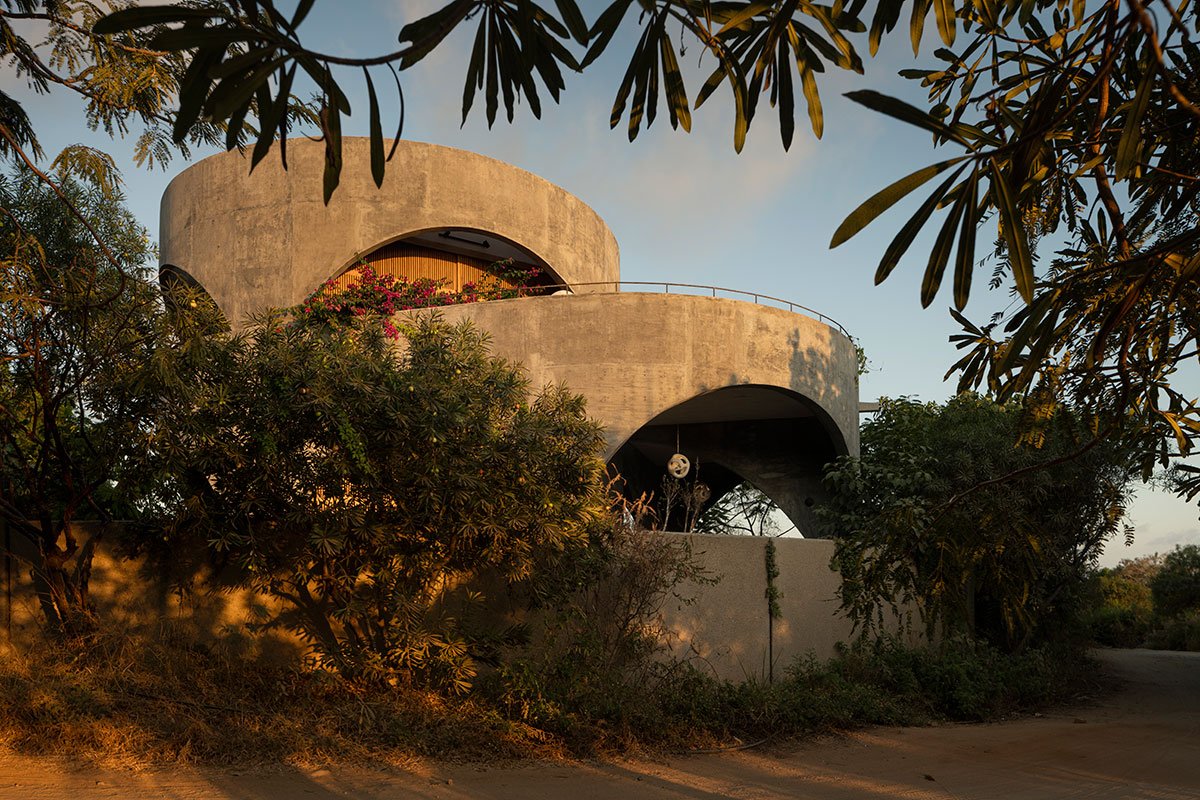
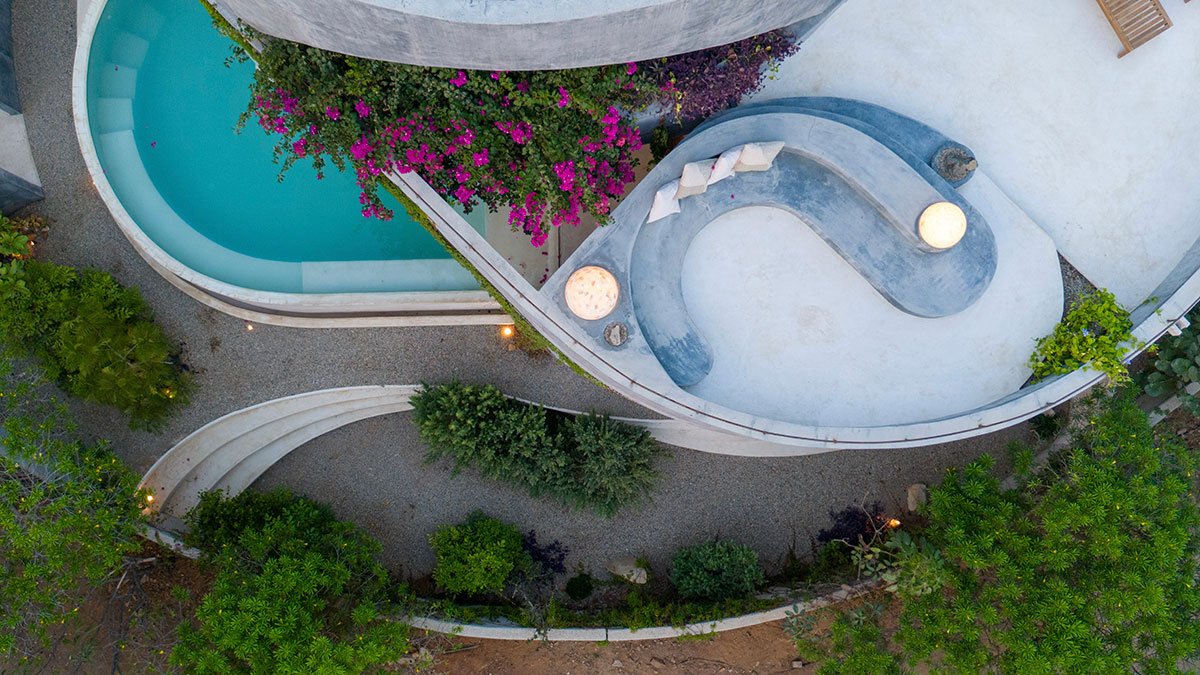
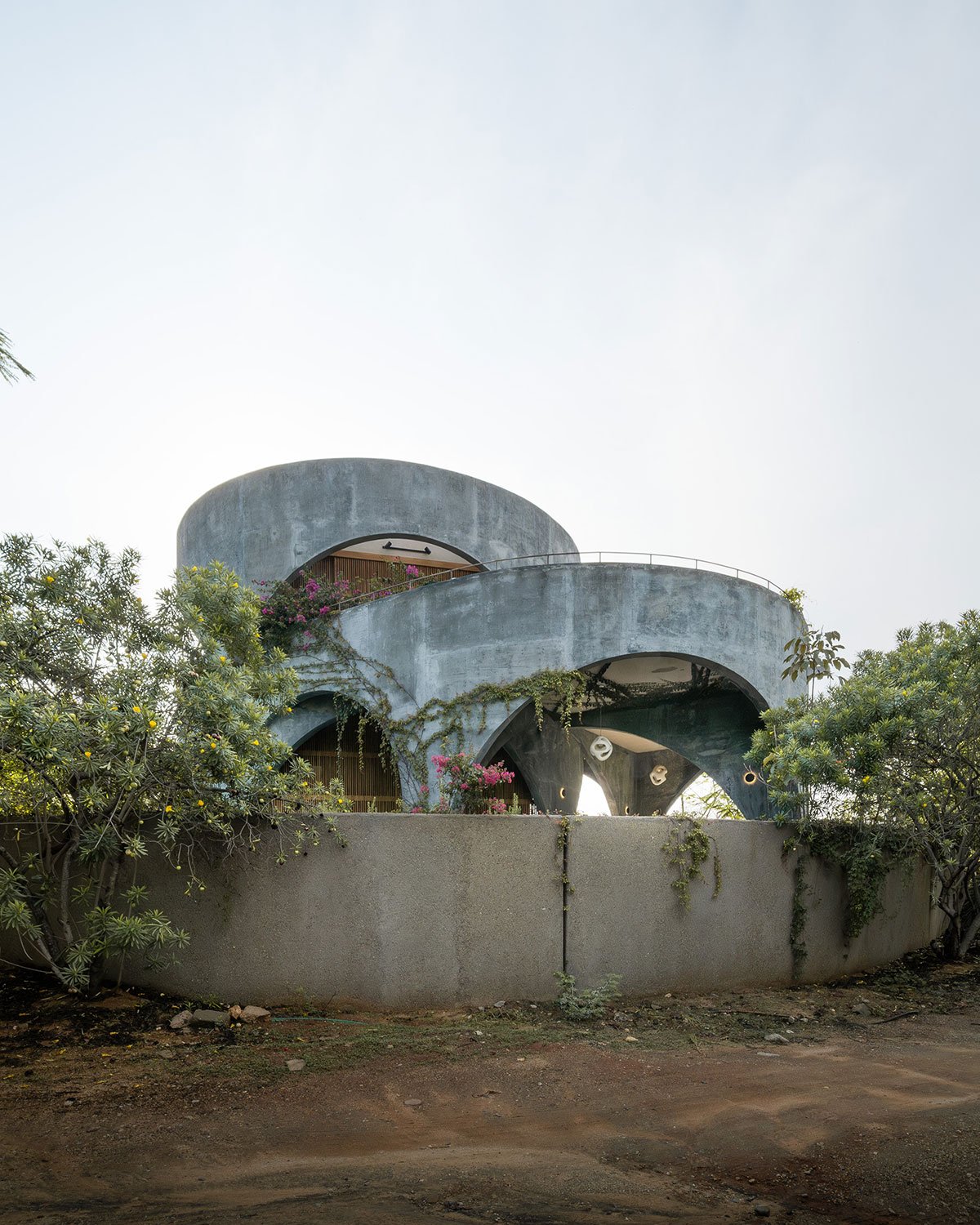
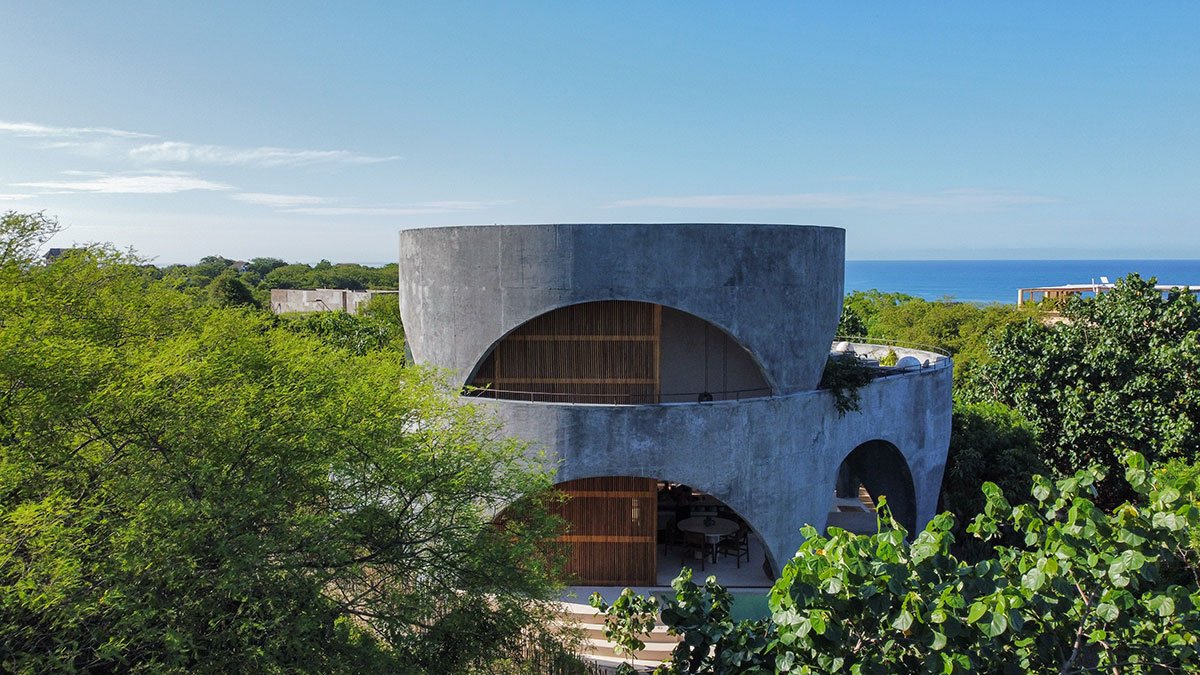
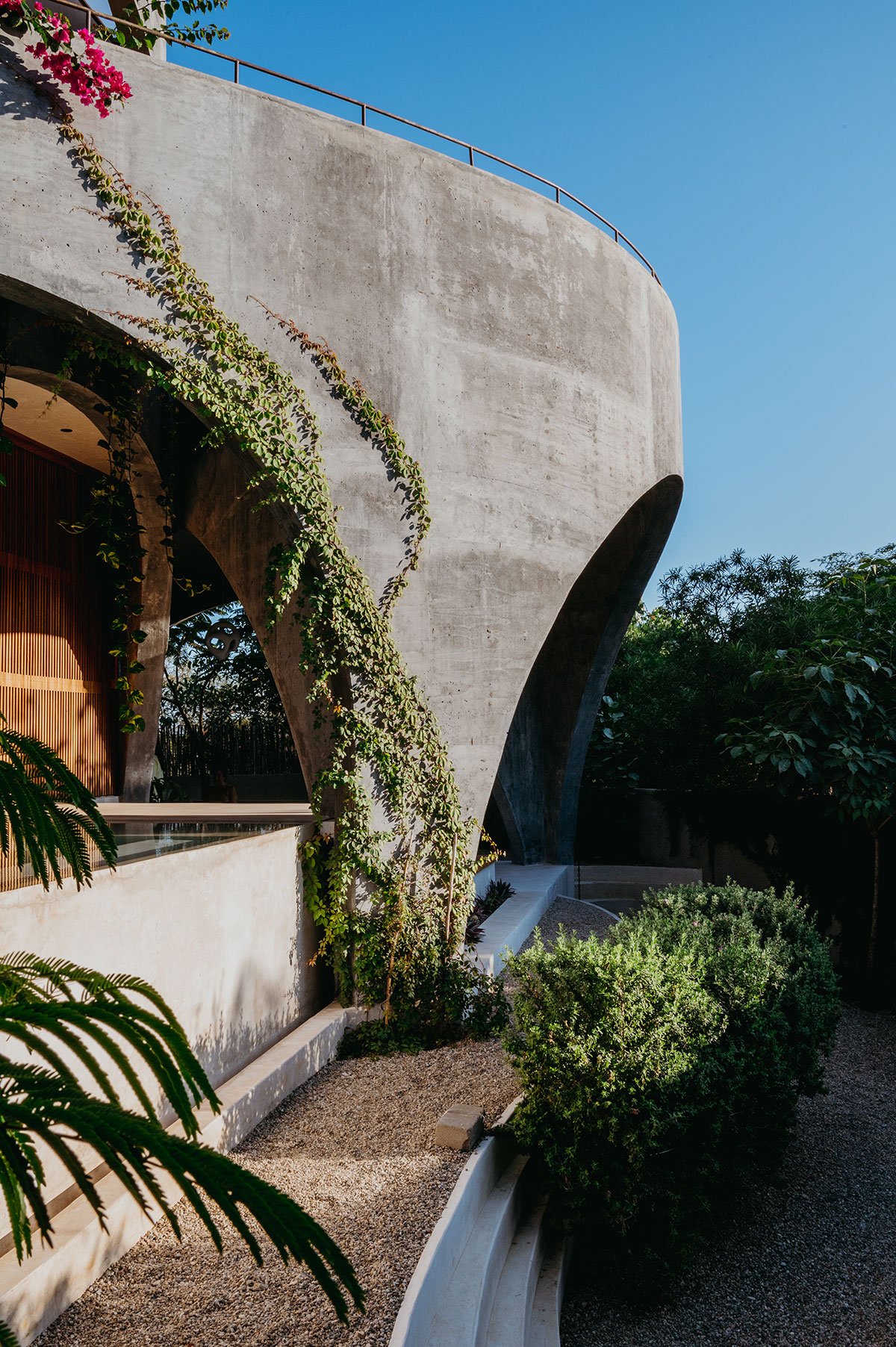
The building’s geometry adapts to the shape of the land; two circles with the same radius were projected to intersect in such a way that the center of one coincides with the development of the other. Inscribed within them are two squares that house most of the functional areas.

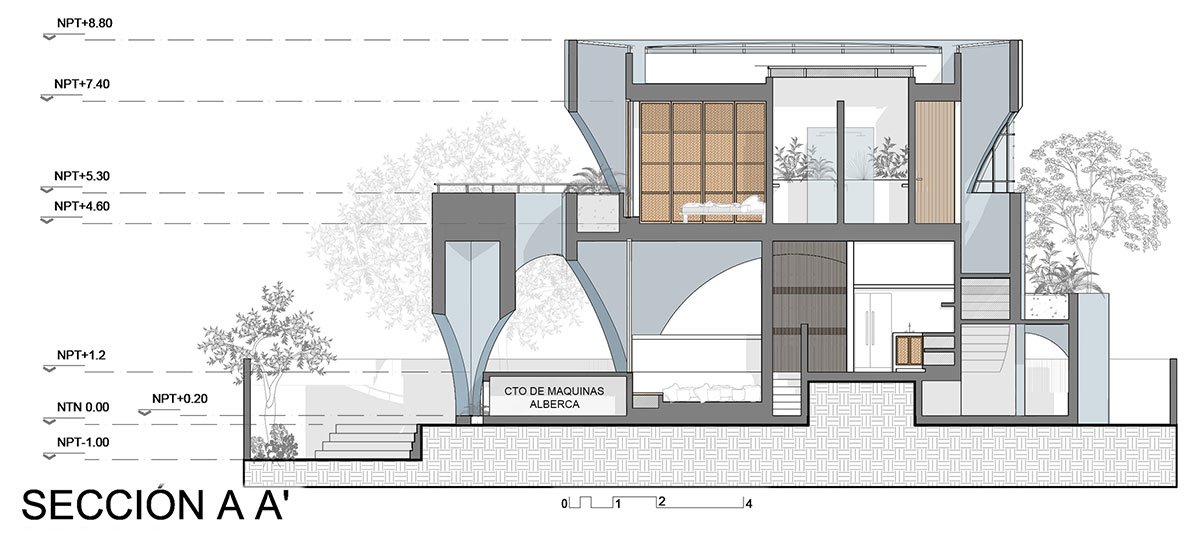

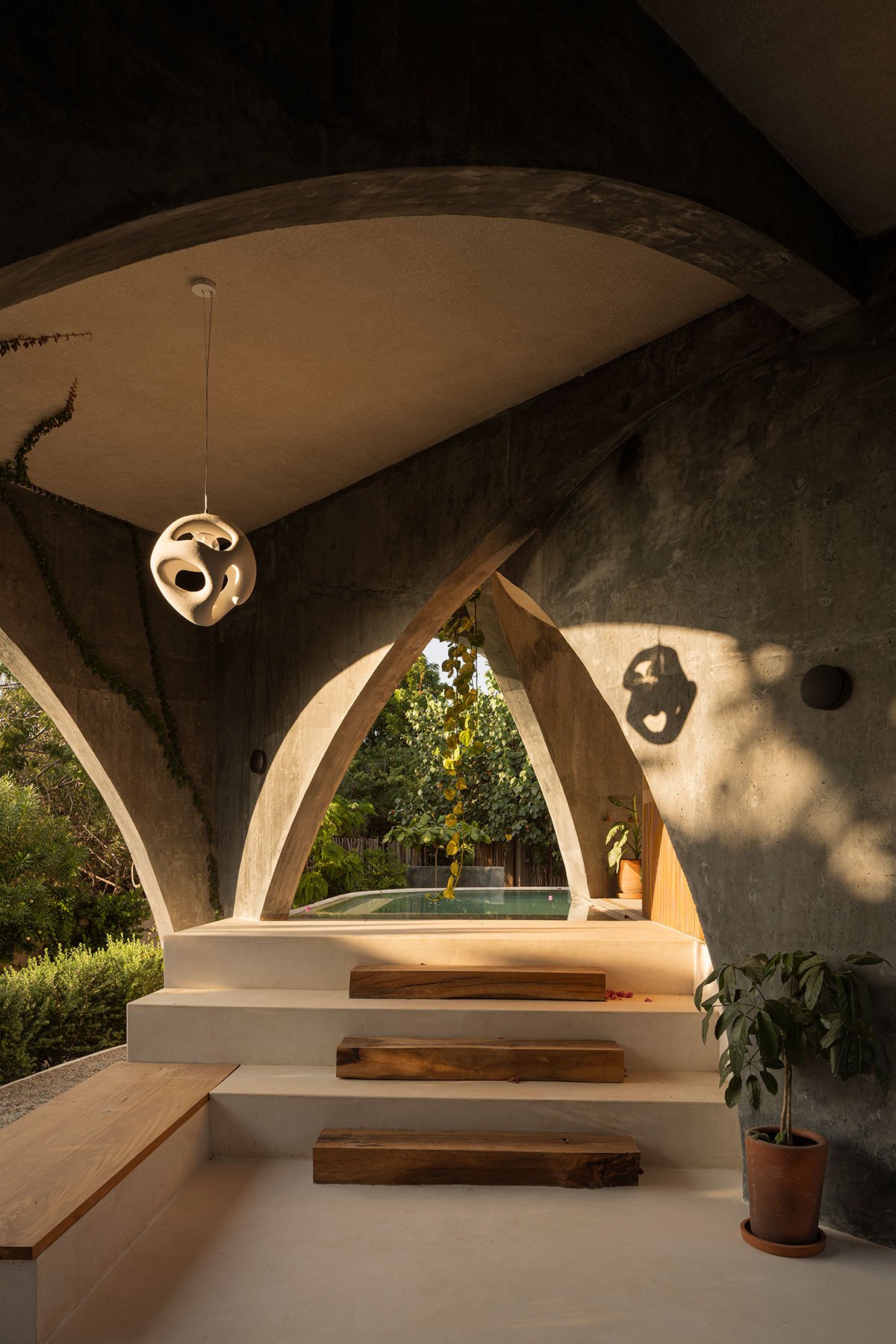
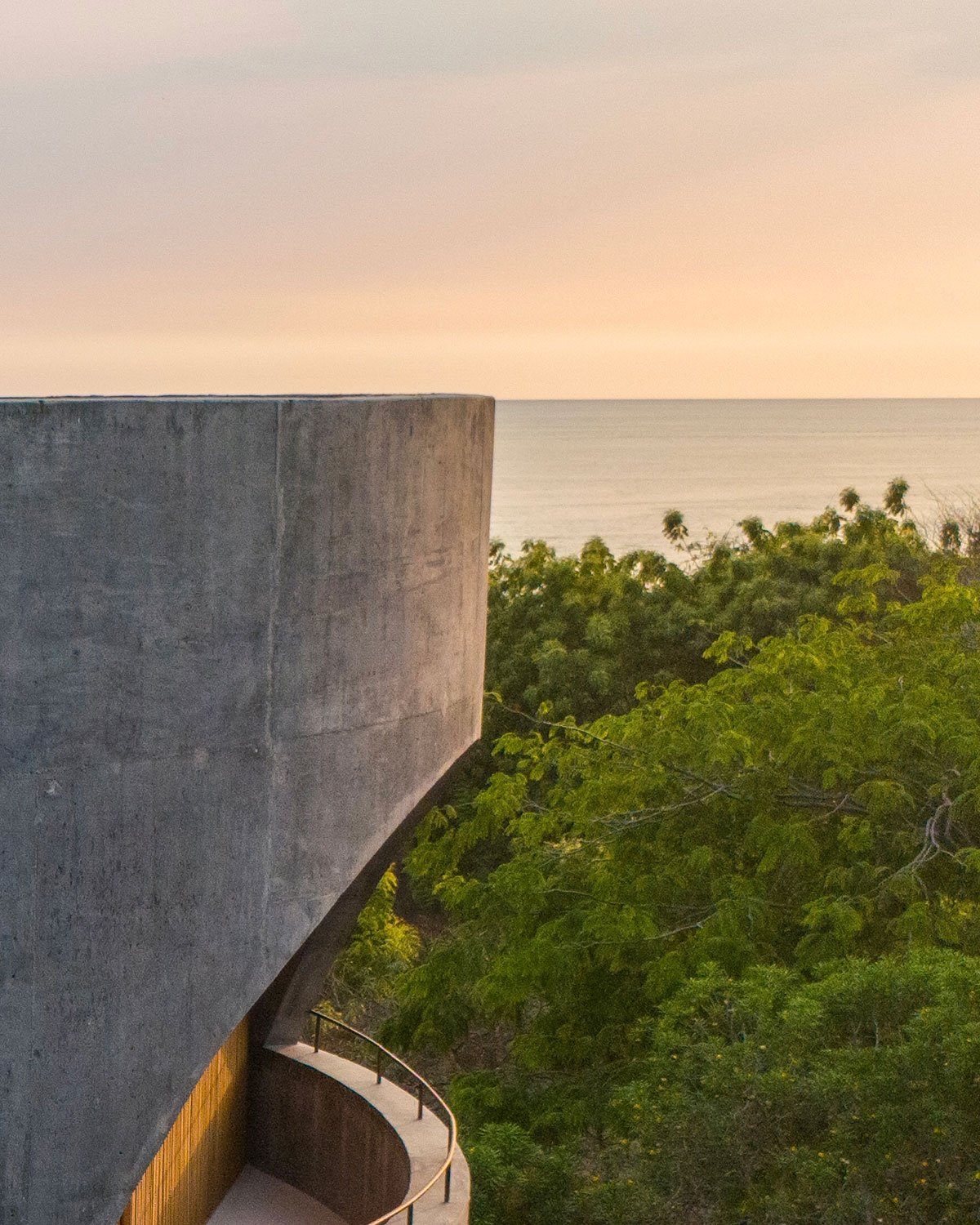
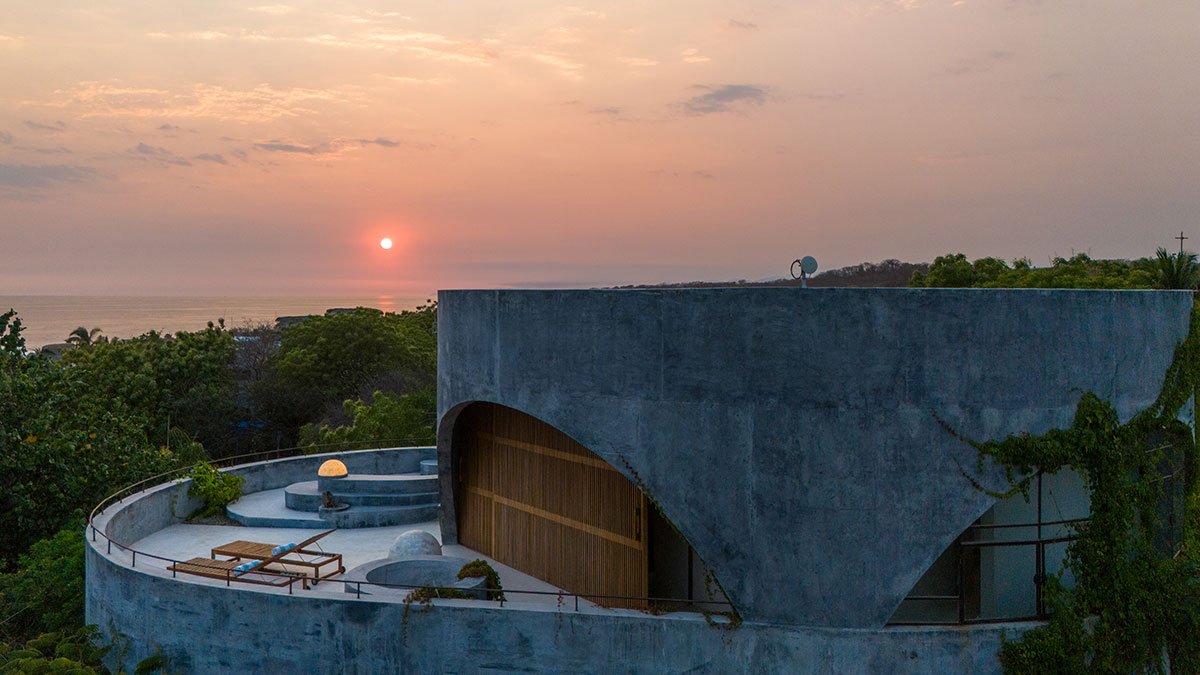
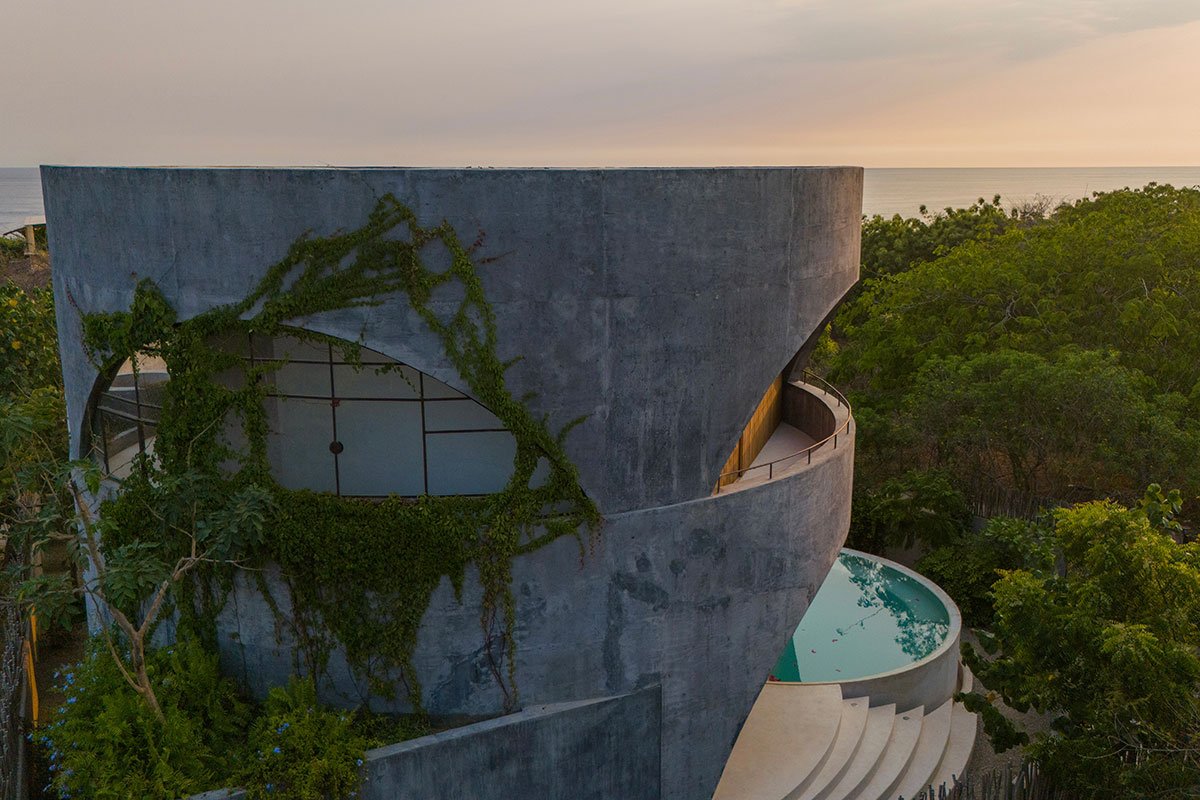
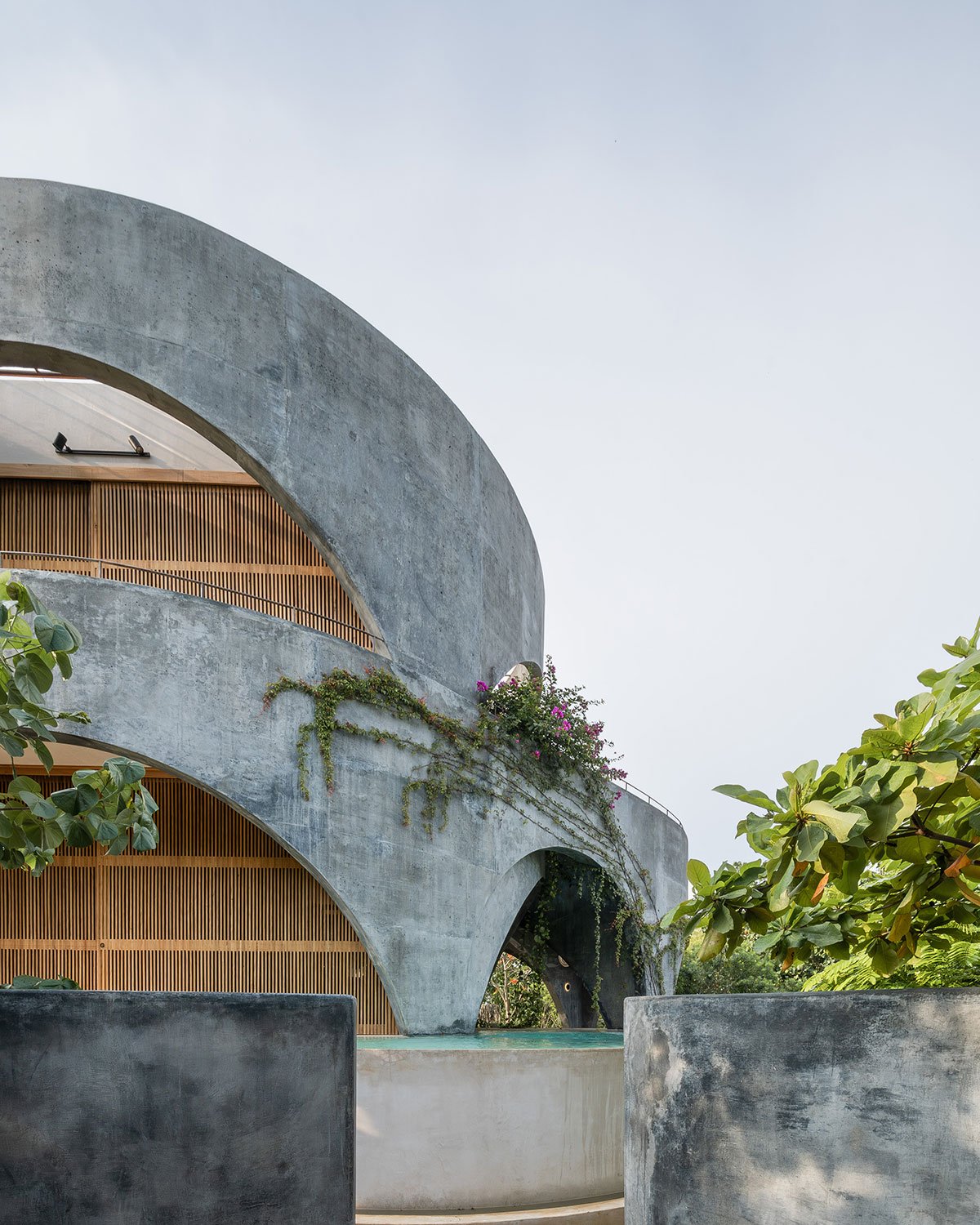
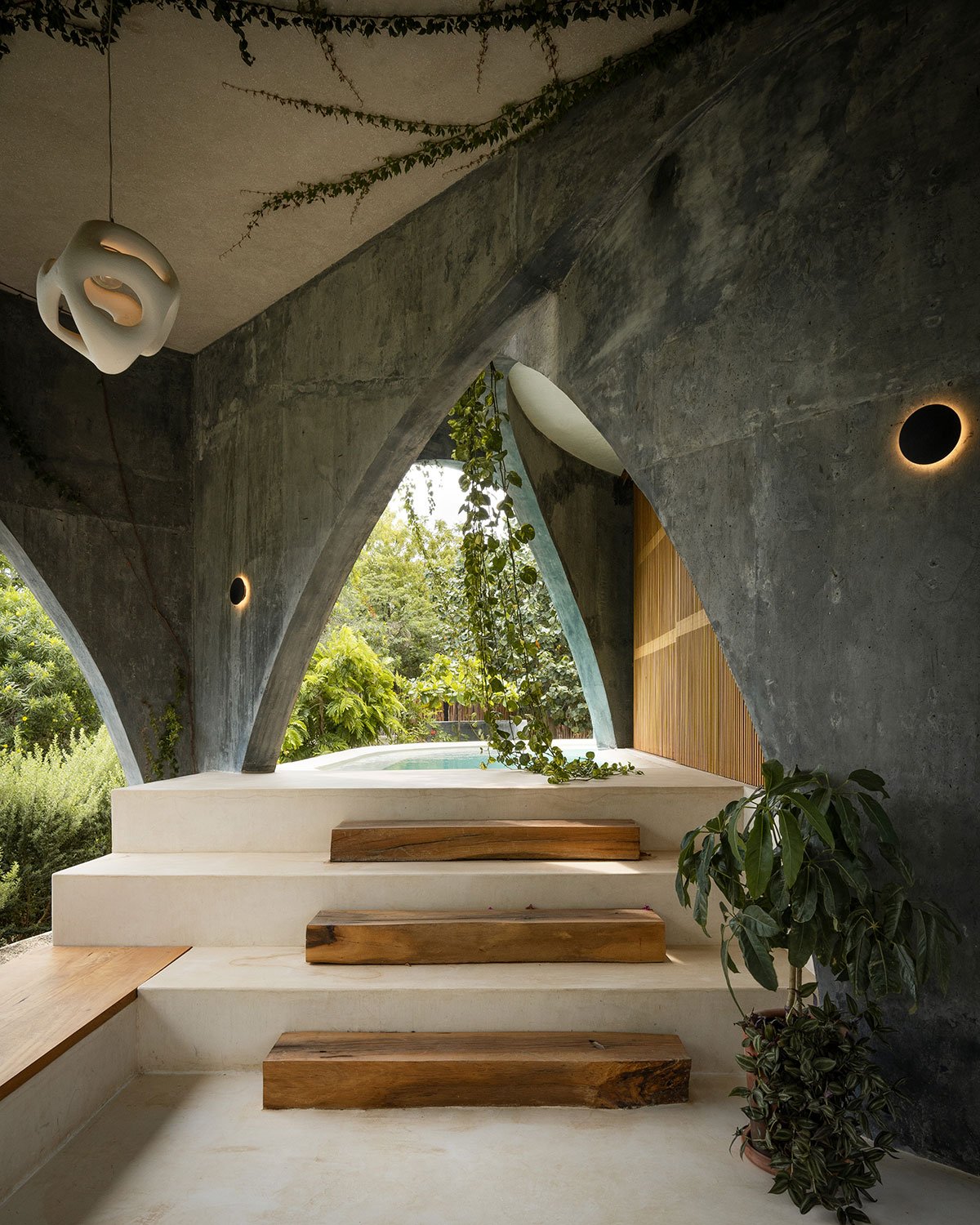
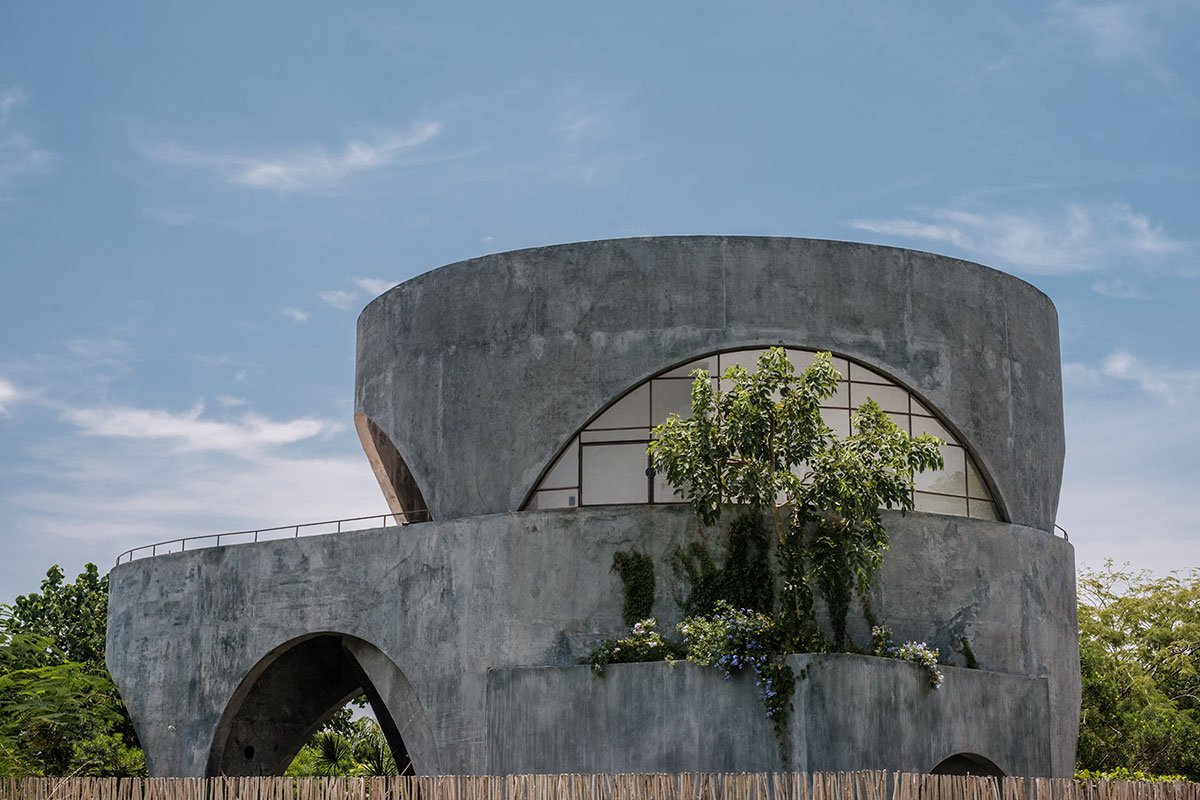
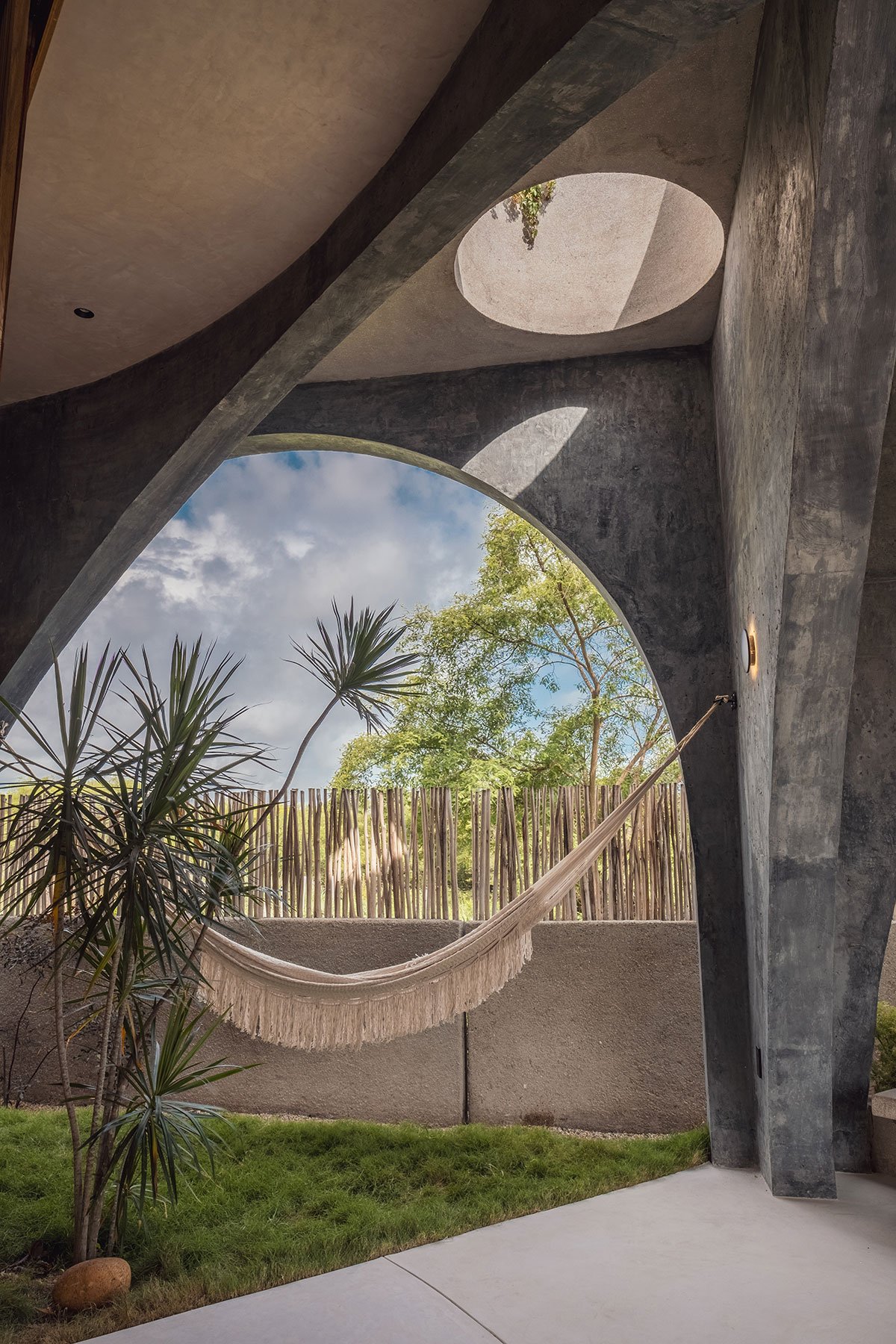
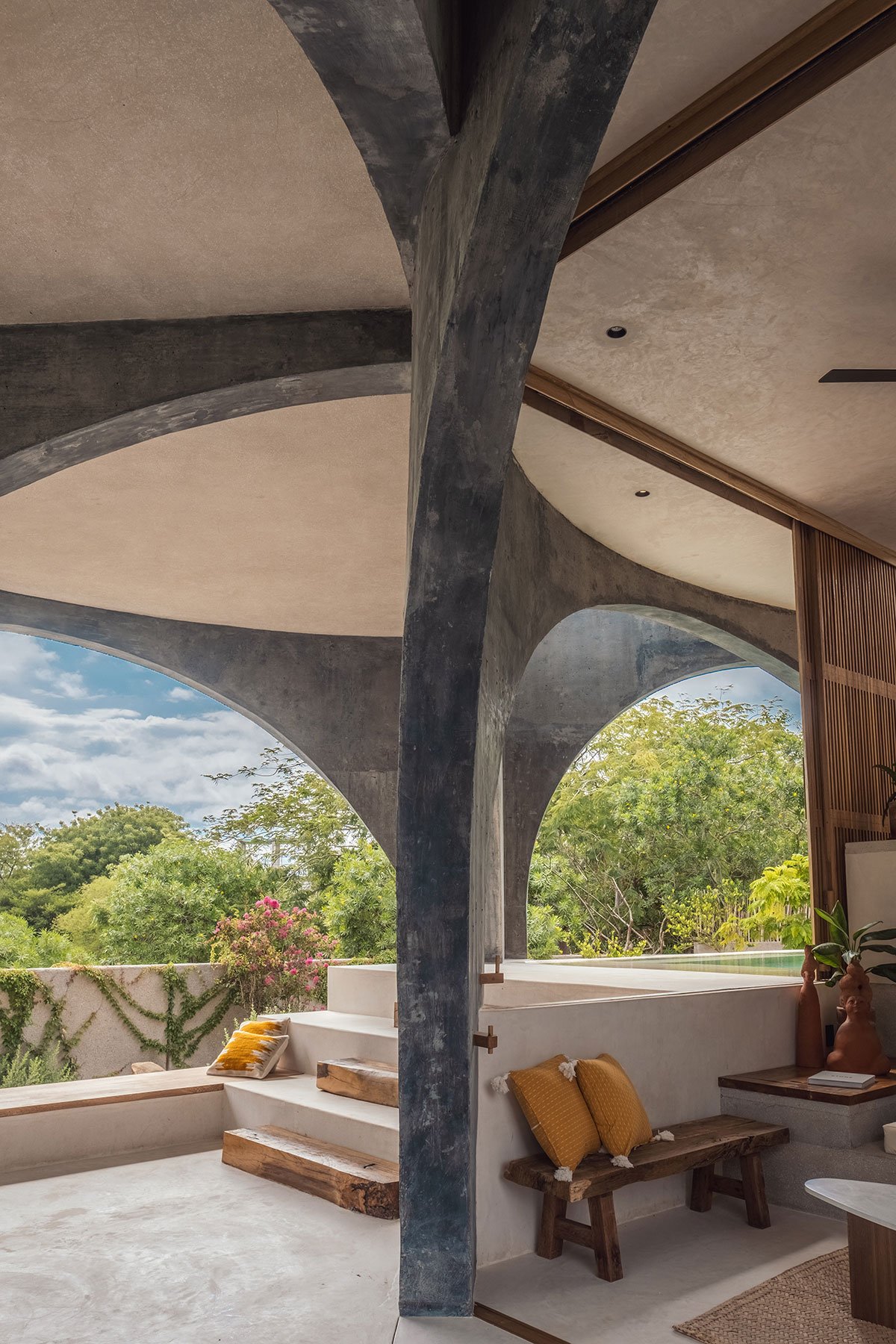
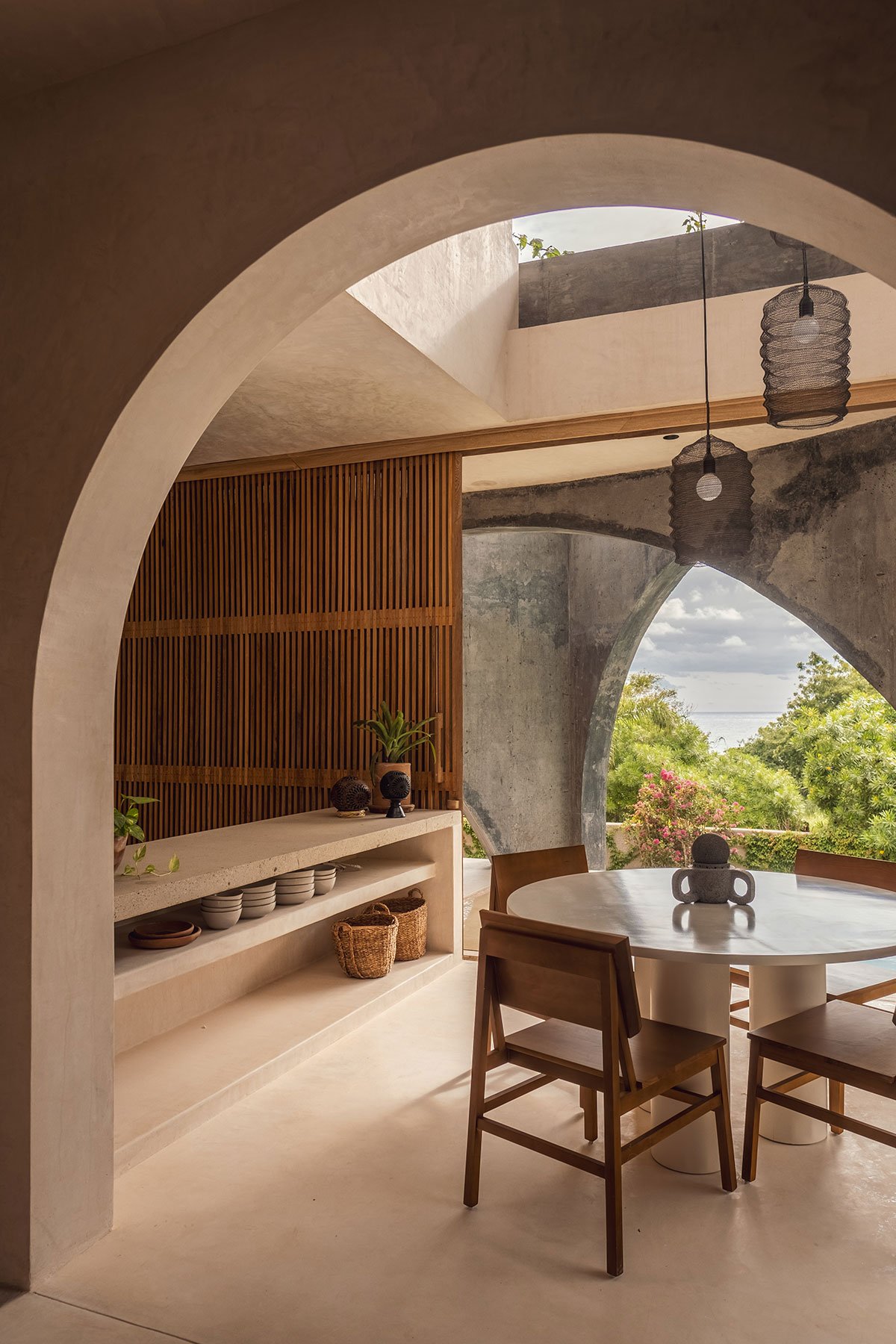
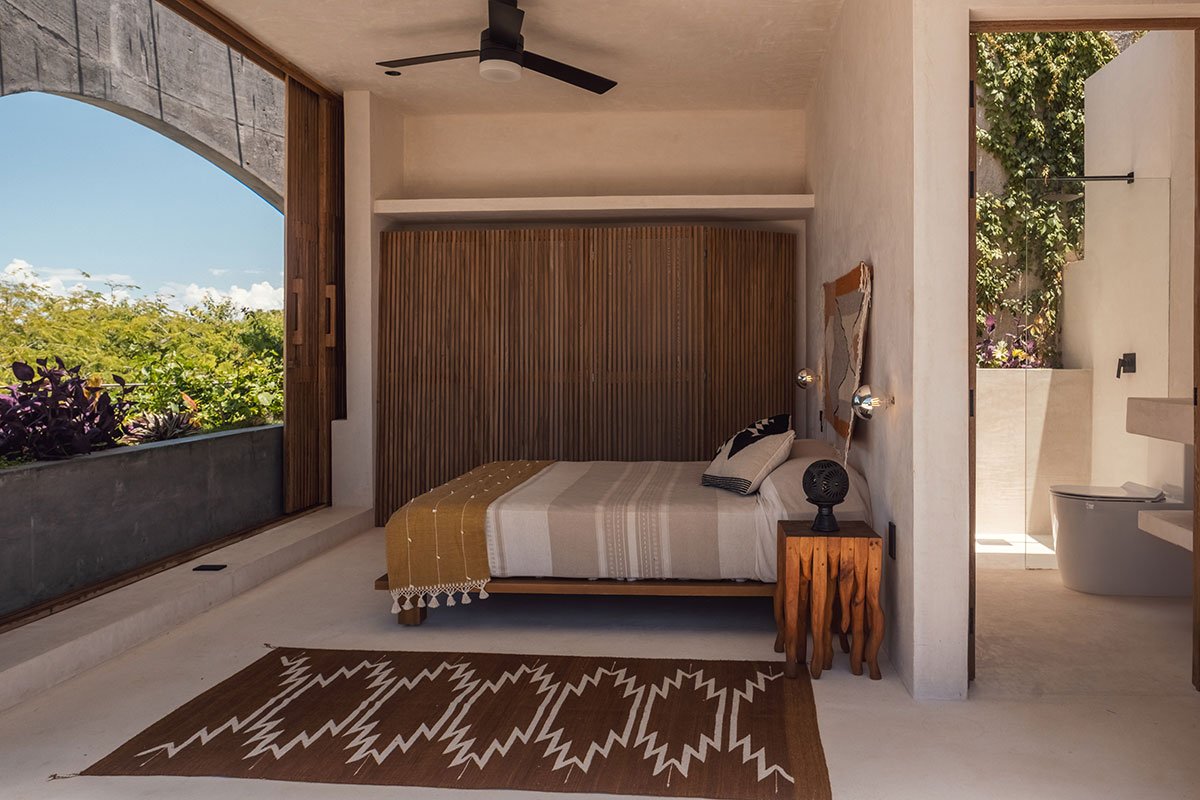
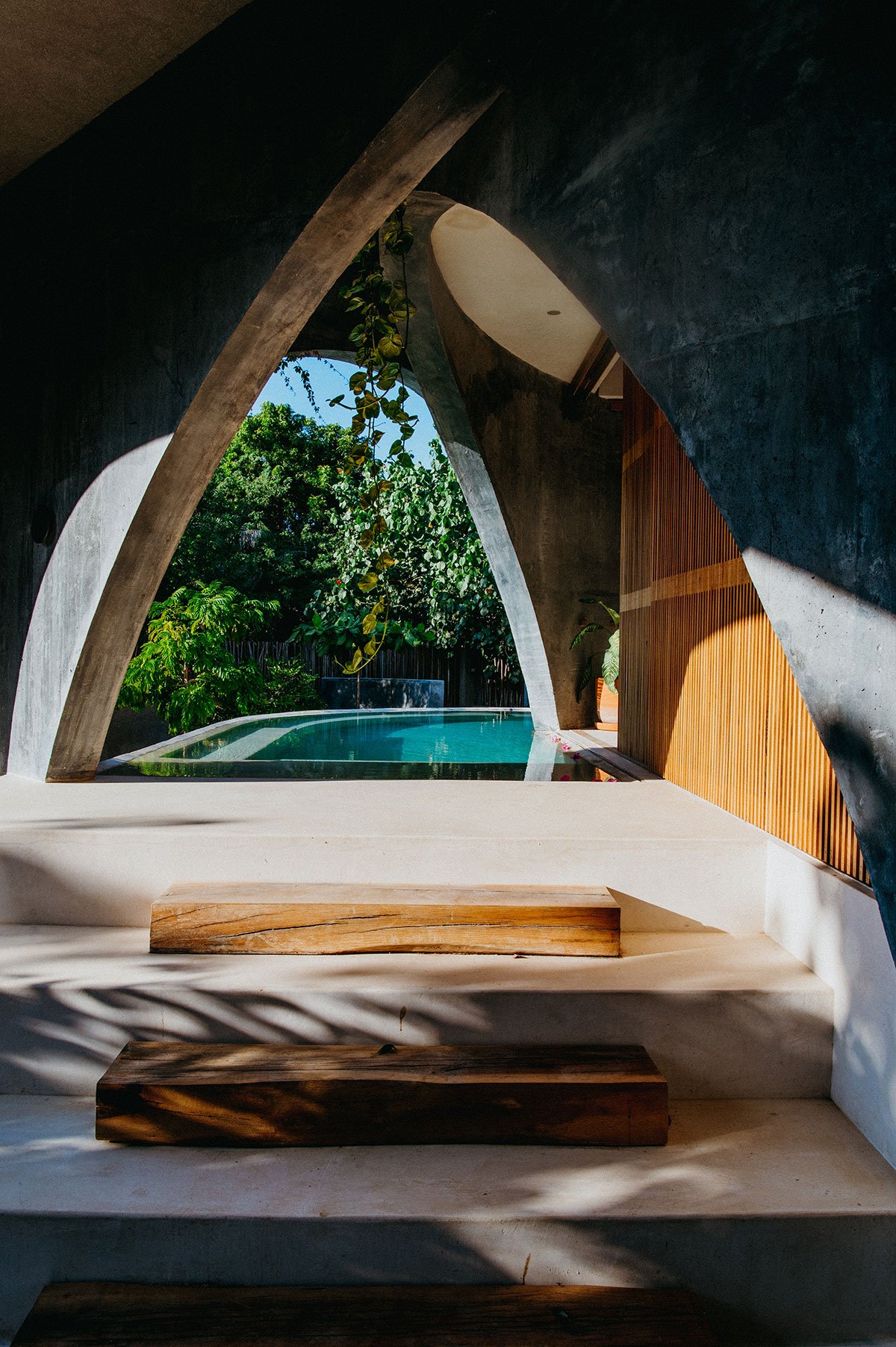
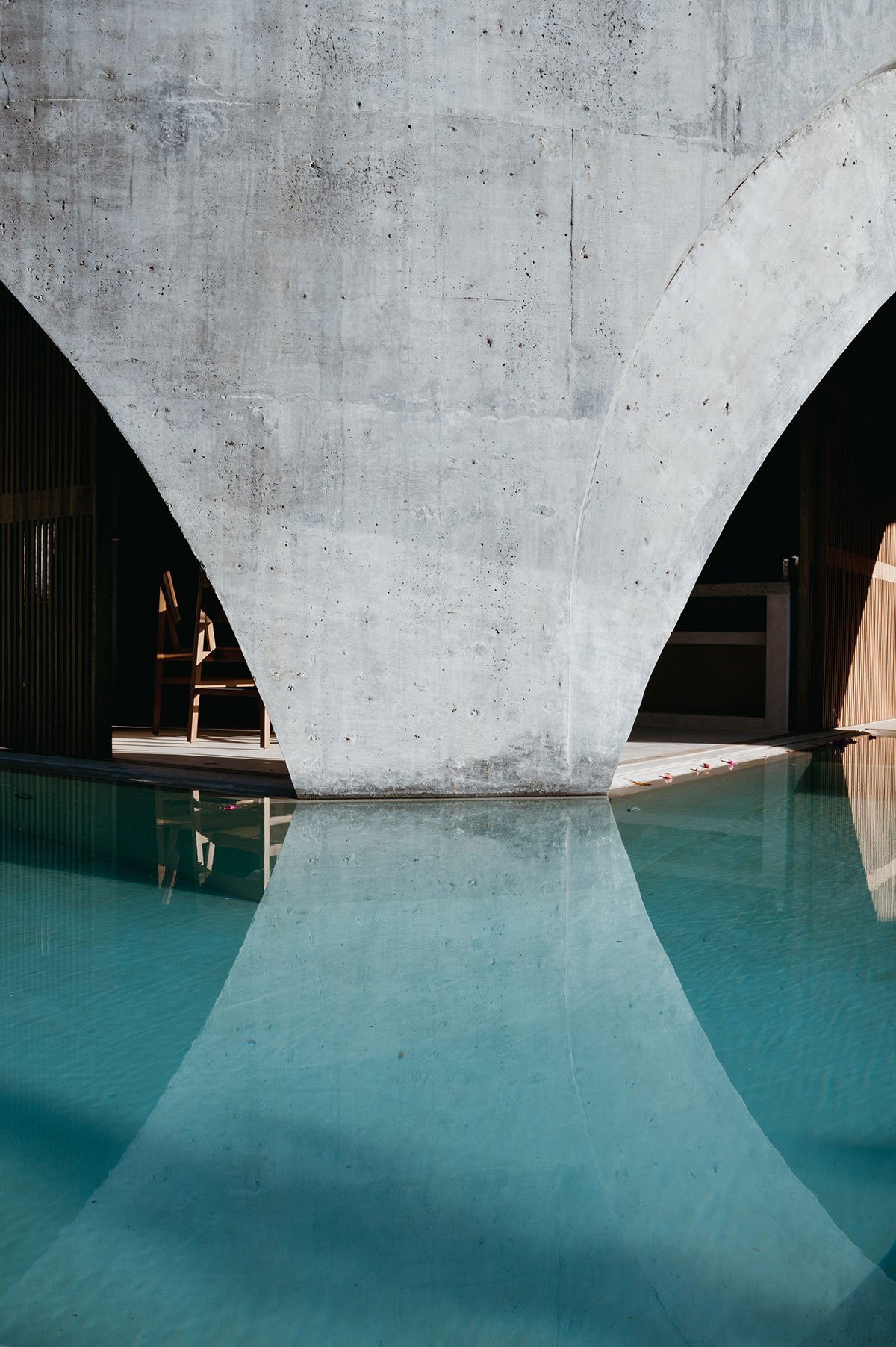
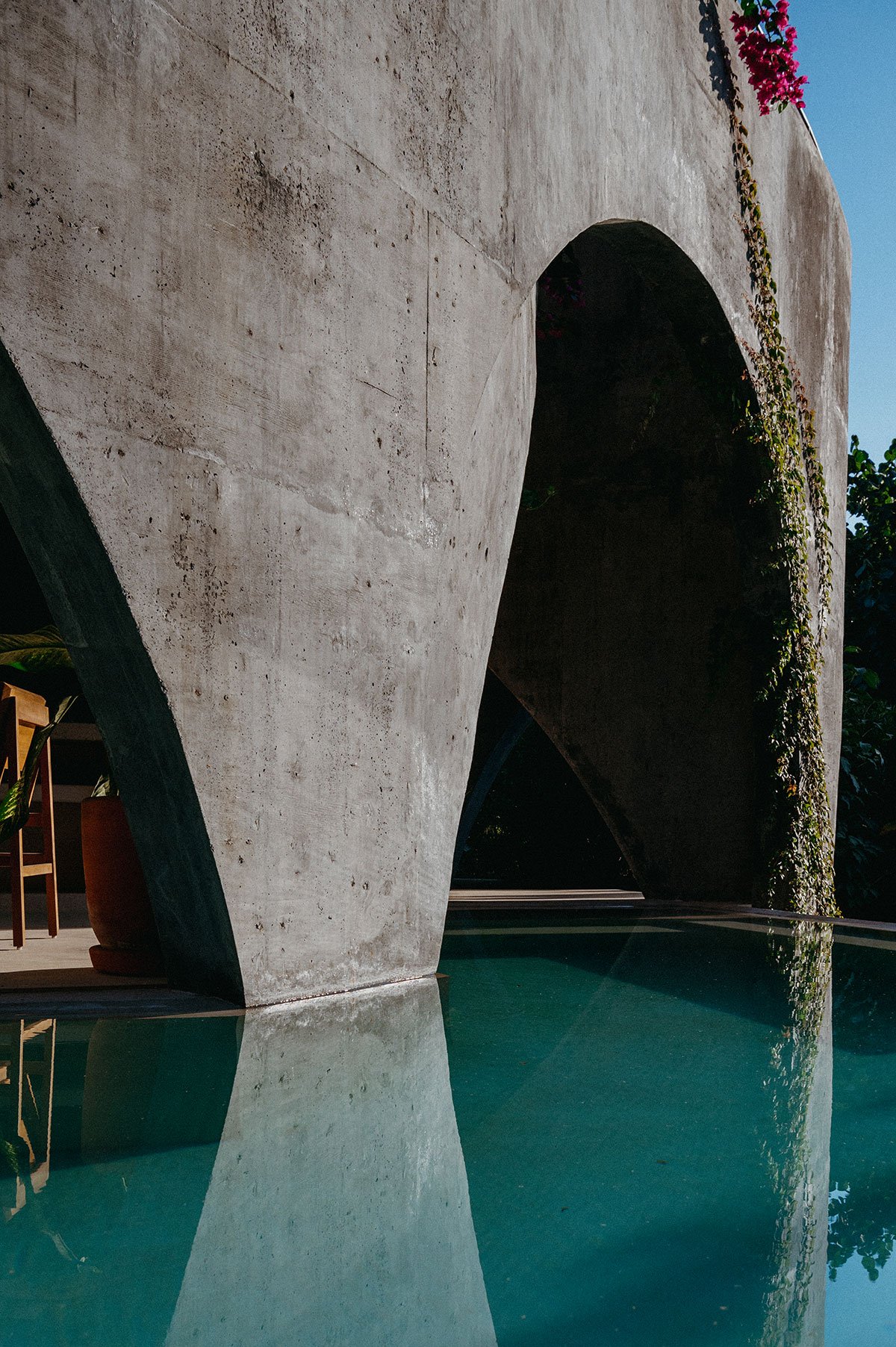
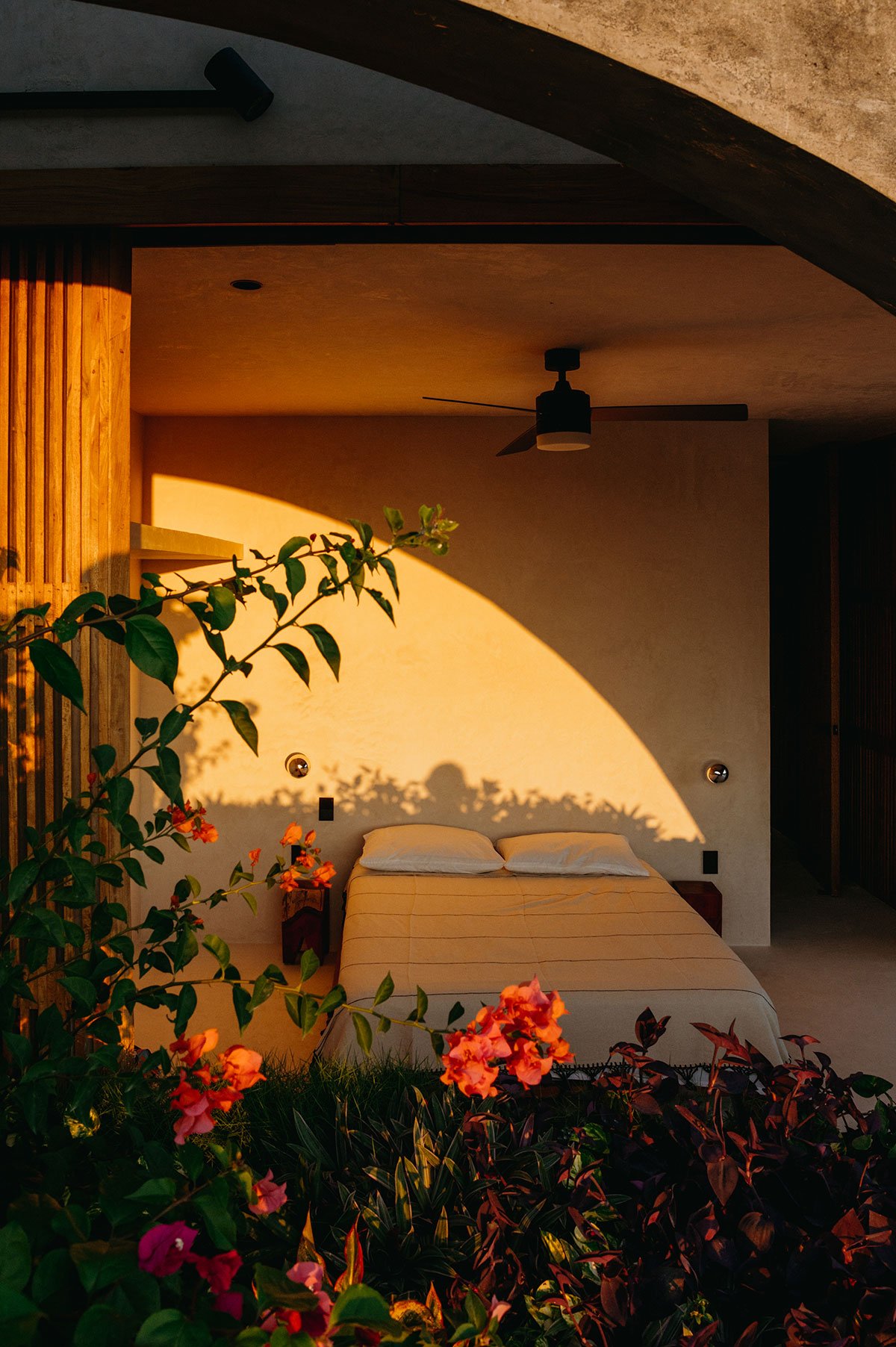
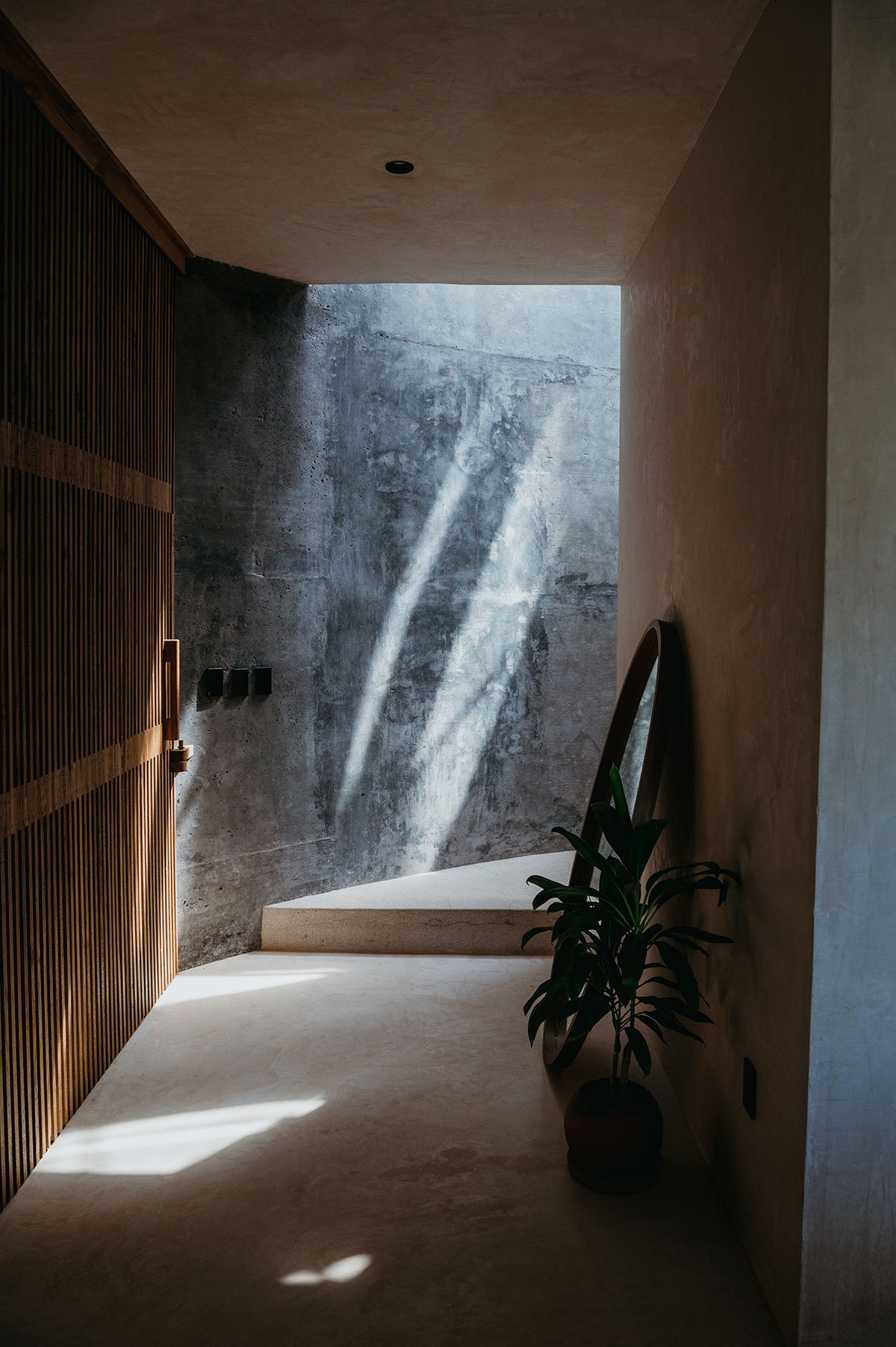
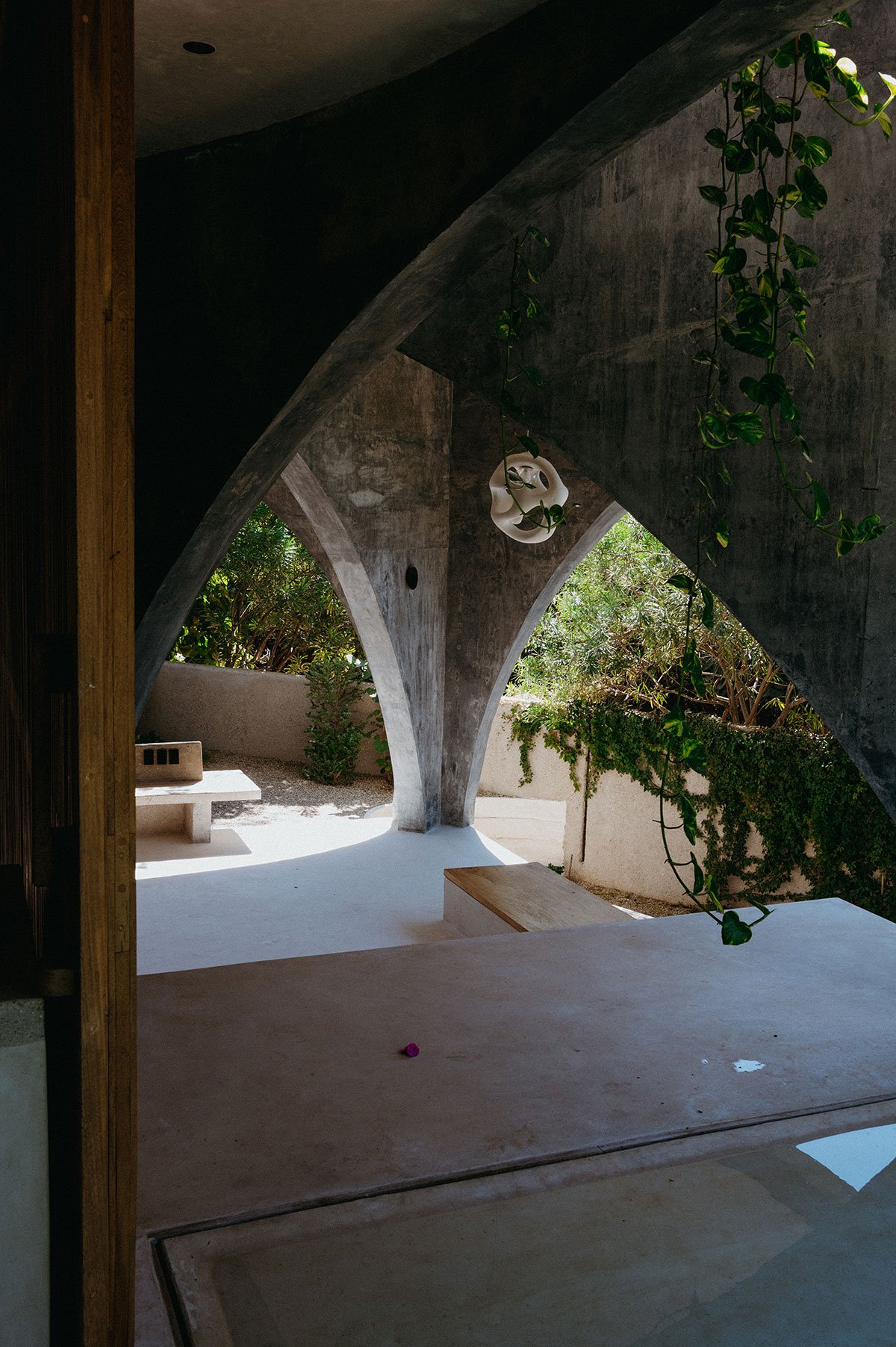
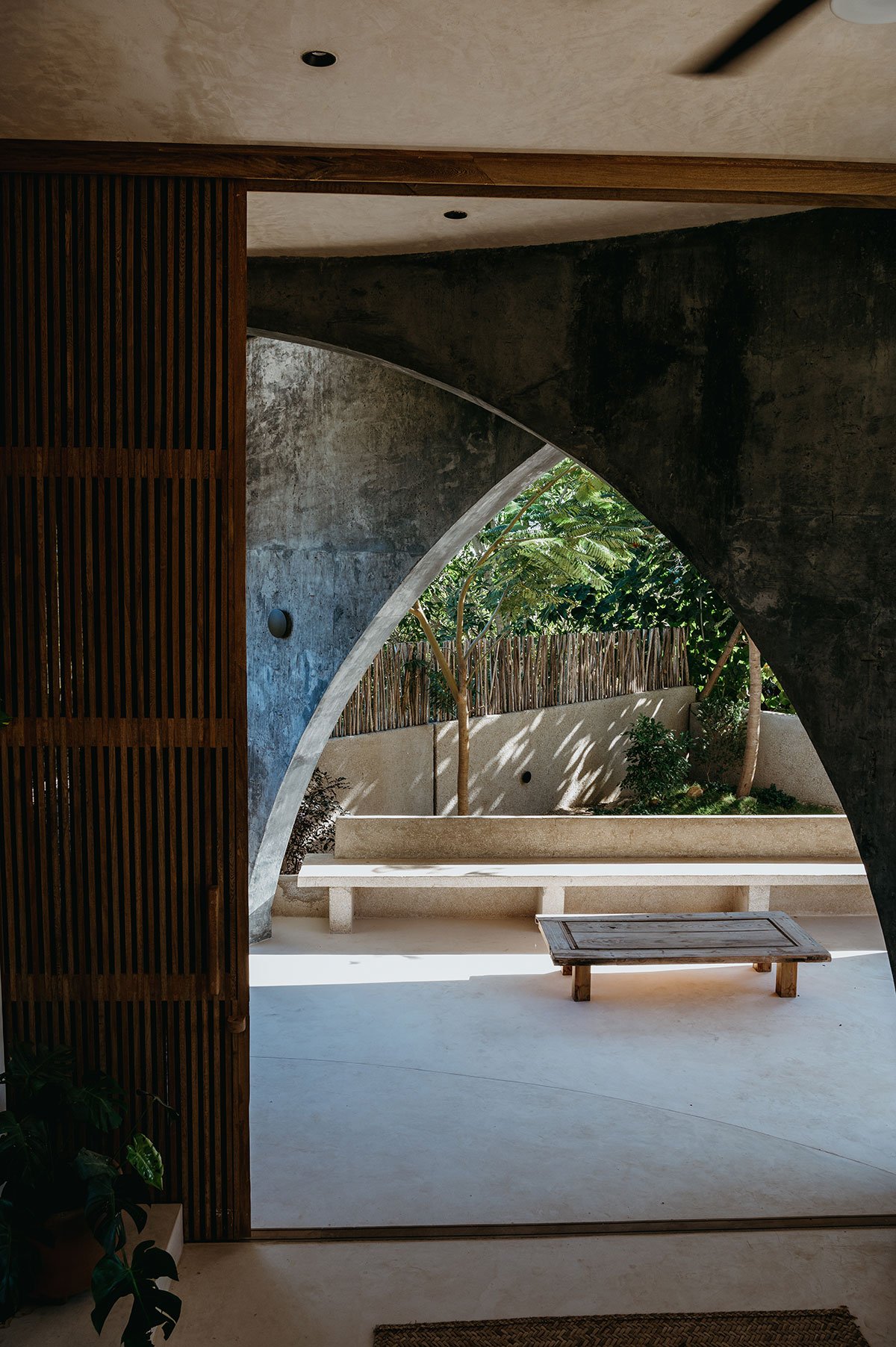
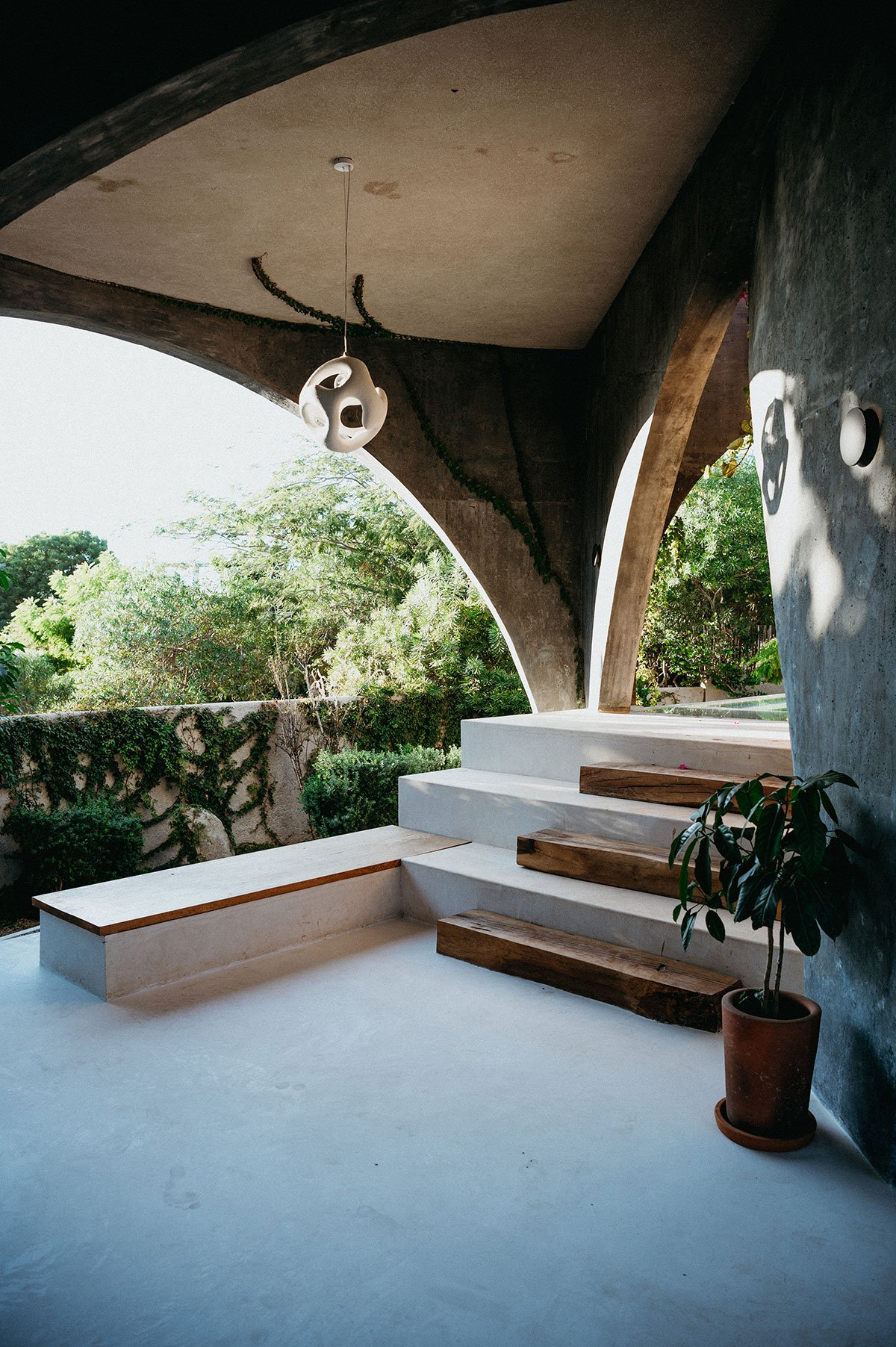
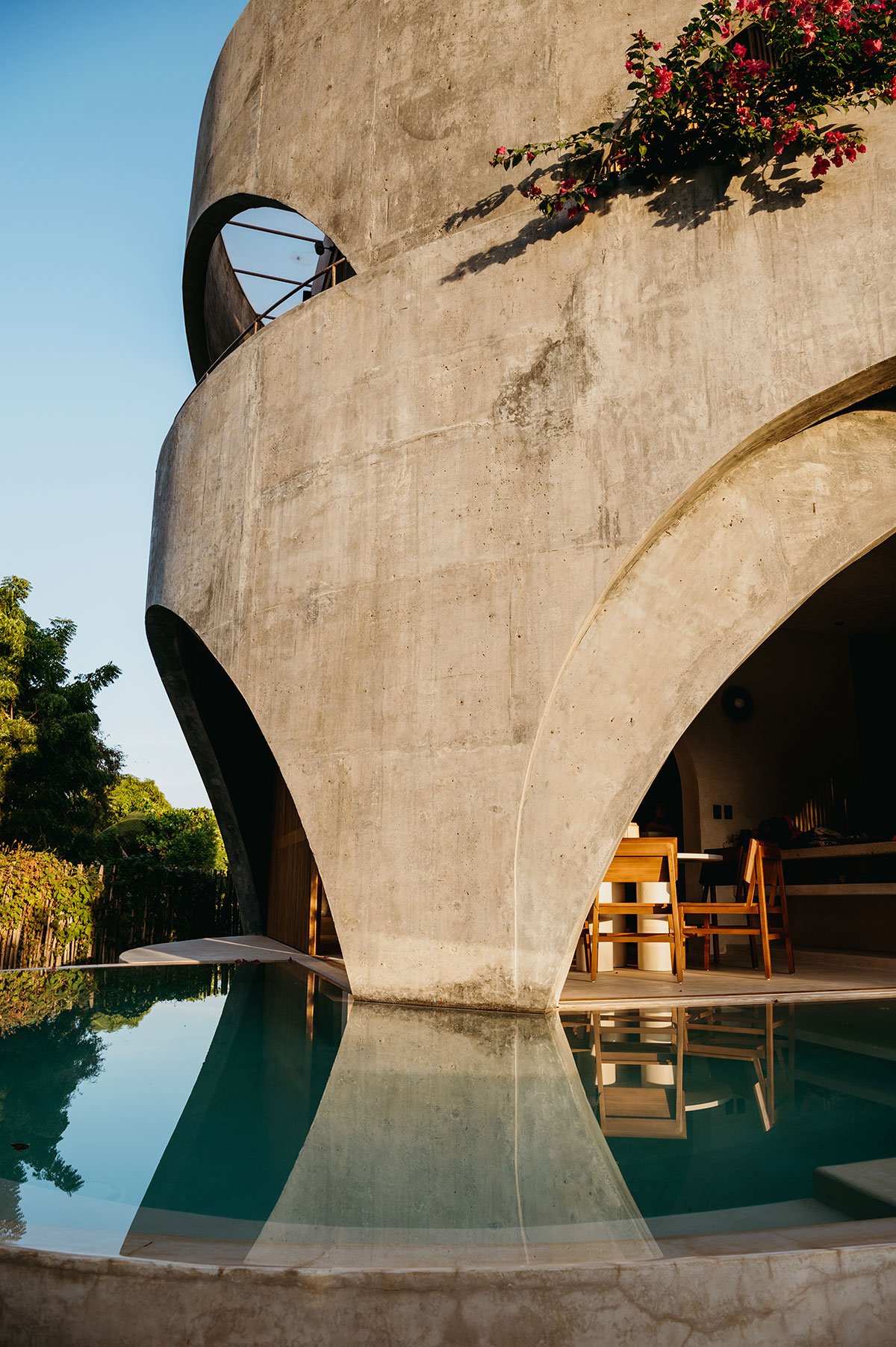
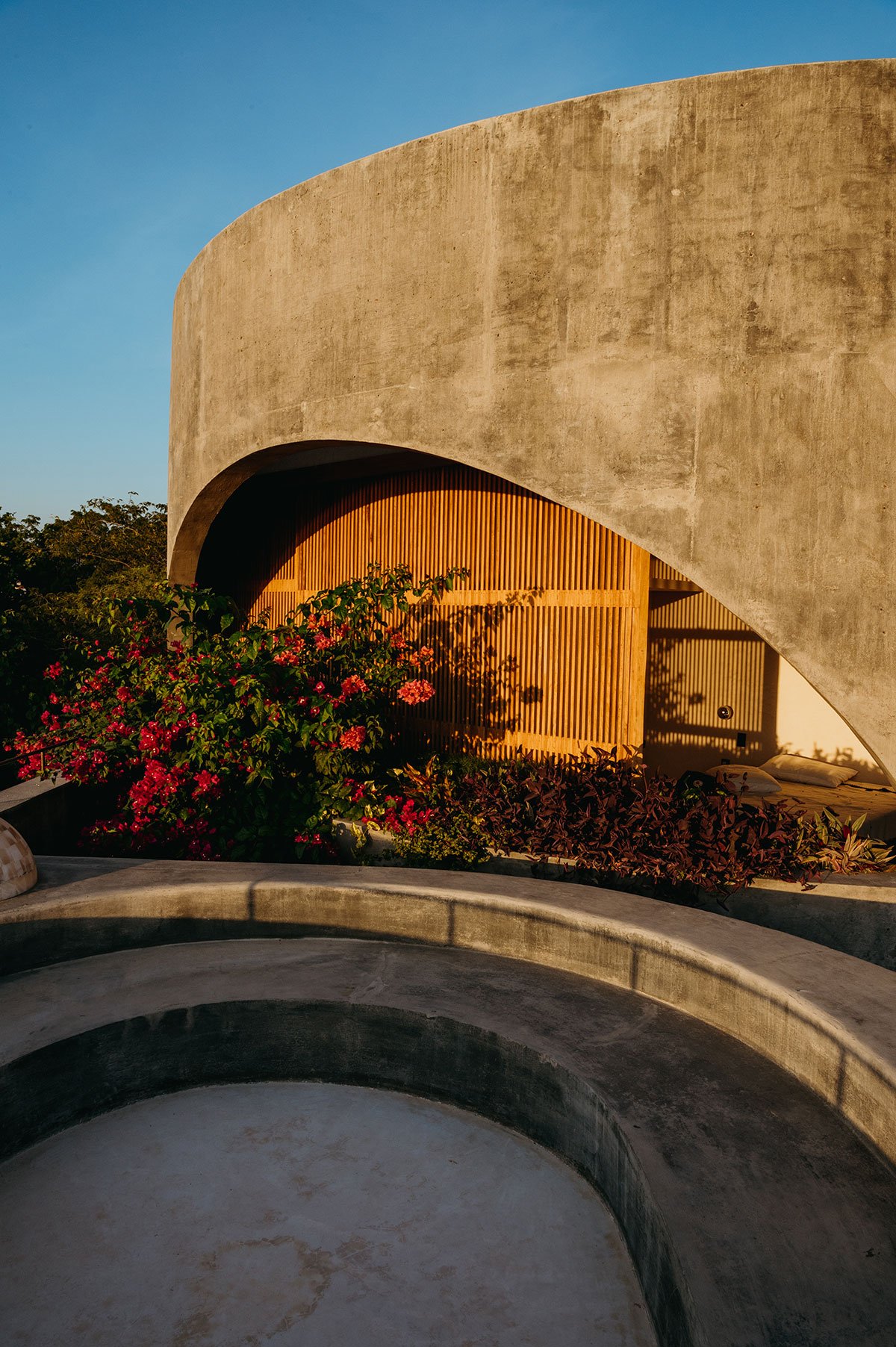
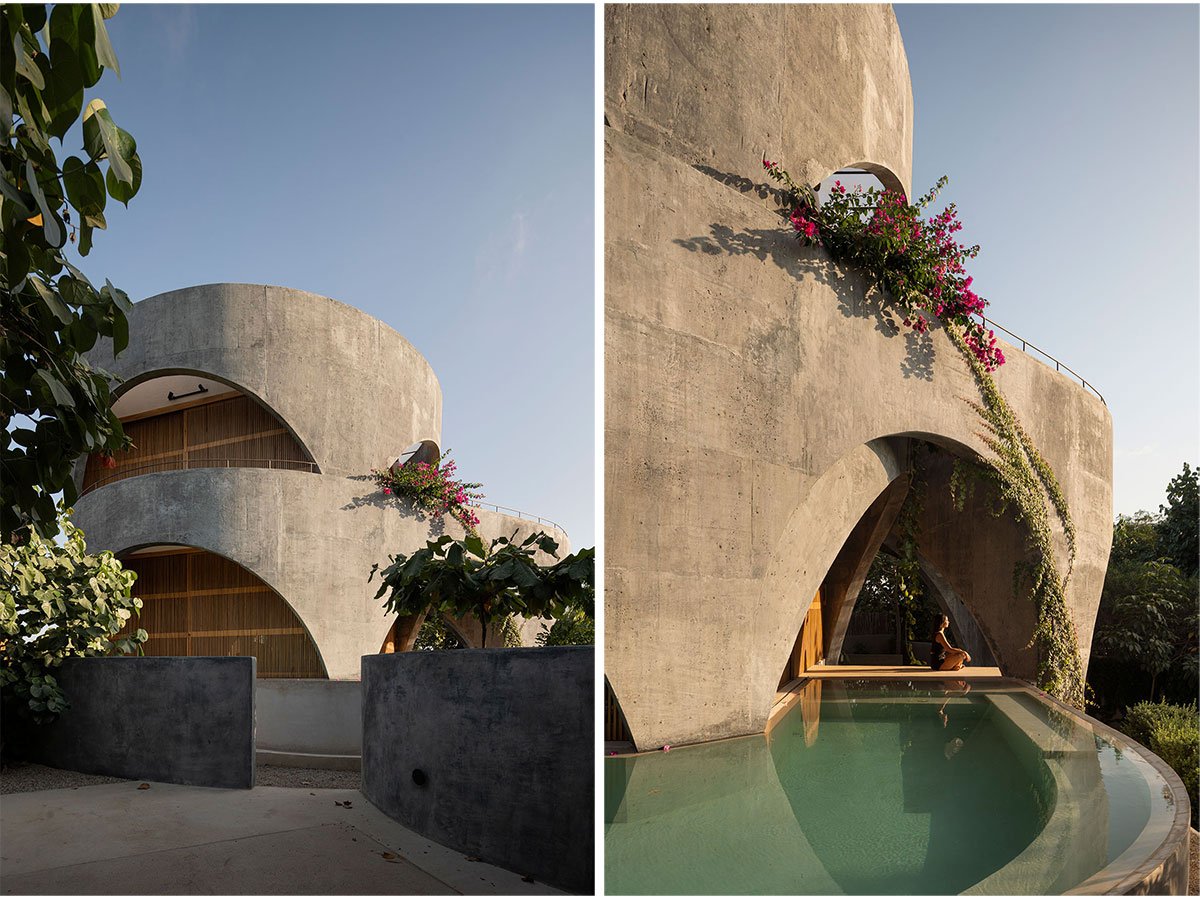
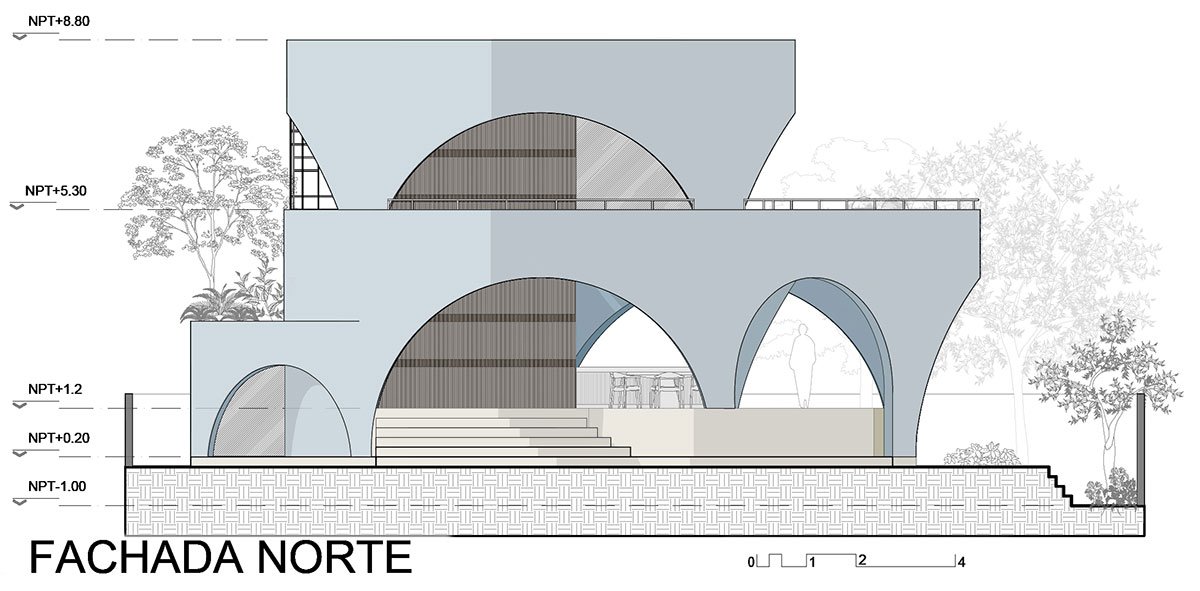
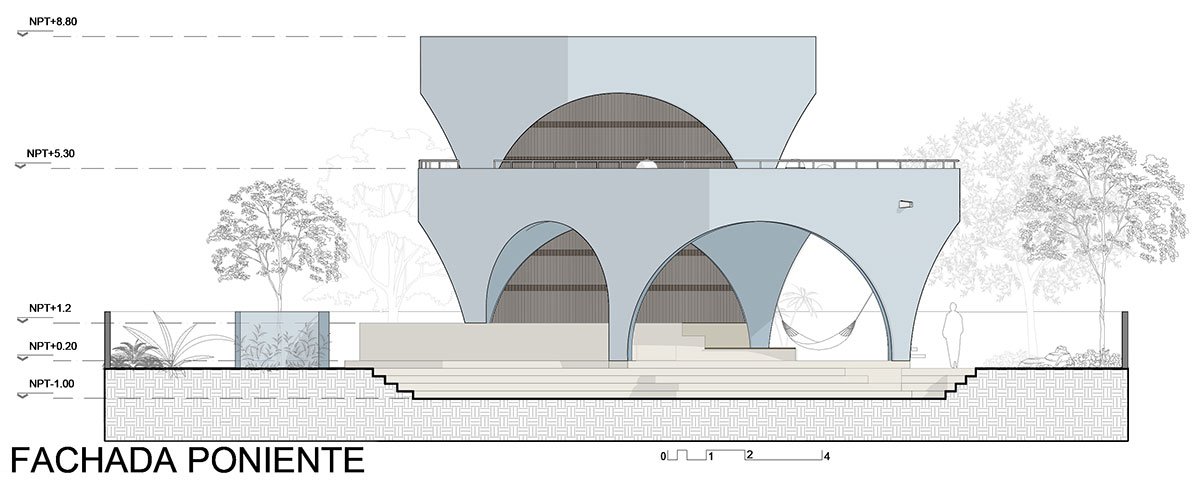
The resulting extrusion of these forms gives rise to two cylindrical volumes that connect, creating an enveloping structure of vibrant blue concrete that evokes the shades of the ocean. This envelope is perforated by cylinders, creating openings oriented towards the four cardinal points. Inside, habitable spaces are developed, open to allow the flow of naturally cooled air from the gentle sea breeze, eliminating the need for air conditioning.

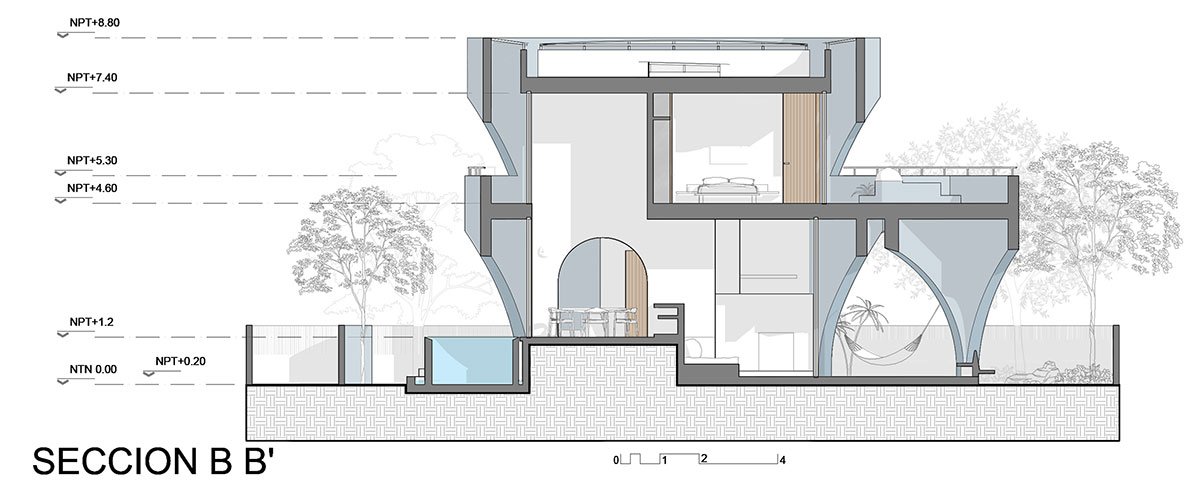

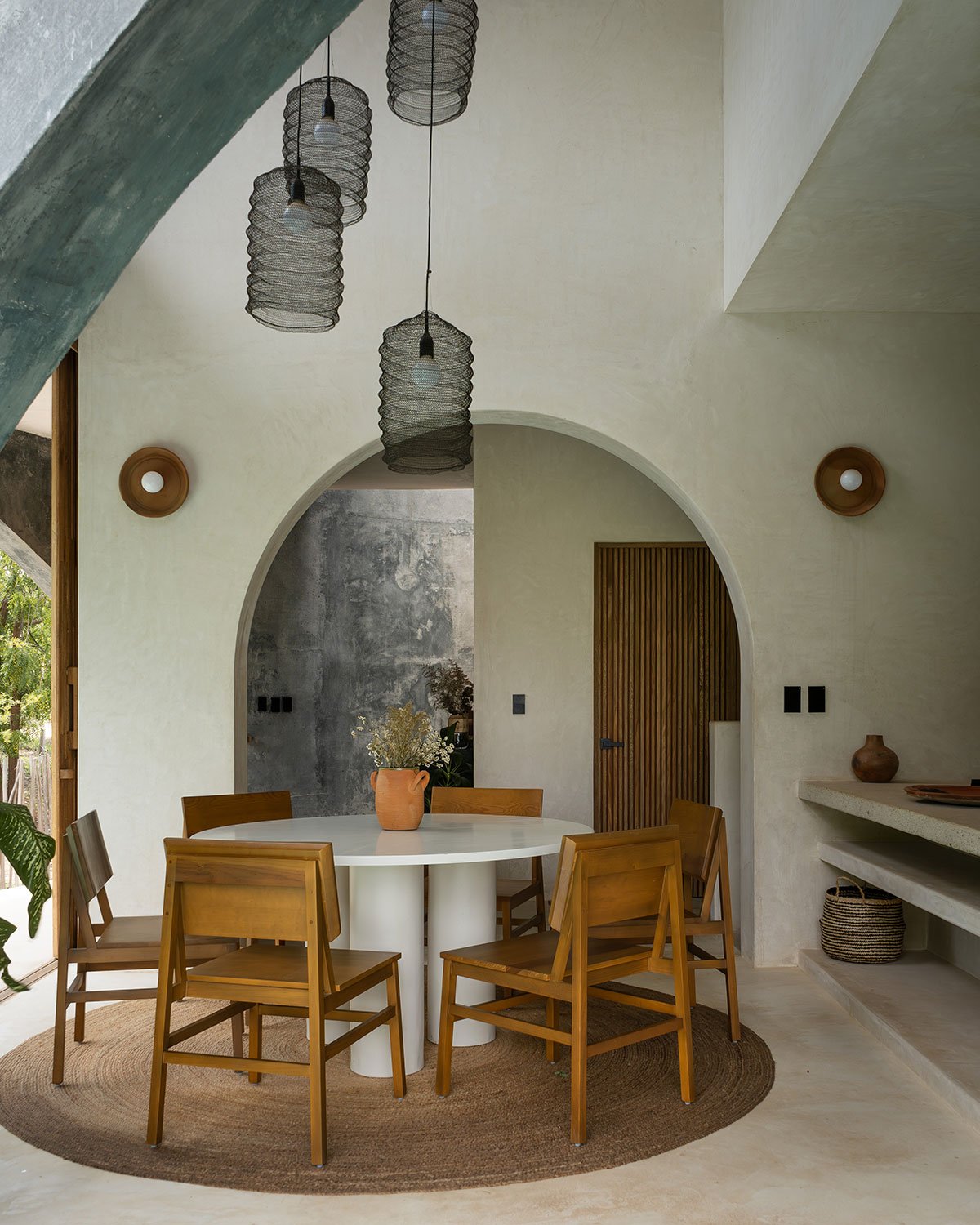
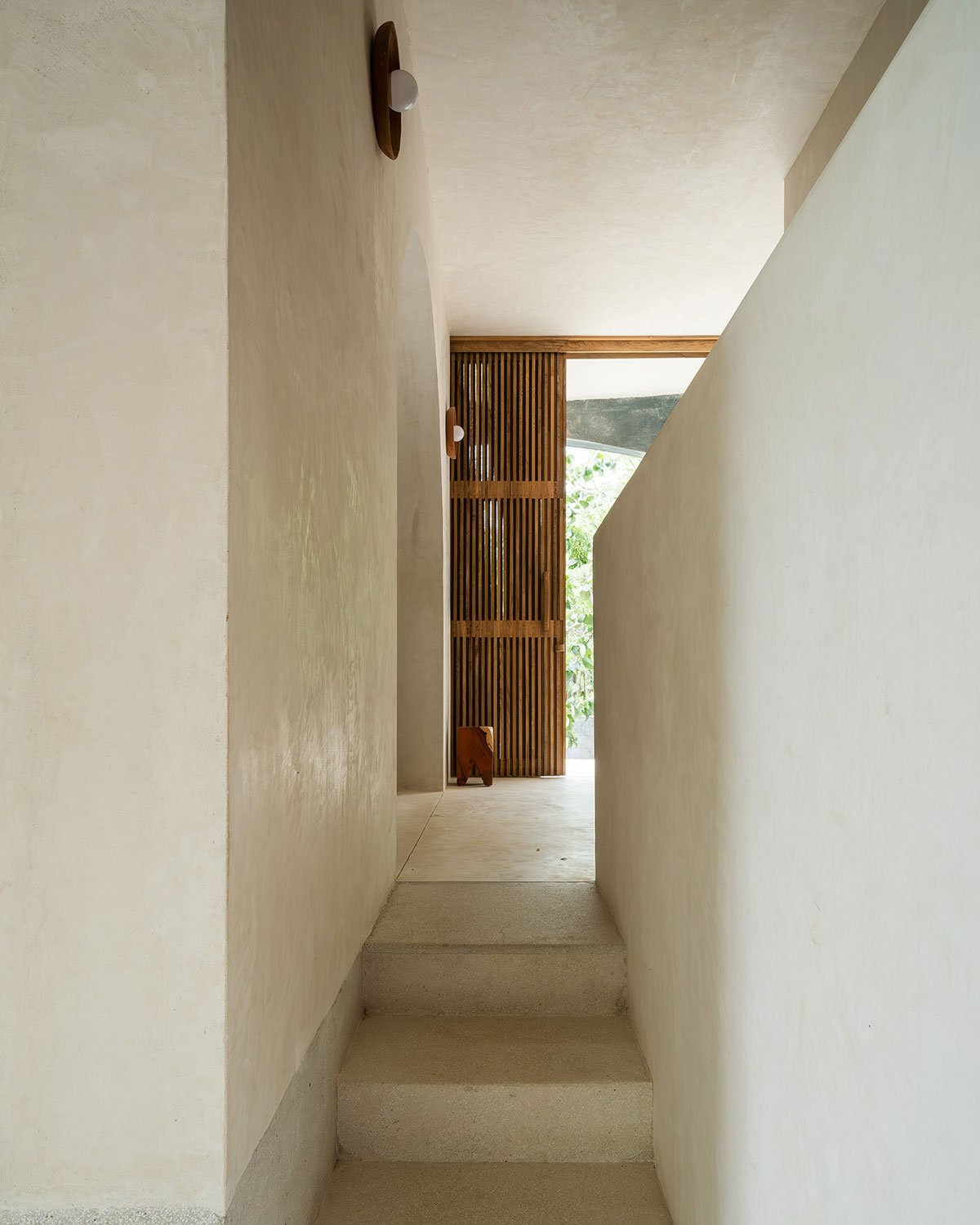
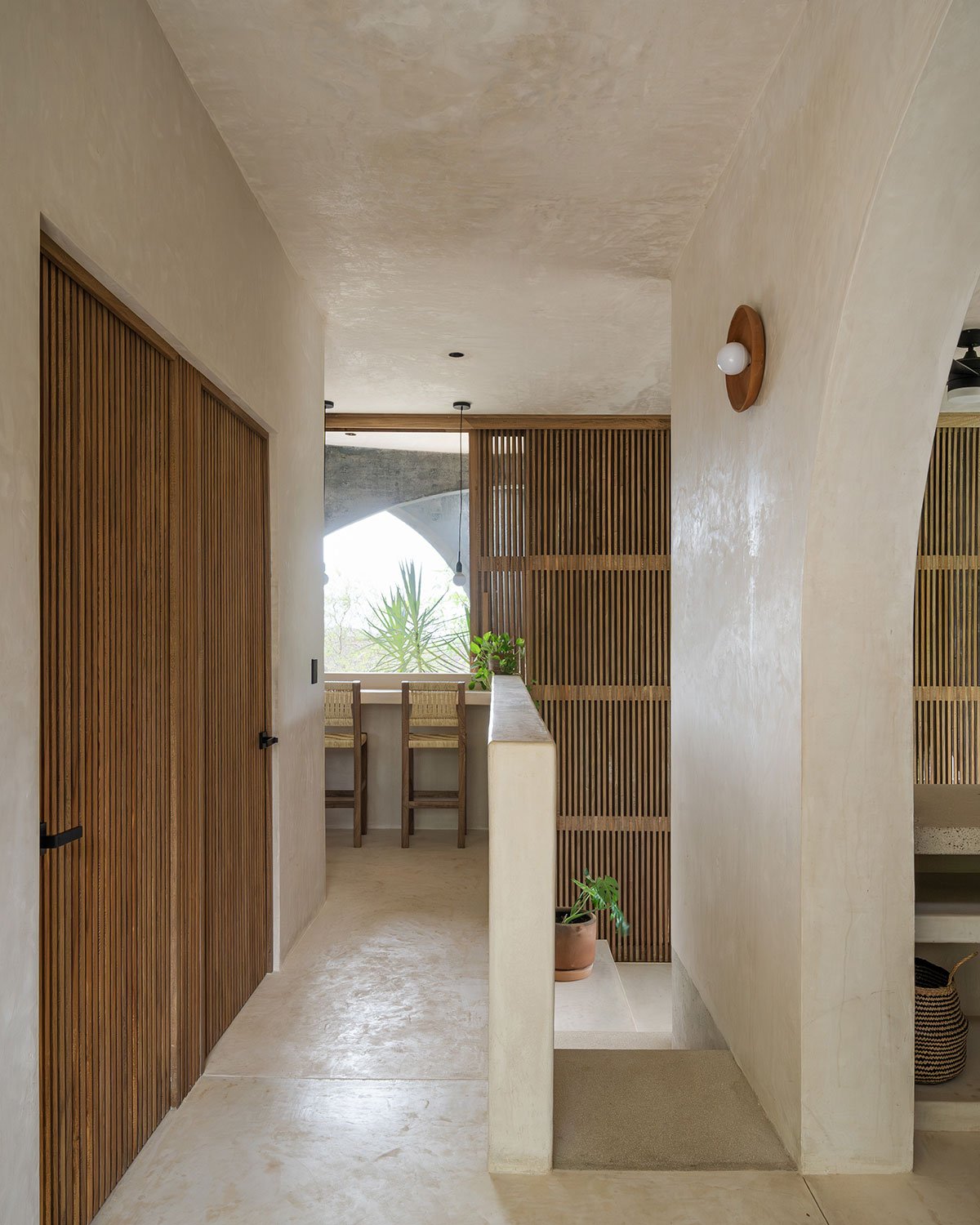
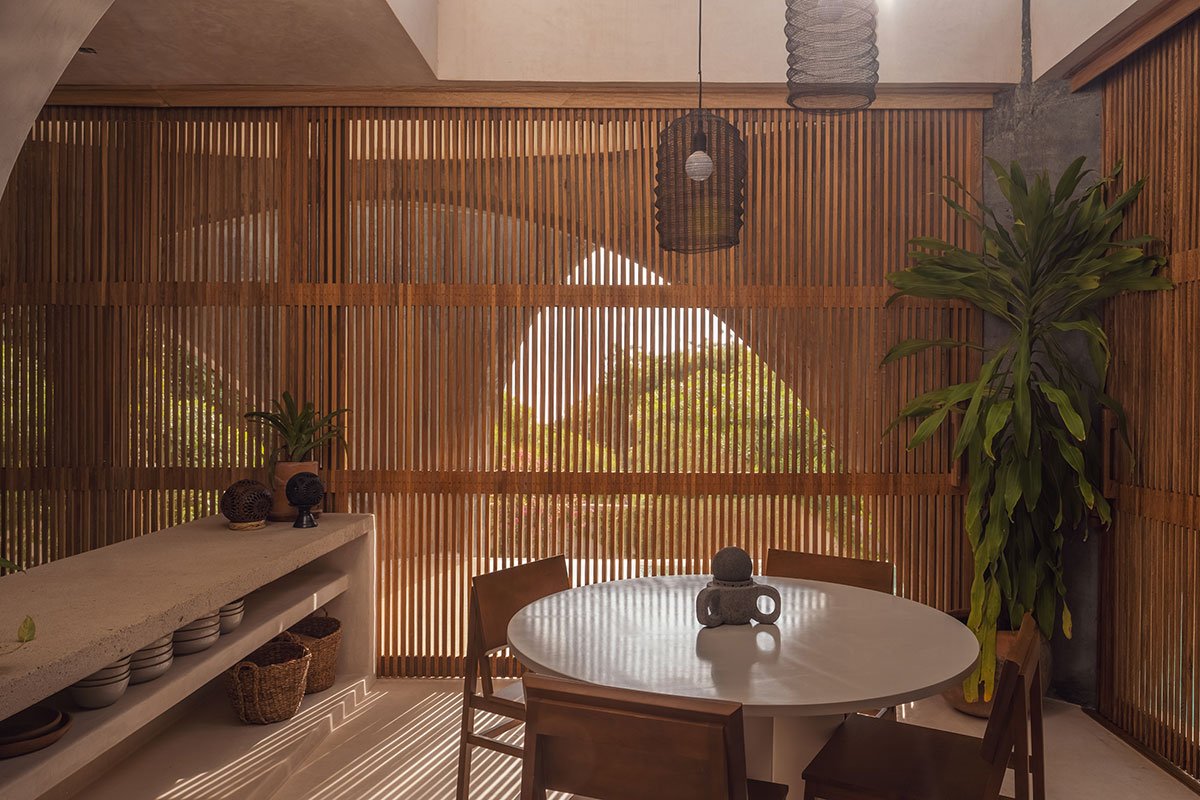
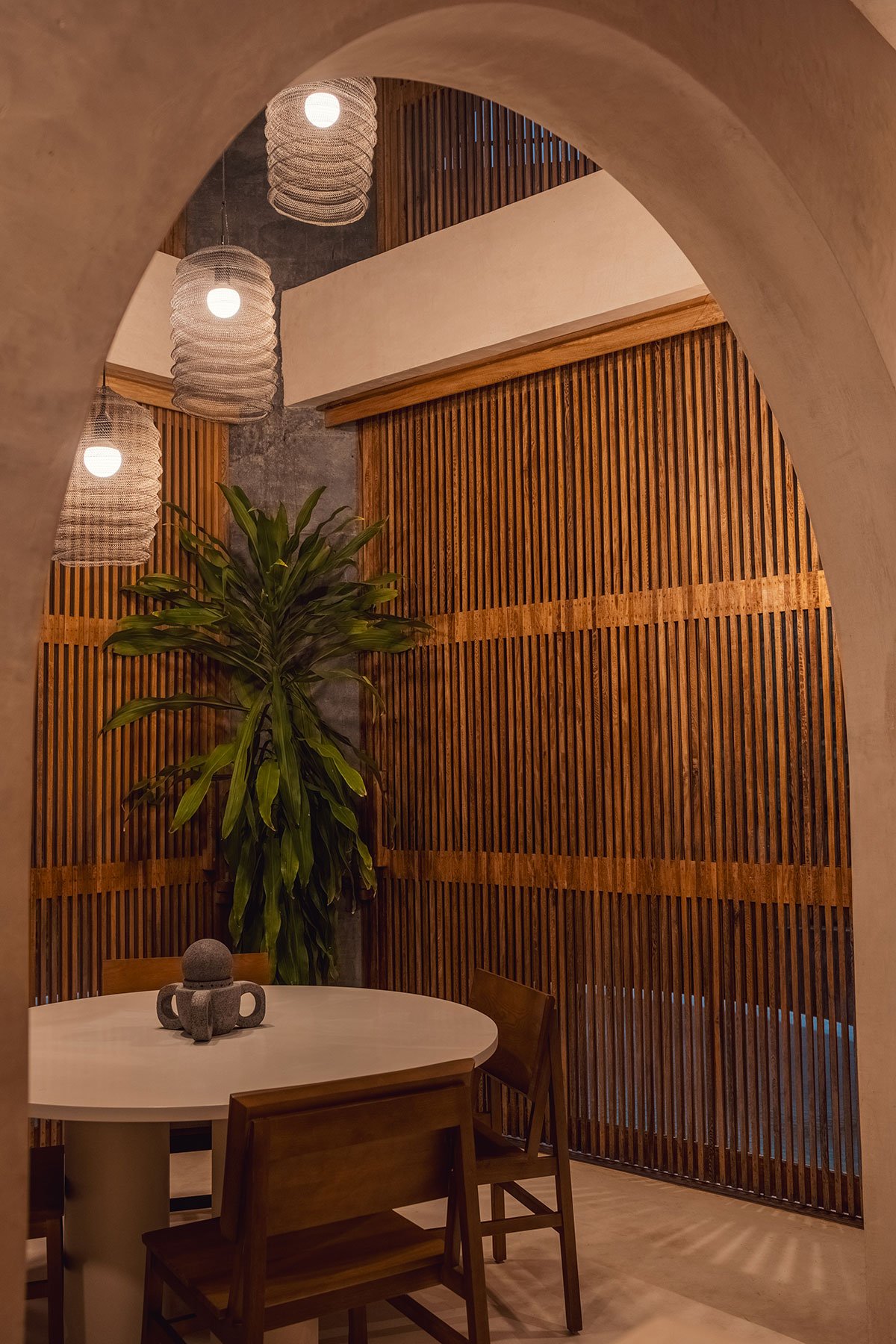
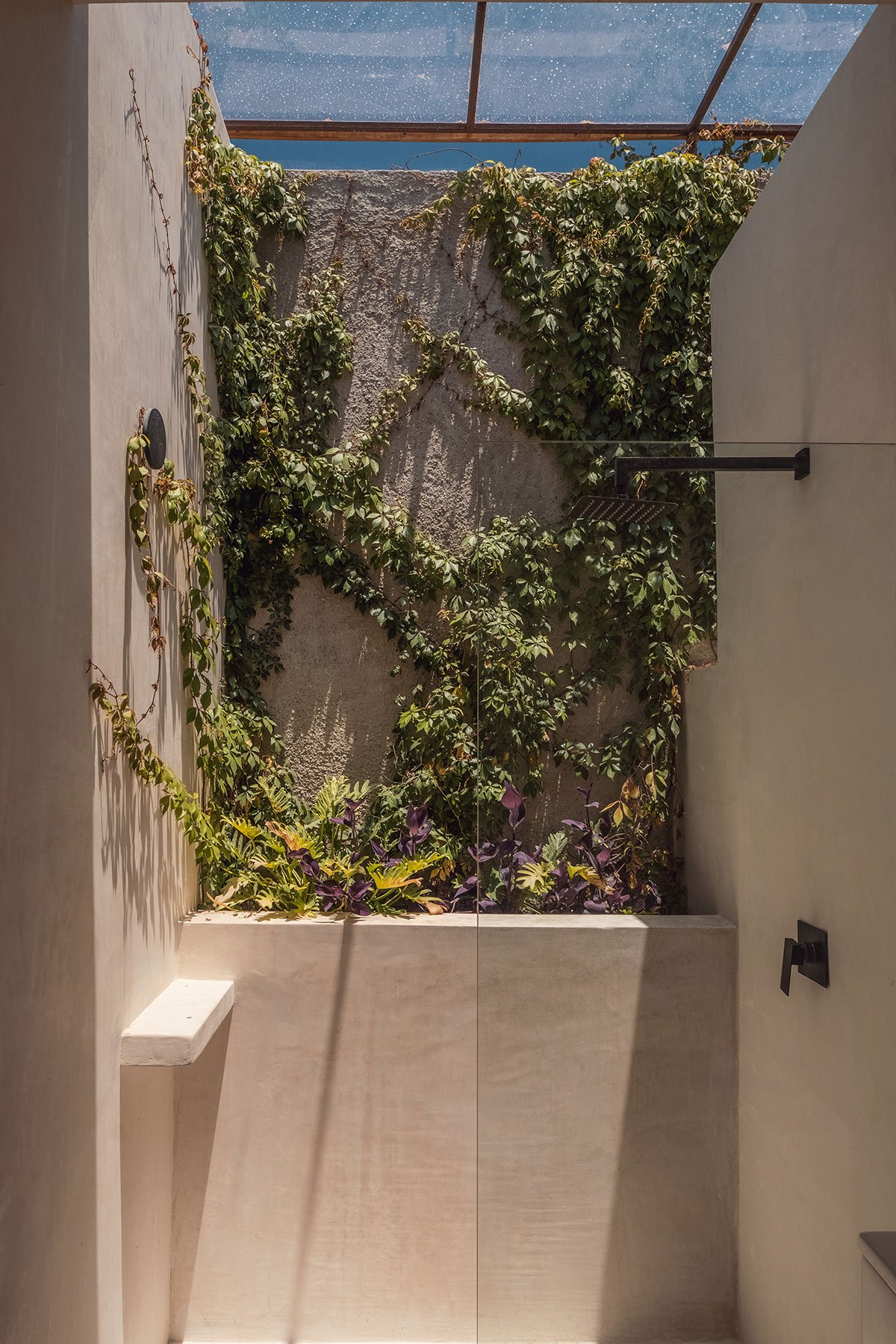
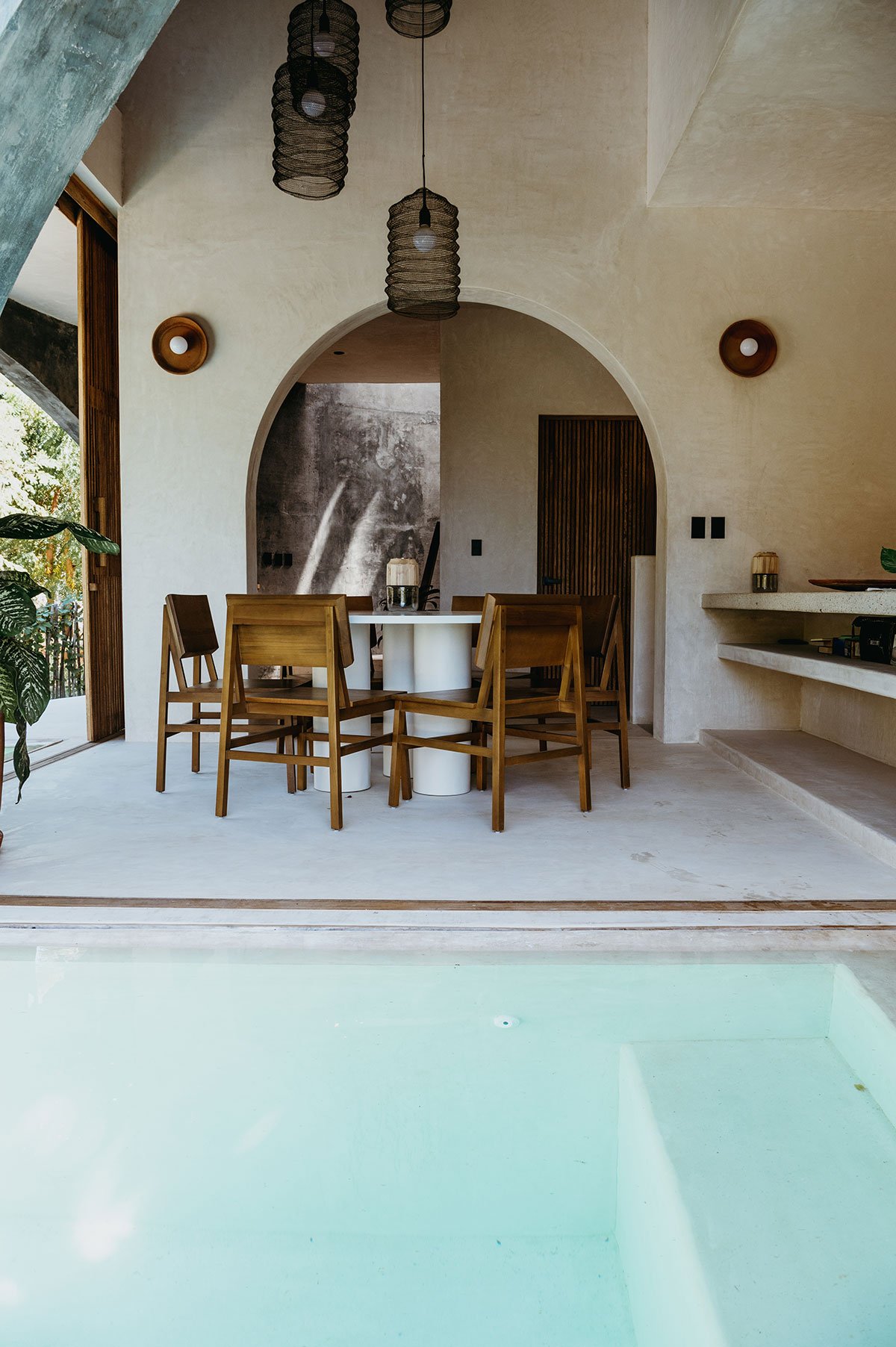
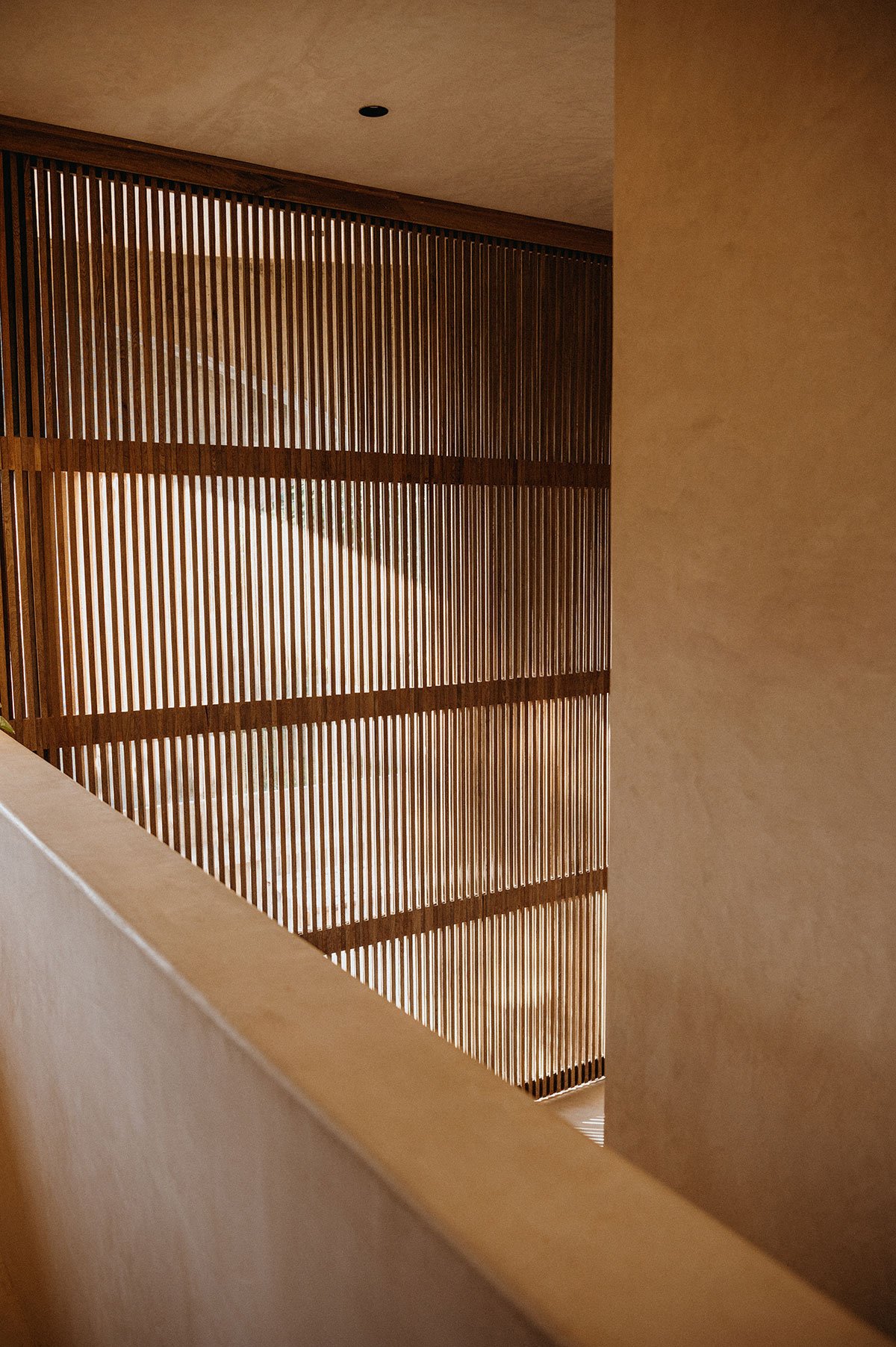
Large sliding screens made from wood strips define the interior spaces and encourage a versatile architecture in which the interior blends with the exterior. The living areas and rooms transform into terraces, and the dining room integrates with the pool. The program’s distribution and the ability to open entire sections of the house create an interactive circuit between spaces, turning the house into a meeting point between the residents and nature.
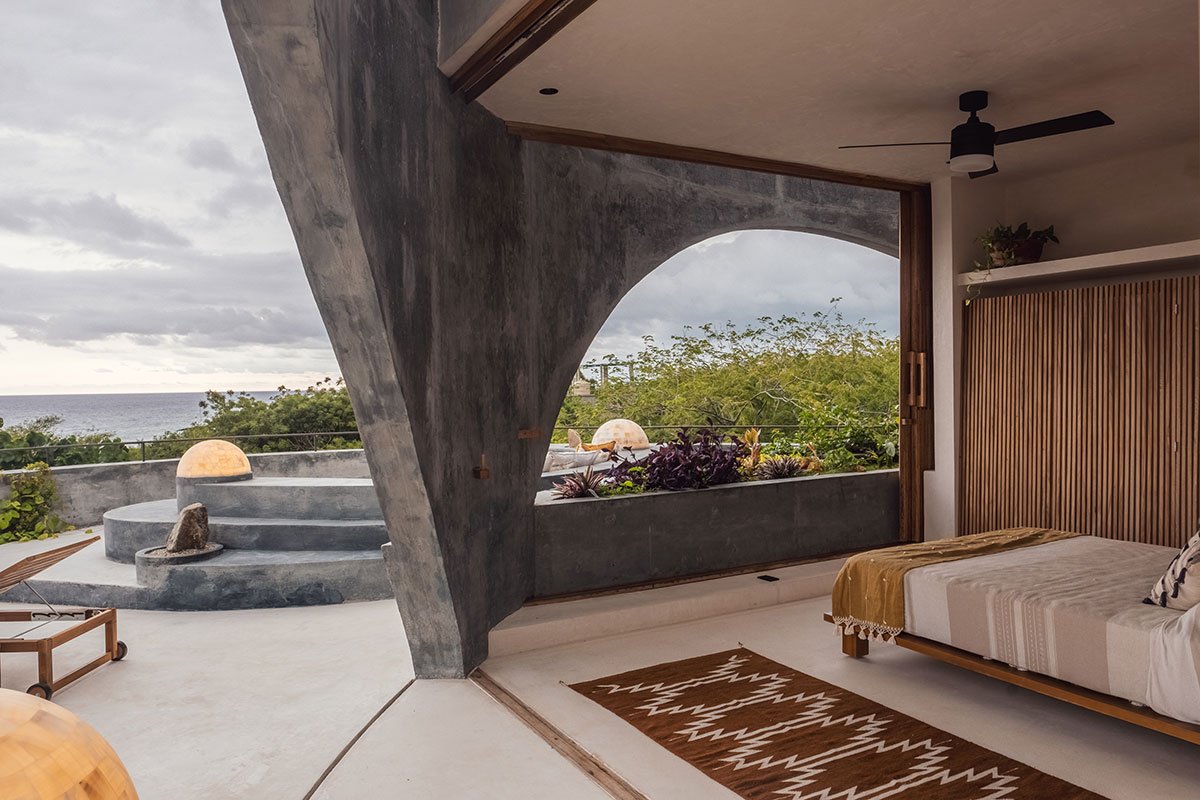

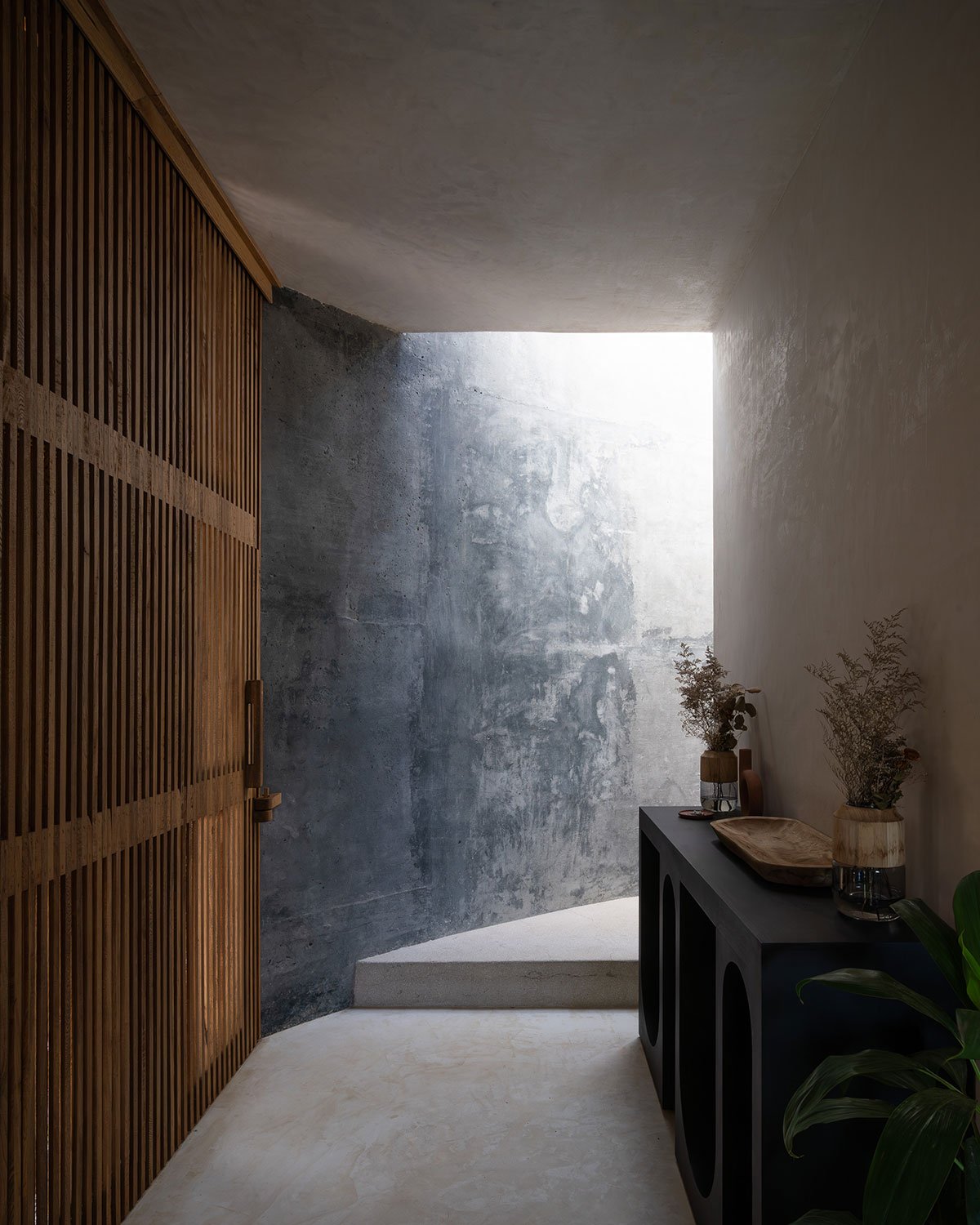
The choice of materials is based on the importance of using local elements crafted by the community. The sea, sand, and vegetation were the main sources of inspiration when selecting the materials that make up this project. The blue tones of rustic concrete evoke the sea, while the arches recall the waves breaking on the sand-colored chukum floors and walls. The macuil wood of the screens rises like a forest protecting from the sun.

In summary, this project stems from a reflection on the impact of buildings on their surroundings. The flow of the wind and its influence on the sea currents dictated the permeability of the building, harnessing these currents to ensure greater energy efficiency while providing its residents with an exceptional refuge in complete harmony with the landscape.
Drawings
Images