Excerpt: ‘Rehabilitar el espacio intermareal de Río Gallegos’ is an architecture thesis by Agustín Edelcopp, Lorenzo Dall’Aglio, and Paola Di Teodoro from the ‘Facultad de Arquitectura, Urbanismo y Diseño – Universidad Nacional de Córdoba (UNC).’ The project proposes a coastal building in Río Gallegos to highlight pollution threatening its rare marshland ecosystem. It promotes urban regeneration by balancing growth with conservation through adaptation, mitigation, and awareness. By integrating the city with nature, it enhances public spaces, defines urban edges, and fosters ecological preservation.
Introduction: Rehabilitar el espacio intermareal de Río Gallegos proposes a building along the coastal edge of Río Gallegos to highlight the issue of pollution affecting the region’s native marshlands—one of the few ecosystems of its kind in the world. This ecosystem holds ecological significance comparable to that of the Amazon and other vital green areas on Earth. The project aims to contribute to its preservation by addressing urban expansion and environmental degradation.
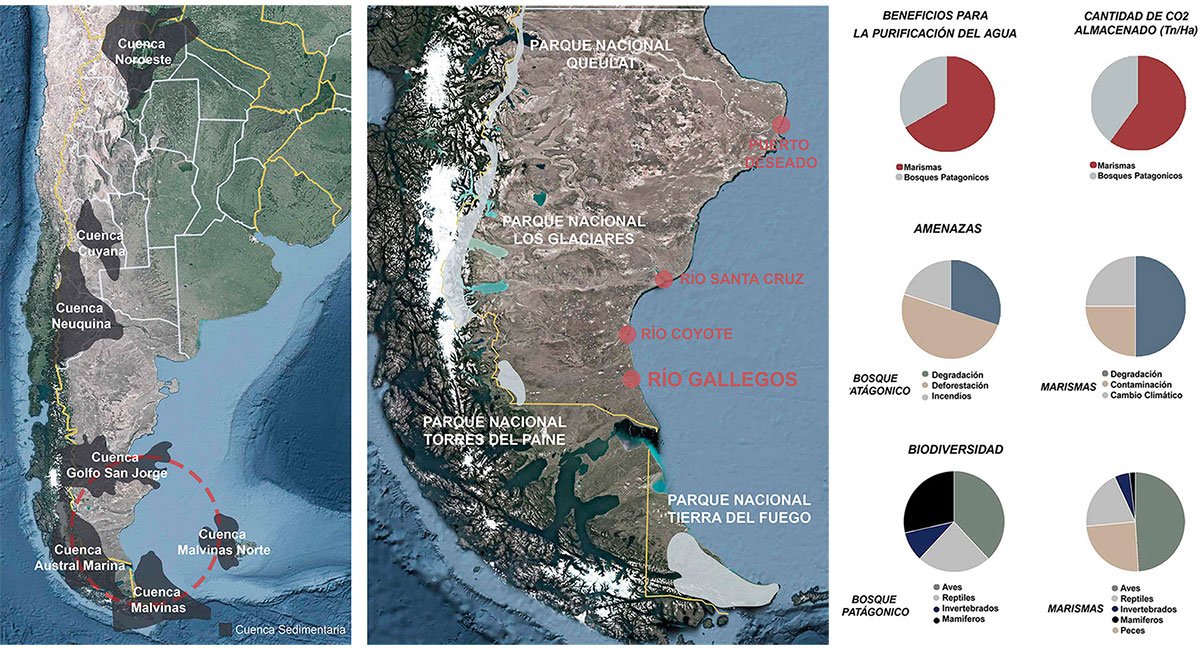
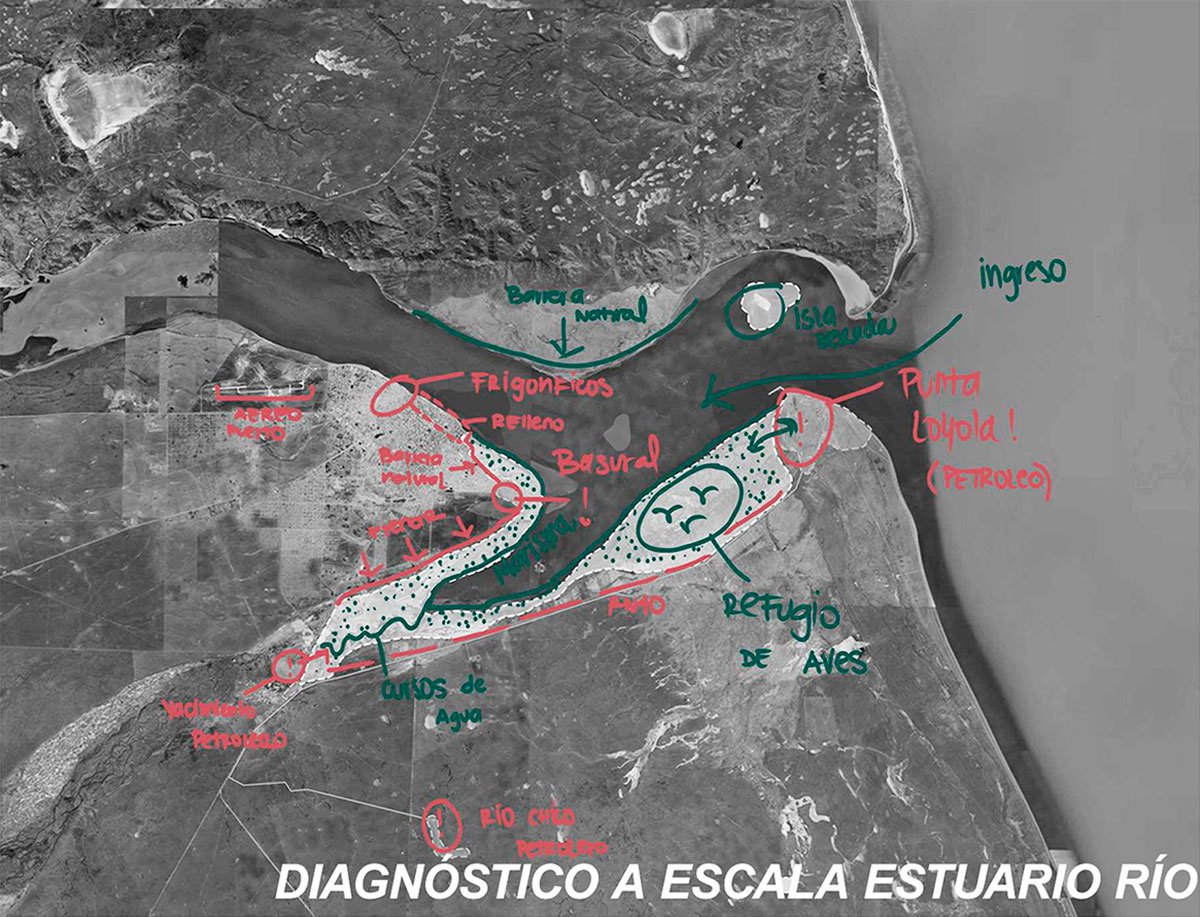
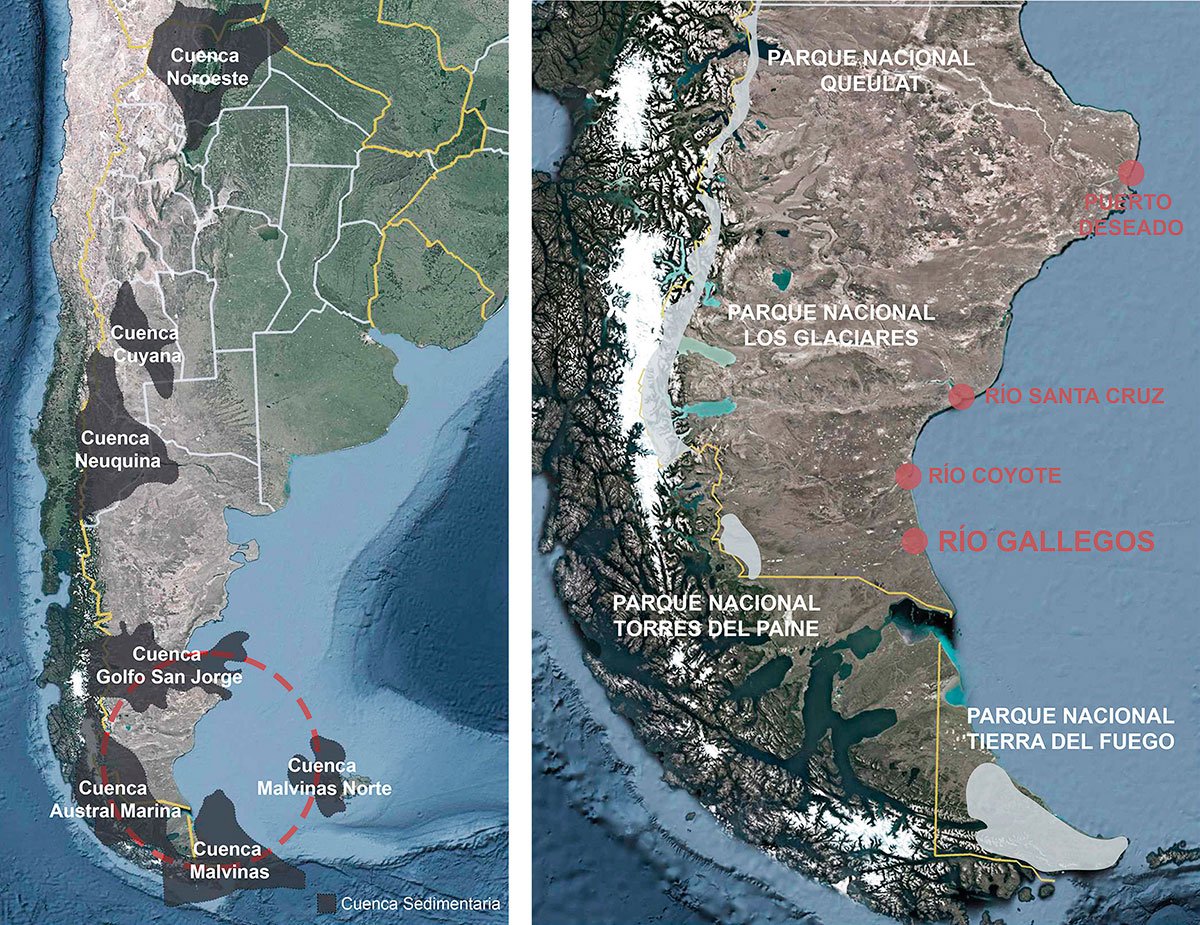
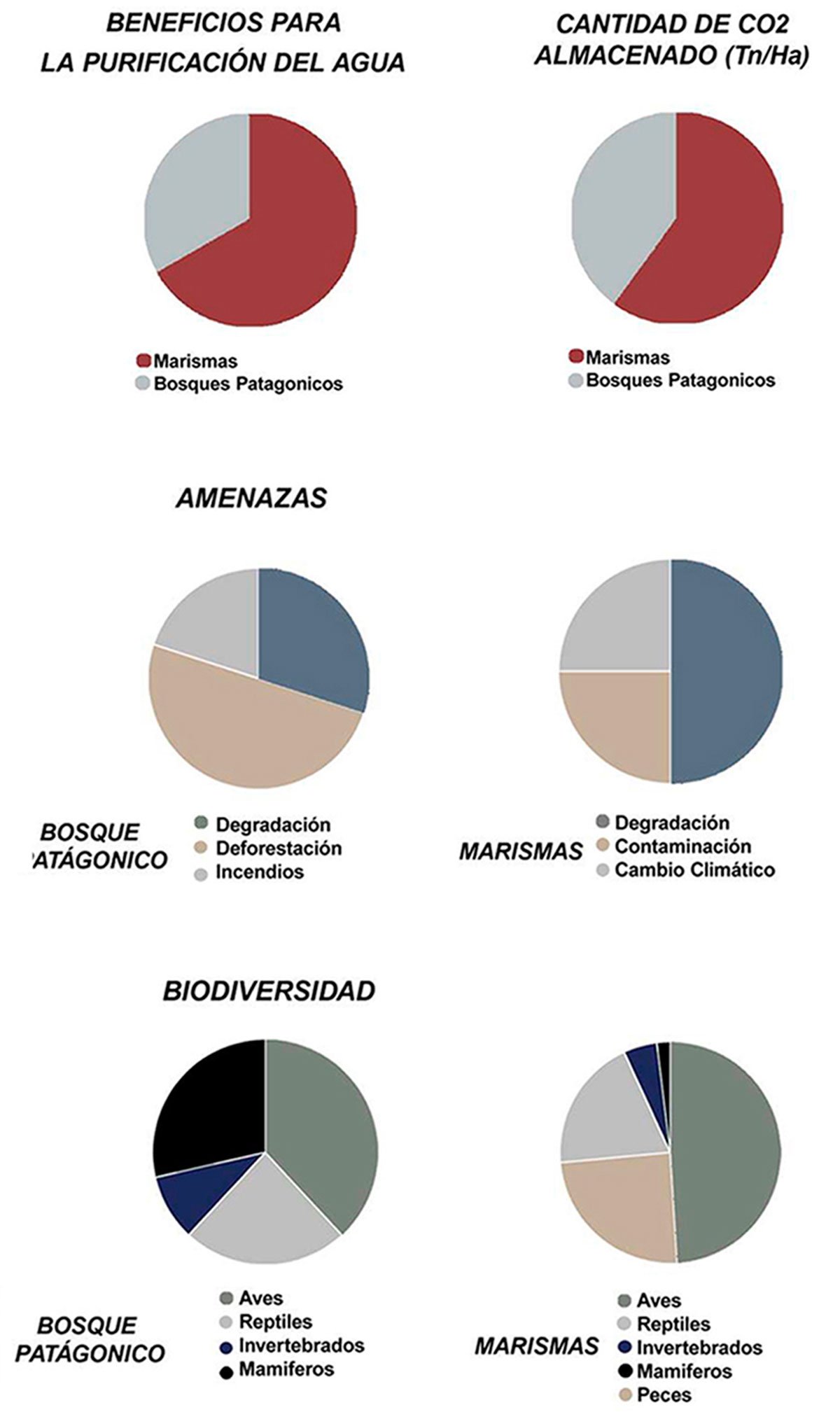
Site Location | Patagonian Forests vs. Marshlands AnalysisEstuary River Scale Diagnosis
The project is situated on the outskirts of Río Gallegos, Santa Cruz, Argentina, with a focus on adaptation, mitigation, and awareness. These three guiding principles shaped the development of an urban intervention that integrates both the city and the coastal edge of the marismas ecosystem.
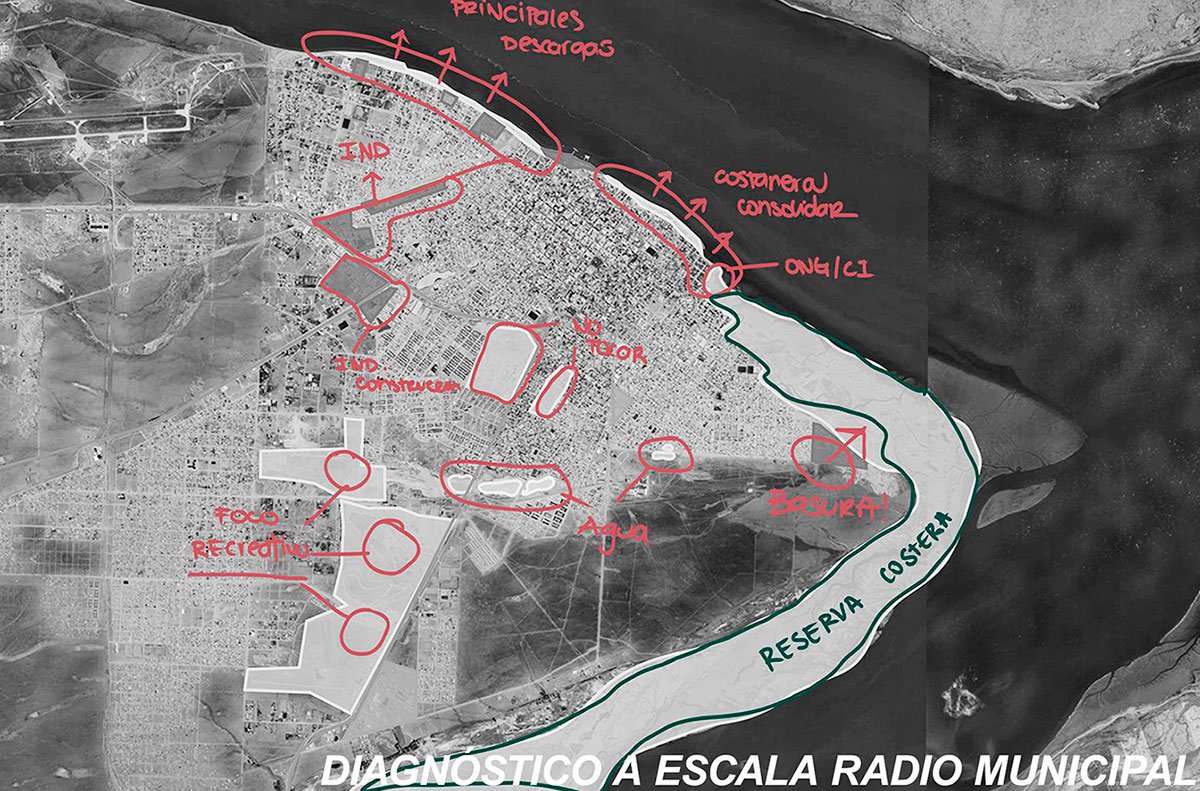
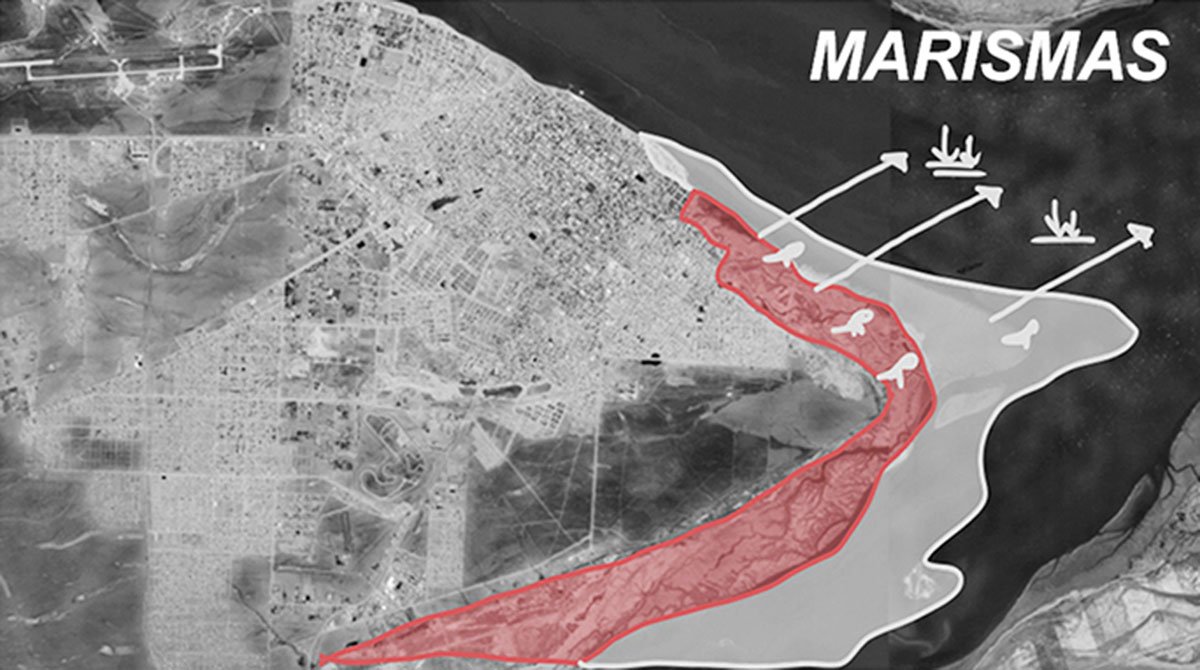
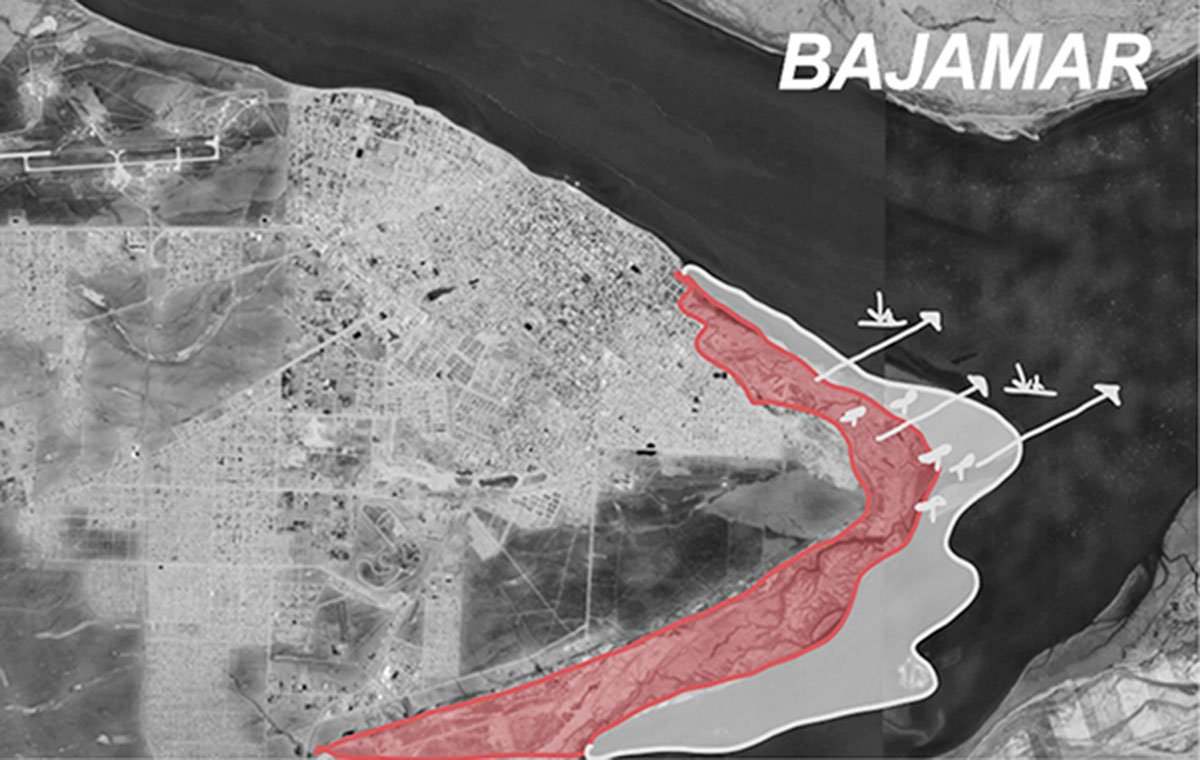
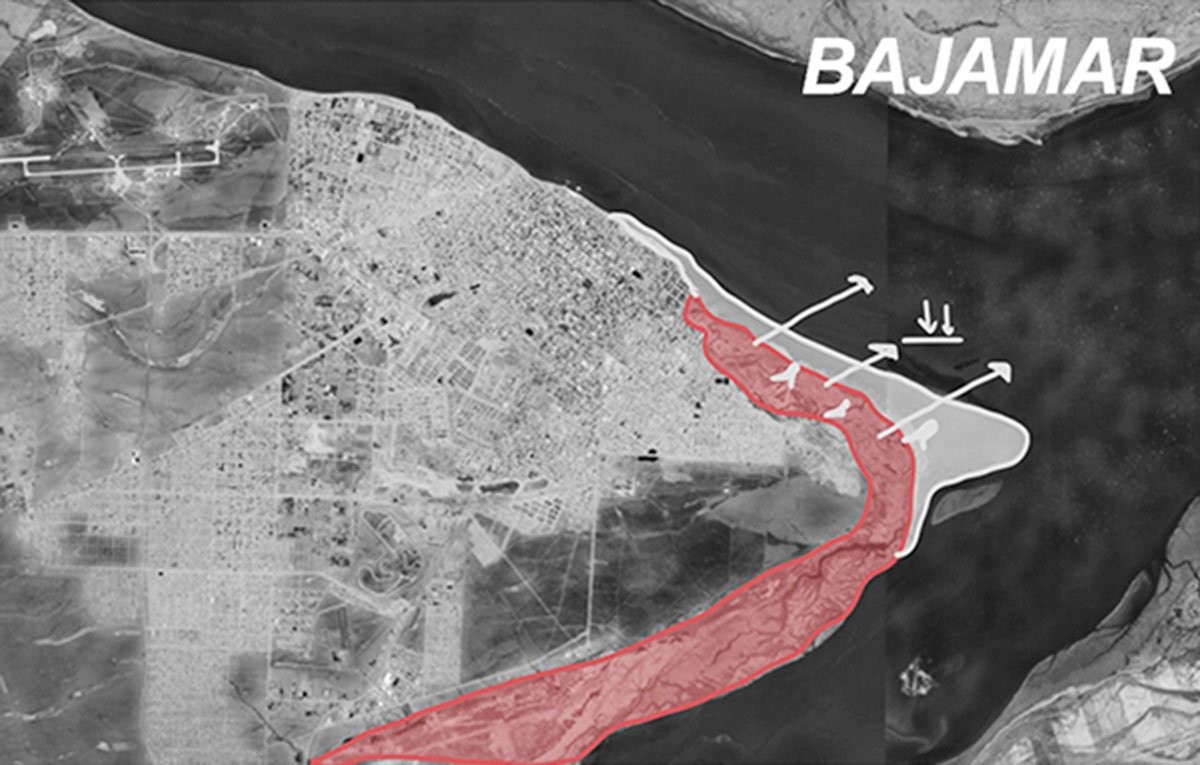
Diagnosis at Municipal Radio ScaleHigh Tide
The analysis provided a comprehensive assessment of the city’s current state, analyzing various aspects in relation to the study. The findings helped identify strengths, weaknesses, opportunities, and challenges, supporting informed decision-making for sustainable development. Within the municipal area, the analysis revealed specific issues such as the unequal distribution of resources, a lack of basic services in certain areas, and environmental degradation.
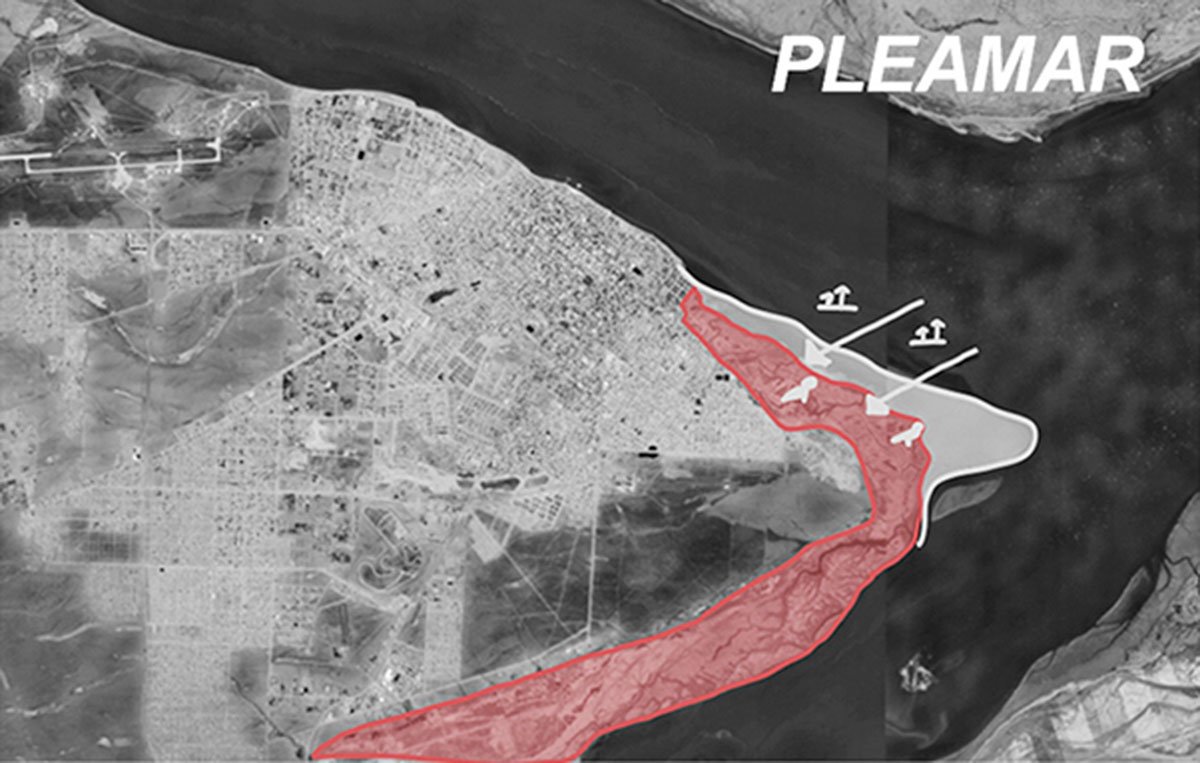
MarshesLow Tide
The estuary experiences semidiurnal tides, with two high and two low tides per day, sometimes reaching variations of over nine meters in height. These tidal fluctuations play a crucial role in coastal dynamics, influencing navigation, marine life, and the area’s geomorphology, shaping a constantly evolving and distinctive environment.
Design Process
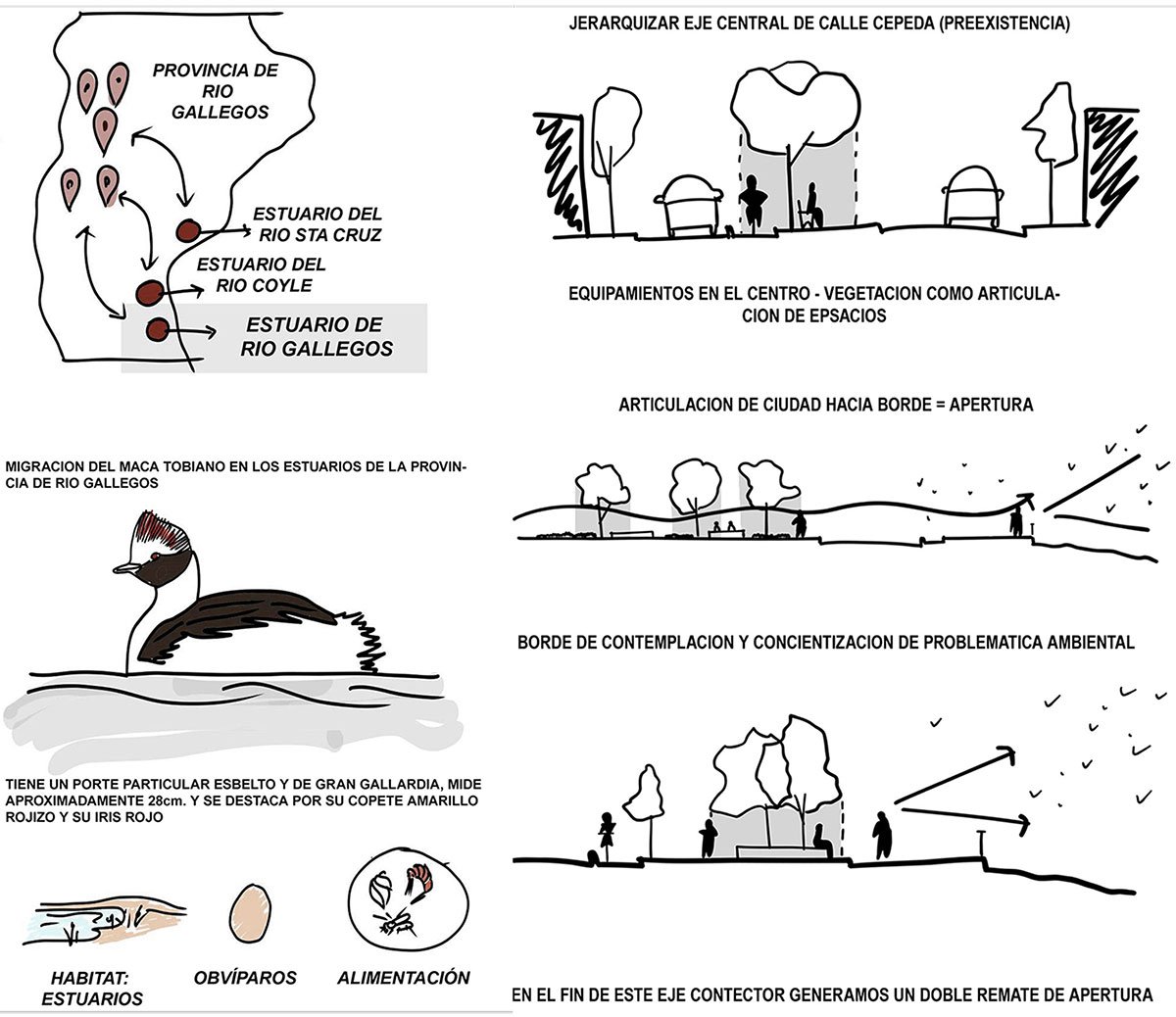
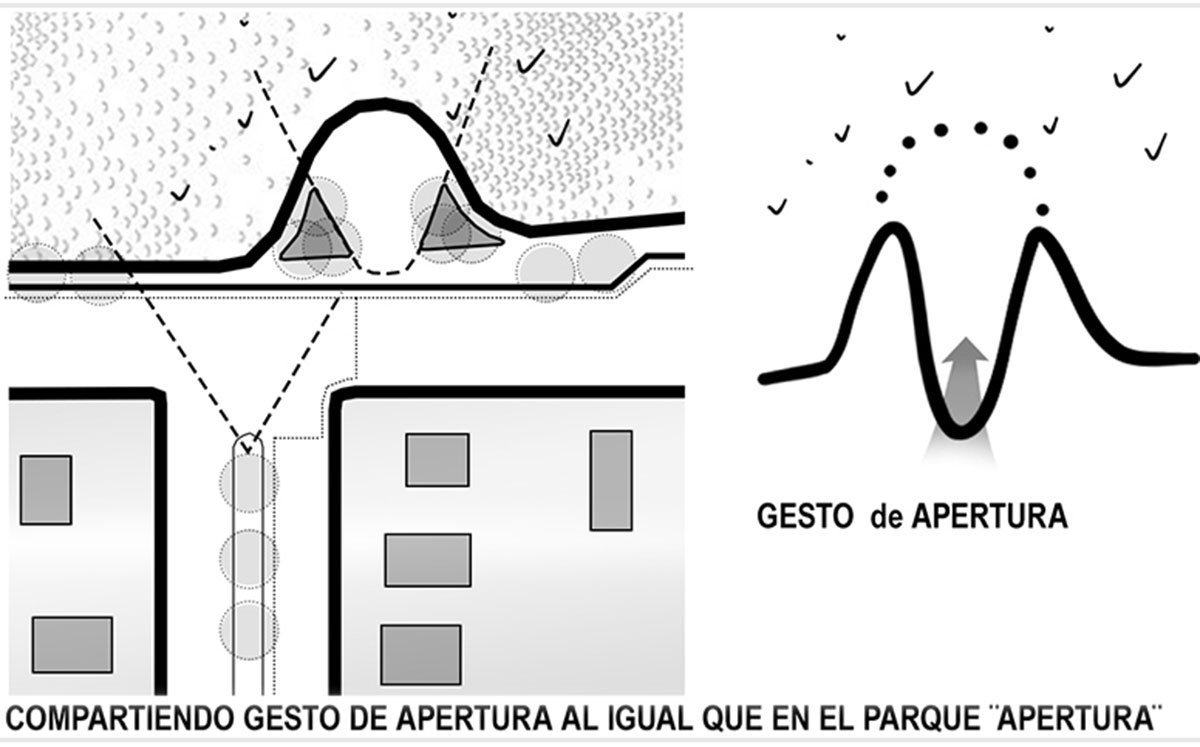
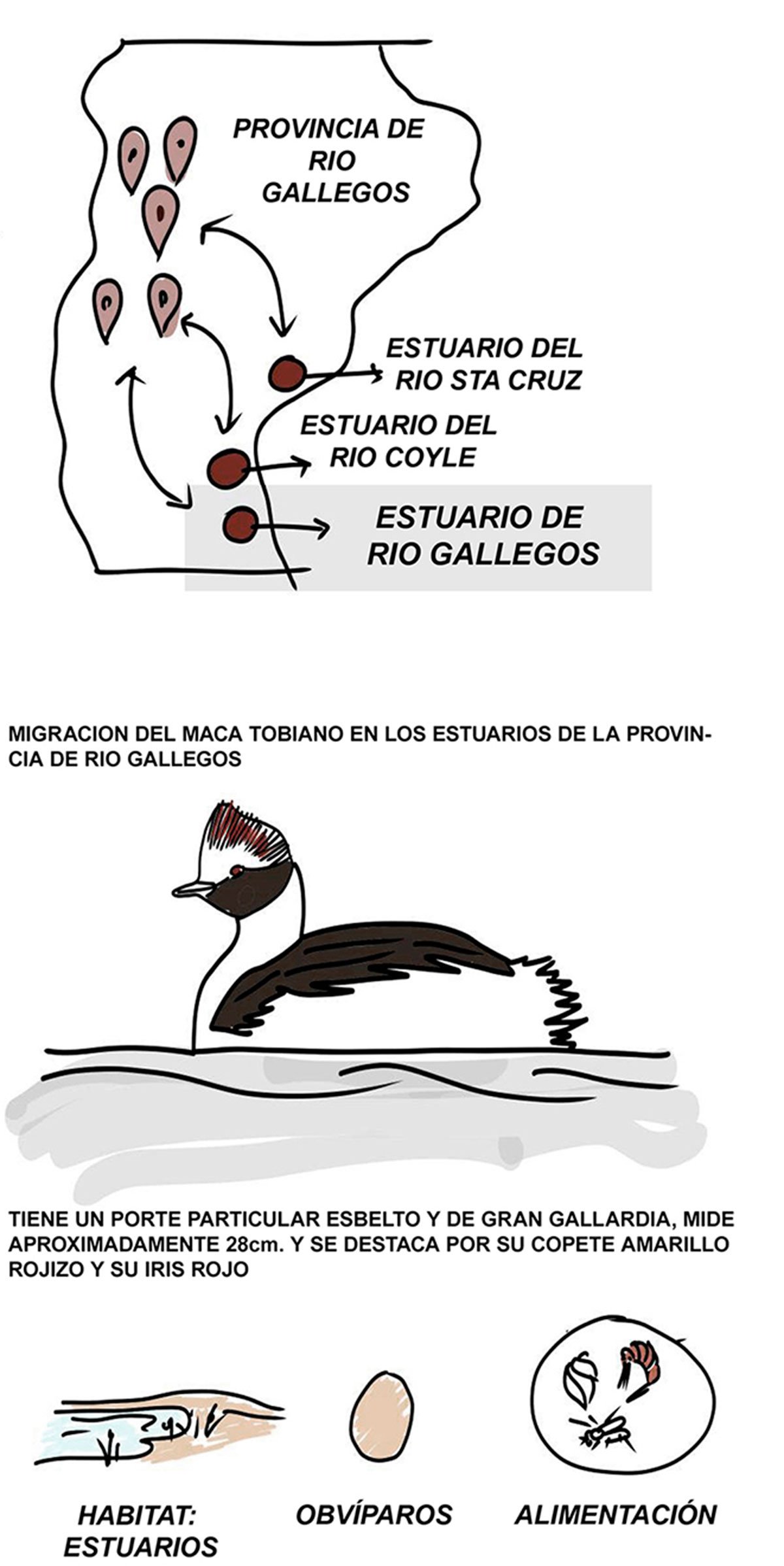
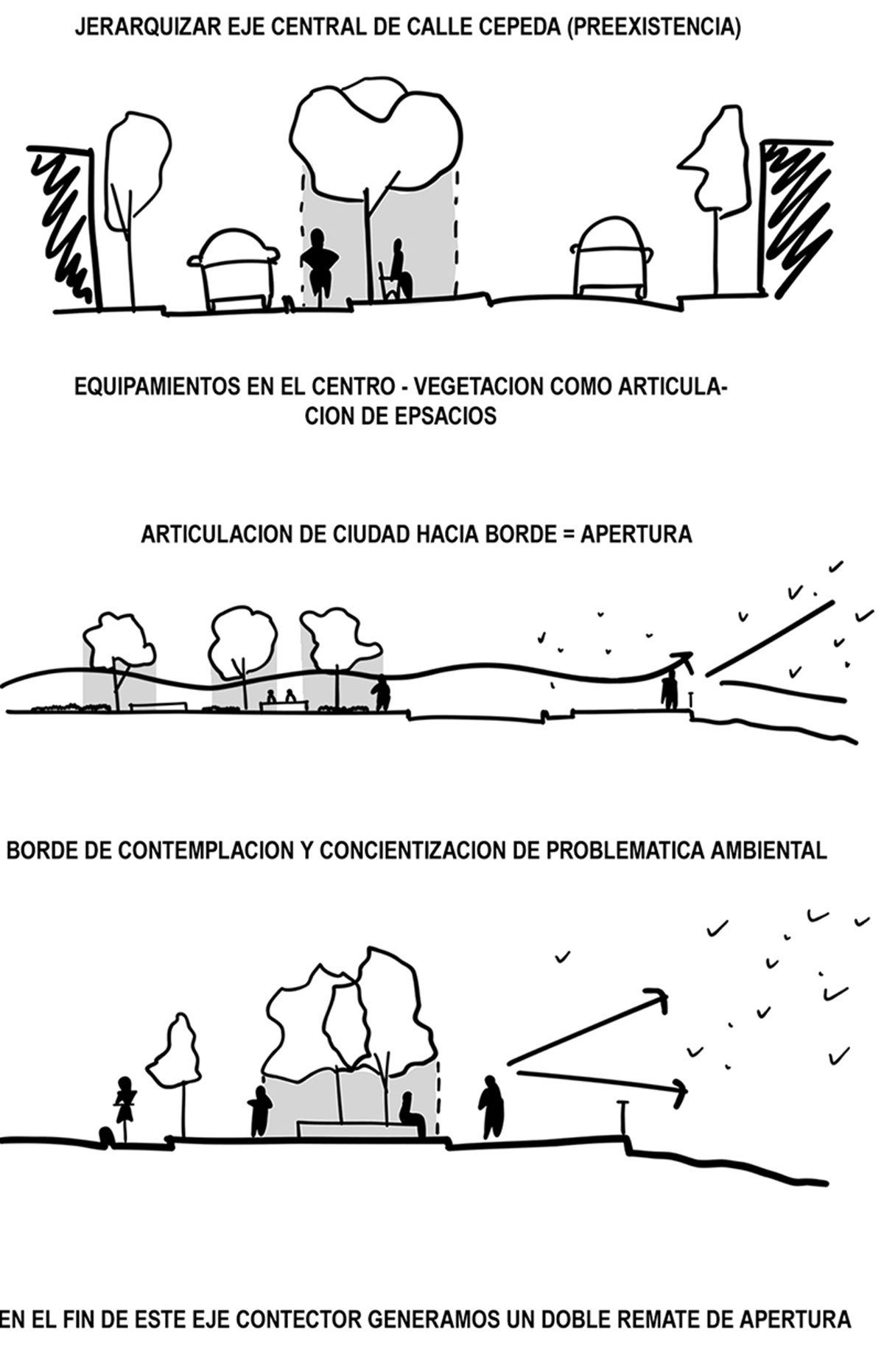
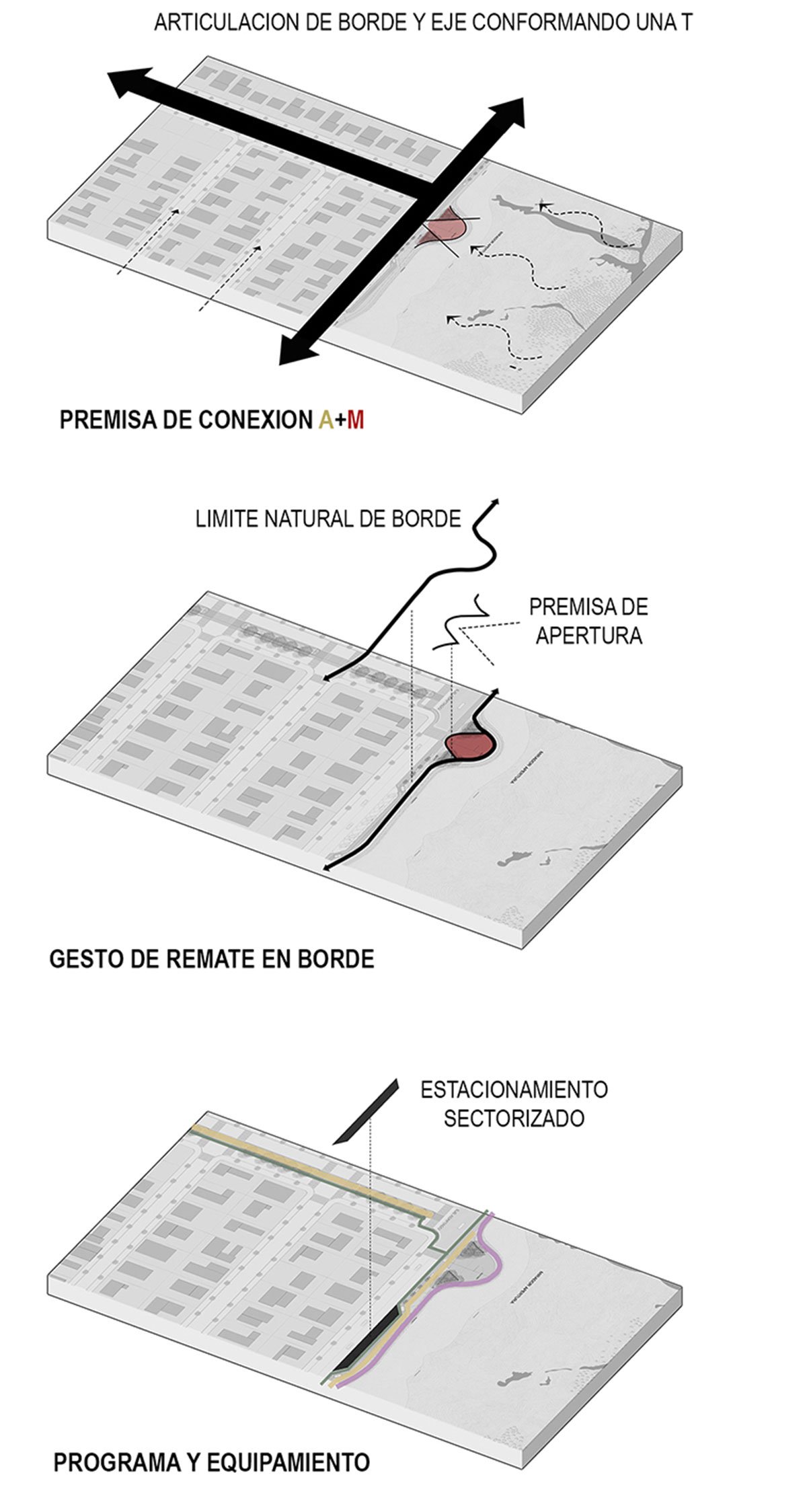
Migration And Characteristics of The Macá Tobiano in the Estuaries Of Río Gallegos | Urban And Environmental Articulation: Connecting the City with The EdgeSharing The Gesture of Opening Just Like in the “Opening” Park
The thesis project focuses on the development of an urban intervention that embodies the three strategies outlined in Sustainable Development Goal No. 13: Climate Action, summarized through the concepts of adaptation, mitigation, and awareness.
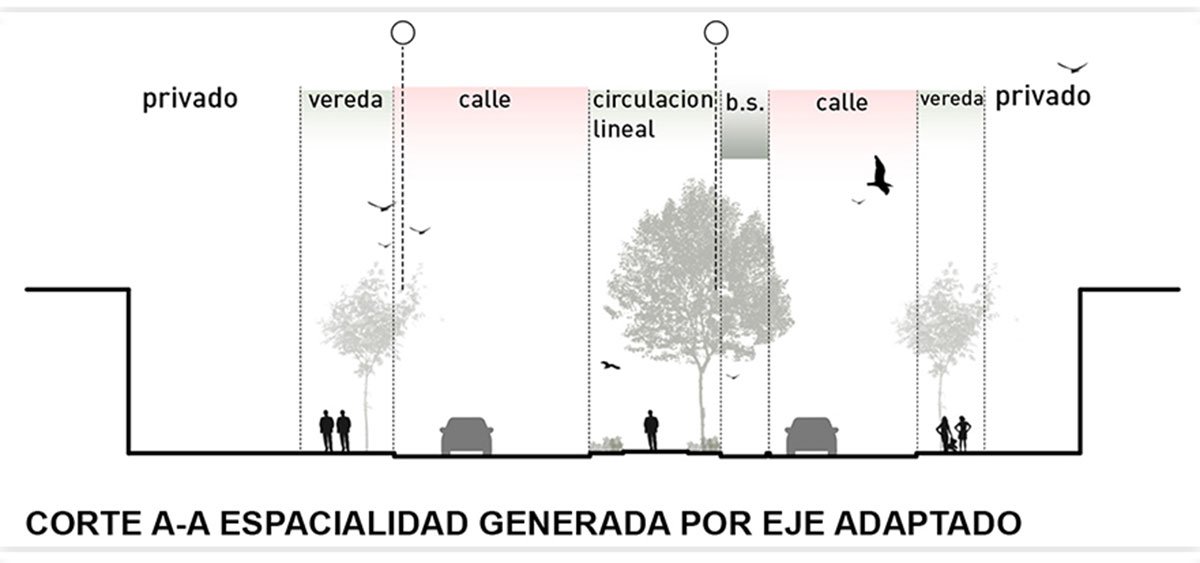
Spatiality Generated by Adapted Axis
To structure the study and implementation of this urban intervention, the project is divided into three stages, each addressing different interactions with the city. These stages aim to establish connections with the surrounding environment, define boundaries with nature, and promote environmental education on the importance of preserving the intertidal ecosystem.
Tidal Phenomenon and Architectural Organization: Integrating Nature with DesignTidal Phenomenon and Architectural Organization: Integrating Nature with Design
1- Adaptation – Harmonizing existing structures with new developments.
2- Mitigation – Addressing and reducing the deterioration of the urban edge caused by city expansion.
3- Awareness – Promoting environmental consciousness and the importance of ecosystem preservation.
Final Outcome
Urban StrategyUrban Edge Preservation and Public Space Integration Proposal
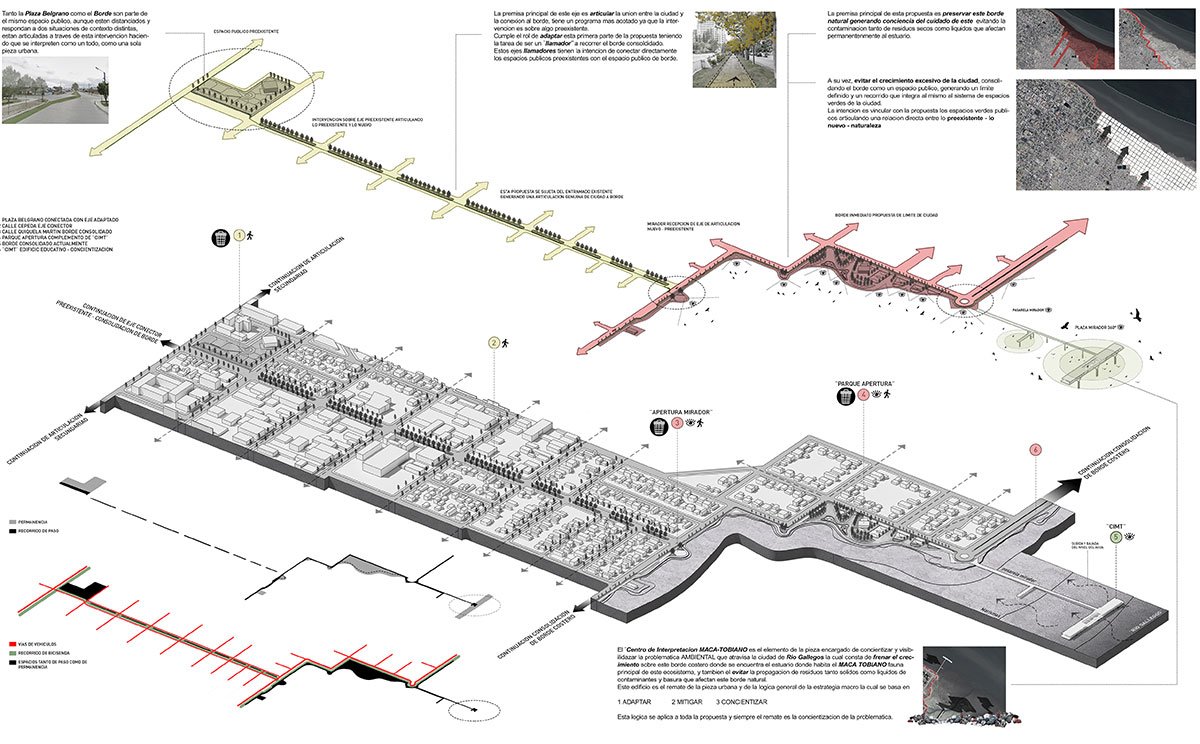
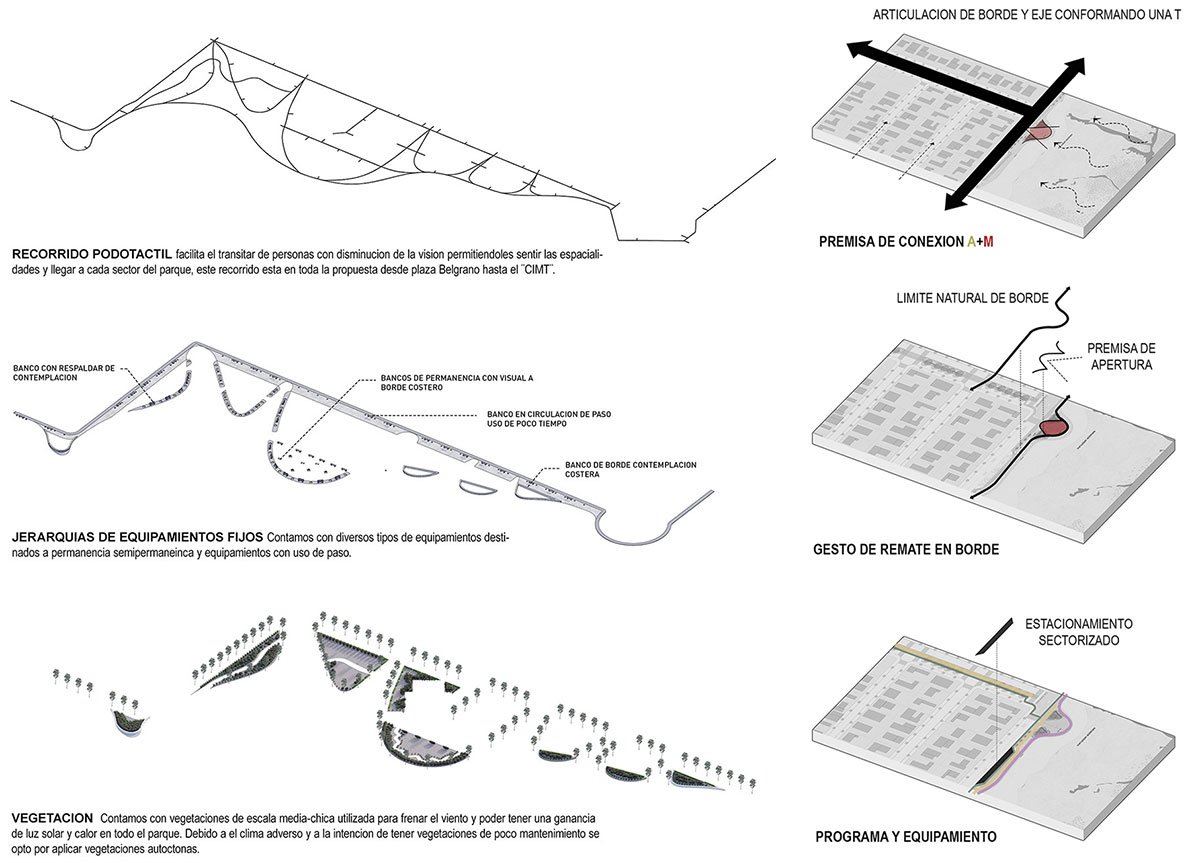
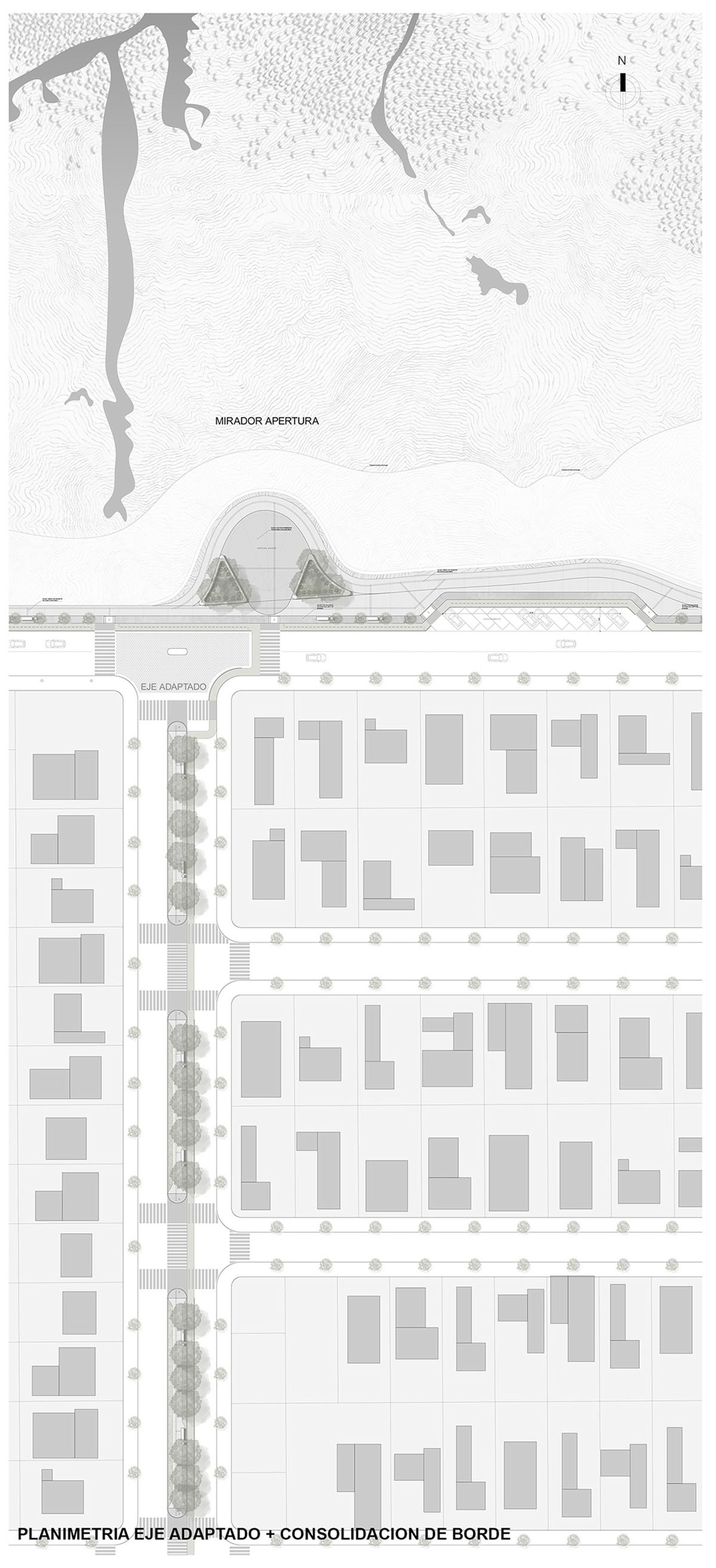
This proposal seeks to address the issue by emphasizing the coastal edge, encouraging the city to integrate this consolidation through a series of axes or ribs extending toward the shoreline. This approach aims to slow urban expansion while fostering awareness of the estuary’s ecological significance.
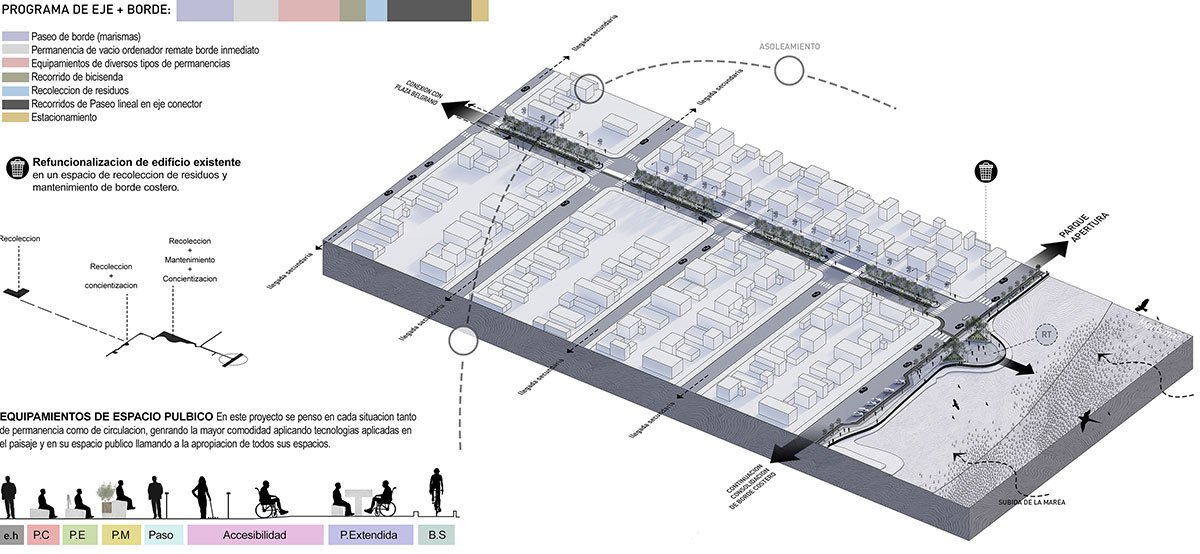
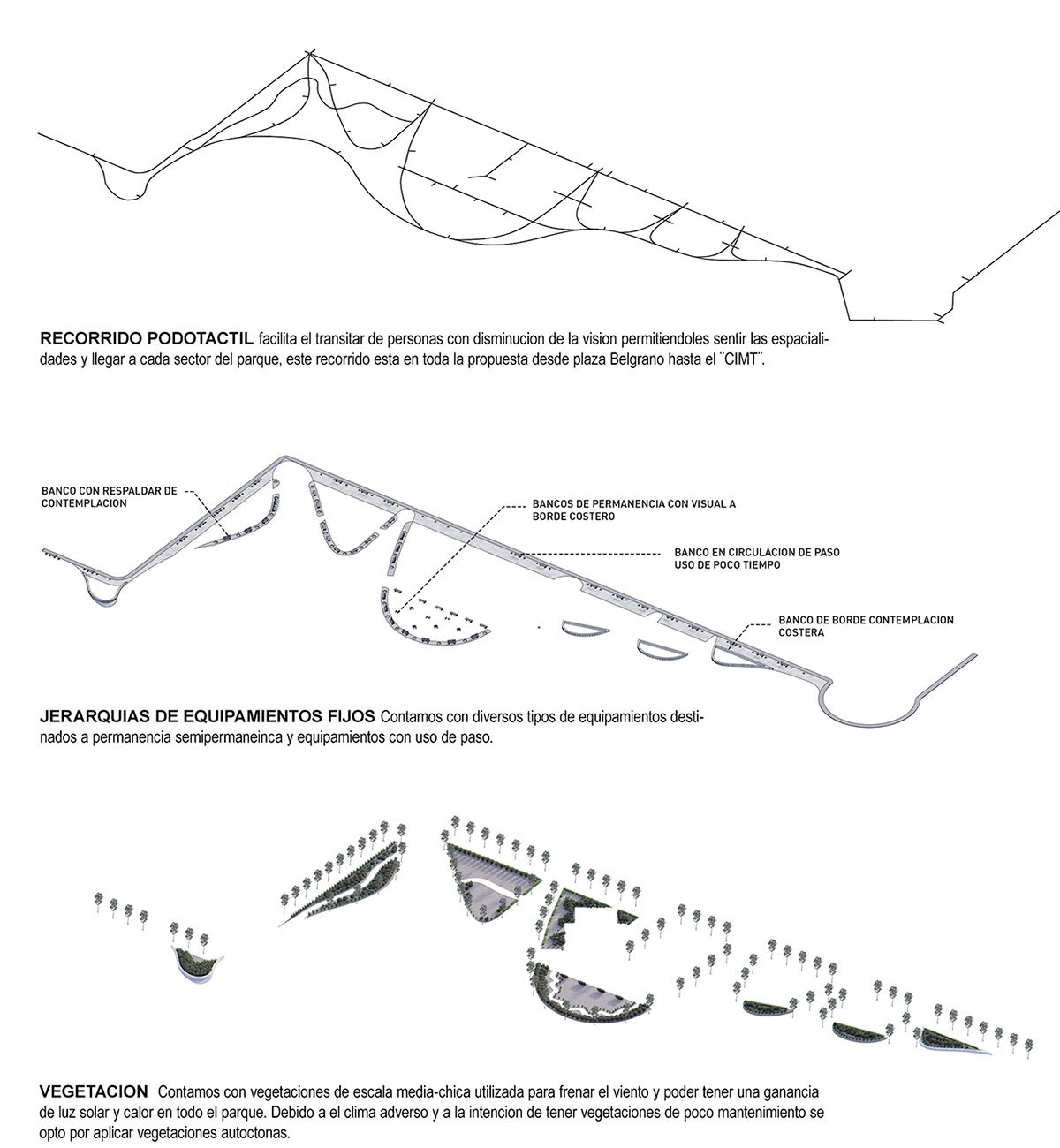
Overall Axonometric of the InterventionAxis + Edge ProgramSection: Interaction Axis Adapted to Consolidated Edge
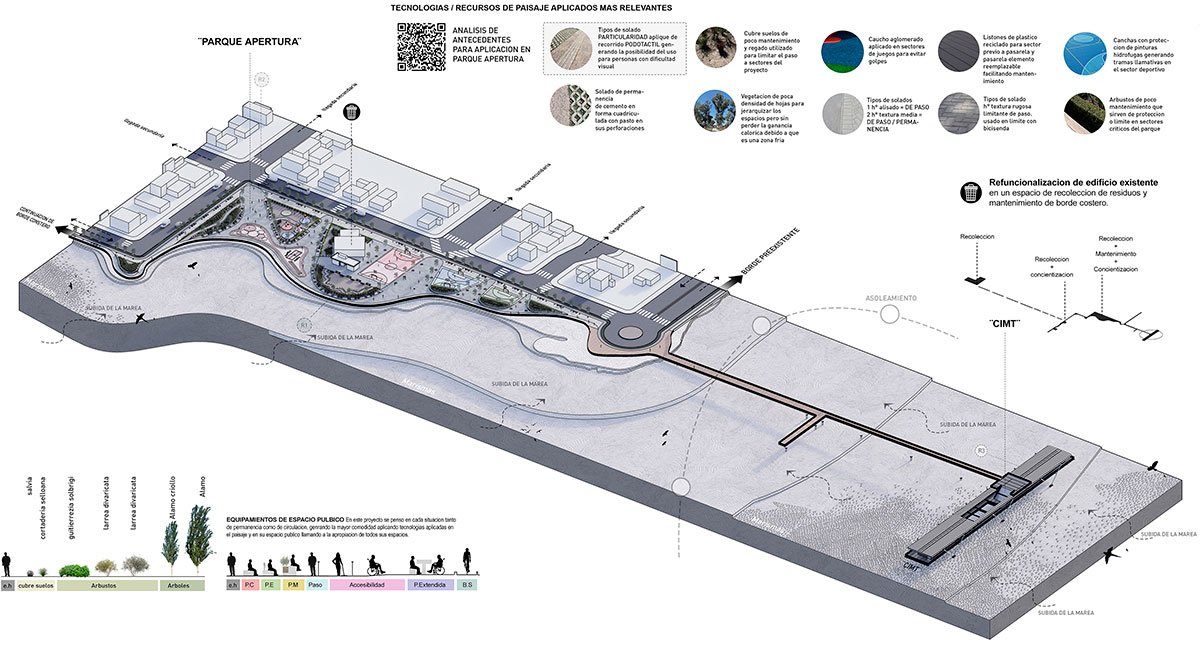
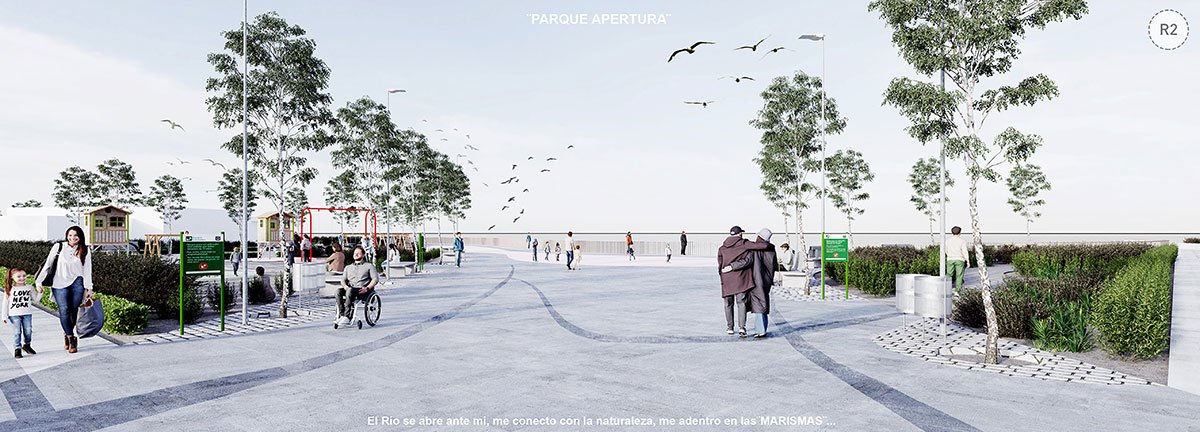
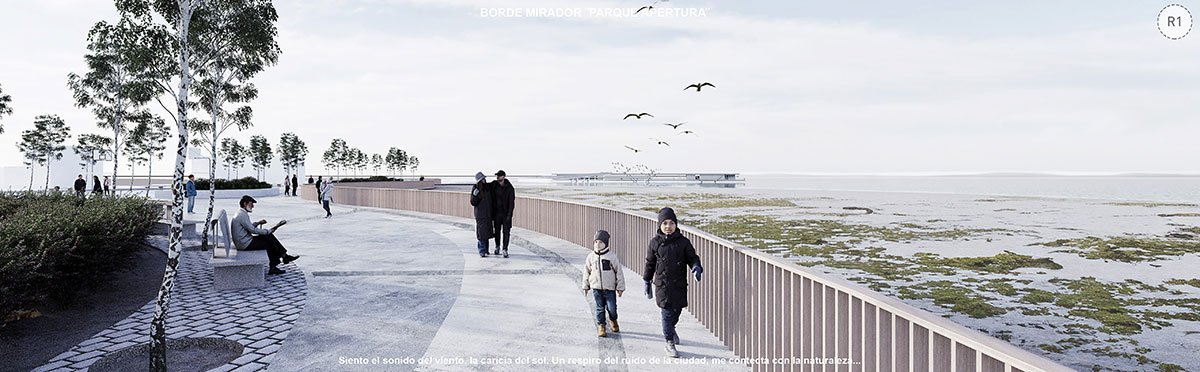
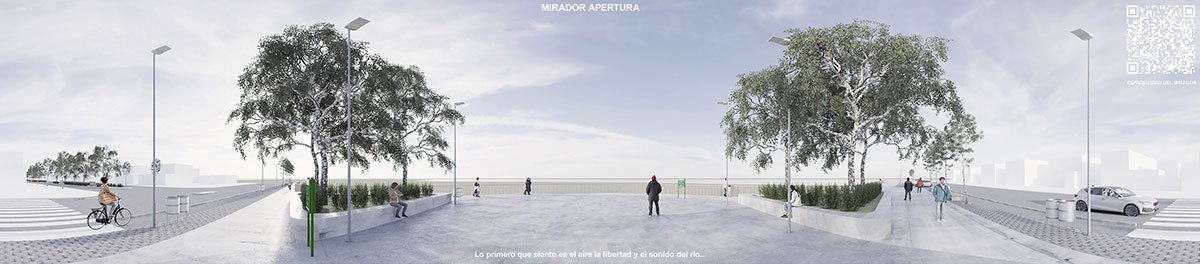
The intervention is designed to guide visitors from the existing public space toward the waterfront using strategically placed elements that emphasize this axis. It is integrated with the Mirador Apertura, which includes parking areas, a dry plaza equipped for contemplation of the marismas and their fauna, and the extension of the coastal route running east to west.
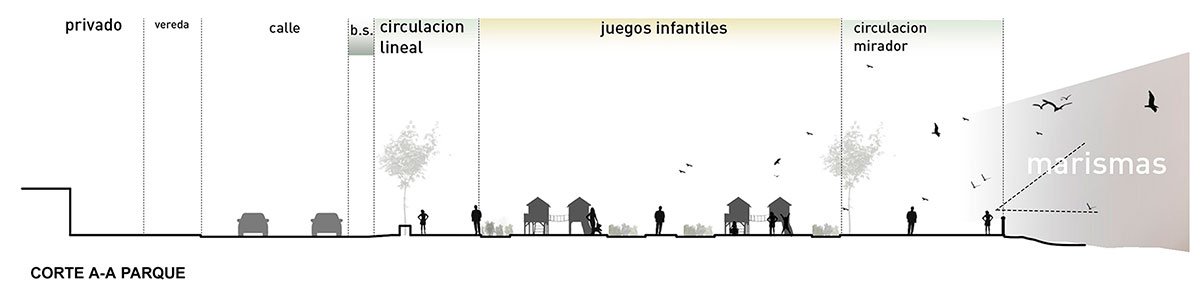
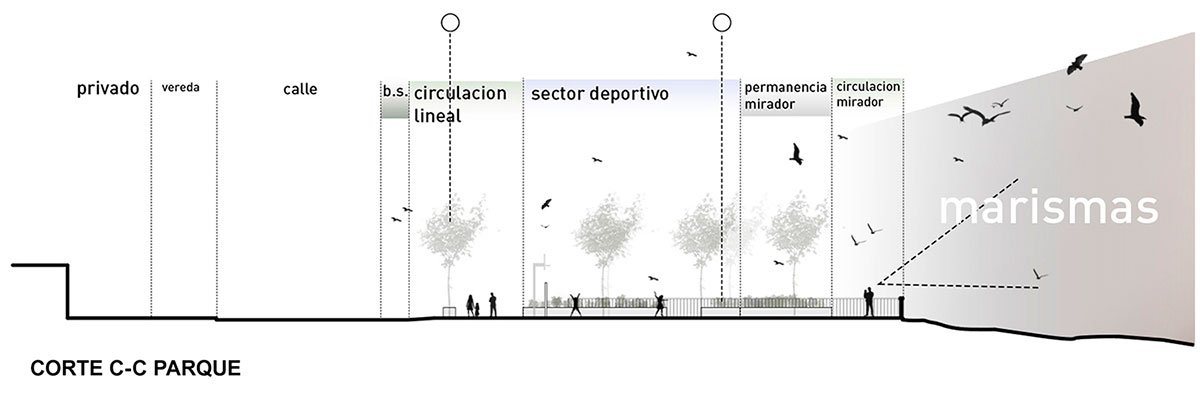
Proposal StrategyPark Aperture Program | Edge Response to SiteLongitudinal SectionAperture Park
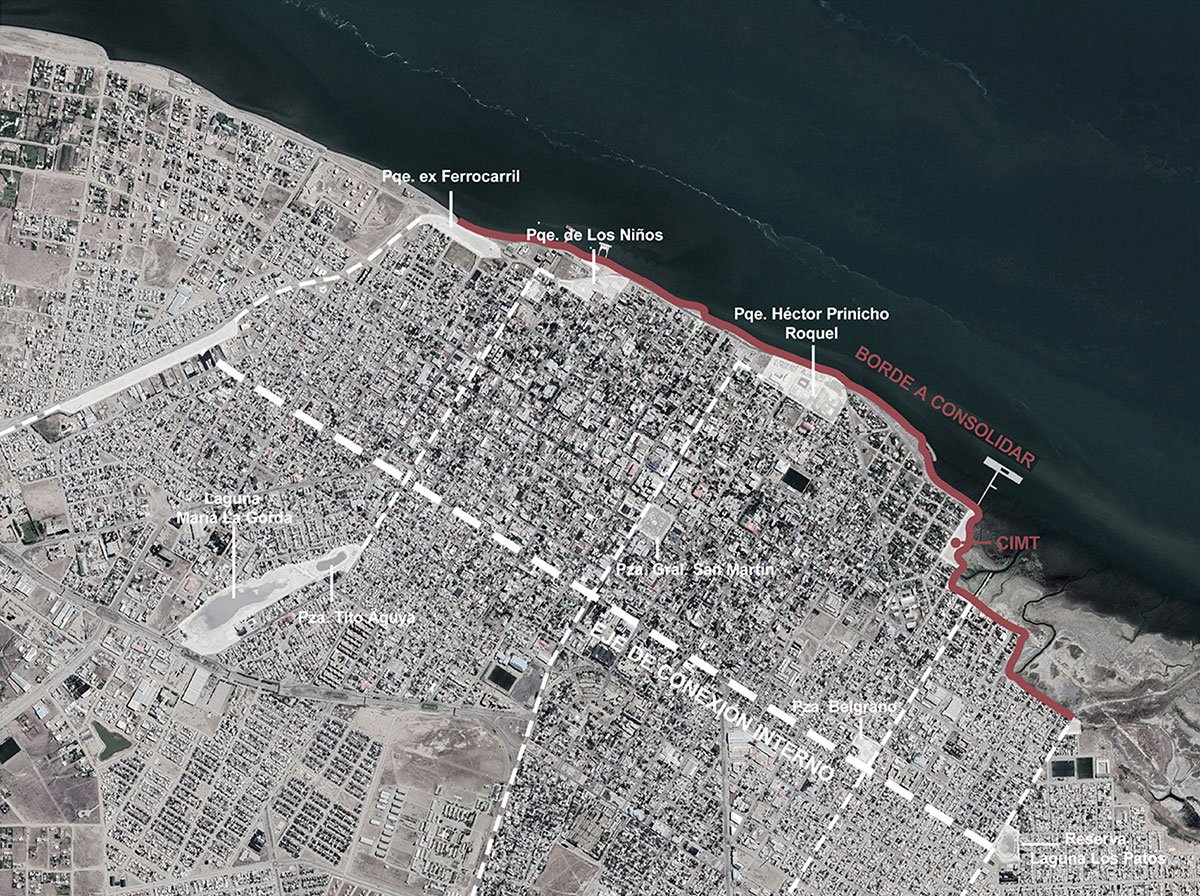
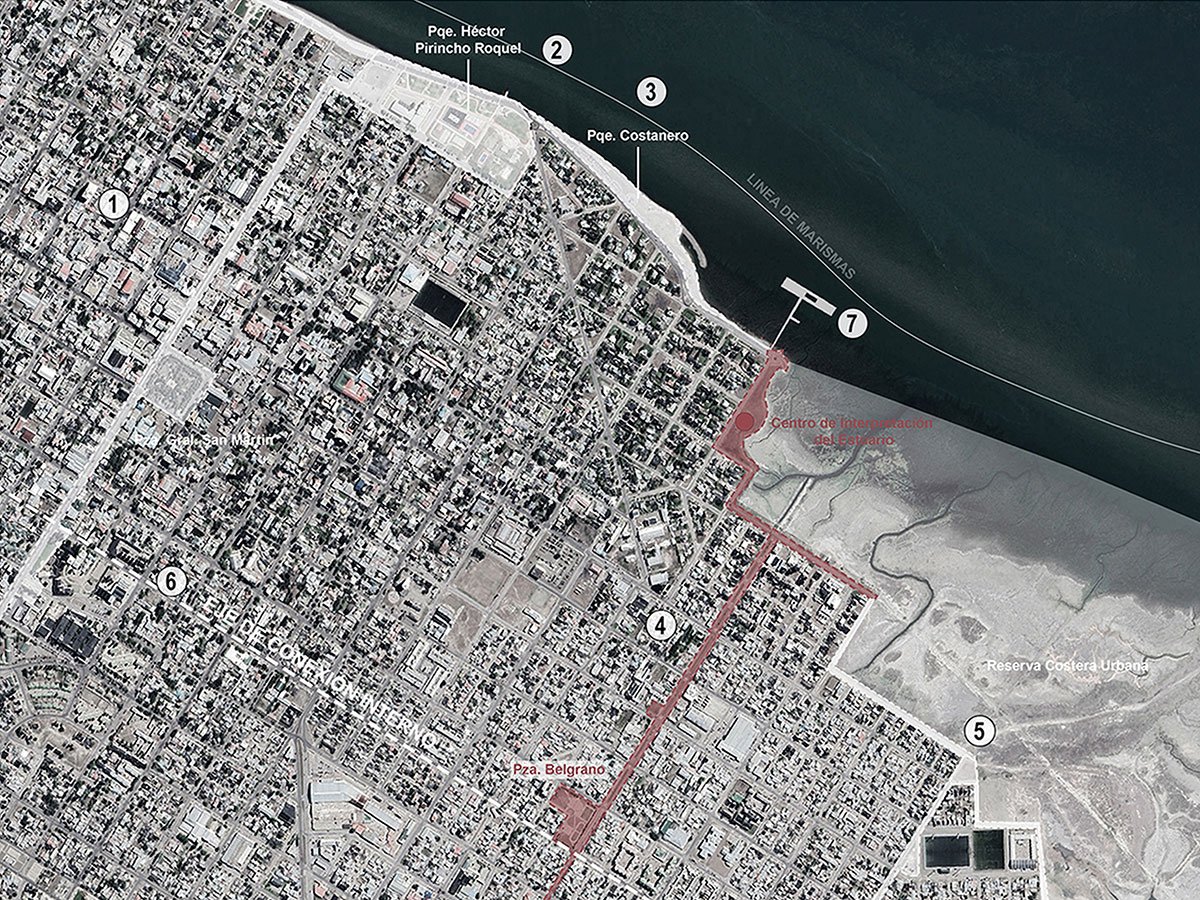
Urban Scale Strategy: The proposed strategies at the urban scale aim to enhance cohesion by articulating and consolidating key public spaces through an internal connection axis. This approach strengthens the integration of the city’s landscape and functionality.
A key focus is the consolidation of the urban edge, prioritizing the seamless connection between significant natural and urban landmarks, including the Laguna Los Patos Reserve, Plaza Belgrano, Plaza San Martín, the Children’s Park, and the former railway area.
Park SectionPark Section
The intervention seeks to reinforce spatial and visual continuity while optimizing urban infrastructure to create a more integrated, accessible, and connected public environment.
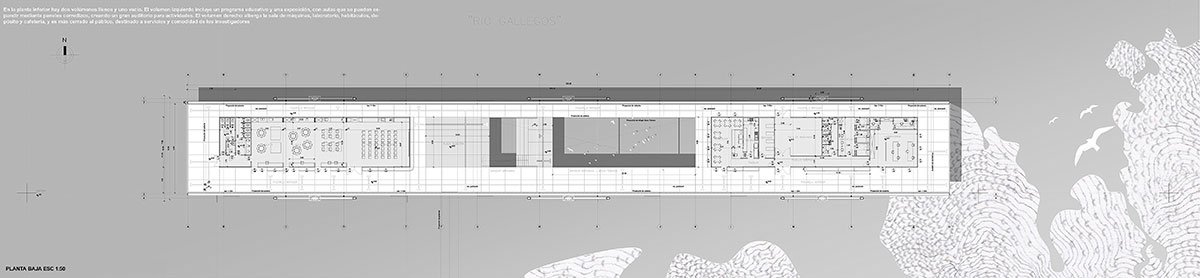
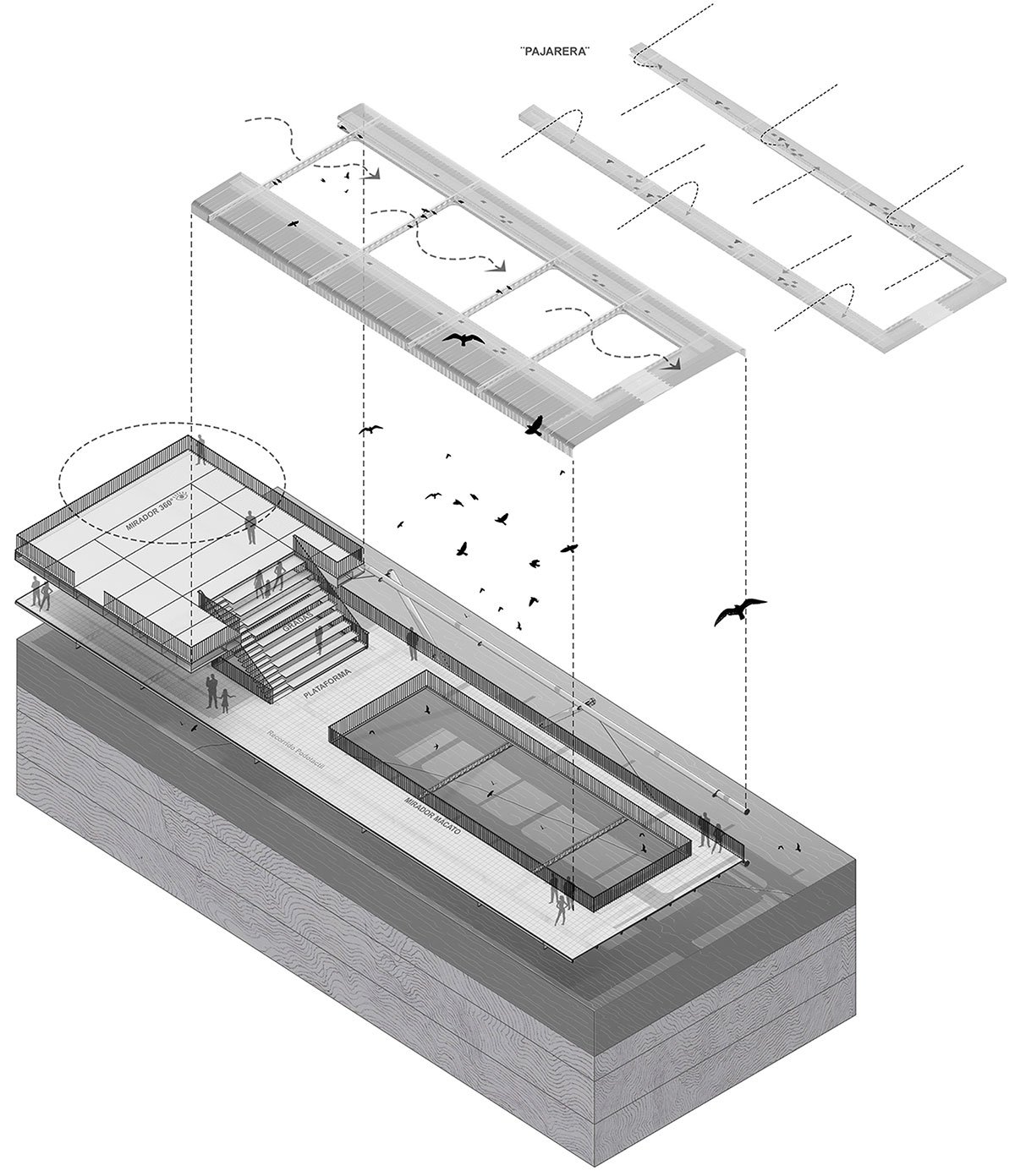
Ground Floor Plan (CIMT)Aviary SectionThe Aviary At CIMT
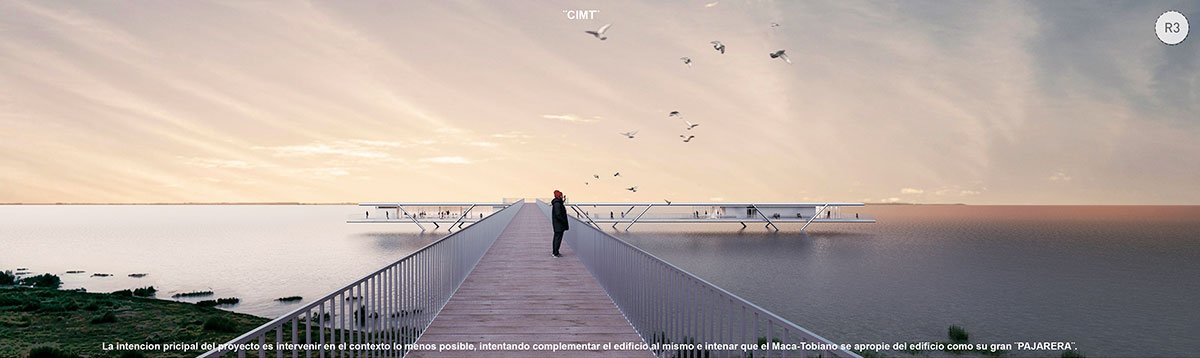
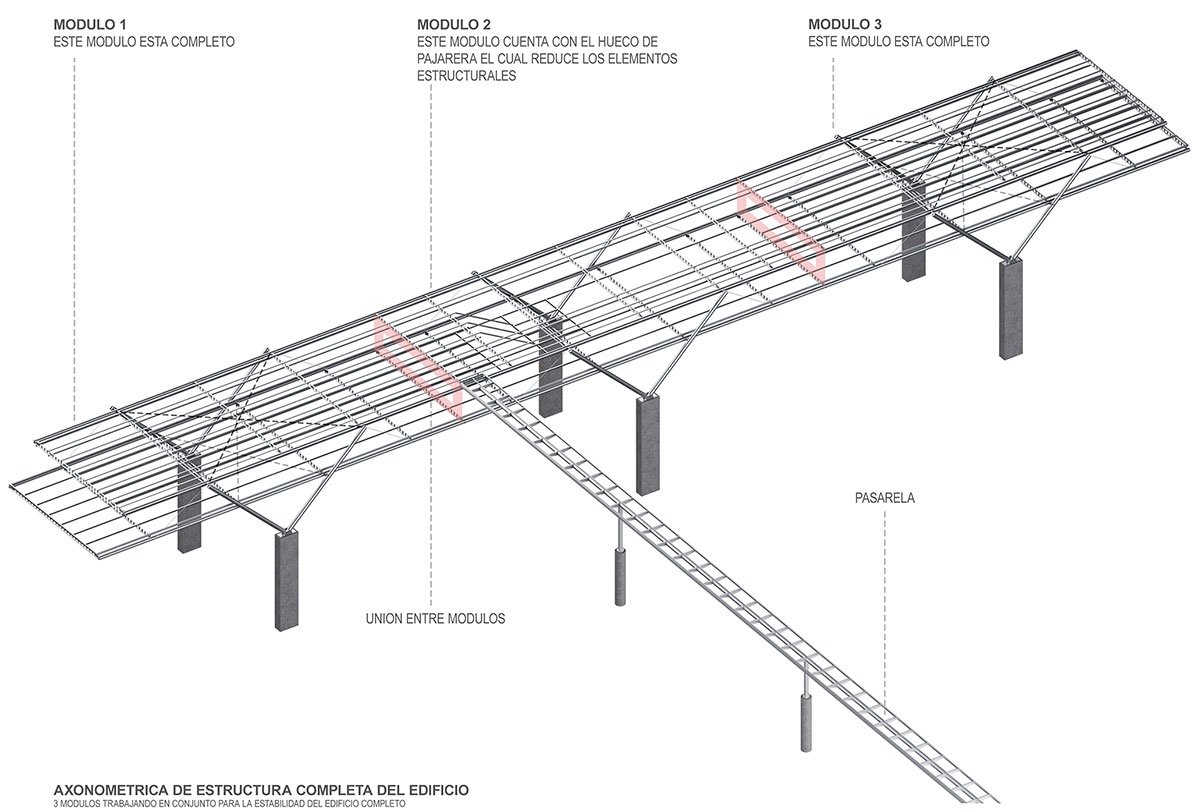
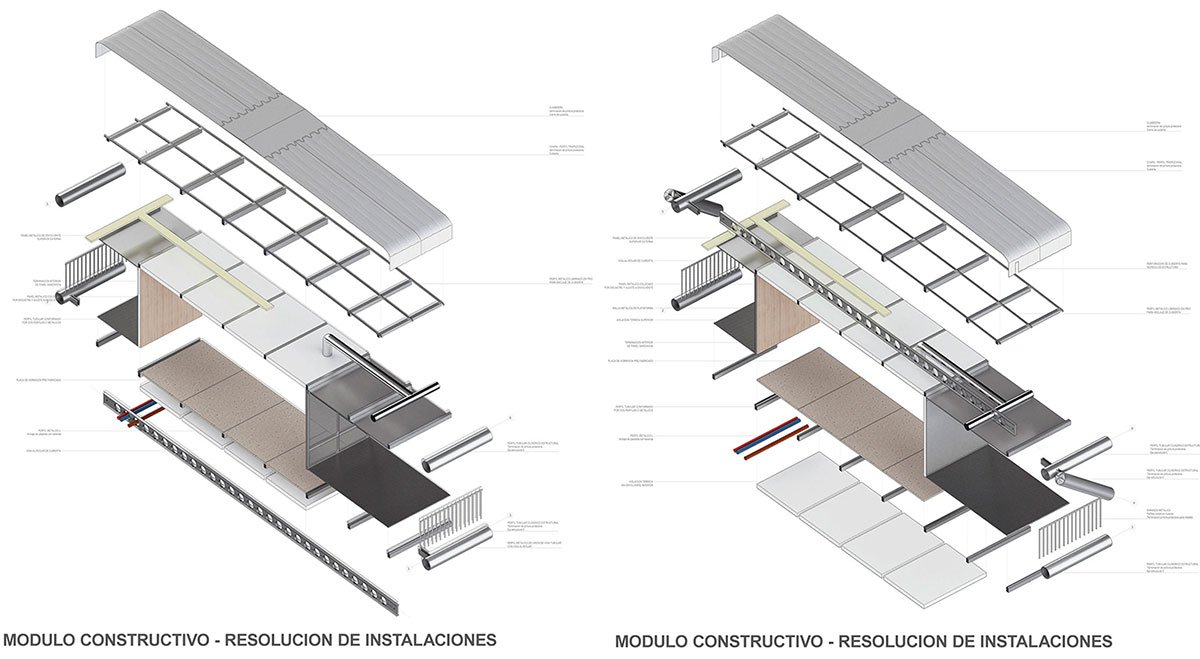
CIMT – White-Billed Macá Interpretation Centre: The Macá Tobiano Interpretation Centre was designed to address the urgent need to raise awareness and promote the conservation of the wild flora and fauna of the Río Gallegos Estuary. Situated in the city of Río Gallegos, in the province of Santa Cruz, on Argentina’s southern coast, the estuary faces significant environmental challenges due to its geopolitical and economic relevance.
The presence of hydrocarbon extraction industries in the surrounding areas plays a vital role in the regional economy. However, mineral exploitation and the subsequent release of chemicals into the river and sea pose a substantial threat to the estuary’s biodiversity, highlighting the need for conservation efforts.
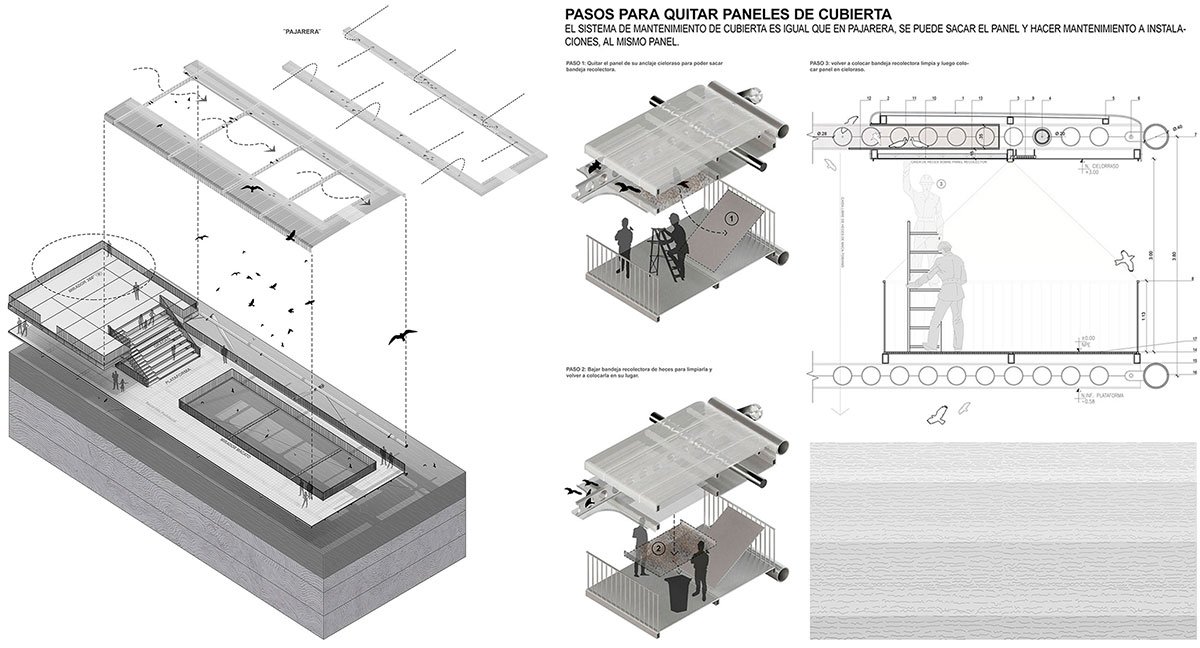
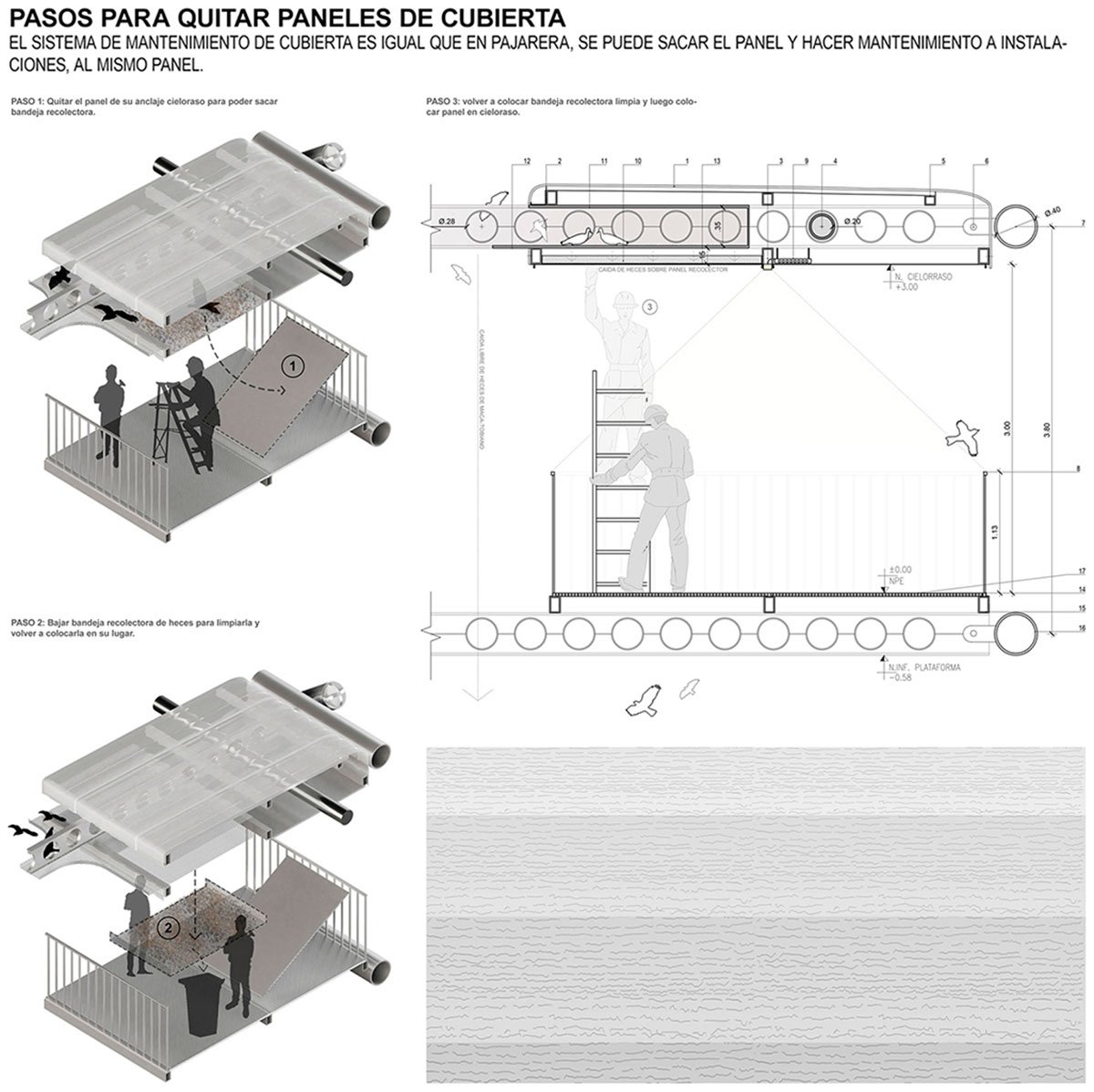
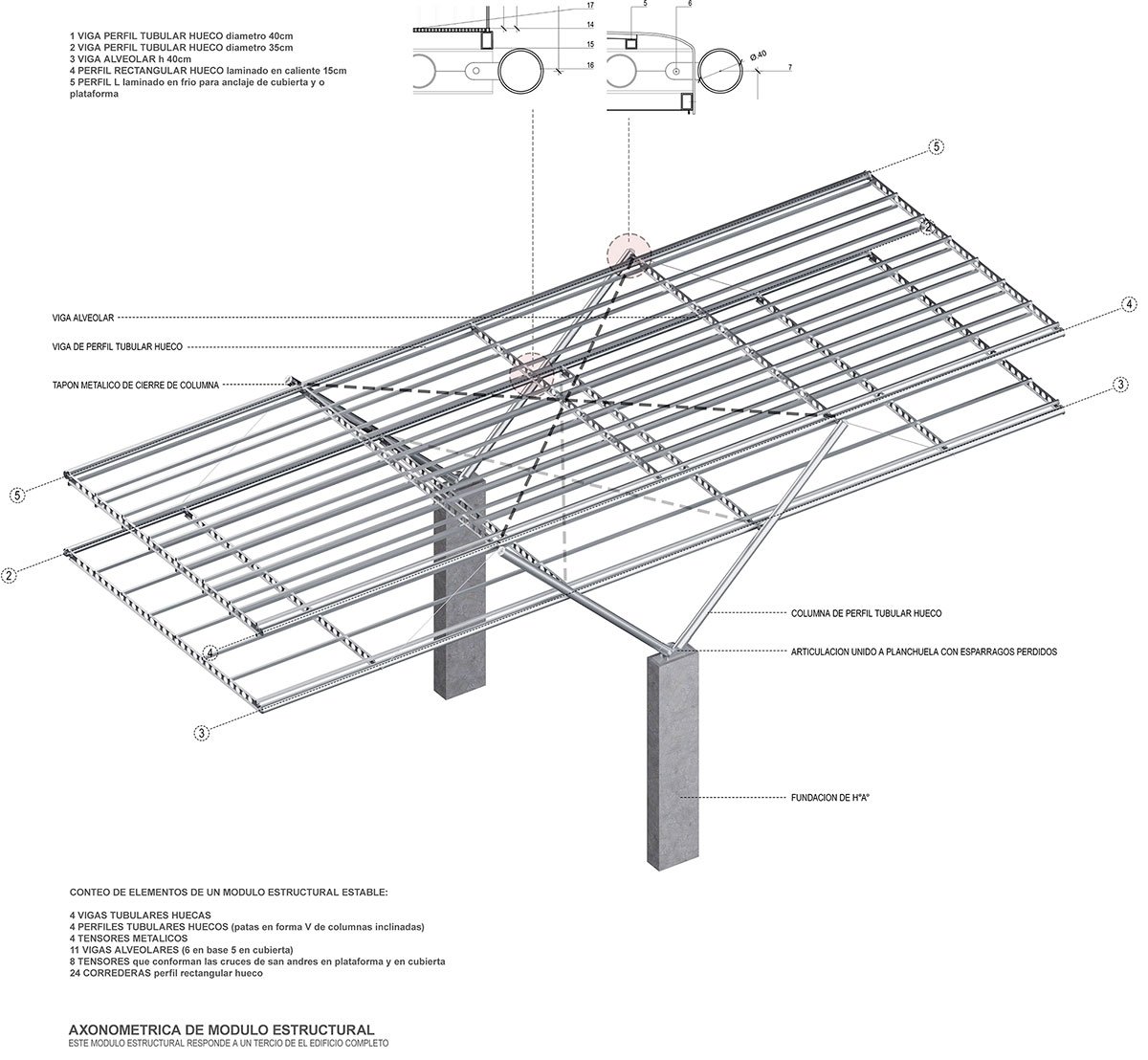
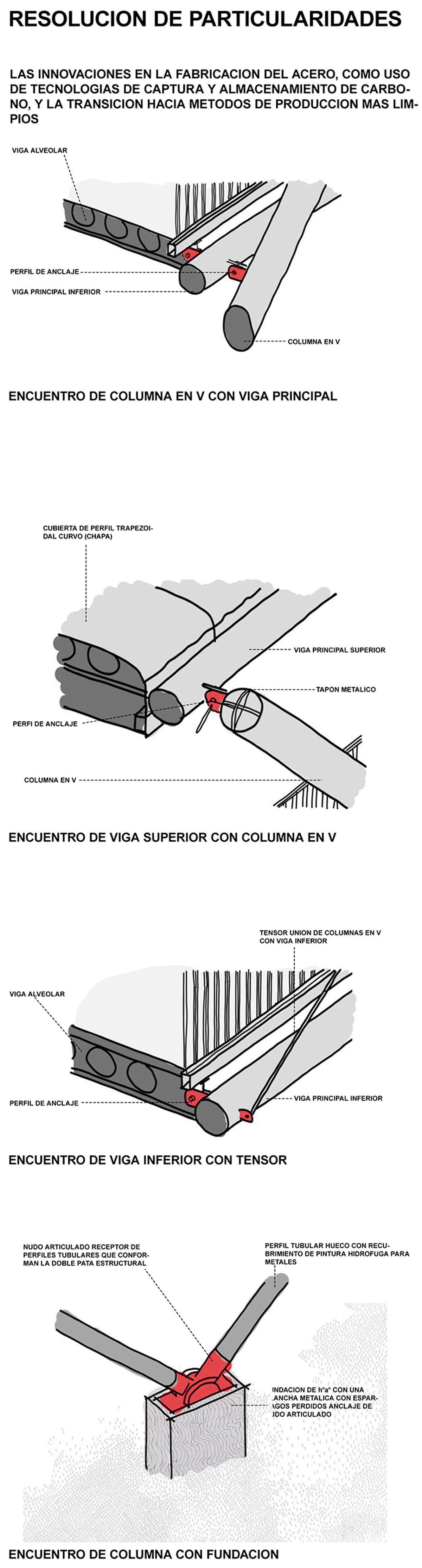
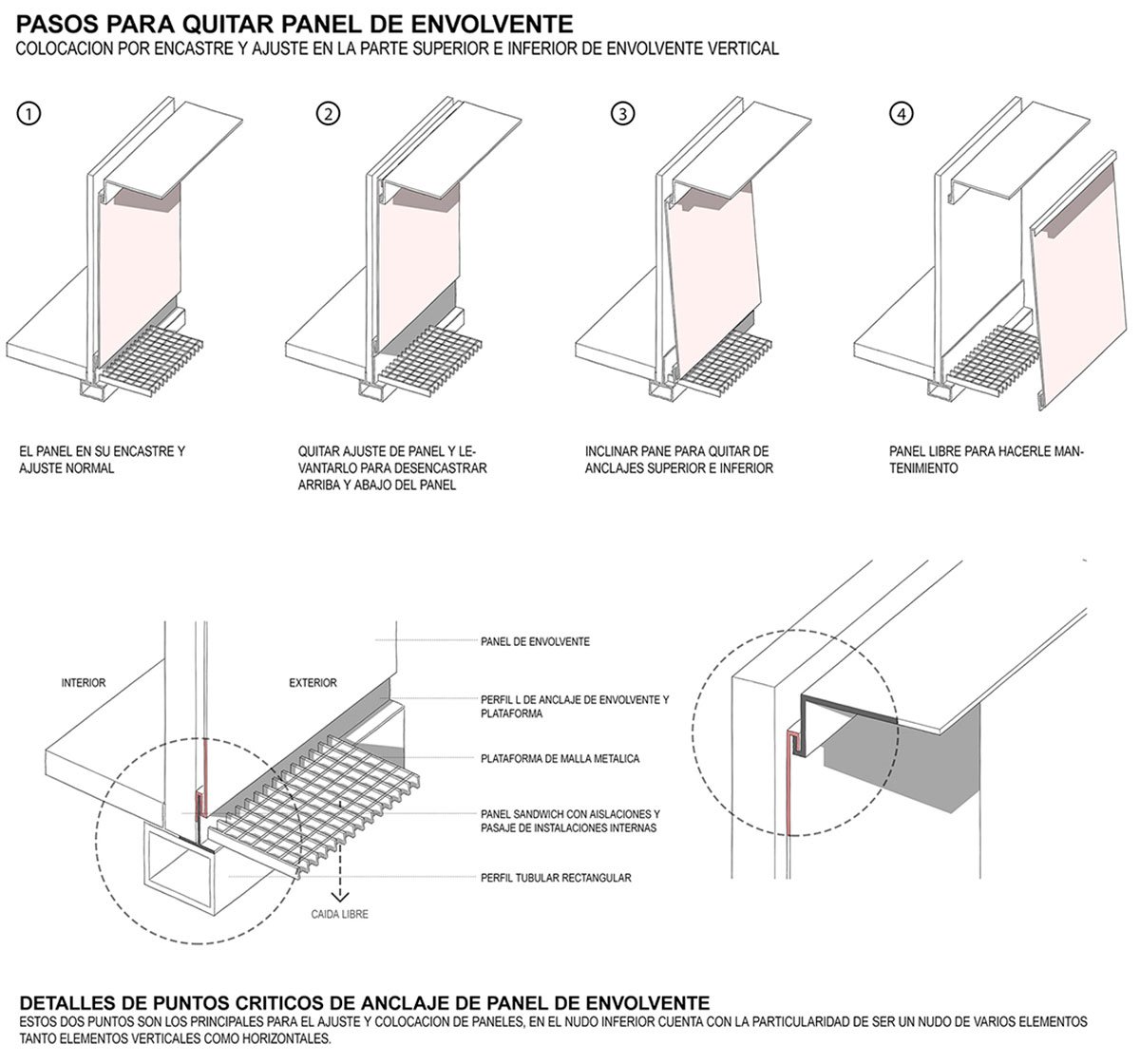
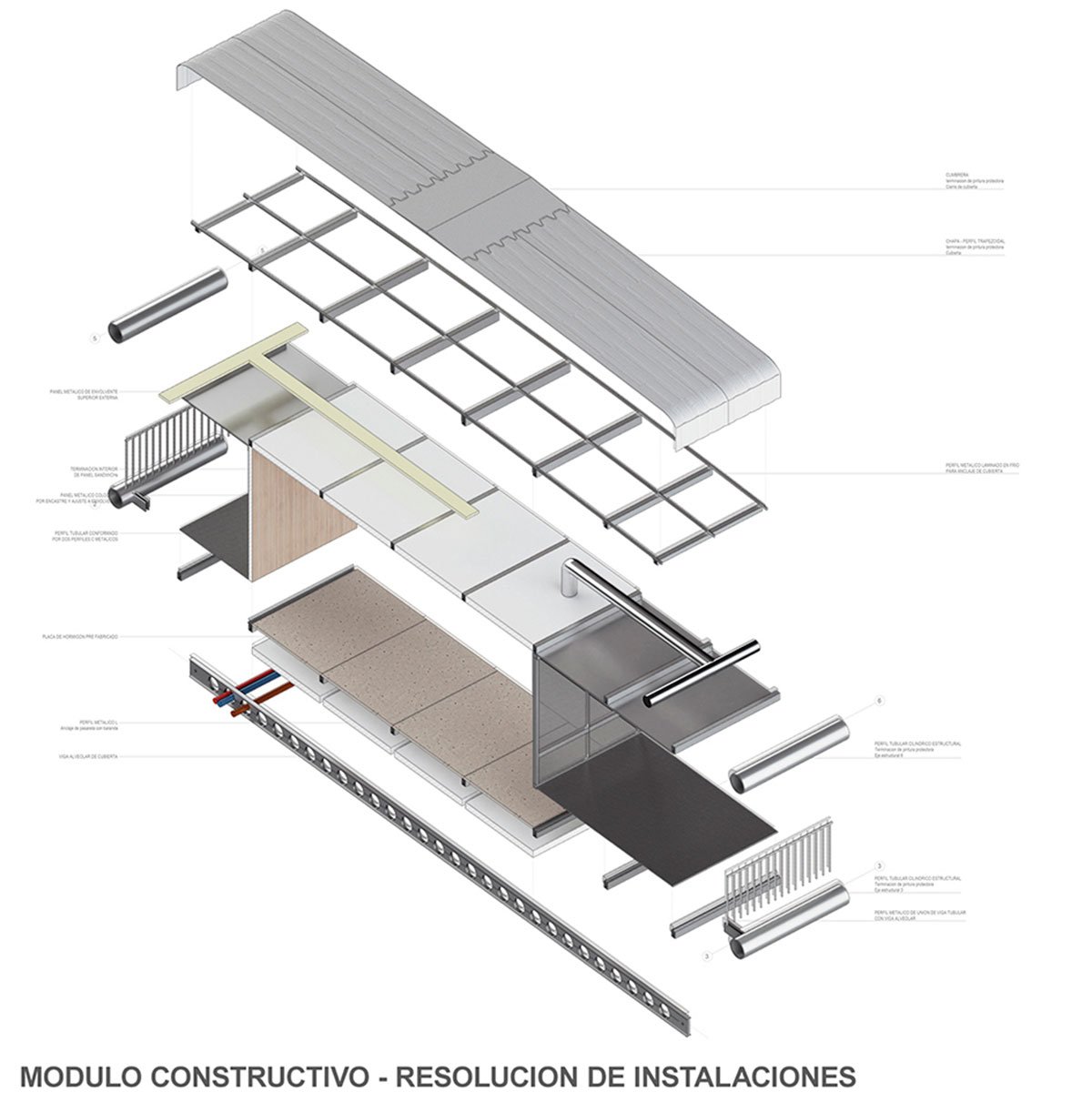
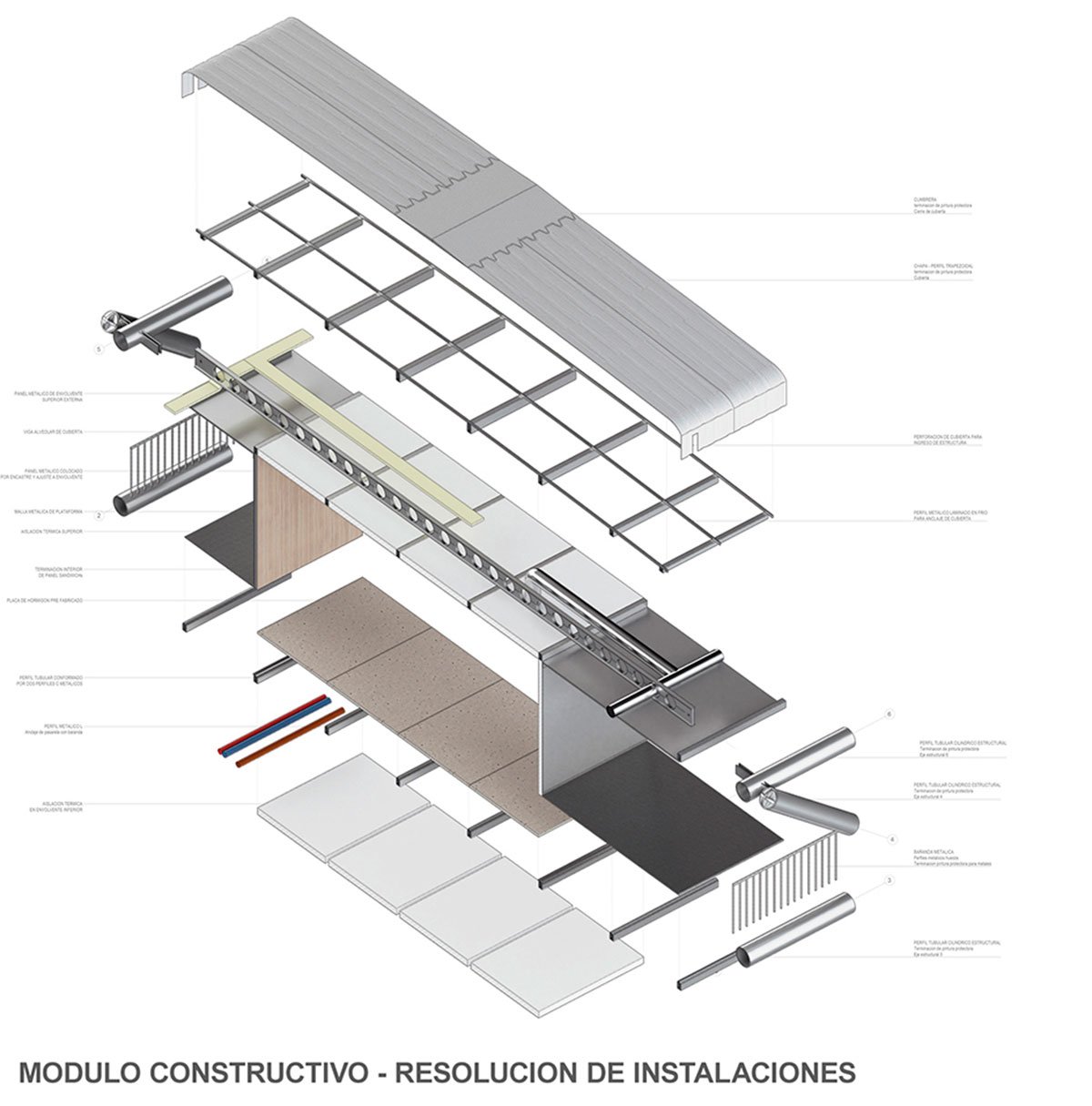
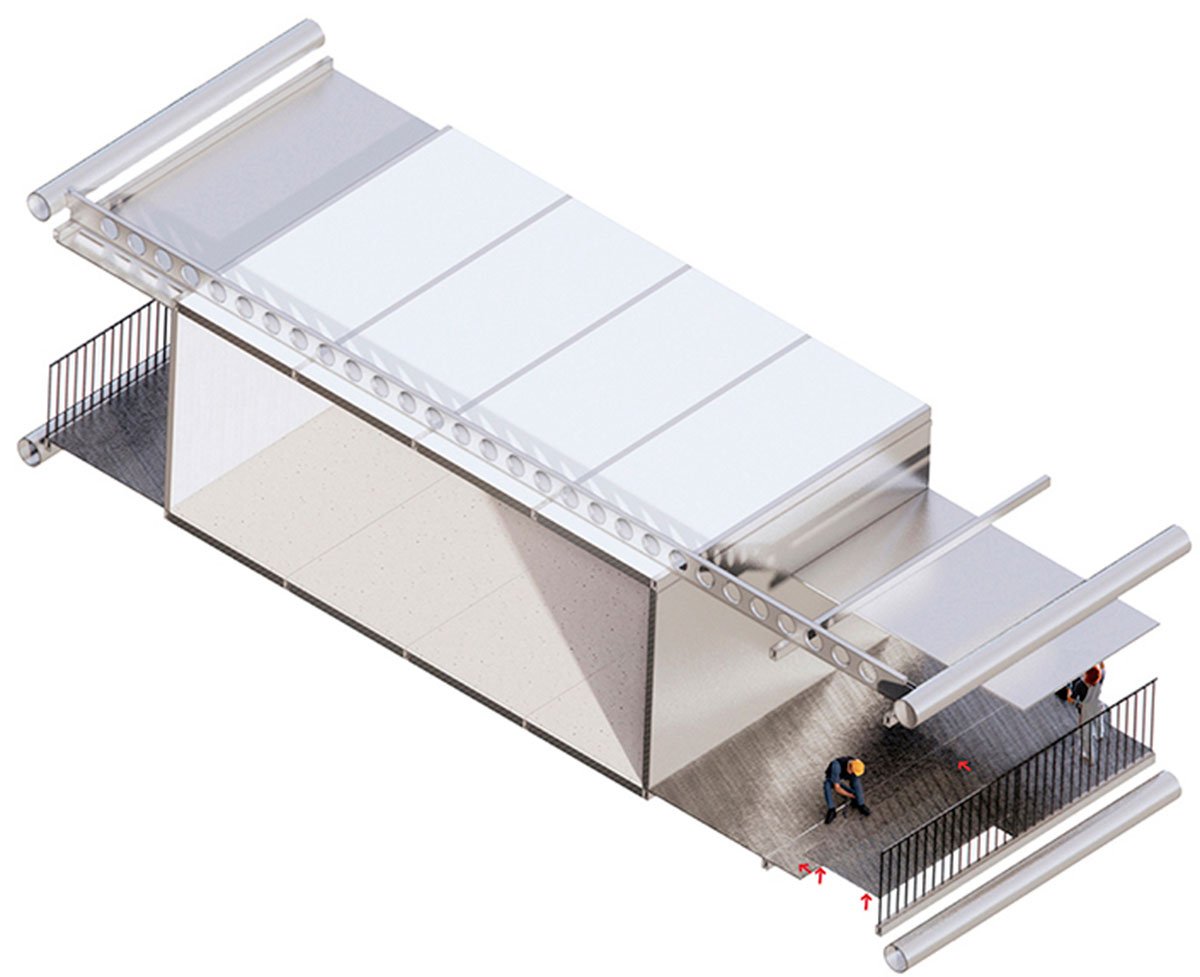
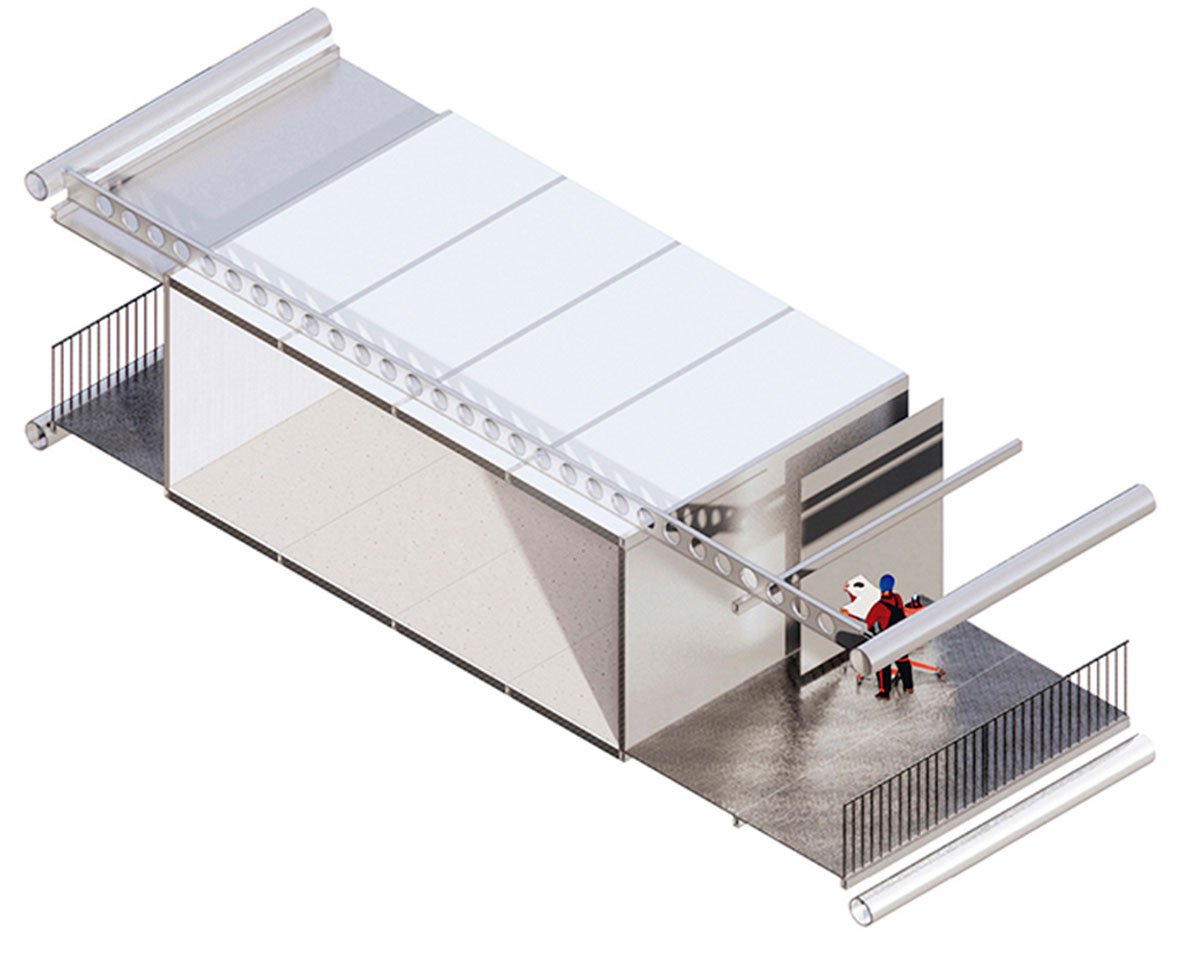
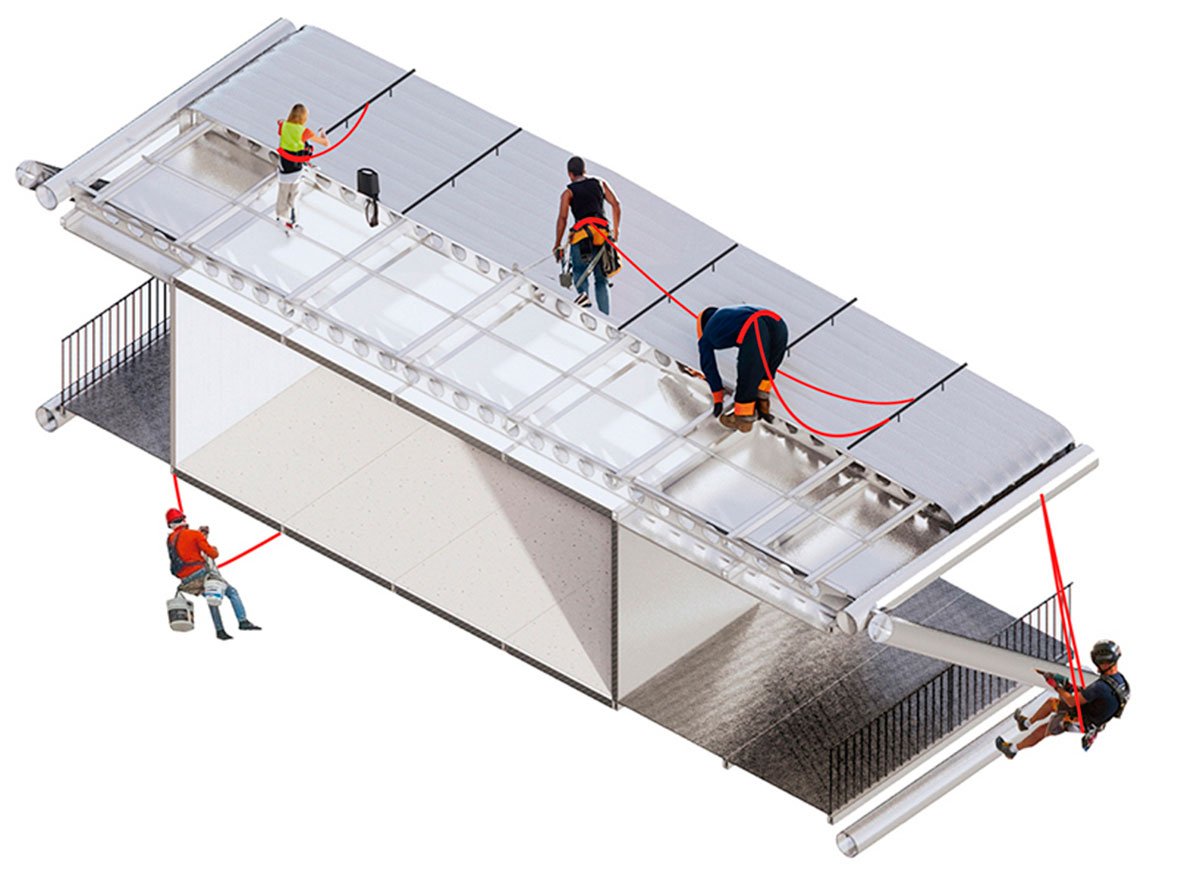
Rise and Fall of Water LevelAviary Axonometric | Roof Maintenance System of AviaryMaca-Tobiano Interpretation Center “CIMT”
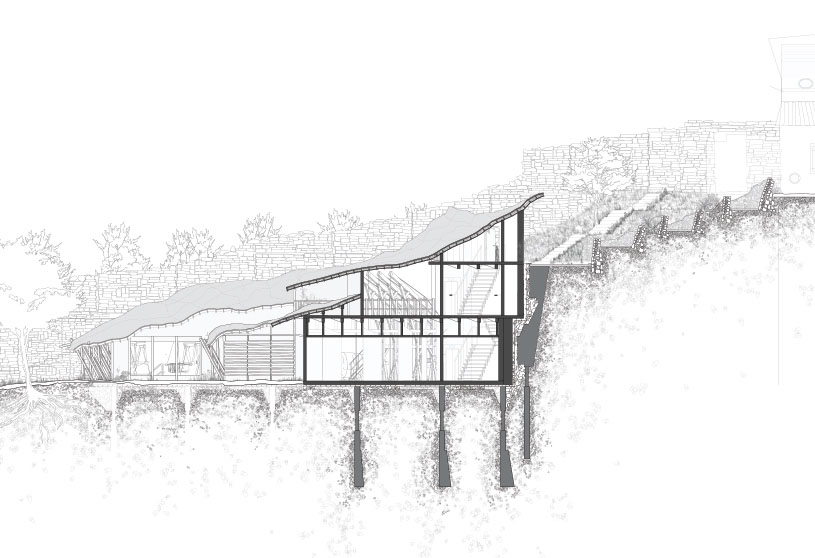
Aviary Node: This space is designed for the preservation and appreciation of the maca tobi-ano, a rare and endemic bird exclusive to the provincial territory, currently endangered and declared a natural monument by the Santa Cruz legislature. The project establishes a dedicated refuge to support its conservation while allowing for the observation of both the species and its natural ecosystem.
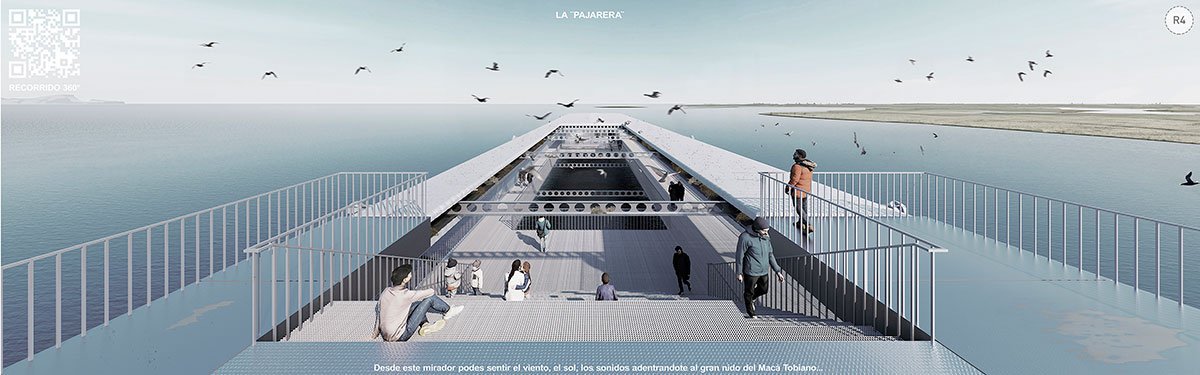
At the core of this intervention is a central axis, defined by an elevated viewpoint, a staircase, and a large open void within the structure. This axis also houses the maca tobi-ano refuge, granting it the same prominence as the key architectural elements shaping the space.
The void is covered with a specially designed metal mesh, ensuring the bird’s adaptation to the space while facilitating a close yet non-intrusive interaction between visitors and the species.
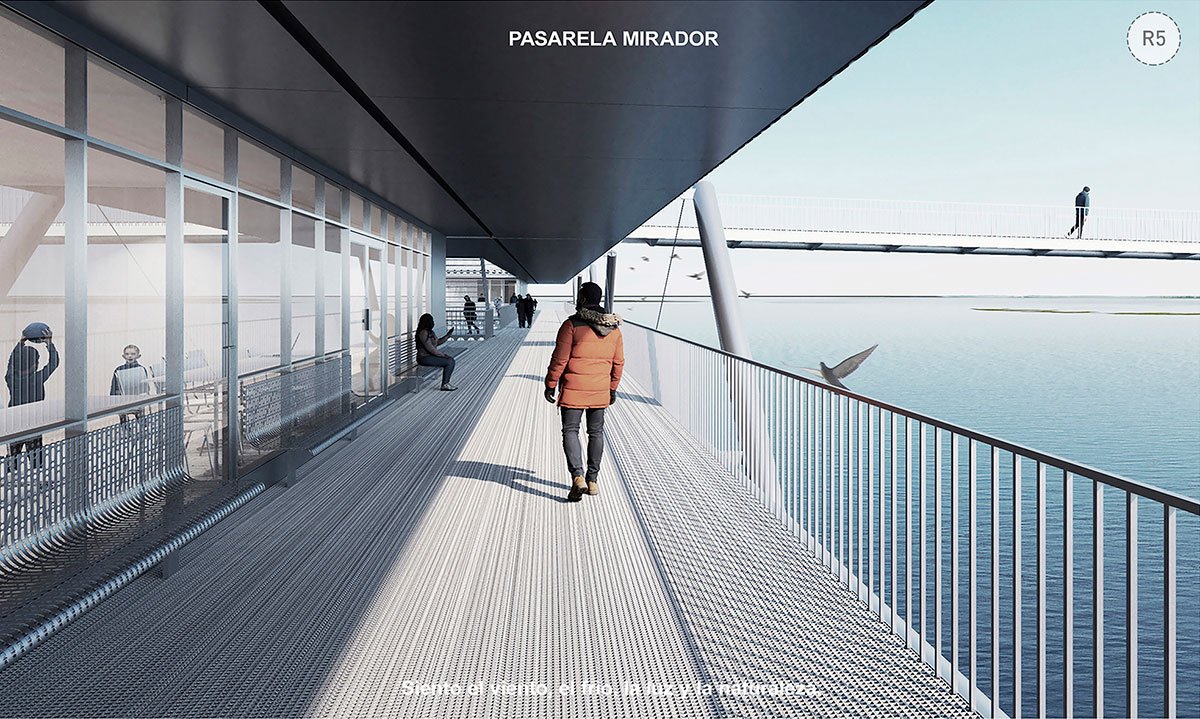
Viewpoint WalkwayEdge Lookout – Aperture Park
Conclusion: This project bridges urban development and environmental conservation through adaptation, mitigation, and awareness. By integrating the city with its natural surroundings, it strengthens public spaces, defines urban edges, and promotes ecological awareness, ensuring the long-term preservation of the Río Gallegos estuary.
[This Academic Project has been published with text and images submitted by the student]
Site Context
Design Process
Final Outcome
To submit your academic project for publication at ArchiDiaries, please visit the following link >> Submit
Get the best of ArchiDiaries, directly in your inbox.
We use cookies on our website to give you the most relevant experience by remembering your preferences and repeat visits. By clicking “Accept All”, you consent to the use of ALL the cookies. However, you may visit "Cookie Settings" to provide a controlled consent.
This website uses cookies to improve your experience while you navigate through the website. Out of these, the cookies that are categorized as necessary are stored on your browser as they are essential for the working of basic functionalities of the website. We also use third-party cookies that help us analyze and understand how you use this website. These cookies will be stored in your browser only with your consent. You also have the option to opt-out of these cookies. But opting out of some of these cookies may affect your browsing experience.
Necessary cookies are absolutely essential for the website to function properly. These cookies ensure basic functionalities and security features of the website, anonymously.
Cookie
Duration
Description
cookielawinfo-checkbox-analytics
11 months
This cookie is set by GDPR Cookie Consent plugin. The cookie is used to store the user consent for the cookies in the category "Analytics".
cookielawinfo-checkbox-functional
11 months
The cookie is set by GDPR cookie consent to record the user consent for the cookies in the category "Functional".
cookielawinfo-checkbox-necessary
11 months
This cookie is set by GDPR Cookie Consent plugin. The cookies is used to store the user consent for the cookies in the category "Necessary".
cookielawinfo-checkbox-others
11 months
This cookie is set by GDPR Cookie Consent plugin. The cookie is used to store the user consent for the cookies in the category "Other.
cookielawinfo-checkbox-performance
11 months
This cookie is set by GDPR Cookie Consent plugin. The cookie is used to store the user consent for the cookies in the category "Performance".
viewed_cookie_policy
11 months
The cookie is set by the GDPR Cookie Consent plugin and is used to store whether or not user has consented to the use of cookies. It does not store any personal data.
Functional cookies help to perform certain functionalities like sharing the content of the website on social media platforms, collect feedbacks, and other third-party features.
Performance cookies are used to understand and analyze the key performance indexes of the website which helps in delivering a better user experience for the visitors.
Analytical cookies are used to understand how visitors interact with the website. These cookies help provide information on metrics the number of visitors, bounce rate, traffic source, etc.
Advertisement cookies are used to provide visitors with relevant ads and marketing campaigns. These cookies track visitors across websites and collect information to provide customized ads.









![Factory[n]Certainty: Redefining Industrial Architecture Through Work, Life, and Community | Bachelors Design Thesis](https://archidiaries.com/wp-content/uploads/2026/09/Siam-Rahman_APR_feat_img.jpg)
