Home » Academic projects » Liquid. State. Society: An Alternative Speculation into the Next Half Century of Living in LA | Masters Design Thesis on Fictional Architecture
Liquid. State. Society: An Alternative Speculation into the Next Half Century of Living in LA | Masters Design Thesis on Fictional Architecture
Excerpt: ‘Liquid. State. Society.’ is a master’s design thesis by Junzhe Wang from the ‘Bartlett School of Architecture – UCL’ exploring fictional architecture as a response to LA’s growing inequality and housing crisis. Inspired by The Ghost in the Shell’s “Solid State Society,” it envisions a future where flexible, inclusive, and affordable housing preserves identity and urban life. Merging narrative world-building with speculative design, the project reimagines architecture as a tool for resilience, ensuring LA remains a place of belonging for the next 50 years.
Introduction: In his groundbreaking 1989 manga The Ghost in the Shell, Masamune Shirow introduced the concept of a “Solid State Society,” envisioning a world in 2034 where social hierarchies have become nearly impenetrable due to mass migration and the uneven distribution of wealth, housing, and culture. In this future, human consciousness is deeply entwined with mass-produced technology, as individuals escape into the digital realm, uploading their minds to the cloud in search of identity—separate from the city where they no longer belong.
While Shirow’s ideas may have once seemed radical, many of his predictions are materializing. As Los Angeles continues to absorb waves of migrants and cultural shifts, economic inequality widens, making it increasingly difficult for the working class to secure housing amid a growing homelessness crisis. The American Dream feels increasingly out of reach, as individuals find themselves trapped by monopolistic forces that limit personal freedom, gradually erasing individuality from the urban landscape.
In response to this trend, the concept of “Liquid State Society” emerges as a counterpoint—an alternative vision that resists the dissolution of the self within the metropolis. In an LA where walls confine the mind, Liquid State Society offers a speculative outlook on the city’s next half-century, striving to preserve both personal identity and urban life.
Set in Los Angeles, the project explores rising economic disparity and urban displacement, where corporate monopolies and digital integration erode individuality. As housing becomes inaccessible and social mobility declines, the city’s identity shifts. In response, the project reimagines urban space as a means to preserve individuality and resist the homogenizing forces of technology and economic control.
Design Process
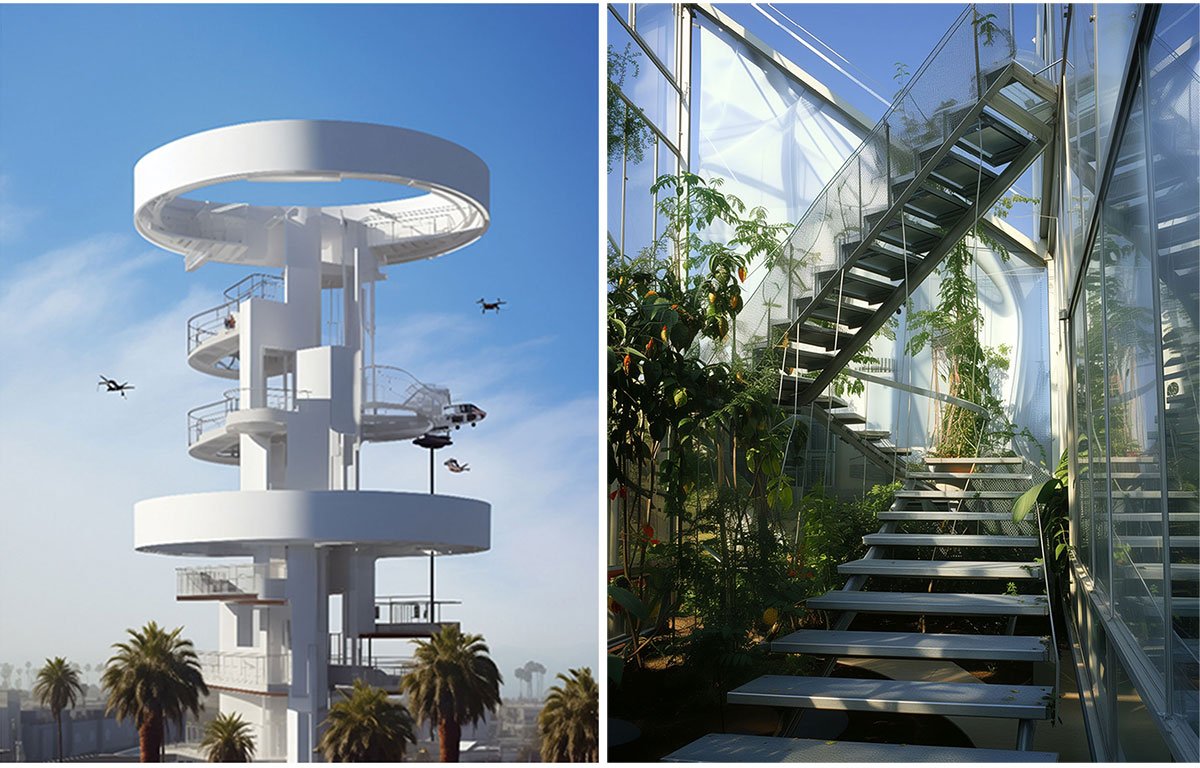
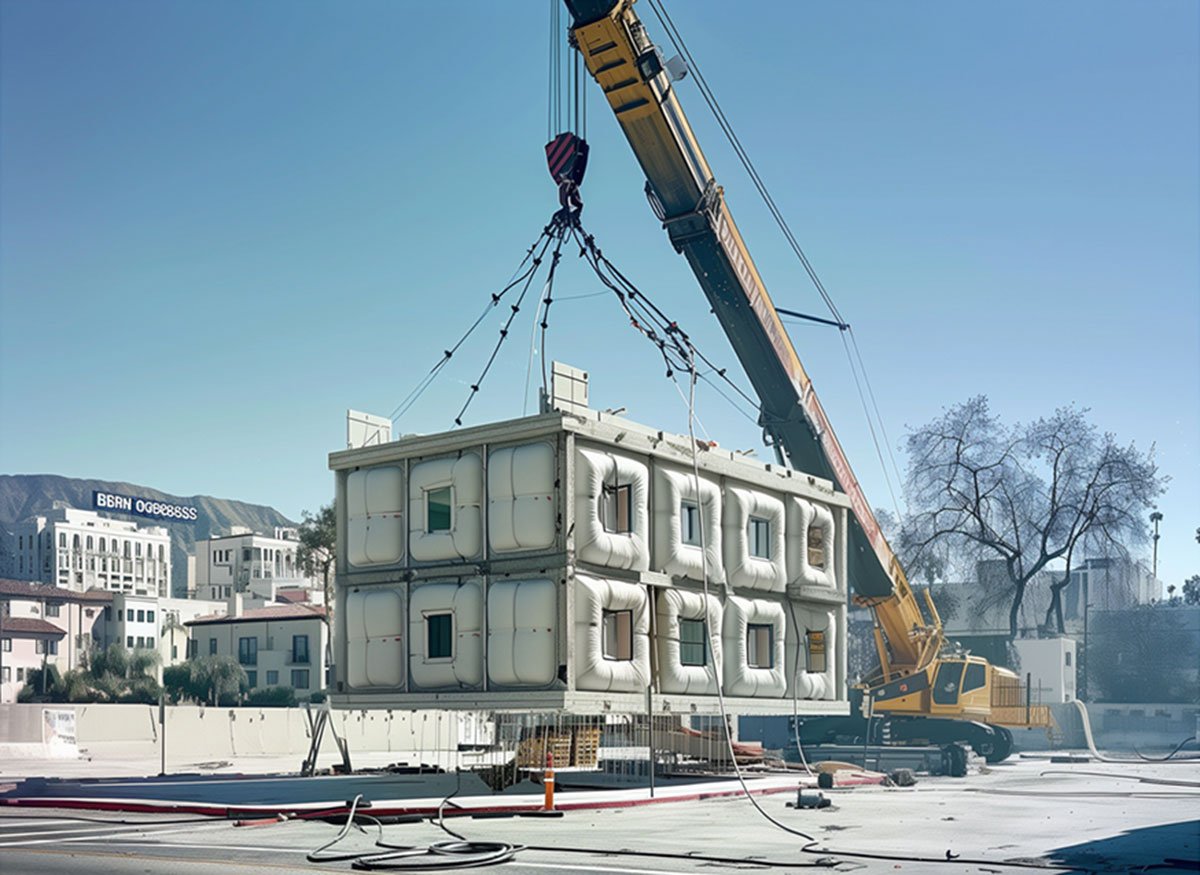
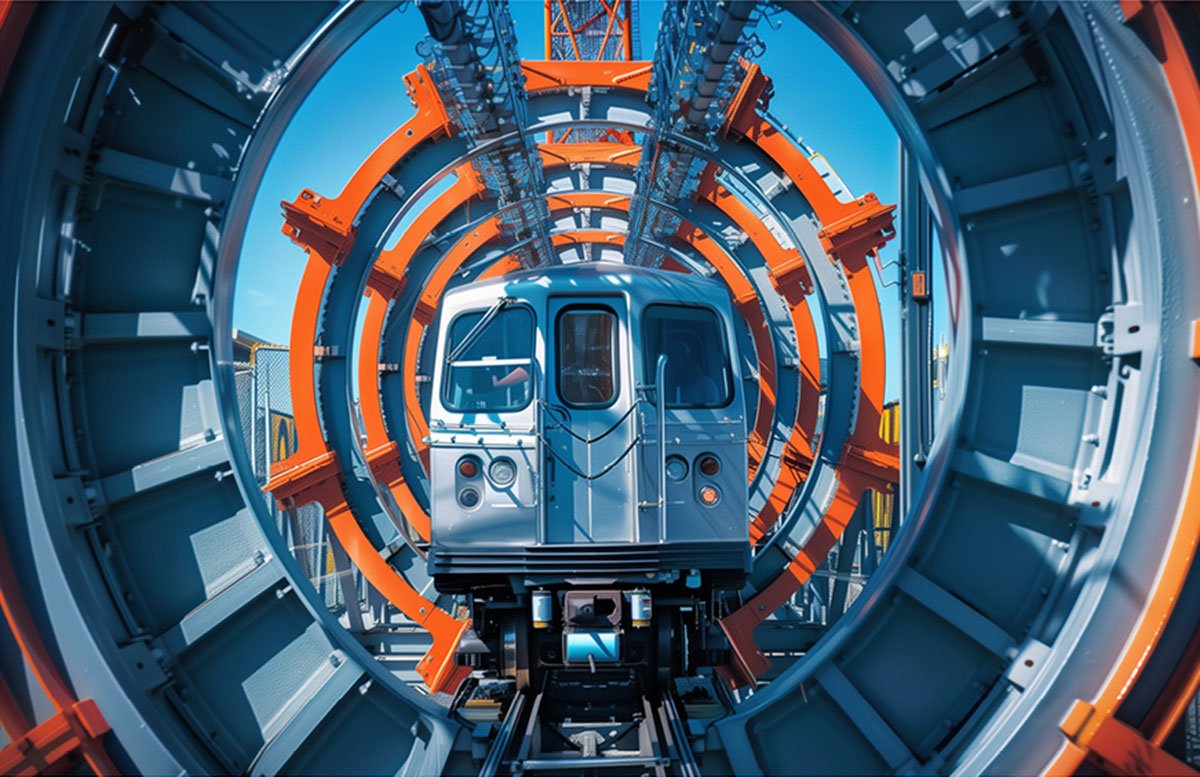
The Hive in Culver City, designed by Synthesis Architects (Huang) | Inside the roof-extension pepper plantation of LAPD Station in Malibu (Gallagher)Workers operating cranes to lift pre-fabricated units onto the site (Chushaonic)Installment art on display at LACMA by Sasha Litz, using disposed EV batteries (Litz) | Views from within El Segundo Central Park (Grimsby)Newly renovated metro station at Palms (Fletcher)
Serving as the foundation for the project, Los Angeles Major Event Catalogue 2023–2033 documents key events that shaped the city over a decade. Created by the UCLA AUD Yearbook Team under Professor Neil M. Denari, it covers architecture, technology, politics, and more. Highlighting sustainable design, cultural shifts, and policy changes, the book explores LA’s resilience and transformation, making it a vital resource for researchers and urban enthusiasts.
Final Outcome
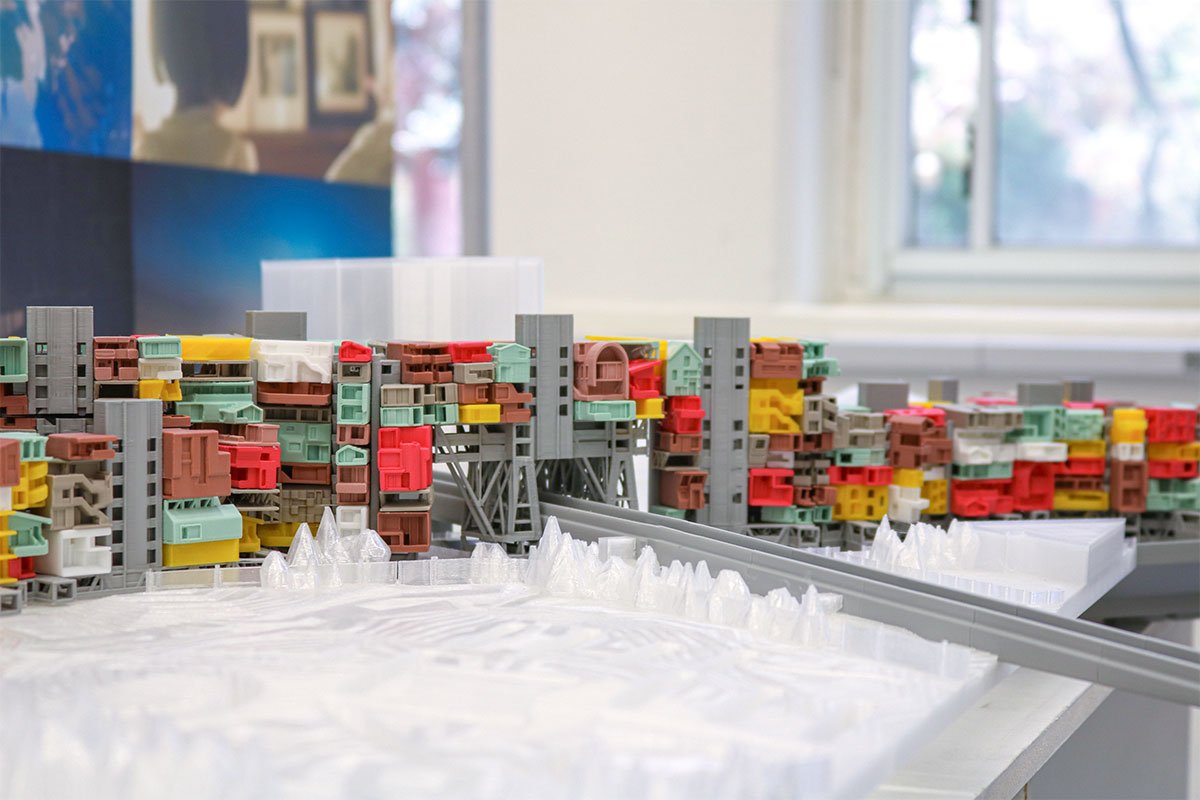
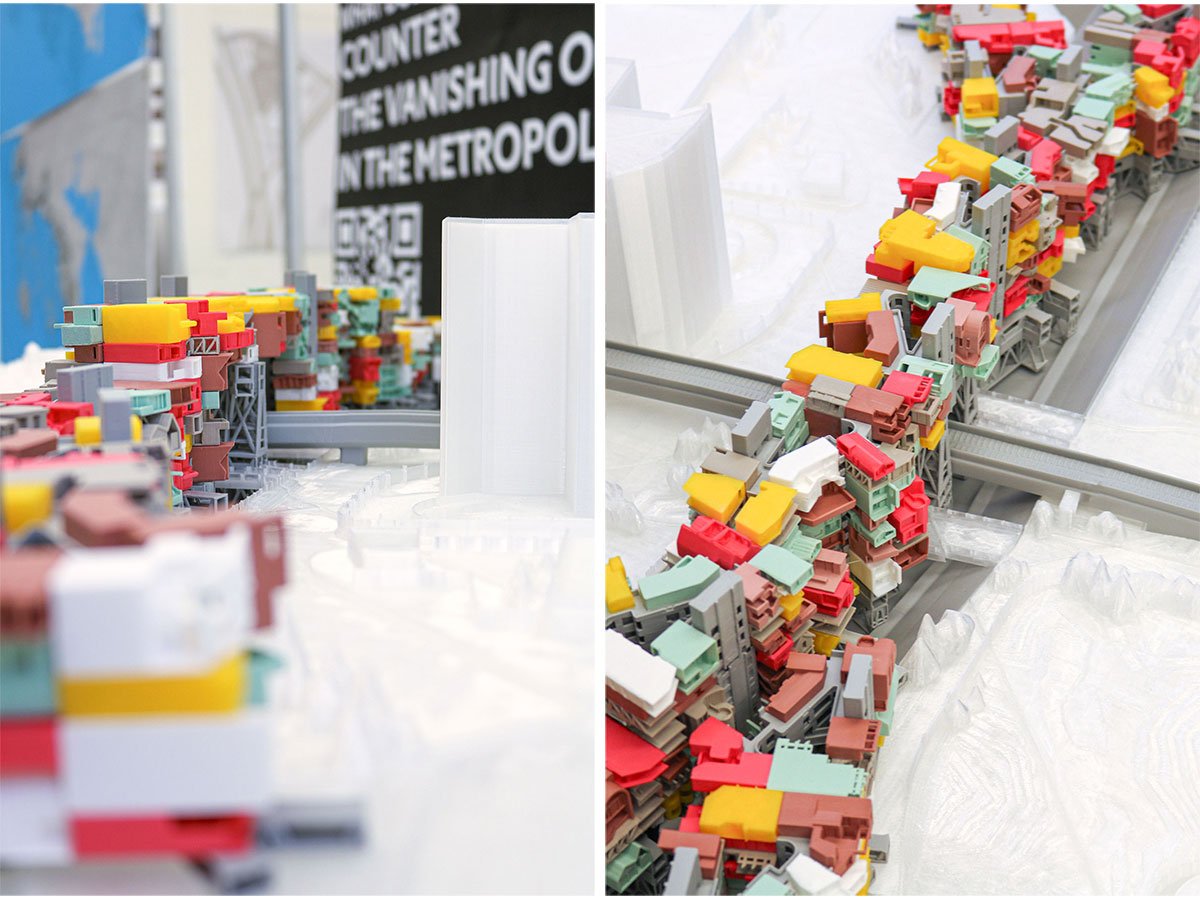
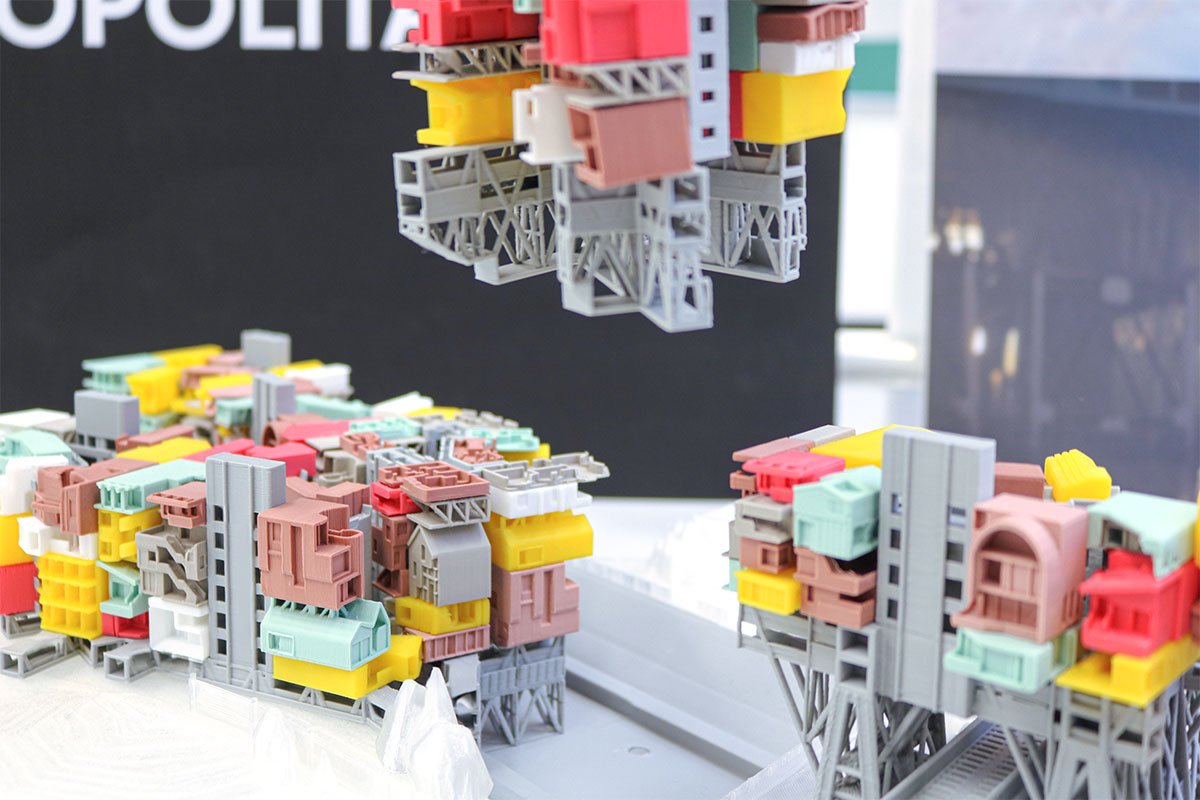
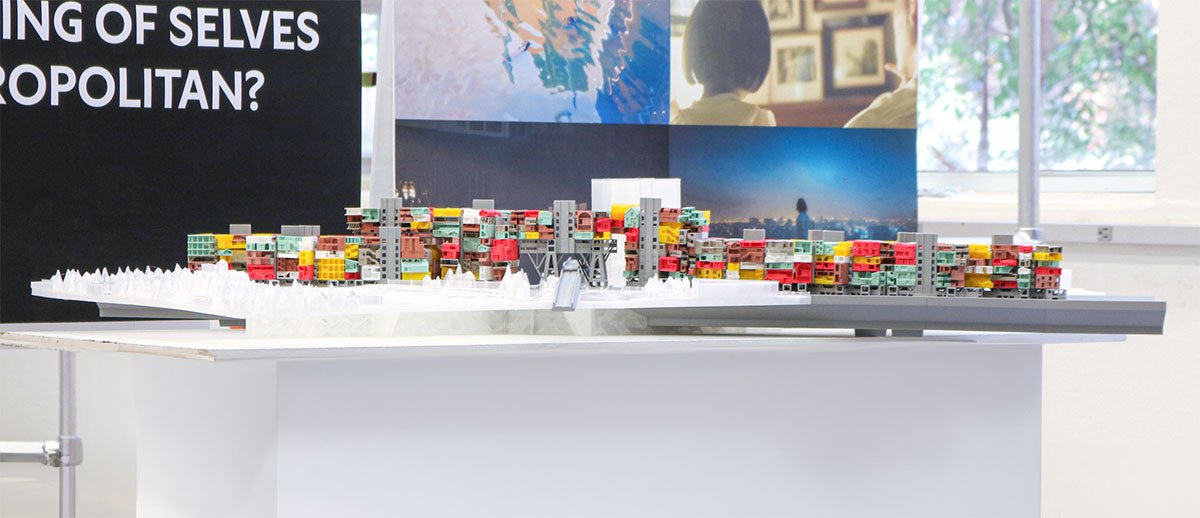
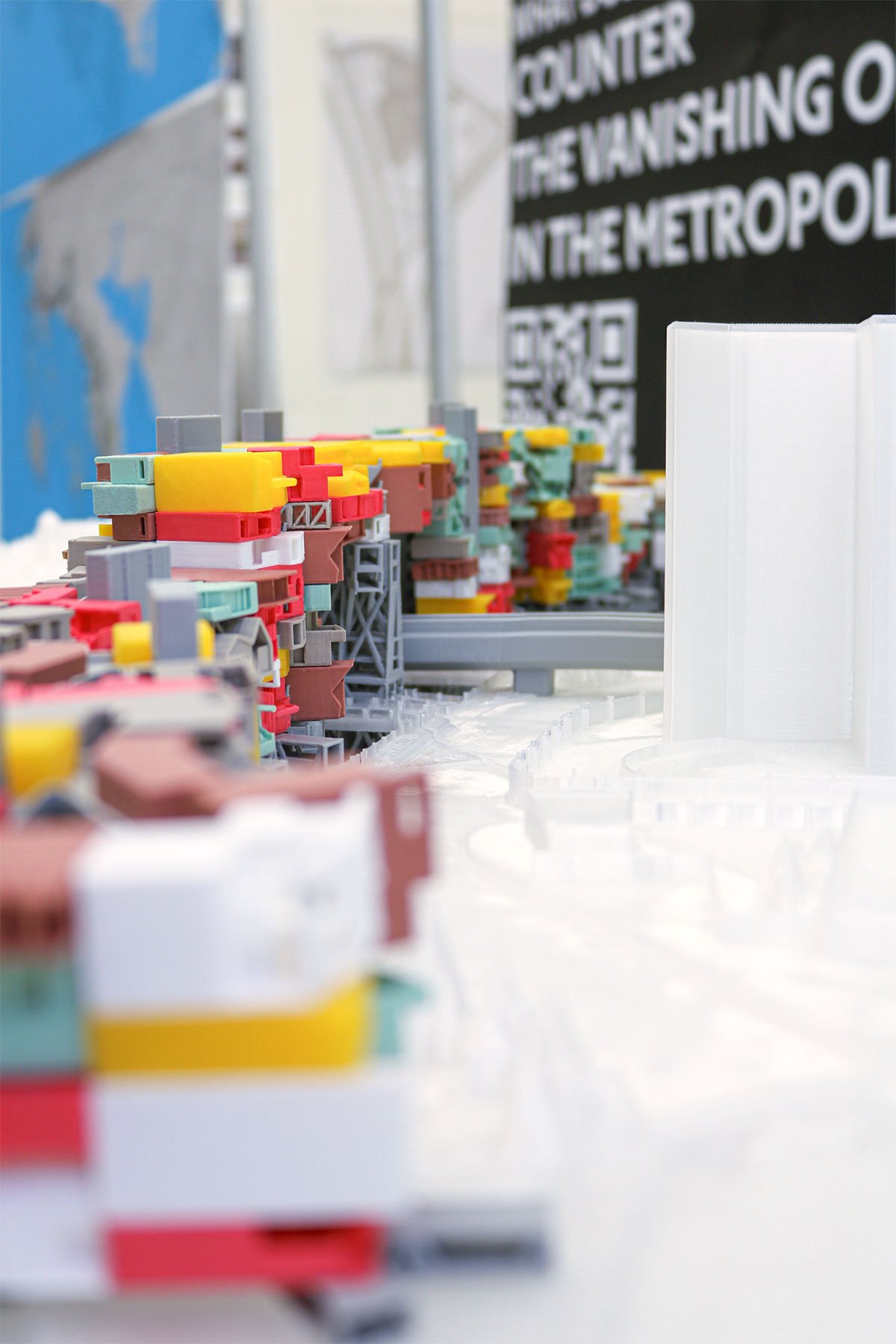
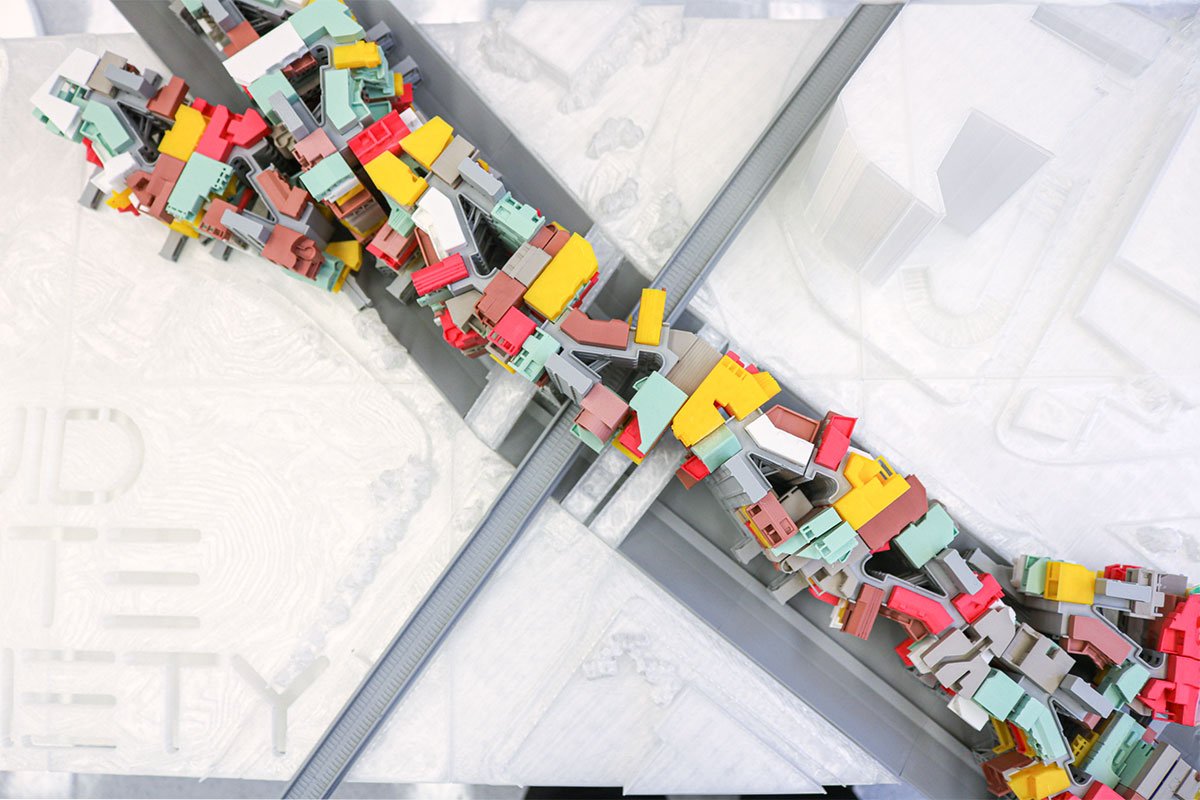
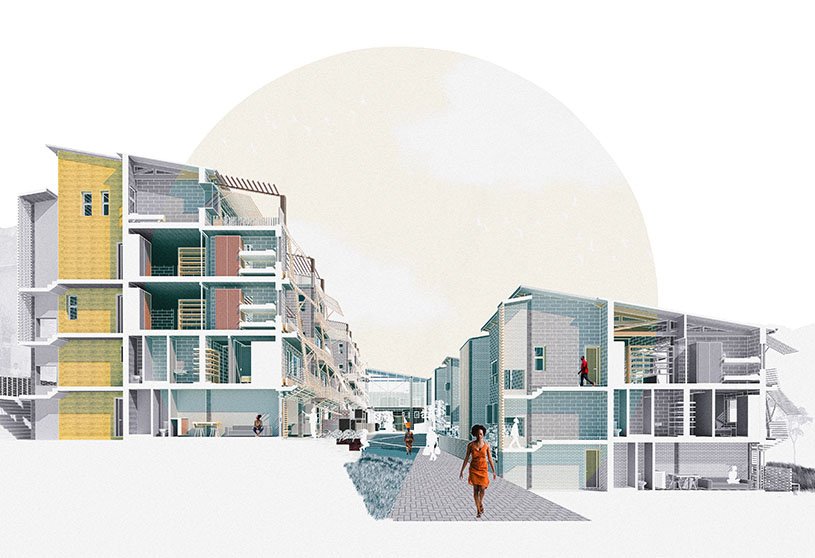
Exterior Render: Two Clusters of Housing Units standing next to the Ballona Creek.Physical Model
By 2033, despite a slowing population growth, Los Angeles has reached a breaking point where suburban sprawl can no longer support its rising population. Housing prices have surged—up 64% from 2013 to 2023 and projected to climb another 81% by 2033. Expected ADU and upzoning reforms fell short, while West LA faces a record housing deficit as costs keep rising.
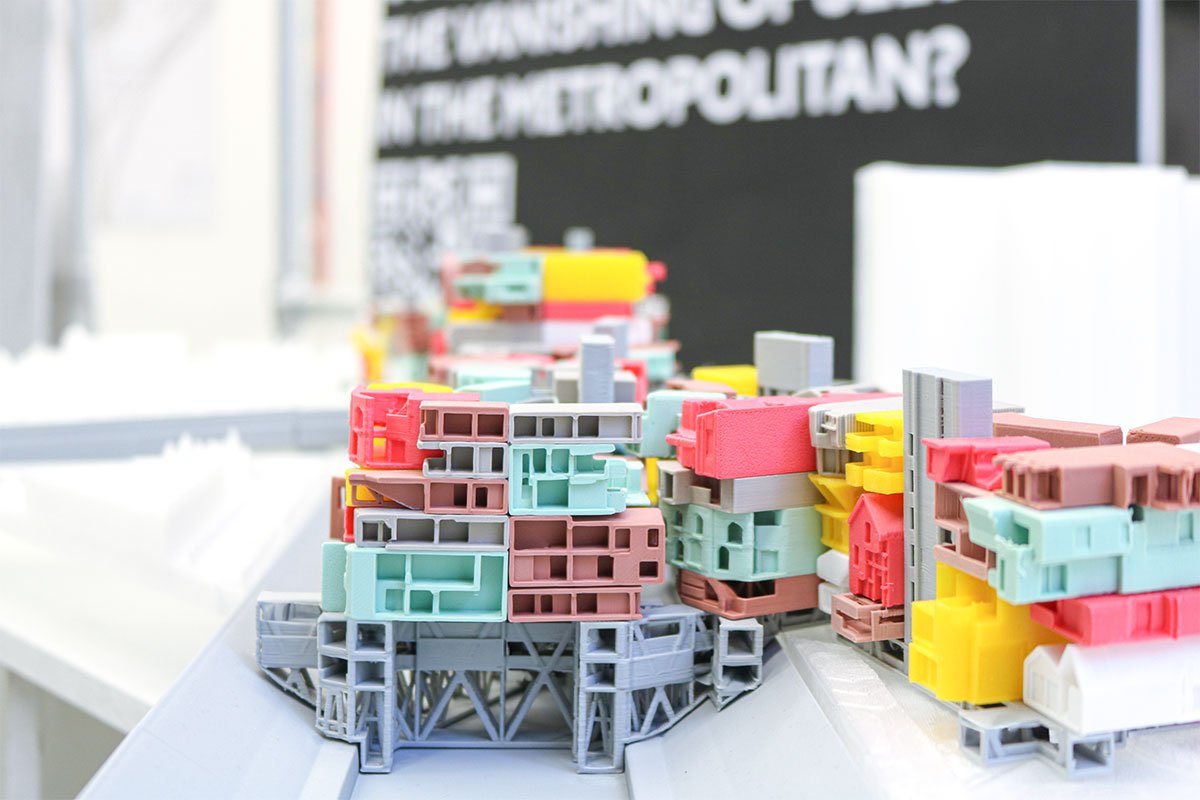
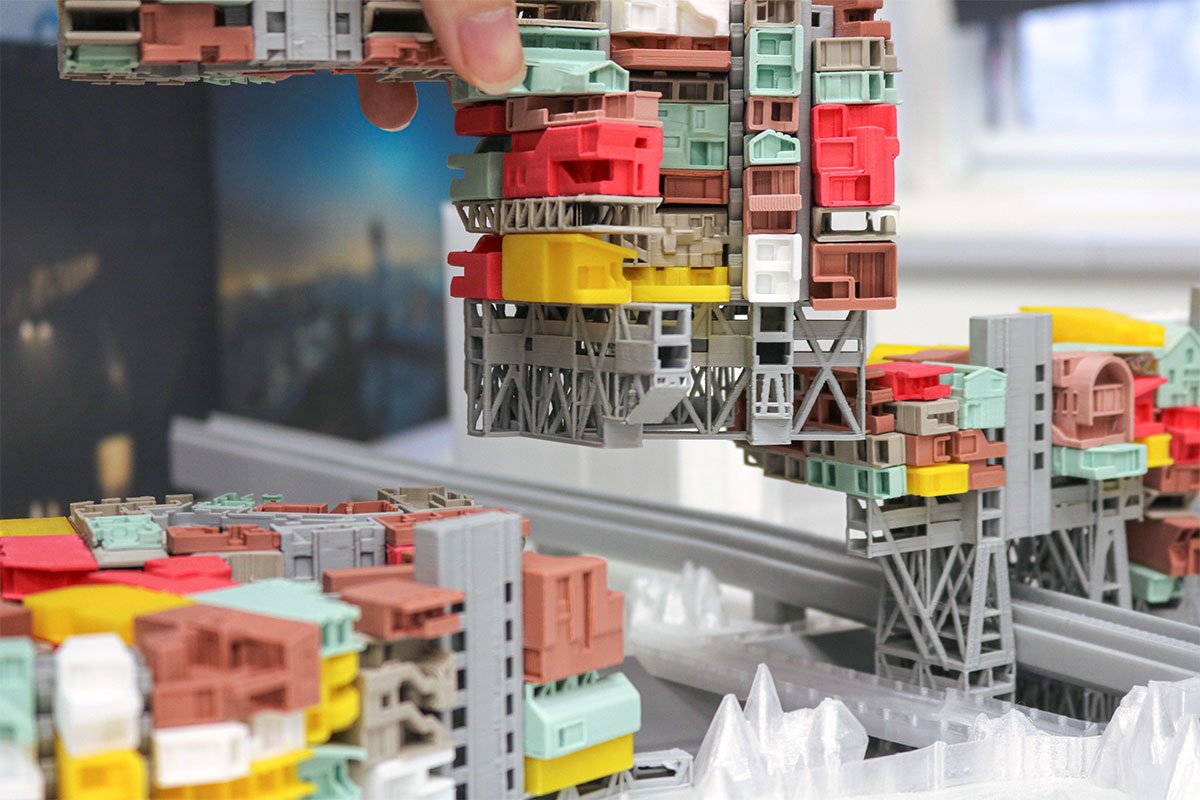
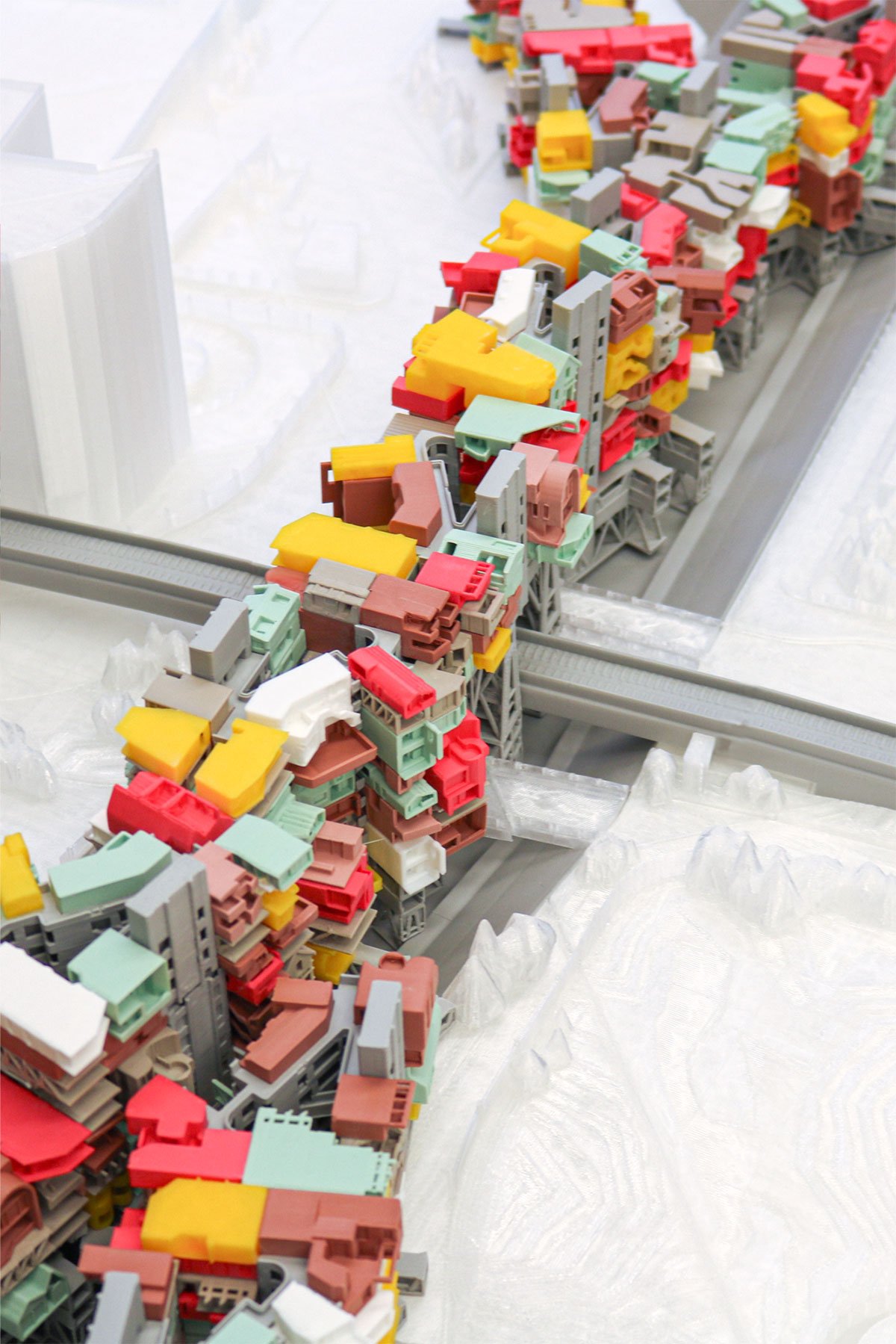
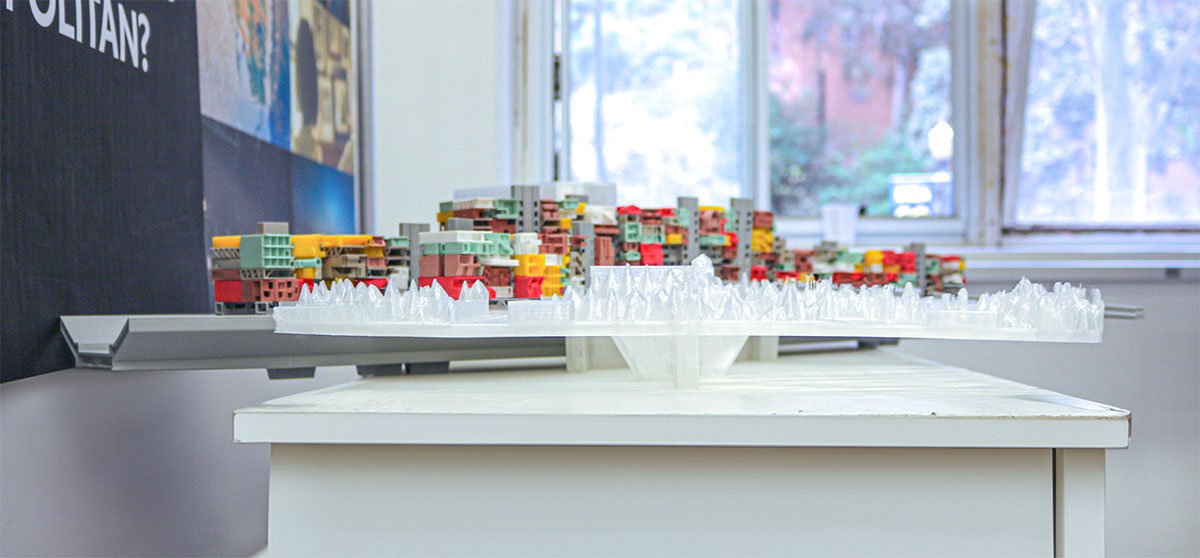
Exterior Render: Cantilevered Housing over the Metro E-Line train.Physical ModelPhysical Model
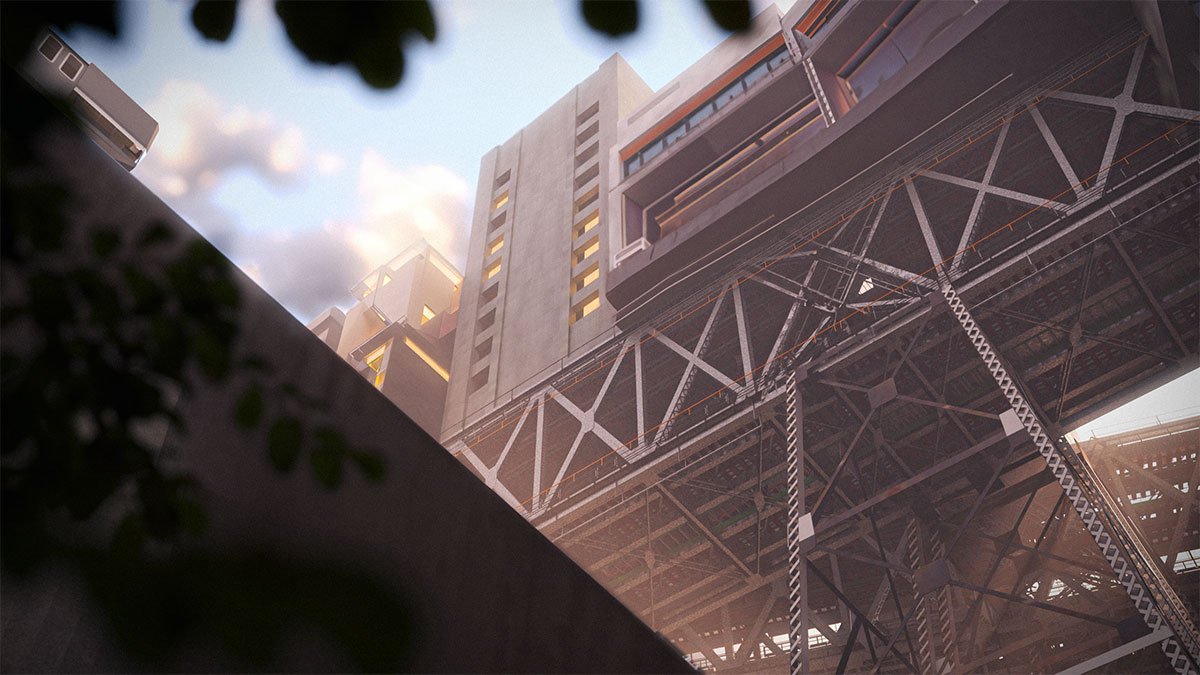
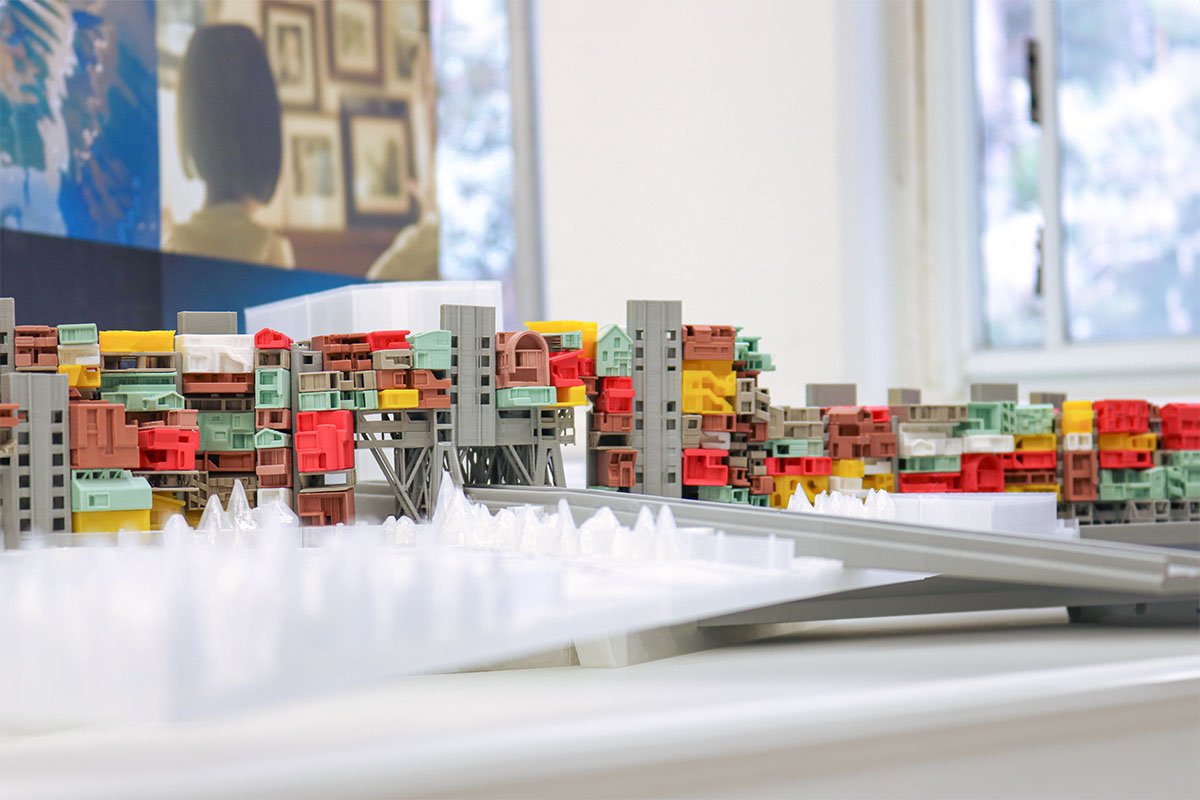
Following his re-election, Governor Gavin Newsom introduced new amendments to SB9, allowing selected city-owned land to be rezoned for residential use. A section of Ballona Creek along Jefferson Boulevard was among the first areas chosen. To cut costs and balance single-family homes with denser housing, a 1,200-foot-long project spanning the Metro E-Line and Ballona Creek will create 1,500 to 2,000 purchasable housing lots. These lots, with smaller footprints and stricter height limits, offer a more affordable alternative to traditional private-owned homes.
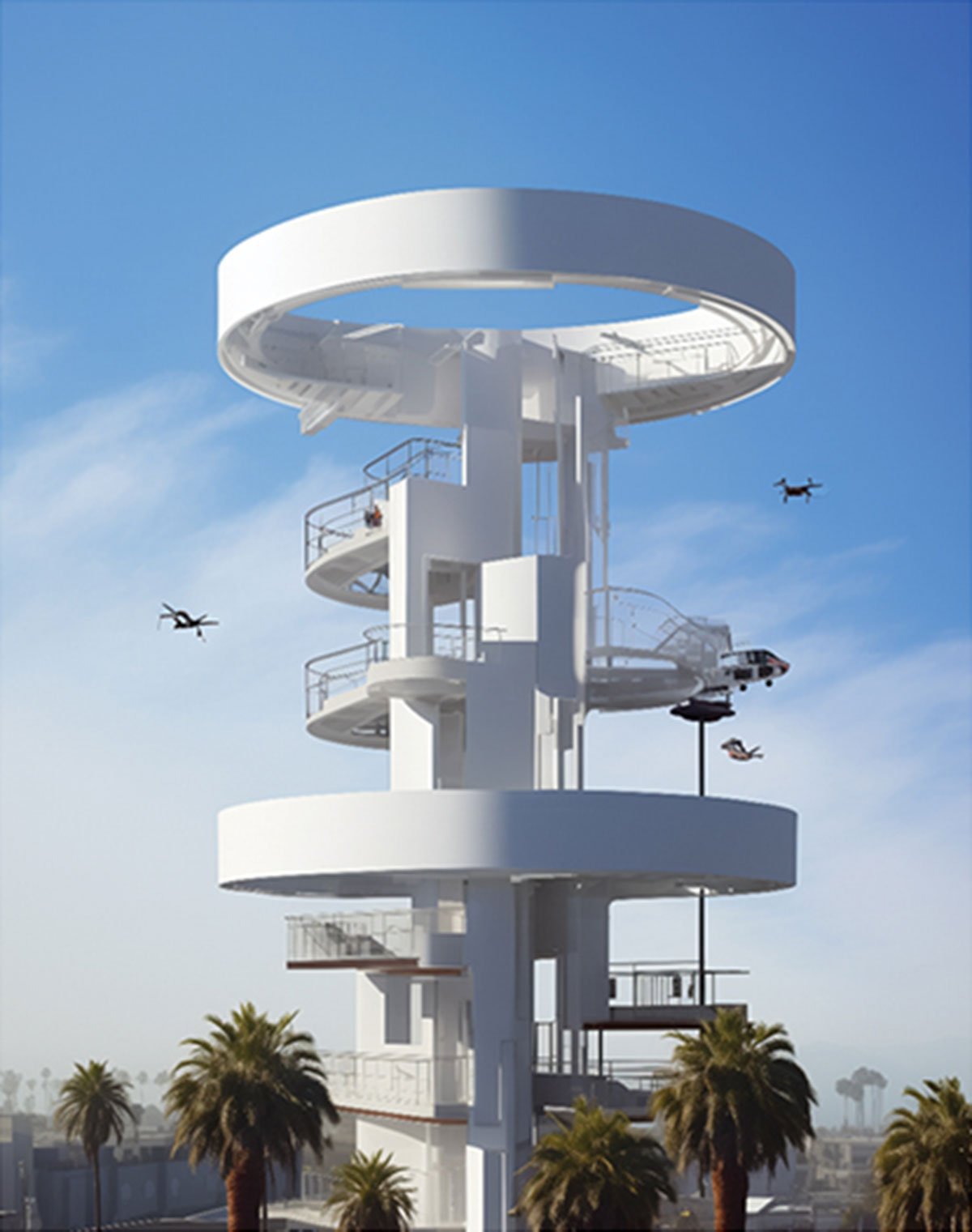
Physical ModelExterior Render: The structural members holding up the housing units, at dawn.Physical Model
Built in phases, the Liquid State Society project is expected to reach 50% capacity by 2040 and 90% within the next decade. Designed to adapt to the city’s housing needs, it aims to ease the burden on future Angelenos, shaping a more flexible and accessible urban landscape.
Exterior Render: A row of tenants holding yellow umbrellas, walking in front of the building in the rain.Physical ModelPhysical Model
Conclusion: The project reimagines housing in Los Angeles as more flexible, affordable, and inclusive. By rethinking urban space and zoning, it provides an alternative to traditional homeownership, addressing economic challenges while protecting individuality. As the city continues to change, this project adapts with it, helping create a more balanced, accessible, and resilient future.
[This Academic Project has been published with text and images submitted by the student]
Design Process
Final Outcome
To submit your academic project for publication at ArchiDiaries, please visit the following link >> Submit
Get the best of ArchiDiaries, directly in your inbox.
We use cookies on our website to give you the most relevant experience by remembering your preferences and repeat visits. By clicking “Accept All”, you consent to the use of ALL the cookies. However, you may visit "Cookie Settings" to provide a controlled consent.
This website uses cookies to improve your experience while you navigate through the website. Out of these, the cookies that are categorized as necessary are stored on your browser as they are essential for the working of basic functionalities of the website. We also use third-party cookies that help us analyze and understand how you use this website. These cookies will be stored in your browser only with your consent. You also have the option to opt-out of these cookies. But opting out of some of these cookies may affect your browsing experience.
Necessary cookies are absolutely essential for the website to function properly. These cookies ensure basic functionalities and security features of the website, anonymously.
Cookie
Duration
Description
cookielawinfo-checkbox-analytics
11 months
This cookie is set by GDPR Cookie Consent plugin. The cookie is used to store the user consent for the cookies in the category "Analytics".
cookielawinfo-checkbox-functional
11 months
The cookie is set by GDPR cookie consent to record the user consent for the cookies in the category "Functional".
cookielawinfo-checkbox-necessary
11 months
This cookie is set by GDPR Cookie Consent plugin. The cookies is used to store the user consent for the cookies in the category "Necessary".
cookielawinfo-checkbox-others
11 months
This cookie is set by GDPR Cookie Consent plugin. The cookie is used to store the user consent for the cookies in the category "Other.
cookielawinfo-checkbox-performance
11 months
This cookie is set by GDPR Cookie Consent plugin. The cookie is used to store the user consent for the cookies in the category "Performance".
viewed_cookie_policy
11 months
The cookie is set by the GDPR Cookie Consent plugin and is used to store whether or not user has consented to the use of cookies. It does not store any personal data.
Functional cookies help to perform certain functionalities like sharing the content of the website on social media platforms, collect feedbacks, and other third-party features.
Performance cookies are used to understand and analyze the key performance indexes of the website which helps in delivering a better user experience for the visitors.
Analytical cookies are used to understand how visitors interact with the website. These cookies help provide information on metrics the number of visitors, bounce rate, traffic source, etc.
Advertisement cookies are used to provide visitors with relevant ads and marketing campaigns. These cookies track visitors across websites and collect information to provide customized ads.