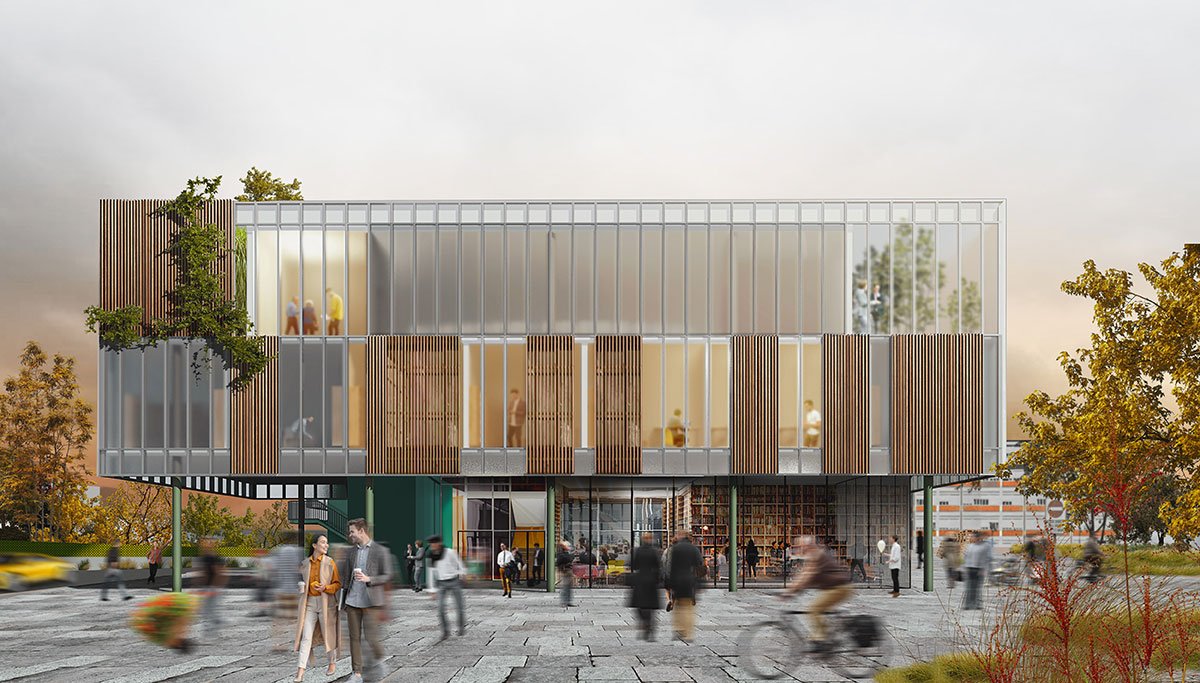
Excerpt: The E. Barsanti Vocational School by Commonsense Studio is designed as a compact, transparent space that fosters hands-on learning and community. At its heart is a large, unified workshop hall where disciplines converge, creating a dynamic makers’ environment. Visible infrastructure and adaptable spaces allow students to engage directly with the building, making it both an educational institution and a learning tool in itself.
Project Description
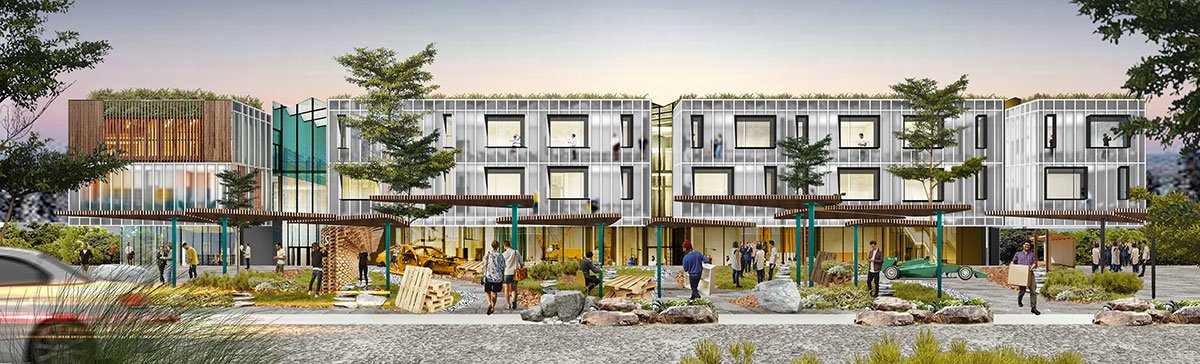
[Text as submitted by architect] The new Barsanti institute is designed as a compact and transparent volume, a buzzing and inclusive incubator of ideas, with the mission to provide an environment of productivity and participation for its students and educators.
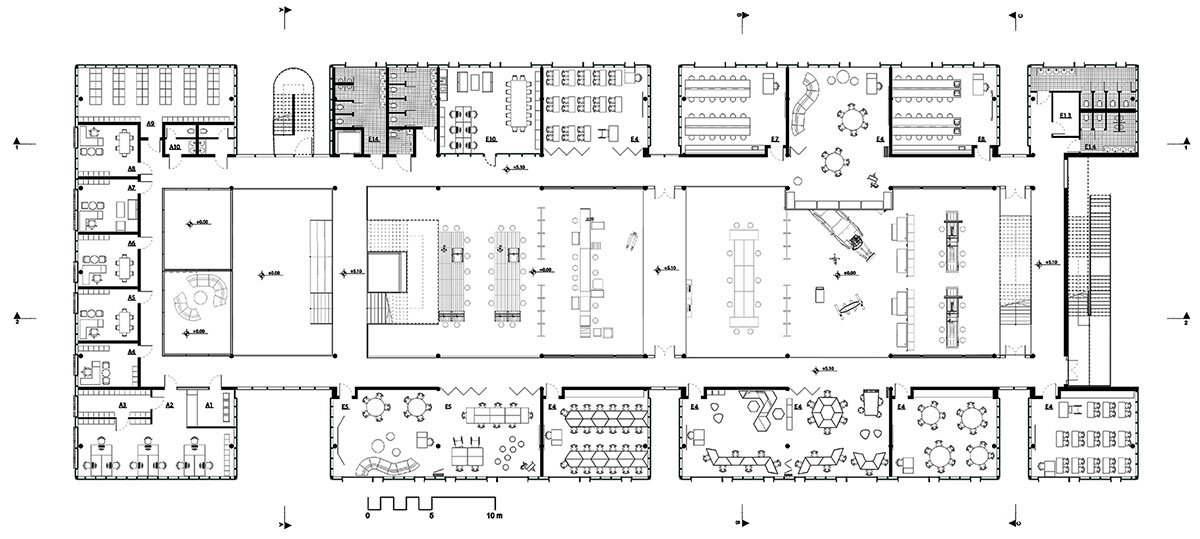
What makes the Barsanti Institute special are its workshops. In this school, students learn by doing. Recognizing this aspect’s potential in the school’s future identity, the workshop hall is placed at the heart of the new building. It is one huge unified space that hosts 13 different workshops (electrical, mechanical, CAD, CAM and CNC, hydraulics, thermic, welding, industrial automation) making disciplines meet each other and create a larger sense and identity of a “makers’ community”.
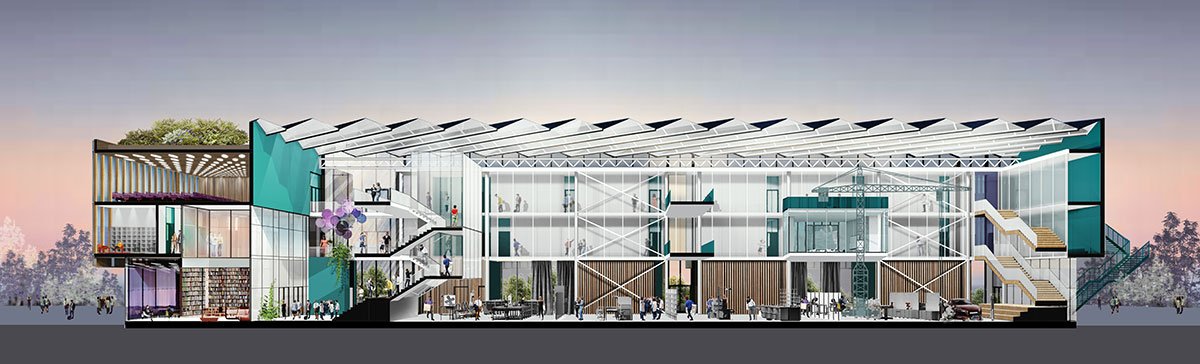


The new school’s compactness and transparency intensifies the experience of its users. Driven by the belief that productivity is contagious, the students and their work are placed in the spotlight. Everyone can see and be seen while creating, producing, or fixing things in the workshops’ hall, when they walk in the corridors, study in the library, hang out in the atrium or even walking outside in the street. It is a place buzzing with continuous activity, day and night.
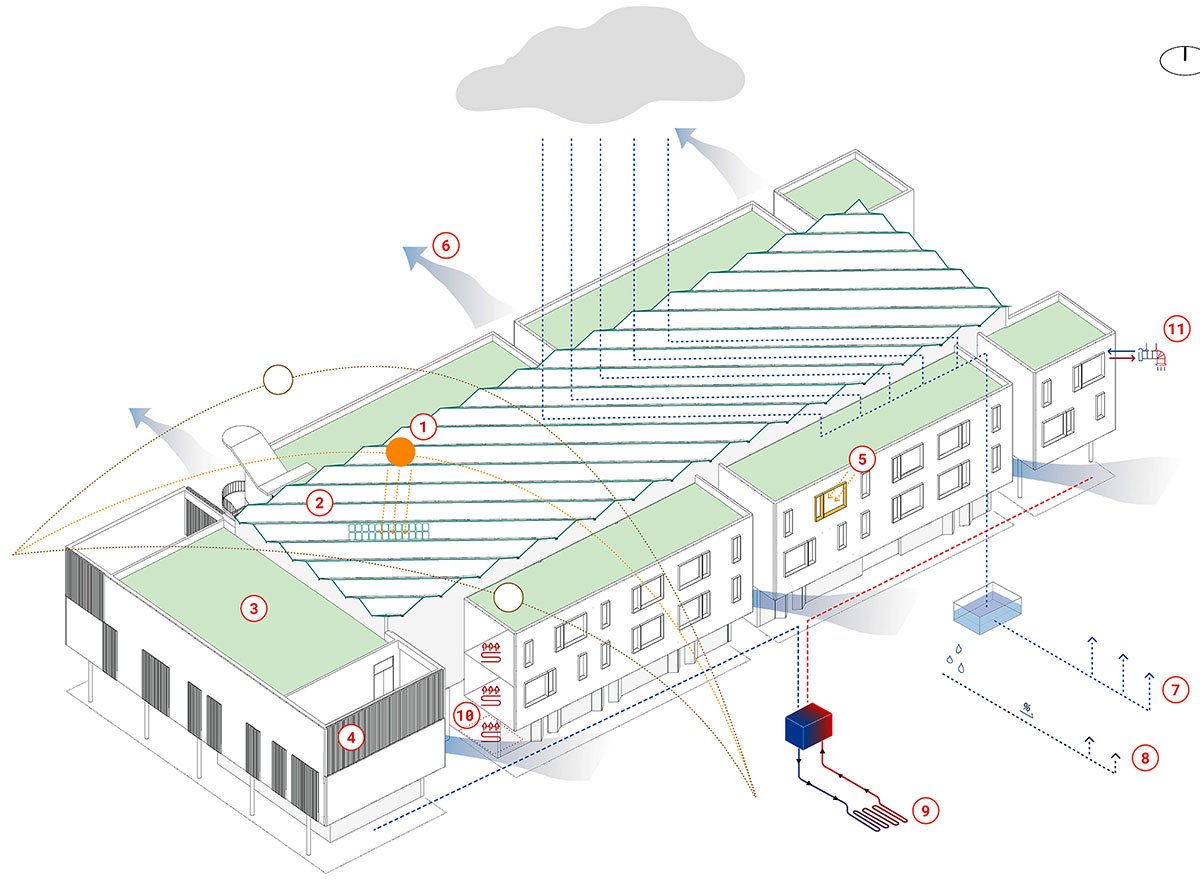
The specialty of the school’s program is fully used to conceive the building as a living organism working for its users and the environment. For its students, this building is not just the place they study in, but a building to learn from. Its infrastructure will be totally visible to the students for them to learn how everything works. The building becoming itself part of the curriculum and helps the professors by giving a real-scale example of what they teach every day.
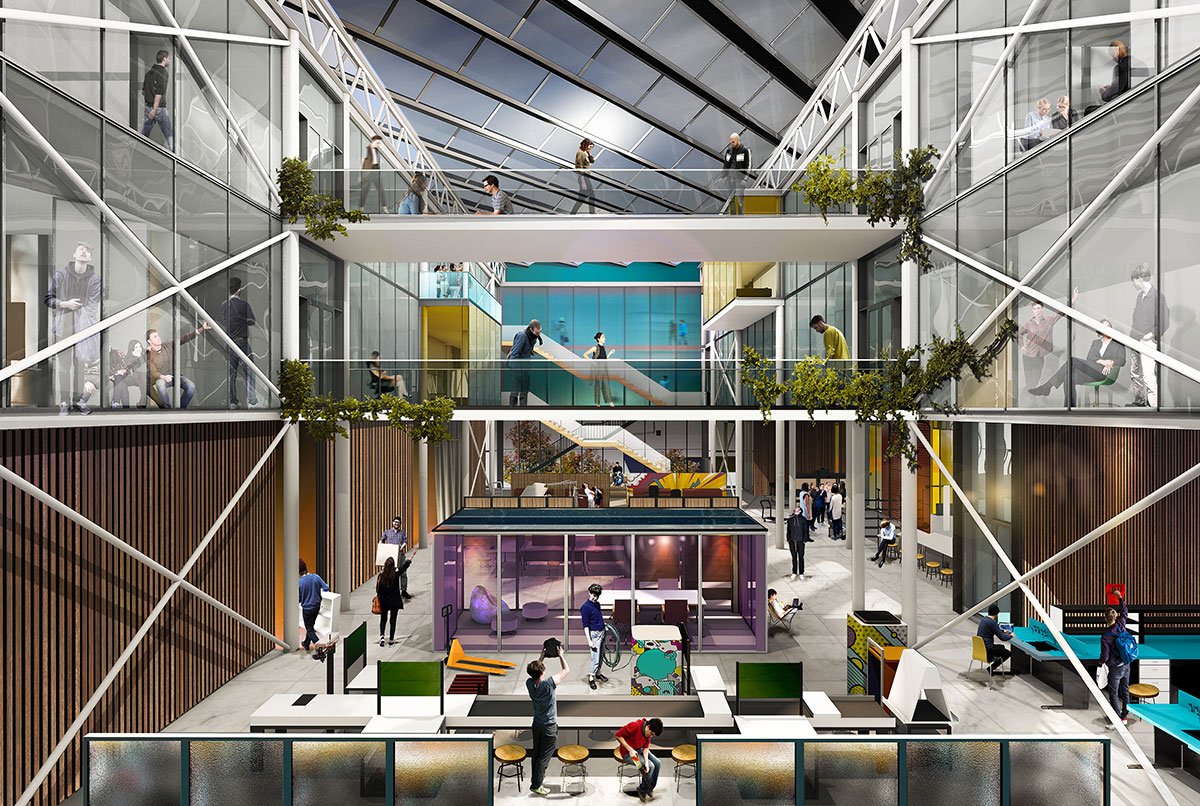
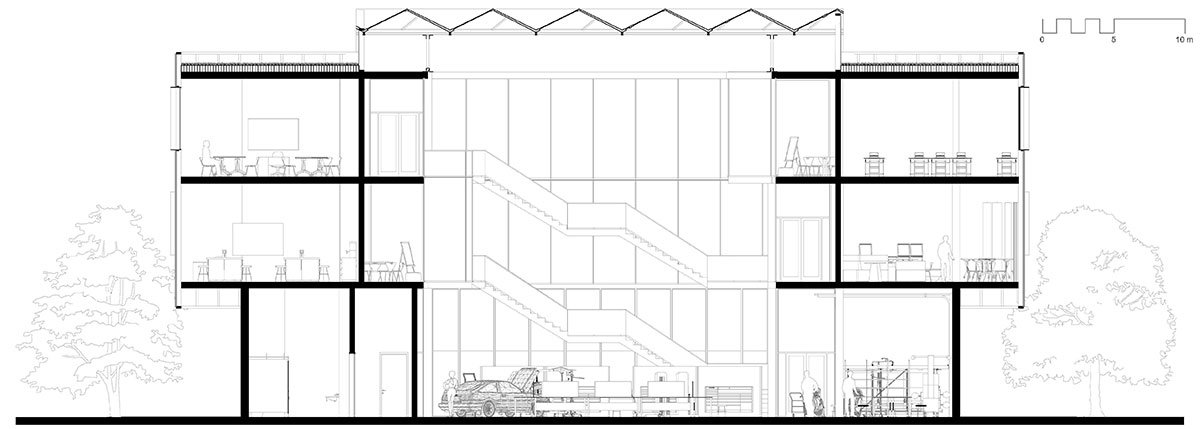

A user-friendly design strategy is coupled with ‘unfinished’ design, aiming to leave space for flexibility and customization according to the students’ and educators’ needs. The students here will be participants in design, by being able to build and change certain components of the spaces as they please, increasing the sense of belonging in a place that is first and foremost theirs to inhabit and use.
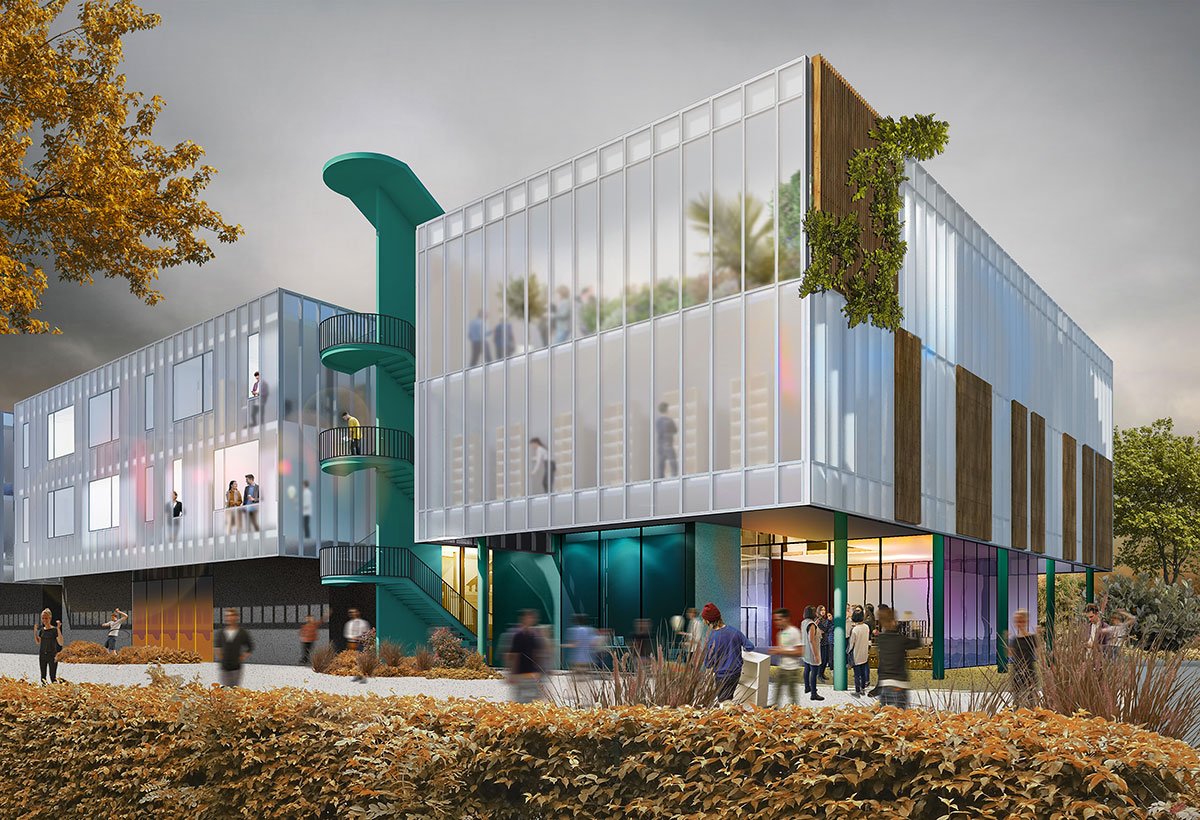
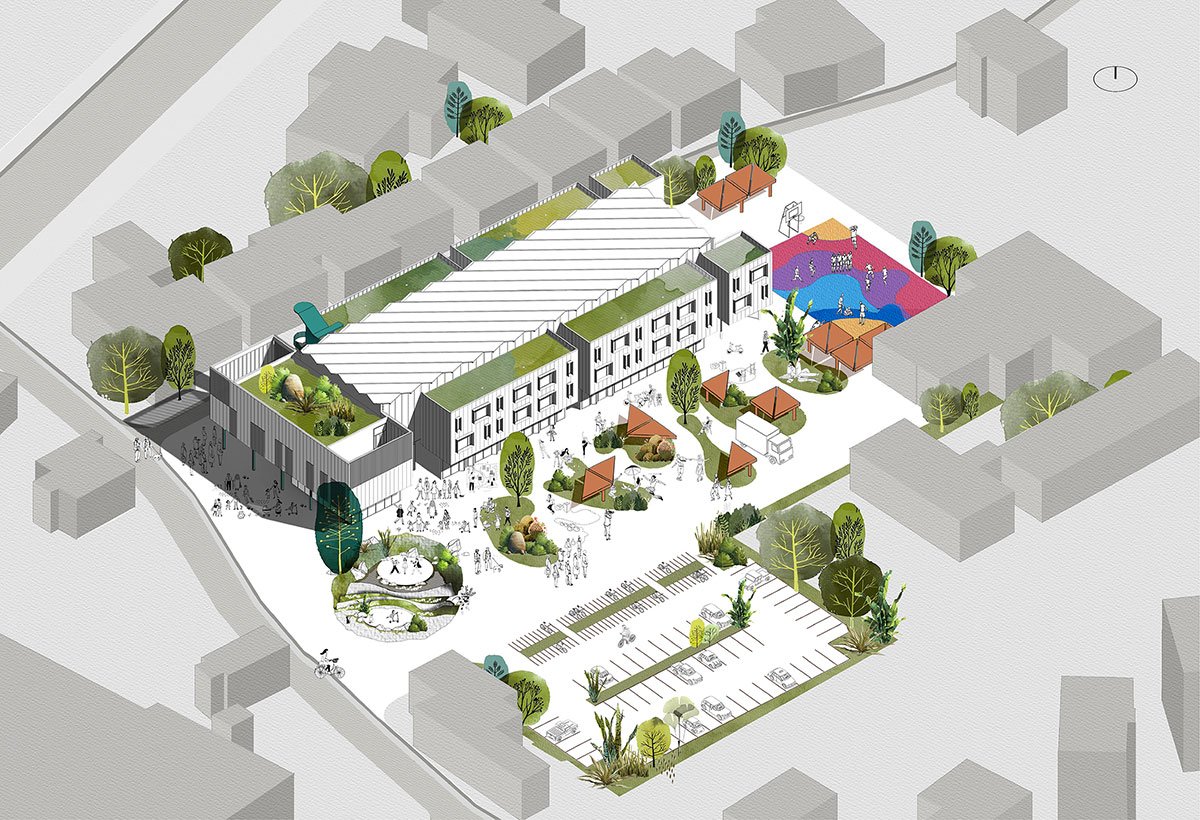
For the neighborhood and city, the institute aims to become a new landmark. Along Via delle Carre, an ample sidewalk allows citizens to pass by while getting glimpses of the activity inside the workshop hall, resembling bottegas. The human scale perception is highly considered in this project, recognizing the unique quality of bottegas – workshops where artisans work while visible to the public, as something greatly enhancing place-making and interaction. The school yard is seen as an outdoor extension of the workshop hall, while it also provides green recreational spots. Flexible pavilions provide cover for students that want to work or socialize outside.
Drawings


Images