Home » Academic projects » Institute Of Public Luxury: Matriarchs Rise! A City Built For Women, By Women | Masters Design Project On Speculative Architecture
Institute Of Public Luxury: Matriarchs Rise! A City Built For Women, By Women | Masters Design Project On Speculative Architecture
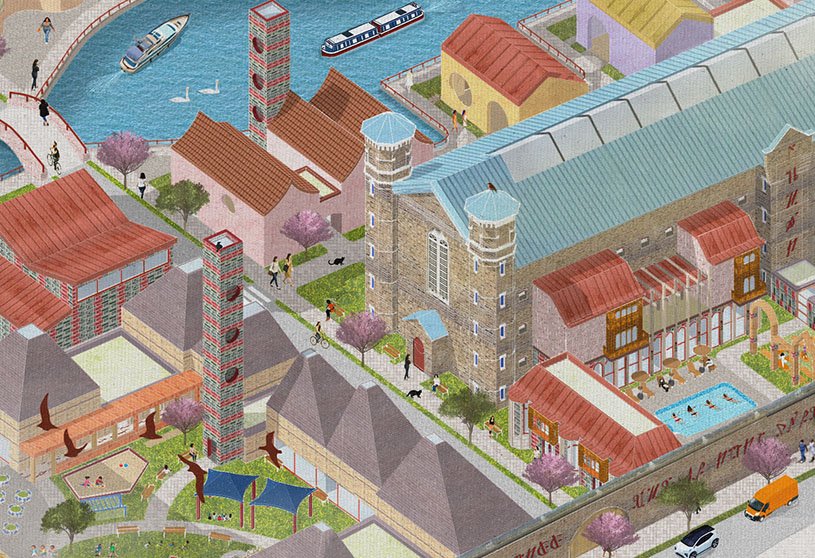
Excerpt: ‘Matriarchs Rise!’ is a Masters Design Project by Jueda Coku from the ‘School of Architecture and Cities – University of Westminster.’ The project explores speculative architecture with the aim to radically transform Wormwood Scrubs Prison into a women-led, eco-socialist community that reclaims and reuses its historic Victorian architecture. It seeks to dismantle patriarchal and capitalist systems while addressing medical misogyny through the creation of the Matrispital, a holistic healthcare model where women are listened to, respected, and cared for.
Introduction: Matriarchs Rise is a transformative project envisioned within the walls of Wormwood Scrubs Prison. Born from a women’s revolution, it responds not only to the resurgence of misogyny but also to the climate crisis driven by capitalism. This movement seeks to preserve the site’s Victorian architecture while forging a future that is both equitable and sustainable.
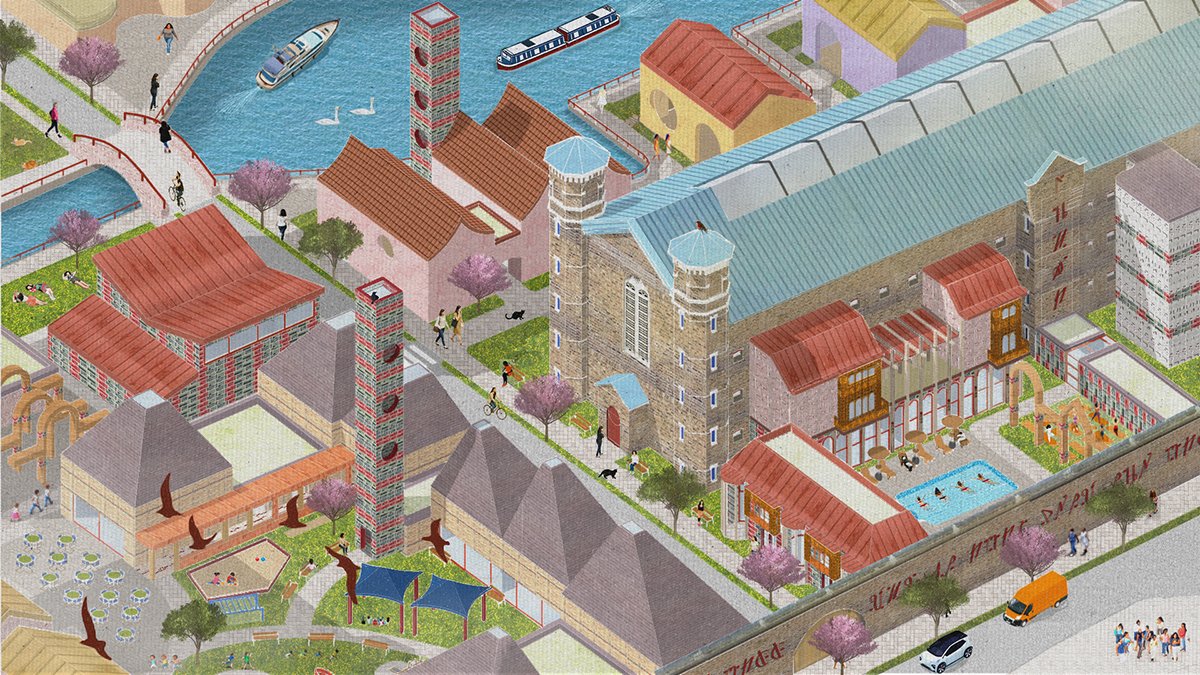
In dismantling capitalism to pursue a just, eco-socialist future, we also dismantle the patriarchy—laying the foundation for a matriarchal society. Here, a city is designed by women, for women, celebrating feminine agency and collective power. Life flourishes in spaces alive with culture, wellness, and creativity: theatres, cinemas, public baths, spas, galleries, workshops, libraries, gardens, and a dedicated hospital. Men contribute by providing care for children and the elderly, sustaining the community’s foundations.
Central to the masterplan is the creation of ‘The Matrispital,’ a new hospital designed exclusively for women, serving as a cornerstone of health, empowerment, and care within this reimagined society.
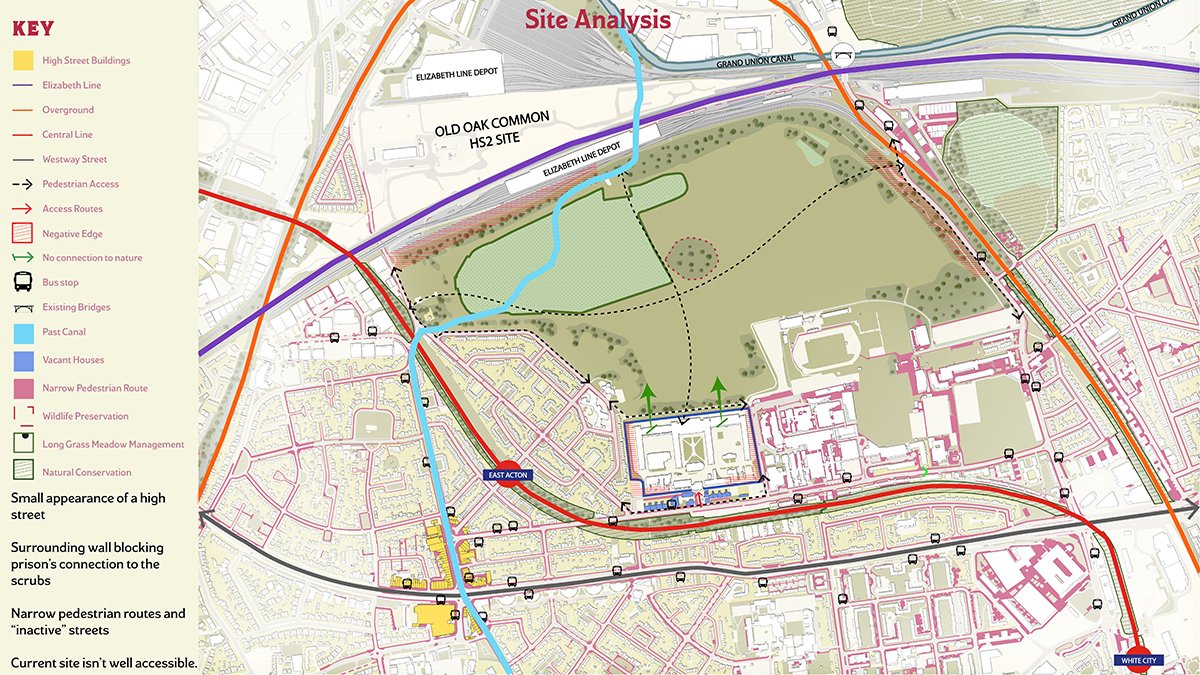
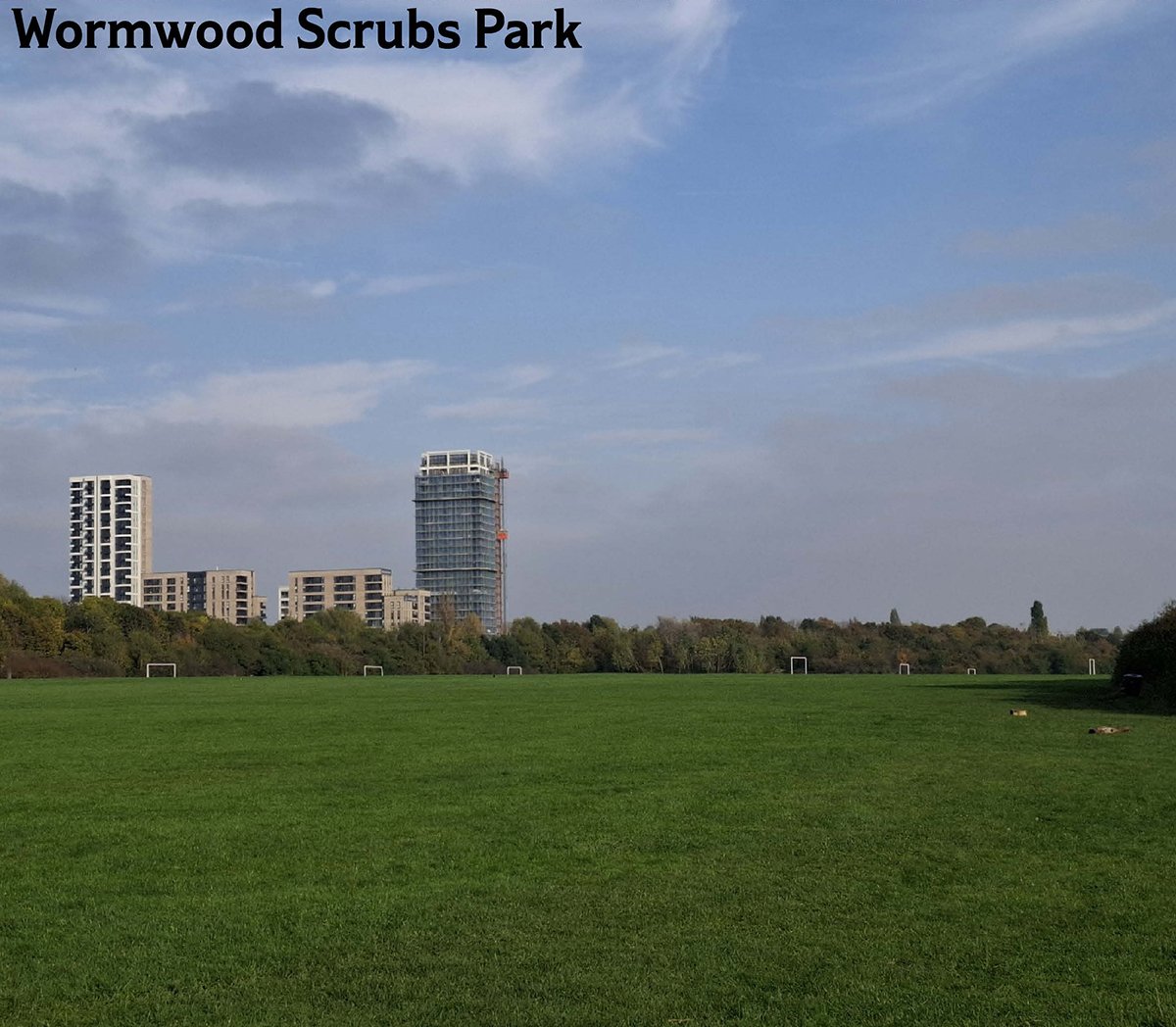
Wormwood Scrubs is a vast expanse of green in West London, situated close to East Acton and White City stations. The surrounding neighbourhood is largely residential, with little sign of a bustling high street or central hub, lending the area a quiet, almost tucked-away atmosphere within the city. To the north lies the Grand Union Canal, and historical evidence suggests it may once have passed directly through the Scrubs. This project aims to reconnect the canal to the site and restore a piece of its past while enhancing local biodiversity and enriching its ecological value.
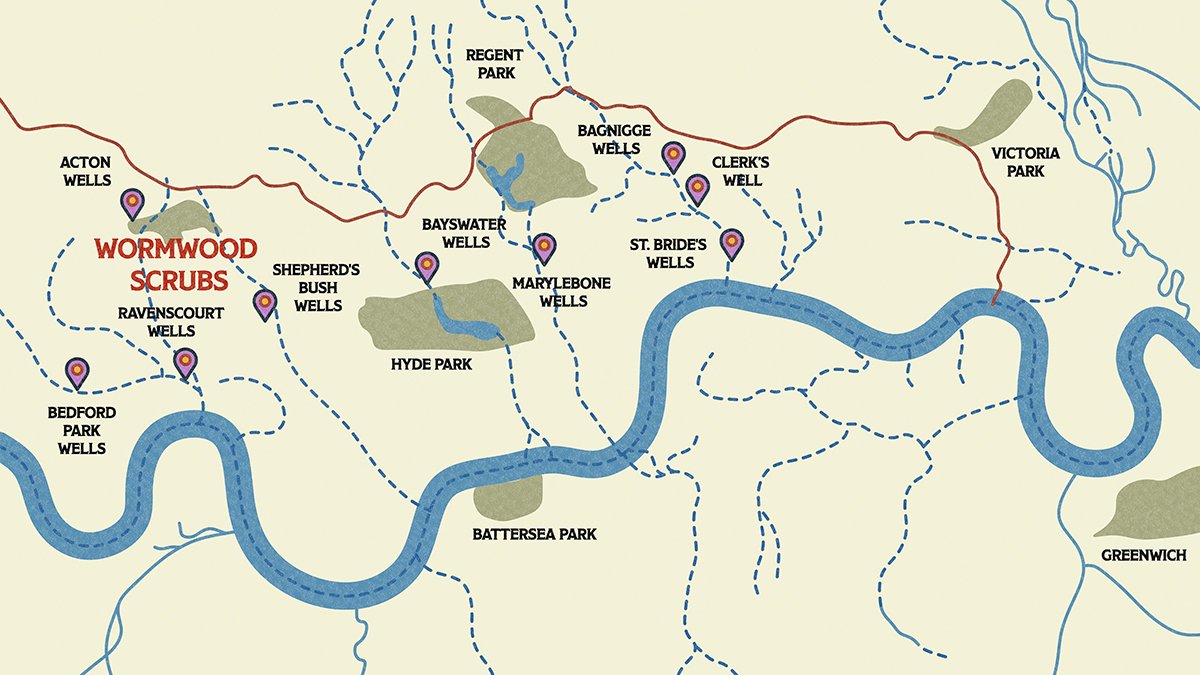
An Access, Environmental, And Surrounding Uses ApproachAn Analysis Of The Lost And Current Rivers In London
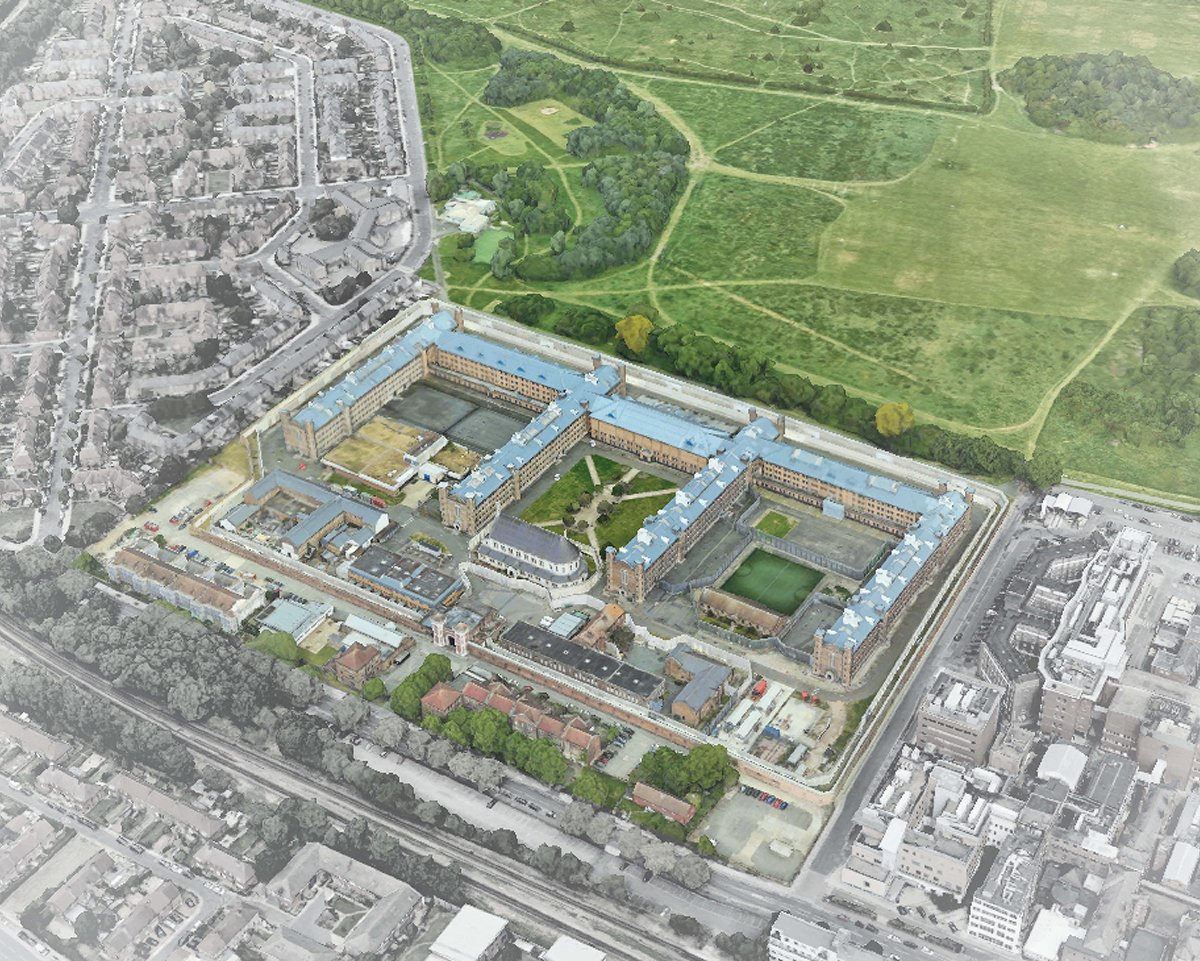
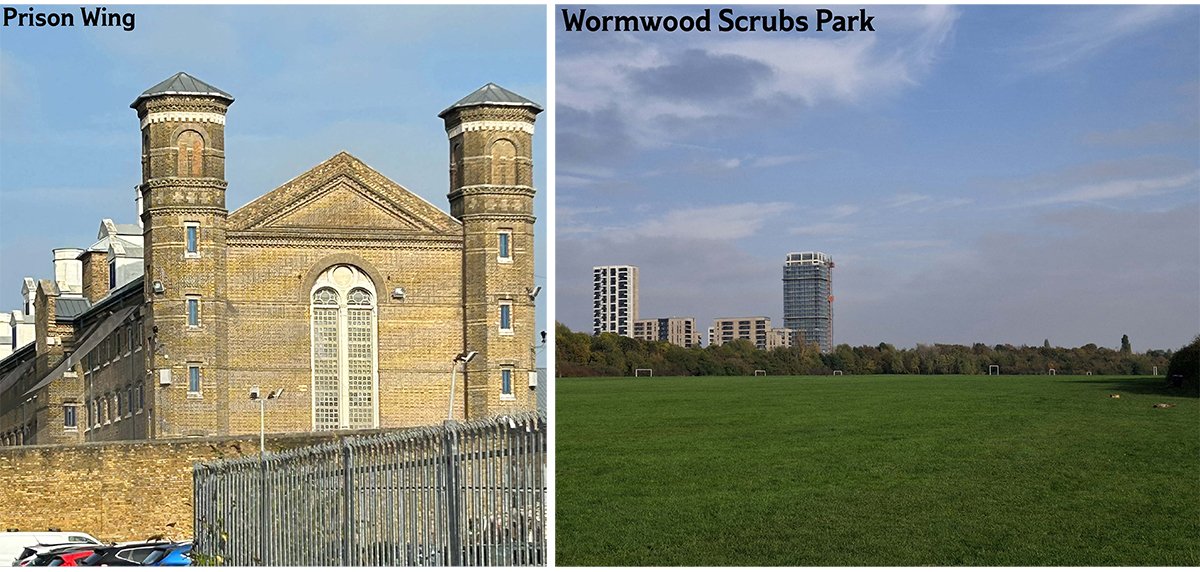
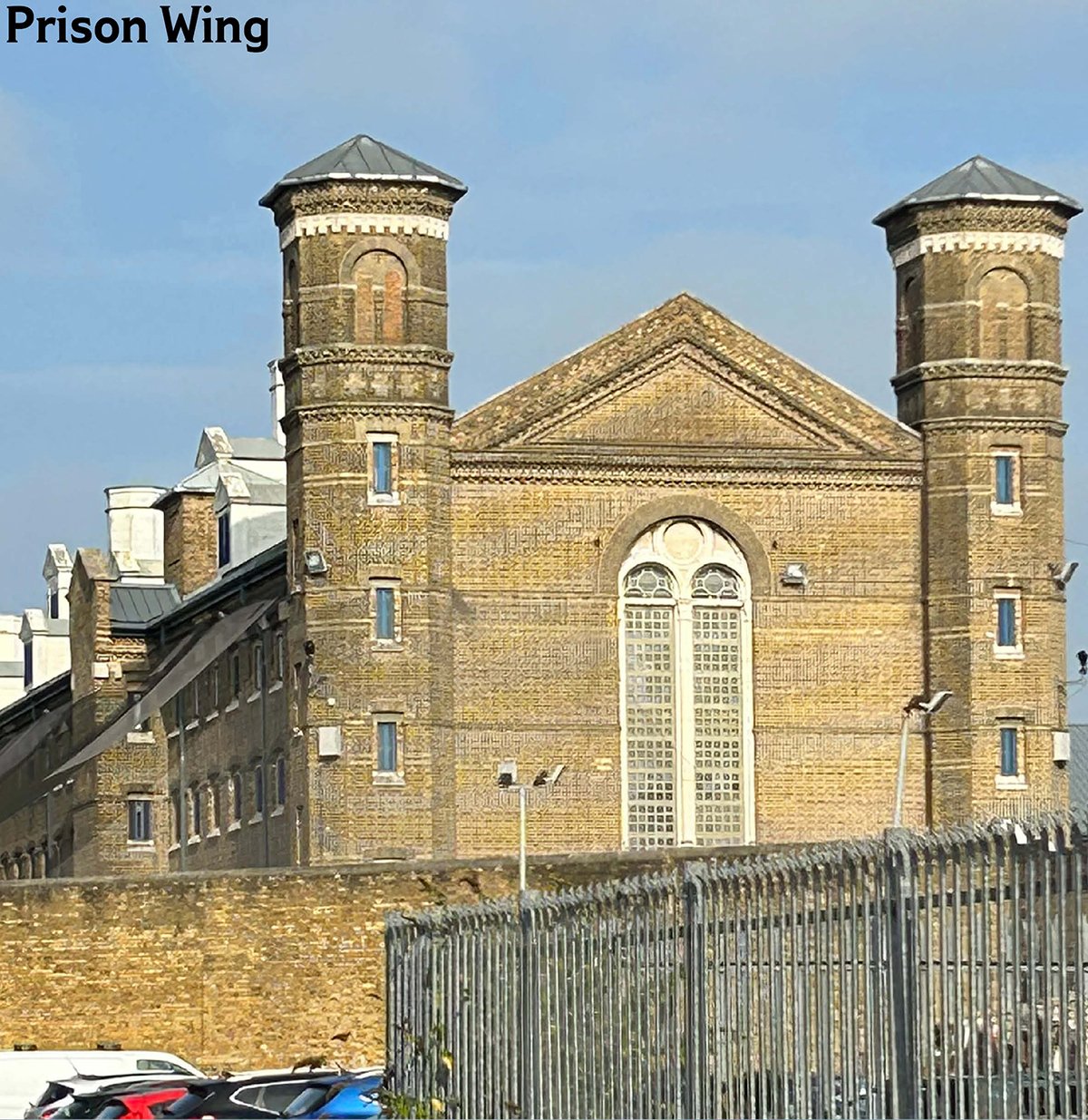
At the heart of the grounds stands HM Prison Wormwood Scrubs, a Category B men’s prison encircled by a 4.6-metre wall. The facility dominates the landscape, both in its physical presence and in how the area is used and perceived. Public access is minimal, with the front Gatehouse serving as the sole entry point. This combination of secluded green space, restricted access, and hidden waterways creates a rare chance for reinvention—one that could integrate heritage, ecology, and community engagement.
Site Images
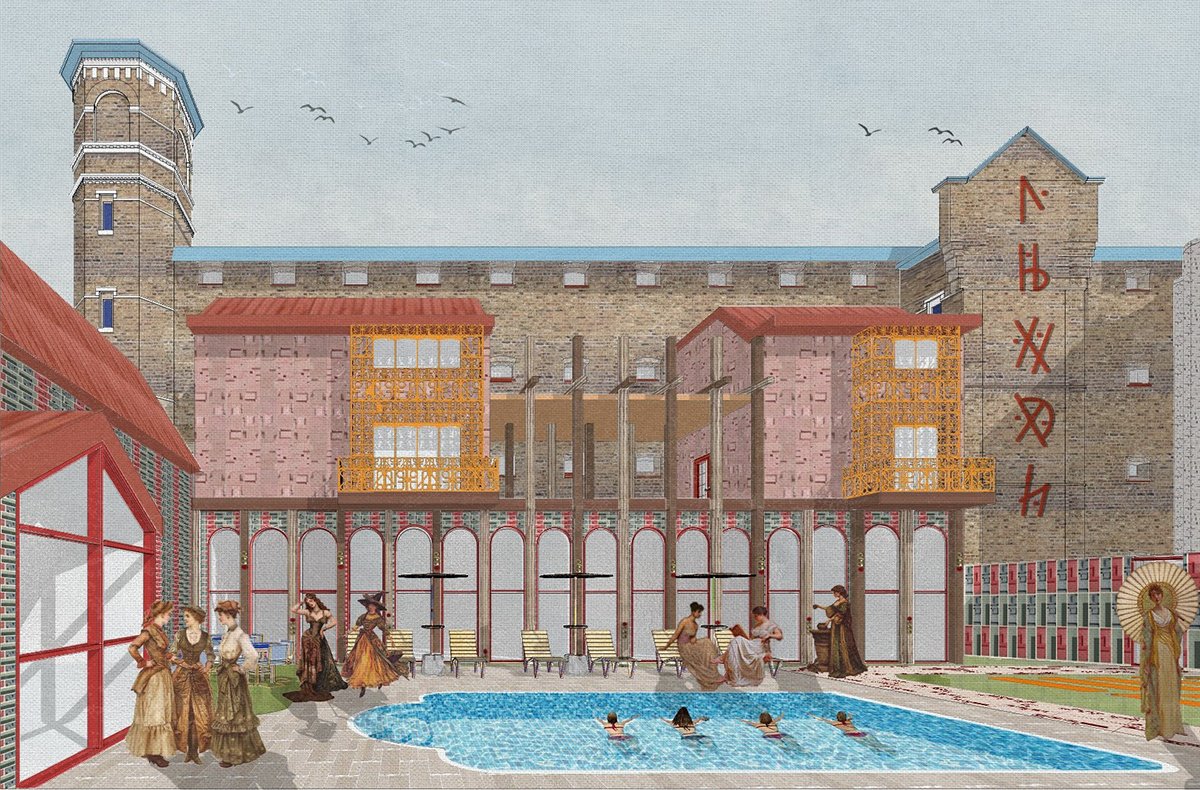
In a deliberate twist of history, the proposal envisions transforming this once men-only institution into a public haven for women, a place of shared luxury and empowerment in a post-revolution setting.
Design Process
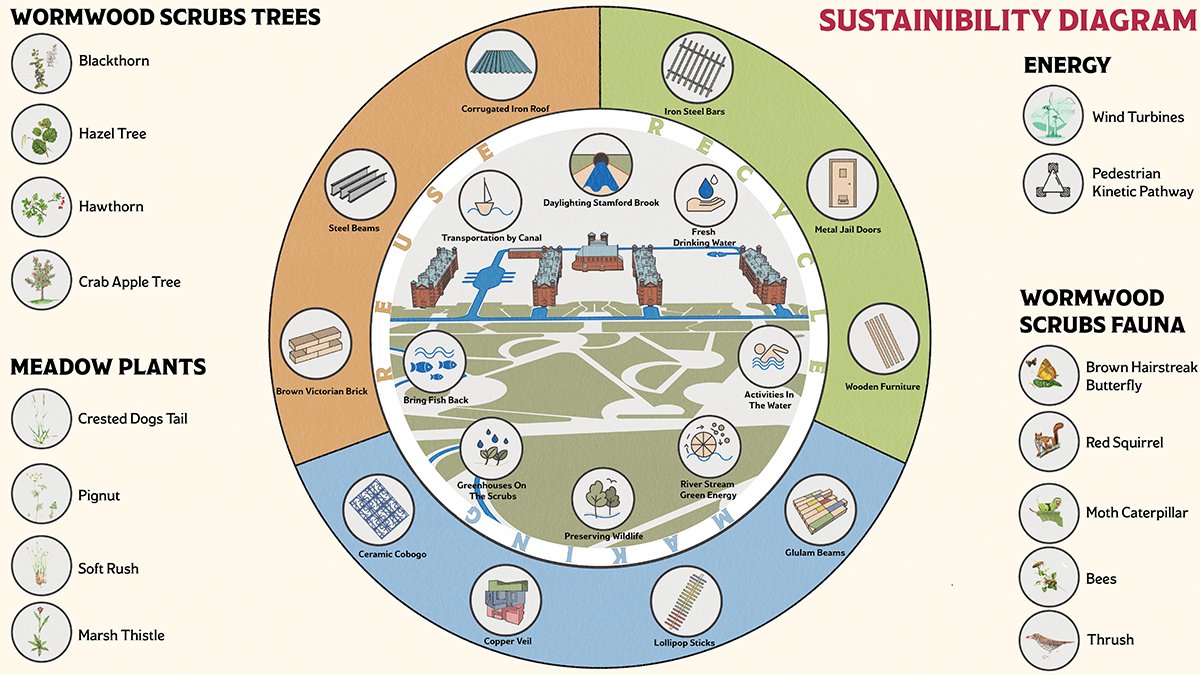
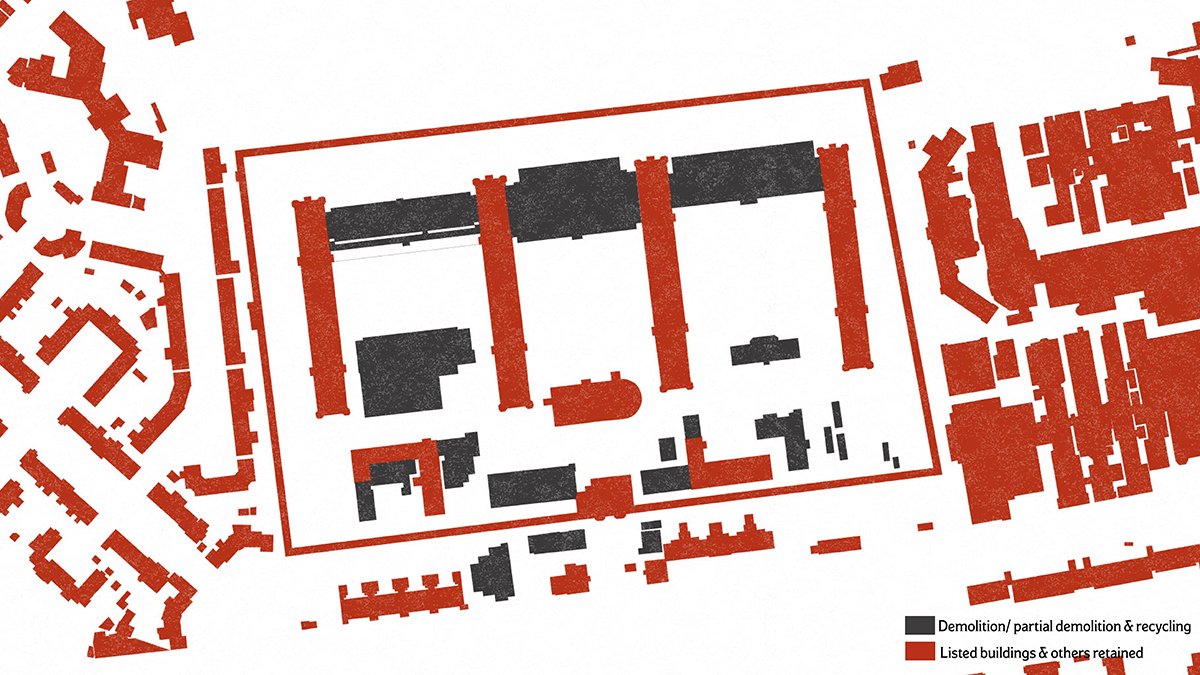
An Approach To How An Eco-Socialist Society Can Embrace Sustainable LivingExisting Figure Ground Plan Showcasing Buildings That Will Be Retrofitted And Demolished/Repurposed For Construction Materials
The DS15 design approach takes an unconventional path, starting not with buildings, but with objects: handcrafted architectural elements made from pigmented plaster. These sculpted forms are reimagined as bricks and integrated across the project, rooting the architecture in material experimentation. In envisioning a new women-led society, the design unfolds like a small city emerging organically.
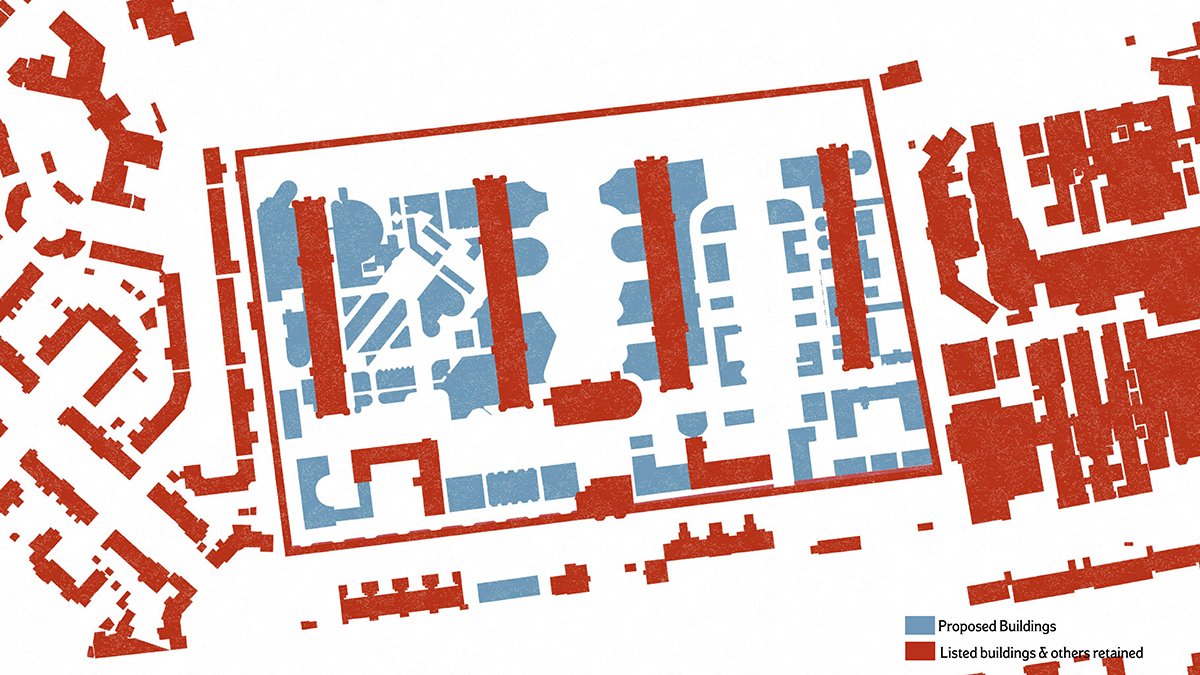
Proposed Figure Ground Plan Showcasing A New City-Like Proposal For WomenPavilion-Like Extensions Constructed Across The Existing Victorian Prison Blocks Using Pigmented And Existing Bricks As The Main Building Material
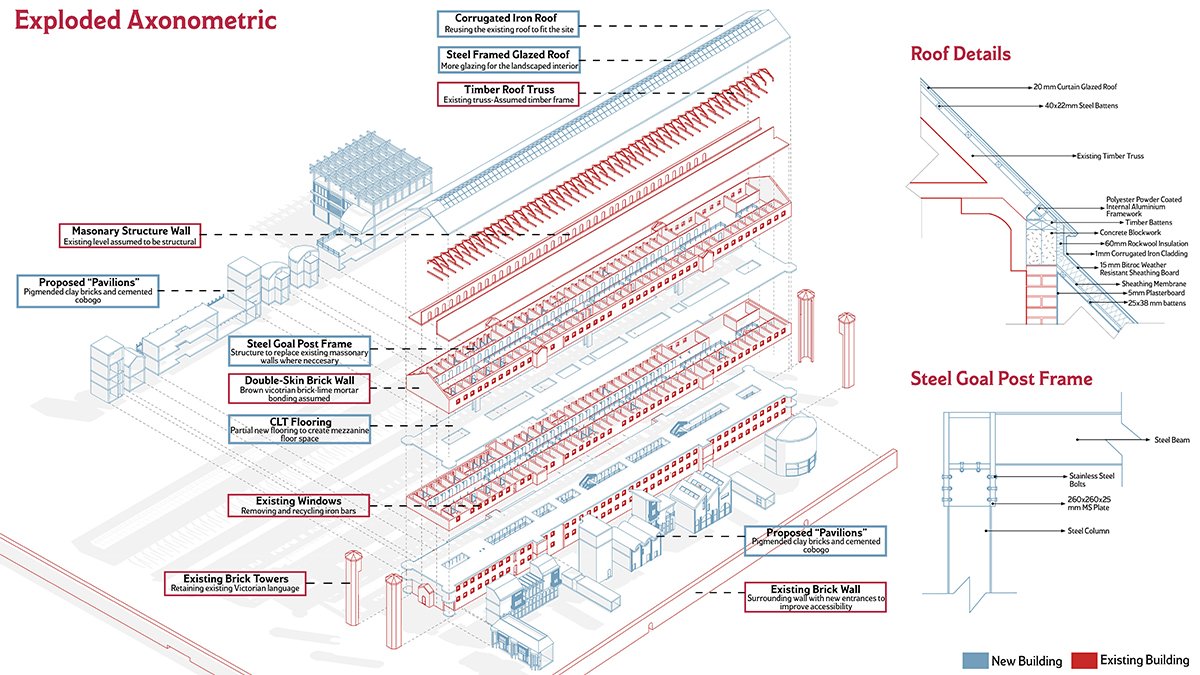
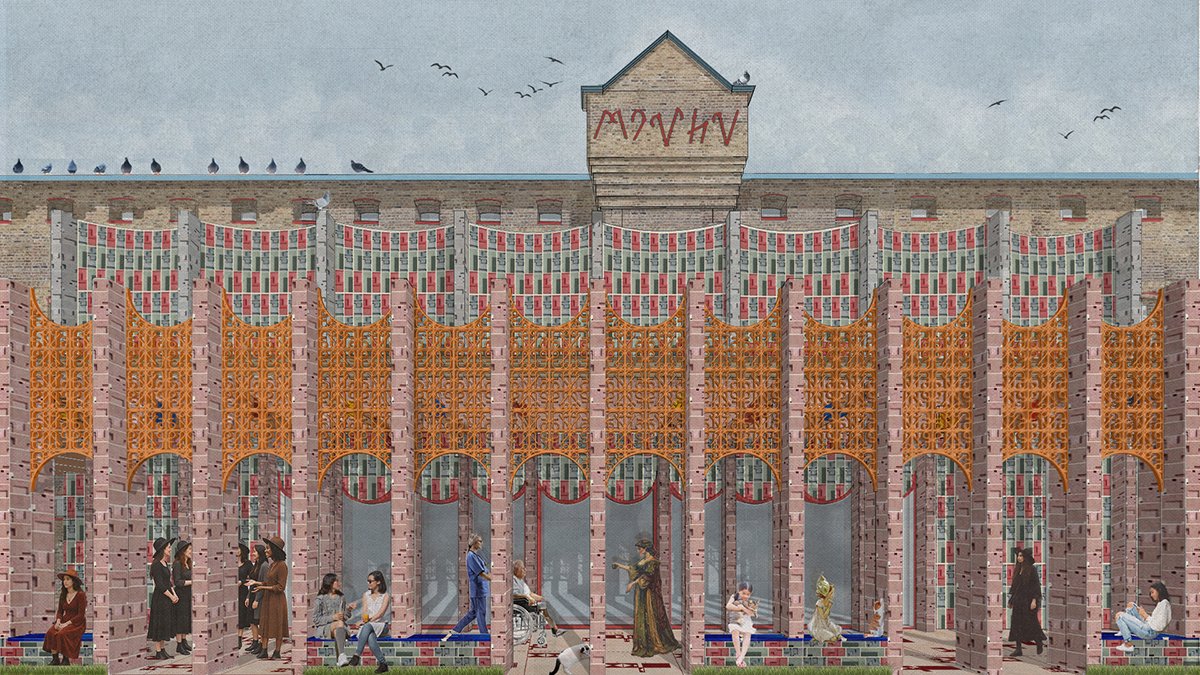
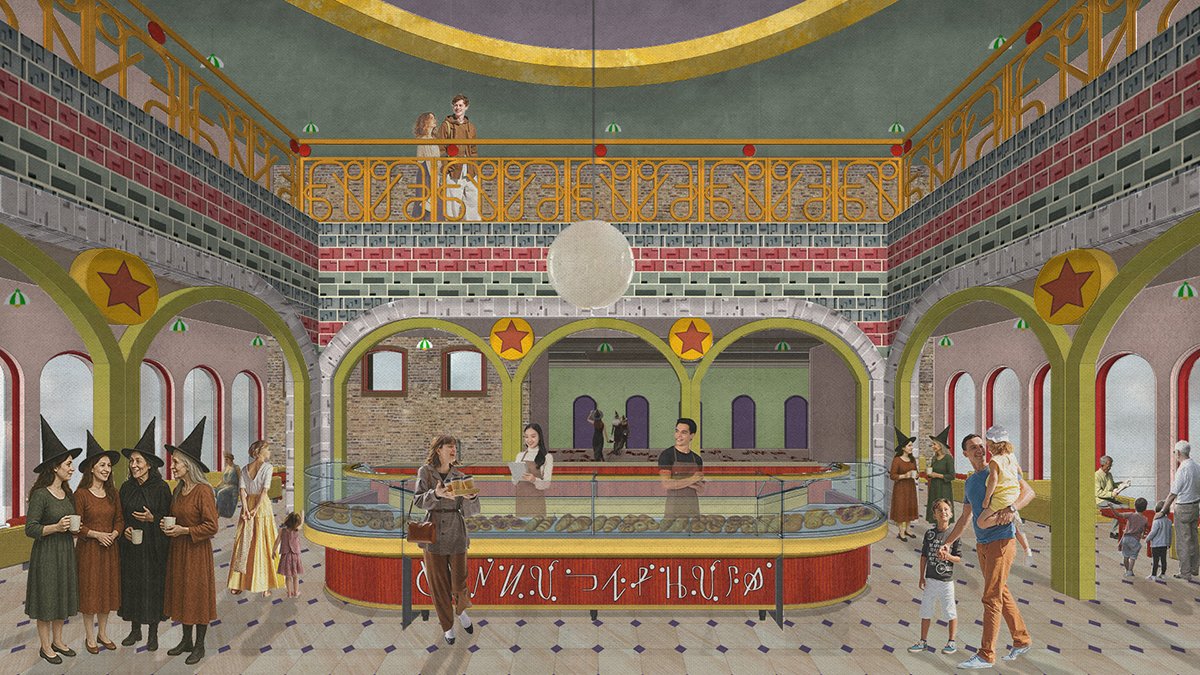
Rather than imposing masculine, monolithic forms, the site is shaped by a network of light, open, pavilion-like structures at a human scale. Every stage of construction is carried out by women, here imagined as witches, infusing the process with a mix of strength, creativity, and play. Existing Victorian prison wings are adapted and retrofitted, while other buildings are carefully dismantled, their steel and brick repurposed for new uses.
Final Outcome
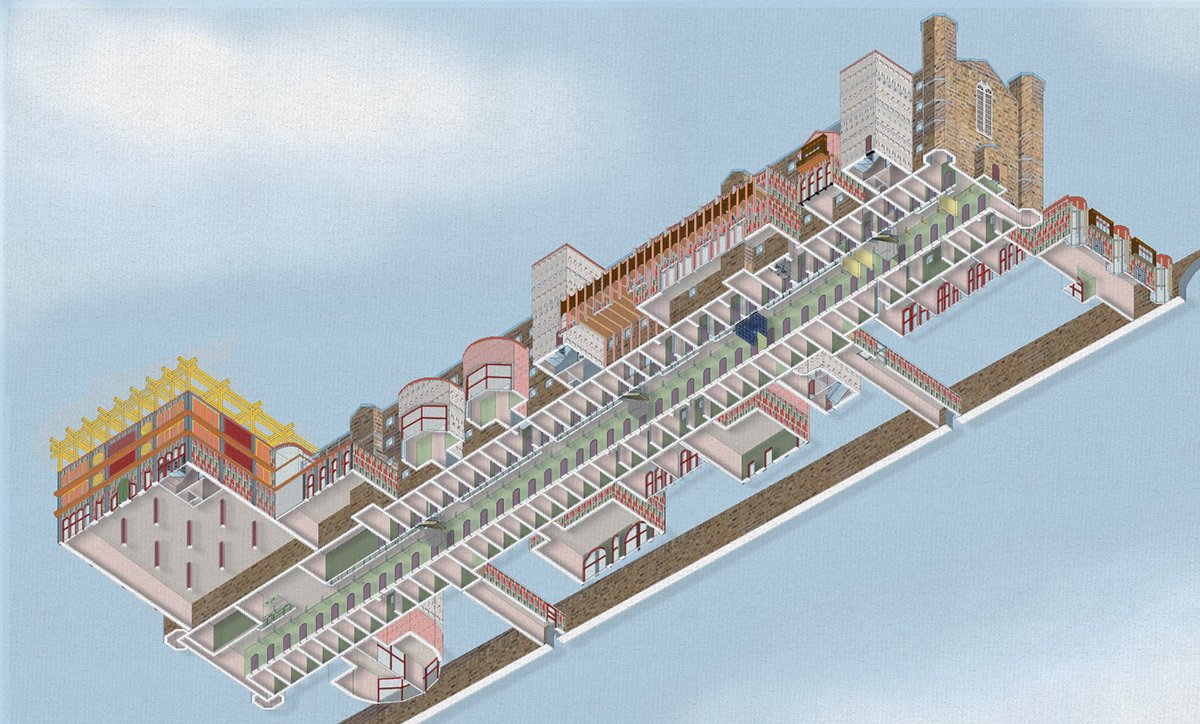
Site-Wide Proposed Axonometric In Partnership With Szofia Bohoszlovec & Radhika ChintaluriSite-Wide Proposed Masterplan In Partnership With Szofia Bohoszlovec & Radhika ChintaluriClose Up Of The Masterplan Looking Into The Different Programs That Are Taking Place In This New Public Luxury Place
At the centre of the proposal stands The Matrispital, a radical rethinking of healthcare spaces, directly confronting the persistence of medical misogyny. In a world where women still endure long waits for gynecological care and have their symptoms routinely dismissed, the Matrispital becomes a place of trust, respect, and support. It offers not only medical treatment but also collective healing, empowerment, and connection—a true sanctuary for women’s wellbeing.
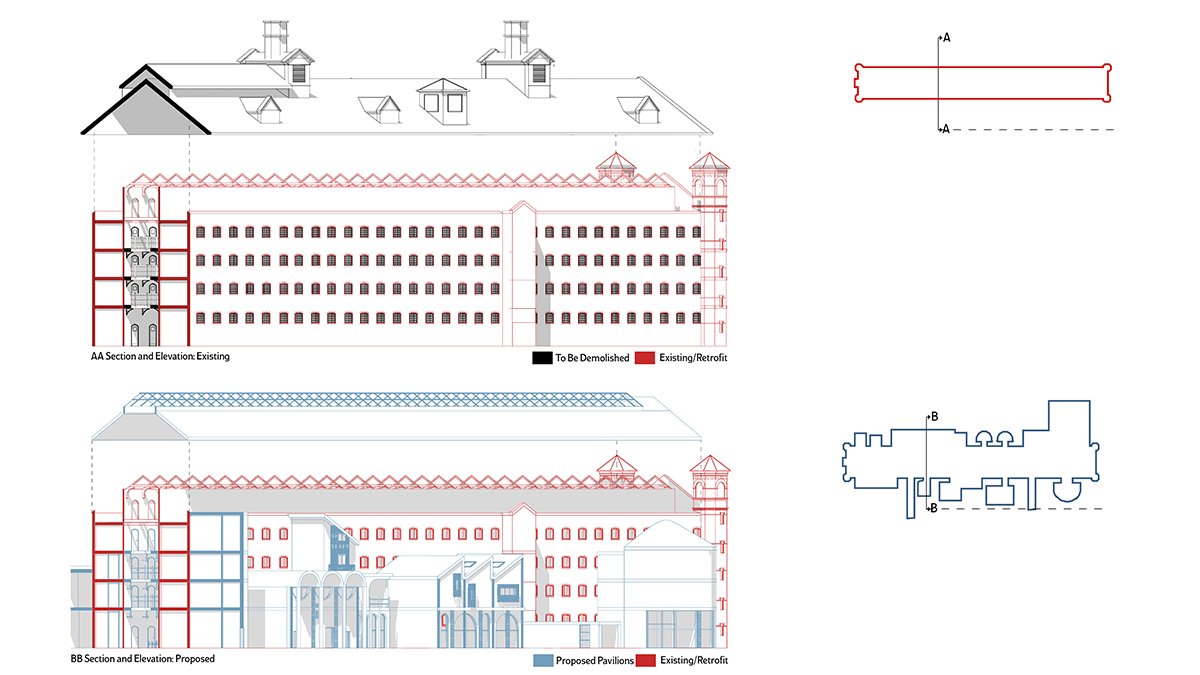
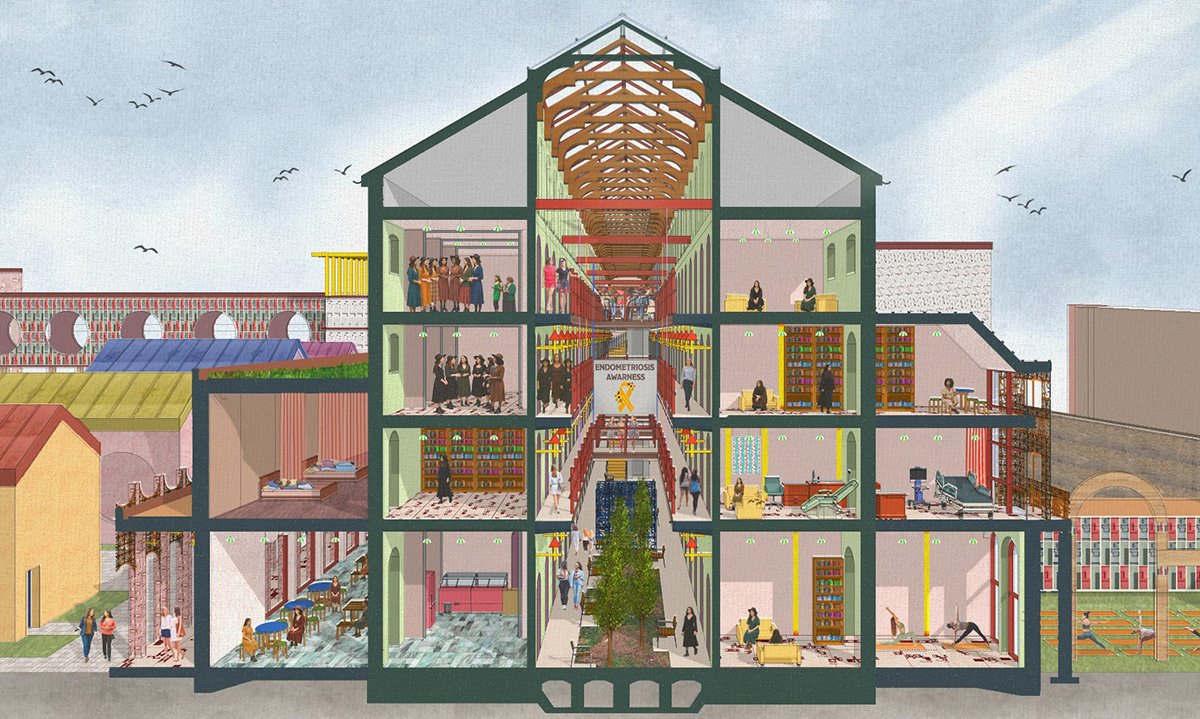
The New Matrispital And Its New Extensions As Shown In ElevationA Cut Through The Retrofitted Prison Block Where Revolutions And Protests In Women’s Health Are WelcomeExploded Axonometric & Technical Details
The Matrispital redefines healthcare as both a personal and communal experience. It balances private consultation rooms with shared spaces for collective healing, such as therapy suites and retreats focused on menopause and other key life stages. Set within a retrofitted Victorian prison block, the medical programme unfolds in reclaimed prison cells, transforming former sites of confinement into places of care, dignity, and liberation.
A Cut Through The Bottom of The MatrispitalClose Up To One Of The New Extensions Made Out Of Pigmented Blocks and Cemented Screens Inspired By Objects Made In StudioA Daytime Menopausal Retreat
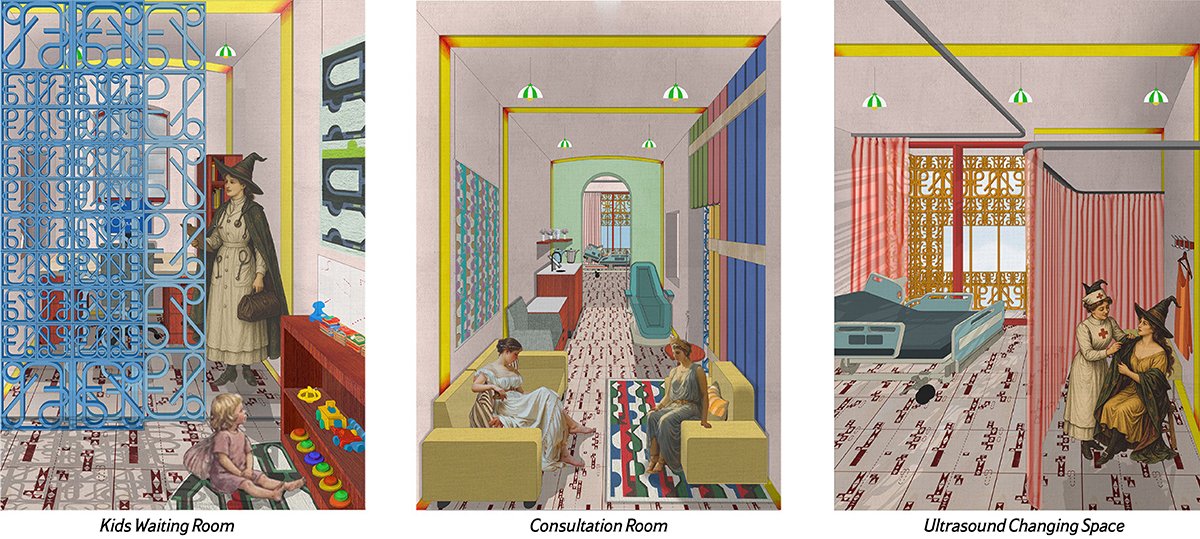
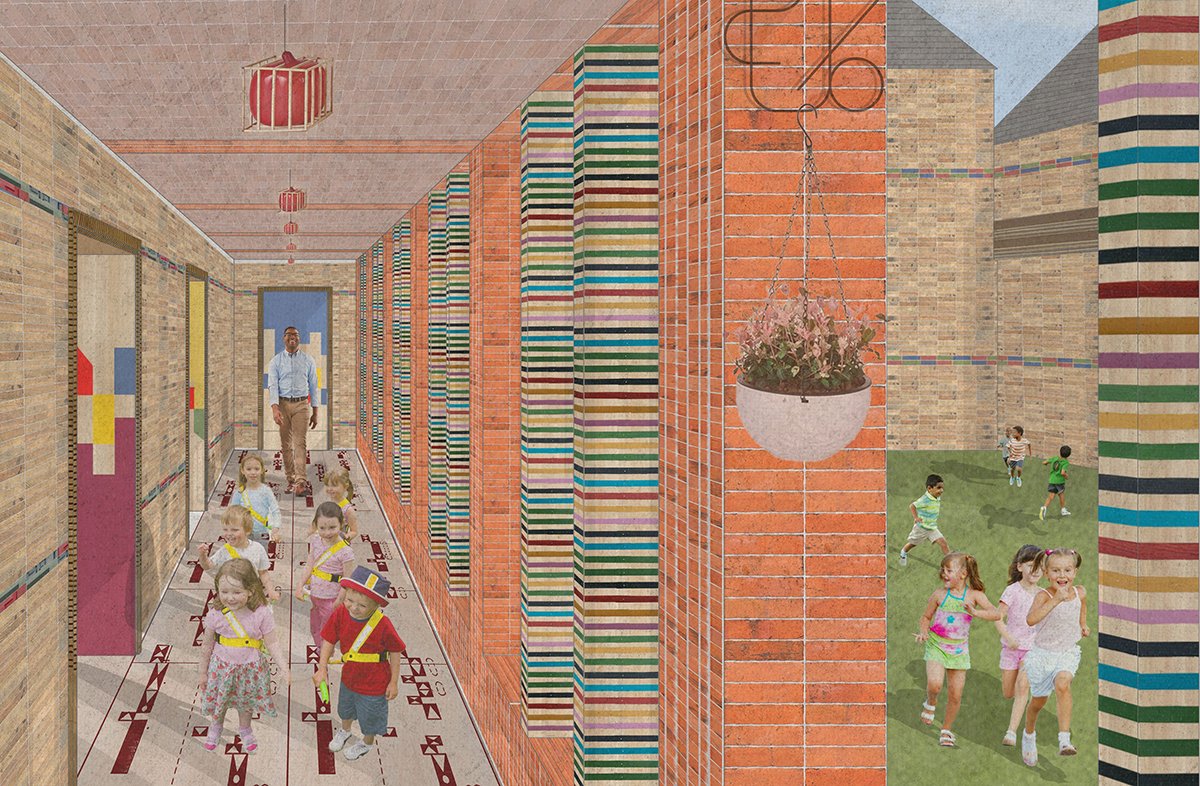
Breaking away from the slow, fragmented GP referral system, the Matrispital offers a seamless, holistic model where consultations, diagnostics, and treatment happen in a single visit. Every consultation room integrates a children’s play and waiting area, ensuring mothers can attend appointments without arranging separate childcare. A full nursery, located next door, allows visitors the freedom to explore the site’s wider facilities.
Witches Hold Menopausal Seances As A New Way Of Healing And Following The Moon Cycle For Hormonal BalancePrivate Consultation Rooms That Offer A Round Of Check-Ups, Such As Blood And Ultrasound Tests In One Visit.Construction Of This Proposal Starts In 2026 With Women And Witches Building Using The New Construction Materials
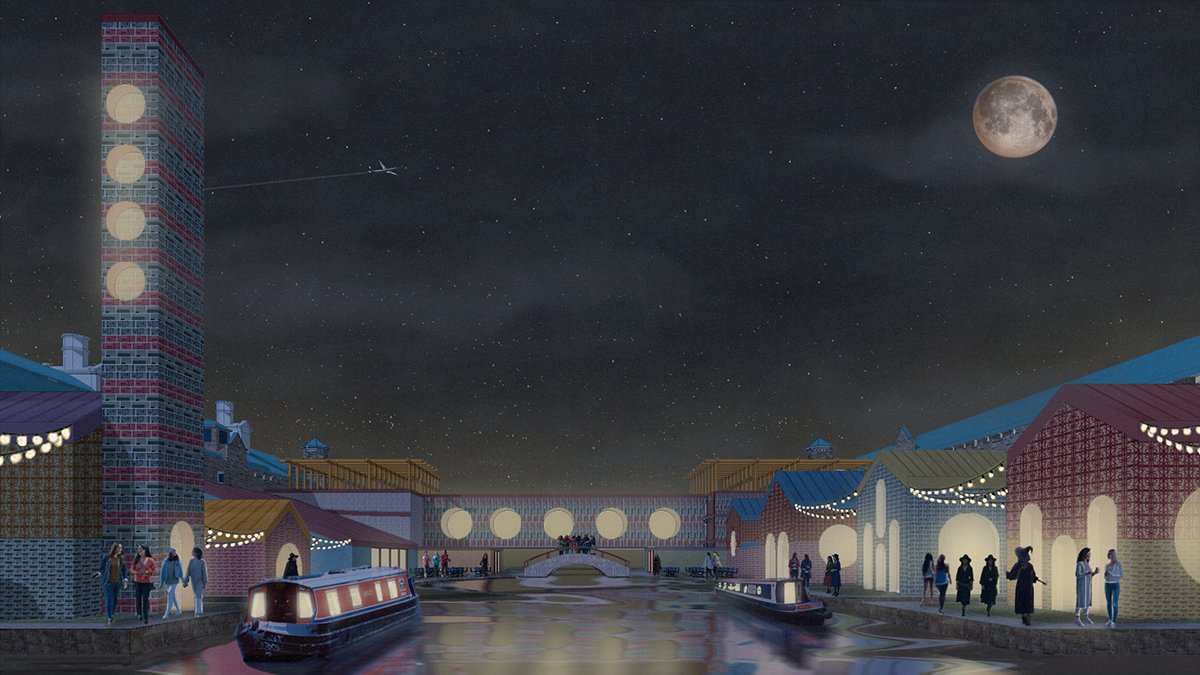
As part of the broader master plan, a food market lines a reintroduced canal that flows through the former prison grounds, reconnecting to the Grand Union Canal. This new waterway not only breathes life into the landscape but also provides a sustainable mode of transport, linking ecology, community, and daily life.
2032 Marks The Year Where Men Are More Welcomed To Come To The Site While Accompanied By Another Woman However, They Must Leave Before SunsetIn 2036 The Roles Are Reversed, And Men Work In The Caretaking Roles While Women Enjoy The Other Leisure Spots In The Site2040 Marks The Year Where Men Have Been Re-Educated In This New Society, So Wormwood Scrubs Is Open To Everyone As A New Safe Heaven
Conclusion: Ultimately, the project transforms Wormwood Scrubs from a place of confinement into a living symbol of renewal, care, and empowerment through the Matrispital and pavilions. The project reclaims prison architecture and ecological restoration, offering a future where care is a right, community is central, and women lead the way.
[This Academic Project has been published with text and images submitted by the student]
Site Context
Design Process
Final Outcome
To submit your academic project for publication at ArchiDiaries, please visit the following link >> Submit
Get the best of ArchiDiaries, directly in your inbox.
We use cookies on our website to give you the most relevant experience by remembering your preferences and repeat visits. By clicking “Accept All”, you consent to the use of ALL the cookies. However, you may visit "Cookie Settings" to provide a controlled consent.
This website uses cookies to improve your experience while you navigate through the website. Out of these, the cookies that are categorized as necessary are stored on your browser as they are essential for the working of basic functionalities of the website. We also use third-party cookies that help us analyze and understand how you use this website. These cookies will be stored in your browser only with your consent. You also have the option to opt-out of these cookies. But opting out of some of these cookies may affect your browsing experience.
Necessary cookies are absolutely essential for the website to function properly. These cookies ensure basic functionalities and security features of the website, anonymously.
Cookie
Duration
Description
cookielawinfo-checkbox-analytics
11 months
This cookie is set by GDPR Cookie Consent plugin. The cookie is used to store the user consent for the cookies in the category "Analytics".
cookielawinfo-checkbox-functional
11 months
The cookie is set by GDPR cookie consent to record the user consent for the cookies in the category "Functional".
cookielawinfo-checkbox-necessary
11 months
This cookie is set by GDPR Cookie Consent plugin. The cookies is used to store the user consent for the cookies in the category "Necessary".
cookielawinfo-checkbox-others
11 months
This cookie is set by GDPR Cookie Consent plugin. The cookie is used to store the user consent for the cookies in the category "Other.
cookielawinfo-checkbox-performance
11 months
This cookie is set by GDPR Cookie Consent plugin. The cookie is used to store the user consent for the cookies in the category "Performance".
viewed_cookie_policy
11 months
The cookie is set by the GDPR Cookie Consent plugin and is used to store whether or not user has consented to the use of cookies. It does not store any personal data.
Functional cookies help to perform certain functionalities like sharing the content of the website on social media platforms, collect feedbacks, and other third-party features.
Performance cookies are used to understand and analyze the key performance indexes of the website which helps in delivering a better user experience for the visitors.
Analytical cookies are used to understand how visitors interact with the website. These cookies help provide information on metrics the number of visitors, bounce rate, traffic source, etc.
Advertisement cookies are used to provide visitors with relevant ads and marketing campaigns. These cookies track visitors across websites and collect information to provide customized ads.