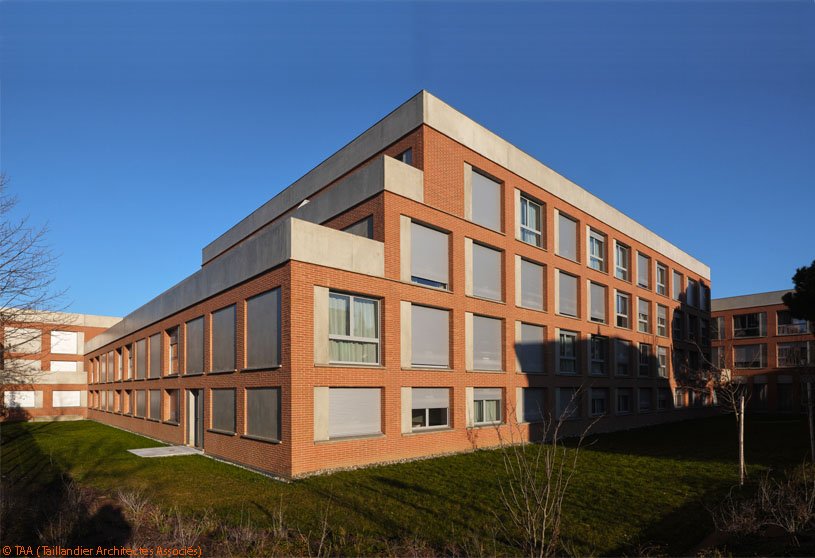
Excerpt: Résidence Aristote by TAA (Taillandier Architectes Associés) is designed to integrate harmoniously with its urban and residential context while fostering ecological continuity. Its restrained volumes and rhythmic façades use brick cladding, concrete, and aluminum joinery to create unity and natural light-filled interiors. Green roofs, planted terraces, and open-ground landscapes enhance biodiversity, while bioclimatic strategies ensure comfort.
Project Description
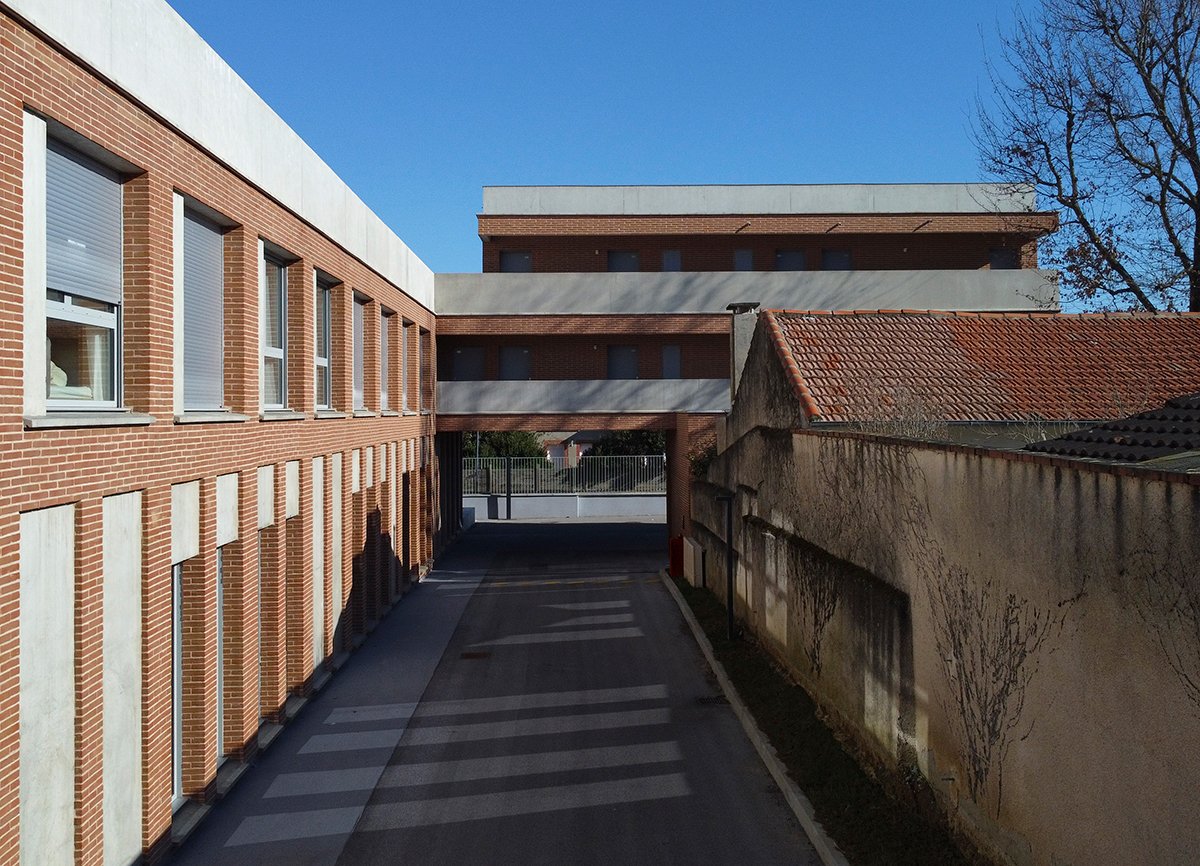
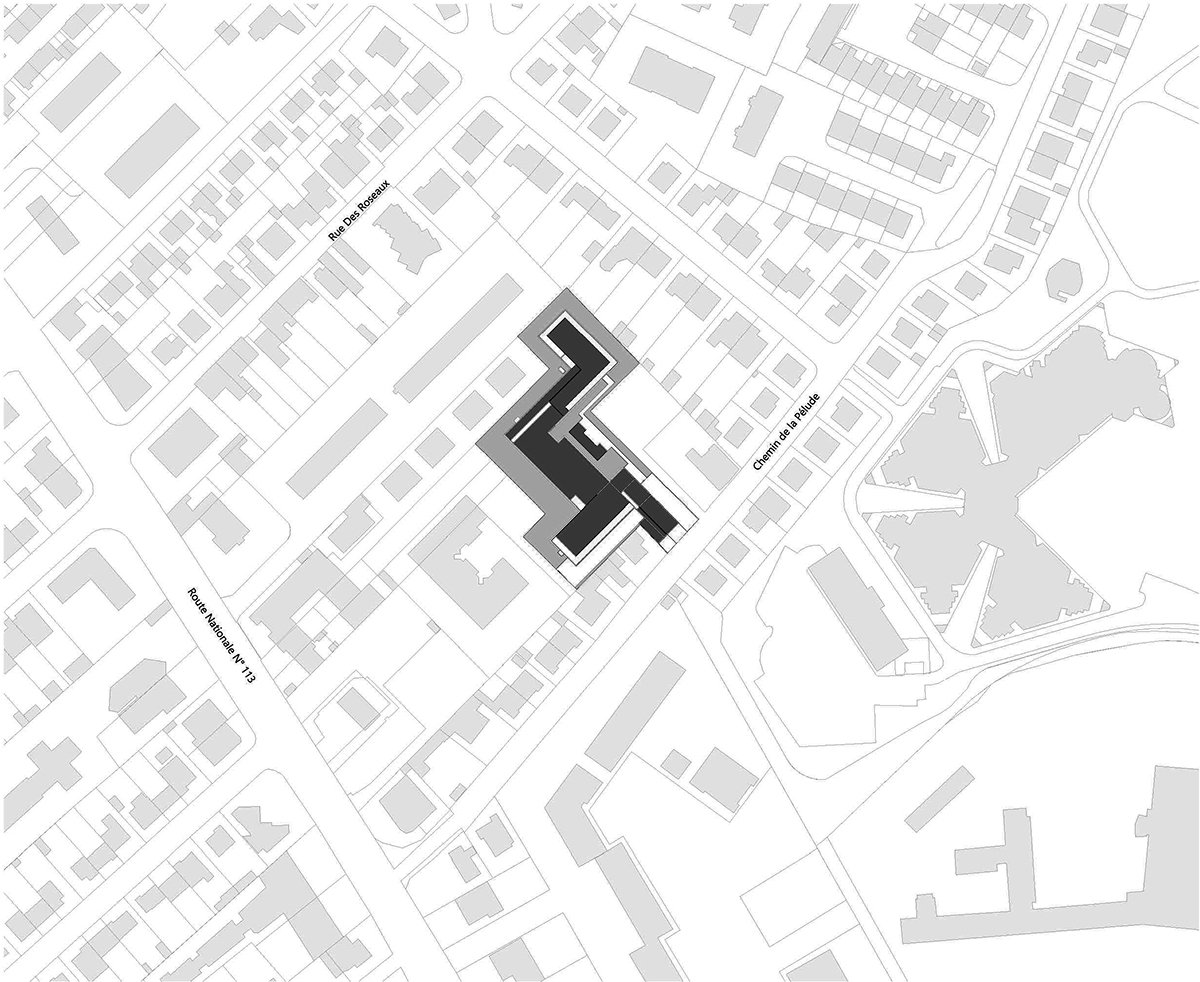
[Text as submitted by architect] The project is located in the municipality of Toulouse. It is south of the city center, near the A620 motorway and not far from the Paul Sabatier university complex. Thus, the Faculty of Pharmaceutical Sciences and the “Faculty of Pharmacy – Line B” metro stop are located in the immediate vicinity, to the east of the plot. To the southwest, the Route de Narbonne – D113 main road provides access to the motorway and the city center of Toulouse. The latter is served by several public transport (bus) stops, including the “IUT” and “Caubère” stops.
The site consisted of an office building scheduled for demolition, with levels ranging from R+1 to R+4. There is also a ground-floor dwelling slated for demolition to create a longer urban development along Chemin de la Pélude. Part of the site consisted of a service road for the neighboring apartment building, which was to be preserved and redeveloped. The remaining surface area is composed of impermeable soil used for a parking lot. Since this is associated with the current offices, it has been removed. There were no notable plant features due to the low permeability of the site, which is mostly covered with asphalt.
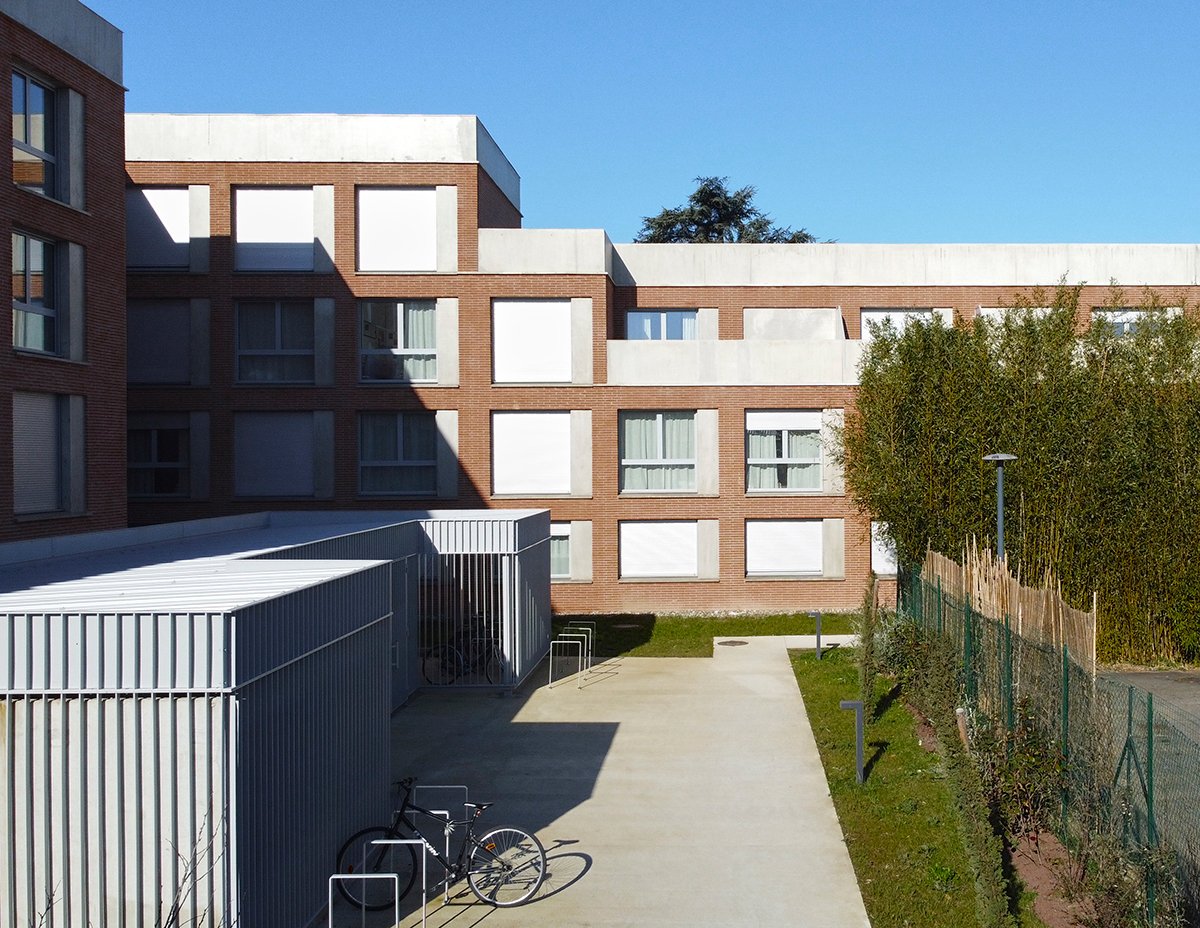
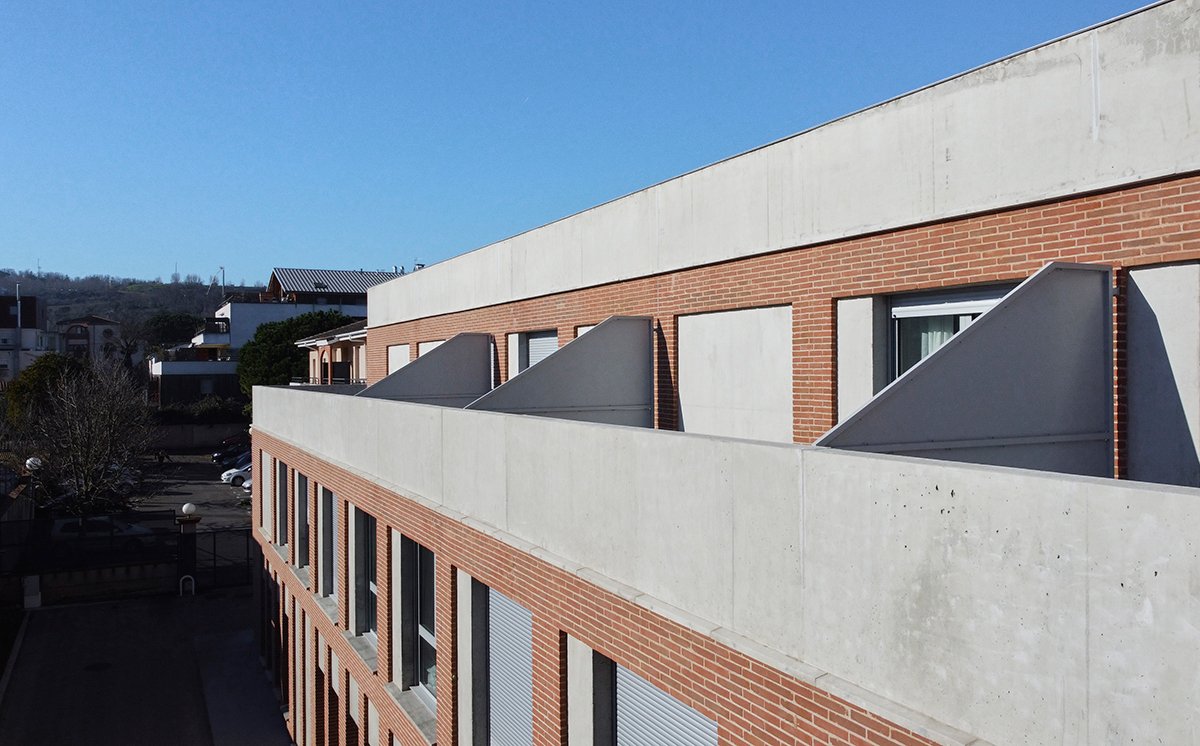
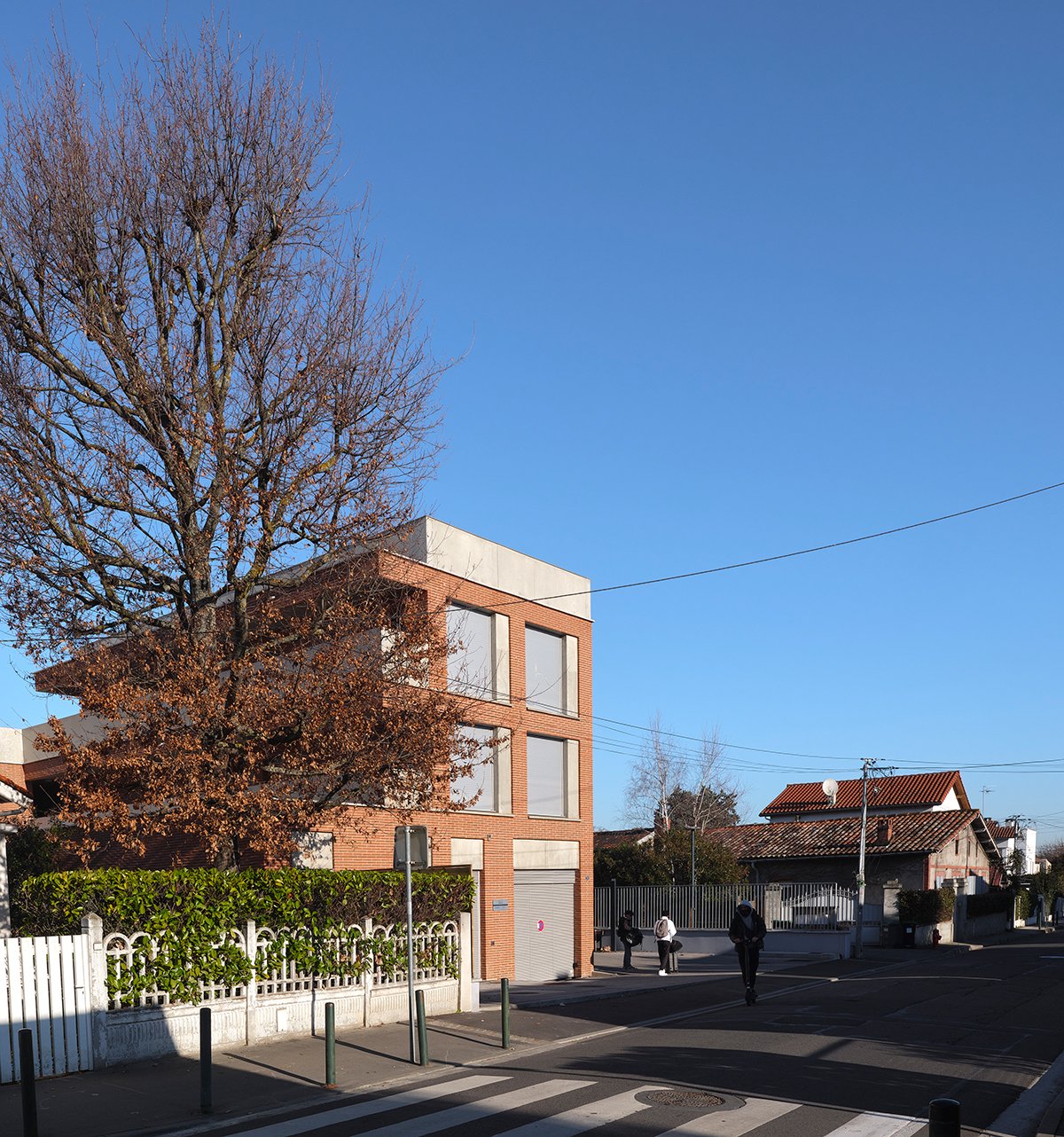
Location, organization and volume of constructions: The project aims to extend the building from the public domain to the back of the plot, taking into account the regulations and prospects governing the site. Thus, a street-facing section is created to consolidate the existing building frontage on Chemin de la Pélude. This section is developed in two-story and two-story levels to fit into an overall structure, in the middle of the existing residential line:
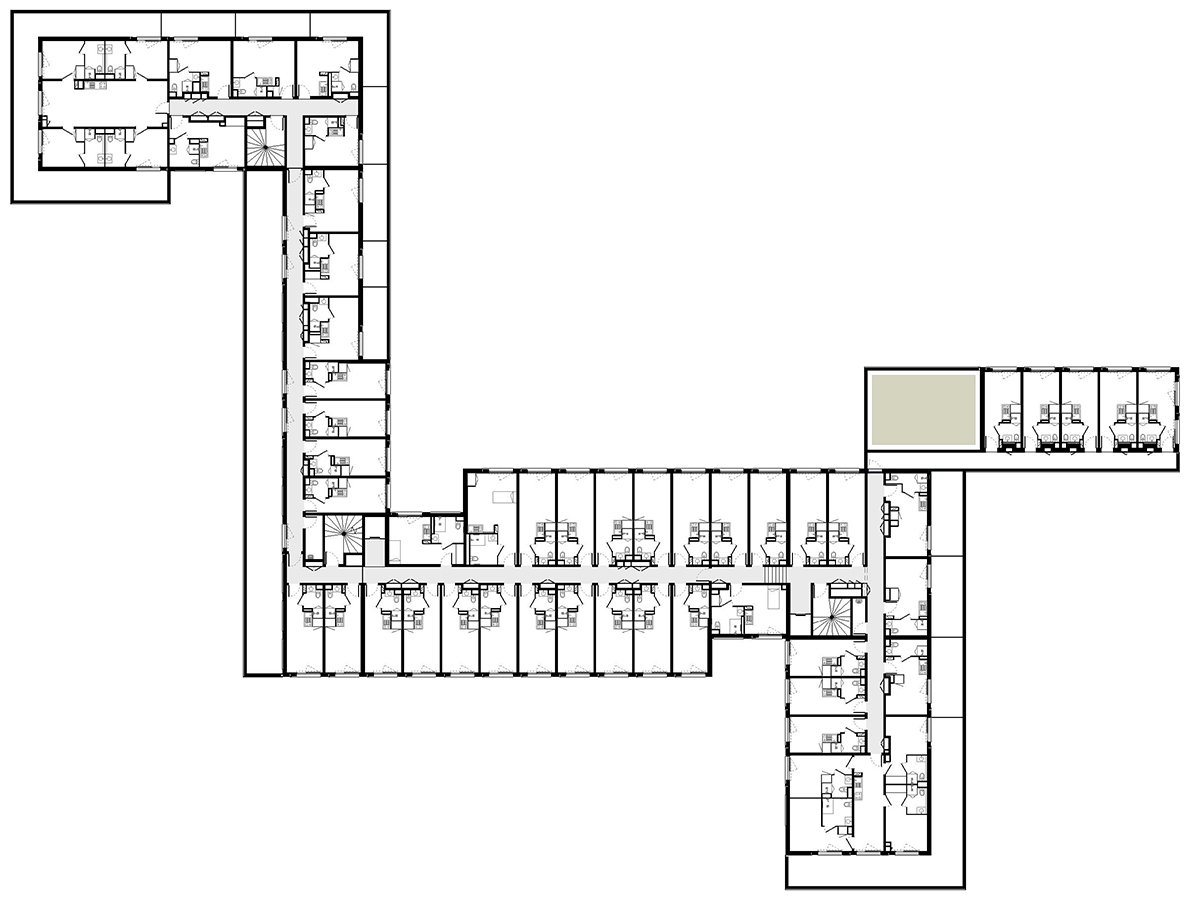
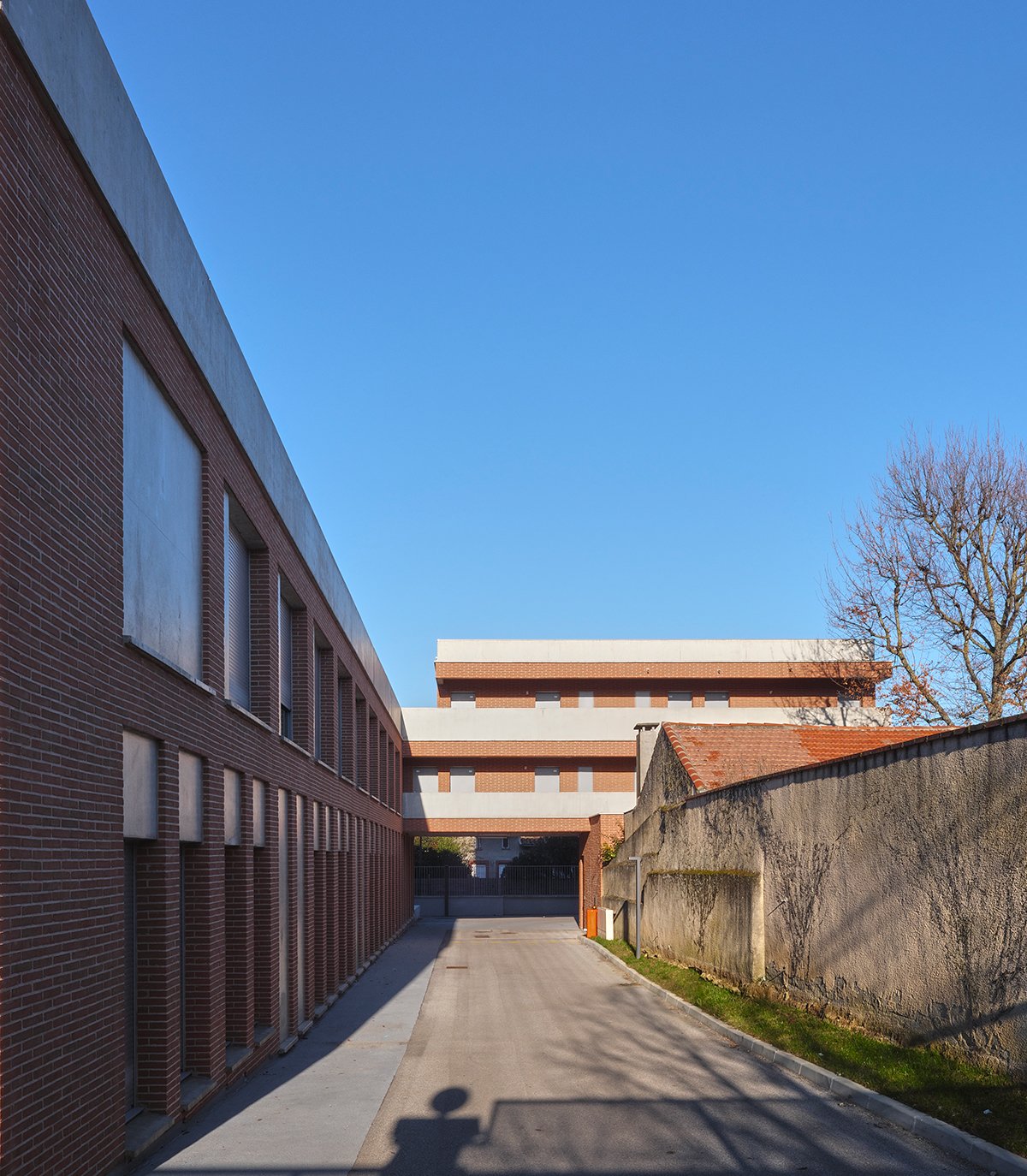
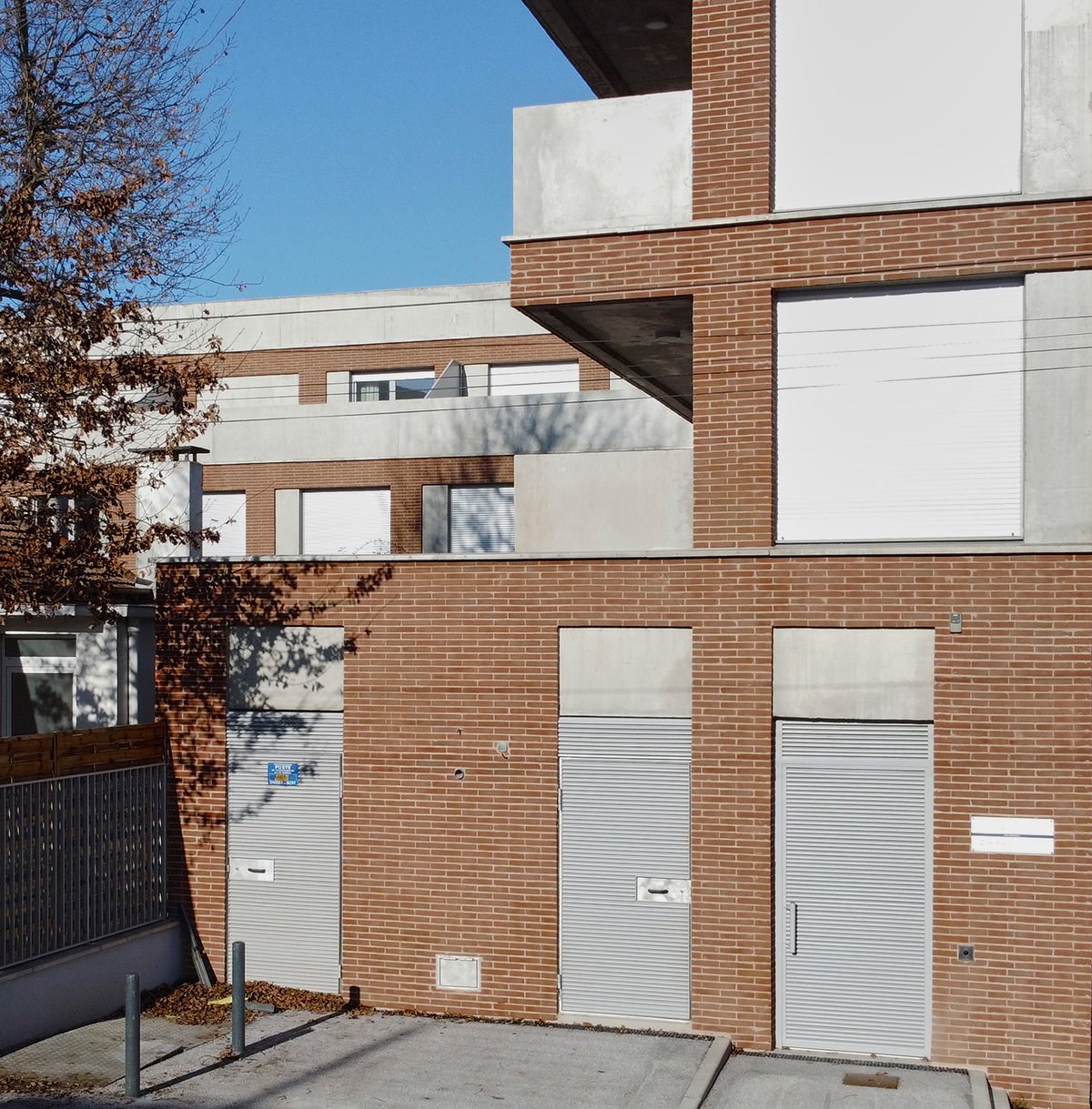
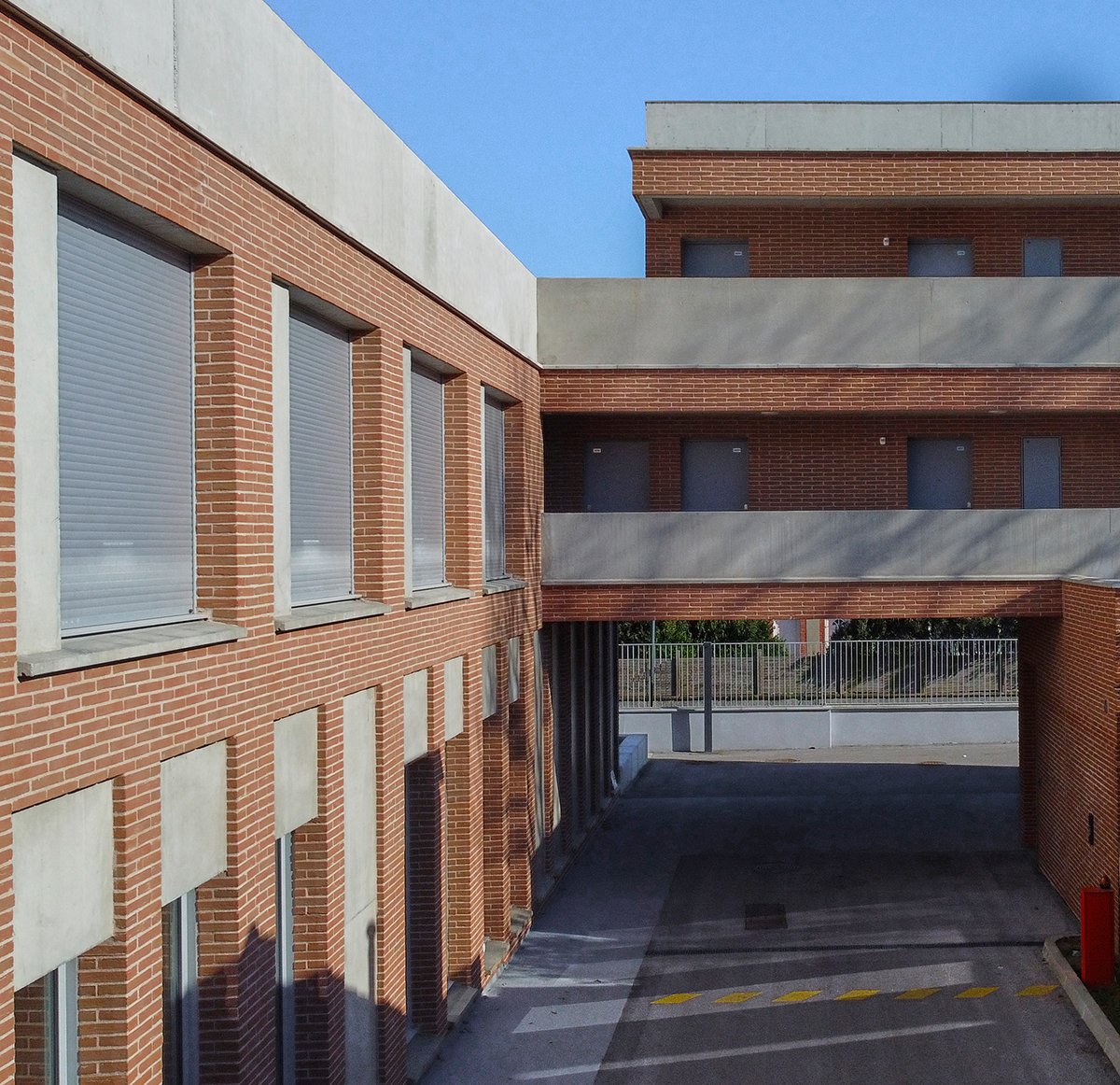
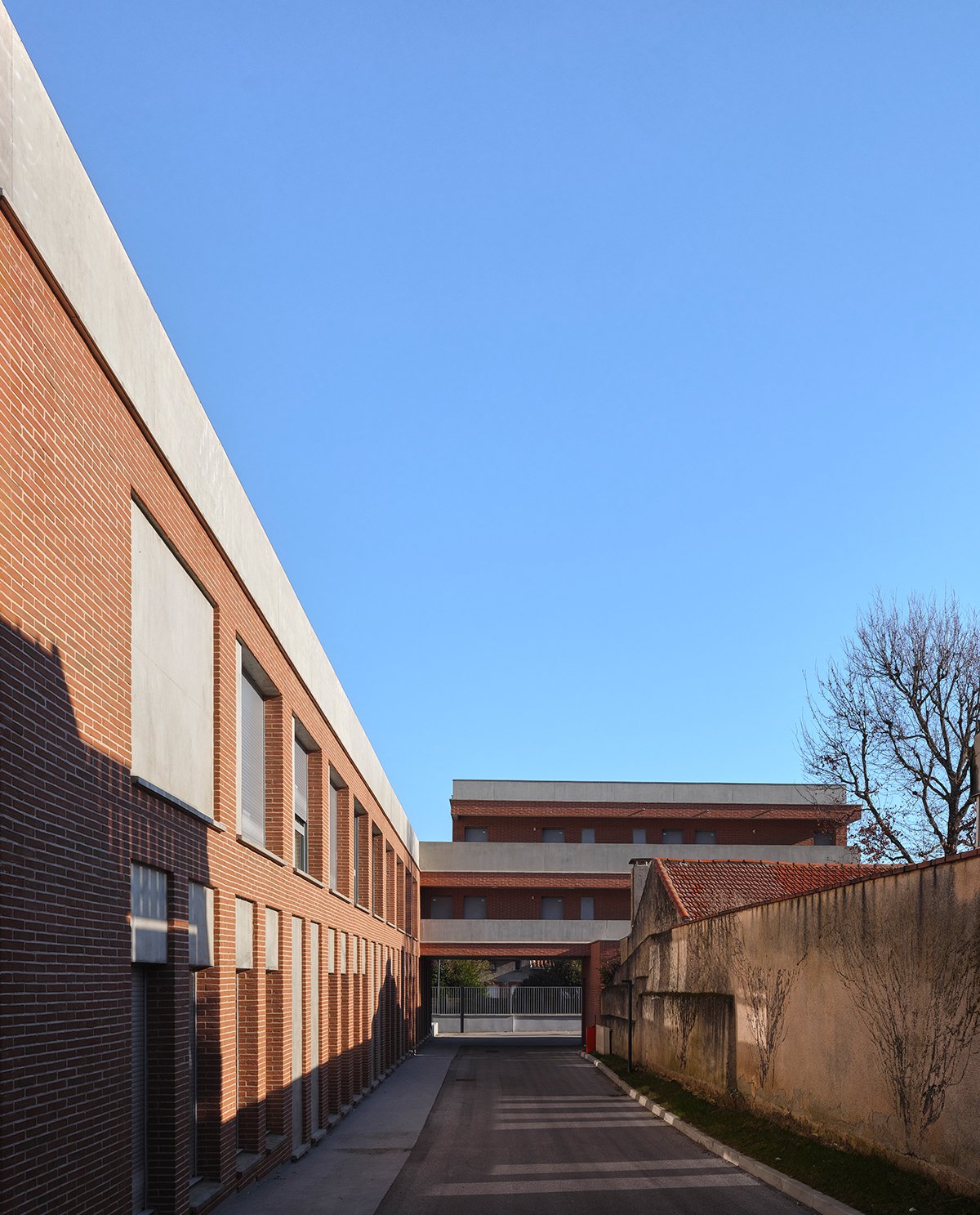
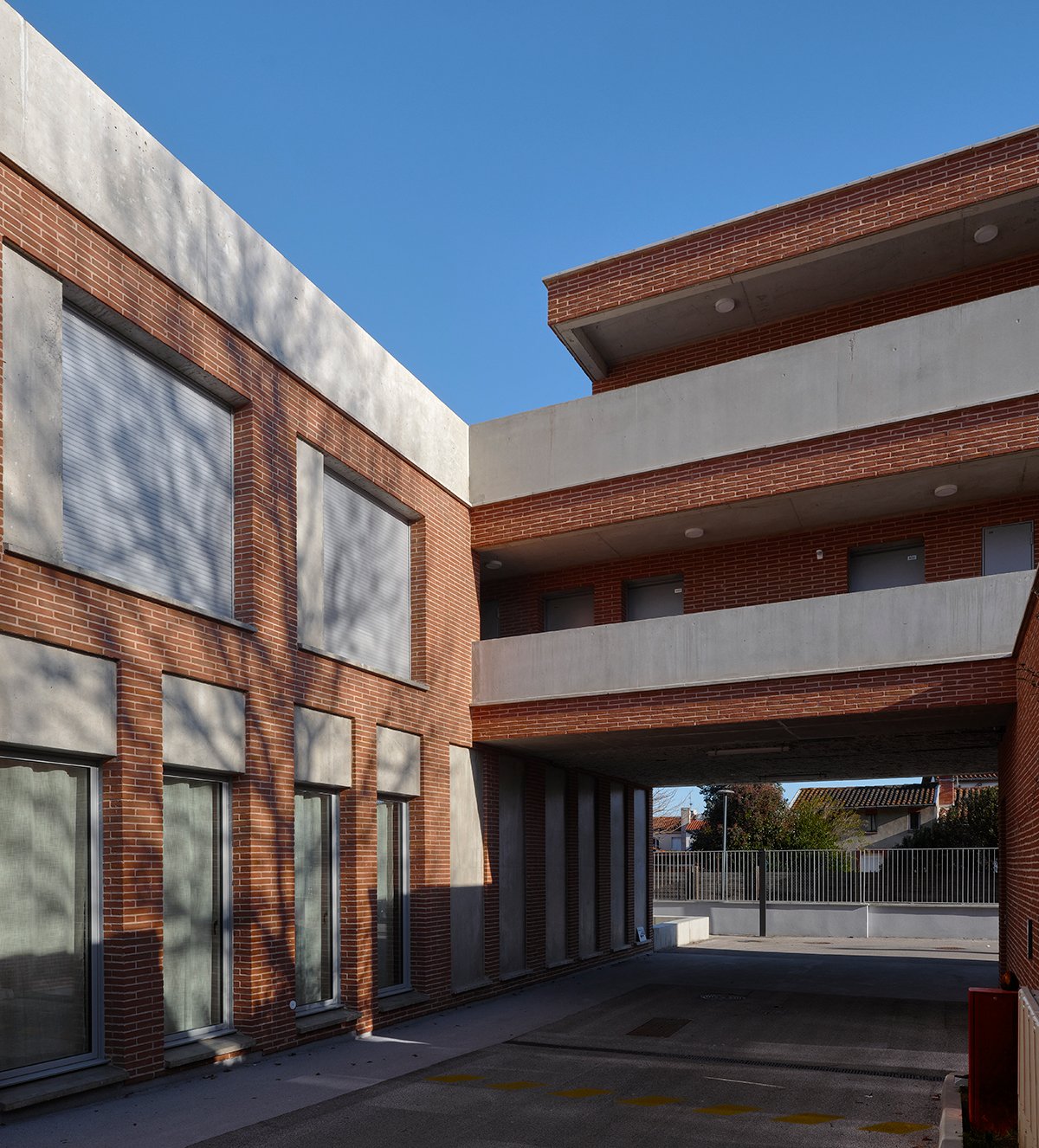
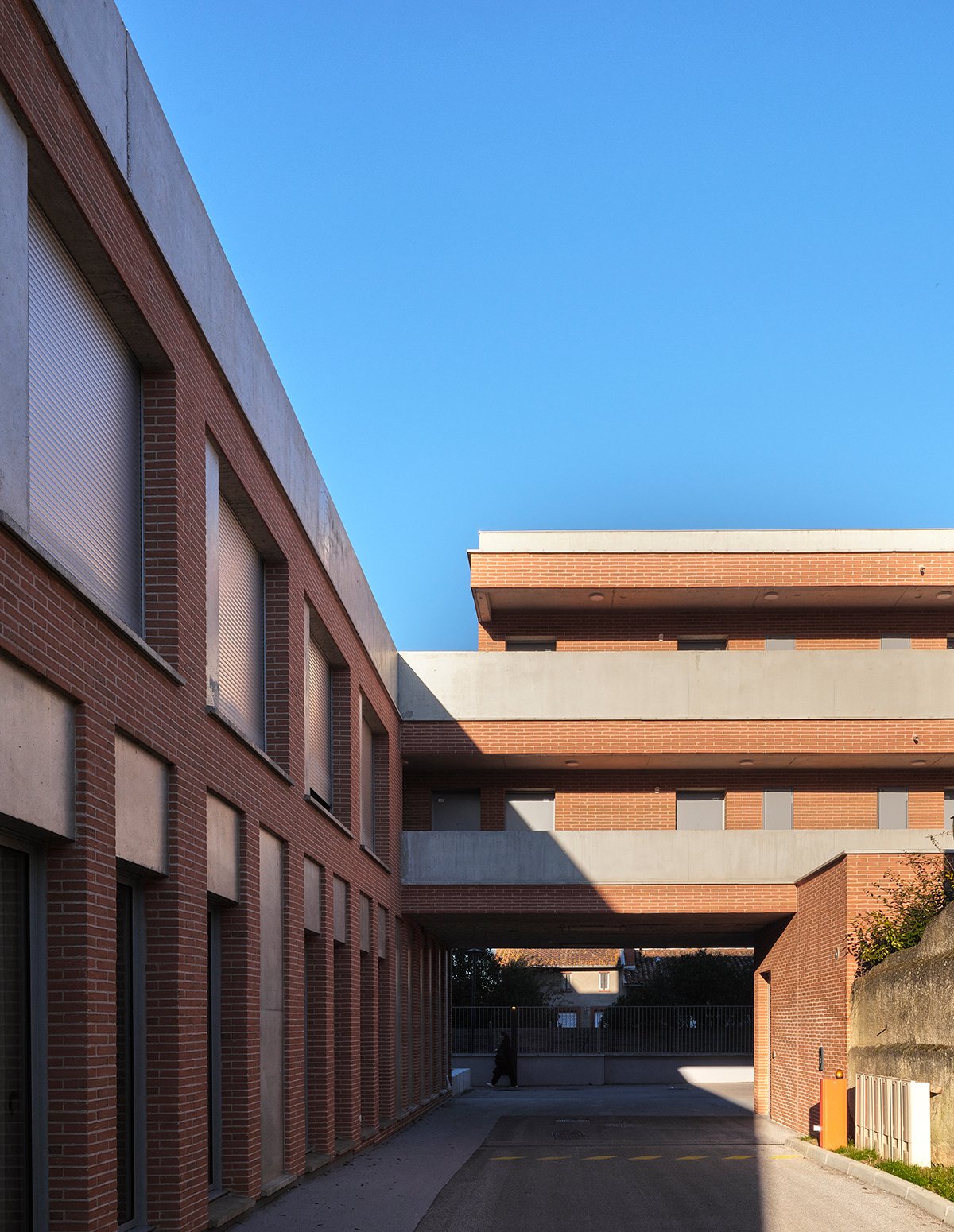
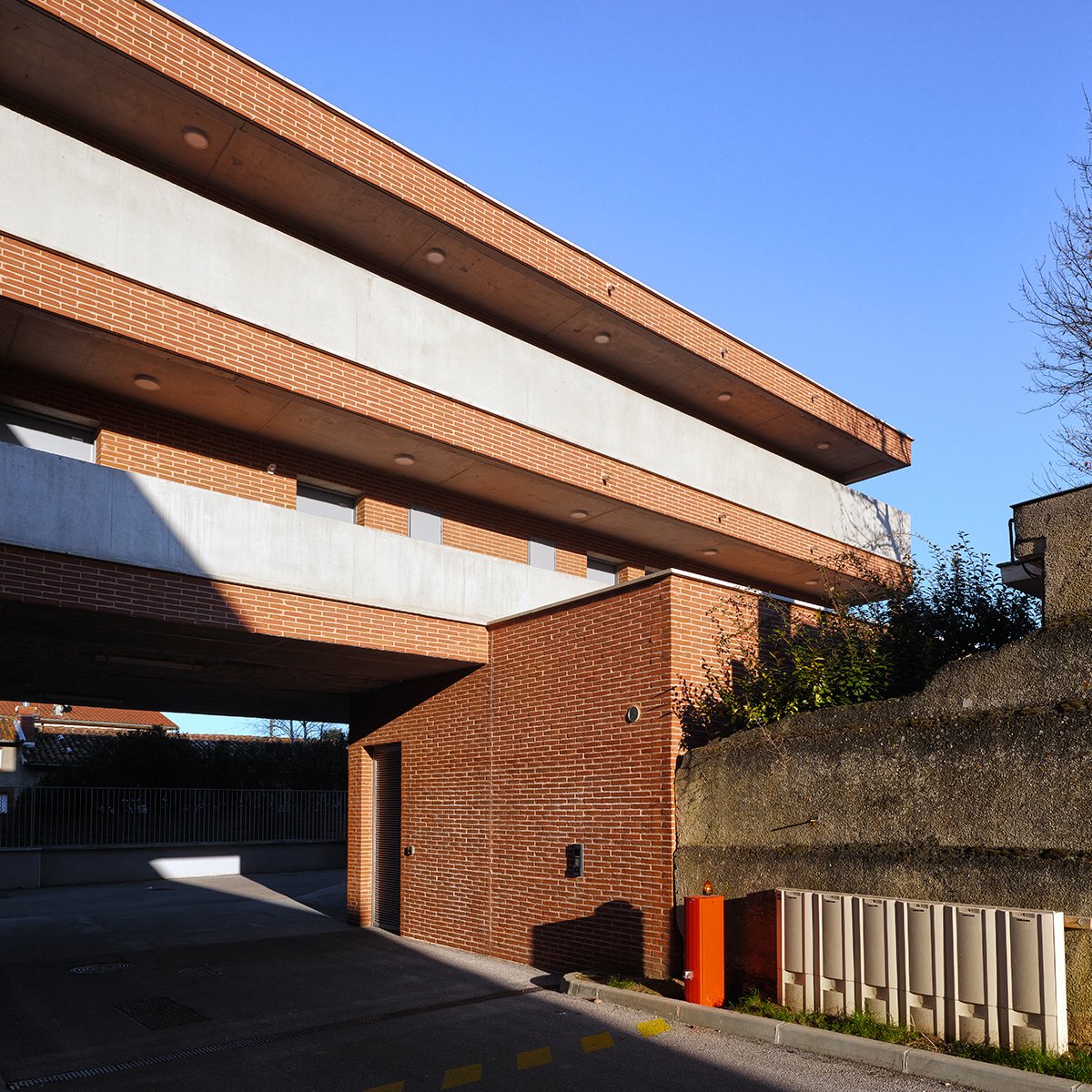
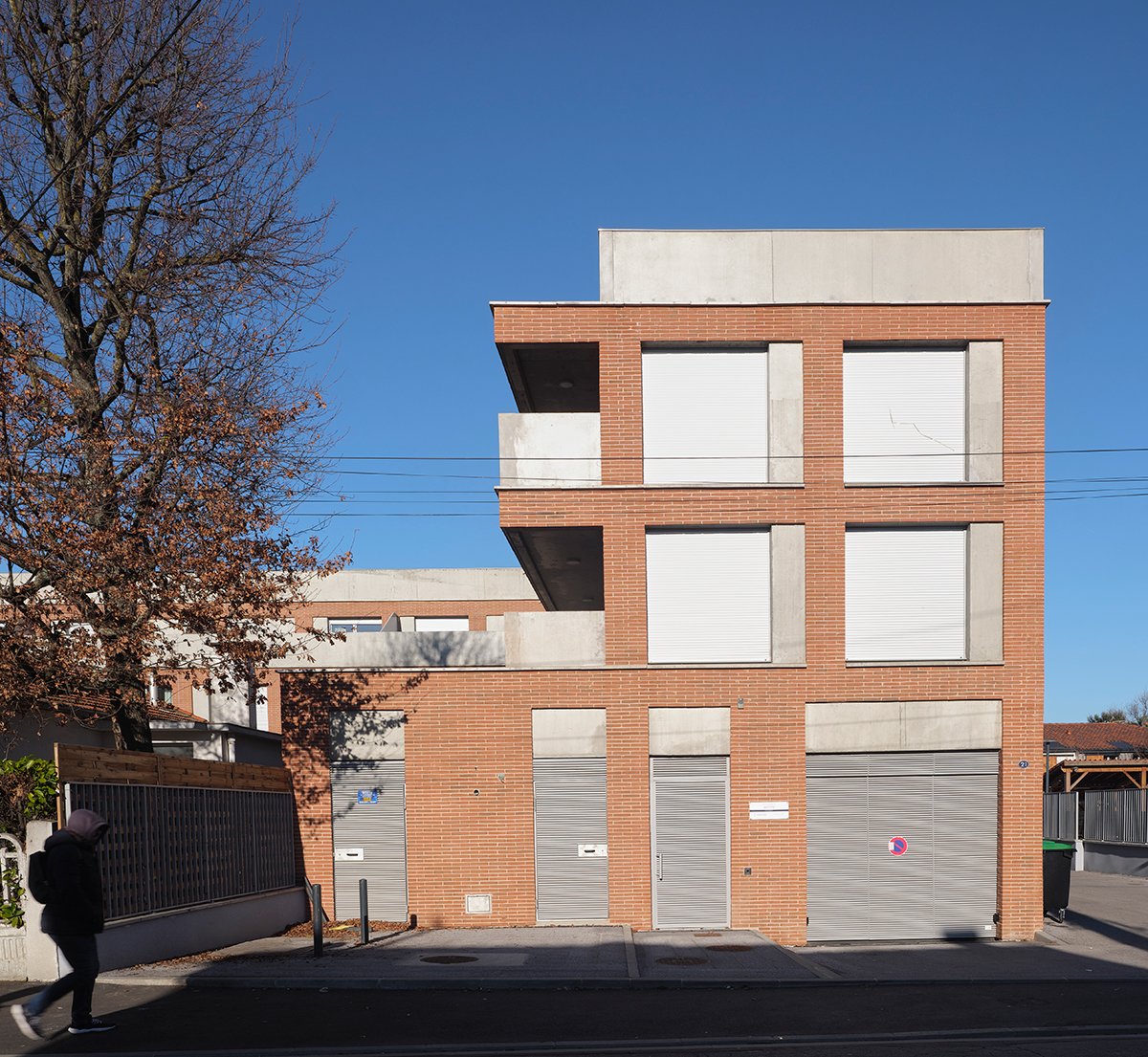
We specifically worked on the building’s connection to Chemin de la Pélude to create a seamless connection with the surrounding buildings and not to block out the neighbors. We located the technical and service areas on the ground floor: basement access ramp, household waste disposal area, and transformer room. A passageway is also planned under this first wing serving neighboring housing. The other floors include staff accommodation and student housing.
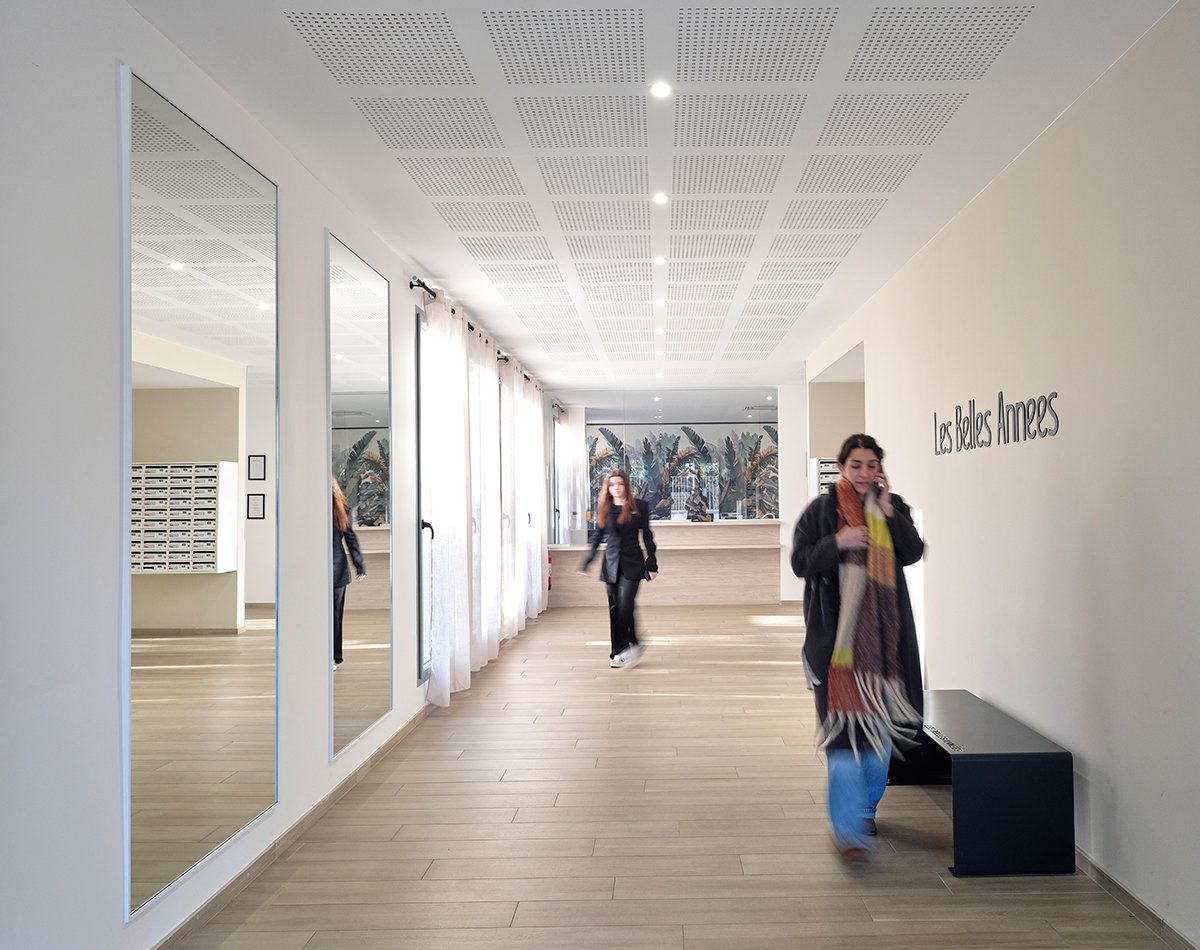
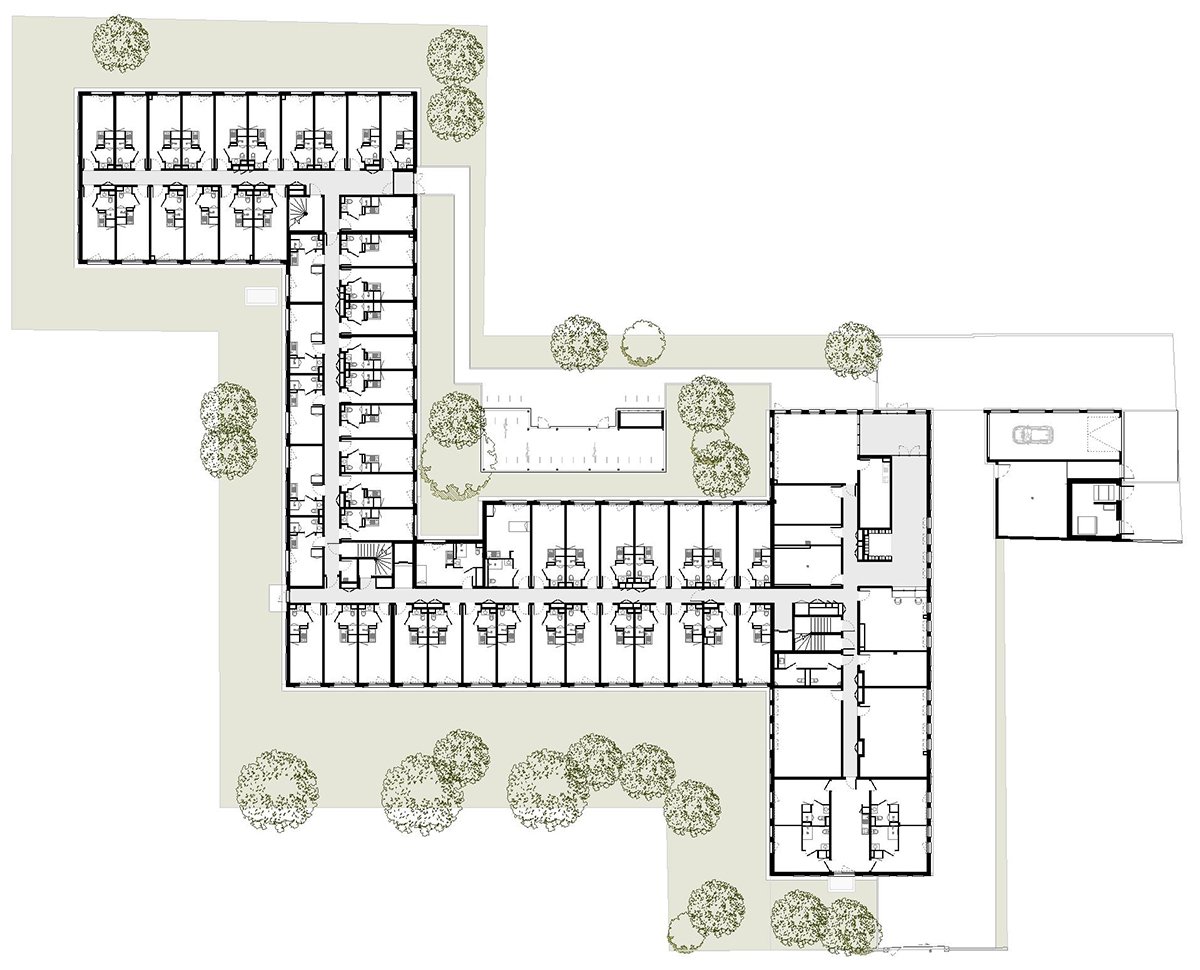
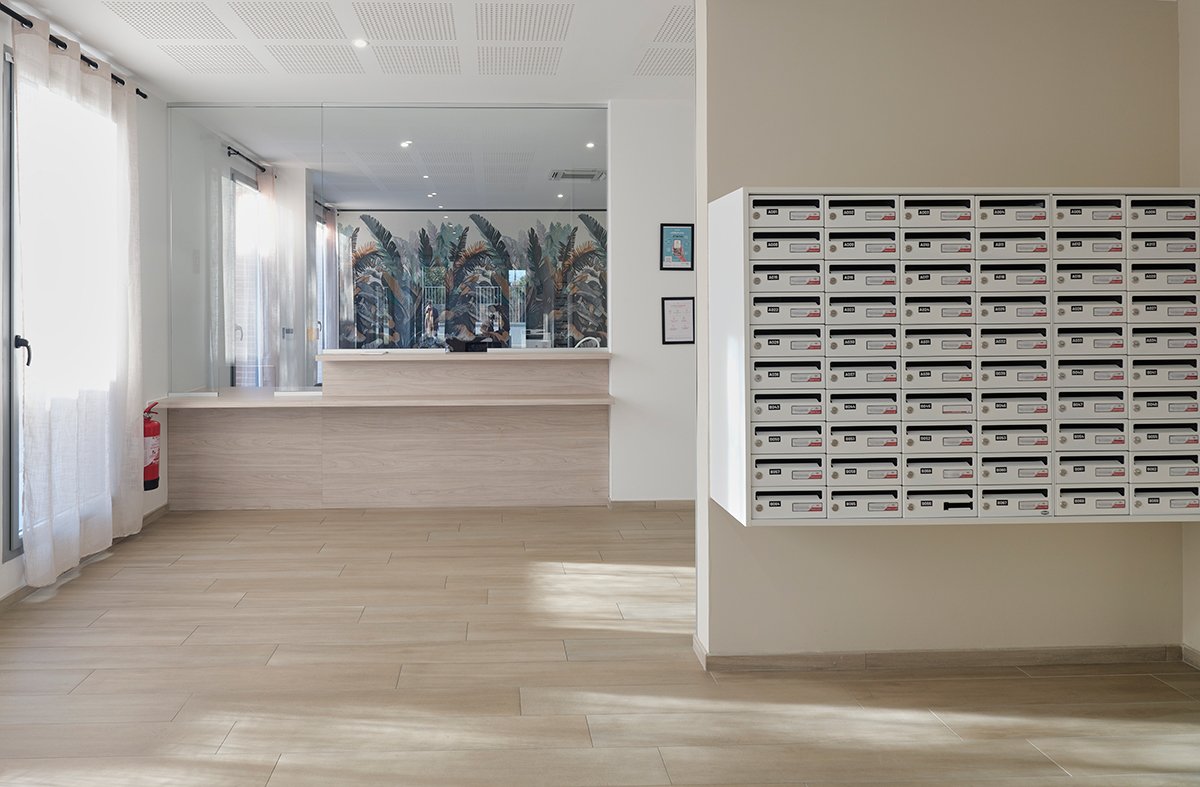
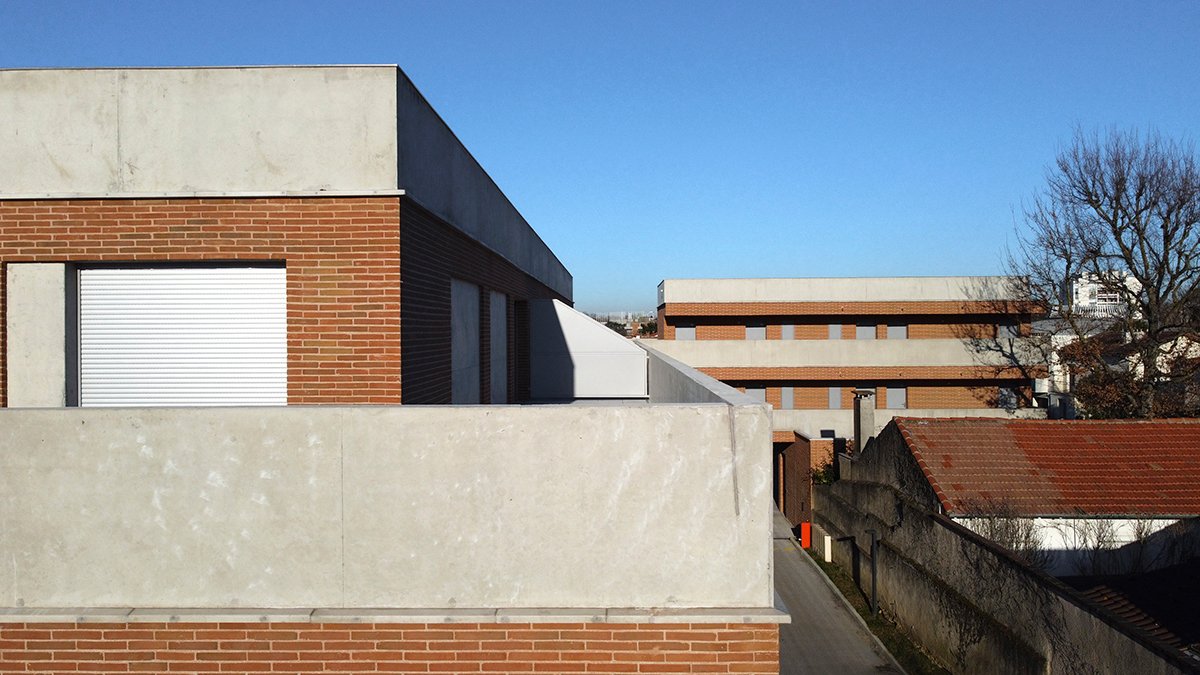
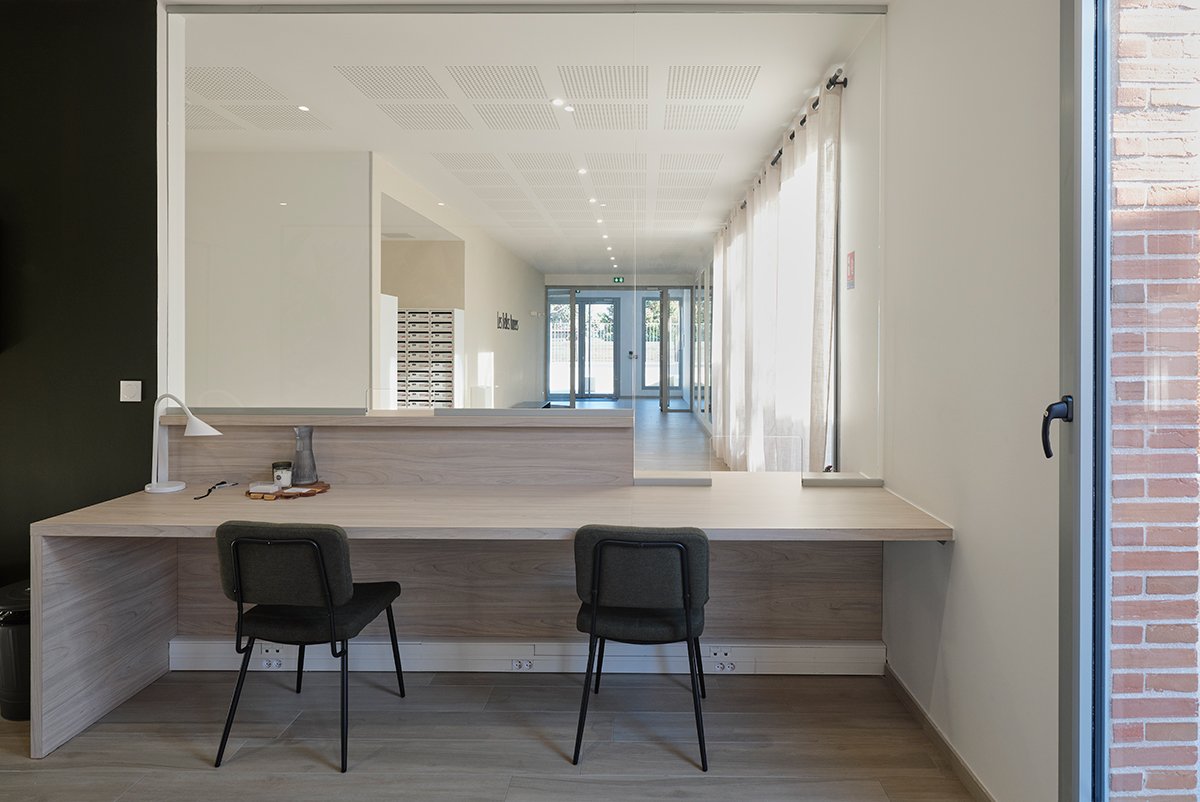
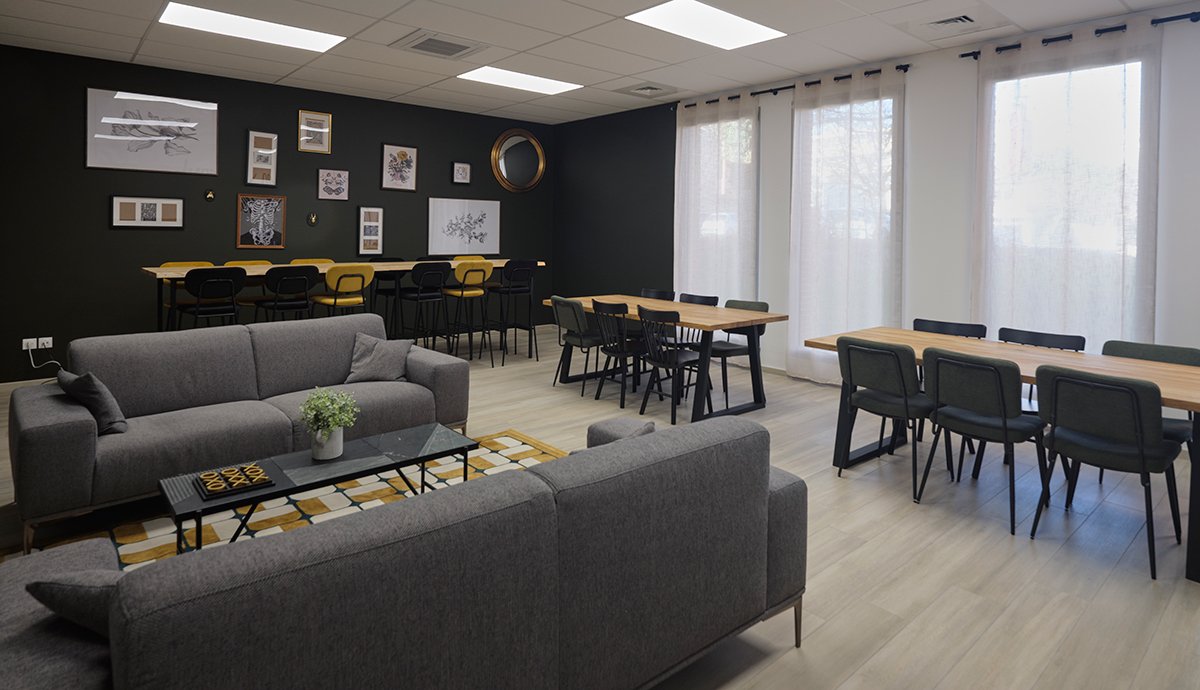
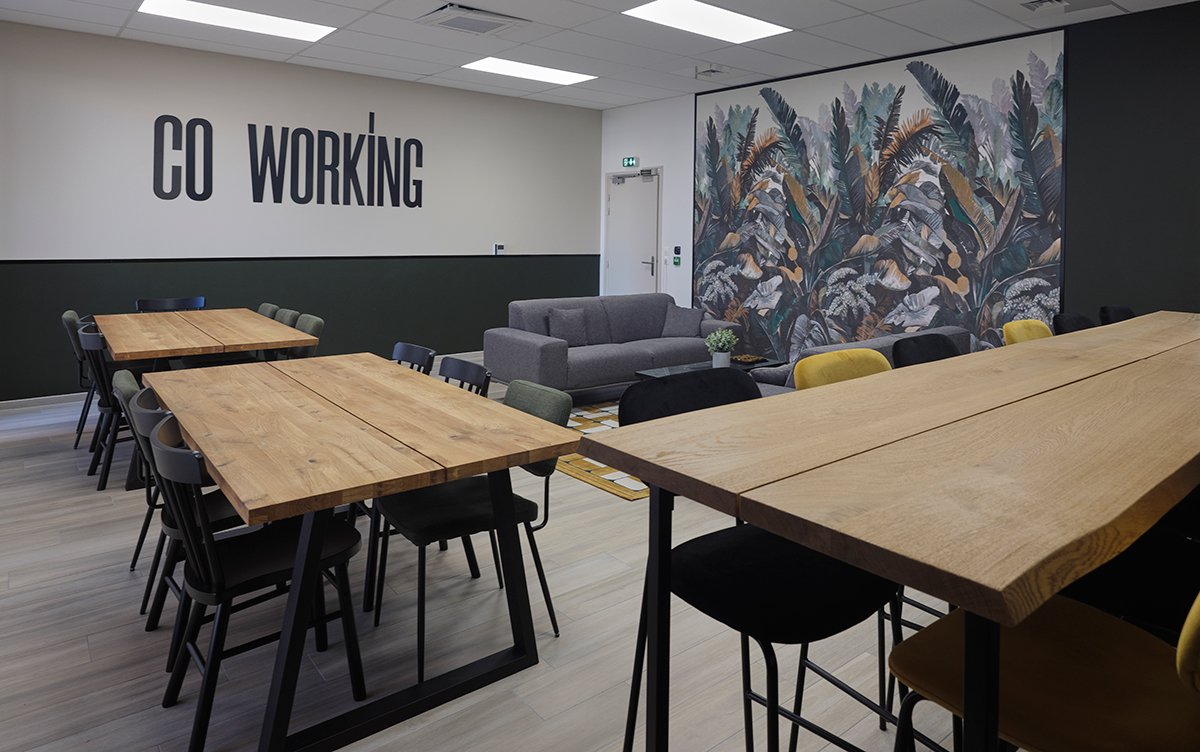
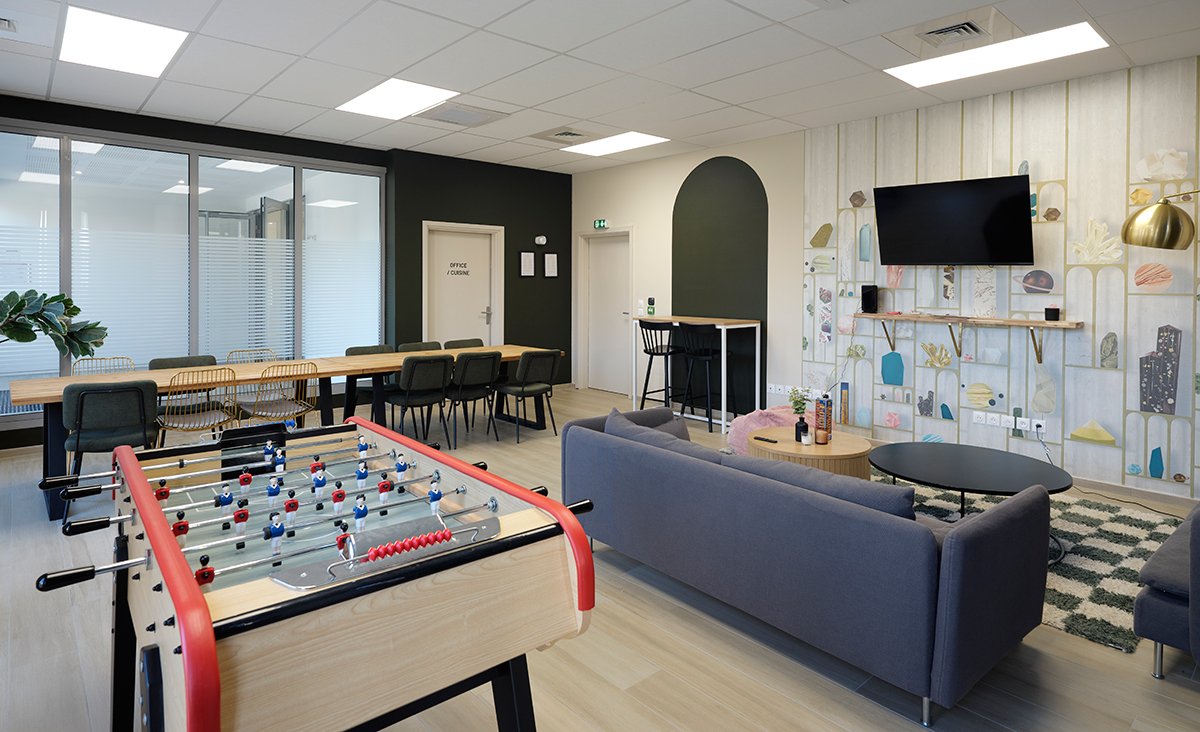
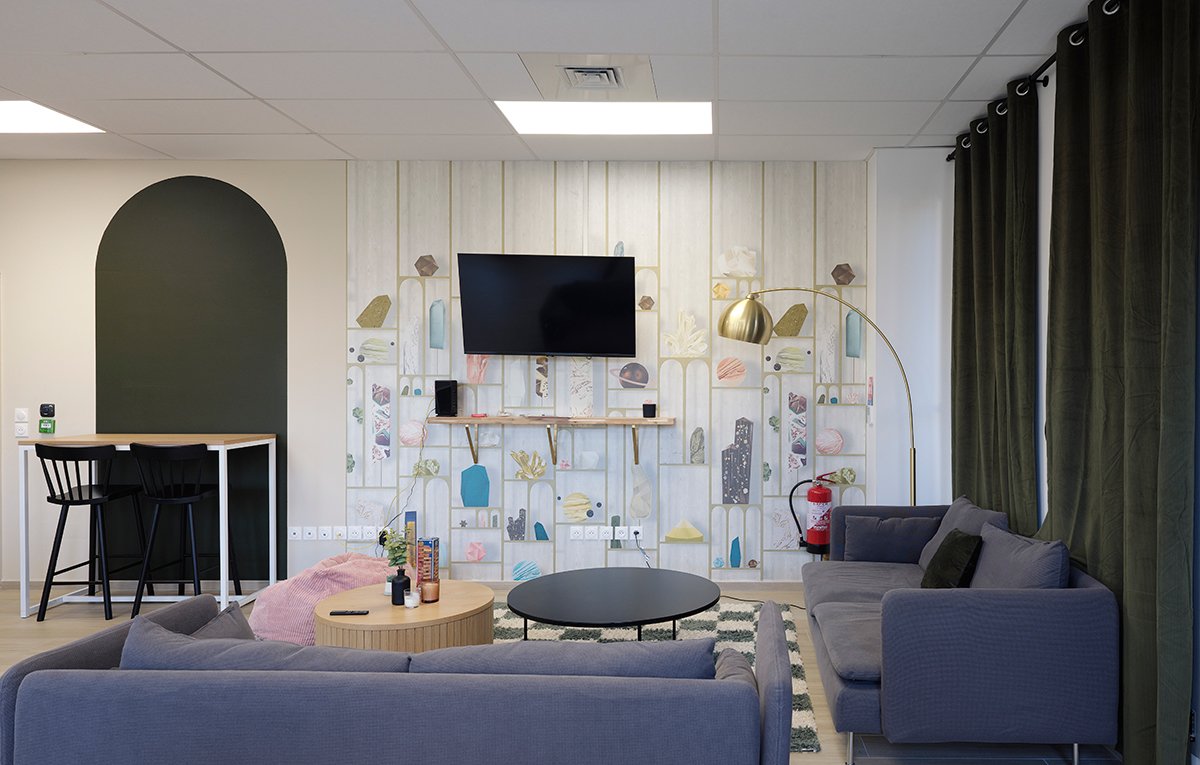
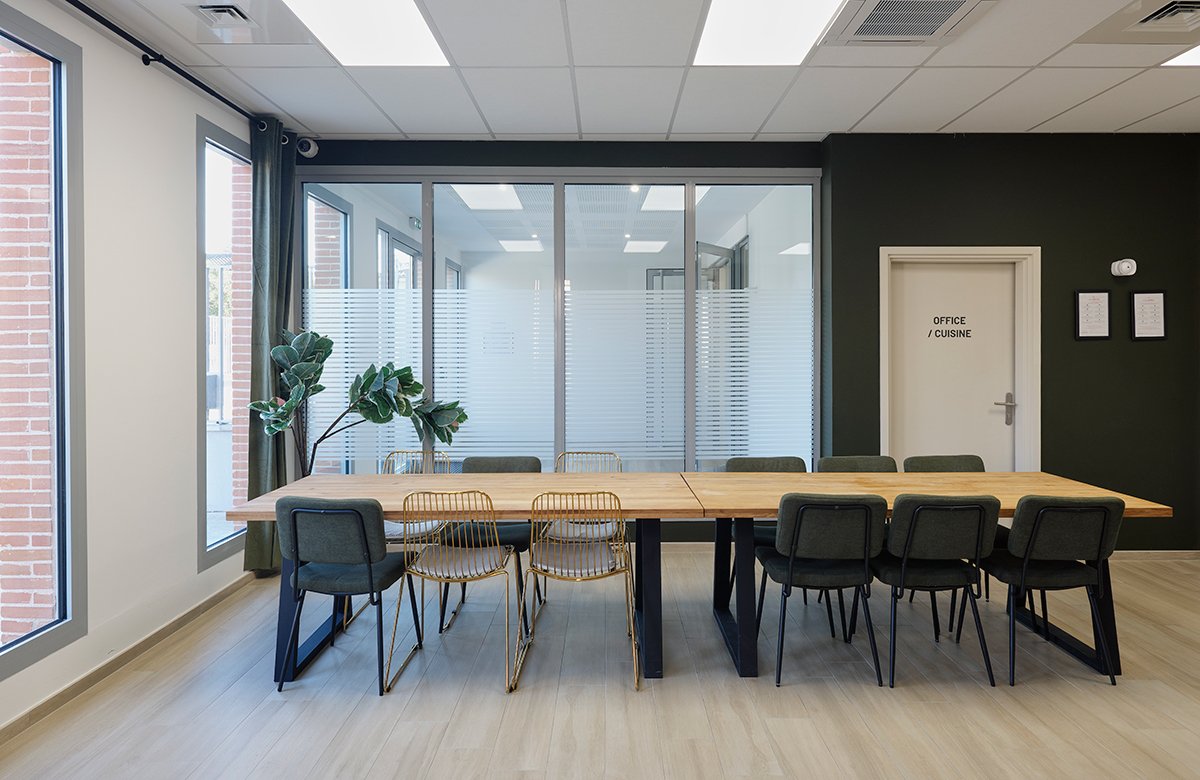
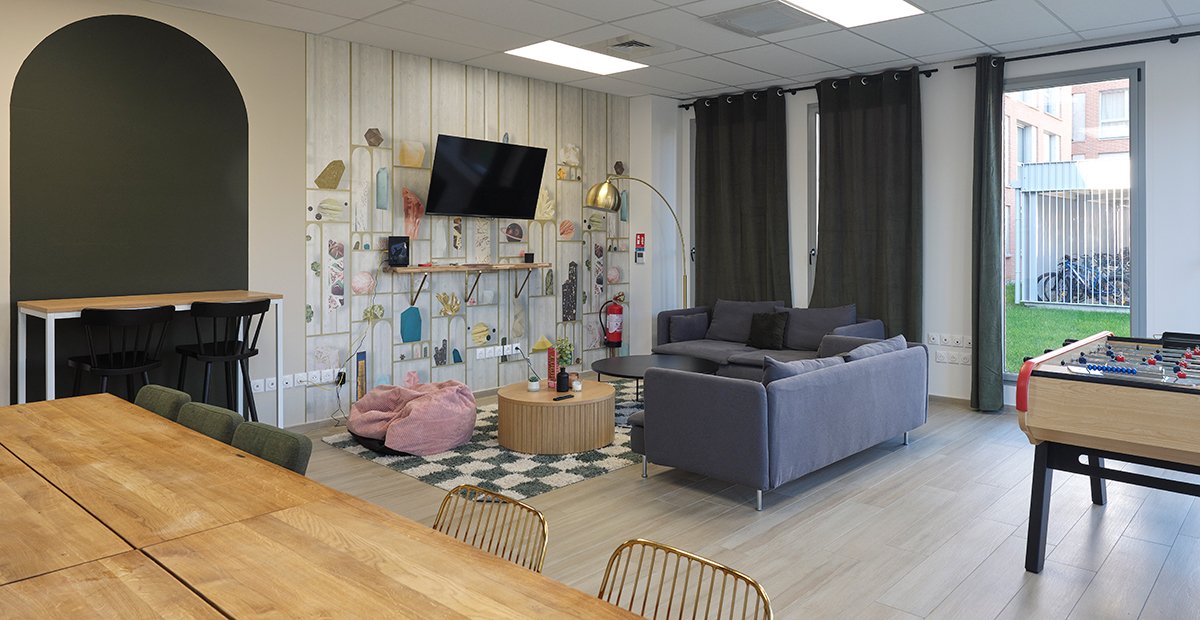
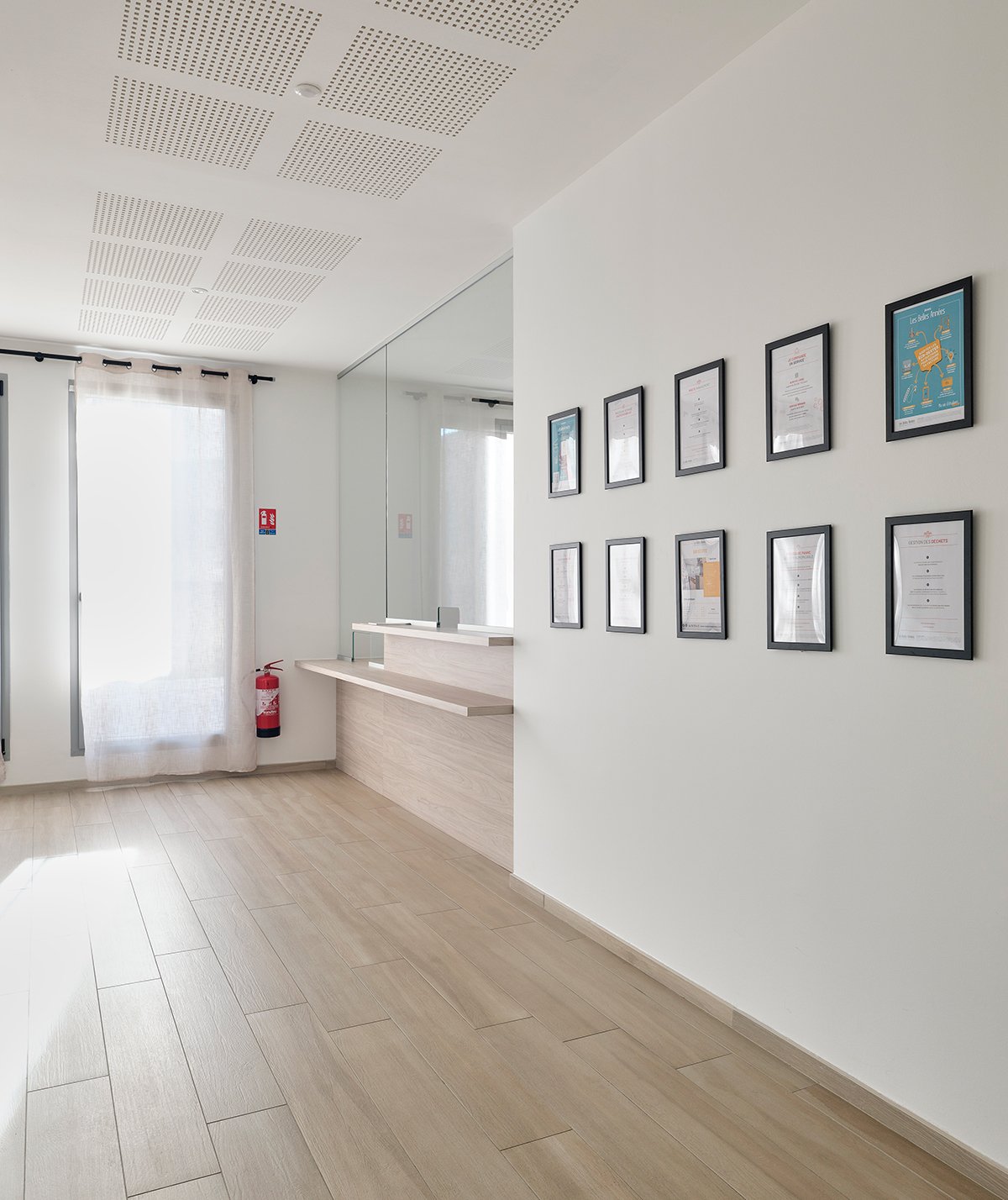
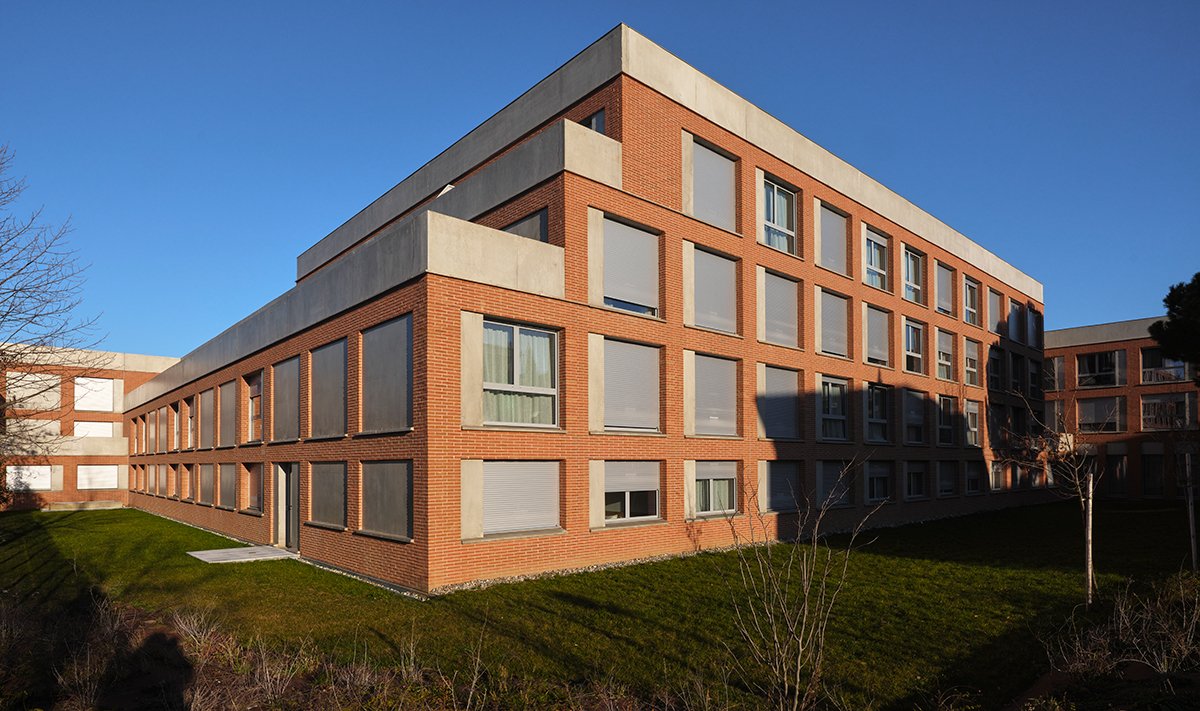
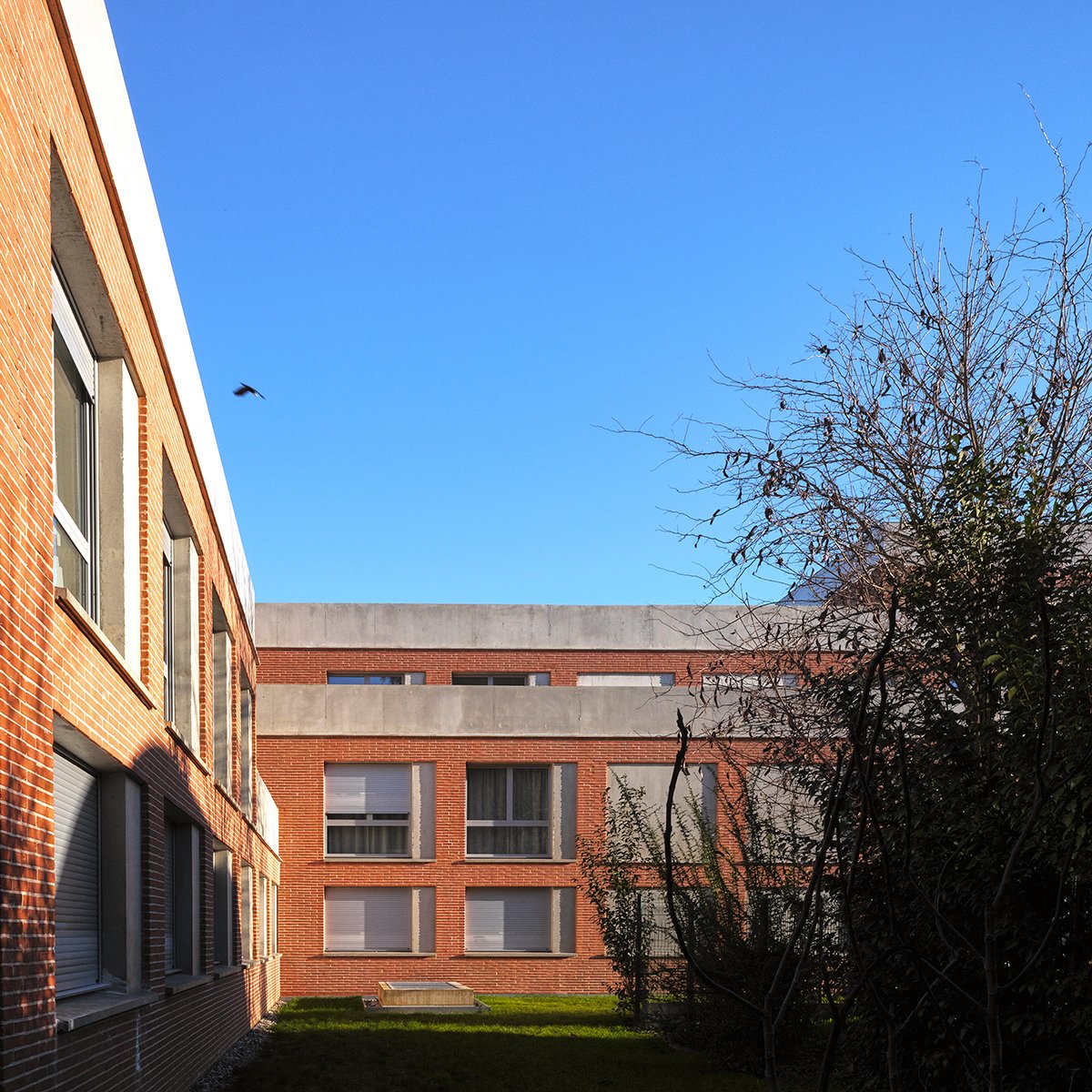
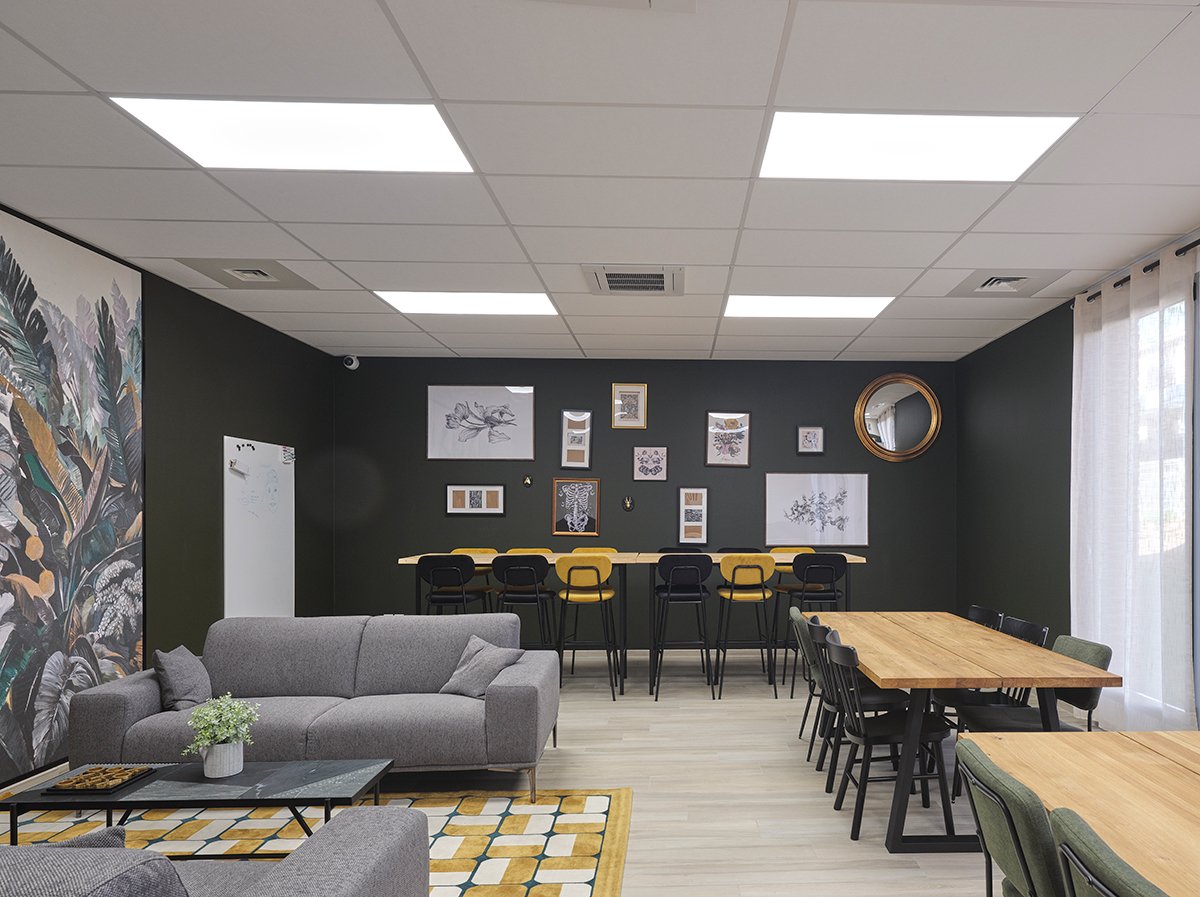
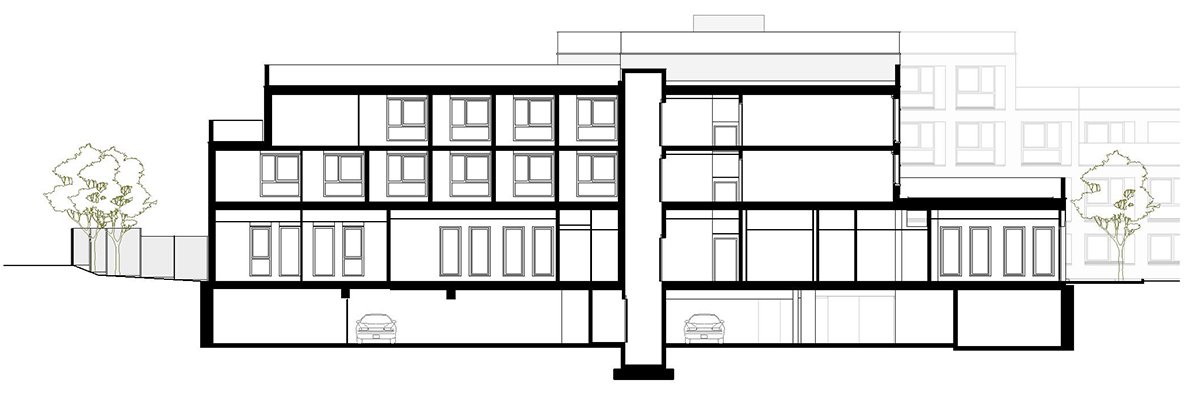
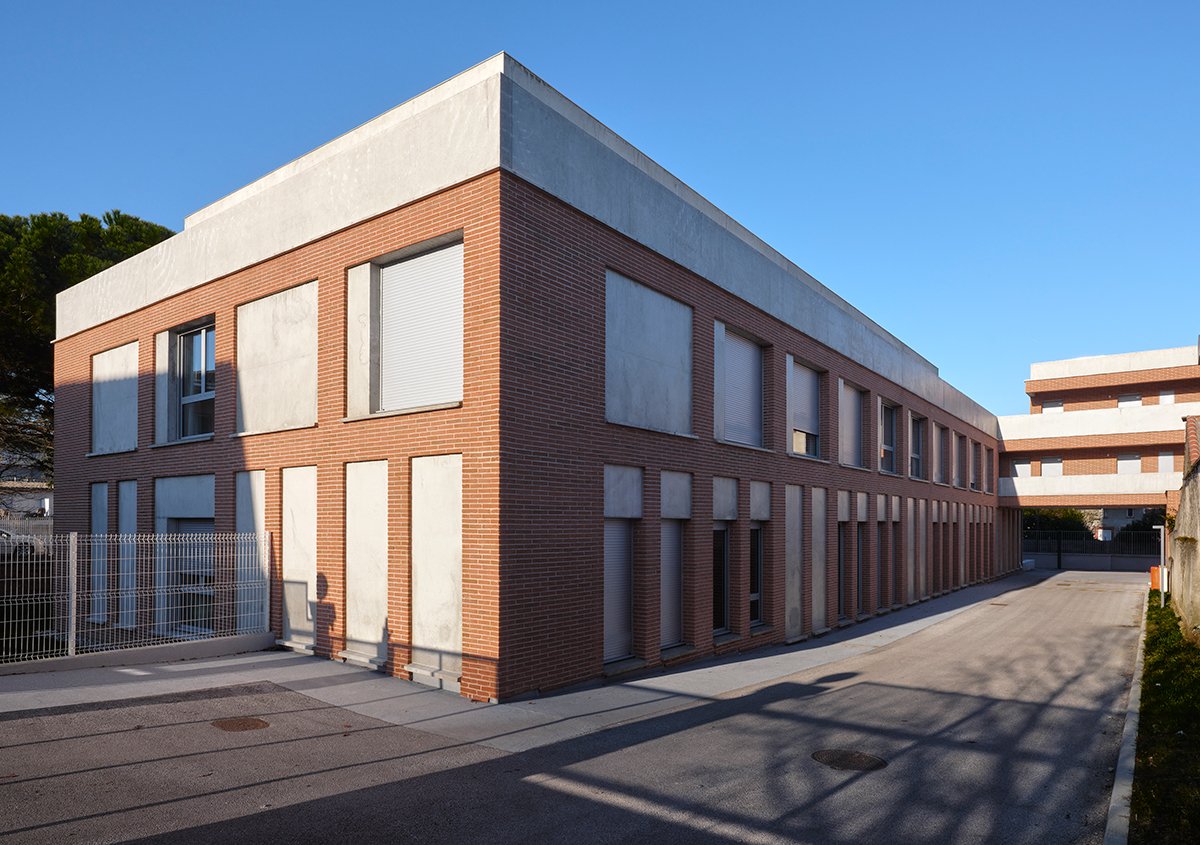
The project is developed over two and three floors, utilizing the site’s shape to accommodate the neighboring volumes (collective housing). A first wing aligns with the right-of-way of the neighboring housing units to create a secure frontage. This section is developed over two floors, integrating common and reception areas (lobby, breakfast room, common areas) on the ground floor with higher ceiling heights. Student housing is located on the first and second floors. Beyond this, the project develops over two and three floors, following the plot boundaries. To energize the volume, setback systems create breathing spaces, offering future users views of the surrounding wooded area. The project is composed of orthogonal volumes to blend into the ordered fabric and echo the neighboring built-up areas.
The diagrams above show the work on the alignments and the project’s relationship to its surroundings. Along with Chemin de la Pélude, the piano key layout typology is respected. The project is set back 4 meters in accordance with the PLU regulations. At the rear of the plot, the project aligns with the existing buildings. The building’s architecture relies on a repetition of joinery and prints across all facades to create a general unity to the operation.
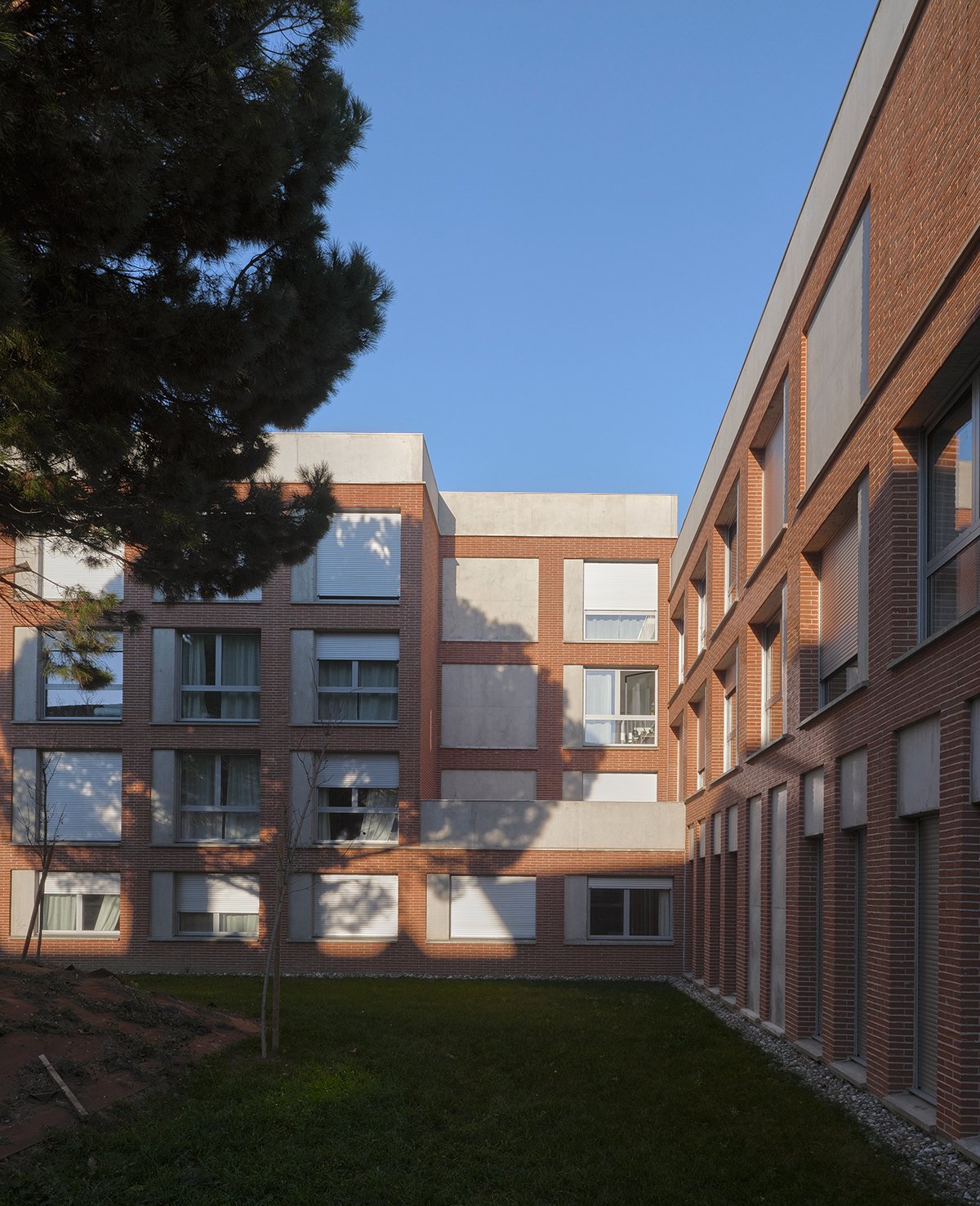
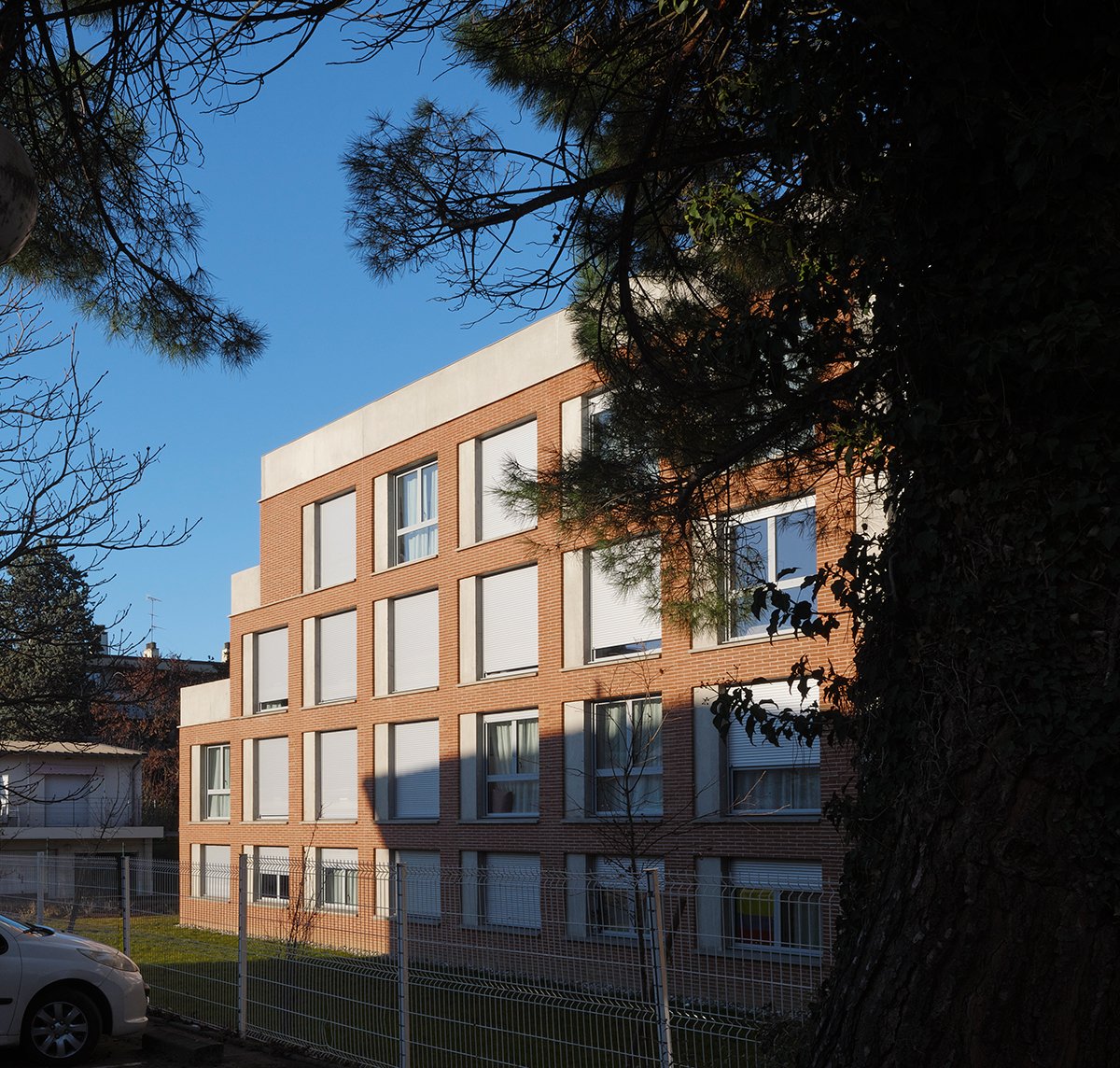
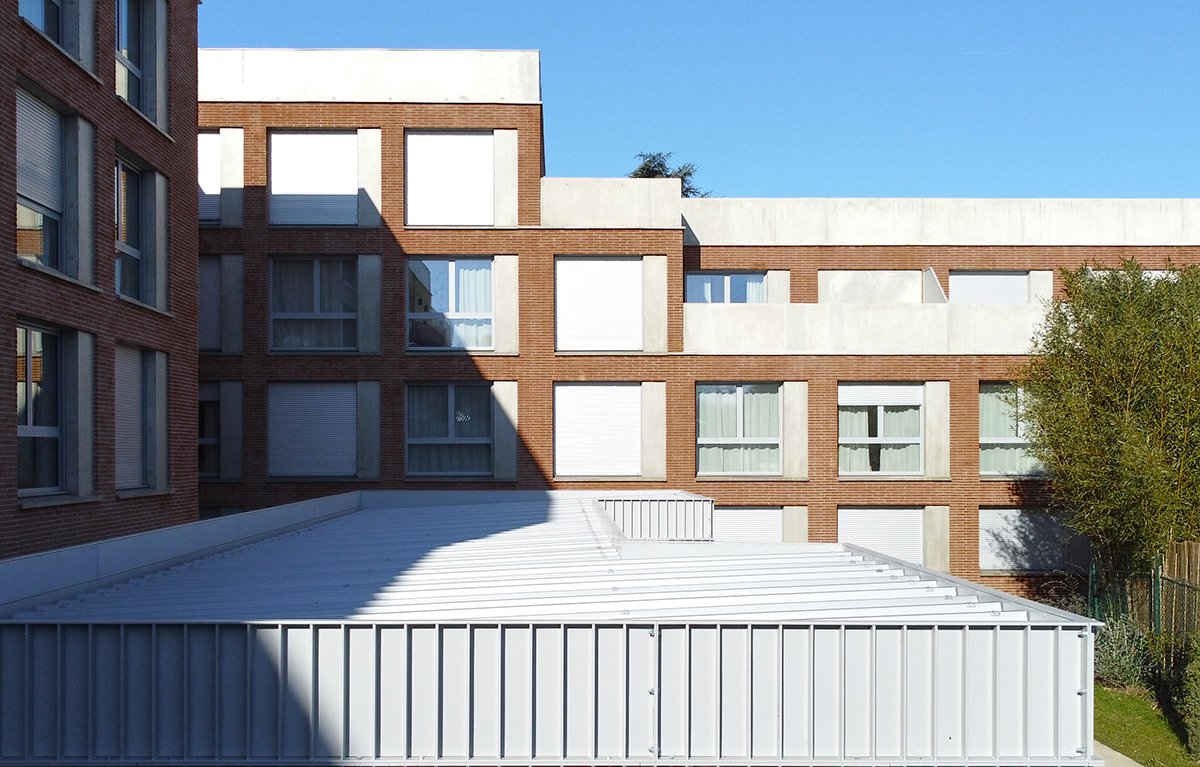
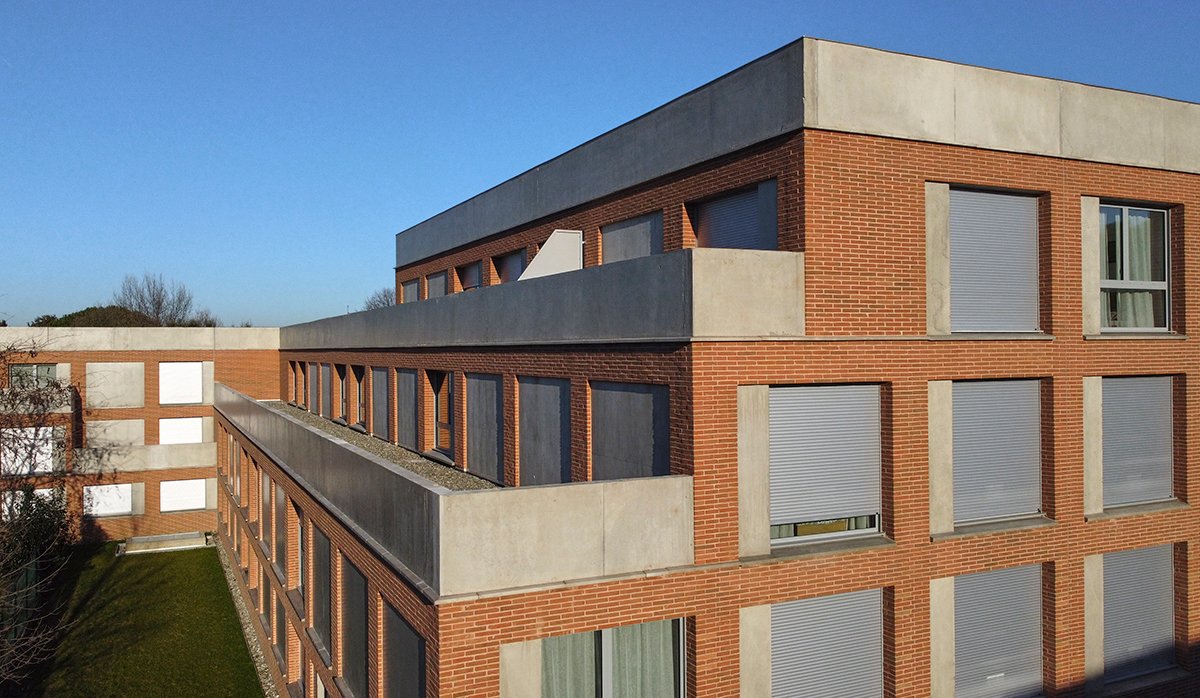
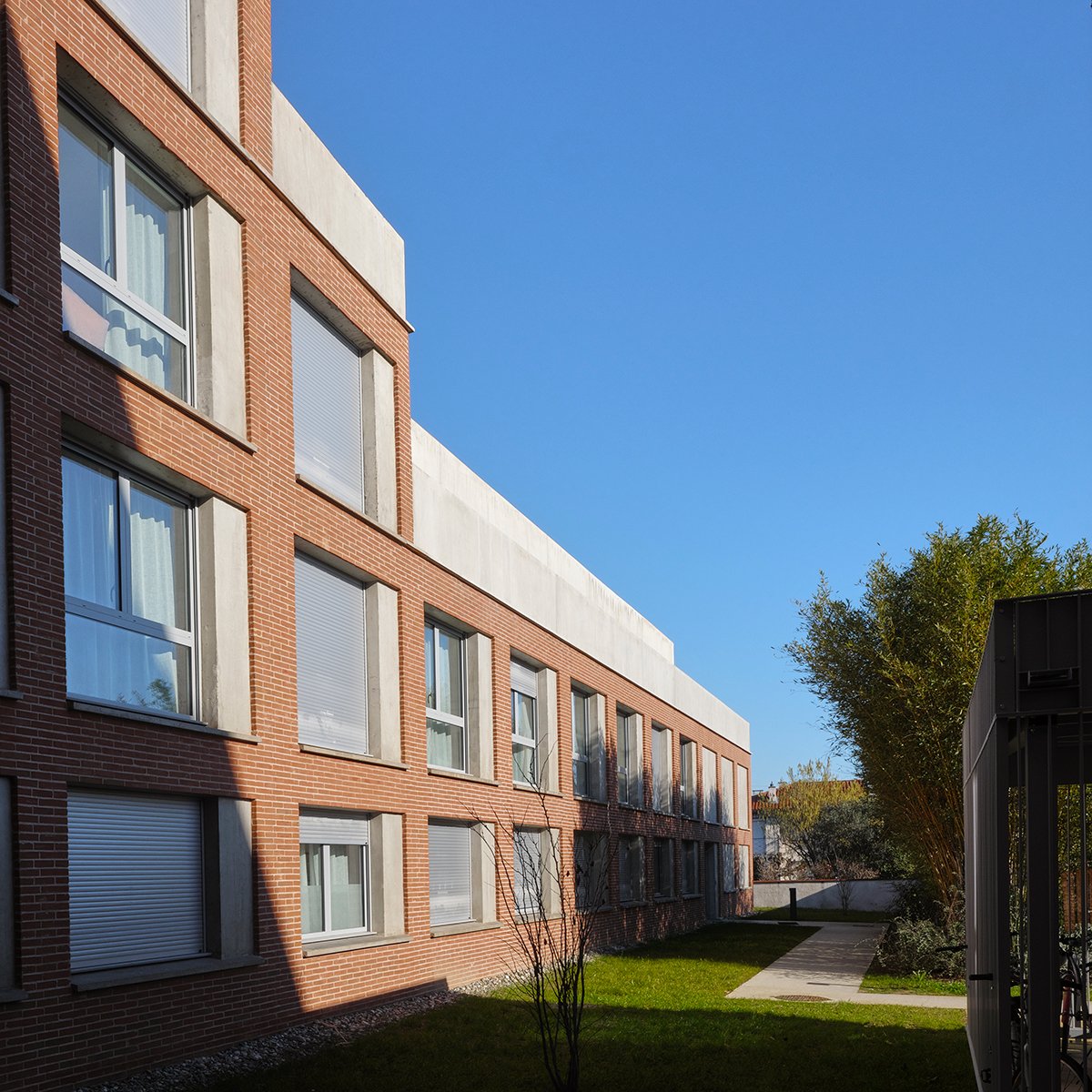
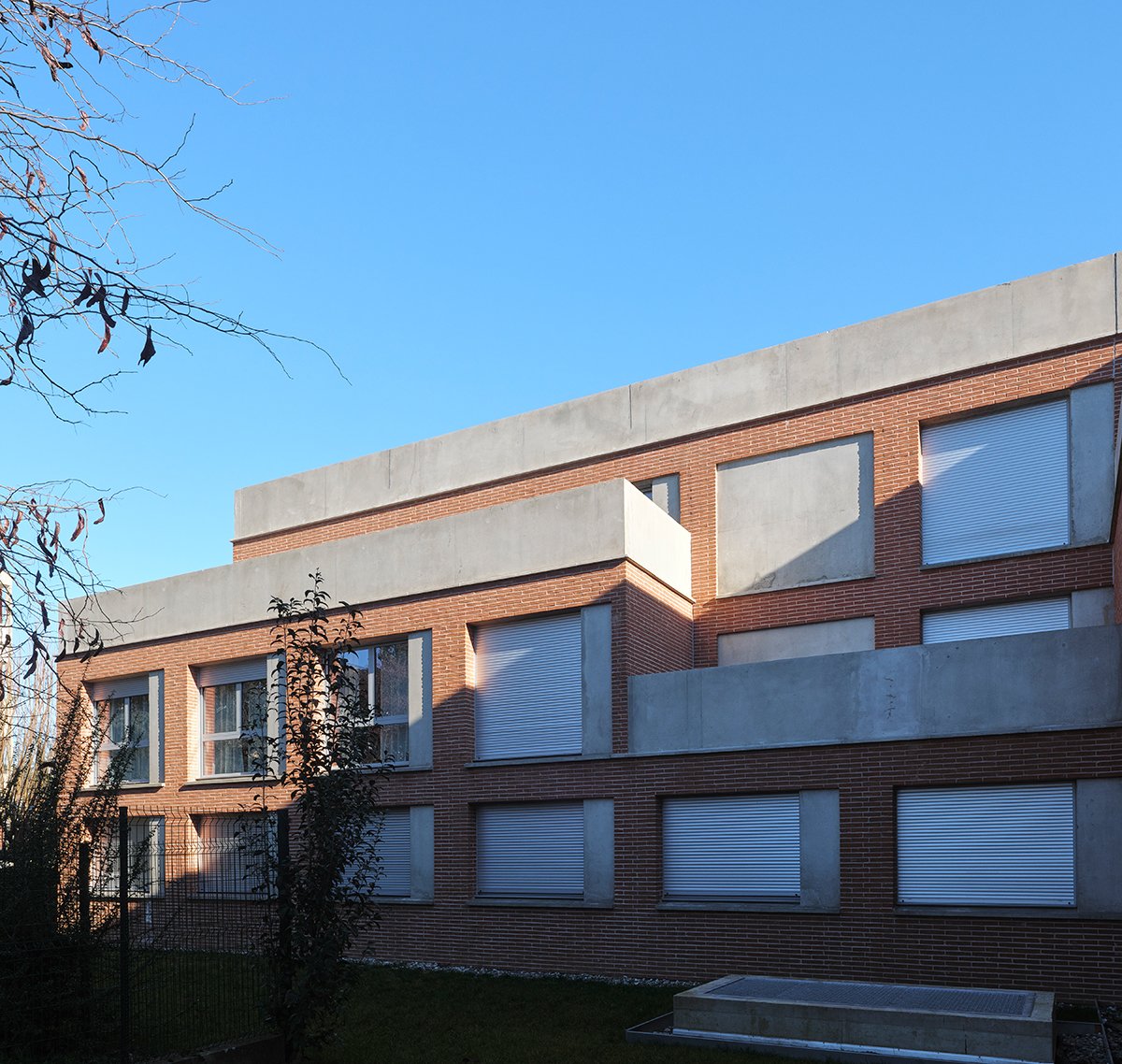
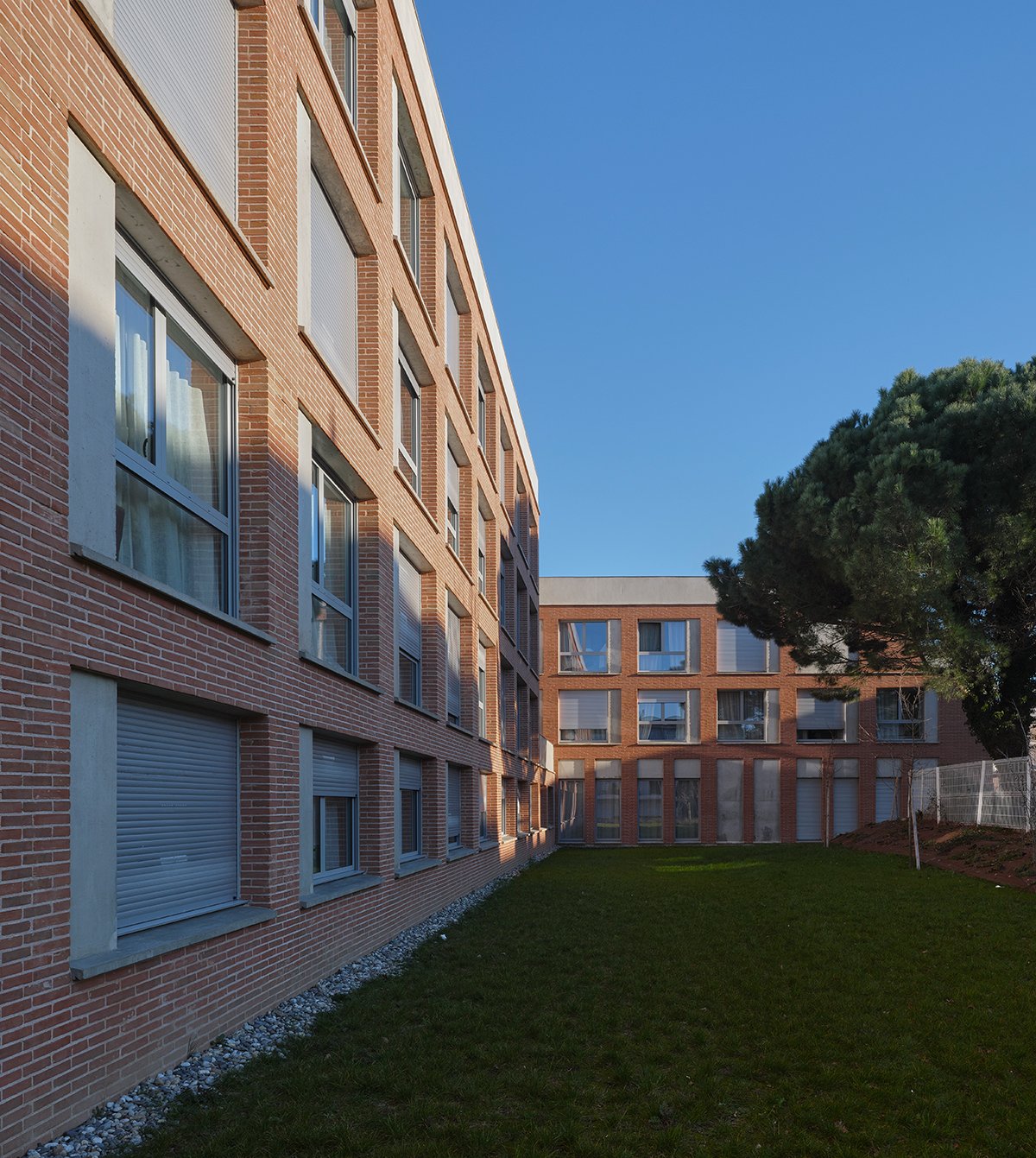
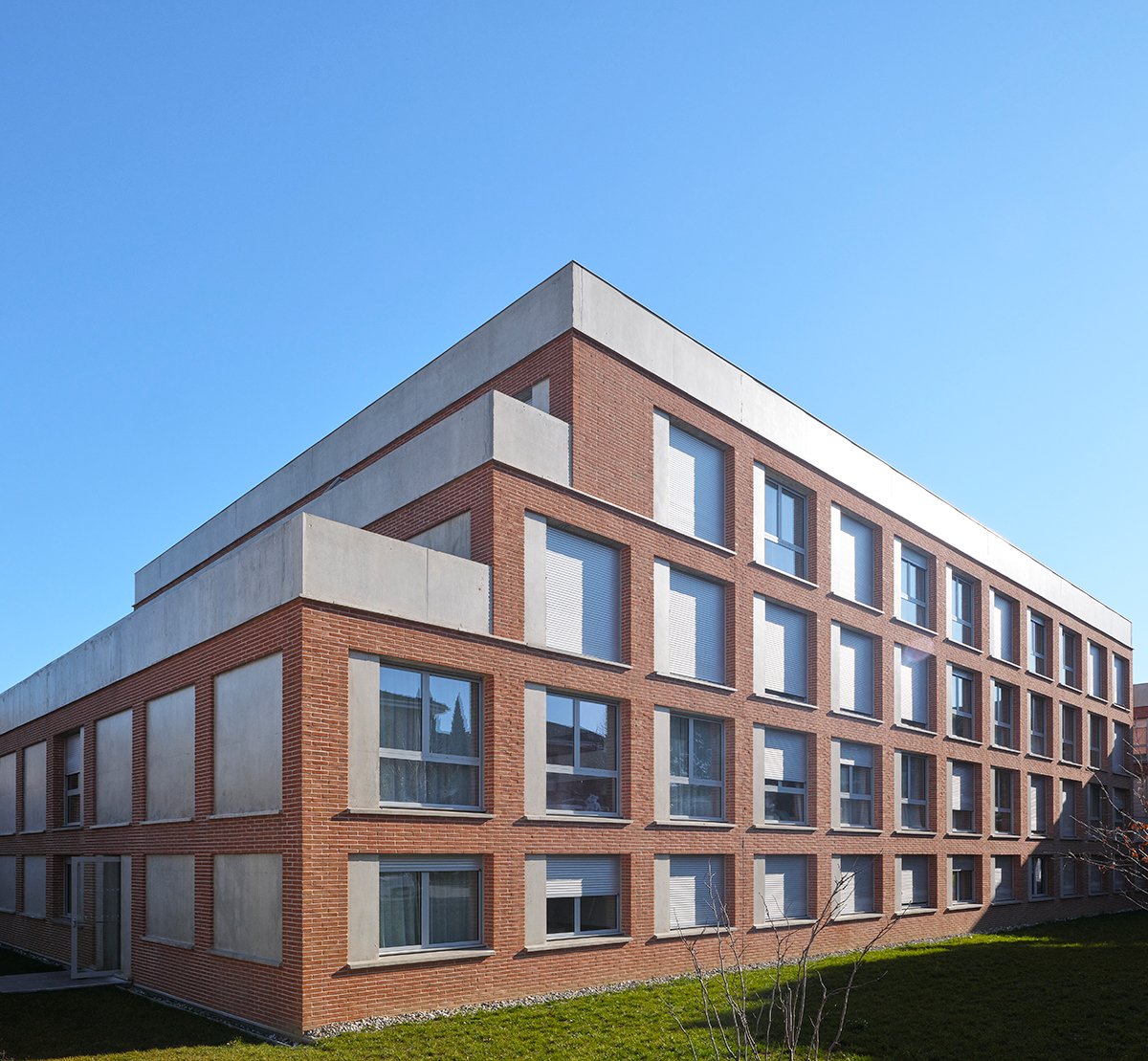
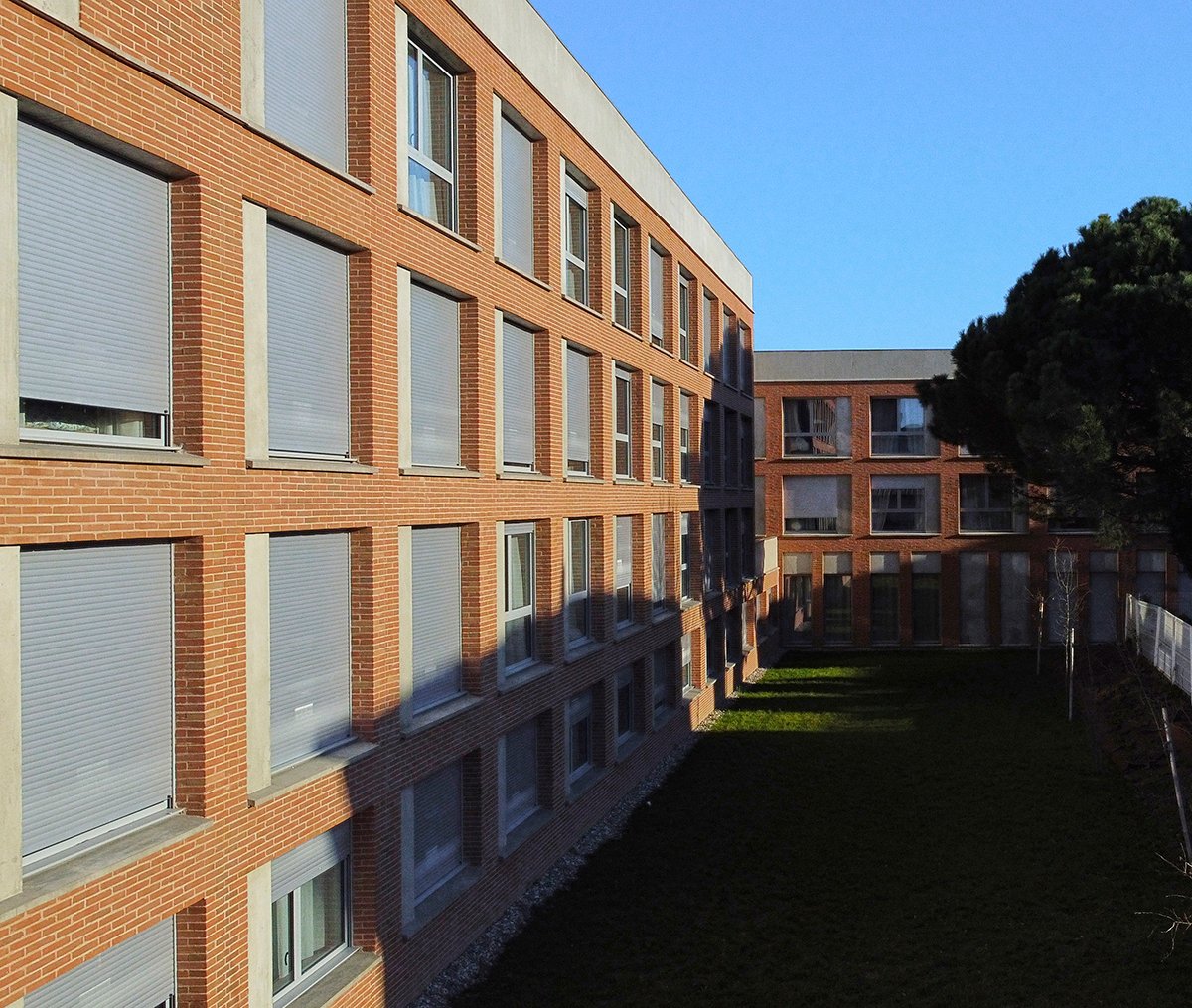
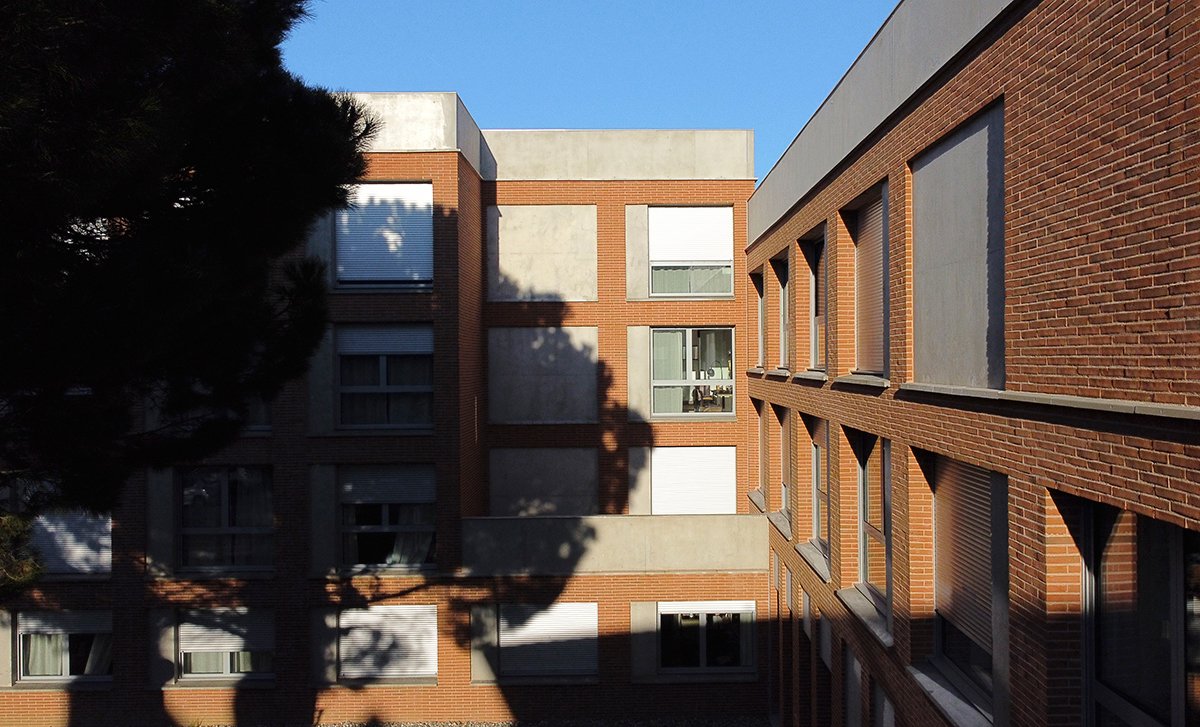
This design is intended to be understated, in harmony with the other neighboring buildings and their linear and grid-like architecture. It relies on elements sized to create a rhythmic façade in keeping with the programming and sequence of student accommodation units.
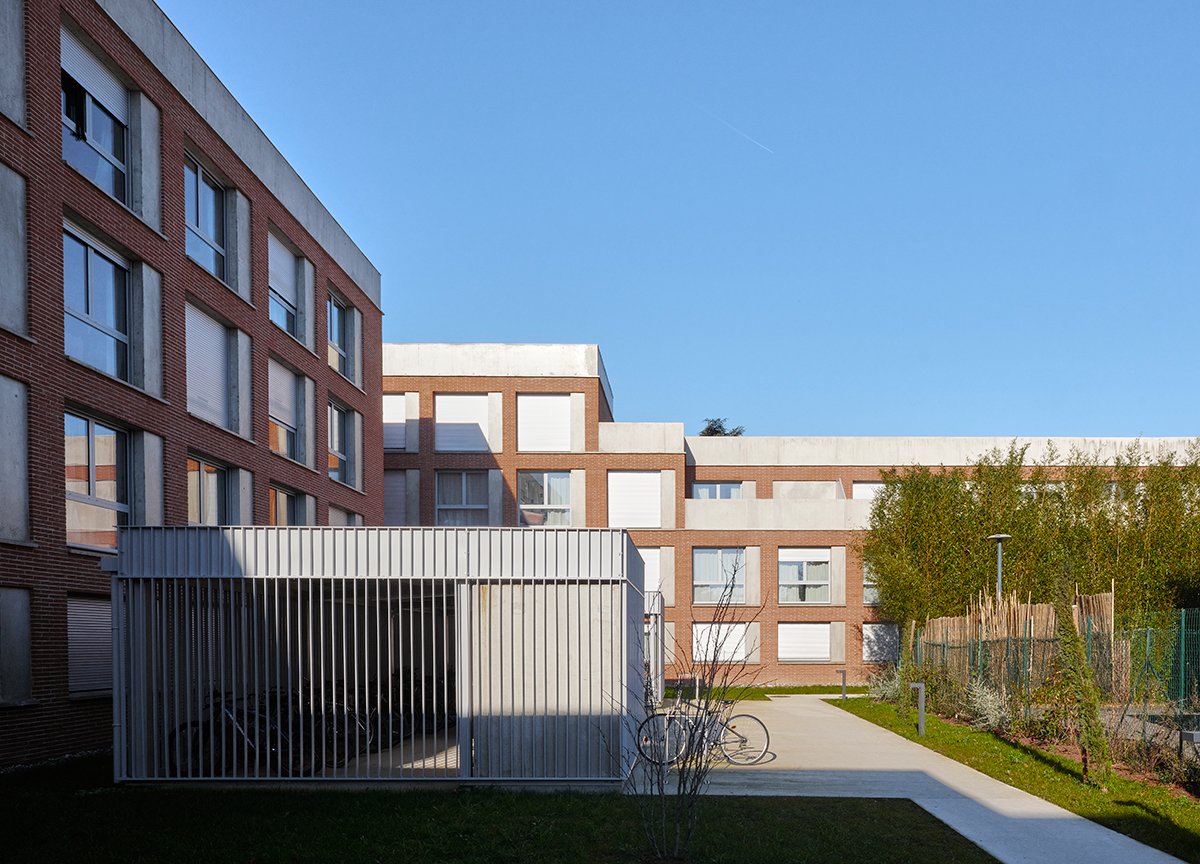
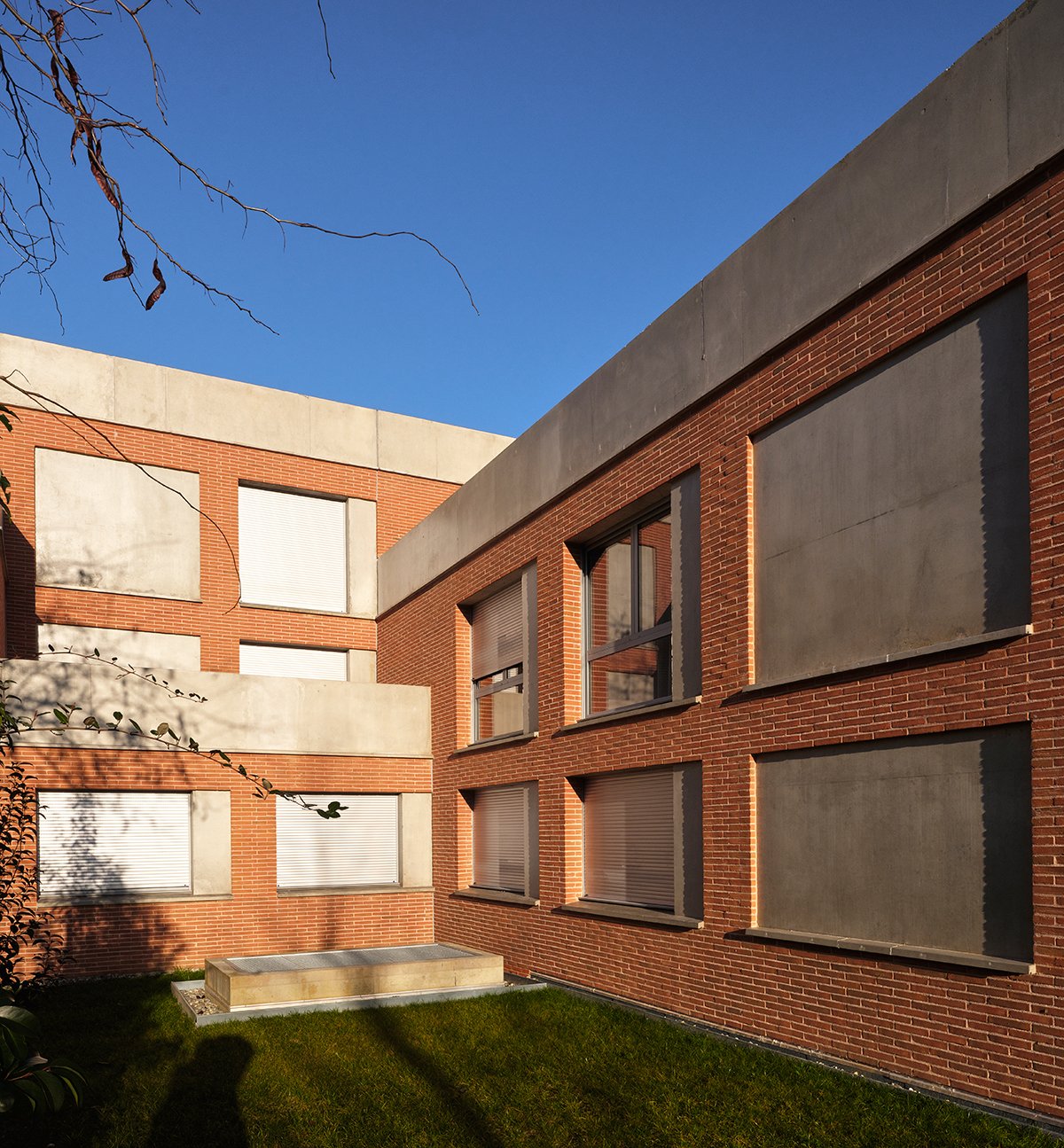
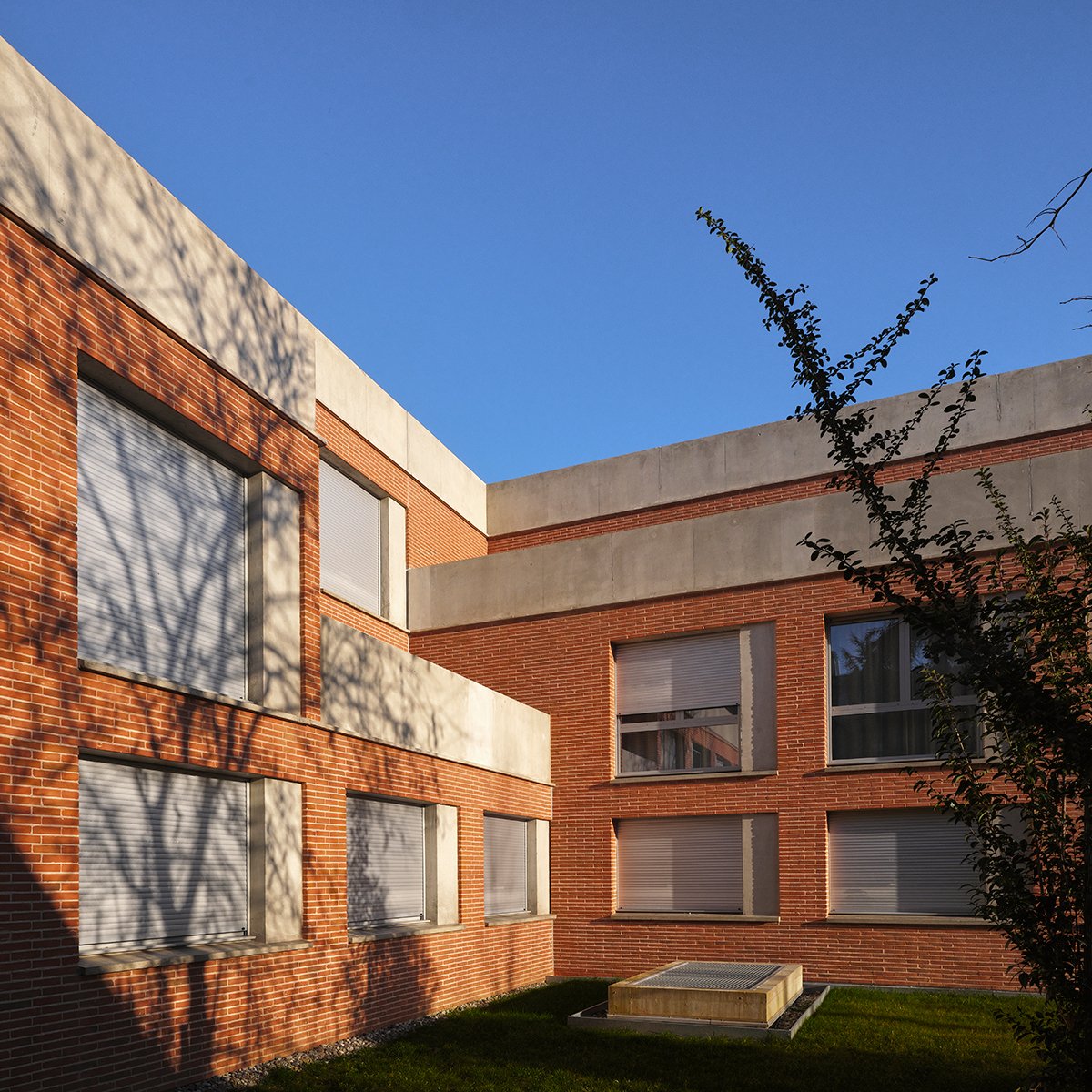
In the common and shared living areas on the ground floor, a succession of vertical joinery enhances the base and asserts a common function for these spaces, making them identifiable. Their positions and rhythms are consistent with the overall logic, aligned with the joinery on the upper floors. The acroteria is made of glazed concrete to emphasize the horizontality of the project and give the building a more understated appearance.
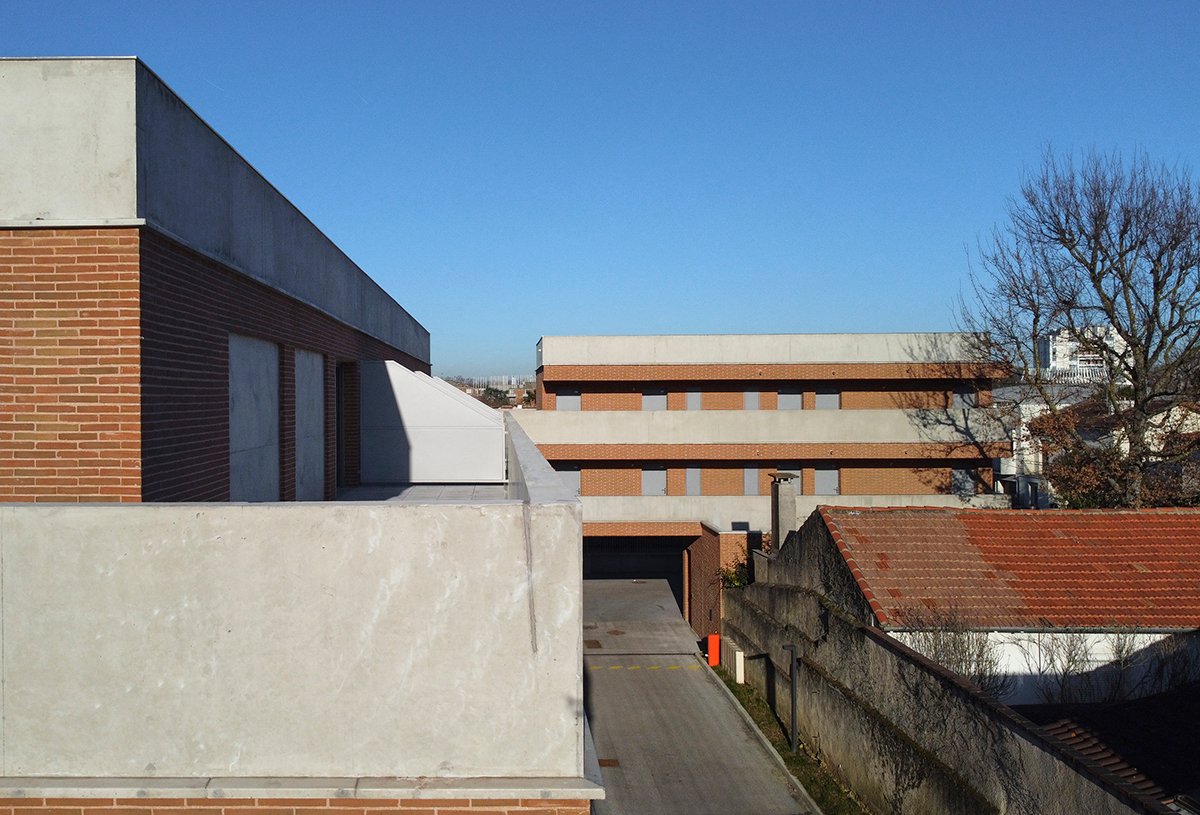
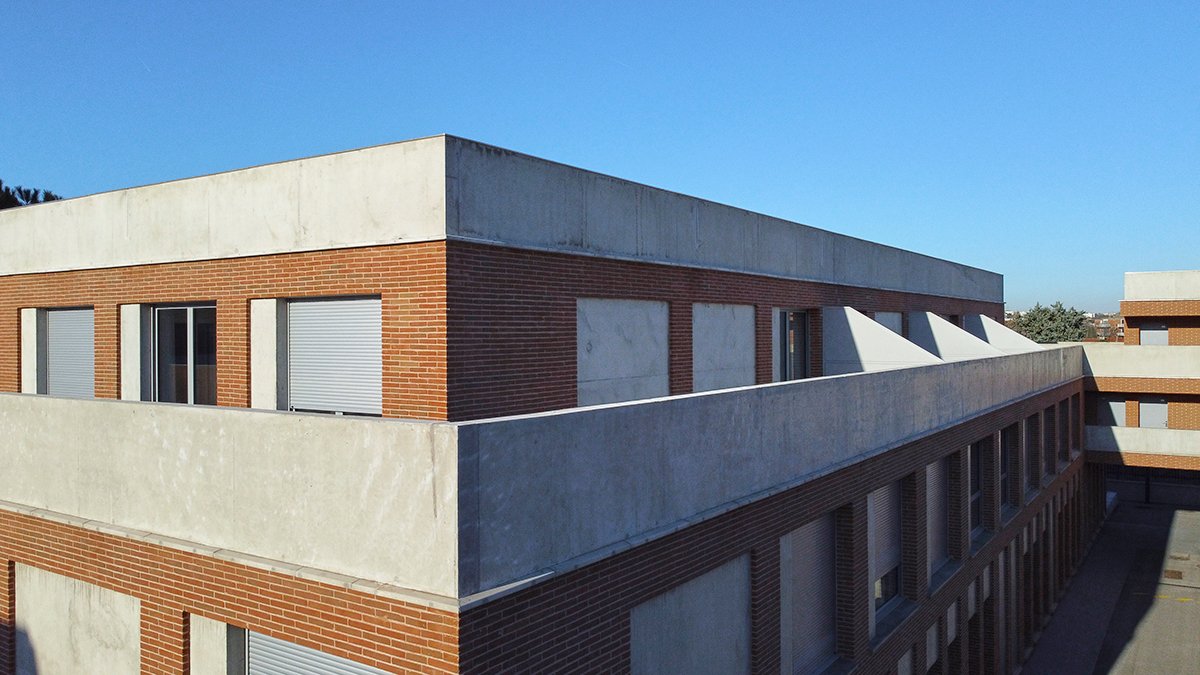
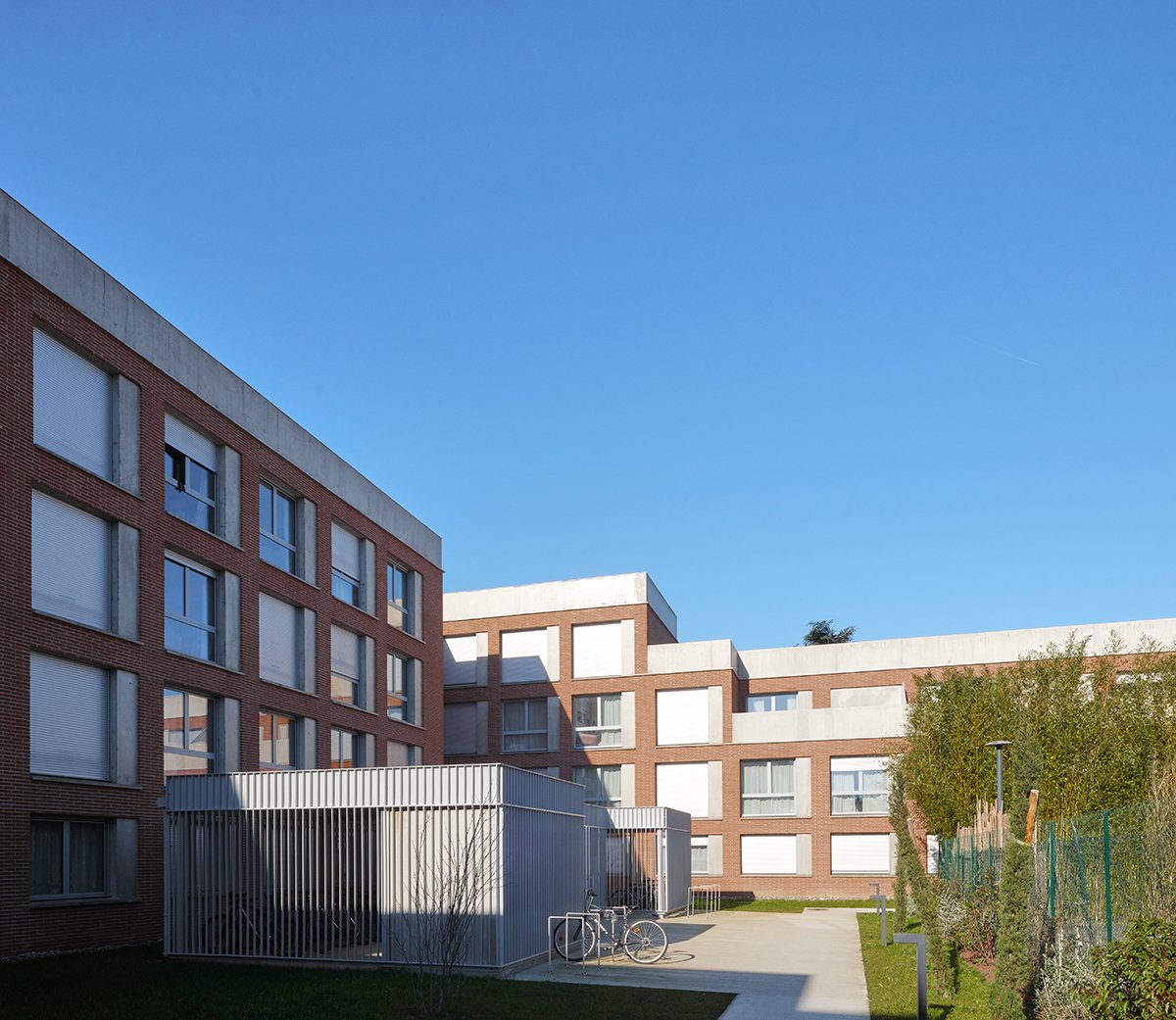
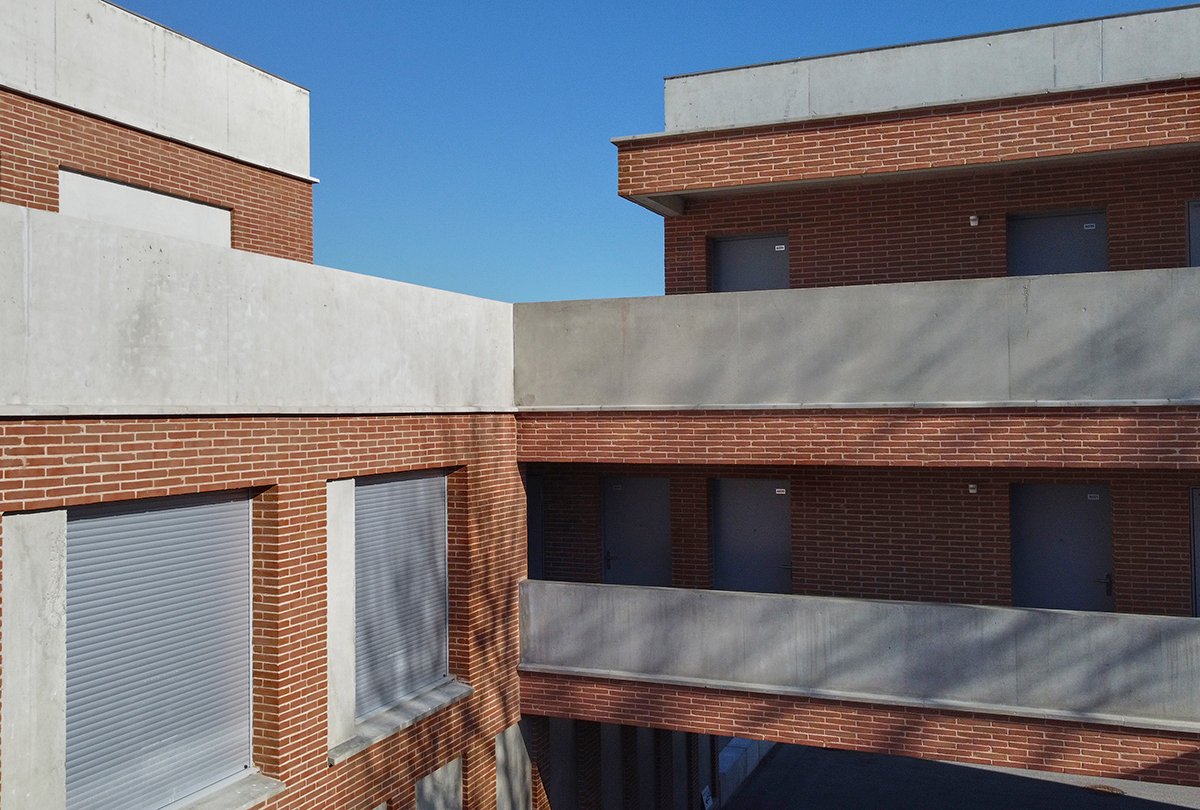
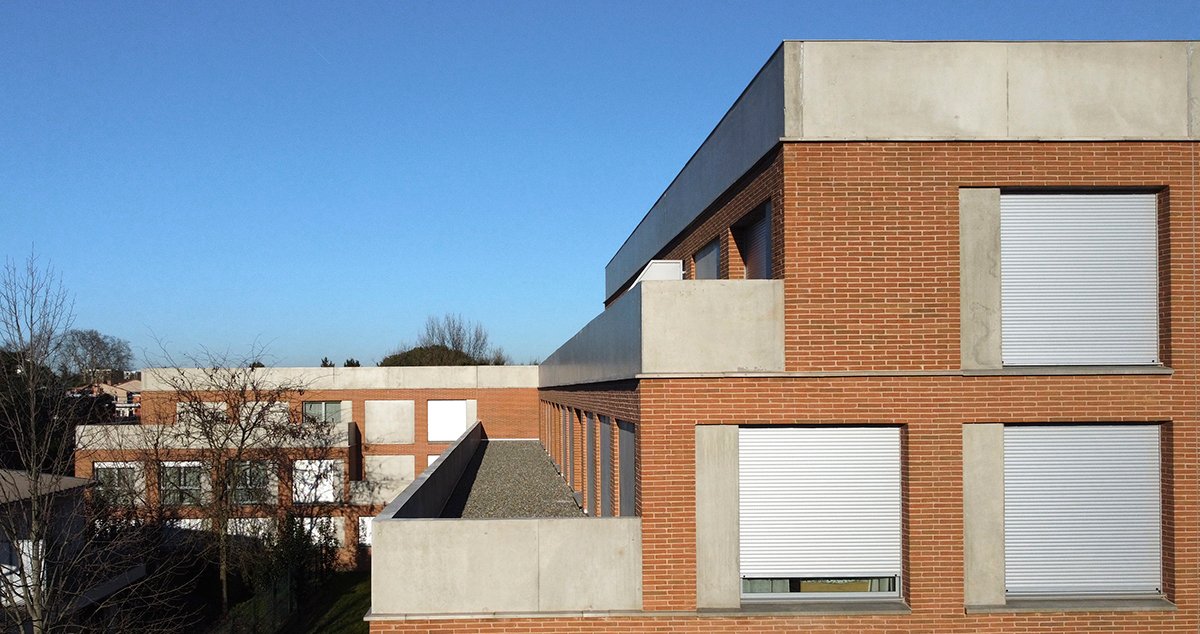
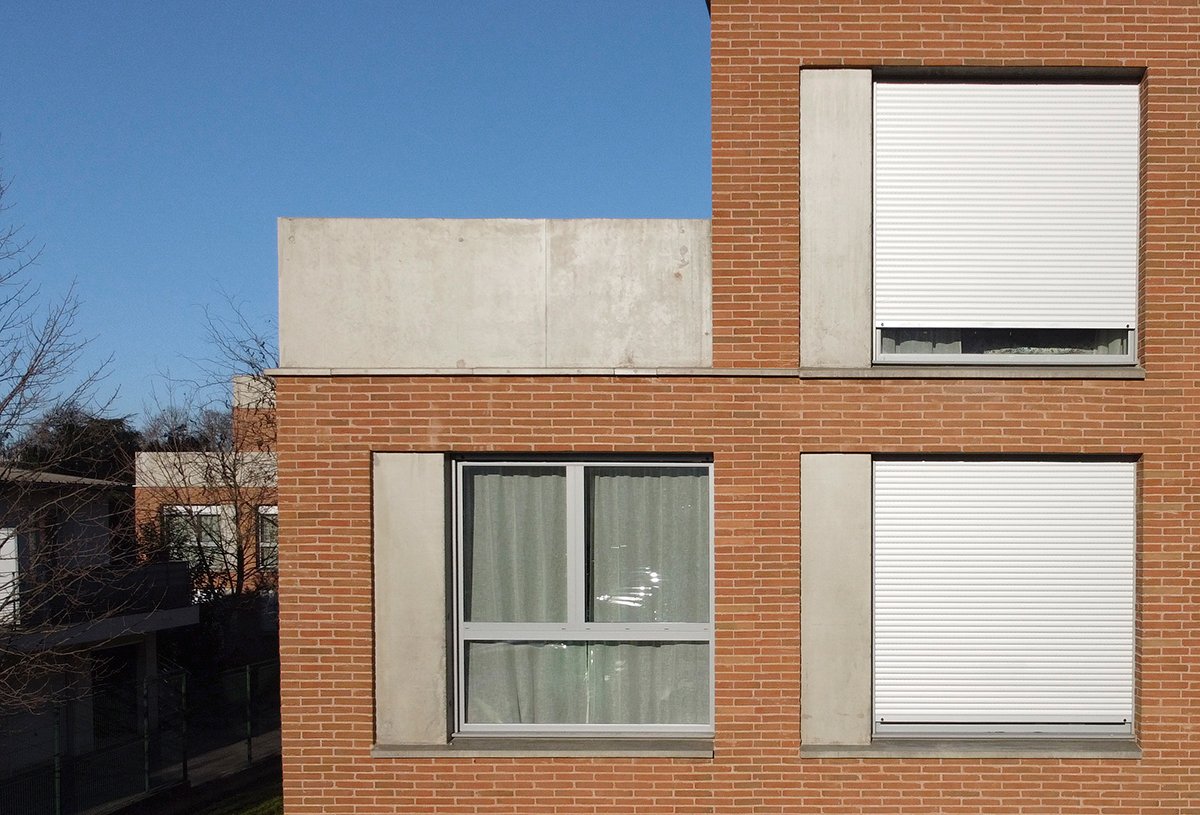
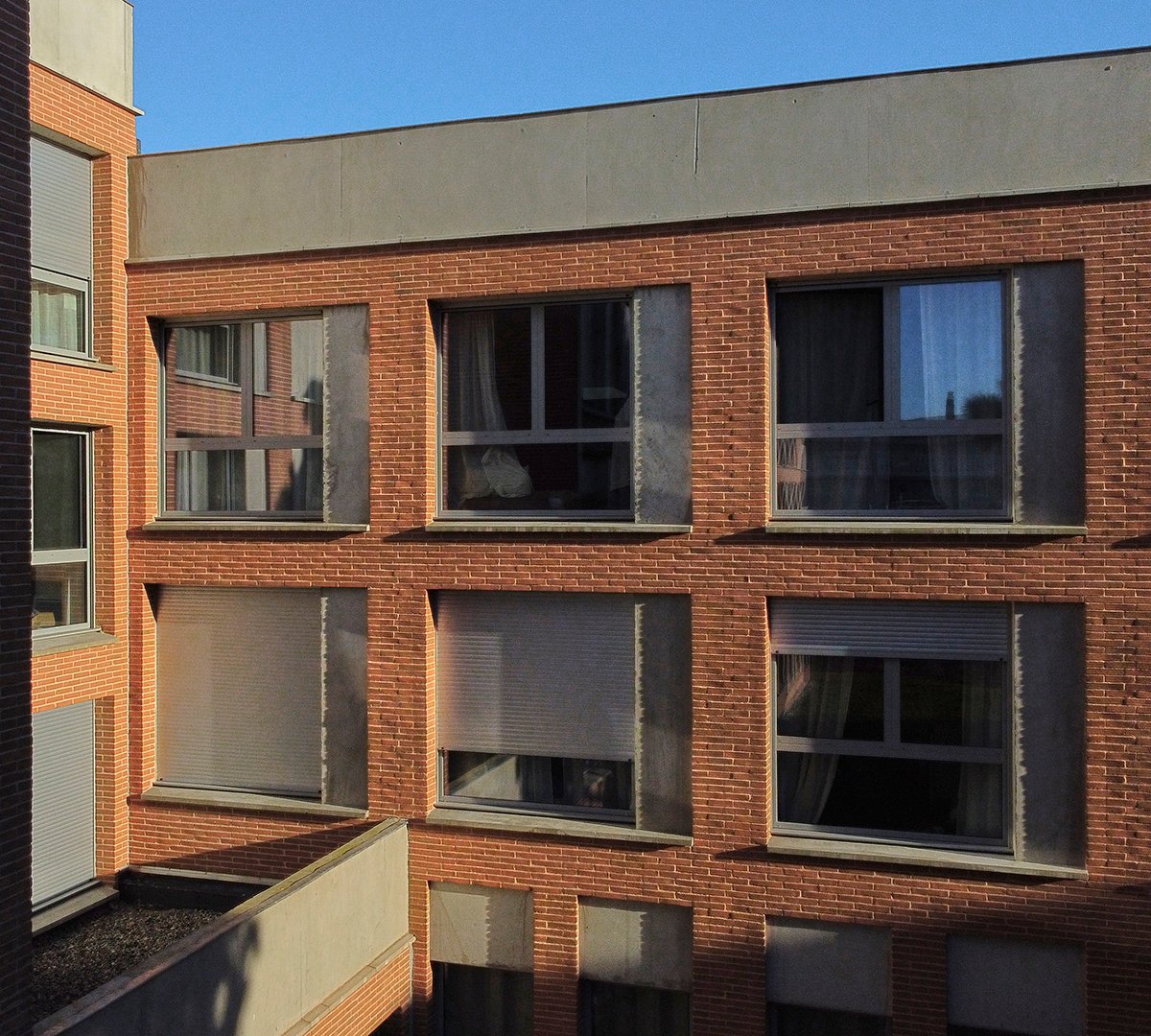
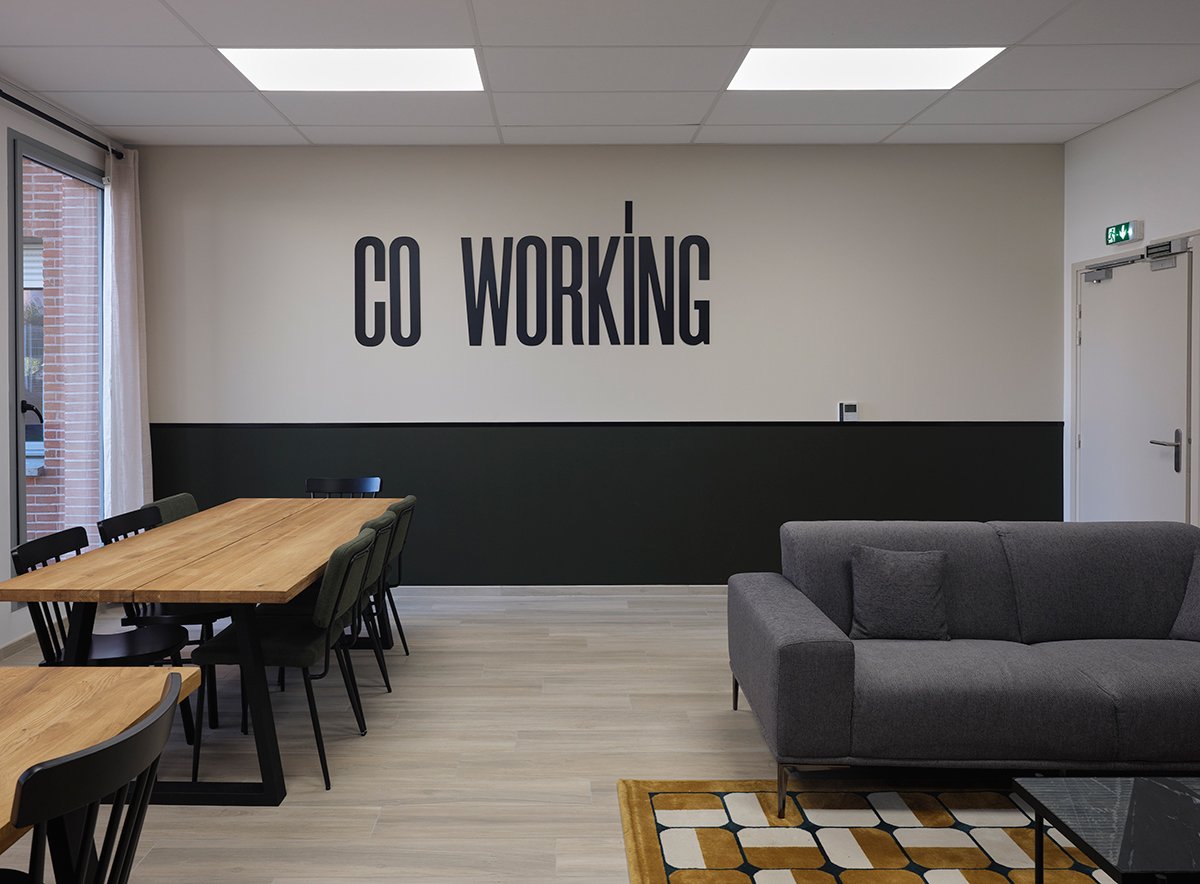
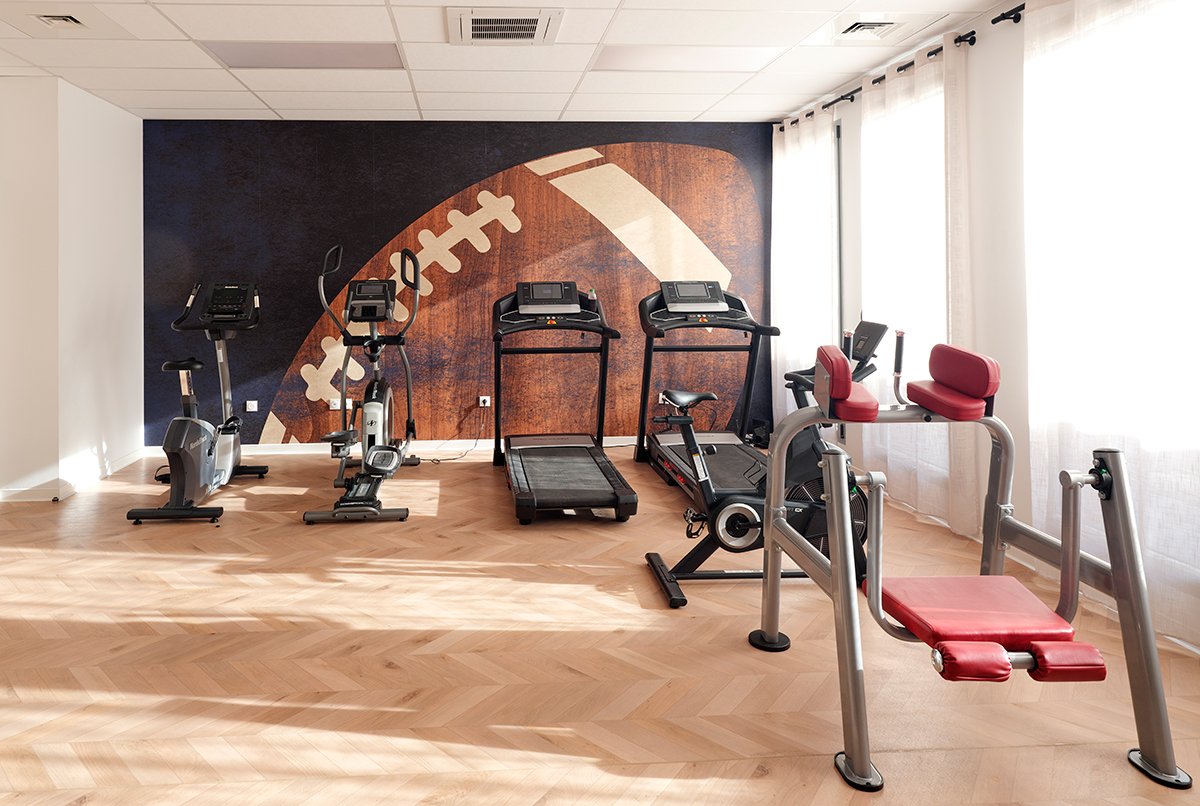
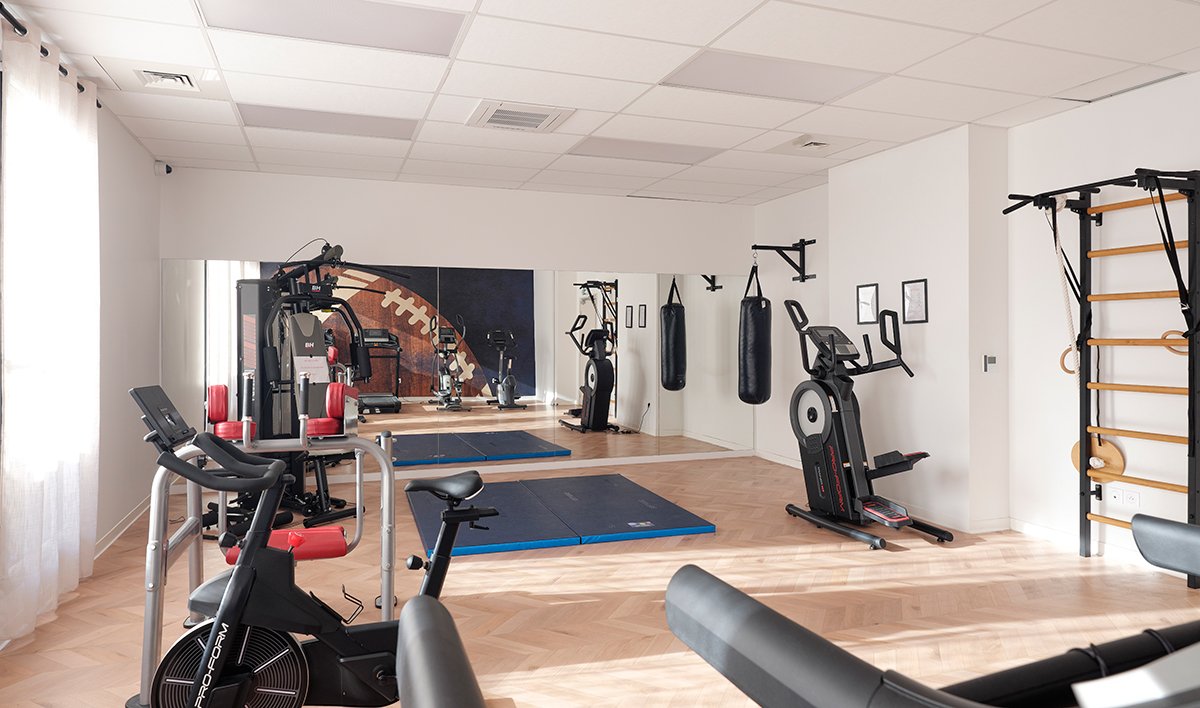
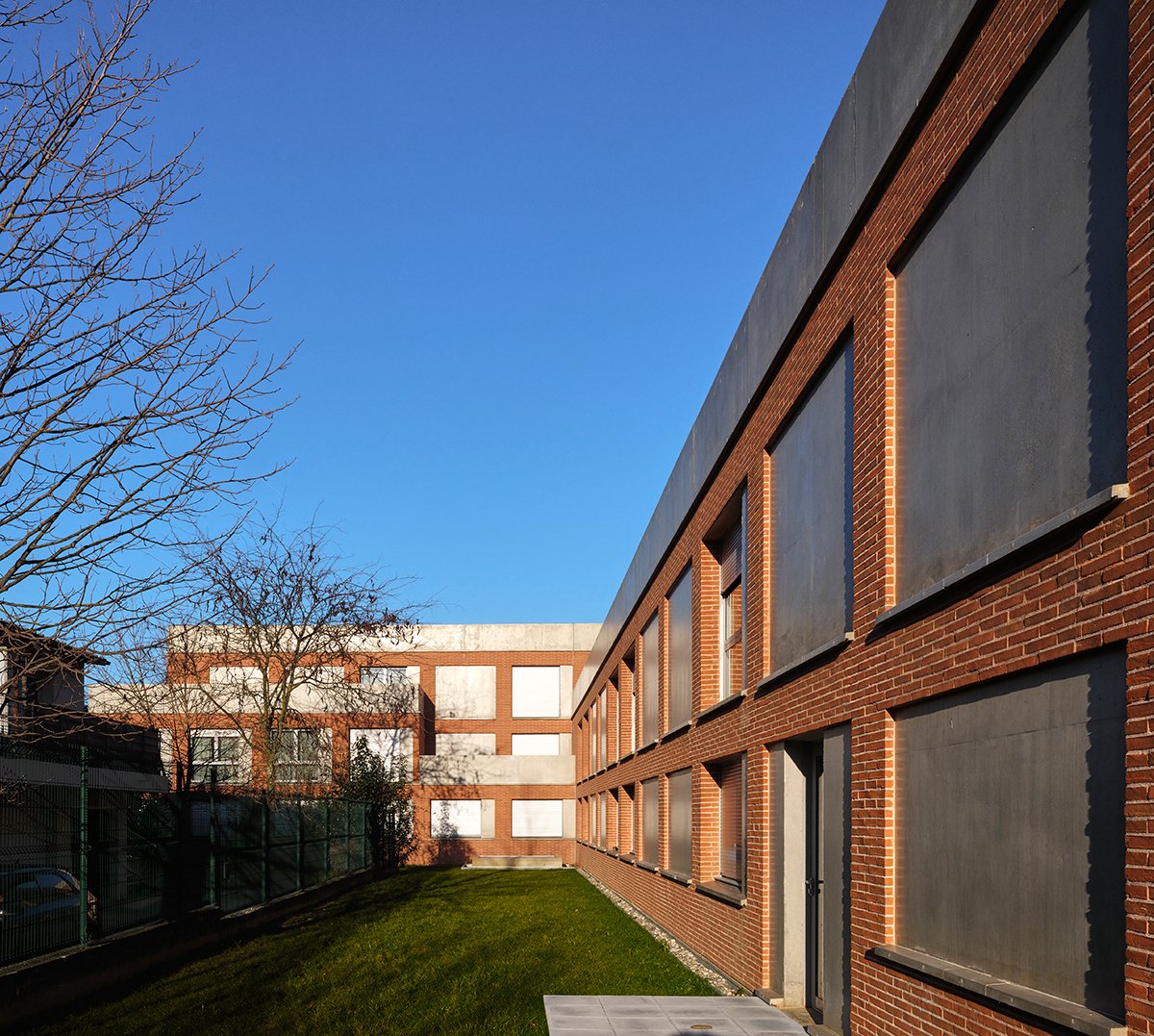
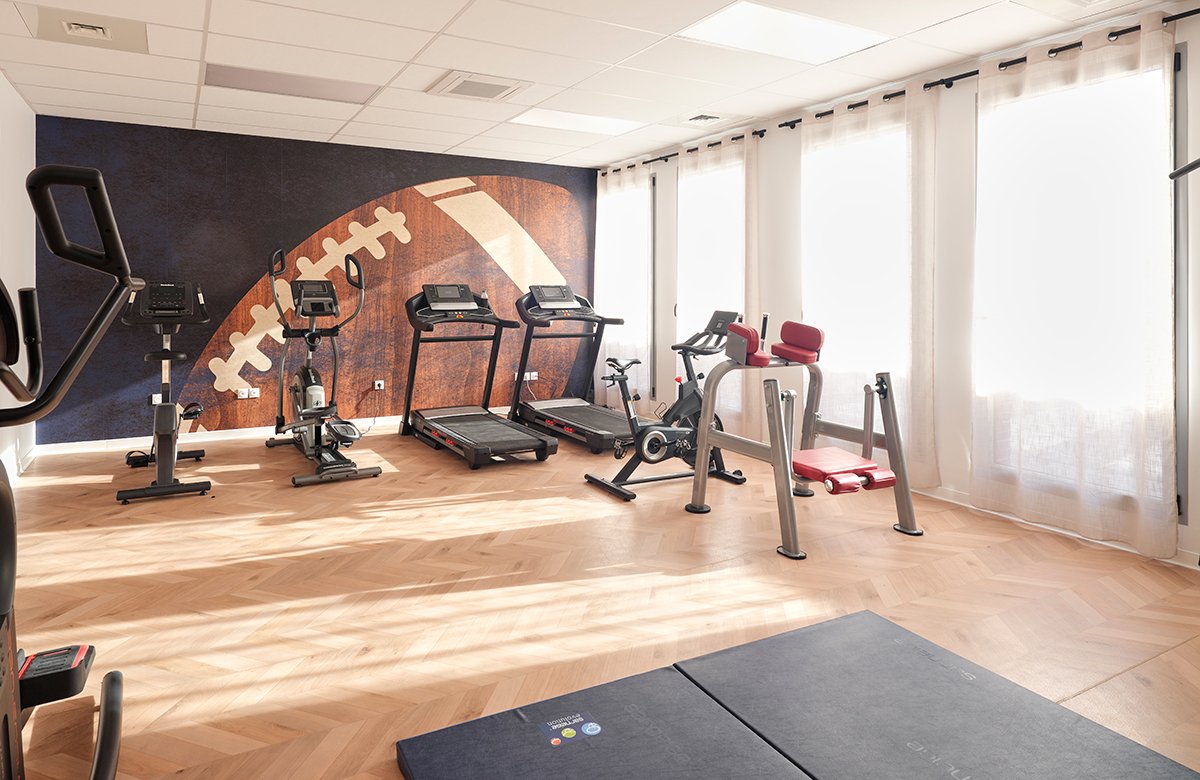
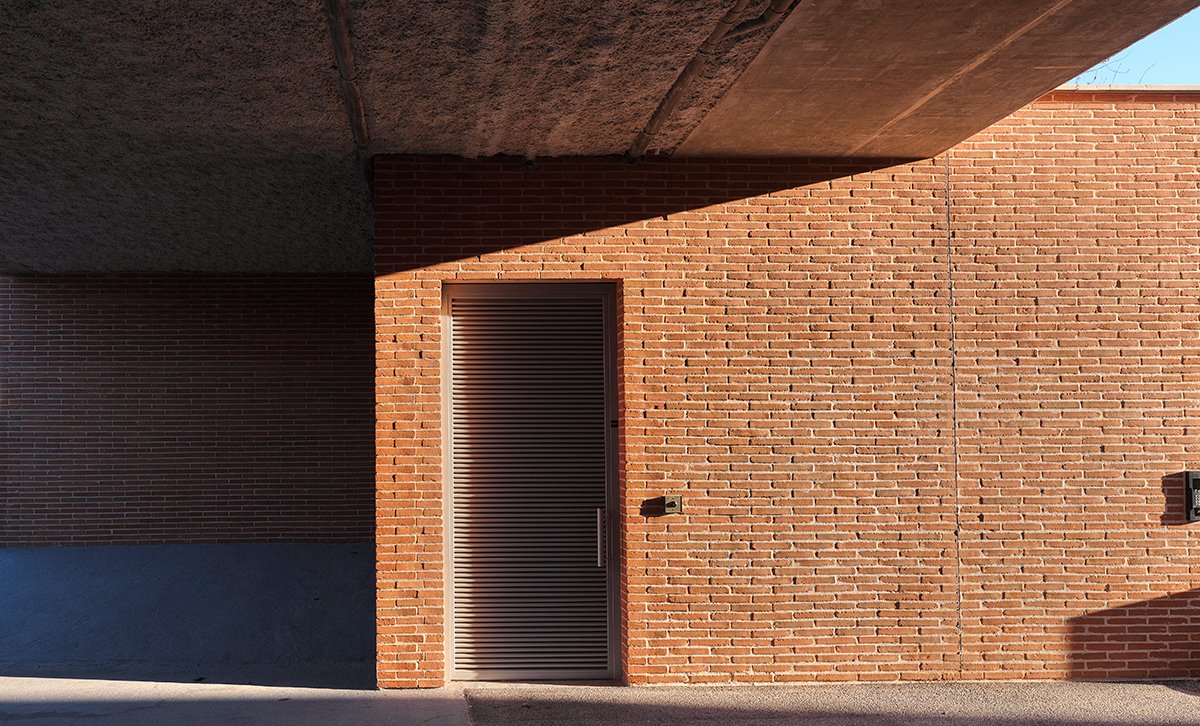
Building Materials and Colors: The facades of the student residence are made of concrete elements clad with brick cladding, which incorporates aluminum joinery, providing generous natural light to the student rooms. For the more spacious spaces on the ground floor (breakfast room, gym, work room), vertical aluminum joinery has been installed to enhance the quality of the interior spaces, emphasize their functions, and foster a close relationship with the outdoors.
The parapets are finished in glazed concrete. The joinery is made of aluminum. The proposed openings aim to energize the façade and provide interior comfort adapted to the functionality of the spaces. The majority of the window assemblies feature glazed sills to provide maximum sunlight into the dwellings. They are installed in the main rooms of the dwellings. Throughout the rest of the structure, and where it is not necessary to channel light, recesses are created to enhance the overall rhythm of the façades.
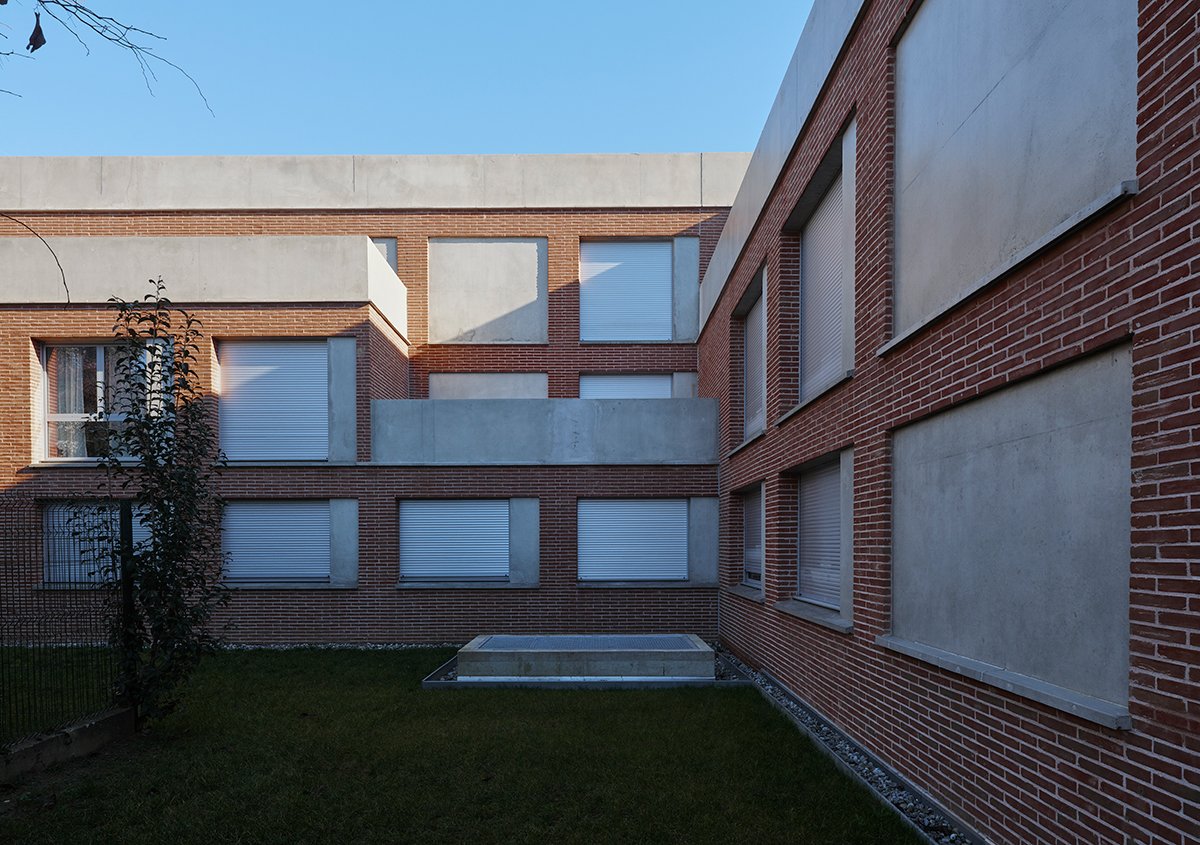
Bioclimatic Principles: The student residence project aims to incorporate principles that promote user comfort and compliance with environmental standards. In addition to space savings in the open ground and green roofs, other principles are implemented to improve these parameters. The façade materials used provide inertia (poured concrete wall system and brick cladding).
Ventilation is designed to provide thermal comfort in the corridors and hallways. This is a response to the single-aspect nature of the housing due to the planning. Based on this, natural ventilation is recommended through the installation of openings at the end of corridors whenever possible. These allow a natural airflow to other openings on common areas. Thus, hot air can be captured and evacuated during the summer season. Planting trees also contributes to cooling the outdoor common areas by creating shade and cool spots.
Open Space Treatments: Relationship of the Project to the Environment: Ideally located, in the immediate vicinity of the heart of Toulouse, the project also integrates directly with an established residential area and the various neighboring road infrastructures (D113 and A620). The banks of the Garonne and the Canal du Midi form significant ecological connectivity at the city level and ecological impacts at the neighborhood level.
The challenge of this type of project is to best preserve the various environments, but also to strengthen biological qualities while offering new uses, particularly ecological continuities at the edge of the plot. Maximize connections with the environments and offer a diversity of spaces: The project aims to develop a natural dynamic and an appropriate plant palette.
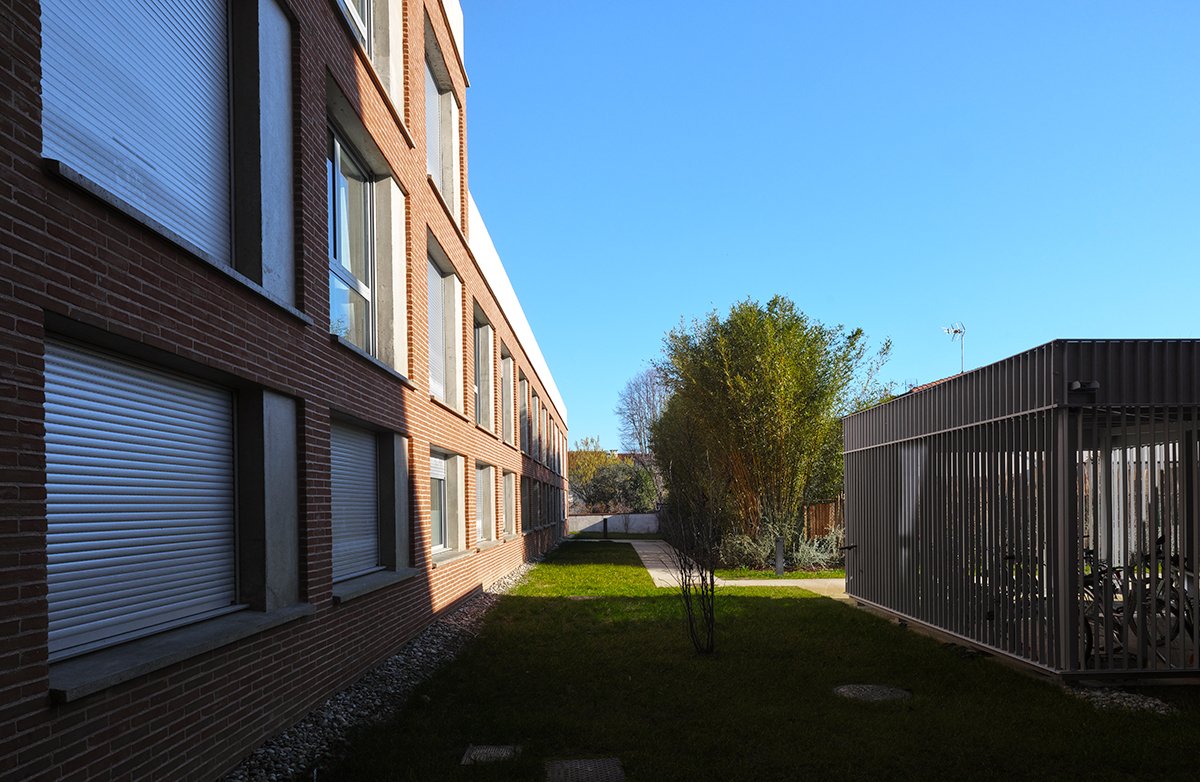
Open-ground fringes work to connect neighboring natural spaces and biological connections to create a natural fringe. The spaces are designed with extensive meadows and areas of varied and dynamic planting beds. The more or less dense plantings of diverse young plants allow for the rapid establishment of an ecologically sustainable plant mass.
Two terraces on the first and second floors play a complementary role by providing a unique green space linking the wooded ground floor area to the upper floors. These terraces are planted and provide a green appearance from the moment the vegetation is implemented. A play on plant dynamics and different types of management throughout the project create different spaces allowing for the establishment of the biodiversity necessary for the project.
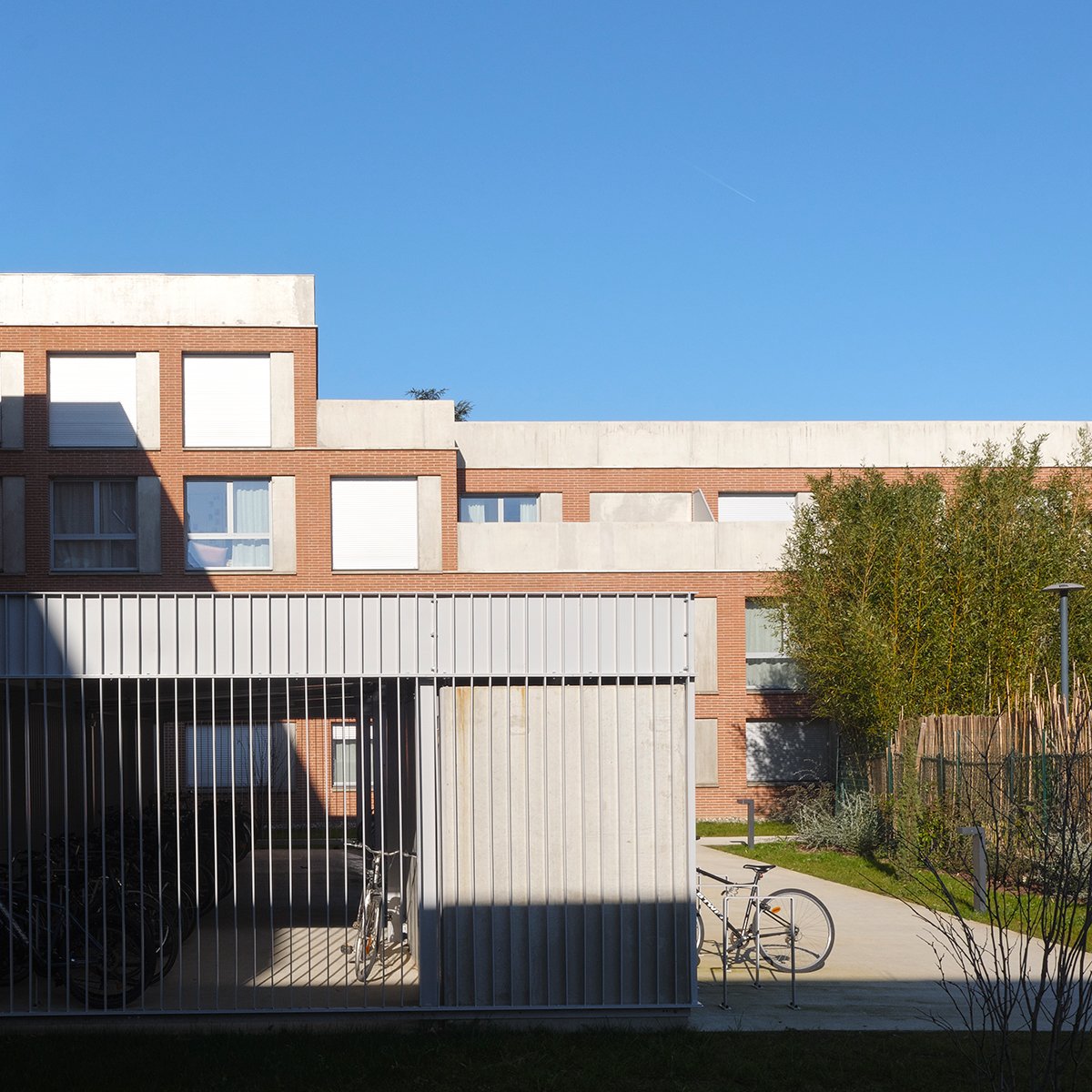
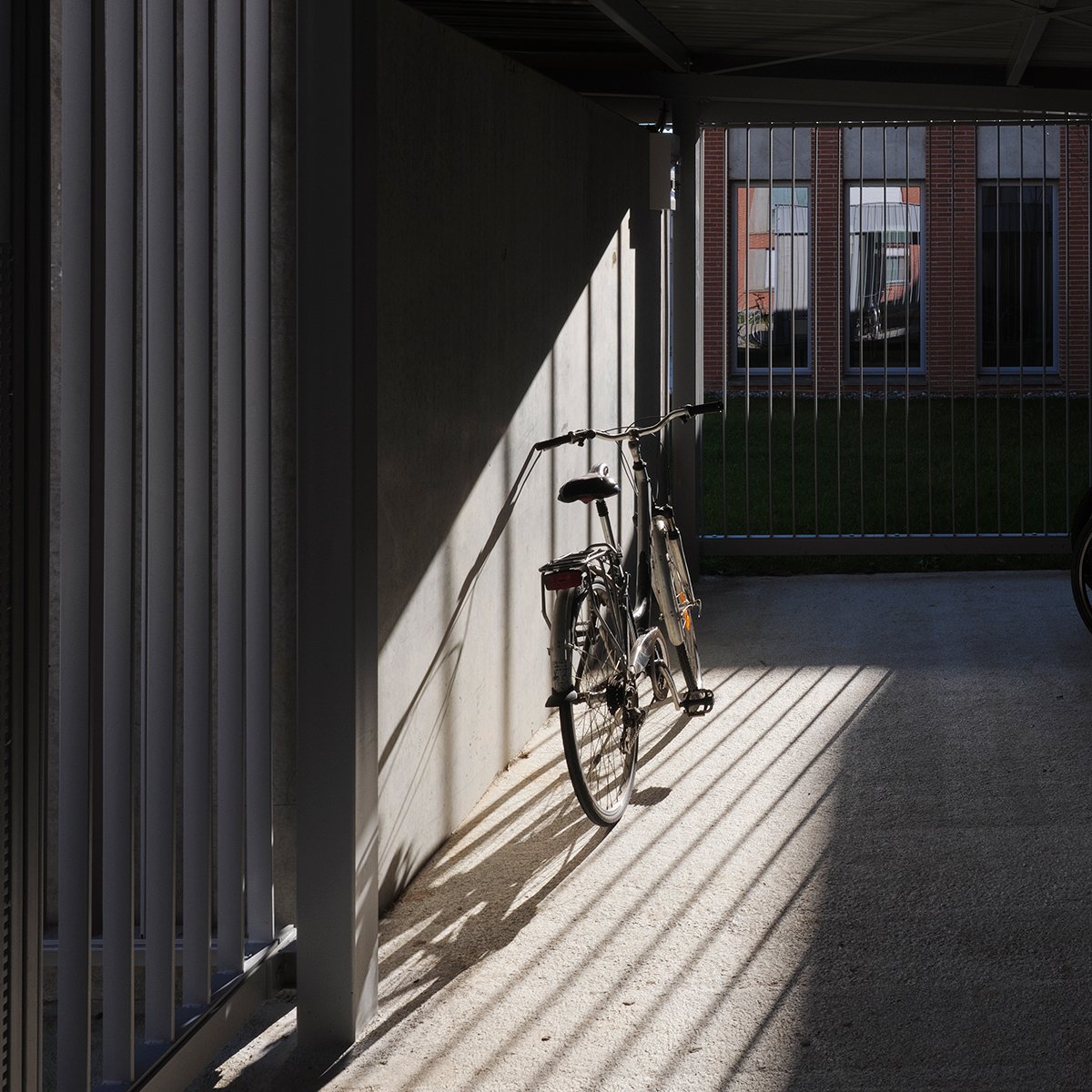
The various spaces of the project are designed to allow for the establishment of biological diversity that affirms landscape quality throughout all seasons. They are also designed to create continuities between the project and the outdoor spaces. Near the bicycle parking area on the ground floor, furniture and planted planters contribute to the creation of an outdoor green atmosphere offering friendly, tree-lined spaces for future users. These planters will be dedicated to the shared vegetable gardens to enhance the landscaped features in a playful way.
Reversibility Principles: The project is currently a student residence, but we propose using simple construction solutions to transform the student housing into traditional housing in the future. The construction system allows one-room apartments to be combined to create two-, three-, or four-room apartments, thus offering a traditional housing program.
Images