Home » Academic projects » Landscape Architecture Of Dan Xay Eco-Tourism Area Combined With Income Improvement Activities Of Vulnerable Communities – An Thoi Dong Commune – Can Gio District – Ho Chi Minh City | Masters Design Thesis on Landscape Architecture
Landscape Architecture Of Dan Xay Eco-Tourism Area Combined With Income Improvement Activities Of Vulnerable Communities – An Thoi Dong Commune – Can Gio District – Ho Chi Minh City | Masters Design Thesis on Landscape Architecture
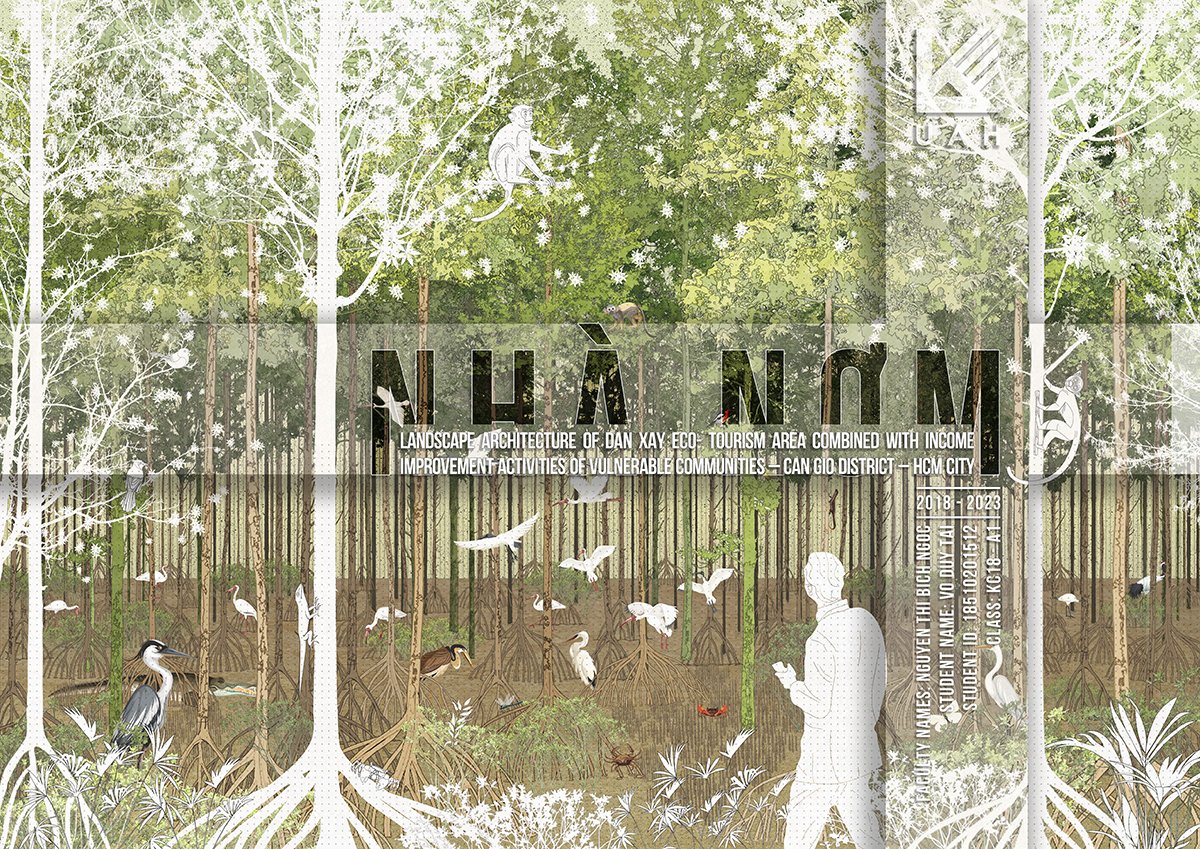
Project Name: Landscape architecture of Dan Xay eco-tourism area combined with income improvement activities of vulnerable communities – An Thoi Dong commune – Can Gio district – Ho Chi Minh city
Student Name: Vo Duy Tai
Awards: Special prize of the Urban Planning & Development Association 2023 | First prize of the Vietnam Society of Landscape Architecture 2023 | Salutatorian of the Landscape Architecture program, Class of 2018–2023
Excerpt: ‘NHÀ NƠM’ is a Masters Design Thesis by Vo Duy Tai from the ‘Department of Architecture – University of Architecture Ho Chi Minh City (UAH).’ The project uses landscape design as a tool to harmonize ecological conservation with community development in the Can Gio mangrove forest. By integrating sustainable aquaculture models and ecotourism activities, it seeks to restore and protect the mangrove ecosystem while creating livelihood opportunities for local residents. The project aspires to build a sustainable home where people and nature can coexist and thrive together.
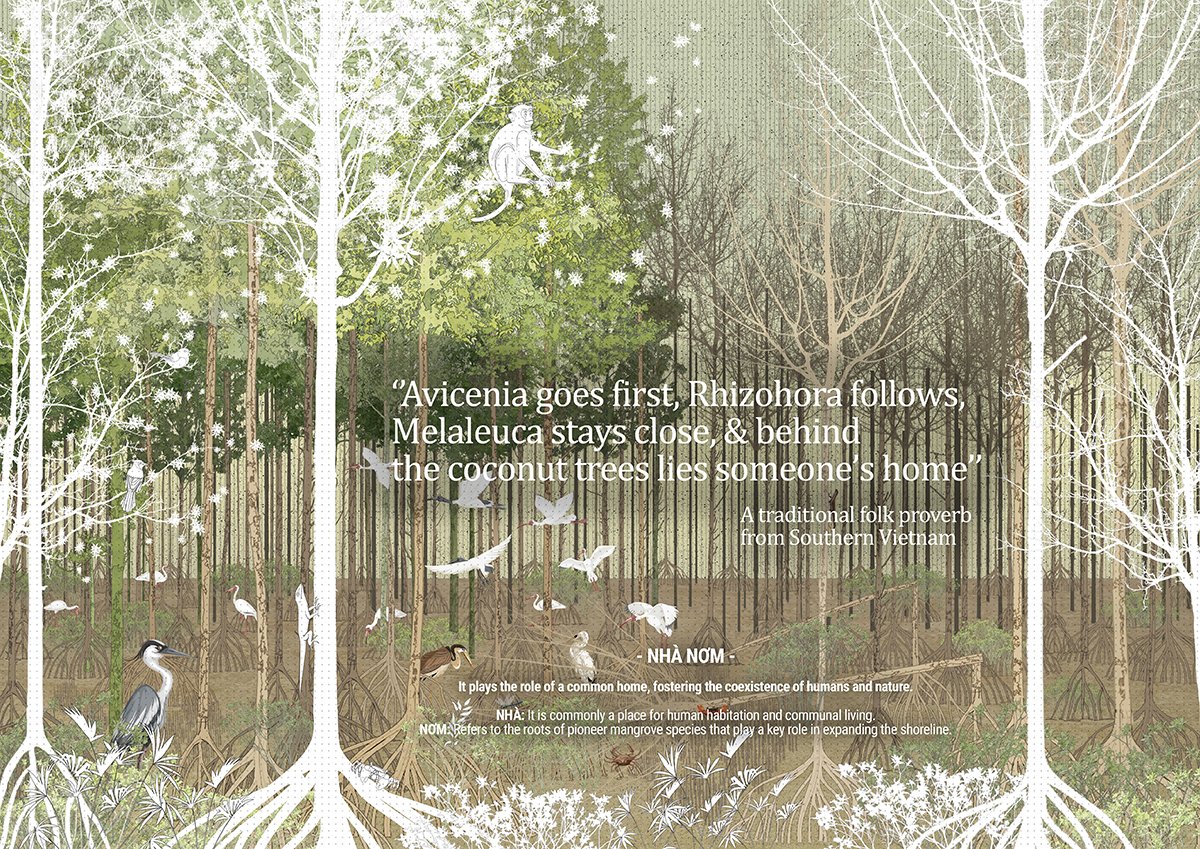
Introduction: A traditional folk proverb from Southern Vietnam that says, “Avicennia goes first, Rhizophora follows, Melaleuca stays close, and behind the coconut trees lies someone’s home.” This reflects how mangrove forests have long been deeply intertwined with the lives of our ancestors, playing a crucial role in land expansion and creating favorable conditions for human settlement.
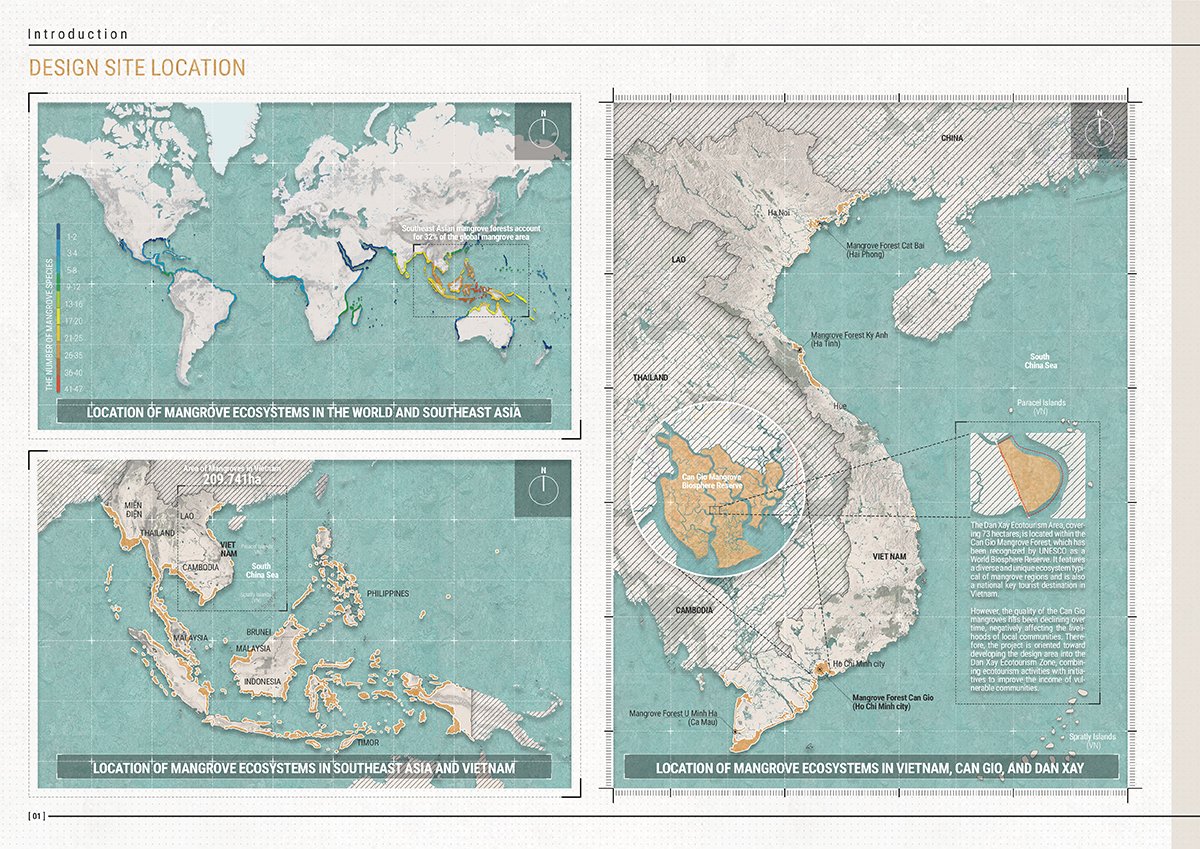
The Dan Xay Ecotourism Area, covering 73 hectares within the Can Gio mangrove forest, has been recognized by UNESCO as one of the world’s biosphere reserves. It is a typical ecosystem of mangrove forests and also a nationally important ecotourism site in Vietnam.
In the context of the declining quality of Can Gio mangrove forests due to degradation over time, which negatively affects biodiversity and the livelihoods of local communities, challenges are increasing. Therefore, intending to develop ecotourism while ensuring sustainability, the Dan Xay Ecotourism Area integrates activities that help improve the income of vulnerable local communities.
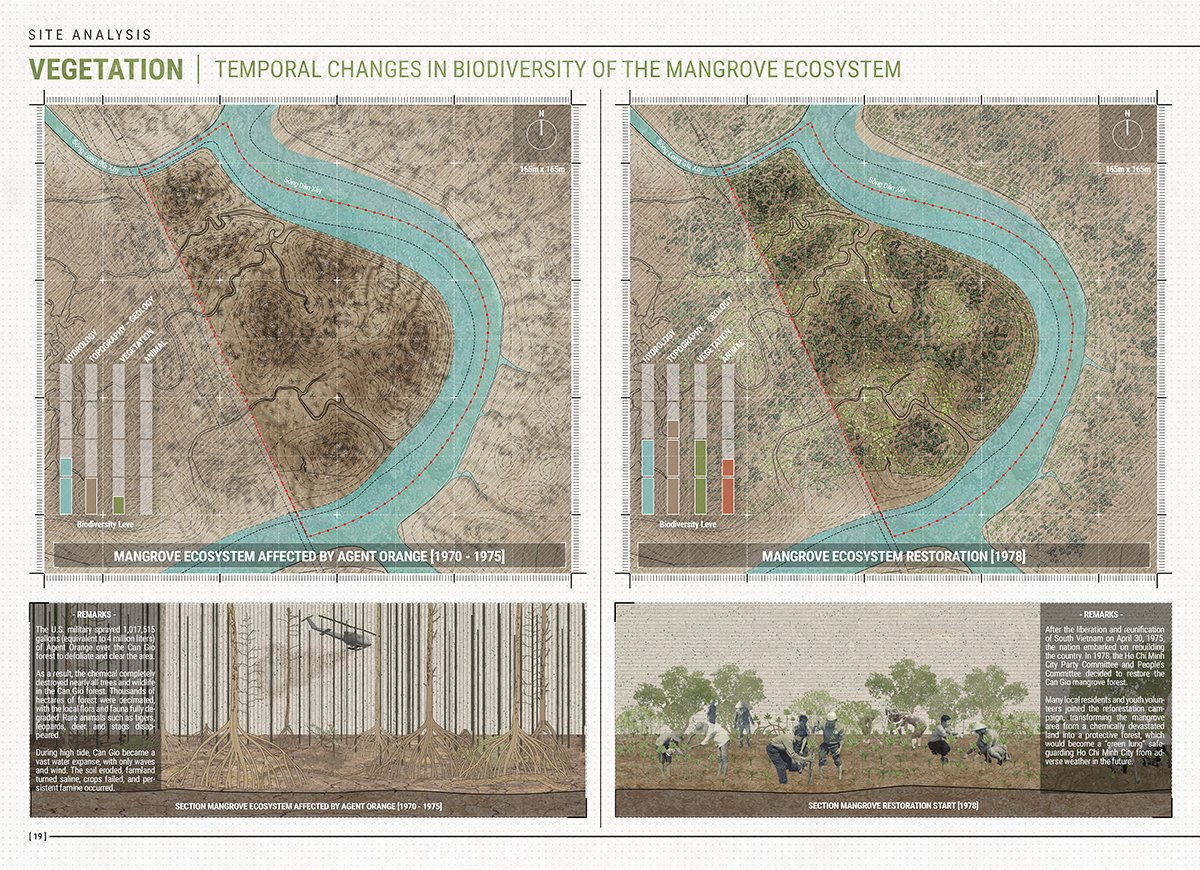
Mangrove ecosystems are among the most diverse and ecologically important globally, with Vietnam’s long coastline hosting rich mangrove areas. Worldwide, mangroves cover 14–15 million hectares (down from 19 million in the 1980s), mainly in tropical and subtropical regions. Southeast Asia holds over one-third of global mangroves, with Indonesia, Malaysia, Thailand, Myanmar, Vietnam, and the Philippines having extensive coverage. Vietnam currently has 150,000–200,000 hectares, reduced from over 400,000 due to war, shrimp farming, and land conversion.
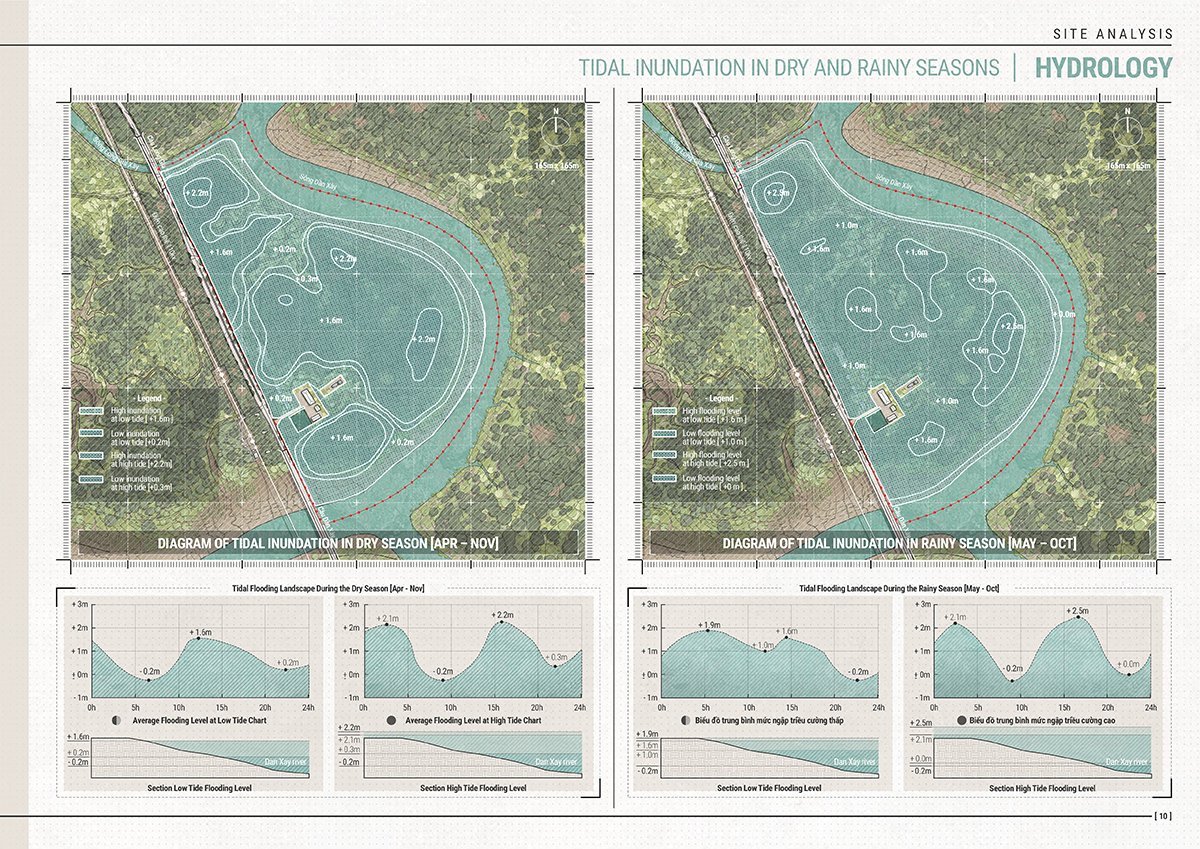
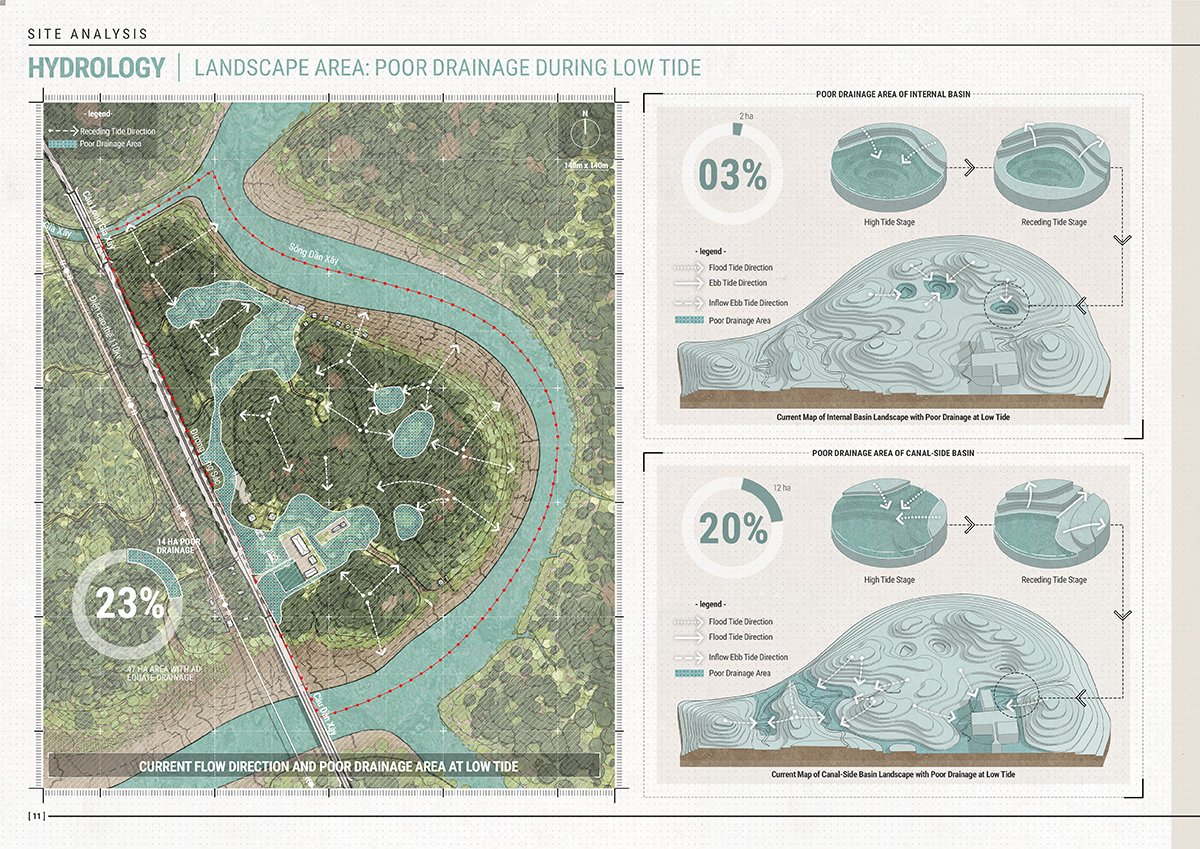
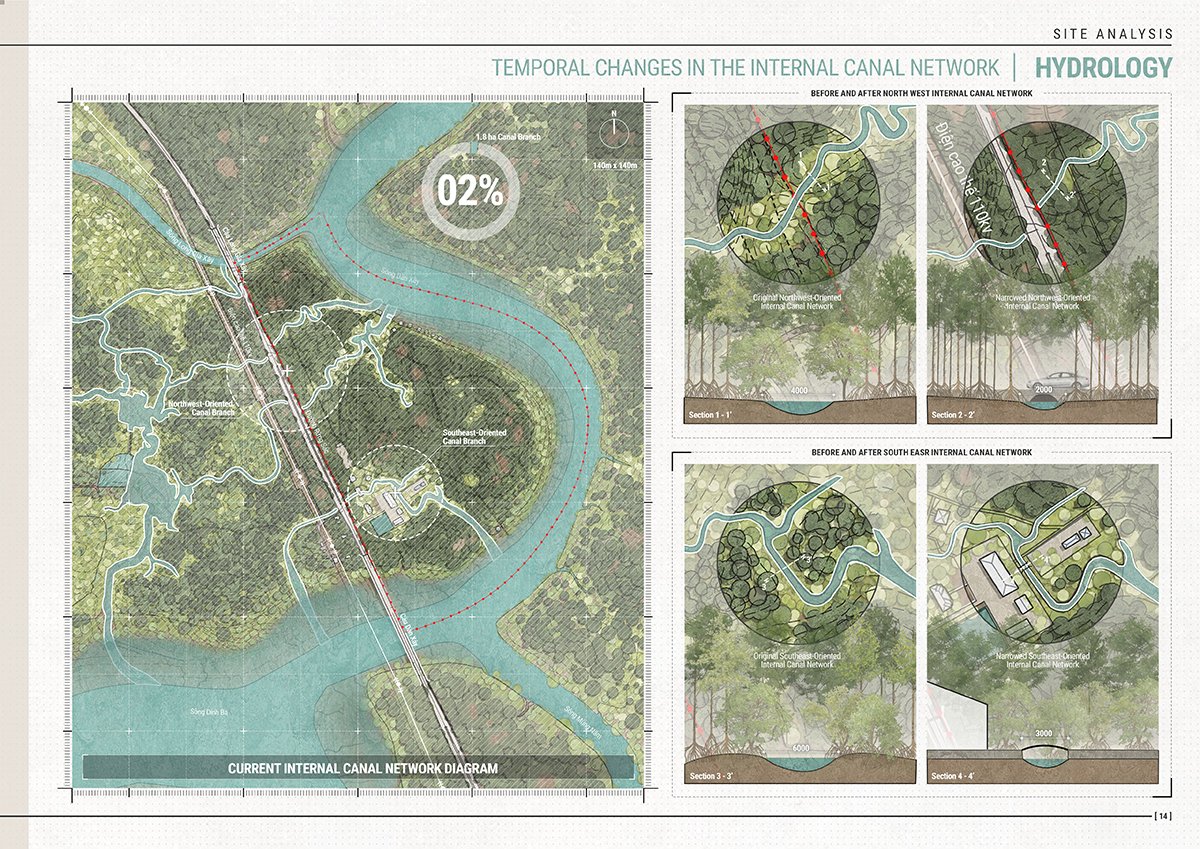
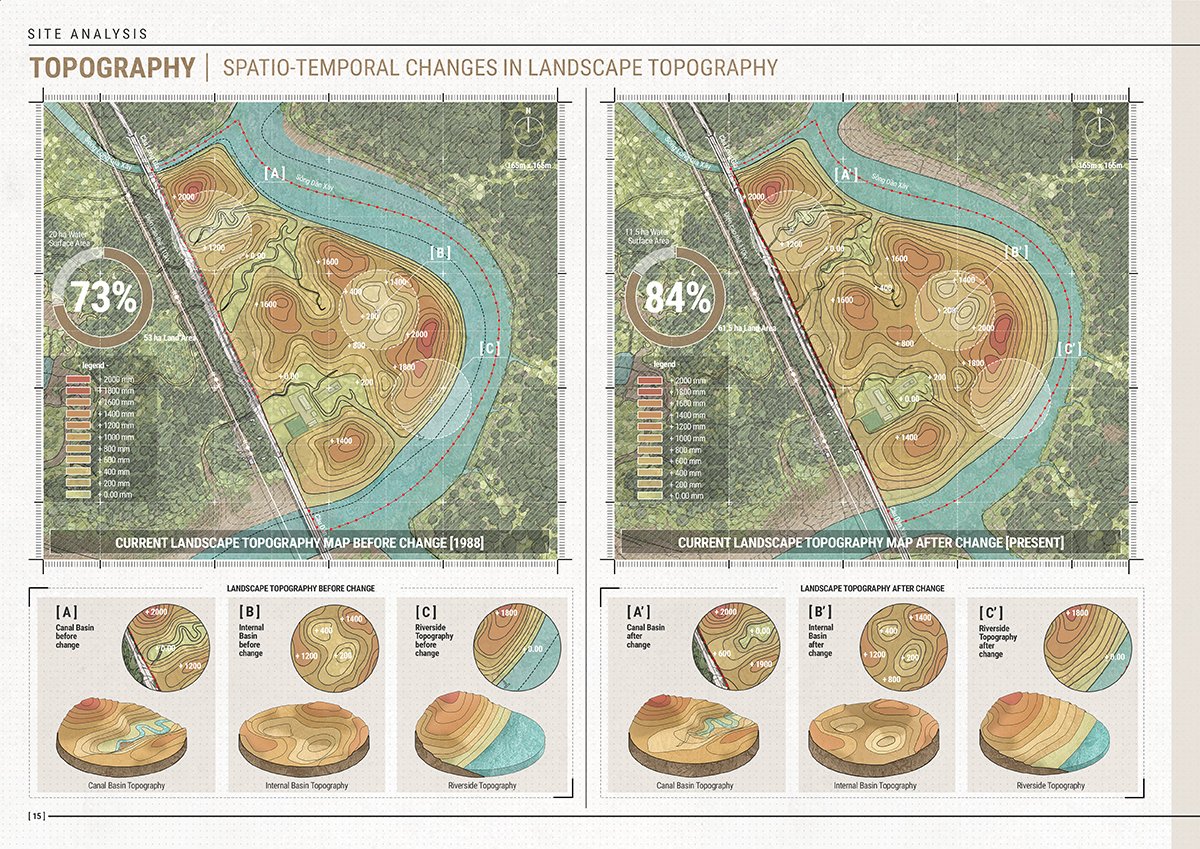
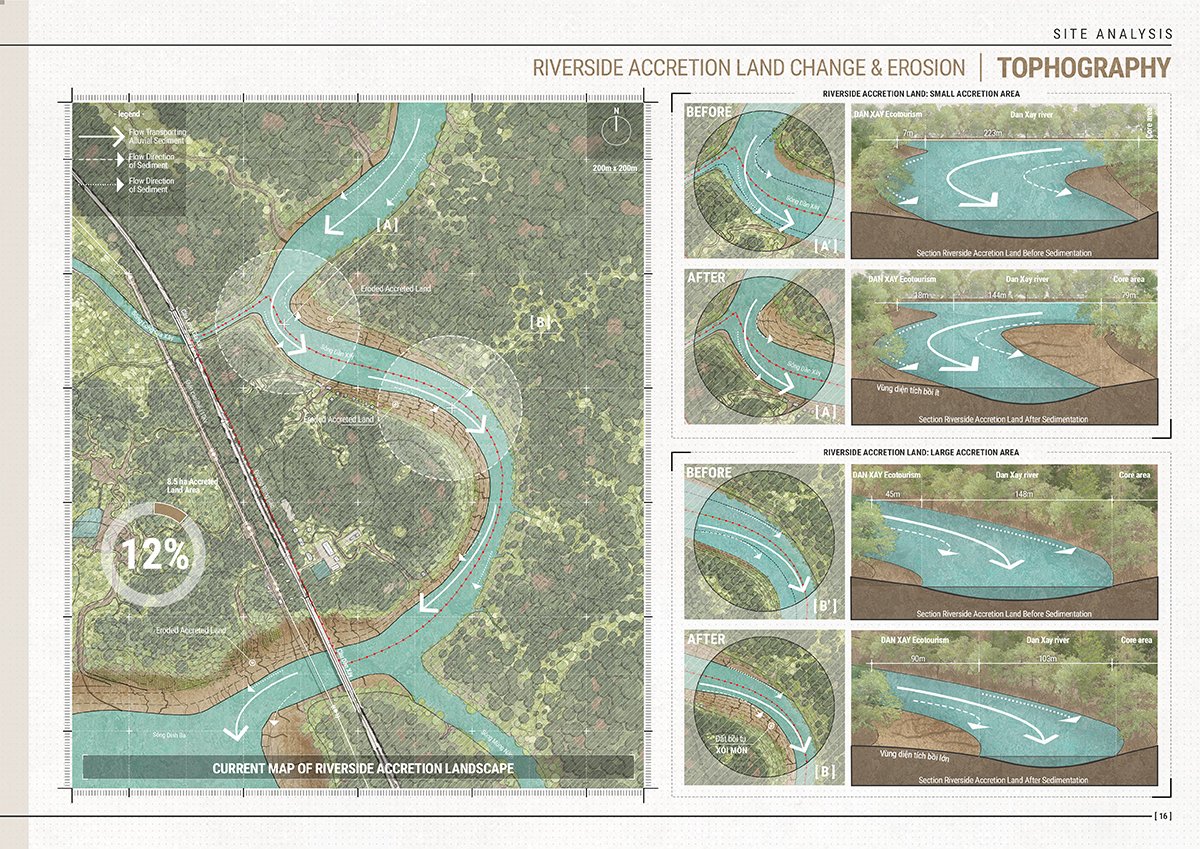
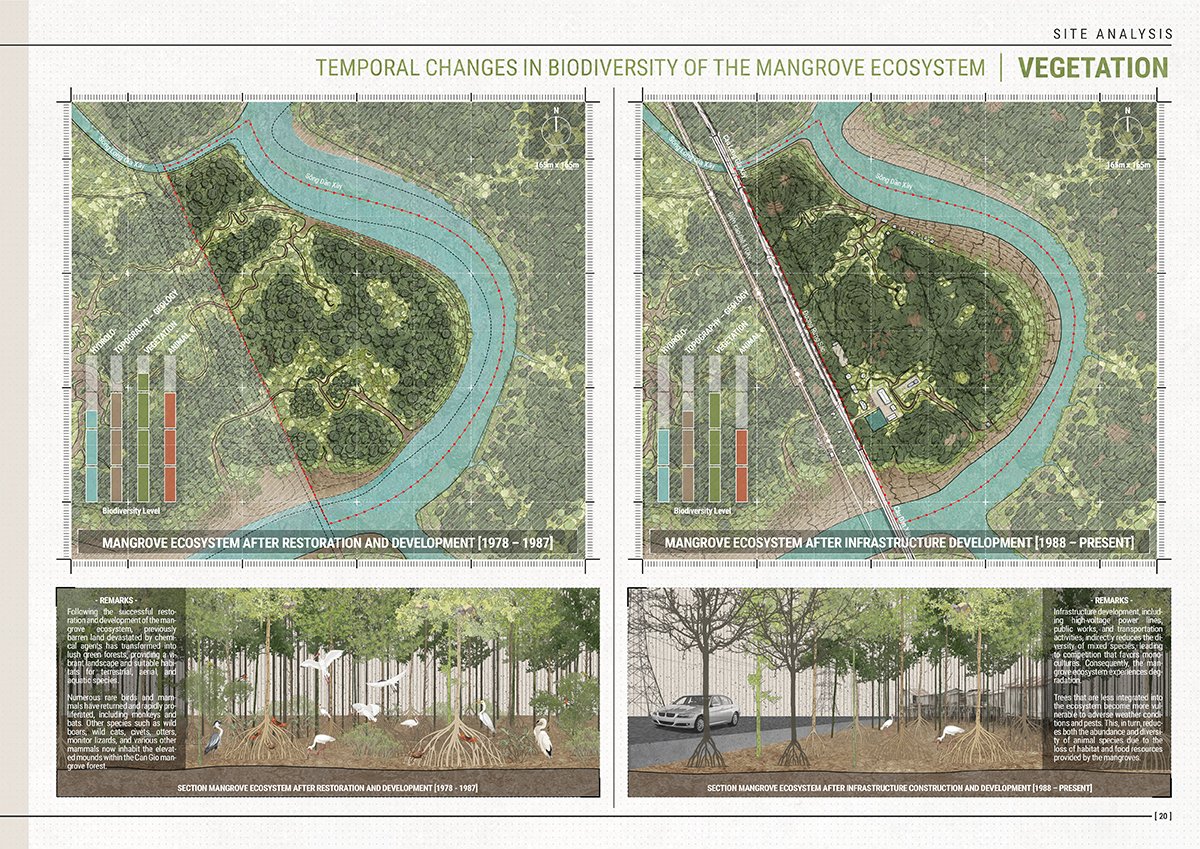
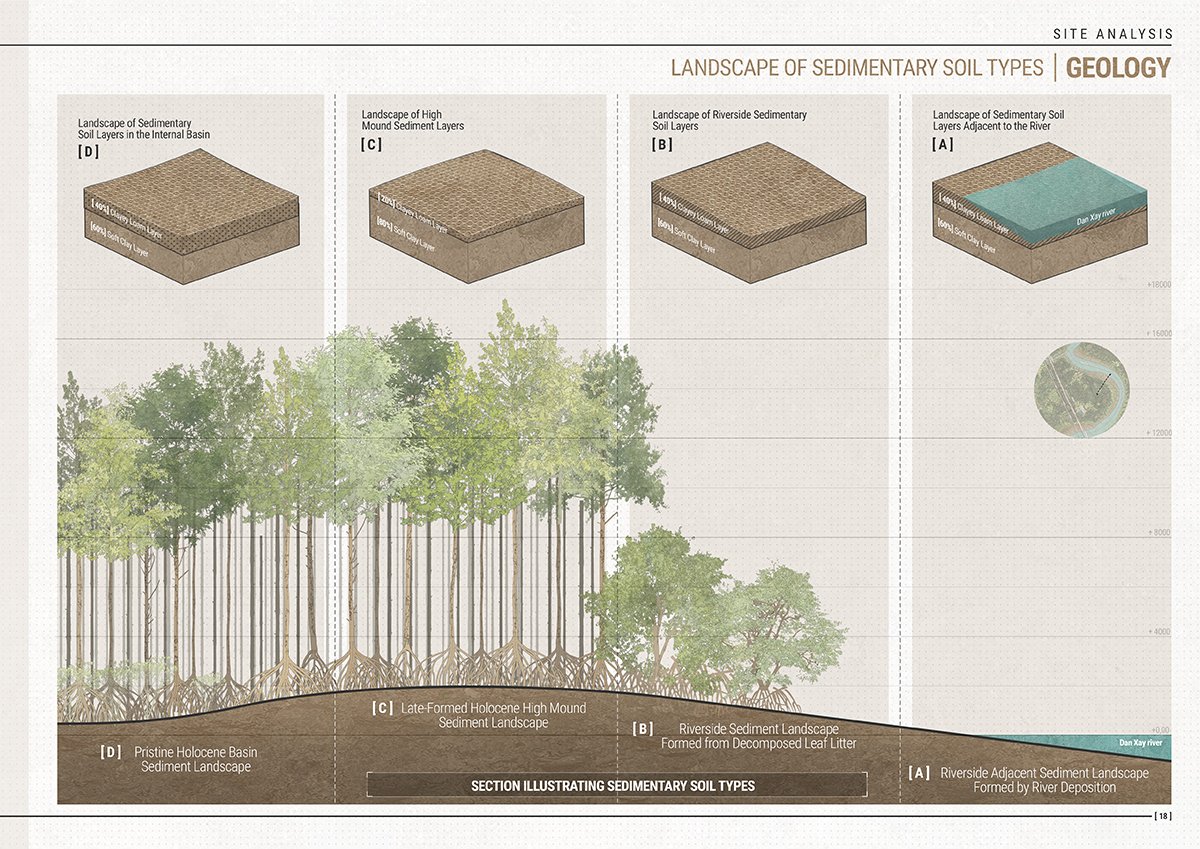
Can Gio’s mangroves are shaped by semi-diurnal irregular tides, river inflows from the Dong Nai–Saigon and Vam Co systems, and seasonal salinity changes (20‰ in the rainy season, over 30‰ in the dry season). The landscape is low-lying, flat, and dissected by canals and rivers, with clayey-silt soils prone to erosion, tidal inundation, and salinity—ideal for mangrove growth but challenging for construction.
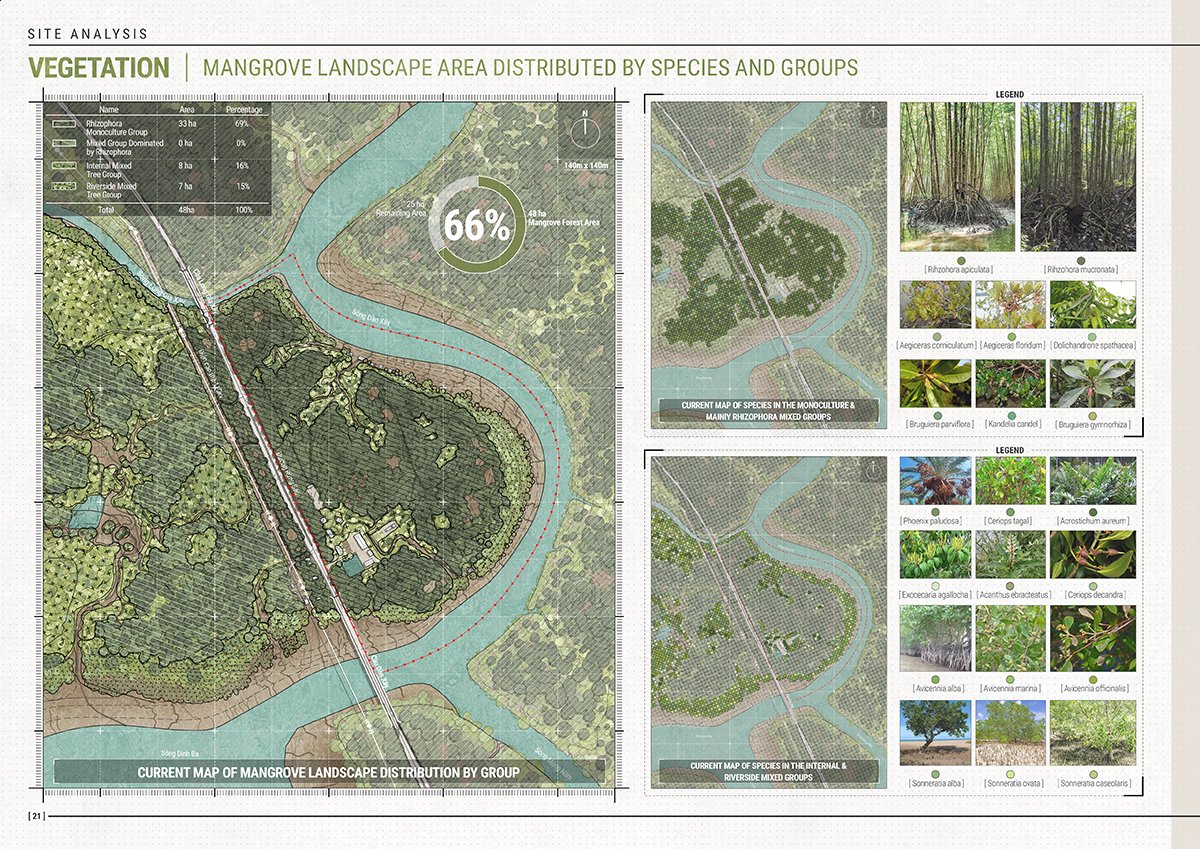
Plant diversity includes over 150 species, dominated by Rhizophora, Avicennia, Sonneratia, Bruguiera, and Lumnitzera, which stabilize soil and aid land accretion. Ecologically, mangroves protect coasts, regulate hydrology, support biodiversity, and provide resources for local communities.
Wildlife AnalysisWildlife Analysis
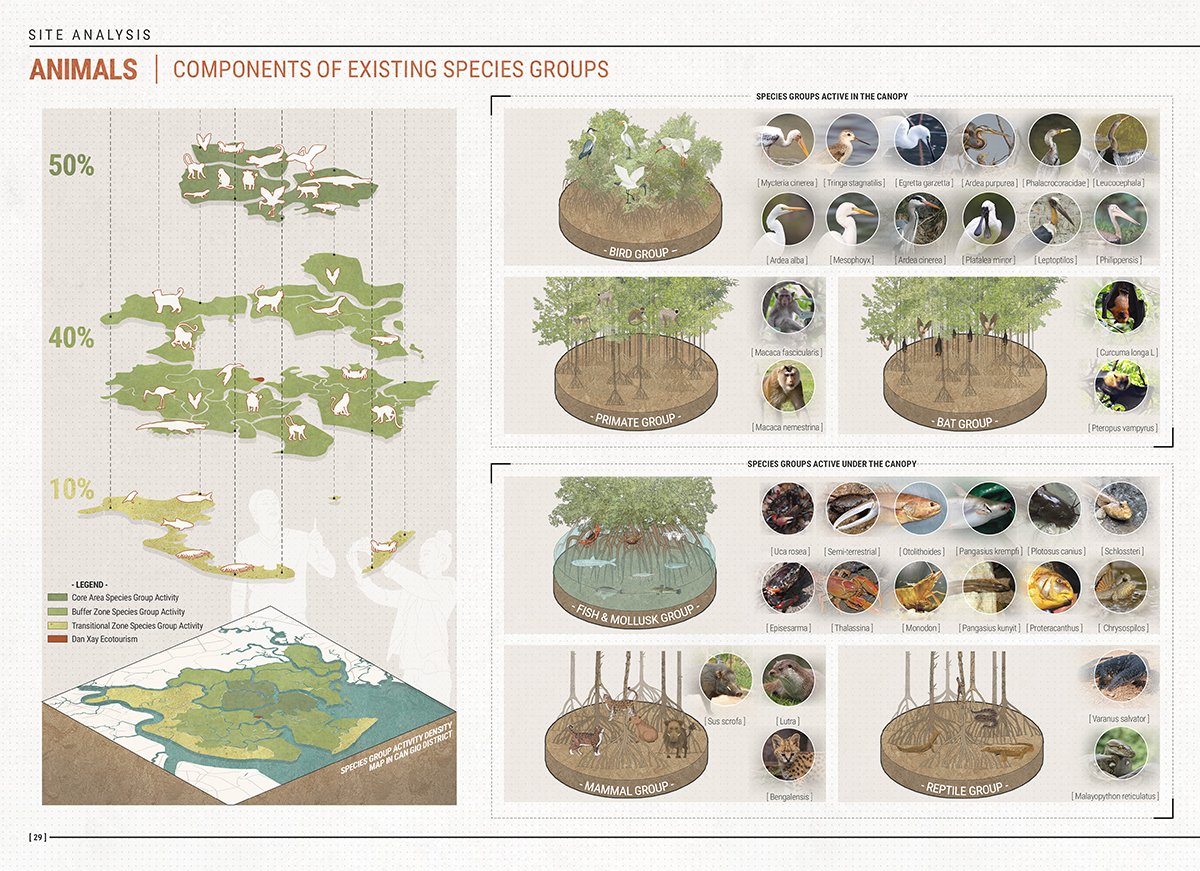
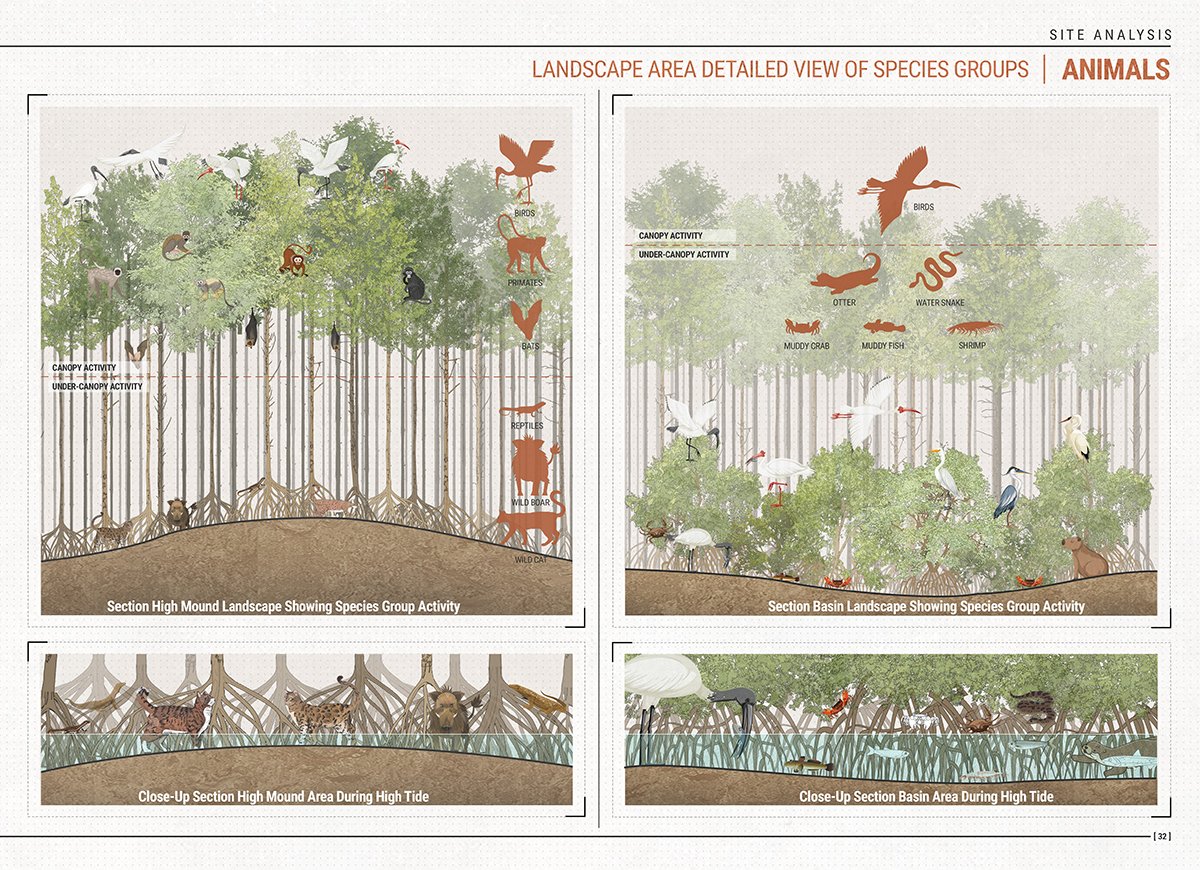
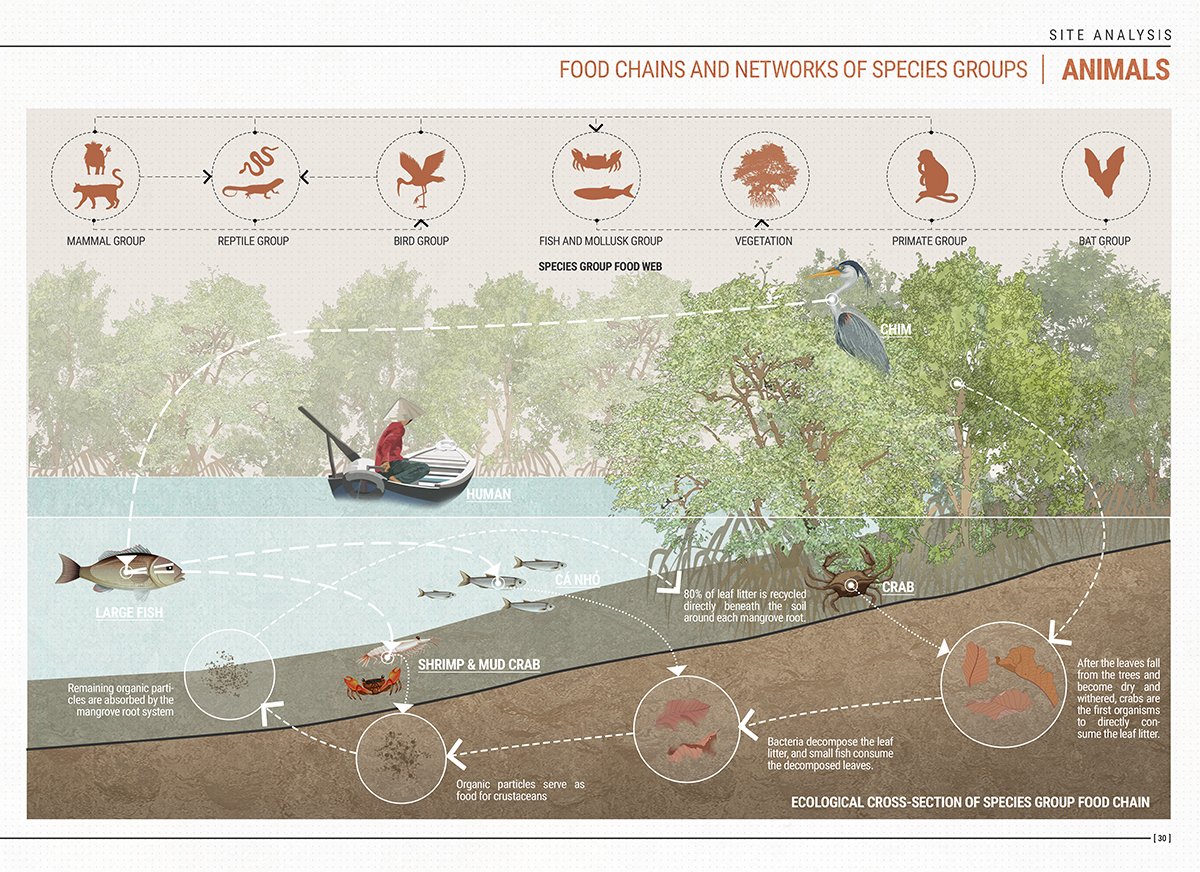
Animal diversity is high, including mammals (e.g., macaques, otters), reptiles (e.g., crocodiles, monitor lizards), birds, fish, and invertebrates. Mangroves offer habitats for feeding, breeding, and shelter, maintaining food chains and ecological balance while serving as stopovers for migratory birds.
Human Settlement AnalysisHuman Settlement Analysis
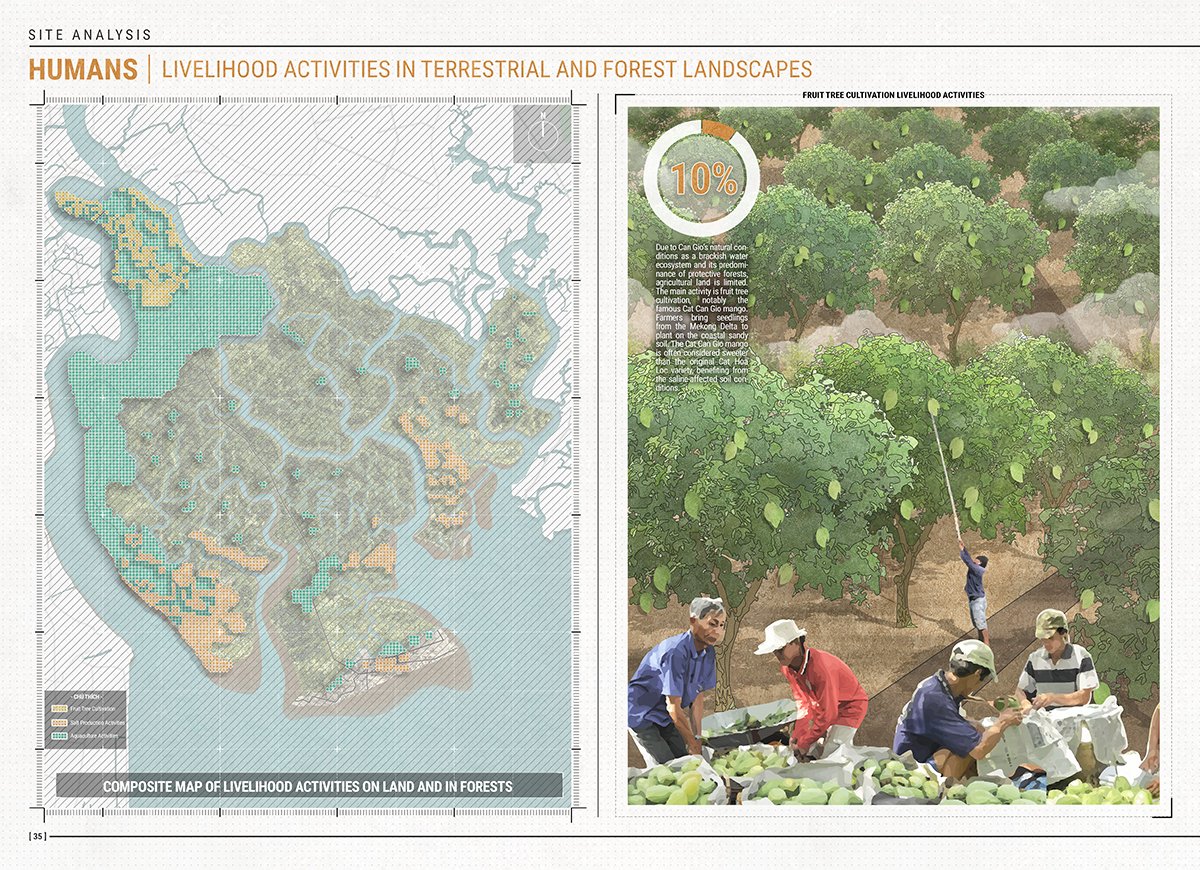
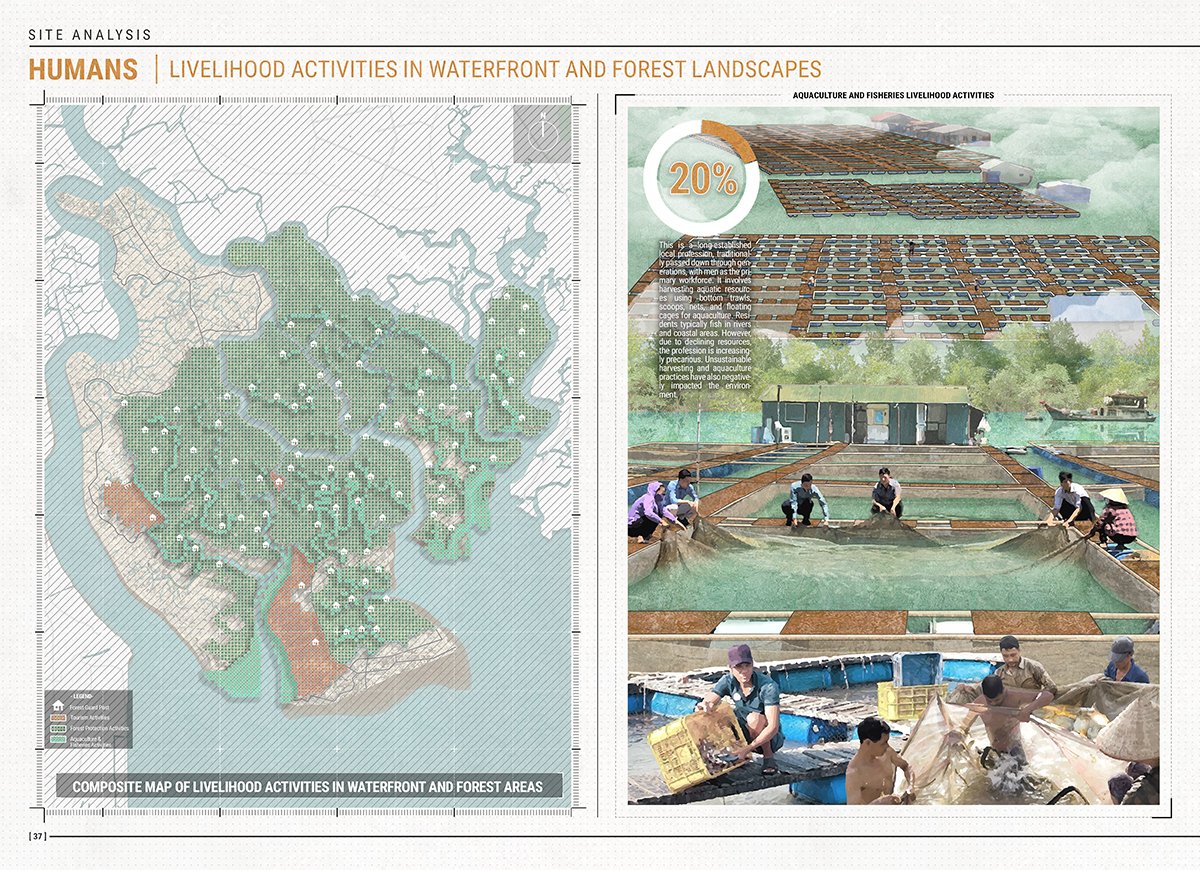
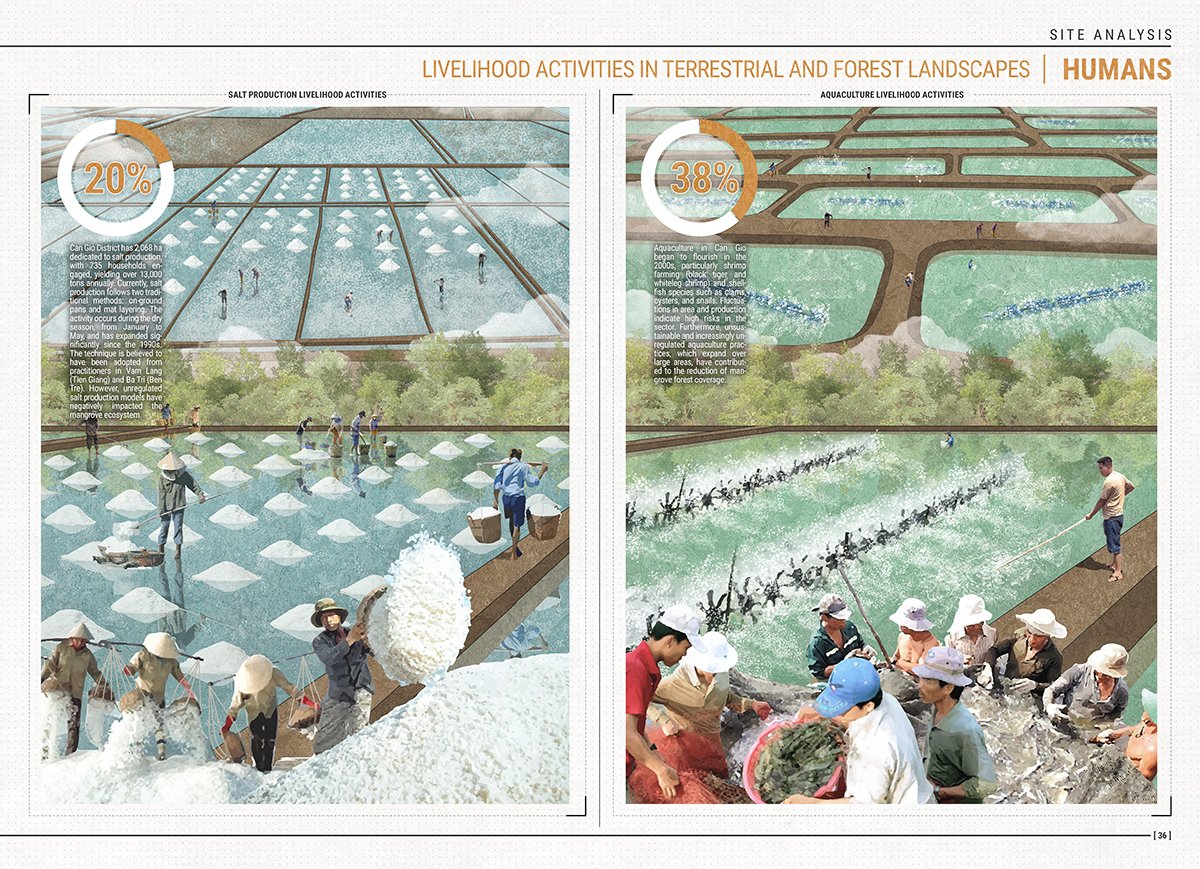
Local livelihoods rely on fisheries, aquaculture, non-timber forest products, and ecotourism, but remain vulnerable to environmental threats. Sustainable development requires integrating mangrove conservation with livelihood diversification, community awareness, and governmental support.
Design Process
Site Summary
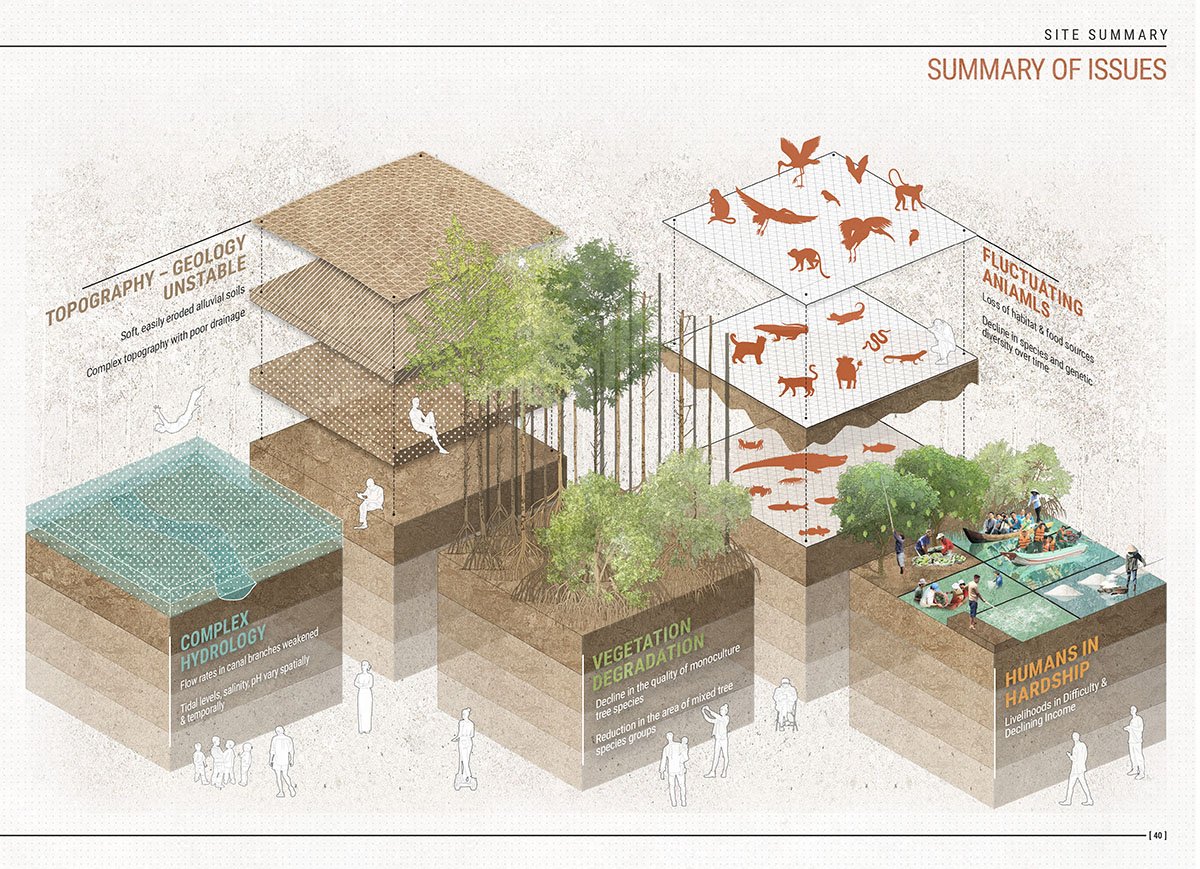
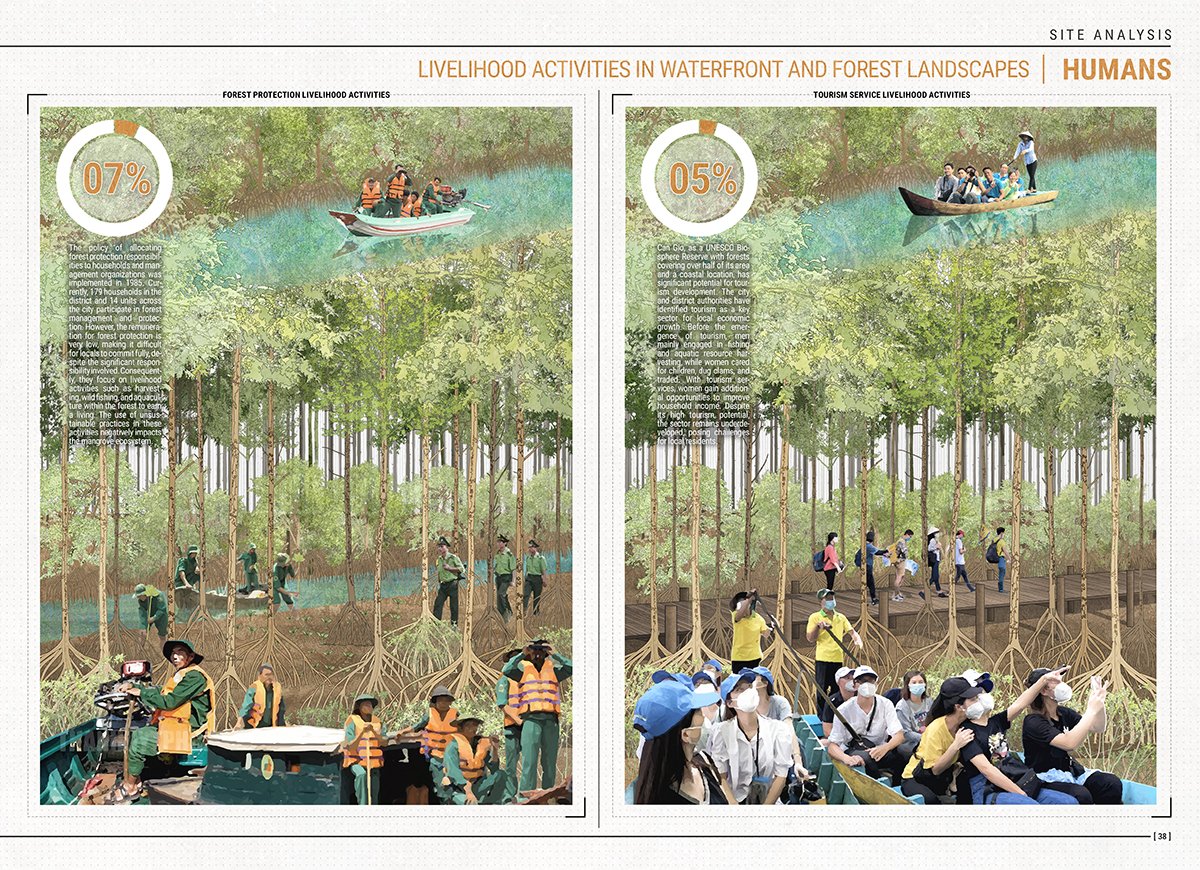
From the analysis of the five key issues, the central challenge is identified as the hardship faced by local people. This stems from the difficult living conditions of communities within the mangrove forests (both buffer and core zones, with a population of around 716). Their primary livelihood—forest guarding—accounts for only about 7% of income and generates very limited financial returns, mostly concentrated at guard stations.
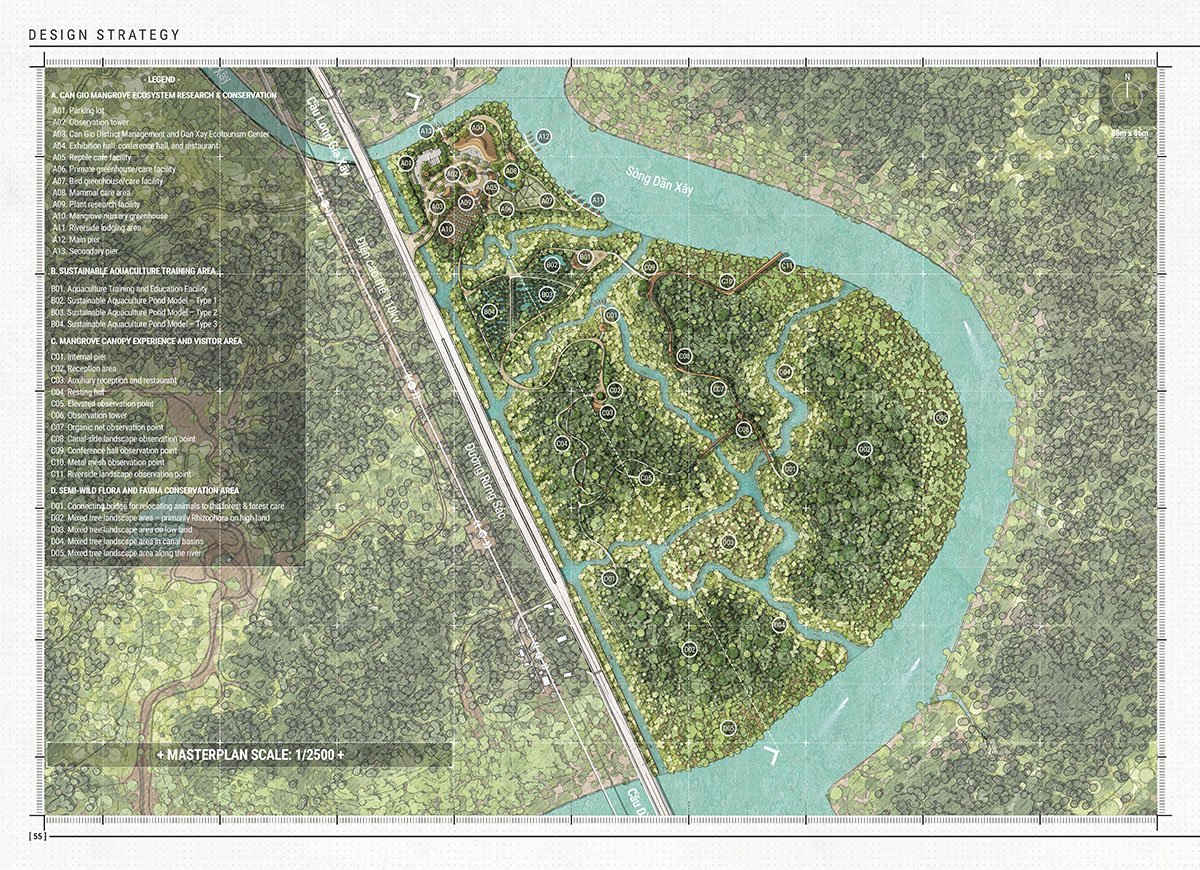
Design StrategiesDesign Strategies
Consequently, many households have turned to infrastructure expansion and aquaculture ponds as alternative income sources. However, these unsustainable practices have degraded the mangrove ecosystem, further worsening community livelihoods.
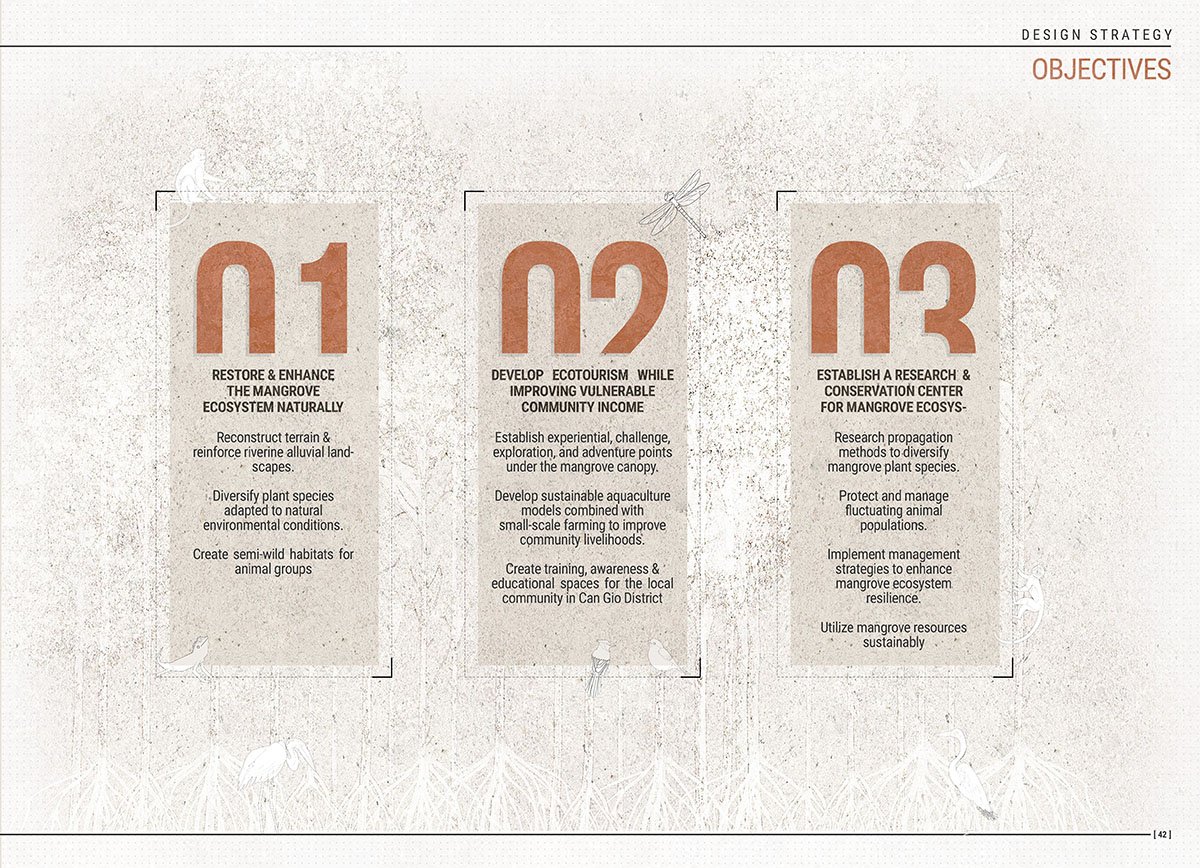
To address this, the project is titled: “NHÀ NƠM – Ecotourism Landscape Architecture at Dần Xây,” which integrates livelihood improvement activities for vulnerable communities. The project is guided by three main goals supported by specific action strategies.
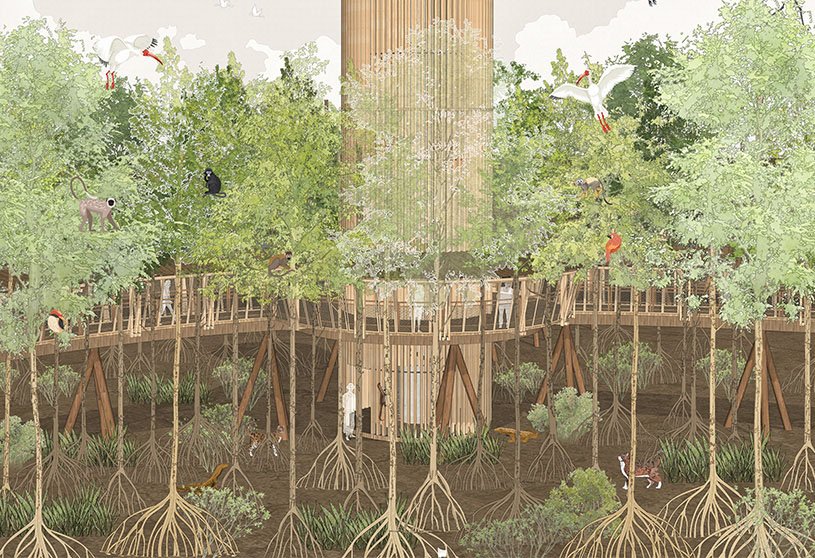
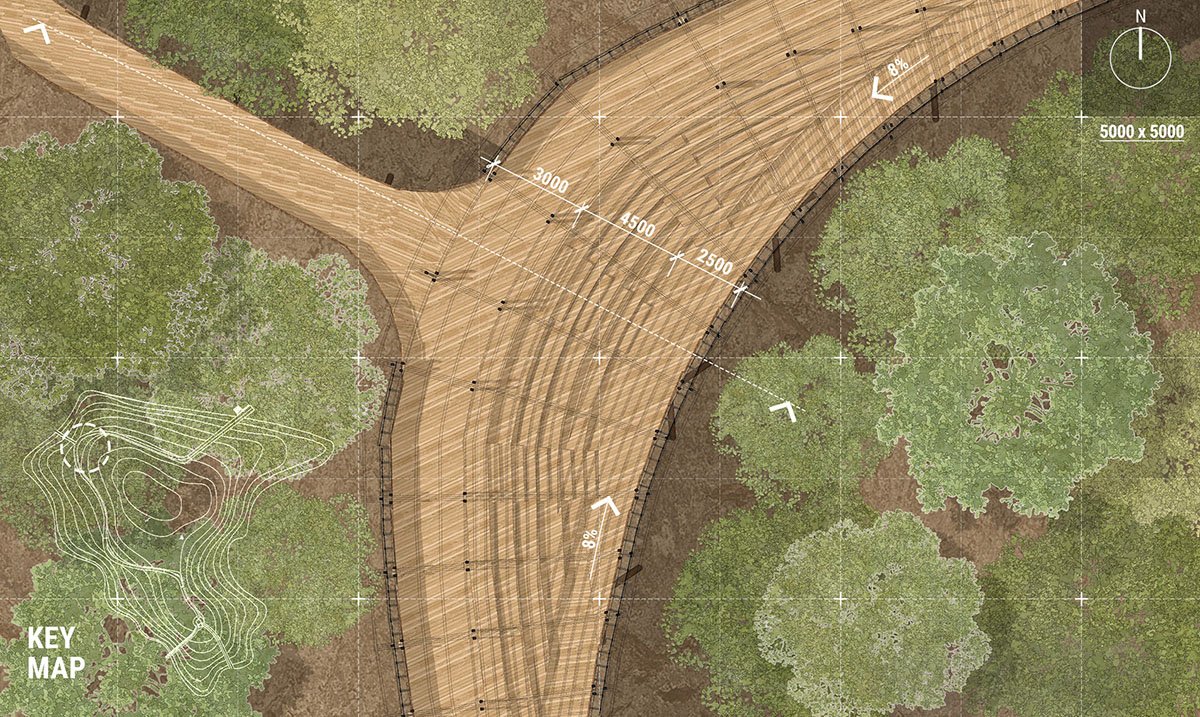
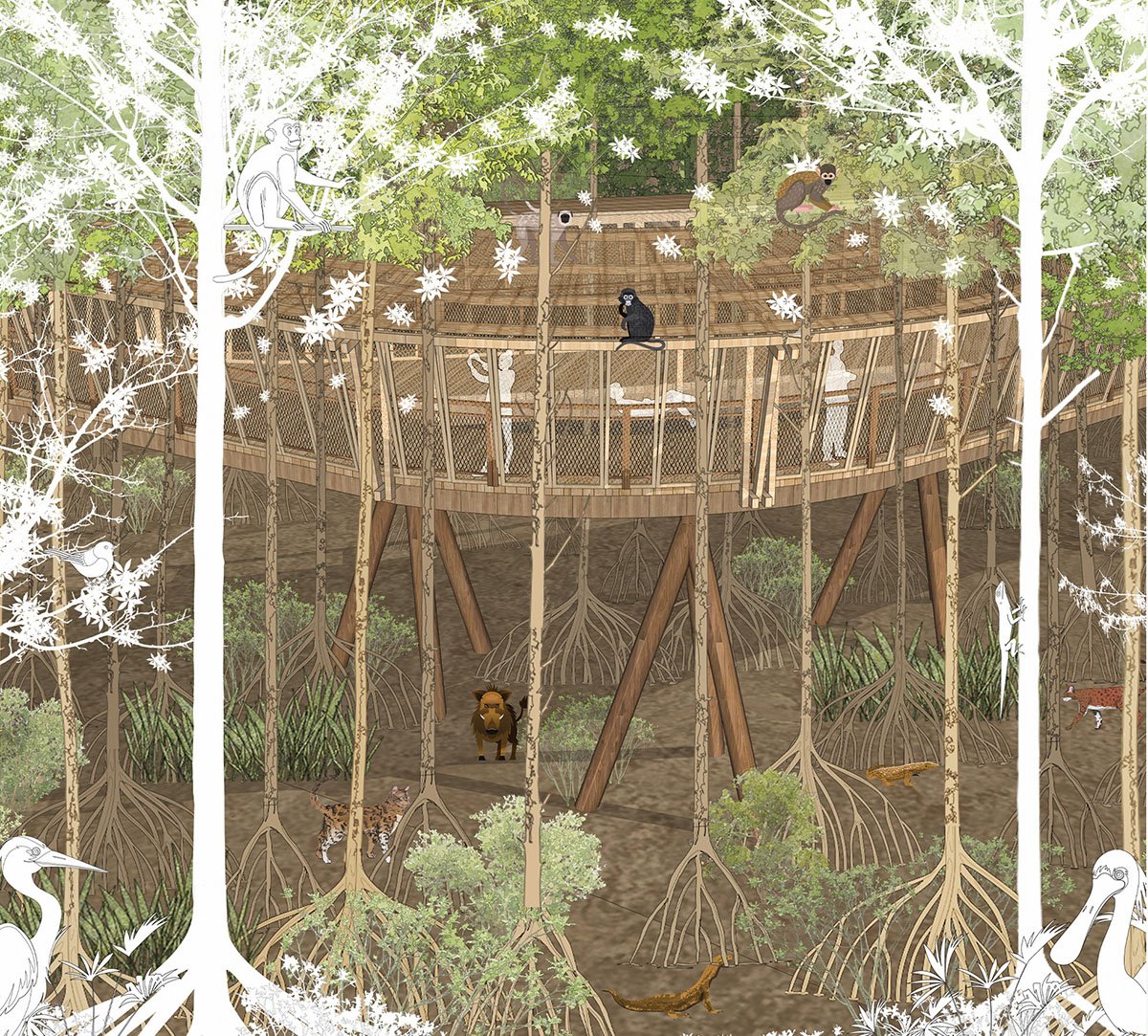
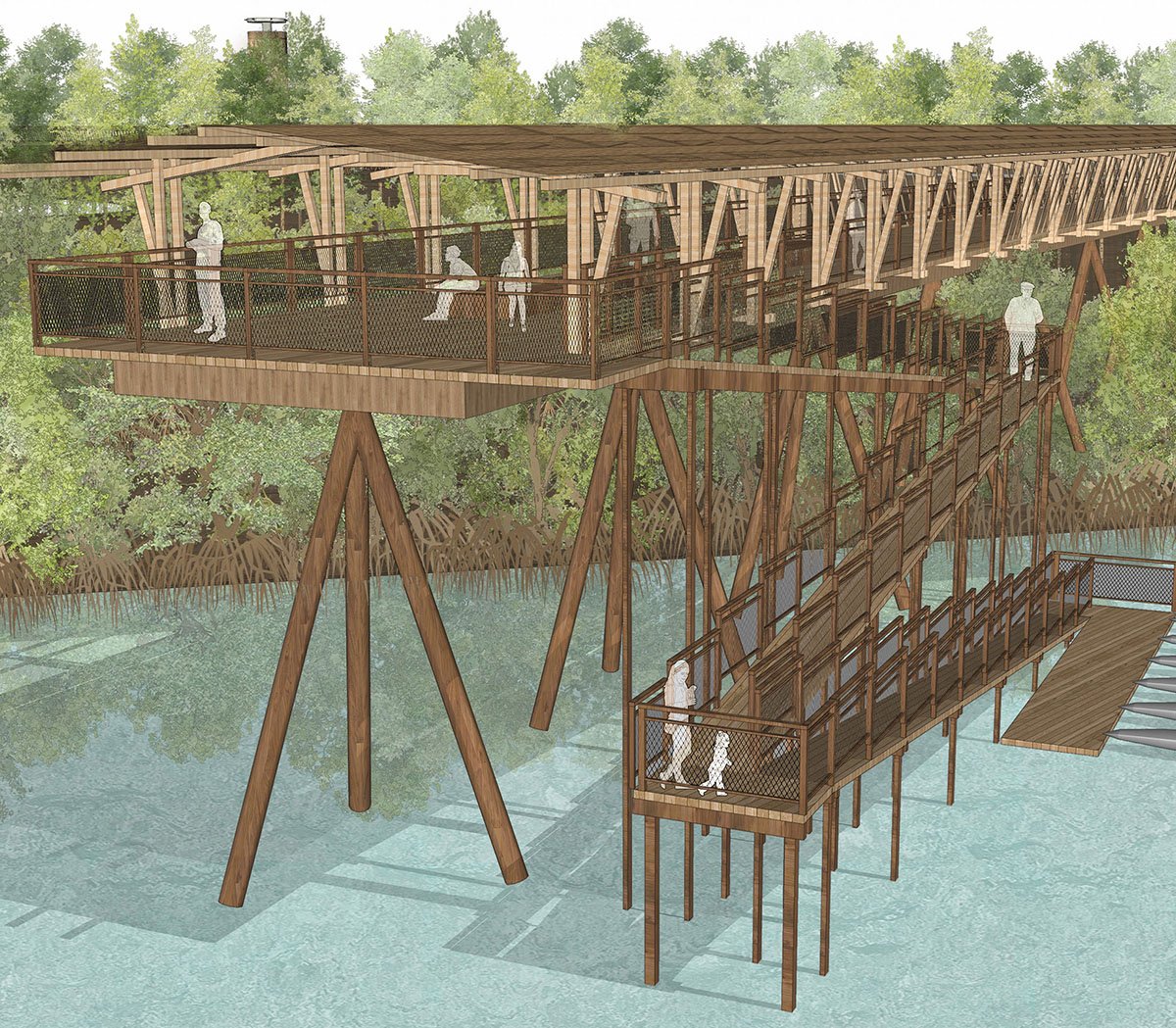
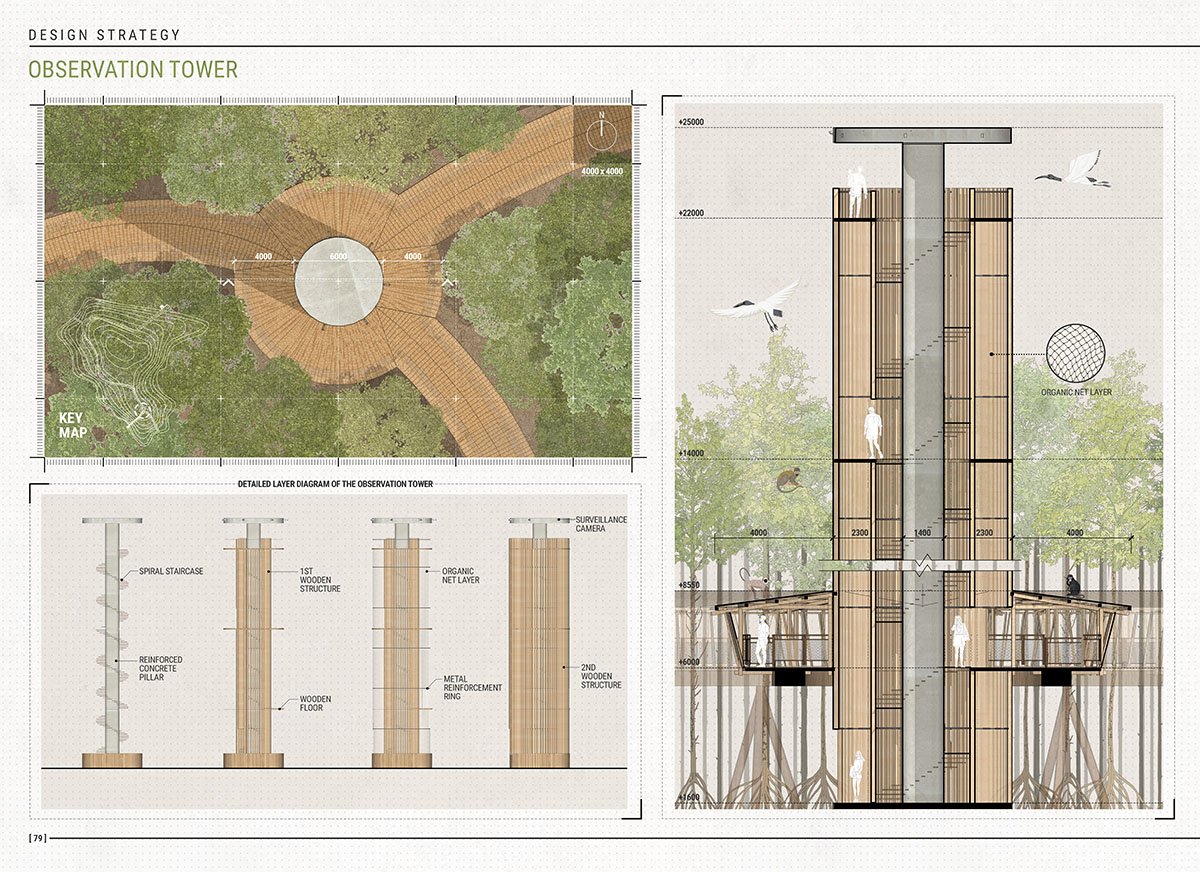
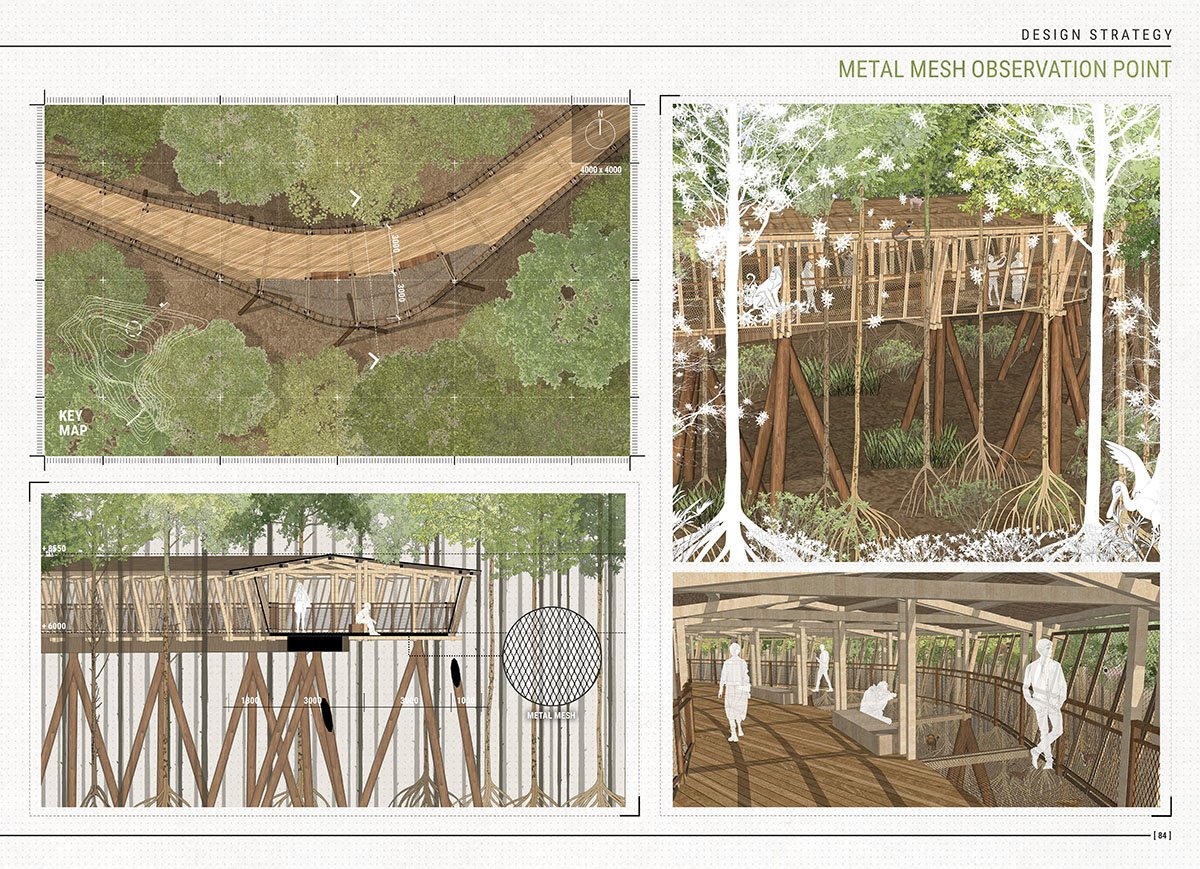
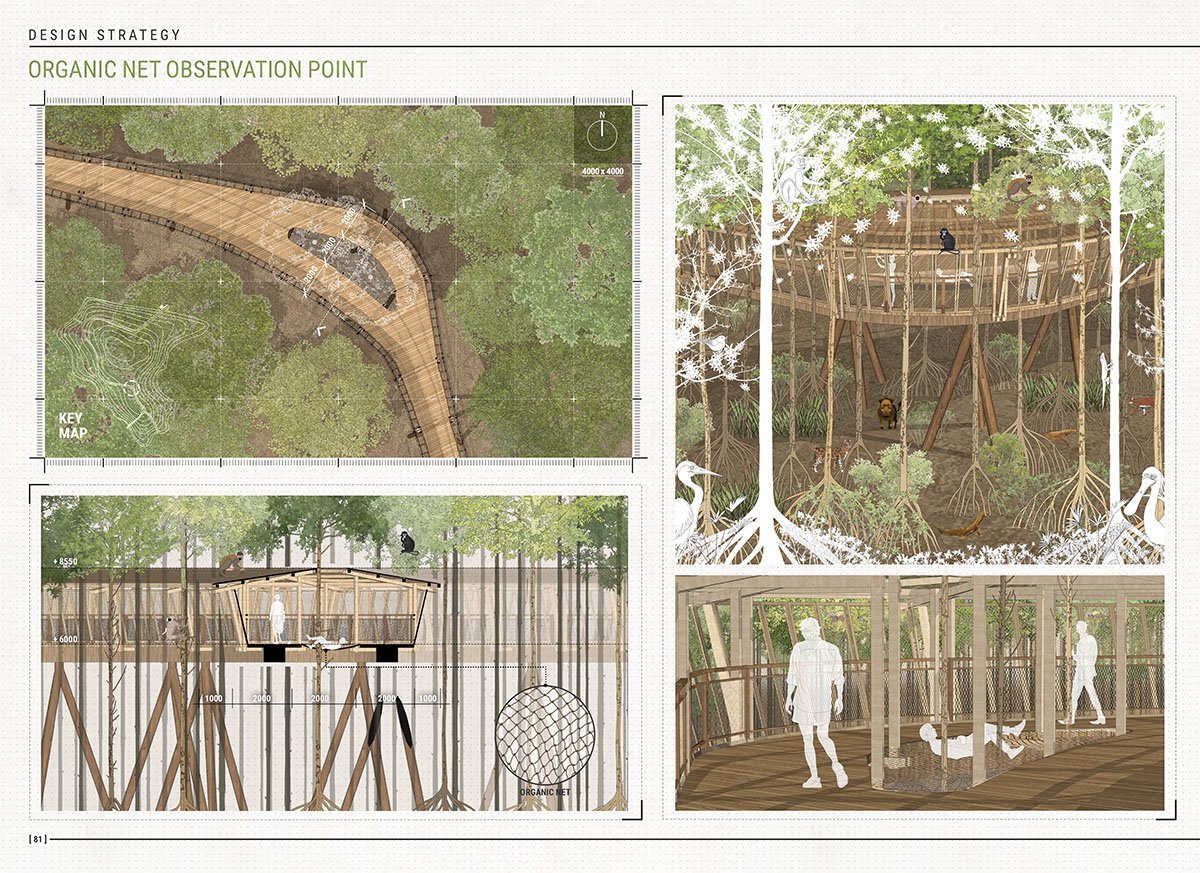
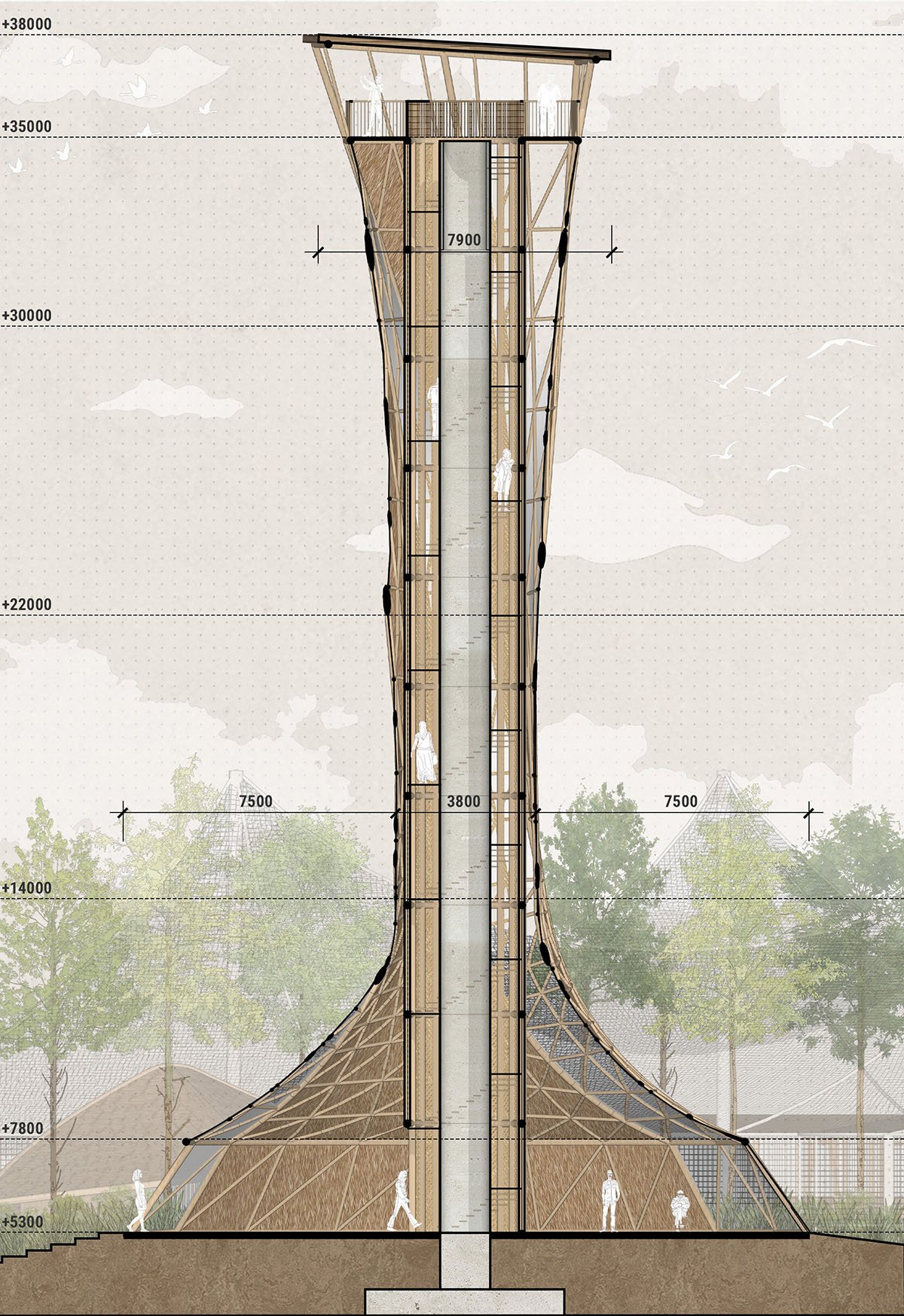
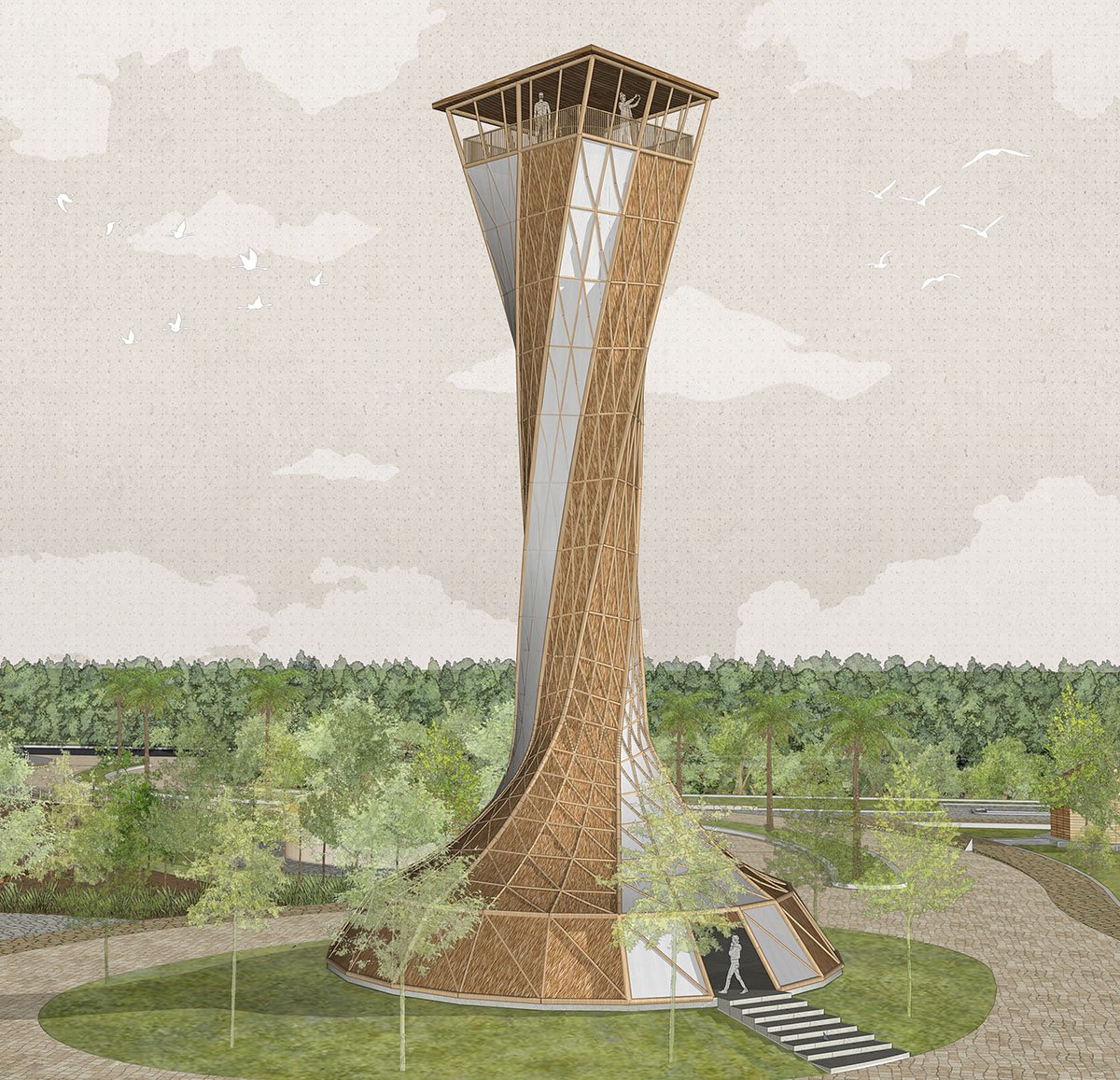
Inspired by the unique root structures of mangrove trees, the design creates not only a striking landmark but also a functional space that enhances the visitor experience. Elevated viewpoints offer perspectives across the Can Gio mangrove forest, with special focus on the Dần Xây area.
Observation Tower – PlanObservation Tower – RendersMetal Mesh Observation Point – SectionMetal Mesh Observation Point – Render
The observation tower is organized into three levels: the ground level brings visitors close to the forest floor and mangrove roots; the second level provides views of wildlife activity beneath the canopy; and the top level opens to a wide, panoramic vista of the core mangrove zone. Together, these varied vantage points immerse visitors in the forest from water to land.
Aquaculture Pond ModelAquaculture Pond Model
Integrated within the landscape are four small-scale aquaculture models—floating cages, submerged cages, net enclosures, and mud-crab farming—distributed across three types of ponds interwoven with mangrove vegetation. These models generate employment and income for local communities while ensuring ecological sustainability and minimizing harm to the forest.
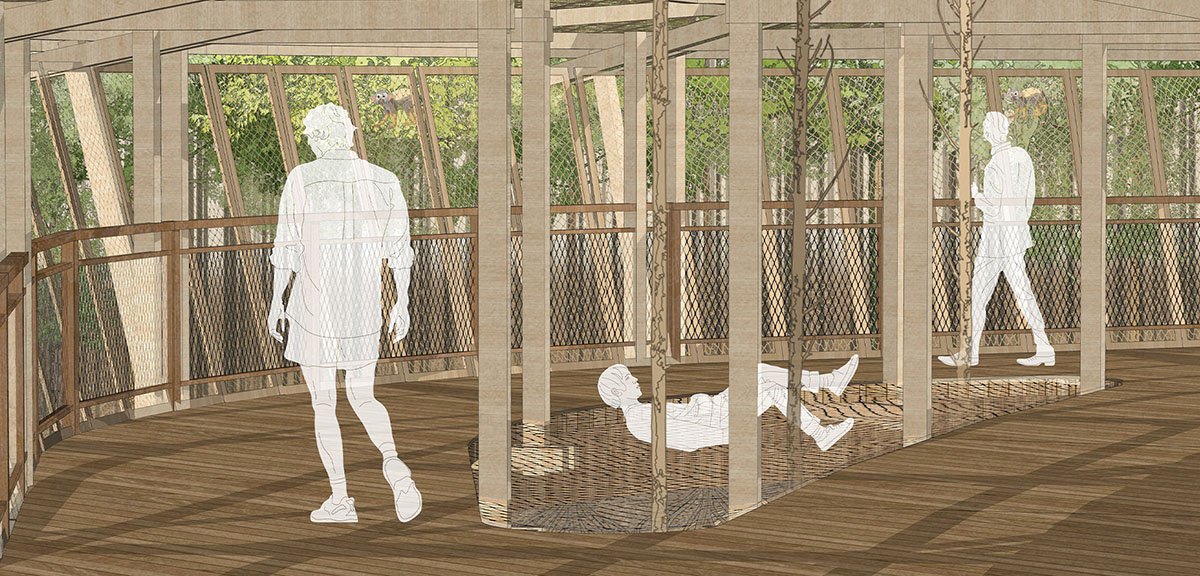
Conference Hall Viewpoint – PlanConference Hall Viewpoint – SectionOrganic Net Observation Point – RendersOrganic Net Observation Point – Renders
Restoring the Can Gio mangrove ecosystem is a long-term process, requiring persistence and adaptive strategies. The Dần Xây Ecotourism Area functions as a pilot project—modest in scale but crucial as a model that can be expanded to surrounding areas of Can Gio District. Without timely intervention, continued degradation will endanger both the ecosystem and the communities, human and ecological, that depend on it.
Conclusion: Ultimately, The NHÀ NƠM vision symbolizes this effort—a sustainable home where people and nature can coexist, offering hope that natural growth and human settlement can evolve in harmony.
[This Academic Project has been published with text and images submitted by the student]
Site Context
Design Process
Final Outcome
To submit your academic project for publication at ArchiDiaries, please visit the following link >> Submit
Get the best of ArchiDiaries, directly in your inbox.
We use cookies on our website to give you the most relevant experience by remembering your preferences and repeat visits. By clicking “Accept All”, you consent to the use of ALL the cookies. However, you may visit "Cookie Settings" to provide a controlled consent.
This website uses cookies to improve your experience while you navigate through the website. Out of these, the cookies that are categorized as necessary are stored on your browser as they are essential for the working of basic functionalities of the website. We also use third-party cookies that help us analyze and understand how you use this website. These cookies will be stored in your browser only with your consent. You also have the option to opt-out of these cookies. But opting out of some of these cookies may affect your browsing experience.
Necessary cookies are absolutely essential for the website to function properly. These cookies ensure basic functionalities and security features of the website, anonymously.
Cookie
Duration
Description
cookielawinfo-checkbox-analytics
11 months
This cookie is set by GDPR Cookie Consent plugin. The cookie is used to store the user consent for the cookies in the category "Analytics".
cookielawinfo-checkbox-functional
11 months
The cookie is set by GDPR cookie consent to record the user consent for the cookies in the category "Functional".
cookielawinfo-checkbox-necessary
11 months
This cookie is set by GDPR Cookie Consent plugin. The cookies is used to store the user consent for the cookies in the category "Necessary".
cookielawinfo-checkbox-others
11 months
This cookie is set by GDPR Cookie Consent plugin. The cookie is used to store the user consent for the cookies in the category "Other.
cookielawinfo-checkbox-performance
11 months
This cookie is set by GDPR Cookie Consent plugin. The cookie is used to store the user consent for the cookies in the category "Performance".
viewed_cookie_policy
11 months
The cookie is set by the GDPR Cookie Consent plugin and is used to store whether or not user has consented to the use of cookies. It does not store any personal data.
Functional cookies help to perform certain functionalities like sharing the content of the website on social media platforms, collect feedbacks, and other third-party features.
Performance cookies are used to understand and analyze the key performance indexes of the website which helps in delivering a better user experience for the visitors.
Analytical cookies are used to understand how visitors interact with the website. These cookies help provide information on metrics the number of visitors, bounce rate, traffic source, etc.
Advertisement cookies are used to provide visitors with relevant ads and marketing campaigns. These cookies track visitors across websites and collect information to provide customized ads.