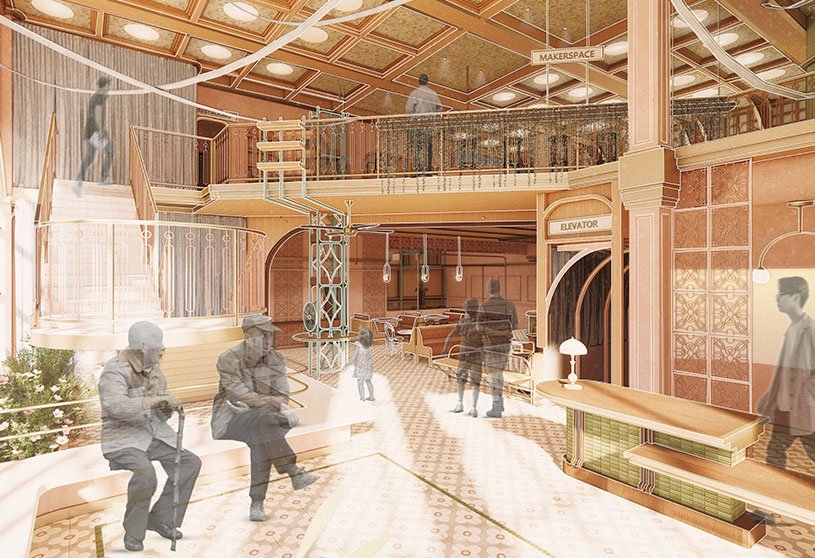
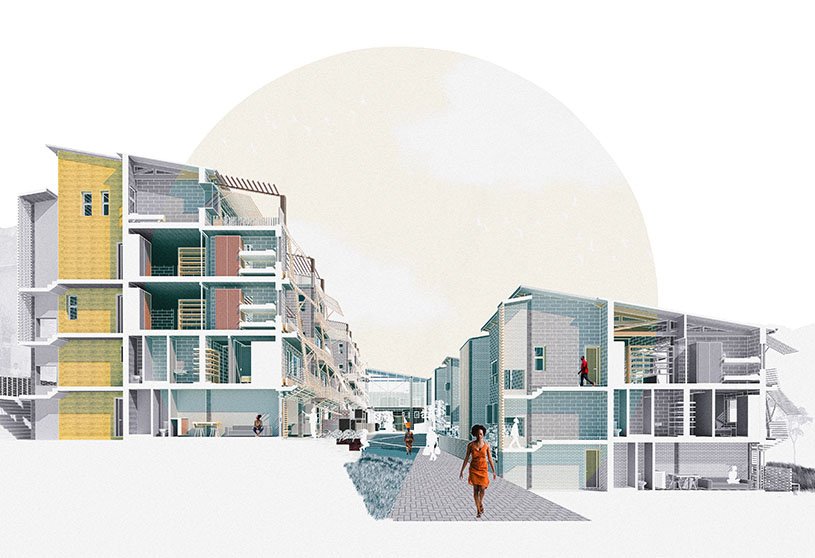
Awards: Selected Project for Mega Build, 2025 | Selected Project for Koloni Arsitektur Exhibition at IDD PIK, 2025 & M Bloc and Bandung Design Biennale
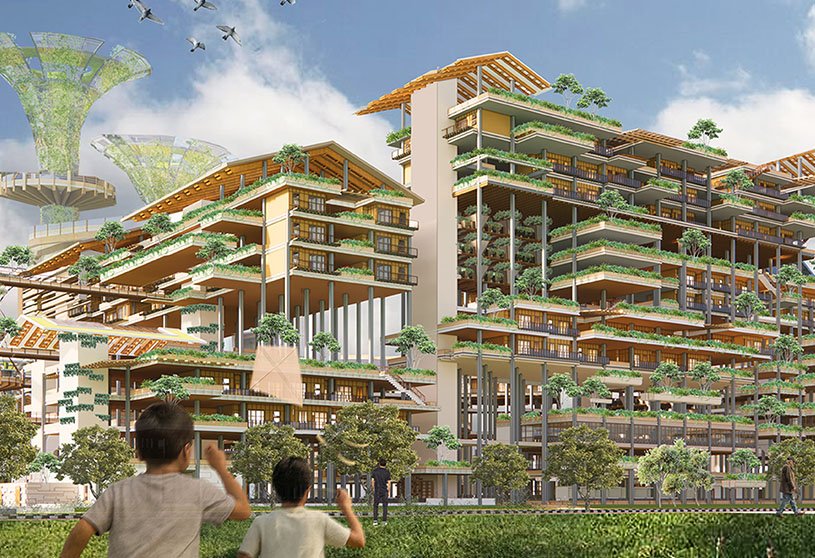
Excerpt: ‘Nuswa Bhuvana’ is an architecture thesis by Elbert Hans from the ‘Department of Architecture – Tarumanagara University.’ It proposes a regenerative public housing project in Marunda, North Jakarta, applying biophilic design and permaculture to counter coal pollution. It offers sustainable housing, urban farming, and water management while strengthening residents’ connection with nature. By promoting local culture through farming, hydroponics, batik, and mangrove care, it builds a resilient, eco-friendly community.
Introduction: Nuswa Bhuvana is a regenerative public housing initiative located in Marunda, North Jakarta, developed using a biophilic design and guided by permaculture principles. It addresses the harmful effects of coal pollution by fostering a healthier, more natural, and purposeful living environment. Beyond offering proper housing, the project creates regenerative spaces that support ecological practices like urban agriculture, pollution control, and water management.
Through the combination of permaculture and biophilic design, Nuswa Bhuvana nurtures strong connections between residents and nature, forming a dynamic and supportive ecosystem. The project also boosts the local economy by celebrating Marunda’s cultural and environmental identity through activities such as farming, hydroponics, batik-making, mangrove preservation, fisheries, and Betawi traditions. Ultimately, Nuswa Bhuvana exemplifies regenerative housing that unites people with nature to cultivate a healthy, resilient community.
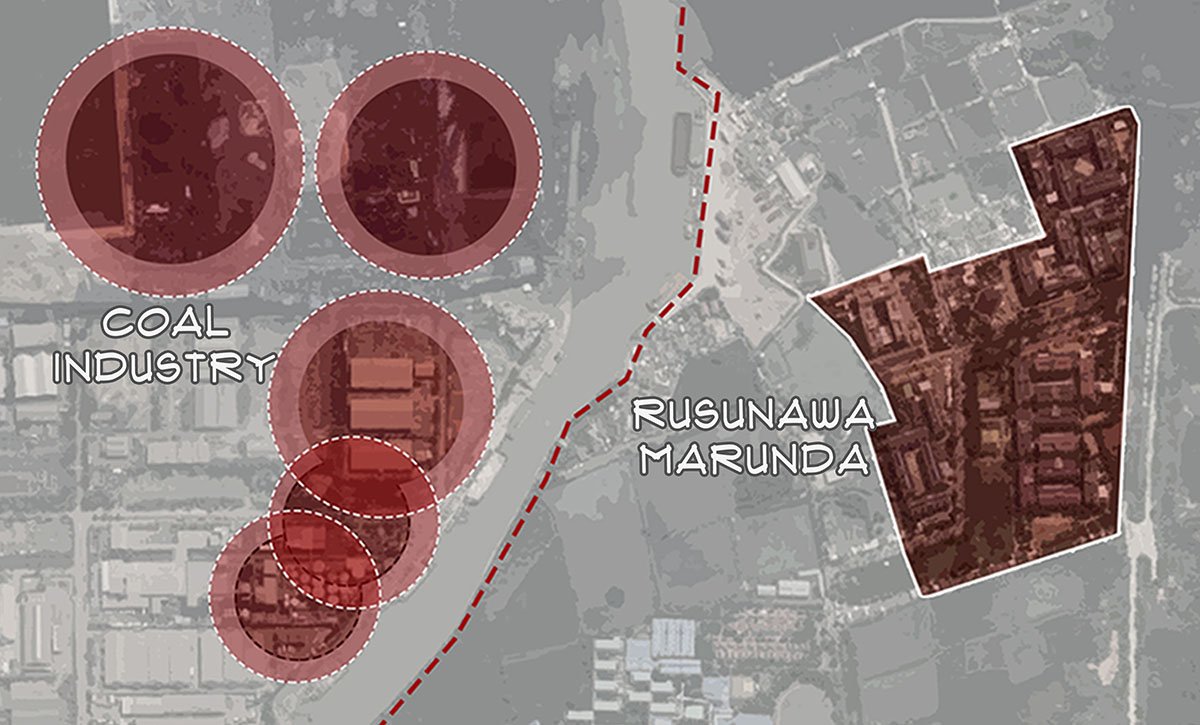
Rusunawa Marunda was established as a relocation site to support coal port infrastructure. The area is home to a low-income community, where most residents make their living as traders, farmers, and fishermen. Despite living modestly, the people of Marunda once enjoyed a fulfilling life supported by strong community bonds.
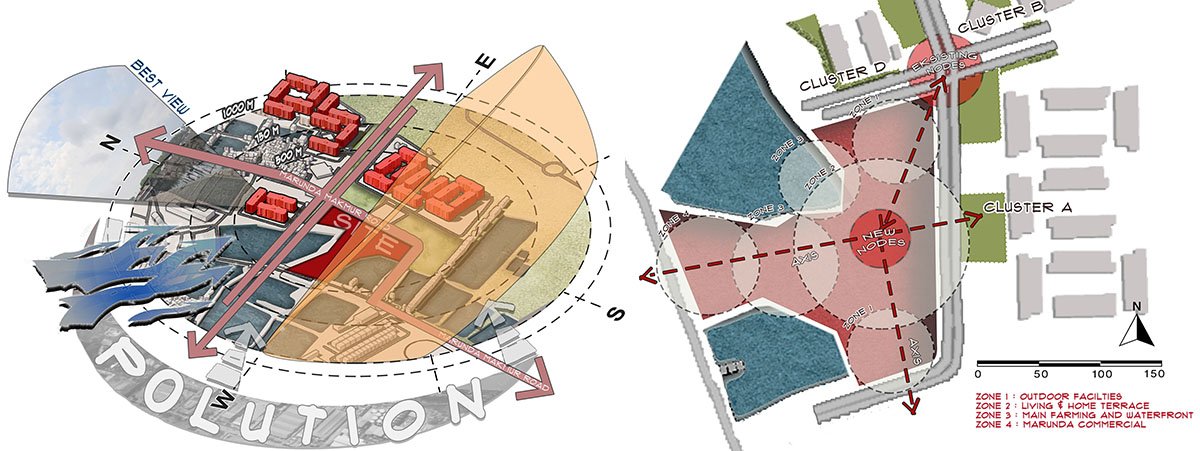
Site Analysis and Zoning
However, the relocation and the operation of the coal port have led to severe environmental degradation, particularly air pollution. This pollution has caused widespread illness, crop failure, the death of aquatic species, and the loss of local livelihoods. Today, Rusunawa Marunda is classified as one of the red zones for coal pollution, posing an alarming threat to public health and increasing mortality risks. Addressing this pollution has become an urgent necessity.
Design Process
ConceptDesign Scheme
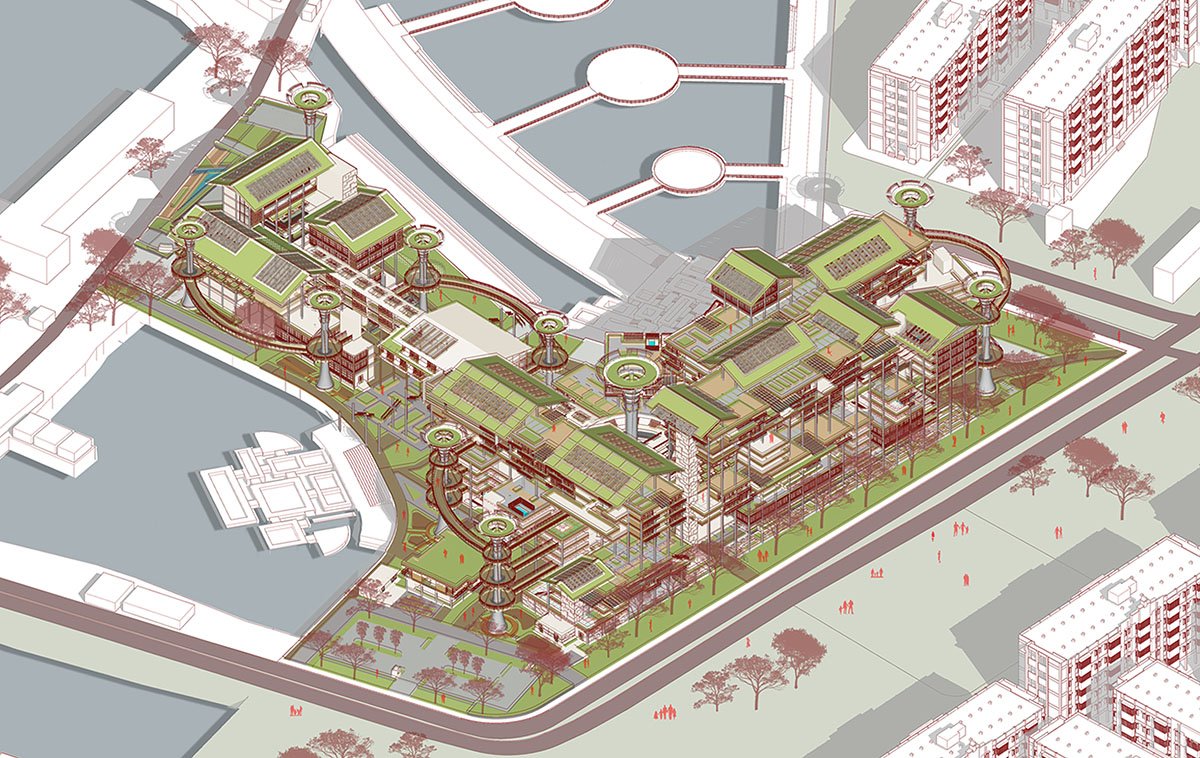
The central concept of the design revolves around the integration of up to 45 permaculture species, implemented through biophilic architectural principles. Permaculture serves as a sustainable agricultural system aimed at enhancing environmental quality. Beyond permaculture and biophilic design, the project also utilizes photocatalytic materials and a SMOG Free Purifier system. Photocatalytic materials, created from recycled components mixed with photocatalyst compounds, have the ability to absorb and neutralize coal pollutants under ultraviolet light. The SMOG Free Purifier, a technology developed in China, is capable of removing up to 95% of airborne pollutants. The collected dust particles are then repurposed into coal-based compost fertilizer.
Mass Development
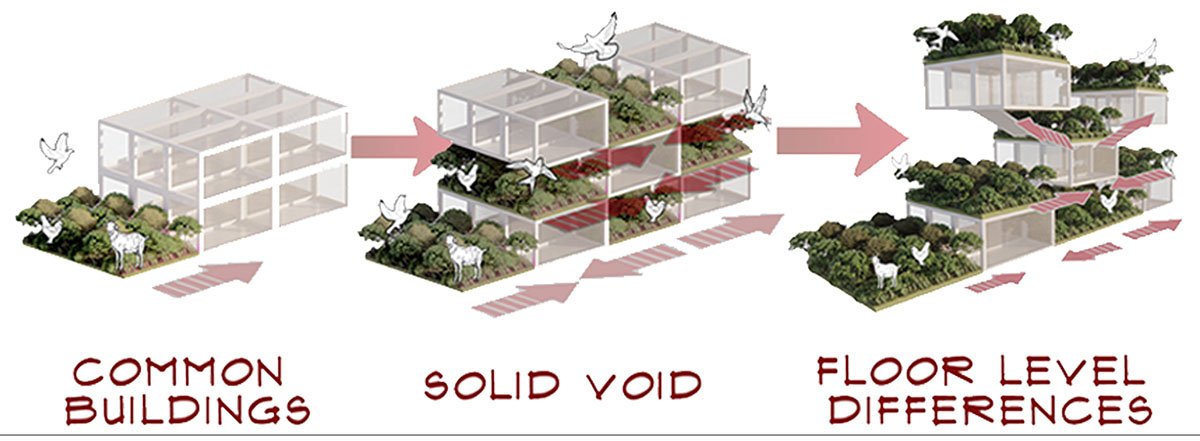
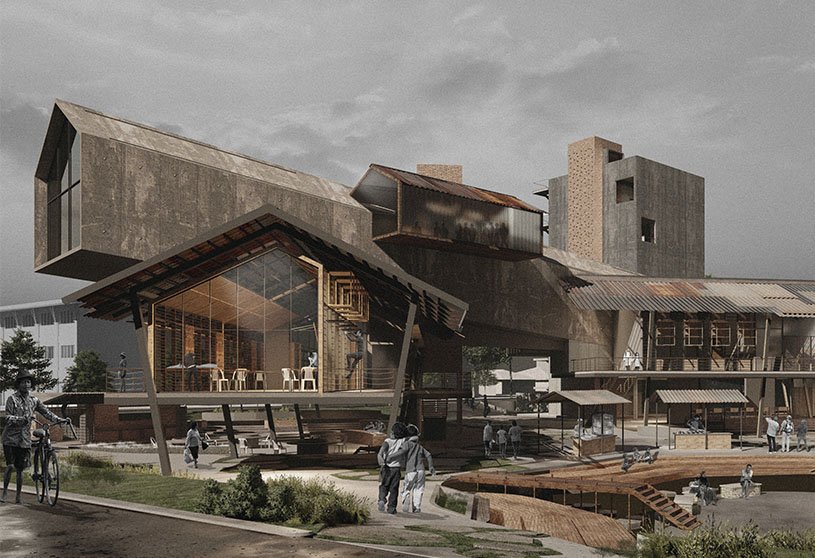
The architectural scheme employs a combination of solid and void spaces along with varied floor levels to optimize the integration of permaculture and biophilic elements. This approach allows the building mass to evolve from the existing rusunawa typology while responding sensitively to the site analysis and environmental context.
Final Outcome
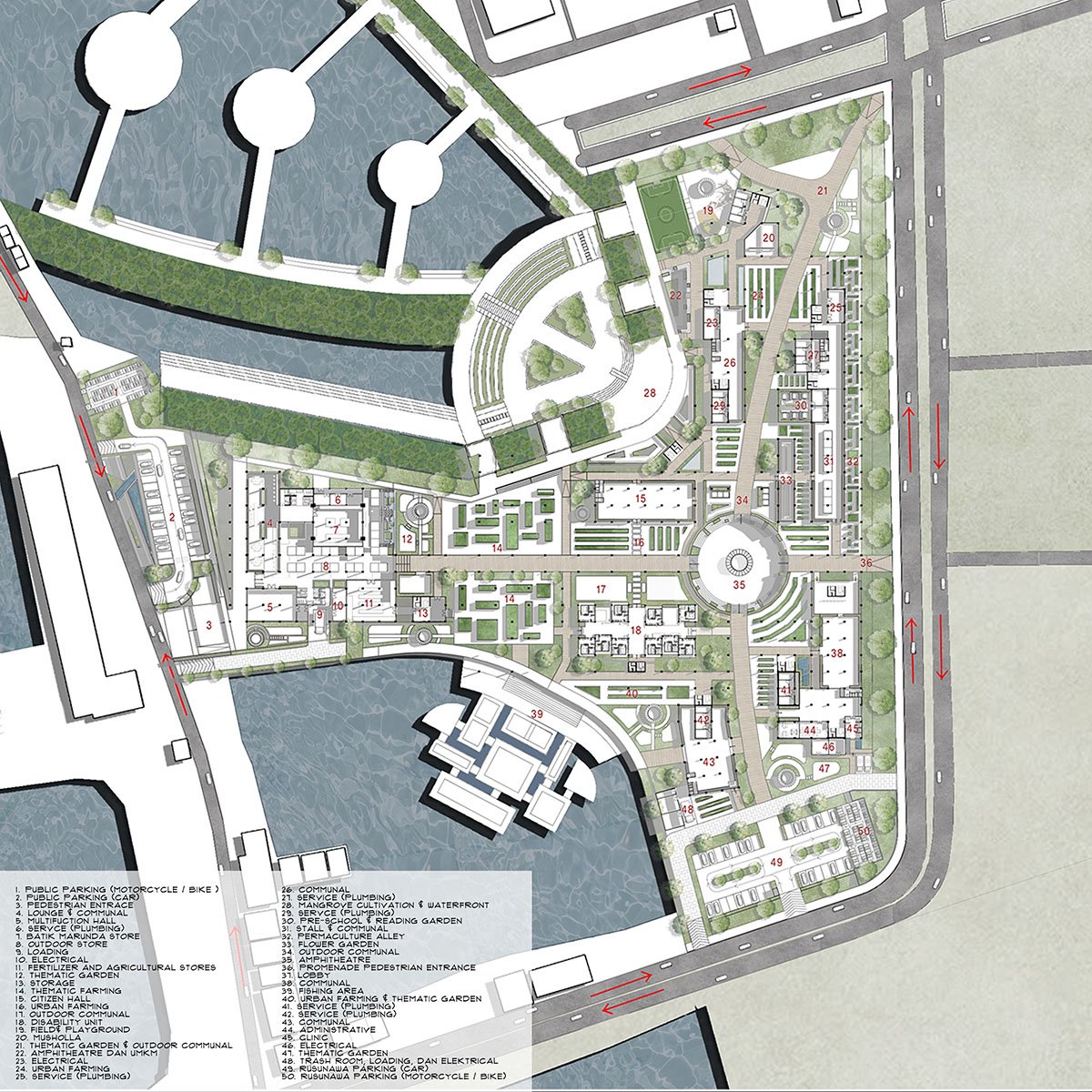
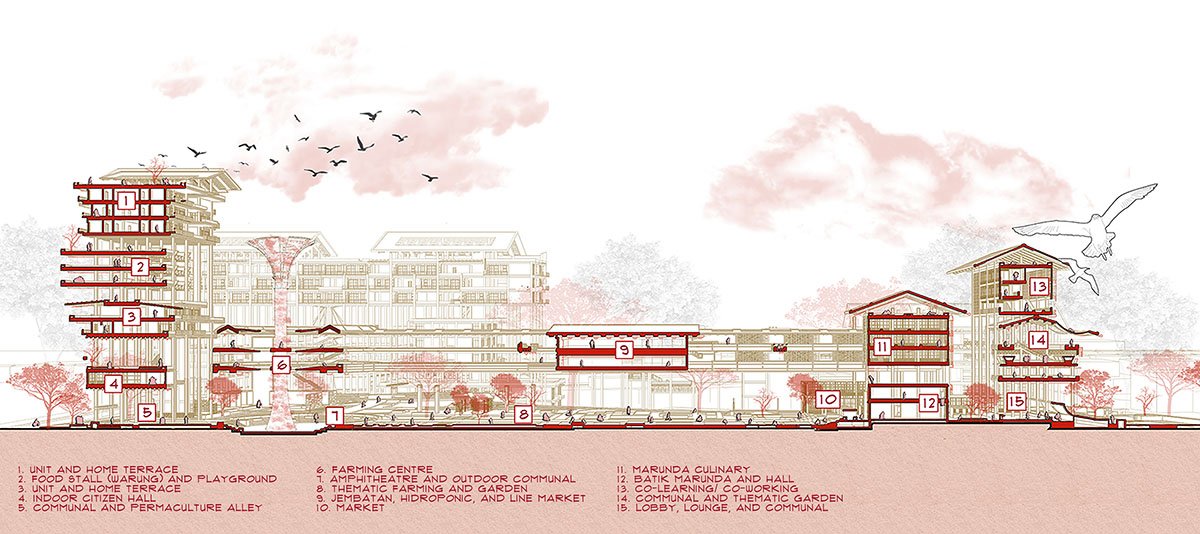
Site PlanSectionSection
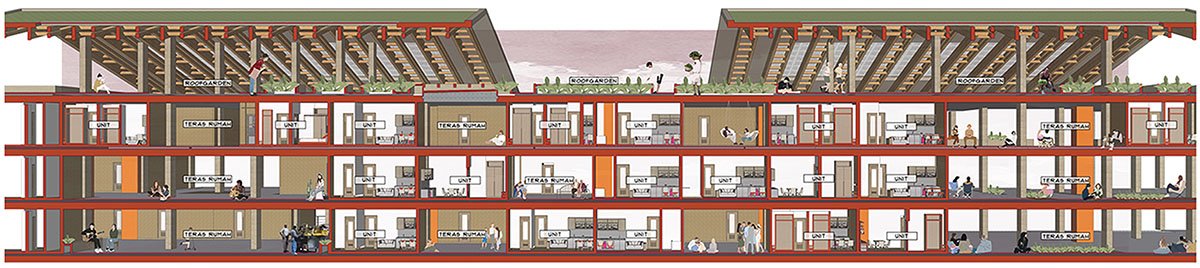
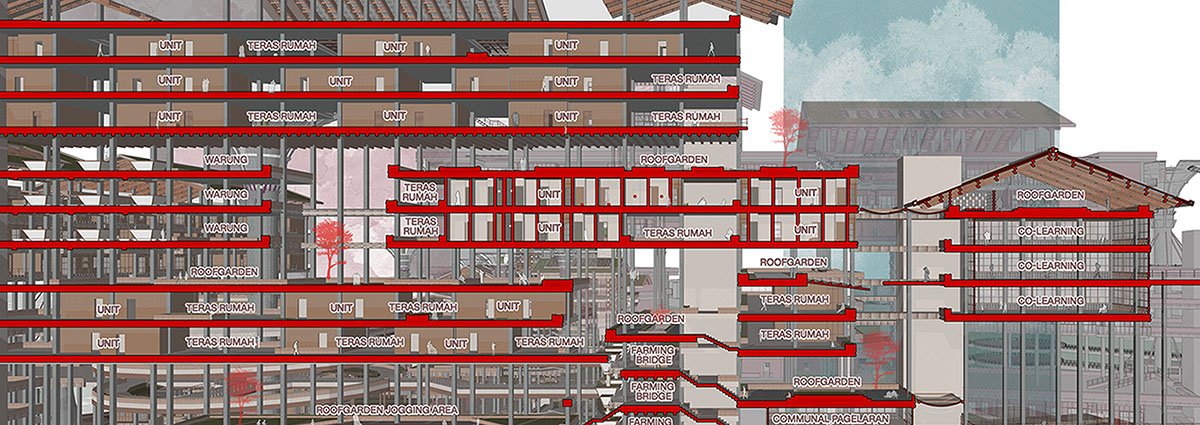
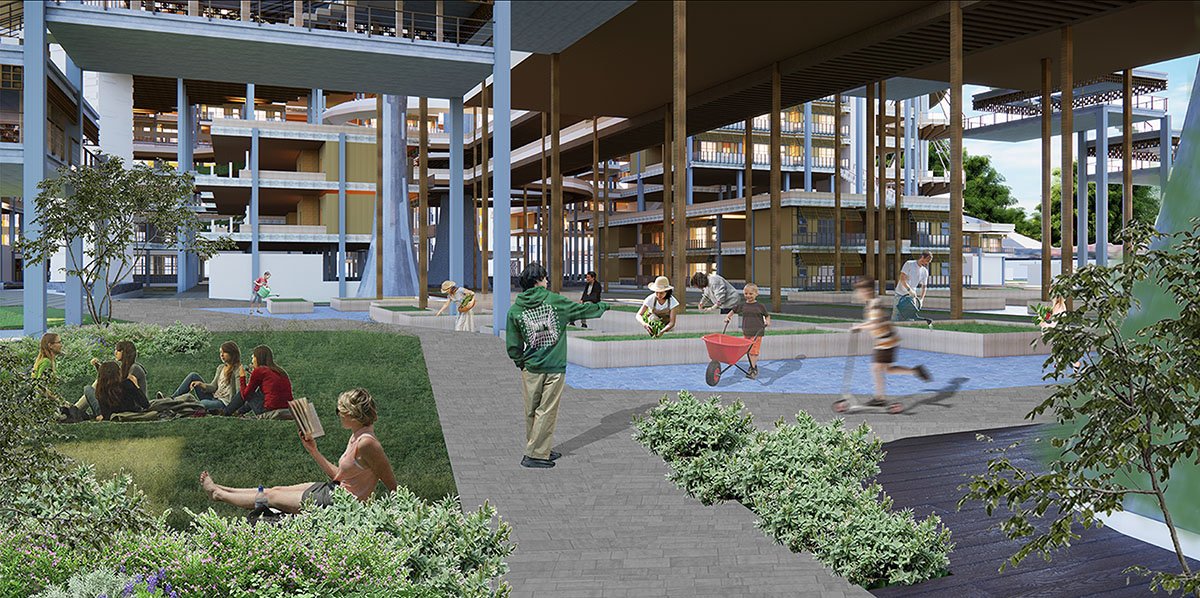
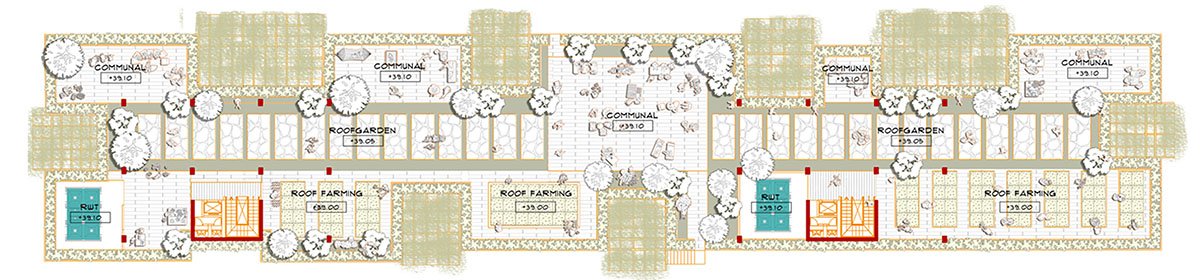
To promote a healthier living environment in the low-cost rental apartments (rusunawa), the first floor is primarily dedicated to green spaces, including areas for farming, gardens, mangroves, waterfronts, and fishing. A central promenade, anchored by an amphitheater, connects these spaces and links residents to other clusters, creating a hub for various activities.
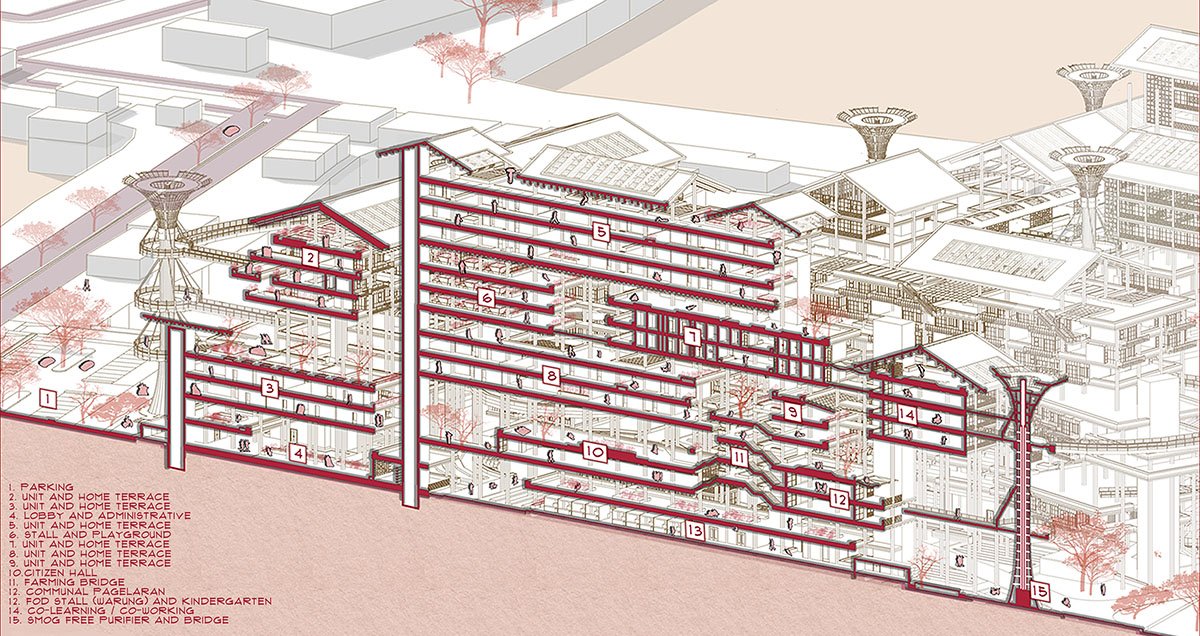
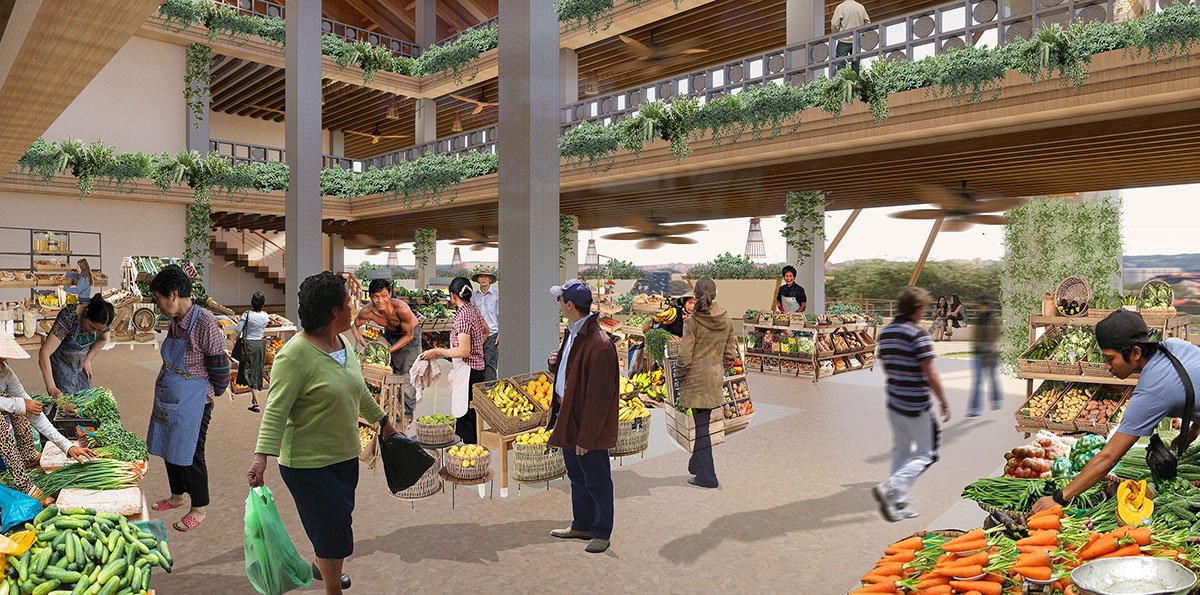
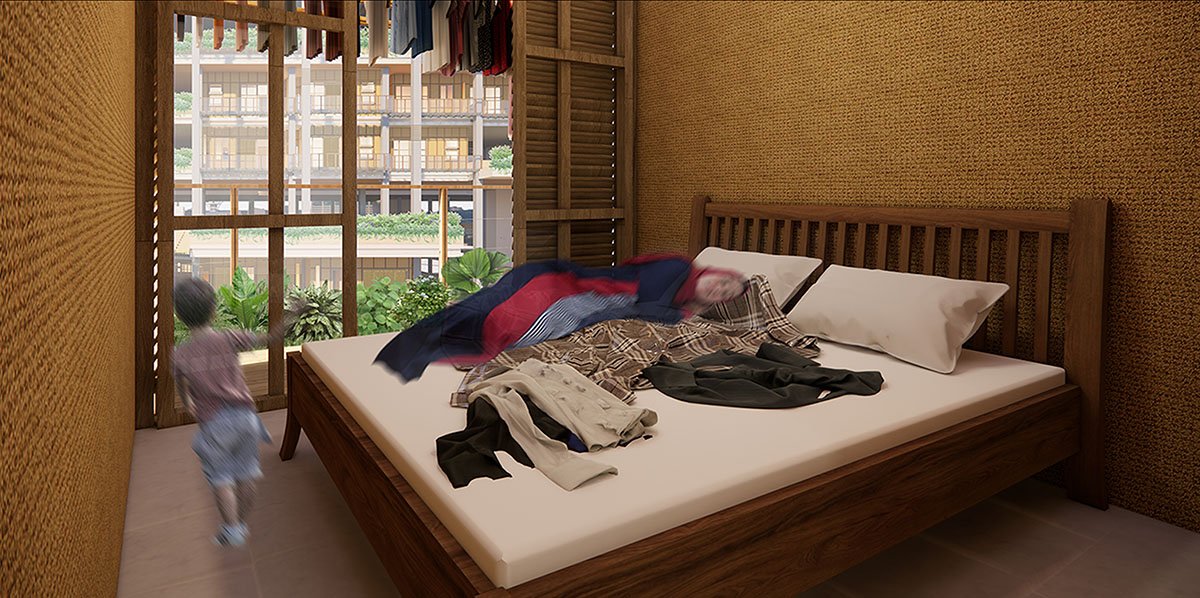
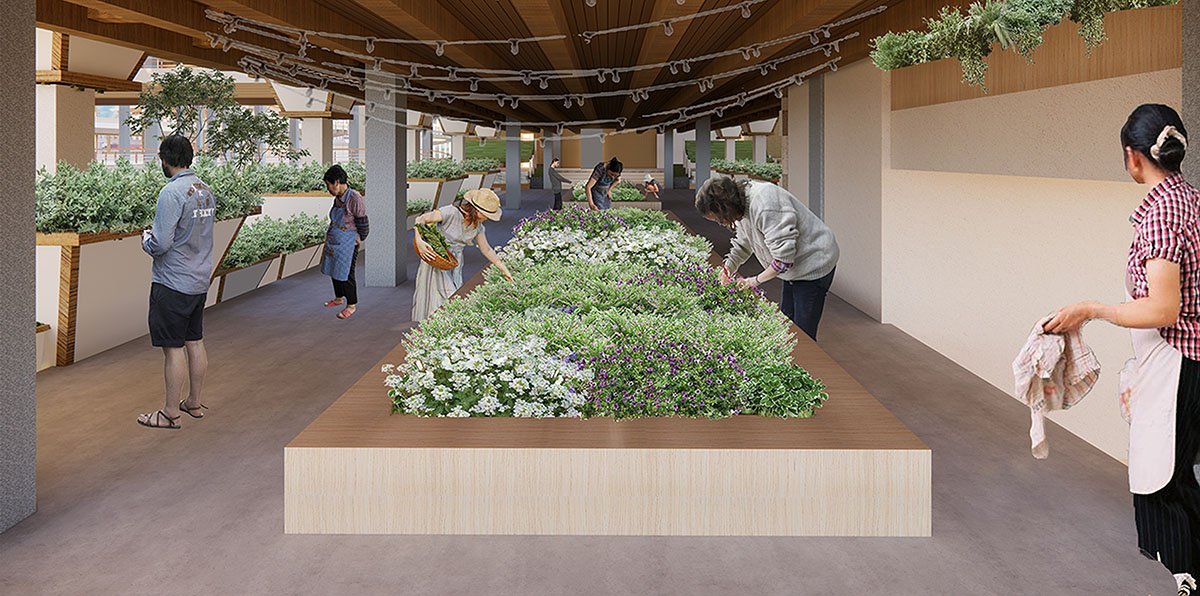
AxonometryUnit & Home TerraceUnit & Home Terrace SectionFood Market
Beyond serving as housing, the rusunawa is equipped with a range of facilities, including food stalls, early childhood education centers (PAUD), a community hall, a prayer room (Mushola), sports fields, workspaces, communal areas, and home terraces. These functions are distributed across the site to form a continuously evolving ecosystem. A public area, Marunda Commercial, serves as a community center with a central food market, Marunda Culinary, a Batik shop, a fertilizer store, and other amenities.
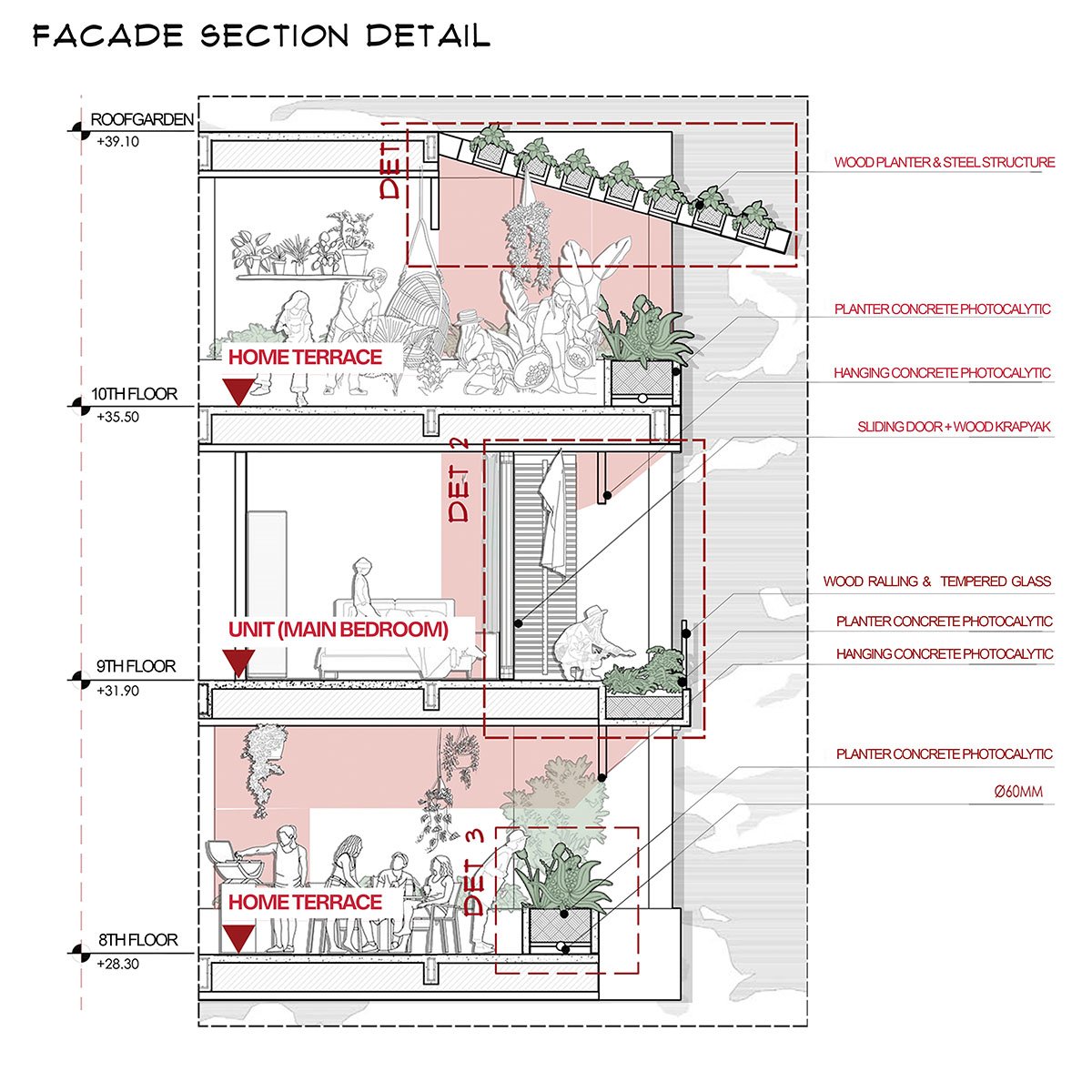
Section DetailFarming BalconyHome Terrace (Communal Area)Farming Area
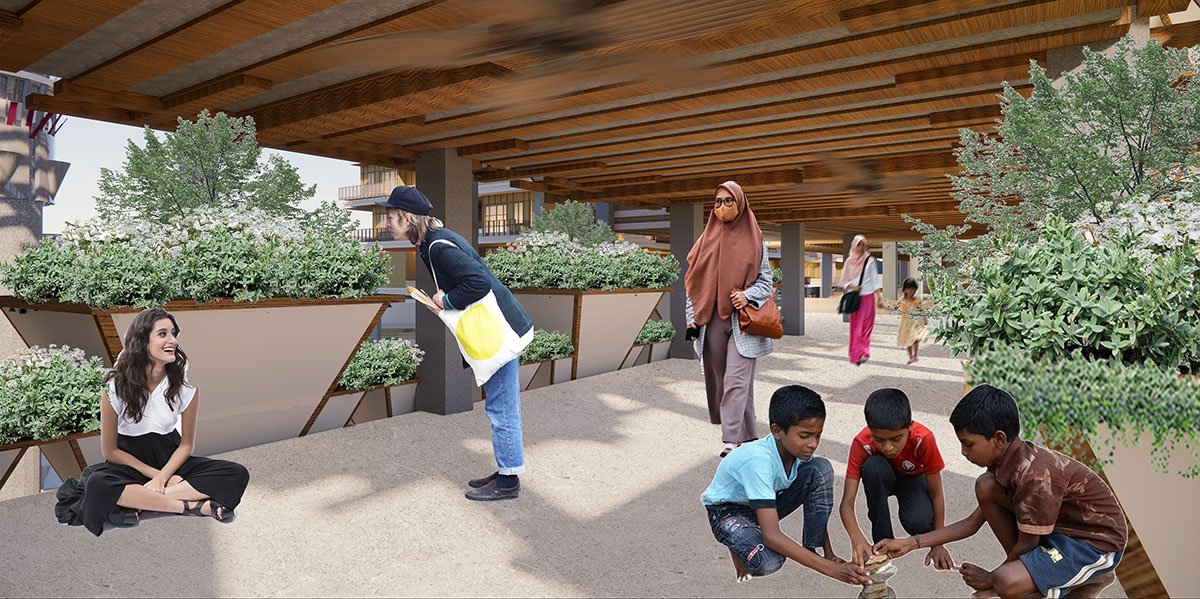
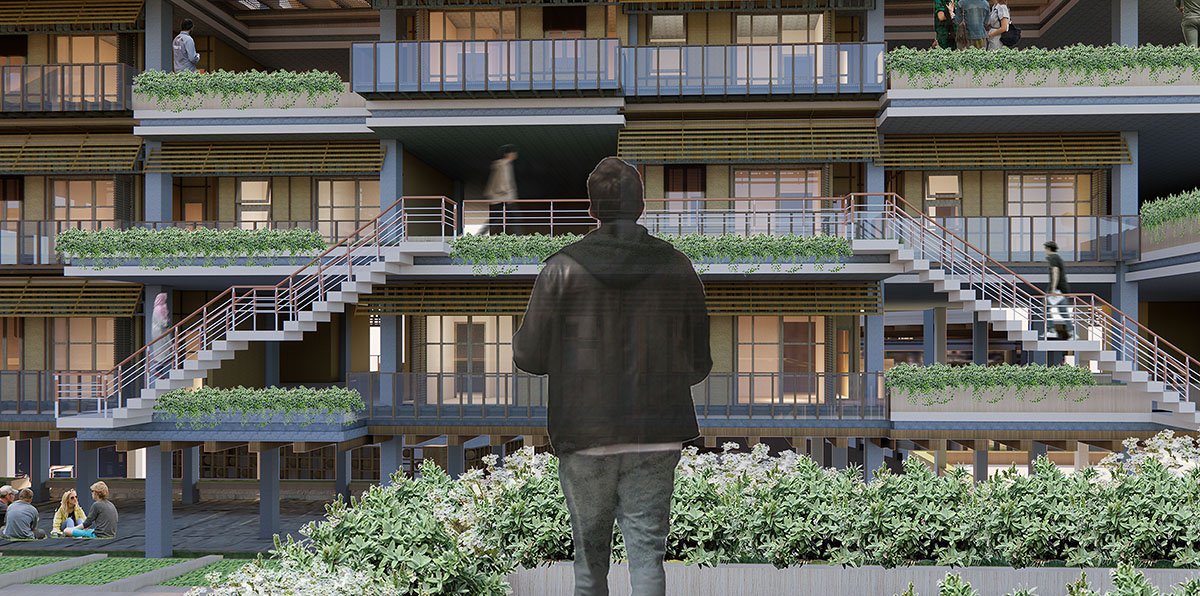
Each residential unit includes a home terrace, a feature rooted in Betawi culture traditionally used as a main activity space. In this design, the home terrace functions as a communal area for residents, integrated on every floor. It accommodates a variety of activities such as community gatherings, food stalls, youth hangouts, playgrounds, and smoking areas. These terraces are interconnected across the building clusters, fostering a cohesive ecosystem.
Semi ExteriorSemi ExteriorMorning Render
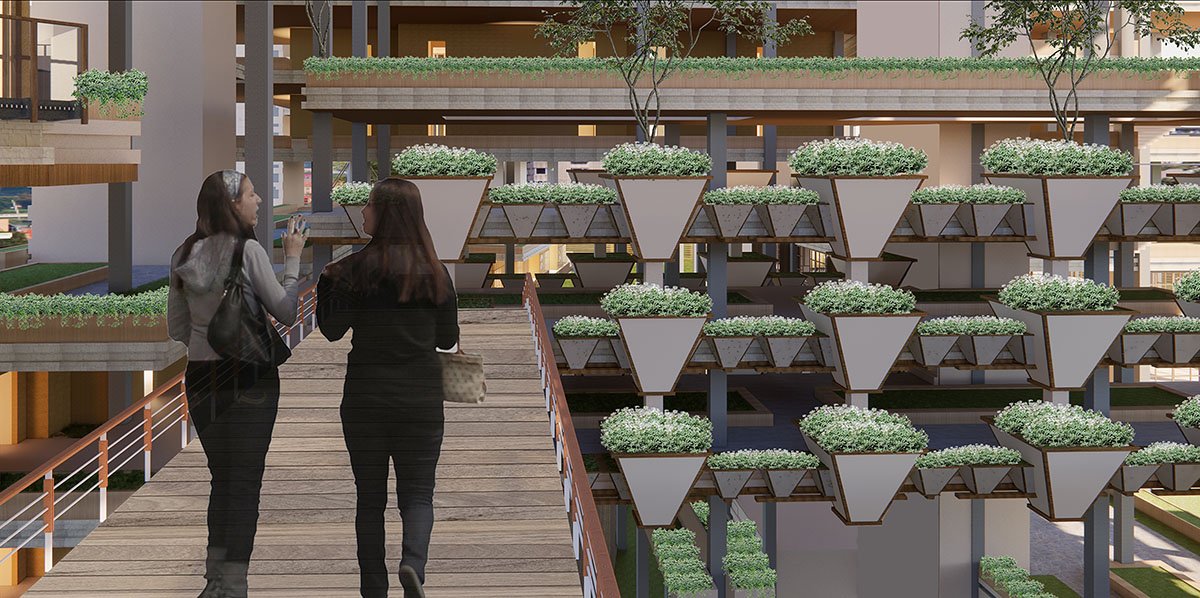
The facade design incorporates multiple types of planters integrated into the building envelope. These planters support the project’s permaculture and biophilic principles, introducing greenery at multiple levels and enhancing the overall ecological quality of the housing.
Evening Render
Conclusion: Ultimately, Nuswa Bhuvana transforms Rusunawa Marunda into a healthy, resilient community by combining green design, permaculture, and pollution-reducing technologies, fostering strong social, cultural, and ecological connections.
[This Academic Project has been published with text and images submitted by the student]
Site Context
Design Process
Final Outcome
To submit your academic project for publication at ArchiDiaries, please visit the following link >> Submit
Get the best of ArchiDiaries, directly in your inbox.
We use cookies on our website to give you the most relevant experience by remembering your preferences and repeat visits. By clicking “Accept All”, you consent to the use of ALL the cookies. However, you may visit "Cookie Settings" to provide a controlled consent.
This website uses cookies to improve your experience while you navigate through the website. Out of these, the cookies that are categorized as necessary are stored on your browser as they are essential for the working of basic functionalities of the website. We also use third-party cookies that help us analyze and understand how you use this website. These cookies will be stored in your browser only with your consent. You also have the option to opt-out of these cookies. But opting out of some of these cookies may affect your browsing experience.
Necessary cookies are absolutely essential for the website to function properly. These cookies ensure basic functionalities and security features of the website, anonymously.
Cookie
Duration
Description
cookielawinfo-checkbox-analytics
11 months
This cookie is set by GDPR Cookie Consent plugin. The cookie is used to store the user consent for the cookies in the category "Analytics".
cookielawinfo-checkbox-functional
11 months
The cookie is set by GDPR cookie consent to record the user consent for the cookies in the category "Functional".
cookielawinfo-checkbox-necessary
11 months
This cookie is set by GDPR Cookie Consent plugin. The cookies is used to store the user consent for the cookies in the category "Necessary".
cookielawinfo-checkbox-others
11 months
This cookie is set by GDPR Cookie Consent plugin. The cookie is used to store the user consent for the cookies in the category "Other.
cookielawinfo-checkbox-performance
11 months
This cookie is set by GDPR Cookie Consent plugin. The cookie is used to store the user consent for the cookies in the category "Performance".
viewed_cookie_policy
11 months
The cookie is set by the GDPR Cookie Consent plugin and is used to store whether or not user has consented to the use of cookies. It does not store any personal data.
Functional cookies help to perform certain functionalities like sharing the content of the website on social media platforms, collect feedbacks, and other third-party features.
Performance cookies are used to understand and analyze the key performance indexes of the website which helps in delivering a better user experience for the visitors.
Analytical cookies are used to understand how visitors interact with the website. These cookies help provide information on metrics the number of visitors, bounce rate, traffic source, etc.
Advertisement cookies are used to provide visitors with relevant ads and marketing campaigns. These cookies track visitors across websites and collect information to provide customized ads.