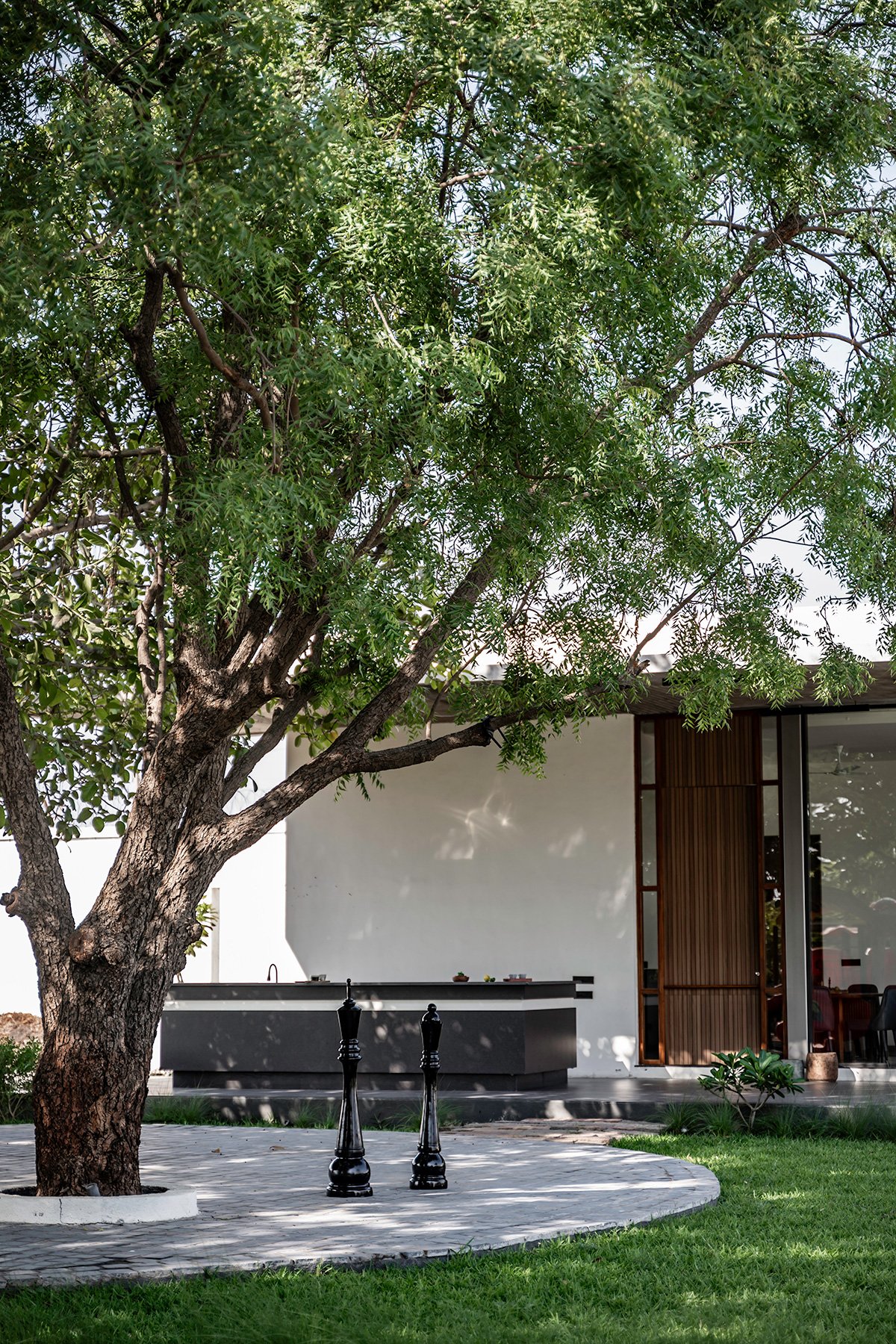
Excerpt: The Banyan Farm by Dhulia Architecture Design is envisioned as a simple, open-plan residence that encourages slow living, togetherness, and shared moments. The design remains intentionally modest, allowing the site’s natural richness—banyan trees, mango orchards, and open landscape—to guide the experience, using honest materials and openness to stay deeply connected to the land and daily family life.
Project Description
[Text as submitted by architect] The Banyan Farm was envisioned as a simple, open-plan home designed to encourage family time and slow living. Conceived as a relaxed retreat, it fosters an atmosphere of togetherness with an emphasis on shared moments. Outdoor cooking plays a central role in the experience, drawing directly from the adjoining farm where the family grows their own vegetables, bringing a true farm-to-plate lifestyle into the heart of the home.


Spread across nine acres of fertile farmland, the site carries with it a natural richness — two sprawling banyan trees casting wide canopies, and a thriving mango orchard that anchors the landscape. Amidst this setting stood two structures dating back to the 1920s. One, originally a food storage shed for horses, had become structurally unsound; it was dismantled and rebuilt in line with the needs of the new owners. The other, a former horse stable, was carefully restored and repurposed into a utility block that now supports large gatherings with service kitchens, washrooms, and staff accommodation.

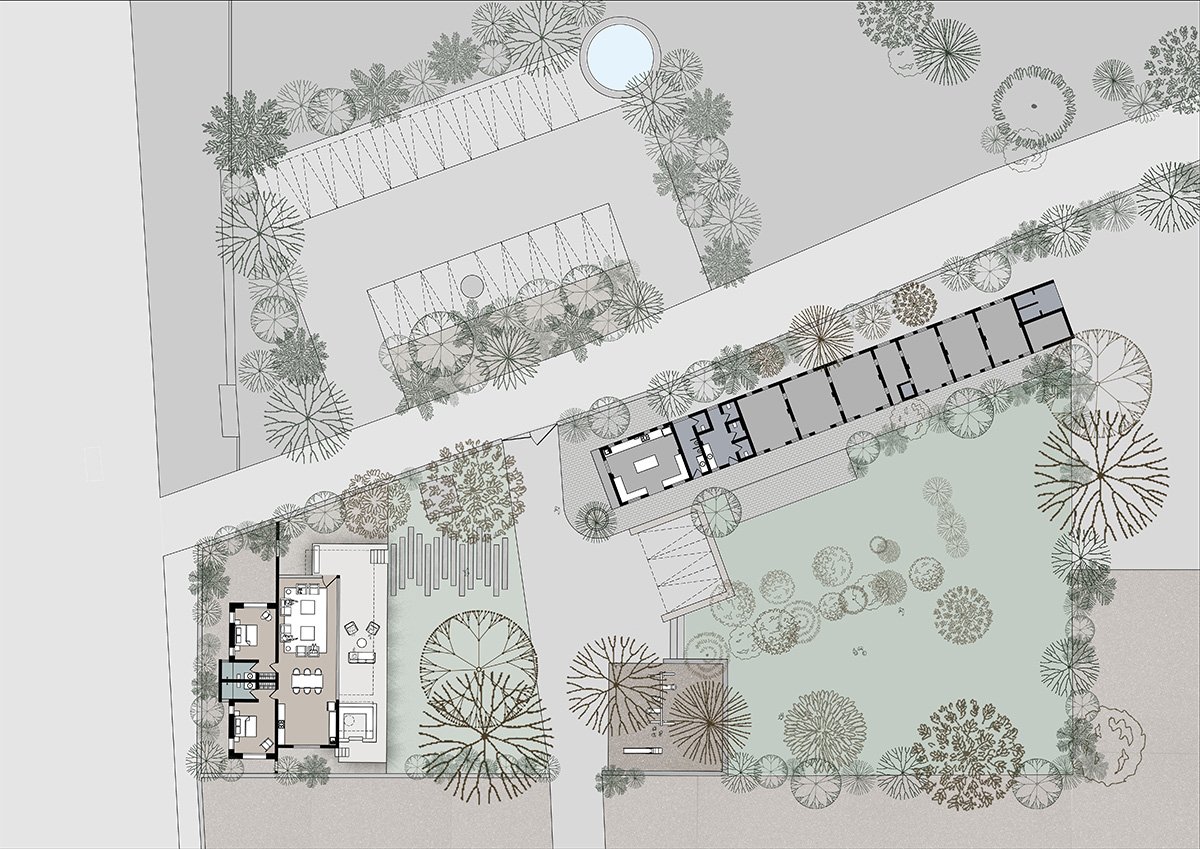

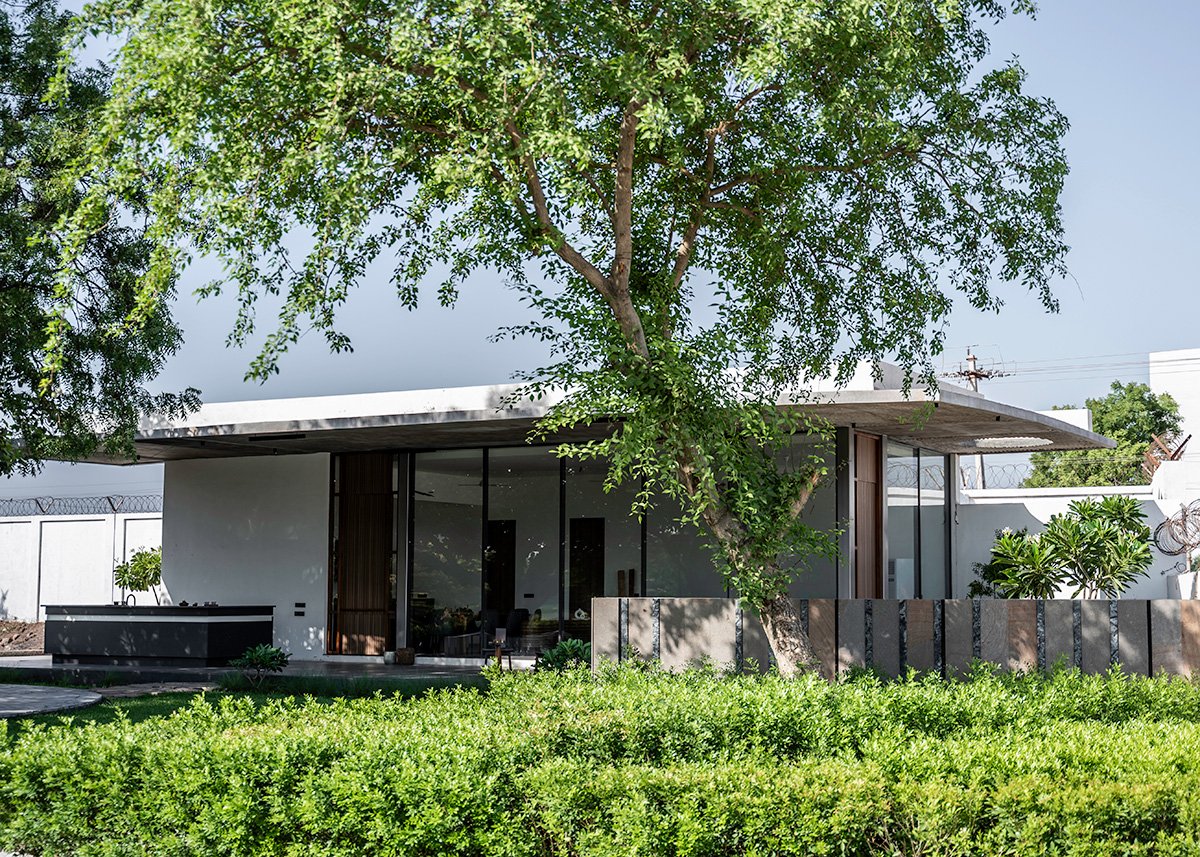
Against this backdrop, the architectural intervention remains intentionally modest, occupying only a small fraction of the estate. The entry unfolds along a central axis, leading to the villa sited on the bedrock of the demolished structure to preserve the fertile black soil. The landscape is divided into two gardens — one, a private foreground adjoining the villa, enclosed by the banyan trees; The other, a larger lawn opening toward the mango orchards, culminating in a gazebo that serves as a vantage point for celebrations and community gatherings.


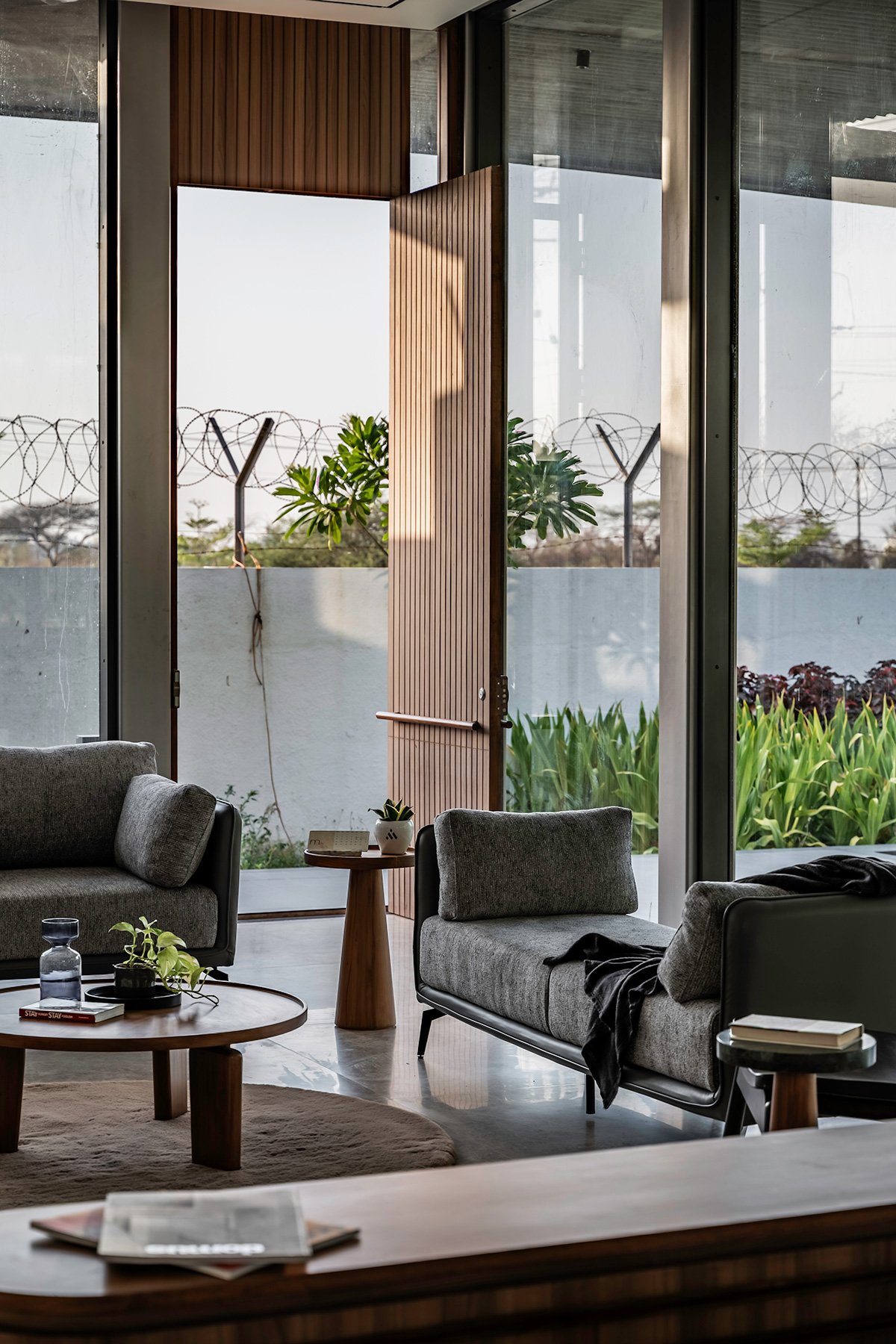
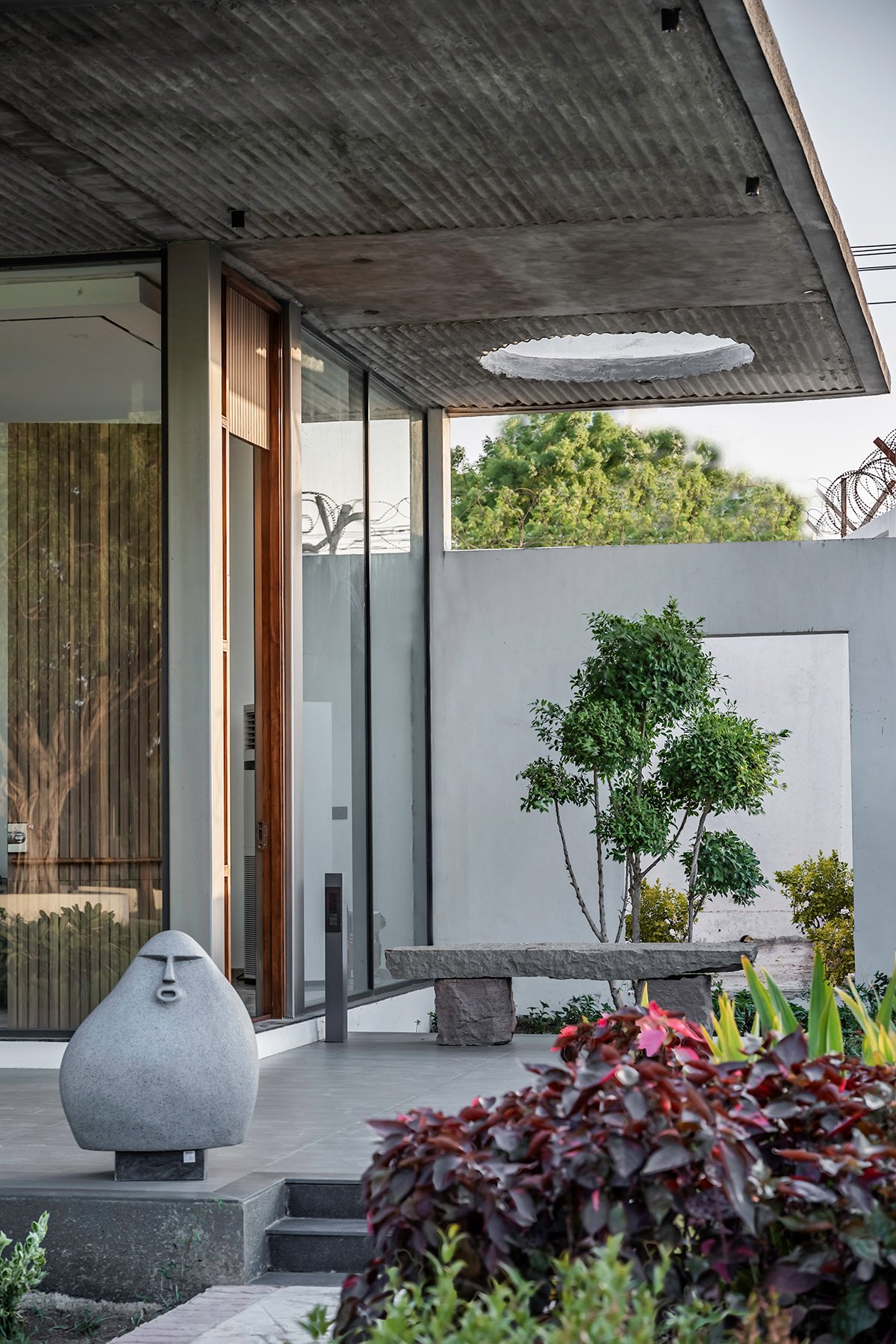
The villa itself is marked by a bold yet understated gesture — a cantilevered slab, spanning 15 by 60 feet, hovers lightly over the landscape. Constructed in metal, the structure achieves seamless, minimal lines that dissolve into the setting. Floor-to-ceiling glass panels blur the threshold between inside and out, inviting natural light, greenery, and shadows to animate the interiors. Within, the main door — a crafted wooden panel with a sleek handle — sets the tone of understated elegance. The living, dining, and kitchen merge into one fluid space, encouraging interaction. Minimal furniture with intricate detailing lends timeless character, while the deck, furnished with walnut wood chairs, extends this spirit of gathering into the outdoors.

What makes The Banyan Farm special is its simplicity. Rather than overpowering the land, the design lets the site and its natural richness take the lead. Materials — glass, brickwork, and exposed RCC — are used honestly, celebrating their raw beauty while ensuring durability. Rooted in openness and slow living, the project remains a retreat that is both grounded in nature and deeply connected to the life of the family it houses.
Images