Home » Academic projects » Chronoshift: Regenerative Architecture for Urban Regeneration and Heritage Revitalization in Old Cairo | Bachelor’s Design Thesis
Chronoshift: Regenerative Architecture for Urban Regeneration and Heritage Revitalization in Old Cairo | Bachelor’s Design Thesis
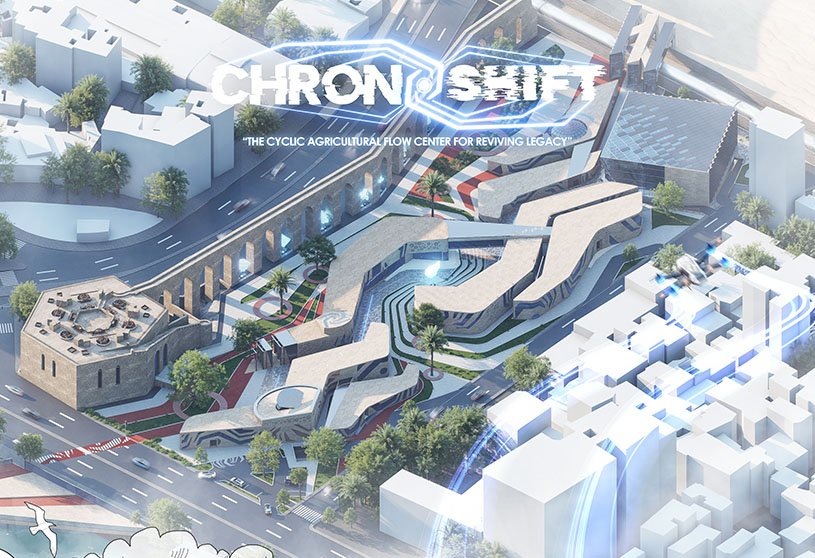
Excerpt: ‘Chronoshift’ is an architecture thesis by Khaled Yousre Galal El-Hageen from the ‘Department of Architecture – Kafrelsheikh University.’ The aim of the project is to heal the degraded urban fabric of the Magra El Oyoun Aqueduct by restoring its ecological, social, and cultural significance. It seeks to reconnect the community with its heritage, revive lost green spaces through sustainable systems, and transform the site into a resilient environmental and community hub that links past, present, and future.
Introduction: Chronoshift is a visionary revitalization center for Old Cairo’s historic Magra El Oyoun Aqueduct, confronting the critical erosion of its ecological and cultural heritage. It offers a holistic solution to the severe decline in urban green spaces, aiming to reconnect the community with its natural past. At its heart lies the pioneering Cyclic Agricultural Flow System (CAFS), a bio-technical network that creates a ‘Living Agricultural River.’ This system revives the aqueduct’s original life-giving role through sustainable geothermal and solar technology. The project serves as a replicable model for holistic heritage revitalization, creating a resilient and “living legacy” for generations to come.
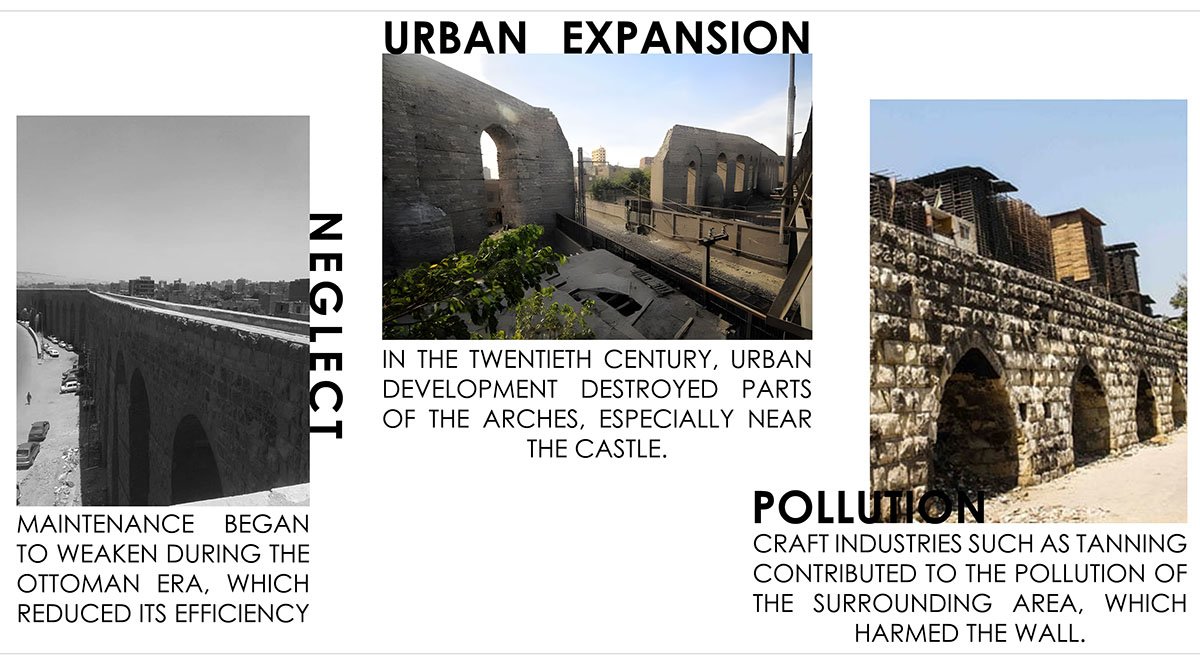
Placing the local problem within a global contextPart of the Deterioration that Occurred to the Wallhighlighting the widespread challenge of urban green space depletion with a data-driven focus on Cairo
The project is located at the Magra El Oyoun Aqueduct in Old Cairo, a historically significant waterway dating back to the Ayyubid and Mamluk eras, originally built to supply the Citadel of Saladin with water from the Nile. For centuries, the aqueduct sustained a rich urban landscape of gardens and productive lands, forming a strong link between infrastructure, ecology, and community life.
Data-driven analysis illustrating the quantifiable decline in green spaces over centuries and its severe ramifications on the local environment and community well-being.Site Context Analysis: Visual and Spatial InsightsSite Context Analysis: Visual and Spatial Insights
Today, this legacy is severely threatened. Unchecked urban expansion, long-term neglect, pollution from surrounding industries, and the destruction of parts of the aqueduct have led to advanced urban decay and a drastic loss of green spaces. The area now provides only 0.7 m² of green space per capita—far below international standards—resulting in increased temperatures, poor air quality, diminished public space, and a weakened connection to cultural heritage.
A historical timeline of the Magra El Oyoun Aqueduct, documenting its journey from an ‘Artery of Life’ to a neglected relic, which directly informs the project’s narrative.A historical timeline of the Magra El Oyoun Aqueduct, documenting its journey from an ‘Artery of Life’ to a neglected relic, which directly informs the project’s narrative.Archaeological Landmarks Around the Site
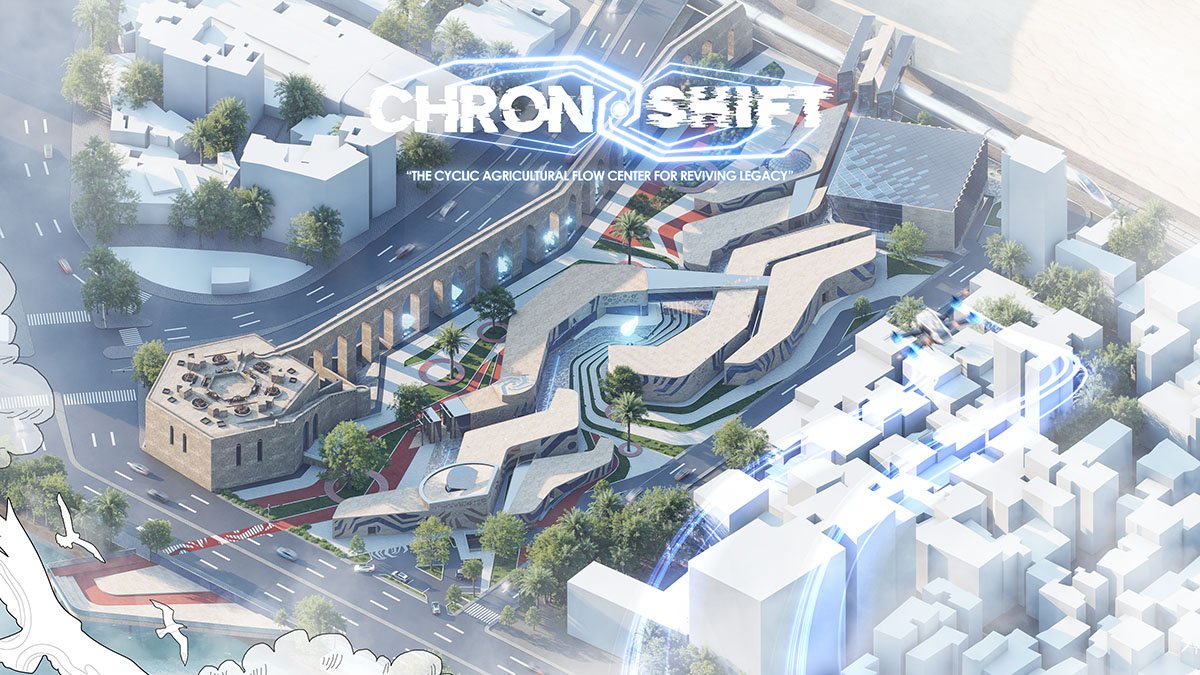
Within a densely built fabric and fragmented open spaces, the site reflects a broader citywide crisis of environmental degradation in historic Cairo. In response, the project proposes an integrated hub that revives the aqueduct’s ecological and cultural role through research, education, community workshops, and visitor facilities. The intervention aims to heal the urban fabric, restore environmental balance, and reconnect Magra El Oyoun to its historic identity as a living, productive landscape.
Design Process
A digital reconstruction of the historic aqueduct, meticulously crafted through research to understand its original mechanics and inform the new design.
The design process emerged from a close reading of the Magra El Oyoun Aqueduct as a historical artifact shaped by time, rupture, and transformation. Analysis of early maps revealed seven monumental breaks along the aqueduct wall—irregular and fragmented—reflecting centuries of neglect, destruction, and repair. Rather than imposing order, the project embraces this condition, using the fractures as the conceptual foundation.
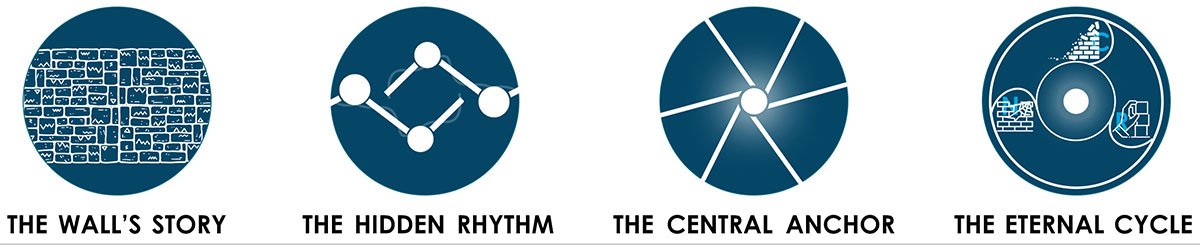
Key ConceptsKey ConceptsKey Concepts
From this understanding, the core idea of “Fractured Flow” was developed. A new central anchor is introduced to recontextualize the seven breaks, creating a unifying rhythm while preserving their historical meaning. This anchor generates a continuous circulation spine that weaves through the site, guiding movement and structuring the project as a cyclical journey through past, present, and future.
The six key design principles that guided the project, from ‘Dialogue with Heritage’ to ‘Closed-Loop Systems,’ ensuring a holistic and methodical design approach.A step-by-step diagram illustrating the form generation process, from site analysis and flow path derivation to the final integrated architectural form.
Programmatic volumes are extruded along this path and carefully carved in dialogue with the aqueduct, producing monolithic forms defined by solid and void, light and shadow. The CAFS network is integrated as a “Living River,” making environmental systems visible and reinforcing the idea of architecture as a living ecosystem. Sustainability, heritage, and technology are unified through closed-loop systems, solar energy, and landscape integration.
The physical model, used as a key tool in the design process to study the project’s ‘carved’ monolithic forms, massing, and the interplay of solid and void.
Throughout the process, physical models were used to explore massing, form, and spatial experience, while detailed digital models resolved technical and environmental performance. The result is a carved architectural landscape that honors the aqueduct’s legacy, fosters community life, and transforms a fractured historic site into a coherent, sustainable, and experiential civic destination.
Final Outcome
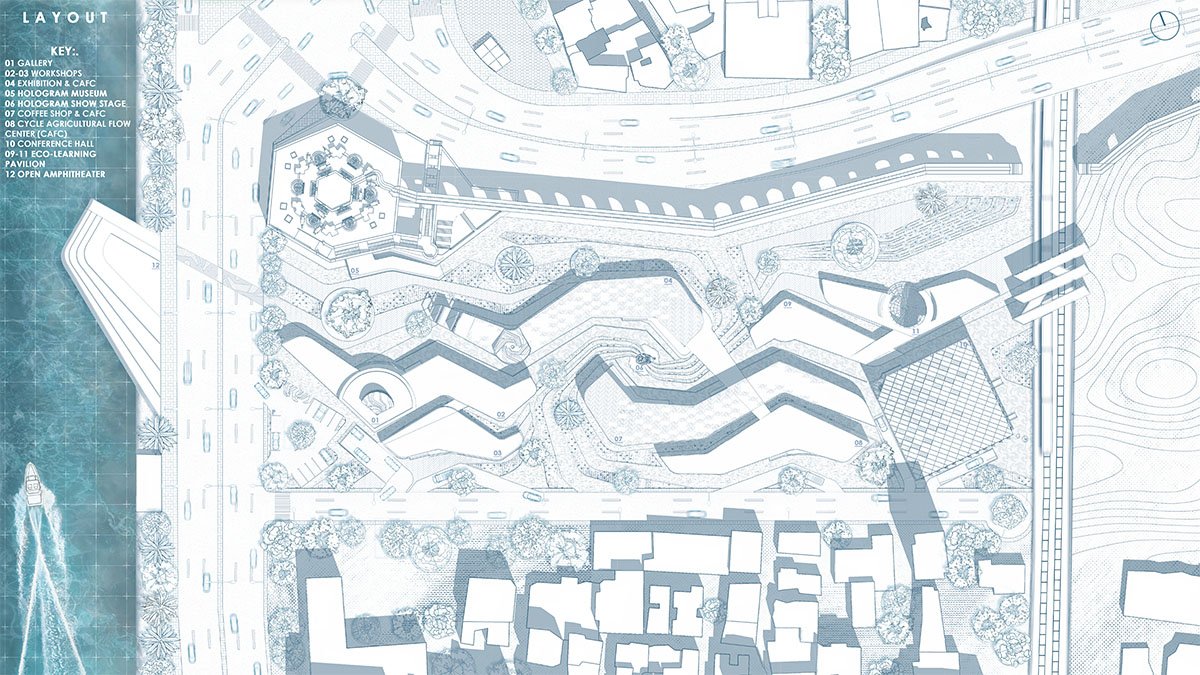
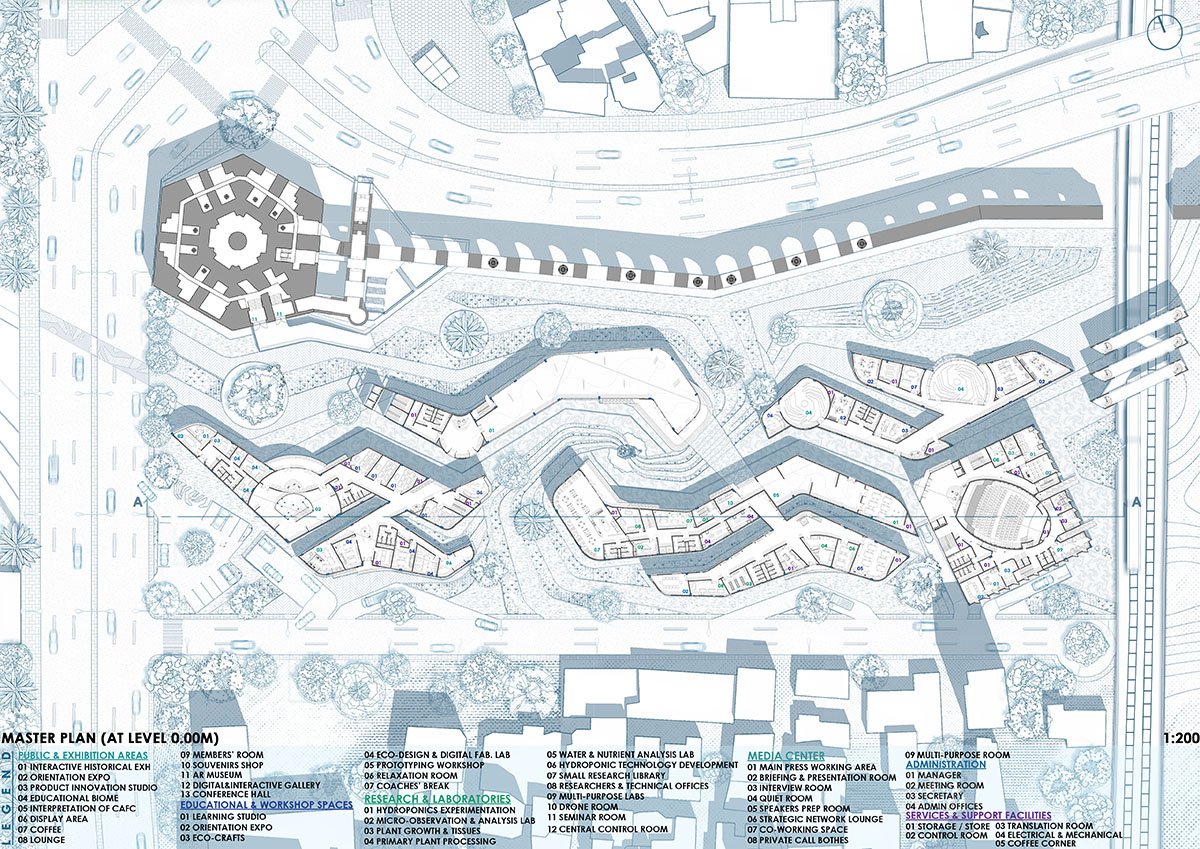
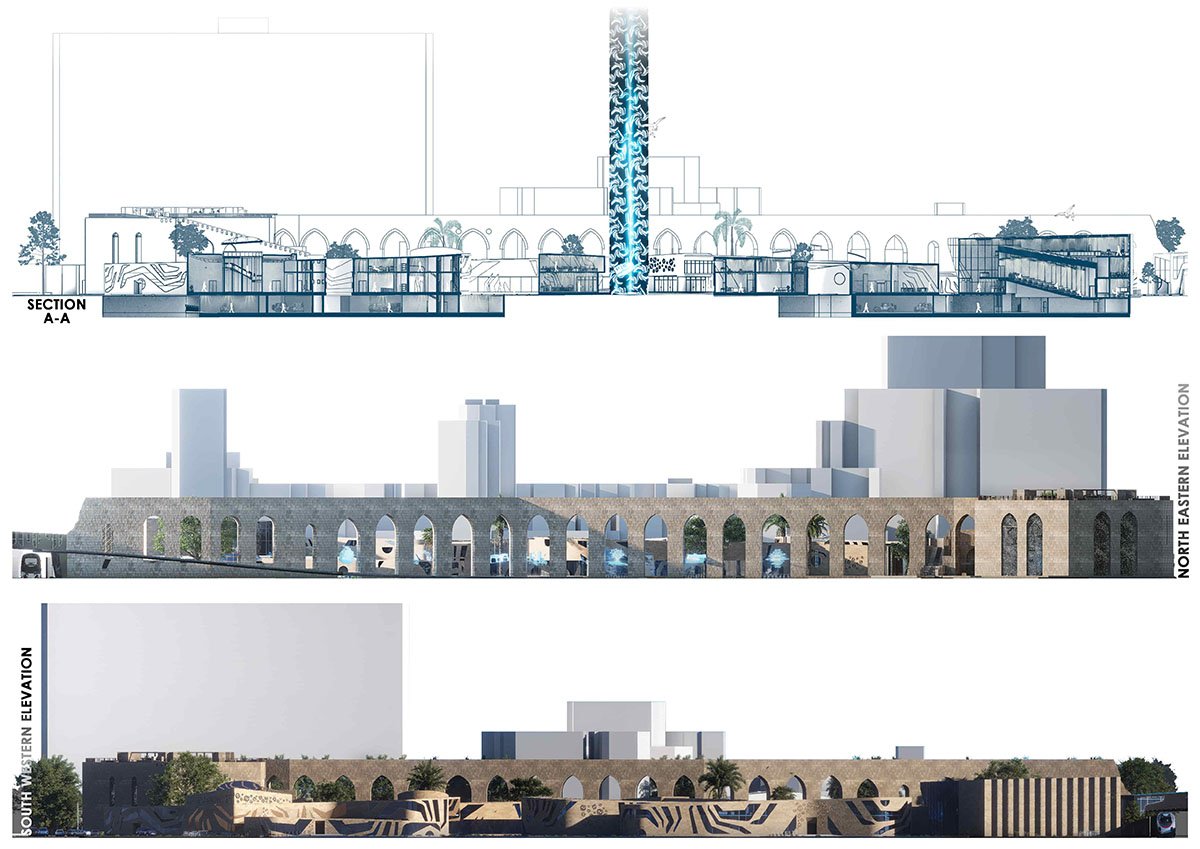
Site PlanThe final Master Plan, illustrating the distribution of functions, landscape design, and the primary circulation paths that form the ‘Fractured Flow’ user journey.Section and Elevations
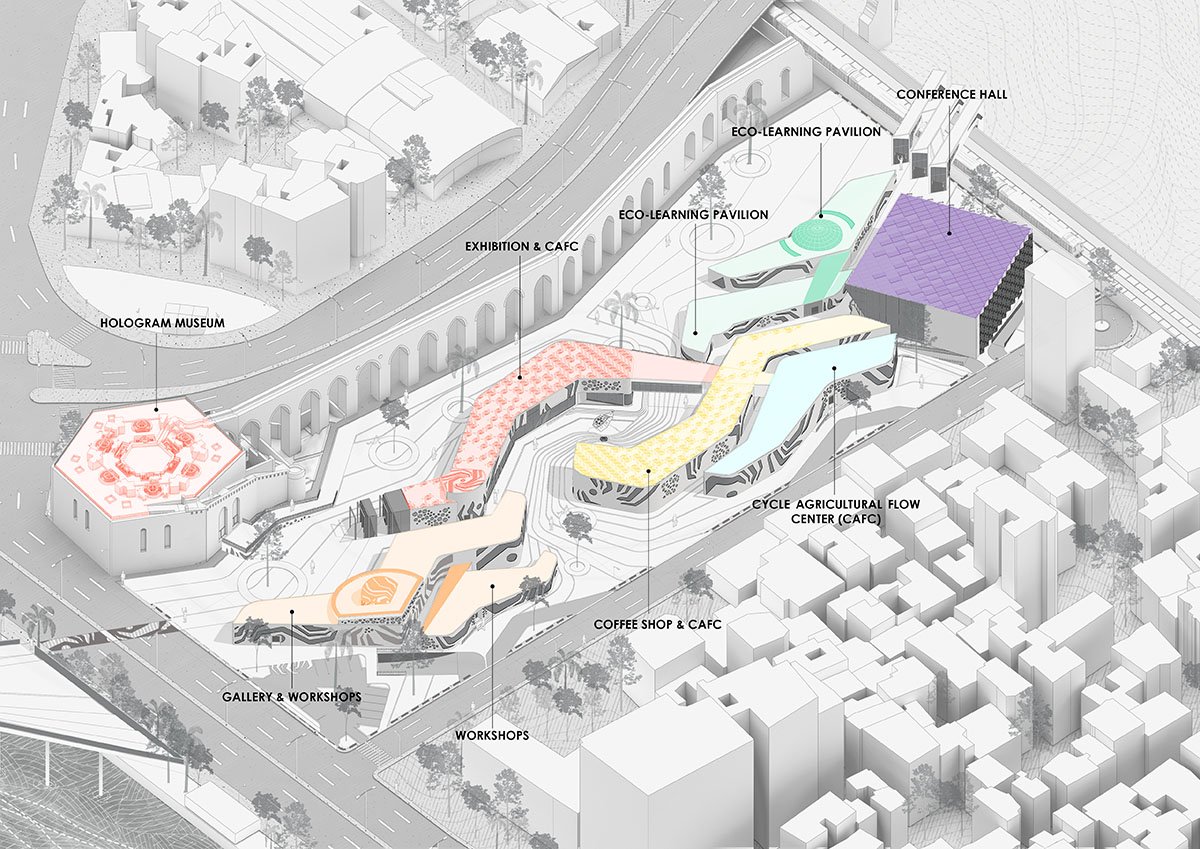
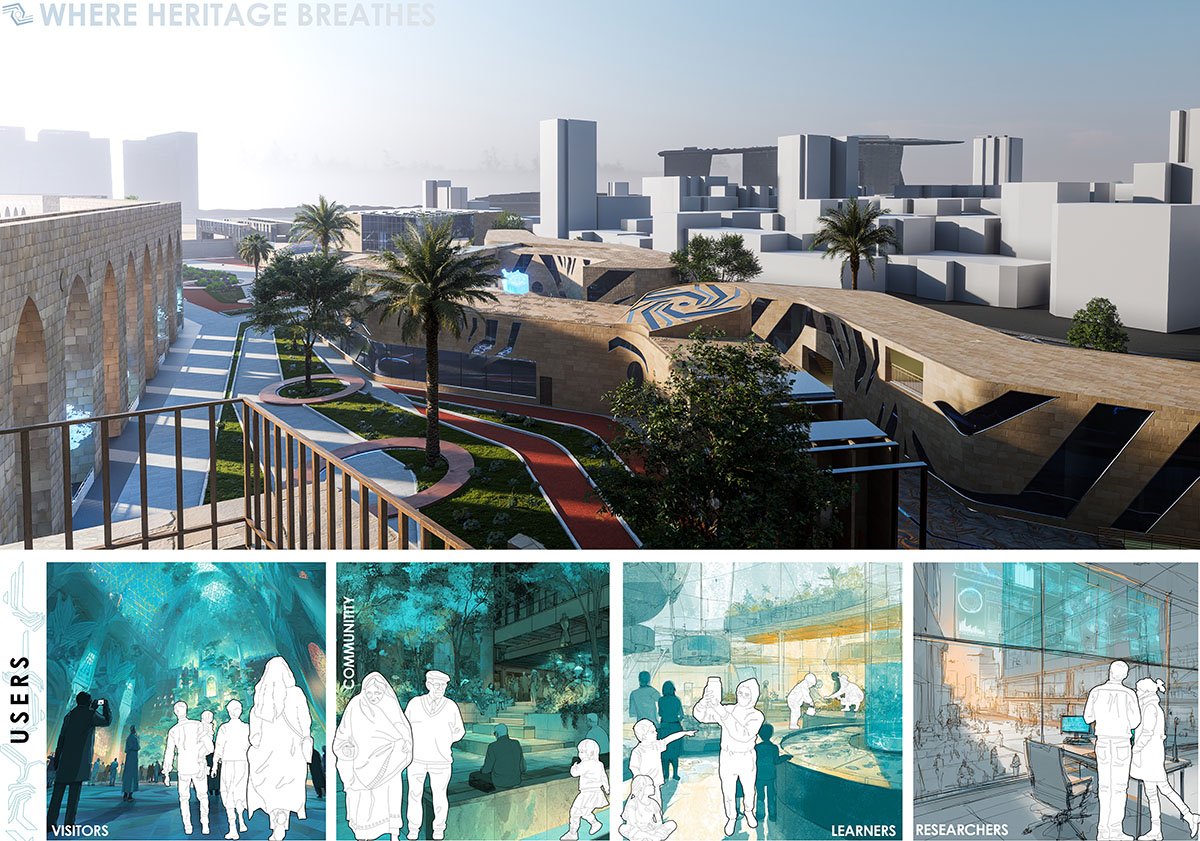
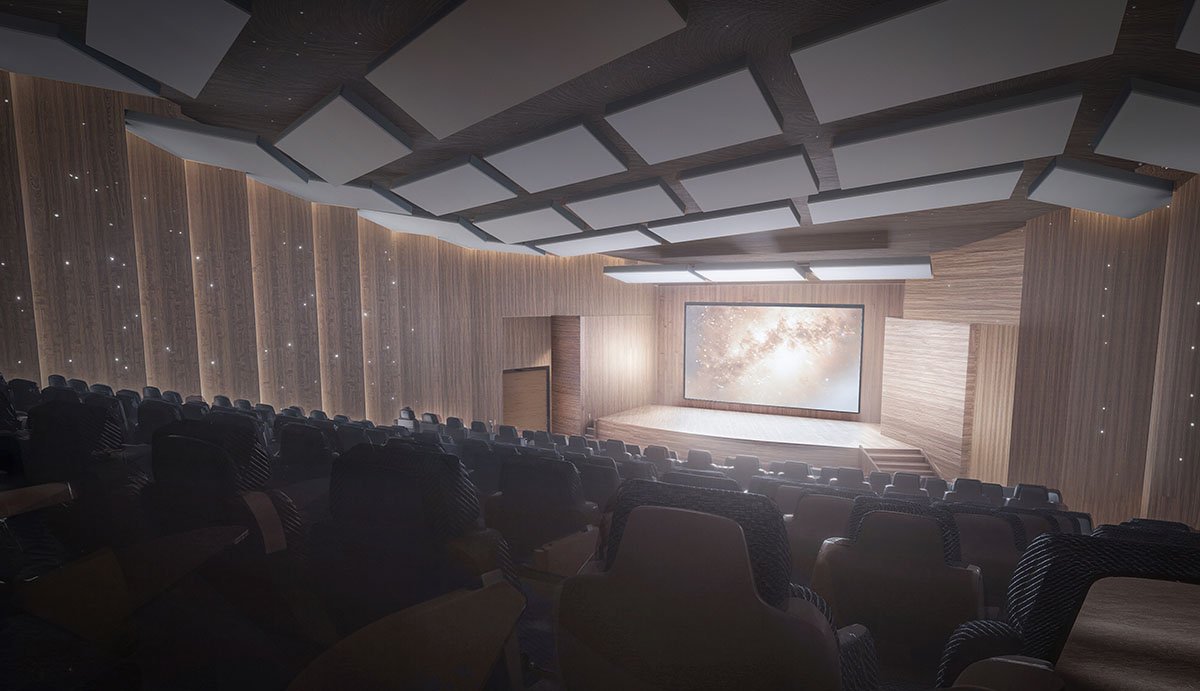
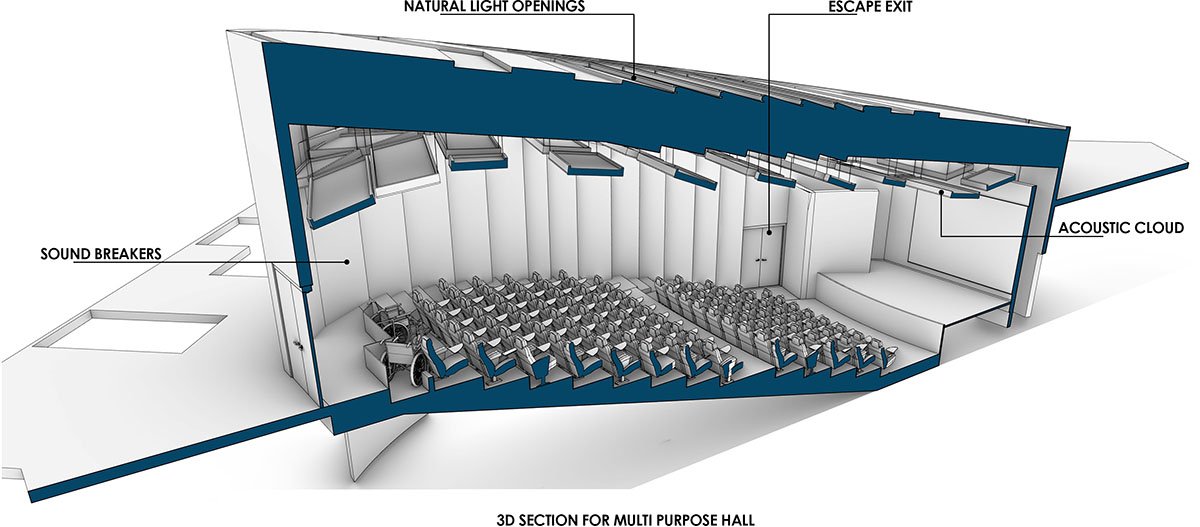
The project is located at the Magra El Oyoun Aqueduct in Old Cairo, an area suffering from severe urban decay, an extreme shortage of green space (<0.7 m² per capita), and a weakened relationship with its rich cultural heritage. This condition called for an intervention capable of healing the urban fabric while restoring ecological balance and social vitality. In response, the project proposes an integrated hub that combines environmental management, research, education, and public engagement, bringing together a CAFS Management Hub with research laboratories, an Interactive Visitor Center, Community Workshops for sustainable skills, and a Scientific Conference Center to create a dynamic destination for both locals and visitors.
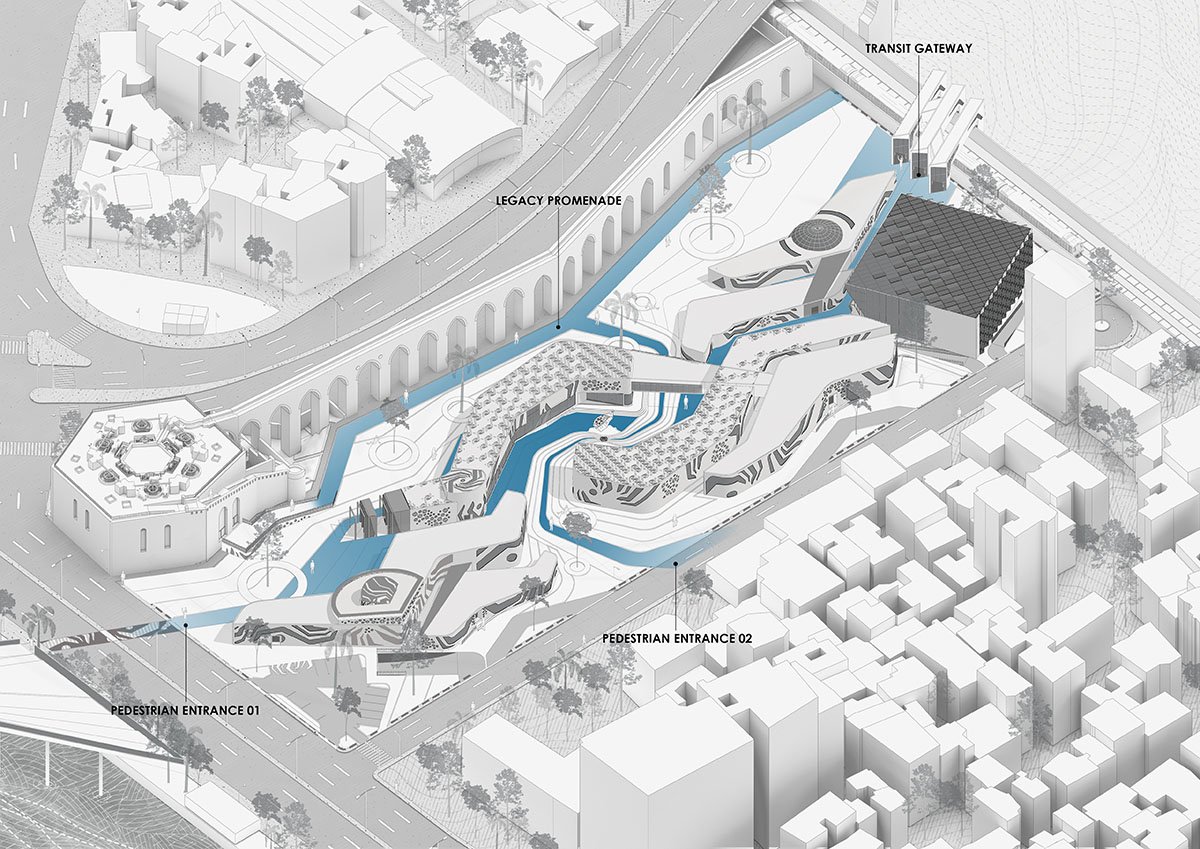
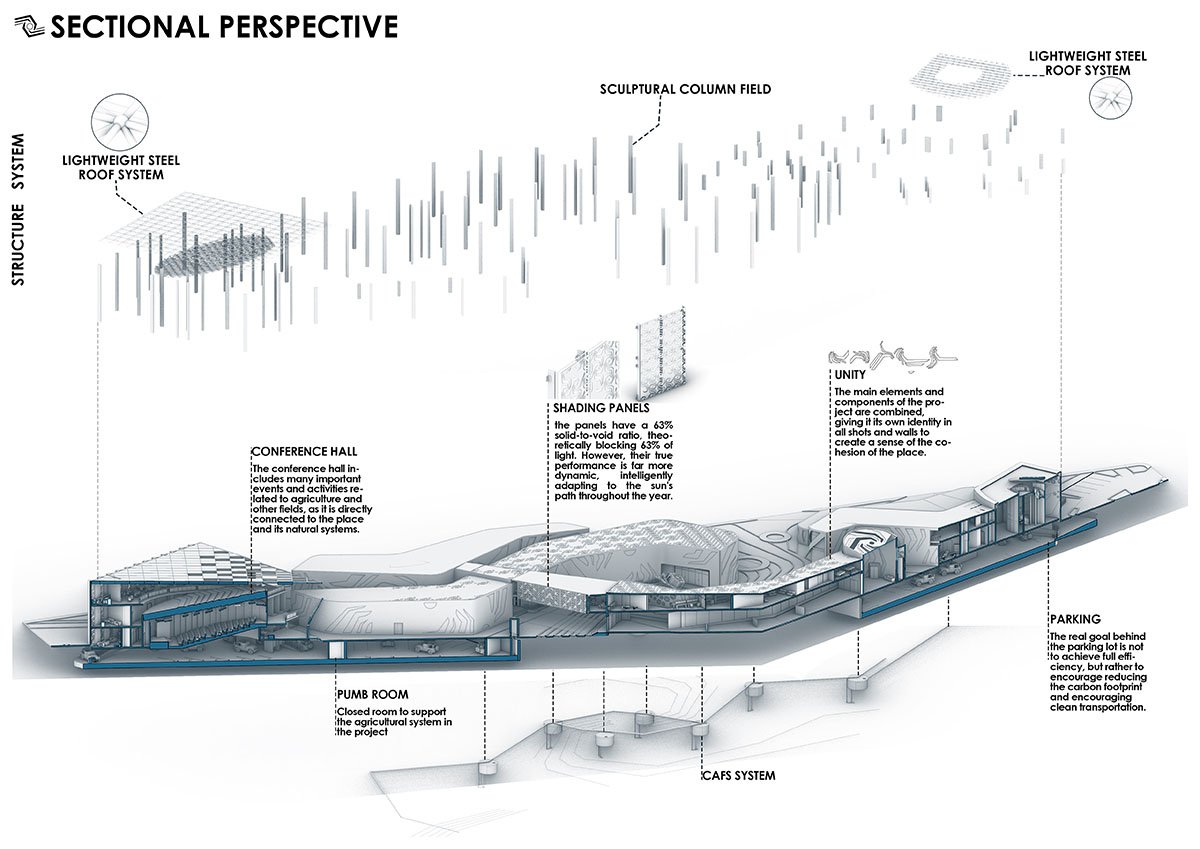
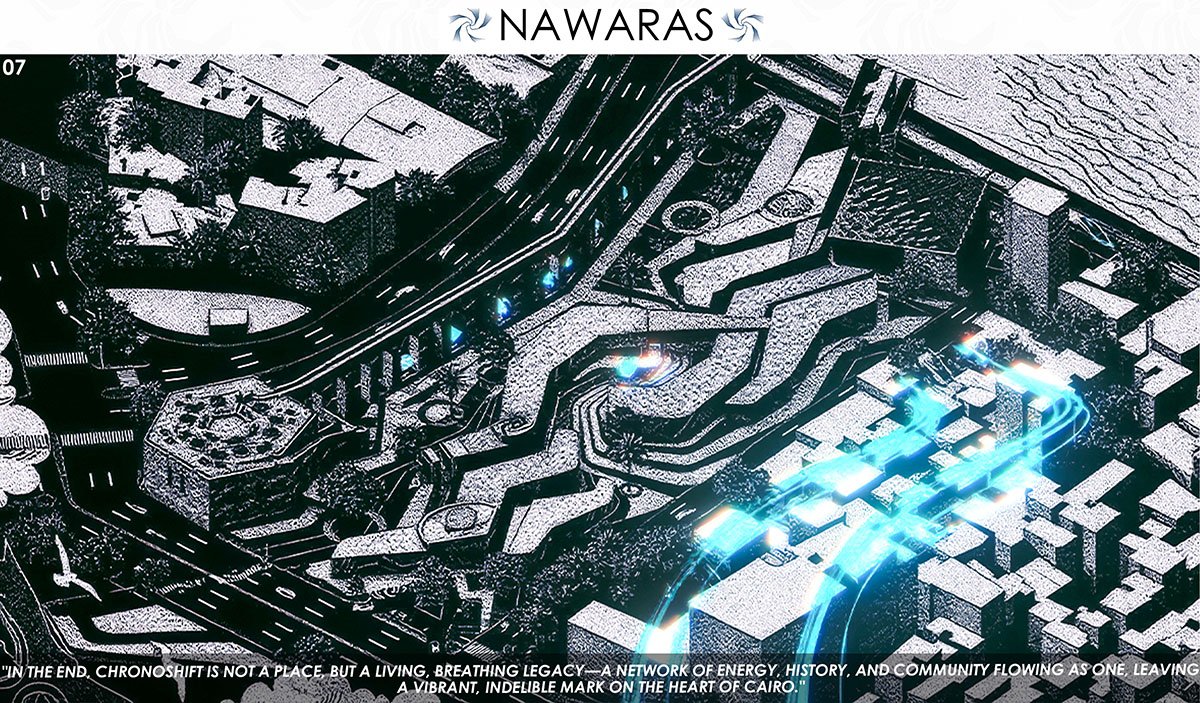
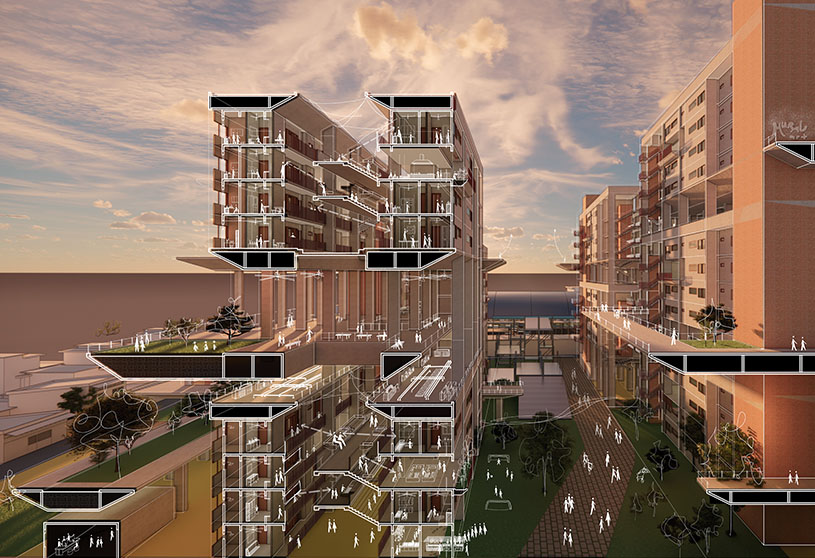
AxonometricAxonometricThe main sectional perspective, revealing the seamless integration of the architectural spaces, structural systems, and the sustainable CAFS network at the project’s core.
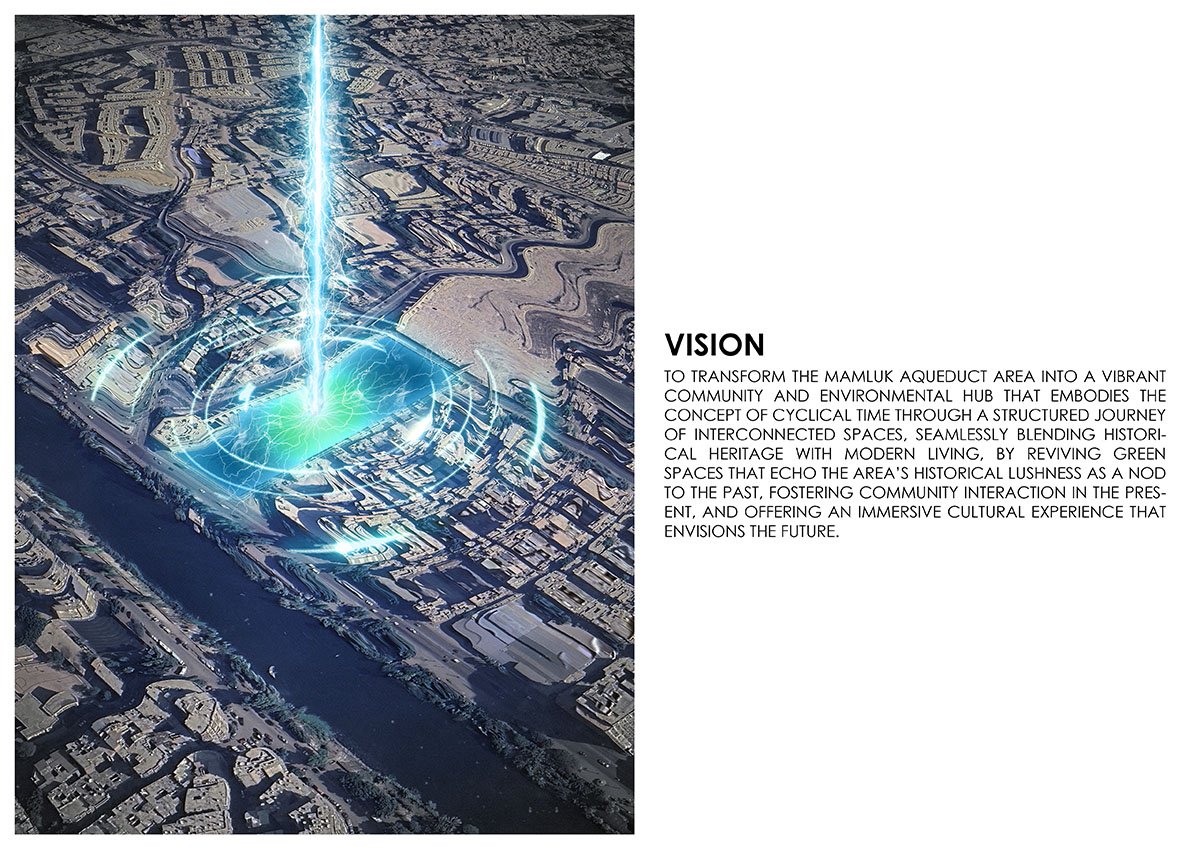
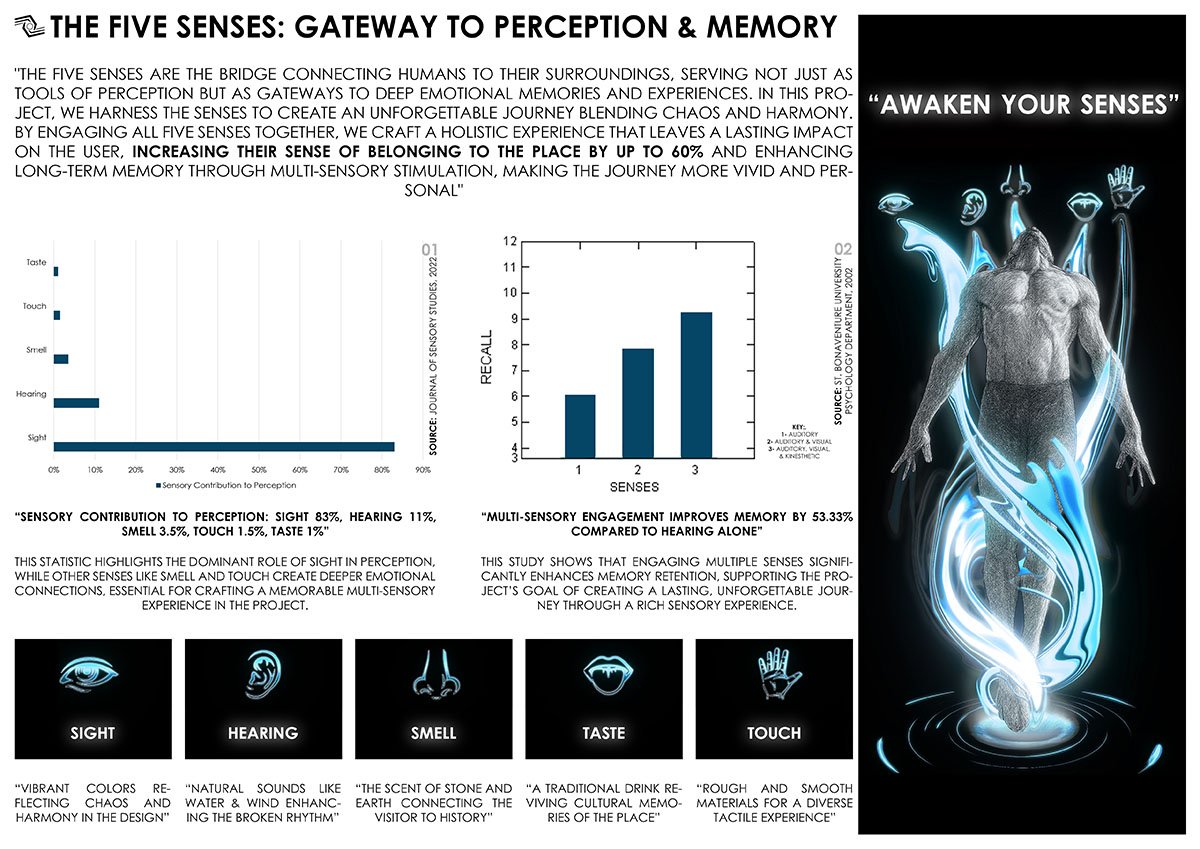
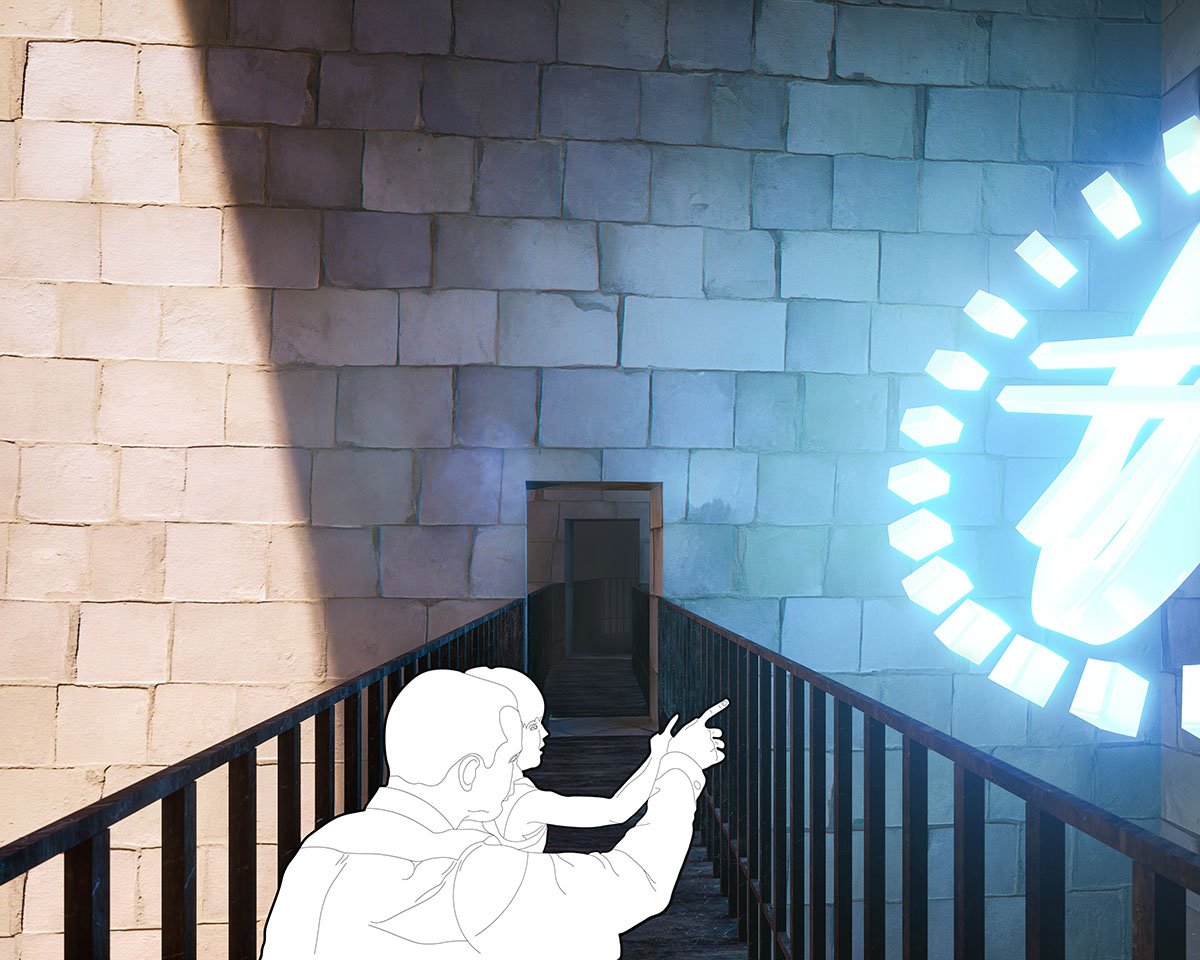
The project’s vision is to transform the Mamluk aqueduct zone into a vibrant community and environmental hub that embodies the concept of cyclical time. Through a structured journey of interconnected spaces, the design reconnects past, present, and future—reviving historic green landscapes that once defined the area, activating community interaction in the present, and offering immersive cultural and technological experiences that anticipate future urban living. This journey is enhanced through a multi-sensory approach, engaging all five senses to create a memorable experience that strengthens emotional attachment and a sense of belonging to the place.
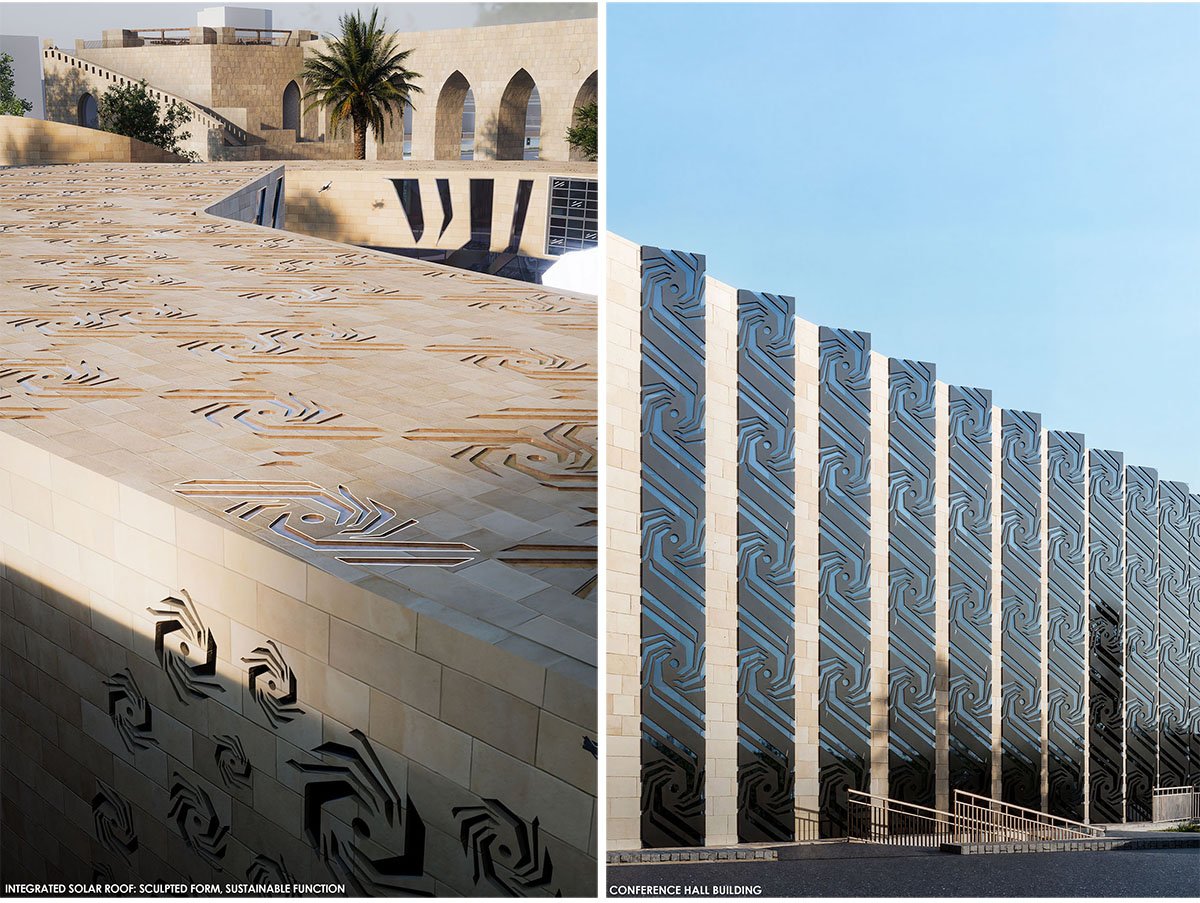
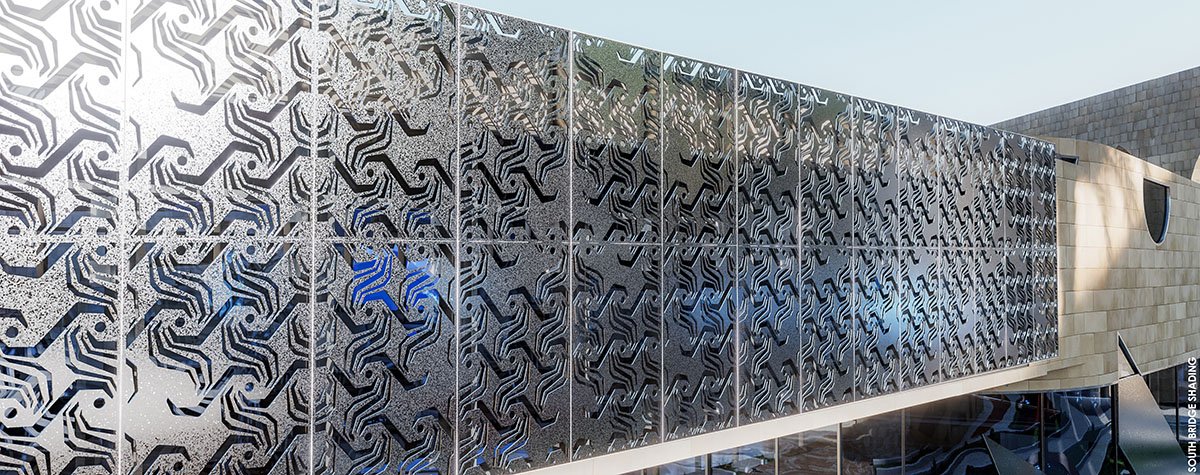
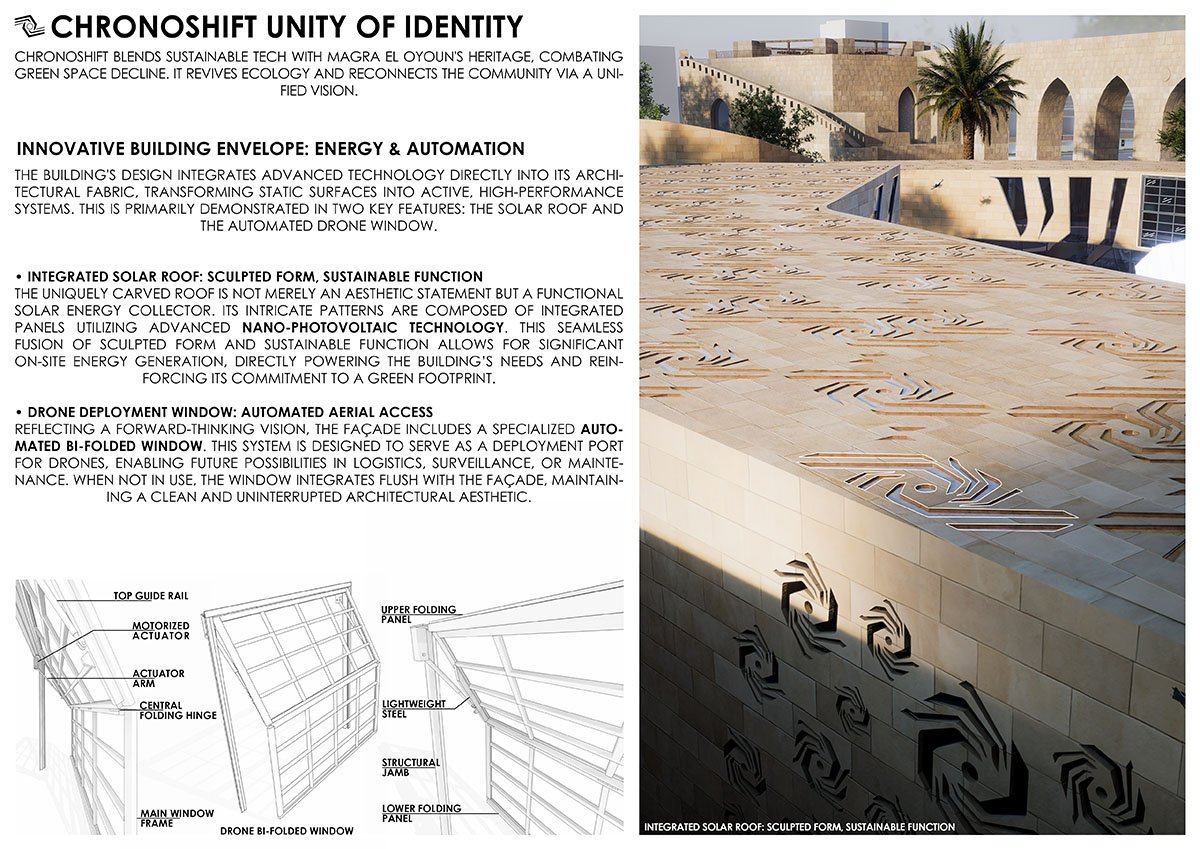
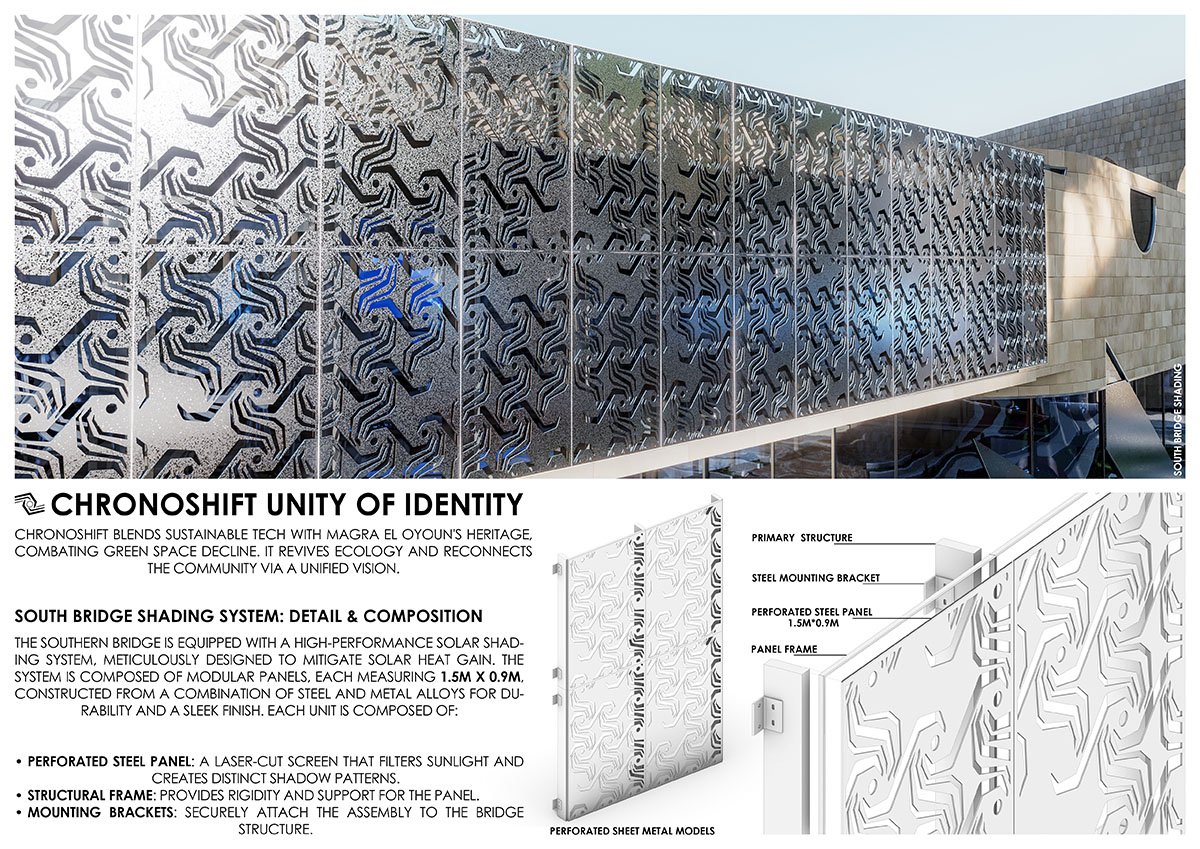
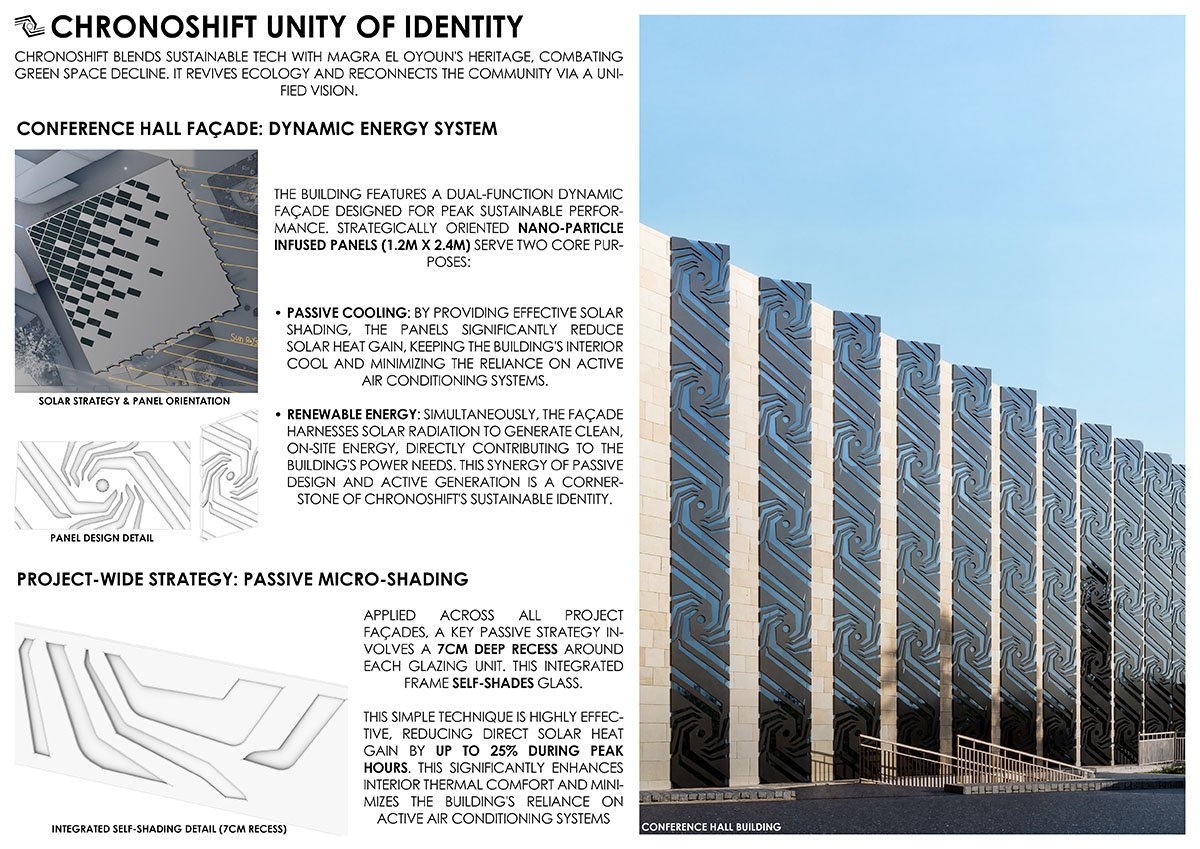
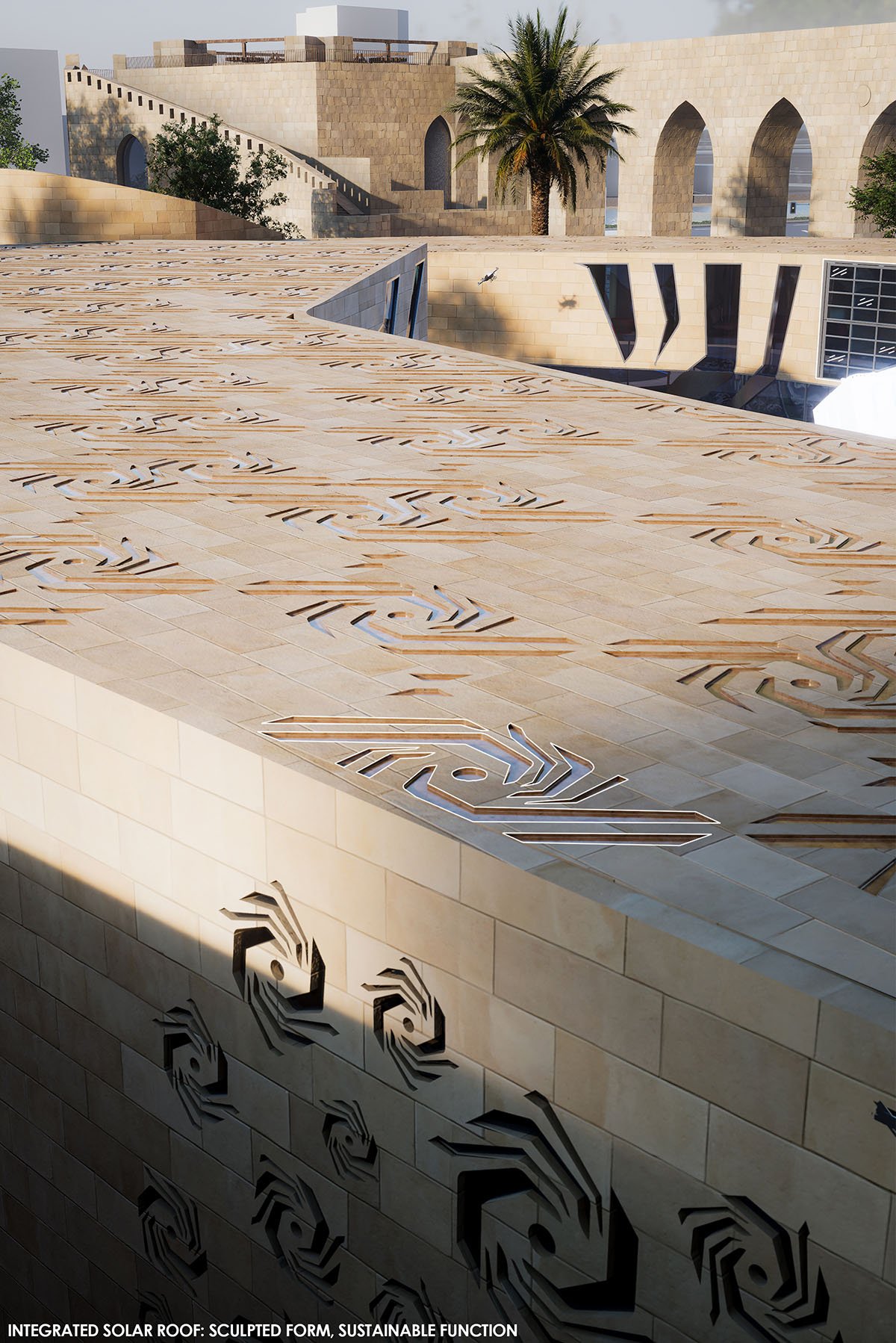
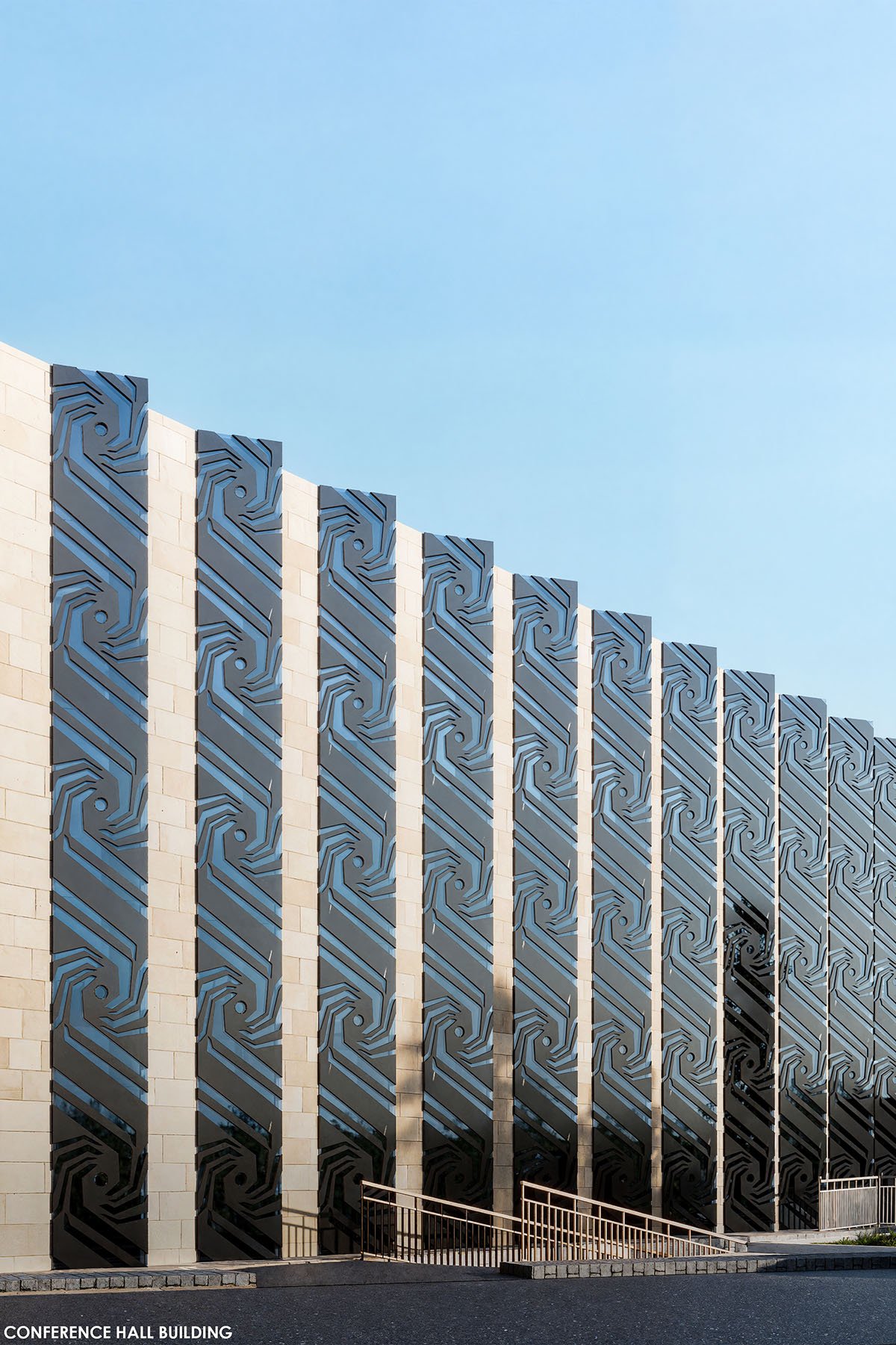
Integrated Solar Roof | Conference Hall BuildingSouth Bridge Shading SystemCAFS System Mechanics
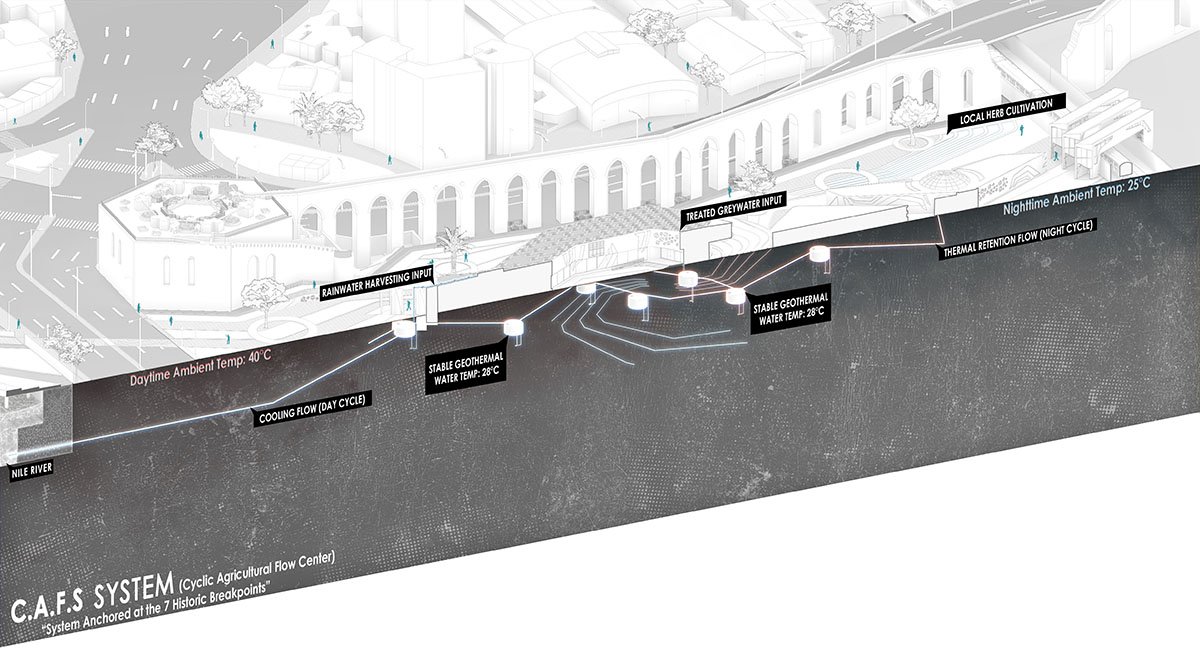
Sustainability and heritage are unified through the ChronoShift identity, where advanced environmental technologies are seamlessly embedded within the architectural fabric. The project integrates a solar-powered CAFS system as a modern reinterpretation of the aqueduct’s agricultural legacy, significantly reducing water consumption, producing local food, and empowering the community through sustainable urban farming. Energy-generating roofs and façades, passive cooling strategies, self-shading glazing details, and closed-loop water and energy systems collectively minimize environmental impact while enhancing thermal comfort.
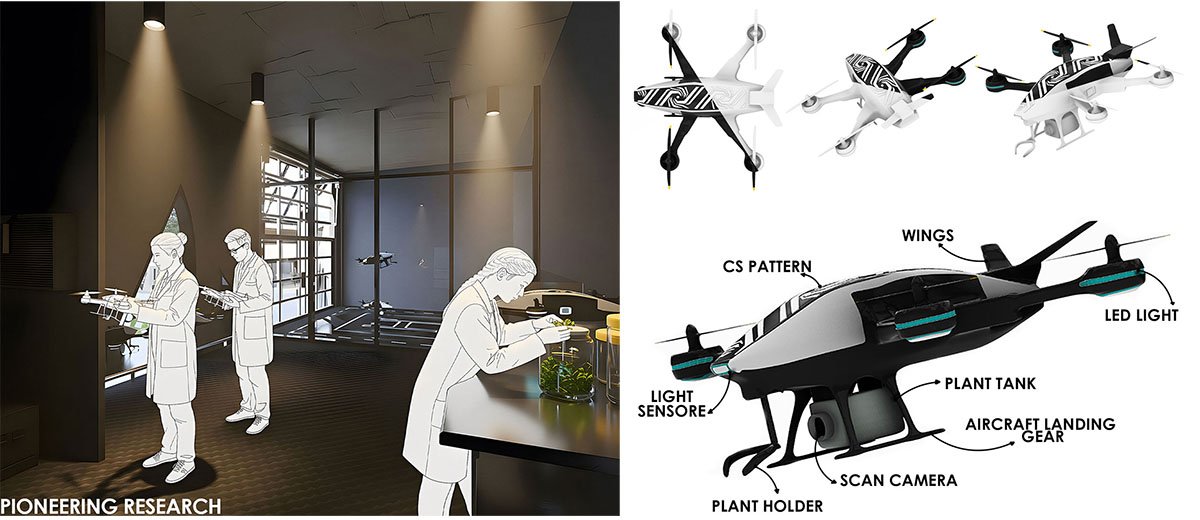
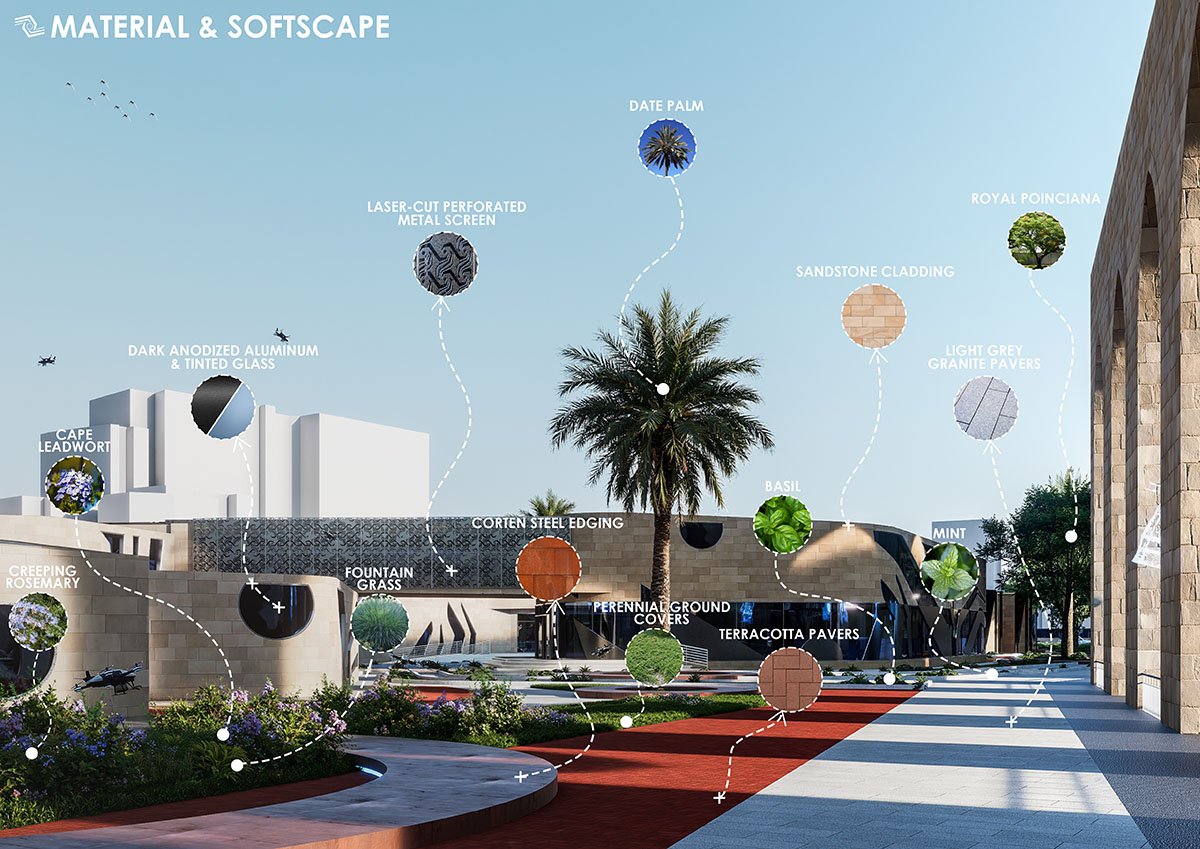
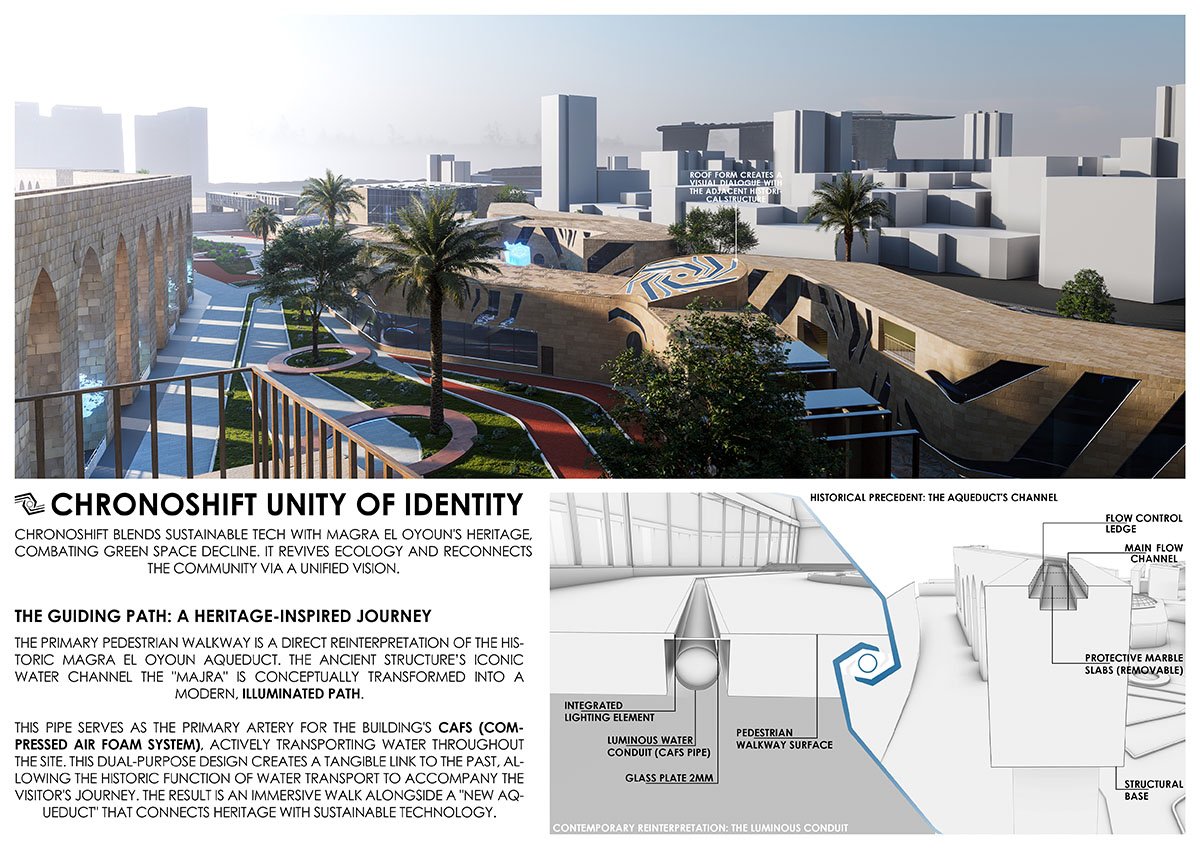
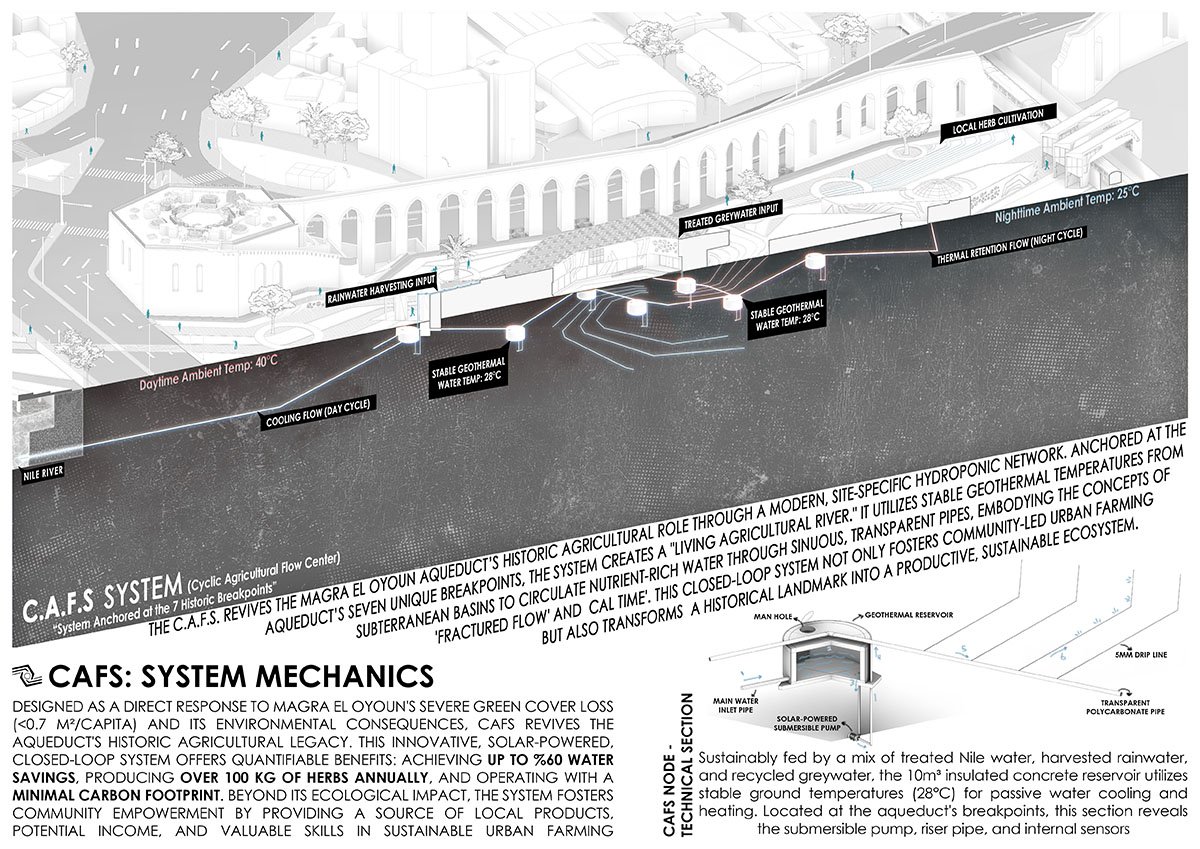
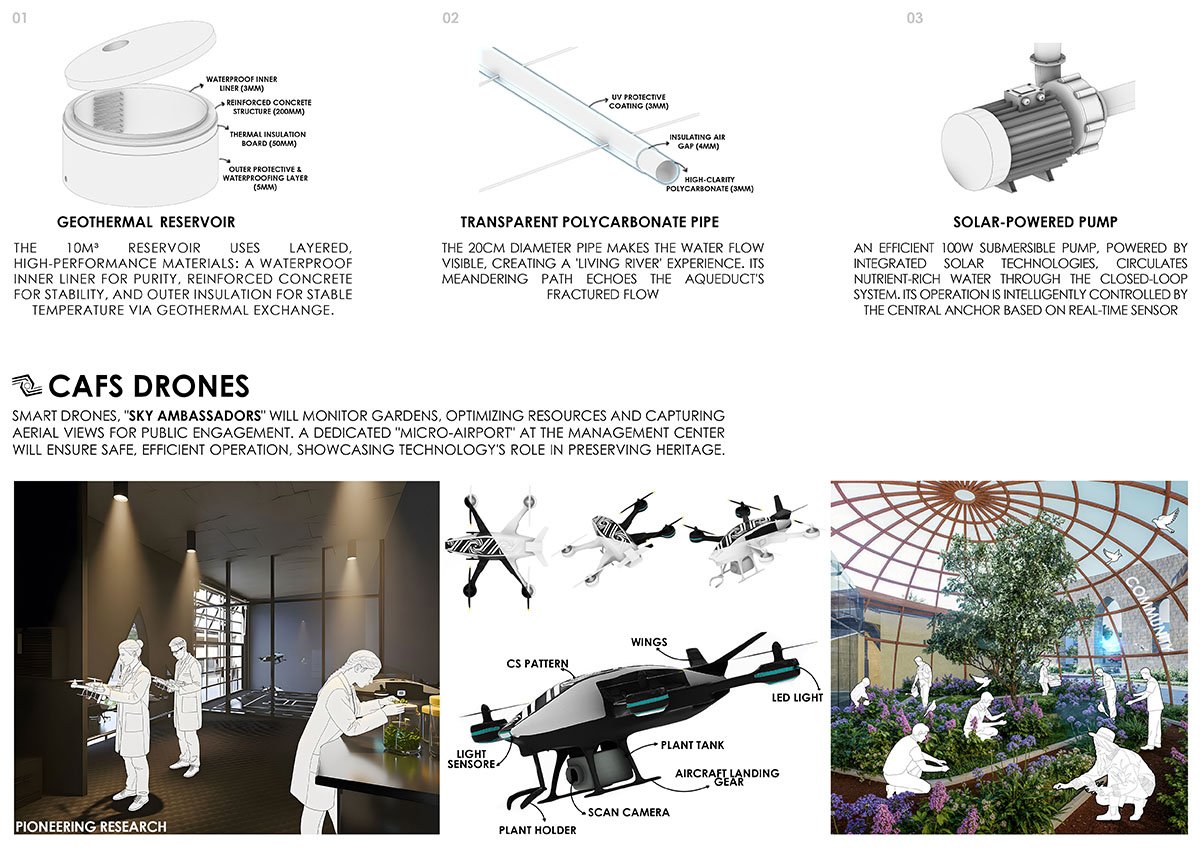
CAFS System MechanicsMaterial and SoftscapeRenderRender
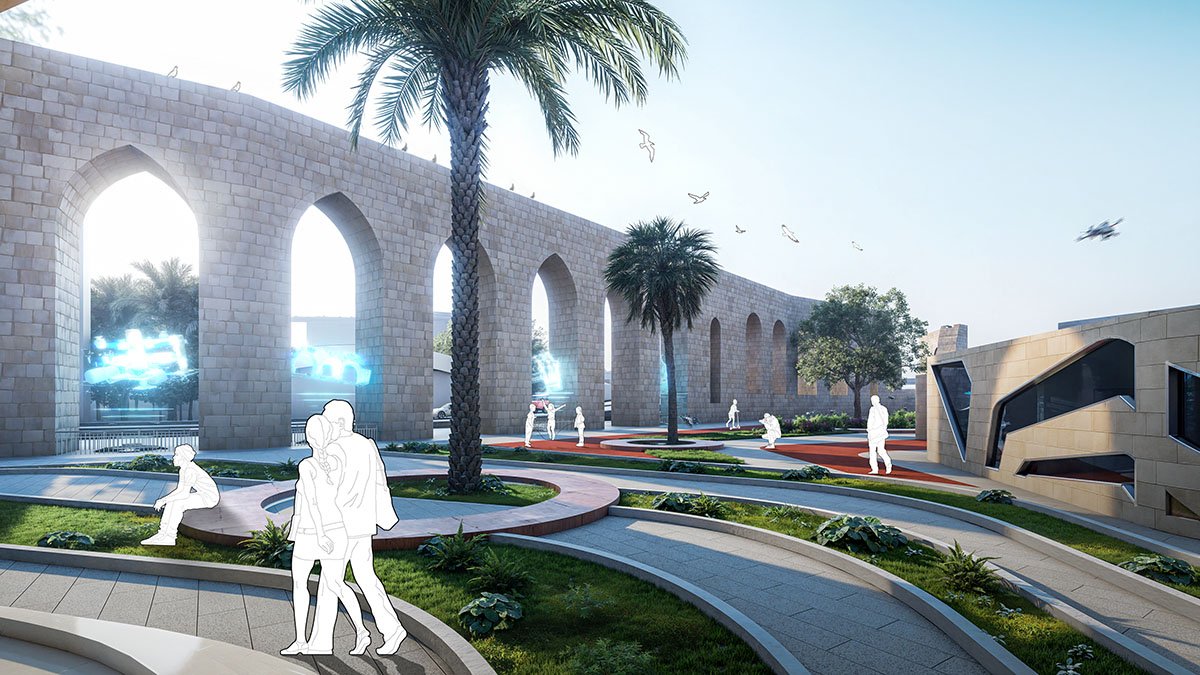
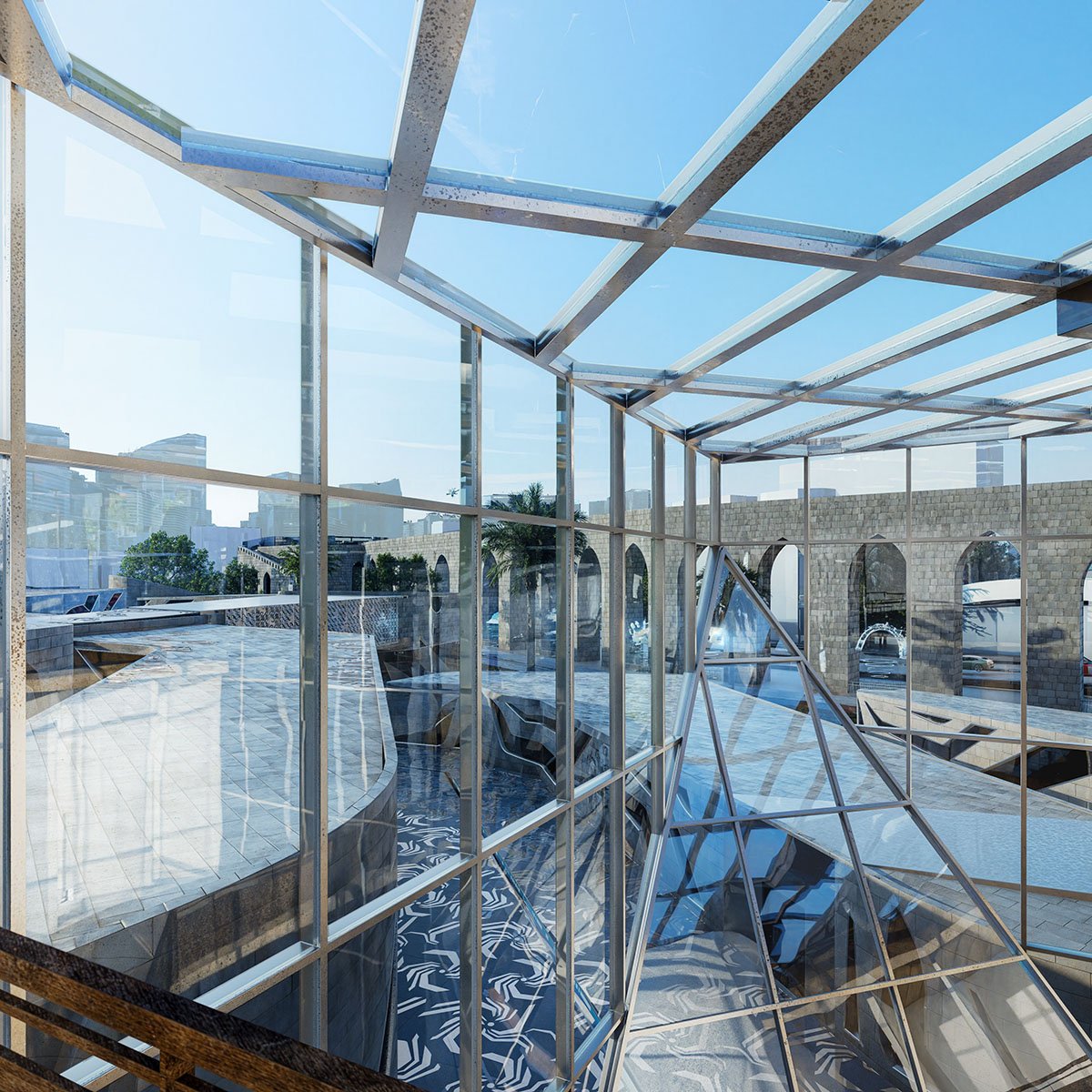
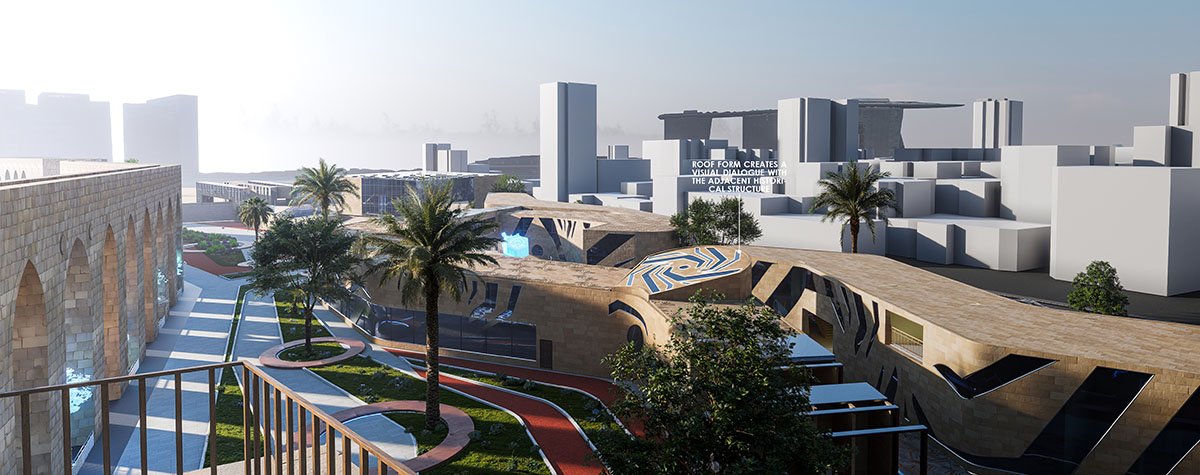
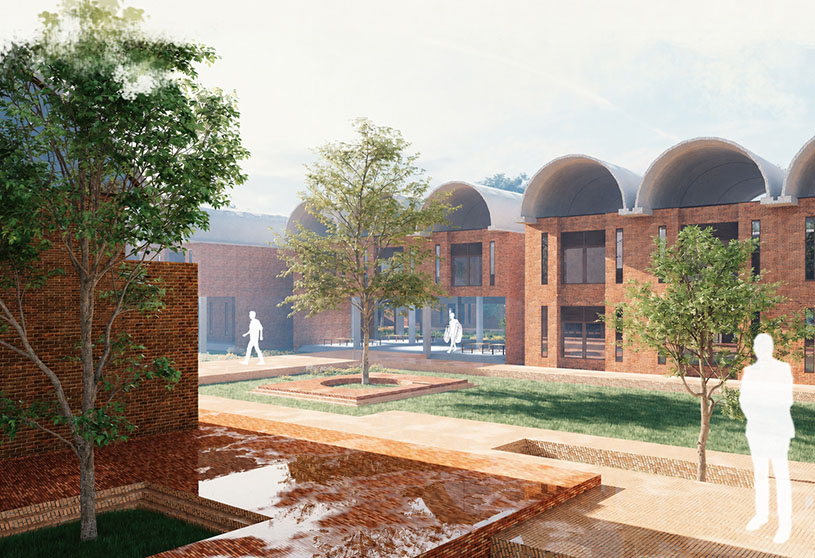
Architecturally, the design reinterprets the historic aqueduct as a guiding pedestrian path—a contemporary “Living River” that physically and symbolically carries water, energy, and movement across the site. Sculpted stone volumes, defined by the interplay of solid and void, light and shadow, frame the aqueduct and create a hierarchy of public spaces ranging from intimate courtyards to active plazas. Together, these elements transform Magra El Oyoun into a living cultural landscape, reconnecting community, ecology, and heritage through a unified and forward-looking vision.
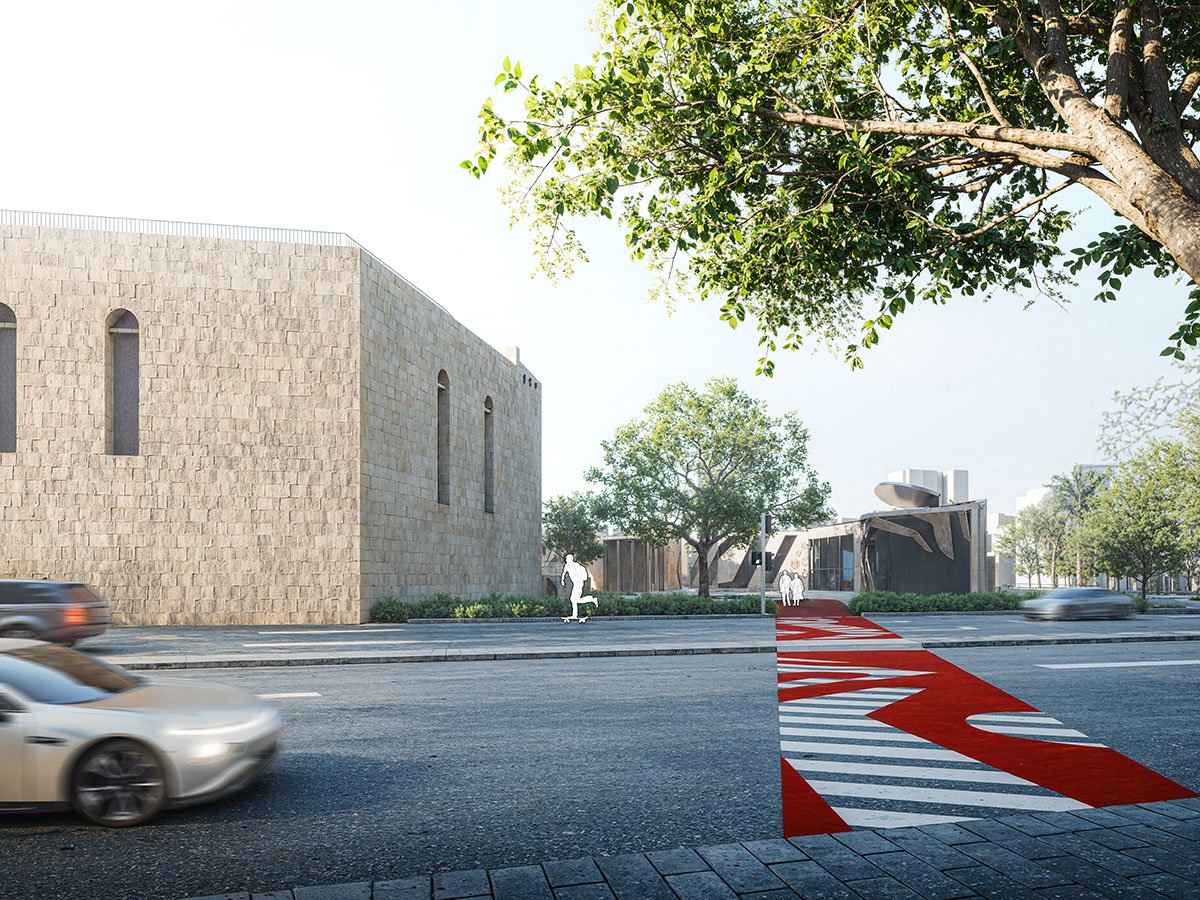
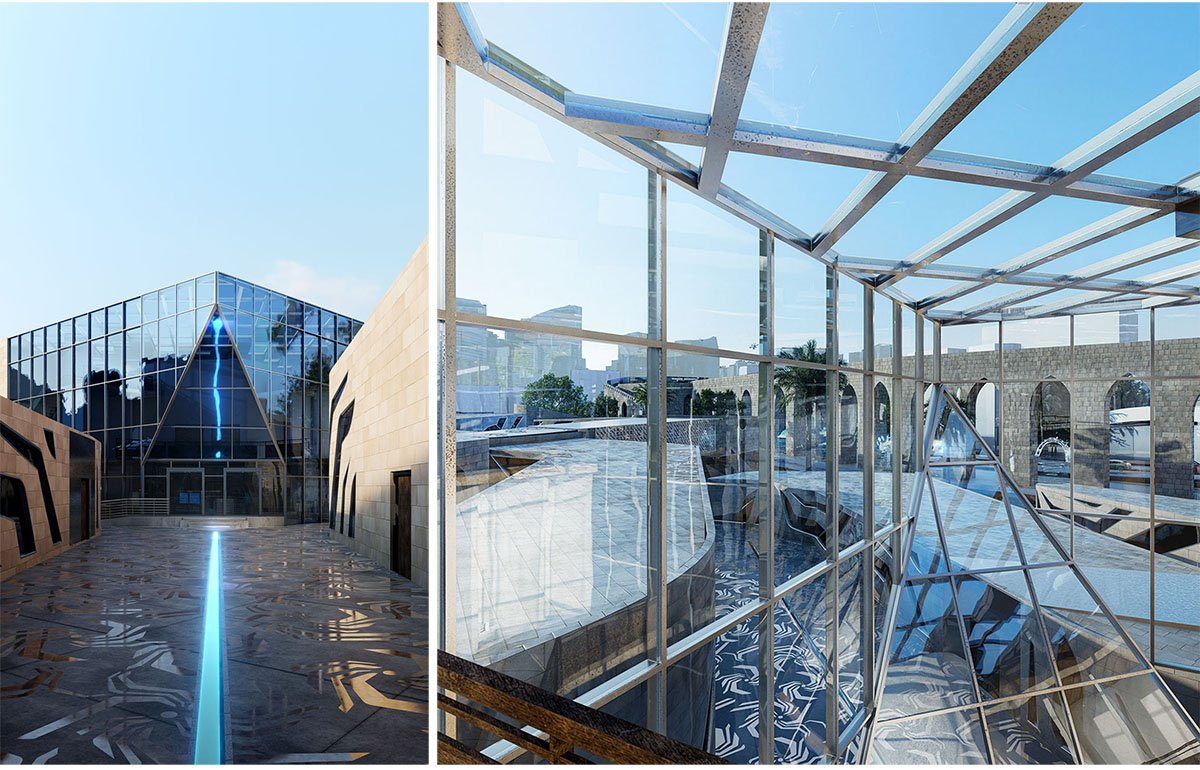
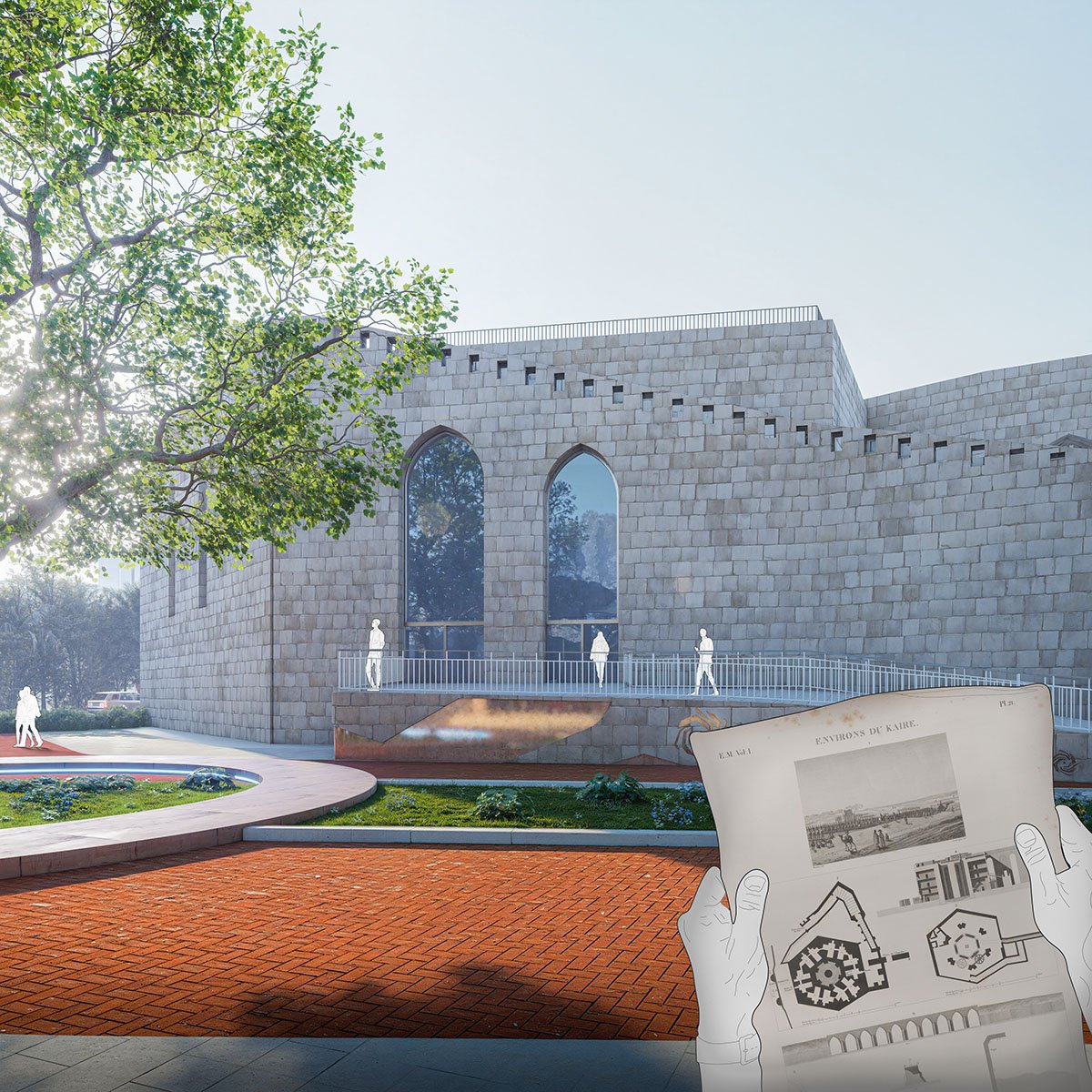
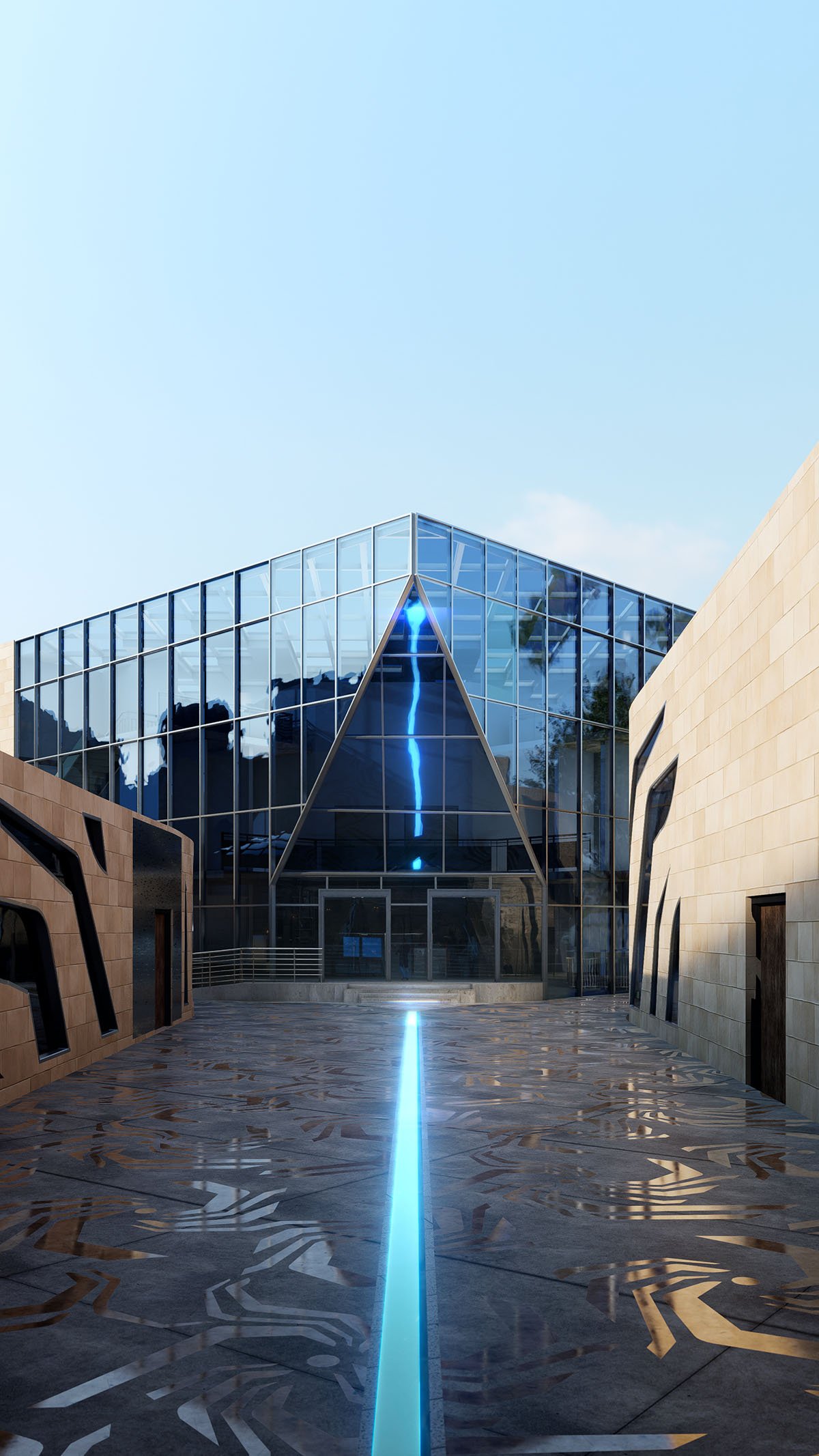
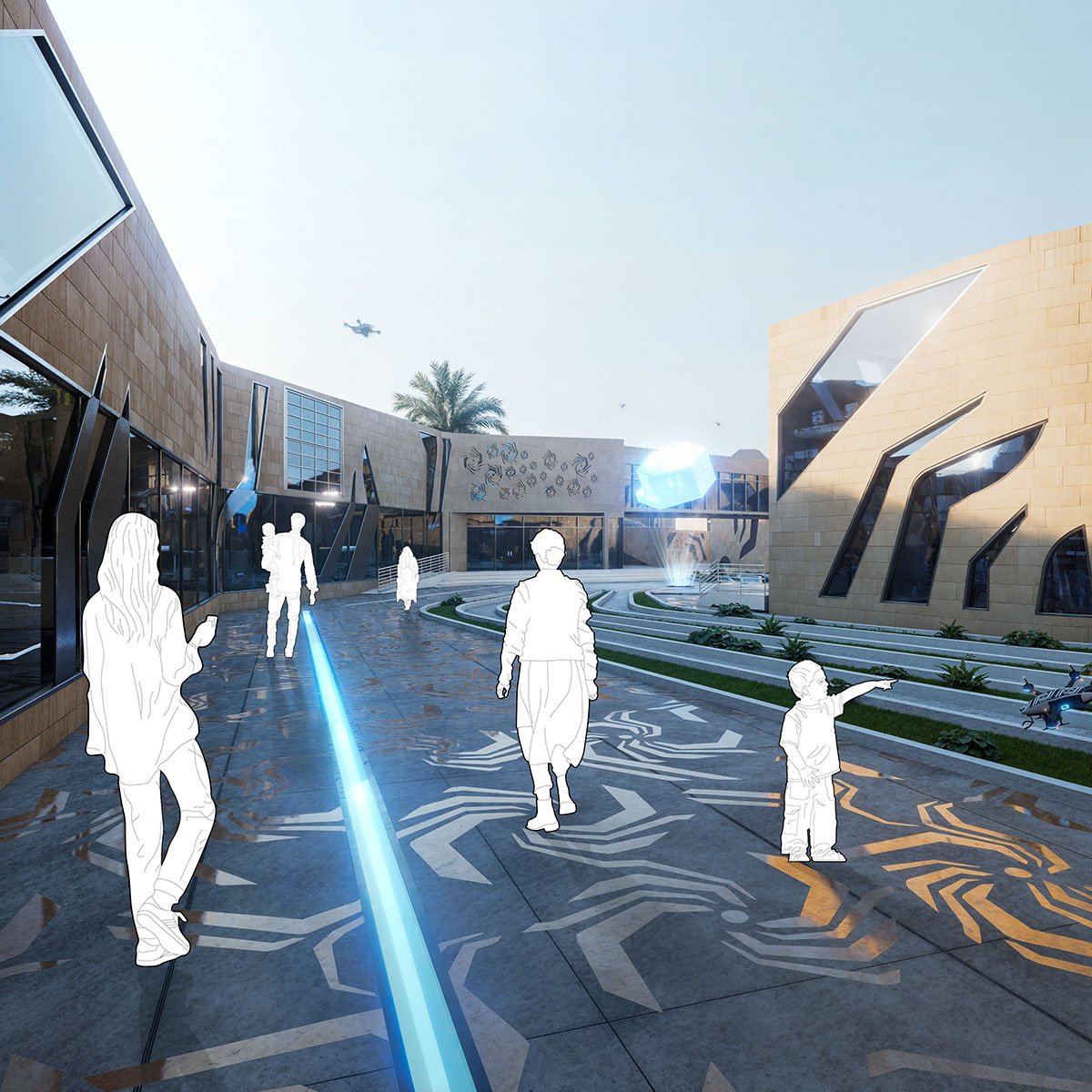
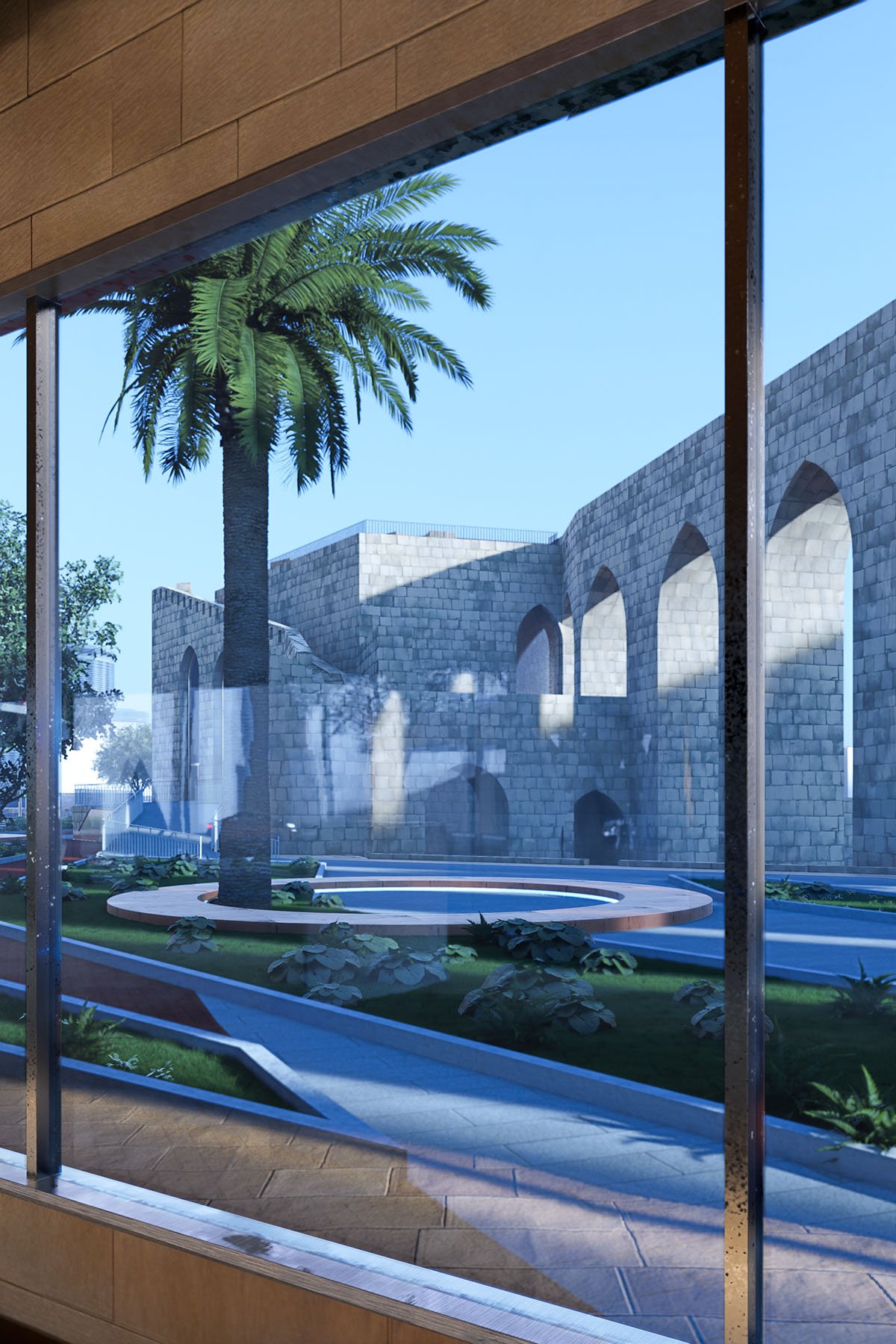
A view of the main public promenade adjacent to the aqueduct, illustrating how the project successfully creates a vibrant and green public realm.A perspective from the main plaza, showing the ‘Fractured Flow’ paving pattern and the dialogue between the monolithic stone facades and human-scaled public spaces. | RenderRender
Conclusion: Ultimately, the project transforms the Magra El Oyoun Aqueduct into a living, sustainable landmark that reconnects heritage, ecology, and community. By healing the urban fabric and reactivating the site through integrated environmental and social systems, it restores identity and establishes a resilient cultural hub for Old Cairo.
[This Academic Project has been published with text and images submitted by the student]
Site Context
Design Process
Final Outcome
To submit your academic project for publication at ArchiDiaries, please visit the following link >> Submit
Get the best of ArchiDiaries, directly in your inbox.
We use cookies on our website to give you the most relevant experience by remembering your preferences and repeat visits. By clicking “Accept All”, you consent to the use of ALL the cookies. However, you may visit "Cookie Settings" to provide a controlled consent.
This website uses cookies to improve your experience while you navigate through the website. Out of these, the cookies that are categorized as necessary are stored on your browser as they are essential for the working of basic functionalities of the website. We also use third-party cookies that help us analyze and understand how you use this website. These cookies will be stored in your browser only with your consent. You also have the option to opt-out of these cookies. But opting out of some of these cookies may affect your browsing experience.
Necessary cookies are absolutely essential for the website to function properly. These cookies ensure basic functionalities and security features of the website, anonymously.
Cookie
Duration
Description
cookielawinfo-checkbox-analytics
11 months
This cookie is set by GDPR Cookie Consent plugin. The cookie is used to store the user consent for the cookies in the category "Analytics".
cookielawinfo-checkbox-functional
11 months
The cookie is set by GDPR cookie consent to record the user consent for the cookies in the category "Functional".
cookielawinfo-checkbox-necessary
11 months
This cookie is set by GDPR Cookie Consent plugin. The cookies is used to store the user consent for the cookies in the category "Necessary".
cookielawinfo-checkbox-others
11 months
This cookie is set by GDPR Cookie Consent plugin. The cookie is used to store the user consent for the cookies in the category "Other.
cookielawinfo-checkbox-performance
11 months
This cookie is set by GDPR Cookie Consent plugin. The cookie is used to store the user consent for the cookies in the category "Performance".
viewed_cookie_policy
11 months
The cookie is set by the GDPR Cookie Consent plugin and is used to store whether or not user has consented to the use of cookies. It does not store any personal data.
Functional cookies help to perform certain functionalities like sharing the content of the website on social media platforms, collect feedbacks, and other third-party features.
Performance cookies are used to understand and analyze the key performance indexes of the website which helps in delivering a better user experience for the visitors.
Analytical cookies are used to understand how visitors interact with the website. These cookies help provide information on metrics the number of visitors, bounce rate, traffic source, etc.
Advertisement cookies are used to provide visitors with relevant ads and marketing campaigns. These cookies track visitors across websites and collect information to provide customized ads.