Excerpt: ‘The Morven Outpost’ is a Bachelors Design Project by Alan Watts from the ‘School of Architecture – University of Virginia.’ The project explores adaptive reuse to transform the Black Barn as a resilient, landscape-integrated hub that supports gathering, learning, and orientation at Morven. By preserving the existing structure and employing passive, flexible systems, the project honors the site’s agricultural legacy while fostering new social, educational, and ecological relationships across the property.
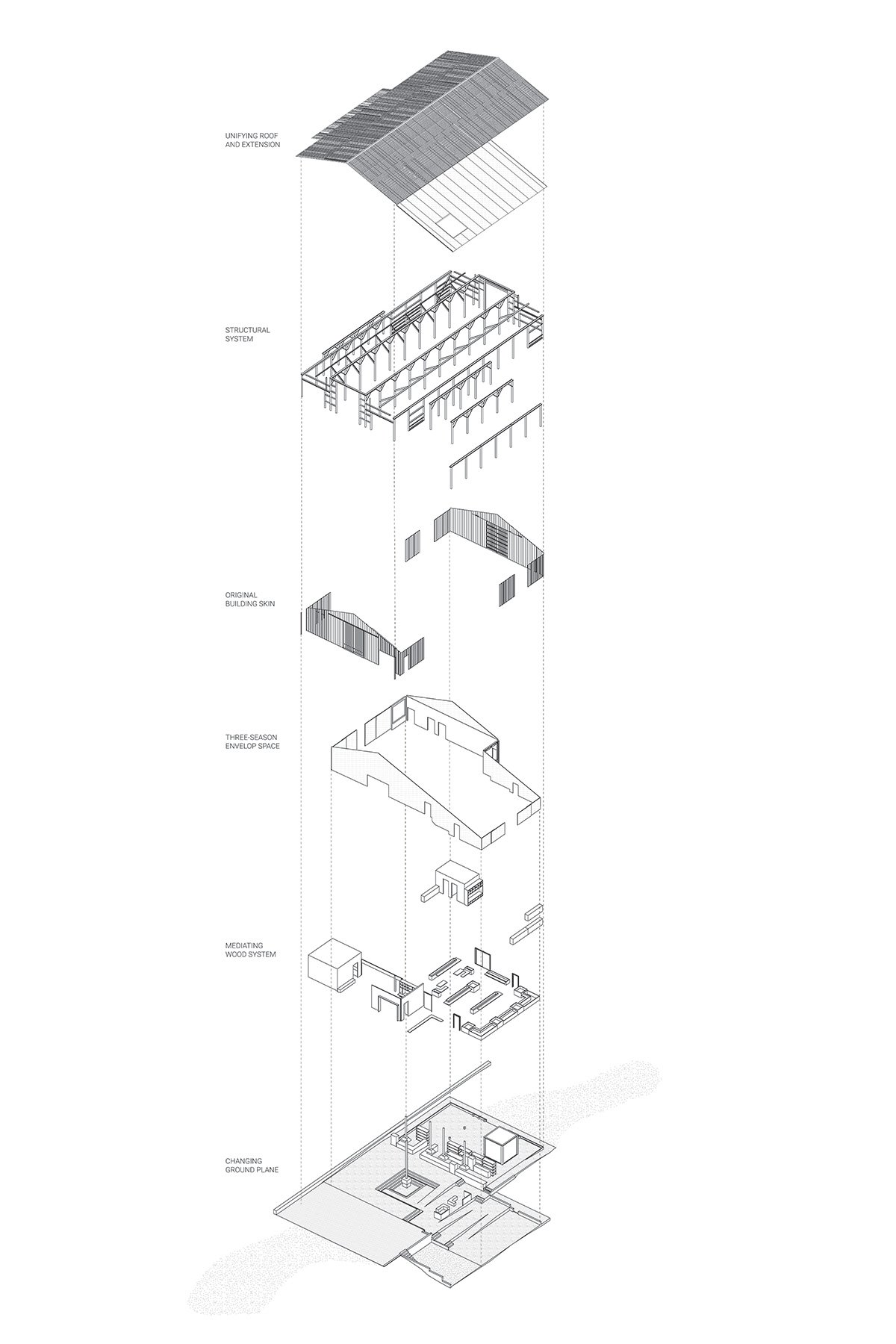
Introduction: The Morven Outpost is an adaptive reuse project proposal that seeks to repurpose the Black Barn, an old hay barn, at UVA’s Morven Sustainability Lab as a hub for all the many experiences that happen in the Northwest sector of the 3000+ acre property and rich cultural landscape. The design preserves the original structure and roofline, as well as elements of the siding, while using a passive condition system to cool the interior. To accommodate the people and activities this barn will now facilitate, from cooking, learning, resting, dining, and building relationships, the dirt ground is replaced by a new fluctuating floor system that follows changes in program and experience. A third system of light wooden elements is integrated into the structural system of the barn, dictating seating, entrances, and human-scale architecture to mediate the other two systems of roof and changing floor.
Studio Overview: This studio leverages systems thinking to explore methods of building resilience. Whether through strategies of adaptive reuse, sustainable design, materials and tectonics, flexible/demountable structures, or circular economies, this studio will comprehensively engage with the dynamic and evolving environmental systems of the Virginia Piedmont region to develop a complex, integrated architectural proposal.
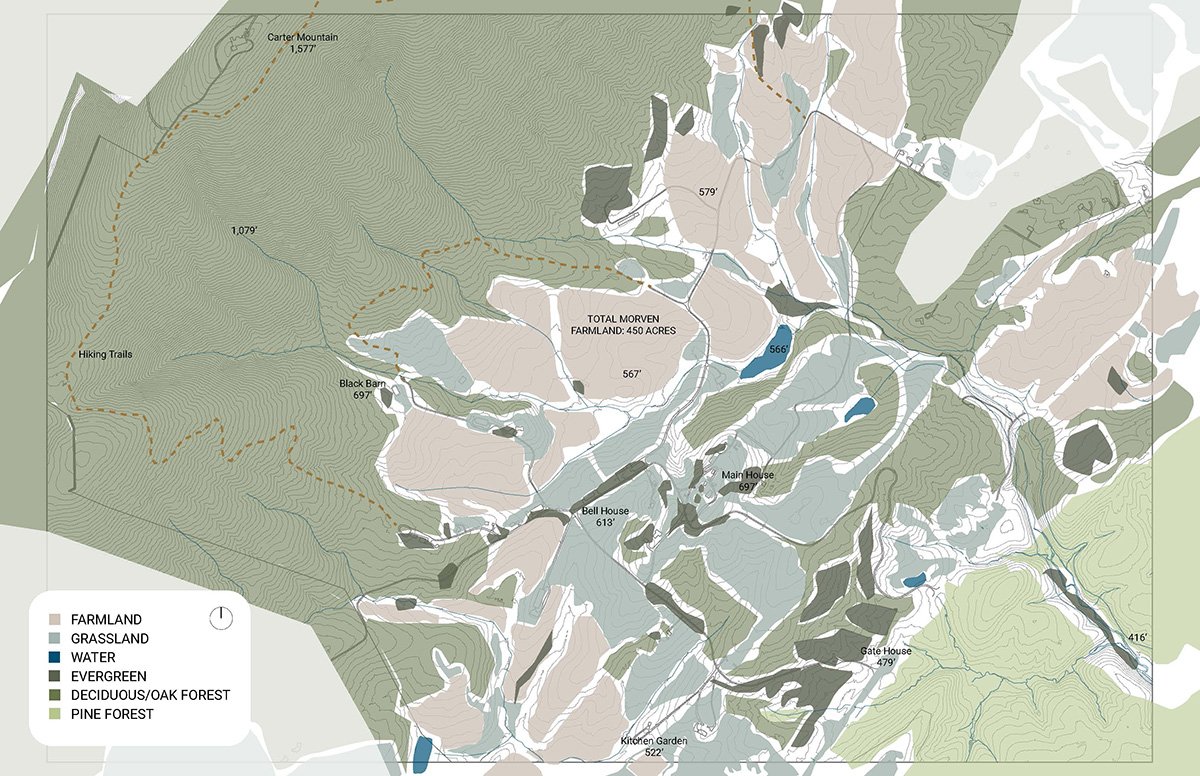
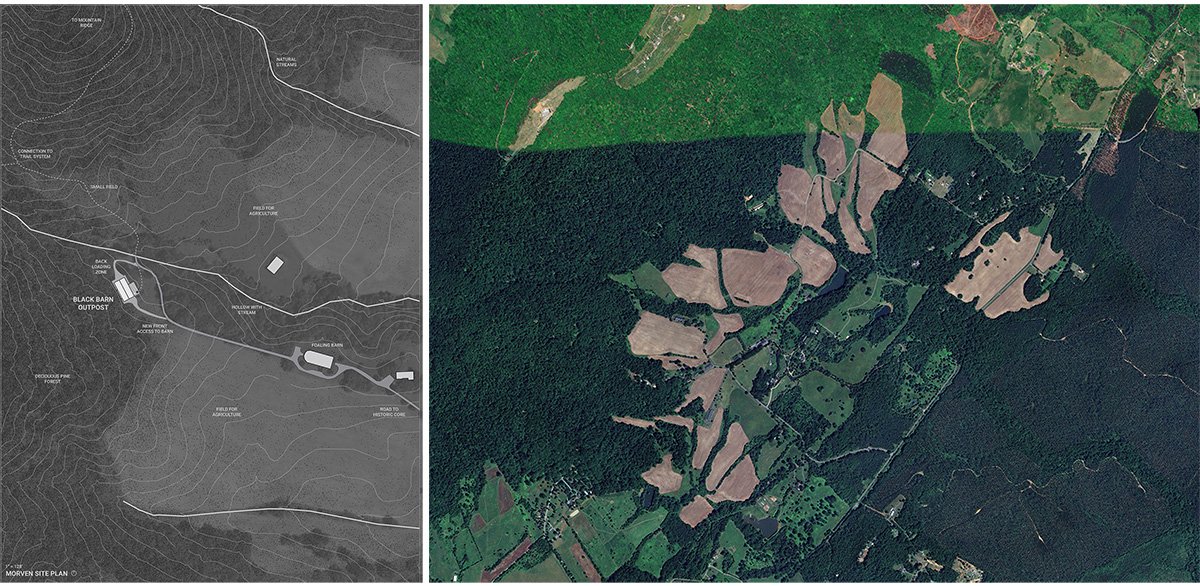
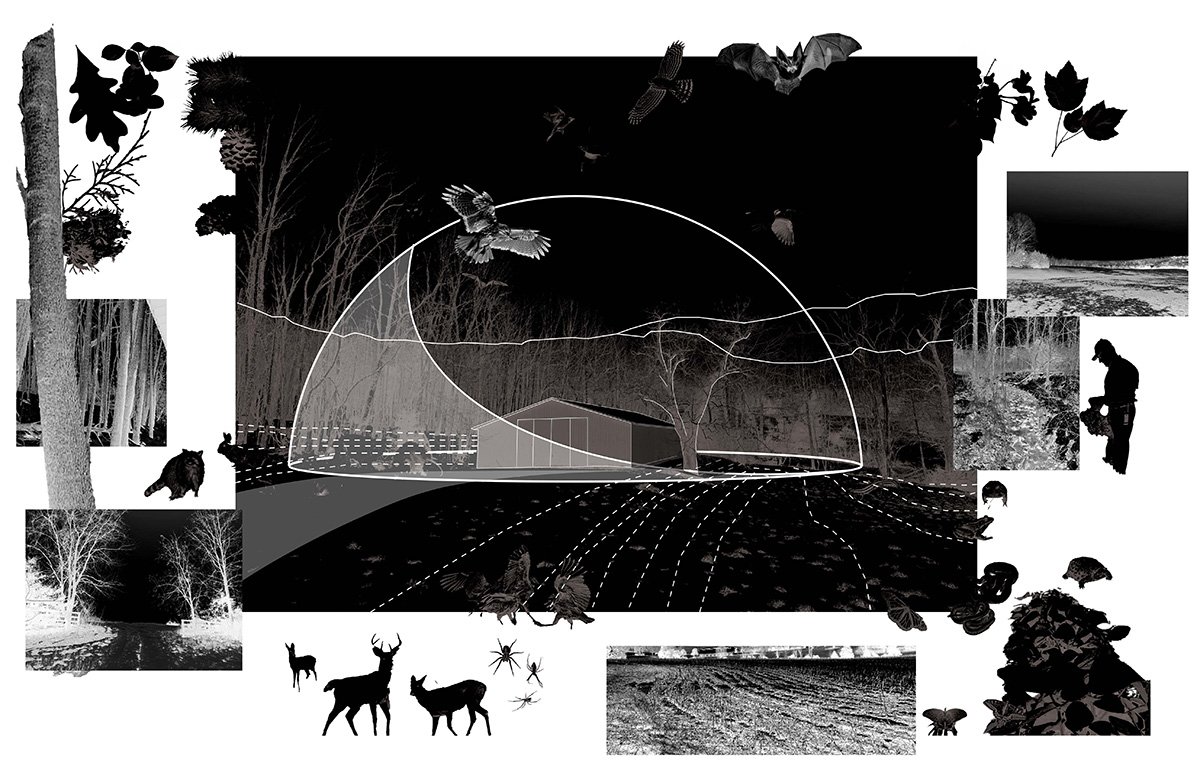
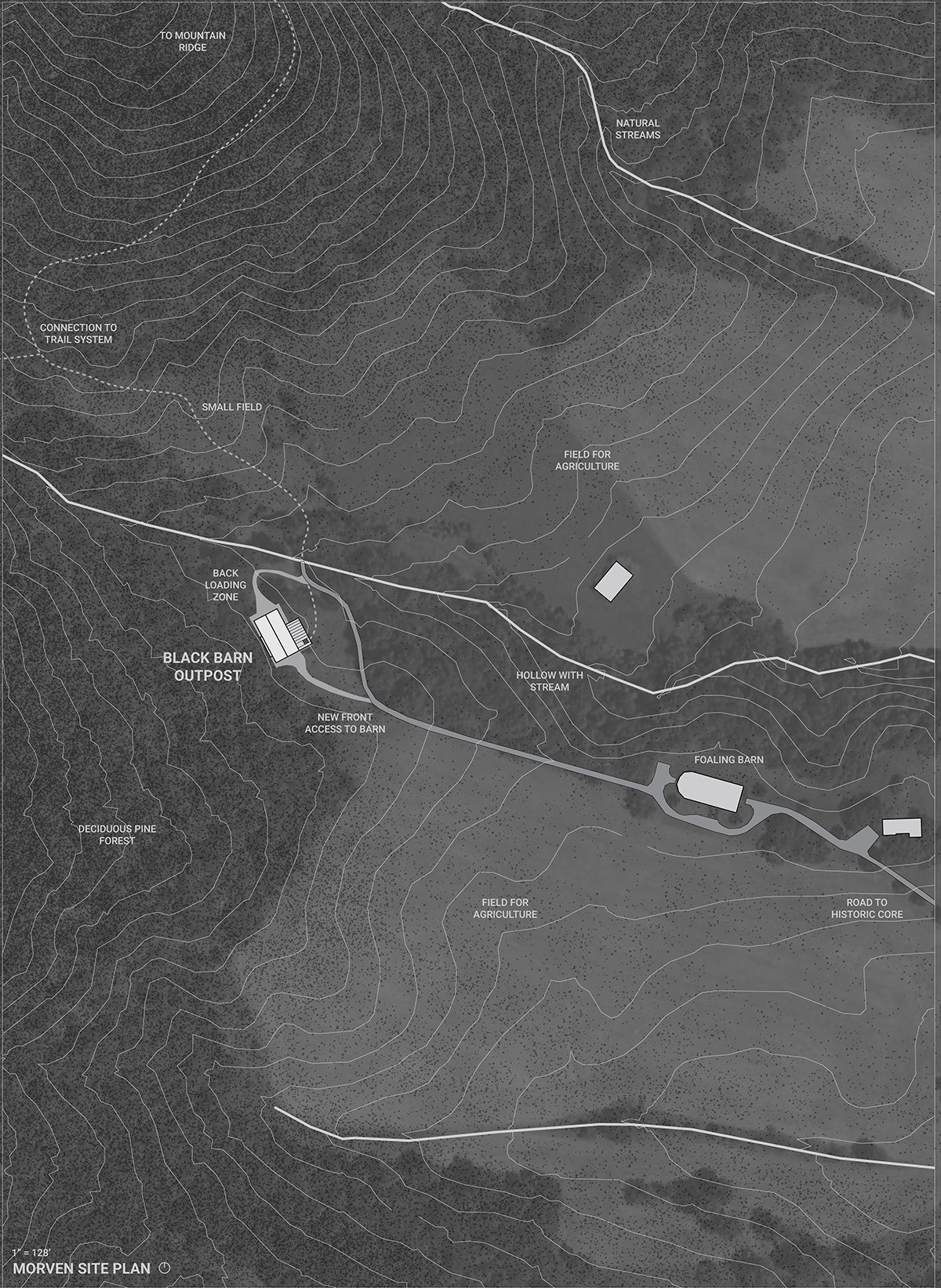
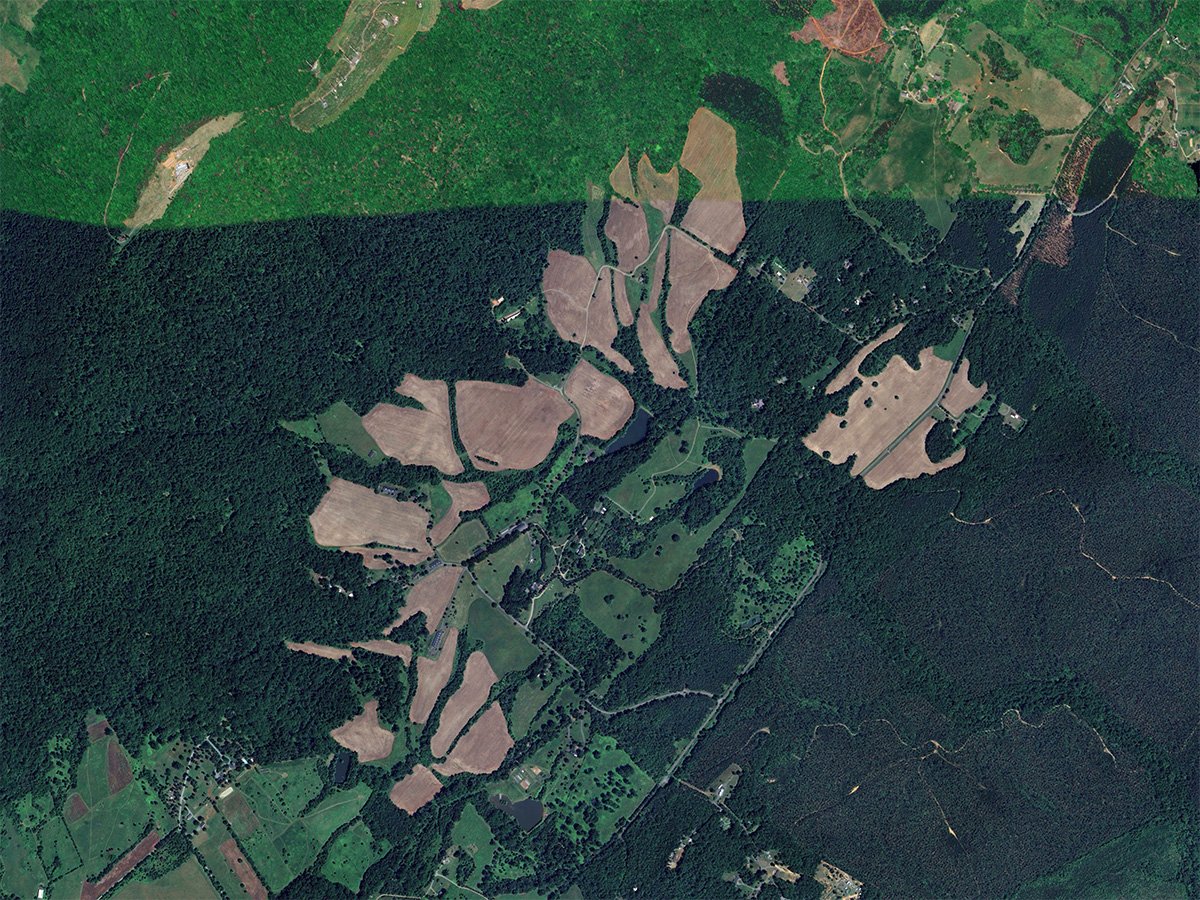
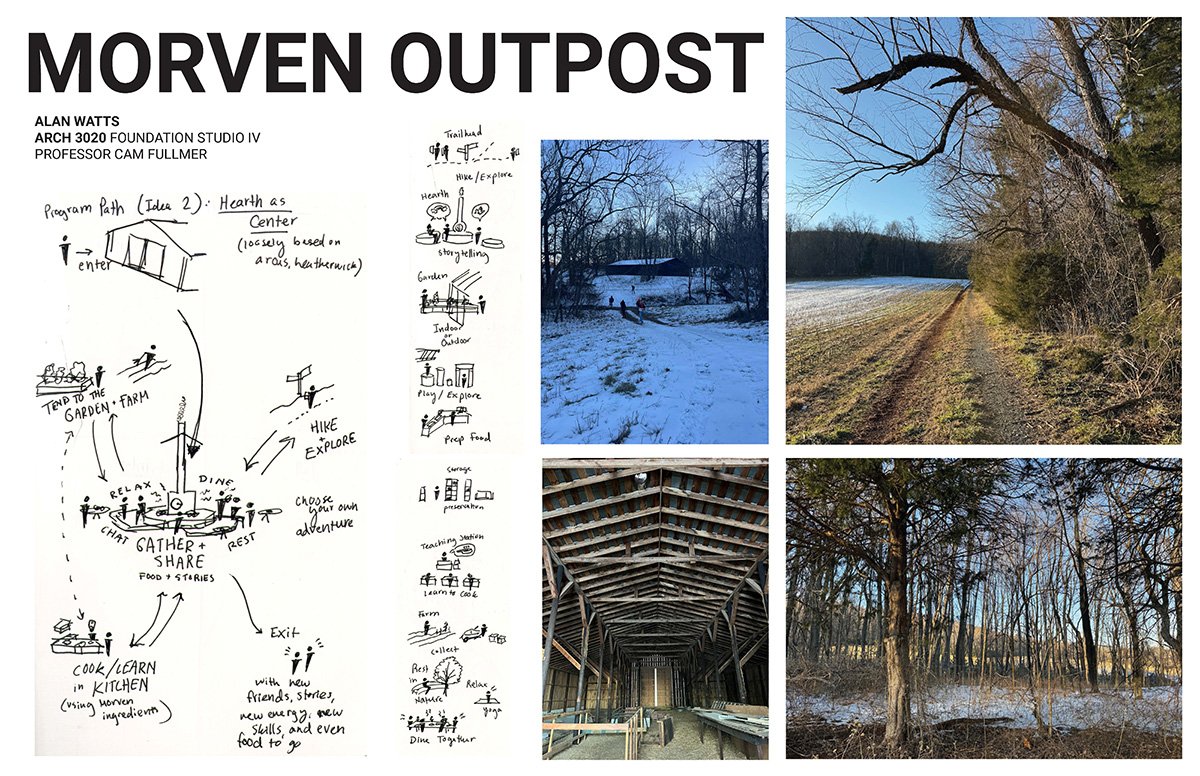
Greater Morven Site Plan: Mapping tree species, hiking trails, agricultural fields, and relevant locations across the property as a wholeBlack Barn Site Plan: Mapping the area directly adjacent to the Black Barn | View Of Morven From SatelliteInitial Site Collage
The project seeks to repurpose one of the many old, existing structures on the University of Virginia’s Sustainability Lab, Morven Farm. Morven as a site stands today as a rich cultural landscape filled with opportunity for research, nature connection, and developing a greater understanding of Virginia Piedmont’s complex history. Our understanding of the site first acknowledges the Monacan people that first inhabited and cared for the land—a tribe of Native Americans indigenous to the region. The site later served as a working plantation, one to which descendants of enslaved laborers in Charlottesville can trace their bloodlines. The land was more recently owned by the Kluge family, then gifted to the University of Virginia by the family in the early 2000s. Since then, UVA has worked to develop a strategic plan for the future of Morven in its role as a sustainability lab and a place for research just as much as a place for greater community connection and learning about the land and the region’s past.
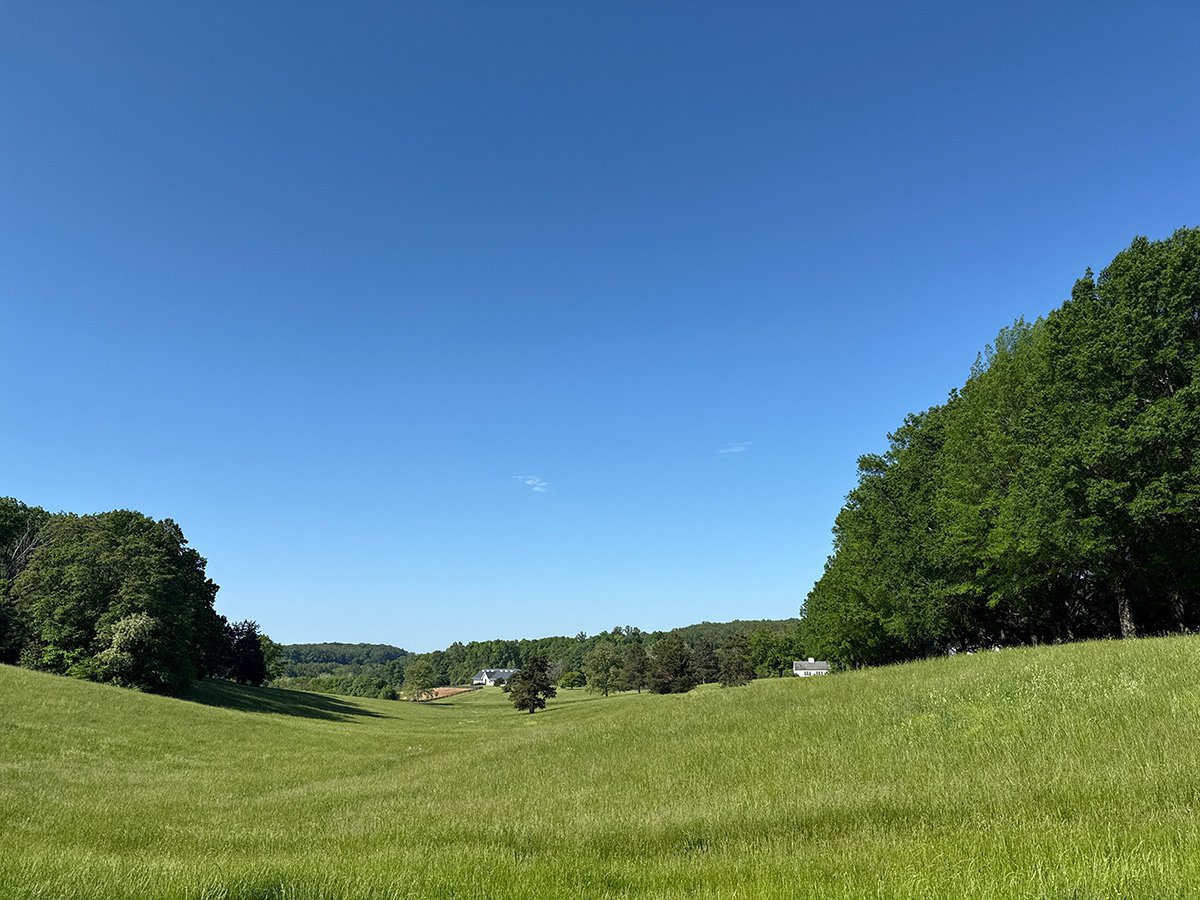
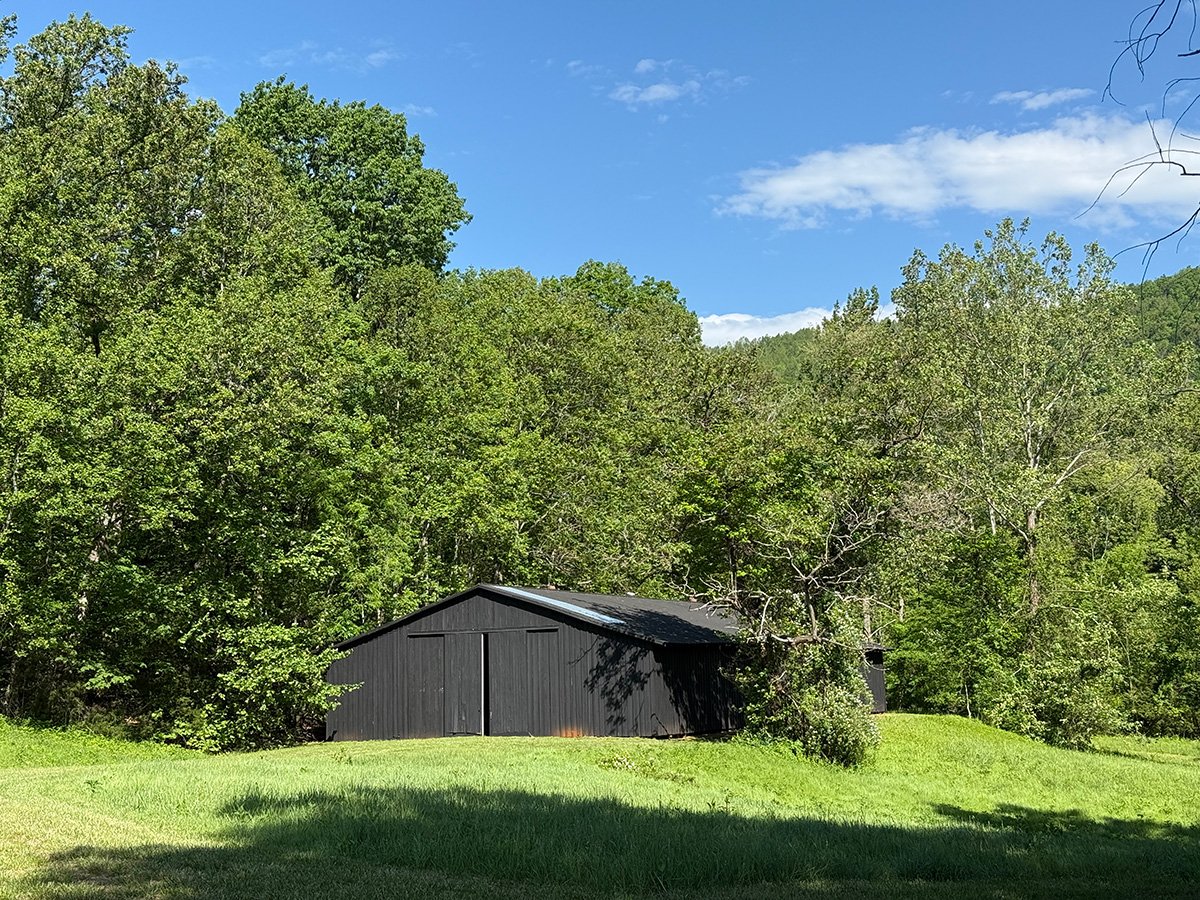
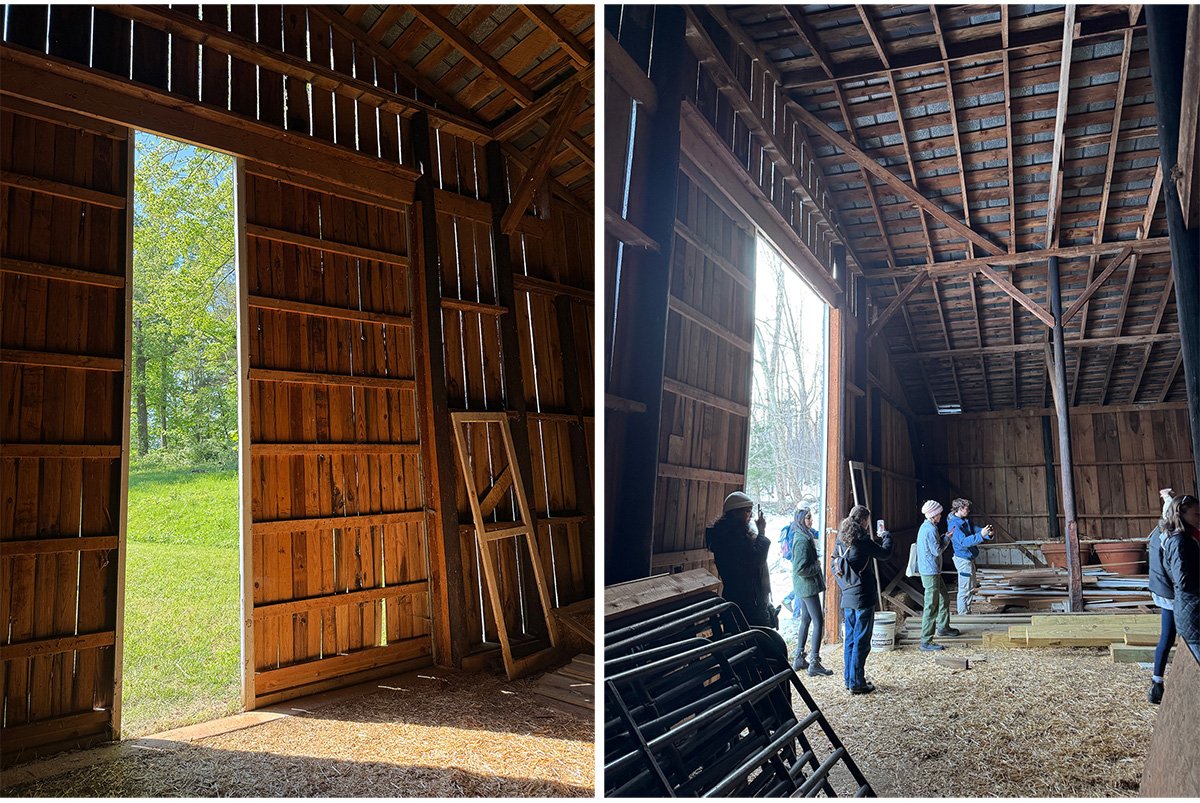
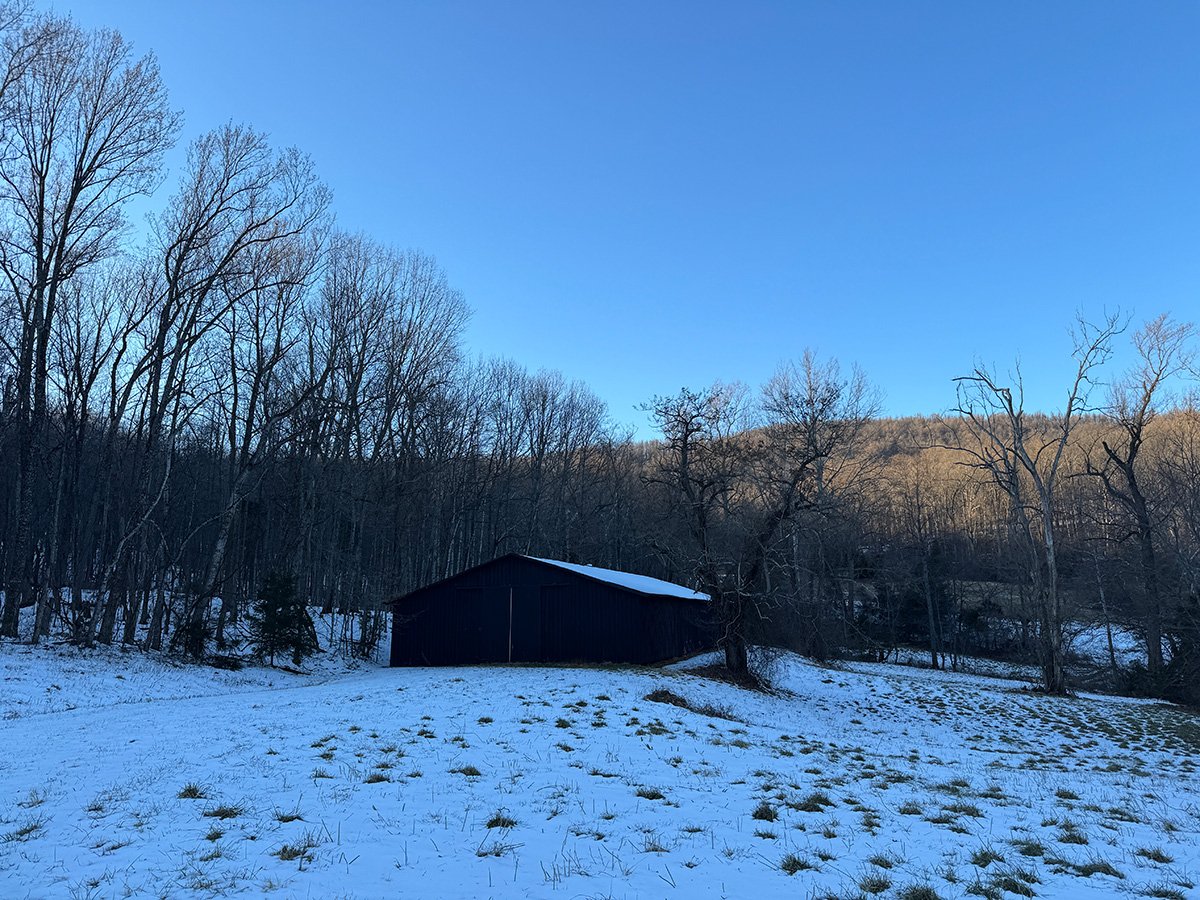
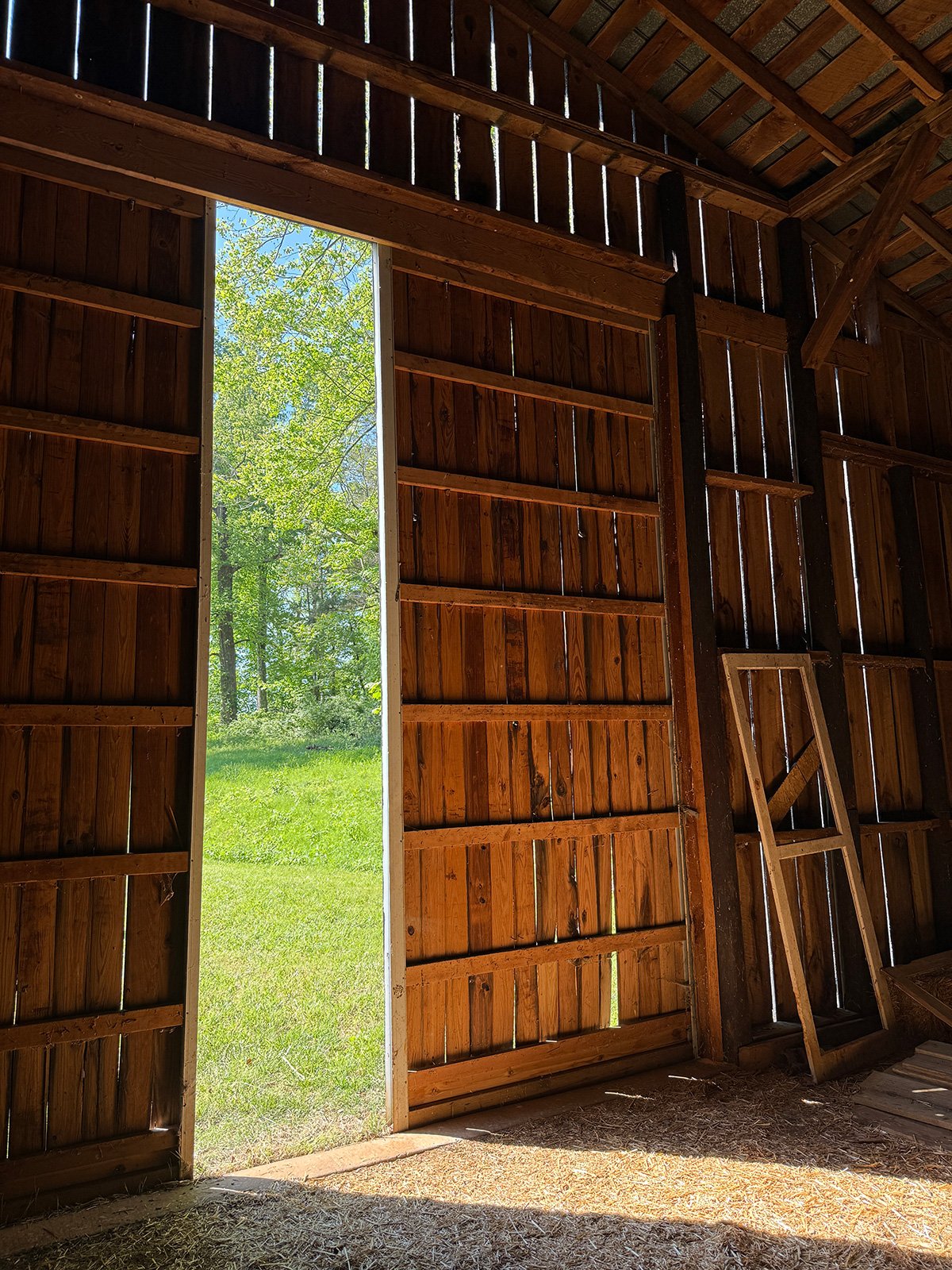
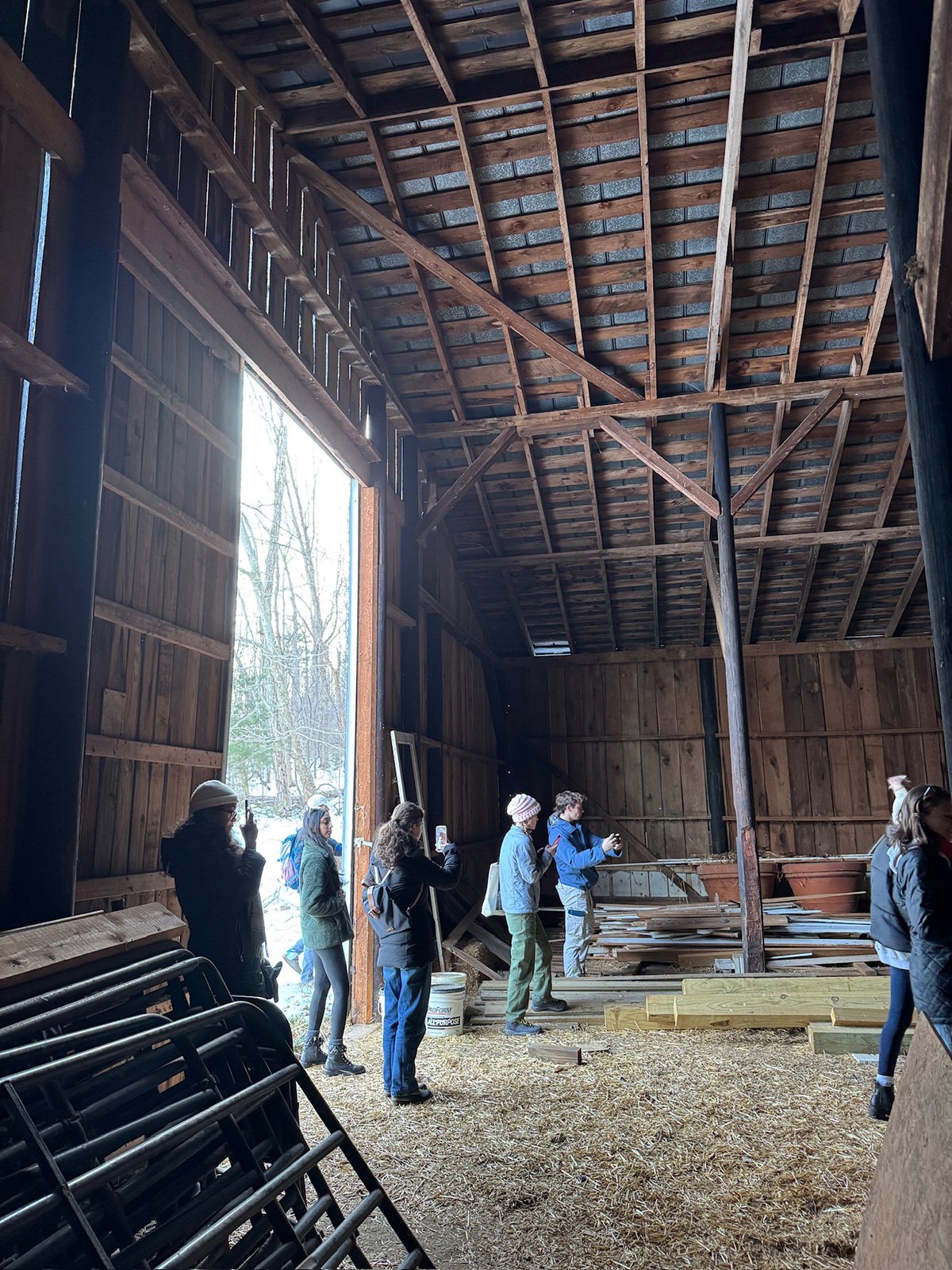
One Of The Existing Fields In The Historic Core Of Morven FarmView Of The Black Barn In Its Existing ConditionsView Of The Interior Of The Front Door Of The Black Barn | View Of The Interior Door In The Wintertime
The Black Barn, the specific focus of this proposal, is one of 40+ existing structures on the property and currently sits in a state of decay, used only for some storage for farm equipment. That said, its ideal position in the northwest corner of the property presents the opportunity for the development of a new centralized hub for the land-focused activities that occur across the property—in nearby forests, agricultural fields, etc. Additionally, the development of this project presents the opportunity for collaboration with the Kitchen Garden and the intersection of architecture and cooking on the site, a core focus of the studio in terms of program.
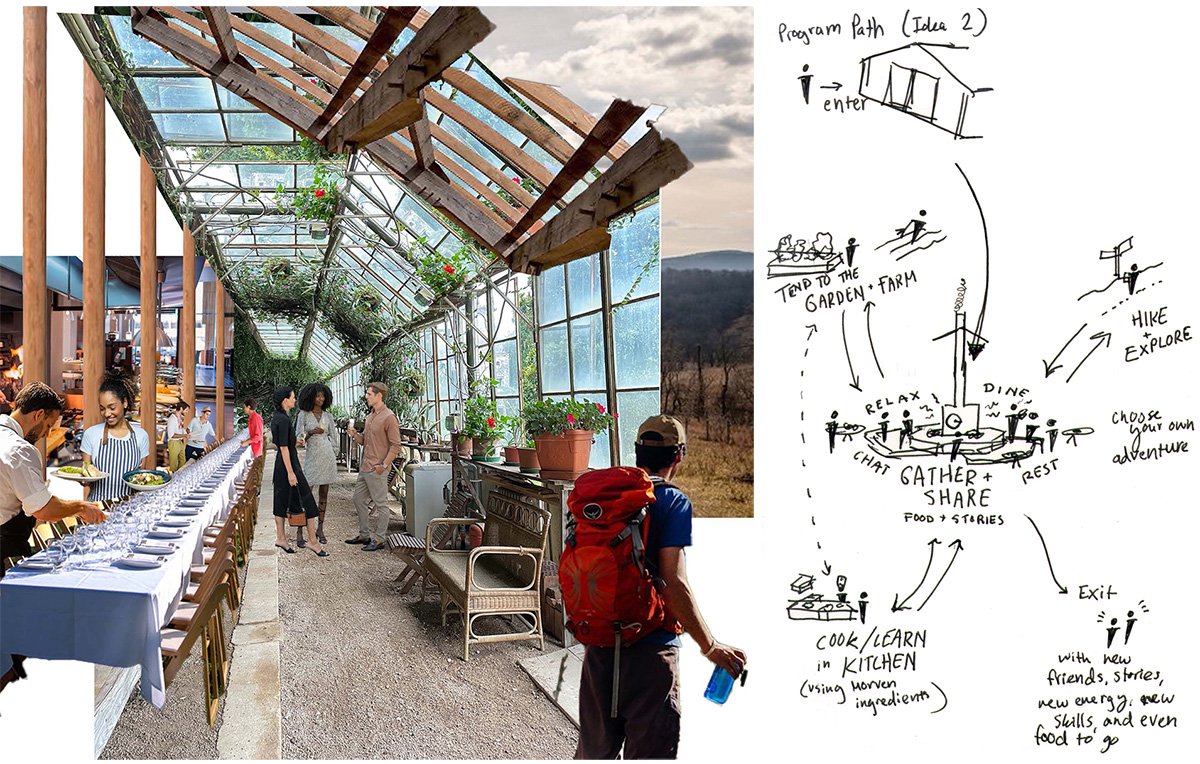
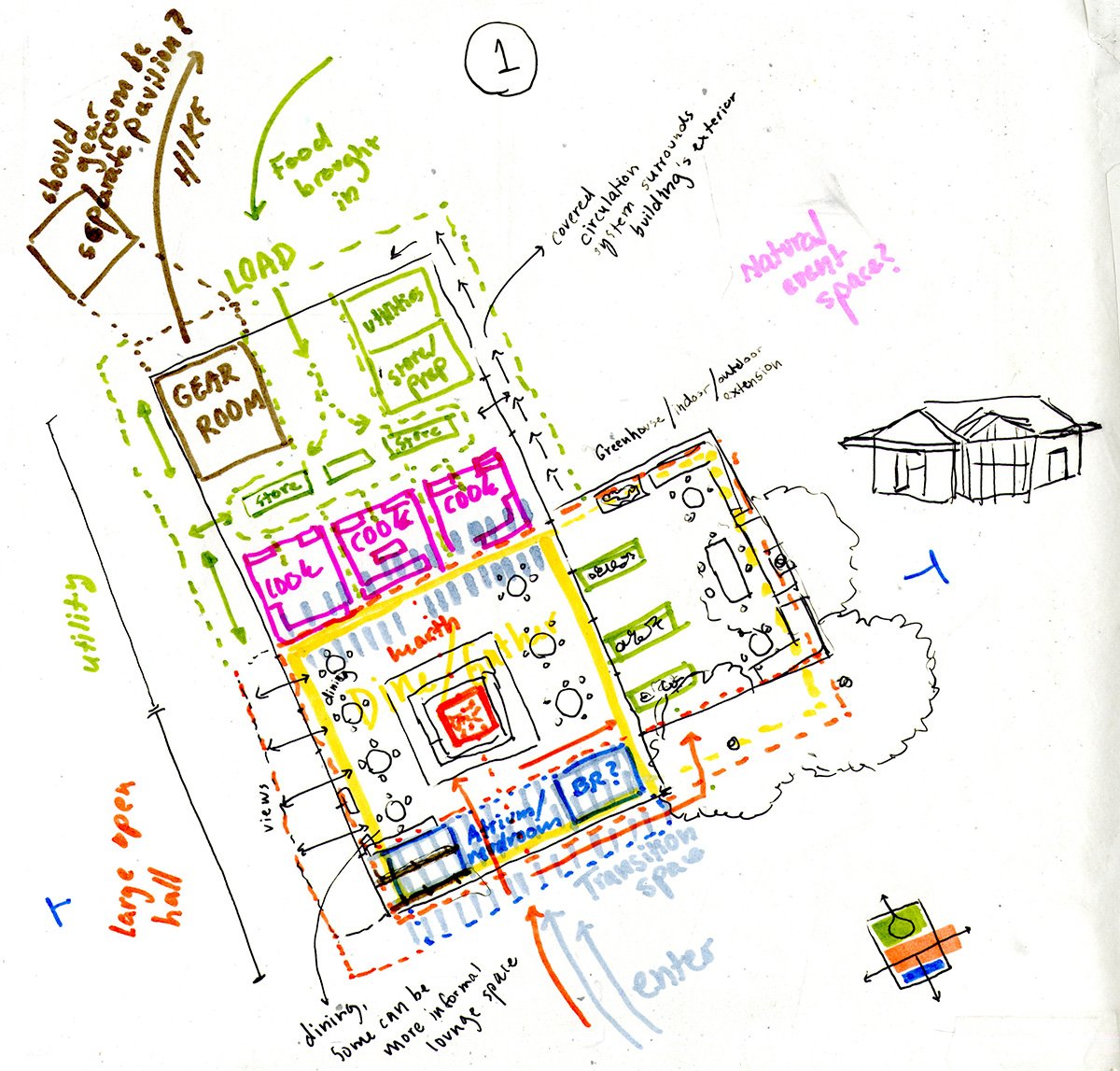
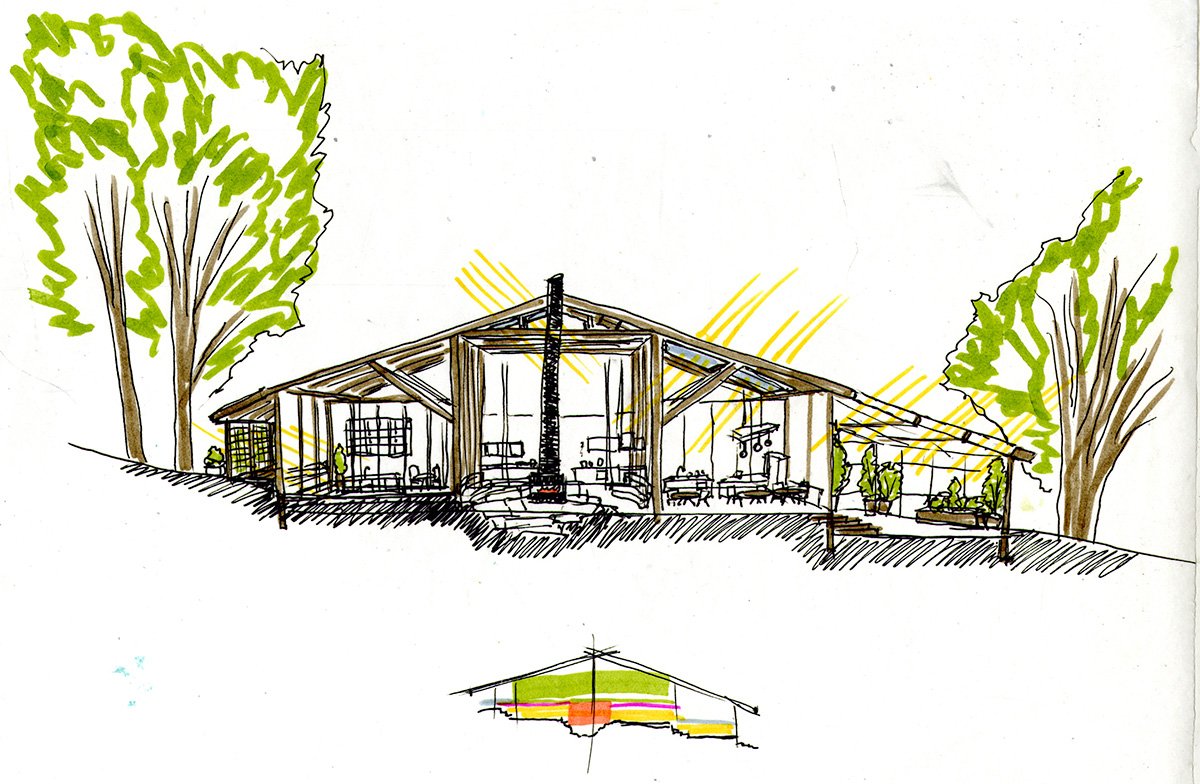
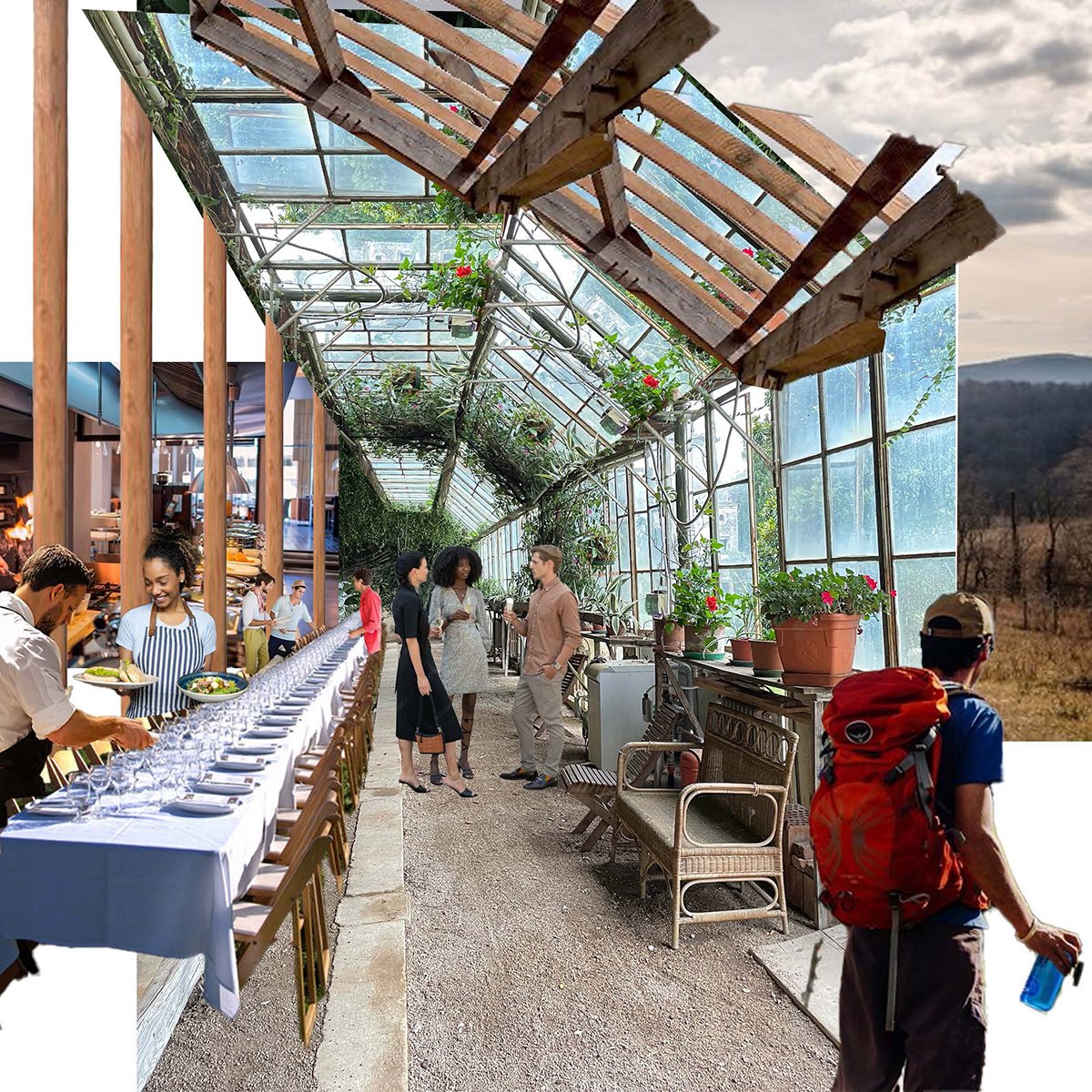
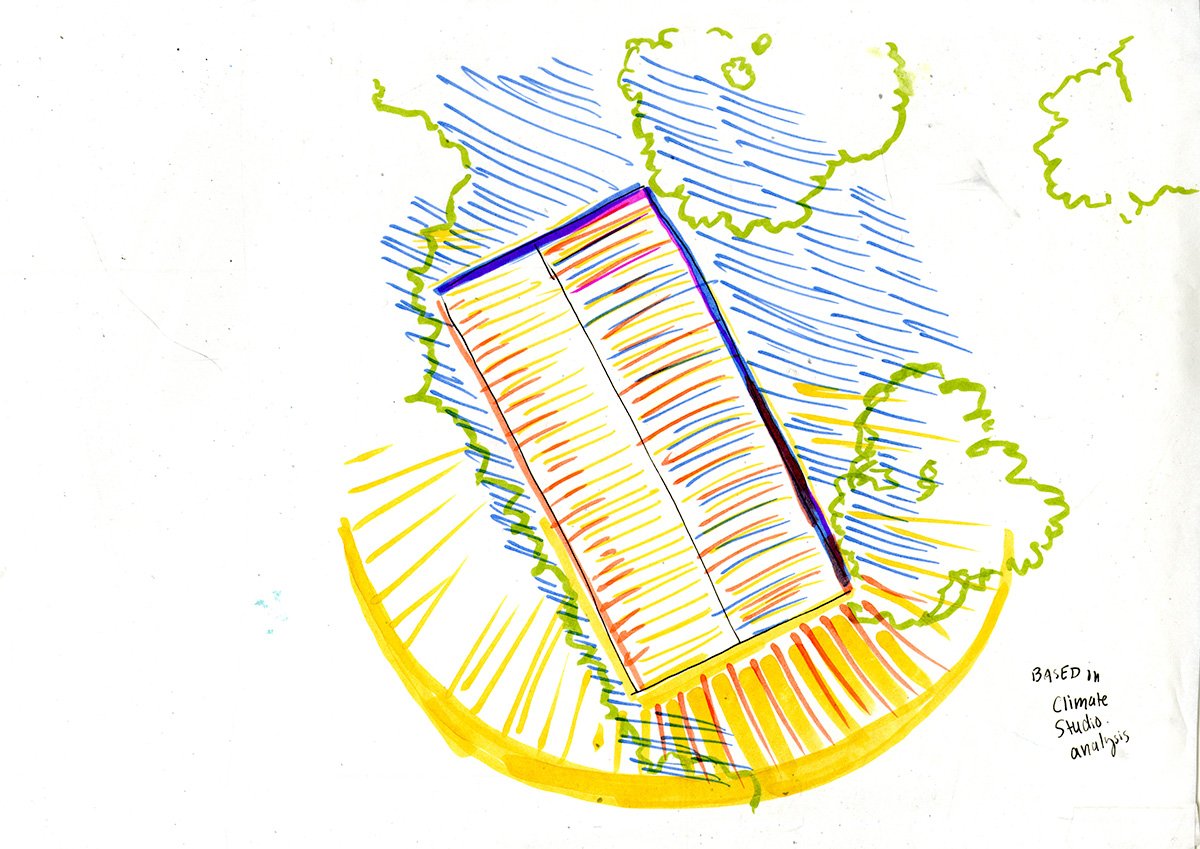
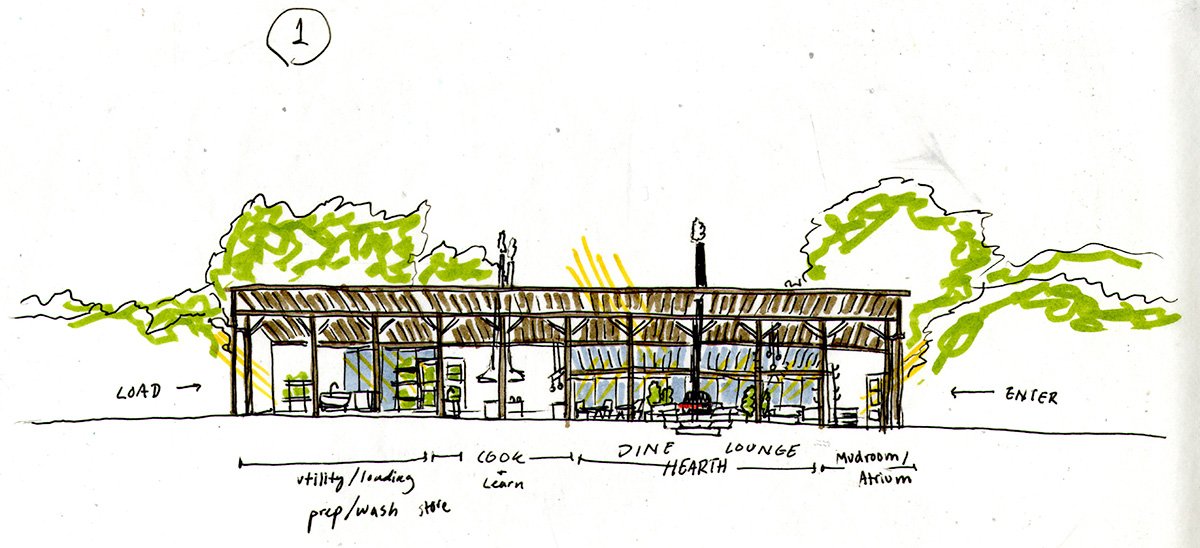
Shows A Concept Collage Of A Greenhouse-like addition to the barn and a dining and cooking space | Sun Study SketchAn Early Organization Of Spaces In PlanCross Section
The studio began with research on the rural Piedmont region with a focus on material, ecology, land use, building practices, historical context, and more. A precedent study additionally was conducted for adaptive reuse projects—this project’s key takeaways were from Bernard Tschumi’s Le Fresnoy on how to create a relationship between existing architecture and new design systems and programs to intensify a place and a spatial experience. From there, existing conditions were mapped for Morven as a whole as well as for the Black Barn.
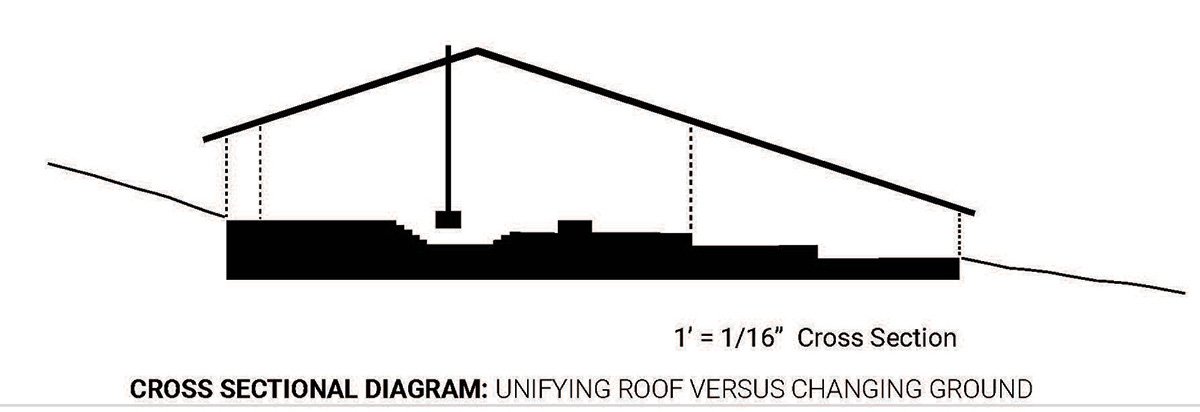
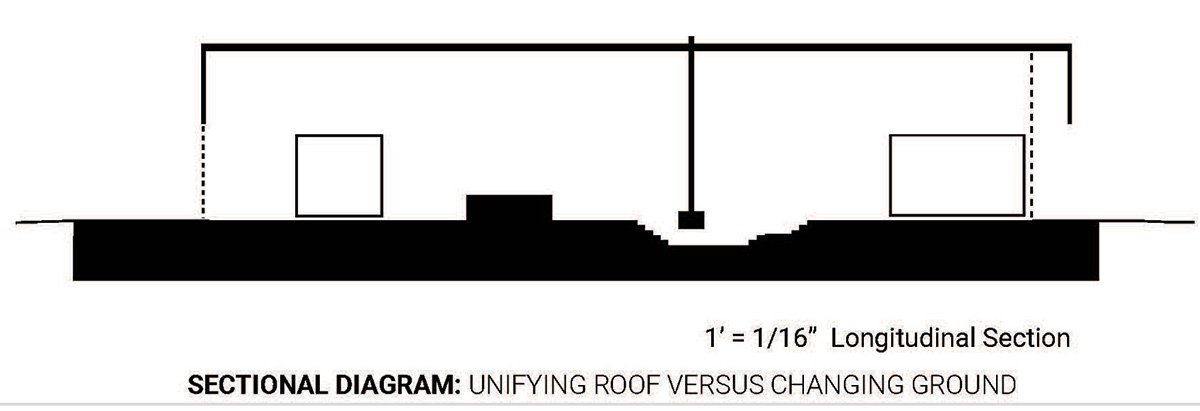
A Later, More Developed Sketch Of The Layout Of SpacesShows Changing Floor System And Extended, Unifying RoofShows Changing Floor System And Extended, Unifying Roof
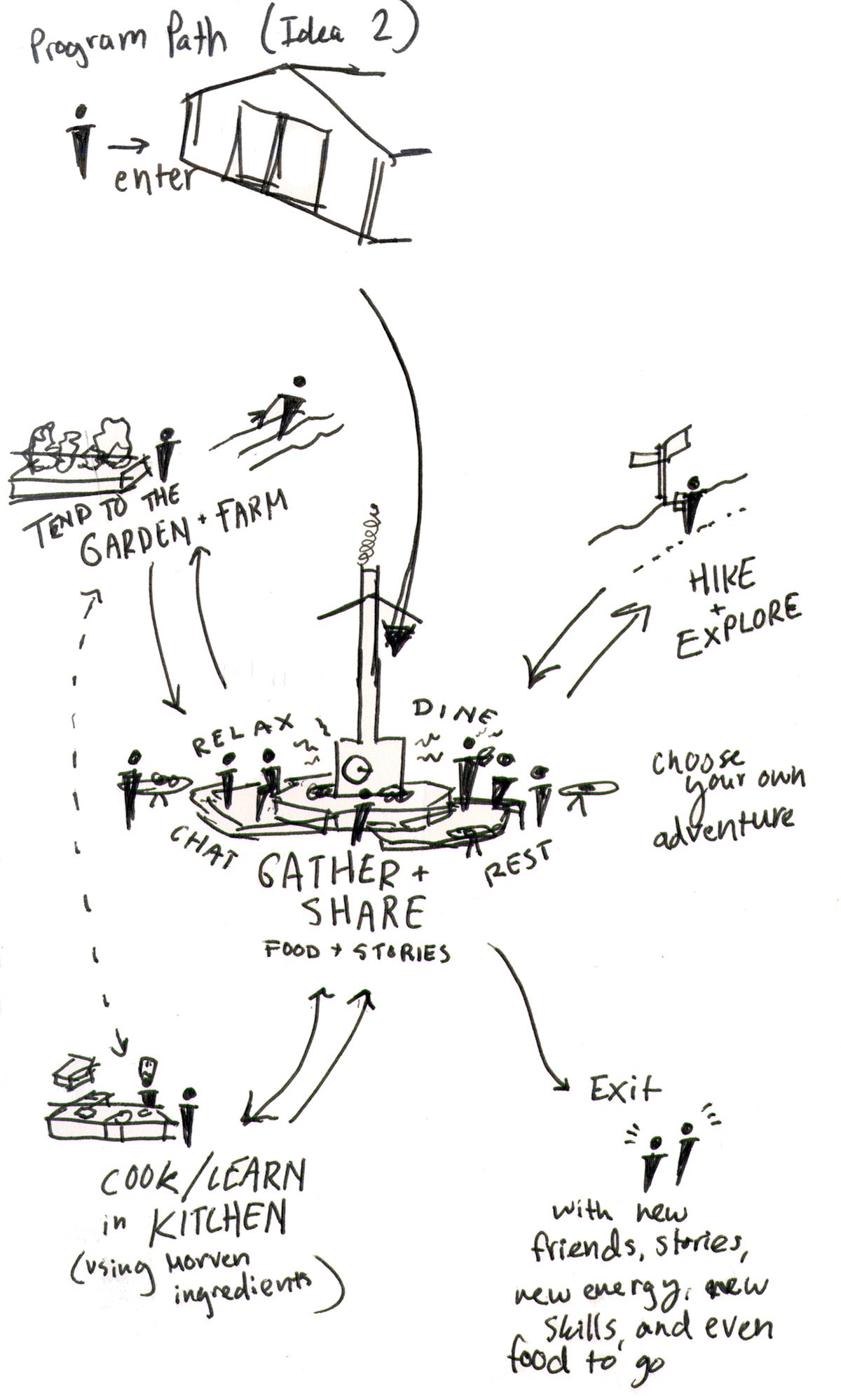
A series of diagrams was then created in sketch form to map the potential experience of users on the site and to inventory possible activities that the outpost could facilitate—this led to a better understanding of the spaces to be included in the final product as well as the best way to begin organizing them, thinking both about the user’s experience and the natural site conditions.
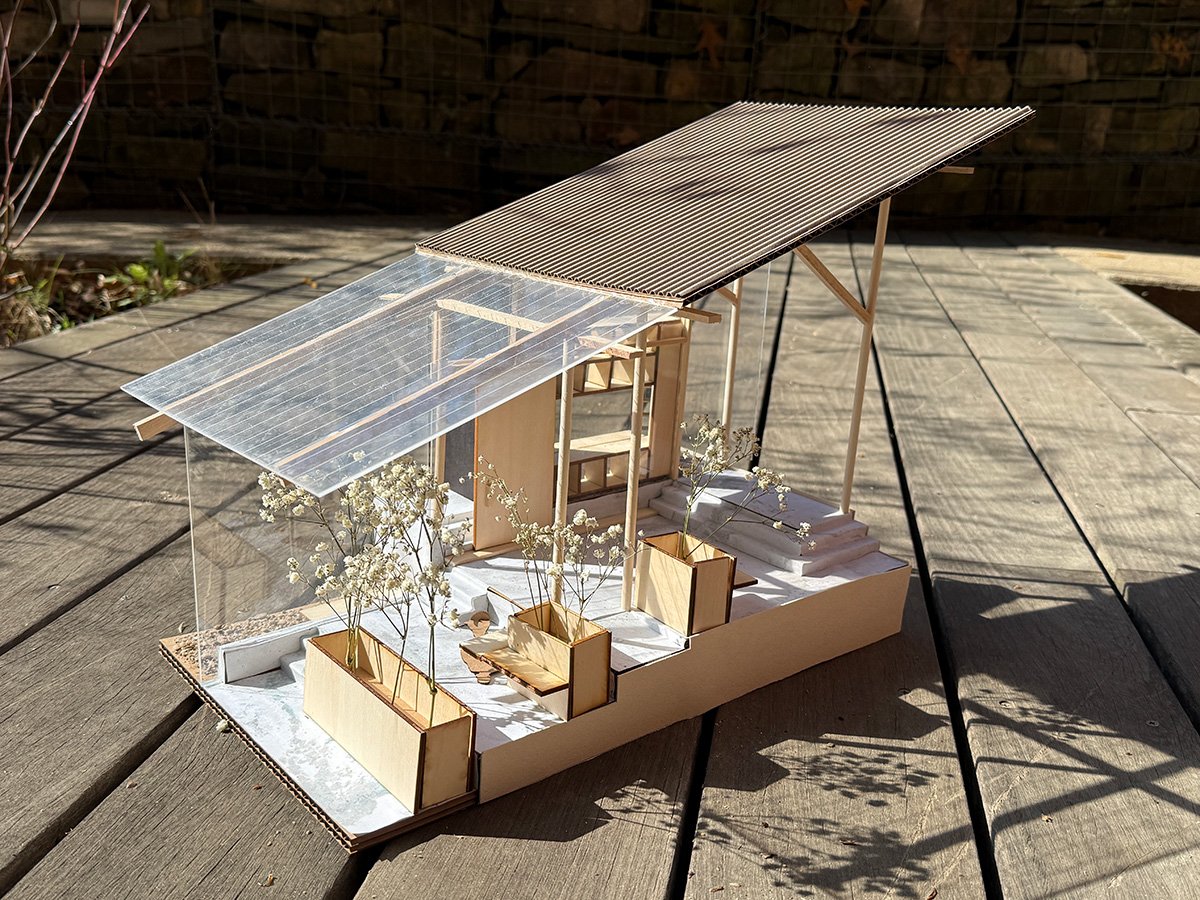
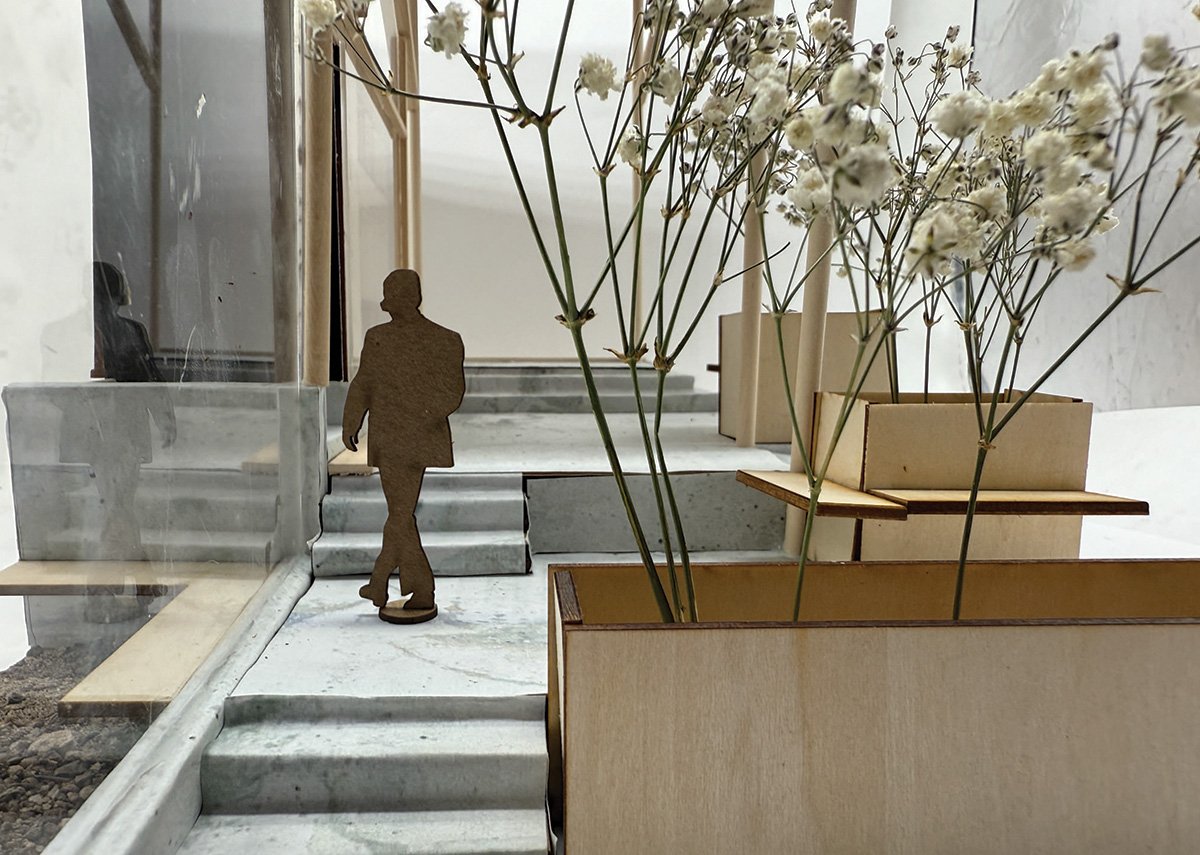
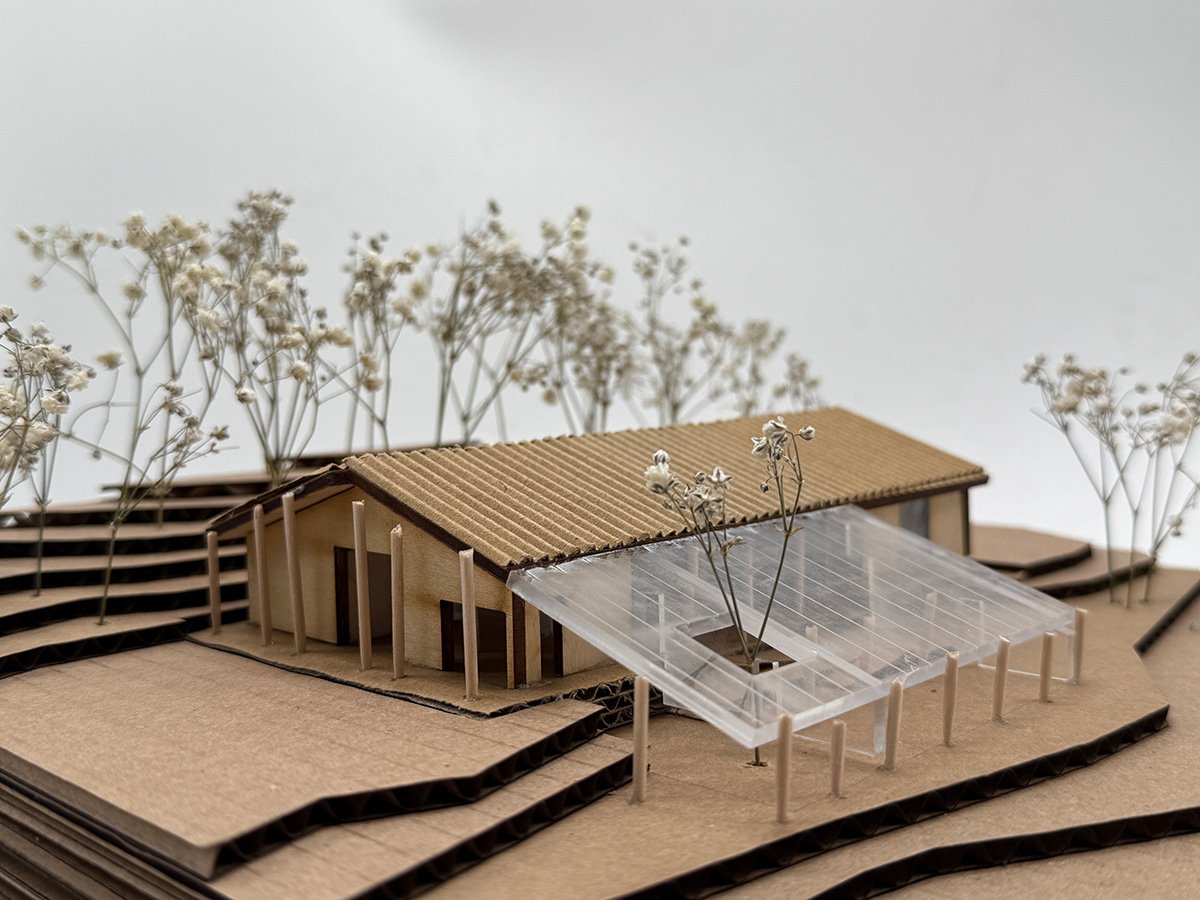
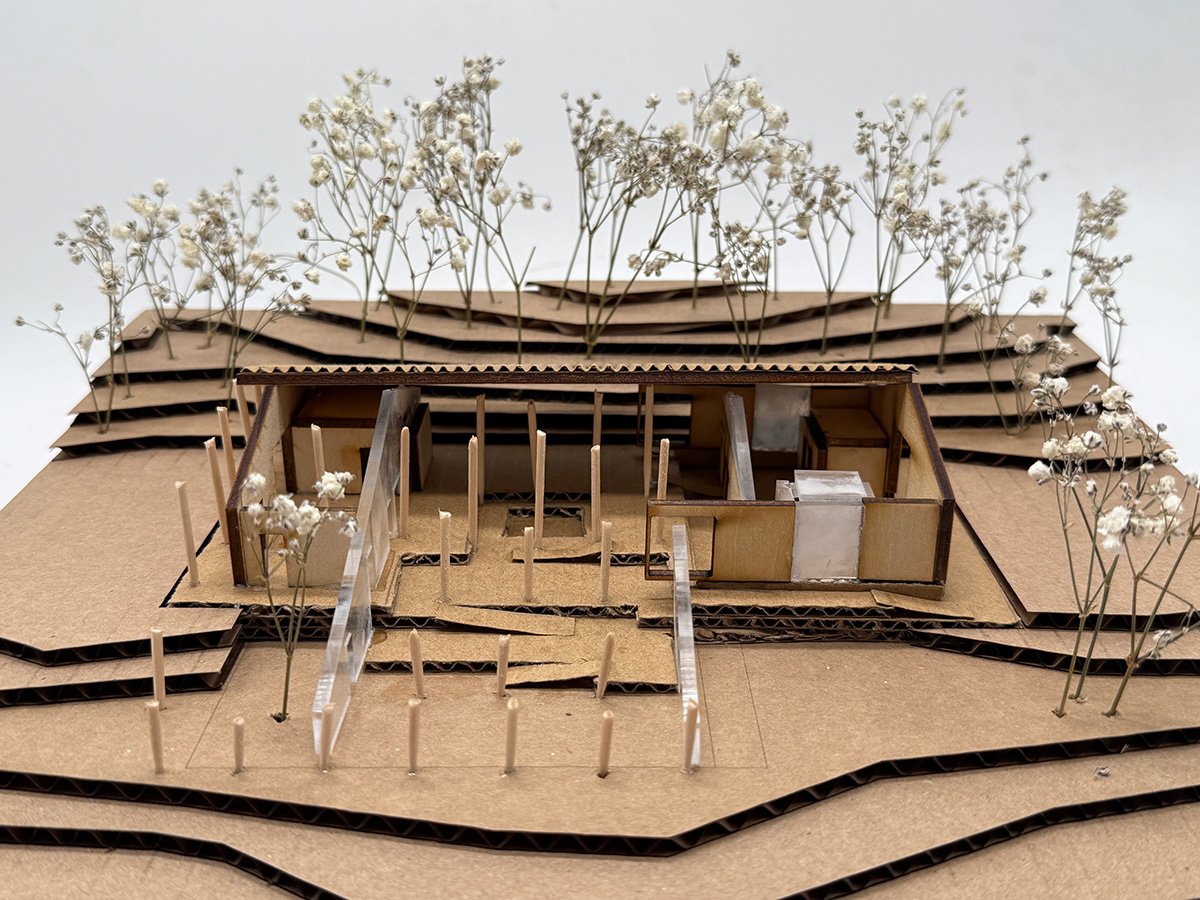
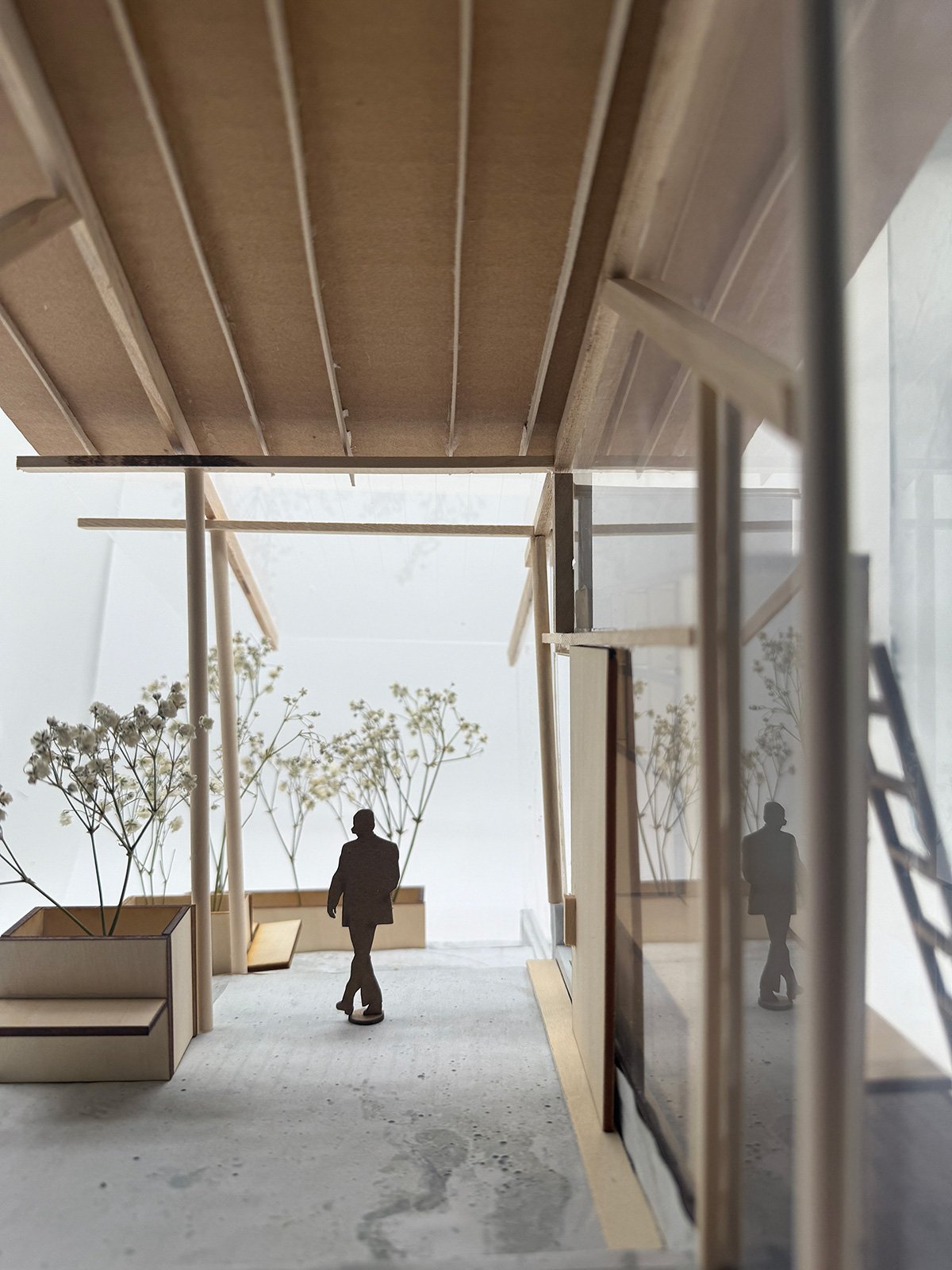
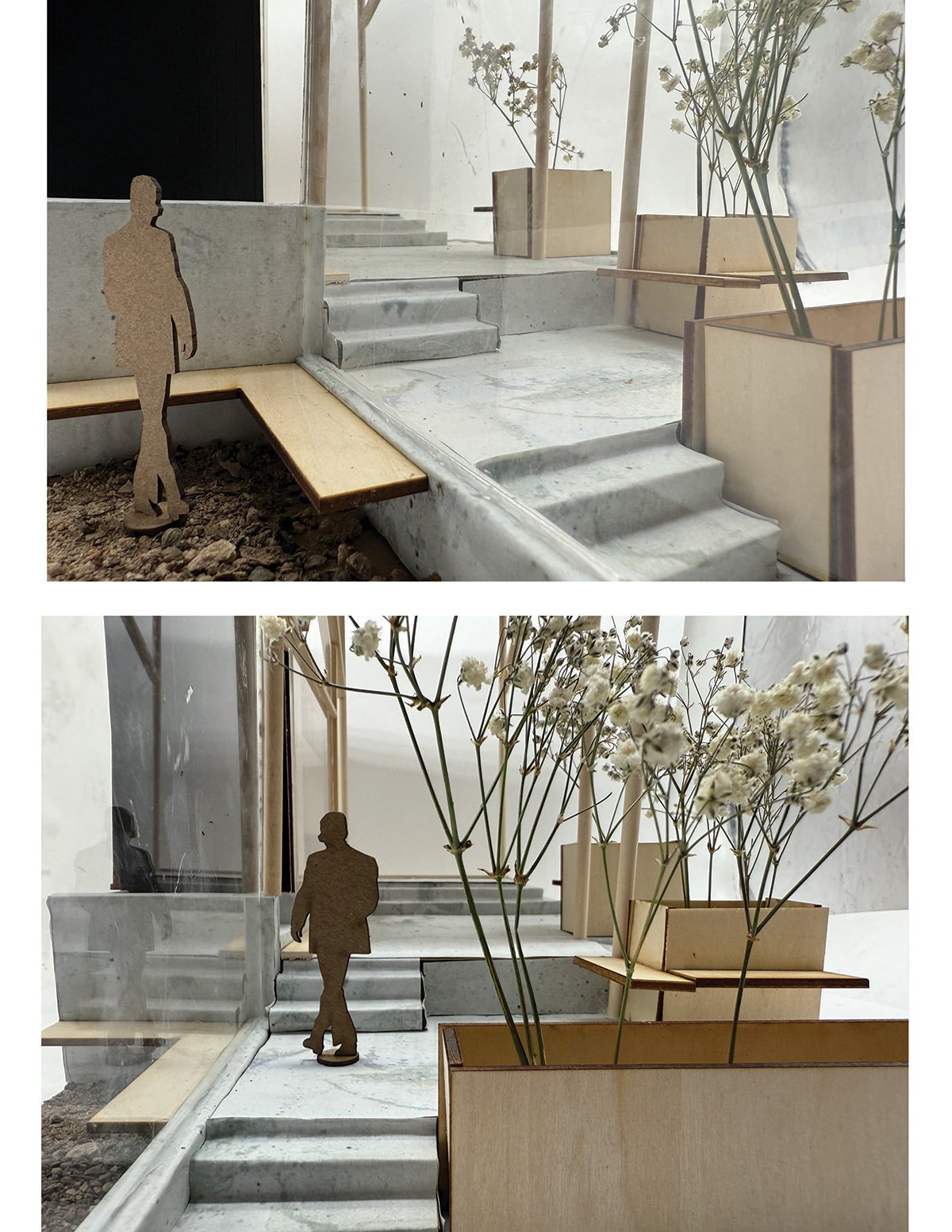
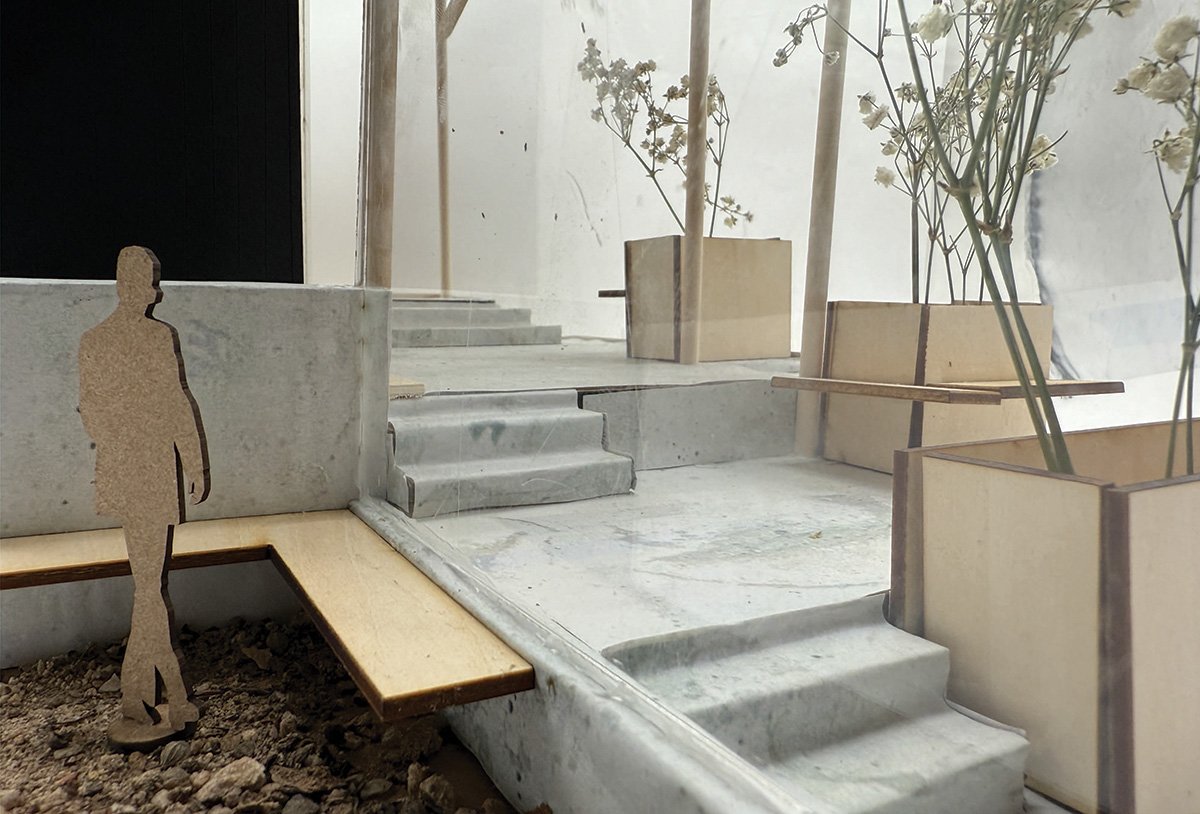
View Of The Entire ModelViews Of The Lower Side Of The Model
Once an initial layout had been finalized, a high-fidelity daylighting and detail model was then developed, which paved the way for the completion of the design and the finalization of the design argument in terms of building systems, relationship to nature and to people, etc. A final 3-D digital model was produced, followed by drawings and renderings.
Final Outcome
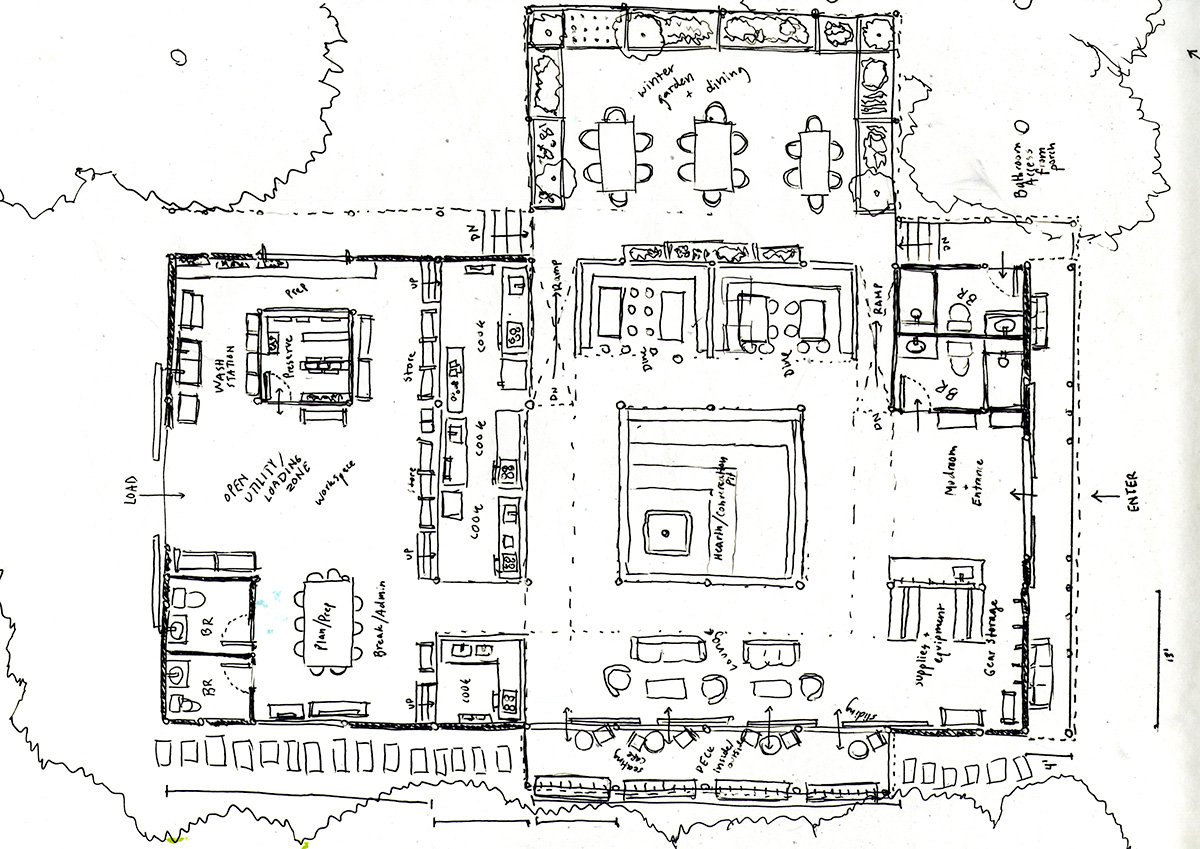
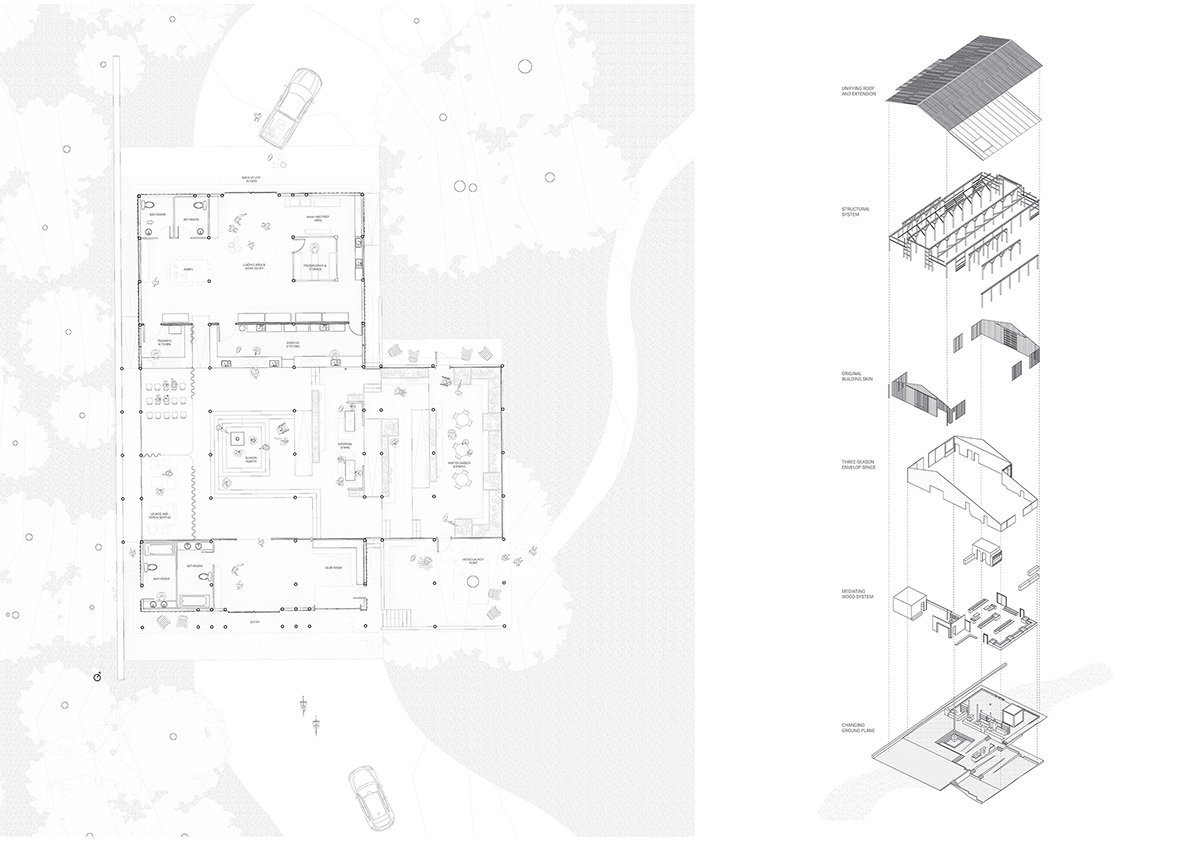
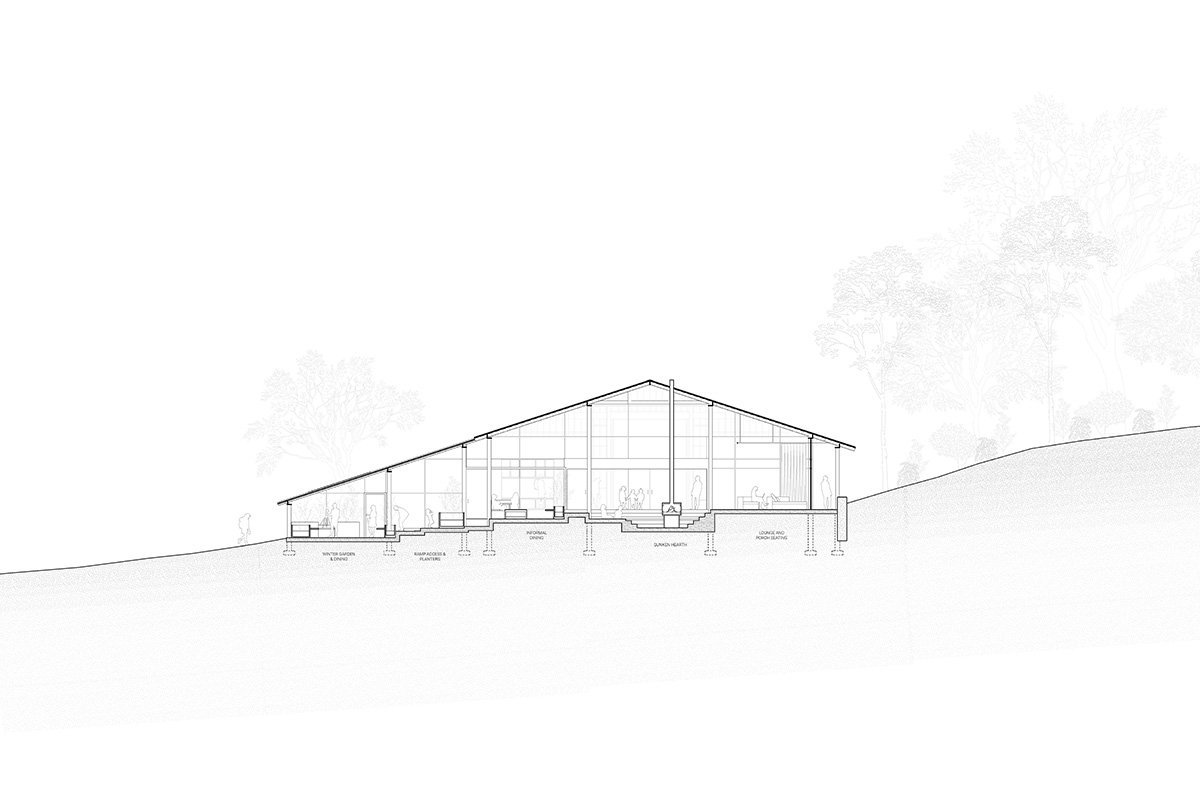
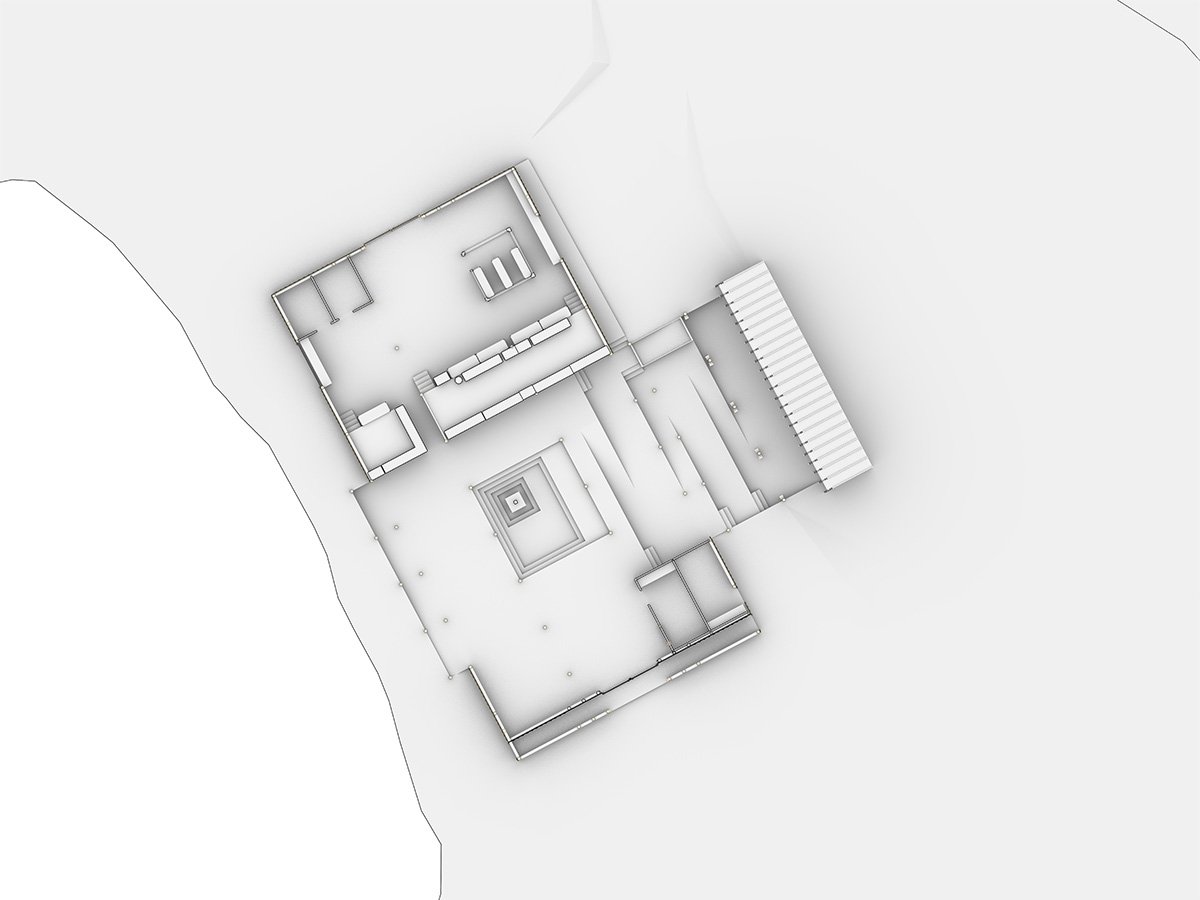
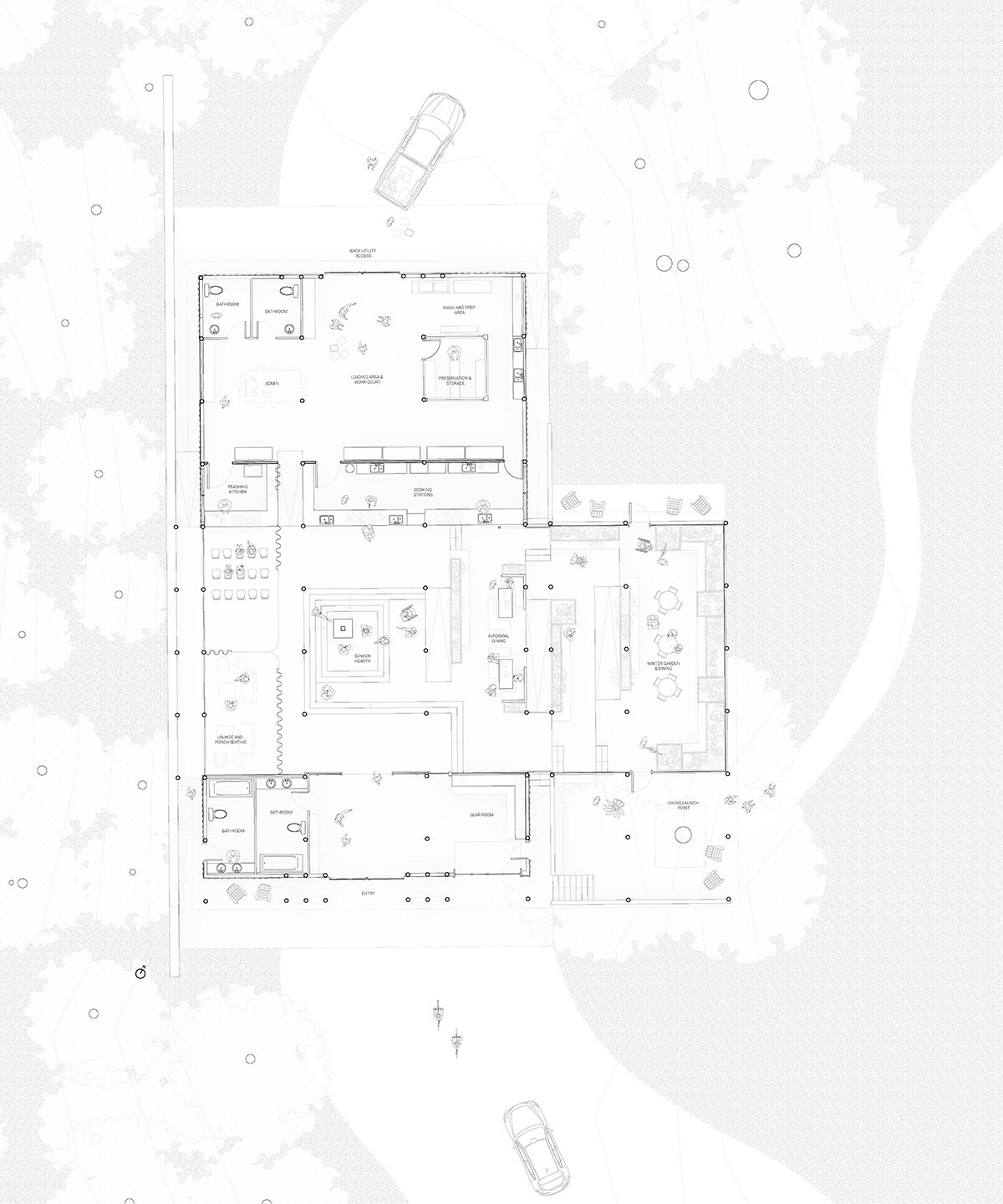
Detailed Plan Drawing Of The Outpost | Exploded Axonometric Systems DiagramFinal Cross Section
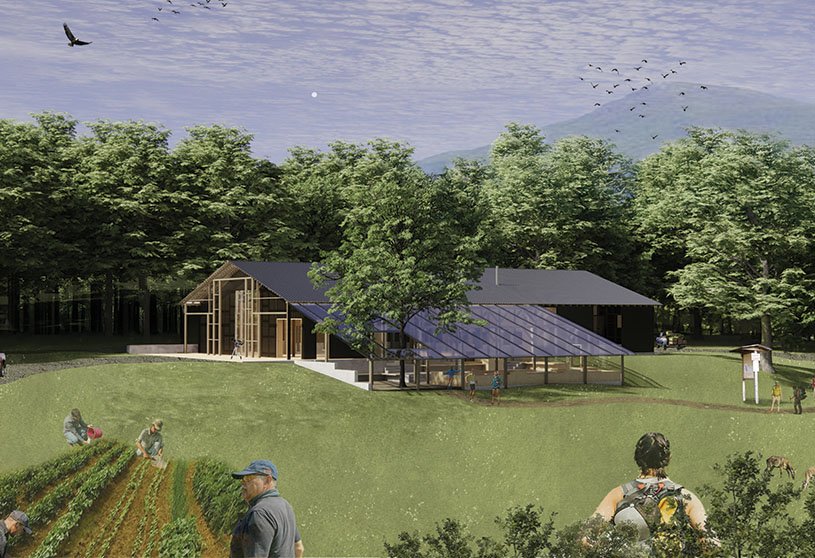
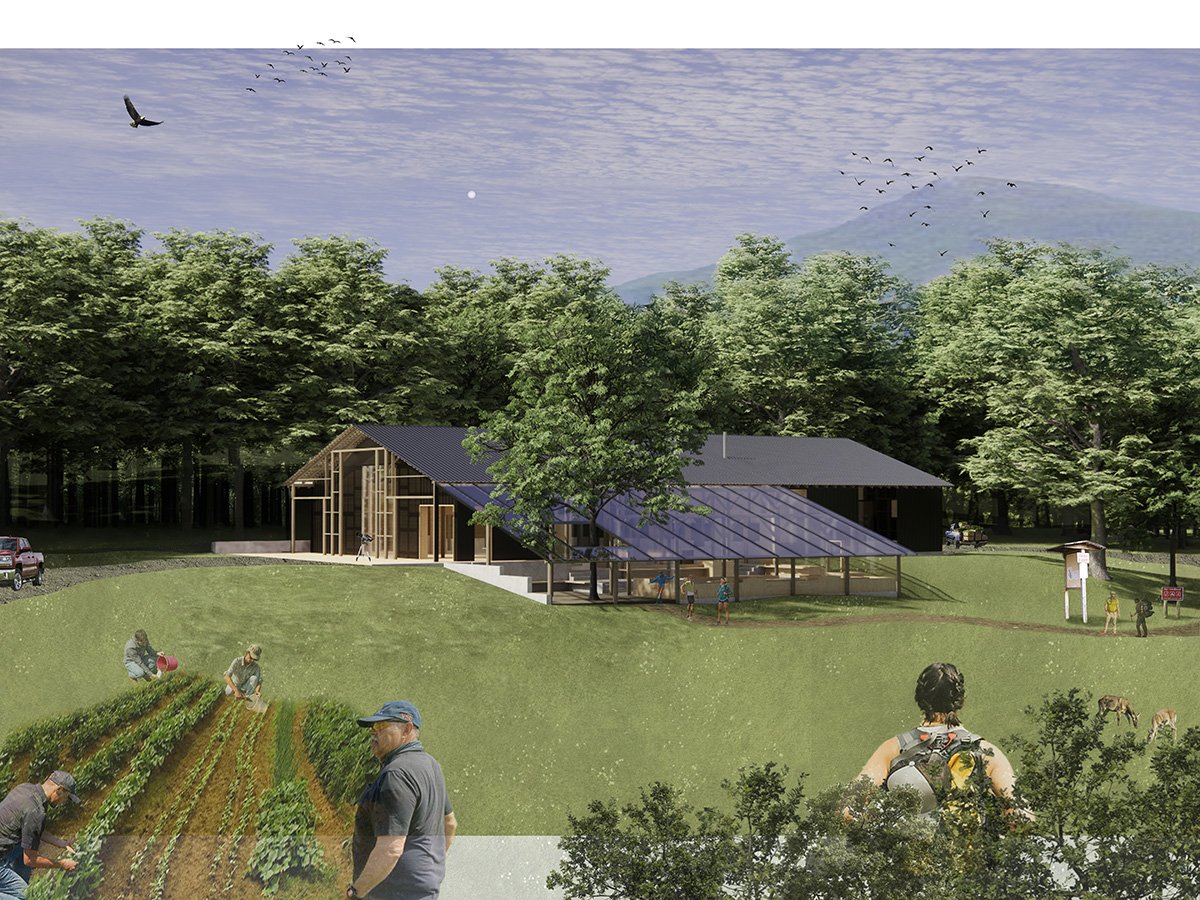
The Morven Outpost seeks to blend directly into the landscape through the attitude of its envelope and its approach to the site and existing building. To extend the primary communal gathering and dining space of the outpost, a winter garden extends down the hill along a new northeast axis perpendicular to the northwest axis of the existing barn. The winter garden sinks down into the hill to follow the grade, accommodated by the changing floor system and a series of accessible ramps to navigate the hillside.
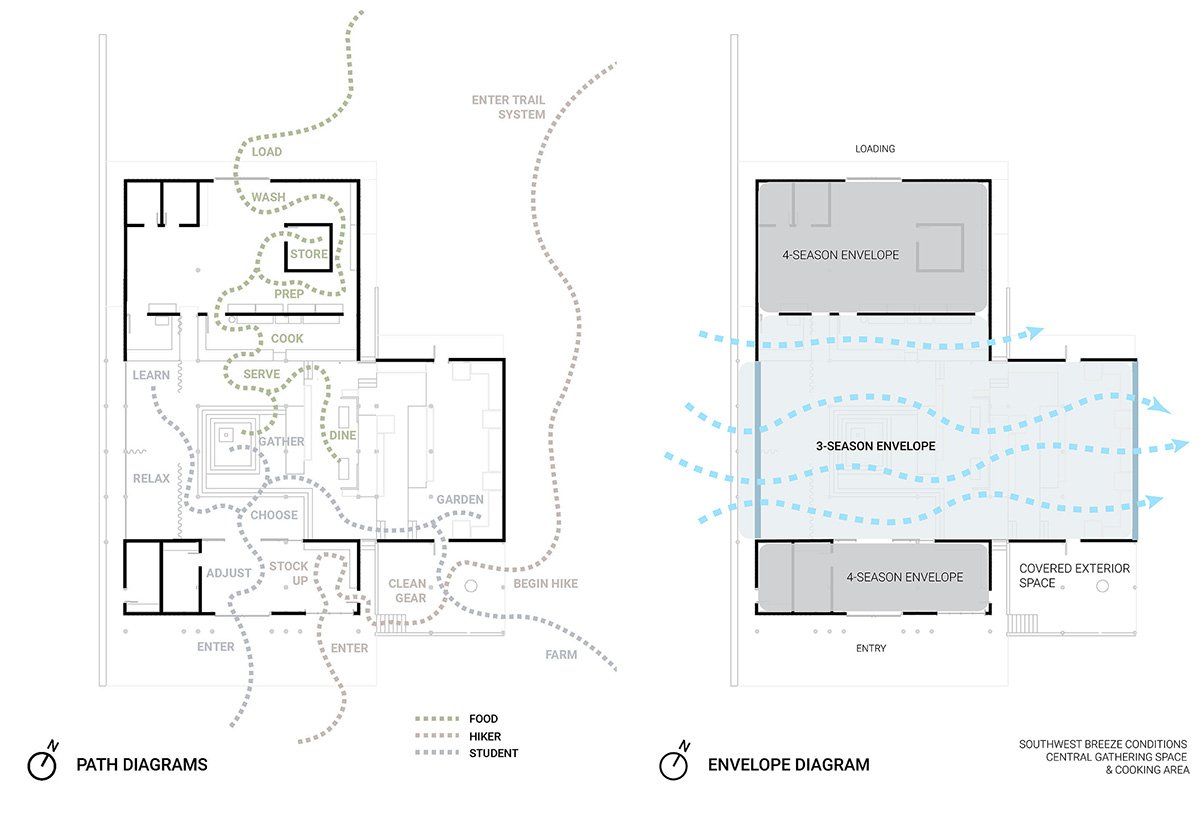
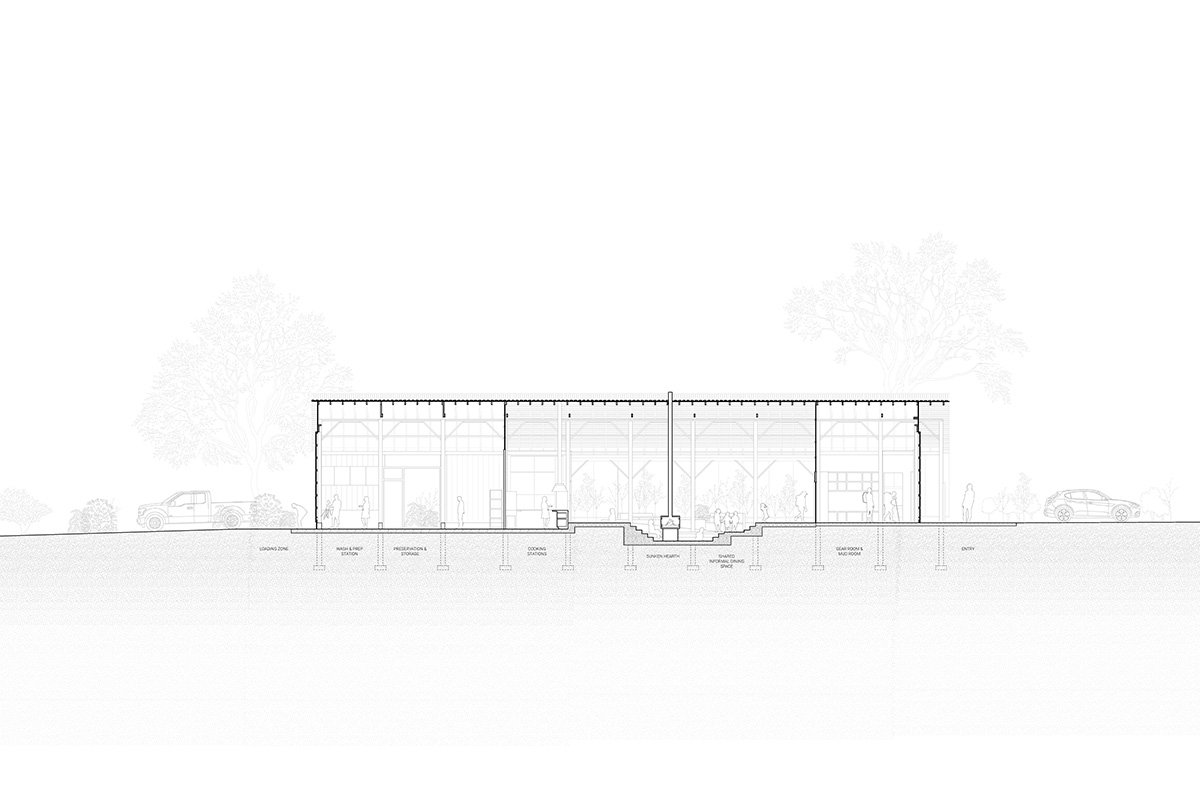
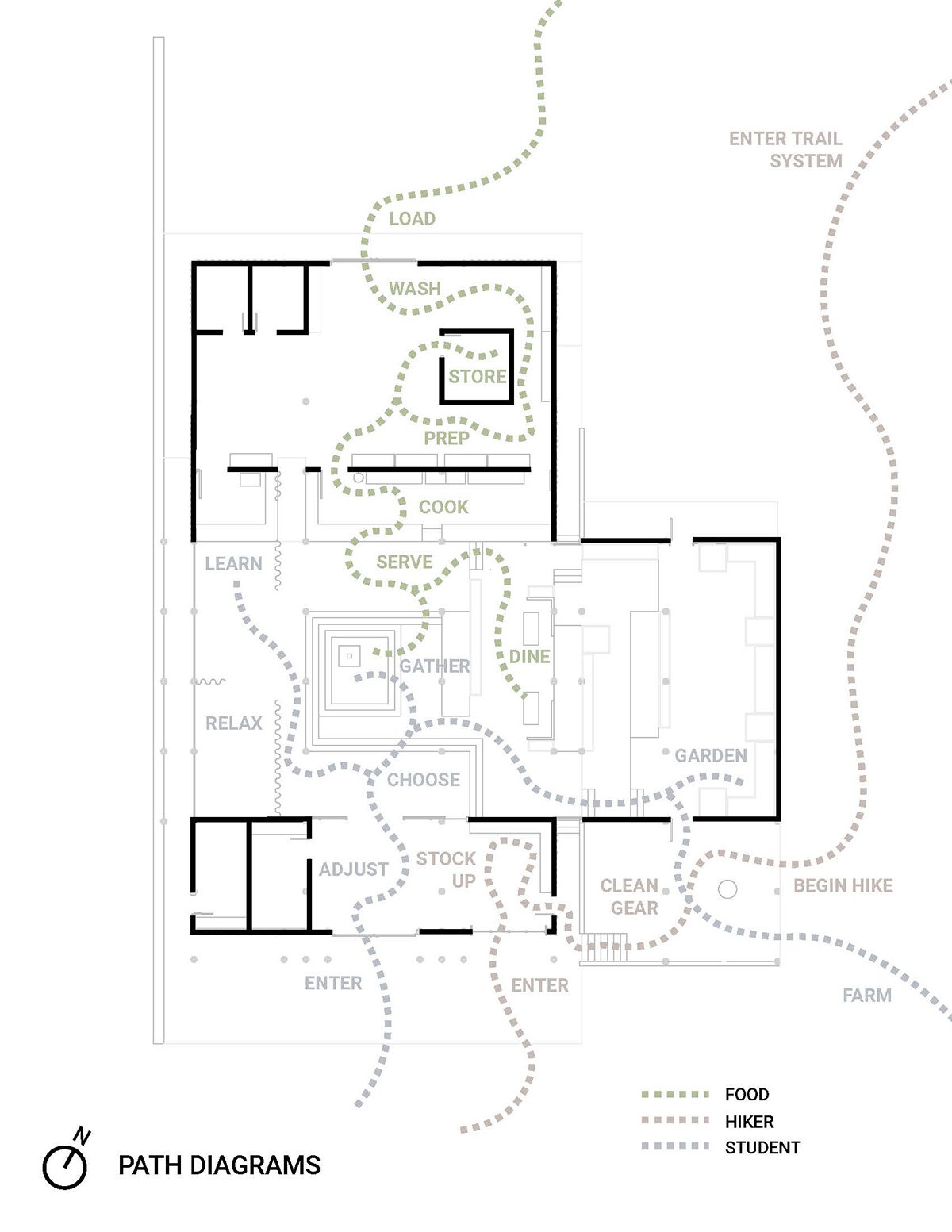
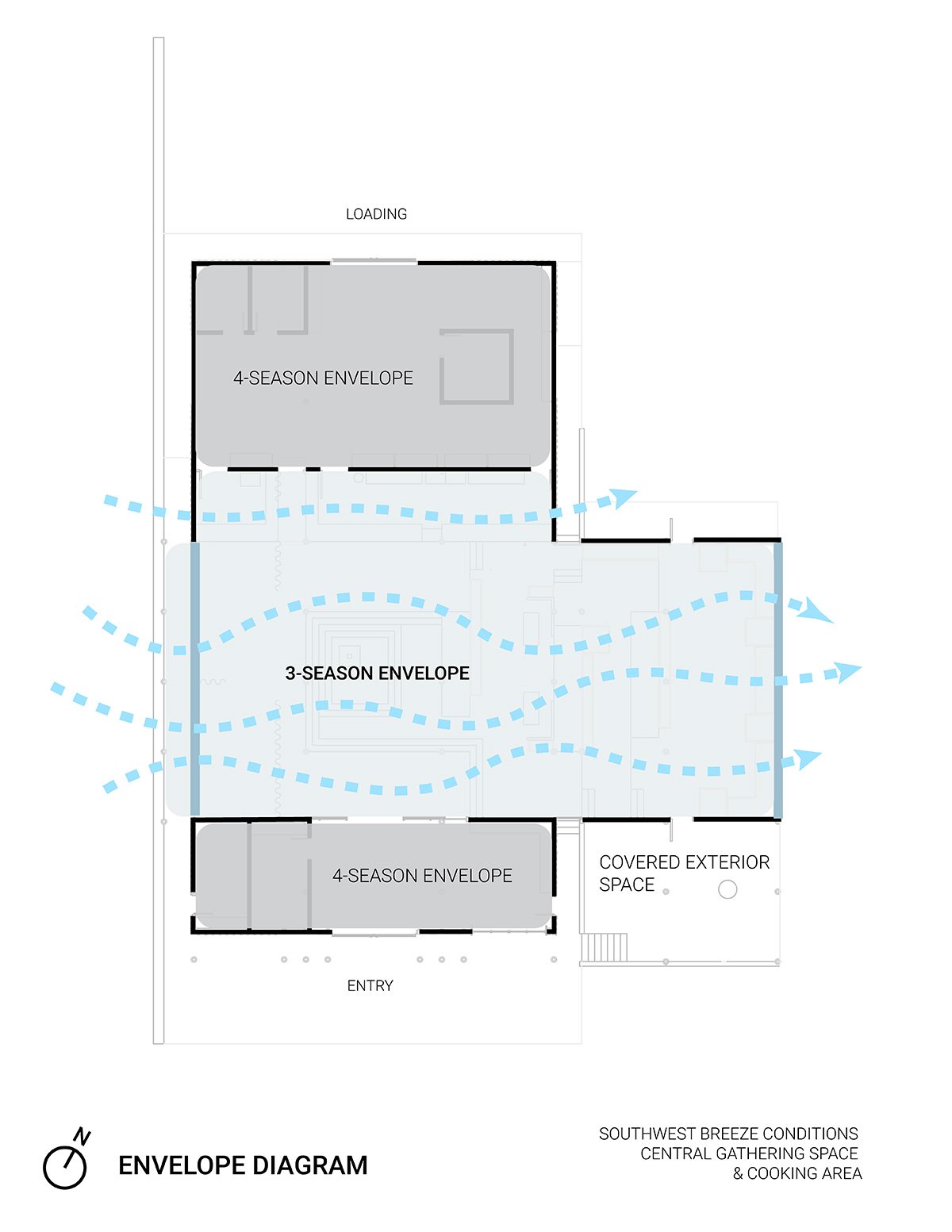
Shows Path From Users And Food In The Outpost In Plan | Shows 3-Season Envelope System For Design ProposalFinal Longitudinal Section
The gear room and entrance space, as well as the utility and prep space in the back of the outpost, are the only zones designed to be fully conditioned; the primary gathering space, rooted by a sunken hearth in the center of the barn, becomes a three-season space. During the summertime, the walls are slid open from either end of the building to allow for a gentle summer breeze to be funneled through the space along the northwest axis to provide passive conditioning and a more temperate indoor environment during hot Virginia summers rather than using energy-intensive air conditioning systems.
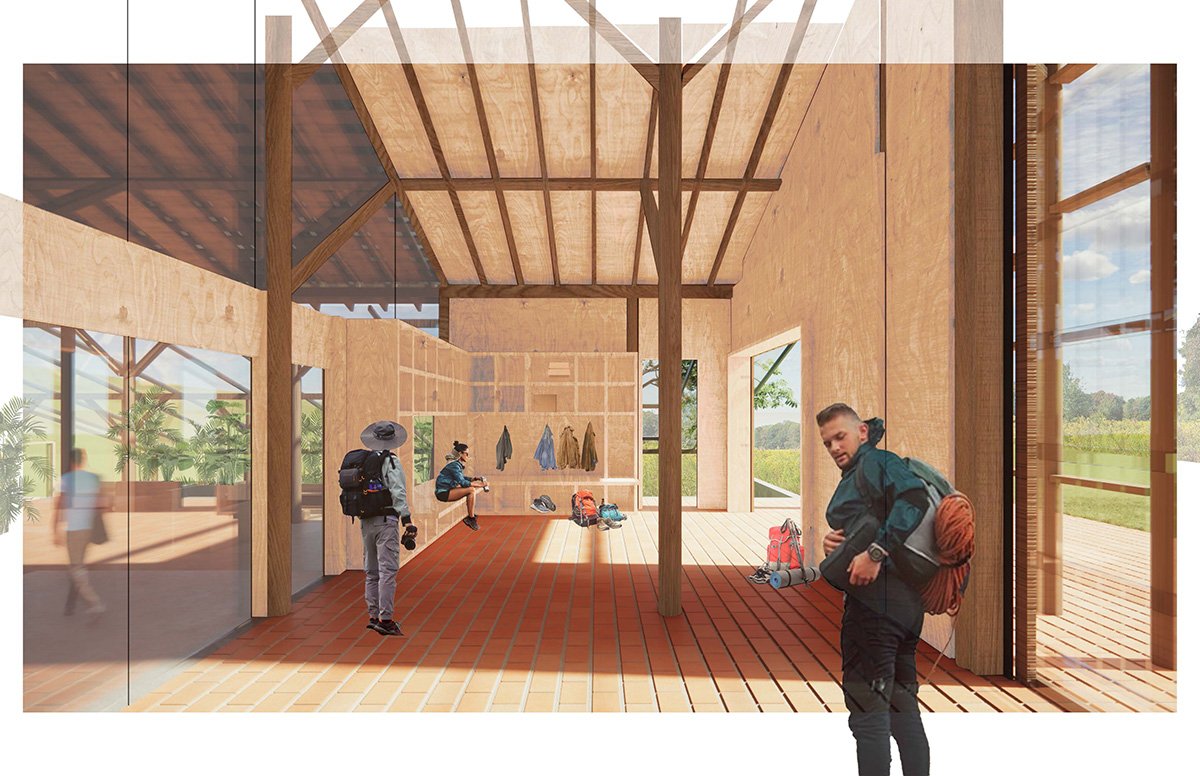
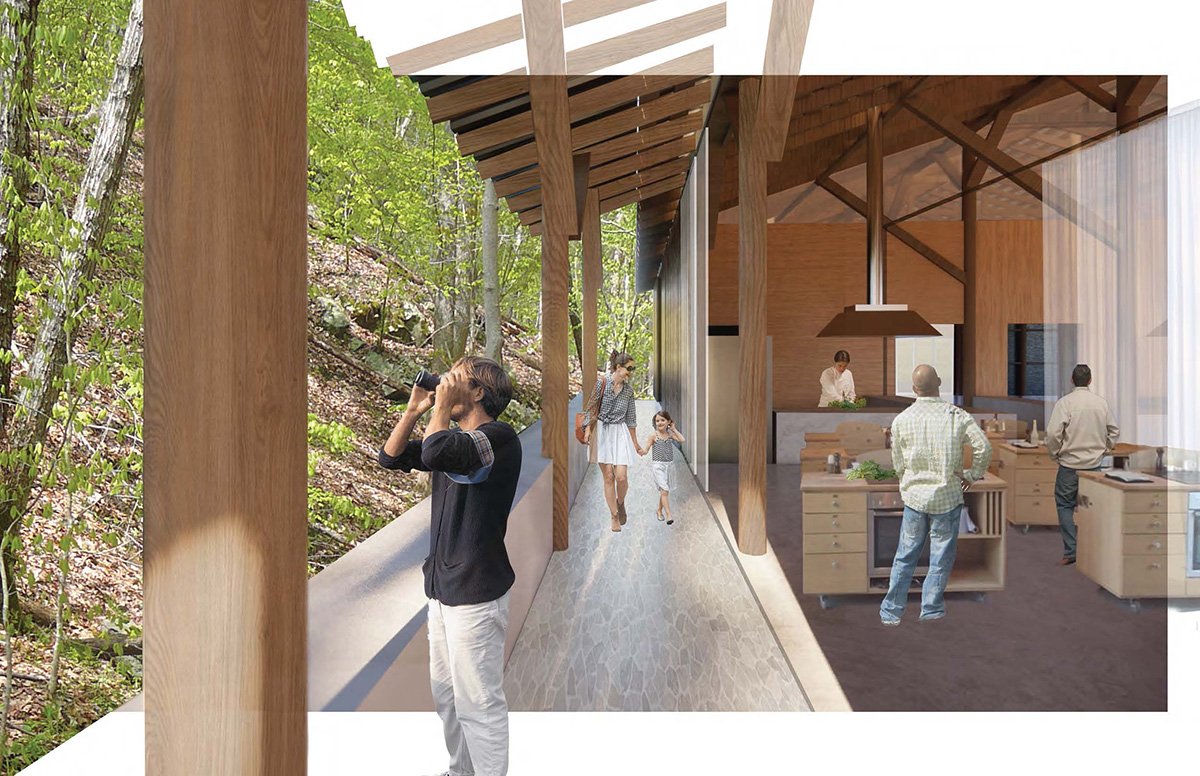
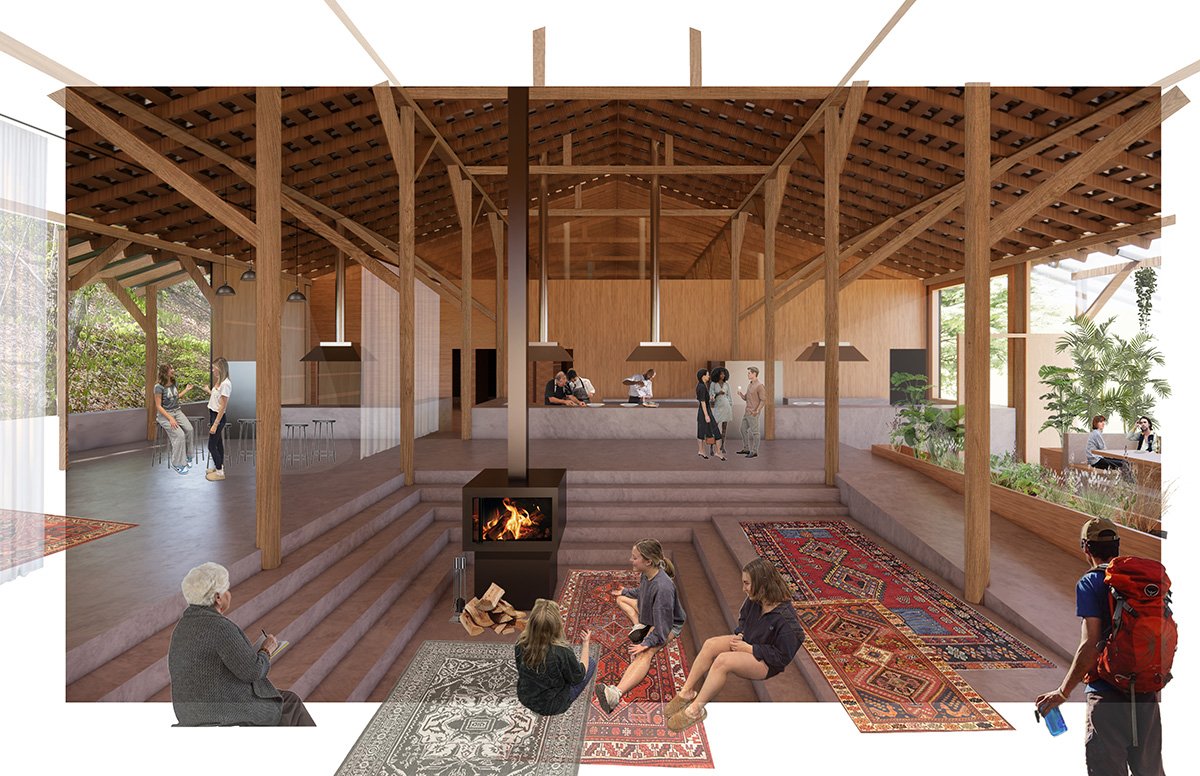
Shows Entry Space And Gear RoomShows Sliding Glass And Curtain System Between Interior And Exterior As Well As A Learn-To-Cook Teaching Station.Shows Central Dining Space
Just as the design of the Morven Outpost blends into the landscape, the experience of people visiting or interacting with the outpost similarly stays tied to the landscape. A typical visitor—a student, professor, community member, etc. visiting Morven—would come first to the Outpost. Upon entry, visitors are able to orient themselves to the rest of the property through maps and information displayed near the gear room, and hikers and other guests are able to take off their shoes and store their equipment while stopping at the outpost.
From the entry, the visitors would then enter the main communal space of the outpost, drawn in most directly to the sunken hearth. From here, they are able to rest, dine, and interact with those cooking directly adjacent to the gathering space. Dining spaces on the west side of the outpost feel embedded into the landscape and the forest, while dining spaces moving towards the east side of the outpost and the winter garden become more formal, with a light and airy feeling accompanied by views out of the winter garden in a greenhouse-like space.
Existing Black Barn Modeled With Proposed AdditionExisting Black Barn Modeled With Proposed Addition And The Roof Removed To Show Interior Floor System
Food is brought in through the back entrance of the barn, washed and prepared for cooking, then brought to meet the visitors in the middle of the cooking stations. Visitors then can go out and hike, then return again to the outpost, then garden or work in the fields, learning about agriculture, then return again to the outpost. They can participate in a cooking course, or they can go visit the historical core, then return finally to the outpost. At the end of the day, visitors will leave the outpost with new food, new skills, new experiences, and new friends.
Conclusion: Ultimately, the project transforms the Black Barn into a resilient, landscape-embedded hub for gathering and learning. Through adaptive reuse and passive systems, it honors Morven’s agricultural history while fostering new social, ecological, and communal relationships across the site.
[This Academic Project has been published with text and images submitted by the student]
Site Context
Design Process
Final Outcome
To submit your academic project for publication at ArchiDiaries, please visit the following link >> Submit
Get the best of ArchiDiaries, directly in your inbox.
We use cookies on our website to give you the most relevant experience by remembering your preferences and repeat visits. By clicking “Accept All”, you consent to the use of ALL the cookies. However, you may visit "Cookie Settings" to provide a controlled consent.
This website uses cookies to improve your experience while you navigate through the website. Out of these, the cookies that are categorized as necessary are stored on your browser as they are essential for the working of basic functionalities of the website. We also use third-party cookies that help us analyze and understand how you use this website. These cookies will be stored in your browser only with your consent. You also have the option to opt-out of these cookies. But opting out of some of these cookies may affect your browsing experience.
Necessary cookies are absolutely essential for the website to function properly. These cookies ensure basic functionalities and security features of the website, anonymously.
Cookie
Duration
Description
cookielawinfo-checkbox-analytics
11 months
This cookie is set by GDPR Cookie Consent plugin. The cookie is used to store the user consent for the cookies in the category "Analytics".
cookielawinfo-checkbox-functional
11 months
The cookie is set by GDPR cookie consent to record the user consent for the cookies in the category "Functional".
cookielawinfo-checkbox-necessary
11 months
This cookie is set by GDPR Cookie Consent plugin. The cookies is used to store the user consent for the cookies in the category "Necessary".
cookielawinfo-checkbox-others
11 months
This cookie is set by GDPR Cookie Consent plugin. The cookie is used to store the user consent for the cookies in the category "Other.
cookielawinfo-checkbox-performance
11 months
This cookie is set by GDPR Cookie Consent plugin. The cookie is used to store the user consent for the cookies in the category "Performance".
viewed_cookie_policy
11 months
The cookie is set by the GDPR Cookie Consent plugin and is used to store whether or not user has consented to the use of cookies. It does not store any personal data.
Functional cookies help to perform certain functionalities like sharing the content of the website on social media platforms, collect feedbacks, and other third-party features.
Performance cookies are used to understand and analyze the key performance indexes of the website which helps in delivering a better user experience for the visitors.
Analytical cookies are used to understand how visitors interact with the website. These cookies help provide information on metrics the number of visitors, bounce rate, traffic source, etc.
Advertisement cookies are used to provide visitors with relevant ads and marketing campaigns. These cookies track visitors across websites and collect information to provide customized ads.
![Factory[n]Certainty: Redefining Industrial Architecture Through Work, Life, and Community | Bachelors Design Thesis](https://archidiaries.com/wp-content/uploads/2026/09/Siam-Rahman_APR_feat_img.jpg)