Home » Academic projects » Habitats Culturales En Altura: Modular Cultural Architecture for Ecological and Social Regeneration | Bachelor’s Design Project
Habitats Culturales En Altura: Modular Cultural Architecture for Ecological and Social Regeneration | Bachelor’s Design Project
Excerpt: ‘Habitats Culturales En Altura’ is a Bachelor’s Design Project by Camilo Andres Meza from the ‘Facultad de Arquitectura y Diseño – Universidad Pontificia Bolivariana.’ The project aims to create a cultural and ecological landmark that integrates art, community, and nature within the park. Through sensitive architectural strategies, it seeks to connect the urban fabric with the landscape, promote social interaction, support artistic production, and encourage environmental regeneration while minimizing human impact and enhancing public engagement.
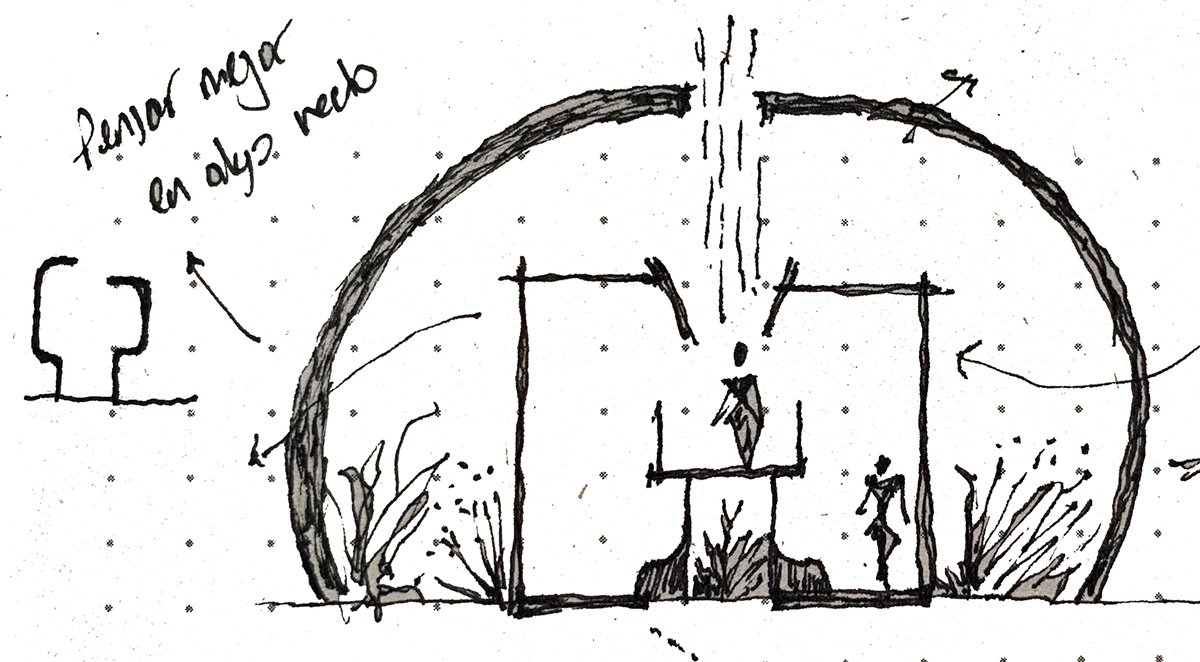
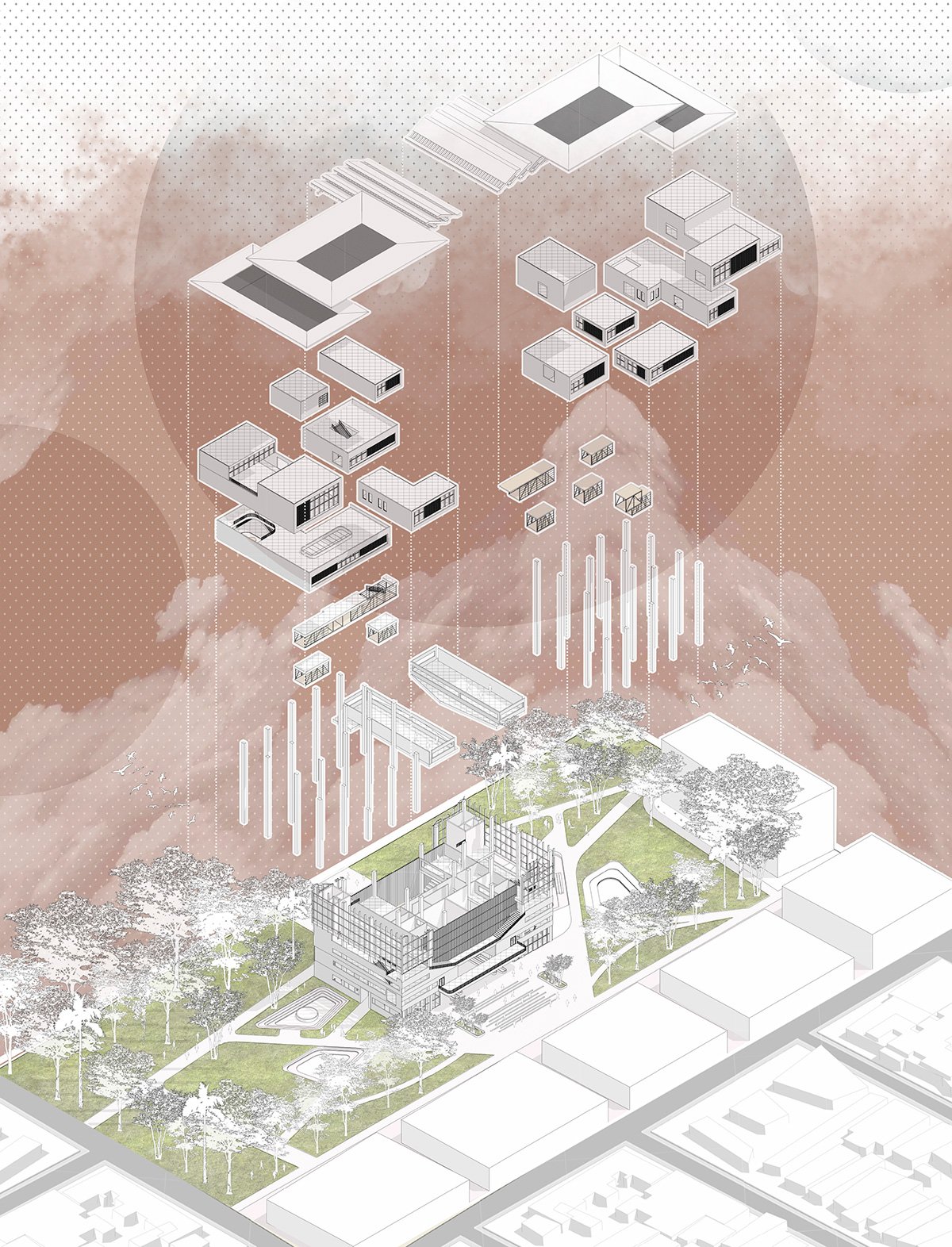
Introduction: This project stems from three fundamental strategies defined in the park’s master plan. The first is to integrate the park with its immediate context through programmatic corridors that directly connect the city with the park’s ecological system. The second is to limit human intervention to allow nature to reclaim its space, using controlled biophilic pathways that protect animal habitats. And the third is to revitalize the green space by implementing nature-based solutions that help regenerate the park. Based on these strategies, the Fine Arts Building emerges. This building is conceived as a cluster of programmatic containers that integrate nature, art, and community. The volumetric proposal is based on modules suspended and articulated with each other by lightweight structural cores, allowing us to create a clear relationship between mass and void, fluid circulation, and open views that connect with the surrounding environment.
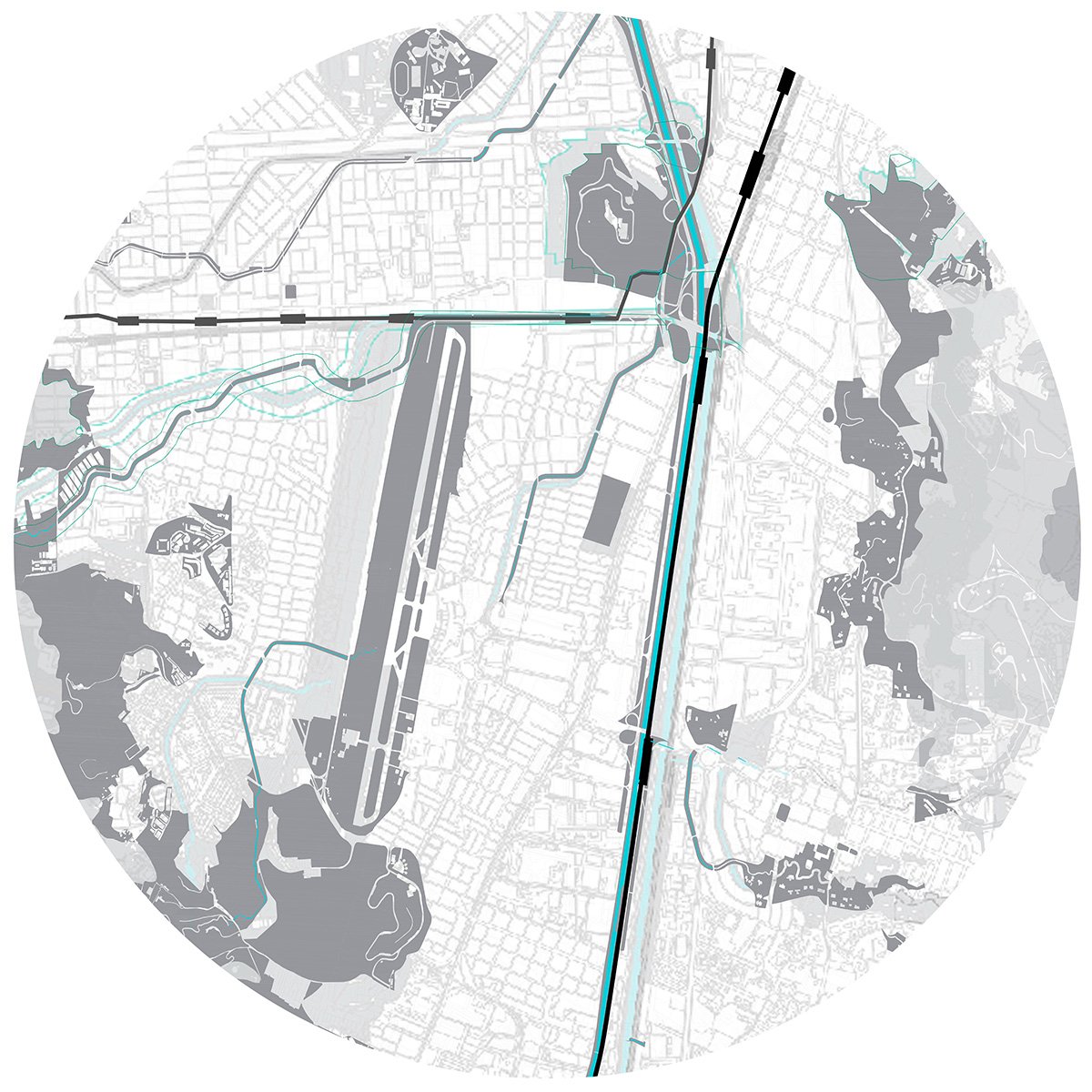
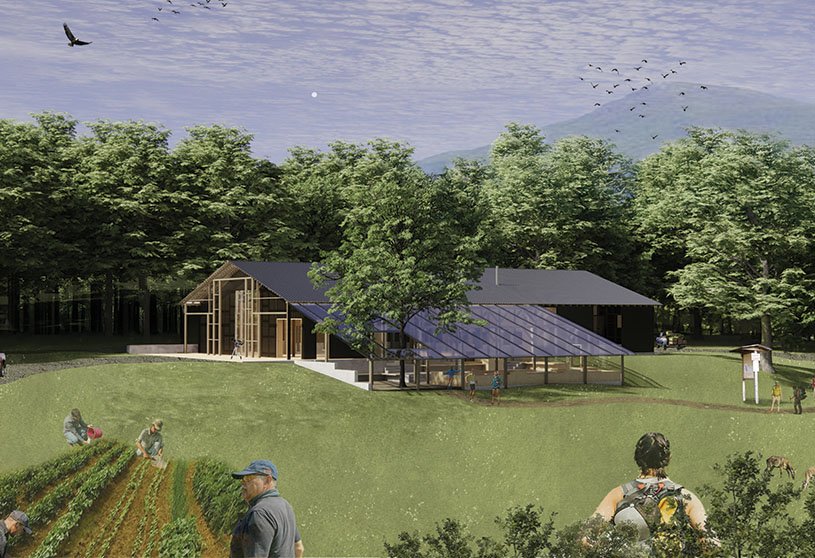
The project is situated in Medellín, Antioquia, Colombia, within a park that serves as a key ecological and cultural asset for the city. Its design is shaped by the local landscape, climate, and urban fabric of Medellín.
Design Process
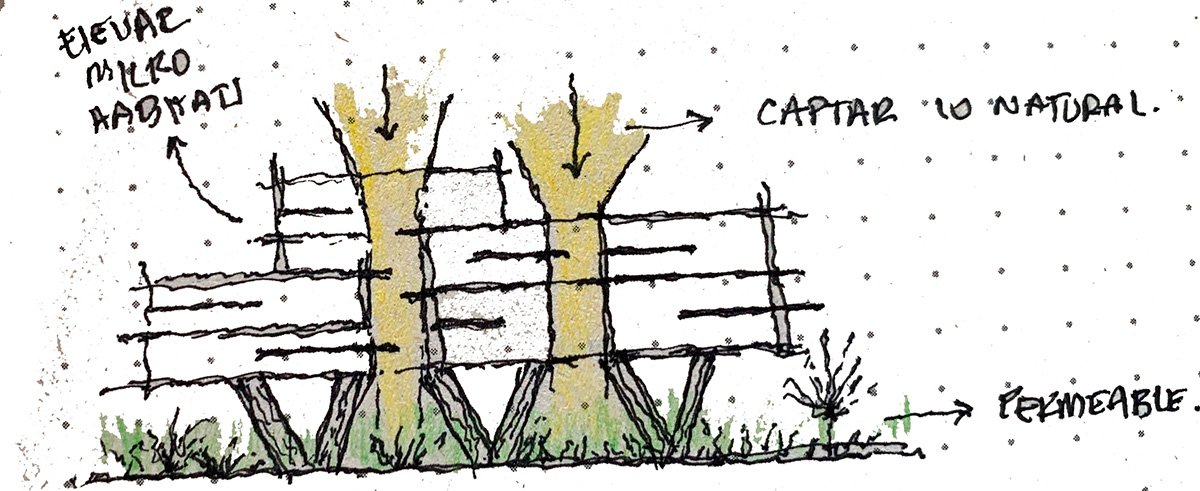
Conceptual Scheme Of Design IntentionsConceptual Scheme Of Design IntentionsConceptual Scheme Of Design IntentionsConceptual Scheme Of Design Intentions
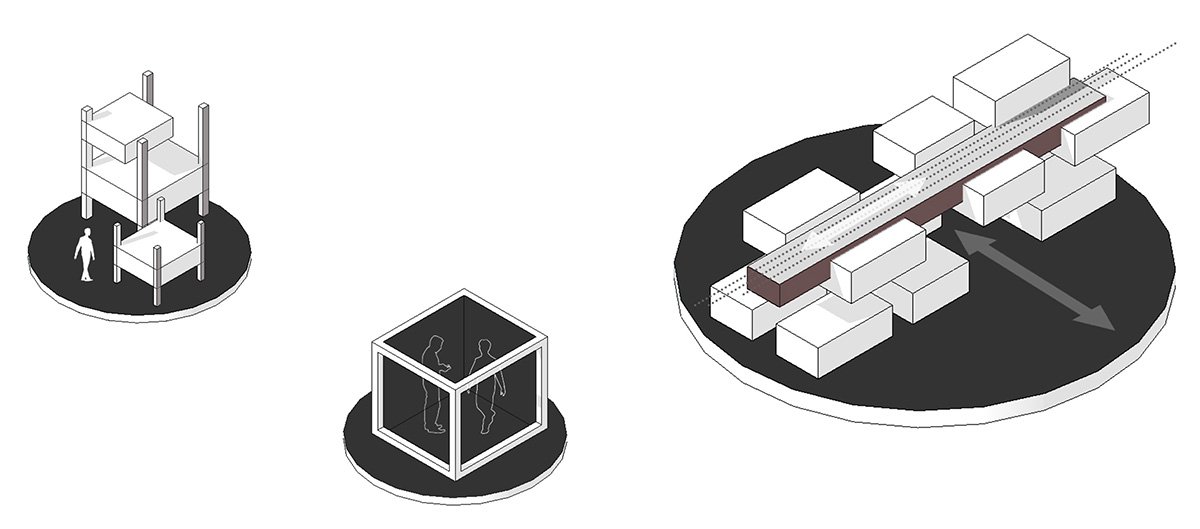
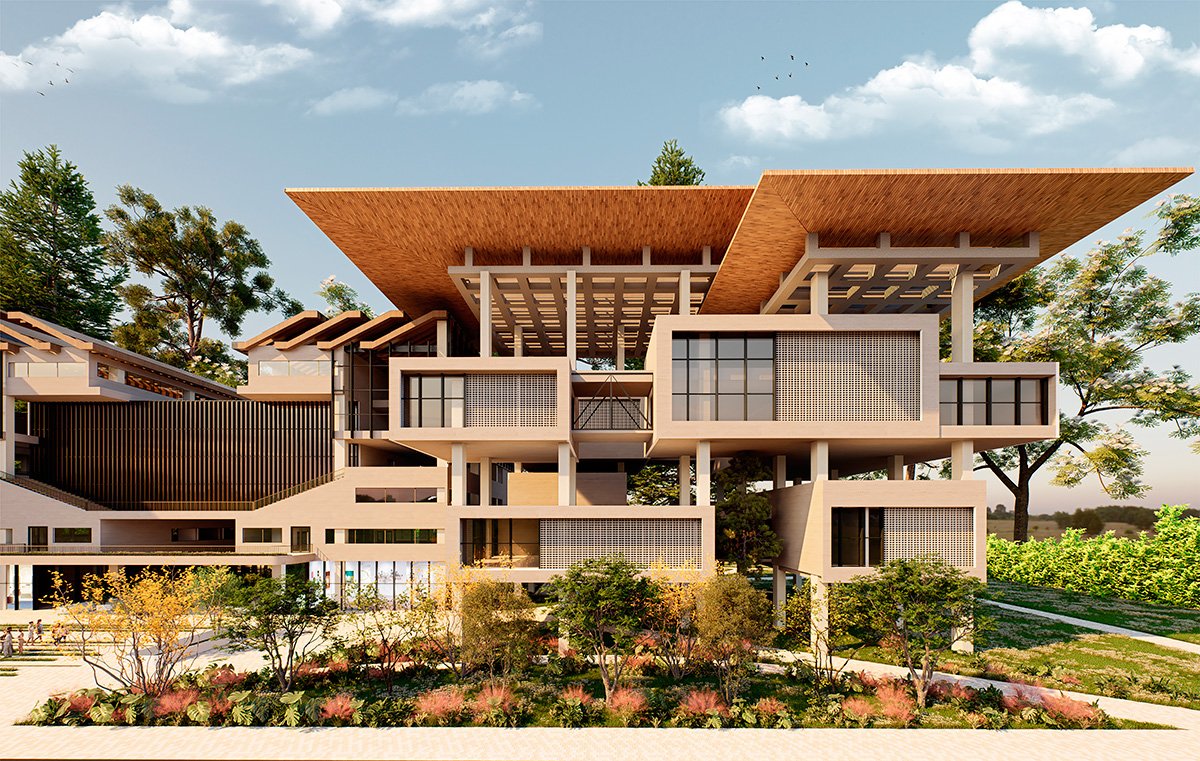
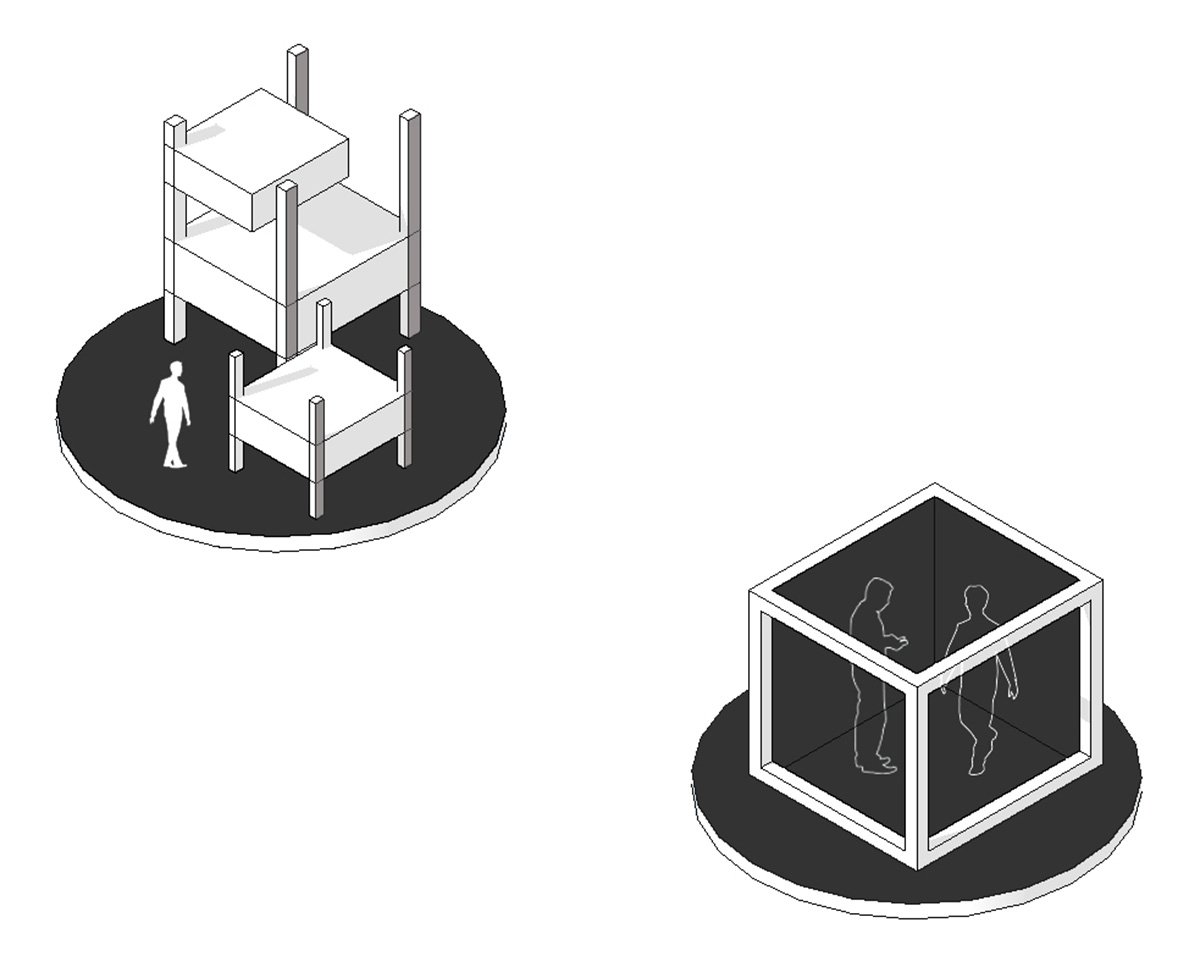
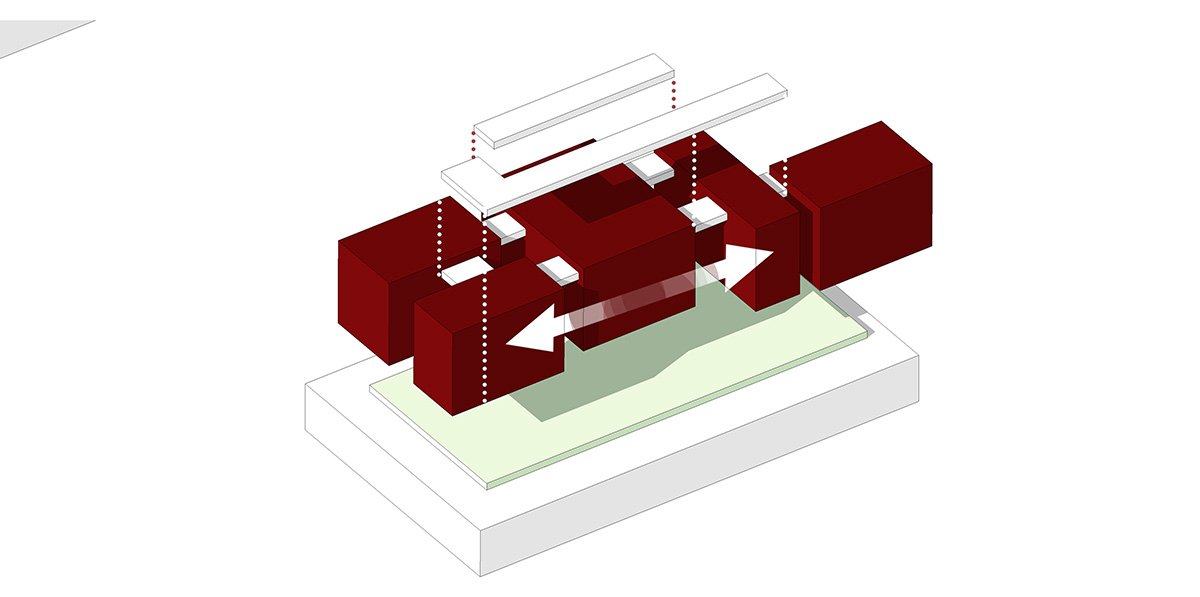
Design and Construction Strategy: To develop this proposal, three main design operations were considered. The first is the elevation of the main volume, which frees up the ground floor and creates a large green platform that directly connects the neighborhood with the park. The second is fragmentation: the suspended volume is strategically divided to generate voids and interstices through which nature filters, integrating with the building and promoting ventilation, natural light, and cross-views.
Scheme Of Intentions At The Intervention SiteConceptual Scheme Of Design IntentionsConceptual Scheme Of Design Intentions
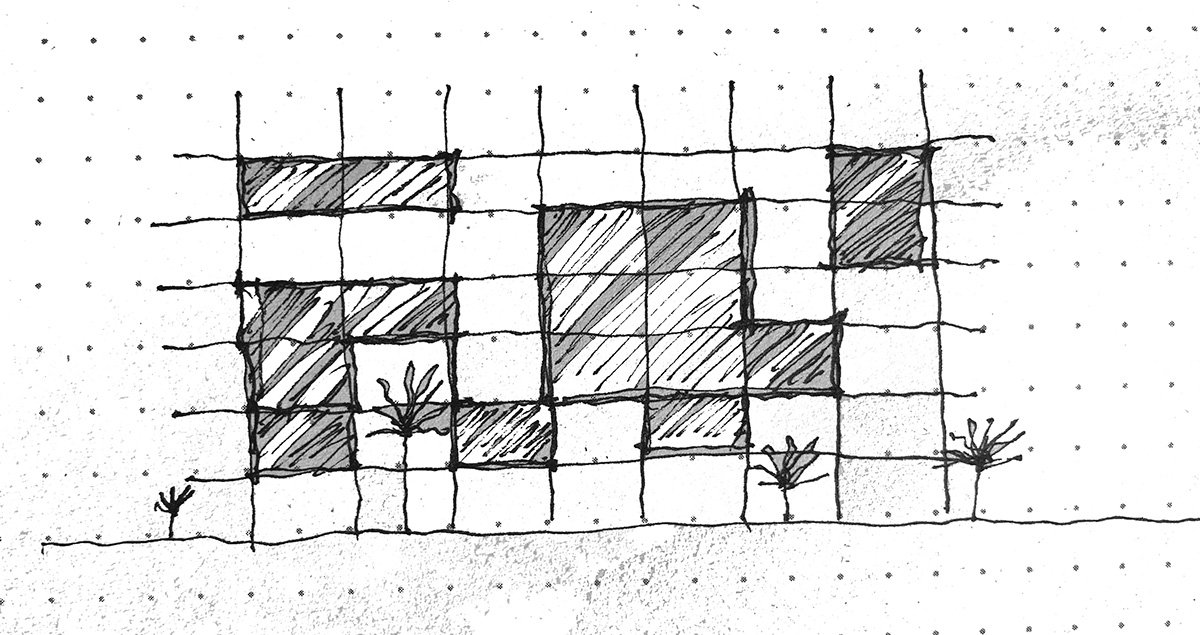
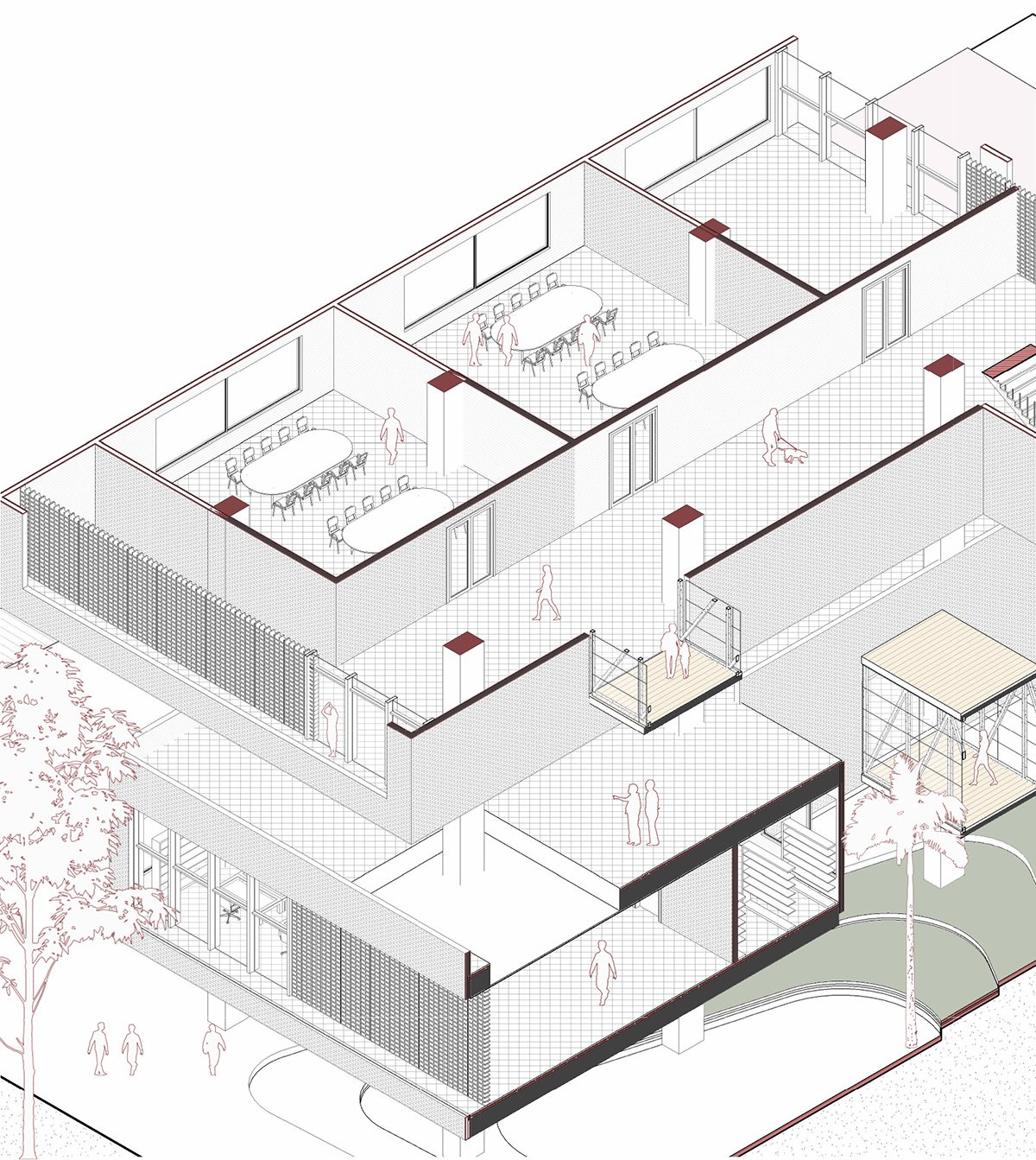
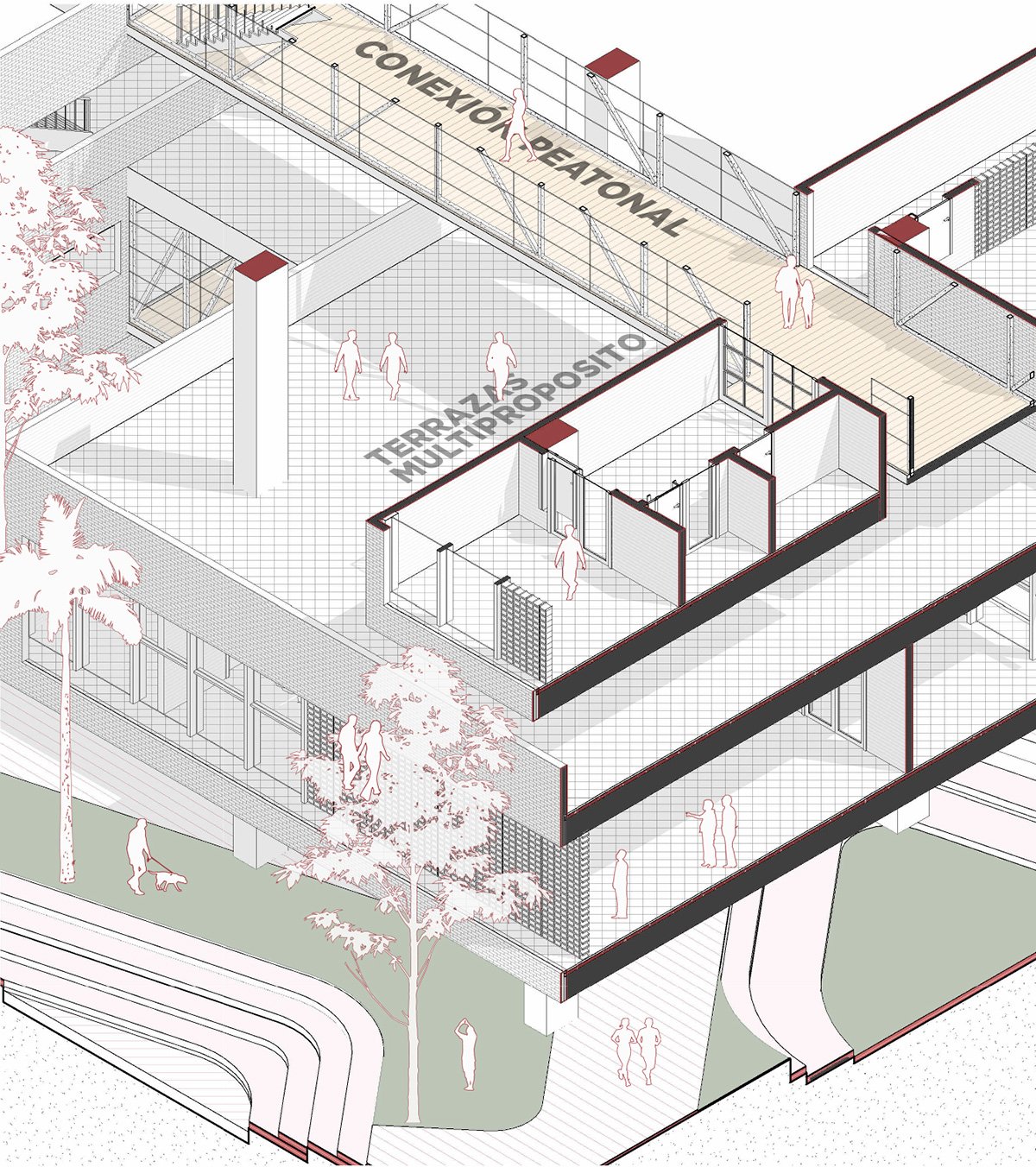
The third operation is modularity and interconnection, organizing a system of modules distributed across three levels and connected by bridges and elevated walkways, allowing human activities to be clearly defined while strengthening the relationship with the natural environment.
Conceptual Isometric View Of Formal OperationsIsometric Diagram Of Proposed Strategies And Master PlanIsometric Diagram Of Proposed Strategies And Master PlanIsometric Diagram Of Proposed Strategies And Master Plan
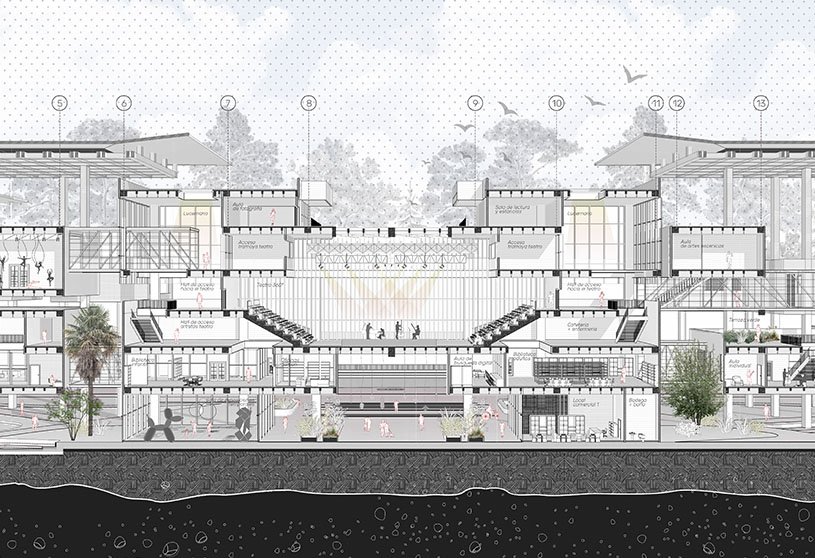
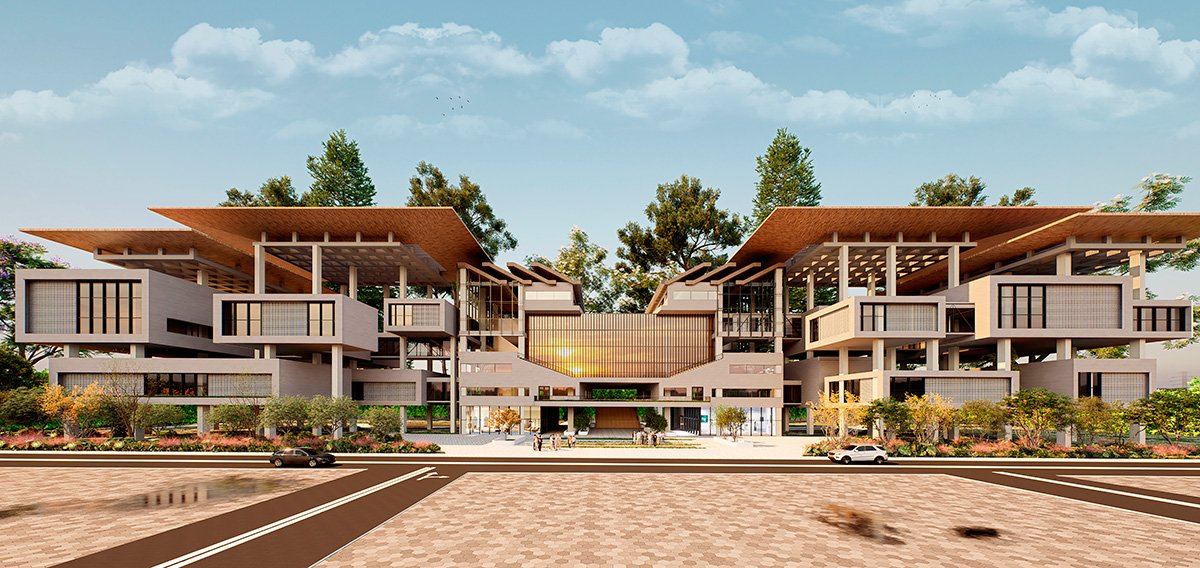
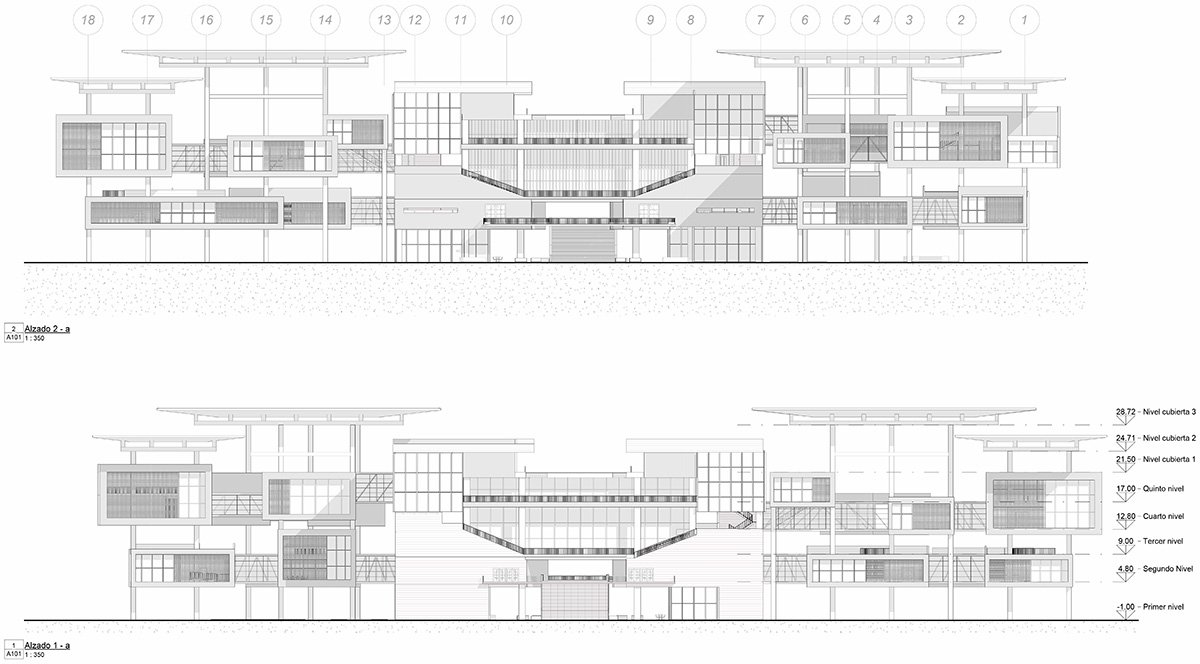
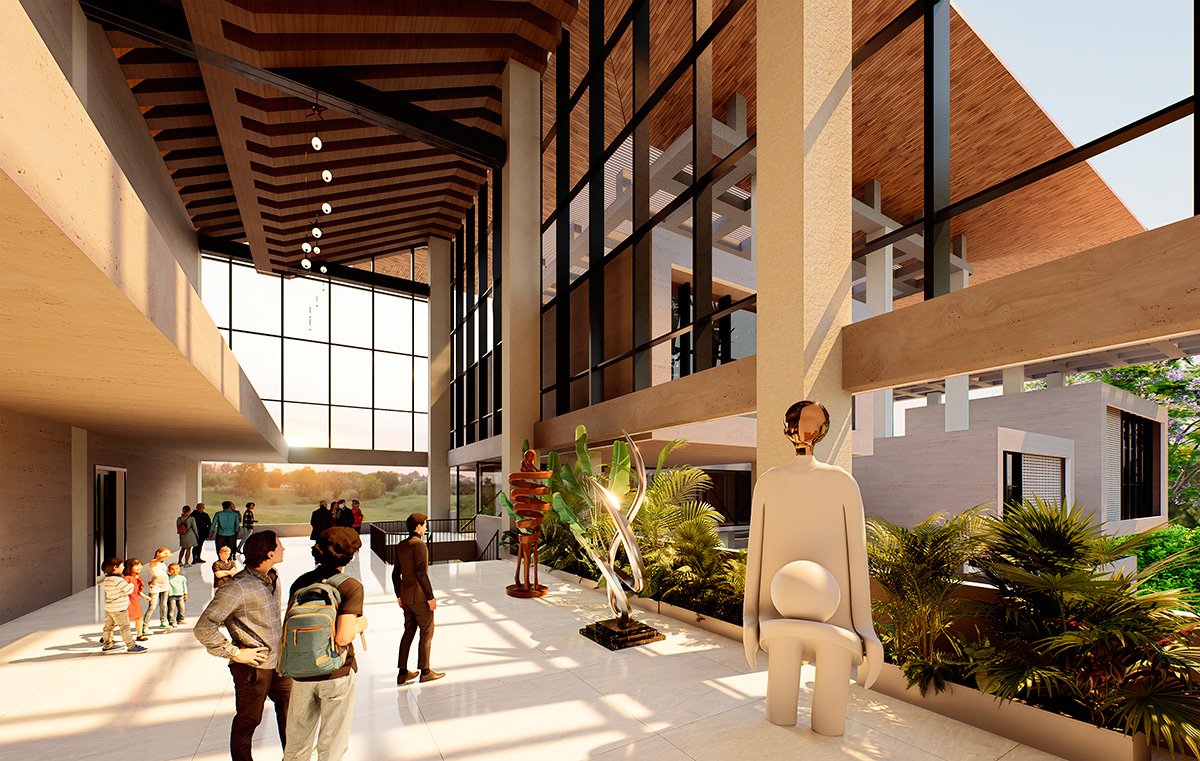
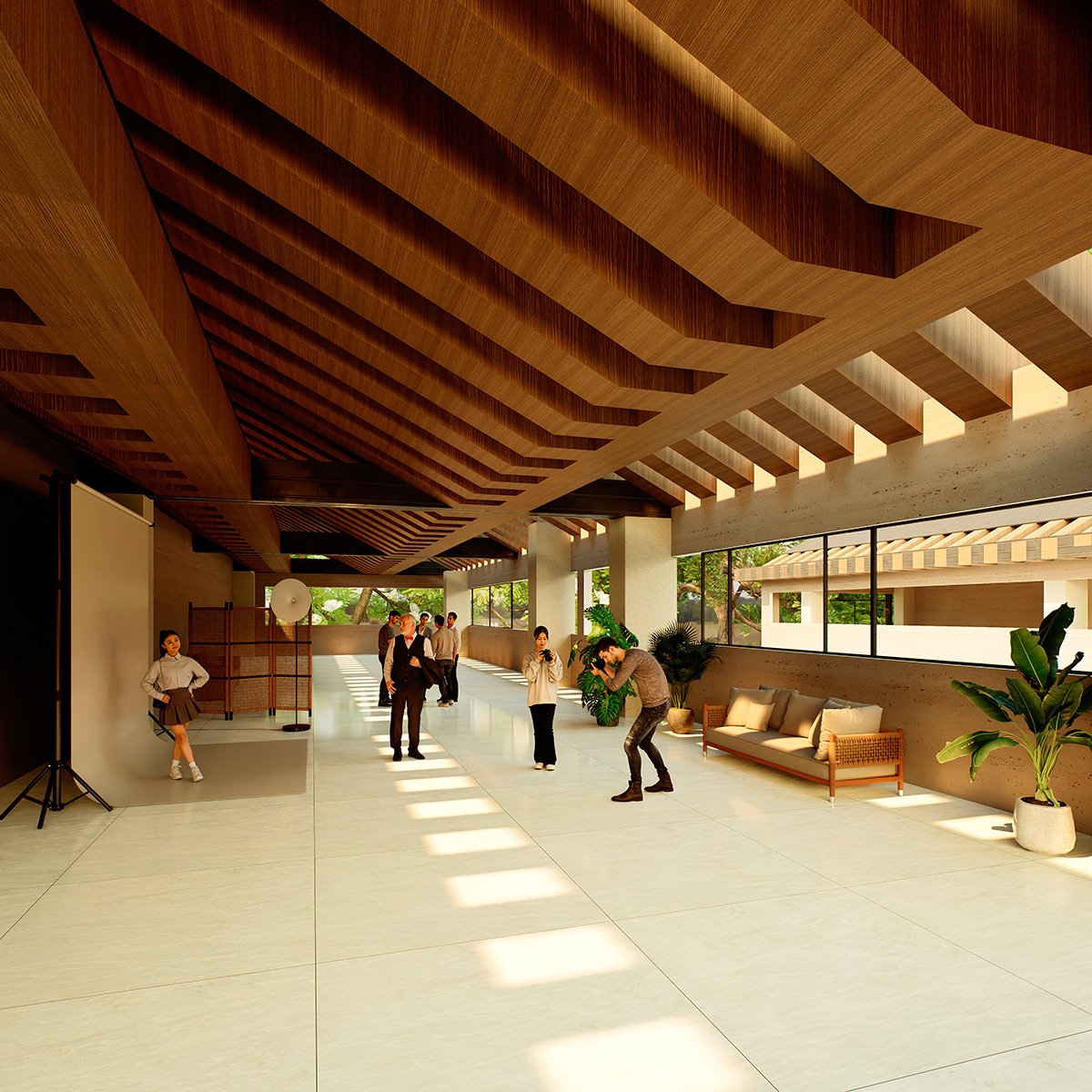
The building is characterized by large cantilevers, bioclimatic wooden roofs, and expansive windows that enable efficient control of natural light and enhance cross-ventilation. High-quality materials—concrete, wood, and glass—are used to establish a direct dialogue with the surroundings and convey a modern yet warm architectural expression.
Final Outcome
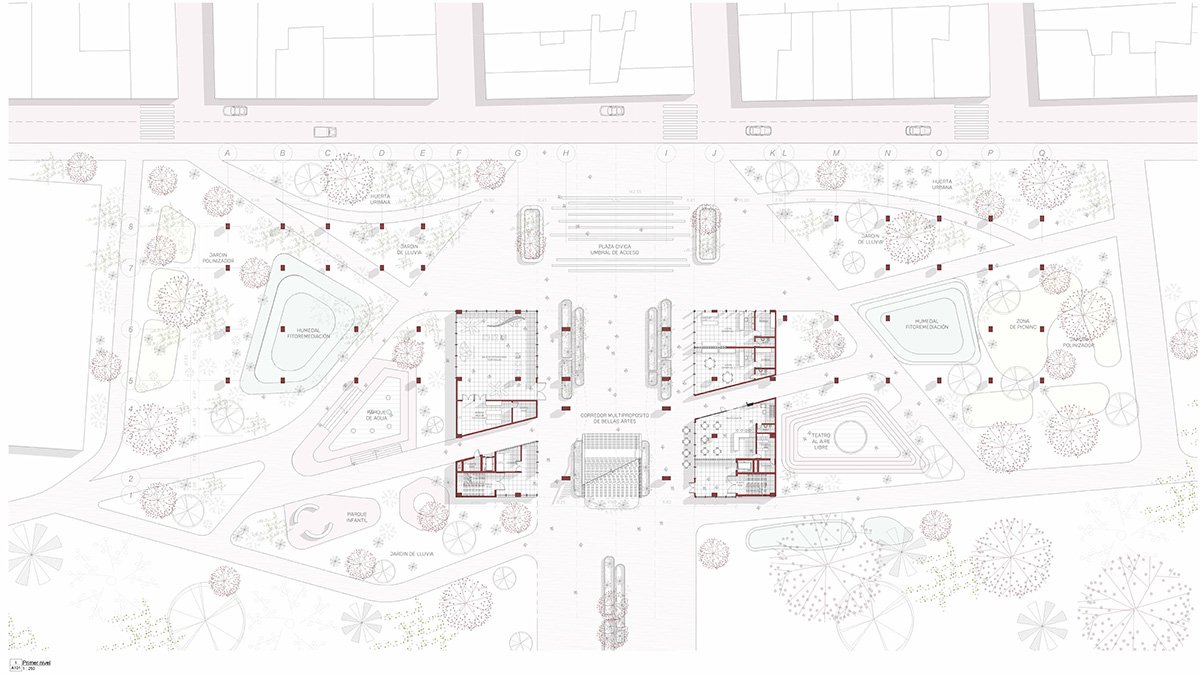
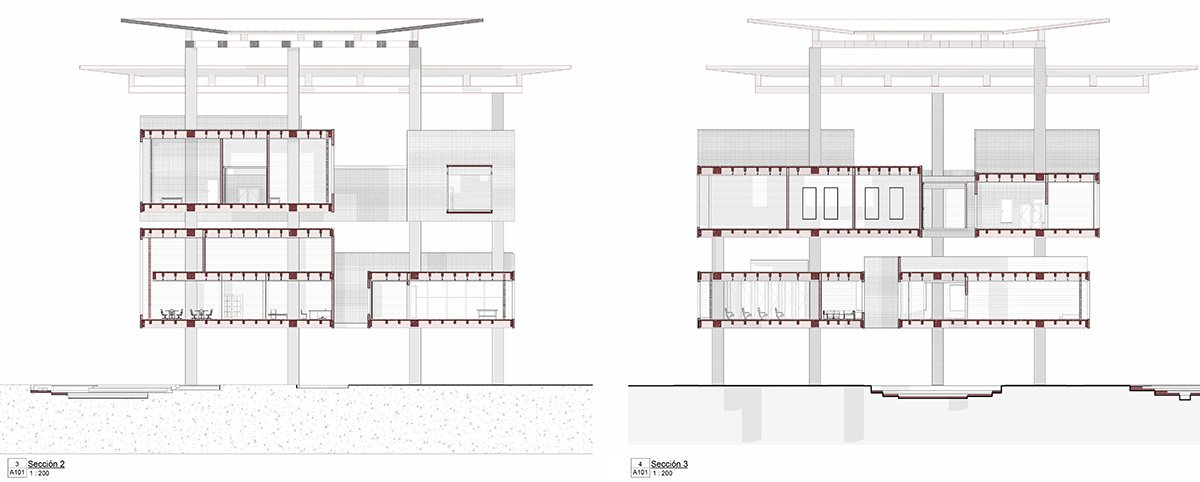
Floor Plan – Level 1Floor Plan – Level 2Contextualized Urban SectionMain Façade Visualization
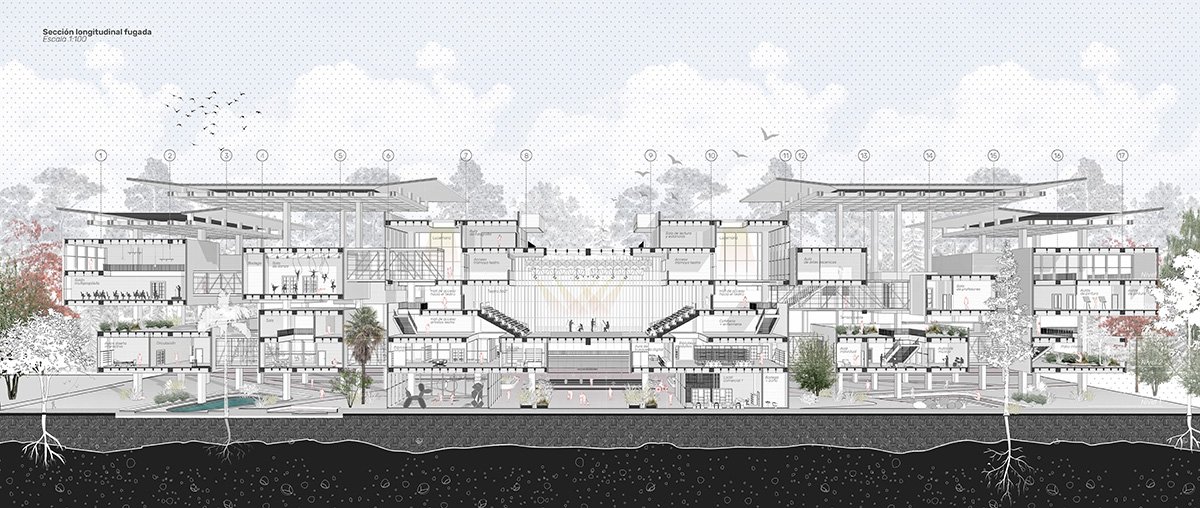
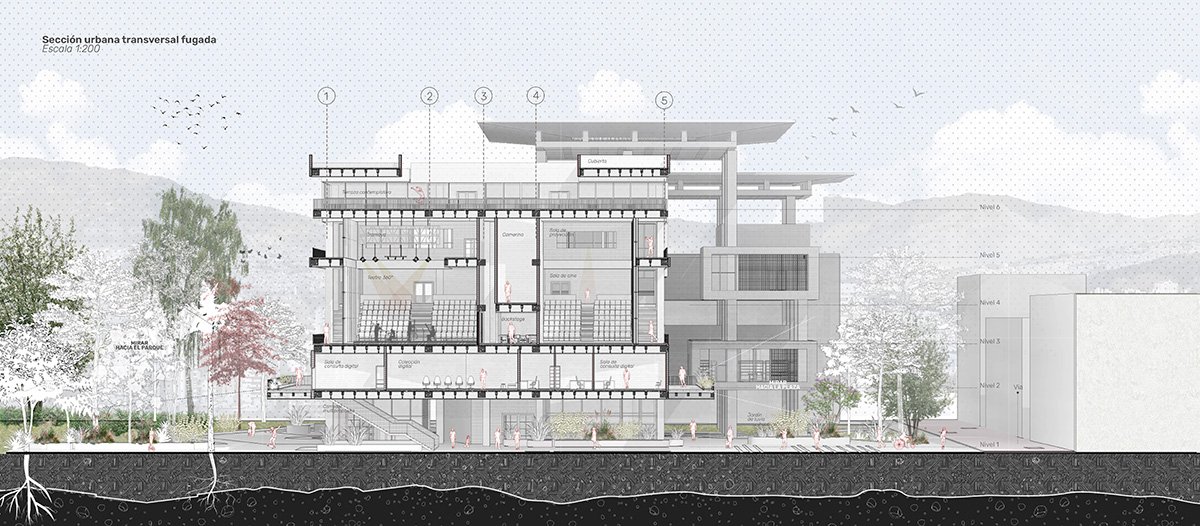
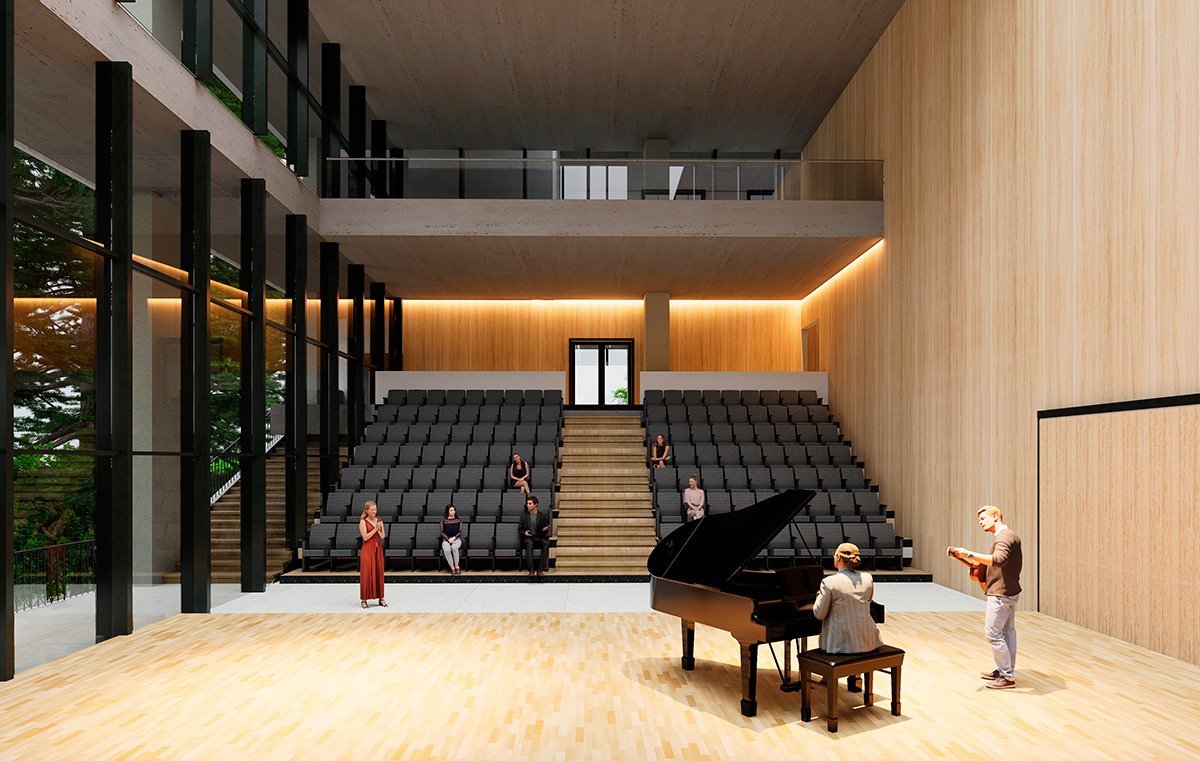
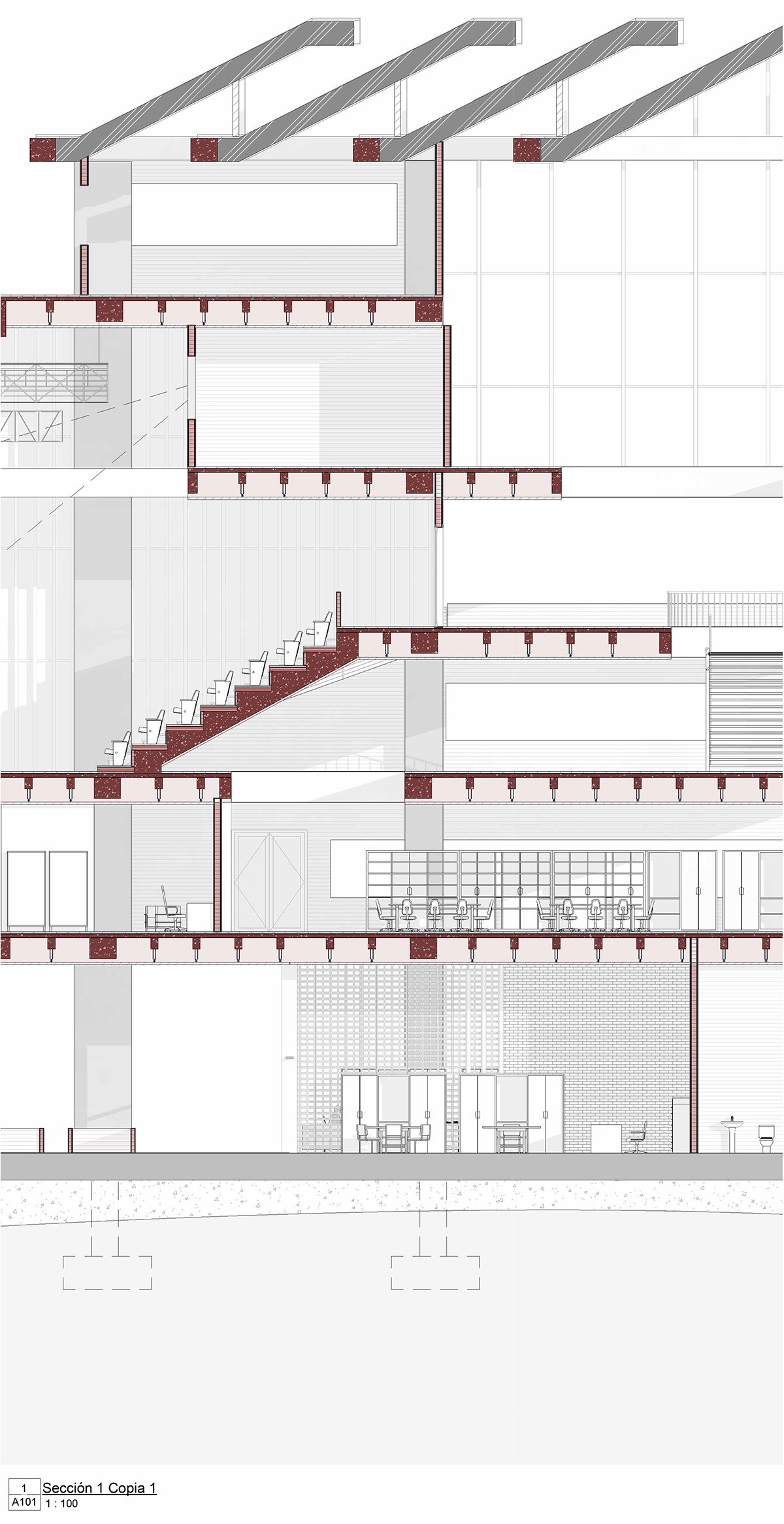
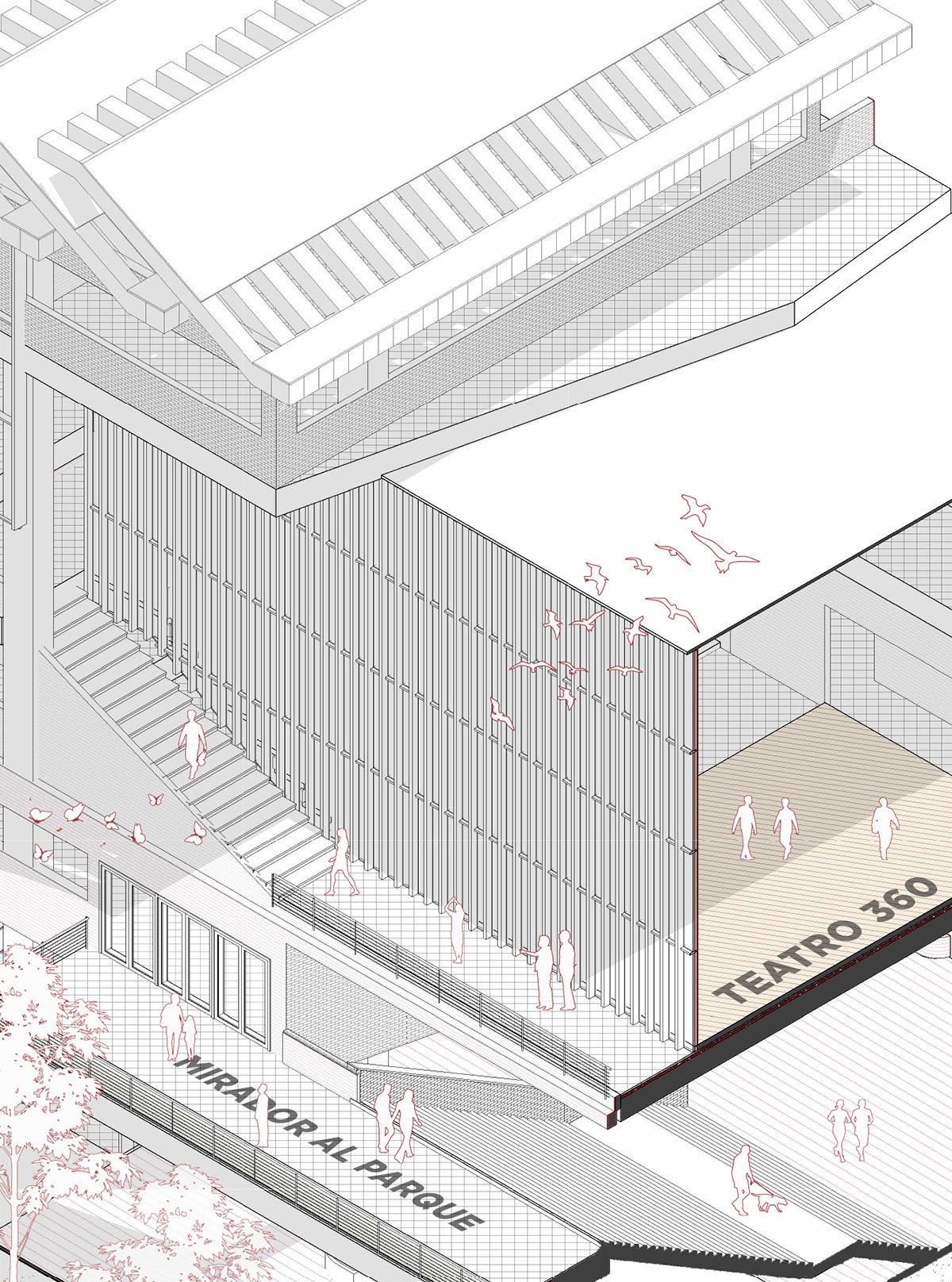
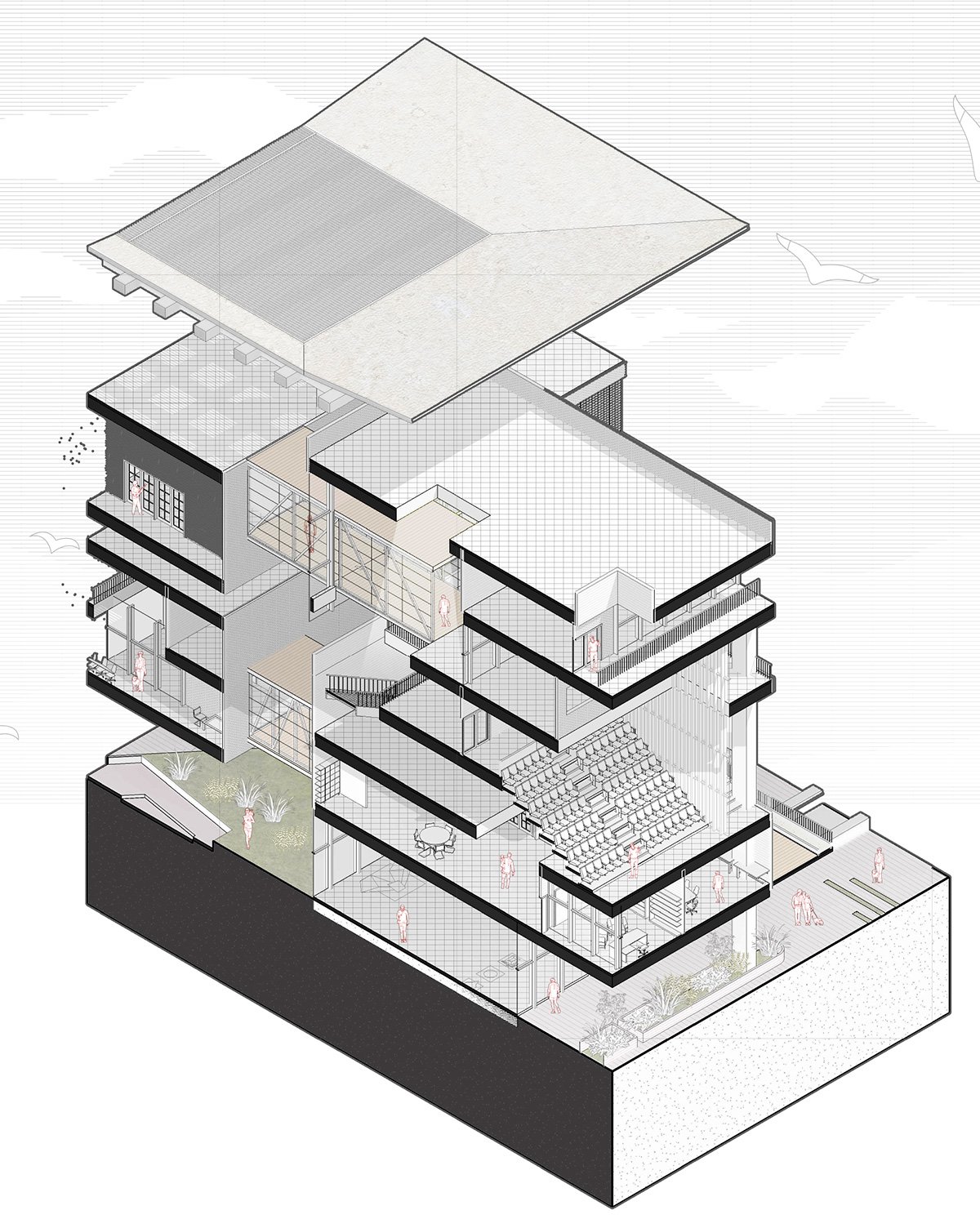
In terms of programmatic organization, the building is structured around three modules. The central module is dedicated to the performing arts and brings together a library, classrooms, and workshops. At its core, a 1,100-square-meter glazed volume contains the theater and cinemas, acting as both the project’s symbolic landmark and its main organizational hub. Flanking this core, two lateral modules accommodate disciplines such as dance, music, painting, photography, and visual arts, forming a diverse and adaptable cultural framework.
Floor Plan – Level 3Elevation ViewsContextualized Urban SectionCross-Section Of The Building | Isometric Spatial Fragment
Objectives and Scope: The building is conceived as more than a space for artistic production. Its primary goal is to serve as a point of convergence between culture, community, and nature. It integrates the urban and ecological contexts by linking the park with the surrounding neighborhood, positioning itself as a mediator between city and landscape.
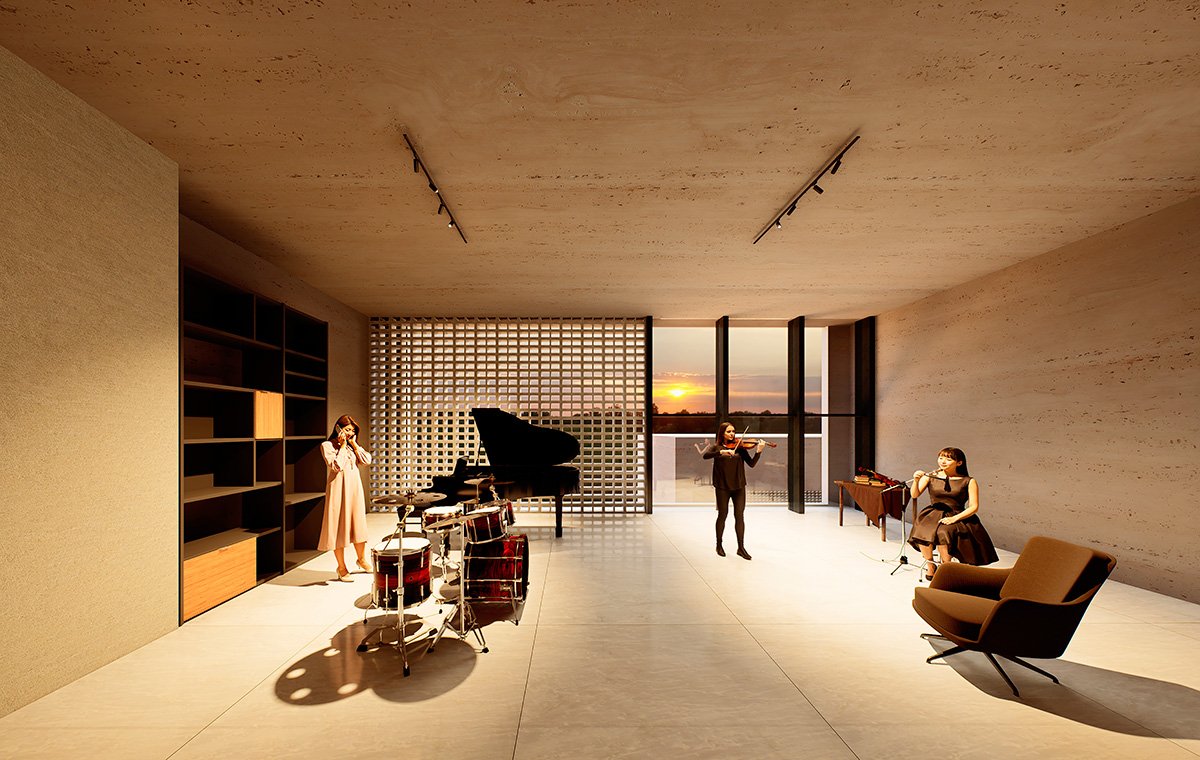
Isometric Spatial FragmentIsometric Fragment – StrategiesSectioned Isometric Fragment | Exploded Isometric View Of The ProjectCultural Module Visualization
Additionally, it encourages social interaction through accessible public spaces—such as galleries, contemplative gardens, and open-air theaters—that invite community participation. Sustainability is also a key focus, achieved through passive bioclimatic strategies that minimize environmental impact while enhancing indoor comfort.
360° Theater VisualizationVisualization Of The Temporary Exhibition HallLateral Modules Visualization
Conclusion: Ultimately, this project envisions the Fine Arts Building as a bridge between culture, nature, and community, where architecture supports ecological regeneration while encouraging artistic creation and social exchange within the park.
[This Academic Project has been published with text and images submitted by the student]
Site Context
Design Process
Final Outcome
To submit your academic project for publication at ArchiDiaries, please visit the following link >> Submit
Get the best of ArchiDiaries, directly in your inbox.
We use cookies on our website to give you the most relevant experience by remembering your preferences and repeat visits. By clicking “Accept All”, you consent to the use of ALL the cookies. However, you may visit "Cookie Settings" to provide a controlled consent.
This website uses cookies to improve your experience while you navigate through the website. Out of these, the cookies that are categorized as necessary are stored on your browser as they are essential for the working of basic functionalities of the website. We also use third-party cookies that help us analyze and understand how you use this website. These cookies will be stored in your browser only with your consent. You also have the option to opt-out of these cookies. But opting out of some of these cookies may affect your browsing experience.
Necessary cookies are absolutely essential for the website to function properly. These cookies ensure basic functionalities and security features of the website, anonymously.
Cookie
Duration
Description
cookielawinfo-checkbox-analytics
11 months
This cookie is set by GDPR Cookie Consent plugin. The cookie is used to store the user consent for the cookies in the category "Analytics".
cookielawinfo-checkbox-functional
11 months
The cookie is set by GDPR cookie consent to record the user consent for the cookies in the category "Functional".
cookielawinfo-checkbox-necessary
11 months
This cookie is set by GDPR Cookie Consent plugin. The cookies is used to store the user consent for the cookies in the category "Necessary".
cookielawinfo-checkbox-others
11 months
This cookie is set by GDPR Cookie Consent plugin. The cookie is used to store the user consent for the cookies in the category "Other.
cookielawinfo-checkbox-performance
11 months
This cookie is set by GDPR Cookie Consent plugin. The cookie is used to store the user consent for the cookies in the category "Performance".
viewed_cookie_policy
11 months
The cookie is set by the GDPR Cookie Consent plugin and is used to store whether or not user has consented to the use of cookies. It does not store any personal data.
Functional cookies help to perform certain functionalities like sharing the content of the website on social media platforms, collect feedbacks, and other third-party features.
Performance cookies are used to understand and analyze the key performance indexes of the website which helps in delivering a better user experience for the visitors.
Analytical cookies are used to understand how visitors interact with the website. These cookies help provide information on metrics the number of visitors, bounce rate, traffic source, etc.
Advertisement cookies are used to provide visitors with relevant ads and marketing campaigns. These cookies track visitors across websites and collect information to provide customized ads.