Excerpt: ‘Commons by the Park’ is a bachelor’s design project by Priya Smyth, Ella Caudle, and Joudy Kusaibati from the ‘School of Architecture – University of Waterloo.’ The project aims to establish a compact, mixed-use urban hub at the edge of the city by leveraging existing community networks and infrastructure. By transforming underused land near the RIM Park Manulife Centre, the project seeks to foster mutual aid, social connection, and everyday urban life through flexible public spaces, housing, and community-oriented programming.
Introduction: Commons by the Park is an urban block situated within the RIM Park complex at the northern edge of Waterloo, Ontario. The project investigates how an urban centre can be established at the city’s periphery by prioritizing strong connections to the surrounding community, including the neighboring RIM Park Manulife Centre. By cultivating reciprocal networks of mutual support, the development establishes a framework for social exchange and collective care.
These networks are reinforced through a series of modular outbuildings that organize and activate the central courtyard and surrounding public open spaces. Inspired by David Sim’s Soft City principles, the adaptable structures provide small-scale, community-oriented amenities such as bike parking, washrooms, pantries, and flexible gathering areas. Mutual aid and social interaction are further supported in the main buildings, which feature publicly accessible ground floors, active rooftop spaces, and residential uses above. Together, these elements are designed to facilitate both informal and planned encounters, fostering community across a range of scales and settings throughout the site.
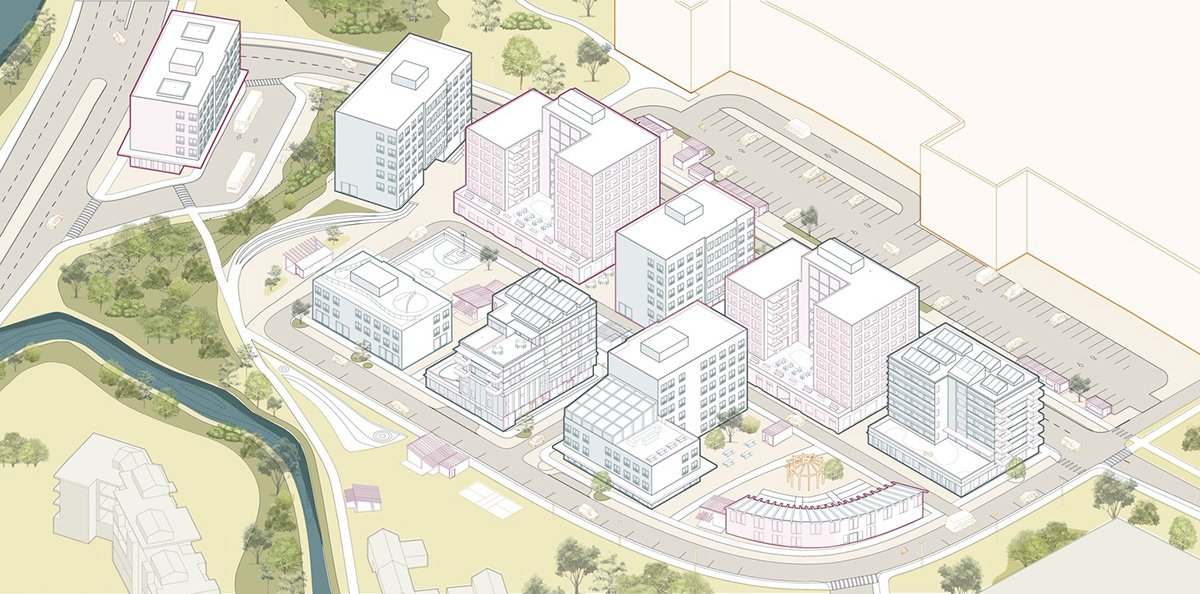
Axonometric showing the urban block in relation to RIM Park Manulife Centre, highlighting the public spaces and outbuildings throughout the site that follow their own design language.
The RIM Park Manulife Centre is a major recreation and sports destination that serves as a community landmark. However, its location at the edge of the city, surrounded by suburban development and agricultural land, limits its ability to act as a catalyst for broader urban growth. This proposed mixed-use development reclaims the parking lot south of the centre and transforms it into a vibrant urban block that introduces housing alongside community-oriented programs, including a maker space, daycare, language learning centre, retail spaces, and a community centre.
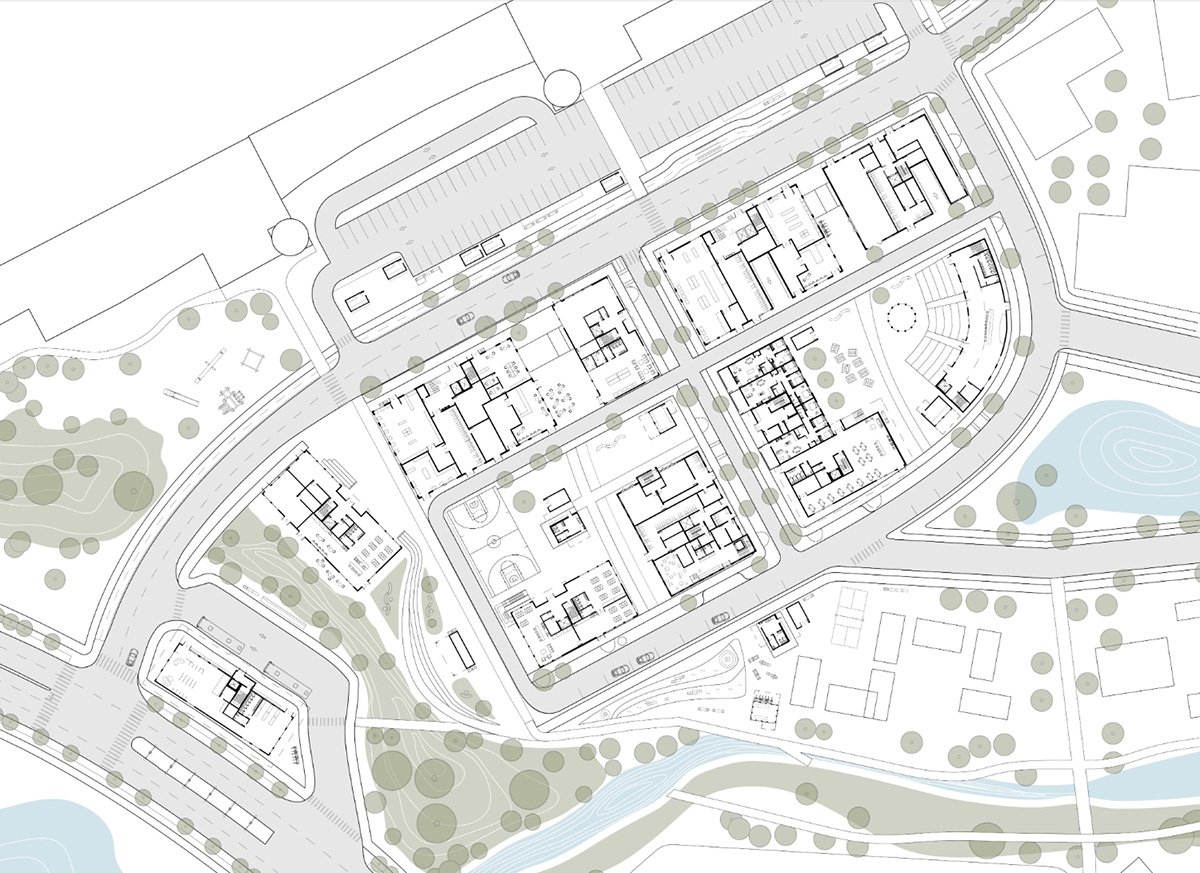
This ground floor plan shows the varied entrances that lead to enclosed public spaces that have the flexibility to be self-contained and activated by the community while serving as a gateway in dialogue with RIM Park.
The project also seeks to strengthen connections between the site, the surrounding community, and RIM Park through the introduction of a transit hub that promotes public transportation and better integrates the development into its context. These connections are further reinforced through the incorporation of green space within the block and the extension of the existing trail network. To engage visitors to RIM Park, elements of play and recreation are embedded throughout communal spaces, including a basketball court, a rooftop playground, and a splash pad located adjacent to the existing creek.
Design Process
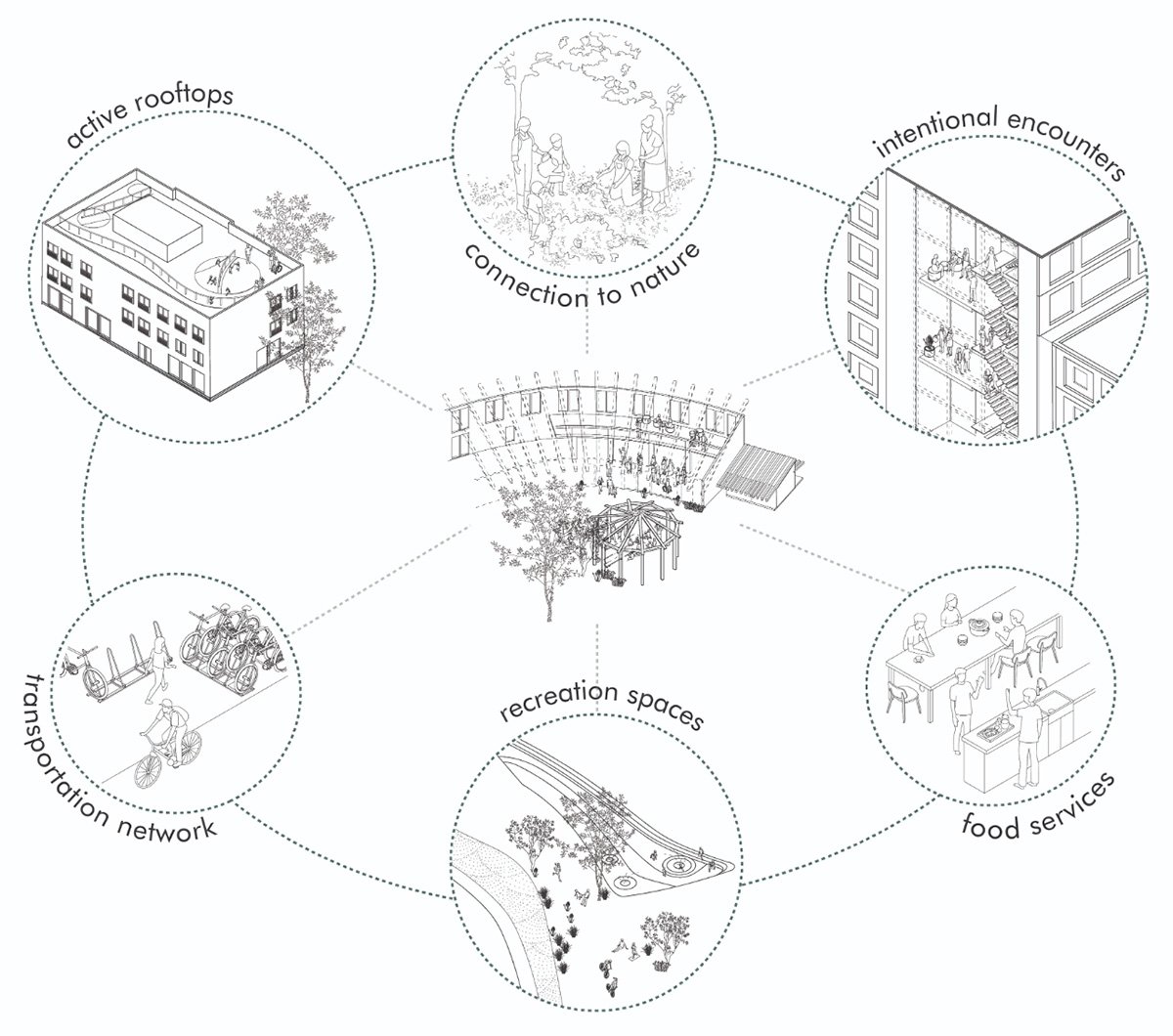
Mutual Aid Diagram: Through the analysis of existing mutual aid networks, we devised several strategies to implement these networks into the urban blocks; programmatic elements such as food and transportation services, as well as more abstract strategies, like unintentional encounters drove the design of built form and public space.
The design process began with an exploration of mutual aid networks operating at a regional scale within the Waterloo region. This research informed a series of design investigations that explored how existing urban infrastructure in and around the site could be leveraged to connect with these networks at an urban scale.
A cohort of fourteen students was assigned a ninety-two hectare site encompassing the areas surrounding RIM Park. A comprehensive analysis of the site was undertaken, including its ecological systems, demographic conditions, zoning frameworks, and transportation networks. The larger site was then subdivided into smaller urban blocks, which were further developed in smaller groups.
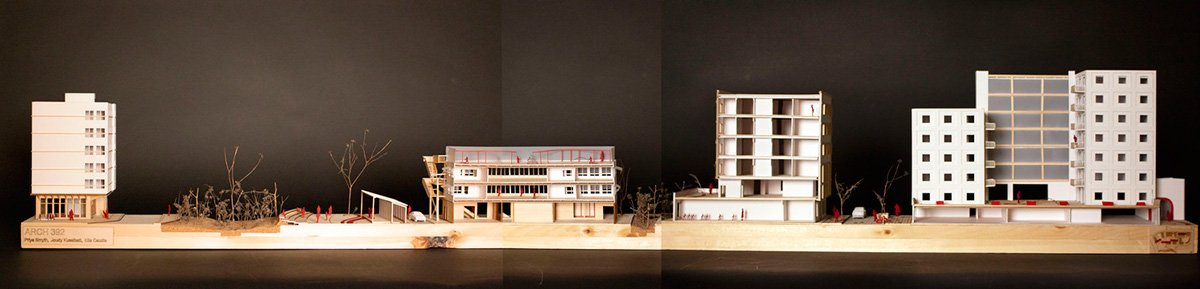
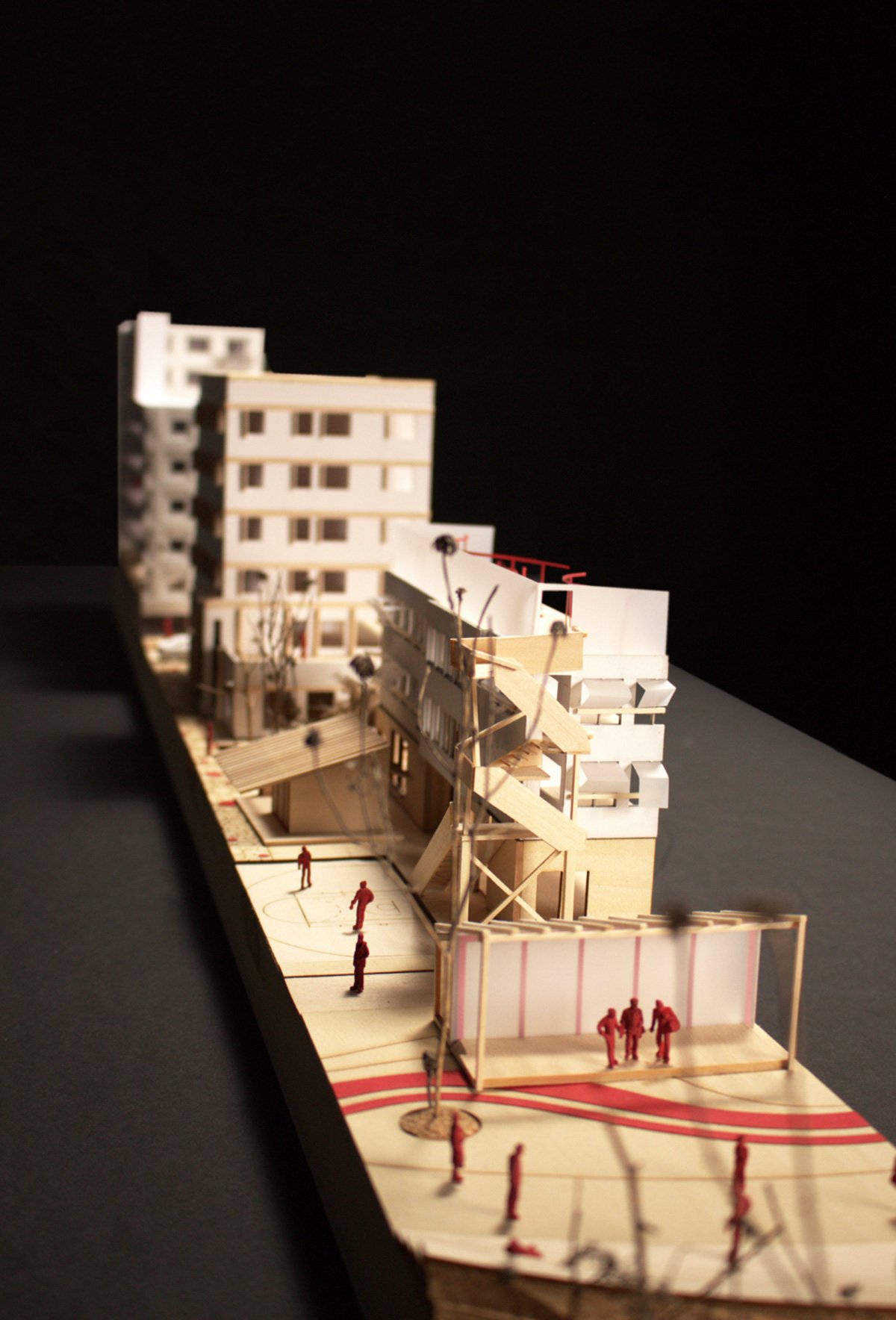
Sectional Model at 1:100 Scale
Through the production of large-scale sketches, the design team prioritized patterns of entry, movement, and circulation, ensuring the urban block functioned as a key point of connectivity within the broader site while remaining a comfortable and livable environment for residents, workers, and visitors.
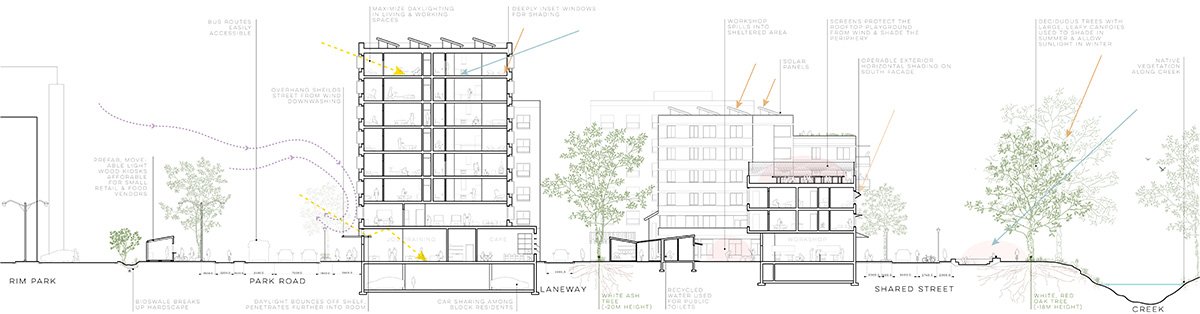
The process then shifted to an investigation of sectional relationships across the site in order to buffer it from adjacent roadways and to strategically position buildings that would generate favorable microclimates within key gathering spaces. These relationships were explored through a series of east-to-west sectional drawings and the construction of a sectional model.
Final Outcome
Section showing passive shading and lighting strategies and various street conditions.Section showing green space throughout the project and strategies to protect public space from excessive wind and noise.
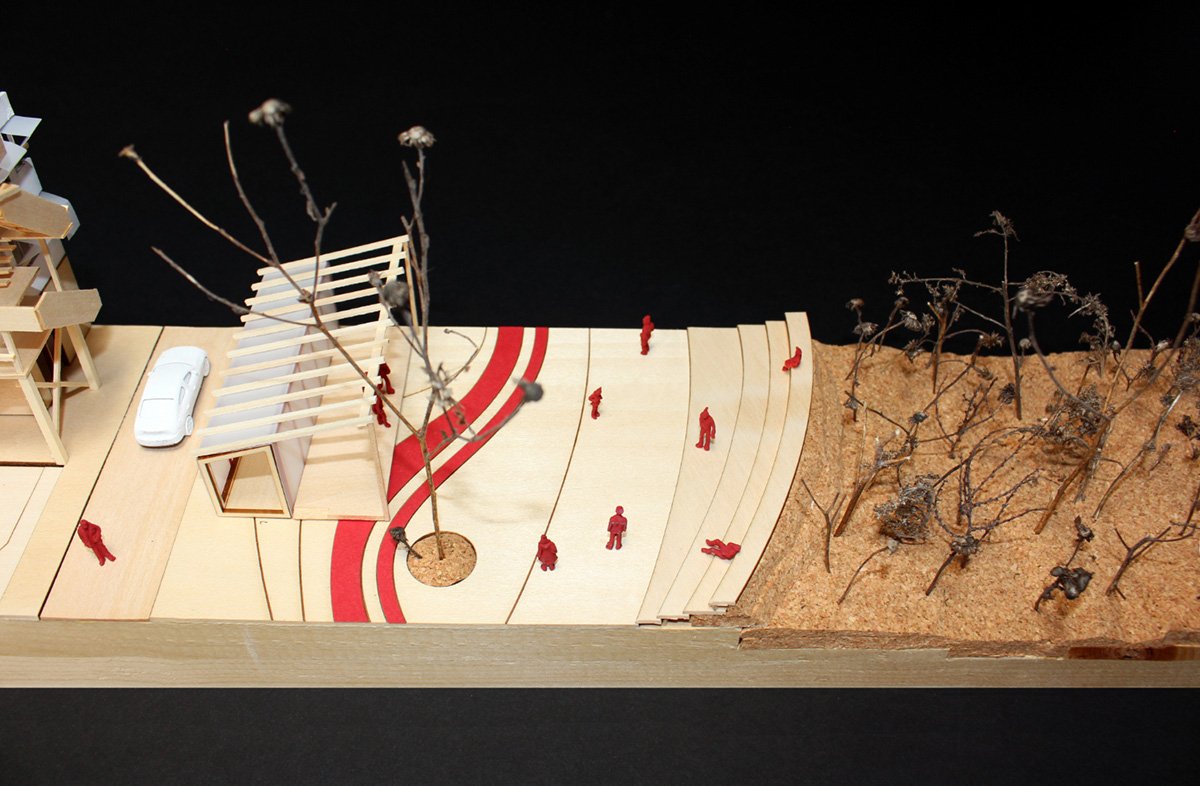
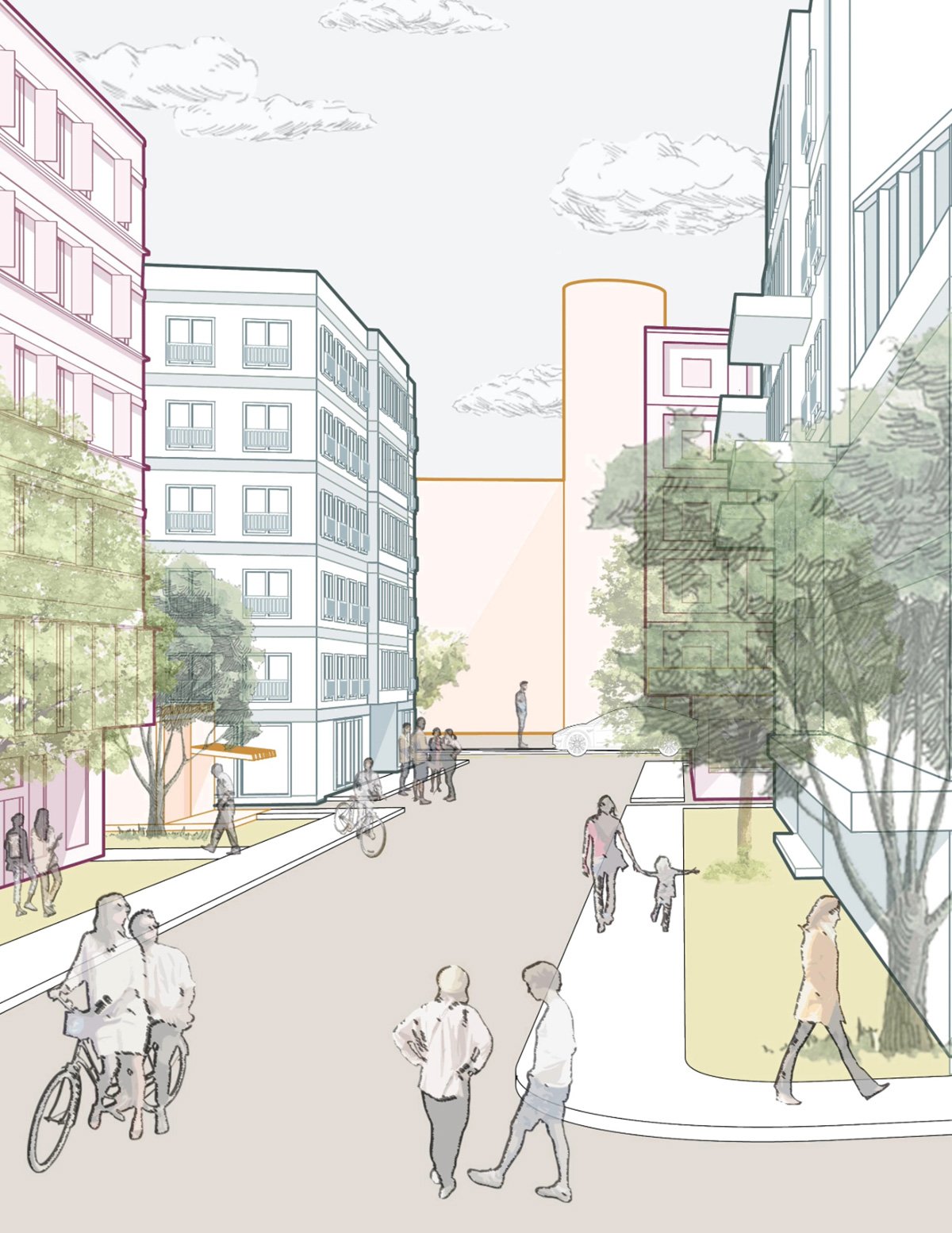
The final proposal introduces a compact urban block composed of multiple mixed-use building typologies that are closely integrated with landscape elements across a network of courtyards and public spaces. The landscape strategy incorporates a small performance stage, outdoor seating, and carefully placed planting to support gathering and social activity, while maintaining an ongoing dialogue with the RIM Park Manulife Centre and the surrounding nature conservation area.
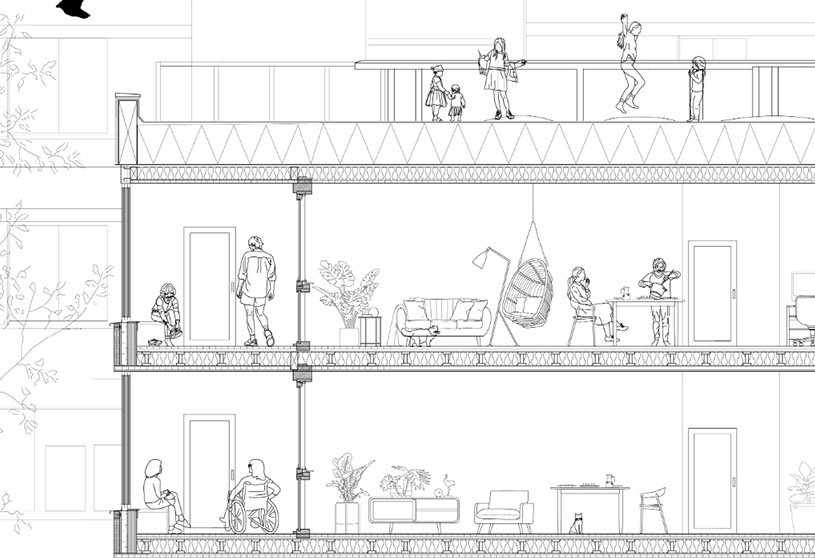
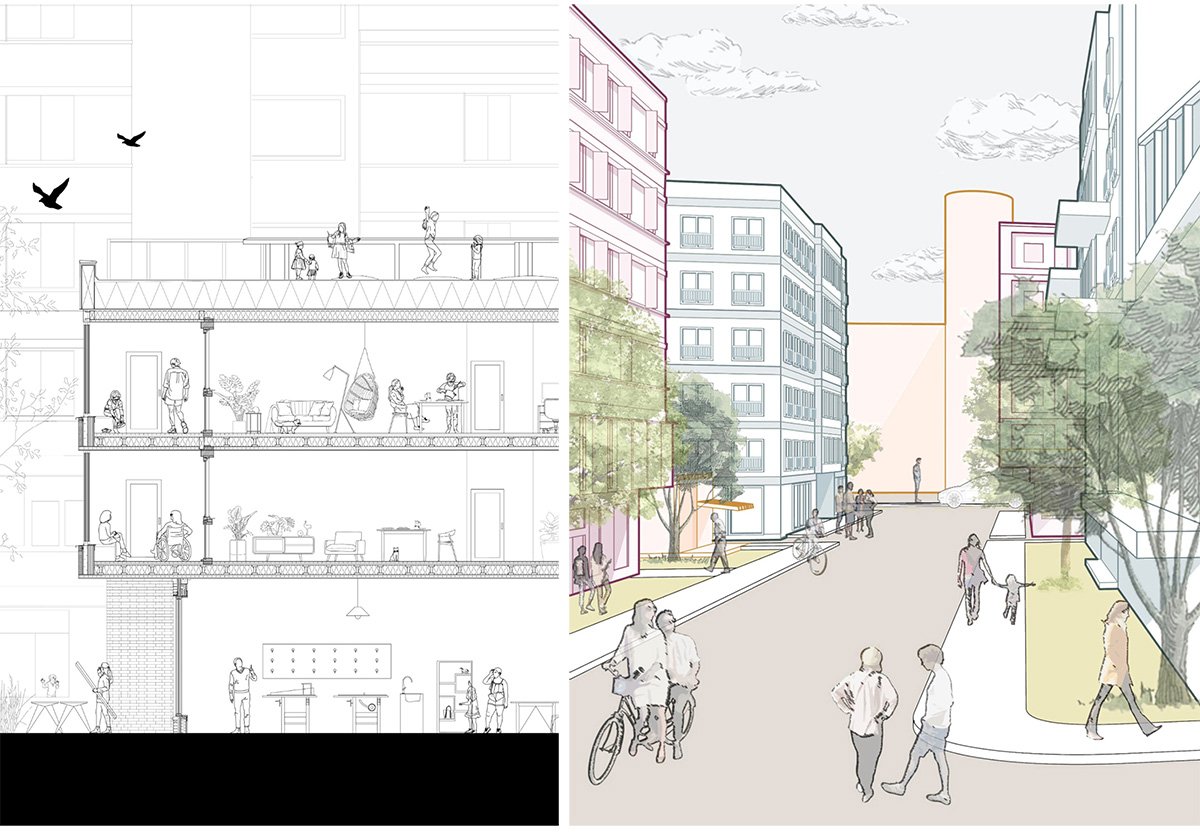
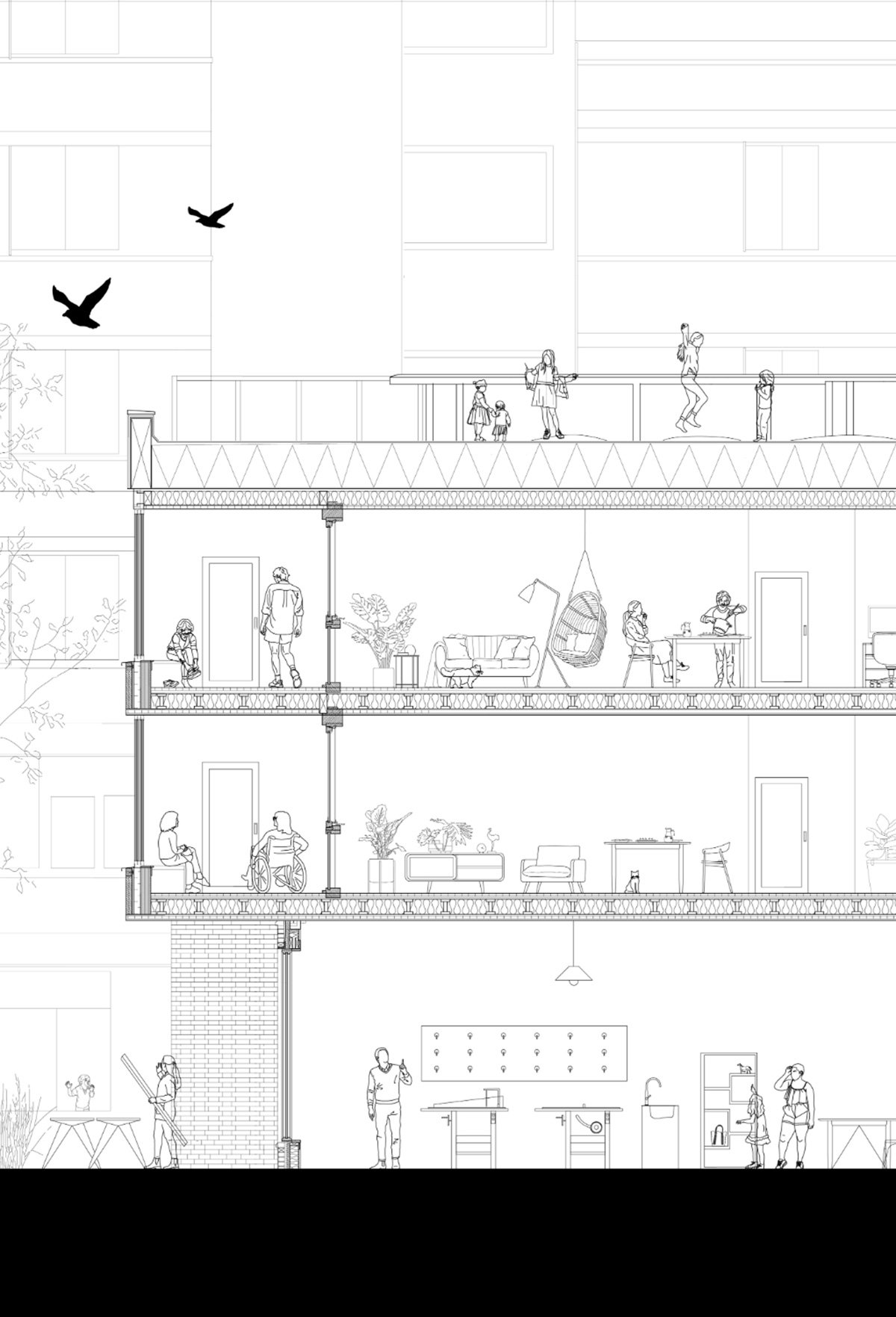
Detailed section showing the materiality and usage of a mid-rise, mixed-use building, showcasing the active roof and the ground floor dedicated to community programming | Collage showing the view of RIM Park Manulife Centre from the new urban blockPhysical Model
A deliberate balance between programmed and unprogrammed spaces, supported by flexible outbuilding amenities, provides the community with adaptability. This approach accommodates both large-scale community events and informal, everyday interactions.
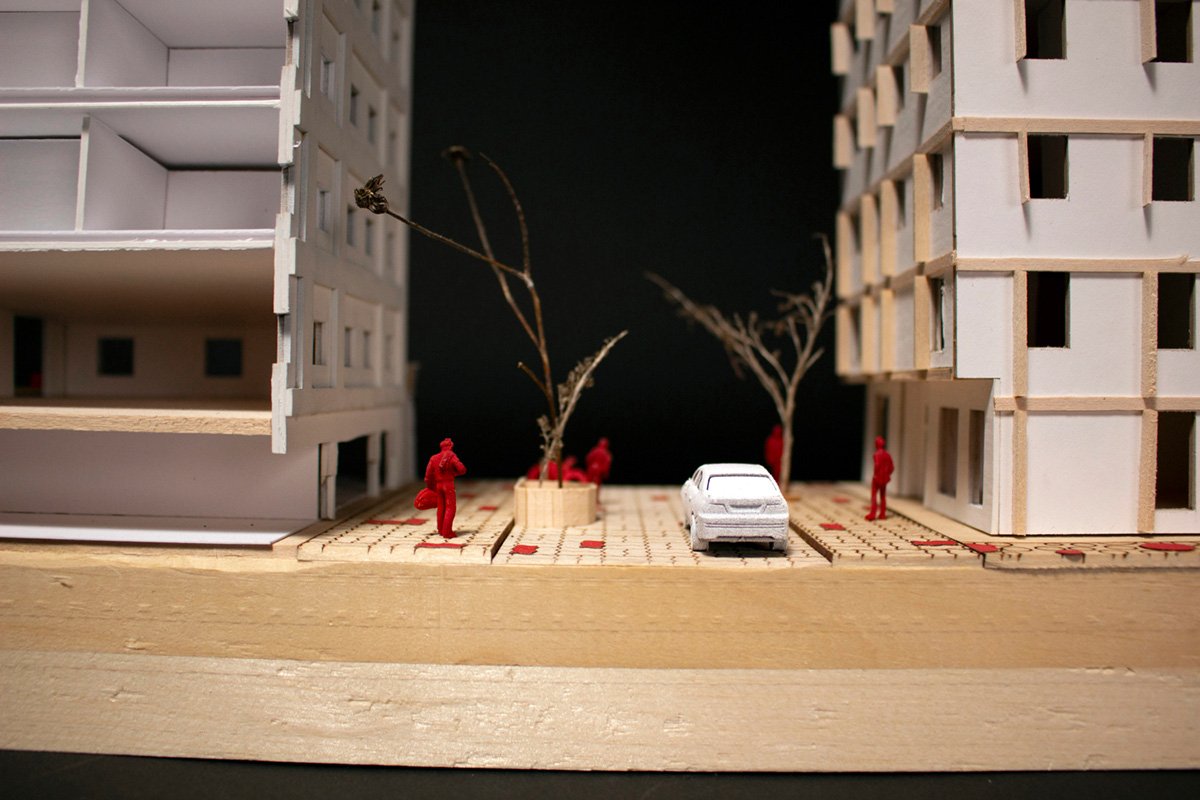
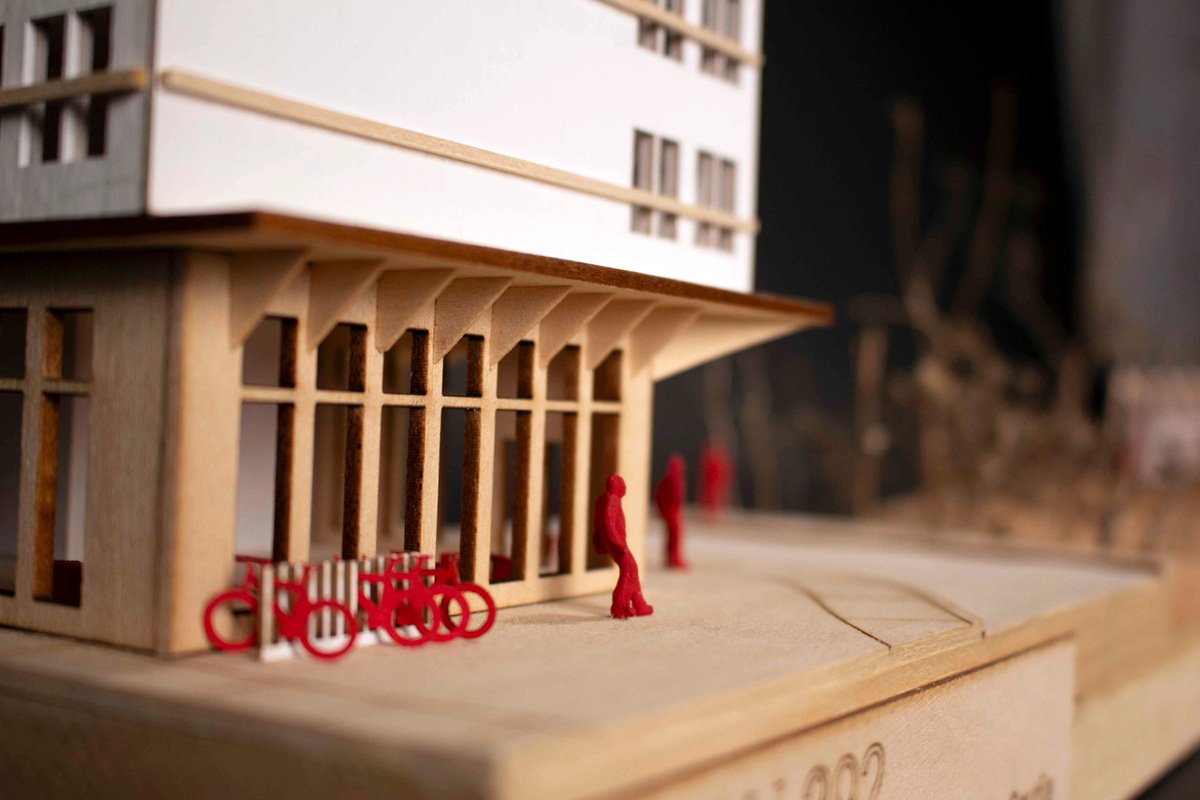
Physical ModelPhysical Model
Conclusion: By establishing a new urban hub grounded in existing community connections and networks, the project reconsiders conventional notions of urbanity and demonstrates how meaningful community life can be cultivated at the edge of the city.
[This Academic Project has been published with text and images submitted by the student]
Site Context
Design Process
Final Outcome
To submit your academic project for publication at ArchiDiaries, please visit the following link >> Submit
Get the best of ArchiDiaries, directly in your inbox.
We use cookies on our website to give you the most relevant experience by remembering your preferences and repeat visits. By clicking “Accept All”, you consent to the use of ALL the cookies. However, you may visit "Cookie Settings" to provide a controlled consent.
This website uses cookies to improve your experience while you navigate through the website. Out of these, the cookies that are categorized as necessary are stored on your browser as they are essential for the working of basic functionalities of the website. We also use third-party cookies that help us analyze and understand how you use this website. These cookies will be stored in your browser only with your consent. You also have the option to opt-out of these cookies. But opting out of some of these cookies may affect your browsing experience.
Necessary cookies are absolutely essential for the website to function properly. These cookies ensure basic functionalities and security features of the website, anonymously.
Cookie
Duration
Description
cookielawinfo-checkbox-analytics
11 months
This cookie is set by GDPR Cookie Consent plugin. The cookie is used to store the user consent for the cookies in the category "Analytics".
cookielawinfo-checkbox-functional
11 months
The cookie is set by GDPR cookie consent to record the user consent for the cookies in the category "Functional".
cookielawinfo-checkbox-necessary
11 months
This cookie is set by GDPR Cookie Consent plugin. The cookies is used to store the user consent for the cookies in the category "Necessary".
cookielawinfo-checkbox-others
11 months
This cookie is set by GDPR Cookie Consent plugin. The cookie is used to store the user consent for the cookies in the category "Other.
cookielawinfo-checkbox-performance
11 months
This cookie is set by GDPR Cookie Consent plugin. The cookie is used to store the user consent for the cookies in the category "Performance".
viewed_cookie_policy
11 months
The cookie is set by the GDPR Cookie Consent plugin and is used to store whether or not user has consented to the use of cookies. It does not store any personal data.
Functional cookies help to perform certain functionalities like sharing the content of the website on social media platforms, collect feedbacks, and other third-party features.
Performance cookies are used to understand and analyze the key performance indexes of the website which helps in delivering a better user experience for the visitors.
Analytical cookies are used to understand how visitors interact with the website. These cookies help provide information on metrics the number of visitors, bounce rate, traffic source, etc.
Advertisement cookies are used to provide visitors with relevant ads and marketing campaigns. These cookies track visitors across websites and collect information to provide customized ads.

![Factory[n]Certainty: Redefining Industrial Architecture Through Work, Life, and Community | Bachelors Design Thesis](https://archidiaries.com/wp-content/uploads/2026/09/Siam-Rahman_APR_feat_img.jpg)
