Excerpt: ‘Shelled Audiokinesis’ is a Bachelor’s Design Project by Esin Ilay San form the ‘Pratt Institute School of Architecture.’ The project aims to create a place of solace within an industrial landscape by reframing how sound and space are experienced. Through architectural manipulation of enclosure, material, and natural forces, the design filters industrial noise while amplifying natural sound, allowing nature and architecture to collaboratively shape a sensory, contemplative environment that challenges boundaries between the built and natural realms.
Introduction: The design prompts a place of solace and respite in the path of Newtown’s Creek, a heavily industrialized tributary, through an auditory observatory. The program is facilitated through a manipulation of sensory experience—an interplay of sound deprivation and amplification through the ambiguity of spatial enclosure.
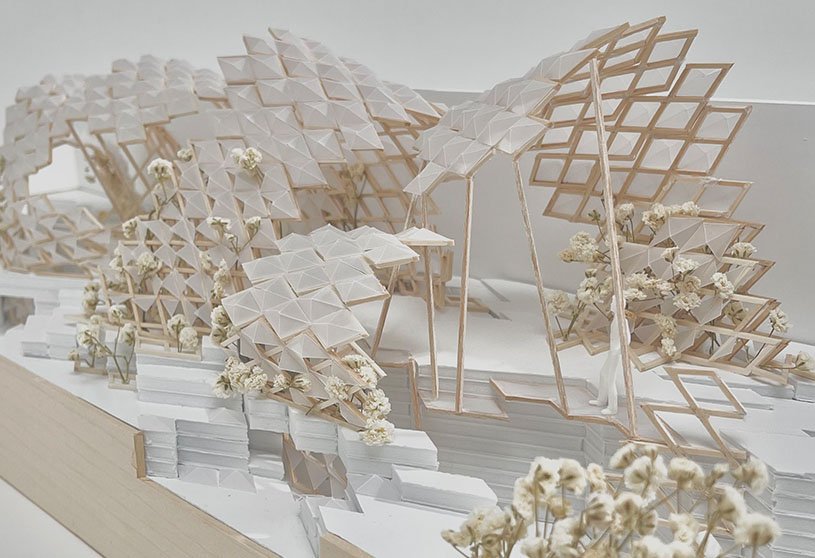
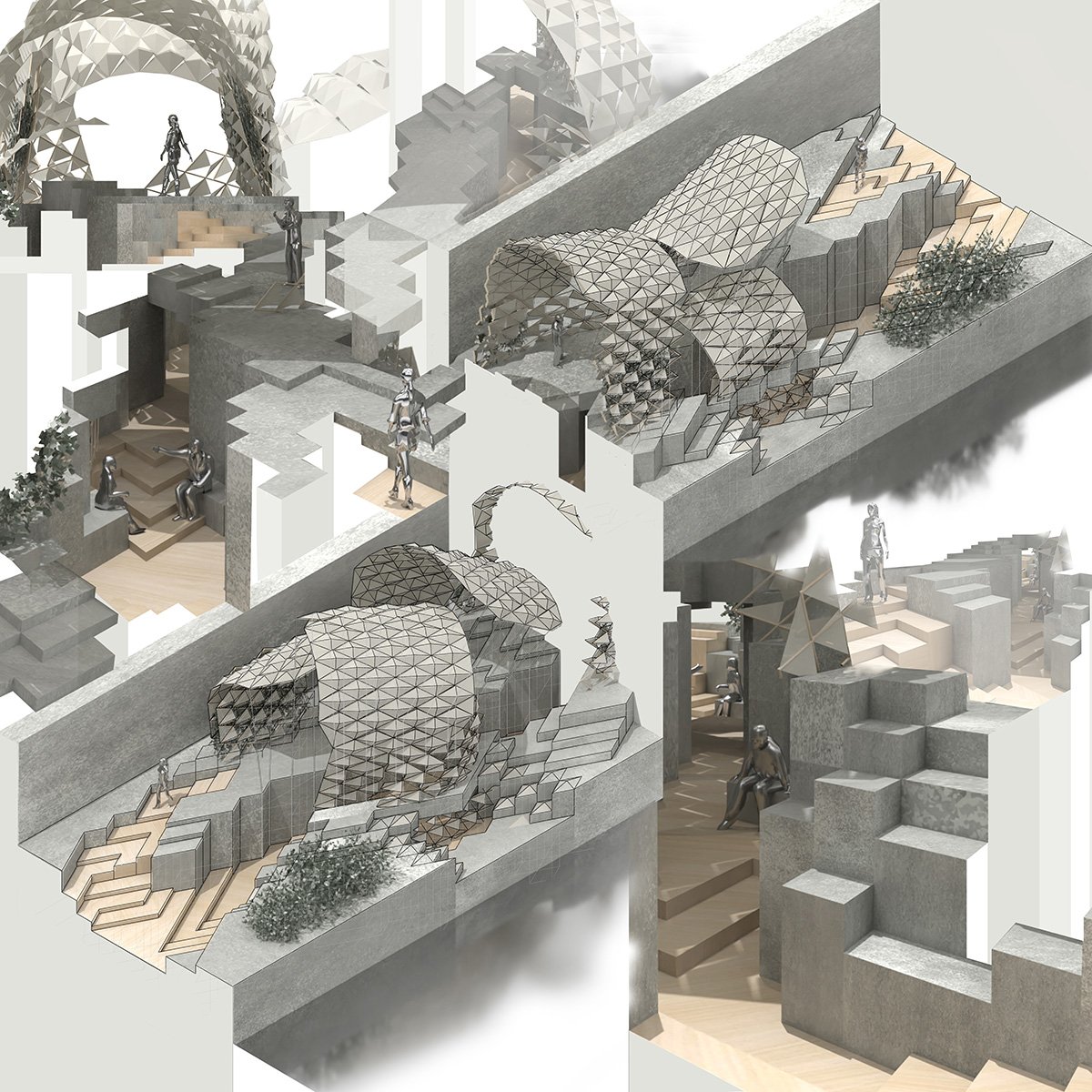
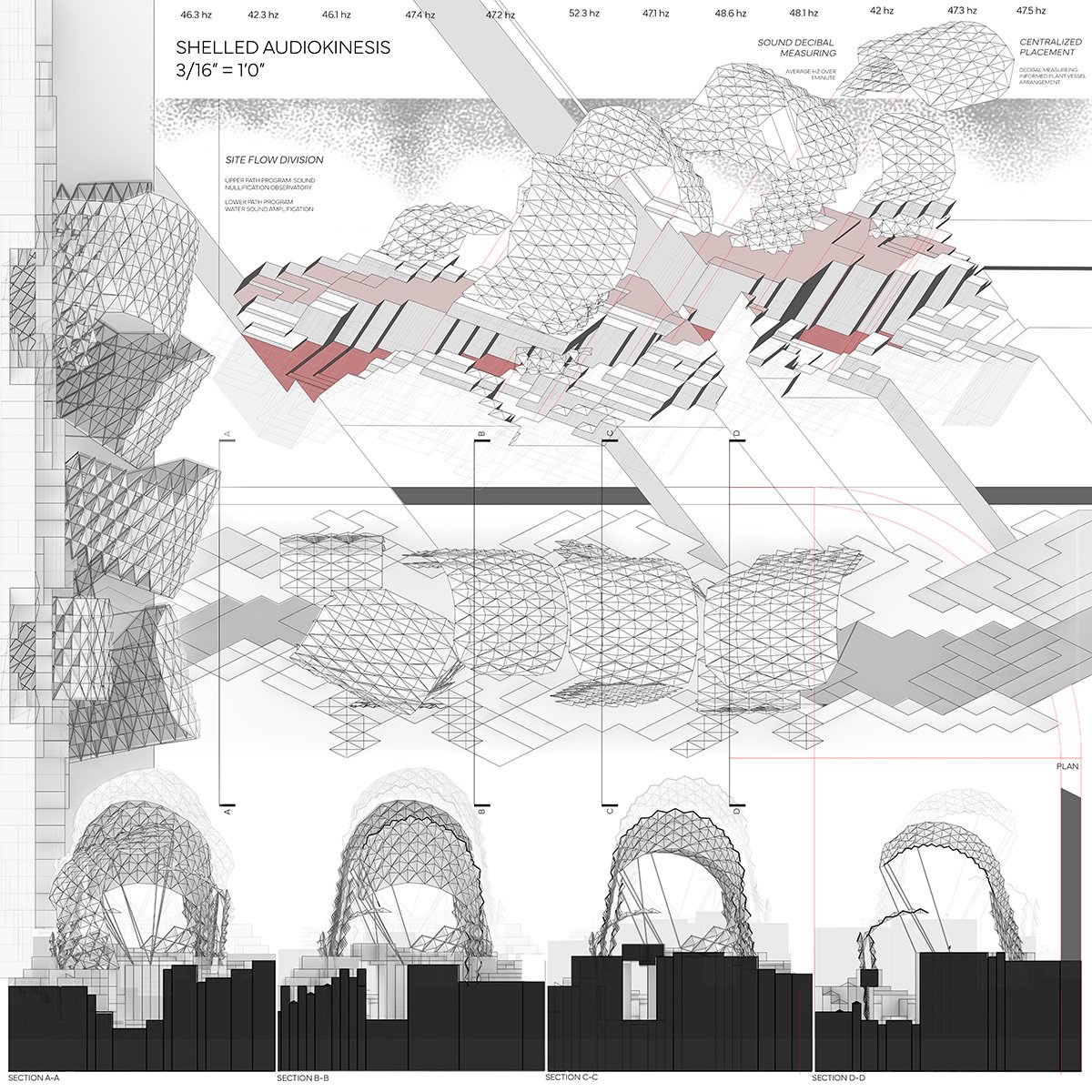
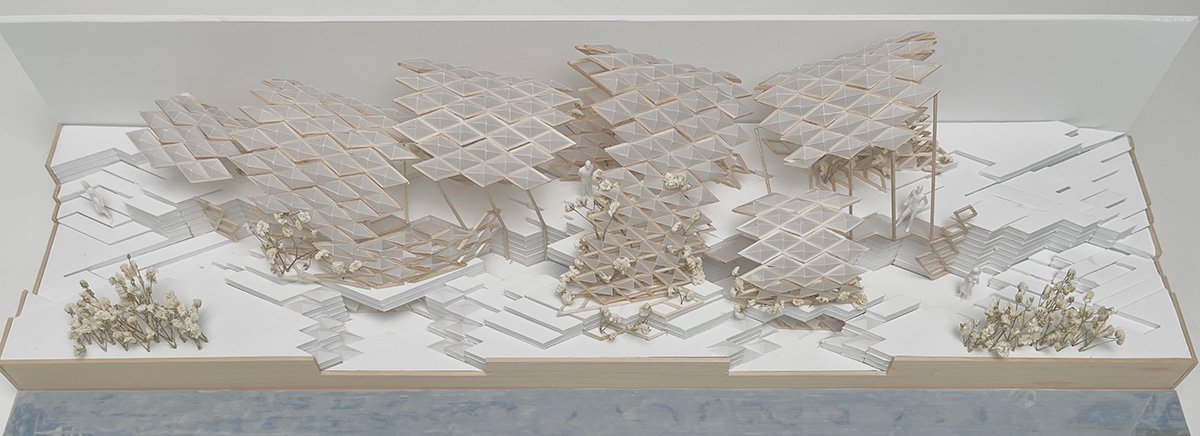
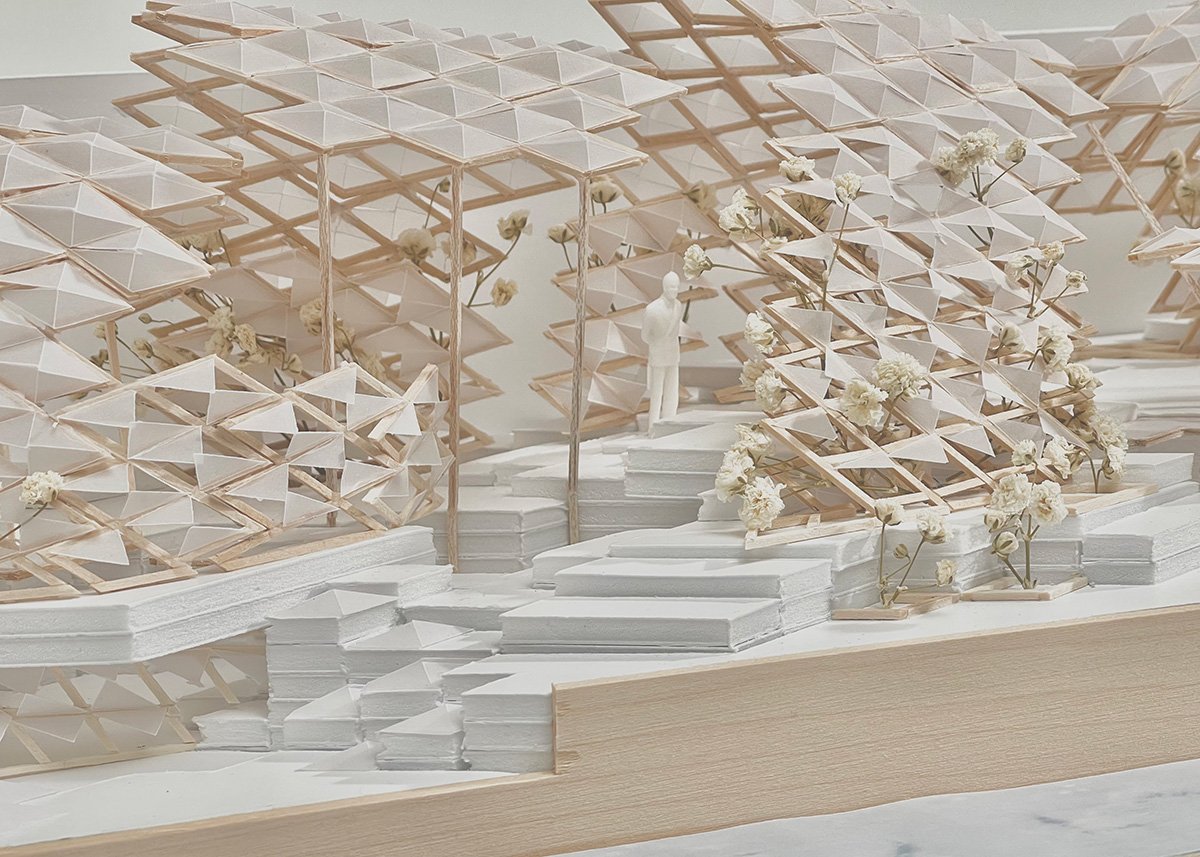
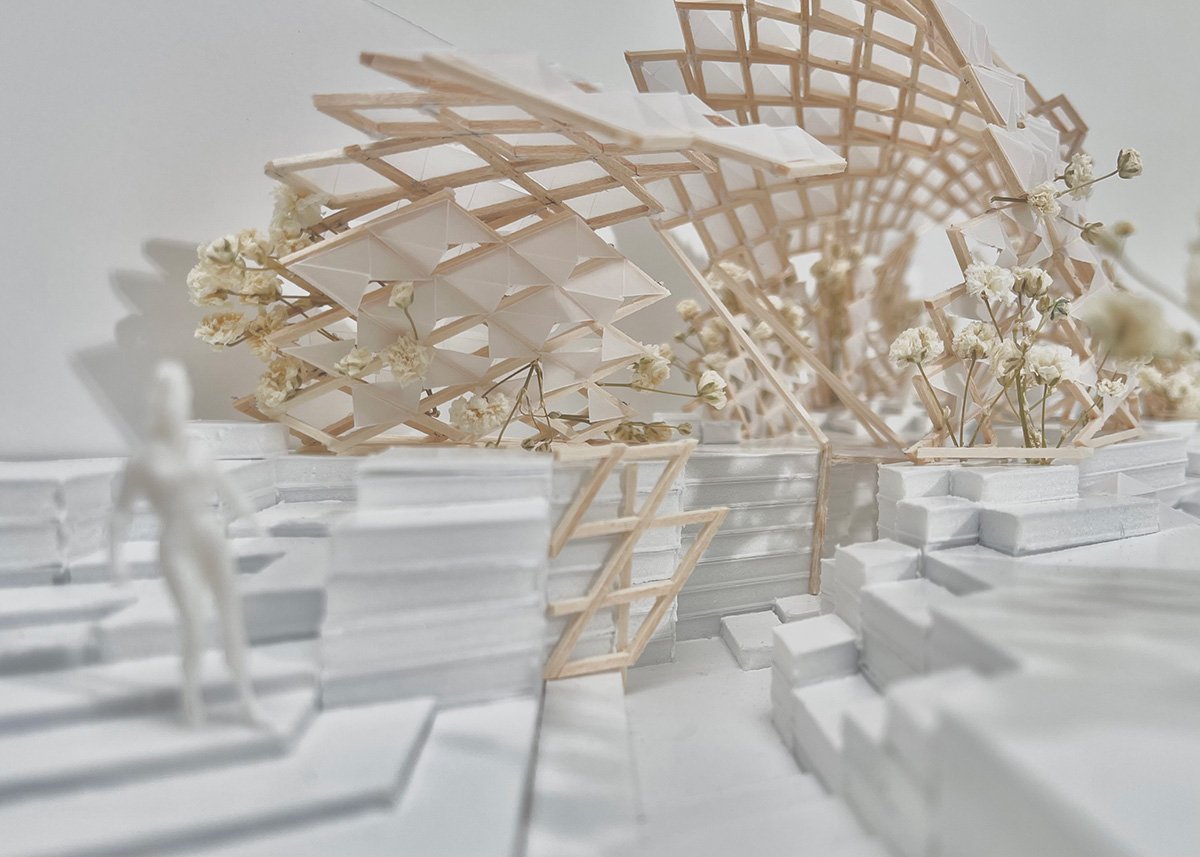
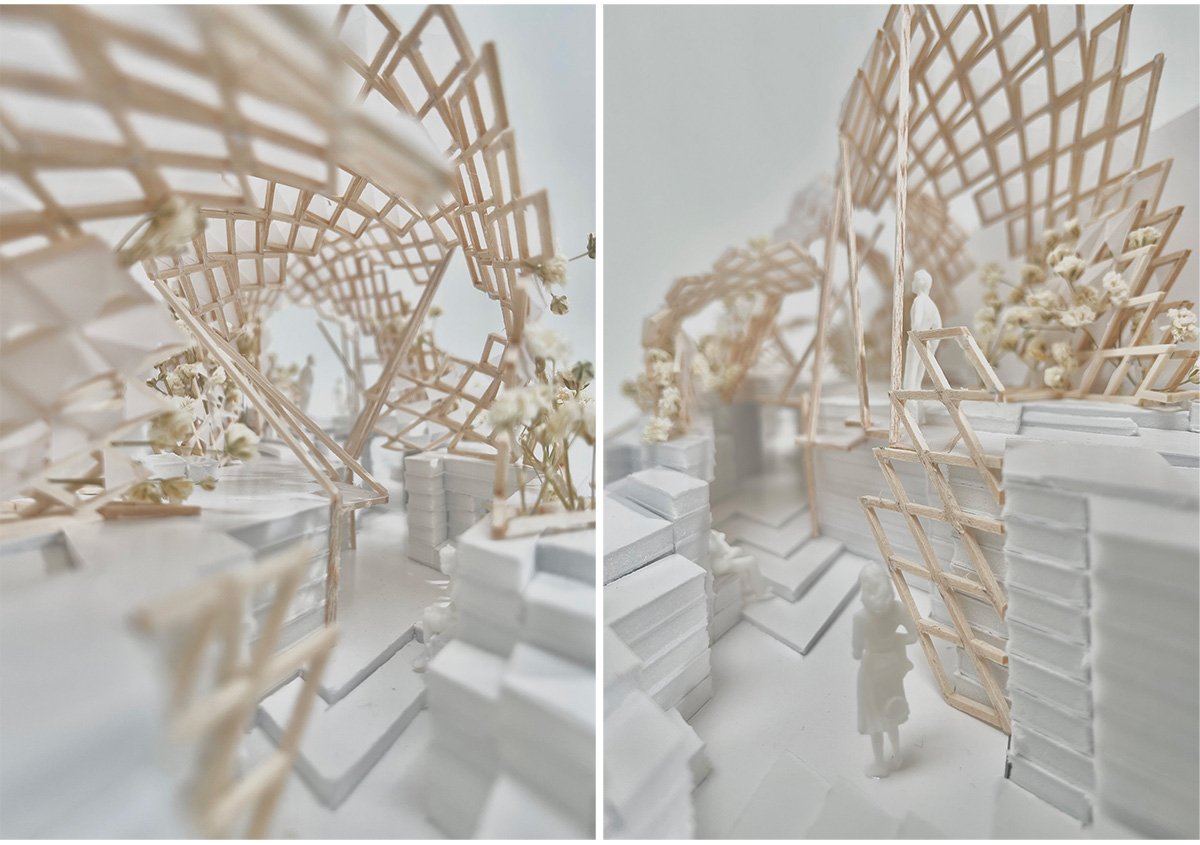
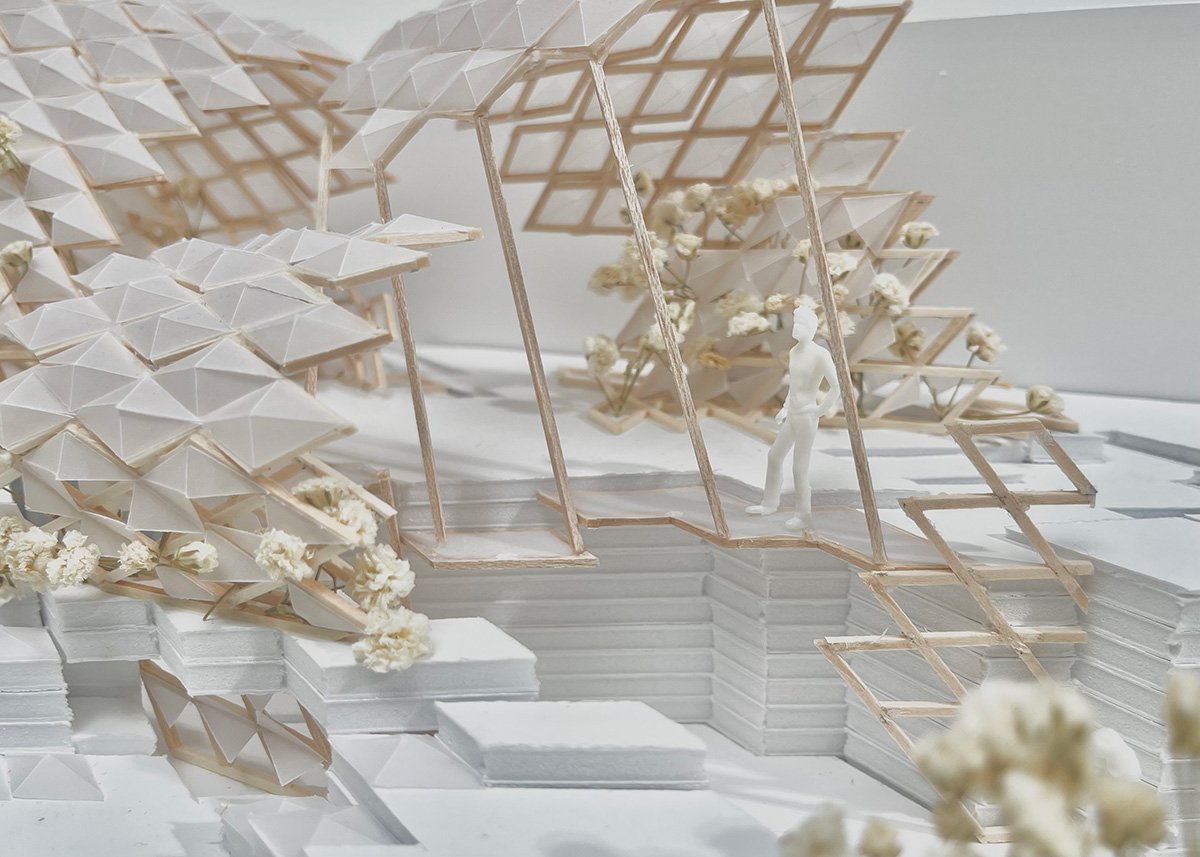
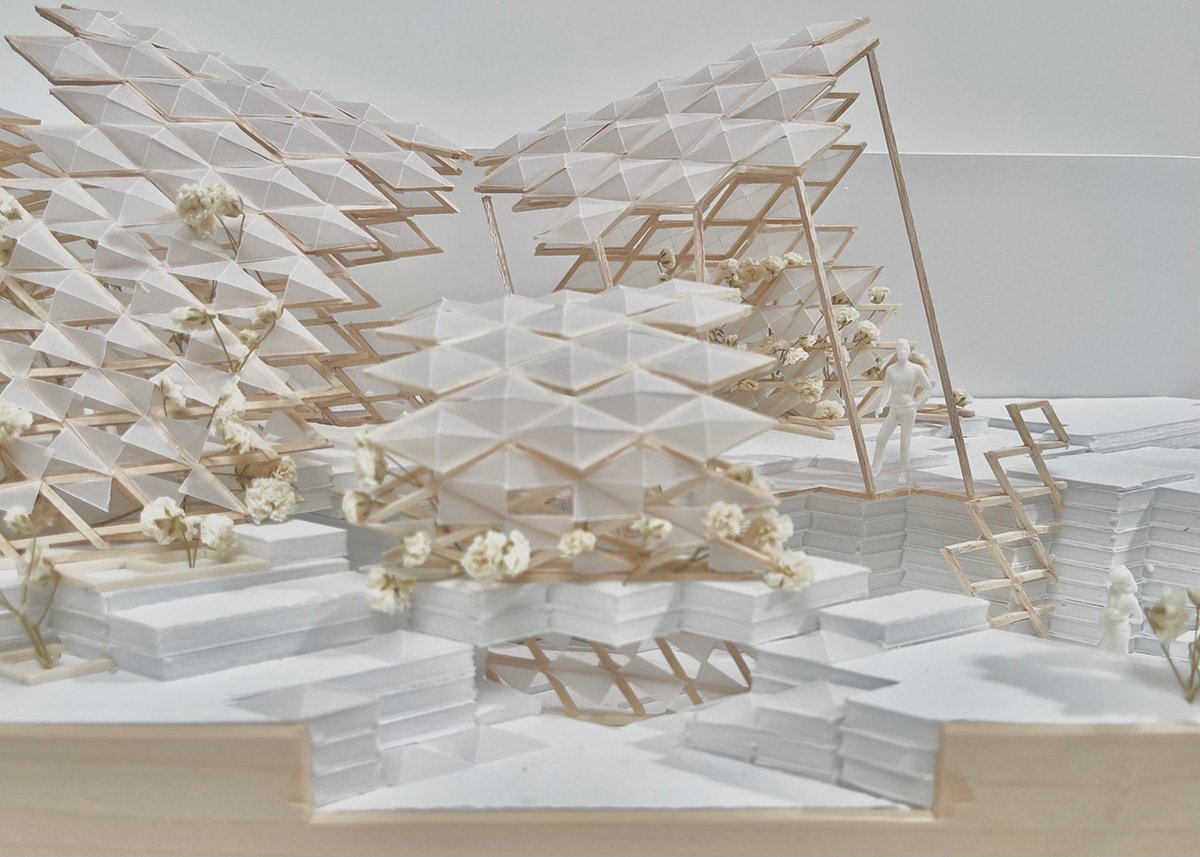
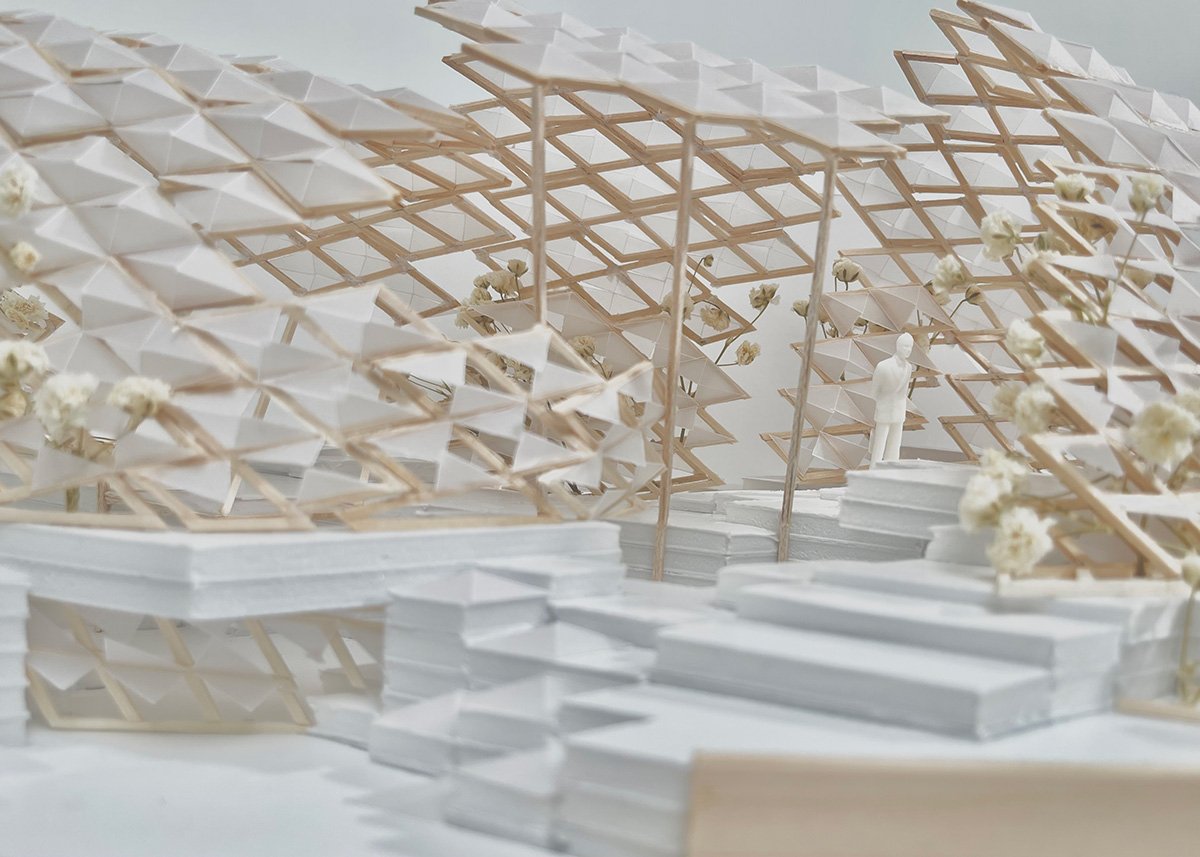
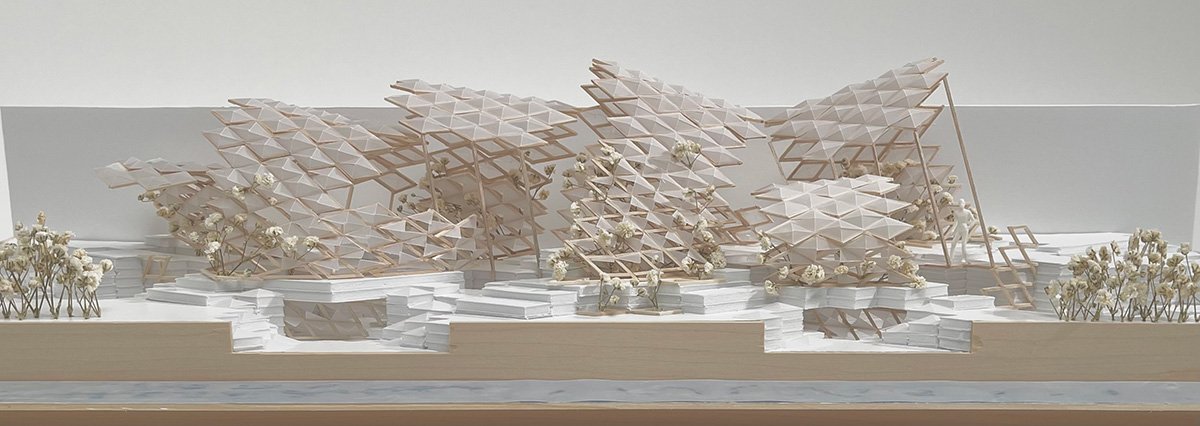
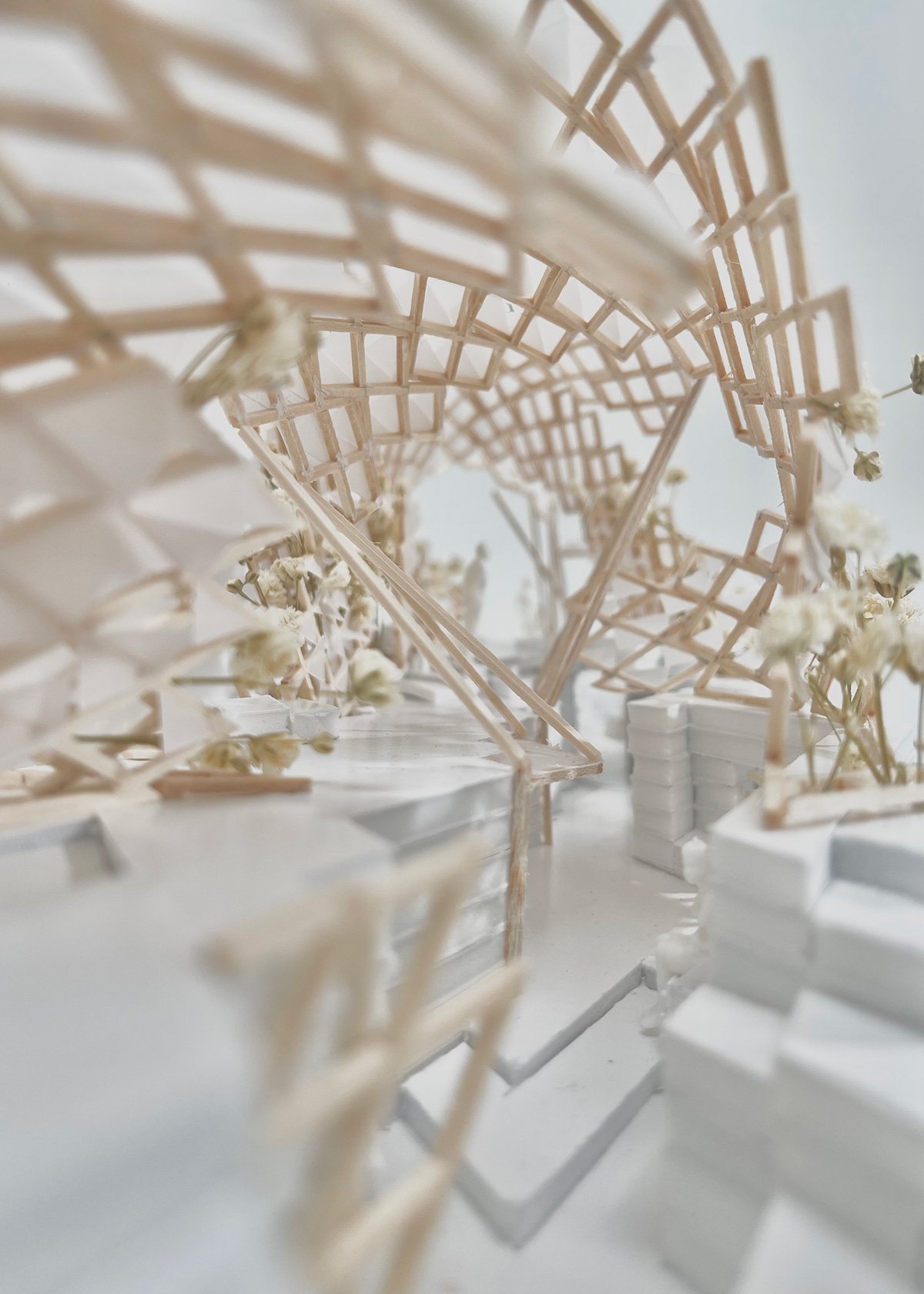
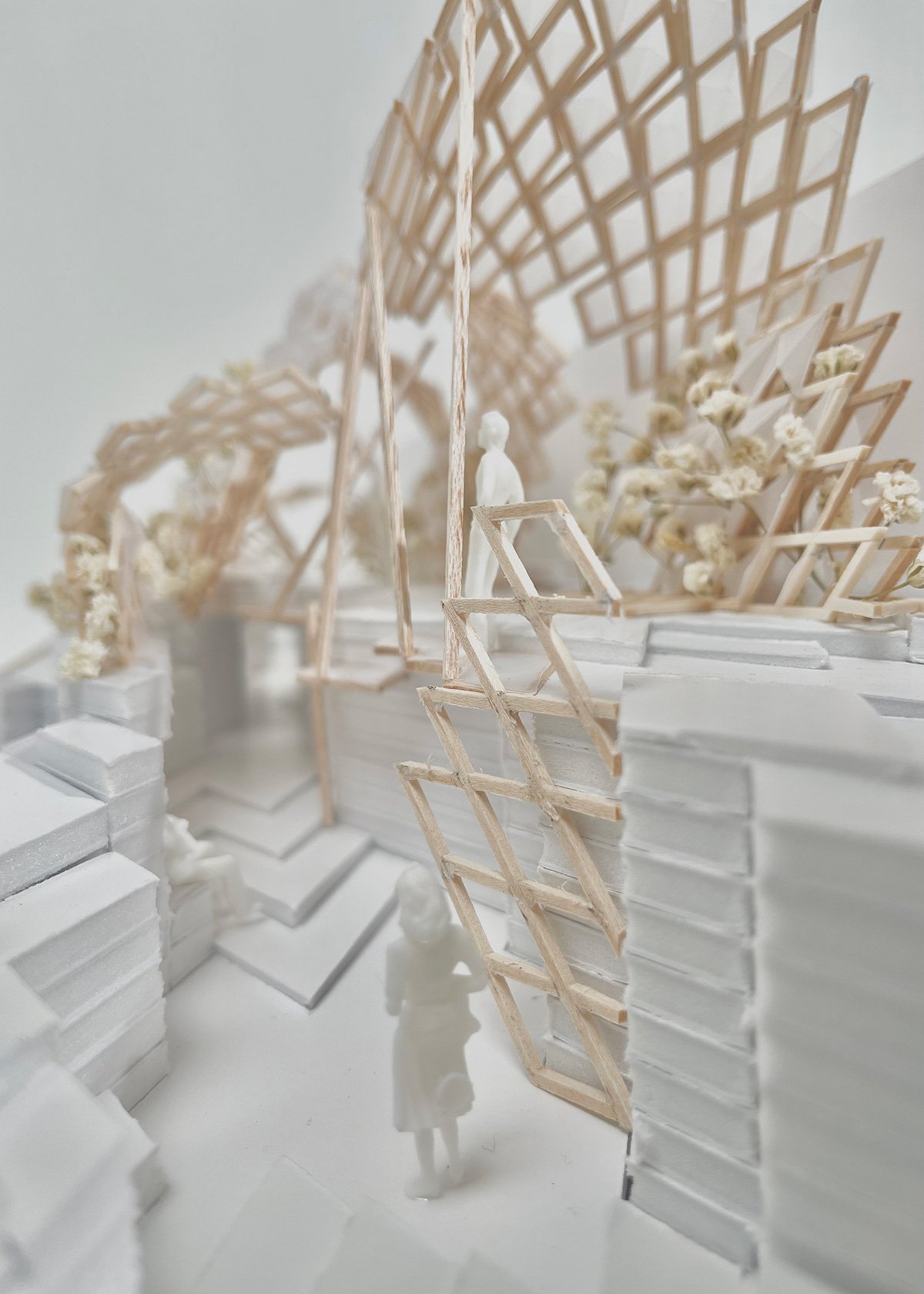
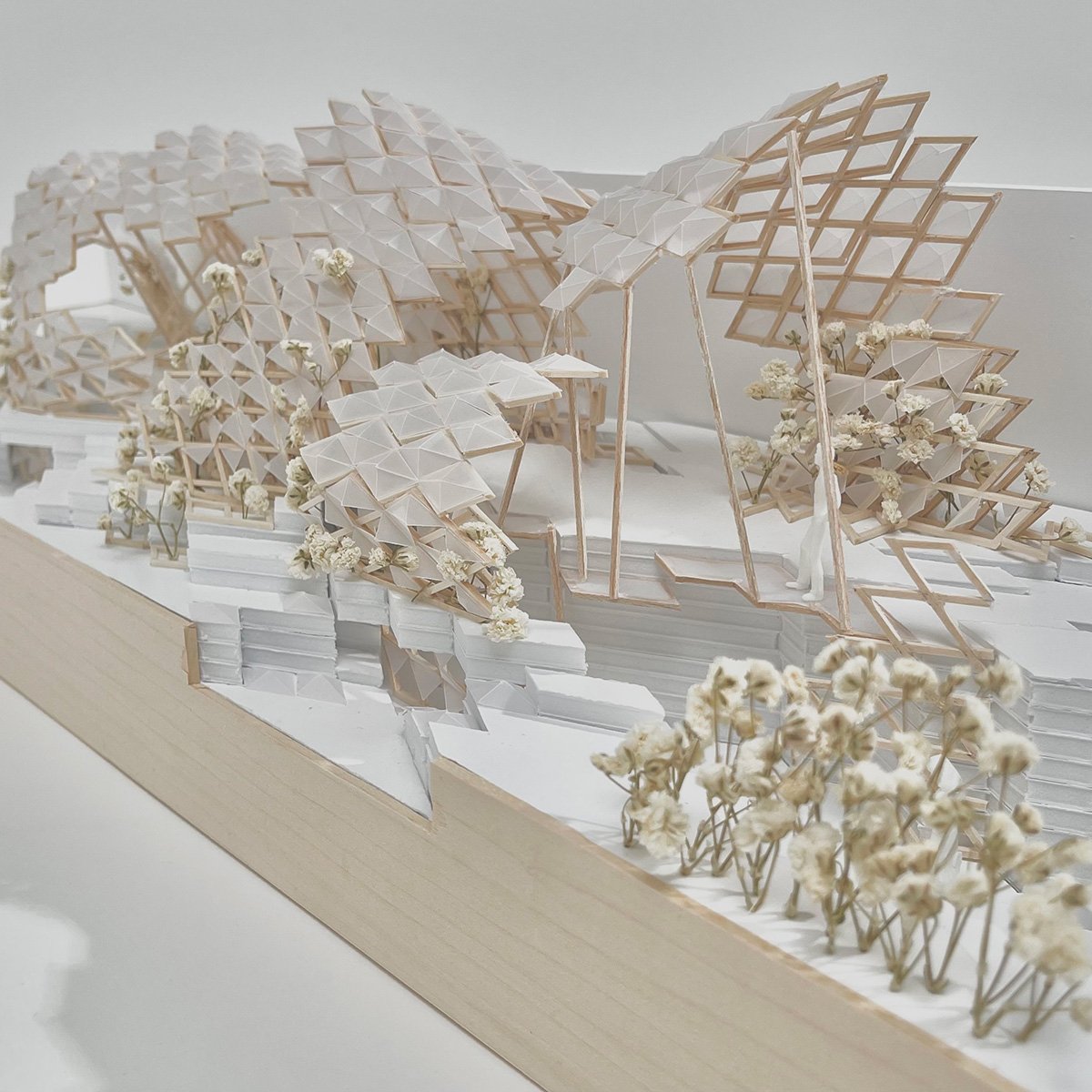
Arched shells stagger and layer to create a channel of silent observation. Their walls host dense plant life, an insulative buffer to incoming sound. The systematic slits in the hinged panels allow natural wind flow, preventing shuttering. The convex exterior of the roof modules bounces off industrial sound, while their concave interior contains the sound generated within the architectural space. This further asserts the premise of limiting industrial sounds while emphasizing natural sounds, allowing architecture to define the natural experience.
The site is carved lower into a path of partial enclosures. In two pockets, the shelled panels break into the lowered ground, allowing sound from the creek to enter this auditory canal while continuing to nullify industrial sound. The permeation of this natural force into the soundscape of the design breaks the boundaries between the architecture and nature, allowing natural forces to design the architectural experience.
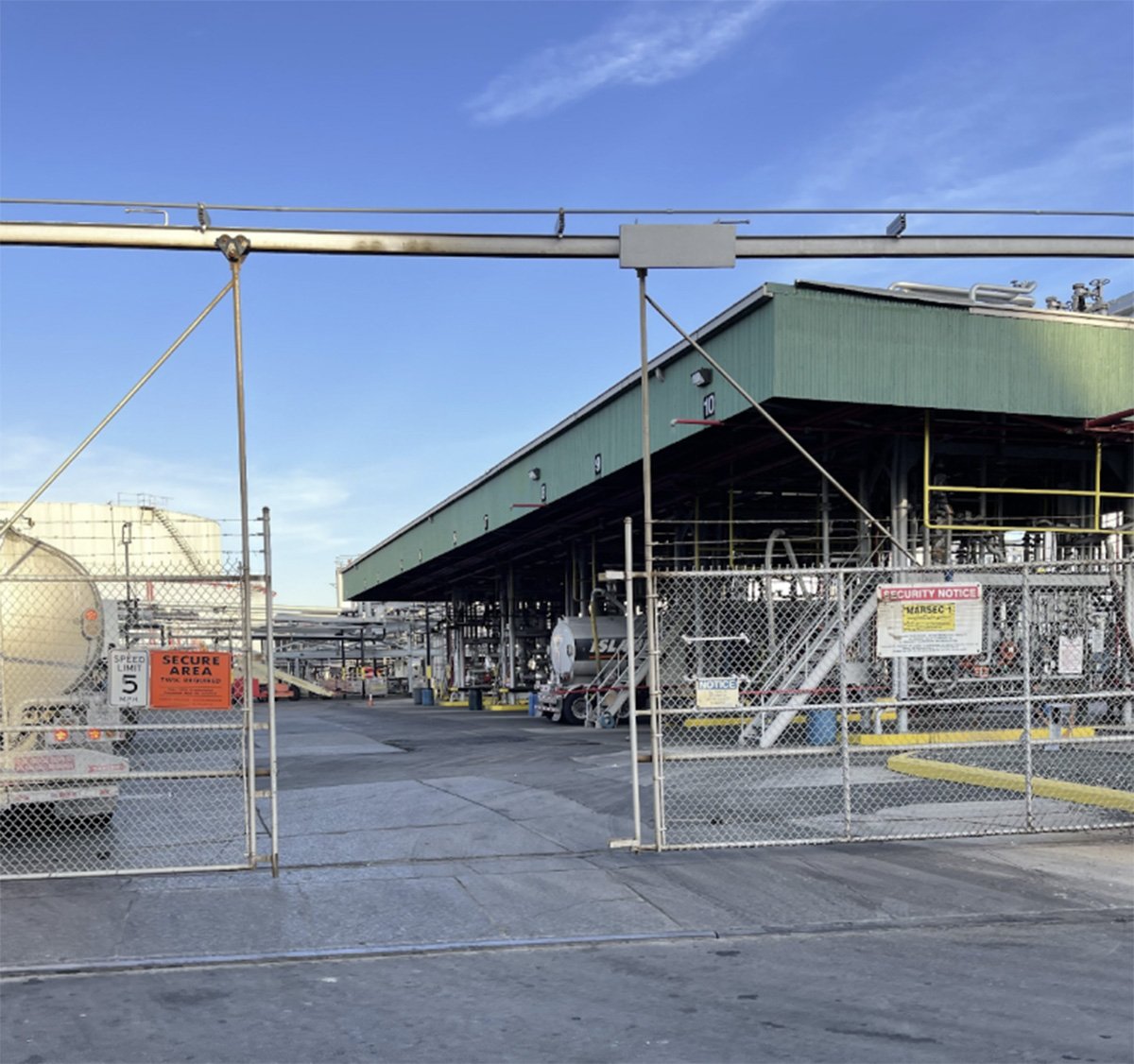
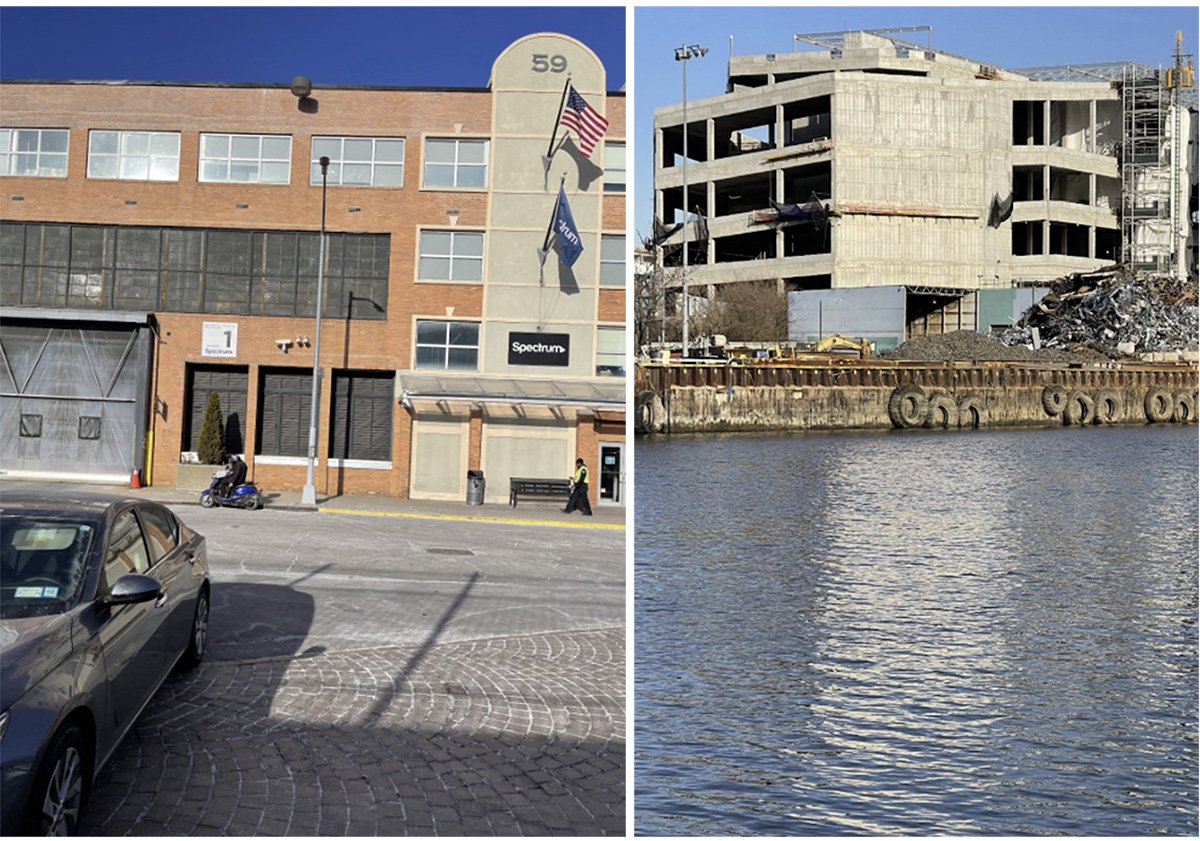
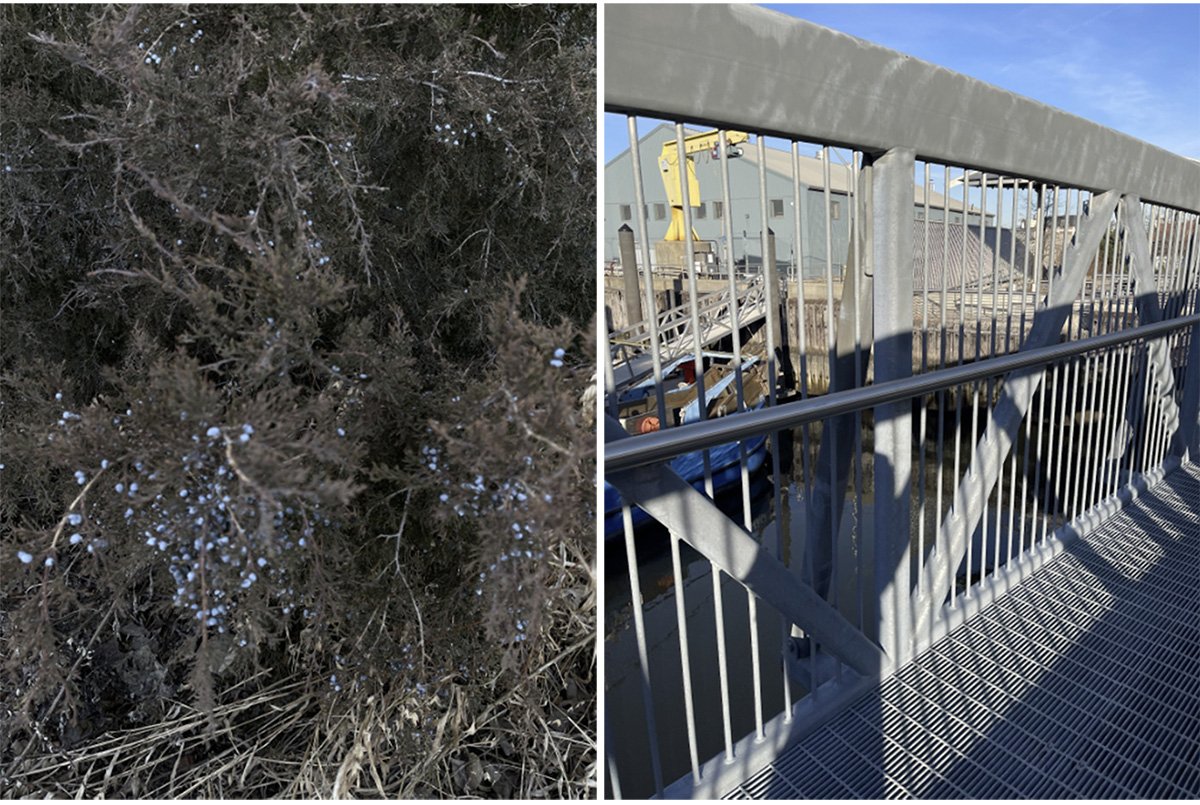
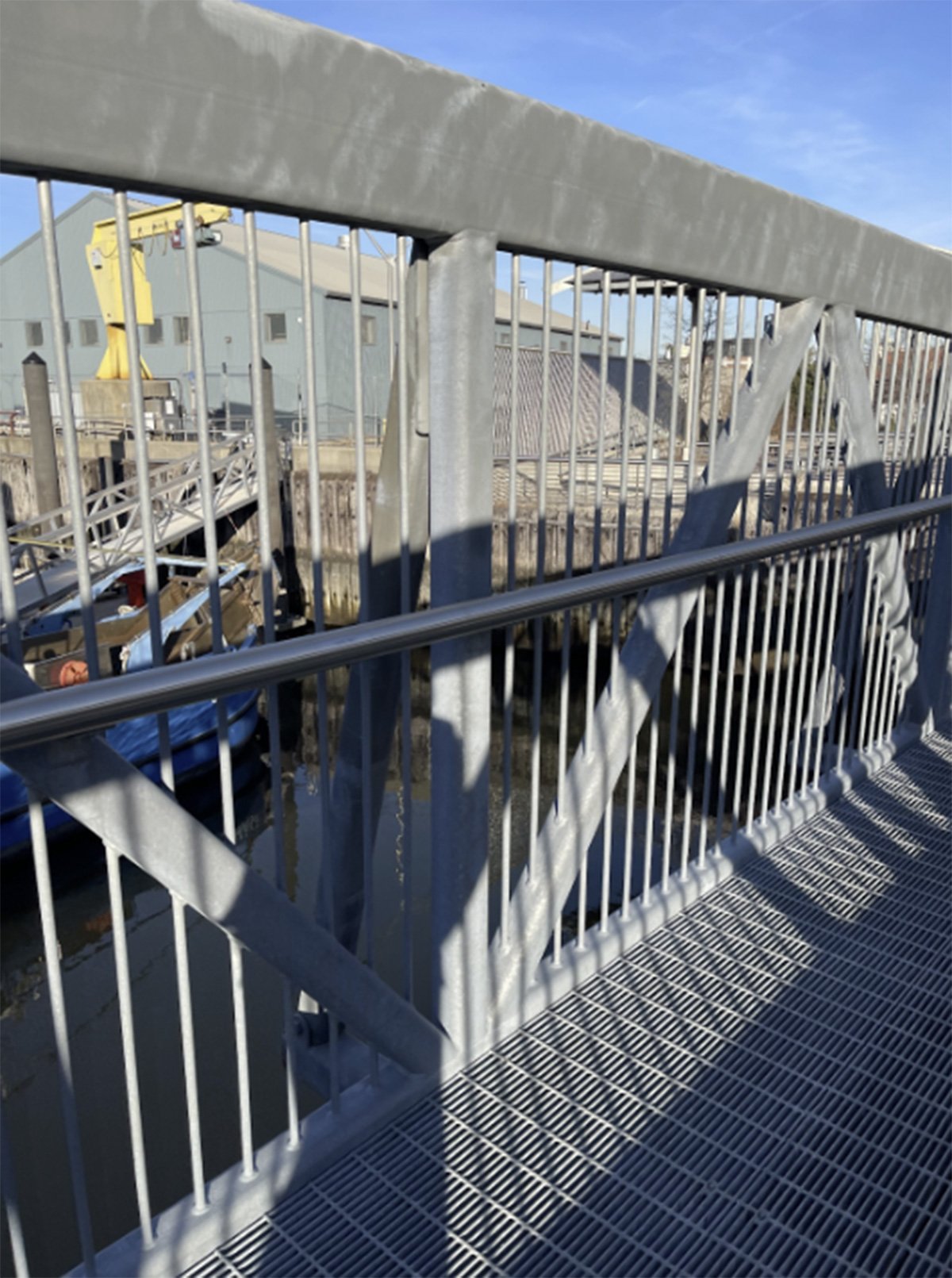
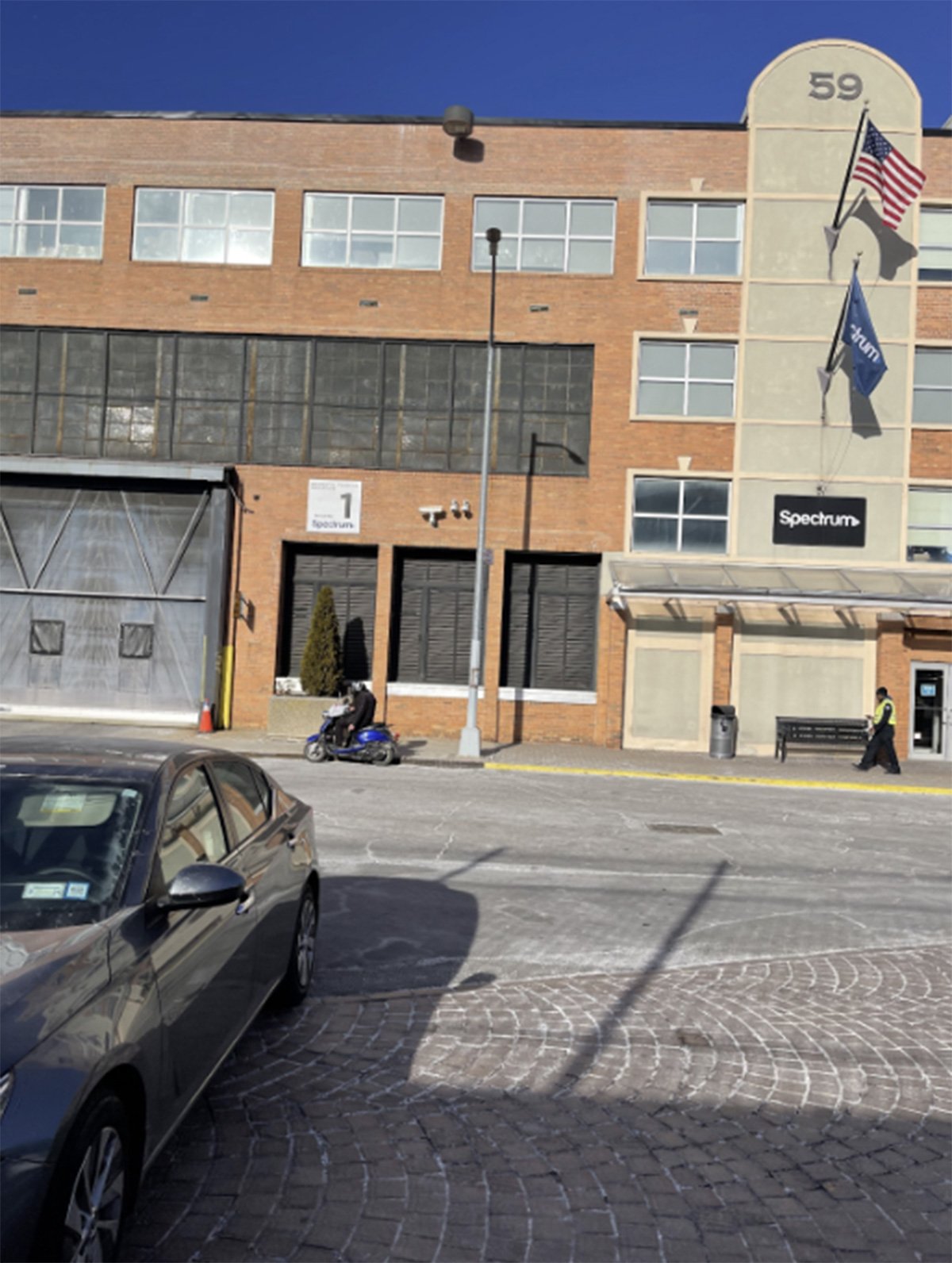
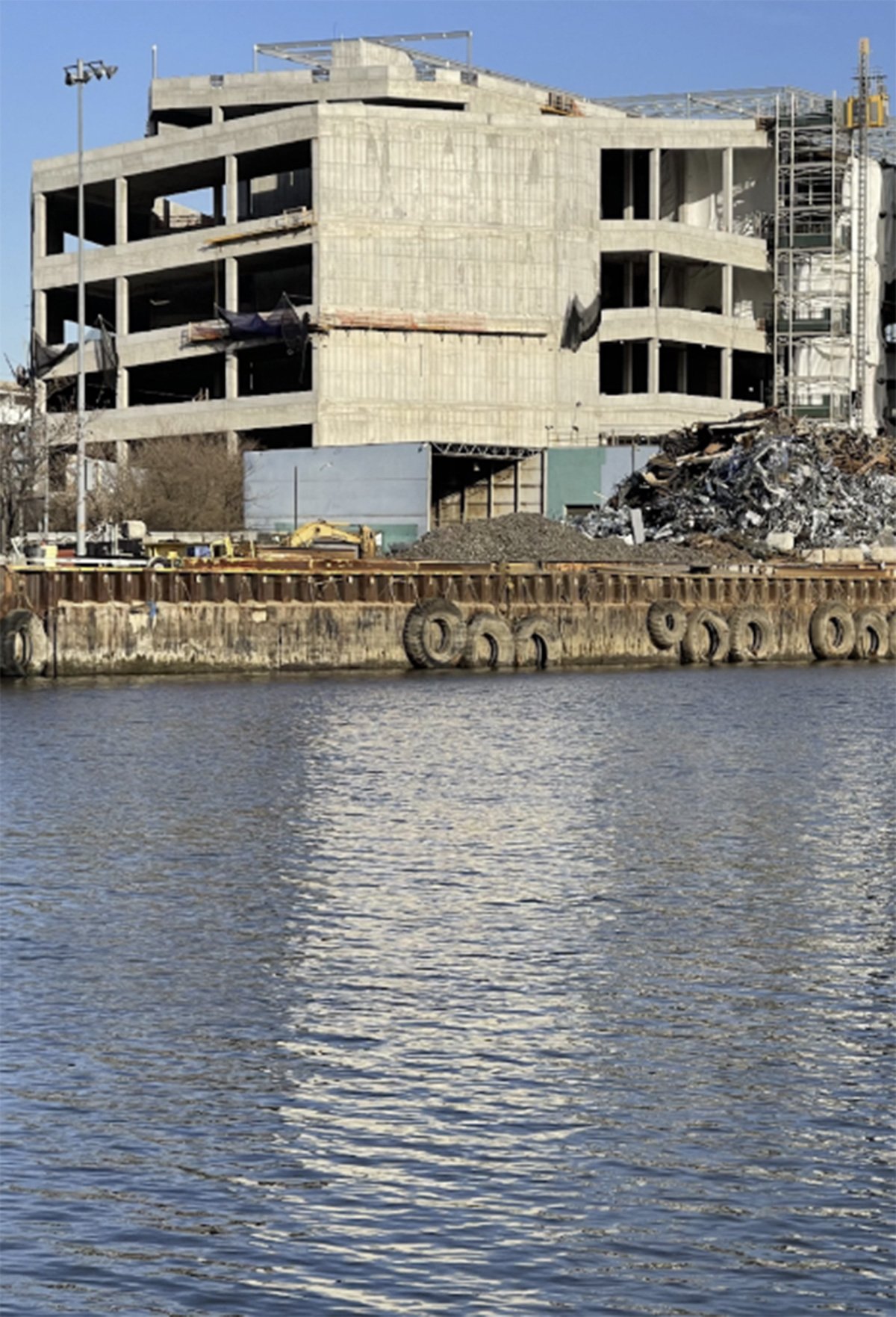
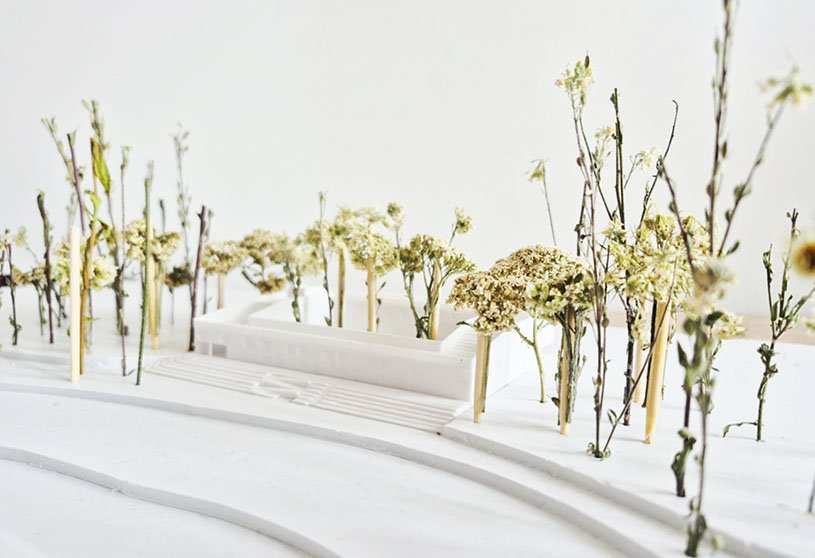
Newtown’s Creek is a tributary of the East River located in Brooklyn, New York. The site lies on the south end of the Newtown Creek Nature Walk. The existing condition of the site contradicts its program severely; the intention of a “nature walk” is resisted through excessive concrete, steel, and processed gravel. The architecture is formed in an objection to the industrialized materials present on-site. Directly adjacent to the park is a metal recycling facility as well as a water treatment plant. Both industries (with accompanying transportation docks) bring in excessive industrial noise. Thus, the design process of this project was largely defined by the site’s intense noise pollution.
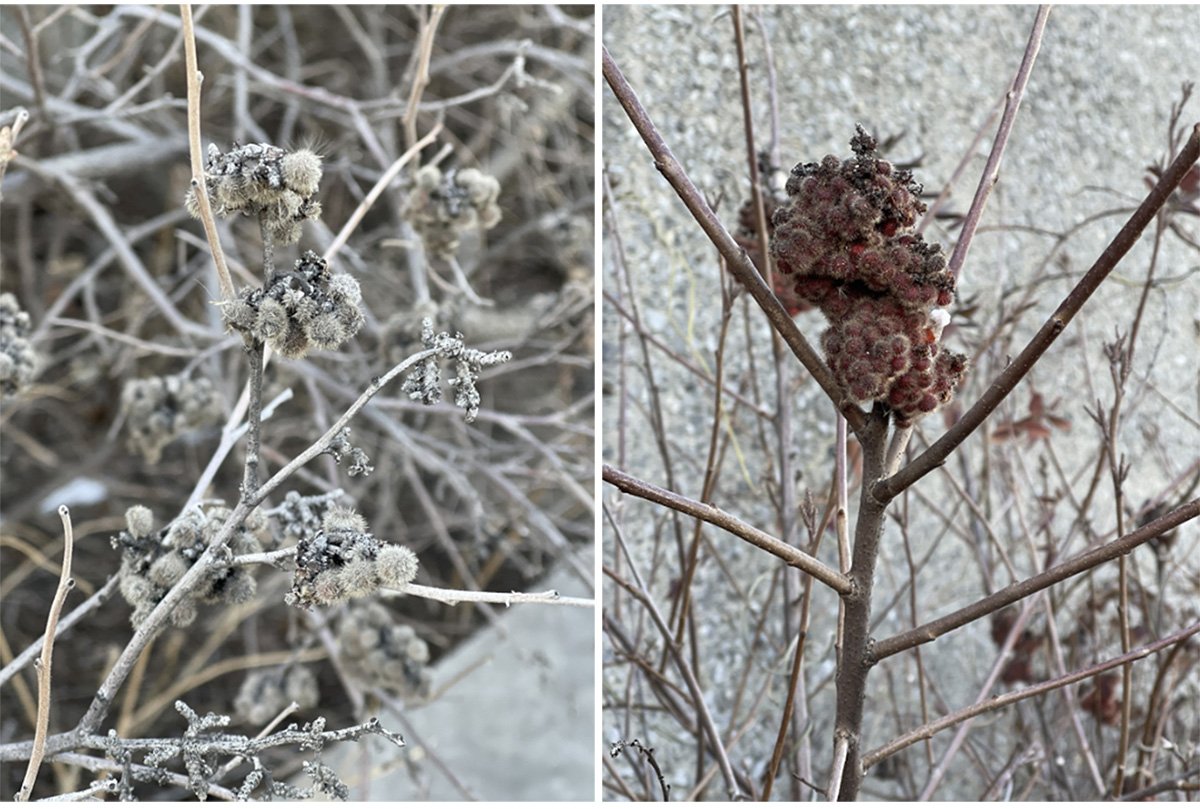
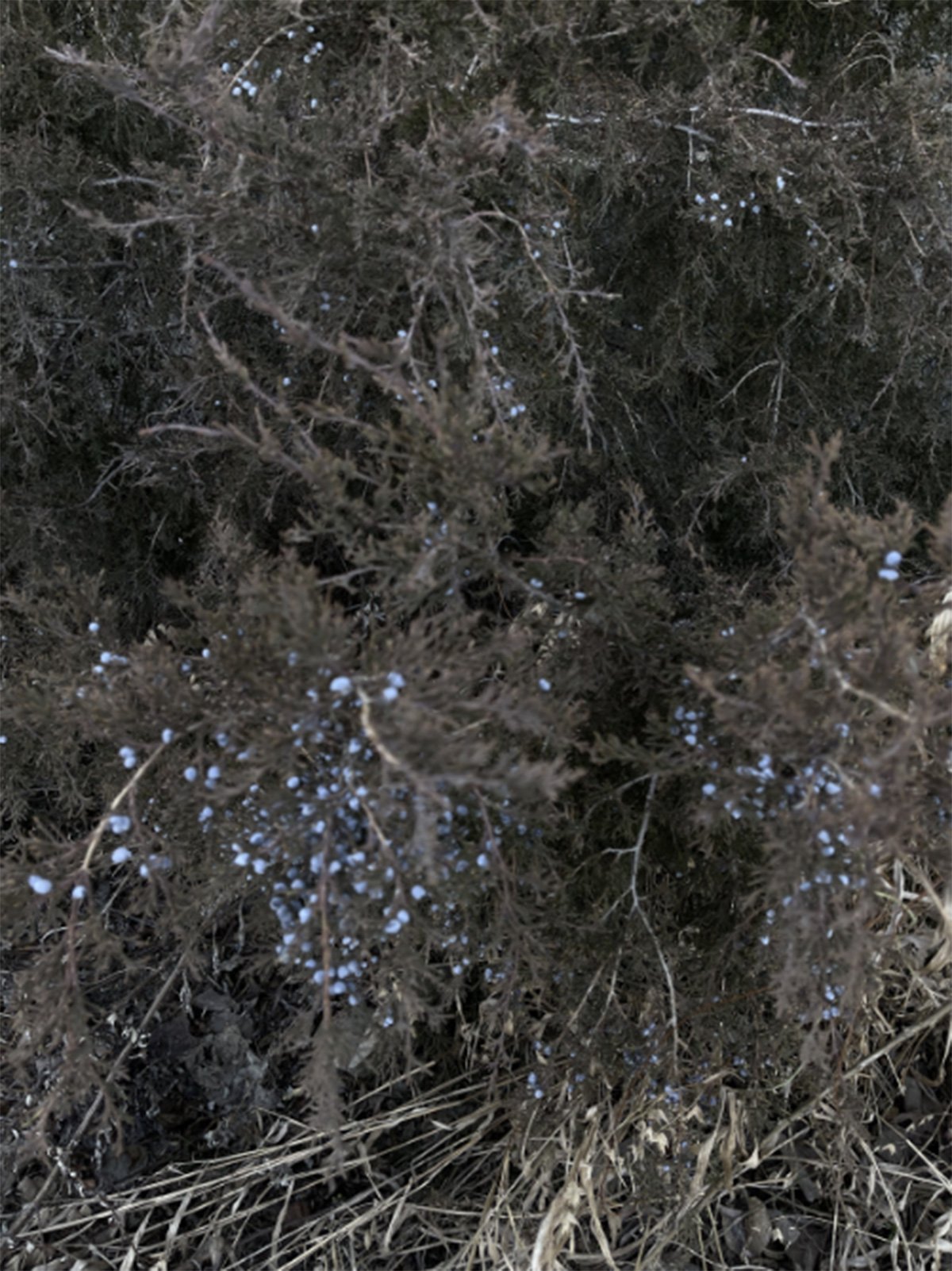
Plant Life On Site Observed #1 — Small Berries | Plant Life On Site Observed #2 — Small BerriesPlant Life On Site Observed #3 — Dense, Dry Shrubury | Materials On Site Observed, Plaster And Steel Gates/Fences.
During early visits, industrial sound levels were assessed by average decibel measurement for 1 minute. These results informed the arrangement of the modules and the method for sound deprivation, as well as the arched design of the roofs. The study showed that the sound pollution levels were highest at the center of the site, where no plants existed, at the edge closest to the water. In contradiction, where plant life bordered the site, the decibel levels were lower. Based on these findings, the space was designed to be centralized, targeting regions with higher sound levels. The project’s program formed around dampening industrial noise pollutants through the architecture and natural forces.
Design Process
The site was documented through a process of data analysis and observation. The existing plant life on the site was dense and highly resilient to the harsh weather and dry conditions. The decibel readings on noise pollution were significantly lower when standing behind these planted regions, resulting in the use of dense plants such as Hedera Ivy or a Climbing Hydrangea in the design. The octahedron shape of the panels were contrived from existing geometries on the site; however, it does not intend to replicate the same visual environment. The shells are made of wood, each panel from a translucent glass that shields the interior from harsh sites of the junkyard, bathing the interior with a soft indirect glow. The panels connect in systems of seven and hinge to generate a gentle curve. They layer organically, the geometry of architecture undoubted, yet somewhat ambiguous in its border with nature. The double panelling on the shell walls hosts plant growth within the vessel, responding to the effective conditions observed. The growth and said effectiveness, however, are left to the unpredictability of nature.
Through careful site analysis, existing plant life and water features were integrated into the architecture to function as natural buffers against industrial sound.
Final Outcome
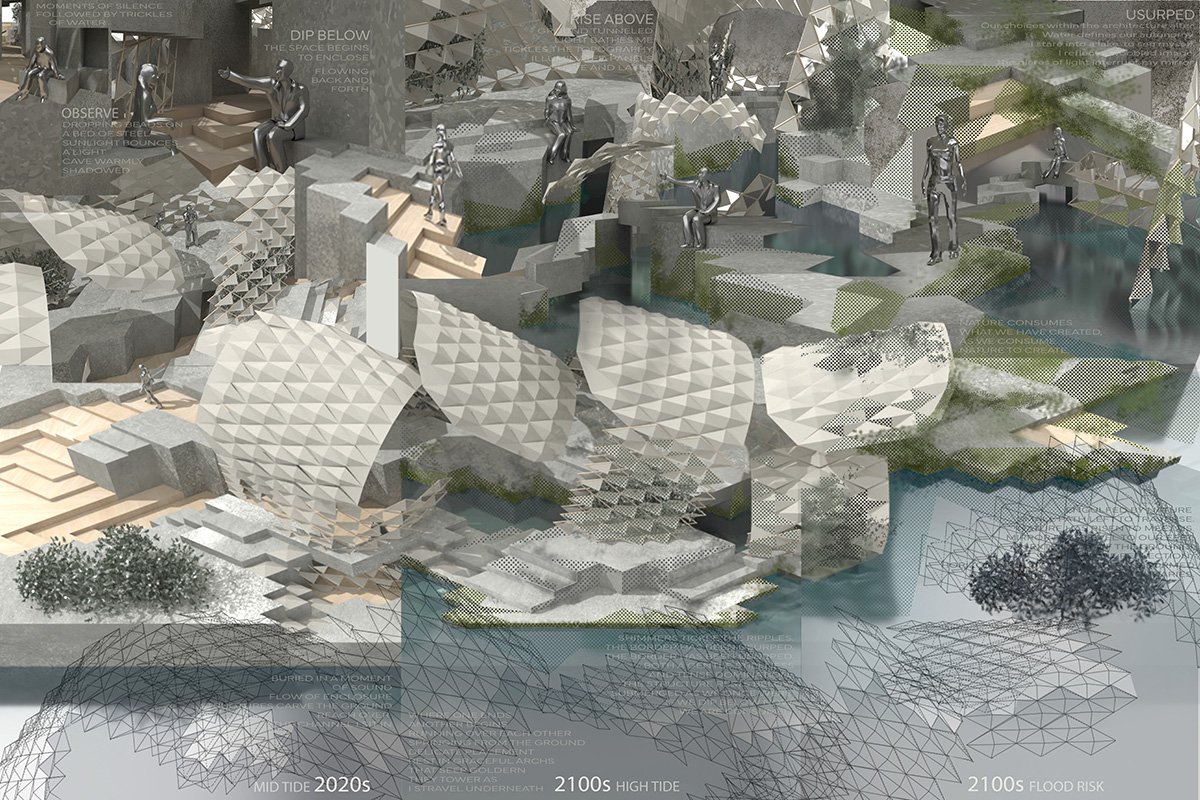
The horizontal flow of space is transformed to a vertical blurring of boundaries. Where a fluidity exists beside us is further instituted above and below us, not through a growth and encroaching of architectural structures, but through the architecture of nature’s forces. Swallowed by uncontrollable forces, the remaining ground floats across its surface delicately.Without reservations in defining sight, and nature and the structure usurp one another, hosting an ambiguity of transition from the two primary spatial zones.
Shelled Audiokinesis investigates the ambiguity of the boundary between nature and architecture through sound and spatial flow. A geometric system fluctuates organically between moments of spatial and auditory enclosure, blurring distinctions between the natural and the constructed.
Water rises, like an extension of the ground, it reflects in stillness, yet strikes tensions in consuming the ground. The architecture is submerged, our choices within the architecture alter. Water defines our autonomy.Final ModelFinal Model
Spatial enclosure is disrupted as a translucent framework emerges from the ground, then reasserted through the layering of panels and terrain. Similarly, auditory enclosure is dissolved along the lower path, where the sound of moving water permeates the space, and reestablished along the upper path, where buffered, isolative conditions contain sound.
Final ModelFinal ModelFinal Model
No fixed boundary exists between nature and enclosed architectural space. Natural elements—water and plant life—are granted autonomy to define the architecture itself: vegetation grows to muffle sound, while water acts to amplify it. The degree to which these effects occur is left to the unpredictability of natural processes. This tension establishes a balance between architecture’s power to shape nature and nature’s capacity to reshape architecture, experienced through sensory ambiguity and fluctuating enclosure.
Final ModelFinal Model
Nature consumes what we create, just as we consume nature in the act of creation.
Conclusion: Ultimately, the project explores the evolving boundary between the antecedent and the contrived through time and sound.
[This Academic Project has been published with text and images submitted by the student]
Site Context
Final Outcome
To submit your academic project for publication at ArchiDiaries, please visit the following link >> Submit
Get the best of ArchiDiaries, directly in your inbox.
We use cookies on our website to give you the most relevant experience by remembering your preferences and repeat visits. By clicking “Accept All”, you consent to the use of ALL the cookies. However, you may visit "Cookie Settings" to provide a controlled consent.
This website uses cookies to improve your experience while you navigate through the website. Out of these, the cookies that are categorized as necessary are stored on your browser as they are essential for the working of basic functionalities of the website. We also use third-party cookies that help us analyze and understand how you use this website. These cookies will be stored in your browser only with your consent. You also have the option to opt-out of these cookies. But opting out of some of these cookies may affect your browsing experience.
Necessary cookies are absolutely essential for the website to function properly. These cookies ensure basic functionalities and security features of the website, anonymously.
Cookie
Duration
Description
cookielawinfo-checkbox-analytics
11 months
This cookie is set by GDPR Cookie Consent plugin. The cookie is used to store the user consent for the cookies in the category "Analytics".
cookielawinfo-checkbox-functional
11 months
The cookie is set by GDPR cookie consent to record the user consent for the cookies in the category "Functional".
cookielawinfo-checkbox-necessary
11 months
This cookie is set by GDPR Cookie Consent plugin. The cookies is used to store the user consent for the cookies in the category "Necessary".
cookielawinfo-checkbox-others
11 months
This cookie is set by GDPR Cookie Consent plugin. The cookie is used to store the user consent for the cookies in the category "Other.
cookielawinfo-checkbox-performance
11 months
This cookie is set by GDPR Cookie Consent plugin. The cookie is used to store the user consent for the cookies in the category "Performance".
viewed_cookie_policy
11 months
The cookie is set by the GDPR Cookie Consent plugin and is used to store whether or not user has consented to the use of cookies. It does not store any personal data.
Functional cookies help to perform certain functionalities like sharing the content of the website on social media platforms, collect feedbacks, and other third-party features.
Performance cookies are used to understand and analyze the key performance indexes of the website which helps in delivering a better user experience for the visitors.
Analytical cookies are used to understand how visitors interact with the website. These cookies help provide information on metrics the number of visitors, bounce rate, traffic source, etc.
Advertisement cookies are used to provide visitors with relevant ads and marketing campaigns. These cookies track visitors across websites and collect information to provide customized ads.