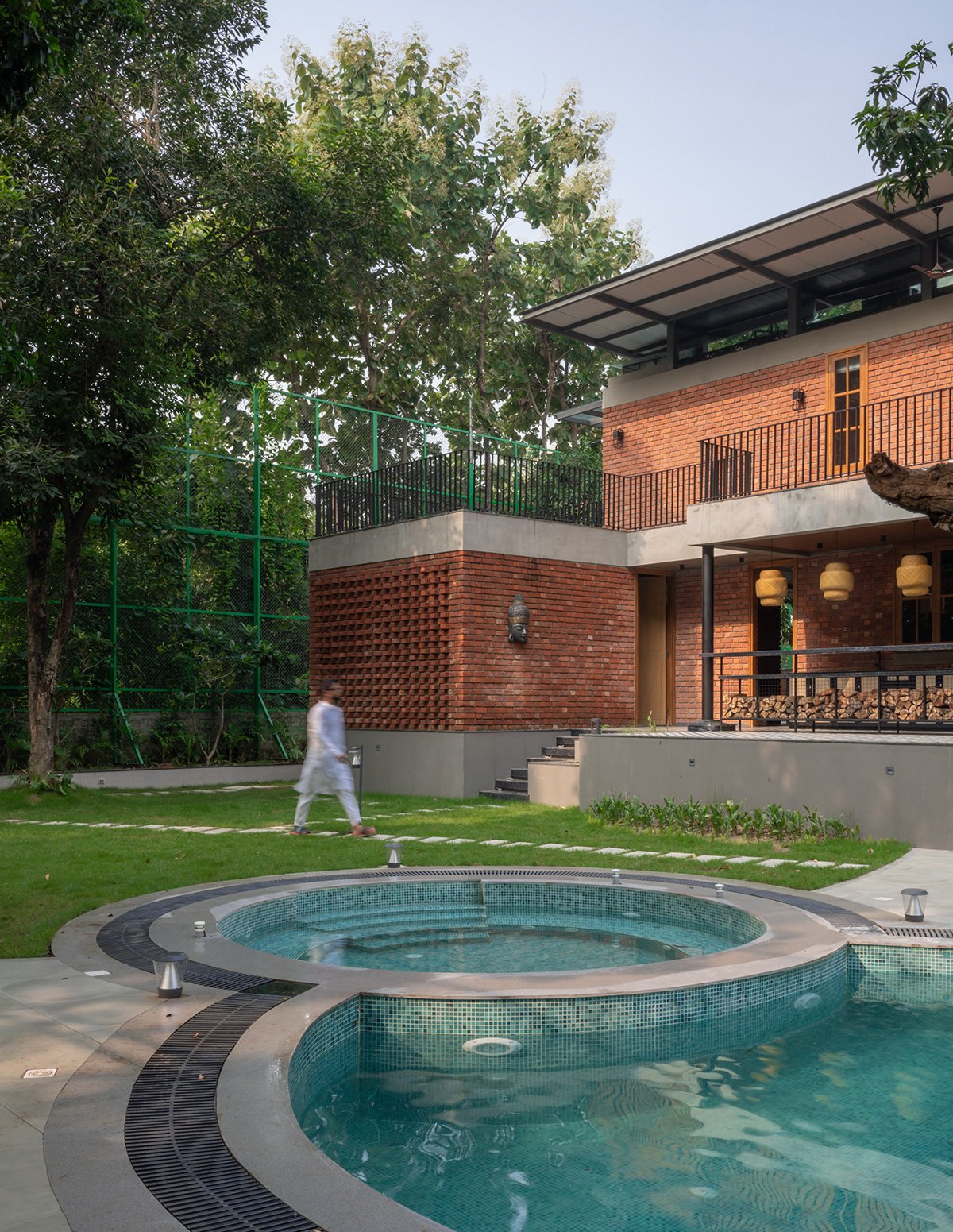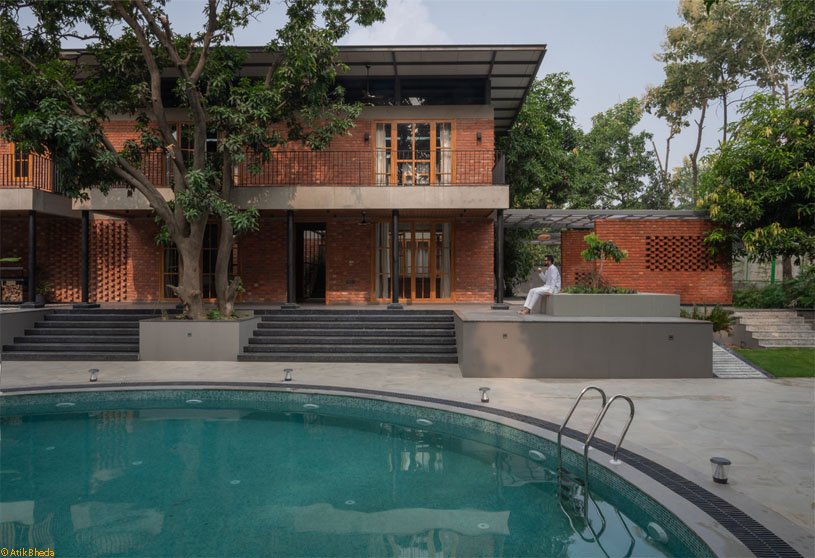
Excerpt: Gorakhpur Farmhouse by W5 Architects is an unwritten dialogue between architecture and nature, shaped by land, climate, and craft. Set within a mango-teak orchard in Gorakhpur, the design follows the principle of building without erasure, allowing trees to guide form and space. Porous volumes, light, and material honesty let the house listen, adapt, and emerge as an organic extension of its surroundings.
Project Description

[Text as submitted by architect] The Gorakhpur Farmhouse is an unwritten dialogue between architecture and nature—an intuitive response to land, climate, and craft. It does not impose itself but rather listens, adapts, and emerges as an organic extension of its surroundings. Located in a 20-year-old mango-teak orchard, the project follows a fundamental principle: to build without erasure.
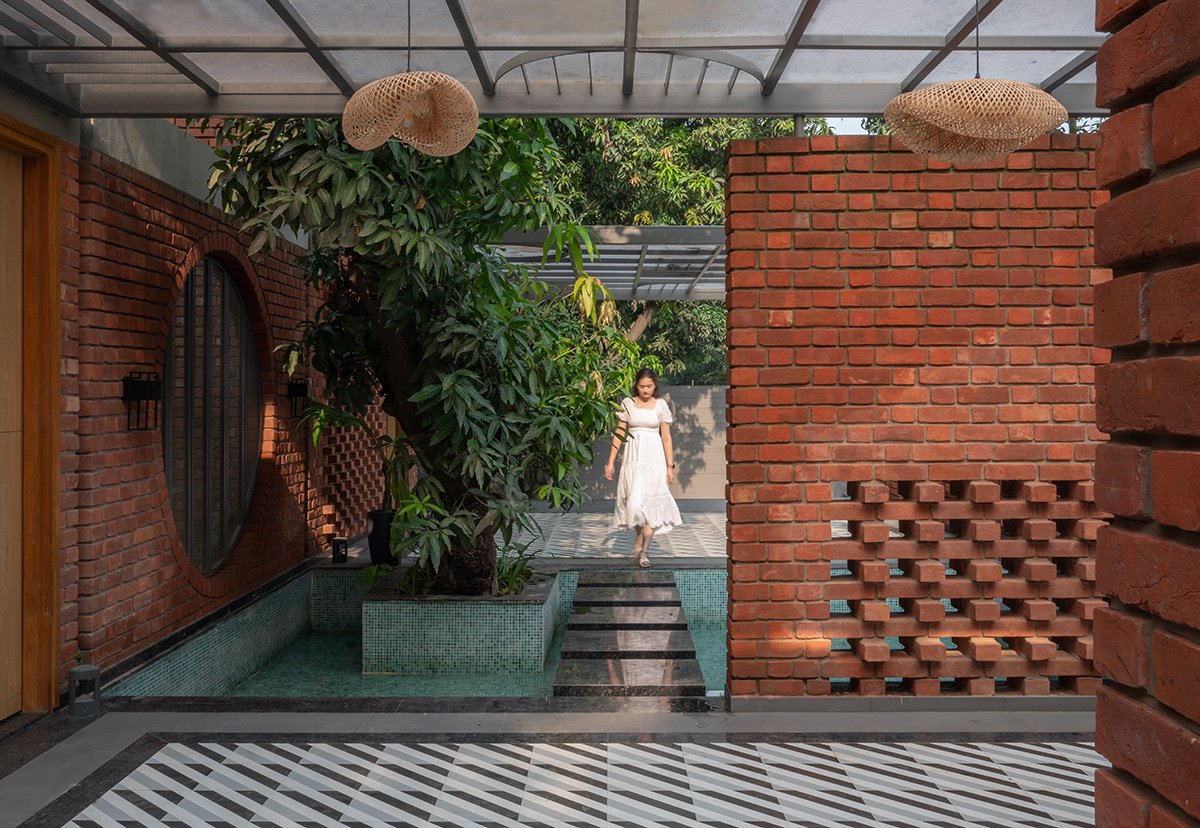
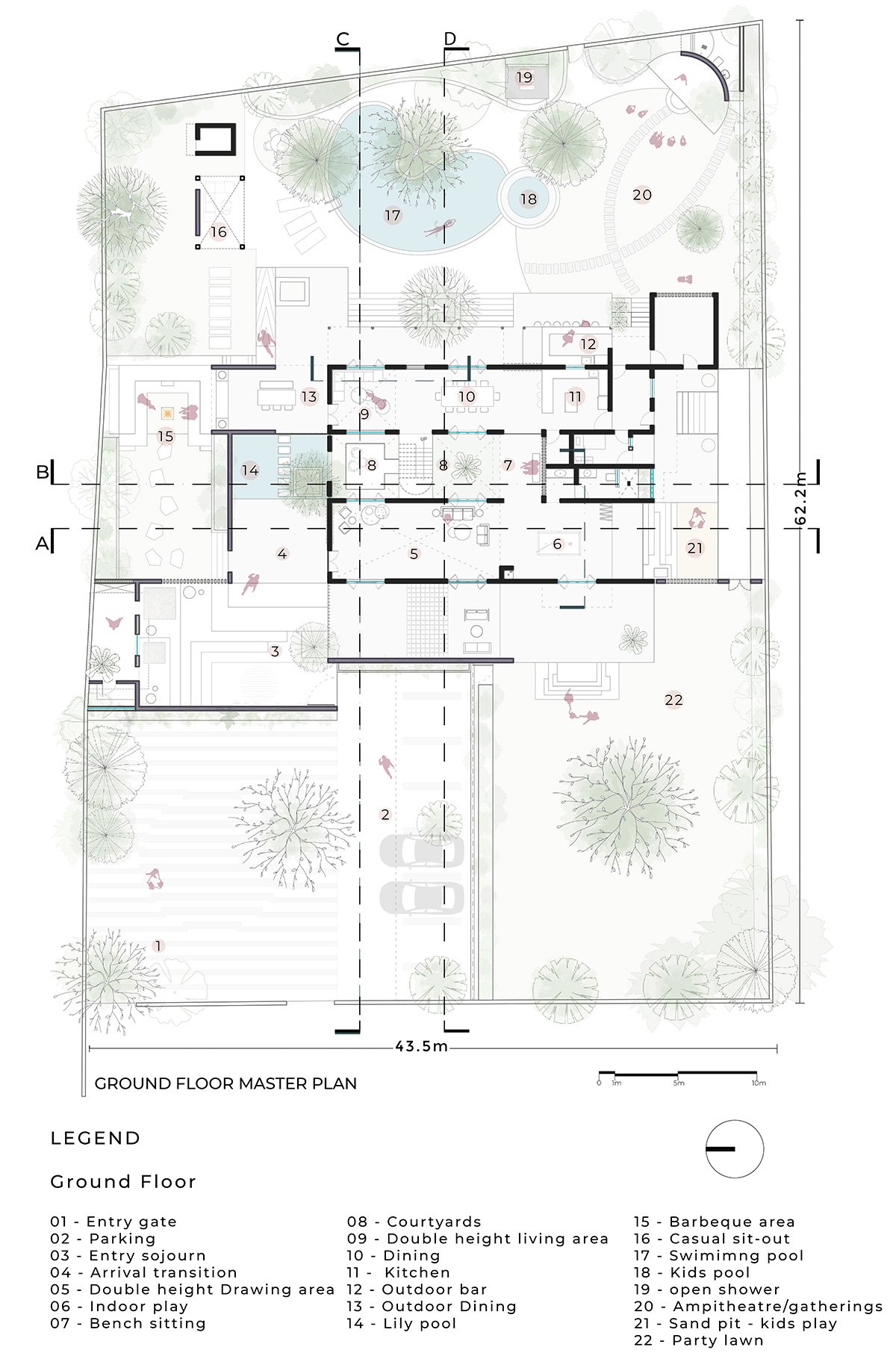
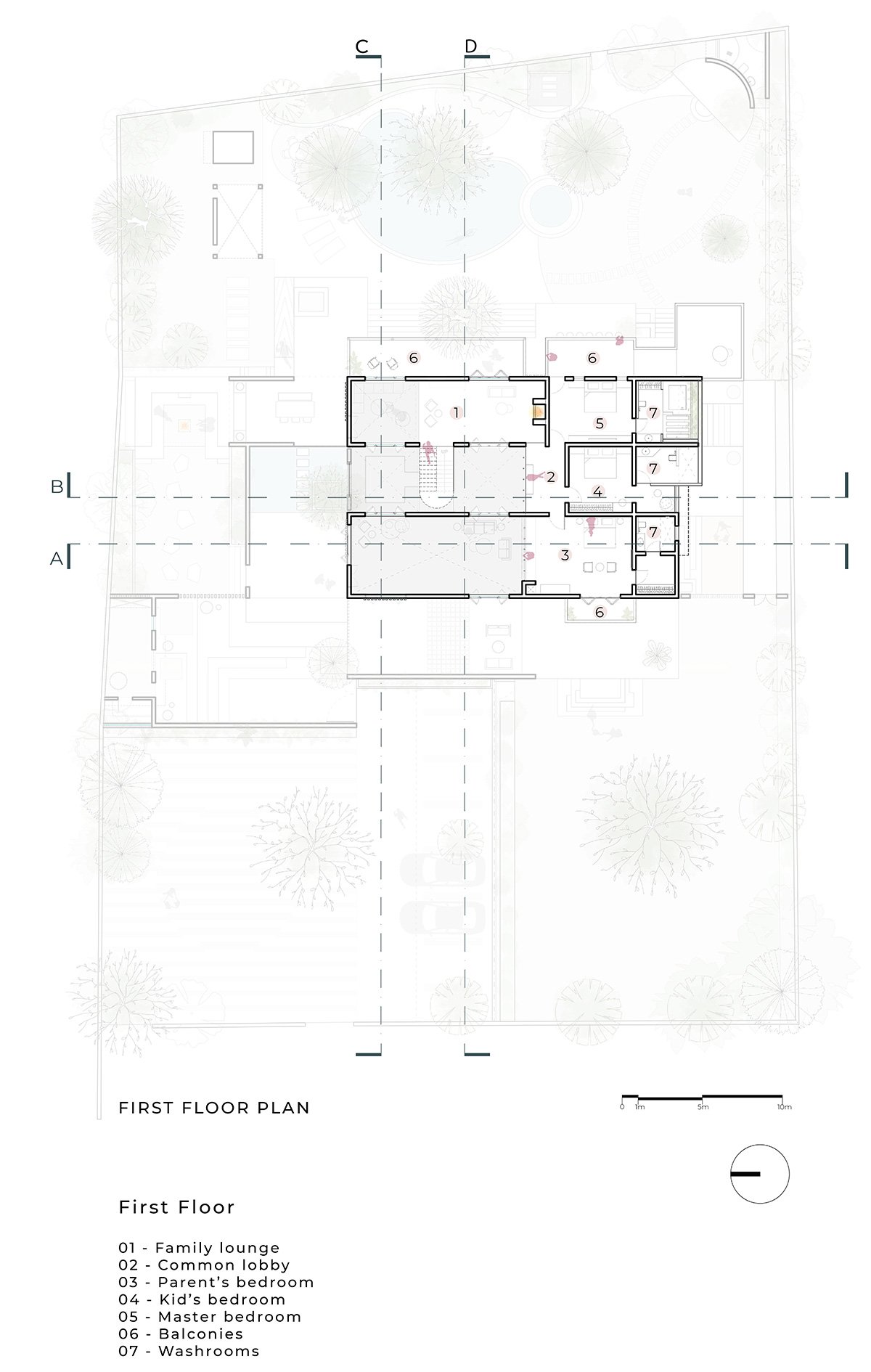
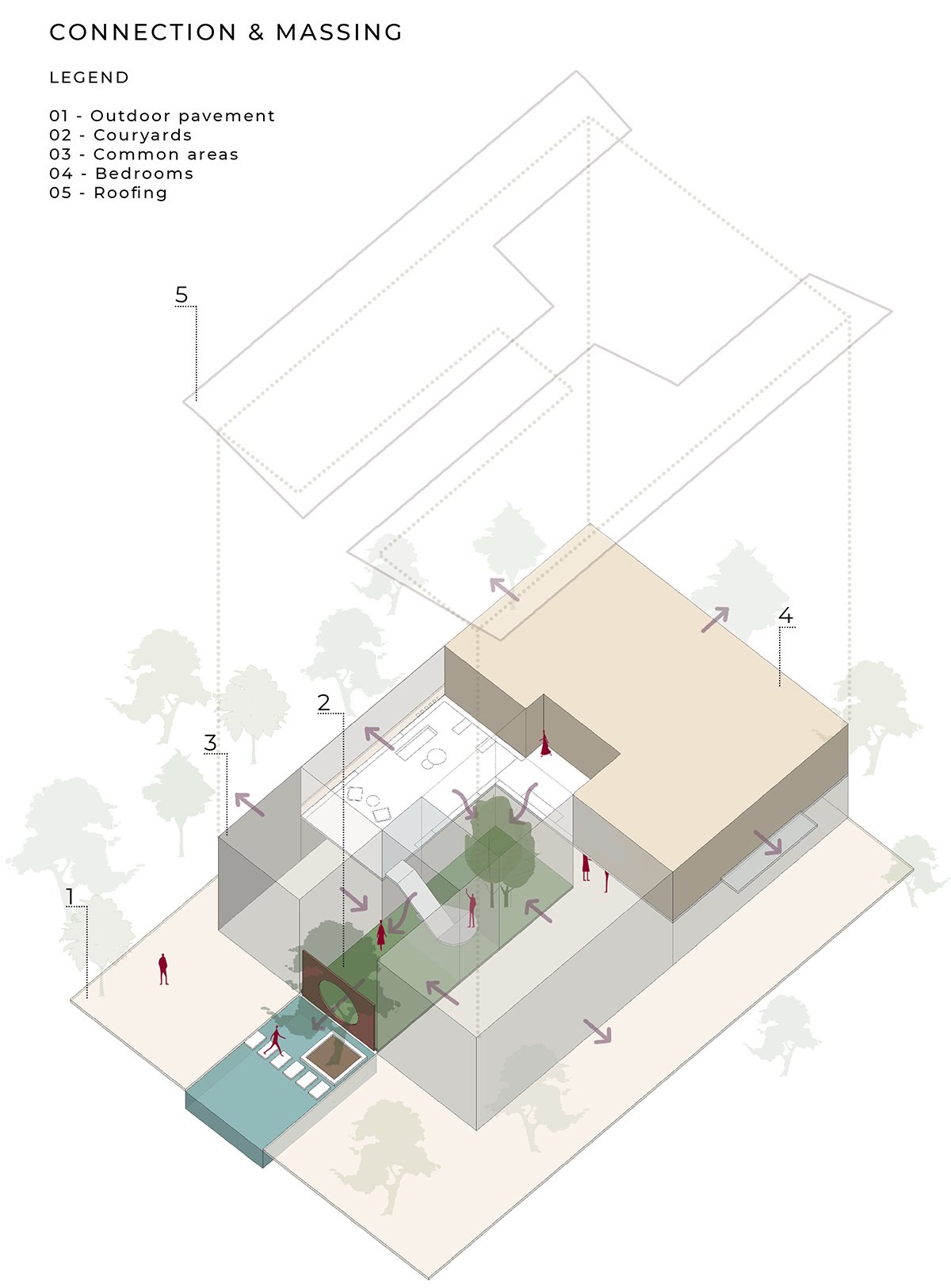
Every tree on site remains untouched, guiding the home’s spatial layout, shaping courtyards, and framing views.
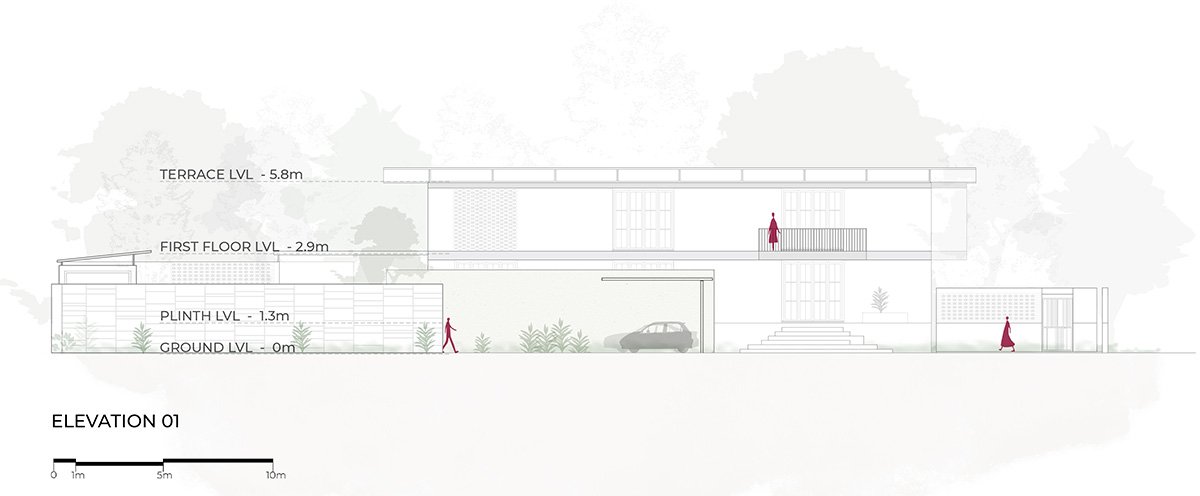
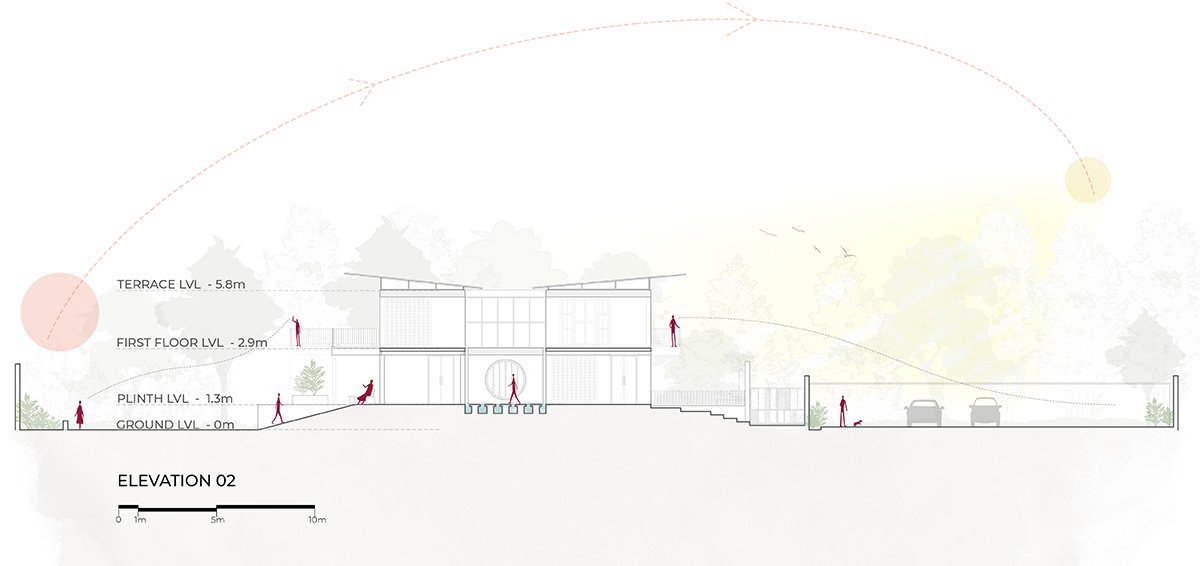
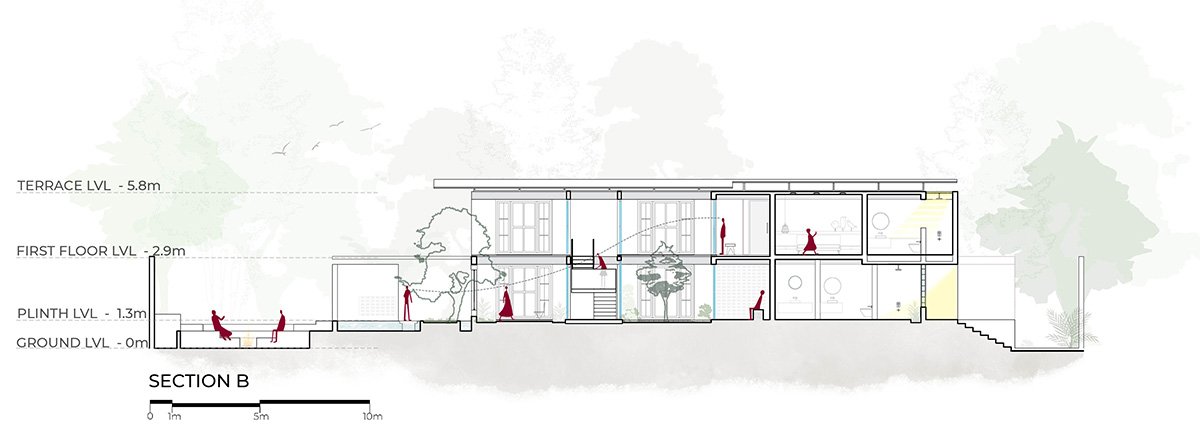
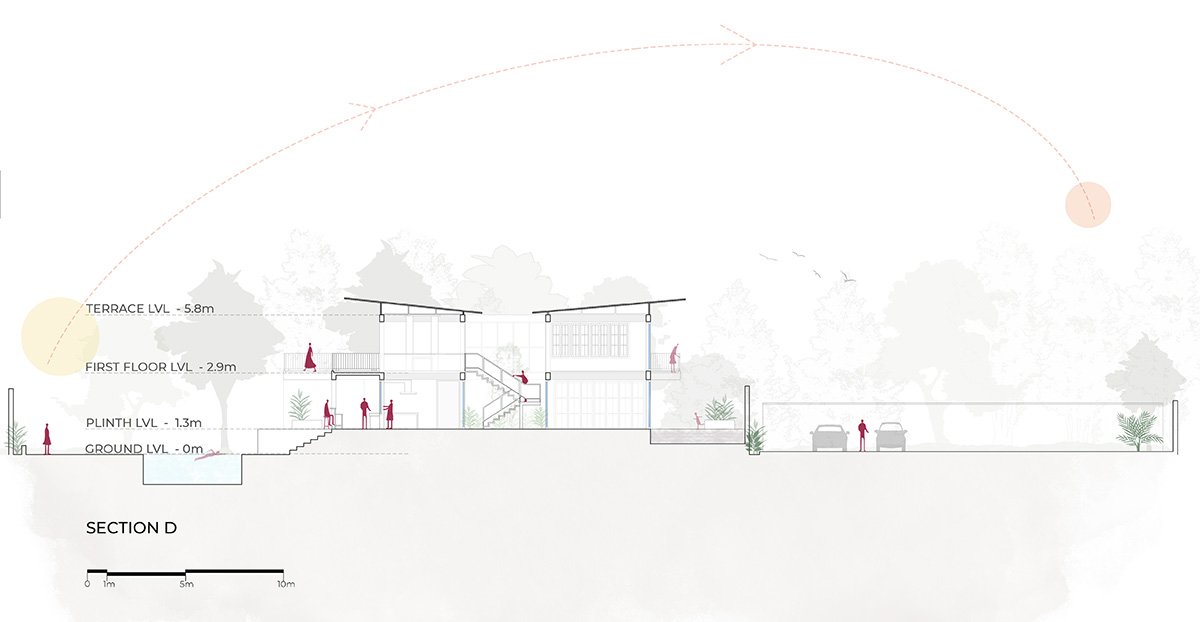
The architectural language is one of porosity and connection. Double-height spaces act as breathing volumes, allowing vertical interactions between floors, where sightlines, air, and light traverse seamlessly. The first light of the day reaches the farthest corner, while the brick facade transforms throughout the day in response to the sun.


Material & Craftsmanship: The Art of Slow Making Materiality is the soul of the project. Exposed bricks were sourced from a local kiln, with every third brick hand-picked for its texture and character. Teakwood, cut from the site prior to design inception, was repurposed into doors, windows, and sculptural furniture pieces, embedding the past into the present.

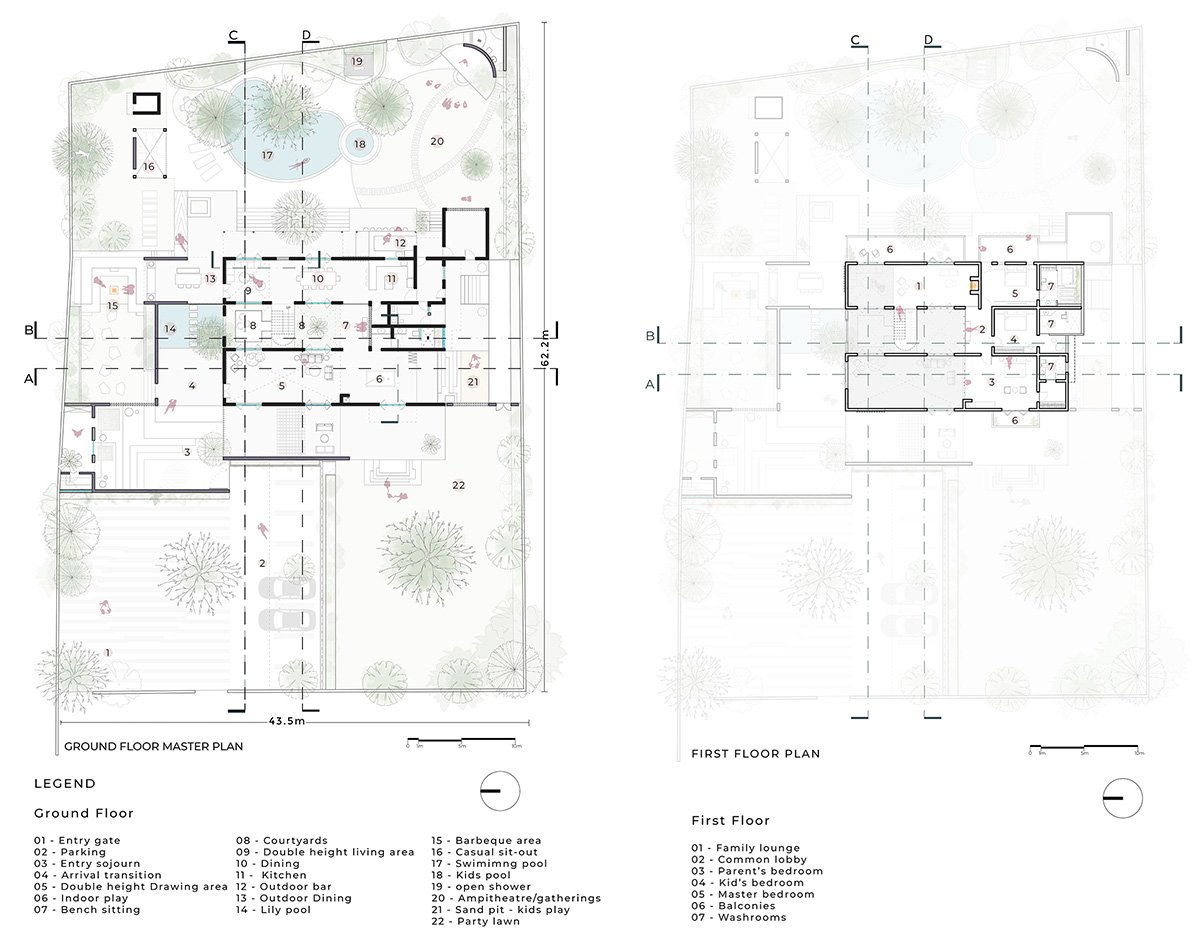

Terracotta, the ODOP of Gorakhpur, was inverted into roof slabs, reducing concrete consumption while adding warmth and tactility. Construction followed a low-impact, handcrafted approach. The load-bearing structure negated the need for excessive steel and concrete, keeping the home cooler while reinforcing its raw, unfinished aesthetic. All furniture was crafted on-site, rejecting mass production in favor of slow, deliberate making.
From the dining table legs sculpted from raw teak trunks to cane-stitched seating, the home is a showcase of in-situ craftsmanship.

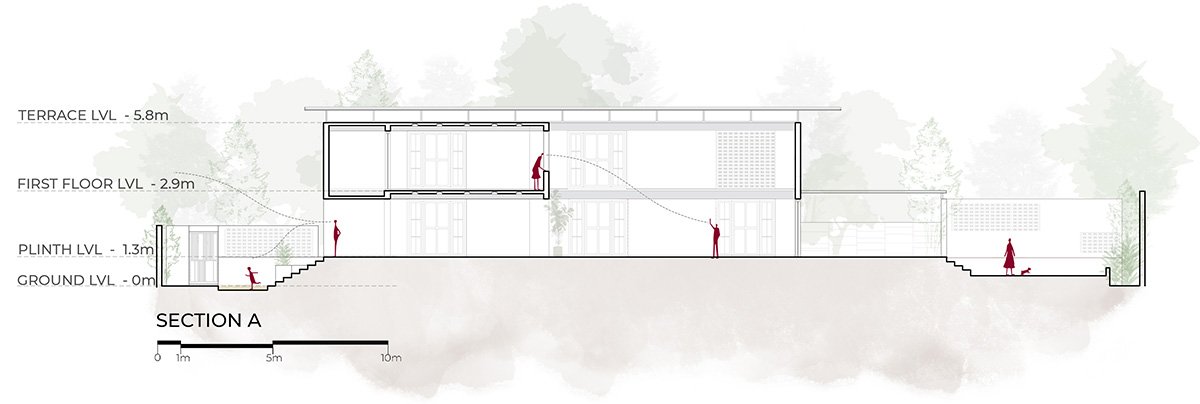

Community & Sustainability: Beyond the Built Form Architecture is not just about space; it is about people. The farmhouse became a platform for local artisans and women laborers engaged in fine masonry work, intricate brick pointing, and surface texturing. Even waste materials were reincarnated—stone cut-offs found purpose in an amphitheater wall, and discarded wood scraps were turned into wall-mounted artworks.

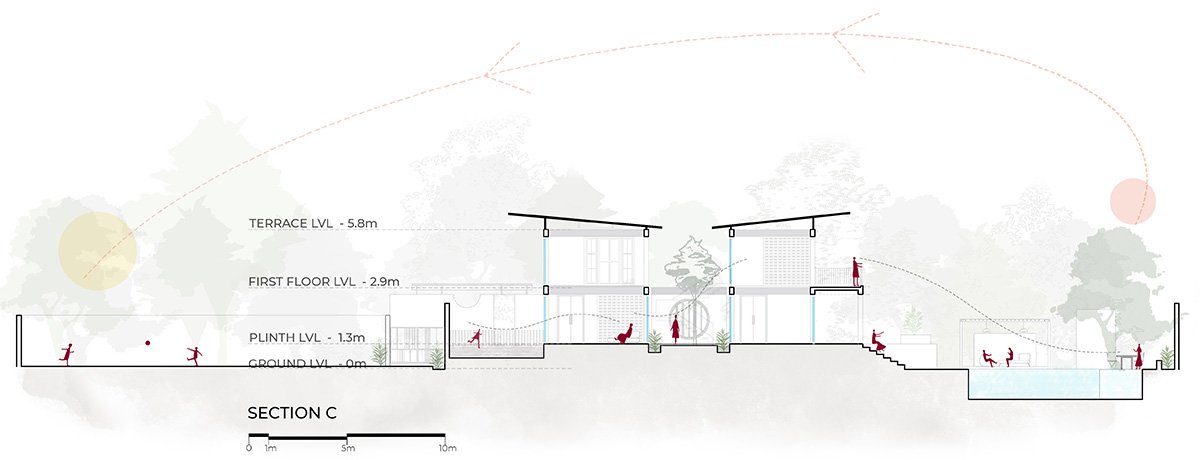

In a city where modern construction favors speed over craft, this project took the opposite path—it embraced slowness, allowing ideas to evolve through material experimentation and hands-on making. Terraces, decks, and garden spaces give the family shaded outdoor living areas and long views across the orchard, reinforcing the home’s role as a quiet, restorative retreat.
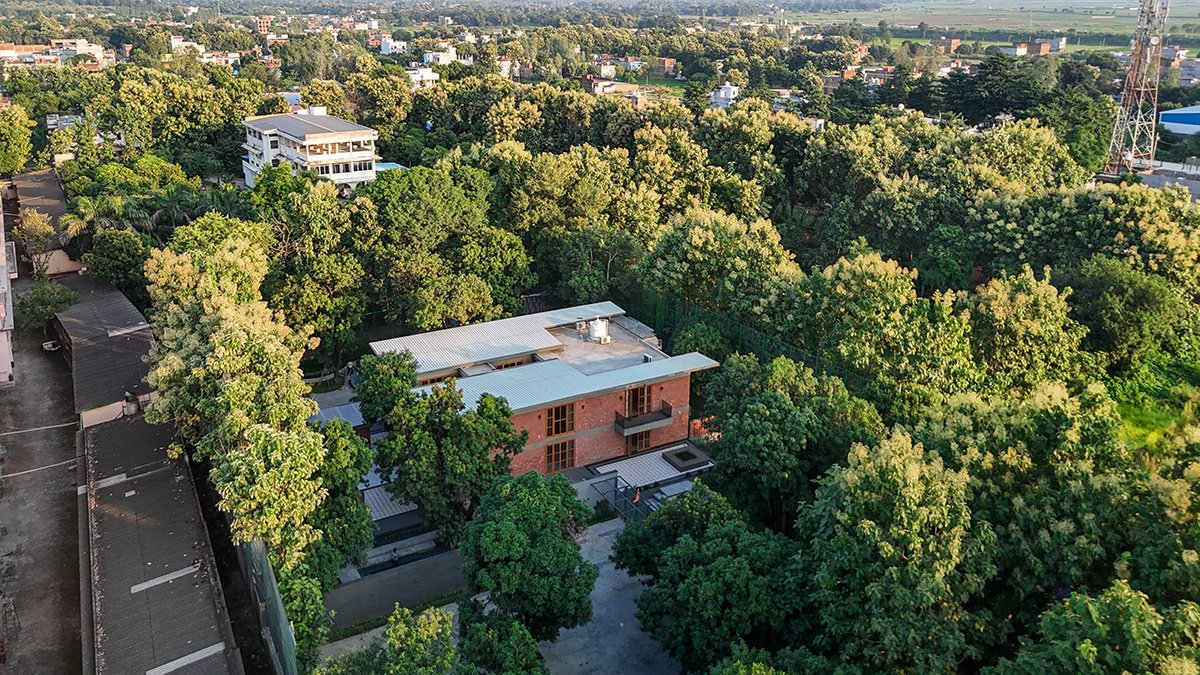
A Timeless Gesture: The Gorakhpur Farmhouse does not aspire to be a statement; rather, it invites discovery. It is a place where the wind moves freely through porous walls, where light and shadow sketch their ephemeral patterns, and where the very act of building becomes an extension of nature. In its massing, materials, and methods, it is an antithesis to the fast-built world, a reminder that architecture, at its best, is a slow, patient craft—one that honors time, place, and the human hands that shape it.
Drawings

Images