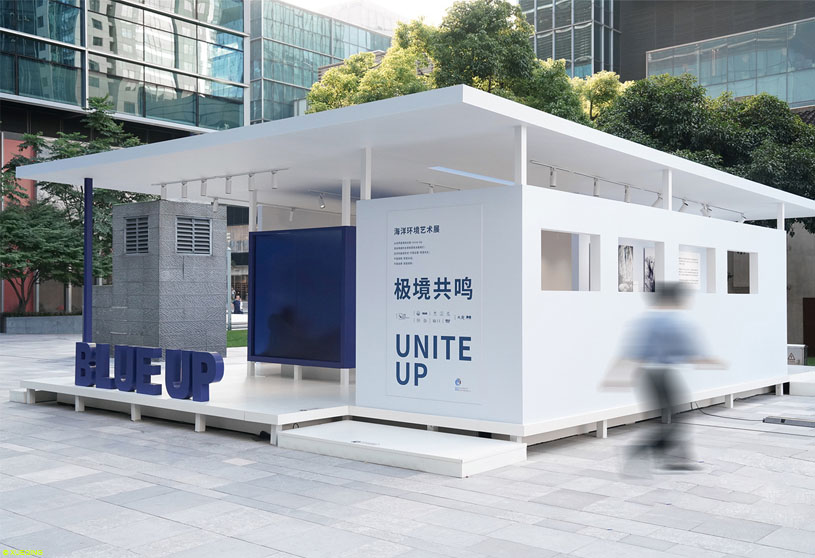
Excerpt: Glacier Project by Dayuan Design is an immersive installation inspired by the hidden mass and geometry of glaciers. The design translates the relationship between glaciers, oceans, cities, and human activity into a spatial experience, making the invisible effects of climate change tangible. Through suspended forms and an interactive environment, it encourages reflection on the interconnectedness of natural and urban systems.
Project Description

[Text as submitted by architect] William McDonough, a leading figure in sustainable design, has described design as the expression of human intention. This understanding extends beyond objects and forms a wider system of choices: how materials are used, how space is organised, how relationships with the environment are established, and how design continues to exert influence over time. Its value lies not only in the visual outcome, but in its capacity to reframe relations between people and objects, space and environment, and the present and the future. Through use, observation and memory, design can acquire a lasting public dimension.
This premise shaped Dayuan Design’s collaboration with N.O.C., an ocean-conservation nonprofit. As climate change gains greater public visibility, glacial melt, shifts in ocean systems and extreme weather are continually translated into data, images and news. Yet visibility does not necessarily produce proximity. Glaciers are frequently pictured but rarely felt; nature is widely discussed, while remaining conceptually removed from urban life. Here, design takes on a role beyond communication: it gives a distant subject spatial and sensory form, creating a place that can be entered, inhabited and responded to.


Developed under the theme Resonance of the Extremes, the project brings the interconnected systems of glaciers, oceans and cities into a public setting. The relationship between human and natural systems runs quietly through the exhibition, beginning with the urban installation Glacier Project and extending through film, sound, artefacts and the tabletop work Xunchuan. Across these shifts in scale, climate change moves from the cityscape into the exhibition narrative, and finally into bodily experience and everyday life.
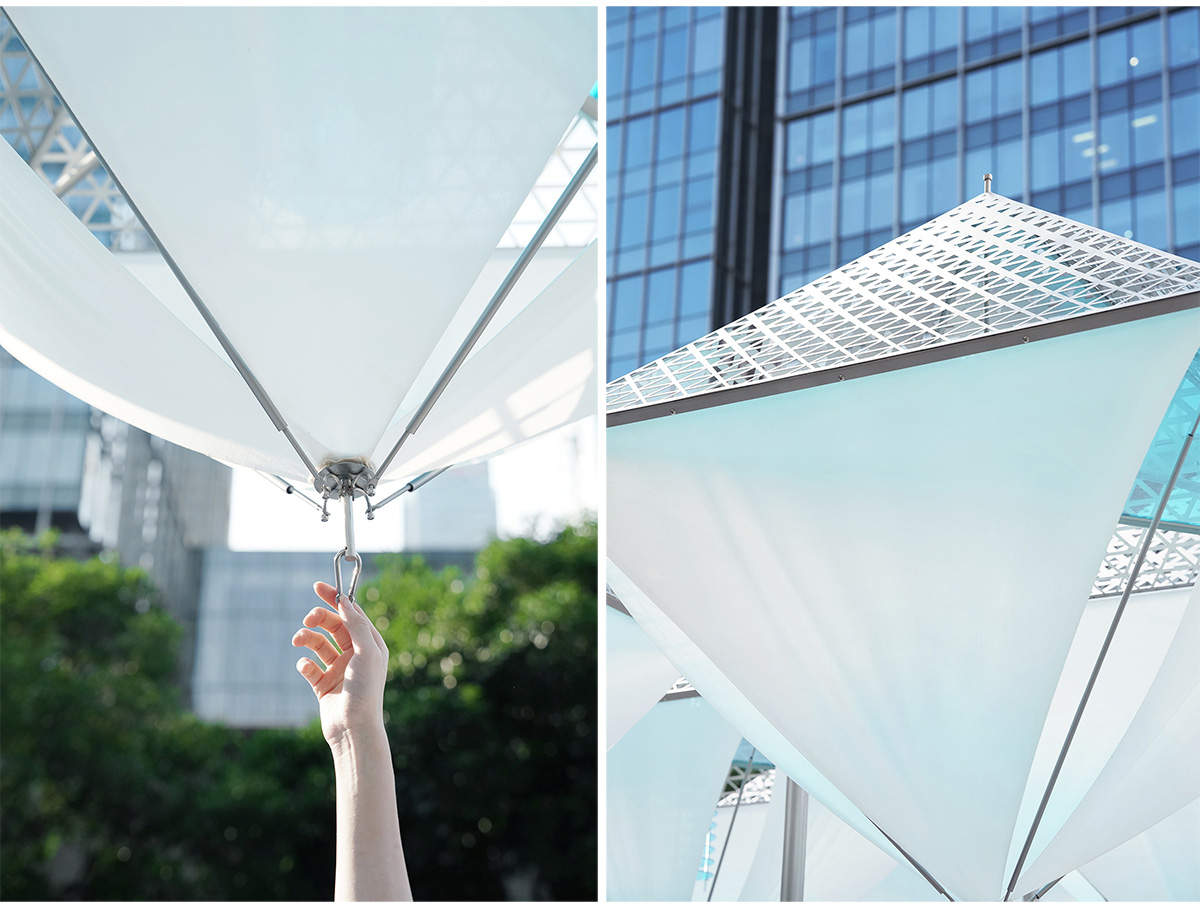
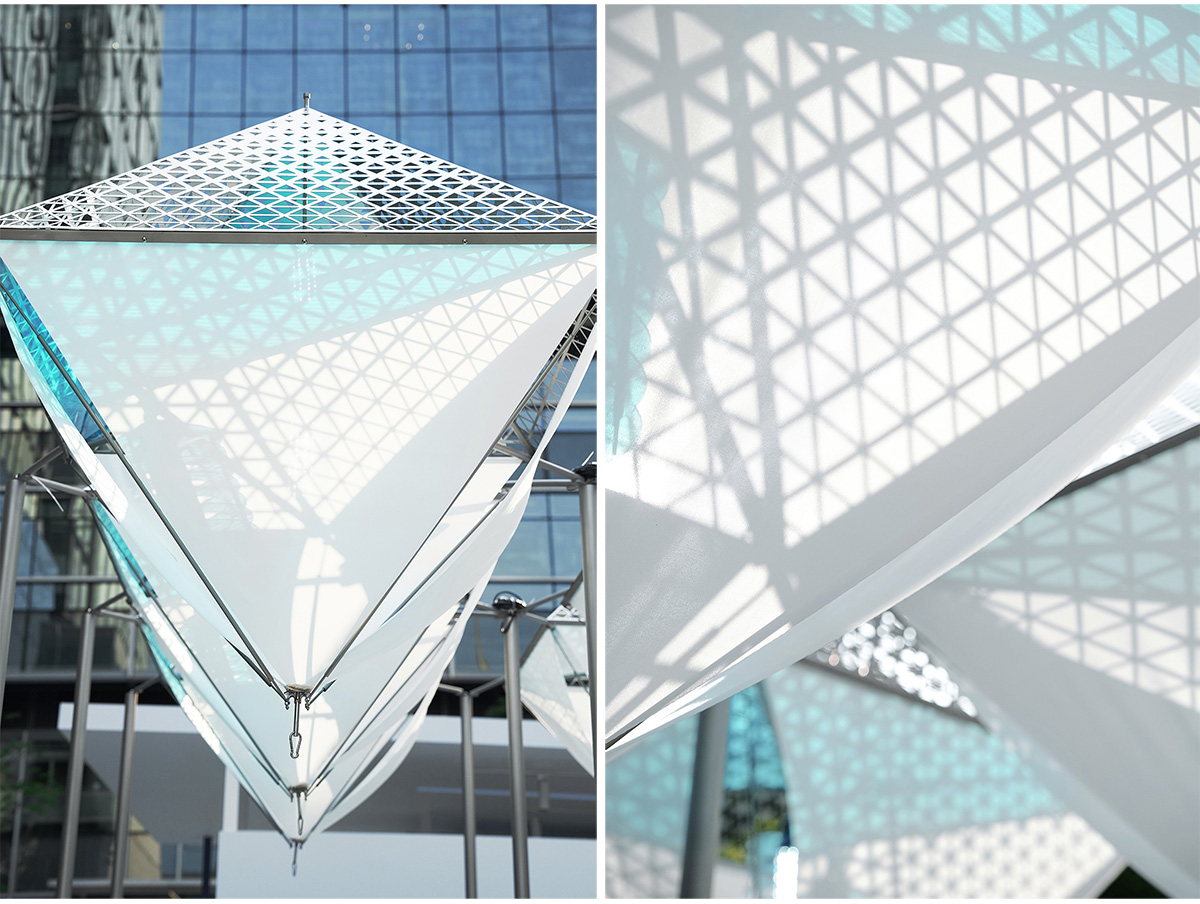
Viewed from the plaza, nine suspended geometric ice forms are arranged as a field, suggesting a fragment of glacial terrain displaced into the city. Their geometry is derived from the dual structure of an iceberg above and below the waterline: the visible tip is only a partial outline, while the greater mass remains concealed. Dayuan Design translated this condition into faceted, architectural volumes. Repetition expands the reading from a single iceberg to a larger system in which glaciers are interconnected and continually changing.


Visitors enter the array and engage with the suspended components hanging beneath each form. A pull causes the apparently complete and stable geometry overhead to contract, fold and distort. Rather than relying on screens or data interfaces, the installation uses direct mechanical feedback to make the effect of human action on natural systems physically legible. Even a slight gesture produces a chain of structural responses. Touching, pulling and looking upward, visitors move from observing climate change to recognising their own position within it.
In keeping with Dayuan Design’s approach to sustainable practice, Glacier Project uses a modular structure designed for disassembly, transport and reuse. Recycled metal and offcuts of discarded waterproof fabric form its principal components. A lightweight metal frame supports the suspended volumes, while mirrored stainless steel and spherical lighting establish a layered composition of reflection, transparency and tension.
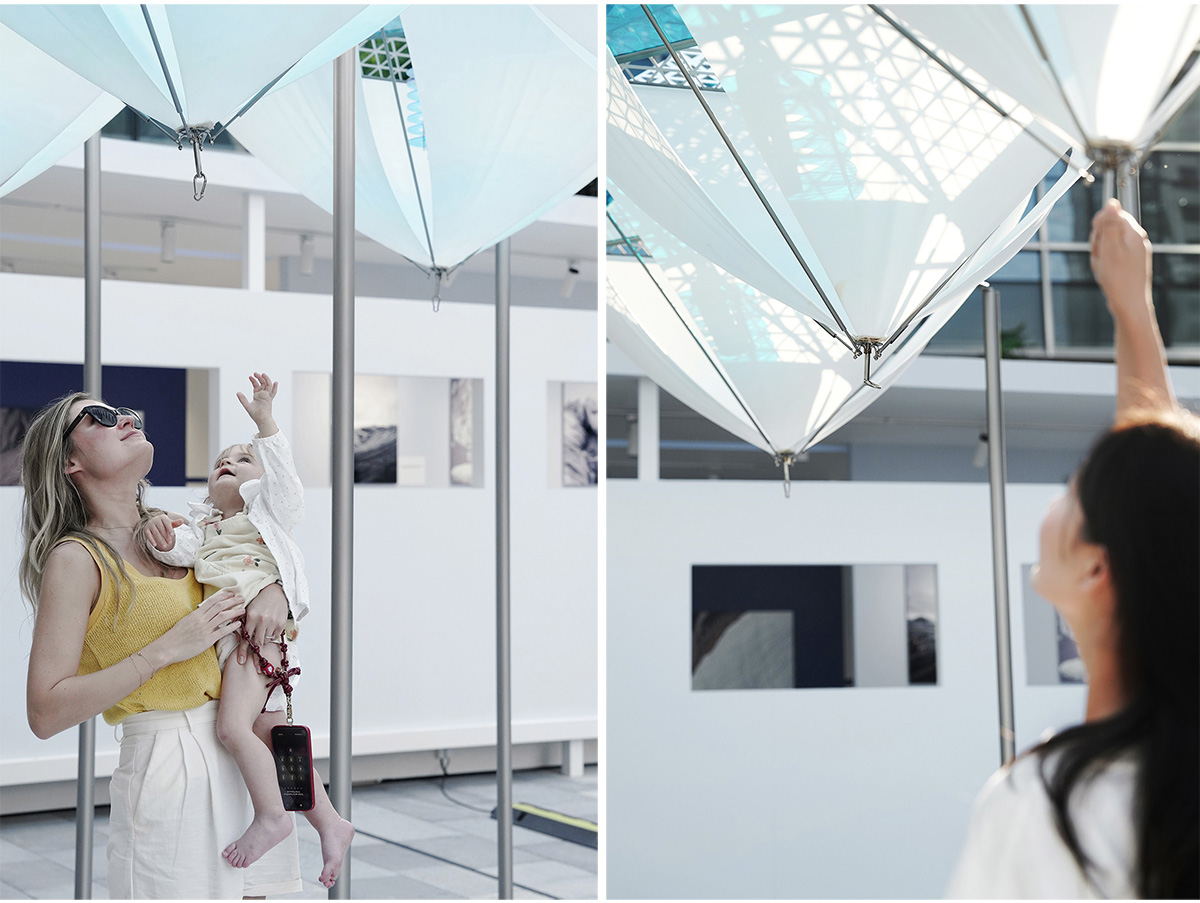
Triangular perforations in the metal mesh draw on the pores, fissures and retreating edges produced by glacial melt. Increasing in size from top to bottom, the openings admit more light and gradually shift the forms from apparent solidity towards thinness and fragility. White membranes retain the image of suspended ice, while the mesh casts moving geometric shadows. The installation changes with daylight, air currents and the movement of people around it.
Because the work stands outdoors, rain is incorporated into its sensory system. Water is channelled through openings at the top and allowed to fall naturally along the structure. Perforations in the floor provide drainage, while droplets striking the metal panels produce a light, crisp sound. In dry weather, the ground reflects the sky and surrounding buildings; in rain, water, reflection and sound alter the rhythm of the installation. Rain is treated not simply as a site condition to be managed, but as part of the work’s connection to glacial meltwater, climatic cycles and the urban water system.
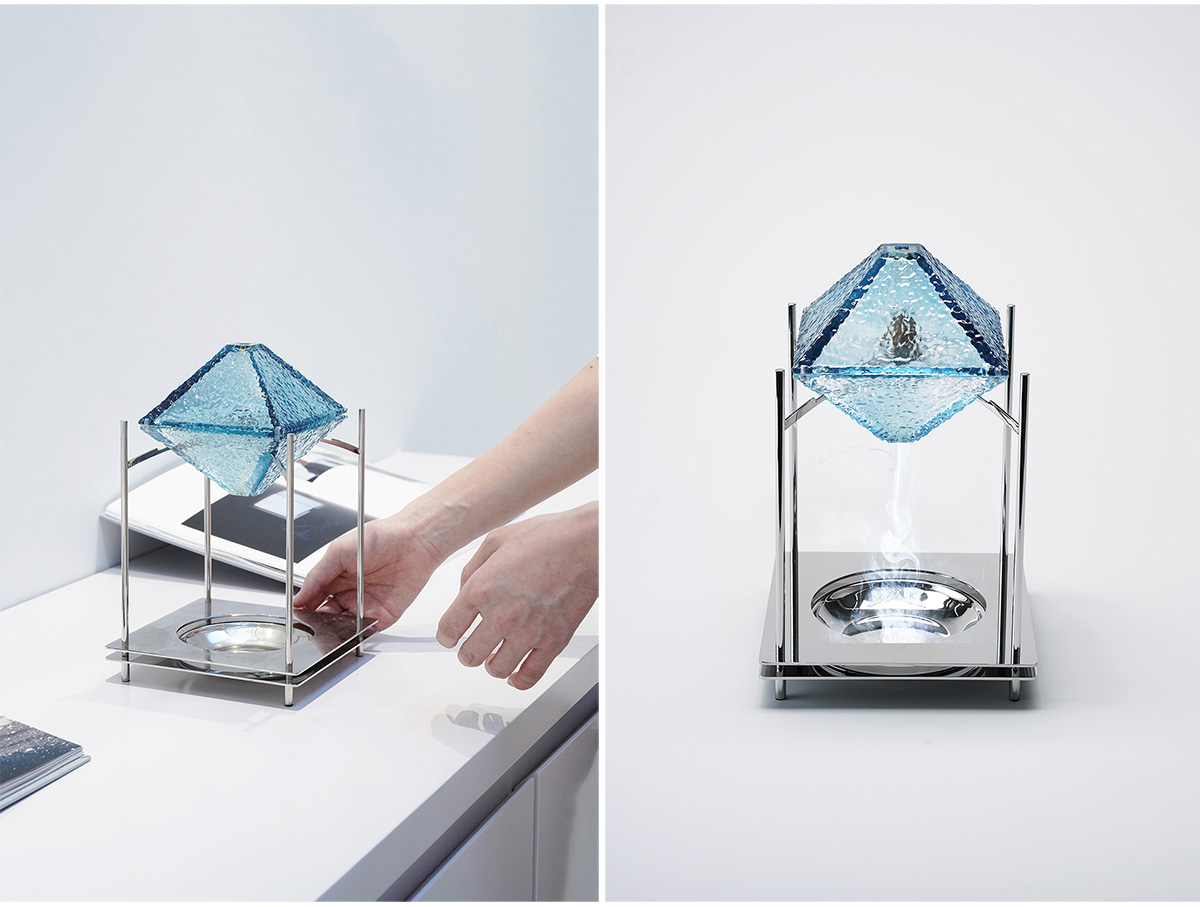
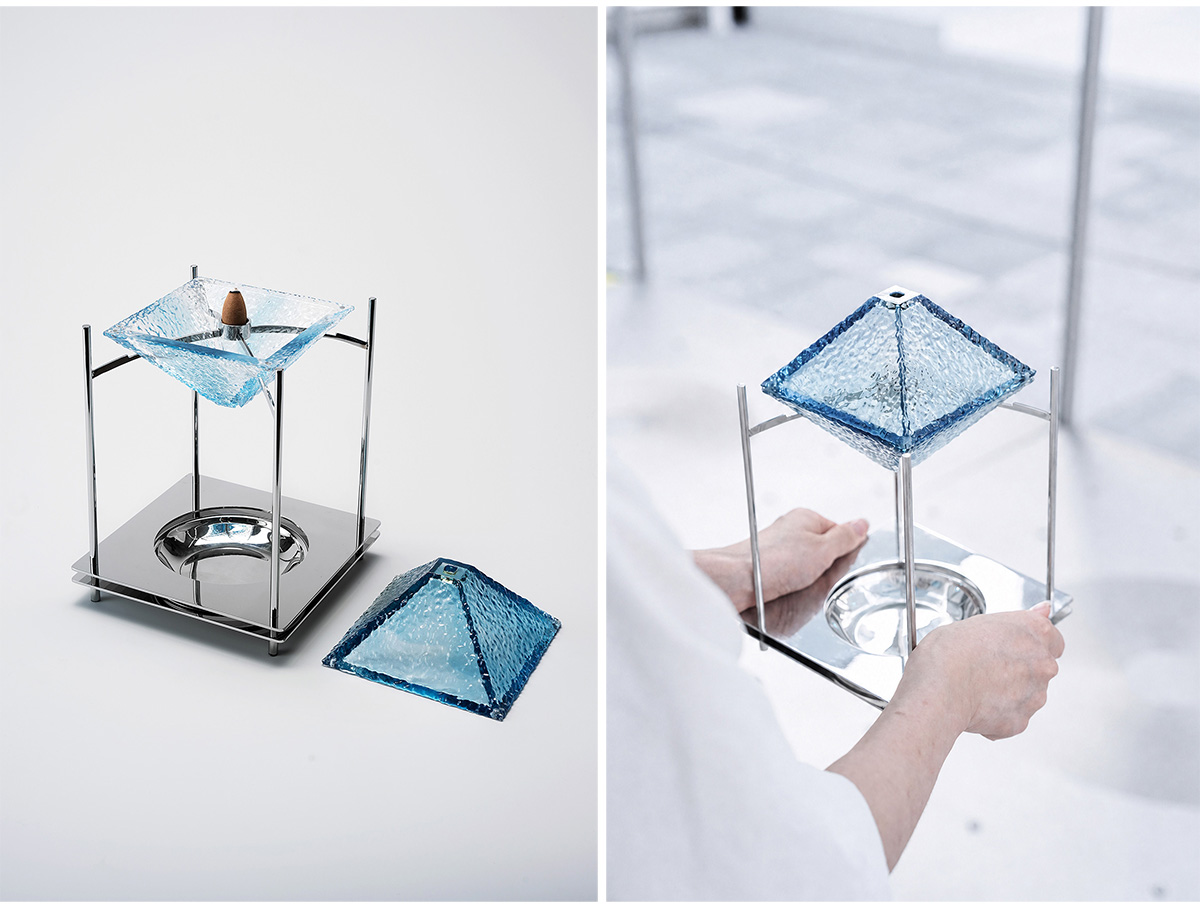
Flowing Glacier is a tabletop installation developed from Glacier Project. It shifts the project from the scale of public space to that of daily life, translating fractured ice, flowing meltwater, descending cold air and irreversible loss into an object that can be lit, observed over time and contemplated at close range.
The work uses backflow incense as its central medium. Once lit, the smoke descends slowly in response to temperature, airflow and density, passing through the translucent glacial form like cold air entering a valley or meltwater moving through a crevice. Its downward movement makes time visible. It cannot be reversed or paused, just as glacial melt, once underway, cannot readily be restored. Flowing Glacier condenses this irreversible process into a small, perceptible event.

The glacial element is made in liuli, a traditional Chinese glassmaking craft recognised as intangible cultural heritage. Formed through heat, then cooled and fixed, the material carries the properties of fire, light, transparency and solidification. These qualities sit in deliberate contrast to the coldness, clarity and vulnerability of glacial ice. Its translucency recalls the body of a glacier while placing a historic craft within a contemporary environmental context.
Sustainability in Flowing Glacier therefore extends beyond material choice to cultural continuity. A single thread of descending smoke turns the irreversible melting of a distant glacier into a recurring observation within daily life. Through the simple acts of lighting, waiting and looking, the close yet vulnerable relationship between human activity and the natural world is brought back into view.
Developed with N.O.C., Resonance of the Extremes draws on the organisation’s long-term observation of polar environments. Dayuan Design translated material on glaciers, oceans and climate change into a spatial sequence that visitors could enter, pause within and perceive at close range. Rather than presenting distant landscapes as images alone, the exhibition asks how the interdependence of human and natural systems might be understood within an urban public setting.
The outdoor glacier installation establishes the first point of contact; the white exhibition volume behind it becomes the project’s narrative container. Its restrained geometry gathers the visual energy of the external work and guides visitors from the open city into a quieter mode of attention. Deep-blue volumes and horizontal lines recall the sea, glacial strata and cold light. Movement, thresholds and pauses give the exhibition a measured pace, allowing the subject to unfold gradually.

A one-way circulation organises the visit. From the entrance, the route passes through a prologue, film, artefacts, a central display and a sound chamber before returning to the public realm through the grey space at the exit. Perception develops in stages: visitors are first drawn in by the glacier installation, then guided by image and text, brought closer to the realities of glacial change through objects and sound, and finally returned to the city with that experience in mind.
The exhibition is structured in four chapters: Encounter, Remains, Listening and Resonance. Together, they trace a progression from distance and memory to sensory experience and action.
Encounter examines the distance inherent in looking. A sequence of windows resembles cuts through layers of ice, repeatedly framing the glacier installation outside alongside trees, pedestrians and building facades. City and nature overlap within these openings, suggesting that they are not opposing conditions and that the glacier has never been entirely separate from urban life.

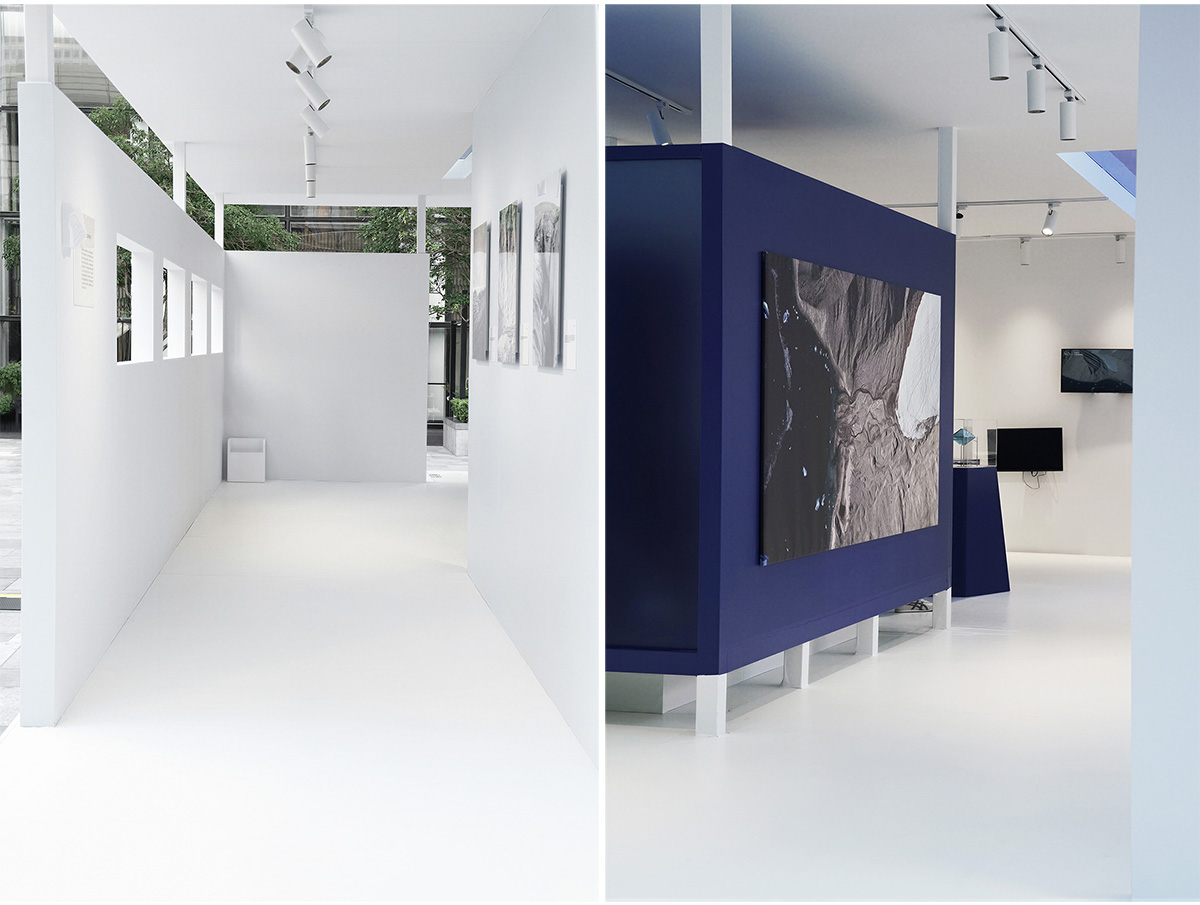
Remains brings the subject into the realm of evidence and memory. Traditional gloves, hunting implements, manuscripts, photographs and objects from polar life record forms of knowledge developed through living alongside oceans, glaciers, animals and climate in extreme environments. Climate change is thus connected to the body, labour, lived experience and memory.
Listening marks a sensory shift within the space. The blue sound box is placed independently from the main circulation, forming a relatively quiet pause for listening. Once visitors put on the headphones, the sounds of the city are temporarily set aside, while the cracking of glaciers, the flow of meltwater, marine life, and polar environmental sounds enter the body. Sound becomes another way of understanding glaciers, transforming nature from image into vibration and resonance.

Resonance directs the exhibition towards coexistence and action. It asks visitors to recognise themselves as part of a living system in constant change. Counterintuitive facts about glaciers, oceans and polar regions are translated into a more immediate public understanding: the issue is not only the transformation of distant landscapes, but an imbalance within the shared systems on which everyday life depends.
From the nine glacier forms at Shanghai Jing’an Kerry Centre to the tabletop scale of Flowing Glacier and the exhibition space of film, artefacts and sound, the project steadily reduces the distance between subject and viewer. Glacier Project enters the city as public art, becomes a bodily encounter and continues as an object of repeated observation in daily life. Climate change is no longer confined to a remote geography or to the limited duration of an exhibition.

For Dayuan Design, sustainability is not a material label applied at the end of a project. It is a method that runs through strategy, structure, material decisions and cultural expression. It concerns whether a work can be dismantled, transported and reused, but also how an issue is made visible, understood and discussed, and whether it continues to resonate after the exhibition closes. Design connects distant glaciers to the contemporary city and an individual gesture to the response of a natural system. In doing so, a temporary spatial experience can generate longer-term perception and reflection, creating lasting impact.
Drawings


Images


