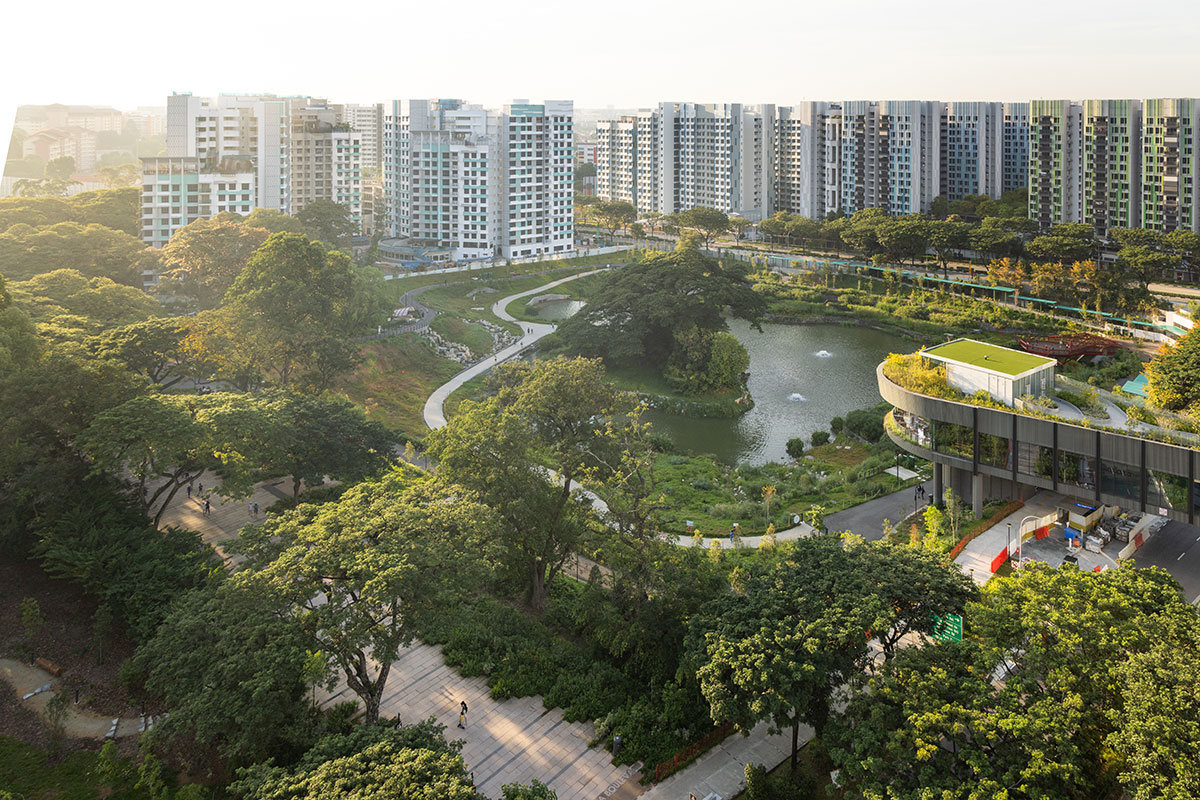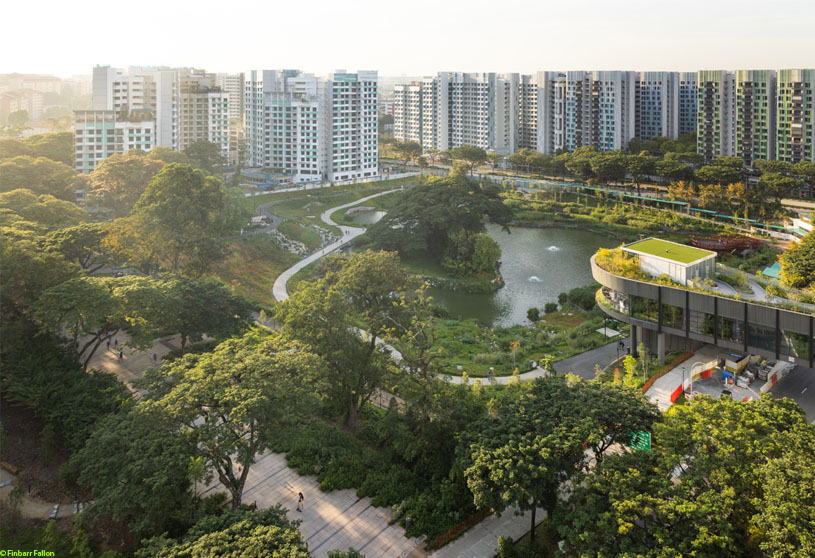
Excerpt: Bidadari Park by Henning Larsen is designed as a nature-led model for urban living, where nature and community thrive together. The design transforms a former cemetery into an accessible, inclusive public park, integrating biodiversity, active mobility, and nature-based water management. It creates a harmonious landscape where residents can connect with nature while preserving and enhancing local habitats.
Project Description
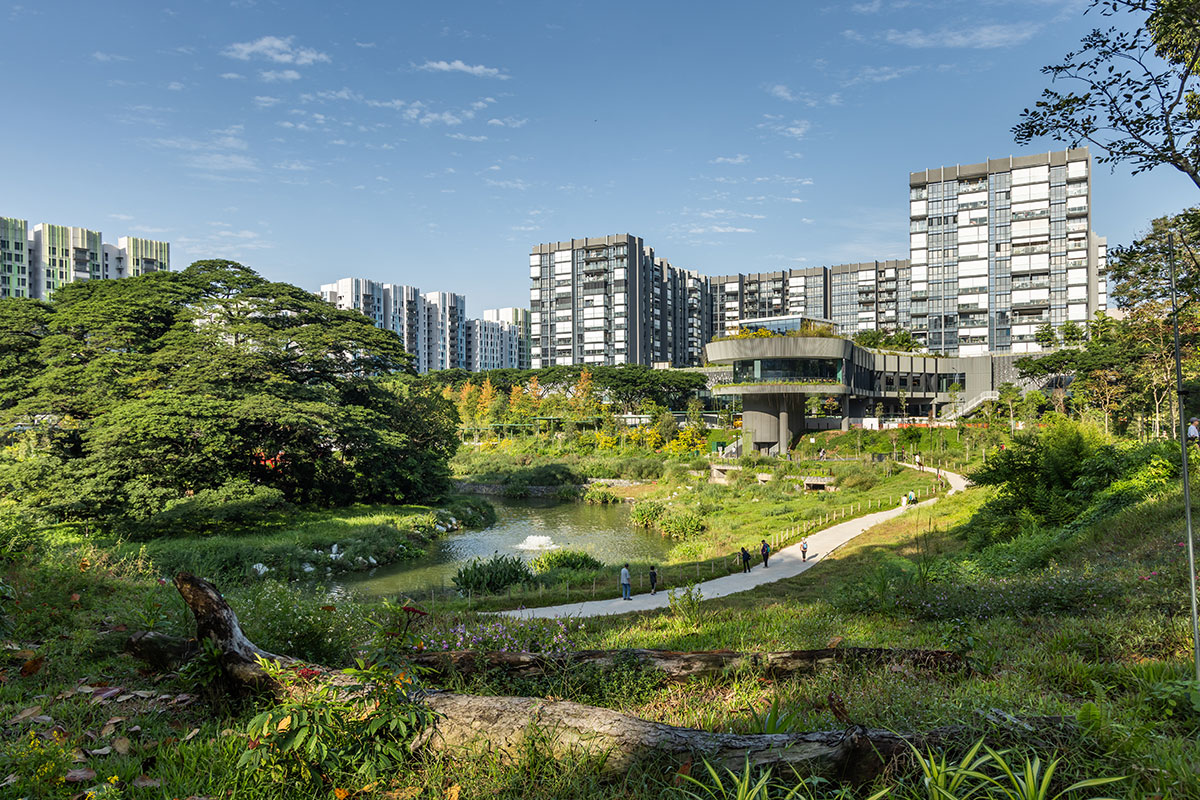
[Text as submitted by architect] As cities around the world grow denser and hotter, Bidadari Park offers a new model for urban living, where nature and community thrive together. Designed by Henning Larsen in collaboration with CPG Consultants, the transformation of the former Bidadari cemetery into a 13-hectare public park has created an accessible, inclusive space for the growing local community and a vital sanctuary for over 193 species of wildlife.


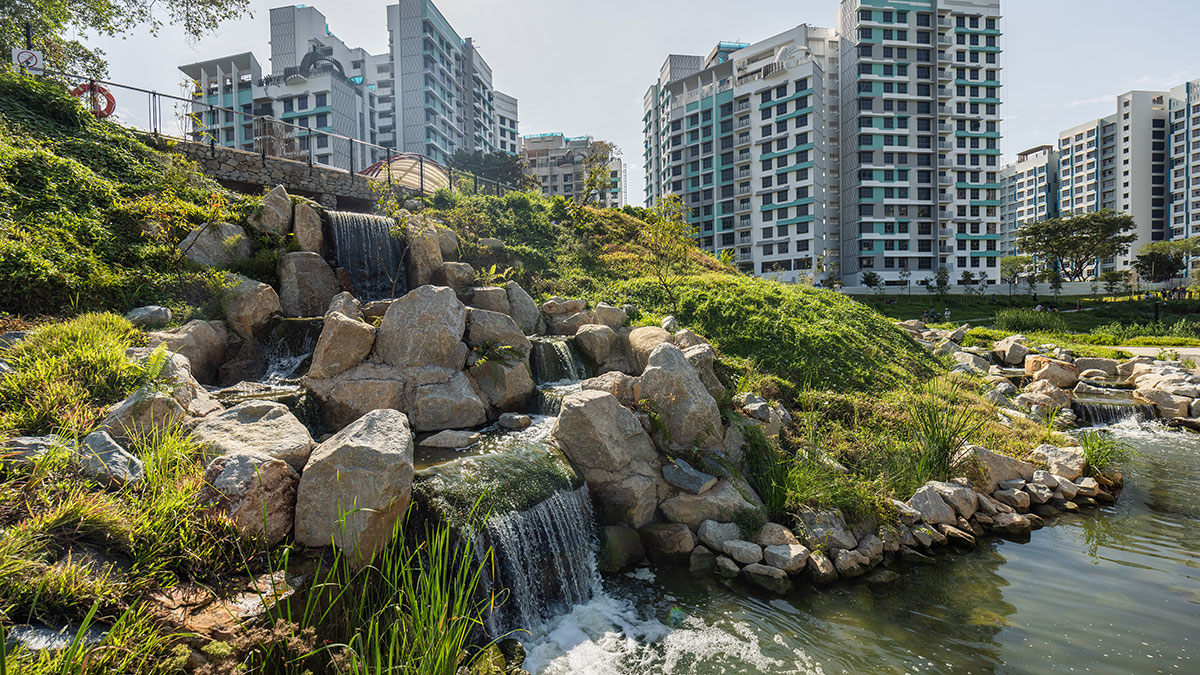
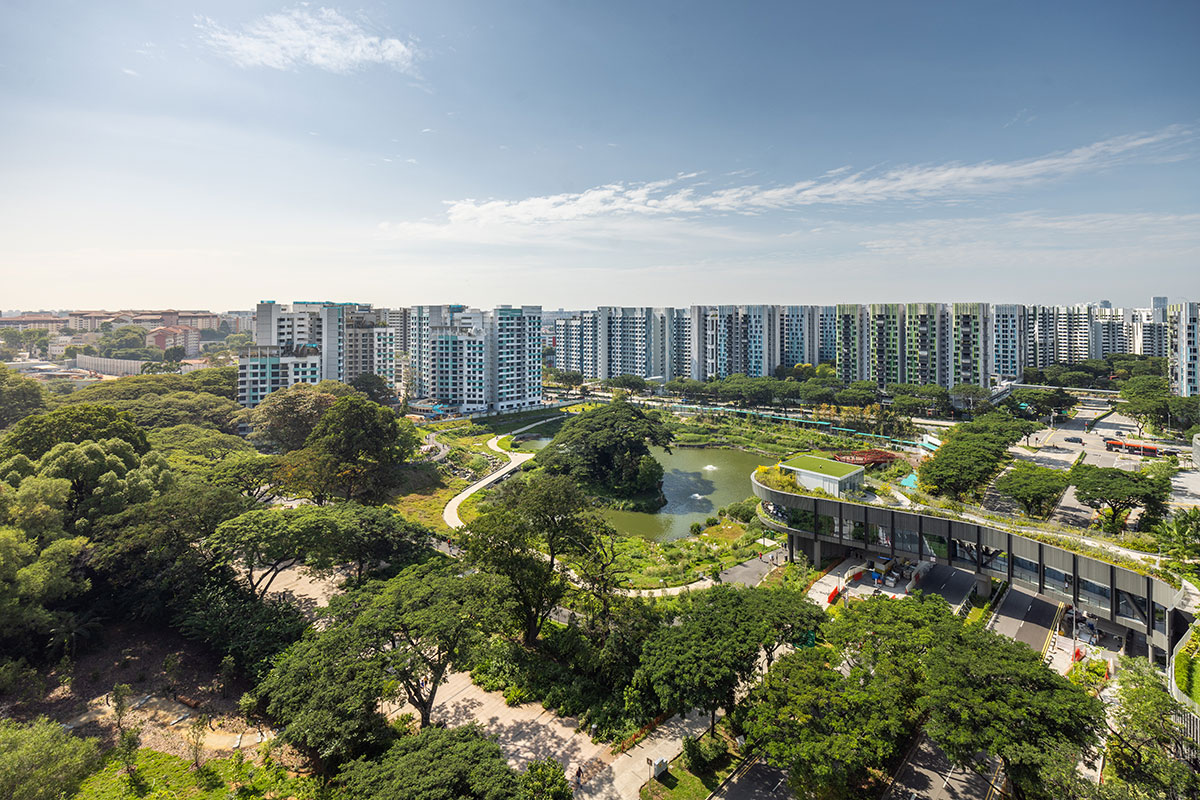
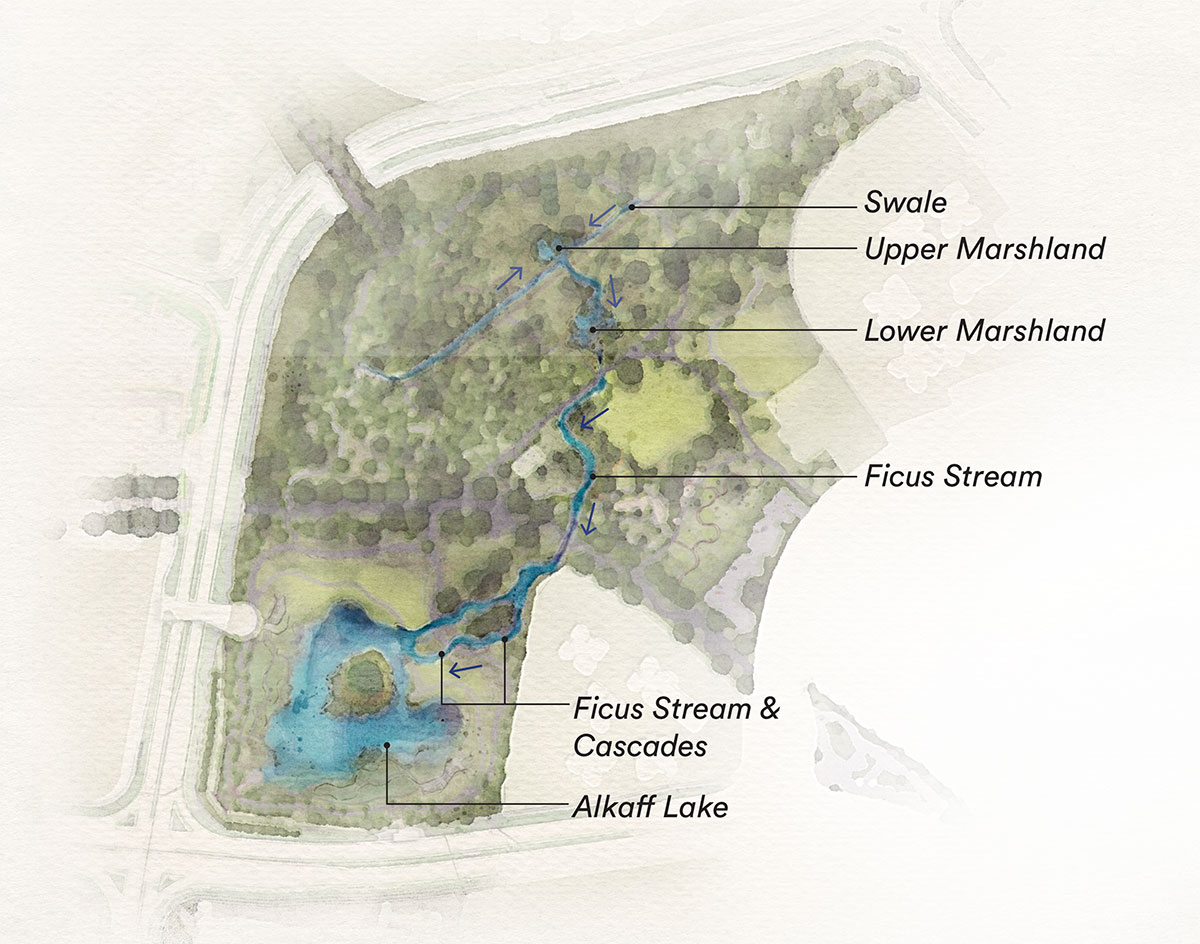
Located within a new public housing estate in Singapore, the park is centered around an innovative nature-based design and water management strategy—including the creation of AIkaff Lake—that safeguard local ecosystems, mitigates flooding and honors the site’s cultural heritage.
Together with CPG Consultants, Henning Larsen was awarded the ULI Asia Pacific Award for Excellence for Bidadari Park. Chosen for the design’s commitment to biodiversity and conservation, the jury noted its potential to serve as a replicable model for other projects and communities.
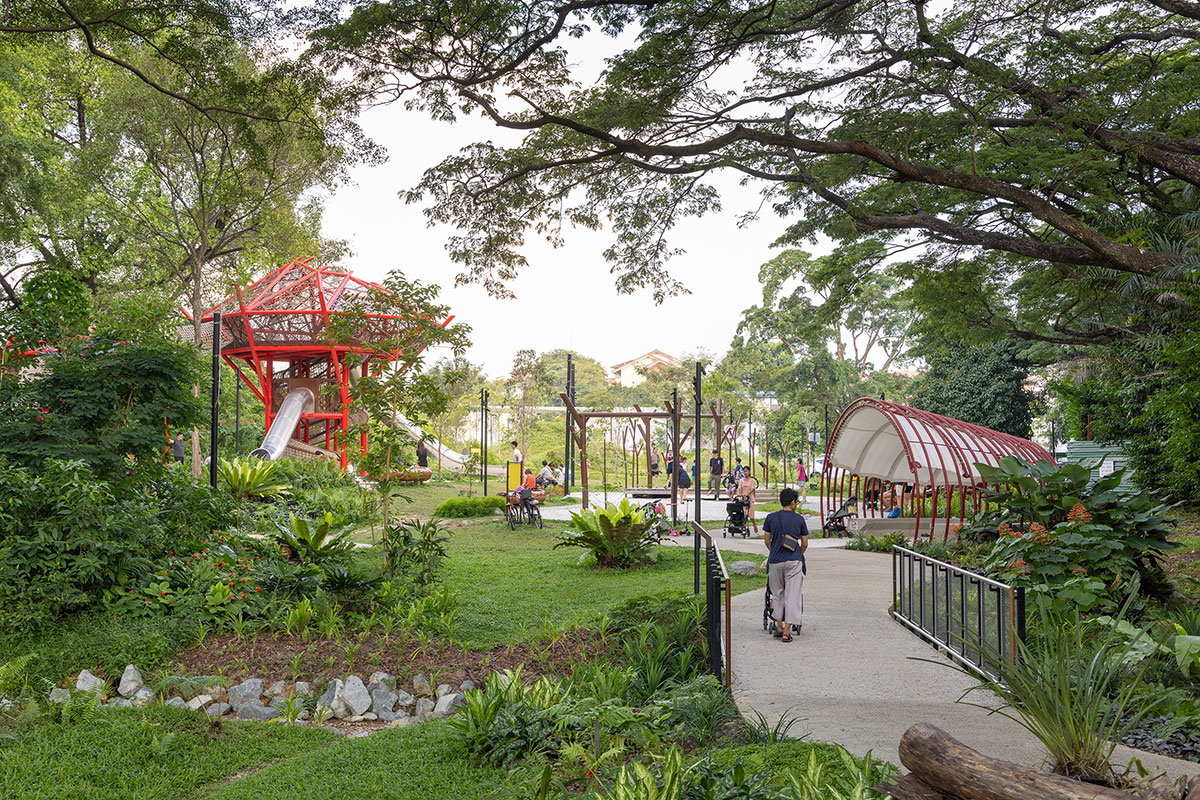

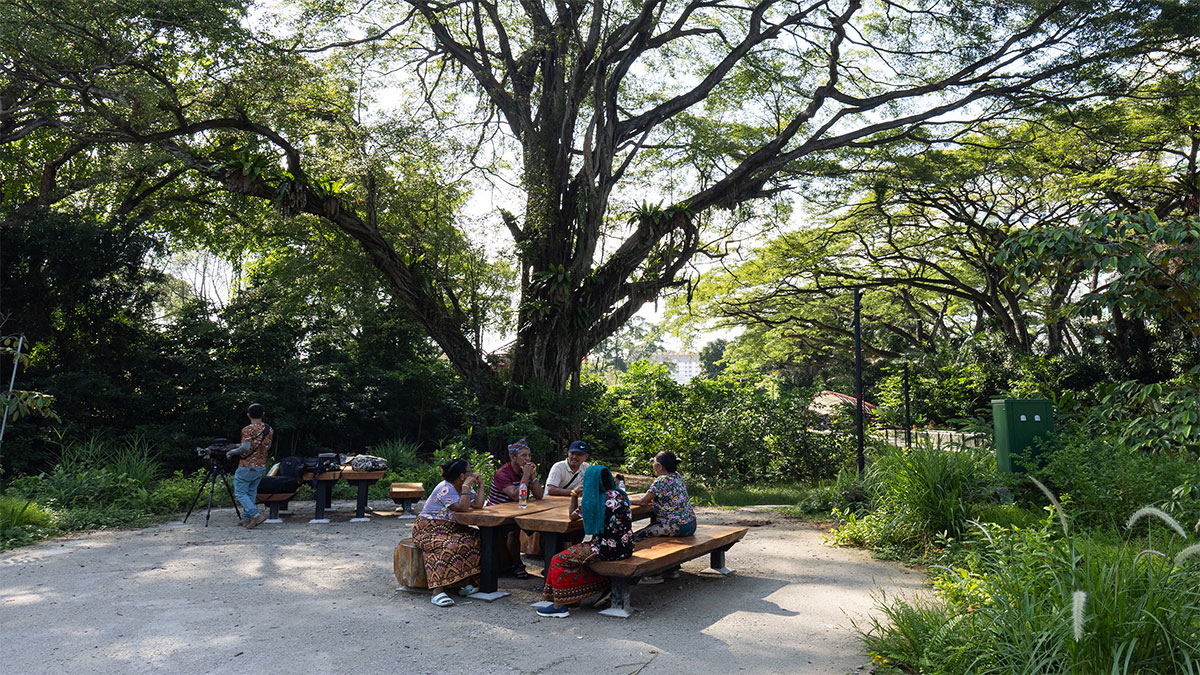
Designed to prioritize place-making and active mobility, the park offers a natural, inclusive recreational space right on the doorstep of residents.
“We are honored to see another park we’ve designed in Singapore open to much excitement,” said Leonard Ng, Henning Larsen, Director, Asia Pacific. “Bidadari Park is an embodiment of our systems-thinking approach, enabling us to bring to life a reimagined public housing estate where the community can connect with nature whilst preserving and enhancing the habitats of the birds and other fauna.”

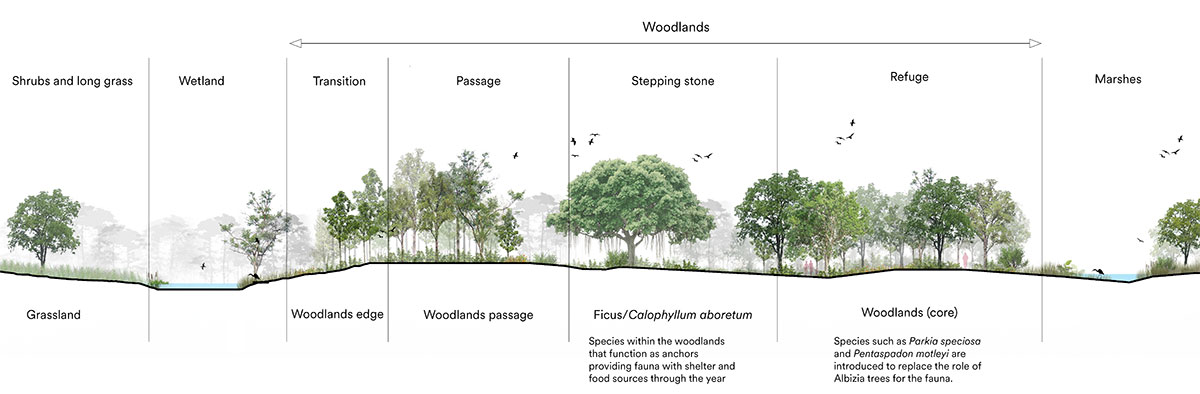
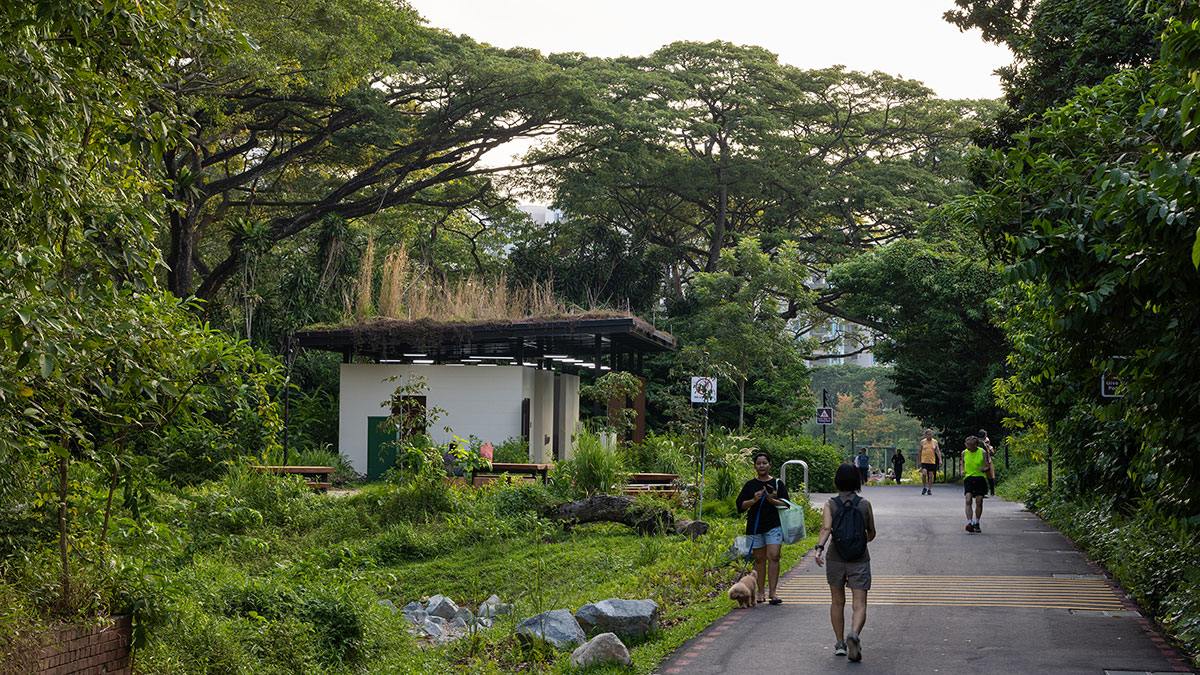
A refuge for biodiversity: Home to over 193 wildlife species, Bidadari Park is urban conservation in action. As one of just two remaining woodland habitats for migratory birds in Singapore, the park plays a vital role in supporting biodiversity. It is home to more than half of the country’s migratory dryland bird species.
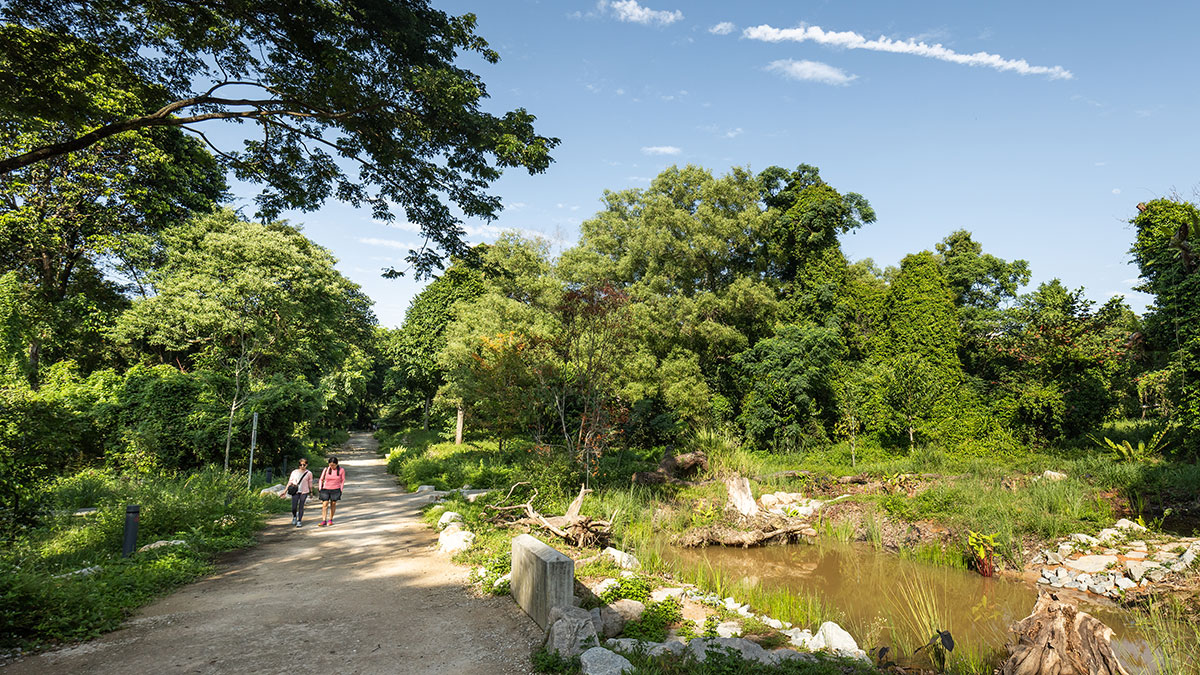
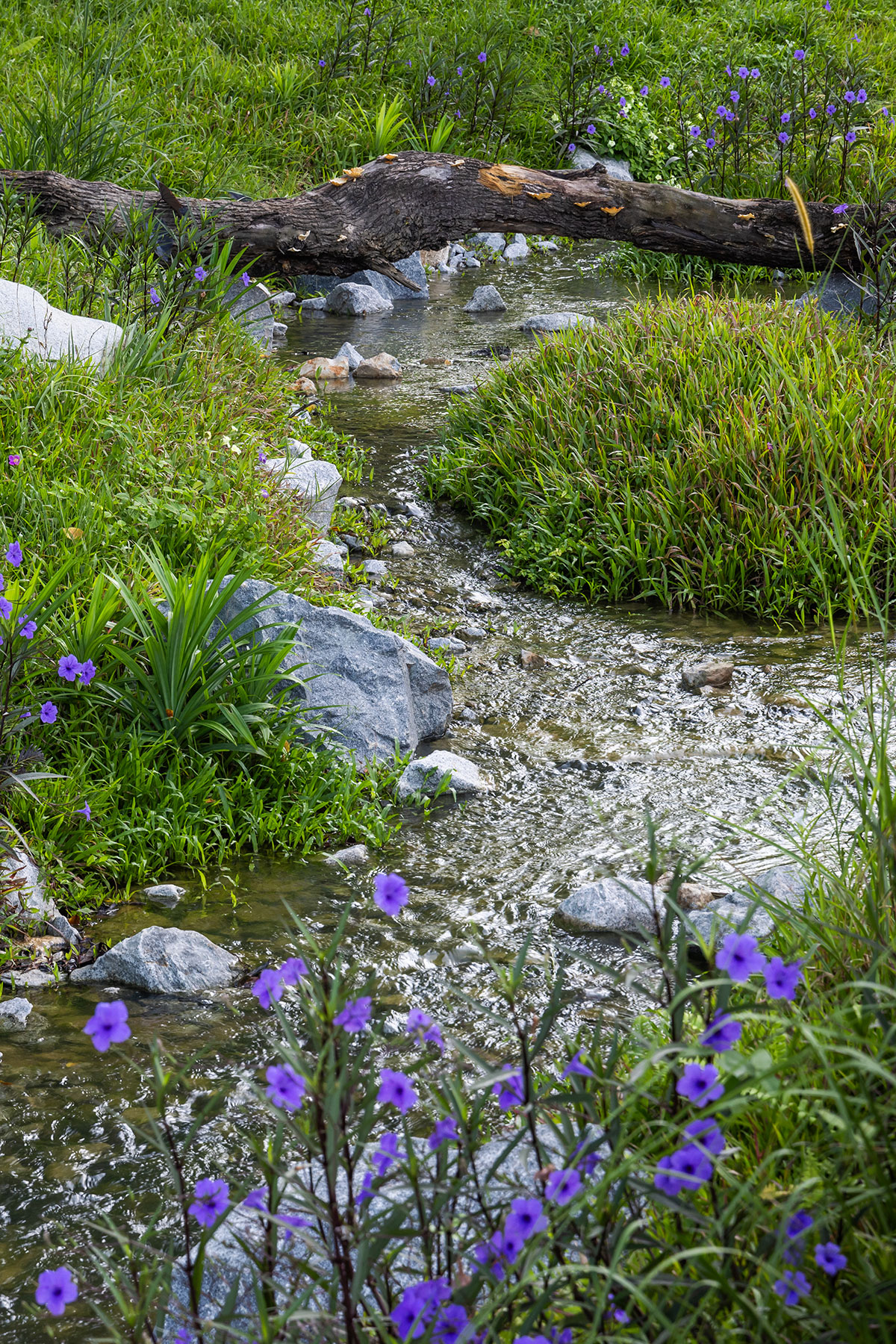
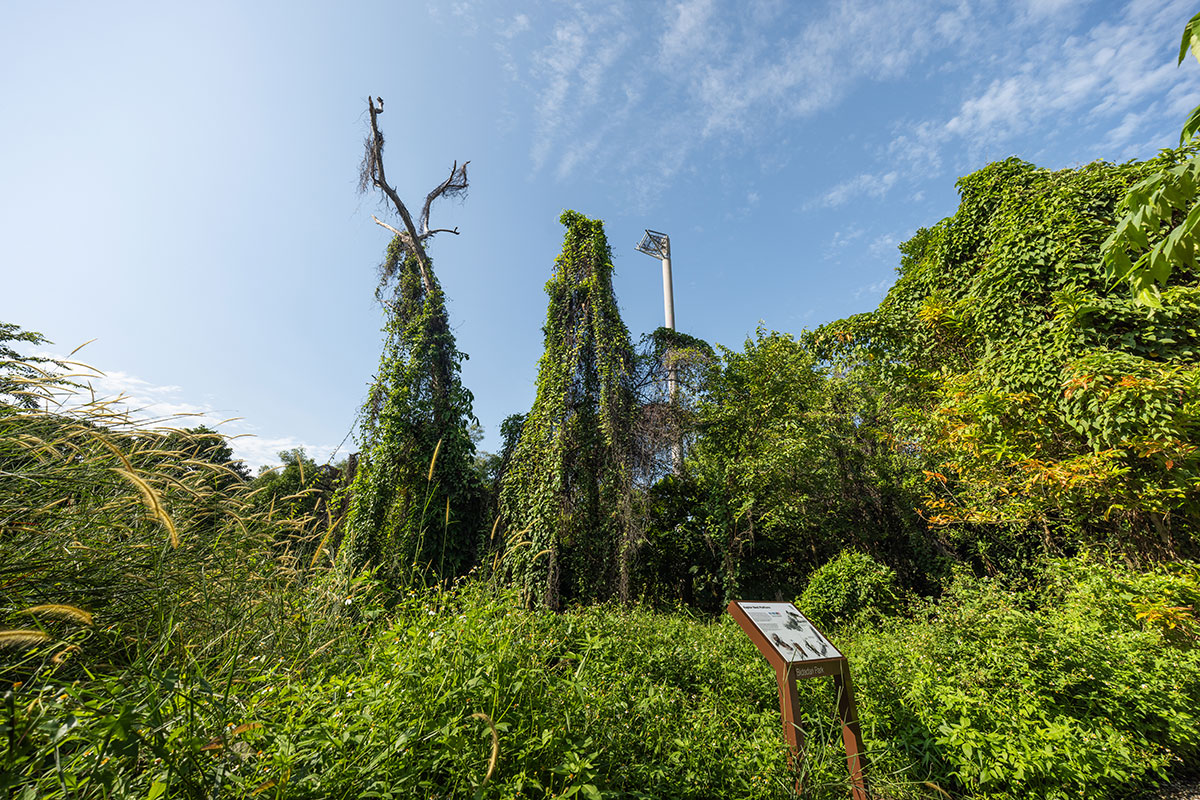
Henning Larsen’s planting strategy retained 84% of mature trees and introduced over 170 native plant species. Designed with both people and wildlife in mind, the park includes passive zones of natural vegetation and active zones that support community activity. Wildlife-friendly bollard lights minimize light spill and reduce disturbance, while ecological features such as snags, log piles, and boulder piles provide spaces for birds to rest, nest, and forage. A 20-meter-tall Raptor nest platform offers a unique perch and nesting opportunity for the apex predator.
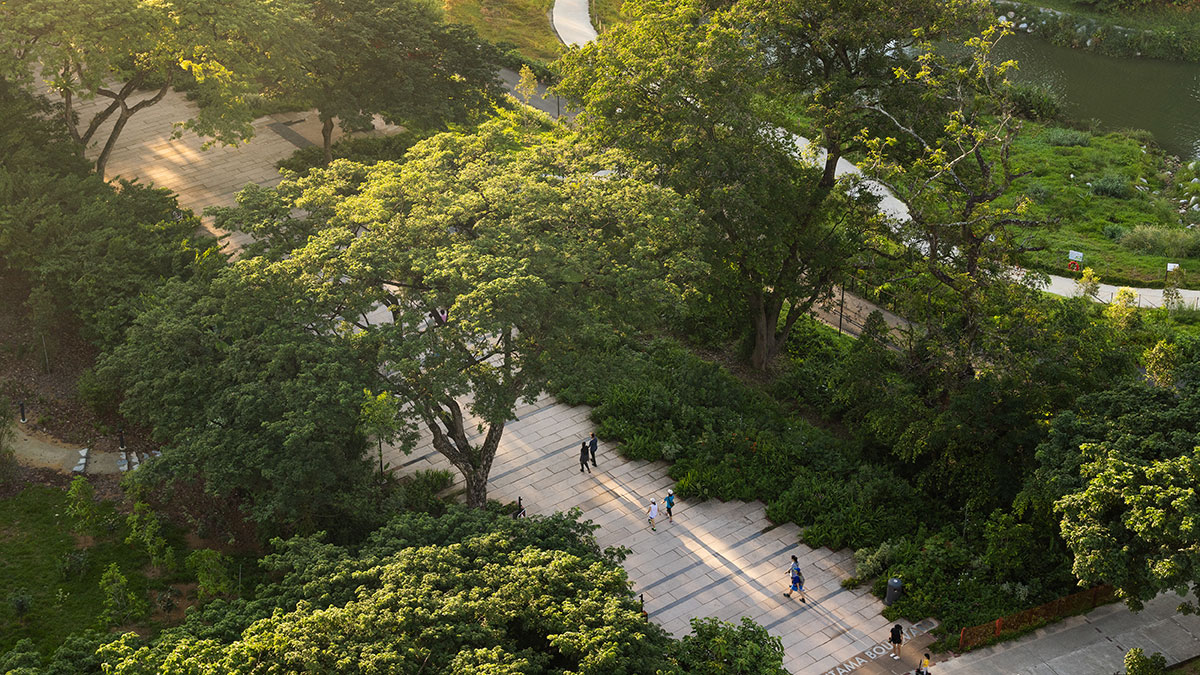
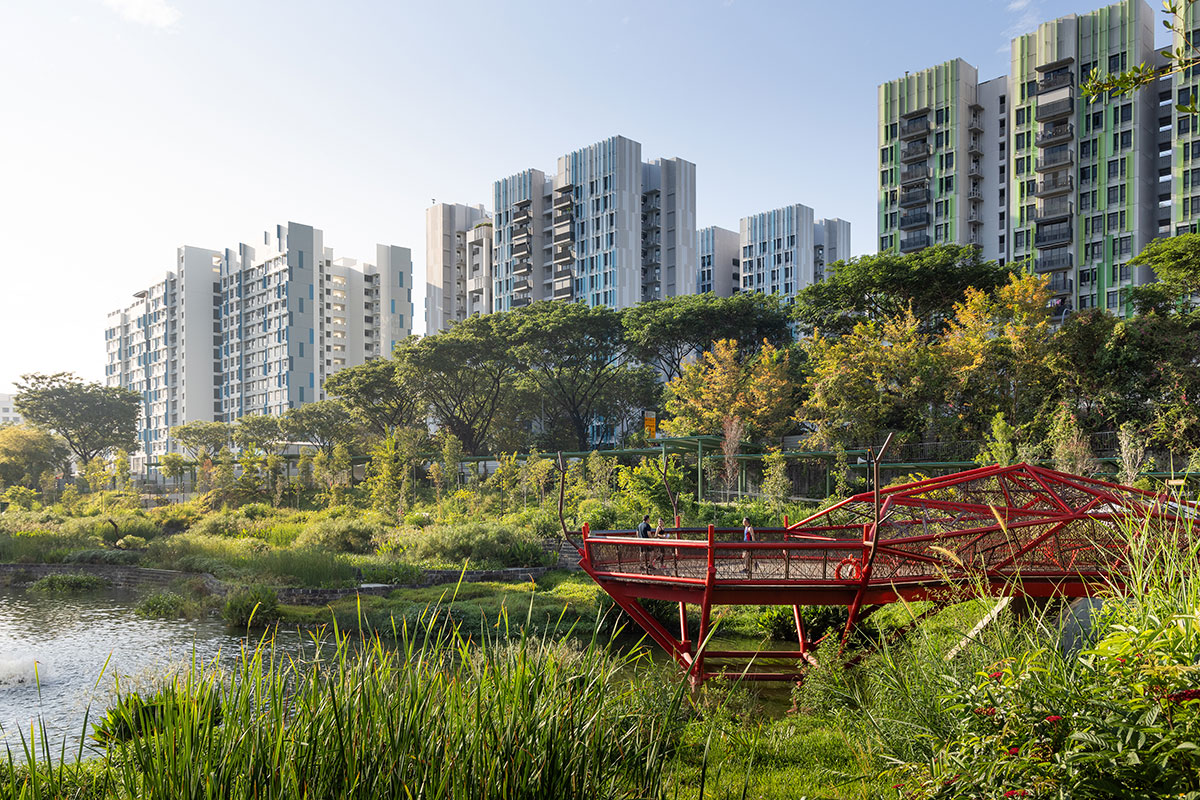
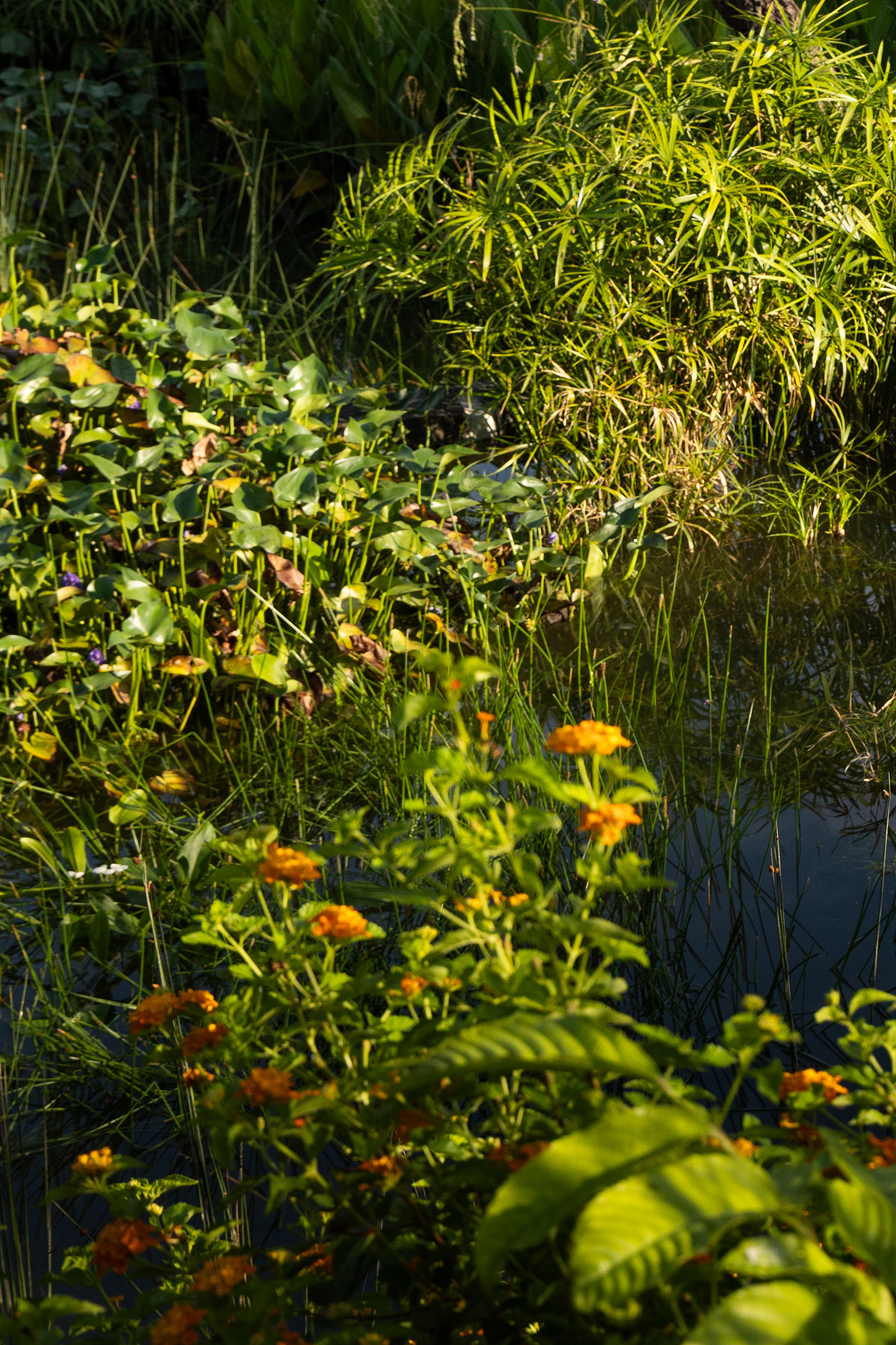
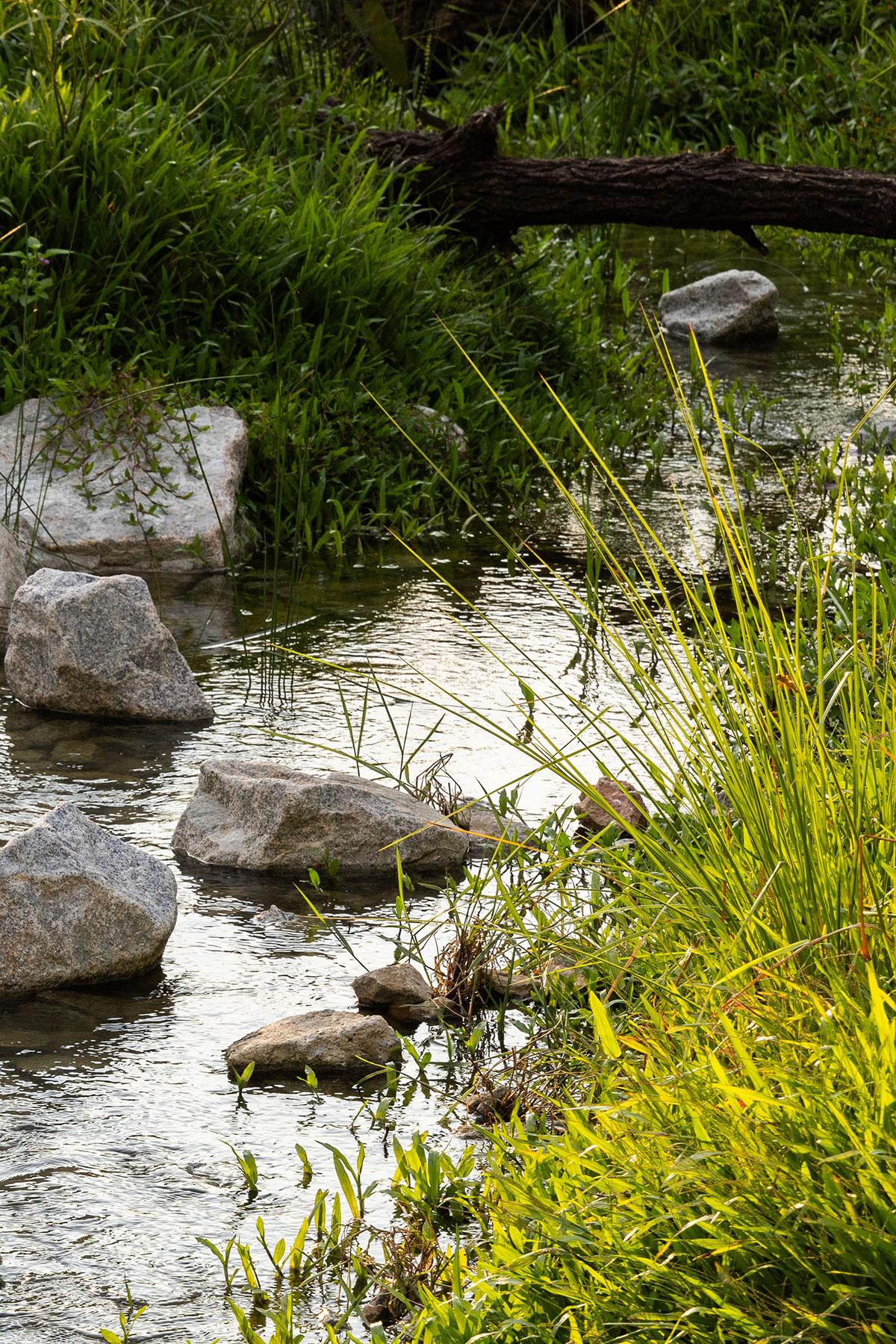
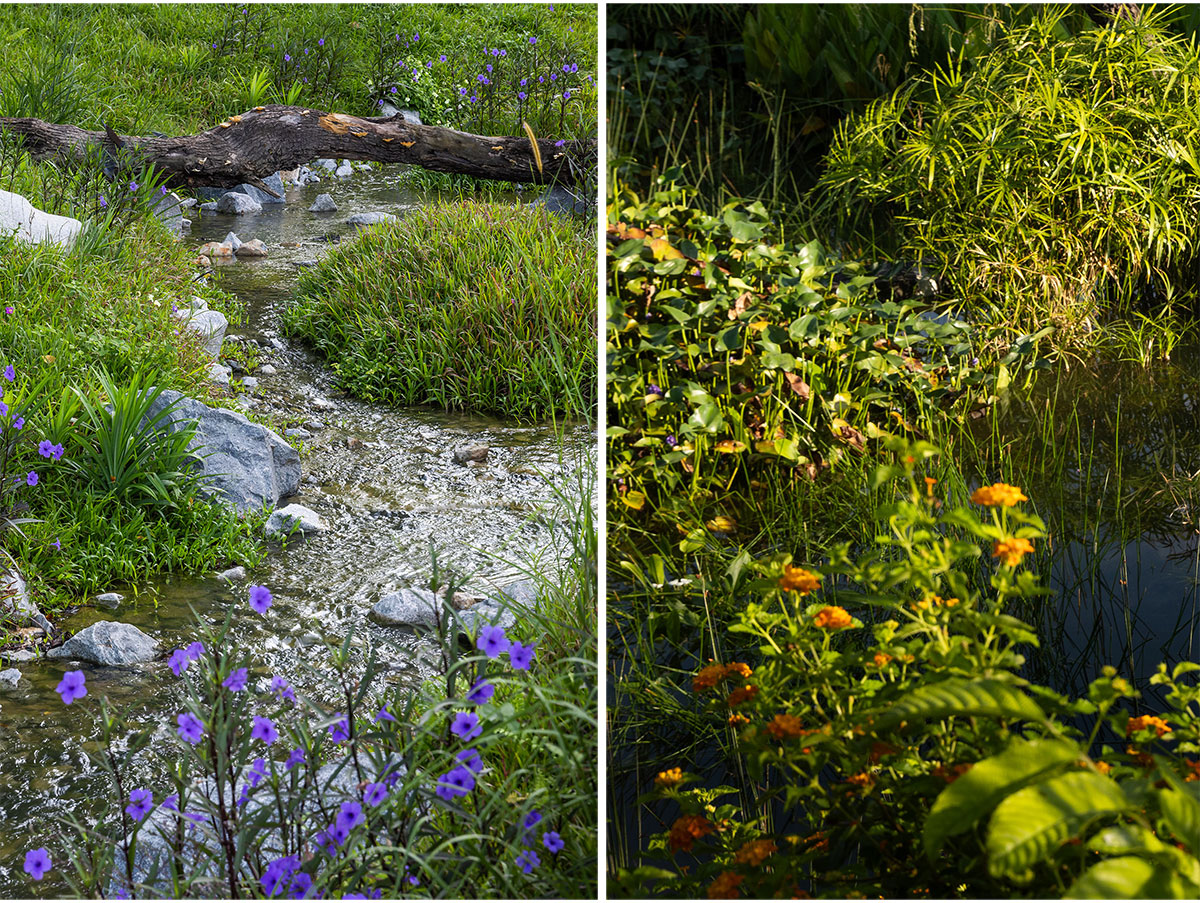
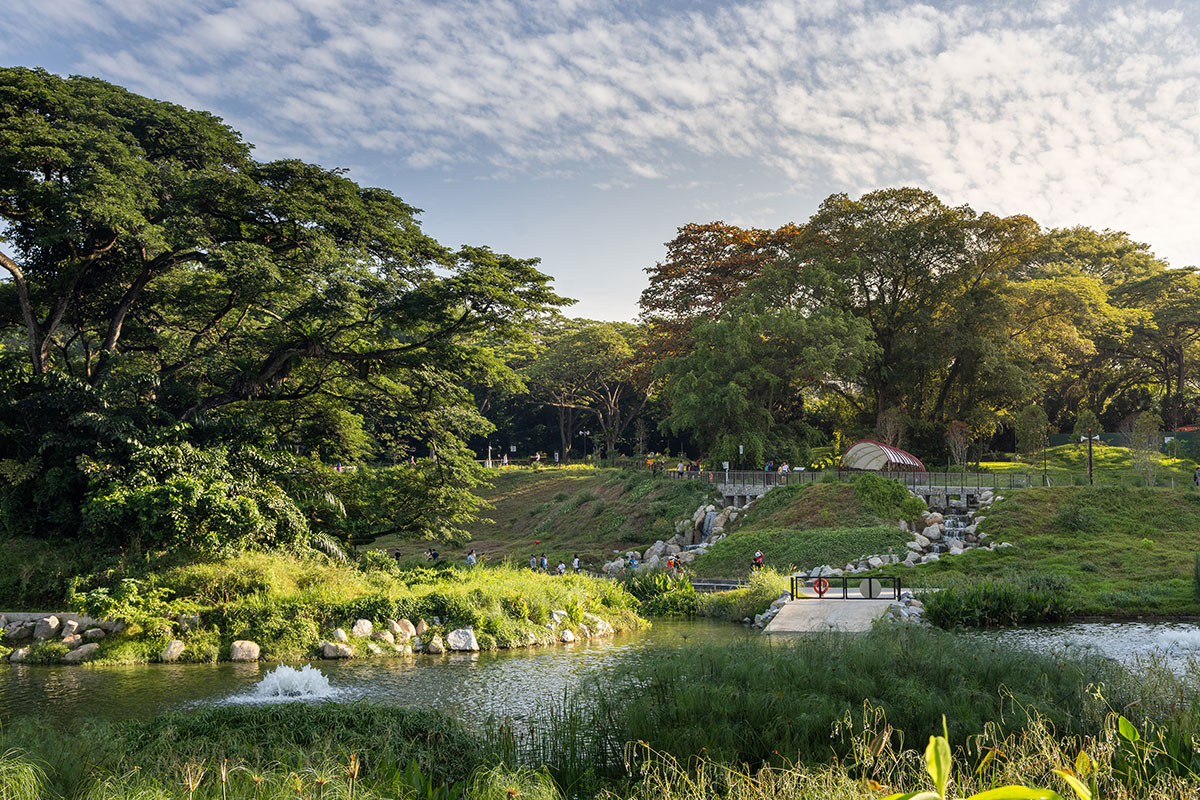
A signature feature of the park is the Somoneo somon tree, standing tall on a carved-out island within Alkaff Lake. Known as Rain Tree Island, this habitat includes wildflowers, ferns, and grasses such as Shepherd’s Needles and Mission Grass, which attract butterflies, bees, and birds. Ripraps surrounding the island provide nooks and slopes that support aquatic plants and small fish.
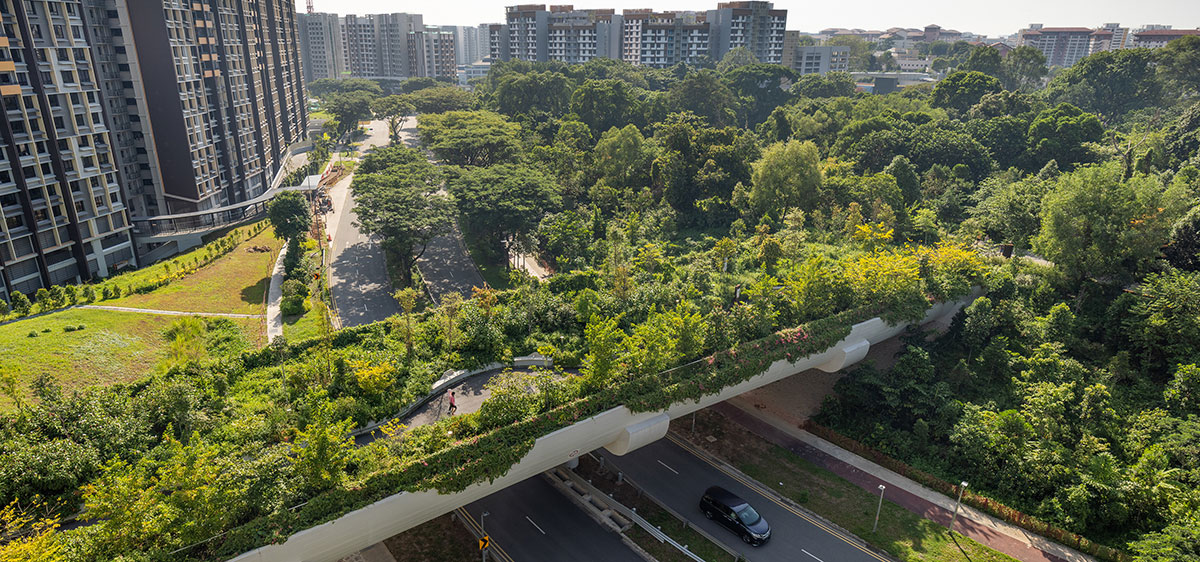
Along the park’s northwestern border, a 100-meter-long land bridge connects two mature woodland areas. This vital ecological corridor supports the movement of bird species such as the Collared Kingfisher, Yellow-vented Bulbul, and Pink-necked Green Pigeon, as well as butterflies and visitors.
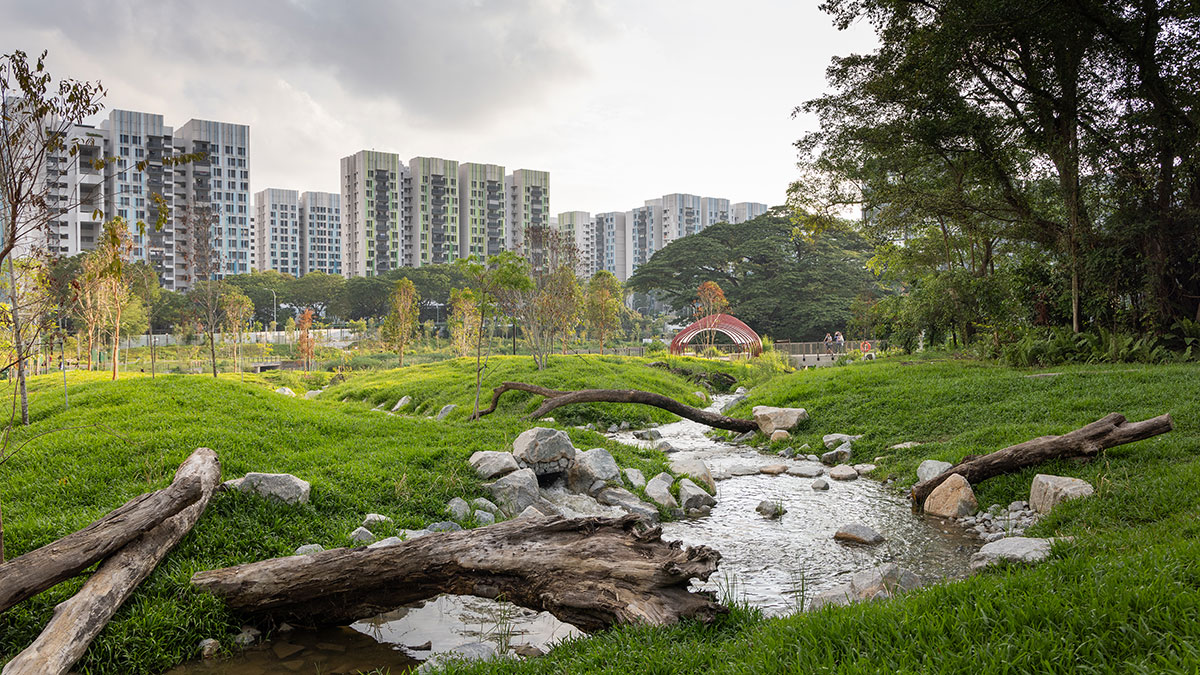
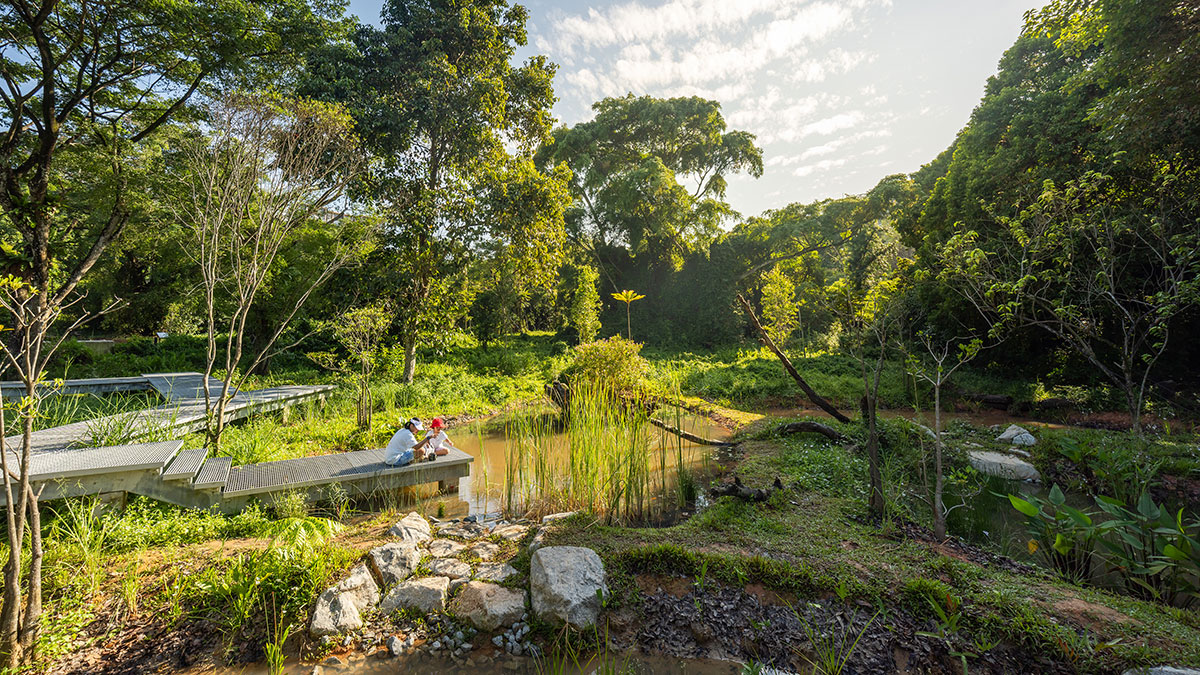
Supporting stormwater management: Alkaff Lake, spanning 1.8 hectares, is a multifunctional drainage infrastructure designed to capture over 90% of the site’s stormwater through a combination of terraced wetlands, swales, marshes, creeks, and a retention pond. The lake boosts drainage capacity while serving as a public amenity, holding up to 40,000 cubic meters of stormwater and offering recreational value during dry periods.
Natural and cultural heritage: Bidadari Park’s landscape was envisioned as a mosaic of distinct spatial identities, each forming a holistic nature experience for the community. Curated planting themes and topographical diversity give rise to a wide variety of habitats—including rolling hills inspired by the former Alkaff Gardens, transitional woodlands and grasslands, and a Ficus grove.
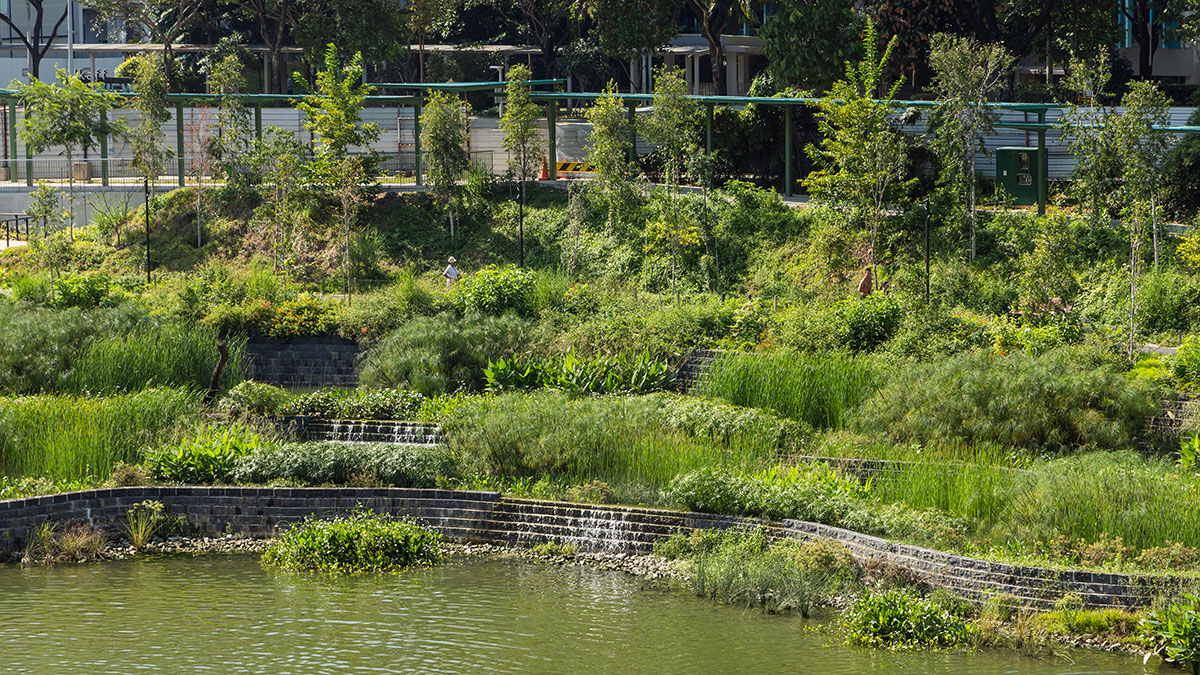
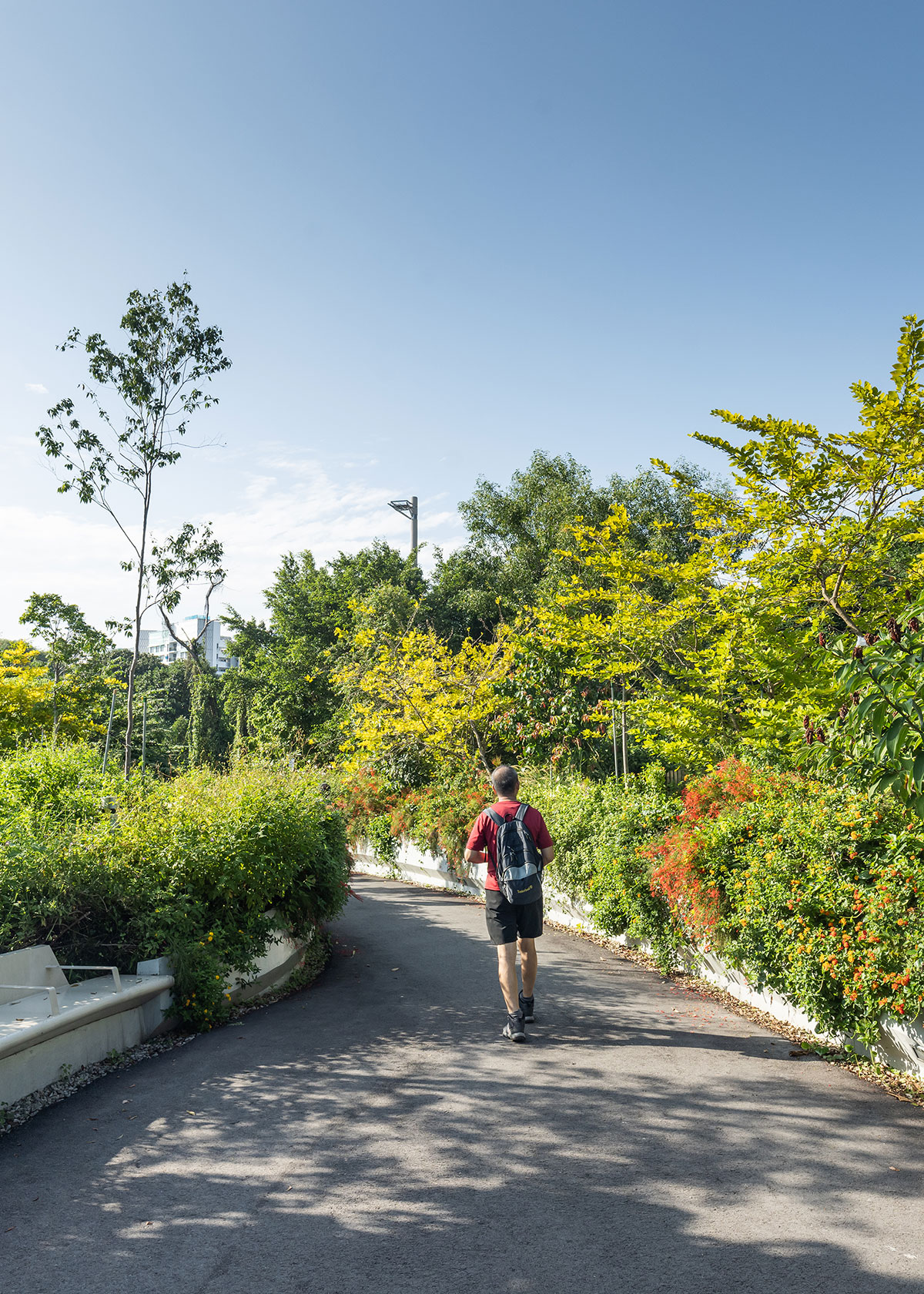
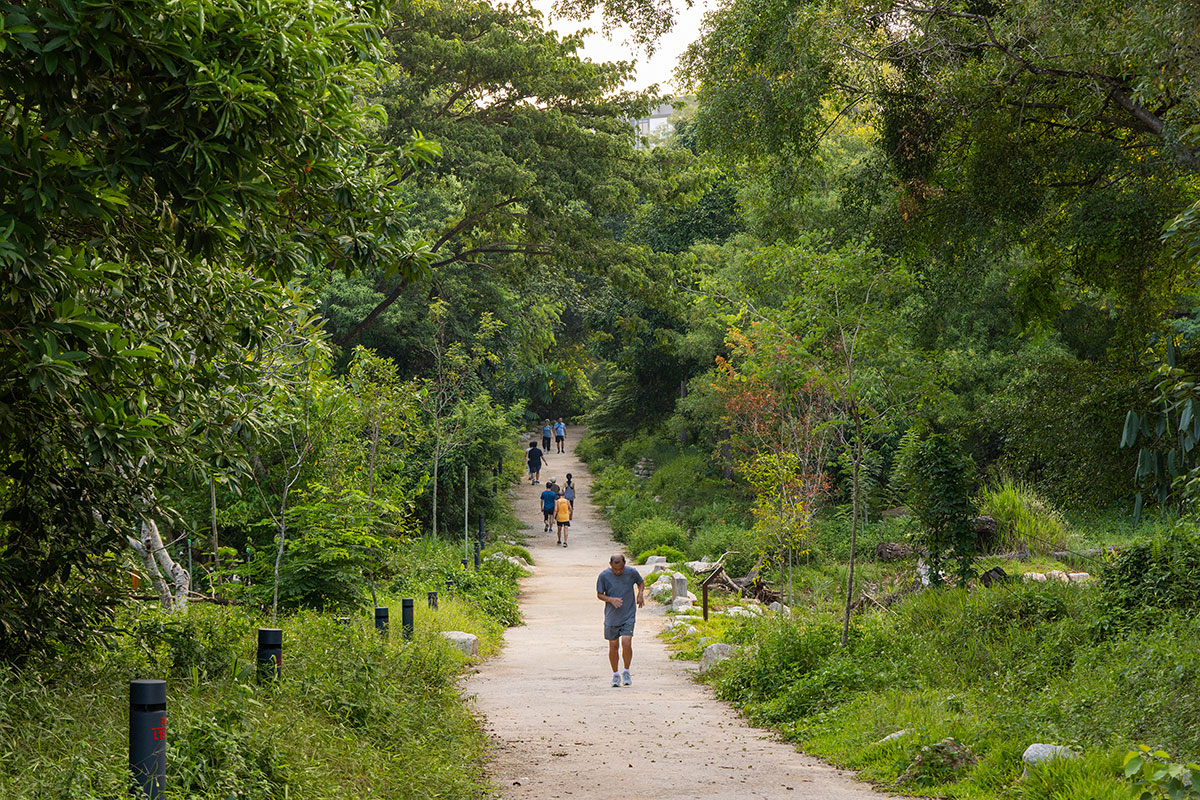
Over 6 kilometers of barrier-free experiential trails wind through the park, connecting activity nodes designed for shared use by people and wildlife. These thoughtfully planned active and passive zones encourage a harmonious coexistence between residents and nature.
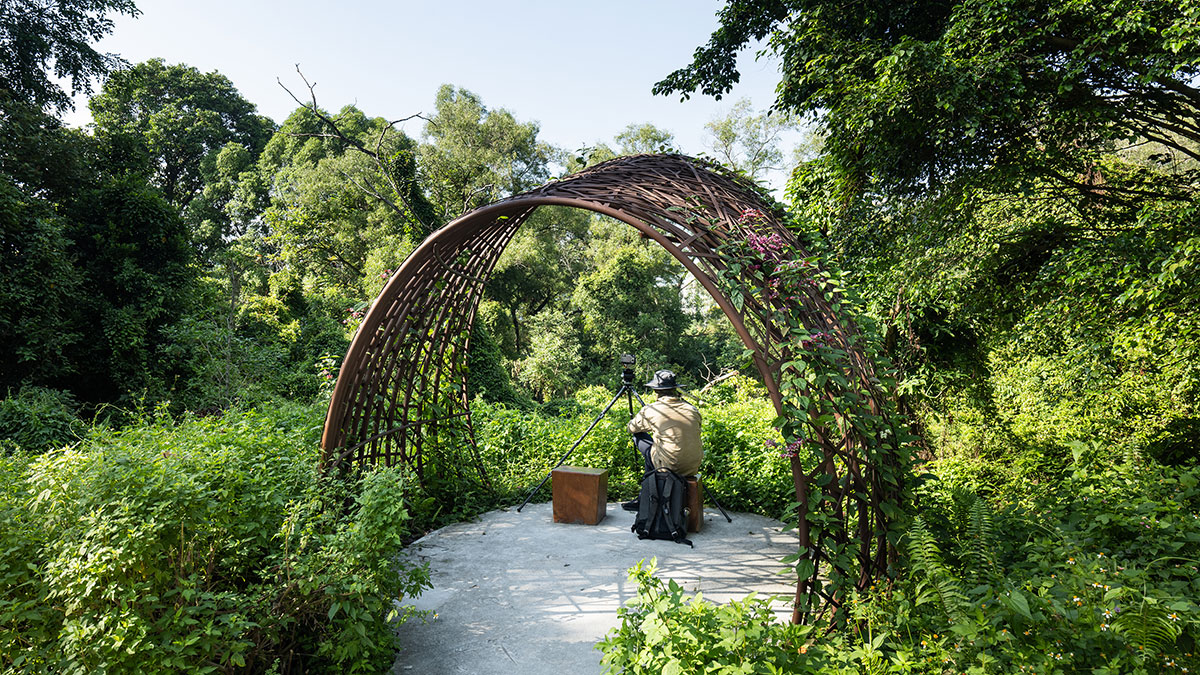
Observation decks and pavilions throughout the park provide quiet spaces for wildlife observation, echoing the site’s historic use for birdwatching. Children are invited to explore nature in the city through immersive play areas, including a 5-meter-tall treehouse near a Tembusu grove, complete with climbing nets, slides, and a nest shelter.
The project was delivered for the Housing Development Board, National Parks Board and Public Utilities Board of Singapore, in collaboration with CPG Consultants, BECA, and AECOM. The next phase of the project, the new Memorial Garden, opened in late 2O25.
Images