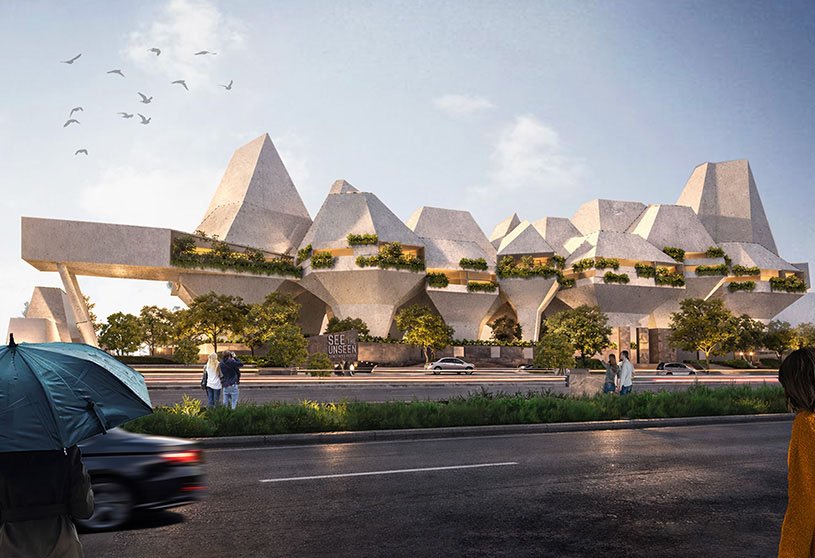
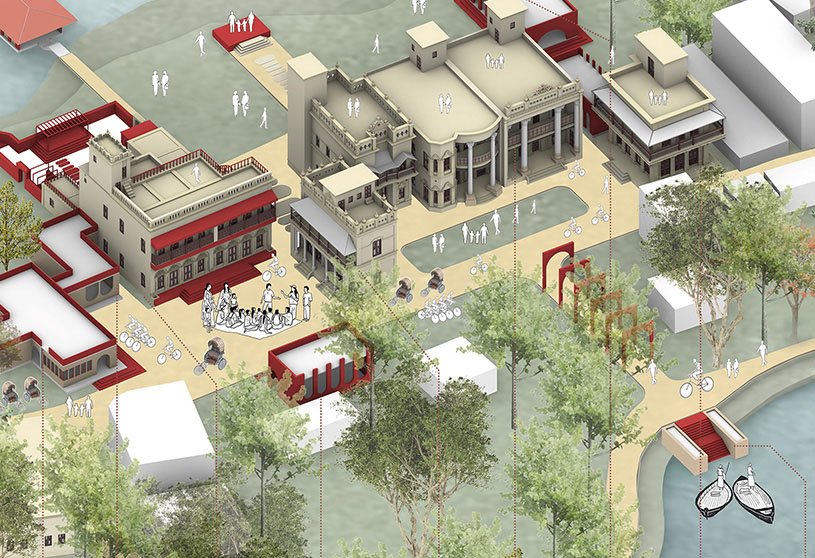
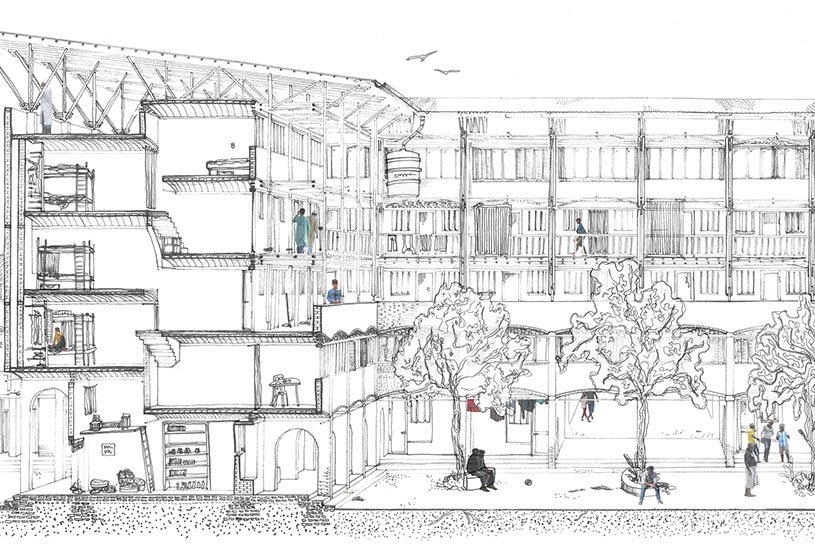
Excerpt: ‘Adaptive Reuse Recreation Center’ is a Bachelors Design Project by Chloe Crawford from the ‘Pratt Institute School of Architecture.’ The project transforms a disused federal parking structure into a dynamic recreation center that addresses urgent urban needs. Through adaptive reuse, minimal yet deliberate interventions, and precedent-informed design strategies, the project creates a dynamic architectural environment where community life, ecological integration, and the site’s original structure coexist in harmony.
Introduction: Adaptive reuse is gaining significance in response to today’s climate challenges and the unsustainable consumption of resources. The Adaptive Reuse Recreation Center is an academic studio project that transforms an existing federal parking facility in New York City into a community recreation hub, prioritizing sustainability through the reuse of materials, ecological integration, and active urban engagement.
The project’s final design evolved through precedent studies and iterative experimentation, highlighting adaptive reuse principles and spatial planning. Inspired by Le Corbusier’s Maison Dom-Ino as a conceptual framework, the design explores how the site’s context, functional needs, and façade treatment can work together to produce a unified architectural vision
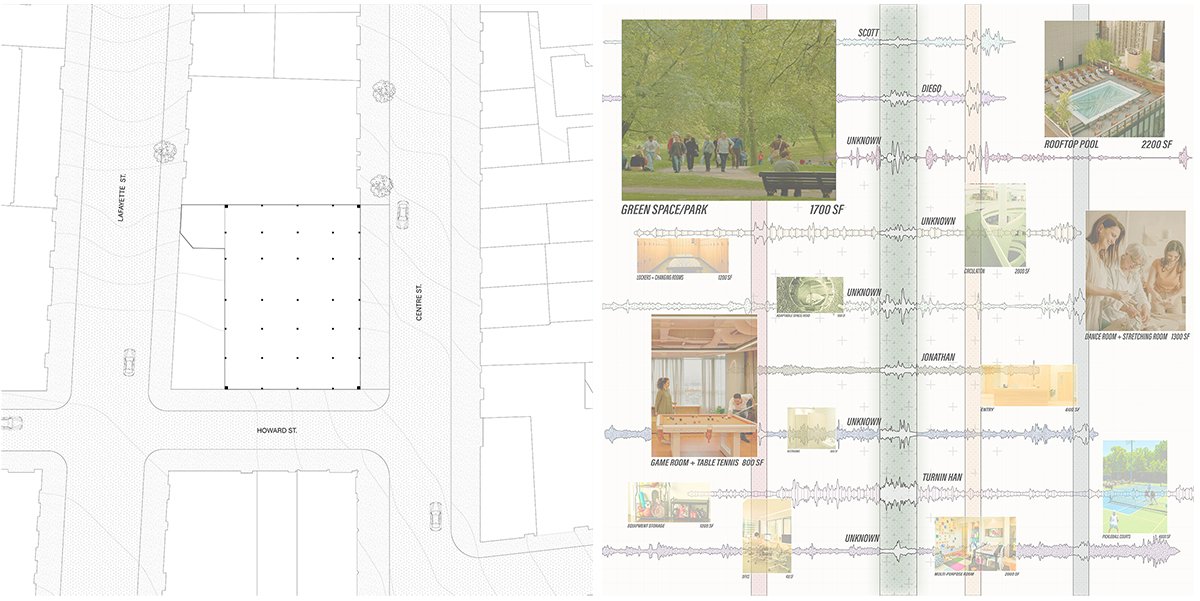
Site plan at ground level, highlighting the structural grid system and the building’s residual unoccupied space | Interview-based research drawing with callouts highlighting suggested programs to inform recreation center programmatic elements
The project site is a former federal parking structure located at 209 Center Street. The existing structure is organized around a four-by-six bay grid, with bay widths that vary throughout the building. Its Lafayette Street frontage is defined by a masonry wall set back 18 feet from the sidewalk, leaving a residual, unused space in front.
The site is centrally located at the intersection of three distinct neighborhoods: Little Italy, Chinatown, and SoHo. Background research, including community interviews and neighborhood studies, was conducted to better understand the needs and priorities of local residents. A recurring theme in this study was the lack of easily accessible green space in the area. This finding became a driving factor in the design, making the integration of green areas a central element of the proposed recreation center’s program.
Design Process
Sverre Fehn’s Headmark Museum emphasizing adaptive reuse strategyPaulo Mendes da Rocha and MMBB Arquitetos’s SESC 24 de Maio Culture Center emphasizing programmatic spatial strategies | First iteration of programmatic layout and adaptive reuse using Maison Dom-Ino as a structural framework, prior to incorporating the site context
The design for this recreation center draws on two significant architectural precedents. Sverre Fehn’s Hedmark Museum shaped the project’s adaptive reuse strategy, particularly in the sensitive insertion of new elements within an existing framework and the experiential qualities created through circulation. Likewise, Paulo Mendes da Rocha and MMBB Arquitetos’s SESC 24 de Maio Cultural Center informed the spatial organization and movement patterns, providing a vibrant model for configuring open-plan interiors.
Process Model
Building on these references, Le Corbusier’s Maison Dom-Ino served as a conceptual foundation for exploring open-plan arrangements and modular structural systems. The initial concept was then refined and adapted to the specific characteristics of the site, merging precedent-based strategies with tailored solutions to address circulation, programmatic requirements, and the surrounding urban context.
Final Outcome
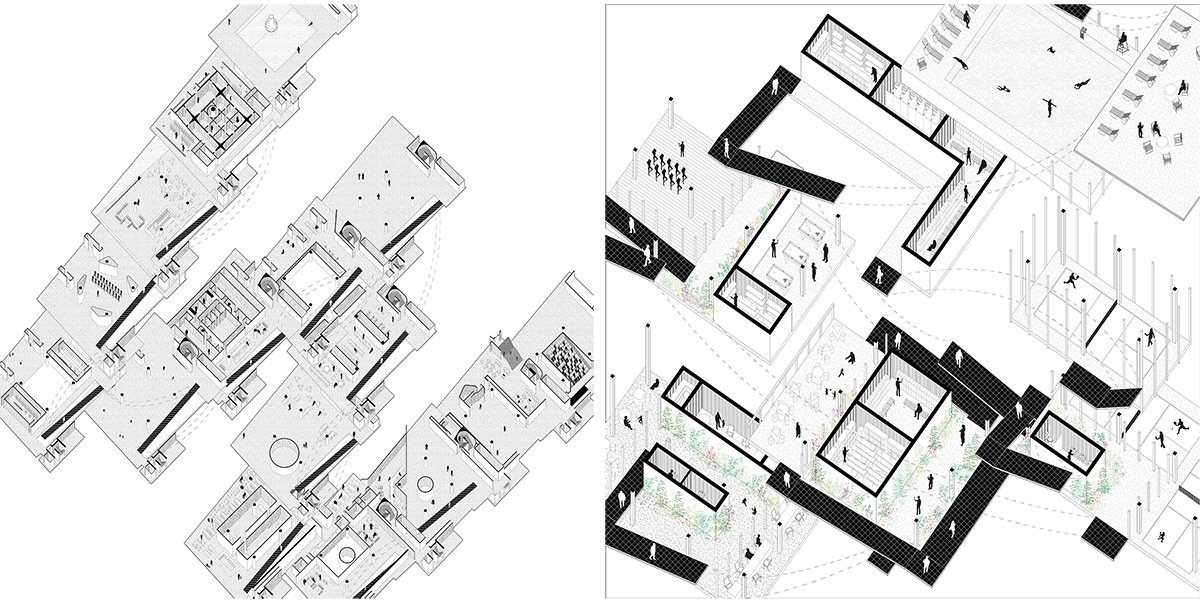
Ground Floor Plan
Drawing inspiration from the precedent research of Headmark Museum, the existing car ramp of the parking structure is repurposed as a primary circulation path for the proposed recreation center. As well, programmatic elements are carefully inserted into the existing structure with minimal intervention, preserving the original architectural framework.
Third Floor PlanUnrolled section highlighting new elements inserted within the existing architectural framework
The programs are located exclusively in the exterior bays, while the central bays of the existing parking structure are removed to create a large atrium for greenery. Central to the design and programmatic layout is the integration of green spaces, which serve as both transitional zones and functional elements, facilitating a dialogue between built form and nature.
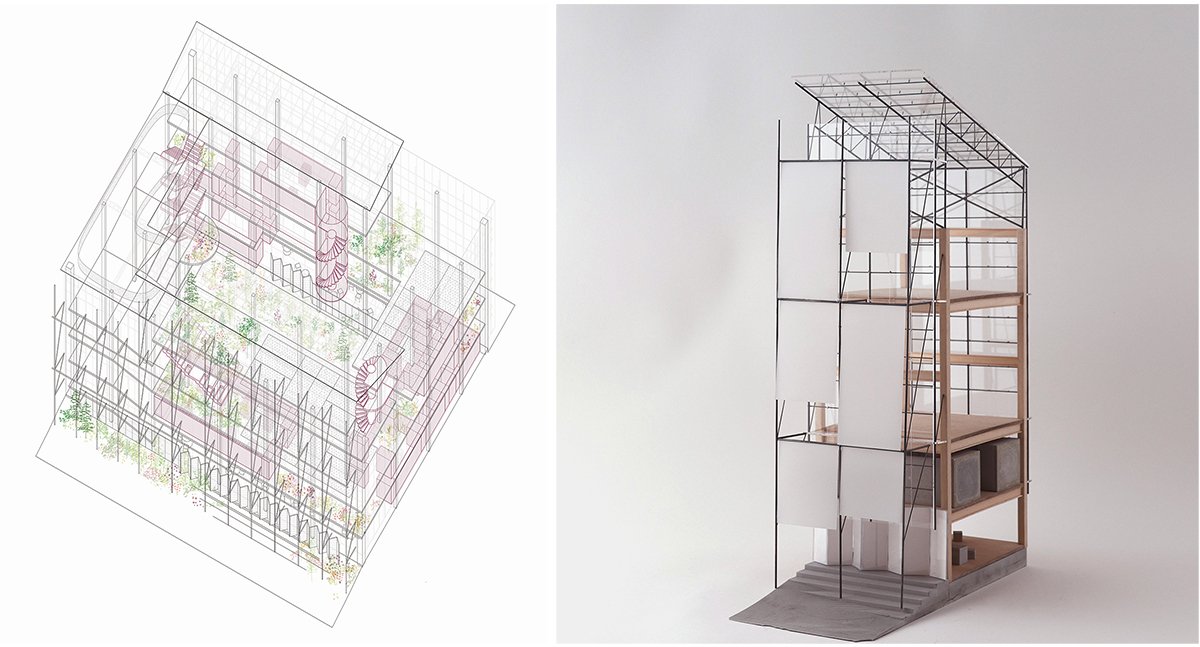
Xray Oblique | This ¼” = 1’ model demonstrates the role of the envelope as a mediation device between interior and exterior conditions
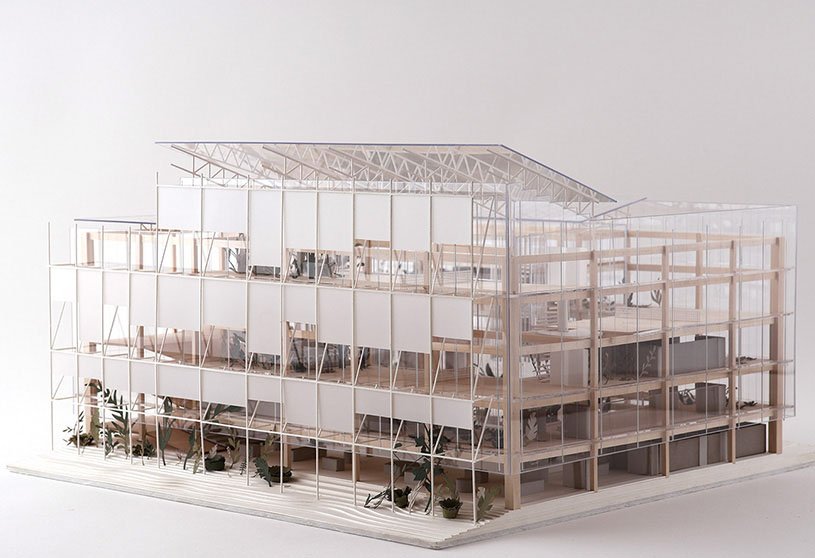
A continuous glass façade functions like a greenhouse, with its structure derived from reused existing elements. On the west side, built topography forms a planted zone, with a secondary façade enclosing these green spaces, creating a porous boundary between the interior landscape and the urban sidewalk.
This ⅛” = 1’ model represents an adaptive reuse project that transforms a parking structure into a recreation center
Conclusion: Ultimately, the project transforms the disused federal parking structure into a vibrant recreation center, addressing urgent urban needs for sustainability, accessibility, and green spaces.
[This Academic Project has been published with text and images submitted by the student]
Site Context
Design Process
Final Outcome
To submit your academic project for publication at ArchiDiaries, please visit the following link >> Submit
Get the best of ArchiDiaries, directly in your inbox.
We use cookies on our website to give you the most relevant experience by remembering your preferences and repeat visits. By clicking “Accept All”, you consent to the use of ALL the cookies. However, you may visit "Cookie Settings" to provide a controlled consent.
This website uses cookies to improve your experience while you navigate through the website. Out of these, the cookies that are categorized as necessary are stored on your browser as they are essential for the working of basic functionalities of the website. We also use third-party cookies that help us analyze and understand how you use this website. These cookies will be stored in your browser only with your consent. You also have the option to opt-out of these cookies. But opting out of some of these cookies may affect your browsing experience.
Necessary cookies are absolutely essential for the website to function properly. These cookies ensure basic functionalities and security features of the website, anonymously.
Cookie
Duration
Description
cookielawinfo-checkbox-analytics
11 months
This cookie is set by GDPR Cookie Consent plugin. The cookie is used to store the user consent for the cookies in the category "Analytics".
cookielawinfo-checkbox-functional
11 months
The cookie is set by GDPR cookie consent to record the user consent for the cookies in the category "Functional".
cookielawinfo-checkbox-necessary
11 months
This cookie is set by GDPR Cookie Consent plugin. The cookies is used to store the user consent for the cookies in the category "Necessary".
cookielawinfo-checkbox-others
11 months
This cookie is set by GDPR Cookie Consent plugin. The cookie is used to store the user consent for the cookies in the category "Other.
cookielawinfo-checkbox-performance
11 months
This cookie is set by GDPR Cookie Consent plugin. The cookie is used to store the user consent for the cookies in the category "Performance".
viewed_cookie_policy
11 months
The cookie is set by the GDPR Cookie Consent plugin and is used to store whether or not user has consented to the use of cookies. It does not store any personal data.
Functional cookies help to perform certain functionalities like sharing the content of the website on social media platforms, collect feedbacks, and other third-party features.
Performance cookies are used to understand and analyze the key performance indexes of the website which helps in delivering a better user experience for the visitors.
Analytical cookies are used to understand how visitors interact with the website. These cookies help provide information on metrics the number of visitors, bounce rate, traffic source, etc.
Advertisement cookies are used to provide visitors with relevant ads and marketing campaigns. These cookies track visitors across websites and collect information to provide customized ads.