Home » Academic projects » Agroforestry and Agroindustrial Research Institute of the UNIA: Modular Timber Architecture for Ecological Research in the Amazon | Bachelor’s Design Thesis
Agroforestry and Agroindustrial Research Institute of the UNIA: Modular Timber Architecture for Ecological Research in the Amazon | Bachelor’s Design Thesis
Excerpt: ‘Agroforestry and Agroindustrial Research Institute of the UNIA’ is an architecture thesis by Ariana Irene Velásquez Lozano from the ‘Facultad de Arquitectura y Urbanismo – PUCP.’ The project aims to explore how architecture can act as a mediator between academic activity and the Amazonian ecosystem. Through modular, low-impact construction and spatial strategies rooted in climate and landscape, the project seeks to demonstrate a site-responsive architectural model that fosters environmental awareness and coexistence between urban development and fragile ecosystems.
Introduction: The Agroforestry and Agroindustrial Research Institute is conceived as an architectural response to the fragile coexistence between urban expansion and the Amazonian ecosystem in Pucallpa, Peru. Rather than approaching the site as a neutral ground, the project treats territory, climate, and vegetation as active agents that shape both form and experience. The main focus of exploration lies in understanding architecture as an intermediary system, one that does not impose itself on the landscape but instead negotiates with it through structure, materiality, and spatial sequencing.
The project investigates how modular wooden structures can generate architectural complexity while maintaining constructional clarity and low environmental impact. Equally important is the exploration of programmatic gradients, where public, semi-public, and specialized research spaces transition gradually, mirroring the density and rhythms of the surrounding forest. Through fragmentation, elevation, and repetition, the proposal seeks to transform circulation into an immersive experience, allowing architecture to operate as a connective tissue between the university, the river, and the forest. The institute ultimately positions itself as both an infrastructure for research and a pedagogical device, fostering environmental awareness through spatial experience.
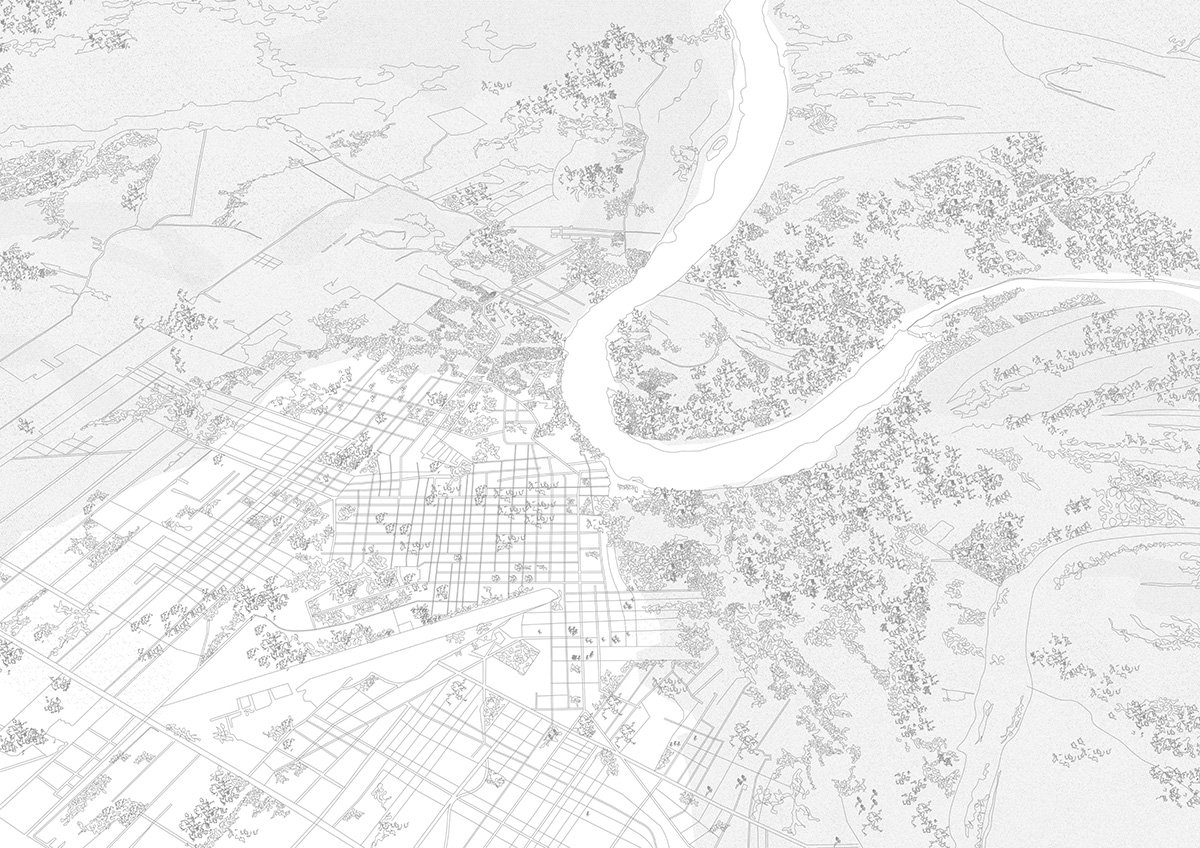
The City of Pucallpa and the Ucayali RiverNational Intercultural University of the Amazon
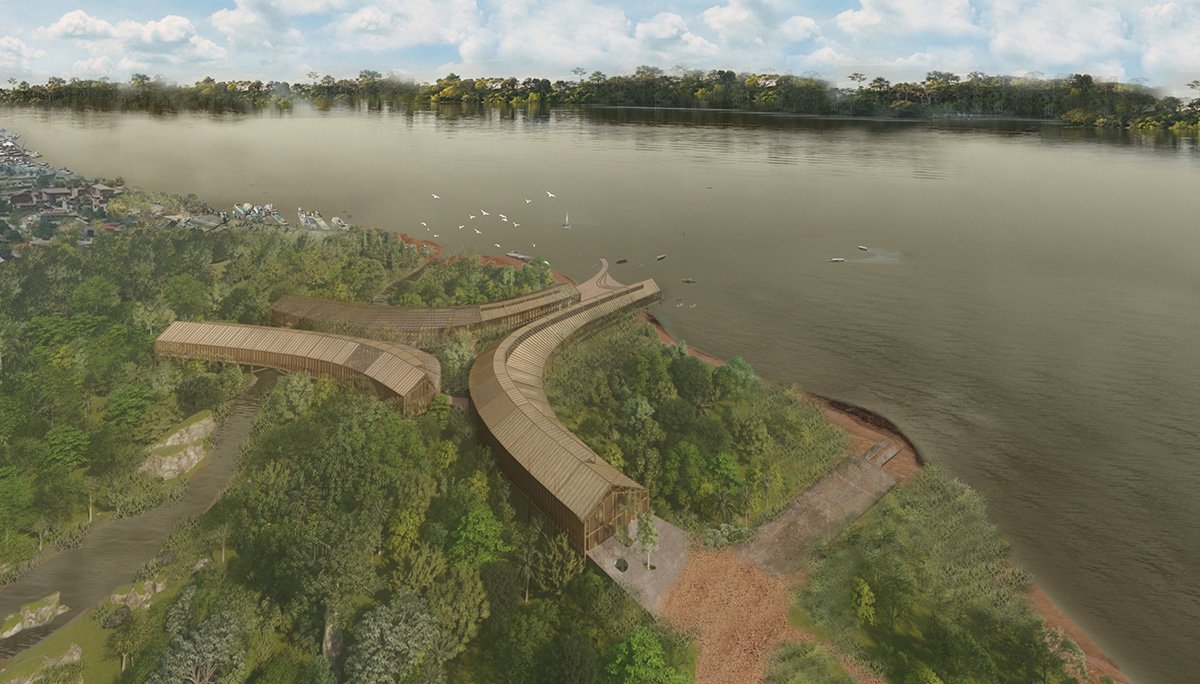
The project is located within the campus of the Universidad Nacional Intercultural de la Amazonía (UNIA), in Pucallpa, along the riverbank of the Ucayali River. This site represents a zone of convergence where urban dynamics, academic life, and dense Amazonian vegetation overlap. Characterized by a flat yet flood-prone terrain, high humidity, and abundant biodiversity, the context demands architectural strategies that minimize ground impact while responding to climatic conditions.
The Site: The River Interface
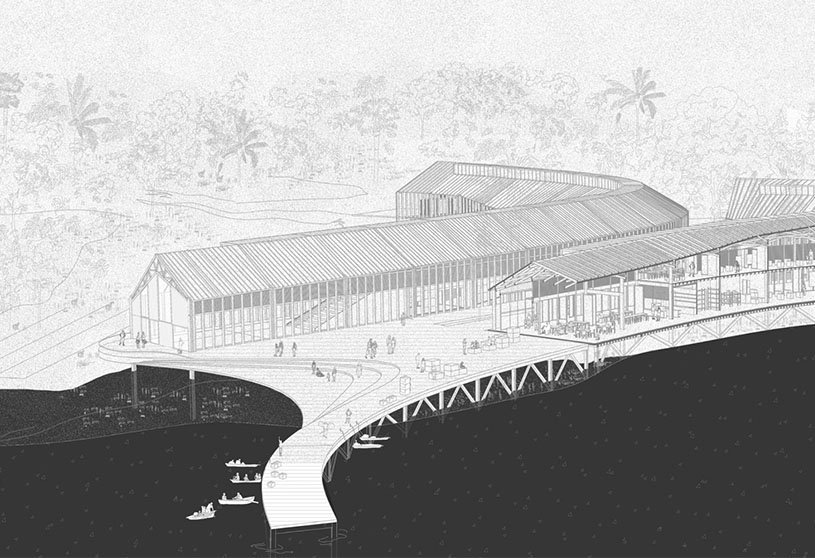
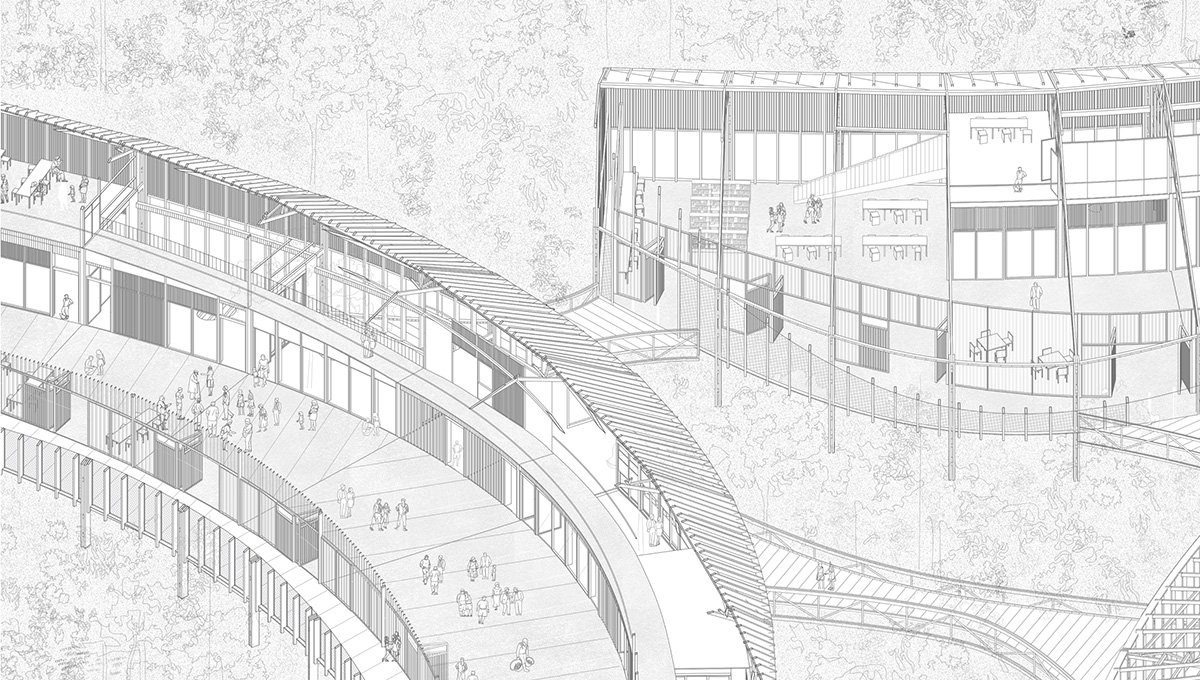
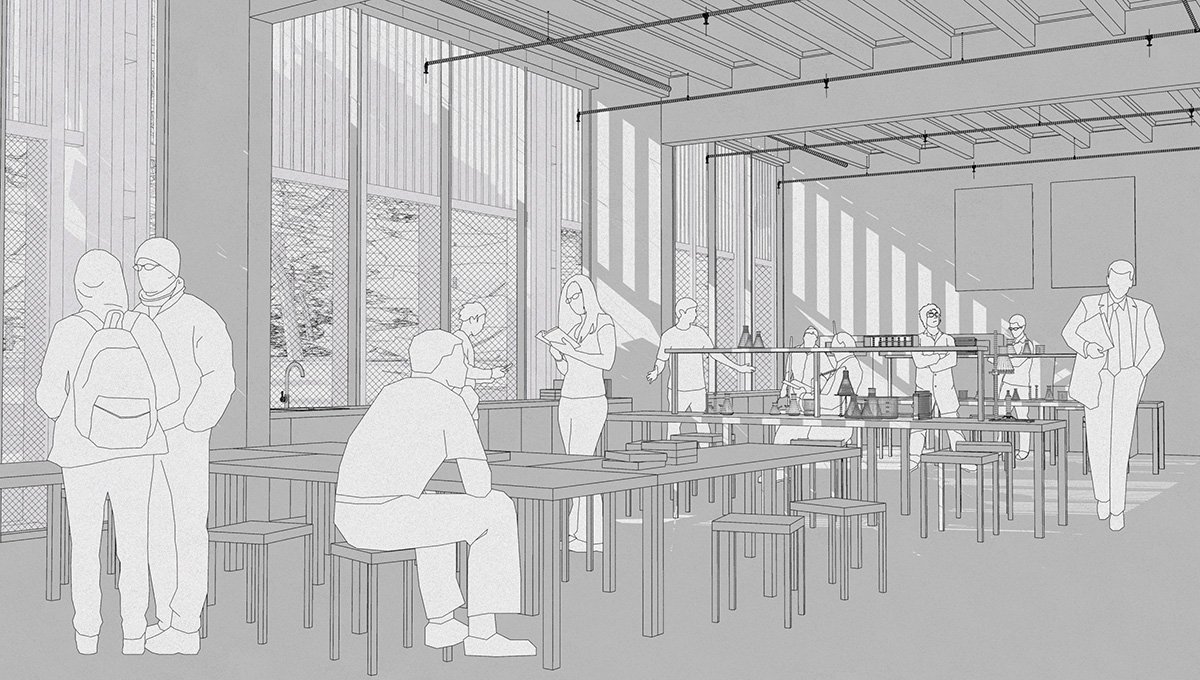
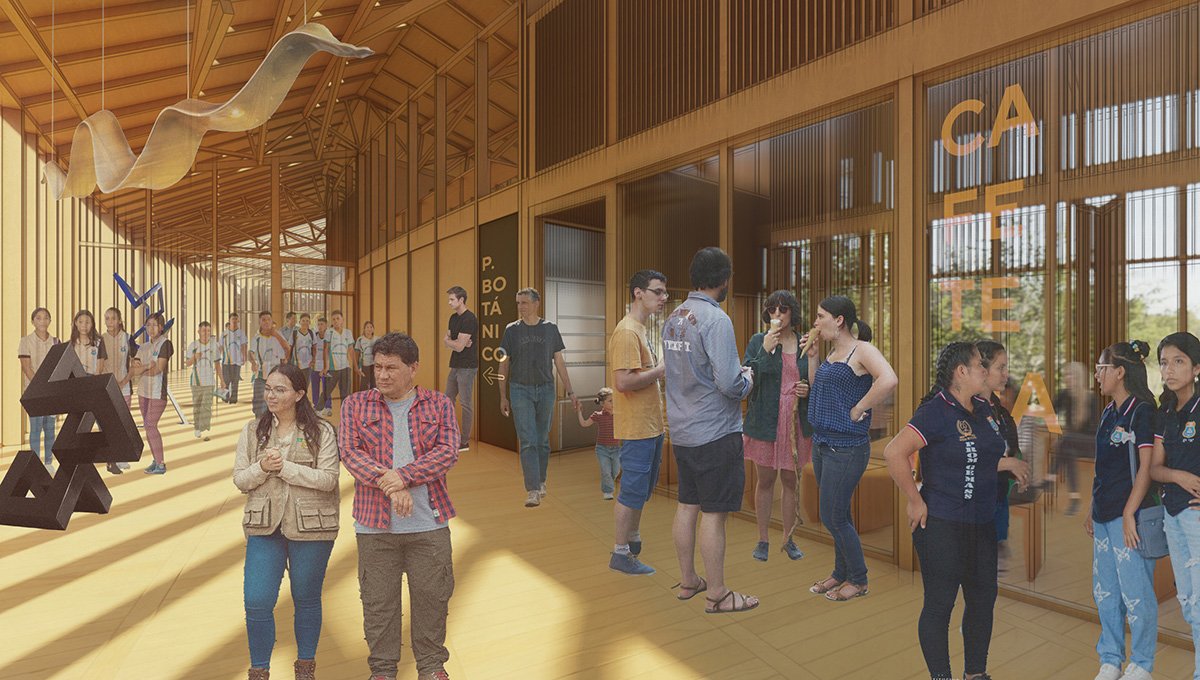
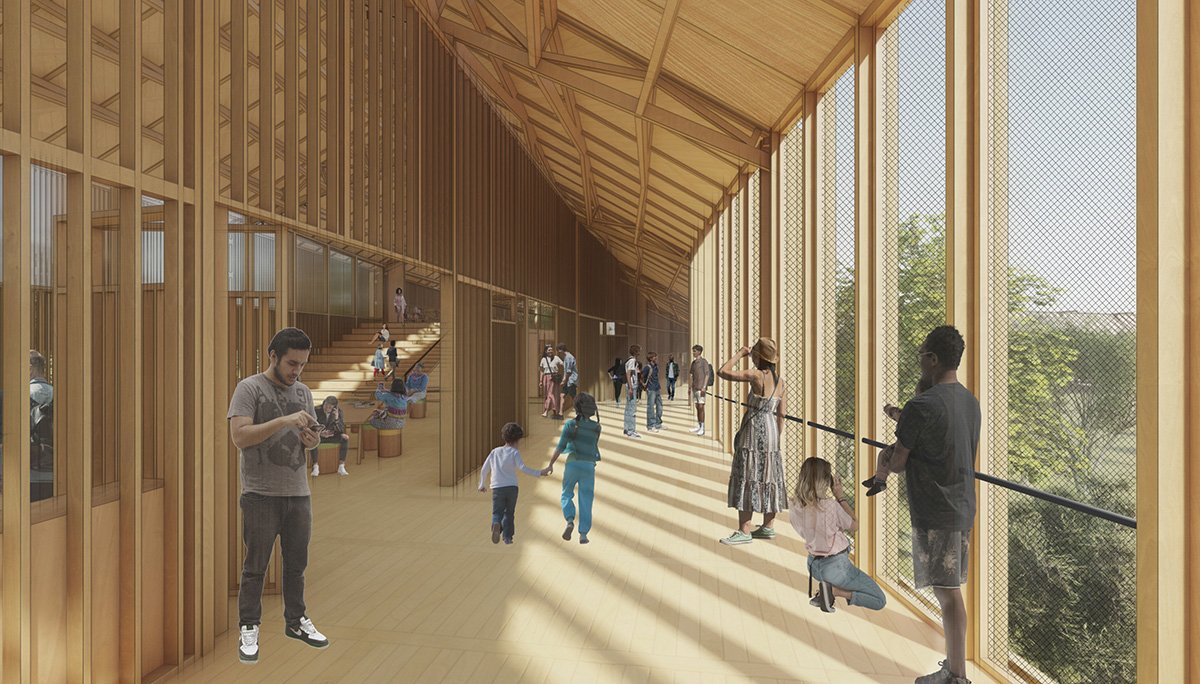
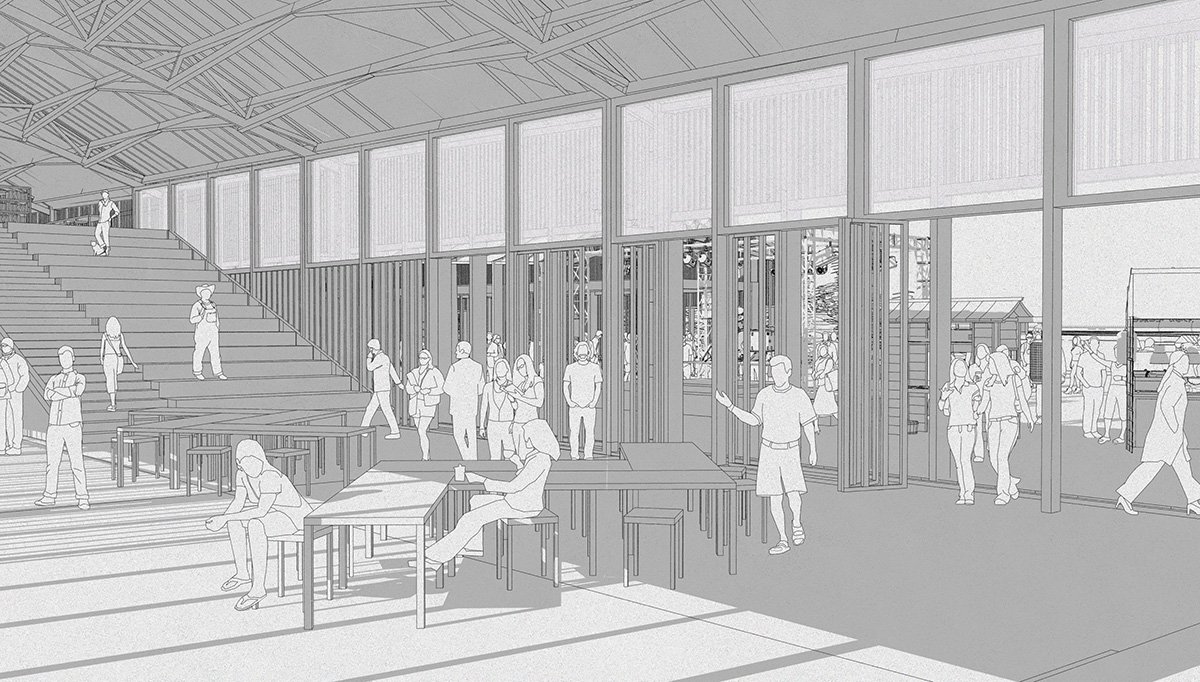
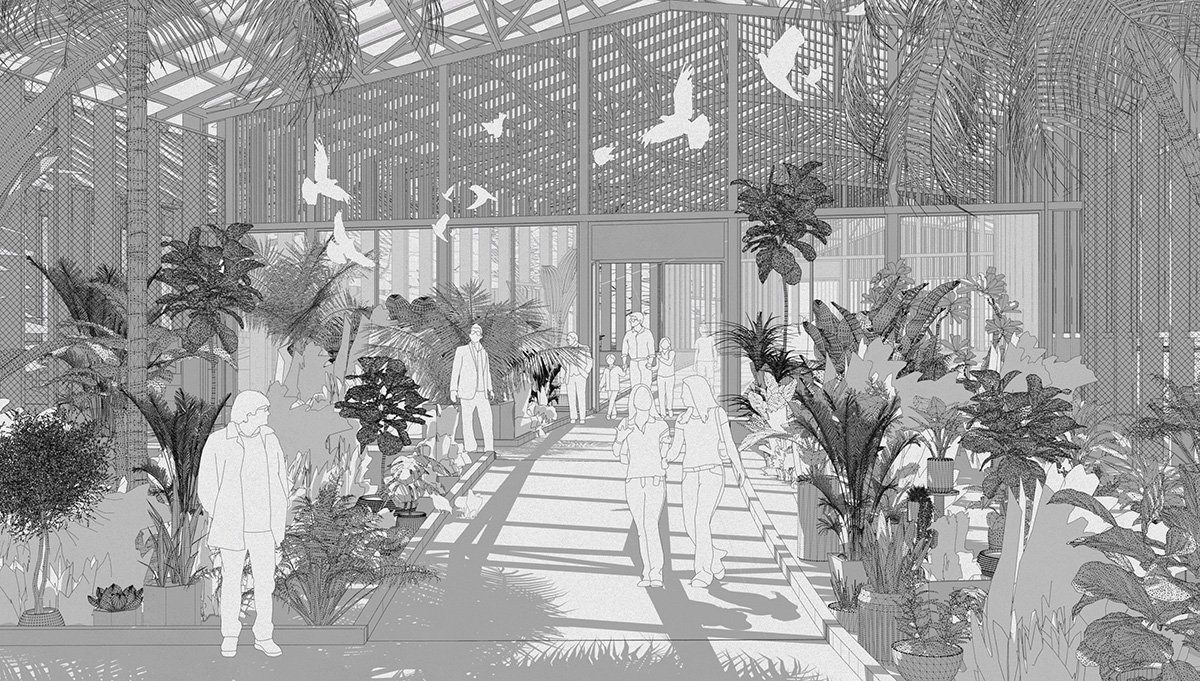
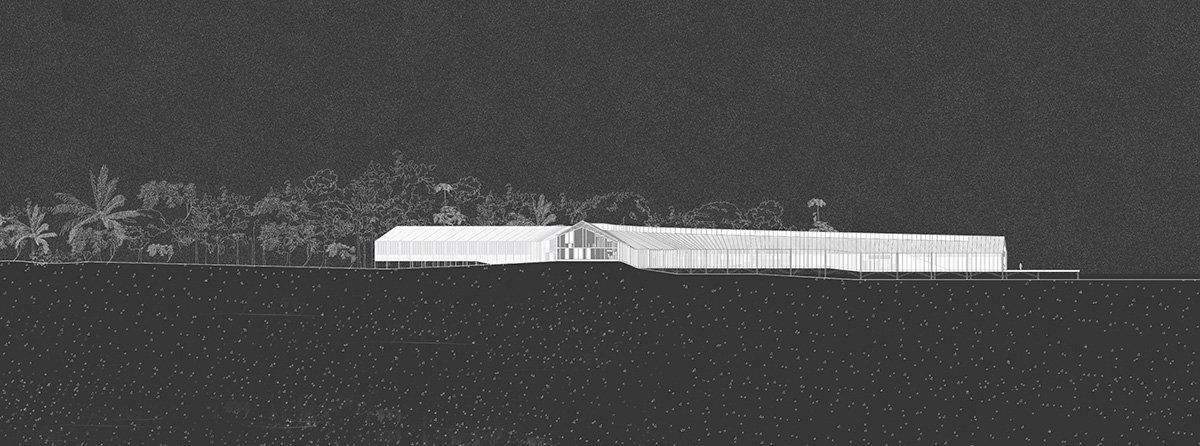
The program is organized into three main pavilions: Botanical, Experimental, and Academic, each addressing different scales of research, production, and knowledge dissemination. These volumes are elevated on platforms to allow water flow, vegetation continuity, and natural ventilation beneath the building. Their elongated orientation maximizes visual connections toward the river, the forest, and the university campus. Programmatically, the institute promotes interaction between researchers, students, and the local community, integrating laboratories, classrooms, exhibition areas, and open circulation spaces. This configuration reinforces the role of the project as both a research facility and a civic interface embedded within its ecological and cultural context.
Design Process
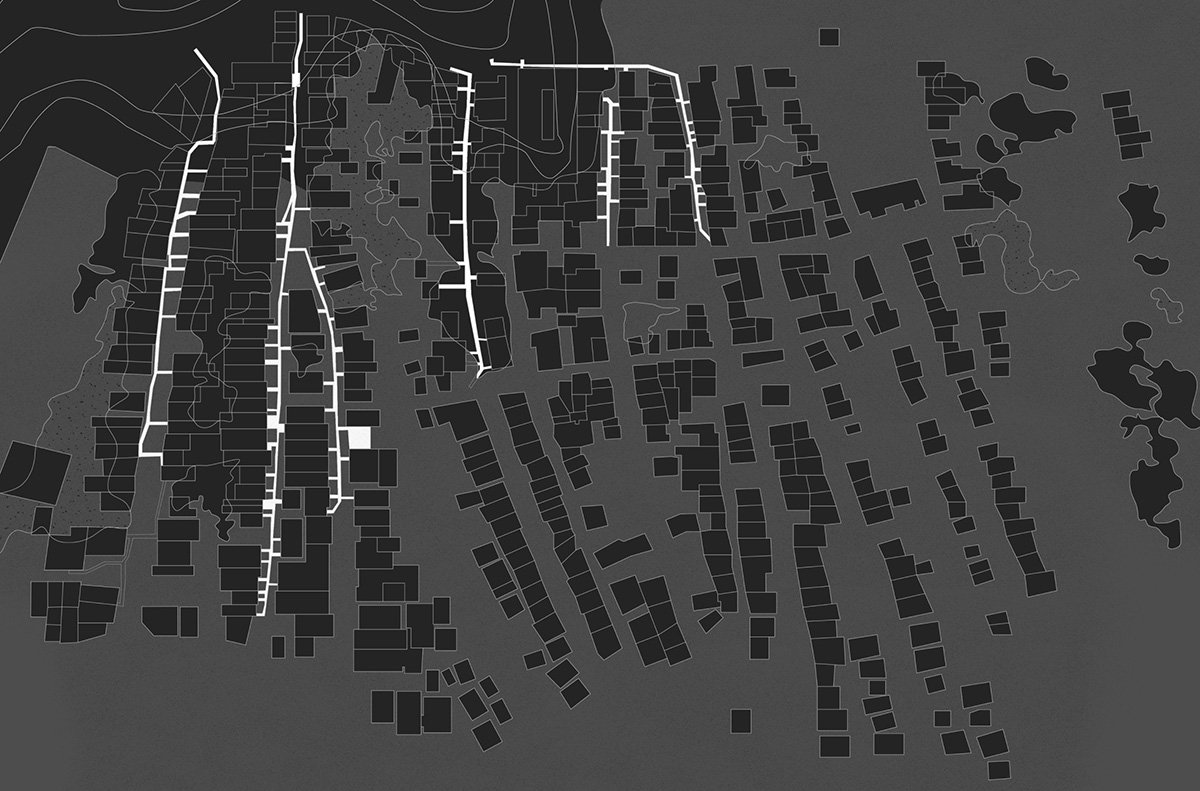
Bond Between The Stilt Houses And Their SurroundingsSpatial Structure. Barrio BelénInterwoven Connections. Barrio BelénWood As Bridge And PlatformArt Pavilion/Álvaro Siza. Concrete As An Extension Of The Terrain
The design process begins with the architectural drawing as the primary investigative tool. Through analytical decodifications, experimental fragments, diagrammatic drawings and studies that dislocate the usual route of thinking, the project explores cultural heritage, climate behavior, vegetation density, topography, material textures, and patterns of movement across the site. Early drawings focus on understanding the forest not as a backdrop, but as a spatial structure defined by repetition, porosity, and vertical rhythms.
Grace Farms/Sanaa. Spatial ContinuityArt Pavilion/Álvaro Siza. Hierarchy Of MovementExperimental FragmentMultifunctional ArchitectureThe Fabric That Shapes The Space
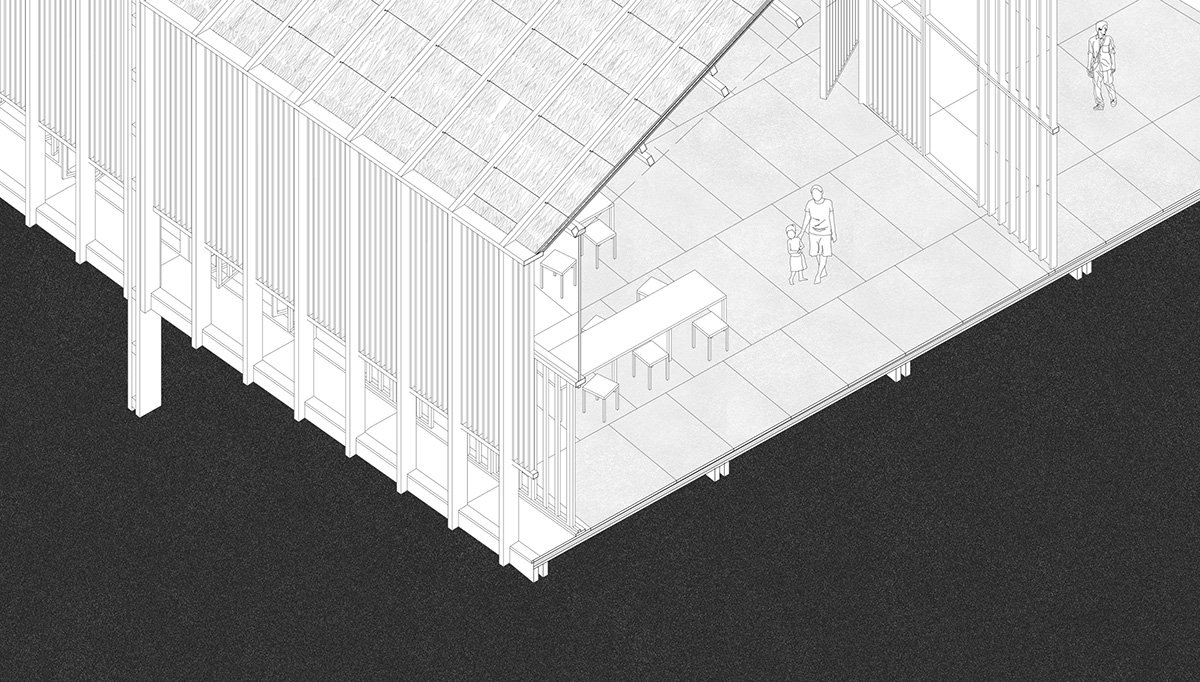
From these observations, the project evolves through volumetric fragmentation, breaking down the program into linear pavilions that adapt to topography and environmental constraints. Structural studies lead to the adoption of a modular system of wooden frames, allowing flexibility in span and spatial configuration while maintaining material efficiency.
The Roof And River As Rain CollectorsStructural System. StiltsExperimental FragmentThe Pier As A Movement Platform
Platforms, thresholds, and transitional spaces are tested through iterative sectional drawings, refining the relationship between ground, structure, and enclosure. Each stage of the process builds upon the previous one, gradually translating abstract spatial intentions into a coherent architectural system rooted in site-specific conditions.
Final Outcome
Floor Plan 1Longitudinal Section A-A’. Academic PavilionStructural CompositionOverlap On Site
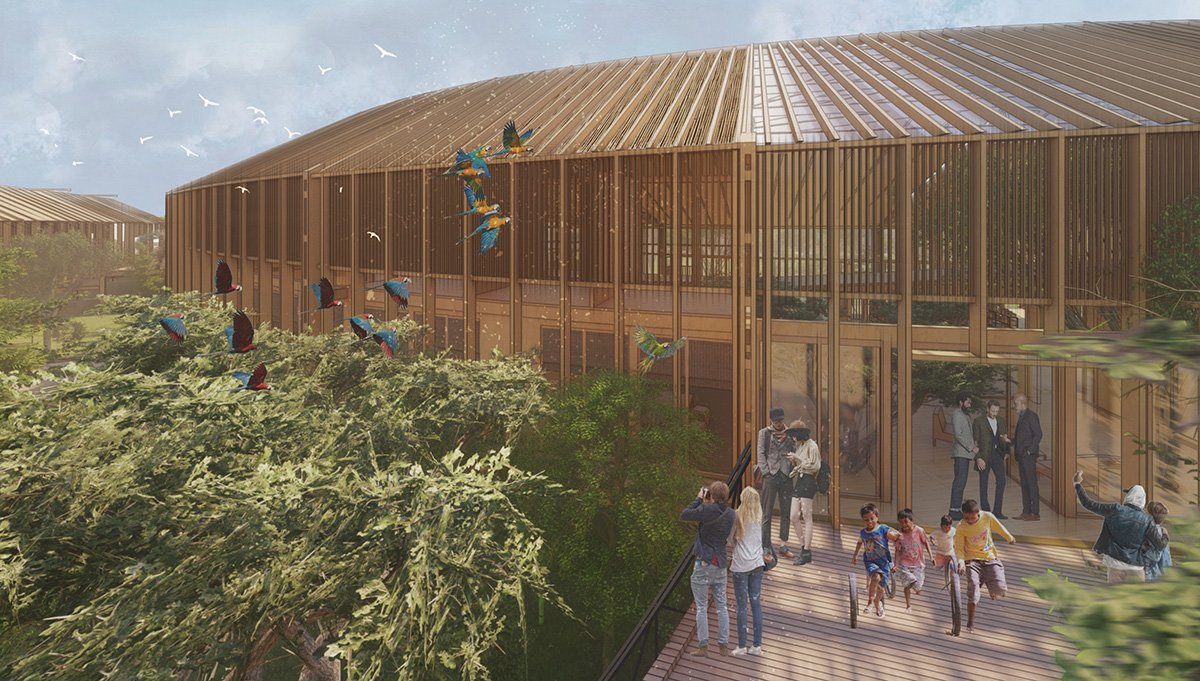
The final outcome is an architectural ensemble that operates as a continuous yet fragmented system, where structure, program, and landscape are tightly interwoven. The institute is defined by a repetitive wooden structural rhythm that acts as a backbone, organizing circulation, spatial hierarchy, and enclosure. Rather than forming a closed object, the project allows vegetation to penetrate and surround the built spaces, reinforcing the idea of architecture as an extension of the forest.
Structural Frameworks And Programmatic VariablesAssembly Of Confinement PartsSocial Engagement Area. Academic PavilionPassages Between Pavilions
Material choices prioritize locally sourced, certified wood for structure, enclosures, and carpentry, with concrete limited to the foundations of the elevated platforms. This approach reduces environmental impact while enhancing thermal comfort and constructability. Programmatic transitions guide users from public spaces to more introspective research areas through a gradual spatial sequence.
Laboratories And Warehouses. Experimental PavilionReading And Community Area. Academic PavilionIn-Between Spaces. Among Architecture And TerritoryThe Project And The Landscape
Conclusion: Ultimately, the project contributes to the region by offering an infrastructure that supports scientific research, environmental education, and community engagement demonstrating how architecture can act as a mediator between human activity and fragile ecosystems.
[This Academic Project has been published with text and images submitted by the student]
Site Context
Design Process
Final Outcome
To submit your academic project for publication at ArchiDiaries, please visit the following link >> Submit
Get the best of ArchiDiaries, directly in your inbox.
We use cookies on our website to give you the most relevant experience by remembering your preferences and repeat visits. By clicking “Accept All”, you consent to the use of ALL the cookies. However, you may visit "Cookie Settings" to provide a controlled consent.
This website uses cookies to improve your experience while you navigate through the website. Out of these, the cookies that are categorized as necessary are stored on your browser as they are essential for the working of basic functionalities of the website. We also use third-party cookies that help us analyze and understand how you use this website. These cookies will be stored in your browser only with your consent. You also have the option to opt-out of these cookies. But opting out of some of these cookies may affect your browsing experience.
Necessary cookies are absolutely essential for the website to function properly. These cookies ensure basic functionalities and security features of the website, anonymously.
Cookie
Duration
Description
cookielawinfo-checkbox-analytics
11 months
This cookie is set by GDPR Cookie Consent plugin. The cookie is used to store the user consent for the cookies in the category "Analytics".
cookielawinfo-checkbox-functional
11 months
The cookie is set by GDPR cookie consent to record the user consent for the cookies in the category "Functional".
cookielawinfo-checkbox-necessary
11 months
This cookie is set by GDPR Cookie Consent plugin. The cookies is used to store the user consent for the cookies in the category "Necessary".
cookielawinfo-checkbox-others
11 months
This cookie is set by GDPR Cookie Consent plugin. The cookie is used to store the user consent for the cookies in the category "Other.
cookielawinfo-checkbox-performance
11 months
This cookie is set by GDPR Cookie Consent plugin. The cookie is used to store the user consent for the cookies in the category "Performance".
viewed_cookie_policy
11 months
The cookie is set by the GDPR Cookie Consent plugin and is used to store whether or not user has consented to the use of cookies. It does not store any personal data.
Functional cookies help to perform certain functionalities like sharing the content of the website on social media platforms, collect feedbacks, and other third-party features.
Performance cookies are used to understand and analyze the key performance indexes of the website which helps in delivering a better user experience for the visitors.
Analytical cookies are used to understand how visitors interact with the website. These cookies help provide information on metrics the number of visitors, bounce rate, traffic source, etc.
Advertisement cookies are used to provide visitors with relevant ads and marketing campaigns. These cookies track visitors across websites and collect information to provide customized ads.