Home » Academic projects » ARTEVIVO: School of Arts and Crafts as A Cultural Bridge for Barrio Colombia | Bachelors Design Project on Cultural Architecture
ARTEVIVO: School of Arts and Crafts as A Cultural Bridge for Barrio Colombia | Bachelors Design Project on Cultural Architecture
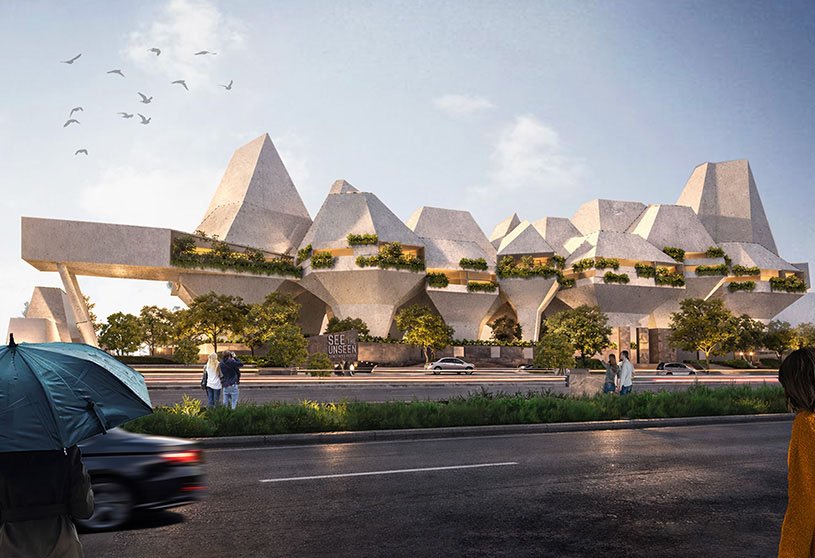
Excerpt: ‘ARTEVIVO’ is a Bachelors Design Project by Manuela Alejandra Vargas Dávila from the ‘Facultad de Arquitectura y Diseño – Universidad Pontificia Bolivariana.’ The project aims to create a cultural landmark that integrates art, community, and urban space, transforming the area between Barrio Colombia and MAMM into a dynamic ecosystem for artistic expression. It will activate the public realm through architecture, providing inclusive spaces like plazas, terraces, and pathways, fostering participation, learning, and cultural exchange.
Introduction: ARTEVIVO is an urban threshold where art comes to life. It connects the cultural fabric of Barrio Colombia with the Museum of Modern Art of Medellín (MAMM), forming a bridge between community and culture.
Through inhabitable terraces, interwoven pathways, and carefully placed open spaces, the project unfolds as a dynamic route that blends landscape, creativity, and everyday life. More than a school of arts and crafts, ARTEVIVO is a living ecosystem for artistic creation. A vibrant space where art emerges from the neighborhood and flows into the public space, inviting participation, expression, and collective learning.
Historically, the area stretching between the Museum of Modern Art of Medellín (MAMM) and Barrio Colombia functioned as an industrial zone. Over time, it has evolved into a lively creative district, with MAMM acting as both a cultural landmark and a connector between the two neighborhoods—a symbol and gathering place for the community.
Location Plan: The project aims to create continuity between the existing and proposed public spaces, serving as an artistic bridge for the community.
Amid this process of urban renewal and thanks to its strategic location, new opportunities have emerged to create connective spaces that nurture and expand artistic, performative, and creative practices. Two neighborhoods with distinct dynamics are linked through art, transforming their intersection into a shared territory of collective creation and expression.
This matrix synthesizes the key variables identified during the diagnostic phase, providing a foundation for informed design decisions. | Through contextual analysis, various types of public spaces were identified to guide potential interventions that allow the project to integrate with its surroundings as a public space, while offering the community a place for artistic expression and cultural knowledge.
Within this context, several types of public spaces have been identified, each responding to the area’s urban conditions and the needs of its residents:
Green corridors and rest areas, encouraging relaxation, well-being, and soft mobility while integrating nature.
A central plaza, a flexible setting that accommodates diverse activities throughout the day, serving as the project’s most dynamic and inclusive node.
An active urban plinth, generated by commercial uses on ground floors, which boosts social interaction and economic vitality.
Activity-oriented outdoor spaces, designed to encourage lingering, participation, and a sense of community ownership.
Conceptual collage illustrating the dual identity of Ciudad del Río: a place for living and for cultural exchange.
This reading of the territory highlights a space in flux, where art serves as the thread binding together memory, diversity, and future opportunities. The analysis not only guides the design but ensures the project is rooted in the needs and aspirations of the community it is meant to serve.
Design Process
The ground floor opens as a cultural space, while a plaza fragments the volume to continue the existing public space network.The design integrates elevated platforms and terraces that extend the public space upwards, fostering community interaction and artistic expression across different levels.
The design of the School of Arts and Crafts emerged from an understanding of the site as an extension of the city’s existing dynamics, with the potential to be activated through artistic exchange. To encourage this, the ground floor was designated for commercial uses, while the building itself was fragmented to form an artistic plaza. A central vertical void was also introduced to extend public space upward, allowing it to flow seamlessly into the building’s interior.
A vibrant environment where public space, greenery, and art merge, inviting interaction and blending the building with the urban fabric.An exhibition hall that serves as an inviting entrance, where the staircase becomes a place to pause, observe, and experience art from the very first step.
Inside, the spatial atmosphere was envisioned as immersive and sensitive, turning everyday experiences into opportunities for artistic engagement. These interiors were designed to spark encounters, encourage reflection, and nurture collective creation, fostering a stronger bond between people, space, and artistic expression.
Diagram illustrating the guiding principles that shape the project’s spatial and formal strategies.A responsive and expressive skin that adapts to the climate while reflecting the identity of the arts through color, texture, and pattern.
The façade was imagined as a flexible, climate-responsive skin that adapts to environmental conditions while serving as a canvas for artistic intervention. Its composition reflects the project’s creative essence, bringing color, rhythm, and vitality to the building and affirming its role as a dynamic, ever-evolving cultural landmark.
Final Outcome
Ground level plan highlighting commercial uses and the central cultural plaza.First level plan showing open public bridges and cultural activity areas.Longitudinal section showing vertical circulation, public void, and spatial relationships.
ARTEVIVO emerges from a careful exploration of how art can inhabit and transform urban space. Conceived as a cultural threshold, it bridges Barrio Colombia and the MAMM, weaving together landscape, community, and creative expression. The fragmentation of its massing opens onto an artistic plaza at ground level—an inclusive, active space that fosters encounters and energizes the surrounding context. This public condition extends vertically through a central void, which organizes circulation, creates visual continuity, and distributes the collective experience across different levels.
Second-level plan illustrating the stairs as an extension of the cultural exhibition along the circulation path.Third level plan focused on specialized studios and gathering zones.Section illustrating the void as a visual articulatorPerspective of the main access hall, combining exhibition space with sculptural stairs.
Stepped terraces function as cultural platforms, accommodating workshops, activity zones, and spaces for reflection. These elevated stages become catalysts for cultural exchange, inviting visitors, learners, and passersby to engage, create, and connect with art in diverse ways. Here, architecture is not a boundary but a continuation of the city’s cultural and social fabric.
The facade is the element that mediates between public space and interior visual connections.Typologies of transition areas that mediate between public and private realms, enhancing interaction.View of an elevated terrace as a meeting point and cultural activity hub.
Externally, the façade becomes a dynamic canvas, reflecting the site’s creative energy. Internally, art flows through pathways, atmospheres, and programs, shaping an immersive and transformative experience.
Visual of the interior void that connects different levels and frames spatial interaction.Perspective highlighting the project’s integration with the surrounding urban fabric.
Conclusion: ARTEVIVO is not an isolated object but a vital cultural landmark within the urban network—a building that embodies art in its form, welcomes it from the outside, and celebrates it from within.
[This Academic Project has been published with text and images submitted by the student]
Site Context
Design Process
Final Outcome
To submit your academic project for publication at ArchiDiaries, please visit the following link >> Submit
Get the best of ArchiDiaries, directly in your inbox.
We use cookies on our website to give you the most relevant experience by remembering your preferences and repeat visits. By clicking “Accept All”, you consent to the use of ALL the cookies. However, you may visit "Cookie Settings" to provide a controlled consent.
This website uses cookies to improve your experience while you navigate through the website. Out of these, the cookies that are categorized as necessary are stored on your browser as they are essential for the working of basic functionalities of the website. We also use third-party cookies that help us analyze and understand how you use this website. These cookies will be stored in your browser only with your consent. You also have the option to opt-out of these cookies. But opting out of some of these cookies may affect your browsing experience.
Necessary cookies are absolutely essential for the website to function properly. These cookies ensure basic functionalities and security features of the website, anonymously.
Cookie
Duration
Description
cookielawinfo-checkbox-analytics
11 months
This cookie is set by GDPR Cookie Consent plugin. The cookie is used to store the user consent for the cookies in the category "Analytics".
cookielawinfo-checkbox-functional
11 months
The cookie is set by GDPR cookie consent to record the user consent for the cookies in the category "Functional".
cookielawinfo-checkbox-necessary
11 months
This cookie is set by GDPR Cookie Consent plugin. The cookies is used to store the user consent for the cookies in the category "Necessary".
cookielawinfo-checkbox-others
11 months
This cookie is set by GDPR Cookie Consent plugin. The cookie is used to store the user consent for the cookies in the category "Other.
cookielawinfo-checkbox-performance
11 months
This cookie is set by GDPR Cookie Consent plugin. The cookie is used to store the user consent for the cookies in the category "Performance".
viewed_cookie_policy
11 months
The cookie is set by the GDPR Cookie Consent plugin and is used to store whether or not user has consented to the use of cookies. It does not store any personal data.
Functional cookies help to perform certain functionalities like sharing the content of the website on social media platforms, collect feedbacks, and other third-party features.
Performance cookies are used to understand and analyze the key performance indexes of the website which helps in delivering a better user experience for the visitors.
Analytical cookies are used to understand how visitors interact with the website. These cookies help provide information on metrics the number of visitors, bounce rate, traffic source, etc.
Advertisement cookies are used to provide visitors with relevant ads and marketing campaigns. These cookies track visitors across websites and collect information to provide customized ads.