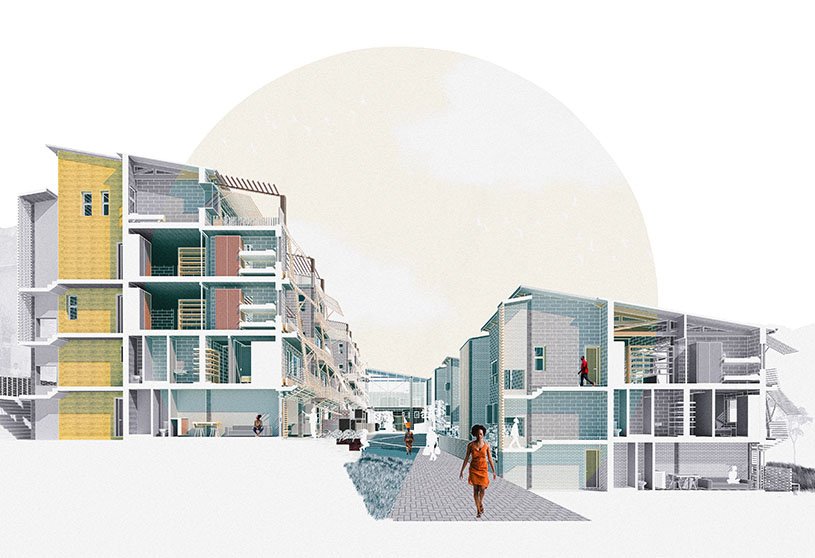
Excerpt: ‘Aural-clusivity’ is an architecture thesis by Victoria Liew from the ‘Department of Architecture – National University of Singapore (NUS).’ The project explores how architecture can foster inclusive, multisensory environments for the d/Deaf and hard-of-hearing (HoH) community. It aims to redefine everyday spaces through participatory research, challenging traditional visual and auditory norms. The outcome develops a design toolkit that applies these research insights to enhance communication, engagement, and sensory diversity in architectural design.
Introduction: This thesis, grounded in the lived experience of a deaf student, examines the shortcomings of Singapore’s universal design policies in meeting the needs of the d/Deaf and hard-of-hearing (HoH) communities. Although universal design promotes inclusivity, it frequently centers on visual and auditory norms, neglecting the full spectrum of sensory diversity. To address this oversight, the research integrates theoretical analysis with participatory methods, anchoring architectural strategies in personal experience and community insight.
The study culminates in a design toolkit organized around five core principles: Plans Within Plans: Small-Scale Spatial Fragments; Gardens as Spatial Clusters & Light Wells; Natural Light as a Balancing & Organizing Element; Vibrational & Tactile Communication; and Soft Subdivisions Instead of Walls. These principles advocate for a departure from conventional design logic, embracing multisensory engagement to create spaces that enable communication and participation beyond spoken or visual means.
The proposed ideas are tested through a small-scale, mixed-use building that functions both as a case study and a conceptual provocation. Within this project, light, vibration, touch, and spatial clustering operate as active design elements that reshape spatial experience and broaden definitions of accessibility.
Ultimately, the thesis positions architecture as a driver of social inclusion, urging a rethinking of design practice—beyond compliance and accessibility checklists—toward environments that empower, connect, and celebrate sensory diversity.
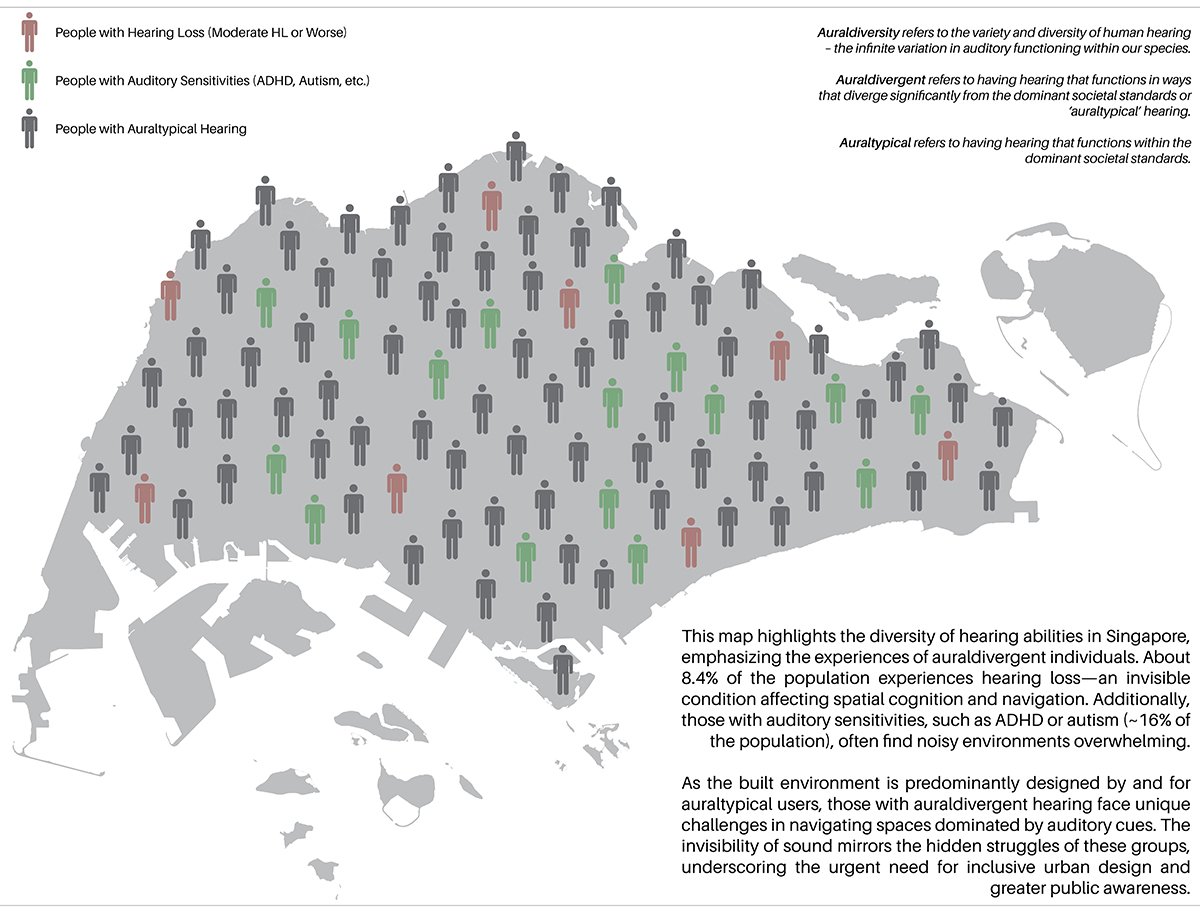
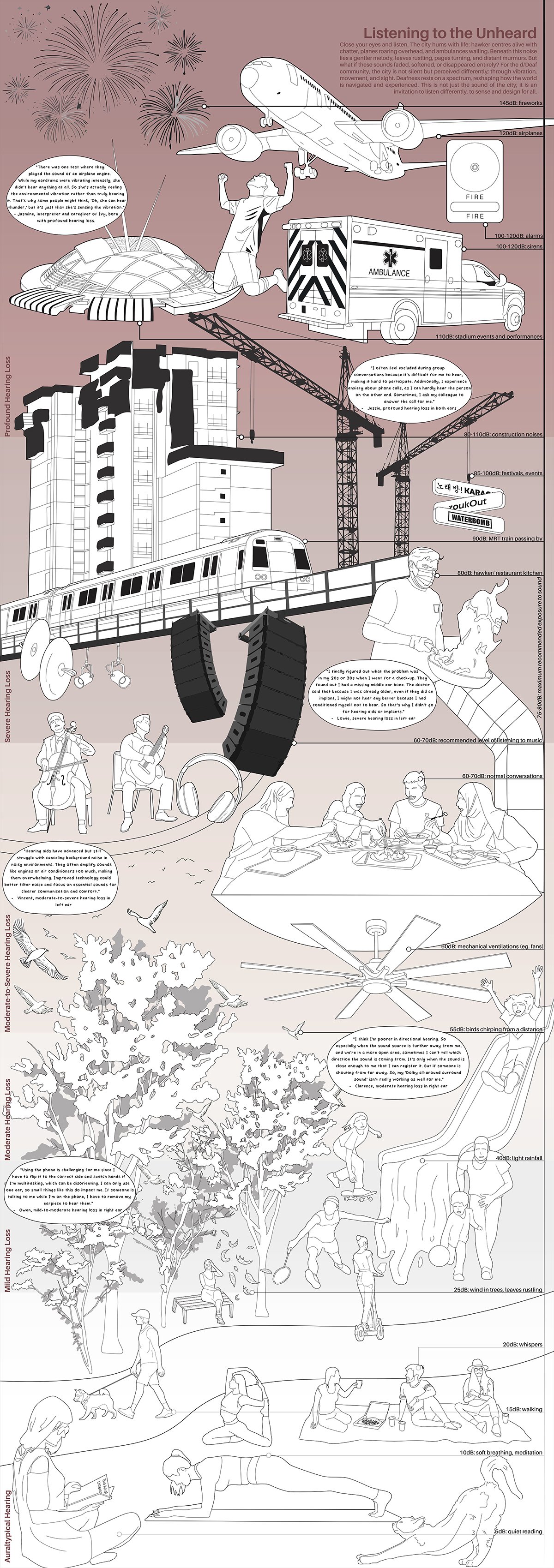
Population of Aural divergent People in Singapore: This diagram reveals the spectrum of hearing abilities and the often-invisible presence of those navigating sound-centred environments.
Drawing from Singapore’s everyday spaces of eating, learning, and gathering, this thesis reimagines these familiar typologies to be more inclusive for the d/Deaf and hard-of-hearing (HoH) communities. Through interviews, focus group discussions, and surveys, the d/Deaf community identified these settings as particularly challenging—places where communication breakdowns, visual blockages, and acoustic difficulties often hinder participation.
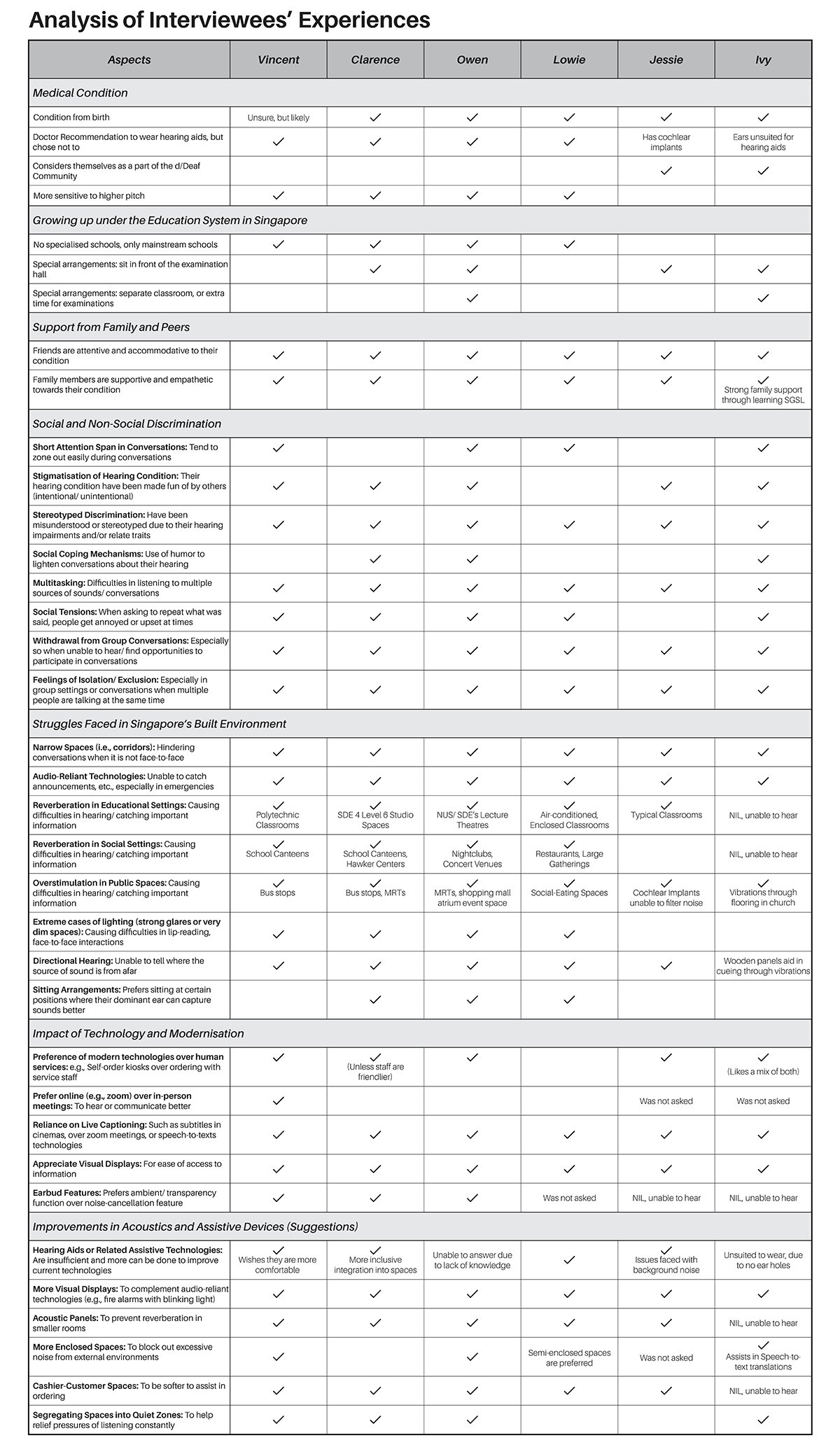
Documenting the hearing profiles of six d/Deaf individuals, illustrating varied degrees of hearing loss and lived experiences that inform inclusive design strategies.
Instead of centering on a single site, the project explores how the five design principles can be embedded within a mixed-use programme encompassing a food centre, seminar and discussion rooms, and adaptable community spaces. By experimenting with light, vibration, touch, and spatial clustering, the design demonstrates how architecture can facilitate communication, nurture multisensory engagement, and enable more inclusive social exchange.
Ultimately, the project aspires to transform Singapore’s familiar spatial typologies into platforms for participation and empowerment—recasting everyday environments as inclusive, multisensory spaces that celebrate diversity and strengthen communal bonds.
Design Process
Design Principle 1 – Gardens as Light and Spatial MediatorsDesign Principle 2 – Daylighting as a Navigational and Sensory Tool
The design process began with a community-based participatory approach aimed at understanding the d/Deaf community beyond individual experience. Through interviews, surveys, and focus group discussions, a range of often-invisible challenges were uncovered—from issues with acoustics and sightlines to broader barriers to social participation. These conversations also generated valuable insights into how spatial design could better facilitate communication and inclusion.
Design Principle 3 – Microzones: Adaptive Pockets of SpaceDesign Principle 4 – Soft Subdivisions Instead of Walls
Building on these findings, an Inclusive Design Workshop was conducted with d/Deaf participants. Using a 1:30 model of a typical hawker centre and classroom, participants identified difficulties they encountered while navigating and interacting within such environments. They were then invited to propose more inclusive spatial arrangements using prefabricated 1:50 models, experimenting with form, circulation, and spatial organization.
Design Principle 4 – Soft Subdivisions Instead of WallsDesign Principle 5 – Vibrational and Tactile Communication
The outcomes of these engagements were distilled into five design principles that guided iterative processes of sketching, diagramming, and model-making. These principles were applied and tested across eating, event, and educational programmes, examining how architecture might transcend conventional visual and auditory paradigms.
Overall, the process was both exploratory and collaborative, anchoring the final design in lived experience and demonstrating how participatory methodologies can inform more inclusive, multisensory architectural spaces.
Final Outcome
Ground floor plan: Eating and communal spaces are shaped by the five design principles, promoting tactile engagement, clear wayfinding, and inclusive interaction. | second floor plan: Event and educational spaces apply the five design principles to enhance communication, light quality, and sensory comfort.Exploded axonometric showcasing the different design aspects and how they align with the five design principles, enhancing visual comfort, vibrational communication, and acoustic clarity. | Exploded axonometric illustrating how material, lighting, and spatial strategies align with the five design principles to create inclusive, sensory-responsive discussion spaces.
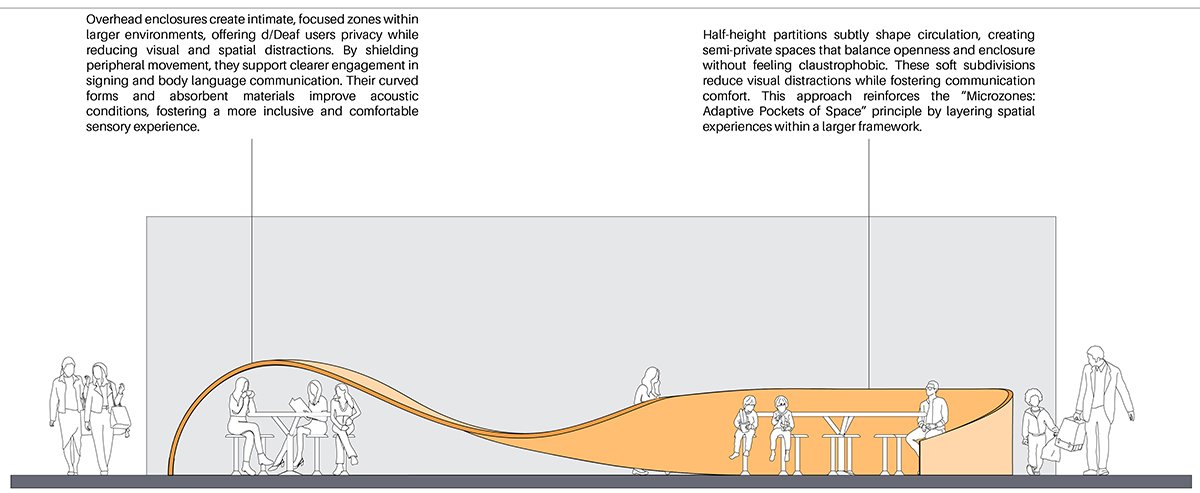
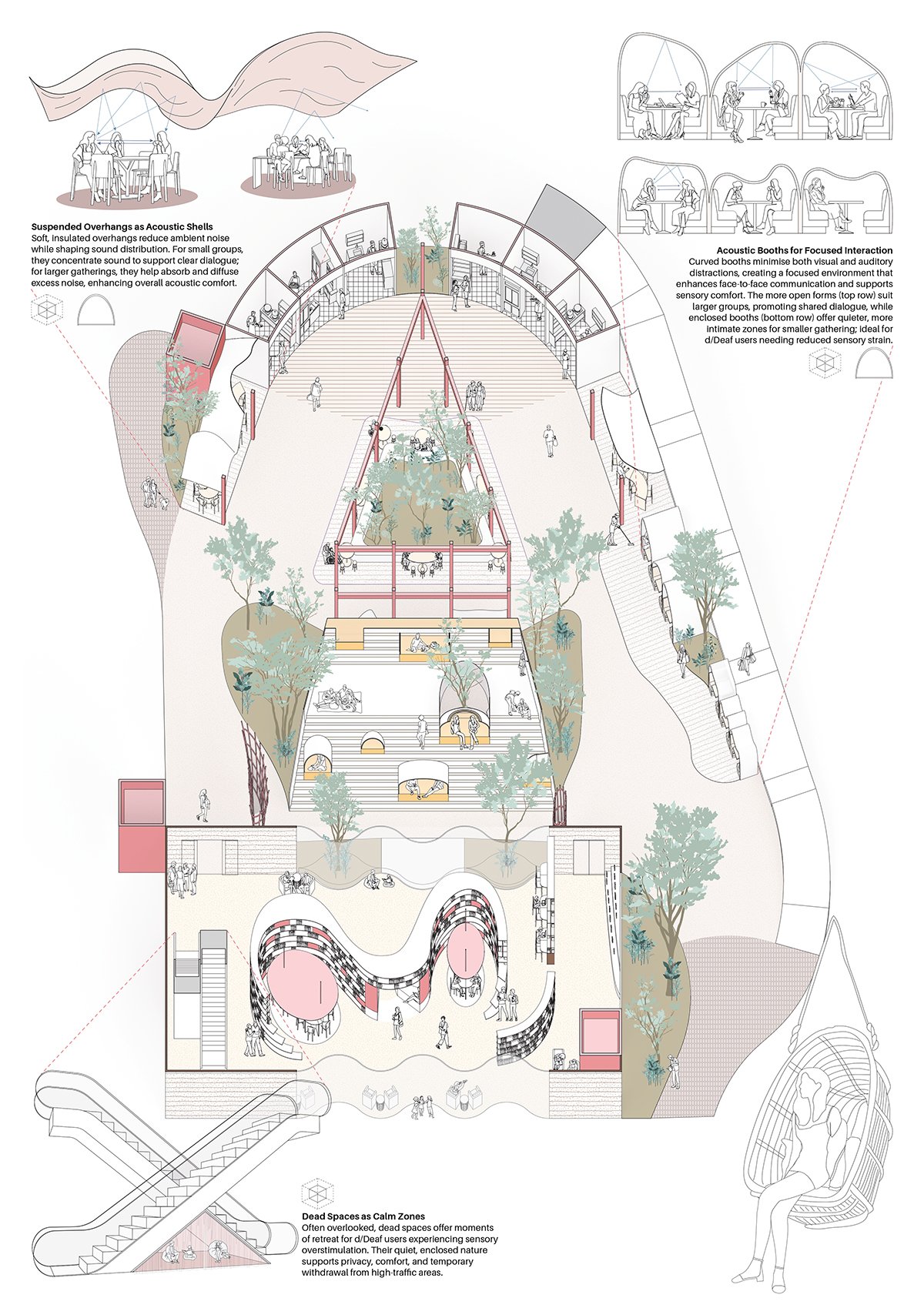
The five design principles create a multisensory, inclusive environment for d/Deaf users by combining natural elements, light, spatial organisation, and tactile feedback. Gardens, planters, and light wells guide wayfinding and reduce sensory overload, while microzones and soft partitions provide varying levels of intimacy, privacy, and social interaction. Overhead enclosures and curved forms enhance focus, acoustic comfort, and signing clarity, while tactile and vibrational elements enable non-visual, non-auditory communication. Together, these strategies shape interconnected, adaptive spaces that balance openness, enclosure, and sensory accessibility, supporting engagement and comfort across diverse user needs.
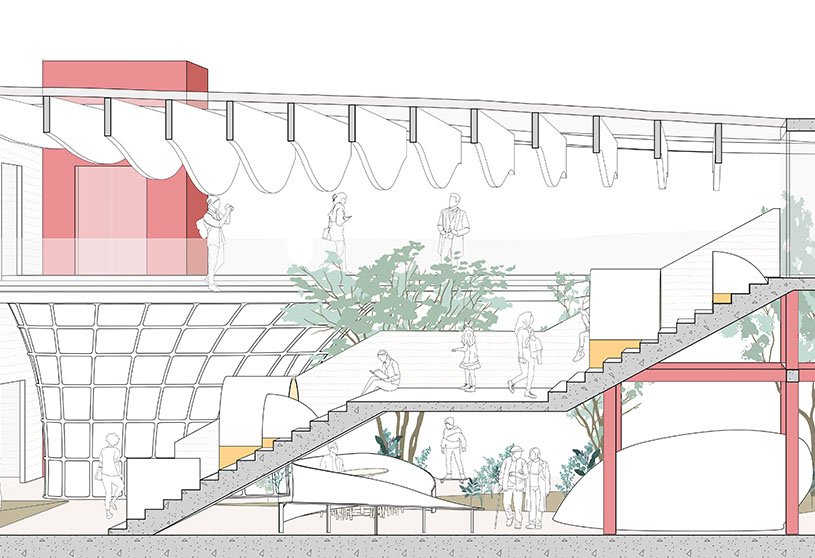
A sectional overview illustrating how light, material, and form integrate the five design principles into an inclusive, multisensory community environment.Aggregation of Modules
The final outcome of this thesis is articulated through five interrelated components. The Design Thesis Report consolidates the research journey, supported by diagrams that make visible the otherwise unseen challenges articulated by interviewees. This written document establishes the theoretical framework of the project while revealing the subtle yet pervasive barriers encountered by the d/Deaf and hard-of-hearing (HoH) community in everyday environments.
Aggregation of ModulesAggregation of Modules
Complementing this is the Subsidiary Document, which serves as a ground-up record of participatory research. It compiles interview transcripts, survey results, and summary tables outlining the key challenges identified through collective engagement. This document ensures that participant voices remain integral to the design process and directly inform the translation of lived experience into architectural strategies.
Reimagined as quiet retreats, these enclosed pockets offer sensory relief and privacy for d/Deaf users within high-traffic environments.Curved circulation paths guide natural movement and pause points, maintaining sightlines and supporting interaction for d/Deaf users.
A Video component extends this engagement by visually documenting the everyday obstacles faced by the d/Deaf community. Functioning as both testimony and advocacy, the video raises public awareness of accessibility issues while highlighting the urgency of more inclusive design practices.
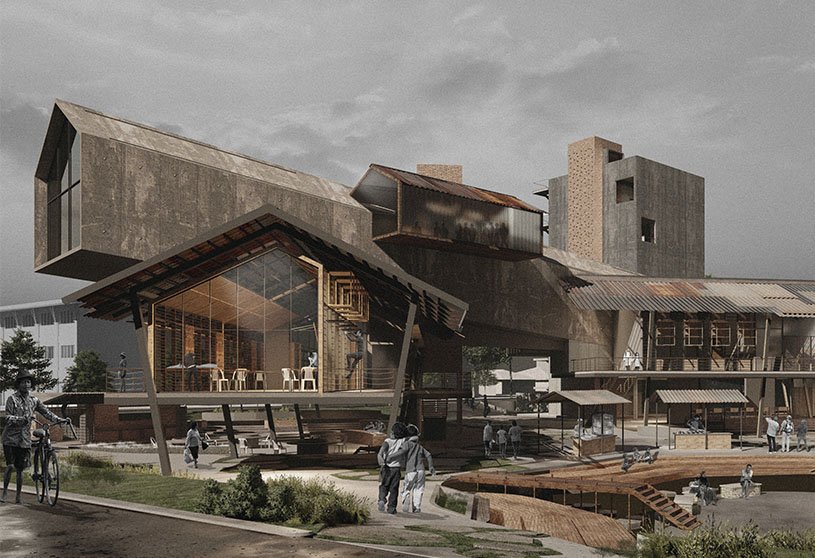
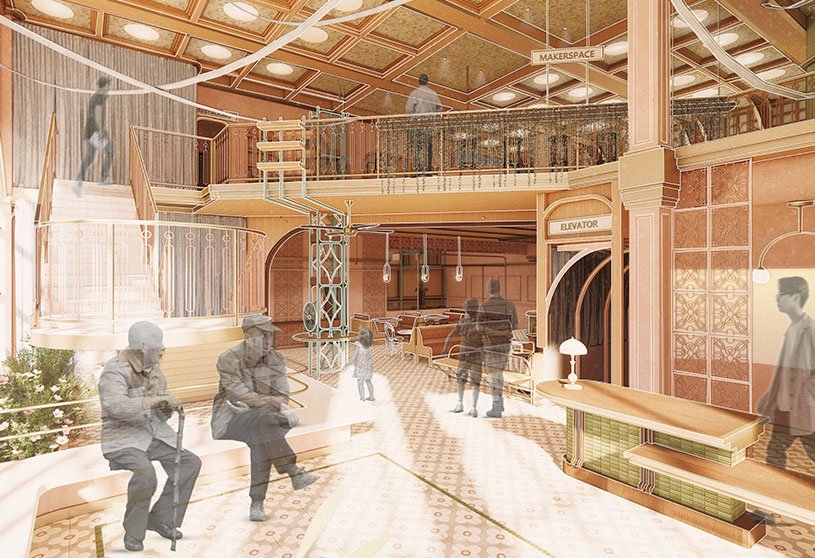
The design explorations culminate in a small-scale, mixed-use building that integrates eating, event, and educational programmes through the application of the five design principles. Iterative diagrams and physical models demonstrate how the spatial strategies evolved in direct response to community insights.
Recessed alcoves and transparent boundaries create spontaneous gathering points while ensuring clear visual connection and smooth transitions.Thoughtful vibrative flooring transmits subtle vibrations, enabling non-visual communication and spatial awareness through shared tactile cues.
Finally, the Design Toolkit—currently under development—brings together research findings, visual analyses, and design strategies into a practical resource. Envisioned as a tool beyond academia, it aims to inform government agencies, architects, and planners in fostering more inclusive and multisensory environments.
Conclusion: This thesis redefines everyday spaces through inclusive, multisensory design that supports the d/Deaf and hard-of-hearing (HoH) community. Grounded in lived experience, it demonstrates how architecture can foster communication, participation, and belonging for all.
[This Academic Project has been published with text and images submitted by the student]
Site Context
Design Process
Final Outcome
To submit your academic project for publication at ArchiDiaries, please visit the following link >> Submit
Get the best of ArchiDiaries, directly in your inbox.
We use cookies on our website to give you the most relevant experience by remembering your preferences and repeat visits. By clicking “Accept All”, you consent to the use of ALL the cookies. However, you may visit "Cookie Settings" to provide a controlled consent.
This website uses cookies to improve your experience while you navigate through the website. Out of these, the cookies that are categorized as necessary are stored on your browser as they are essential for the working of basic functionalities of the website. We also use third-party cookies that help us analyze and understand how you use this website. These cookies will be stored in your browser only with your consent. You also have the option to opt-out of these cookies. But opting out of some of these cookies may affect your browsing experience.
Necessary cookies are absolutely essential for the website to function properly. These cookies ensure basic functionalities and security features of the website, anonymously.
Cookie
Duration
Description
cookielawinfo-checkbox-analytics
11 months
This cookie is set by GDPR Cookie Consent plugin. The cookie is used to store the user consent for the cookies in the category "Analytics".
cookielawinfo-checkbox-functional
11 months
The cookie is set by GDPR cookie consent to record the user consent for the cookies in the category "Functional".
cookielawinfo-checkbox-necessary
11 months
This cookie is set by GDPR Cookie Consent plugin. The cookies is used to store the user consent for the cookies in the category "Necessary".
cookielawinfo-checkbox-others
11 months
This cookie is set by GDPR Cookie Consent plugin. The cookie is used to store the user consent for the cookies in the category "Other.
cookielawinfo-checkbox-performance
11 months
This cookie is set by GDPR Cookie Consent plugin. The cookie is used to store the user consent for the cookies in the category "Performance".
viewed_cookie_policy
11 months
The cookie is set by the GDPR Cookie Consent plugin and is used to store whether or not user has consented to the use of cookies. It does not store any personal data.
Functional cookies help to perform certain functionalities like sharing the content of the website on social media platforms, collect feedbacks, and other third-party features.
Performance cookies are used to understand and analyze the key performance indexes of the website which helps in delivering a better user experience for the visitors.
Analytical cookies are used to understand how visitors interact with the website. These cookies help provide information on metrics the number of visitors, bounce rate, traffic source, etc.
Advertisement cookies are used to provide visitors with relevant ads and marketing campaigns. These cookies track visitors across websites and collect information to provide customized ads.