Home » Academic projects » Dwelling Through Division: Reimagining the Party Wall as Social Infrastructure in Becontree, London | Masters Design Project
Dwelling Through Division: Reimagining the Party Wall as Social Infrastructure in Becontree, London | Masters Design Project
Excerpt: ‘Dwelling Through Division’ is a Masters Design Project by Yuezhou Hou from the ‘Architectural Association School of Architecture (AA).’ The project aims to redefine the party wall as a shared social and spatial infrastructure that enables new forms of collective living. By challenging rigid, family-based property ownership, the project empowers residents to negotiate shared boundaries, expand living possibilities, and transform isolated housing units into a more connected, cooperative neighborhood.
Introduction: This project examines the spatial, social, and political significance of the party wall by exploring new possibilities for collective living. Taking the concept of a “party wall revolution” as its starting point, the research focuses on Becontree, one of the largest public housing estates in London.
As society has evolved, the party wall has acquired expanded roles in terms of rights, negotiation, and social interaction. Acts of protection, indifference, and communication all occur along this boundary, reflecting varying conditions of friendship, hostility, or neutrality. The project asks whether the qualities of friendship can be amplified and hostility reduced, whether the party wall can be strengthened as a shared boundary, and whether it can support new forms of living together.
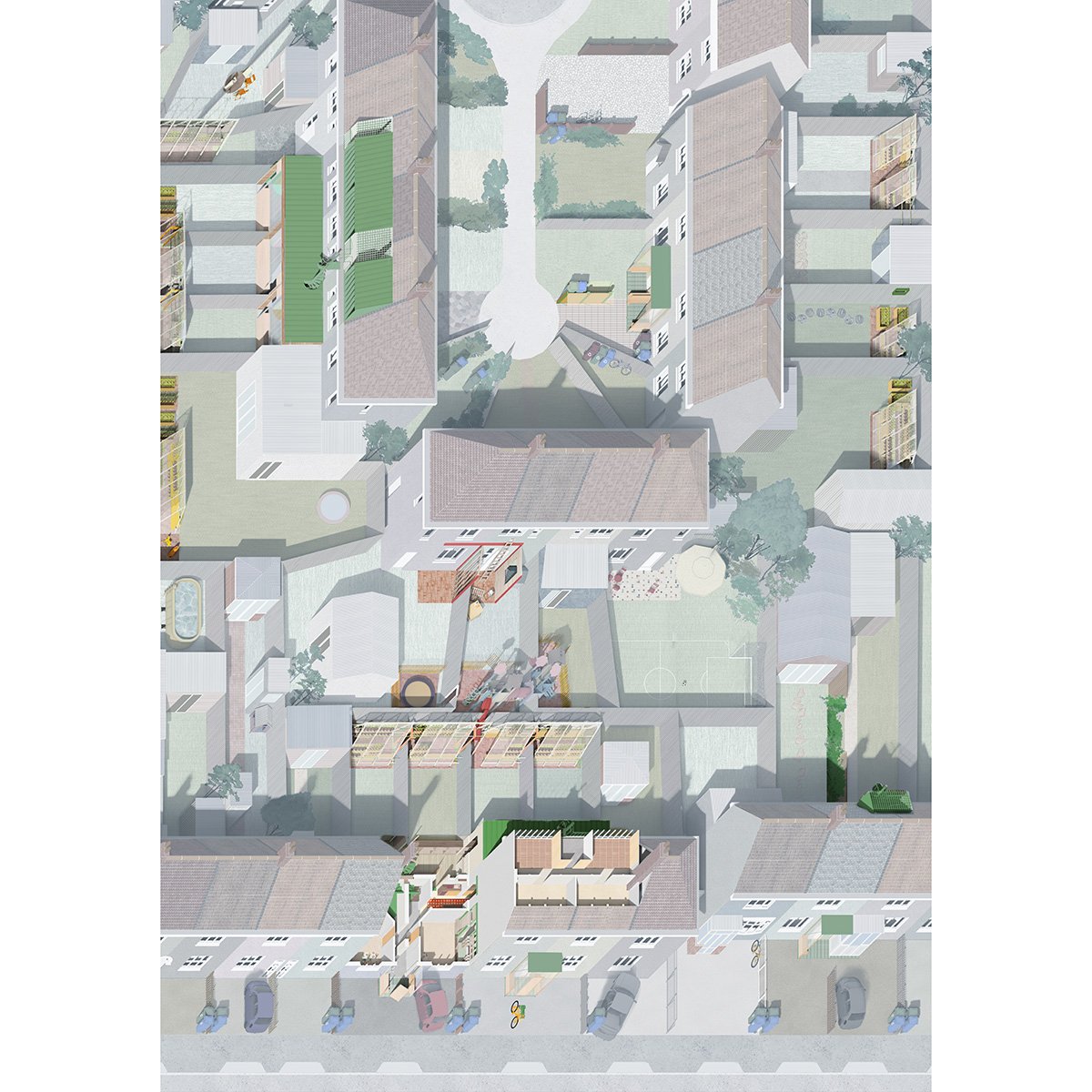
The proposal seeks to redefine the party wall from a purely divisive element into an infrastructural and social platform, as well as a new form of neighborhood contract. It challenges the absoluteness of property rights centered on the family unit and explores alternative models of ownership. This framework provides residents with clear guidelines for developing their land while responding directly to their needs. Three scenarios are explored on the site: residents who prioritize private space; those who prefer active engagement with the surrounding community; and houses whose owners have agreed to authorize an agency to convert them into flats. These interventions transform the party wall itself—shifting from fixed dimensions to softer, more adaptable boundaries, expanding the width of party structures, and enabling a greater diversity of living arrangements.
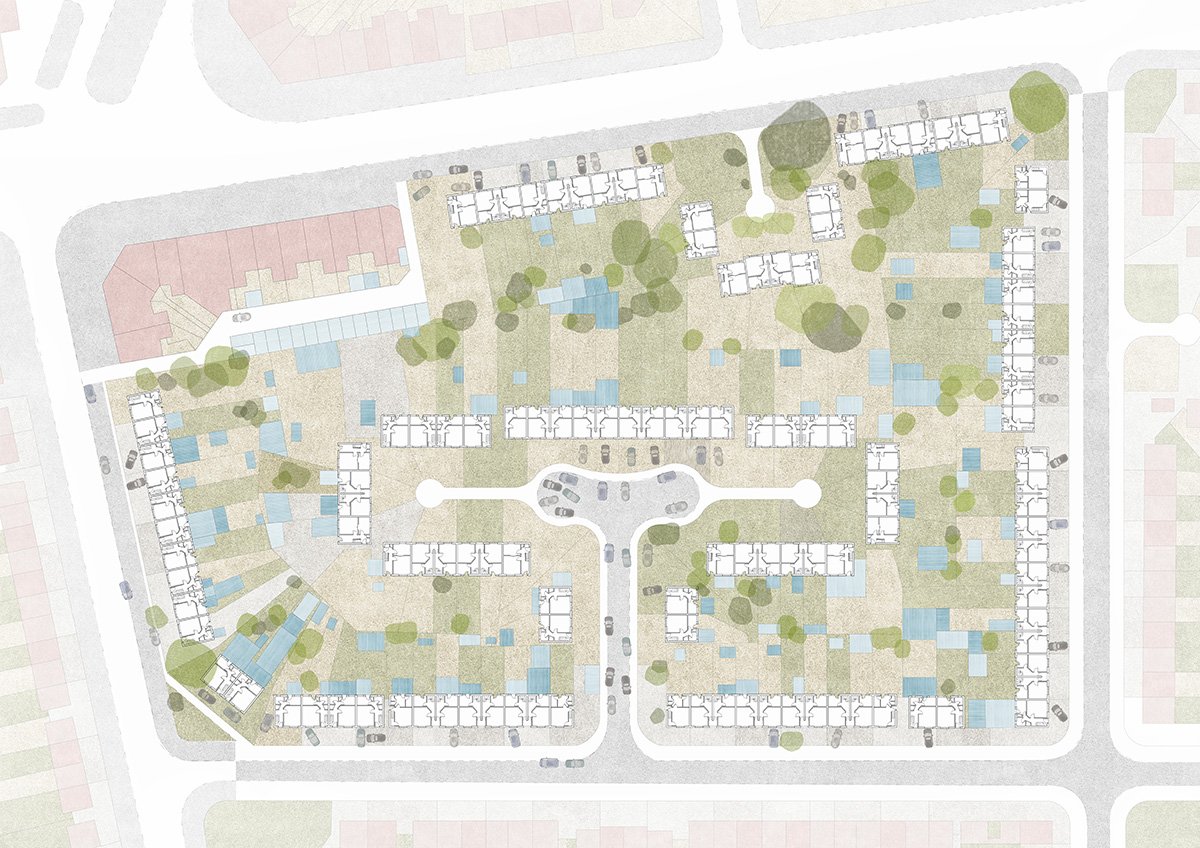
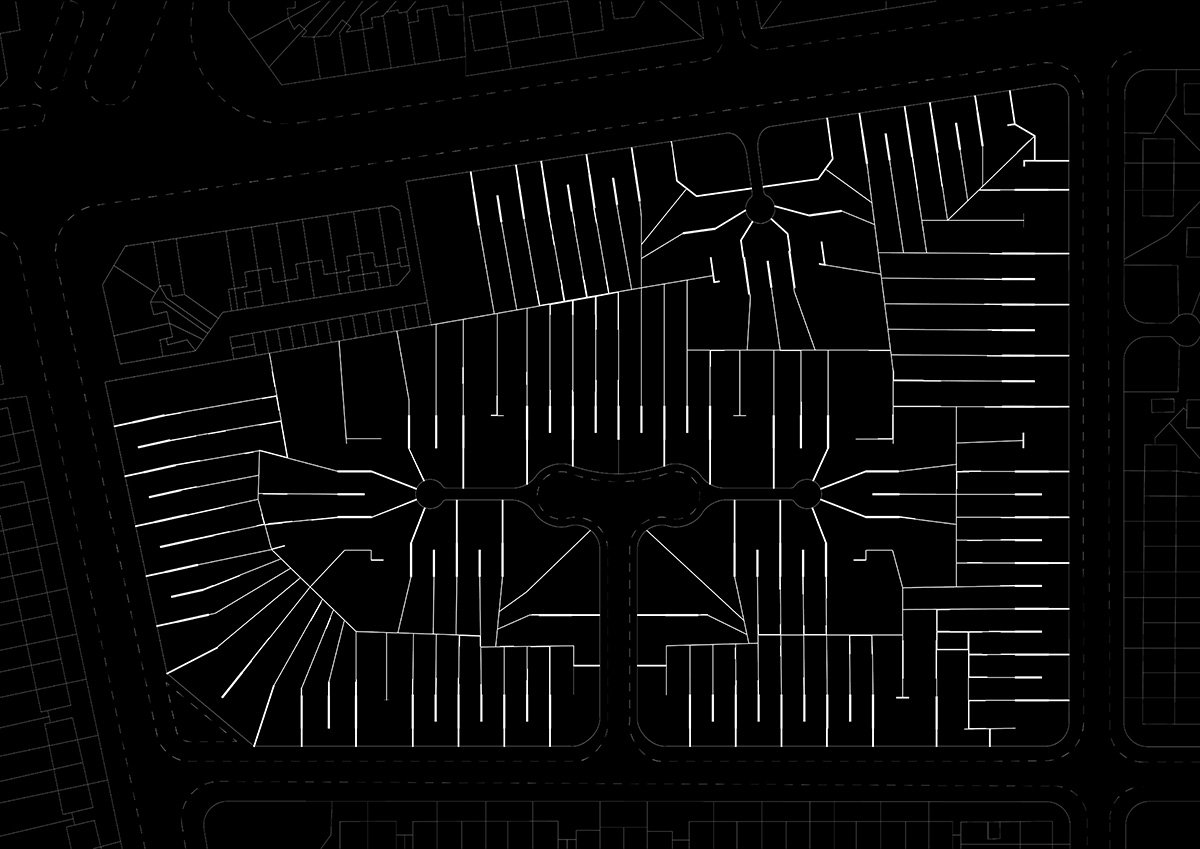
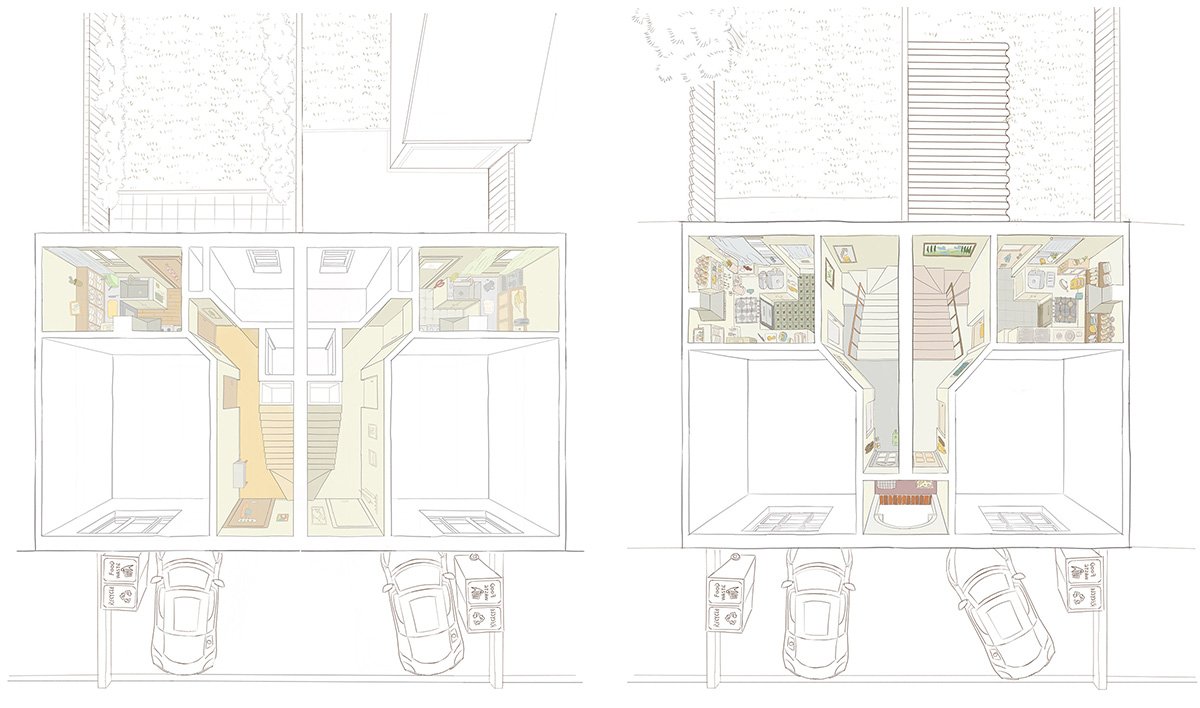
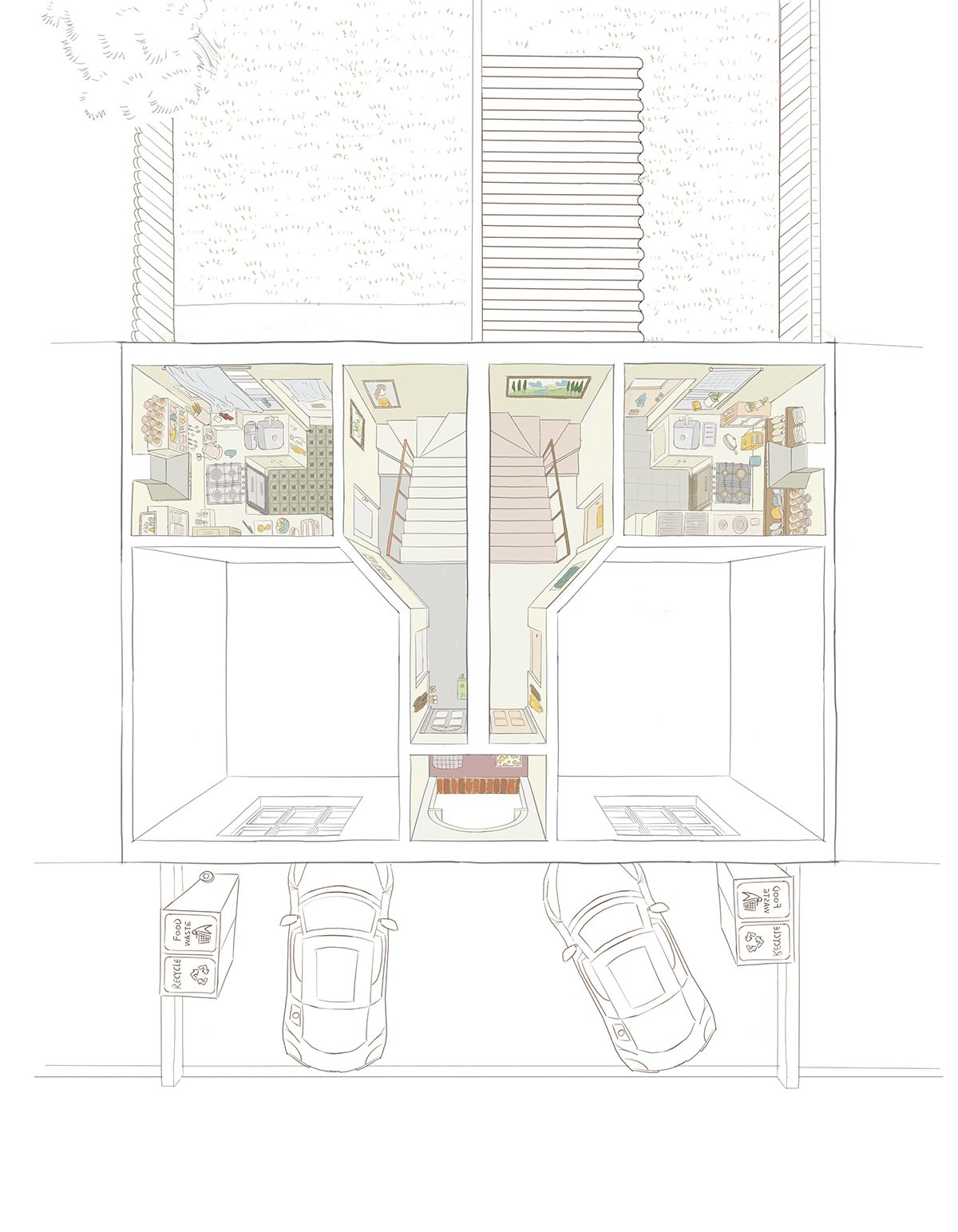
Showing the lives happening on site. How people use their own land, and uses of party walls and party fences.Plan only showing party walls on site. The land being connected and divided by party walls.Showing the lives happening on site. How people use their own land, and uses of party walls and party fences.
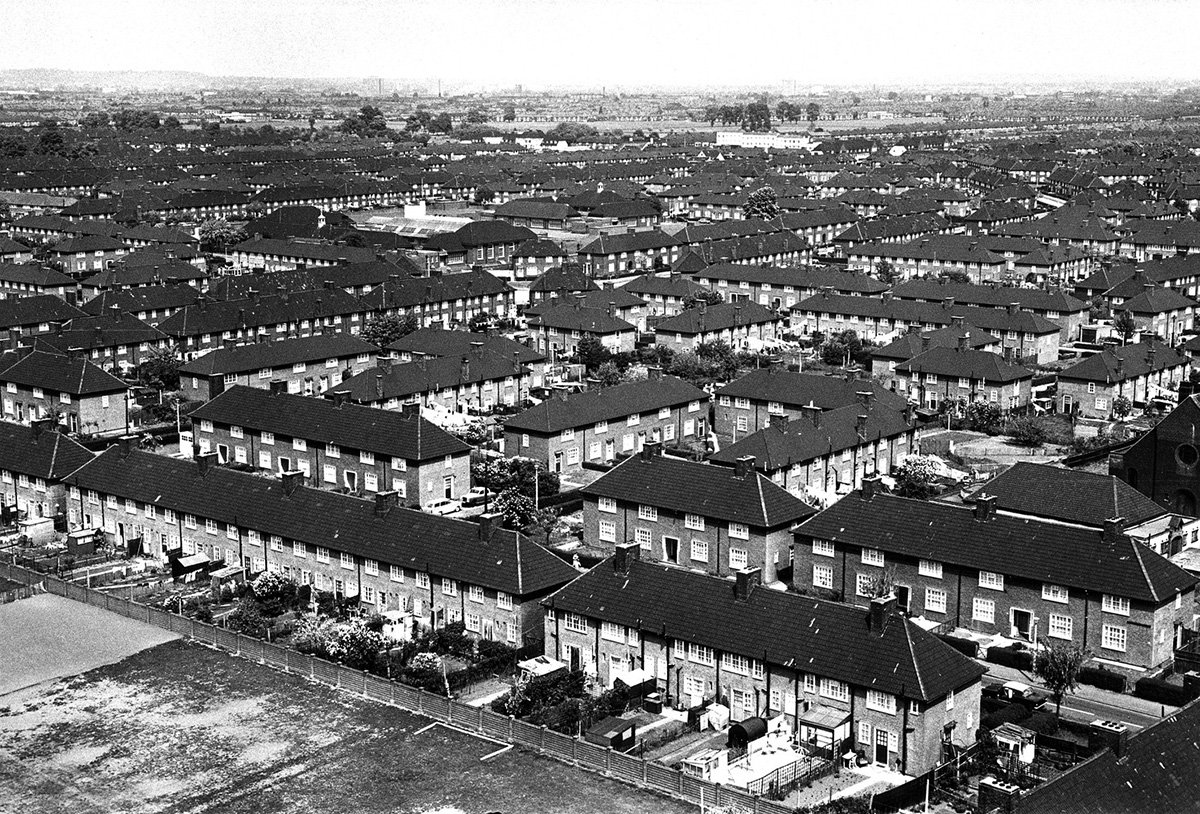
The project is centered on the Becontree Estate, completed in 1935 as a pioneering experiment in social housing. Characterized by standardized two- to three-bedroom houses, the estate was originally organized around the concept of the party wall, which functioned to divide residents into isolated nuclear family units.
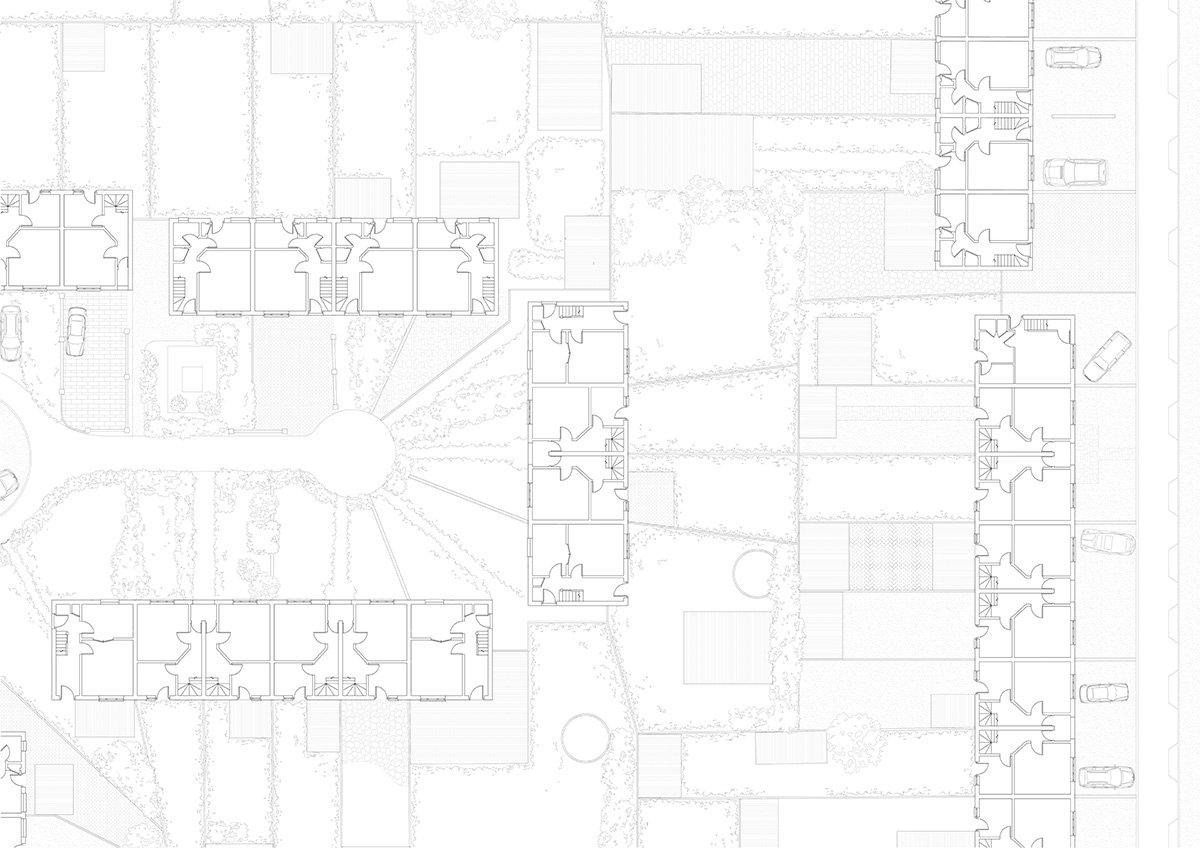
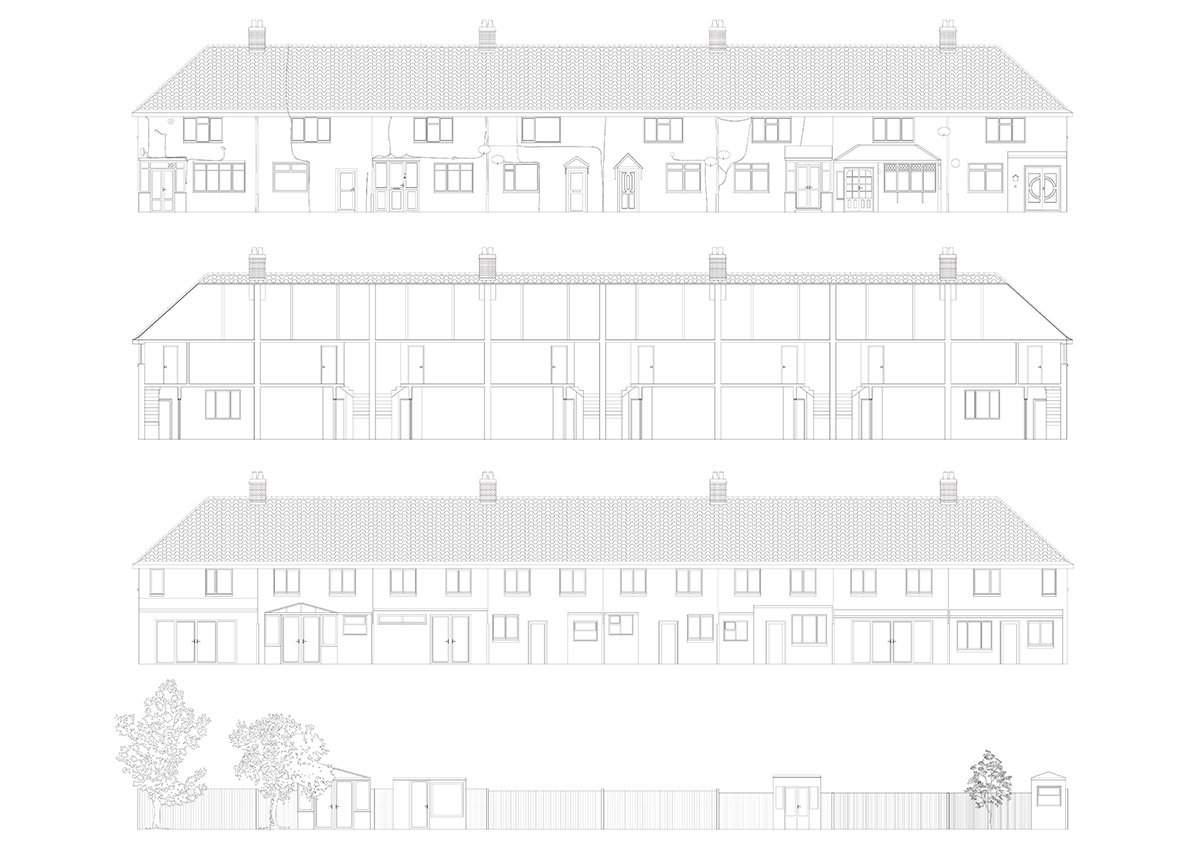
1-100 section and elevations of houses from front yard to back yard.Types of town houses on site
At present, approximately 70% of the properties are either owner-occupied or rented as entire houses, reinforcing a rigid, family-centric ownership model. The proposal aims to challenge this historically absolute notion of property rights by redefining the role of the party wall. Rather than acting as a static divider, the wall is reconceived as a flexible social infrastructure and neighborhood platform.
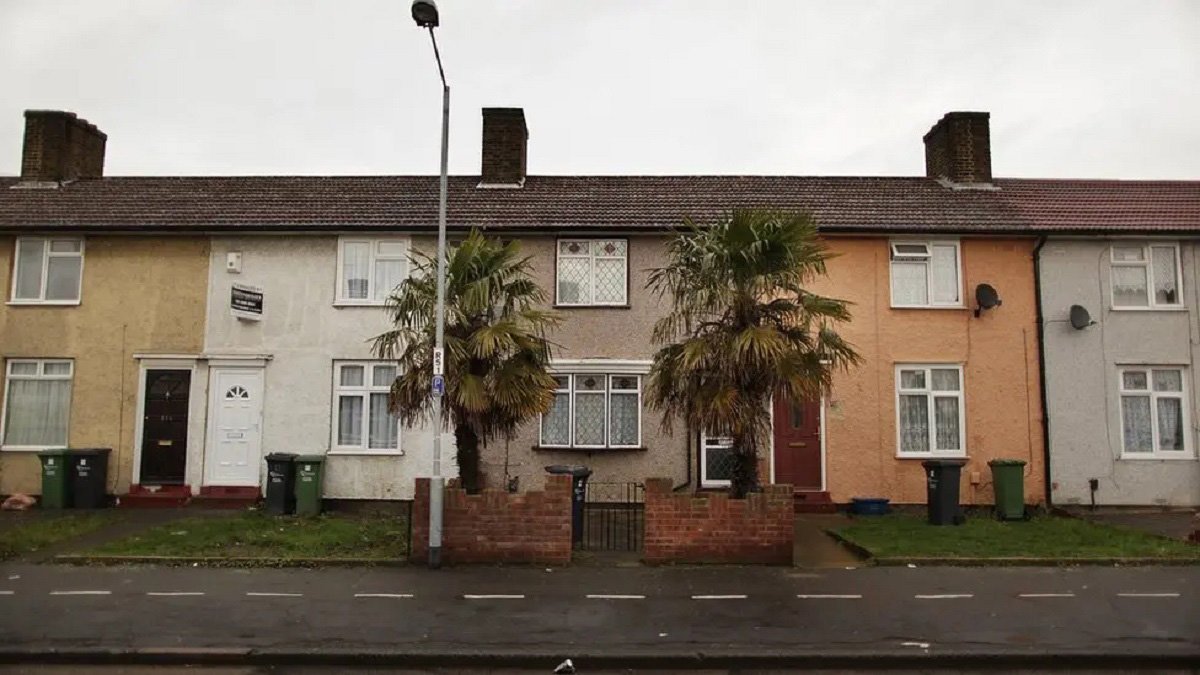
Photo of typical houses on site, photo by authorPhoto of Becontree estate, bird view
Amidas Garden is selected as the pilot site due to its representative architectural density and repetitive party wall configurations. Implementation begins at this location by treating a single block as a prototypical testing ground for a transformation guidebook.
Design Process
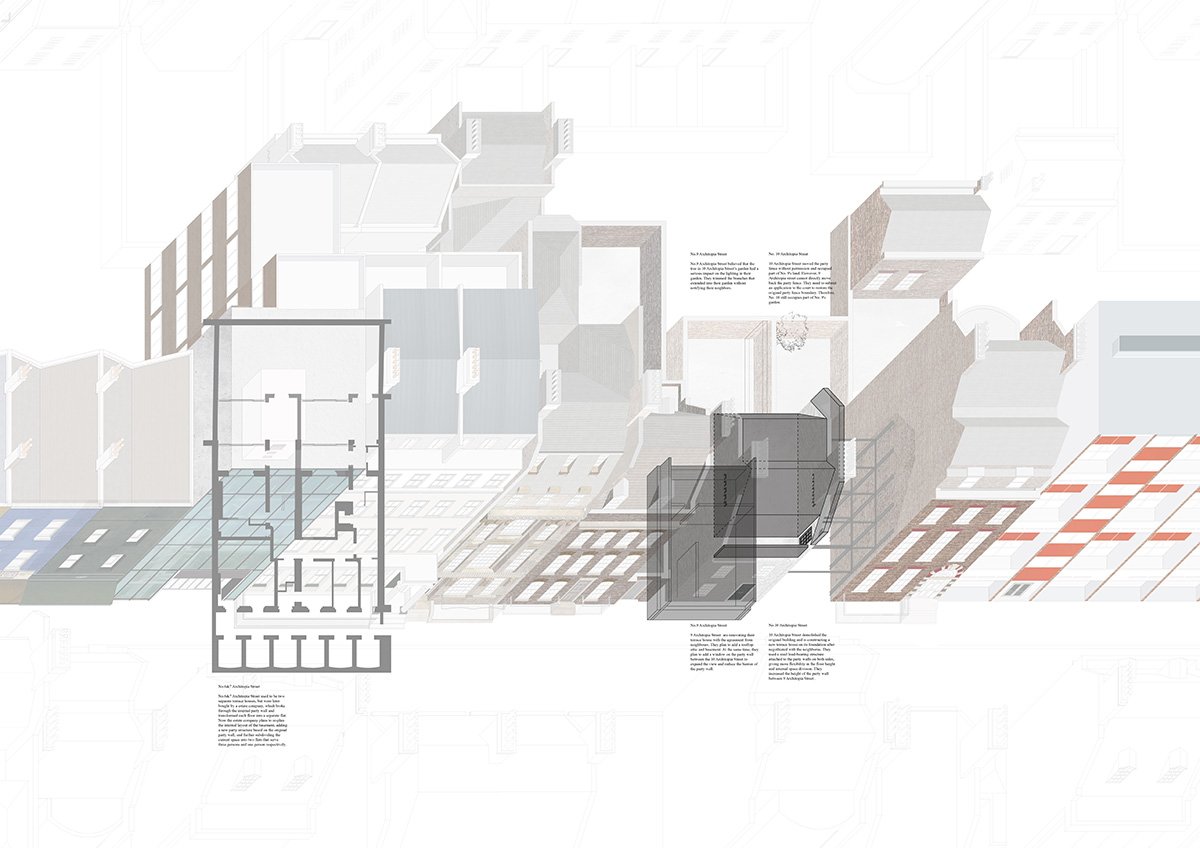
London Cases Of Party Wall Dispute
The research began with a historical and legal analysis of the party wall in London, tracing its evolution from a functional fireproof barrier to a complex site of rights and negotiation under the Party Wall Act of 1996. By examining legal limitations, the study sought to identify the maximum spatial potential available to homeowners within existing regulatory frameworks.
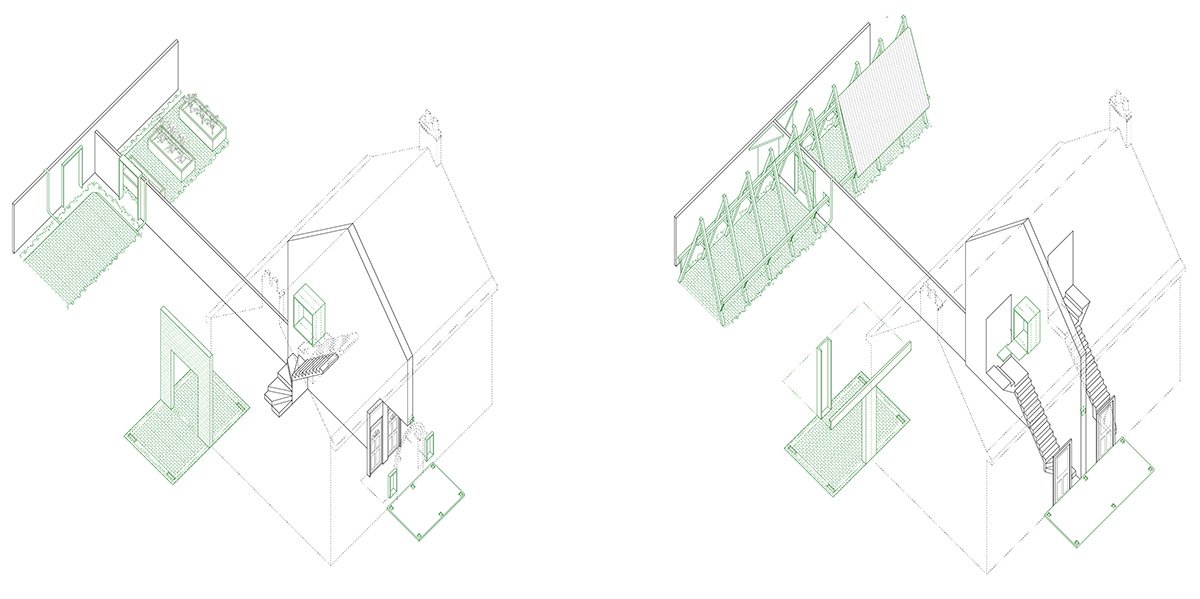
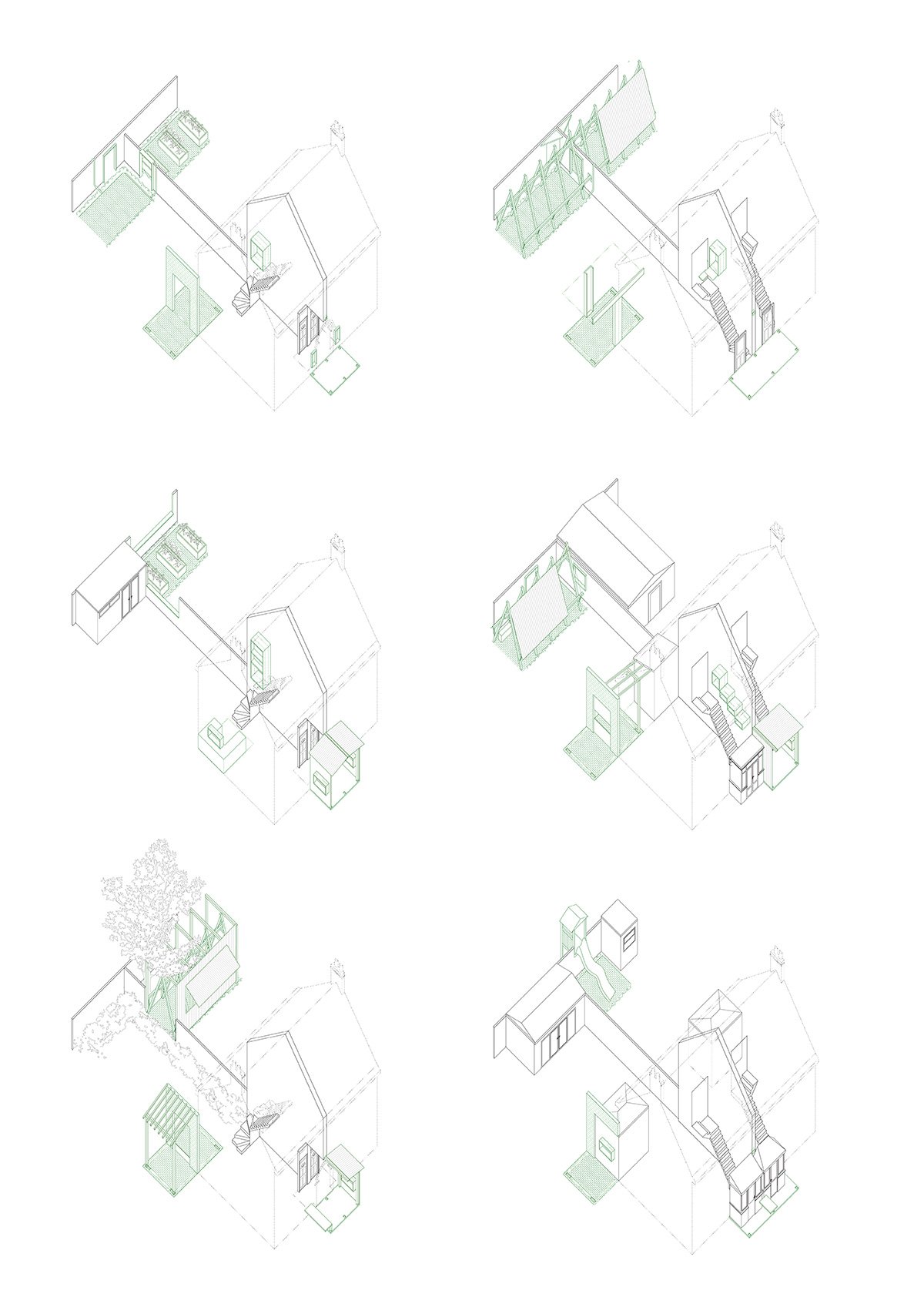
Design Iterations On Party WallsDesign Iterations On Party Walls
Subsequently, real-world cases of neighborly negotiations were mapped onto a fictional street to simulate contemporary urban tensions. This exercise revealed that while party walls physically connect the city, they frequently function as barriers to social interaction, reflecting a spectrum of relationships ranging from hostility to neutrality.
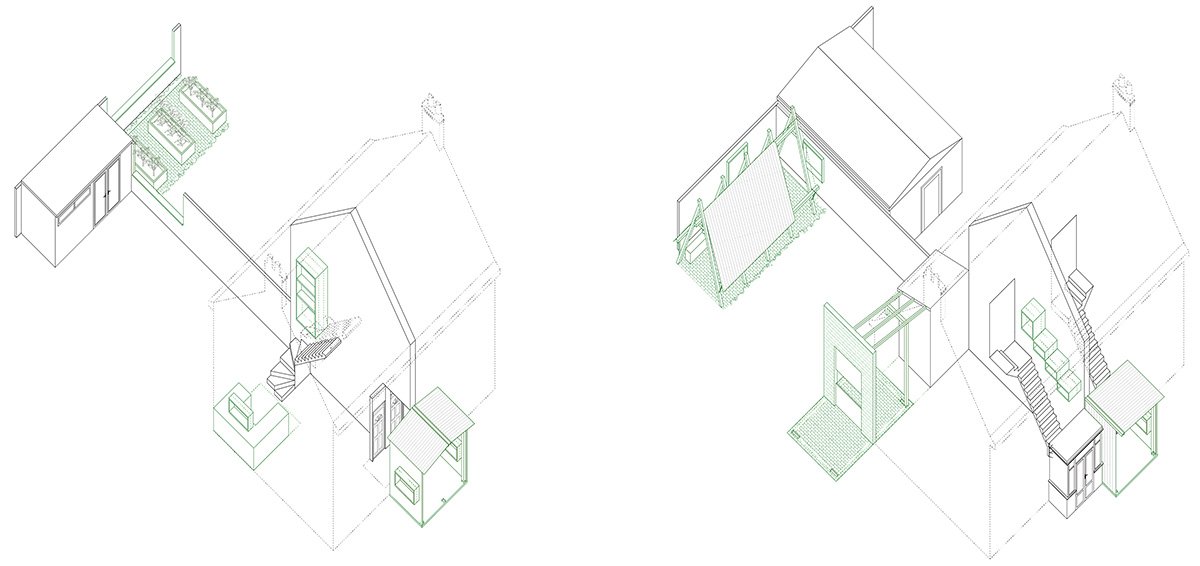
Design Iterations On Party Walls
Prompted by the question, “Can friendship be expanded while hostility is reduced?”, the research selected Becontree, London’s largest public housing estate, as its primary site. Drawing on the estate’s distinctive party wall configurations, a transformation guidebook was developed for residents. This design framework redefines the shared boundary as a social platform, repositioning the party wall from a purely divisive element into a flexible infrastructure that supports collective living.
Final Outcome
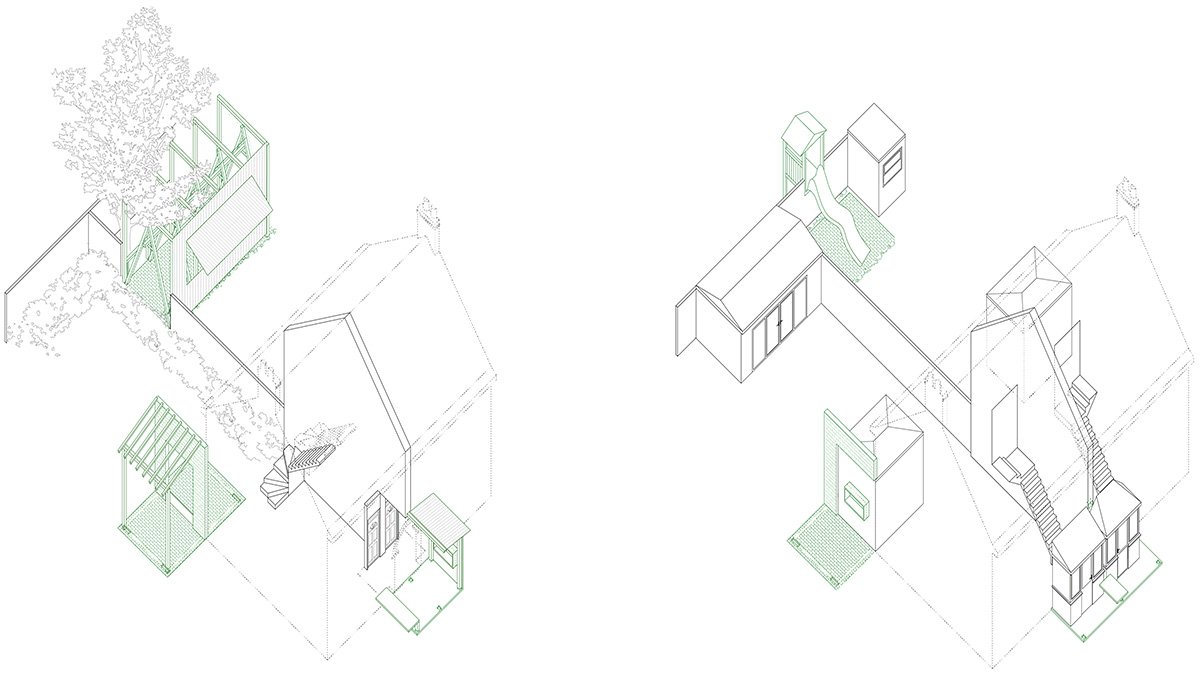
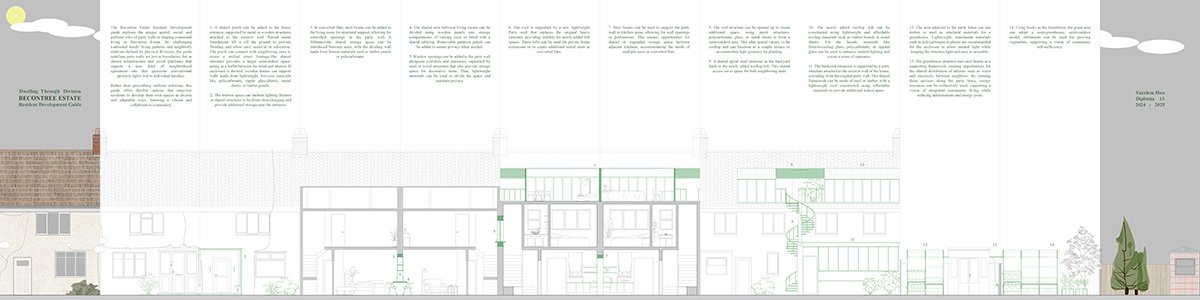
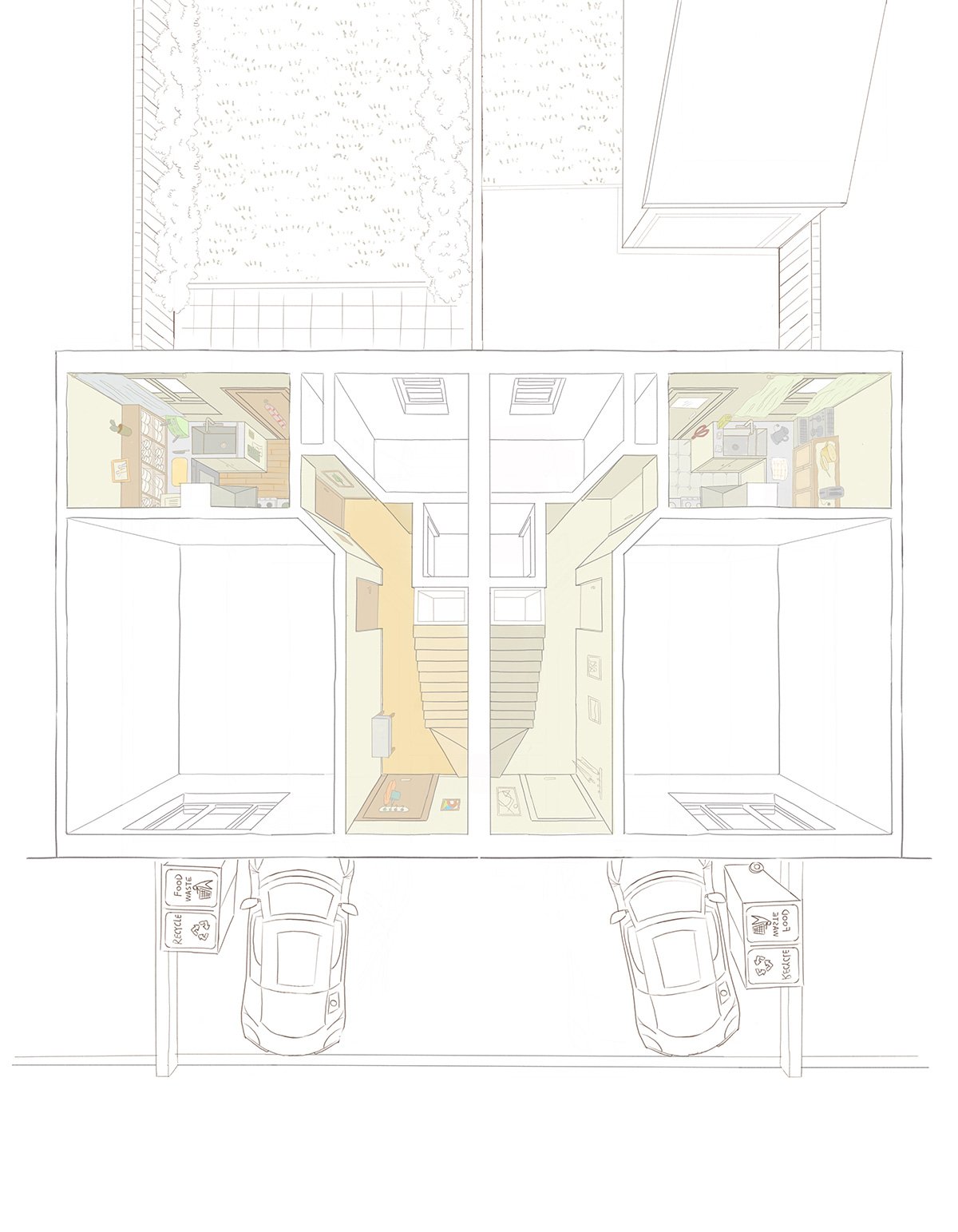
The handbook offers flexible options that empower residents to develop their own spaces.Axonometric drawing of the proposal
The final outcome of this project is a comprehensive transformation guidebook designed for the residents of the Becontree Estate. This strategic manual empowers the community to reimagine the “party wall” not as a rigid divider but as a shared social infrastructure.
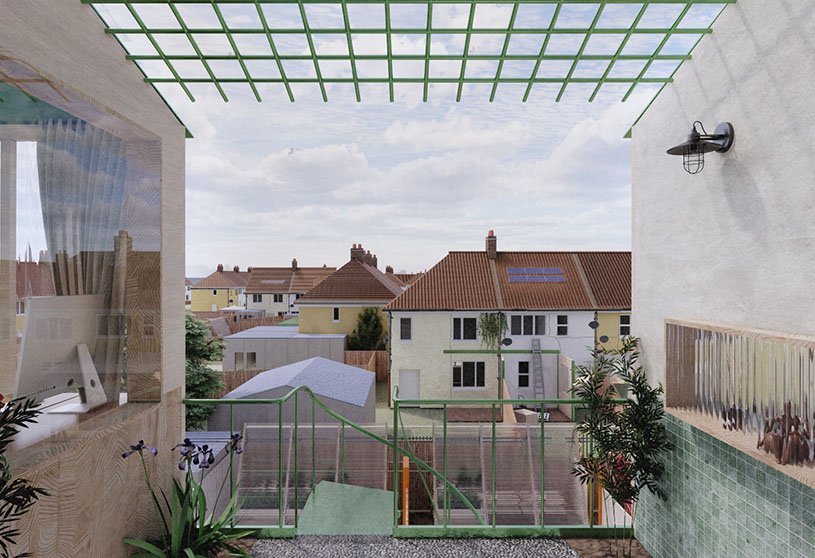
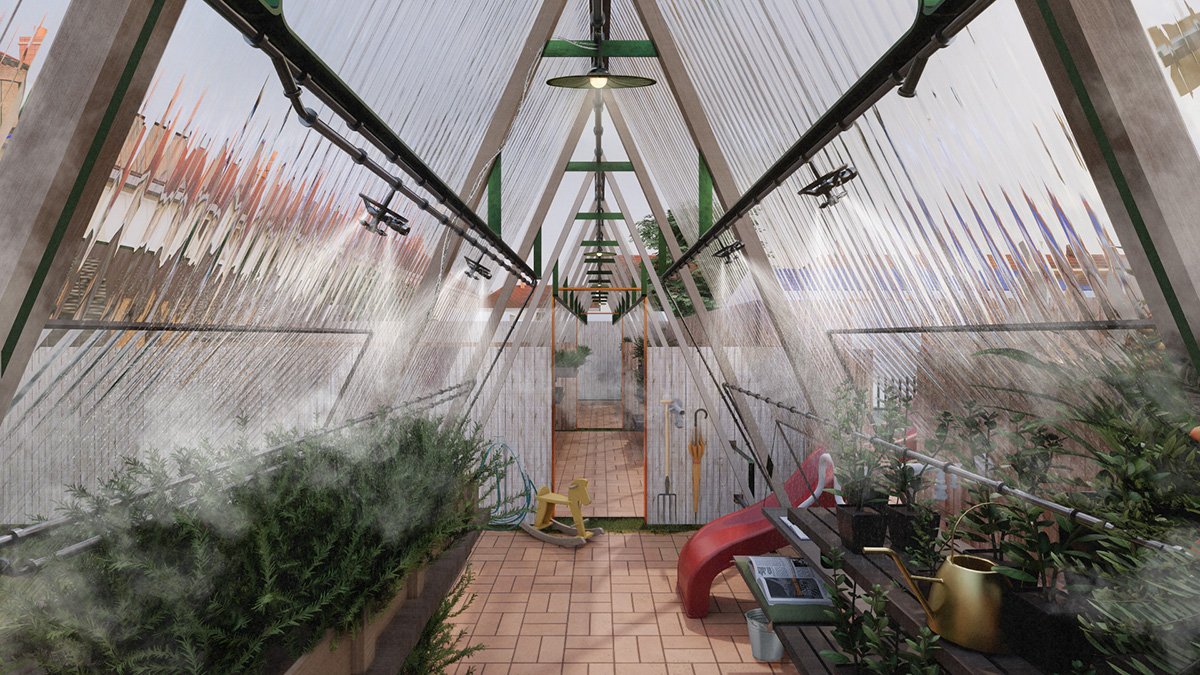
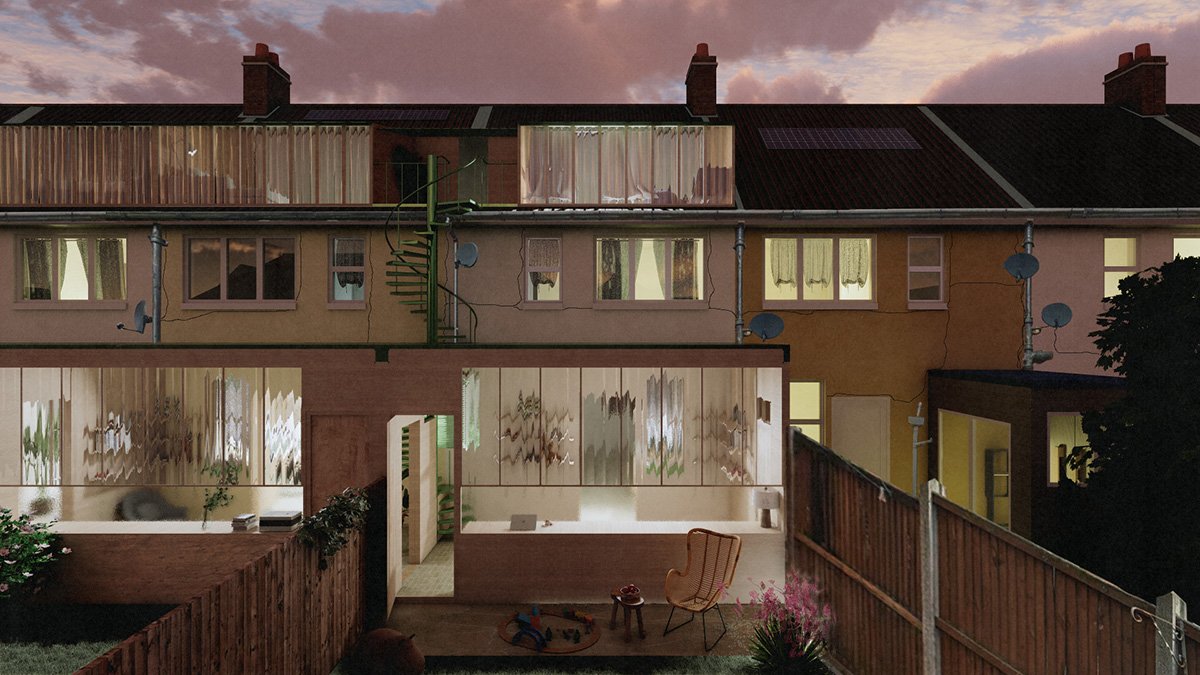
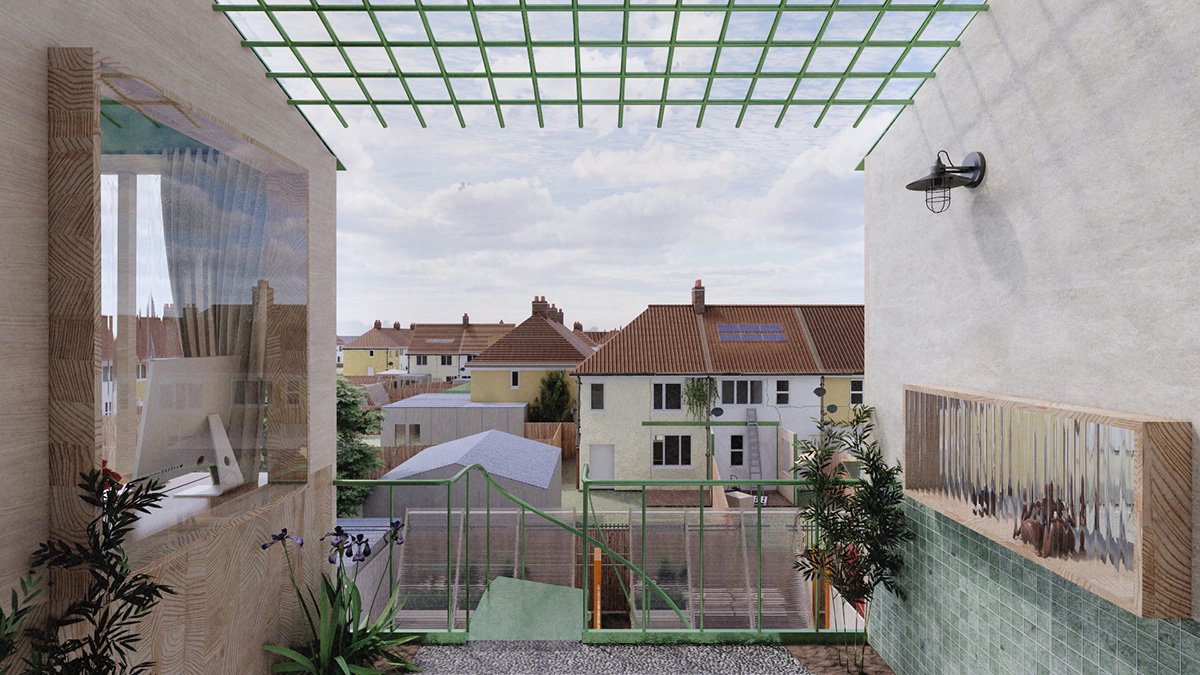
Sharing garden with energy passing throughLooking towards the party wall developments from back yard
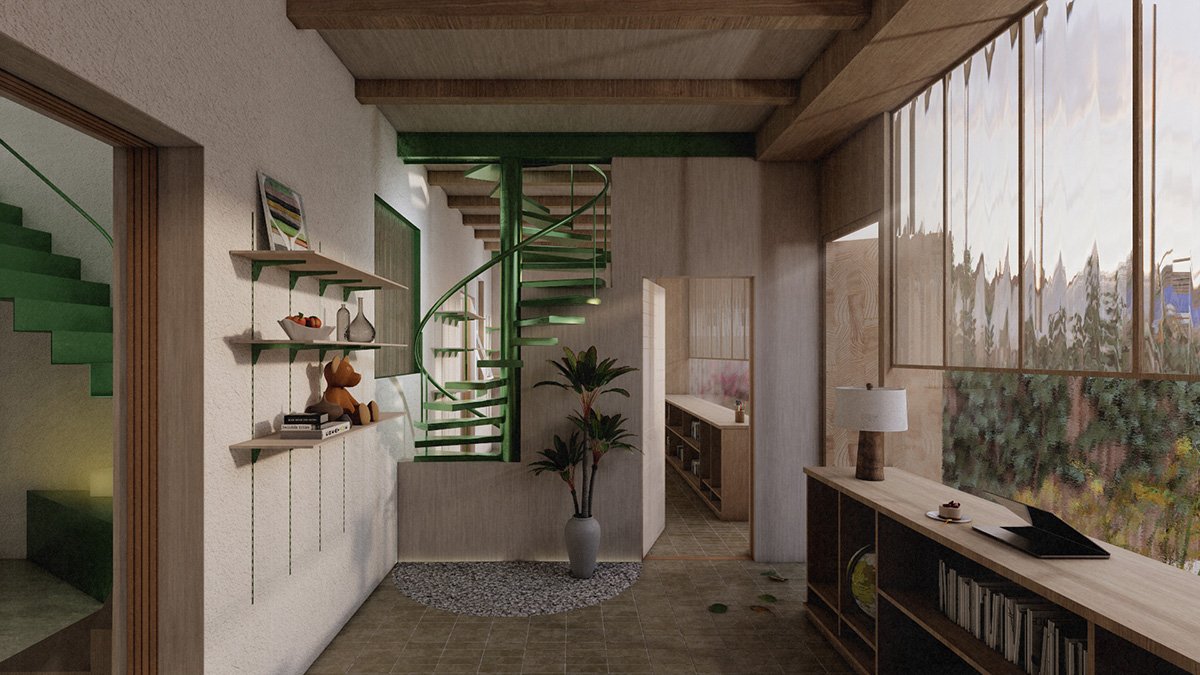
The guidebook provides a series of cost-effective and accessible self-build solutions that span multiple spatial scales: from the structural party walls within the house to shared boundary fences and reconfigured front gardens.
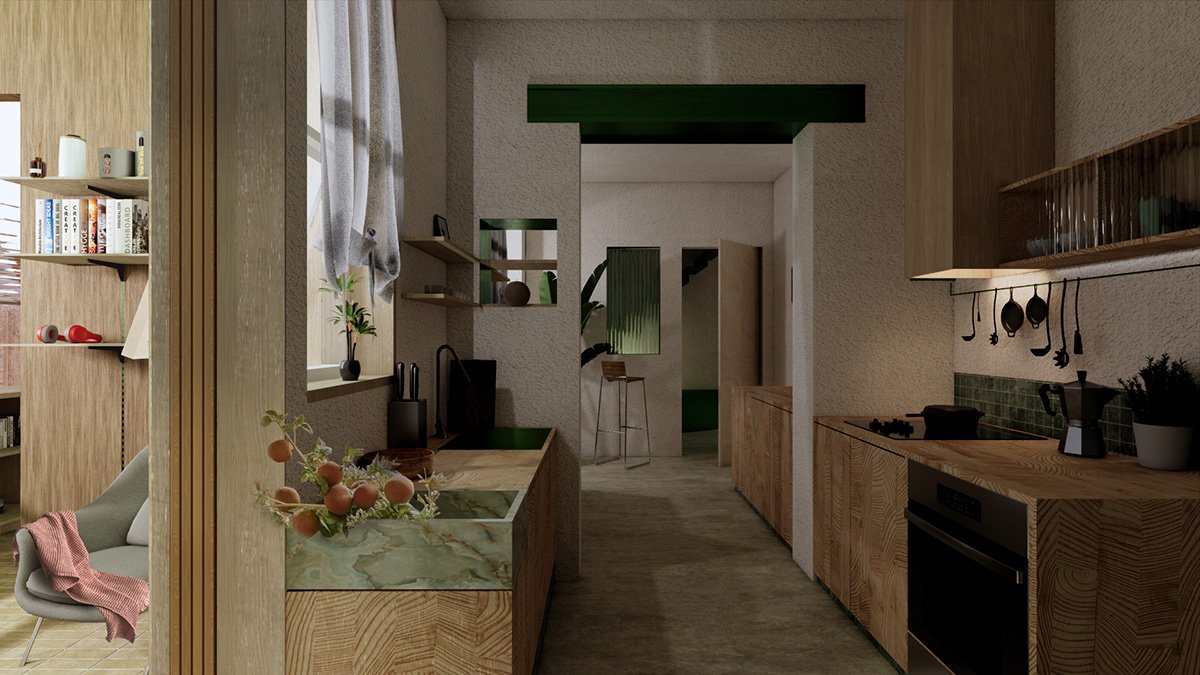
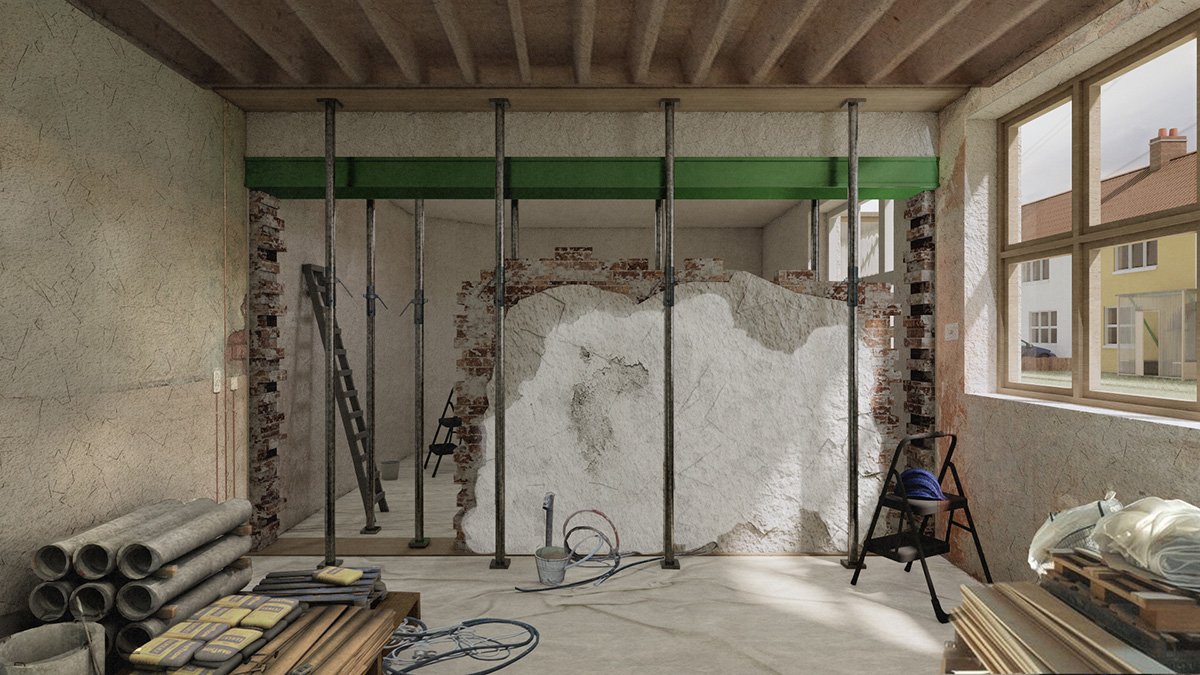
Semi Shared KitchenLivingroom Sharing Structure Construction Site
By demystifying the technical and legal complexities of the Party Wall Act, the proposal offers residents clear templates for “Negotiated Living.” These designs prioritize ease of construction, allowing neighbors to collaboratively expand their living space and social connectivity.
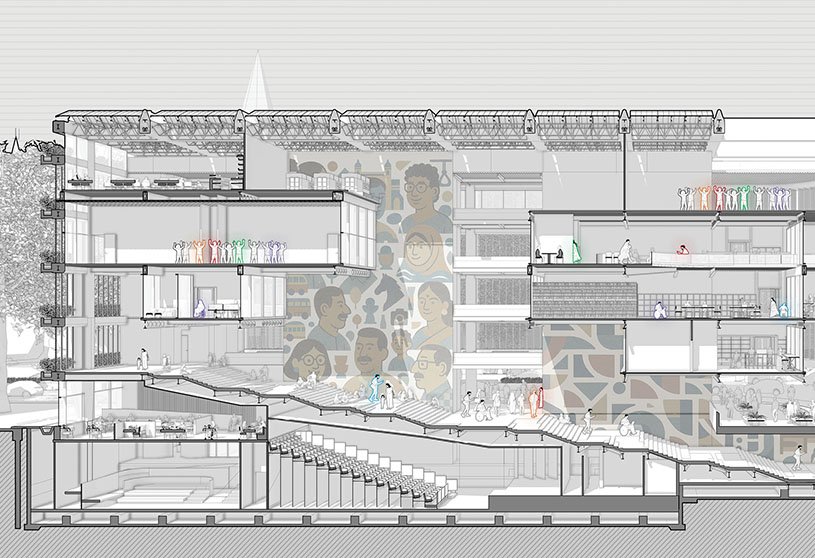
Shared Porches And Storage SpaceShared Back Yard Extension And Stair To Roof
Conclusion: Ultimately, the project delivers a new Neighborhood Contract. It shifts the urban fabric from a collection of isolated units into a networked community, where the shared boundary becomes a platform for mutual benefit, economic efficiency, and enhanced social friendship.
[This Academic Project has been published with text and images submitted by the student]
Site Context
Design Process
Final Outcome
To submit your academic project for publication at ArchiDiaries, please visit the following link >> Submit
Get the best of ArchiDiaries, directly in your inbox.
We use cookies on our website to give you the most relevant experience by remembering your preferences and repeat visits. By clicking “Accept All”, you consent to the use of ALL the cookies. However, you may visit "Cookie Settings" to provide a controlled consent.
This website uses cookies to improve your experience while you navigate through the website. Out of these, the cookies that are categorized as necessary are stored on your browser as they are essential for the working of basic functionalities of the website. We also use third-party cookies that help us analyze and understand how you use this website. These cookies will be stored in your browser only with your consent. You also have the option to opt-out of these cookies. But opting out of some of these cookies may affect your browsing experience.
Necessary cookies are absolutely essential for the website to function properly. These cookies ensure basic functionalities and security features of the website, anonymously.
Cookie
Duration
Description
cookielawinfo-checkbox-analytics
11 months
This cookie is set by GDPR Cookie Consent plugin. The cookie is used to store the user consent for the cookies in the category "Analytics".
cookielawinfo-checkbox-functional
11 months
The cookie is set by GDPR cookie consent to record the user consent for the cookies in the category "Functional".
cookielawinfo-checkbox-necessary
11 months
This cookie is set by GDPR Cookie Consent plugin. The cookies is used to store the user consent for the cookies in the category "Necessary".
cookielawinfo-checkbox-others
11 months
This cookie is set by GDPR Cookie Consent plugin. The cookie is used to store the user consent for the cookies in the category "Other.
cookielawinfo-checkbox-performance
11 months
This cookie is set by GDPR Cookie Consent plugin. The cookie is used to store the user consent for the cookies in the category "Performance".
viewed_cookie_policy
11 months
The cookie is set by the GDPR Cookie Consent plugin and is used to store whether or not user has consented to the use of cookies. It does not store any personal data.
Functional cookies help to perform certain functionalities like sharing the content of the website on social media platforms, collect feedbacks, and other third-party features.
Performance cookies are used to understand and analyze the key performance indexes of the website which helps in delivering a better user experience for the visitors.
Analytical cookies are used to understand how visitors interact with the website. These cookies help provide information on metrics the number of visitors, bounce rate, traffic source, etc.
Advertisement cookies are used to provide visitors with relevant ads and marketing campaigns. These cookies track visitors across websites and collect information to provide customized ads.