Home » Academic projects » Economy of Straw Bale: Cultural Architecture of Low-Carbon Construction Through Straw Bale and Wood | Bachelors Design Thesis
Economy of Straw Bale: Cultural Architecture of Low-Carbon Construction Through Straw Bale and Wood | Bachelors Design Thesis
Excerpt: ‘Economy of Straw Bale’ is an architecture thesis by Kotaro Shiraishi from the ‘UC Berkeley College of Environmental Design.’ The project aims to use straw bale construction as a visible, experiential model of sustainable and circular design while creating a welcoming community gateway for O2AA. By integrating natural materials into everyday programs, the project demonstrates how low-carbon building methods can support art, living, and public engagement.
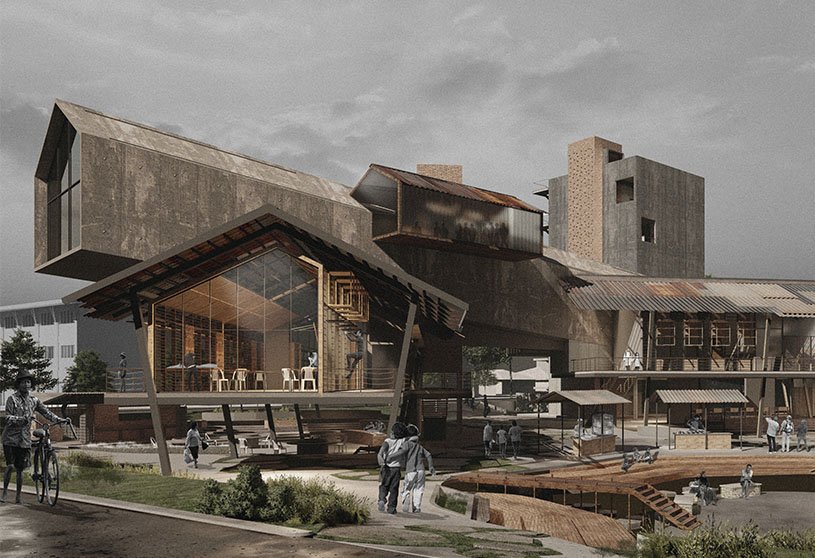
Introduction: Economy of Straw Bale creates a public gateway for O2AA, bringing together a gallery, café, administrative spaces, studios, living quarters, and shared areas for resident artisans. At its core, the project uses straw bale construction not only as a building material but also as a way to tell a story about sustainability and community. By pairing traditional straw bale techniques with contemporary wood and metal construction, the building showcases how natural materials can coexist with industrial methods in an urban setting. Everyday architectural elements—like deep window niches formed by thick straw bale walls and exposed stacking patterns used as shelving—invite visitors to understand and experience the material firsthand. The result is both an accessible introduction to low-carbon building practices and a living example of circular design in action.
Site IsometricO2AA (O2 Artisans Aggregate) is an eco-industrial campus for small artisan businesses who are committed to preserving craft and ecological practices.O2AA (O2 Artisans Aggregate) is an eco-industrial campus for small artisan businesses who are committed to preserving craft and ecological practices.
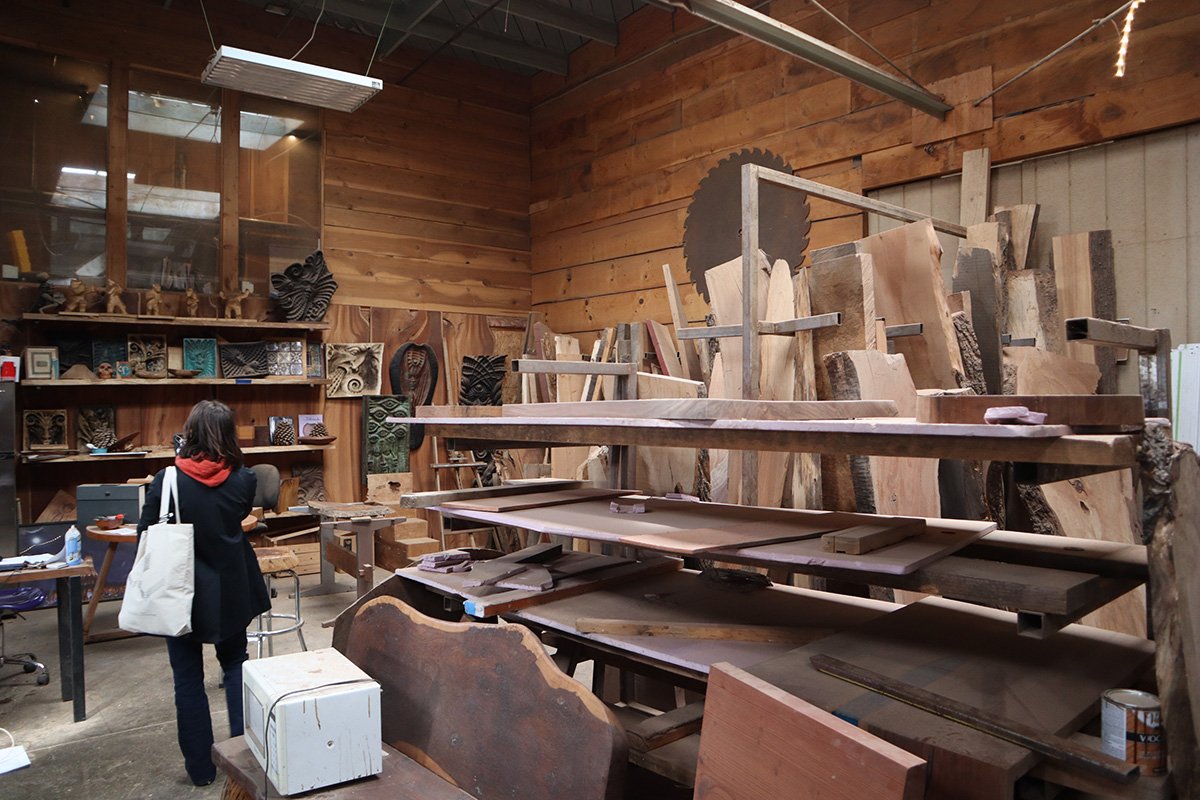
The project intervenes at O2AA (O2 Artisans Aggregate), an eco-industrial campus in West Oakland housing over forty small artisan businesses committed to preserving craft and ecological practices. The site’s residents create everything from handmade soba to ceramics, wood and metal work. Despite hosting some public programs, however, the site remained enclosed by fencing, creating a disconnect between the community and its activities.
O2AA (O2 Artisans Aggregate) is an eco-industrial campus for small artisan businesses who are committed to preserving craft and ecological practices.A fence enclosed the site, even though it hosted public programsA fence enclosed the site, even though it hosted public programs
To tackle this issue, the building aimed to establish a public entry point to the many aggregate activities on site while housing a gallery for public exhibitions, a cafe, administrative offices, studios, living spaces, and shared common areas for artisans in residence, bridging the gap between O2AA’s vibrant maker community and the surrounding neighborhood.
Design Process
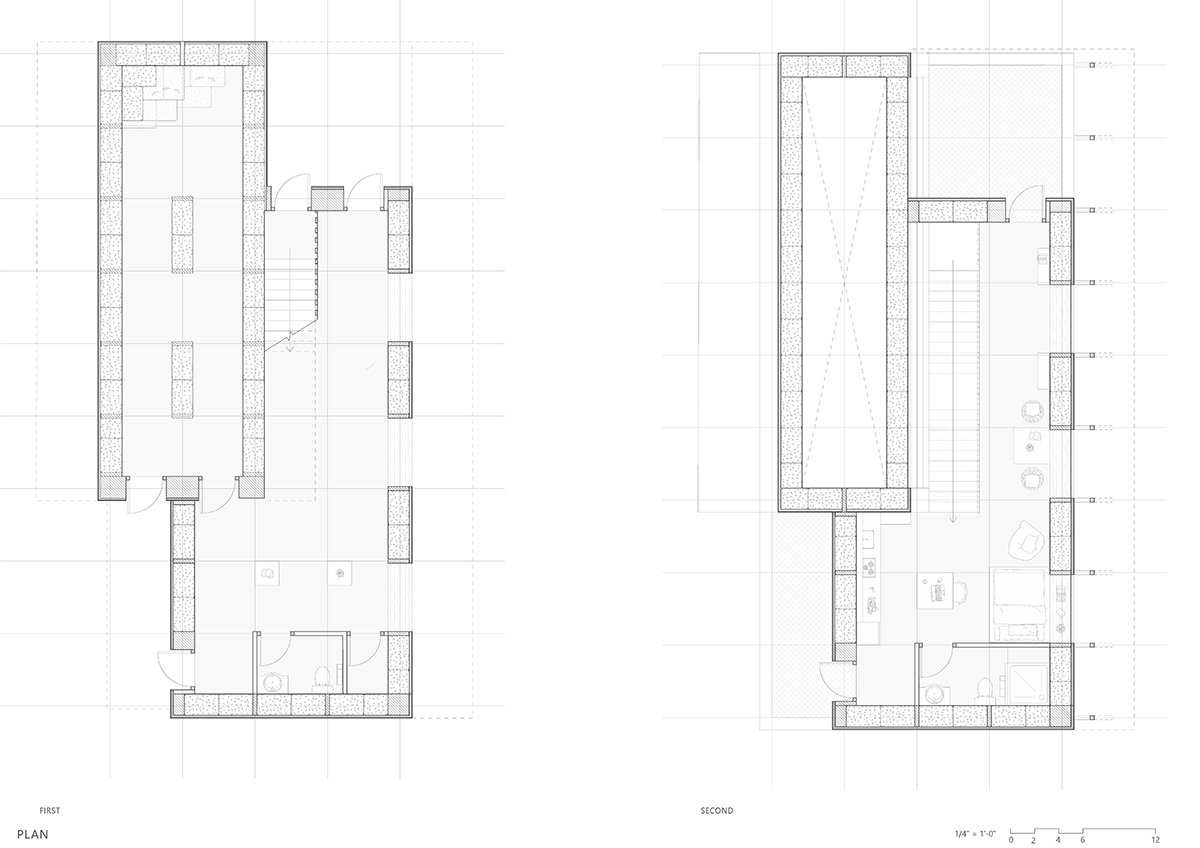
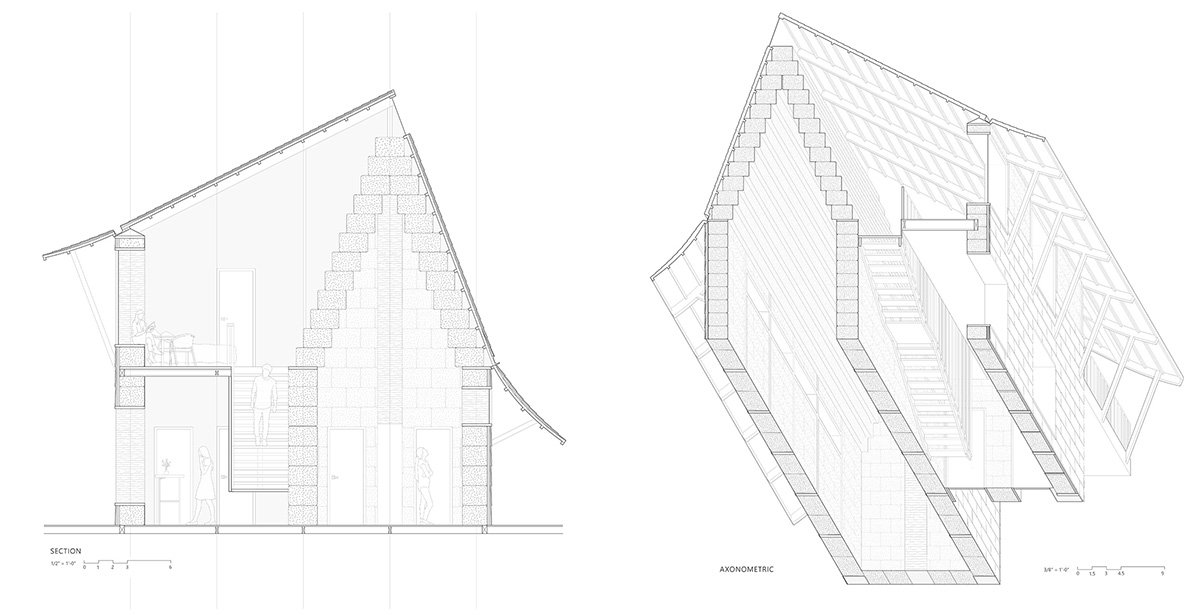
Plan (Prototype Study Model)Section (Prototype Study Model) | Axonometric (Prototype Study Model)Axonometric Construction Detail of Refuge II (Case Study)
Straw bale was selected as the primary material because it embodies O2AA’s circular-economy ethos through a fully natural material cycle—from harvest and baling to prefabrication, construction, use, and eventual disassembly. At the end of its life, the material can be converted into mulch or biofuel, returning directly to agricultural production. This closed-loop process aligns closely with the community’s values of sustainability and ecological responsibility.
Axonometric Process Drawing of Straw Bale CycleConstruction Detail (Prototype Study Model)Massing Study Model
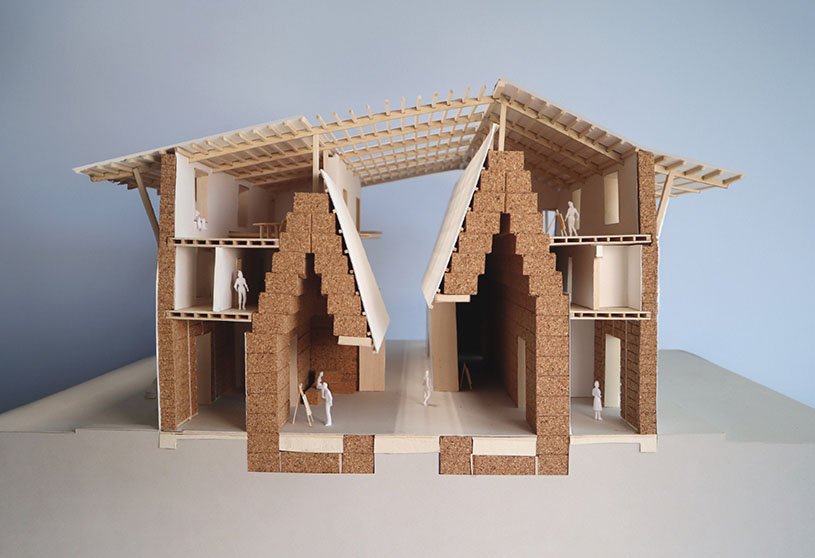
The design process began with case studies of precedent straw-bale projects, particularly Refuge II by Wim Goes Architectuur, which highlighted the material’s structural capacity and environmental advantages. Development continued through prototyping a small-scale housing and gallery module to maximize the performance of straw bale construction and test its adaptability to multiple programmatic needs while expressing its inherent material character.
Prototype Study Model – ExteriorPrototype Study Model – Interior
The exploration also included testing complementary materials—such as shingles—to pair effectively with straw bales and ensure that this unconventional construction method could be feasible and contextually appropriate within Oakland’s climate and regulatory environment.
Final Outcome
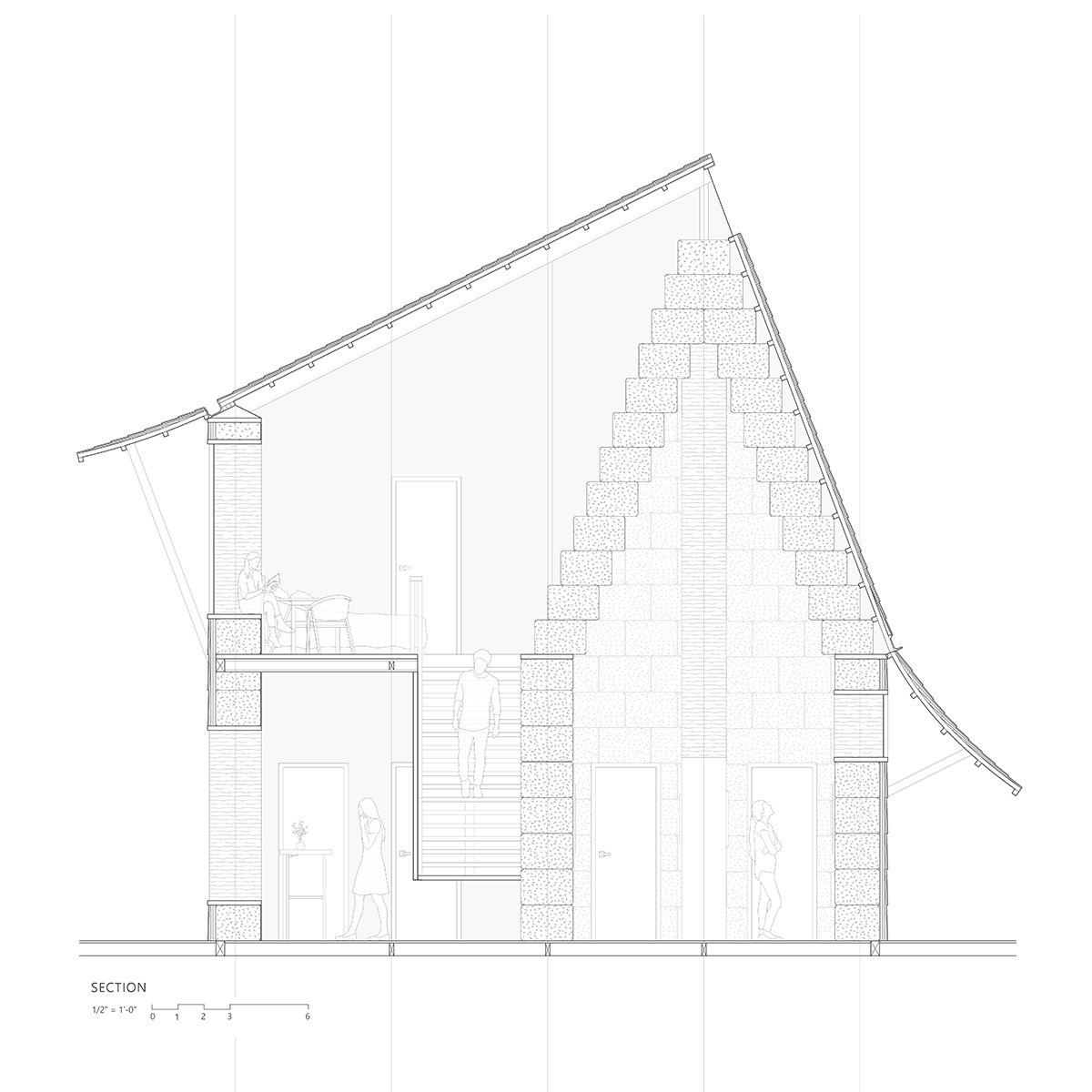
Ground Floor PlanEast Elevation & Section
As a result, Economy of Straw Bale creates a welcoming threshold that opens the site to the broader community while illustrating the full natural lifecycle of straw bale, forming a tangible link between O2AA’s artisan community and the surrounding neighborhood.
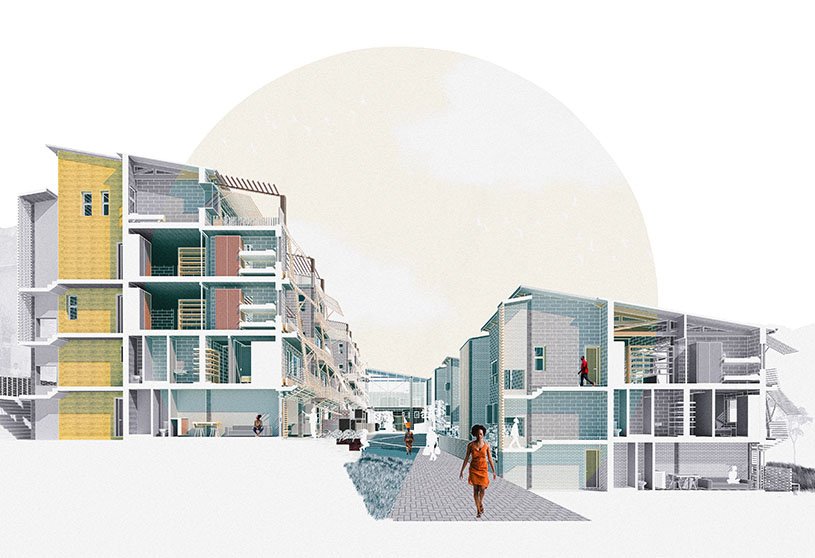
Second & Third Floor PlanPerspective SectionWorm-eye Axonometric (Left: Straw Bale Structure Projection)
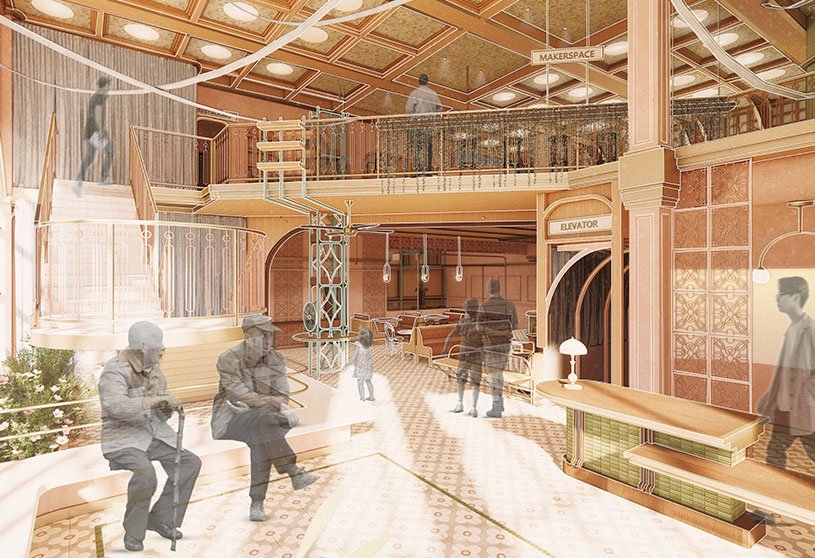
The building’s vertical organization highlights the material’s versatility across multiple uses: the second floor contains living spaces that demonstrate its residential applications, while the third floor provides open studio environments with strategically placed skylights that bring natural light through double-layered structural systems and varied roof pitches.
Physical Model – Main EntrancePhysical Model – Gallery
Across all levels, straw bale–specific architectural details are integrated into everyday functions—thick window assemblies provide built-in seating, and exposed bale-stacking patterns become shelving—offering a comprehensive exploration of how the material can support diverse programmatic needs while celebrating sustainable construction practices.
Physical Model – Façade DetailPhysical Model – East Façade
Conclusion: Ultimately, this project reveals how straw bale construction can shape meaningful community spaces while making sustainable, low-carbon design visible, approachable, and integral to everyday experience.
[This Academic Project has been published with text and images submitted by the student]
Site Context
Design Process
Final Outcome
To submit your academic project for publication at ArchiDiaries, please visit the following link >> Submit
Get the best of ArchiDiaries, directly in your inbox.
We use cookies on our website to give you the most relevant experience by remembering your preferences and repeat visits. By clicking “Accept All”, you consent to the use of ALL the cookies. However, you may visit "Cookie Settings" to provide a controlled consent.
This website uses cookies to improve your experience while you navigate through the website. Out of these, the cookies that are categorized as necessary are stored on your browser as they are essential for the working of basic functionalities of the website. We also use third-party cookies that help us analyze and understand how you use this website. These cookies will be stored in your browser only with your consent. You also have the option to opt-out of these cookies. But opting out of some of these cookies may affect your browsing experience.
Necessary cookies are absolutely essential for the website to function properly. These cookies ensure basic functionalities and security features of the website, anonymously.
Cookie
Duration
Description
cookielawinfo-checkbox-analytics
11 months
This cookie is set by GDPR Cookie Consent plugin. The cookie is used to store the user consent for the cookies in the category "Analytics".
cookielawinfo-checkbox-functional
11 months
The cookie is set by GDPR cookie consent to record the user consent for the cookies in the category "Functional".
cookielawinfo-checkbox-necessary
11 months
This cookie is set by GDPR Cookie Consent plugin. The cookies is used to store the user consent for the cookies in the category "Necessary".
cookielawinfo-checkbox-others
11 months
This cookie is set by GDPR Cookie Consent plugin. The cookie is used to store the user consent for the cookies in the category "Other.
cookielawinfo-checkbox-performance
11 months
This cookie is set by GDPR Cookie Consent plugin. The cookie is used to store the user consent for the cookies in the category "Performance".
viewed_cookie_policy
11 months
The cookie is set by the GDPR Cookie Consent plugin and is used to store whether or not user has consented to the use of cookies. It does not store any personal data.
Functional cookies help to perform certain functionalities like sharing the content of the website on social media platforms, collect feedbacks, and other third-party features.
Performance cookies are used to understand and analyze the key performance indexes of the website which helps in delivering a better user experience for the visitors.
Analytical cookies are used to understand how visitors interact with the website. These cookies help provide information on metrics the number of visitors, bounce rate, traffic source, etc.
Advertisement cookies are used to provide visitors with relevant ads and marketing campaigns. These cookies track visitors across websites and collect information to provide customized ads.