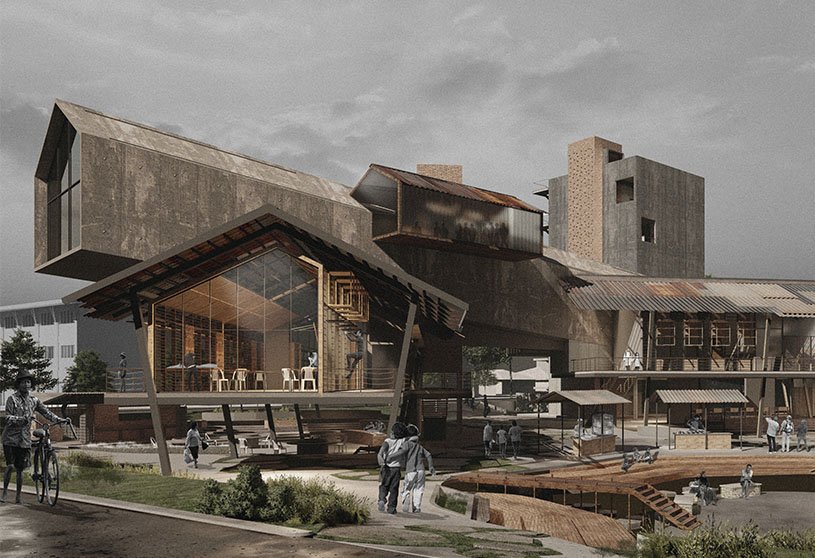
Excerpt: ‘Haor (Wetland) Eco-Interpretation Center’ is an architecture thesis by Md. Arif Mahtab Kabir from the Faculty of Architecture and Planning – Ahsanullah University of Science and Technology (AUST) that seeks to combine sustainable design principles with environmental education to create an innovative model of comprehending and protecting Haor ecosystems in Bangladesh. Through architecture, the Haor Eco-Interpretation Centre aims to foster environmental conservation, human progress, and commitment to sustainability.
Introduction: Wetlands are valued as ecological resources worldwide due to their ability to sustain diverse ecosystems and their significant influence on environmental sustainability. These wetlands, known locally as “haor” in Bangladesh, are essential to the nation’s economy and the survival of many people and animal species. However, beneath the serene beauty of these aquatic settings lies an increasingly serious concern. The sensitive equilibrium of these ecosystems is endangered by careless development practices, frequent travel, and a lack of awareness of environmental conservation, threatening their vital ecological functions.
Despite these challenges, the “Haor Eco-Interpretation Centre” in Bangladesh’s picturesque Sylhet region has become a pioneering endeavour. This innovative project combines sustainable design principles with environmental education to offer a ground-breaking example of comprehending and protecting Haor ecosystems. The numerous facets of this significant endeavour are explored in the following section of the study, along with its objectives, methods, and broader relevance about wetland conservation.
The Haor Eco-Interpretation Centre seeks to promote both environmental preservation and human progress. Its dedication to sustainability is reflected in both the functional and architectural aspects of this integration. As part of the tourism experience, emphasis is placed on the value of wetlands as ecosystems, the challenges they face, and the urgent need to preserve them. The centre is not only a hub for education but also an important research facility that helps scientists learn more about Haor ecosystems and provides a place for them to present their findings and collaborate on important conservation efforts.
Hakaluki Haor is a marsh wetland ecosystem in Bangladesh’s northeast region. The Kushiara River and a portion of the Sonai Bardal River encircle this Haor to the north; the Fenchuganj-Kulaura railway borders it to the west and south; and the Kulaura-Beanibazar road borders it to the east. Hakaluki Haor has a surface area of 181,15 km2 and has been classified as an Ecologically Critical Area (ECA) (ECA 2010).
Permanent Wetland Zone in Hakaluki HaorContext
Strong seasonal winds that occur from July to September during the monsoon season cause the haor to swell dramatically, which can severely damage farmland. But once the monsoon season ends, they all dry out. In winter, these haors are vast expanses of verdant land. There are various shapes and sizes of water bowls in Hakaluki Haor. The typology divides this haor into three types into which different zones can be subdivided.
Site Surroundings
Hakaluki Haor is a 32,000 ha area with a 4 m (PWD) central elevation. About 18,000 ha of this area are classified as Seasonal Wetlands because they are below the 9 m contour. During the monsoon, the entire haor floods, with over 60% of the area submerged by more than 2.5 m, turning the entire haor into a sheet of water. However, during the dry season, the beels start to set themselves apart from one another as the water level drops. There are more than 125 connecting beels, or Jalmahals, in the Hakaluki Haor. The important beels are Chatla, Pinglarkona, Dulla, Sakua, Barajalla, Pioula, Balijhuri, Lamba, Tekonia, Haorkhal, Tural, Baghalkuri, Chinaura, etc. The total area of this wetland is about 18,000 ha of which 4,569 ha retain water permanently which is under Permanent Wetlands.
Pakhi Bari (House of Birds) (Awarded)Tropical Character
The Sonai-Bardal River, the Juri River that flows through the haor, and a few smaller, hilly streams that merge with these rivers or empty into certain beels are all considered to be perennial wetlands. The area is home to about 526 different plant species, 120 of which are aquatic (Steemit, 2018). These plants not only grow well in water, but they contribute to the condition of fish sanctuaries. There are 417 bird species in the region; 305 are native, and 112 are migratory (Steemit, 2018). A few hamlets are nestled within the hundreds of trees that encircle the haor. Thousands of birds spend the night in the trees and the day feeding on the haor. In addition to the 200 species of uncommon winter birds, there are also 150 species of fish and 20 species of reptiles (Steemit, 2018).
Elements Of Interpretation
Wetland plants come in a variety of forms, such as floating plants, submerged plants, sedges and meadows, and reeds. Many different species, including fish, birds, plants, and animals, rely on the haor as a point of connection. The entire haor is submerged and turns into an ocean of water during the monsoon season. But as the water level drops during the dry season, the beels start to stand out from one another. When the same ground is covered with mustard in the autumn, it turns yellow and dry, giving thousands of migratory birds a place to spend the winter. At the same time of year, one may see colours such as green, light blue, dark blue, and yellow in the same area. This area is known for its sticky, adhesive soil, which makes it difficult to build on without pilings yet excellent for farming.
Seasonal Wetland Zone (Water Level Analysis)
This location is unique due to its large wetland area, which supports a diverse range of tree species, bird species, and topographical features. The striking seasonal change that takes place in the landscape is further enhanced by variations in water level. Landforms, wetland ecosystems, bird species, human settlements (including homes, churches, and mosques), and natural features persist in the absence of human intervention.
Design Process
Sustainability IssuesSustainability IssuesNatural Factors Considered in Design
Sustainability, harmony with the environment, and practicality can only be achieved when both natural and man-made aspects are taken into account during the construction of an Eco-System Interpretation Center.
1- Natural Factors: The facility’s development should minimize disturbance to the environment, focusing on protecting native plant and animal life. The building’s physical footprint should be minimized, adhering to the principle of “less is more.” Native vegetation should be prioritized for perimeter plantings. The design should be flexible enough to accommodate rising and falling water levels, ensuring uninterrupted operation during high inundation periods. The center should extend beyond its conventional boundaries, merging with local ecology and blurring distinctions between the natural and man-made worlds. This approach ensures the center’s sustainability and compatibility with the local ecology.
Manmade Factors Considered in Design
2- Man-Made Factors: Promoting locally obtained materials can reduce the community’s environmental impact and boost the economy. The center design should prioritize openness and transparency, allowing visitors to appreciate their natural surroundings. The energy plan should focus on sustainable practices, using renewable energy sources like solar panels and wind turbines. Careful zoning is essential for the area’s various uses, considering private functions like research labs and accommodation and public zones. Large open areas should be established for various purposes, such as walking routes, Haor observation, and bird watching, blending harmoniously with the natural surroundings.
A strong commitment to sustainability, environmental preservation, and the peaceful coexistence of man-made structures and the natural world should inform the design of an Eco-System Interpretation Centre. By considering these man-made and natural factors, the centre will become a focal point for raising awareness of environmental issues and a perfect example of eco-friendly architecture.
Site Selection Procedure (Phase –A & Phase – B)Contextual Analysis (Phase – A)
Site Selection for Interpreting the Haor Eco-System: The site analysis and selection of appropriate site for interpretation center has taken into two phases of workout.
Phase A- The Haor ecosystem was studied through a comprehensive investigation of its environment, including road infrastructure, wetlands, rivers, human settlements, and farmland demarcation. The study focused on road system, topography, and settlement location in relation to the Haor. It also accounted for bird habits, tracking migration routes and flying habits of different bird species. This comprehensive study created a complete map of the Haor’s ecosystem, establishing six separate interpretable zones. The study helped define distinct features and characteristics of the Haor ecosystem.
Birds Movement Analysis (Phase – A)
Phase B- A Biosphere Reserve study was conducted to select six zones for a wetland. The study considered factors such as road system, tourist attractions, and bird-friendly communities. The core area, buffer zone 1, and buffer zone 2 were established based on the Biosphere Reserve concept. A subset of the first six zones was removed based on road network and distance from the wetland. The remaining locations were reduced based on proximity to tourist hotspots and established communities. The goal was to minimize impacts on the local bird population without completely removing access to the outdoors. The selected zones provided accommodation options alongside existing ones, minimizing disruption to the birds’ habitat and ensuring harmonious coexistence.
Nearest Zone of Wetland (Phase – B)Biosphere Reserved Area Selection (Phase – B)
Program Development- An eco-nature education program is being developed to promote biodiversity, conservation, and ecotourism in the Haor eco-system. The program aims to educate people about the sensitive biological system and promote harmonious relationships with the natural world. Tree planting is a key strategy, as some trees provide safe havens for birds and fish in close proximity to human dwellings. The project aims to plant a large number of well-selected tree species to improve the environment and local ecosystem, including providing security.
The Haor Eco-System Interpretation Center’s layout prioritizes two distinct areas:
1- Research Lab & Office: This zone is dedicated to the private aspects of the center’s operations, primarily for scientific research and administrative functions.
2- Interpretation Center: The interpretation center is designed to facilitate public engagement and education. It encompasses several distinct zones, namely, the display area, education center (Seminar Room), archive, multipurpose area, a small Cafe, and an admin area.
By including ecological and architectural factors, the designers of this program wants to provide a method to understanding the Haor ecosystem that is both comprehensive and sustainable. It aims to educate, inspire, and protect this unique natural treasure for generations to come.
Concept Derivation: The concept for the Haor (Wetland) Eco Interpretation Center is based on three primary components. Humanity, rather than being a hindrance to the natural world, is at the heart of the project’s overall philosophy. In addition, the idea is formed from a thorough examination of natural patterns with an emphasis on incorporating sustainable characteristics. The initiative aims to provide a “Refreshing Pause” for visitors, allowing them to relax and learn about nature. This pause will help them become more appreciative of the natural world and prevent harmful activities like pollution. It will be a pleasant mental and physical break from their journey across major highways, promoting a positive impact on the environment.
Concept DerivationConcept Derivation
Nature’s Language: The project aims to incorporate nature’s language in its design process to ensure it blends in with the surrounding environment and doesn’t disrupt the wetland ecosystem. This involves considering the interplay between the built environment, trees, and nature, planting specific trees like Hijol, Korosh, and Barun to improve bird and fish habitats, and understanding existing patterns. The project is committed to using minimal energy and designing eco-friendly indoor and outdoor areas, using solar energy, natural ventilation and lighting, and recyclable materials. The topography of the land, ground and surface water levels, flora, and aquatic ecosystems are prioritized in eco-friendly building design. Human influences are carefully evaluated to protect the sensitive ecological situation. Site selection, planning, architectural design, material selection, and construction processes should conform to criteria established by institutions like the Housing and Building Research Institute (HBRI).
Built Form Derivation of Interpretation CenterConceptual Illustration
Built Form Derivation: The Haor Eco-Interpretation Center is a design that is deeply rooted in the language of nature, focusing on the shapes, patterns, and lines of nature. The center was designed to work with its surroundings by observing and accommodating these natural patterns. Formal functions, such as the interpretation center, are characterized by geometric shapes like rectangles and squares, while informal uses, like the bird observatory, feature curved lines that capture the fluctuating patterns of the wetland’s ecology. The center’s architecture is a literal translation of nature’s language and patterns, blending in with its surroundings and connecting visitors to the intricate beauty of the Haor wetlands. The center’s design is characterized by its irregularity and fluidity, providing an immersive experience that blends with nature.
Land Use Selection and Master plan Development: The Haor (Wetland) Eco-Interpretation Centre was designed with thoughtful planning for the land-use strategy and layout. The main goal was to design a space that would complement its natural surroundings and could serve several purposes. The programme requirements led to the identification of three distinct zones.
Final Outcome
Idea Generation
Interpretation Center: The more public spaces, such as the lobby, museum, gift shop, administrative offices, multipurpose rooms, cafe, archive center, and prayer room, are located on the left side. On the other hand, the building’s right side houses the offices, labs, and classrooms, as well as other more private and restricted spaces.
Plan At 10 Feet LevelPlan (Interpretation Center)
The Interpretation Center is a comprehensive and sustainable approach to understanding the Haor ecosystem. It comprises several zones, including a covered indoor display area, natural display zones, an education center, an archive, a multipurpose area, a small cafe, and an administrative area. The Display Area offers educational exhibitions, presentations, and interactive media, while the Natural Display Zones provide outdoor spaces for visitors to interact with nature without harming the ecosystem.
Section (Interpretation Center)
The Education Center, located near the lab, is ideal for seminars, workshops, and learning events. The archive houses valuable documents, research findings, and historical records related to the Haor ecosystem, serving as a resource for researchers, students, and the public. The multipurpose area hosts events and activities for various audiences, including increasing community participation. A small cafe provides refreshments for visitors to relax and reflect on their experiences. The administrative area supports the center’s daily operations. The program aims to educate, inspire, and protect the Haor ecosystem for future generations.
Plan (Birds Observatory)Section (Birds Observatory)West Elevation
Bird’s Observatory: This area is designed with a curved shape to facilitate bird observation. Visitors are guided through a series of progressively higher platforms from which they may get a better look at the feathered inhabitants, both at ground level and from above.
SectionAccommodationAccommodation
Accommodation: The accommodation zone was thoughtfully located to blend in with the existing settlement layout. With this method, small buildings are built amidst hundreds of trees. This design was influenced by local buildings, which give the house a smaller area and a huge piece of tree-covered land. The design allows birds to travel and rest freely while also protecting the ecosystem. The proposed lodging adheres to the “Dig & Mound” architectural style of existing structures. With a focus on achieving a harmonious integration between nature and the built environment, the master plan reduces the center’s negative effects on the wetland ecosystem. This approach provides visitors with an eco-friendly and interactive experience while also showing respect for existing structures.
Sustainable Measures taken during Design ConsiderationsVisualization
Conclusion: The project, combining sustainable design principles and environmental education, is an innovative model for understanding and protecting Haor ecosystems. Its architectural design highlights the value of wetlands as ecosystems and promotes both human progress and environmental preservation.
[This Academic Project has been published with text submitted by the student]
Site Context
Design Process
Final Outcome
To submit your academic project for publication at ArchiDiaries, please visit the following link >> Submit
Get the best of ArchiDiaries, directly in your inbox.
We use cookies on our website to give you the most relevant experience by remembering your preferences and repeat visits. By clicking “Accept All”, you consent to the use of ALL the cookies. However, you may visit "Cookie Settings" to provide a controlled consent.
This website uses cookies to improve your experience while you navigate through the website. Out of these, the cookies that are categorized as necessary are stored on your browser as they are essential for the working of basic functionalities of the website. We also use third-party cookies that help us analyze and understand how you use this website. These cookies will be stored in your browser only with your consent. You also have the option to opt-out of these cookies. But opting out of some of these cookies may affect your browsing experience.
Necessary cookies are absolutely essential for the website to function properly. These cookies ensure basic functionalities and security features of the website, anonymously.
Cookie
Duration
Description
cookielawinfo-checkbox-analytics
11 months
This cookie is set by GDPR Cookie Consent plugin. The cookie is used to store the user consent for the cookies in the category "Analytics".
cookielawinfo-checkbox-functional
11 months
The cookie is set by GDPR cookie consent to record the user consent for the cookies in the category "Functional".
cookielawinfo-checkbox-necessary
11 months
This cookie is set by GDPR Cookie Consent plugin. The cookies is used to store the user consent for the cookies in the category "Necessary".
cookielawinfo-checkbox-others
11 months
This cookie is set by GDPR Cookie Consent plugin. The cookie is used to store the user consent for the cookies in the category "Other.
cookielawinfo-checkbox-performance
11 months
This cookie is set by GDPR Cookie Consent plugin. The cookie is used to store the user consent for the cookies in the category "Performance".
viewed_cookie_policy
11 months
The cookie is set by the GDPR Cookie Consent plugin and is used to store whether or not user has consented to the use of cookies. It does not store any personal data.
Functional cookies help to perform certain functionalities like sharing the content of the website on social media platforms, collect feedbacks, and other third-party features.
Performance cookies are used to understand and analyze the key performance indexes of the website which helps in delivering a better user experience for the visitors.
Analytical cookies are used to understand how visitors interact with the website. These cookies help provide information on metrics the number of visitors, bounce rate, traffic source, etc.
Advertisement cookies are used to provide visitors with relevant ads and marketing campaigns. These cookies track visitors across websites and collect information to provide customized ads.