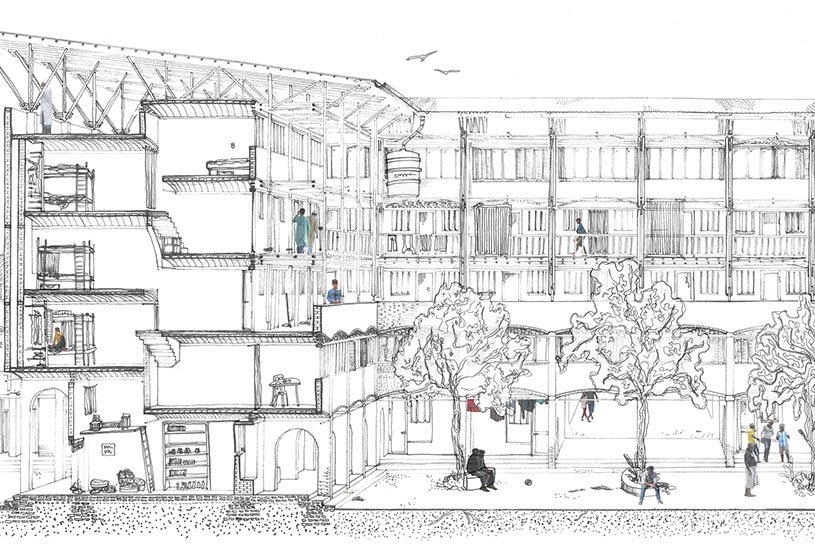
Excerpt: ‘Memory Vessels: Architecture as a Living Archive’ is a Masters Design Thesis by Seah Jia Jun from the ‘Department of Architecture – National University of Singapore (NUS).’ The project aims to explore how design can preserve a Mother’s fading memories by transforming her recollections of past homes into tangible spatial forms. Through drawing, reconstruction, and memory vessels embedded in the present home, it seeks to support remembering, foster understanding, and offer permanence to fragile personal histories.
Introduction: Next time, what can I still remember about my Mother?
Next time, will my Mother still be able to recall her own past?
This project began with a conversation, asking my mom about her life. Her memories always returned to the homes she once lived in: as a daughter, a mother, and a housewife. Now, as she grows older, she sometimes says, “I’m getting old; I can’t remember.” And I have been thinking, maybe design can become a way to help her to hold on and a way for me to understand. Crafting a home for memory and a memory of home.
My thesis explores the intimate relationship between memory and domestic space through the lens of my mother’s recollections of her past homes in Singapore. Anchored in the fragility of memory and the impermanence of physical spaces, this project investigates how architecture can serve as a vessel for preserving personal histories, archiving the intangible, and offering permanence to what is inherently ephemeral.
Together, we draw, build, and re-member. Her fragments become shared experiences, embedded into our current home, turning it into a living archive. As my mother ages in place, these memory vessels serve as touchpoints, ensuring that even as time moves forward, her lived experiences remain present, tangible, and honored. Beyond the personal, this method holds potential for others too, for those beginning to forget and those who wish to remember, before it is too late.
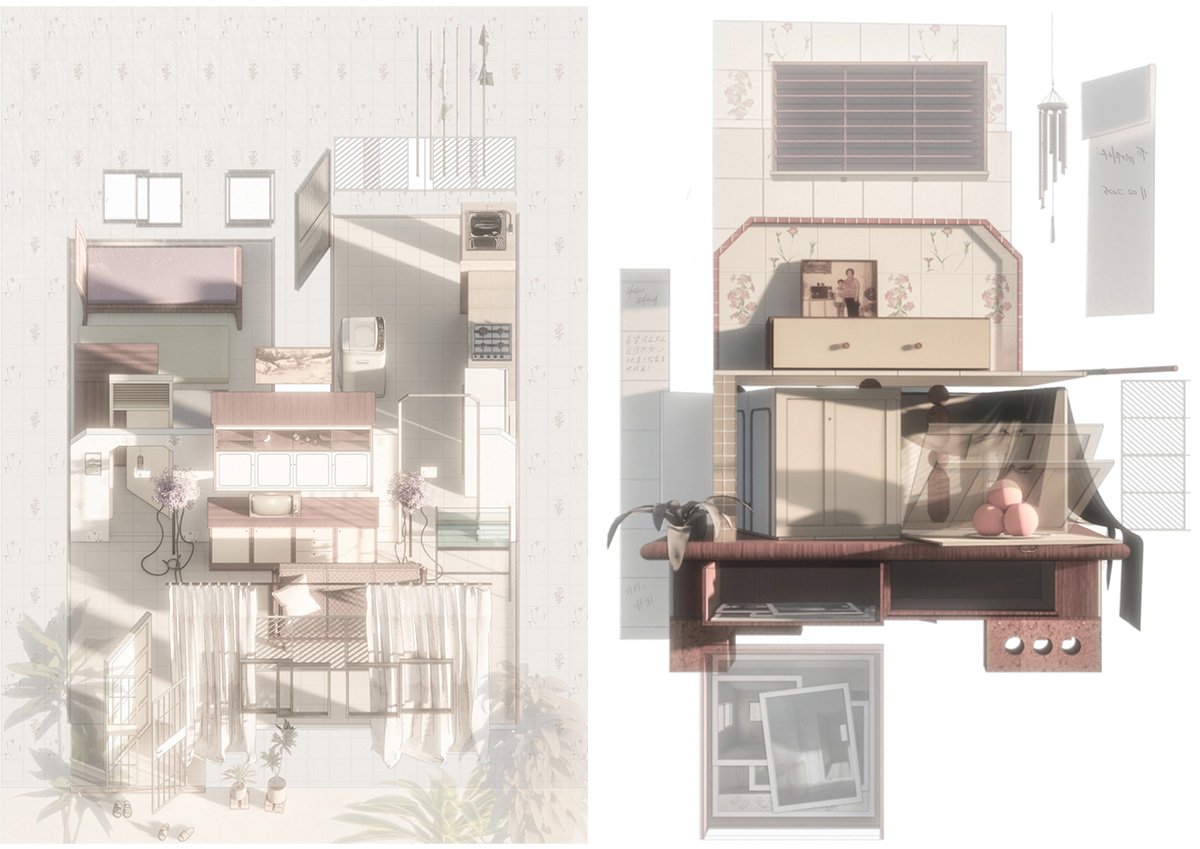
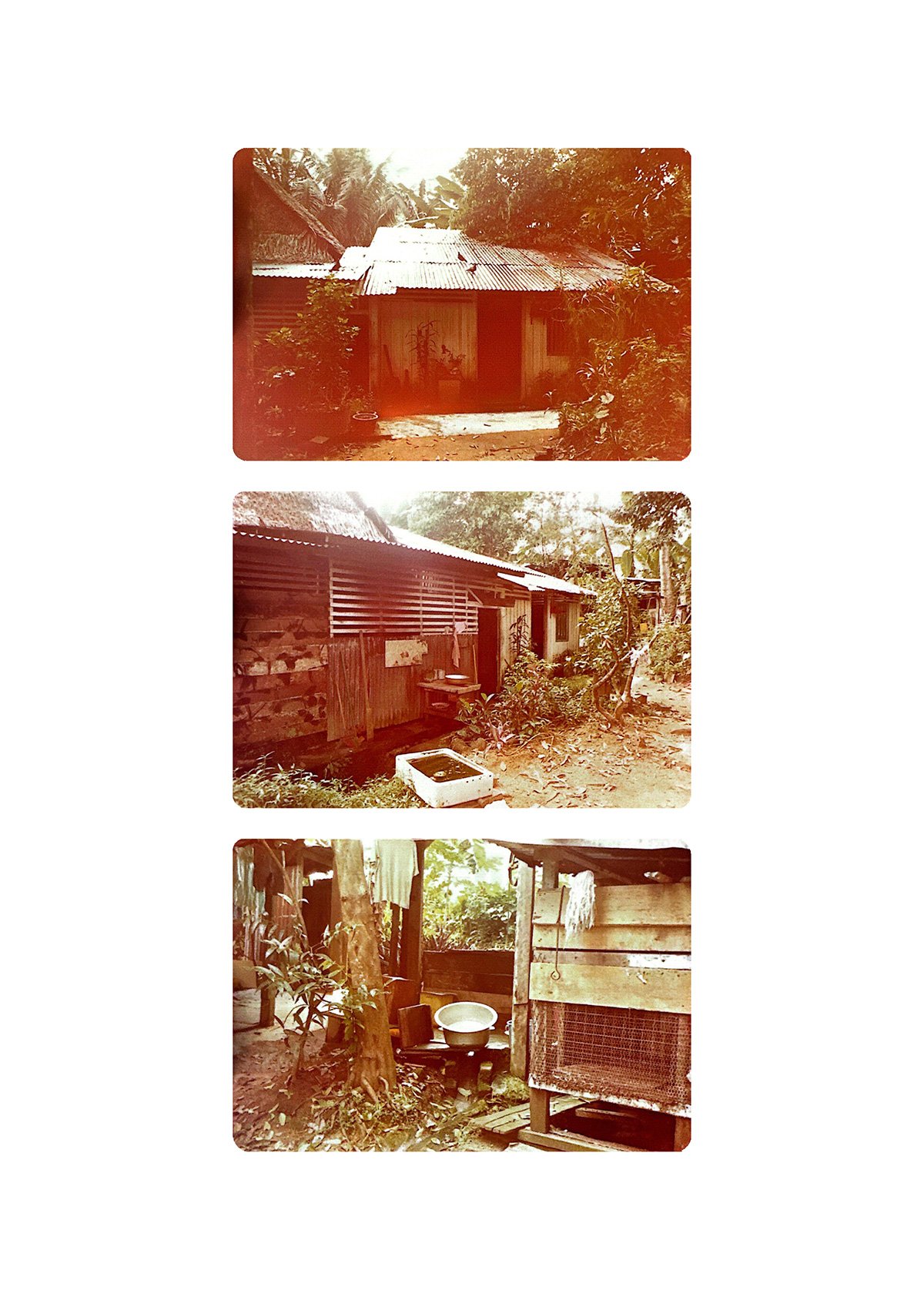
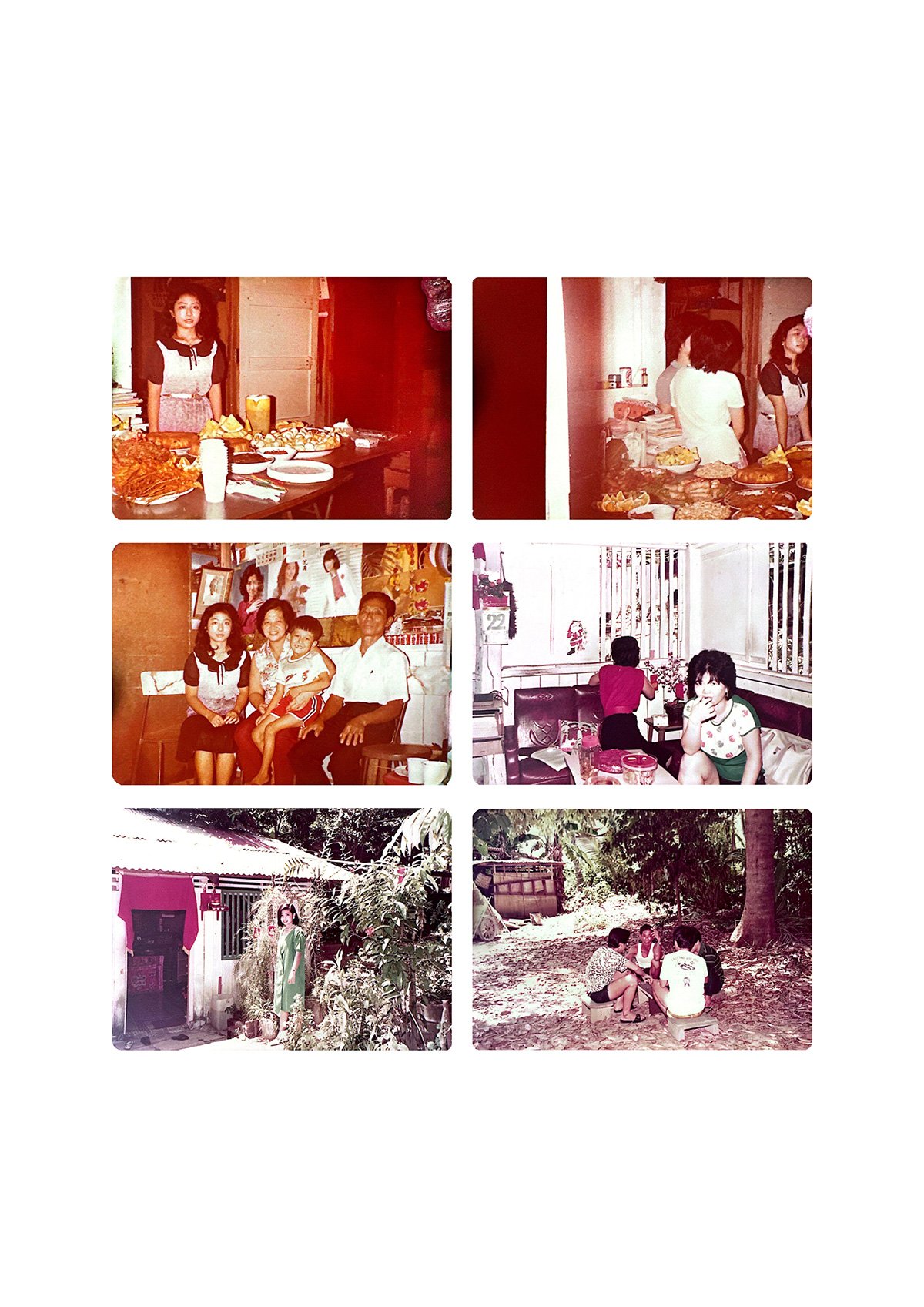
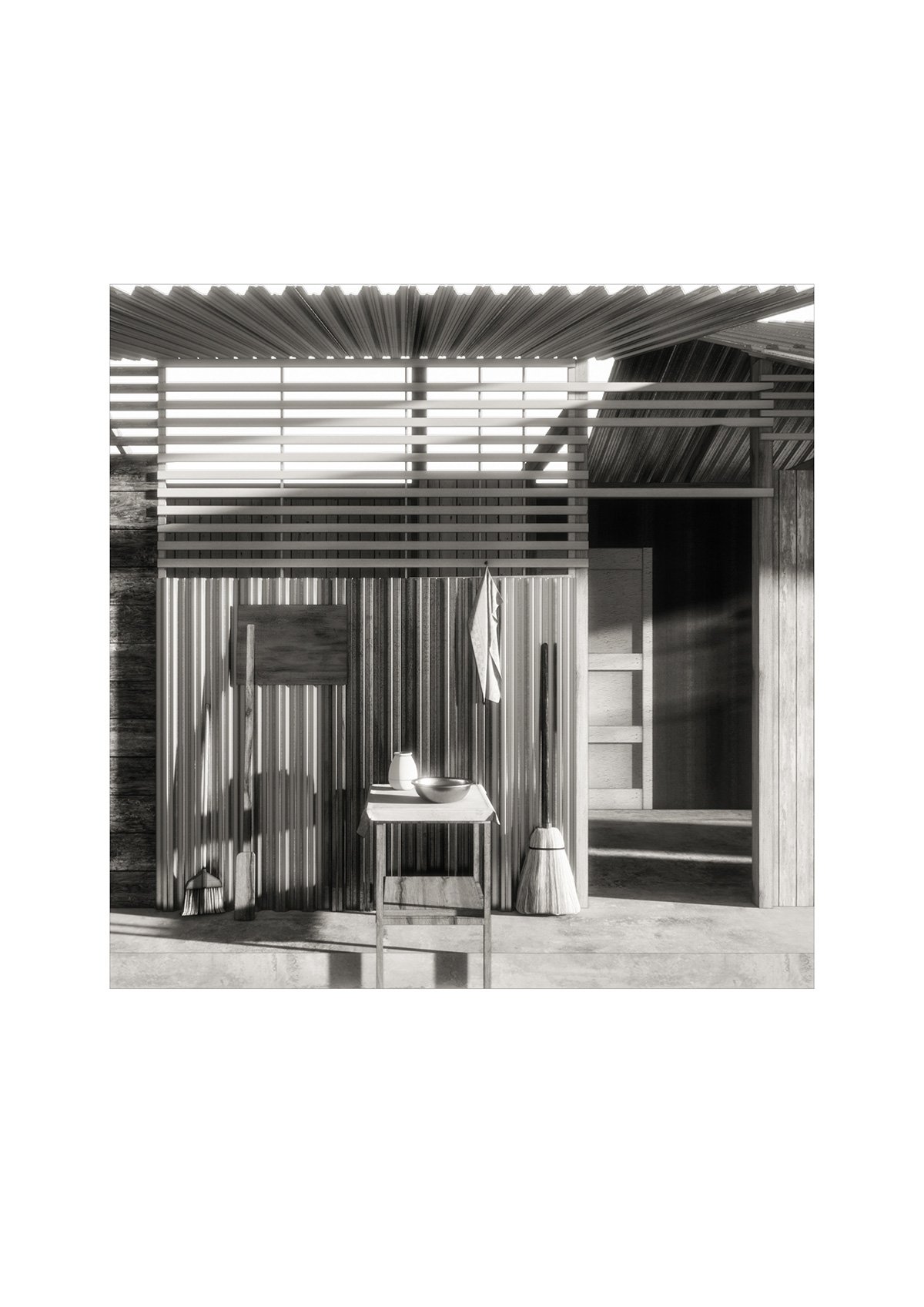
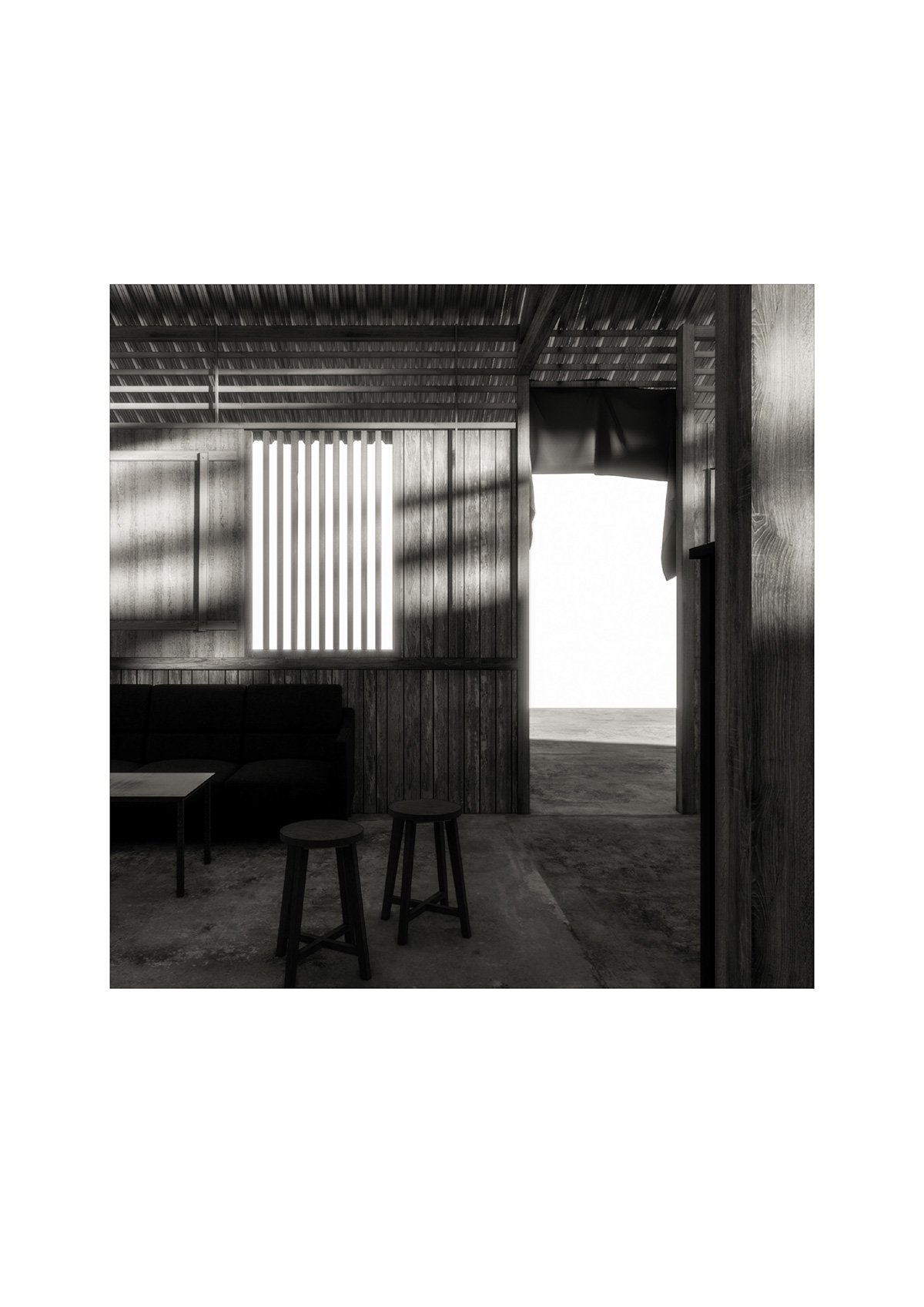
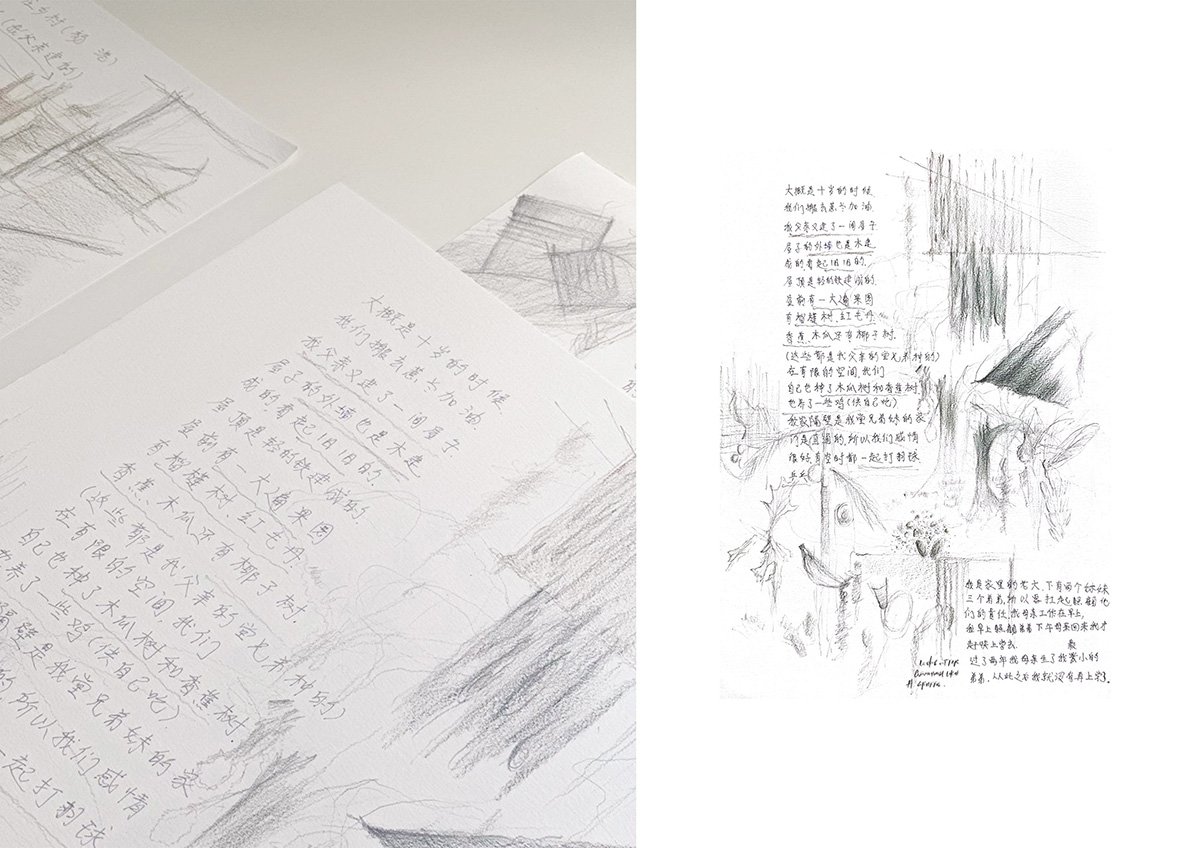
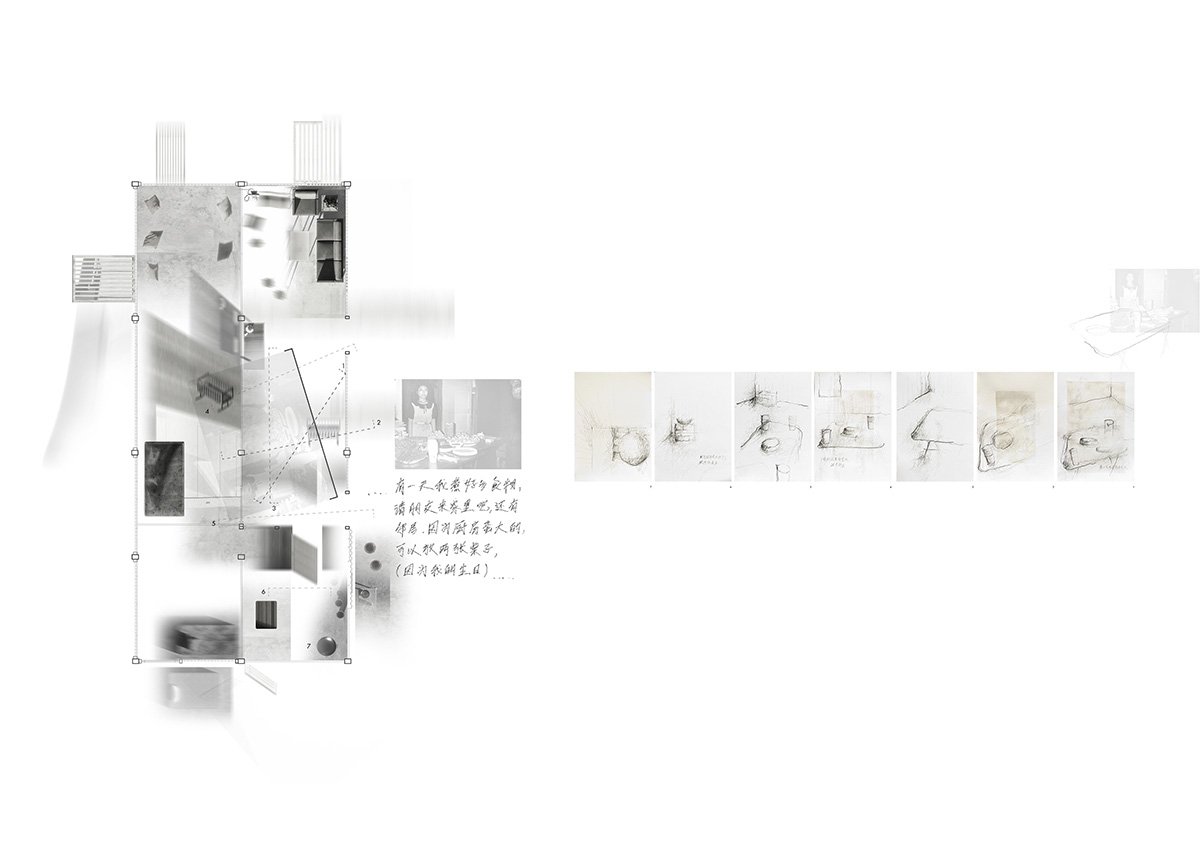
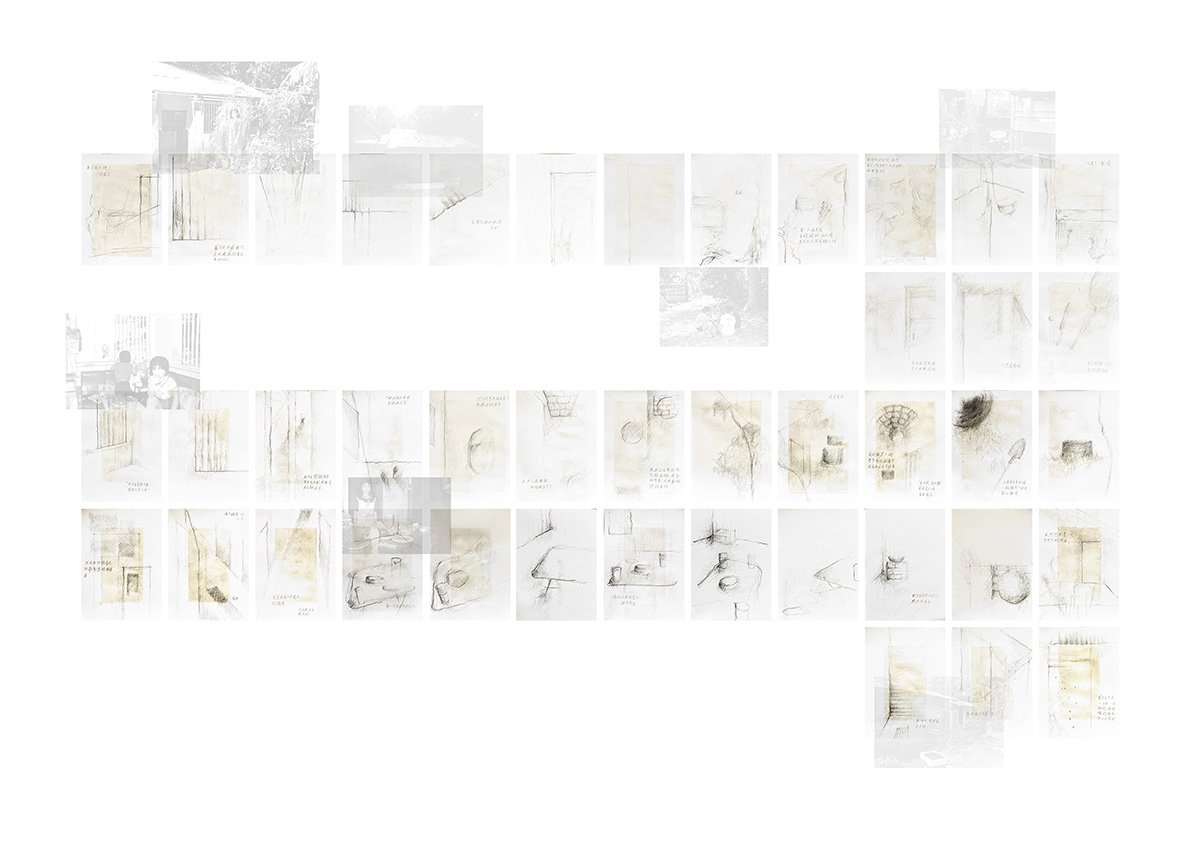
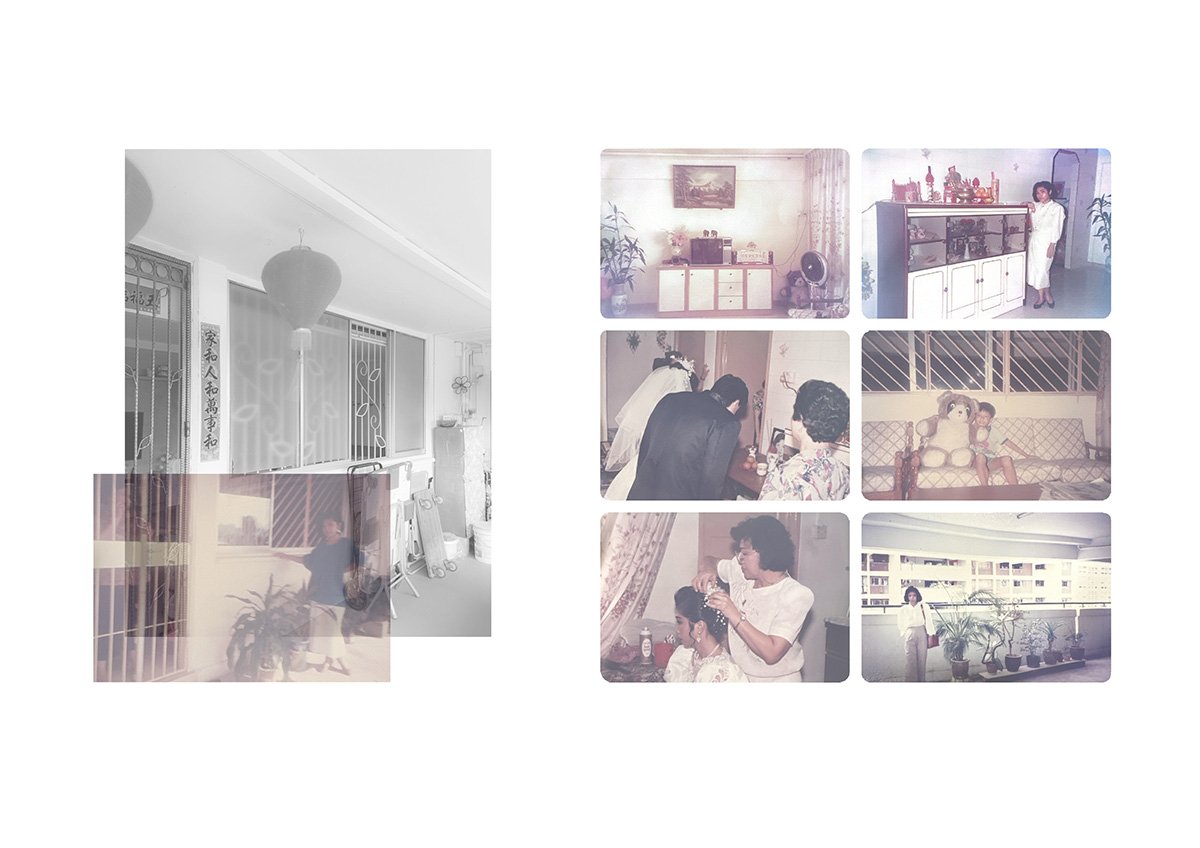
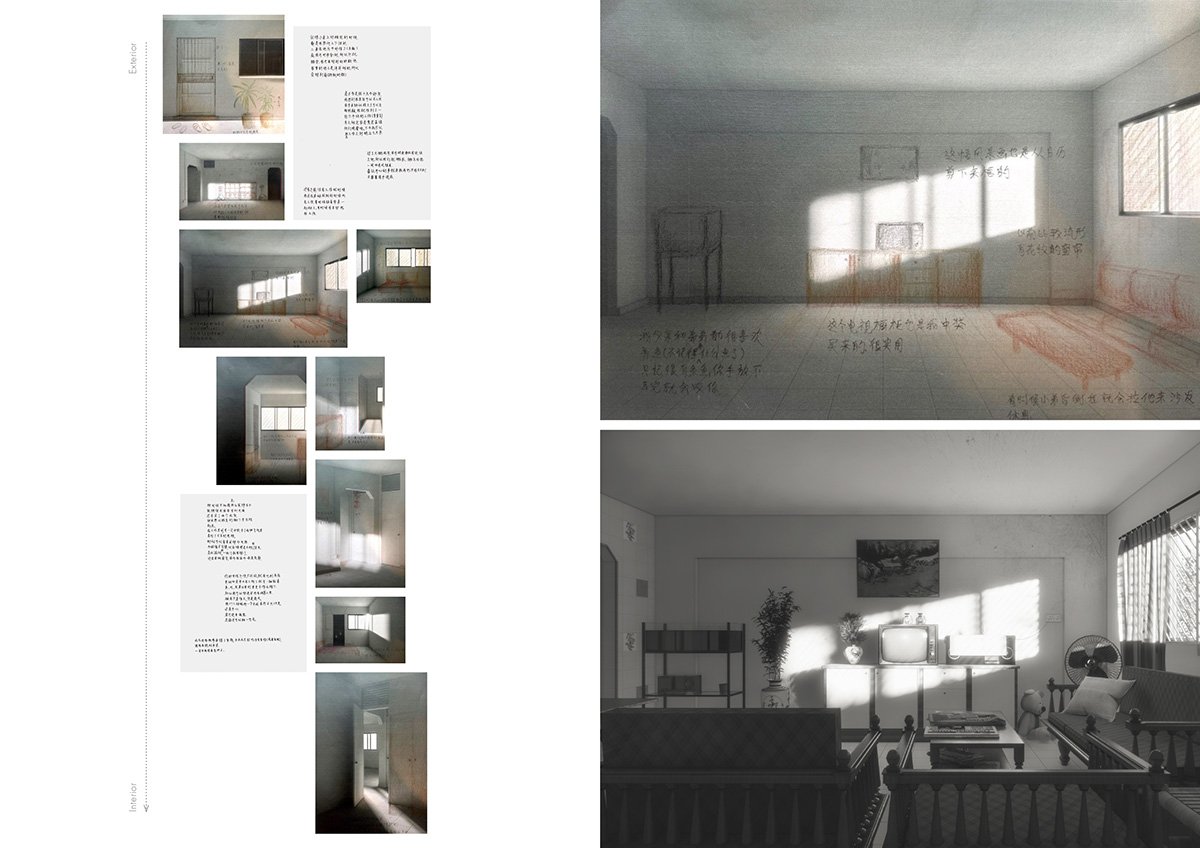
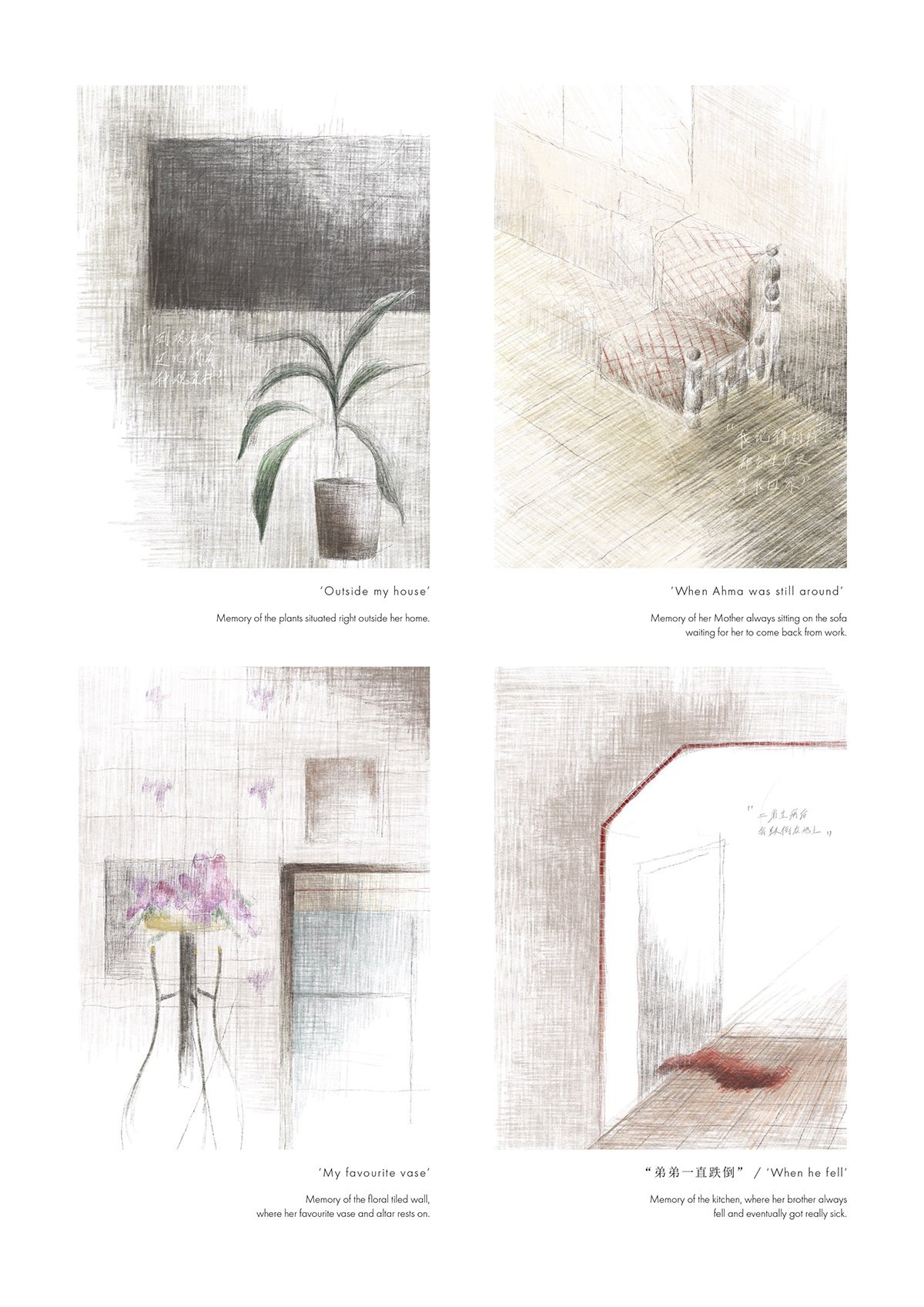
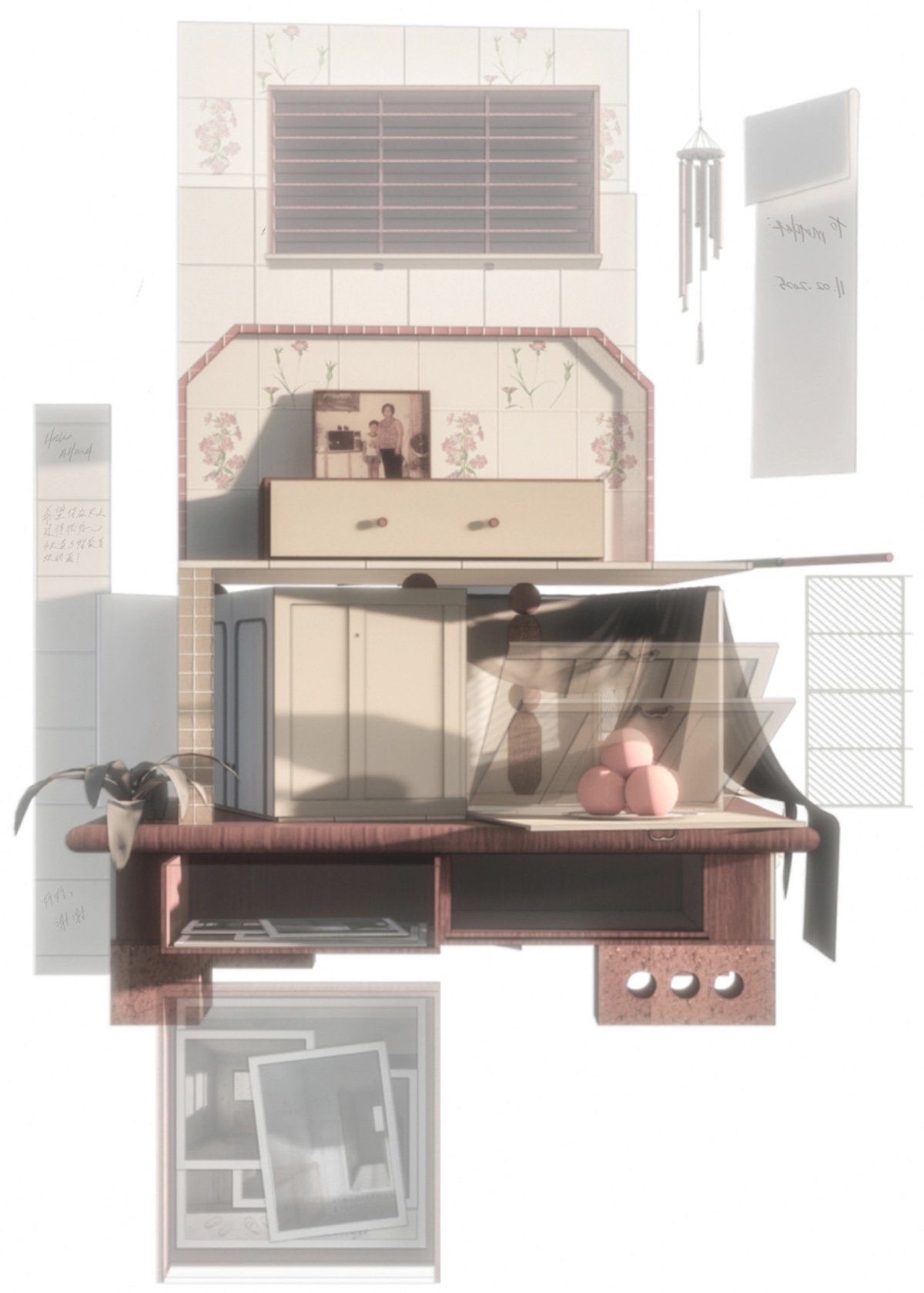
Photographs of my Mom’s home in Jalan KayuDrawing of her home in Jalan Kayu | Drawing of her washing area in Jalan KayuDrawing of the living zone in Jalan Kayu, where she used to wait for her Mom to come home before rushing off to school | Drawing of her self initiated birthday party scenario in Jalan Kayu
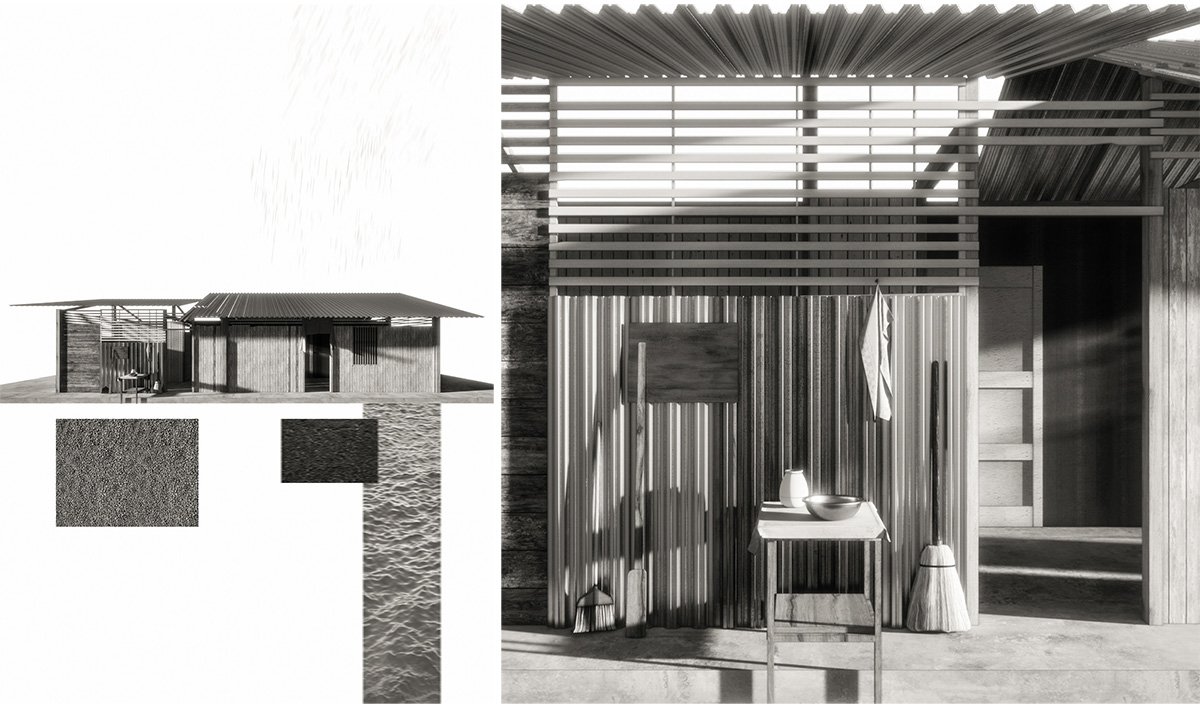
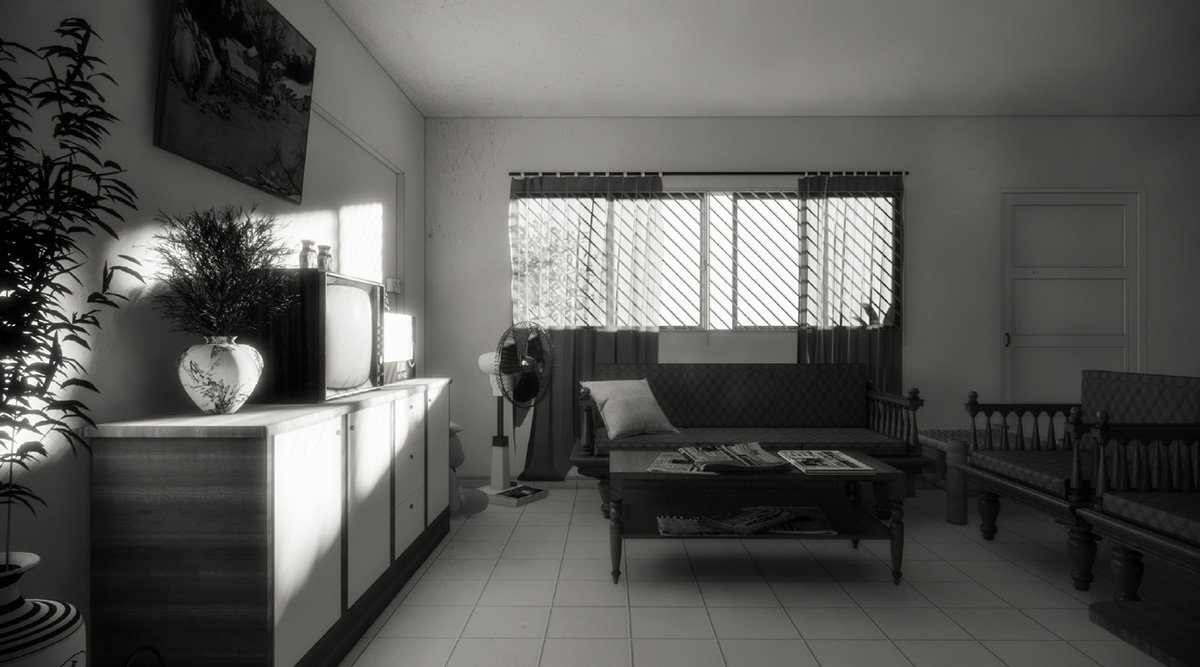
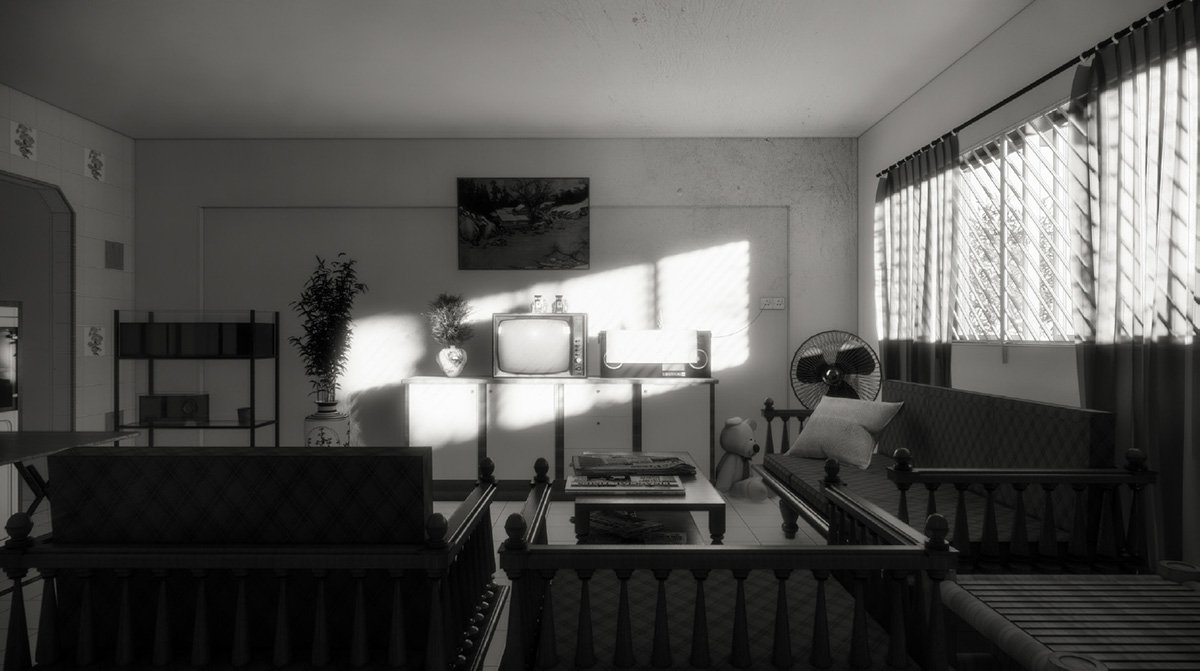
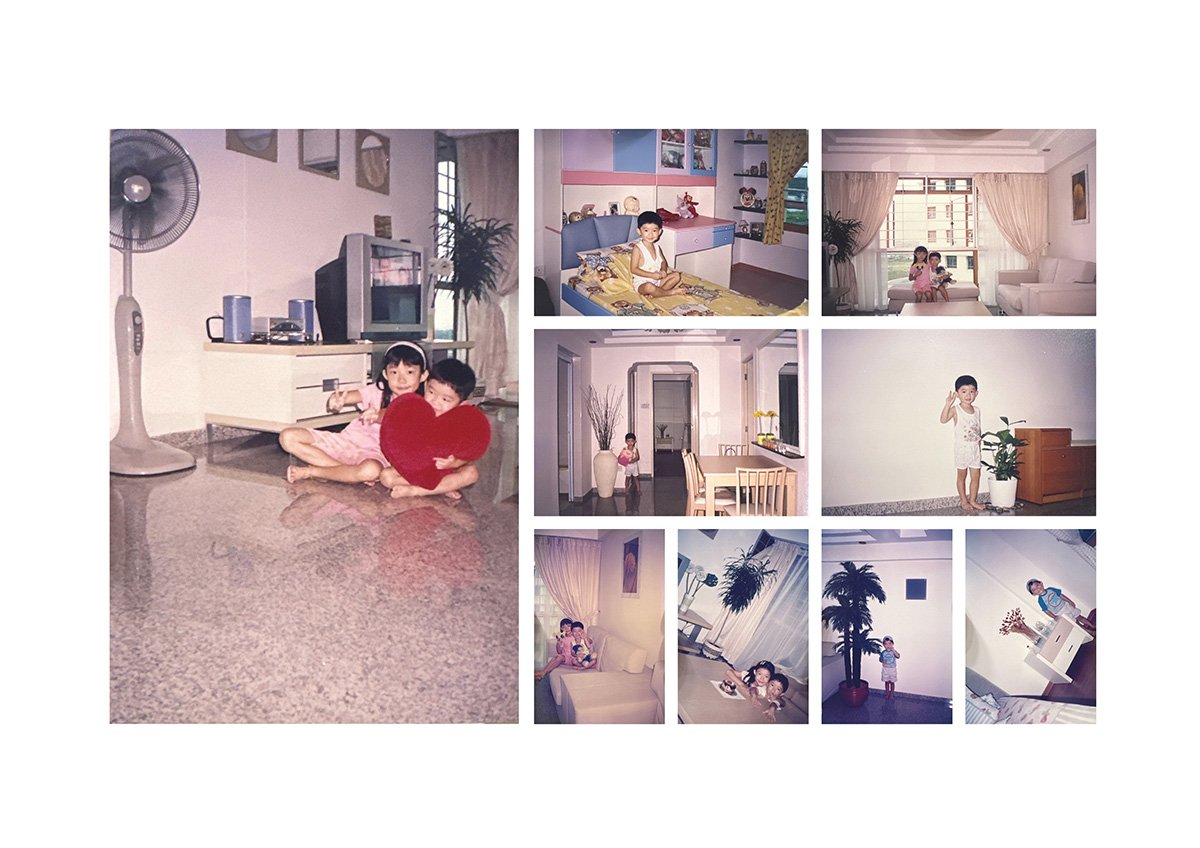
My mother has moved a total of four times, and we started the process by recollecting her first home at Jalan Kayu. She unearthed old photographs, recreated scenes digitally, and experimented with different mediums, each attempt a way to understand and give form to her memories.
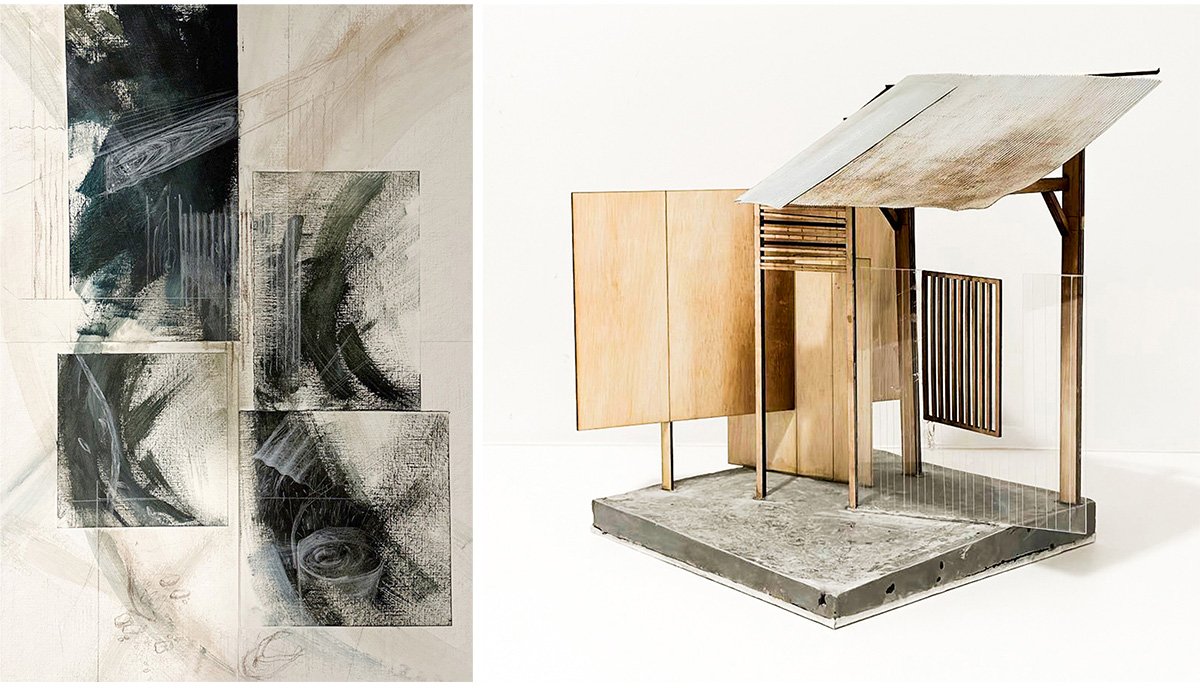
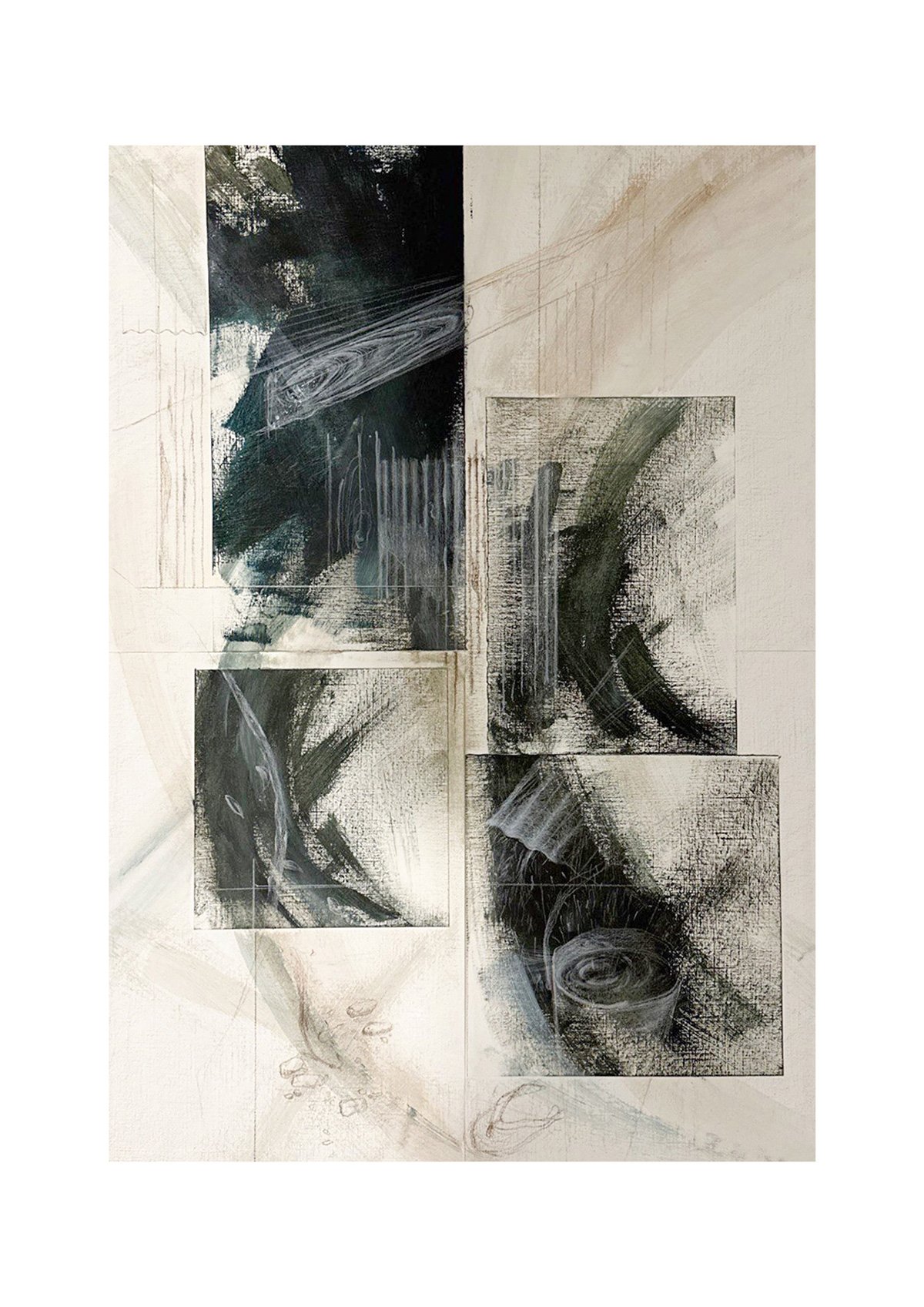
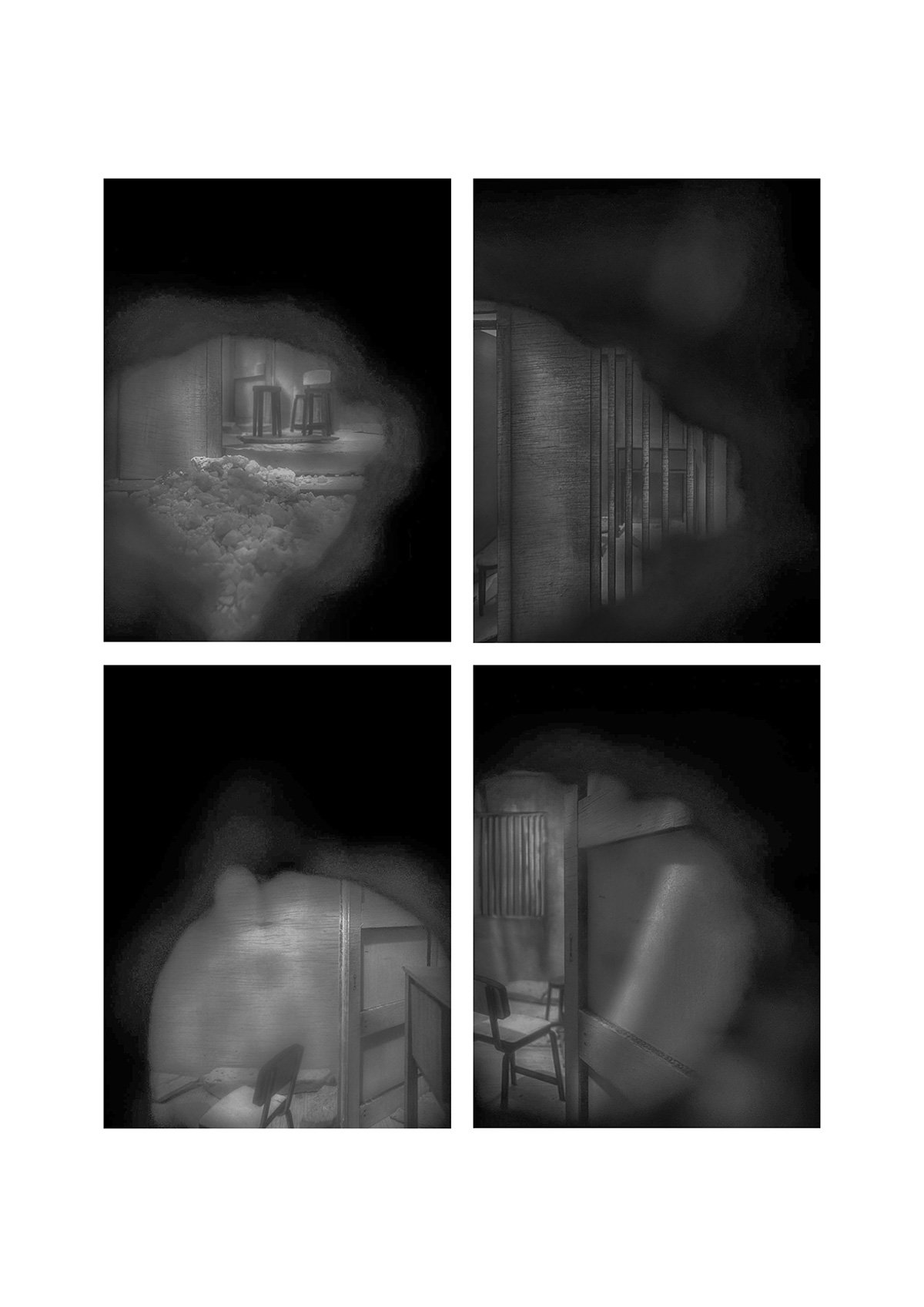
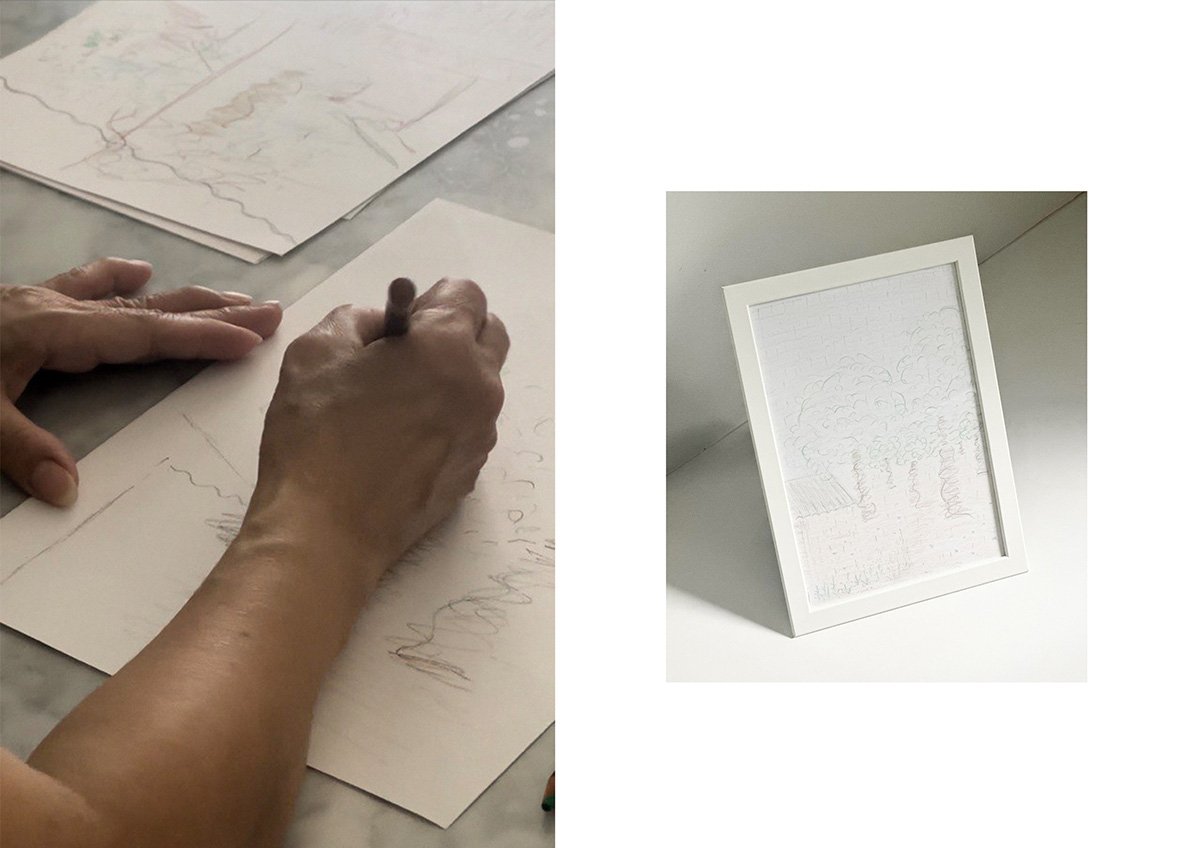
Painting how memories surface in the mind | Model of a memory in her home in Jalan KayuViews through the peephole
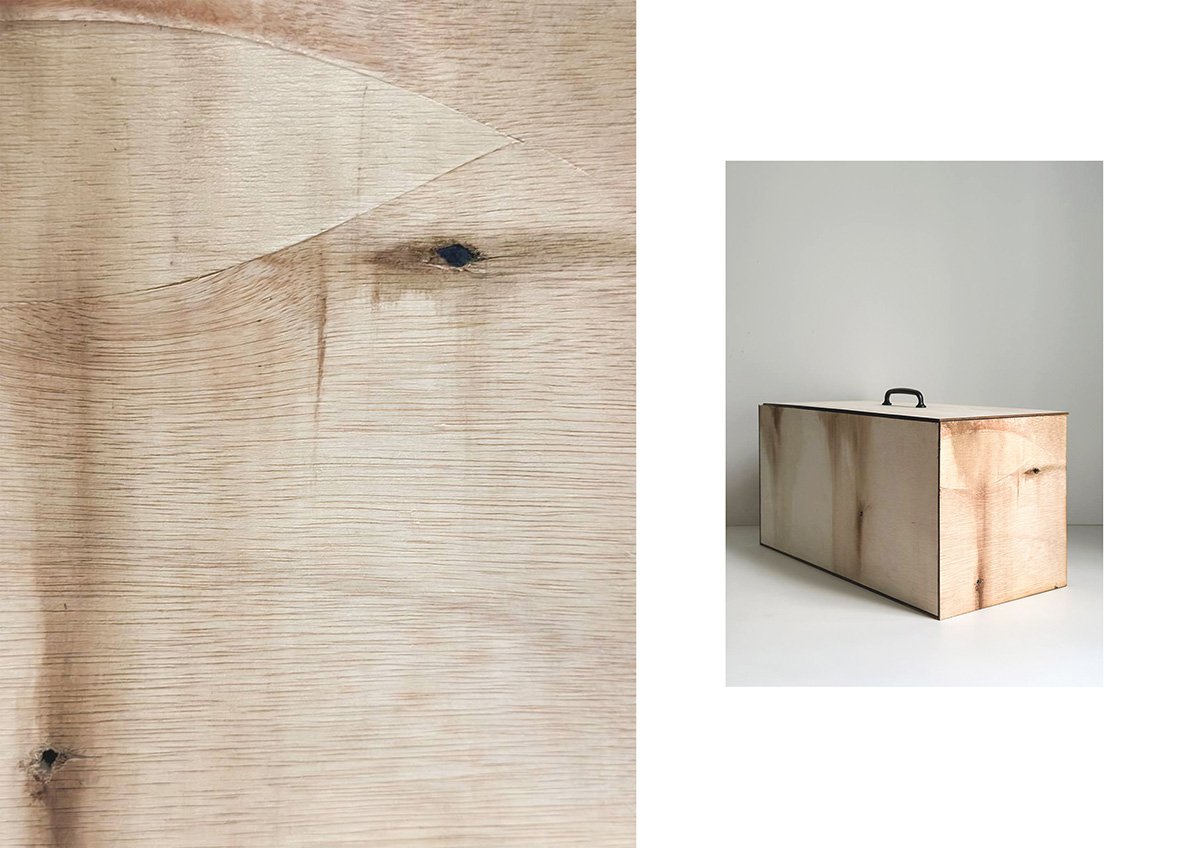
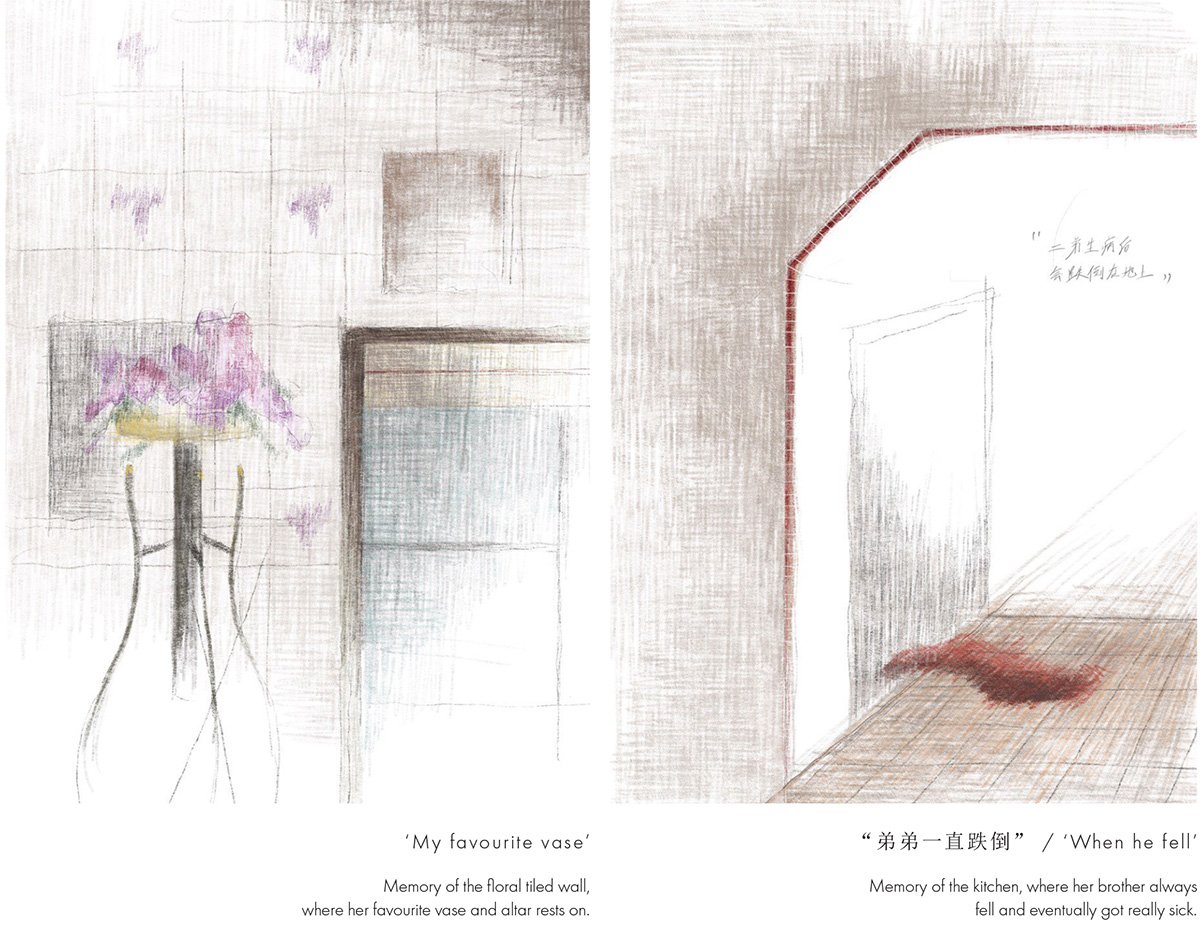
With the home demolished, we began to recover it through drawing and conversation. Guided by her diary and old photographs, I mapped fragments of the past, understanding her memories as quiet imageries, glimpsed like peeking through the woodgrain.
Design Process
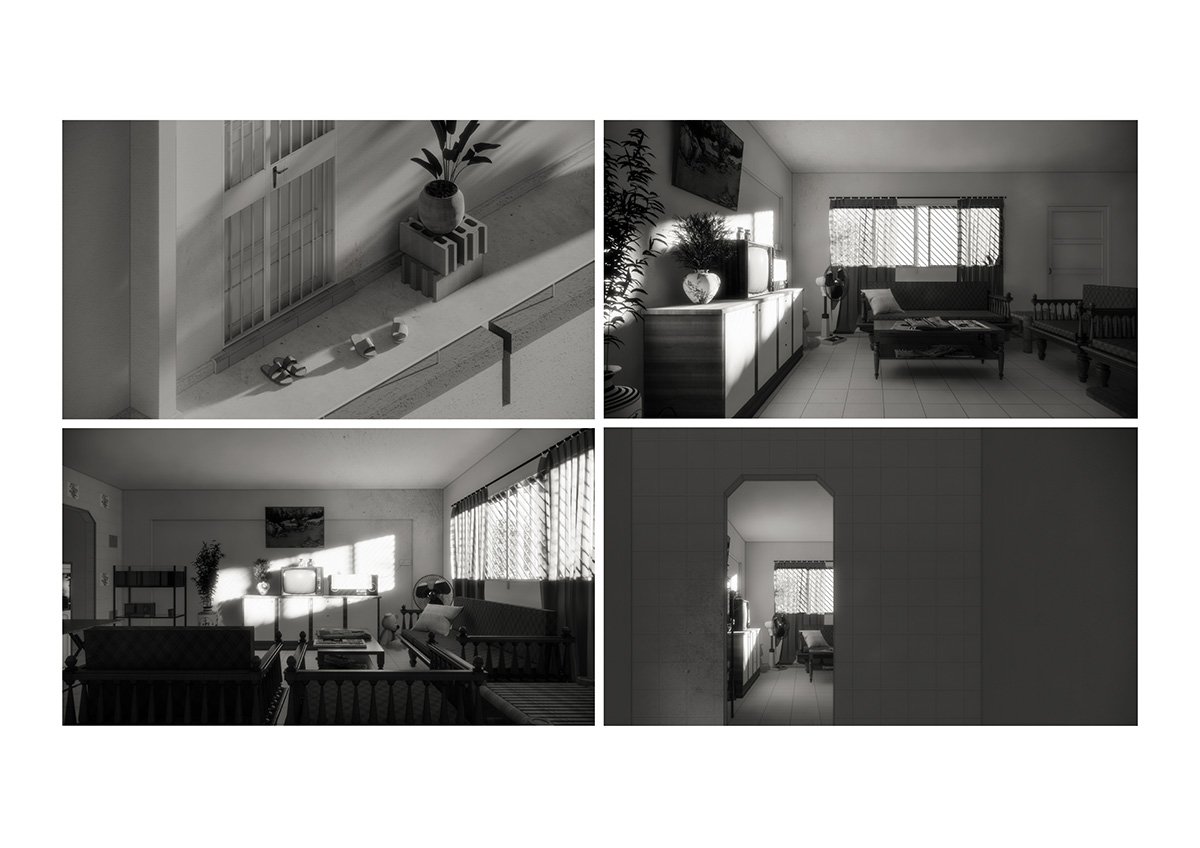
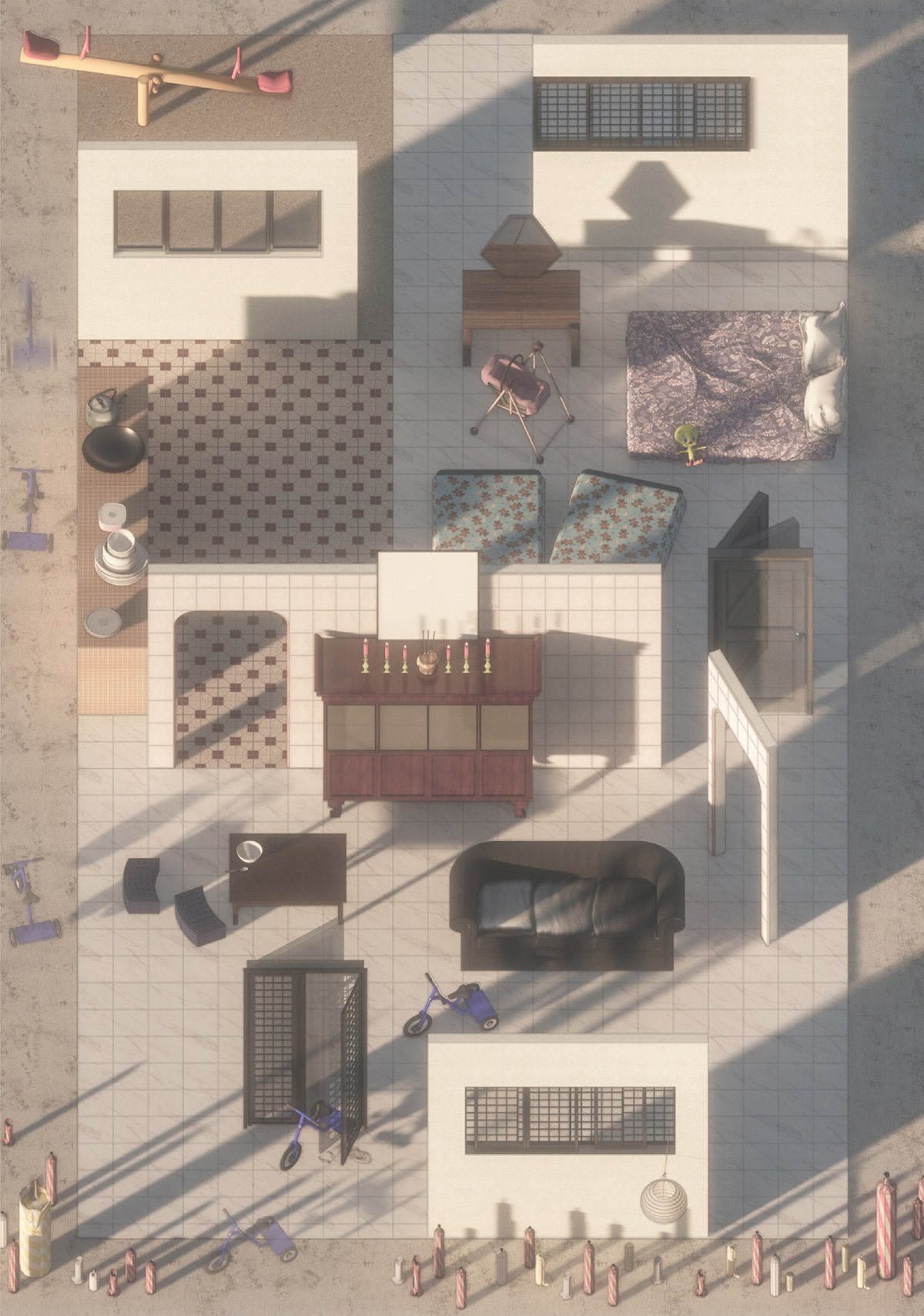
Memories in Jalan KayuReconstructing her demolished home in Jalan Kayu, analyzing what was remembered
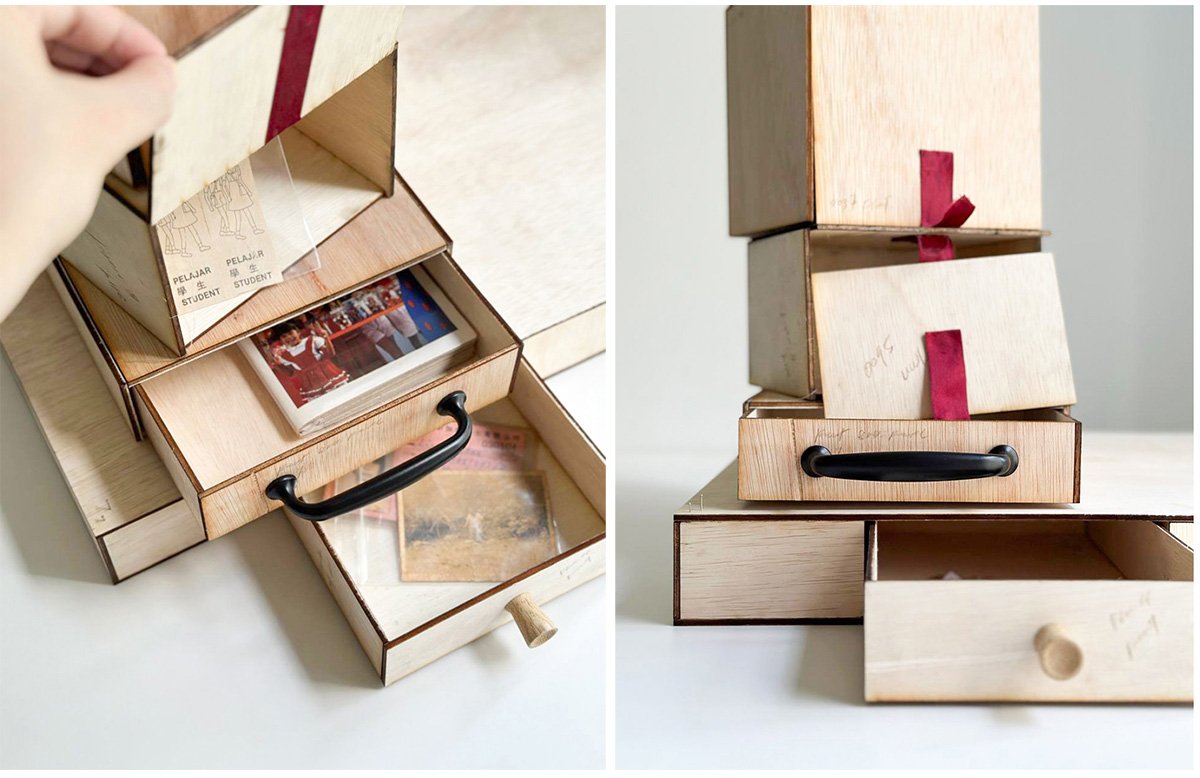
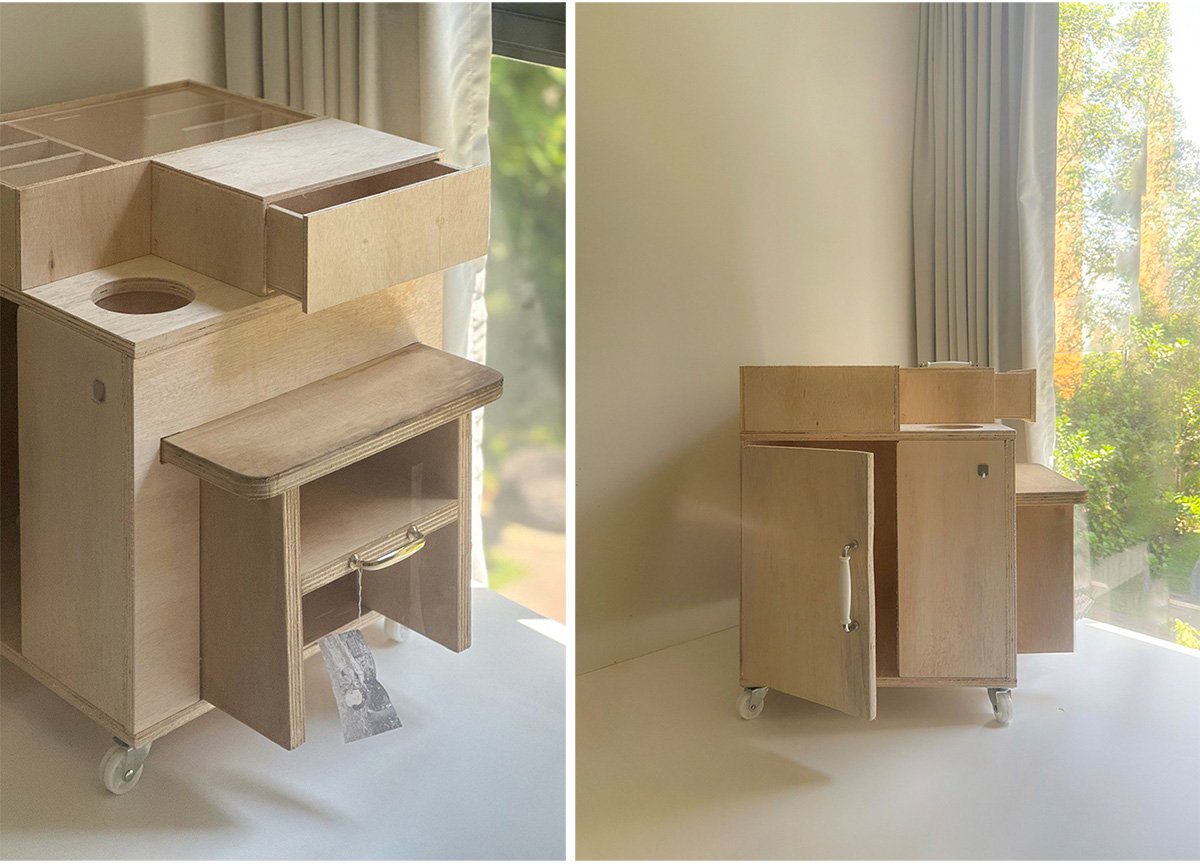
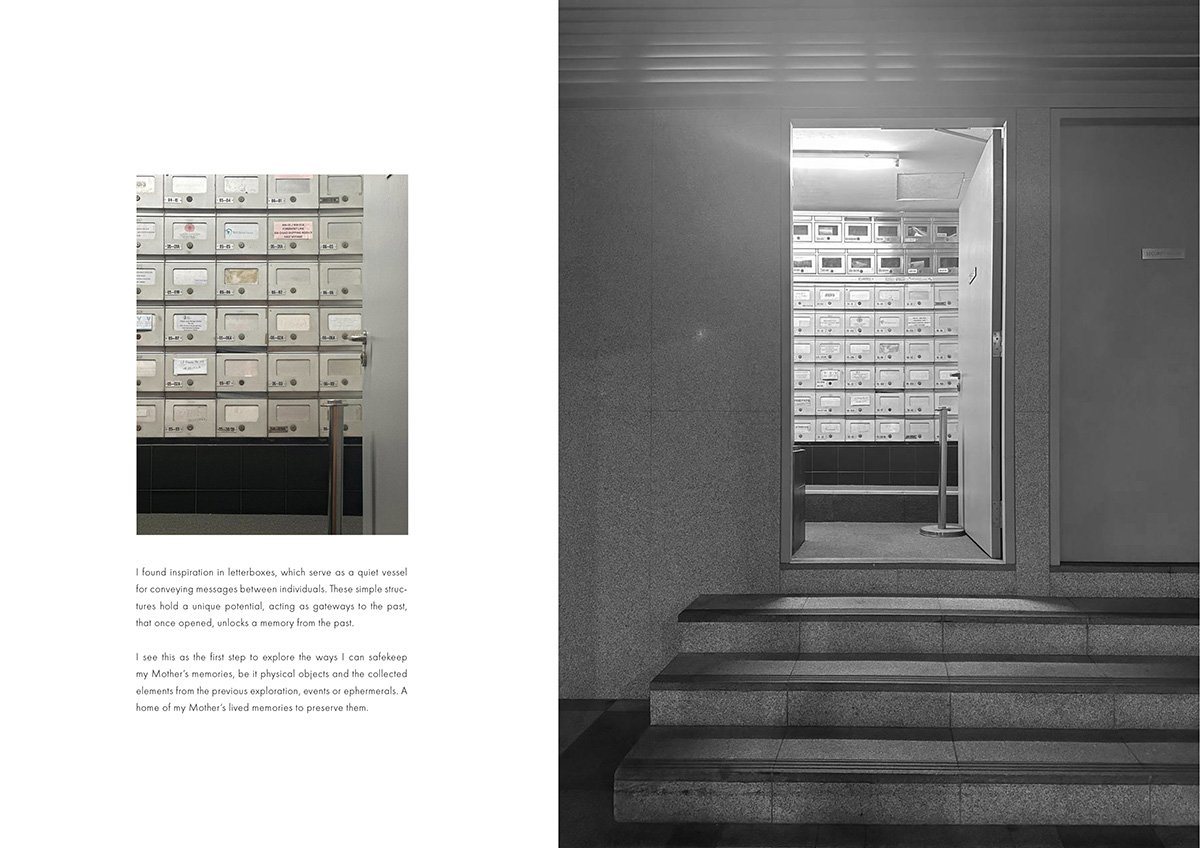
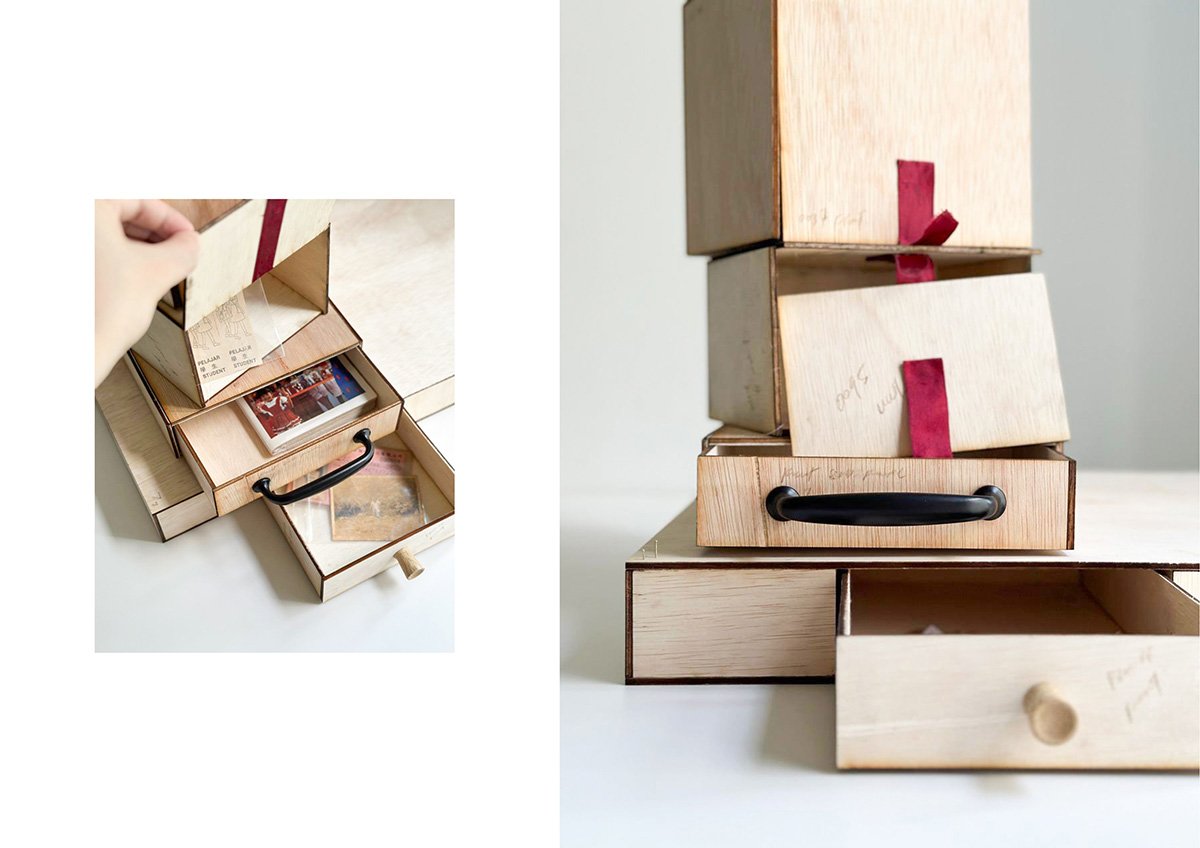
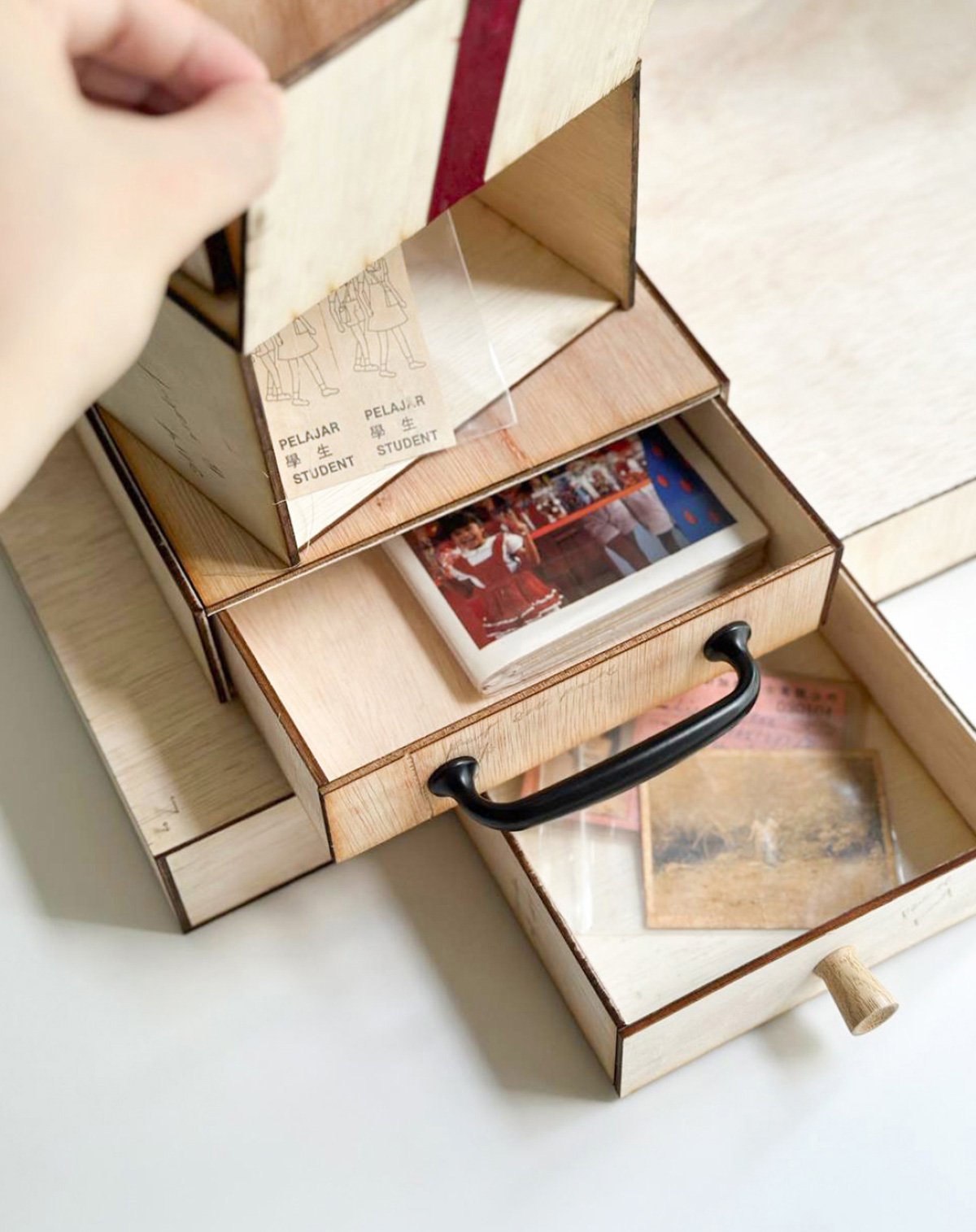
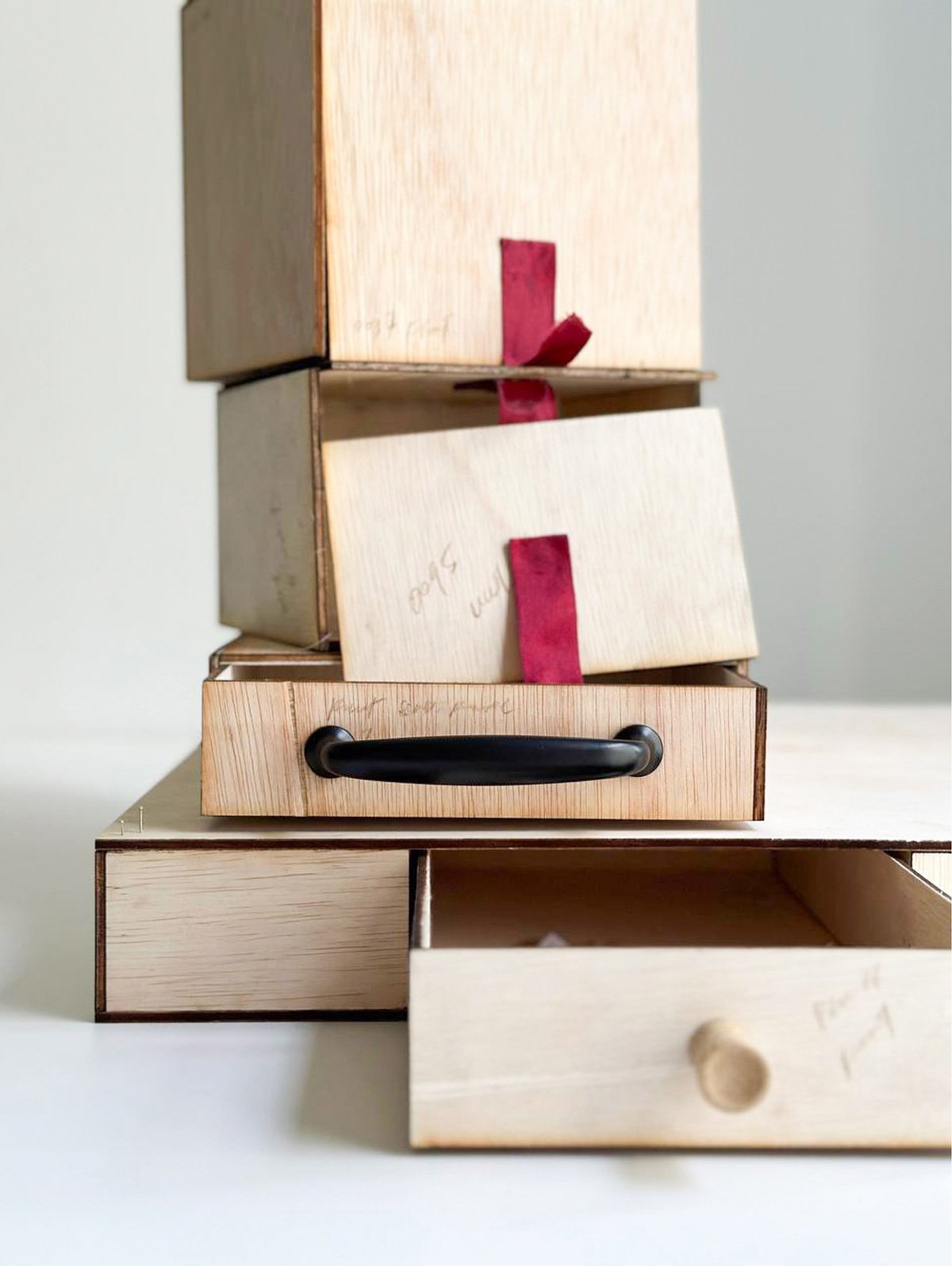
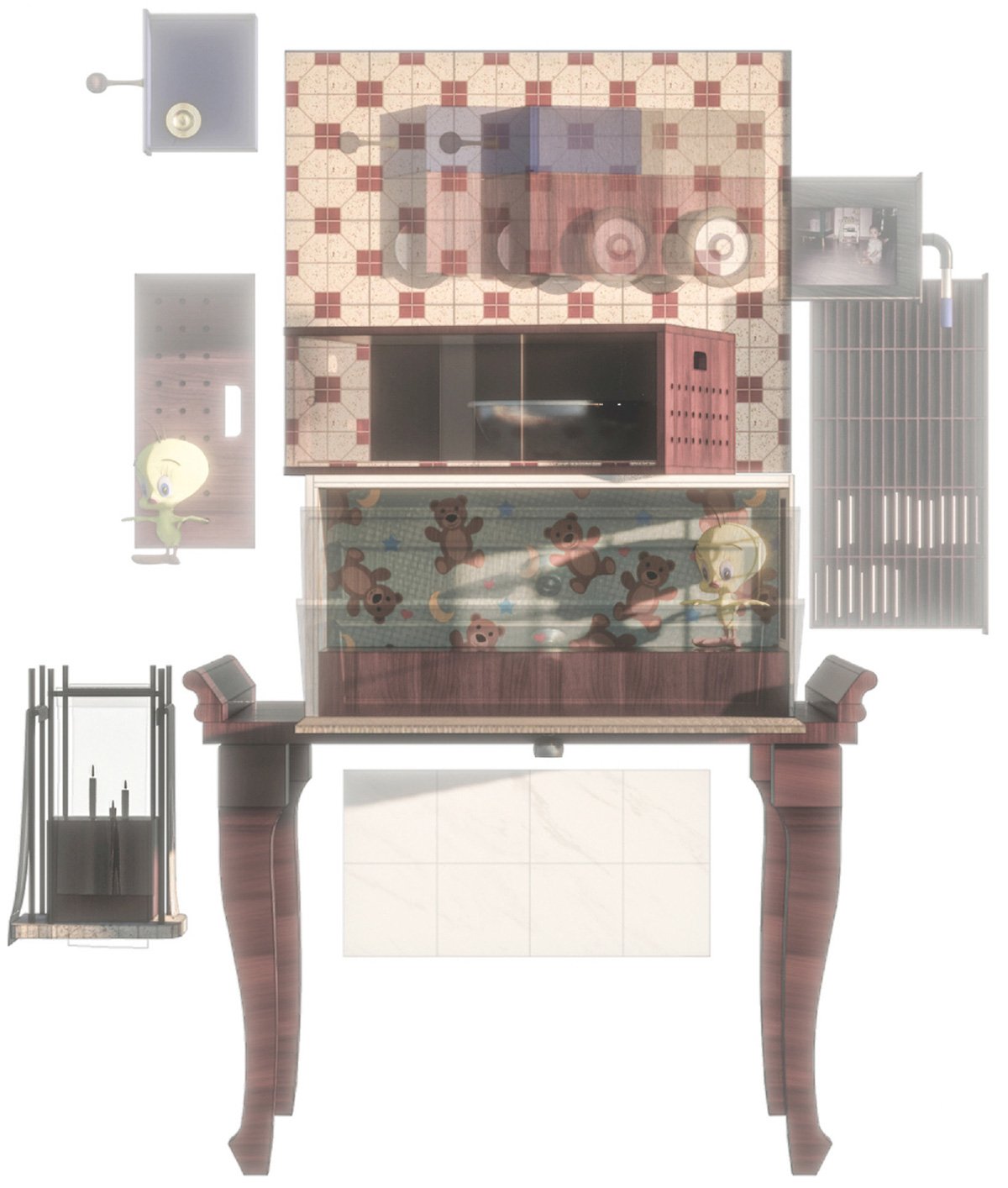
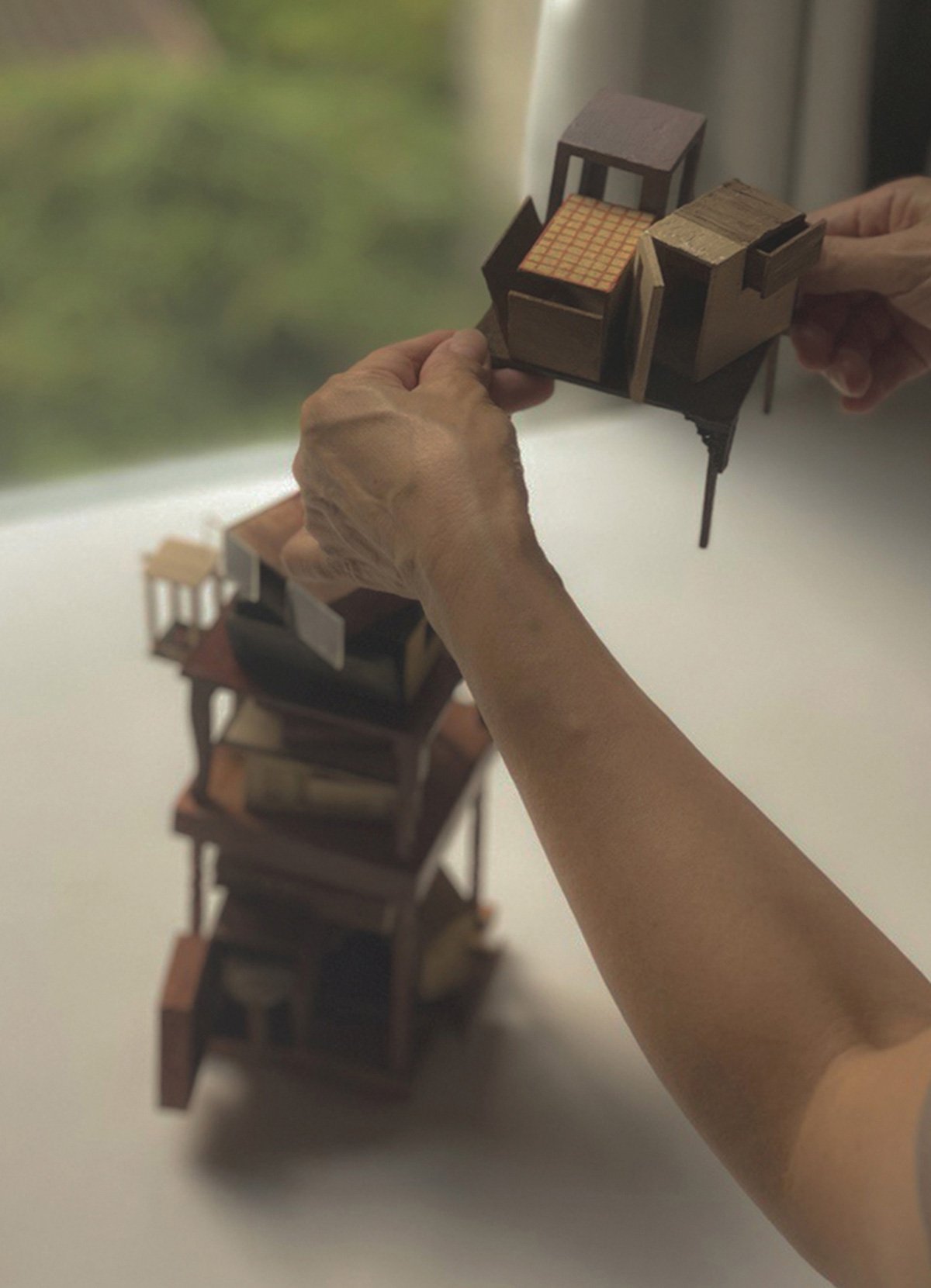
As my mom drew the memories she wished to hold on to, and we rebuilt the demolished home, re-membering its fragments and spaces, we saw an opportunity to design memory beyond drawing, giving form to what was once felt and lived. Inspired by letterboxes as quiet vessels of communication, we explored how the act of opening becomes an invitation, unveiling fragments that evoke memory, allowing for a personal encounter and sharing of stories.
Process modelMemory vessel iteration for her home in Jalan Kayu
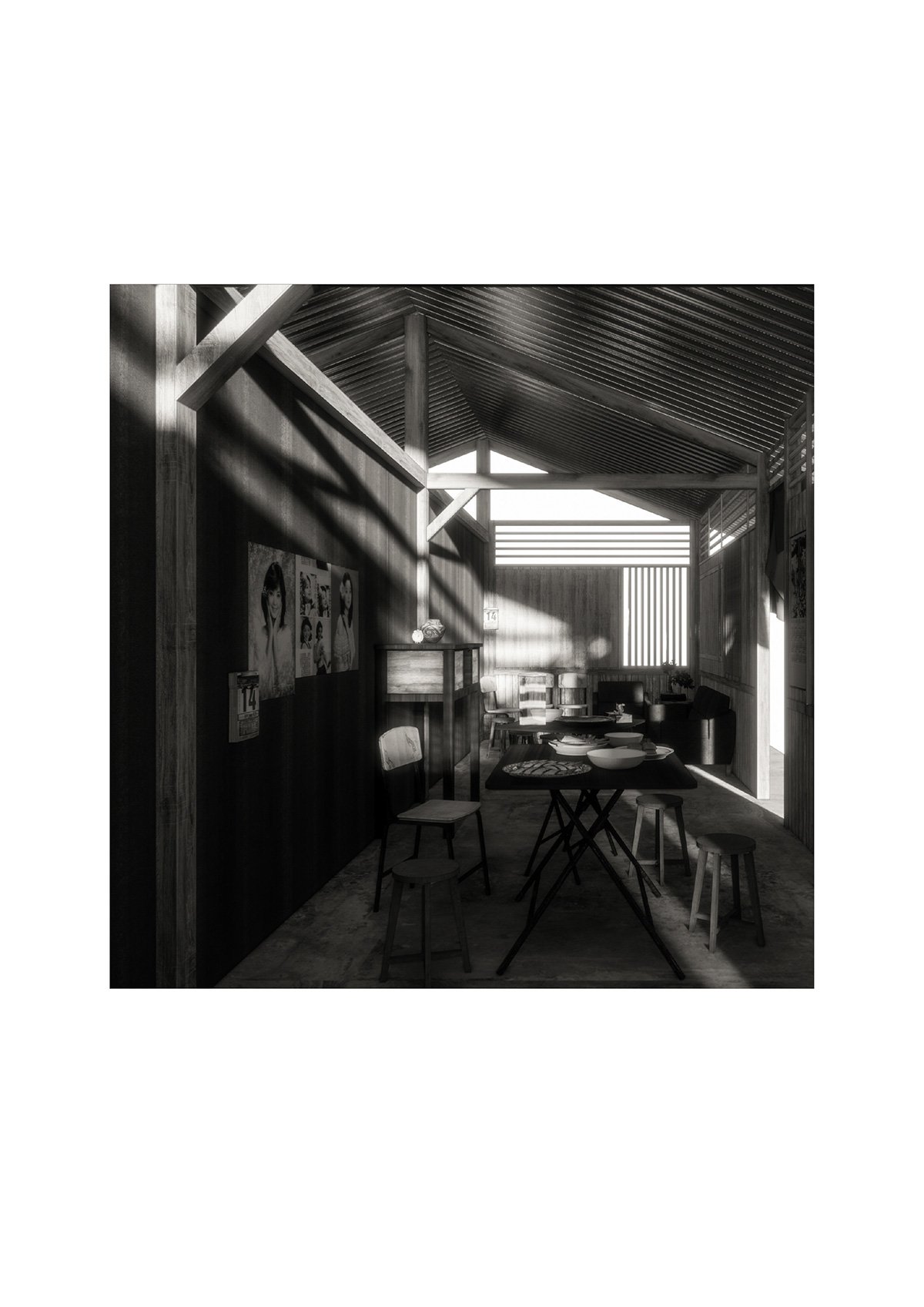
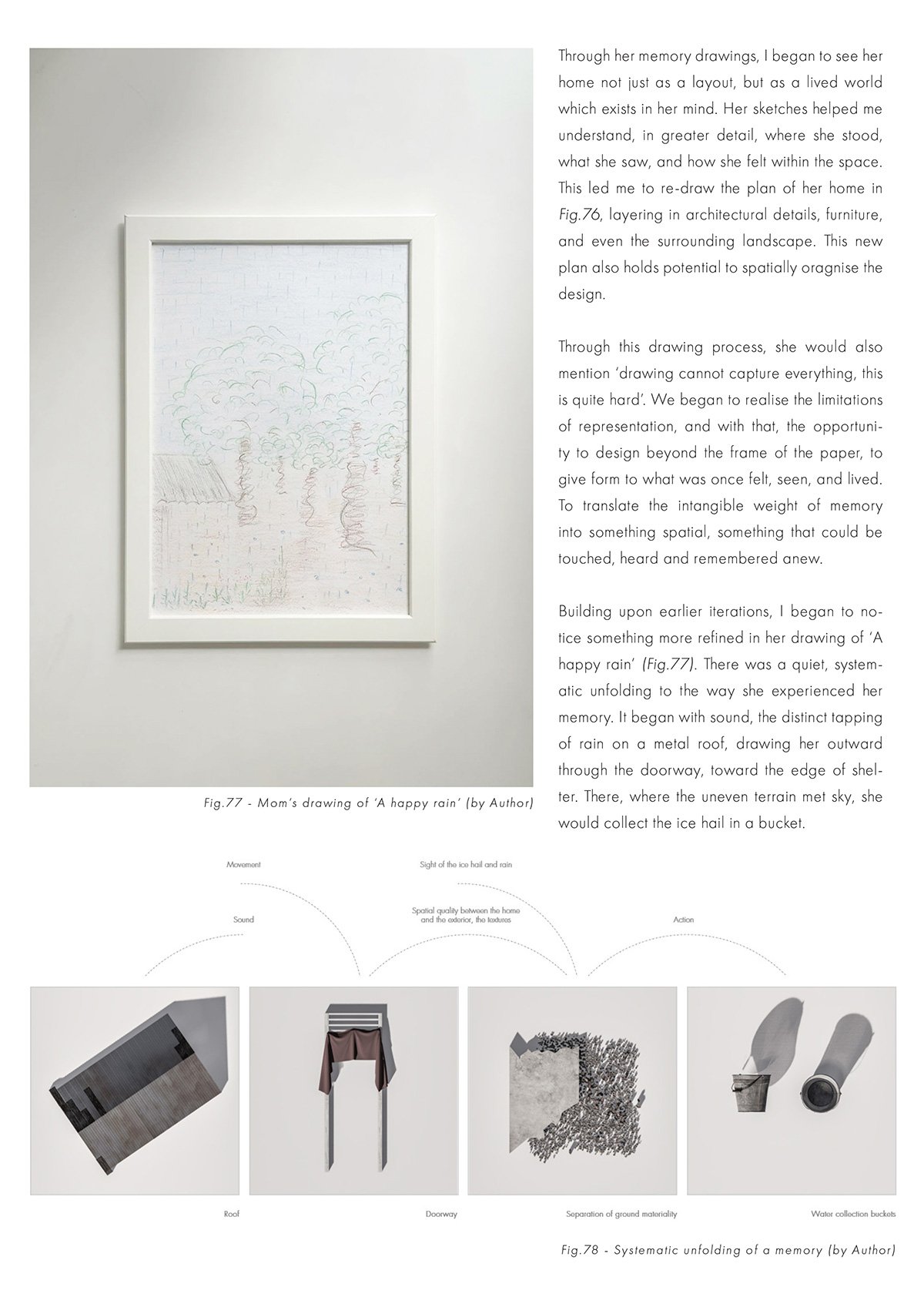
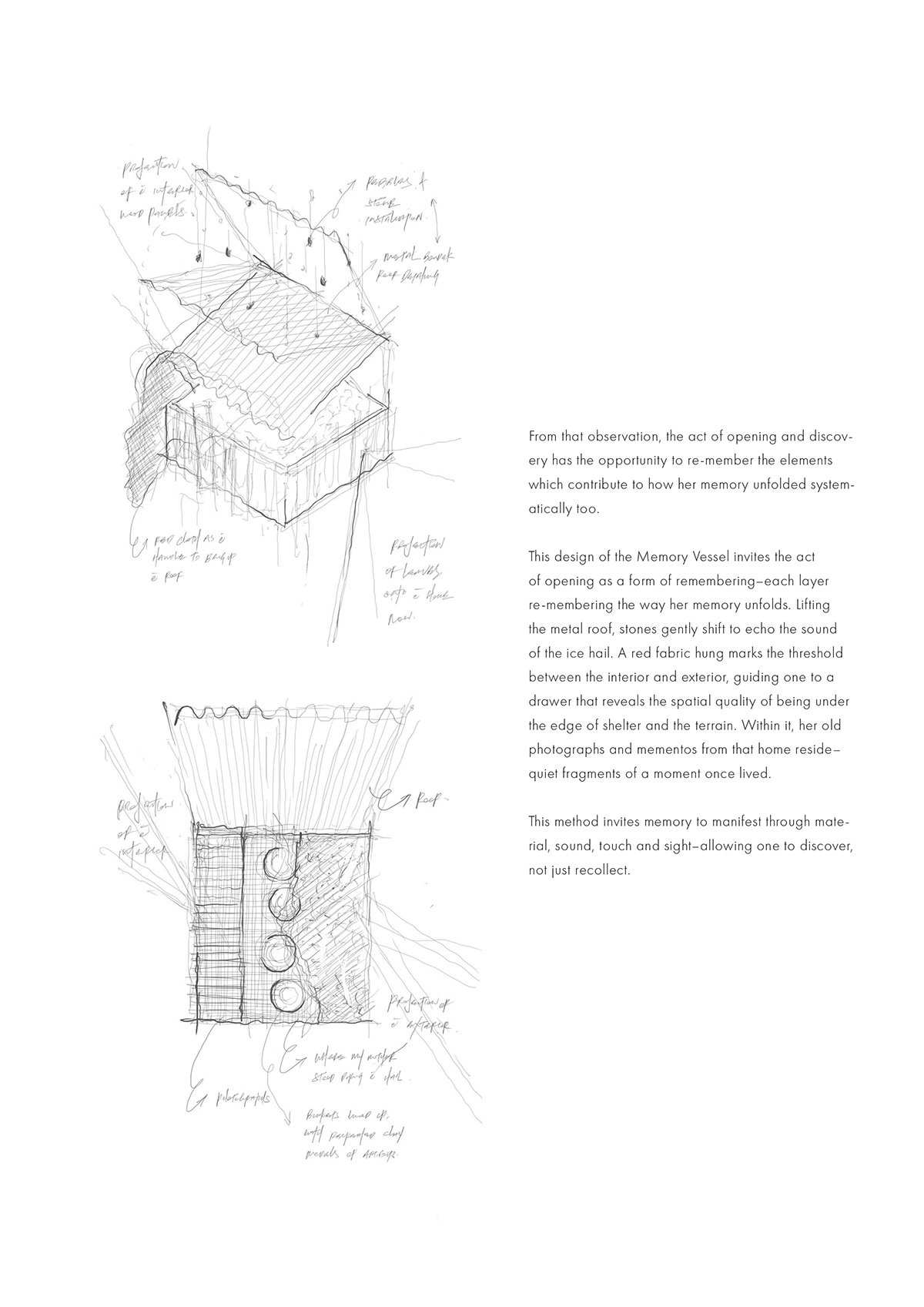
We developed a method to systematically experience her memories, like her memory of the rain, which begins with the sound produced on a metal roof, drawing one towards the edge of shelter, where uneven ground meets the quiet act of collecting water in a bucket.
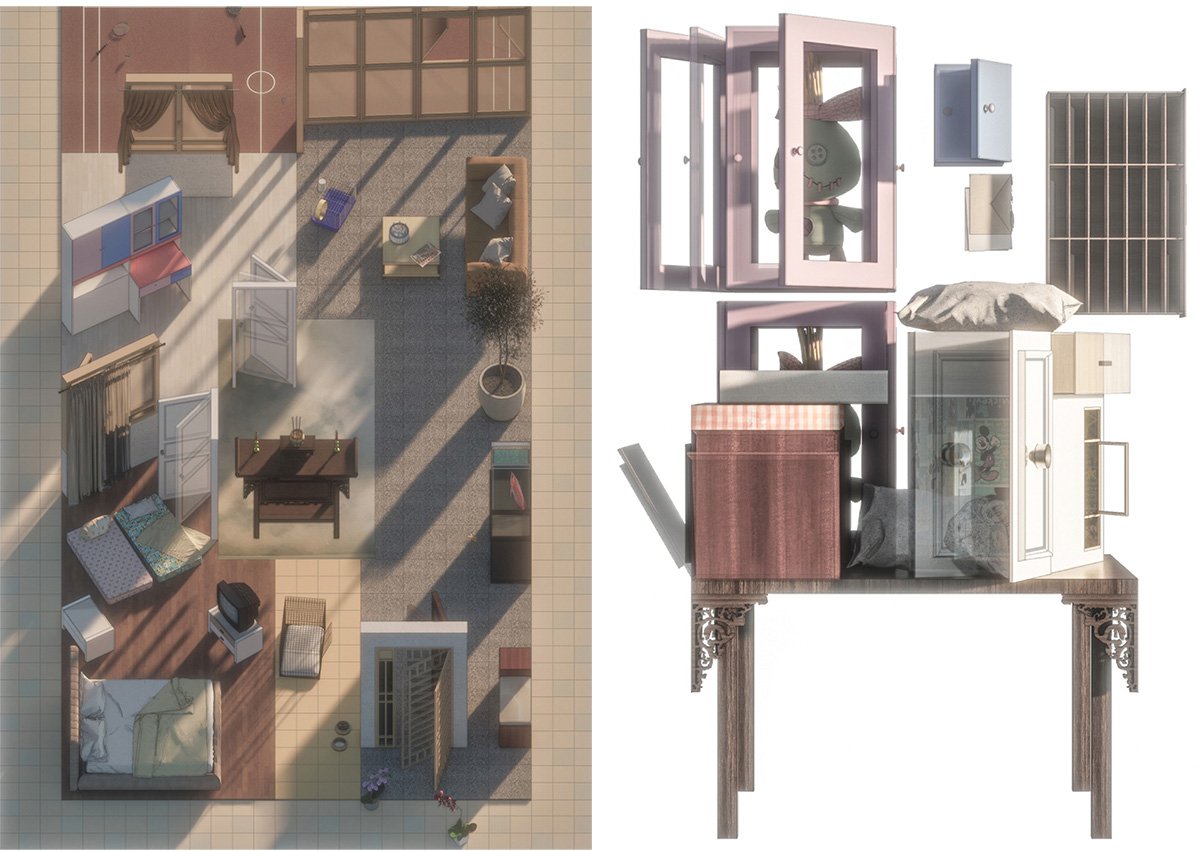
Digital drawings of Mom’s home in HougangDigital drawings of Mom’s home in HougangMemory vessel iteration for her home in Hougang
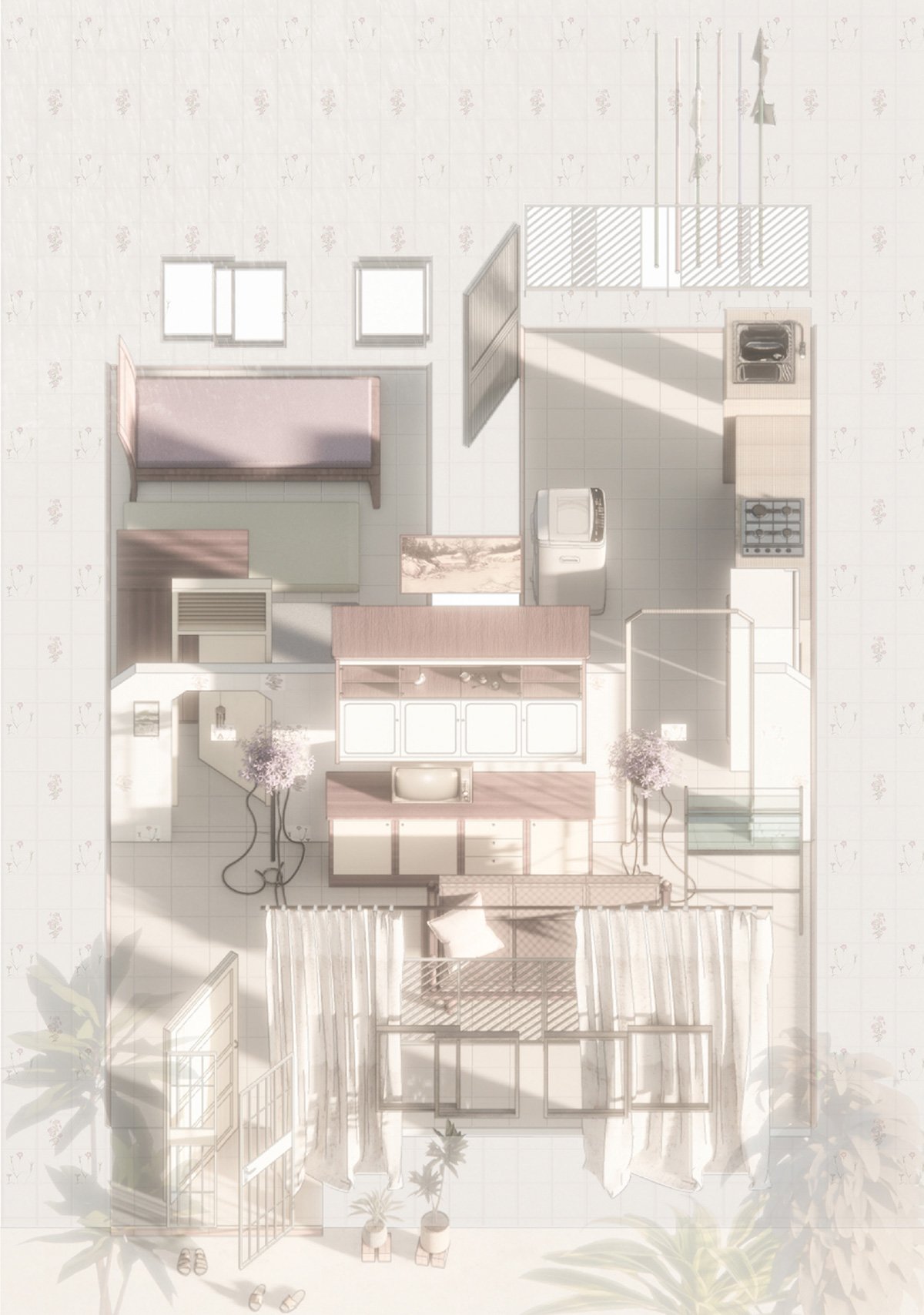
As we recollect her other homes, each with its own strategy. For her home at Hougang, which we could no longer enter as a new homeowner has since occupied the space, I digitally reconstructed her empty home and guided my mom through it. Her drawings revealed what held meaning, memories I then carried into the design.
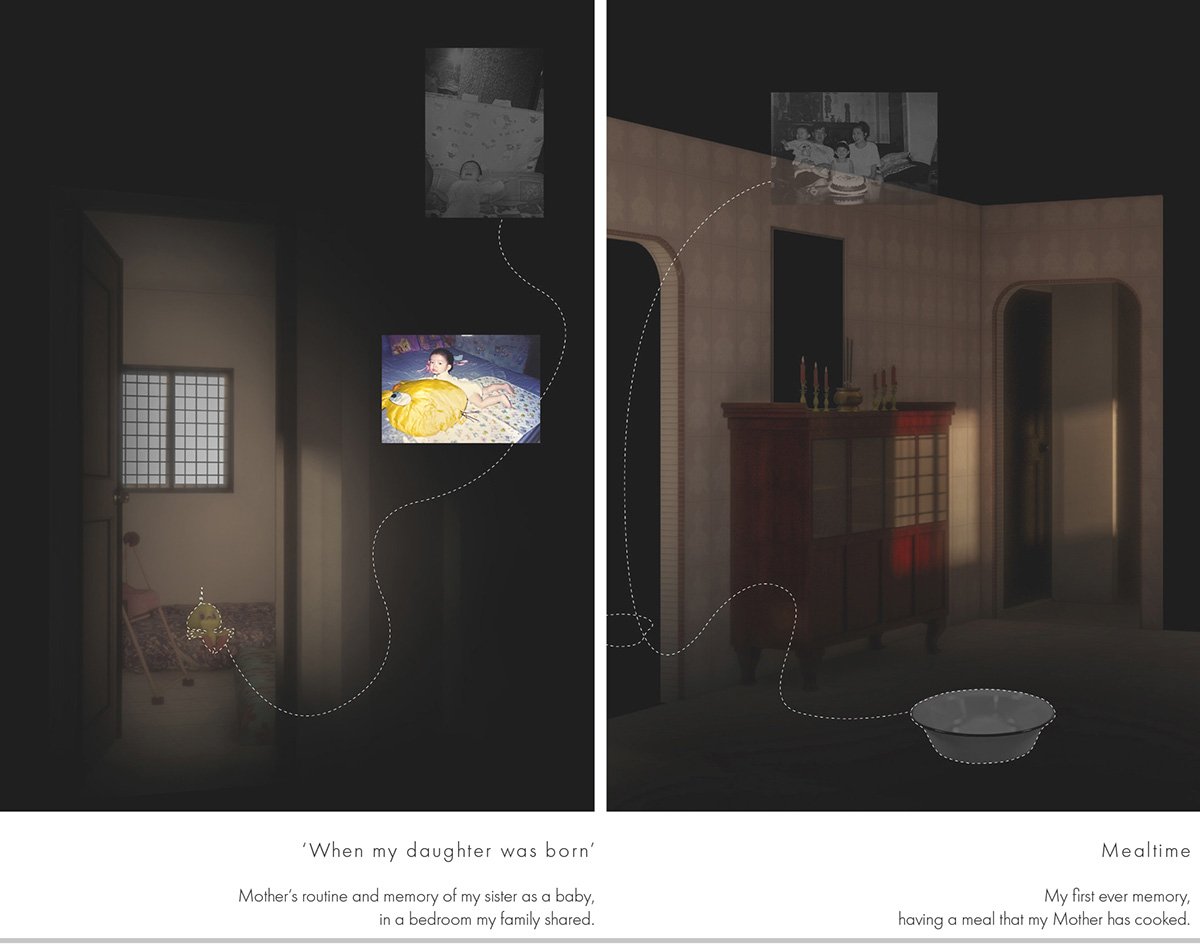
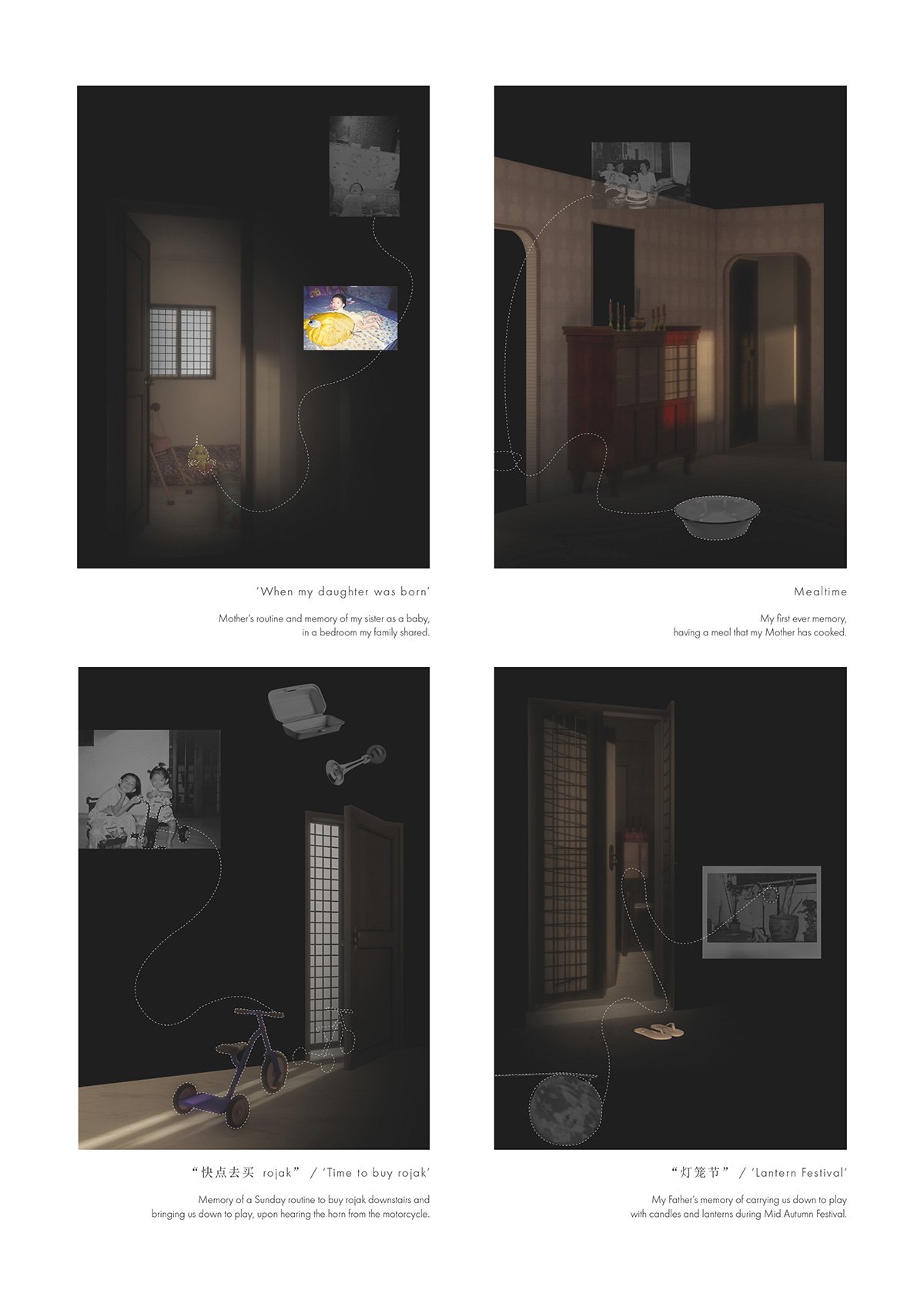
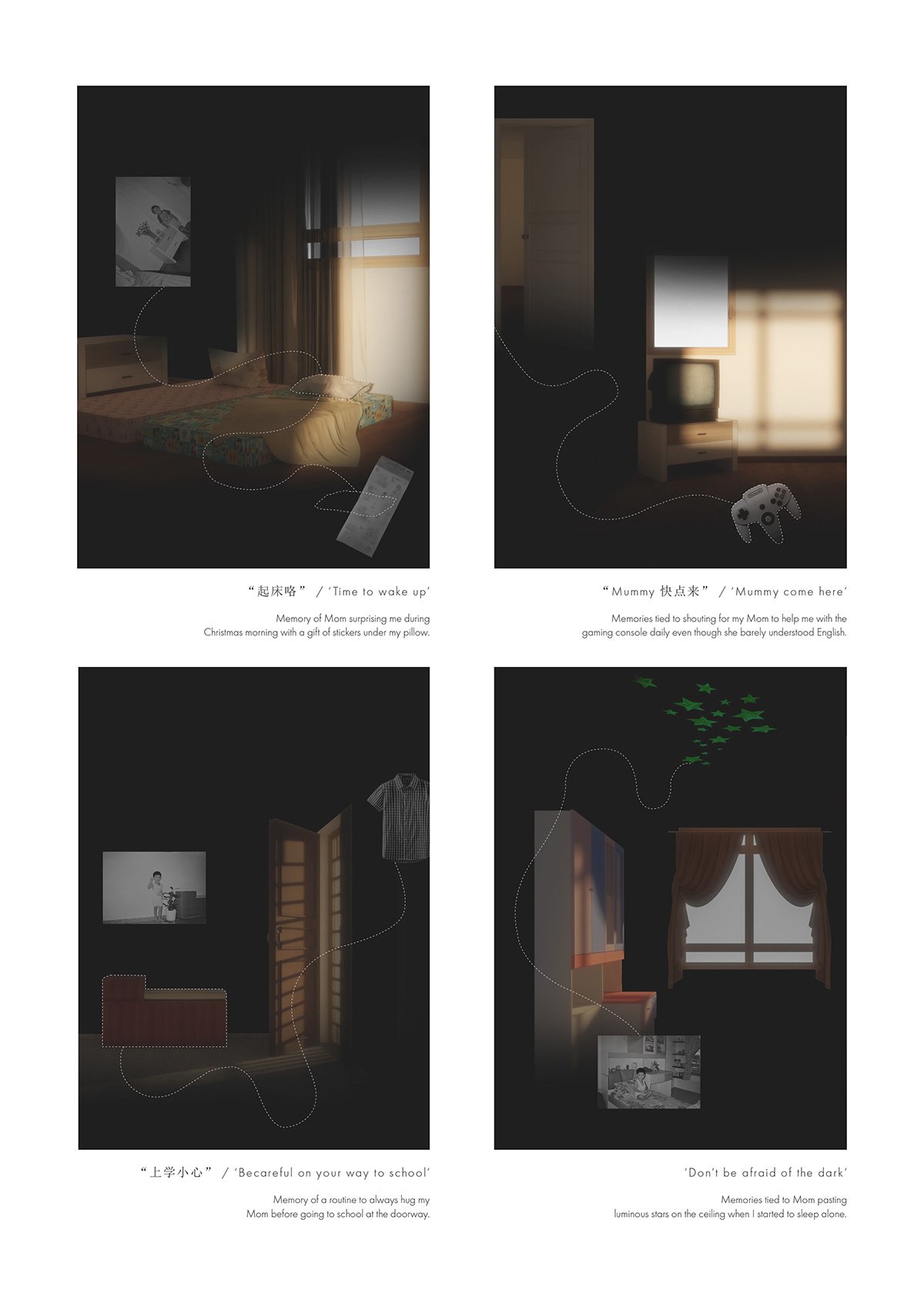
Atmospheric memory scenarios to visualize a remembered scenario, offering a way to translate scattered fragments into a systematic approach, guiding the design of the memory vessel for this homeMemory vessel iteration for her home in SengkangTesting out how one could interact with a potential design iteration, how a user could open and discover the spaces within
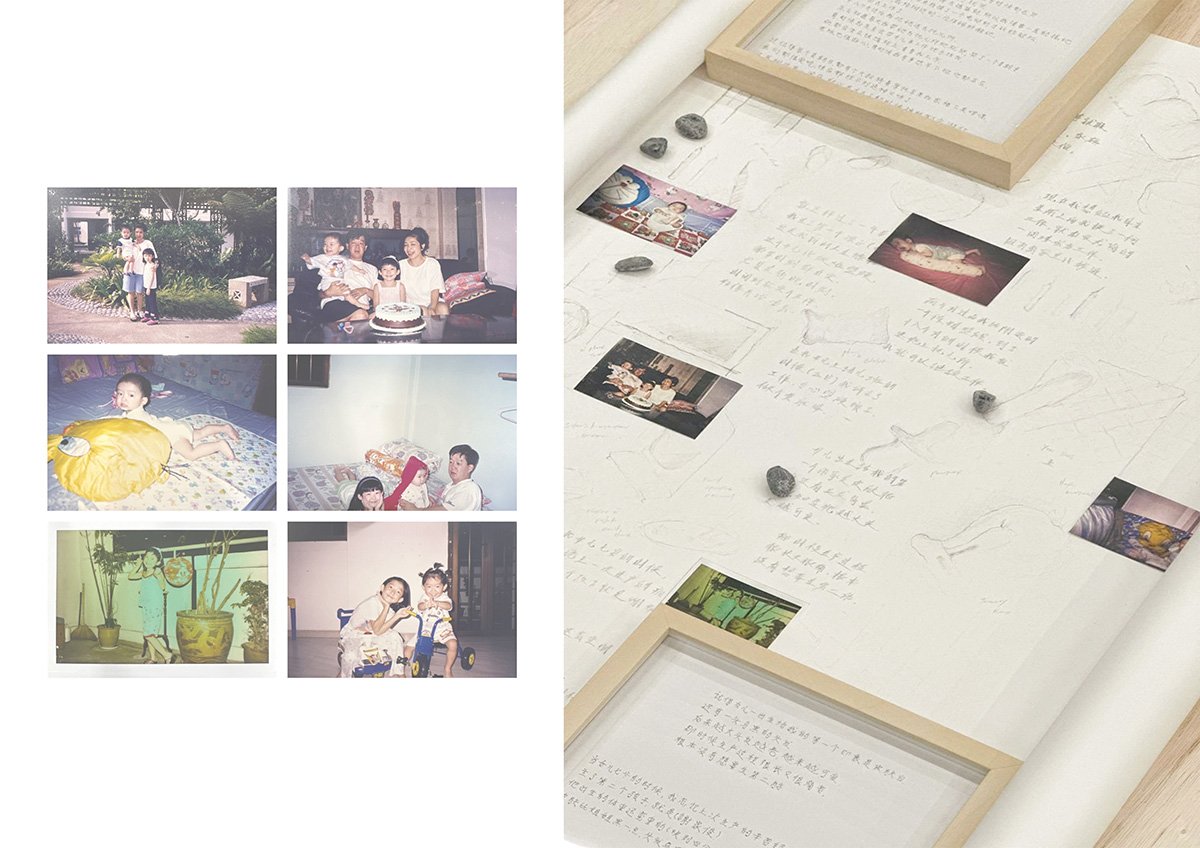
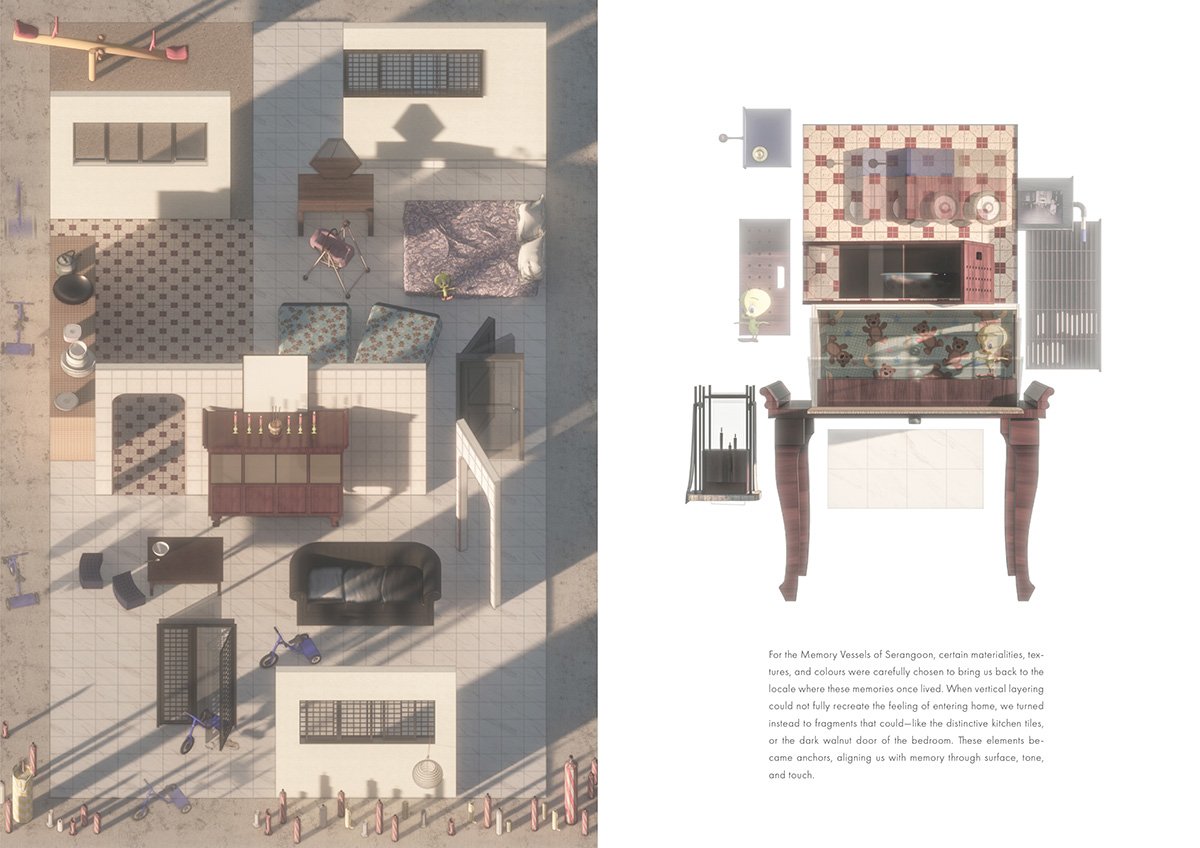
For homes that I have also lived in at Serangoon and Sengkang, we turned to her diary, drawing together to fill in the gaps and extend the stories through the help of old photographs. Mapping the spatial qualities helped me understand what aspects held meaning and to potentially offer permanence to.
Final Outcome
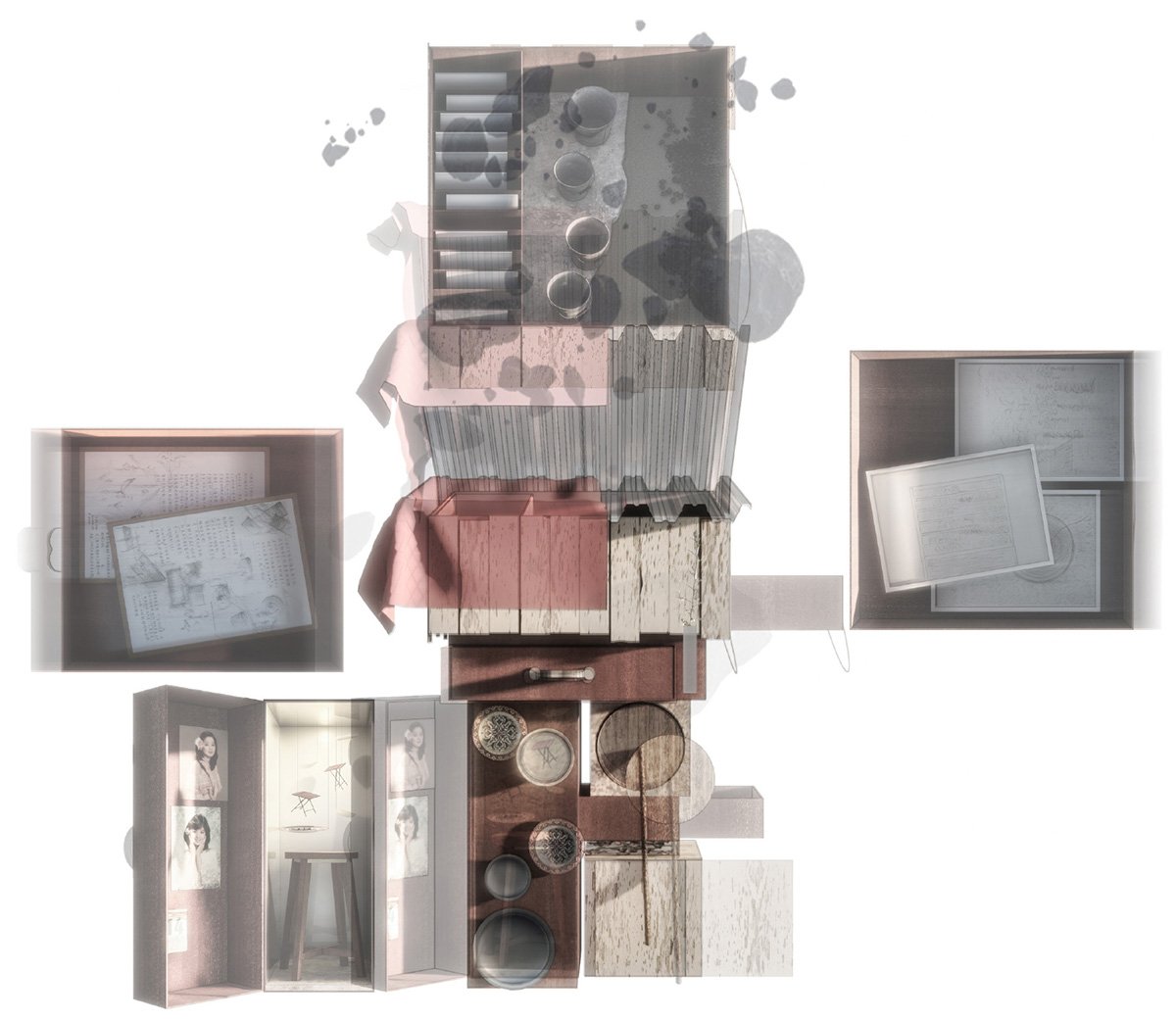
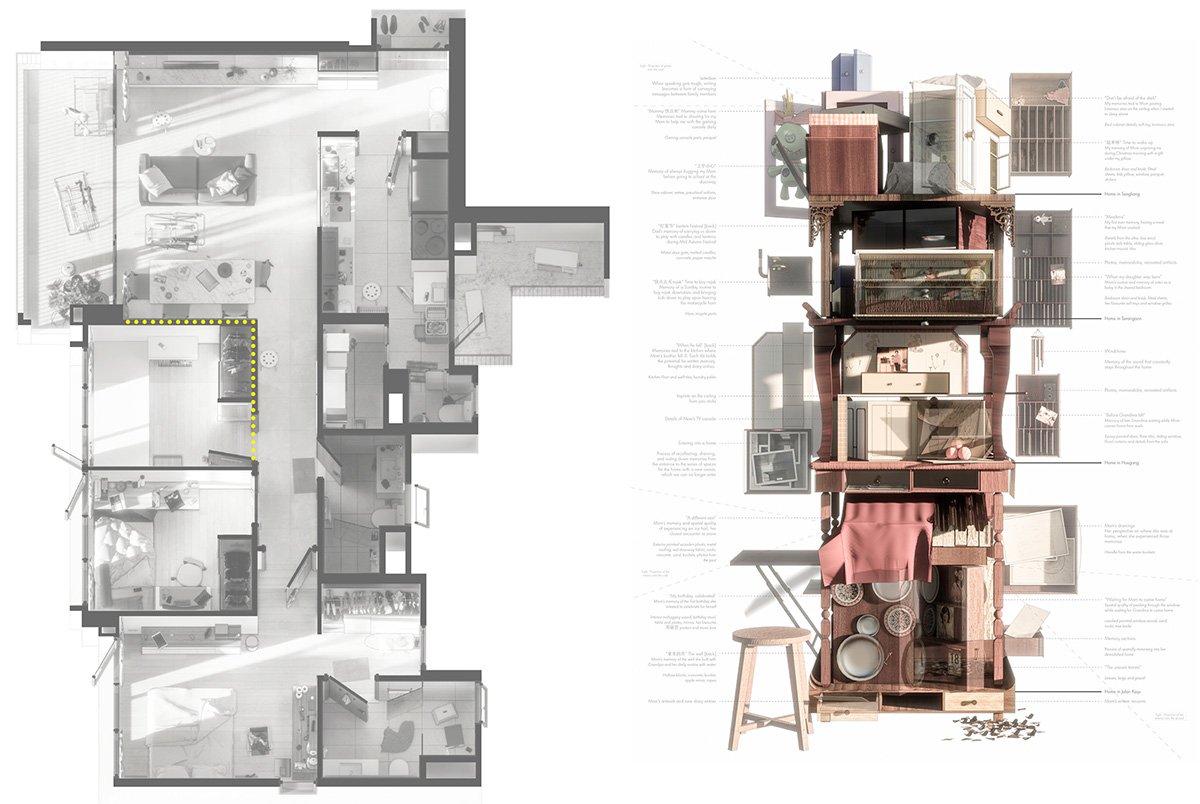
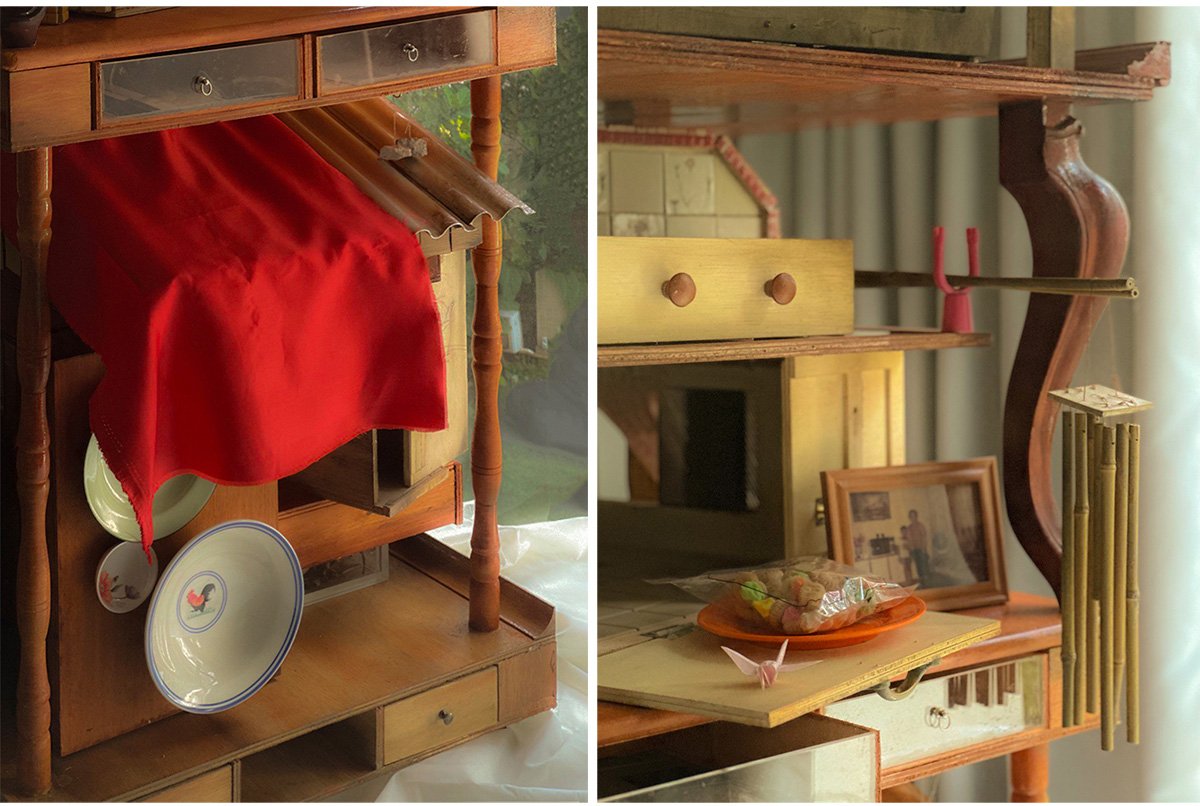
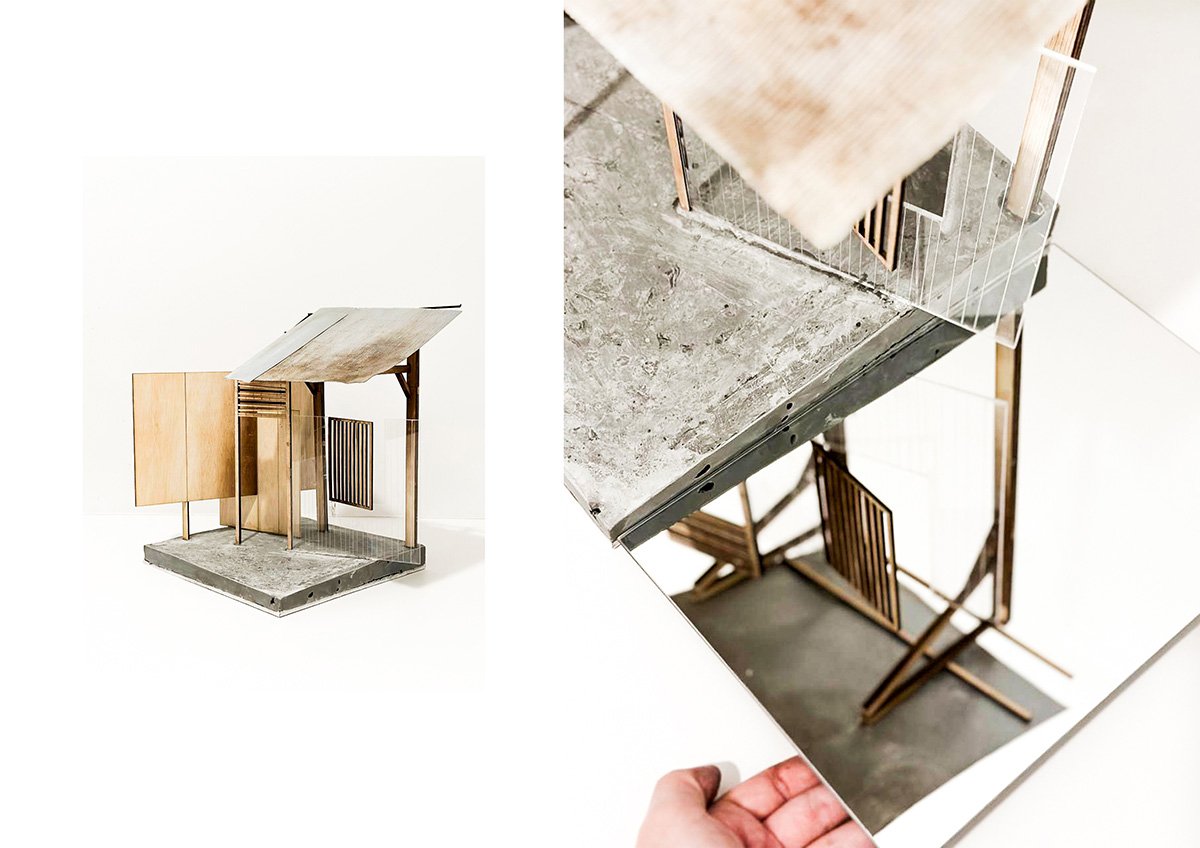
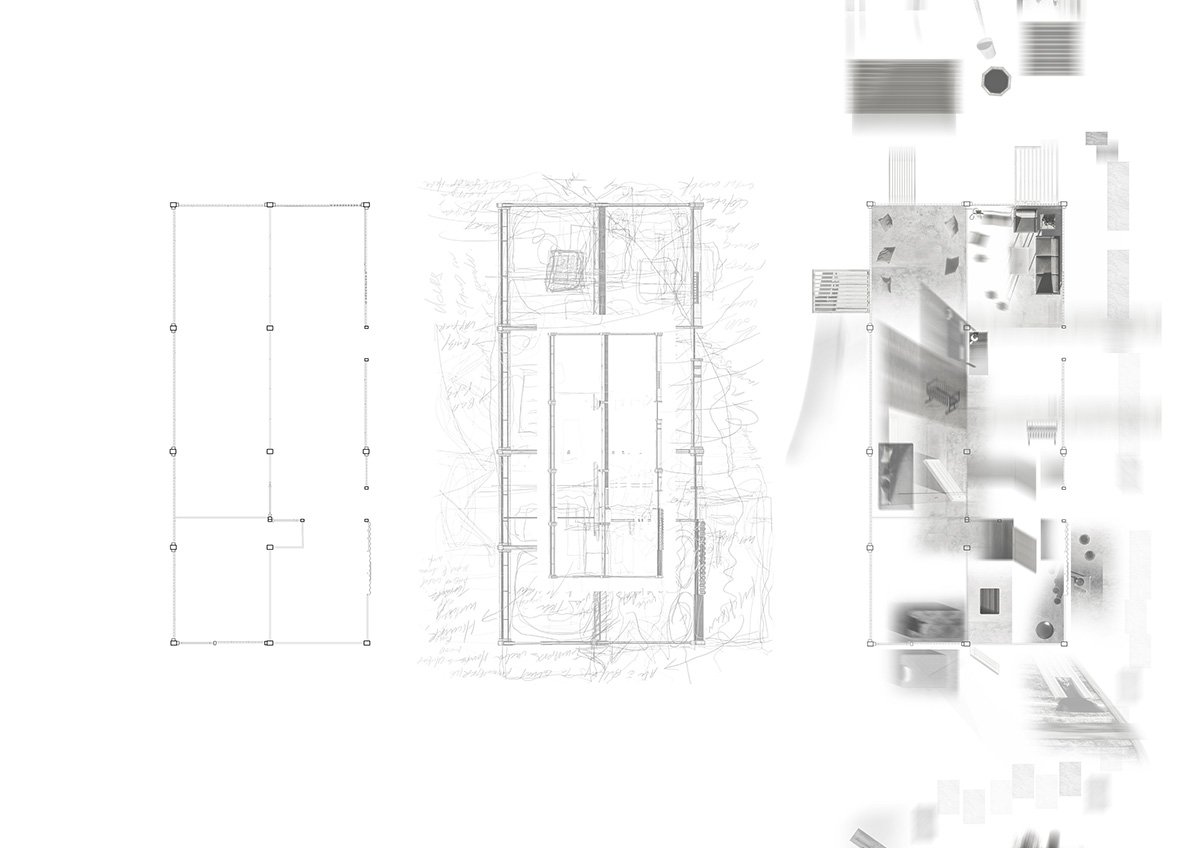
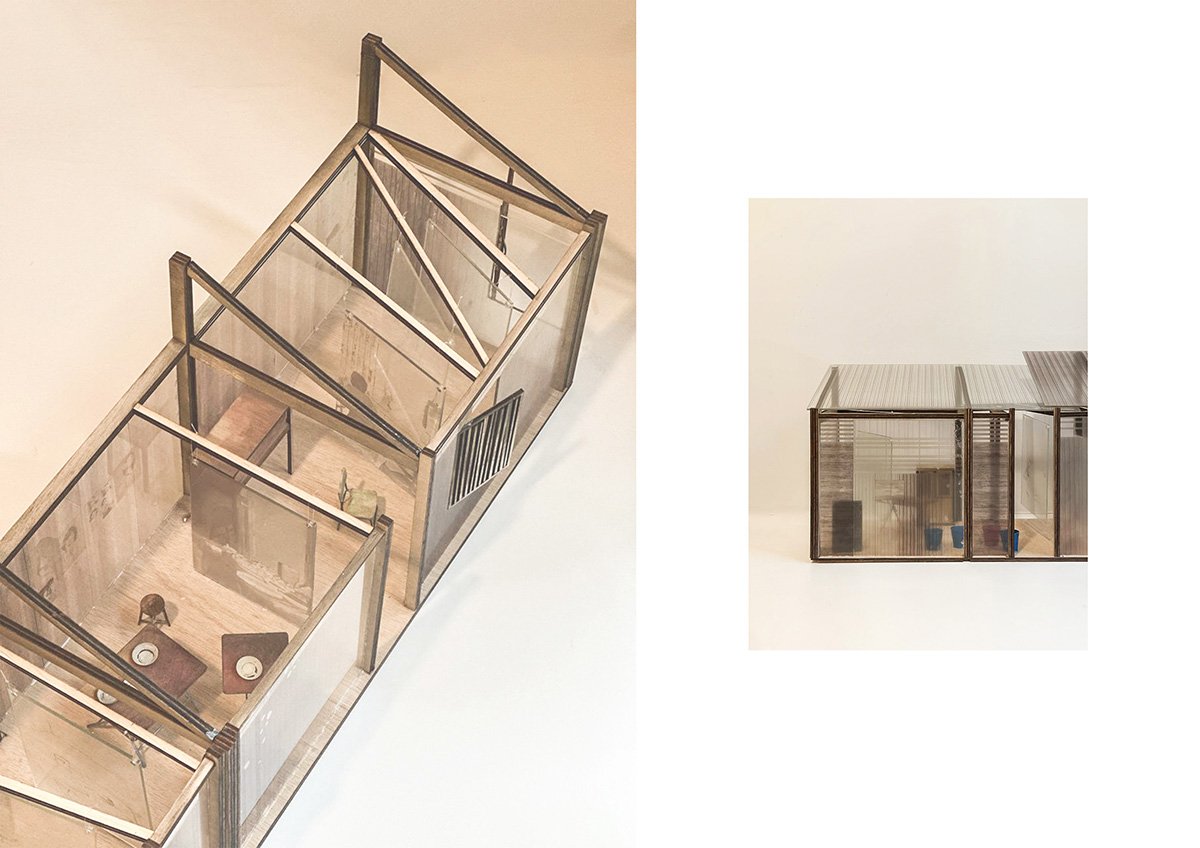
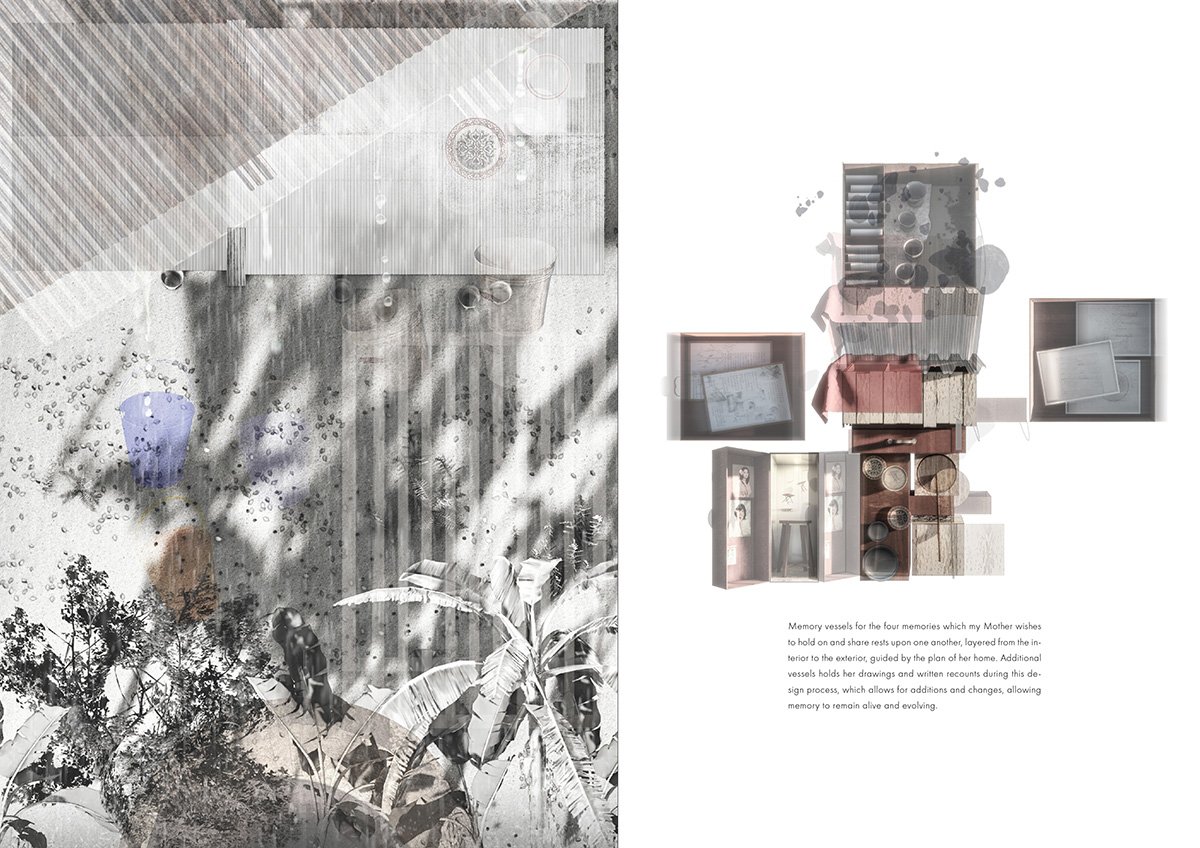
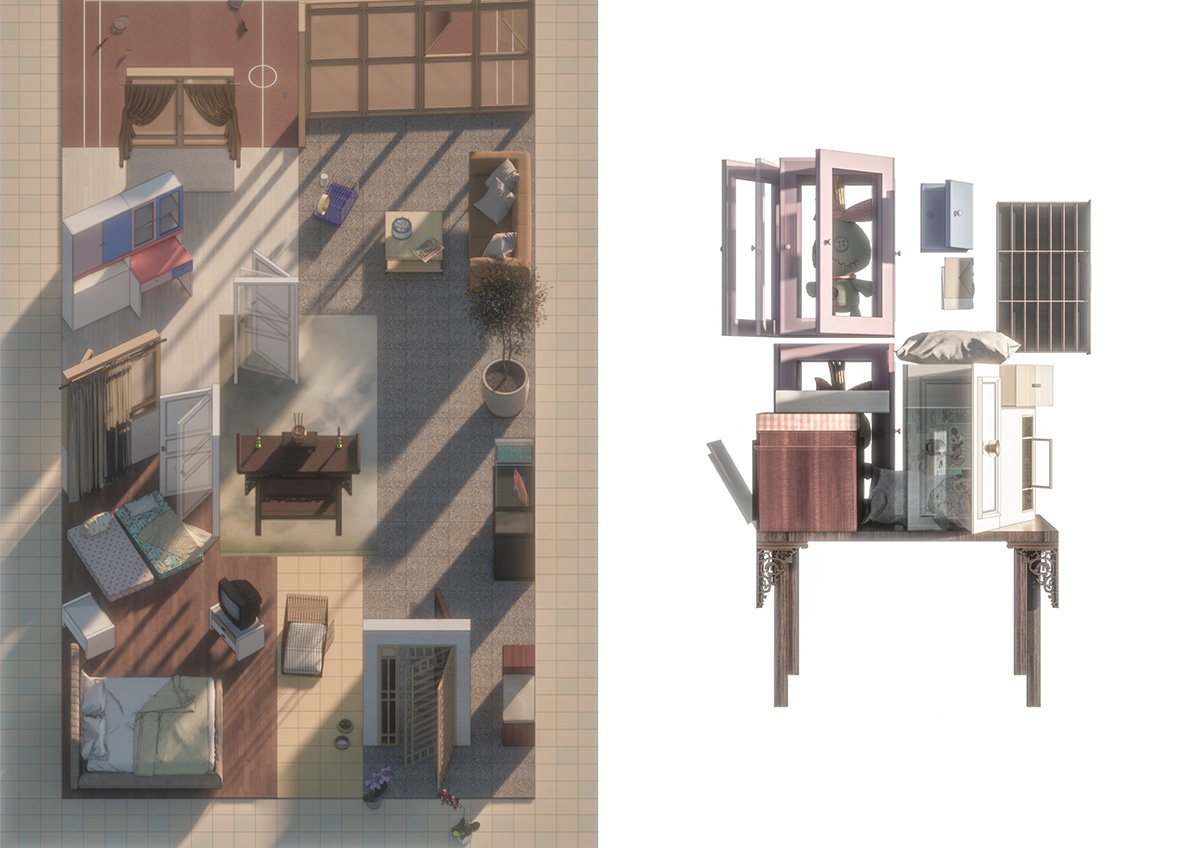
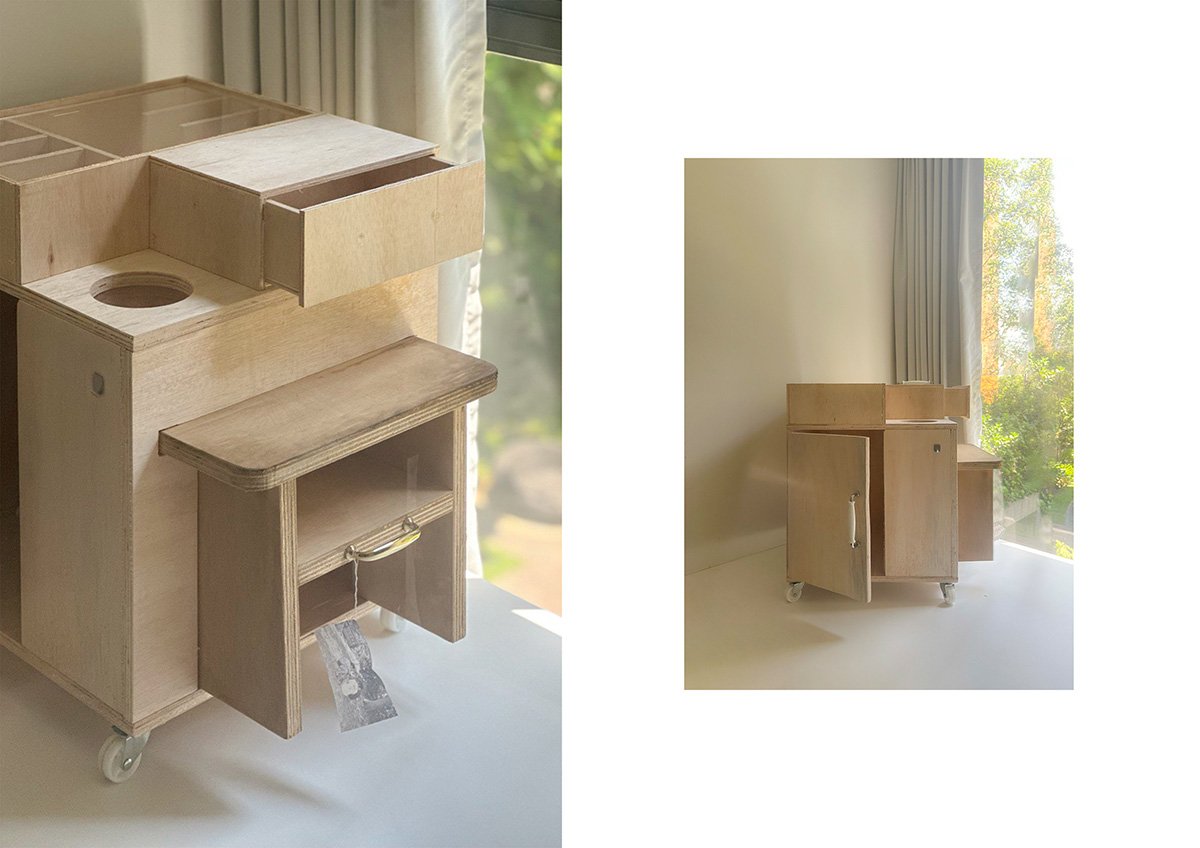
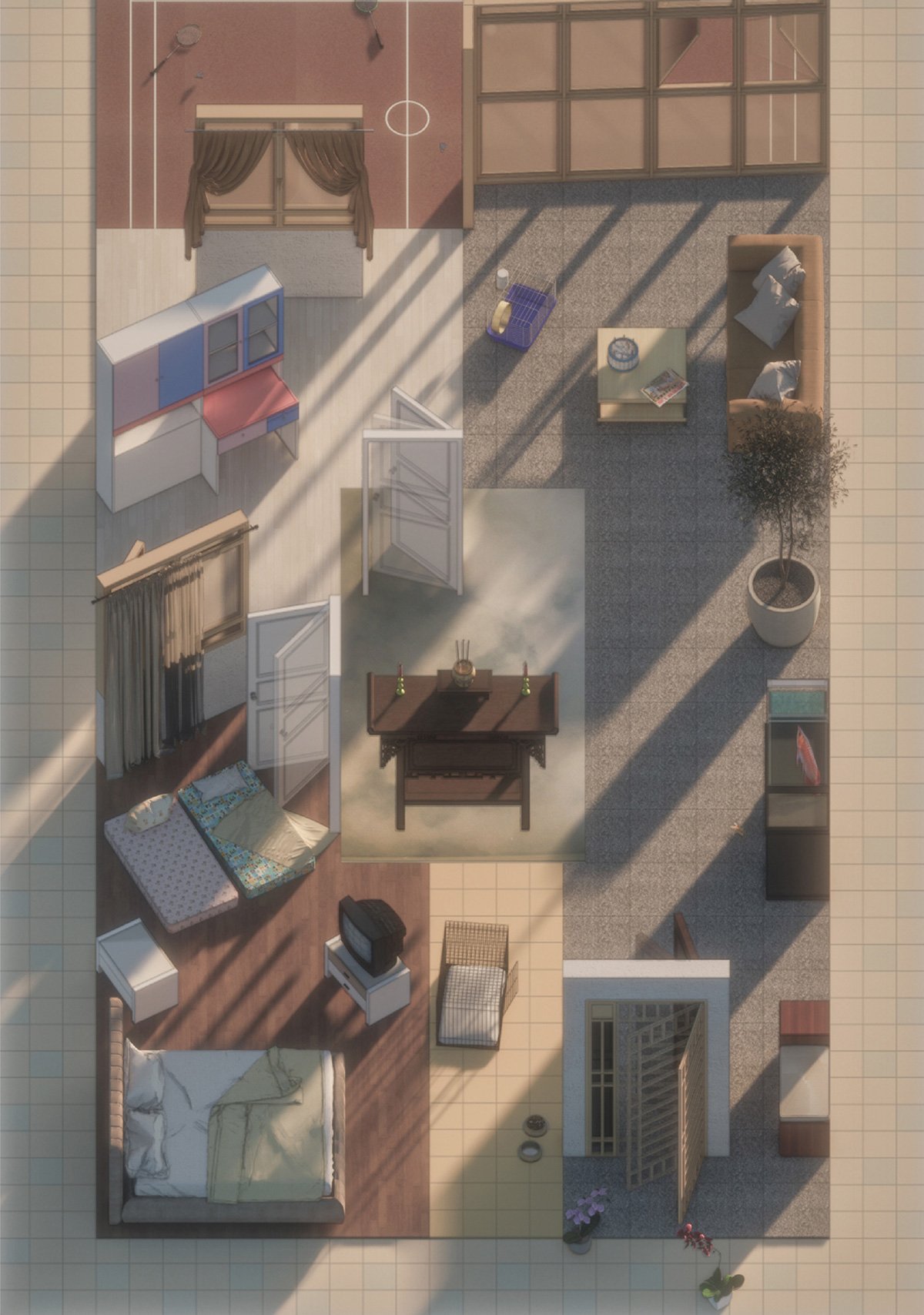
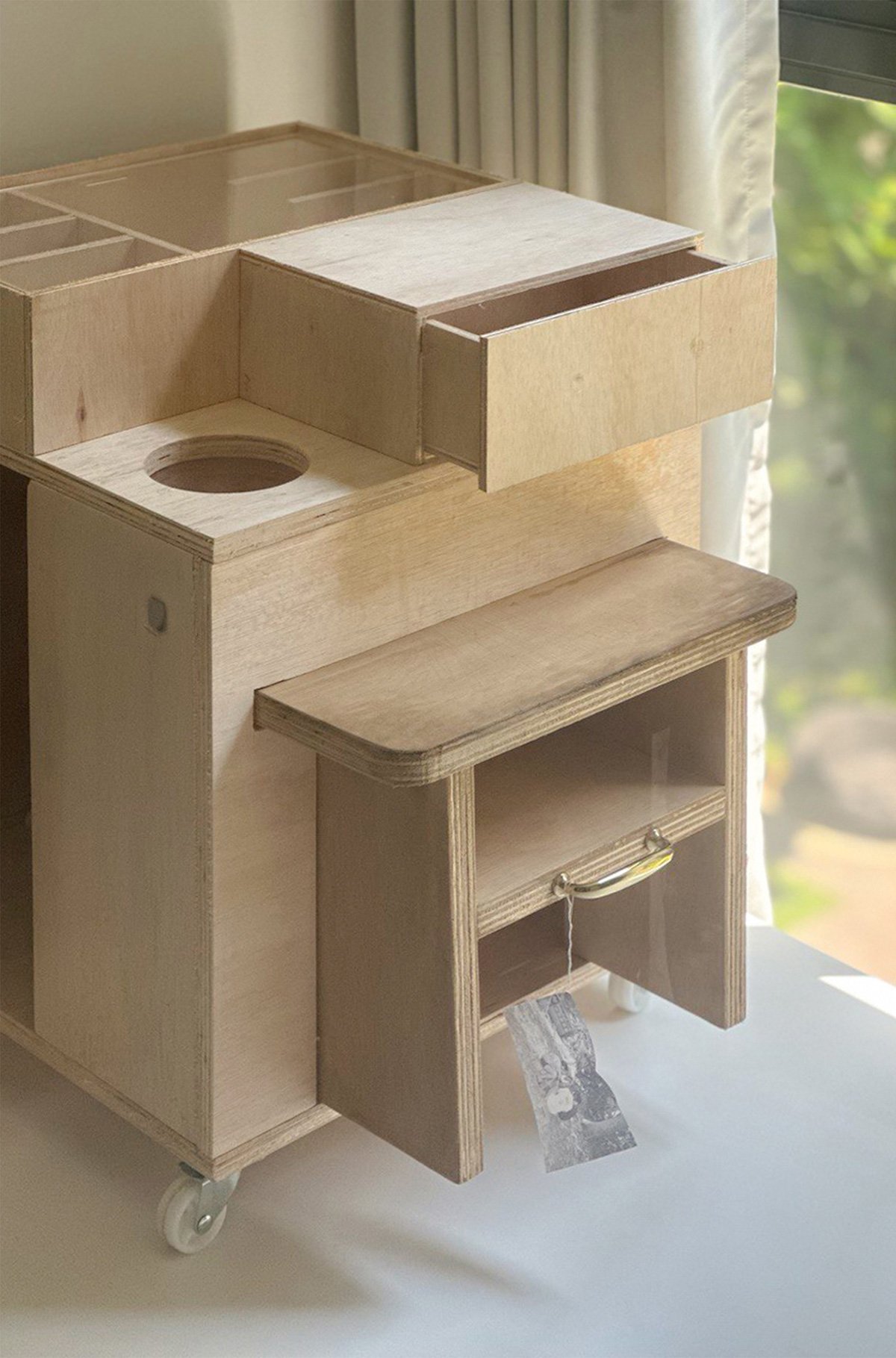
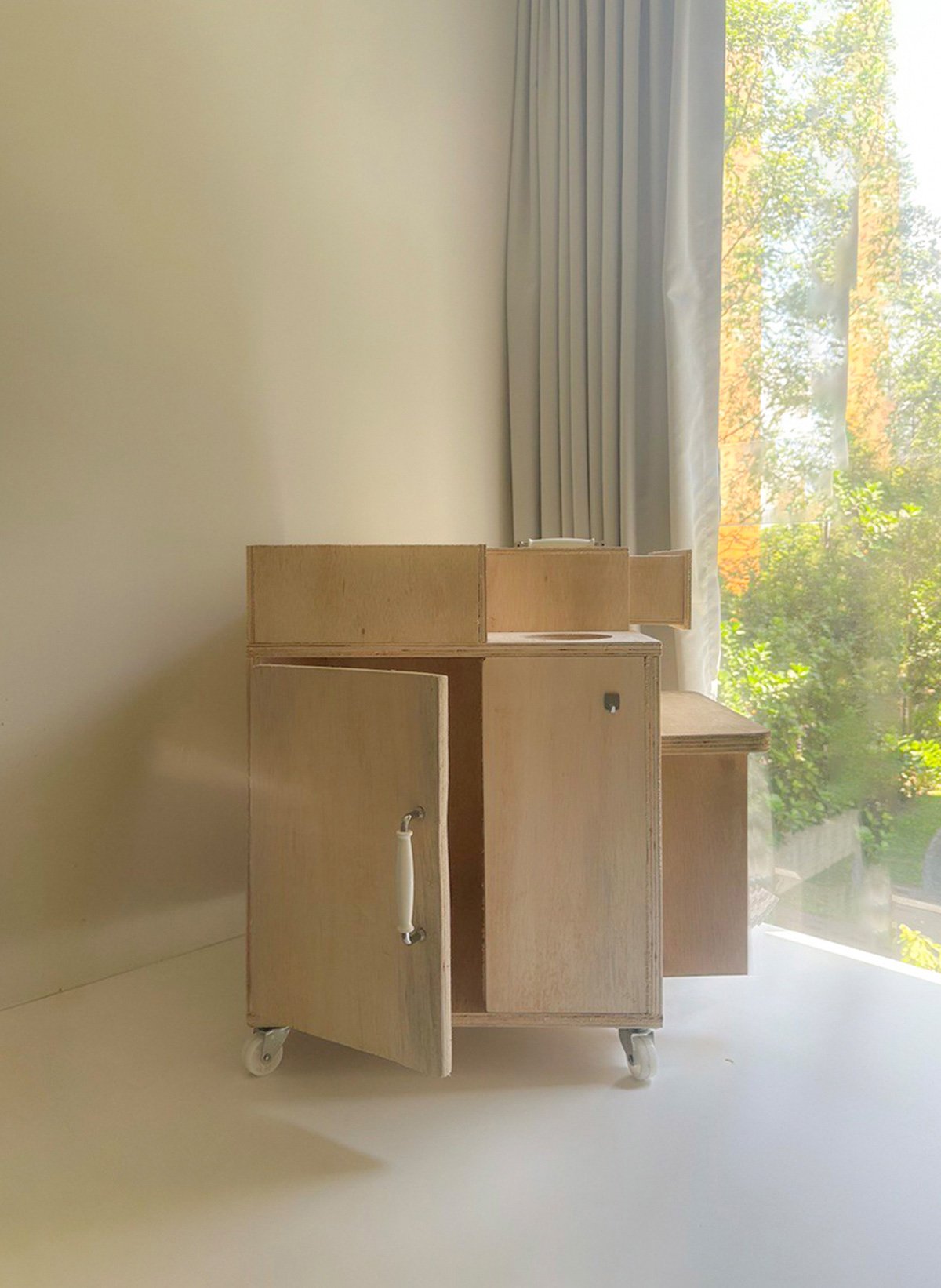
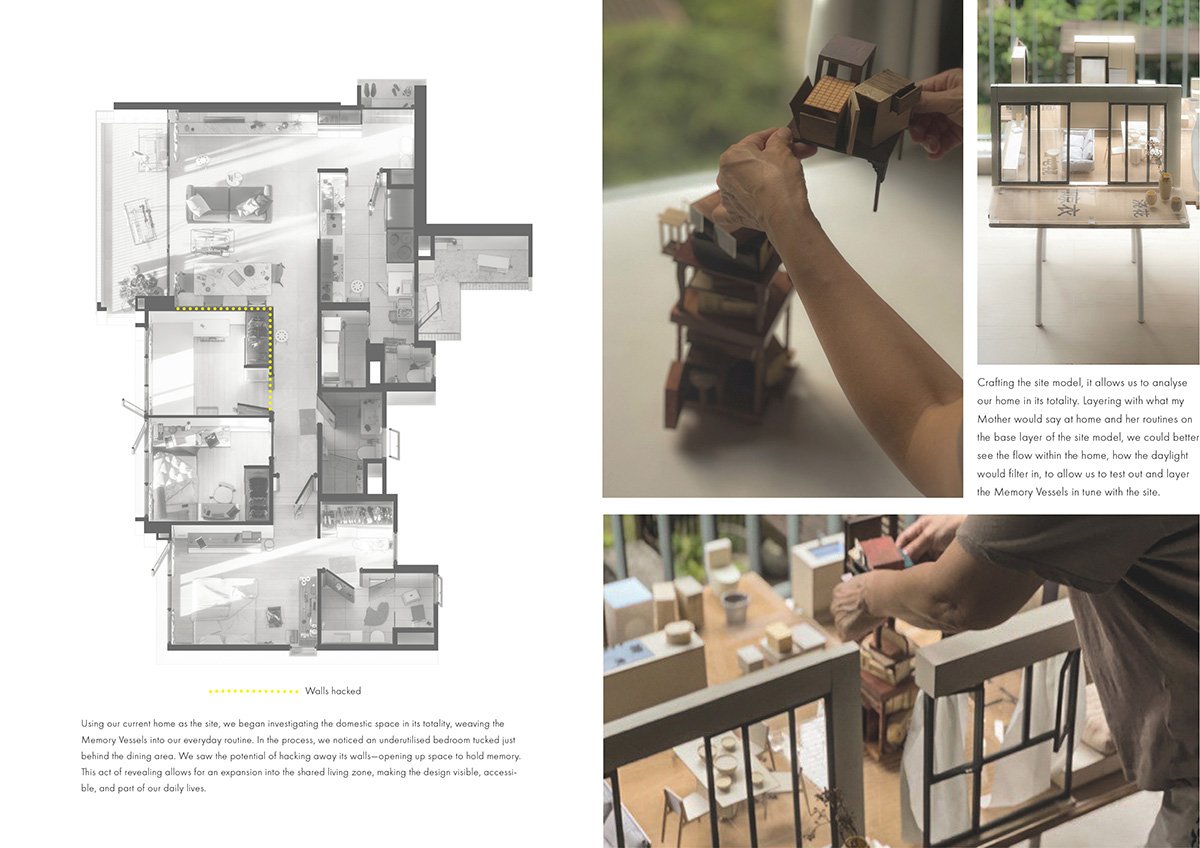
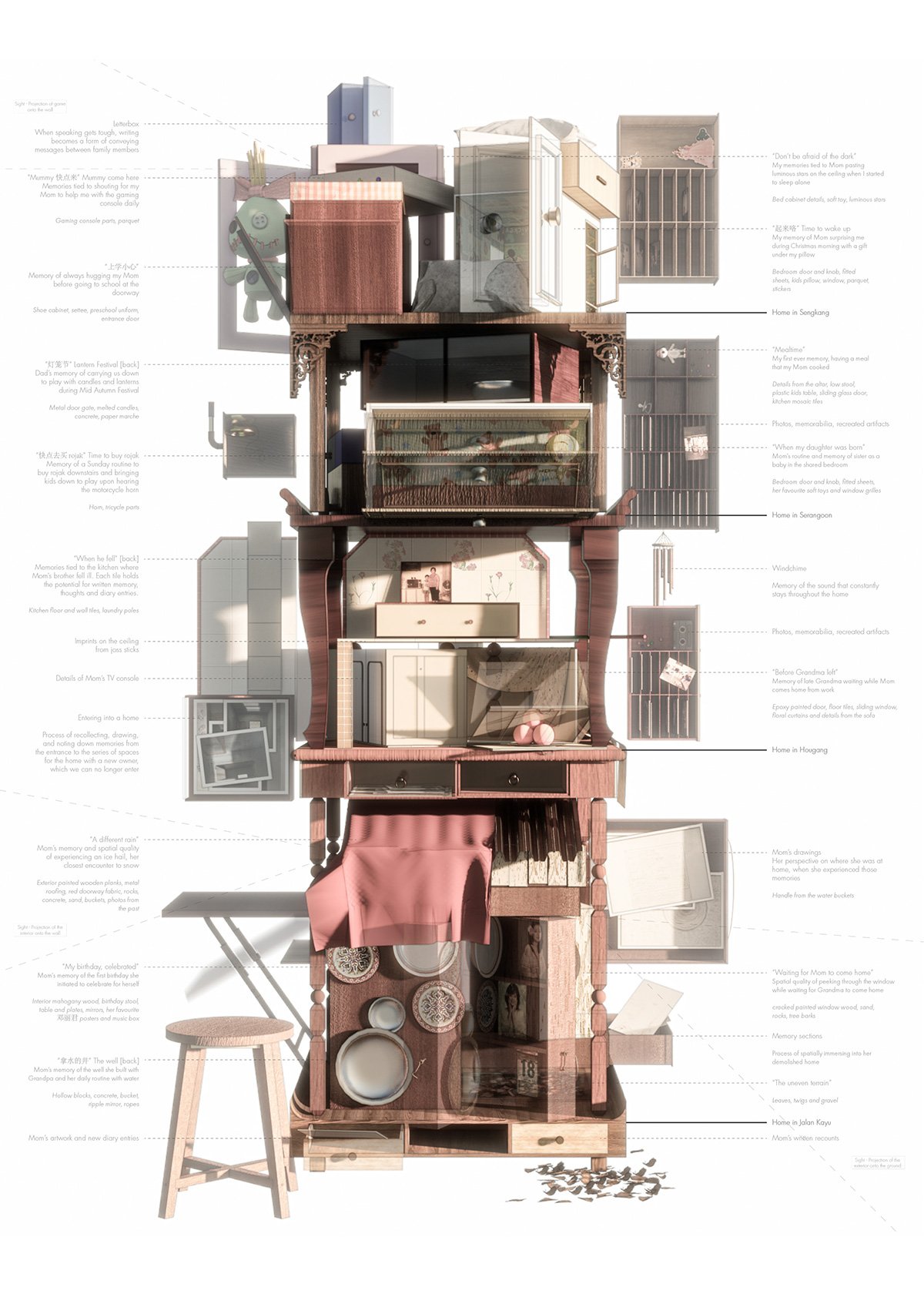
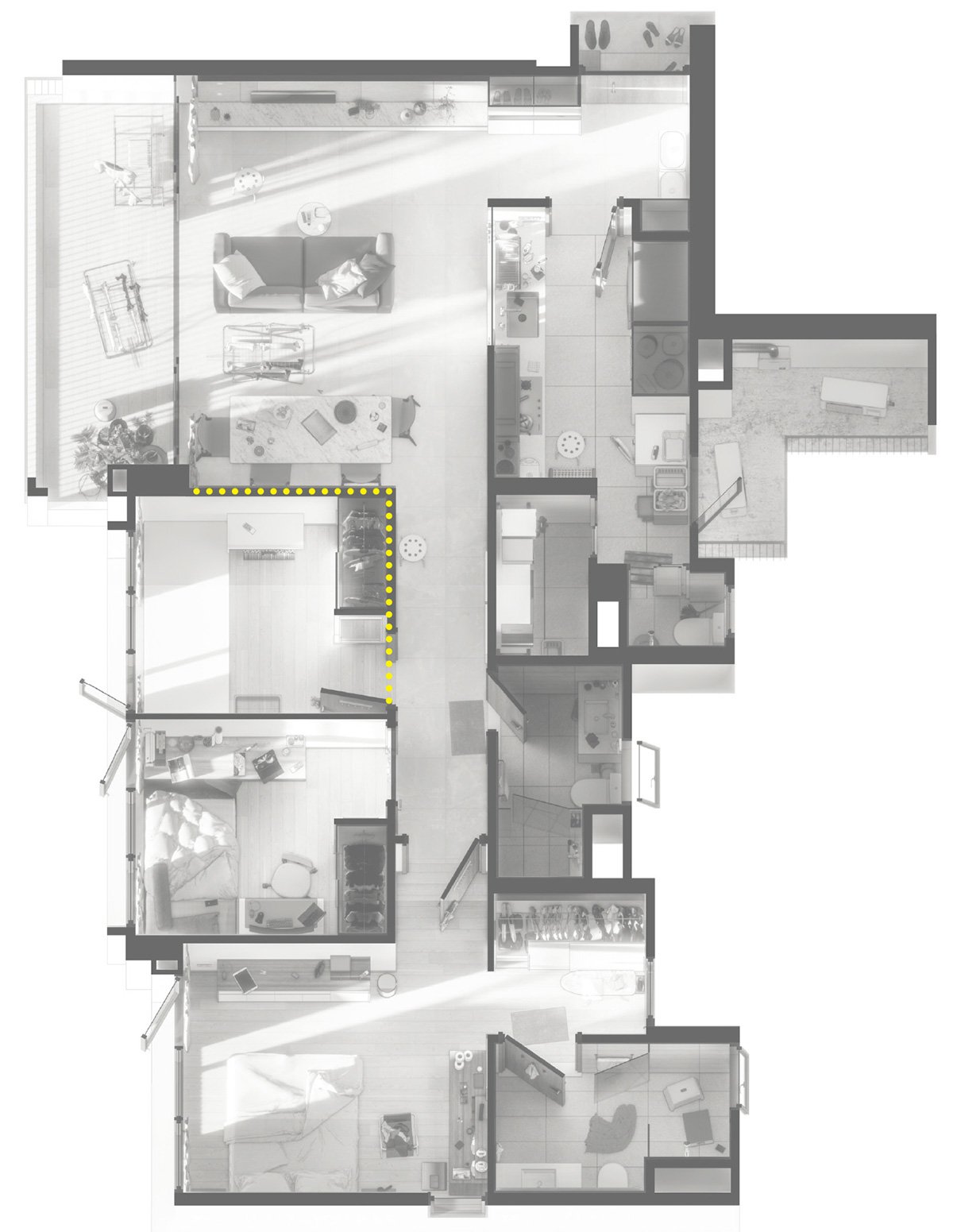
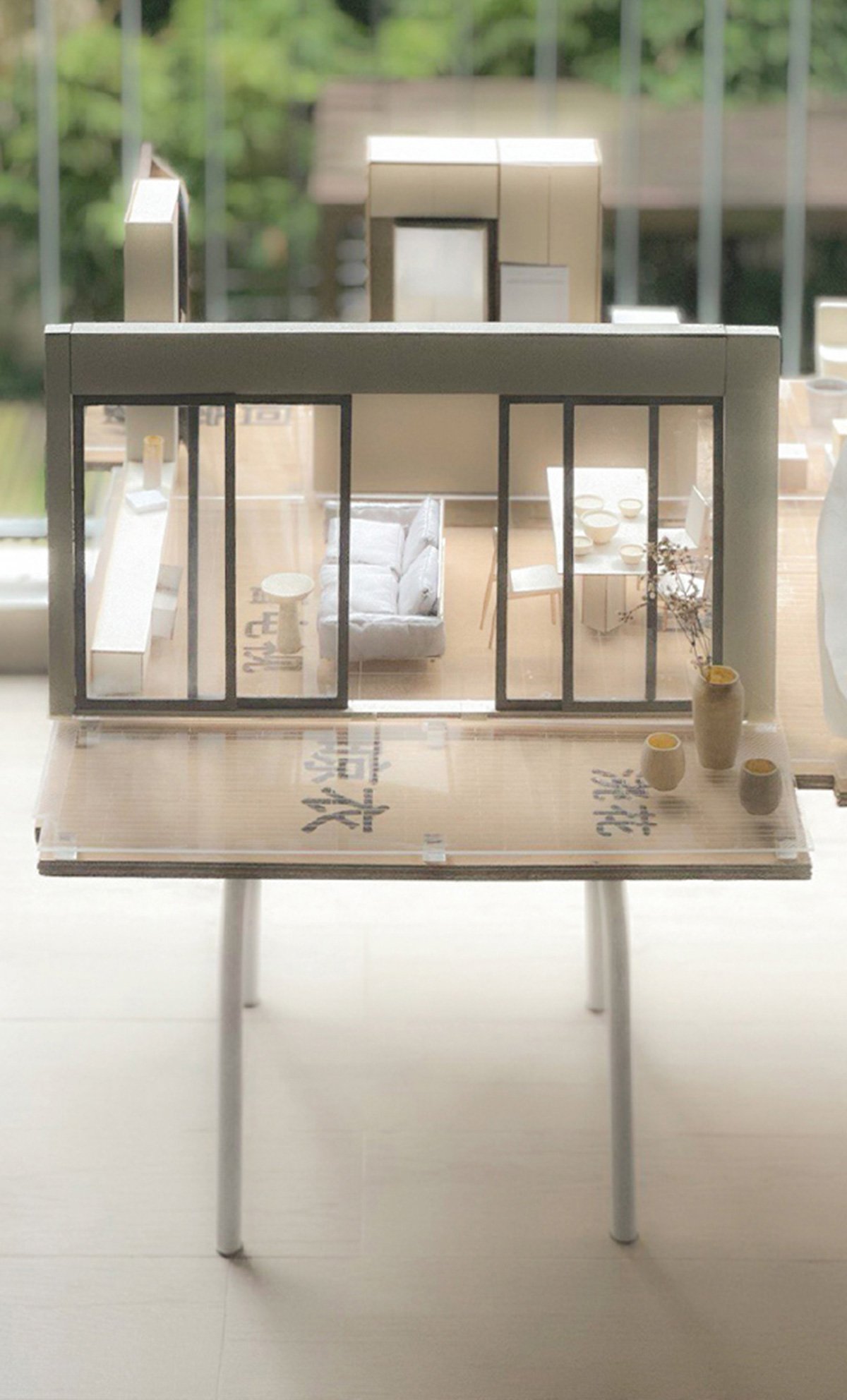
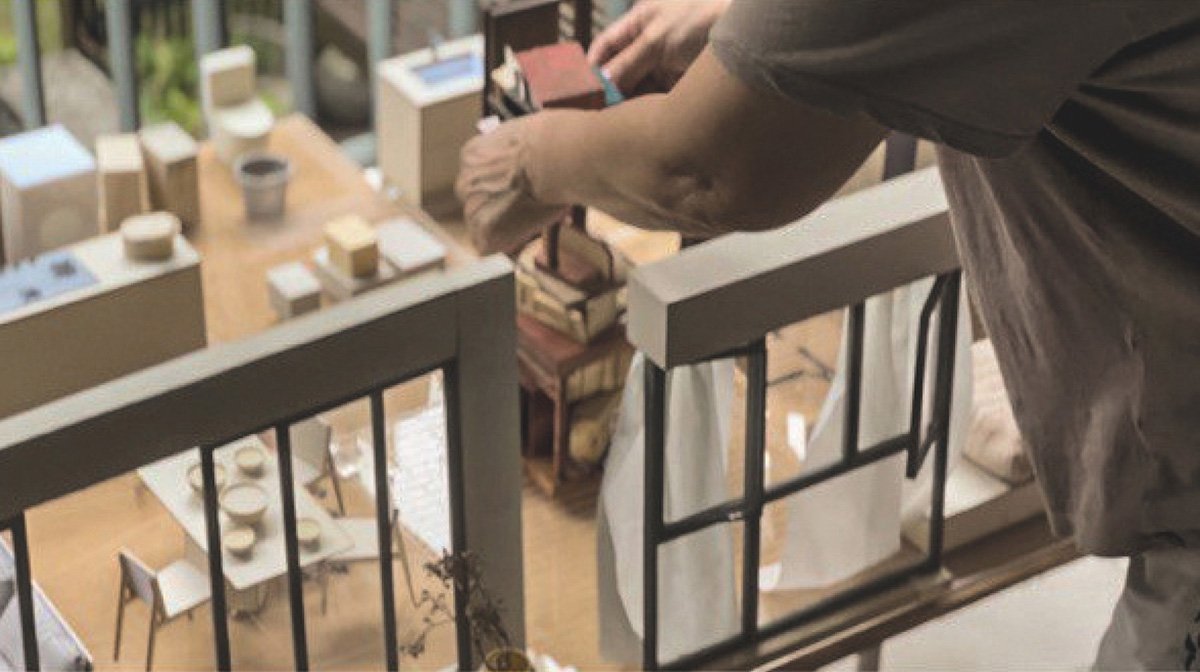
Intervention in our current home and site model to analyze and orientate the memory vessels | Digital Drawing Of Final DesignFinal Model | Intervention in our current home and site model to analyze and orientate the memory vessels
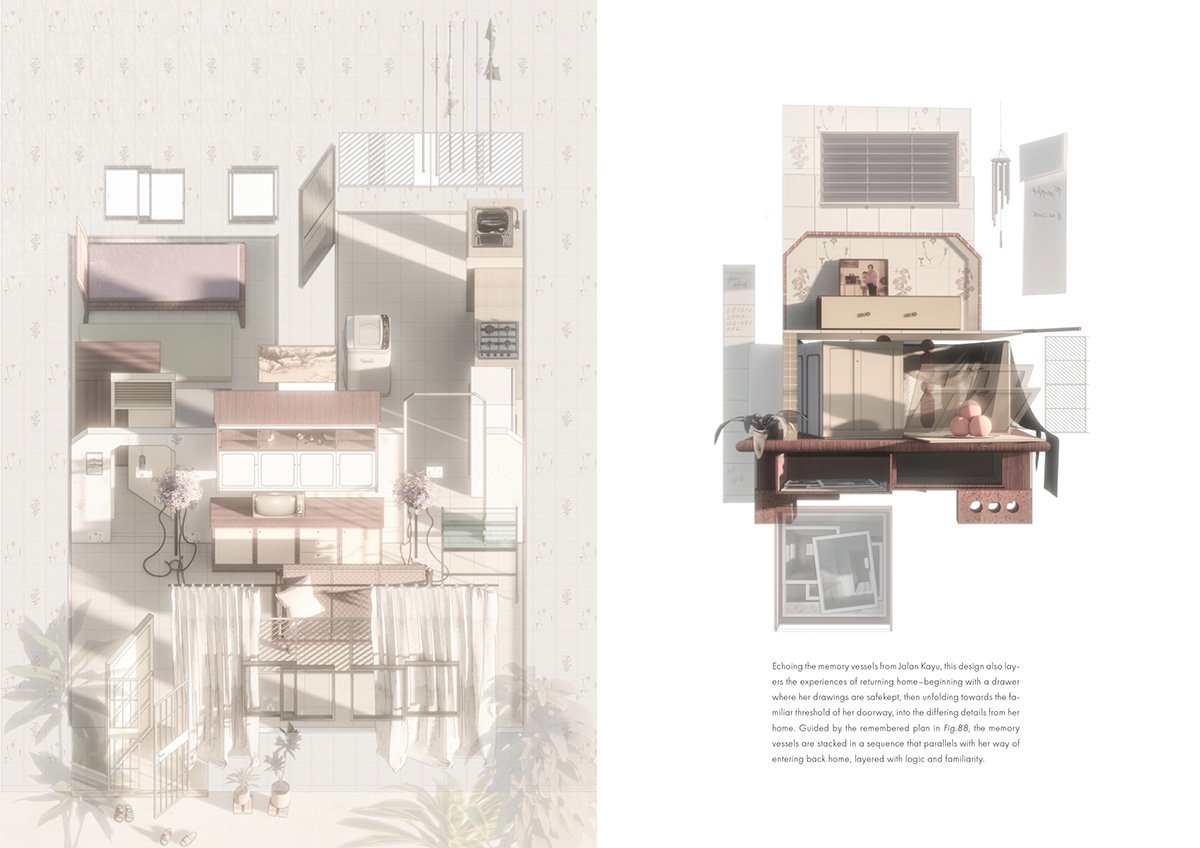
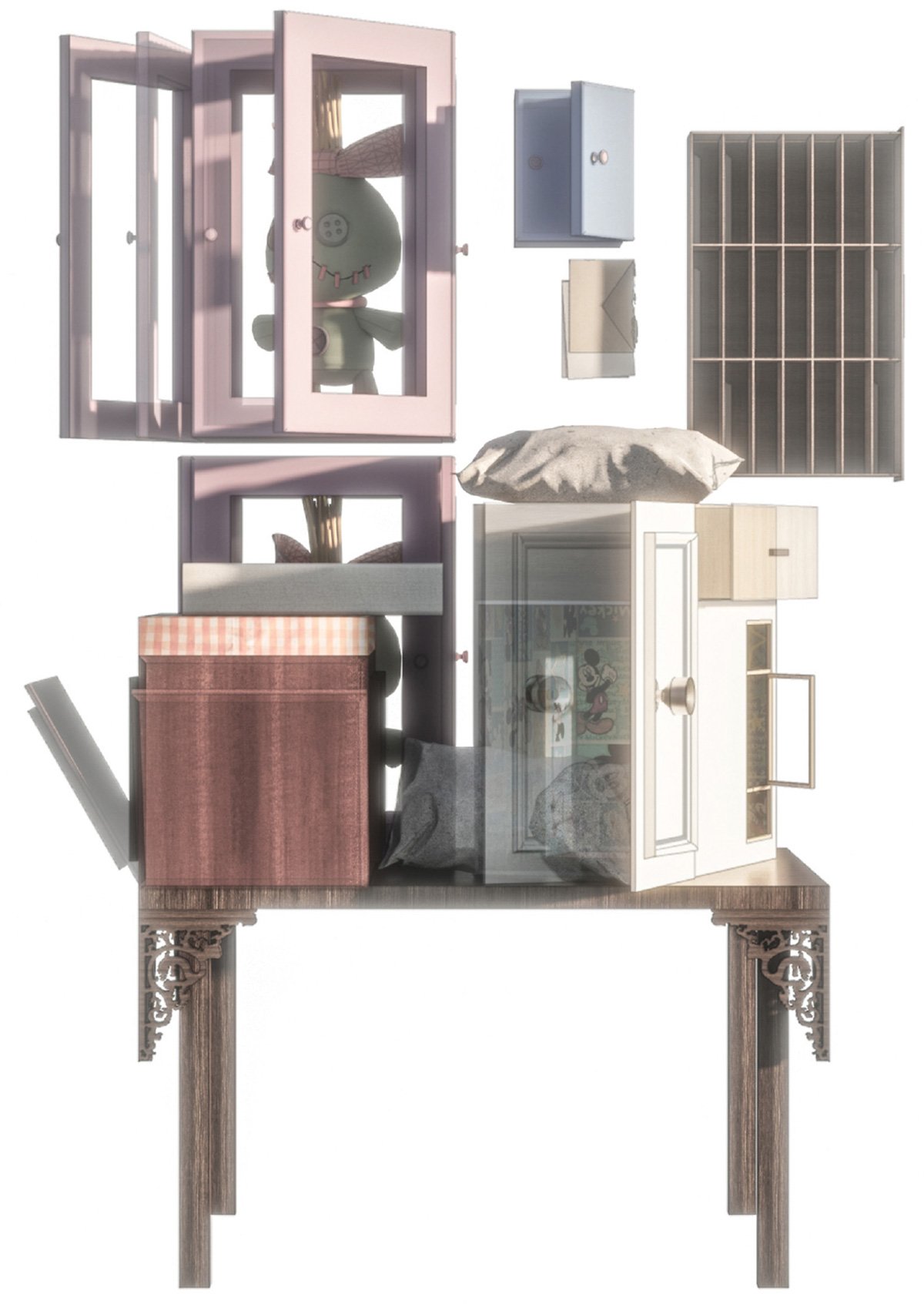
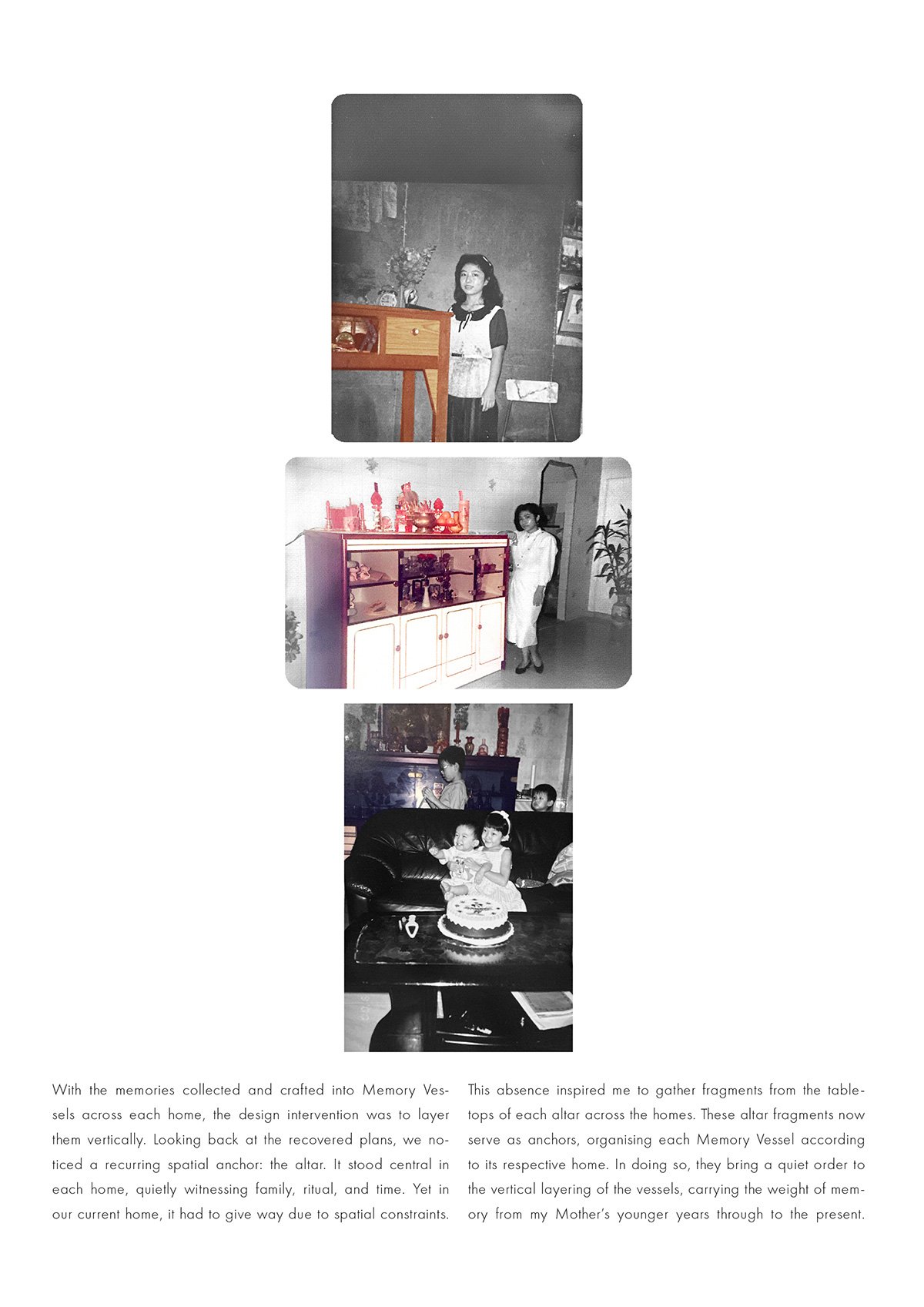
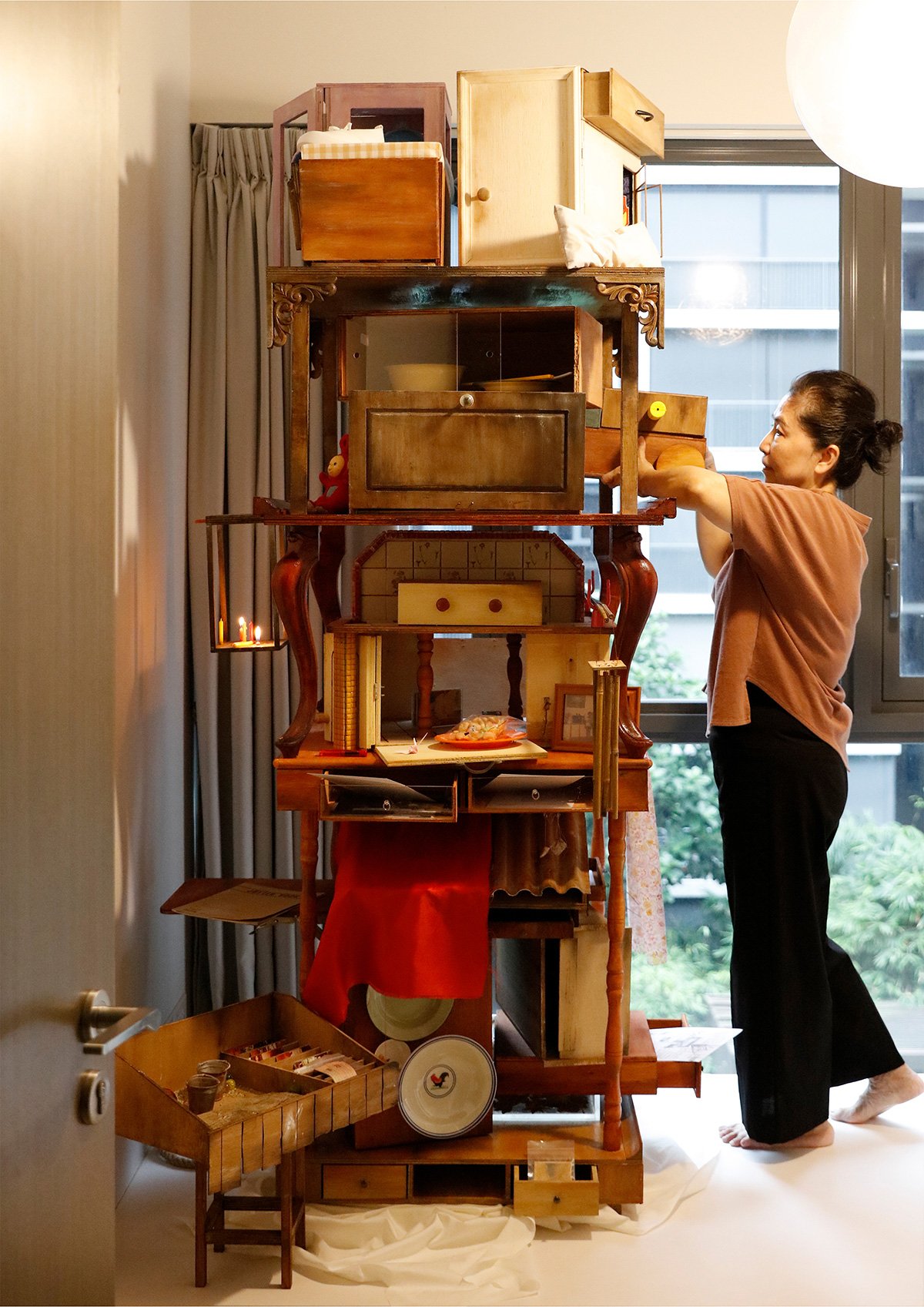
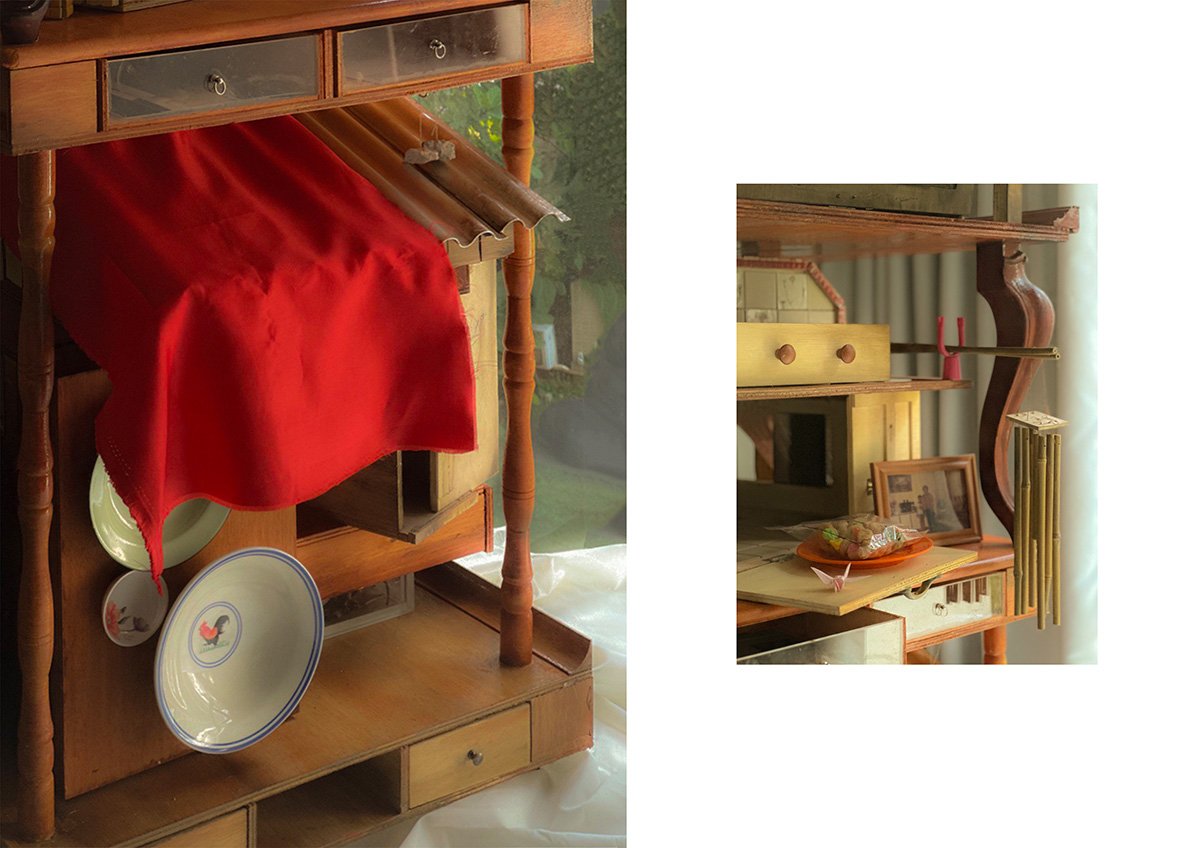
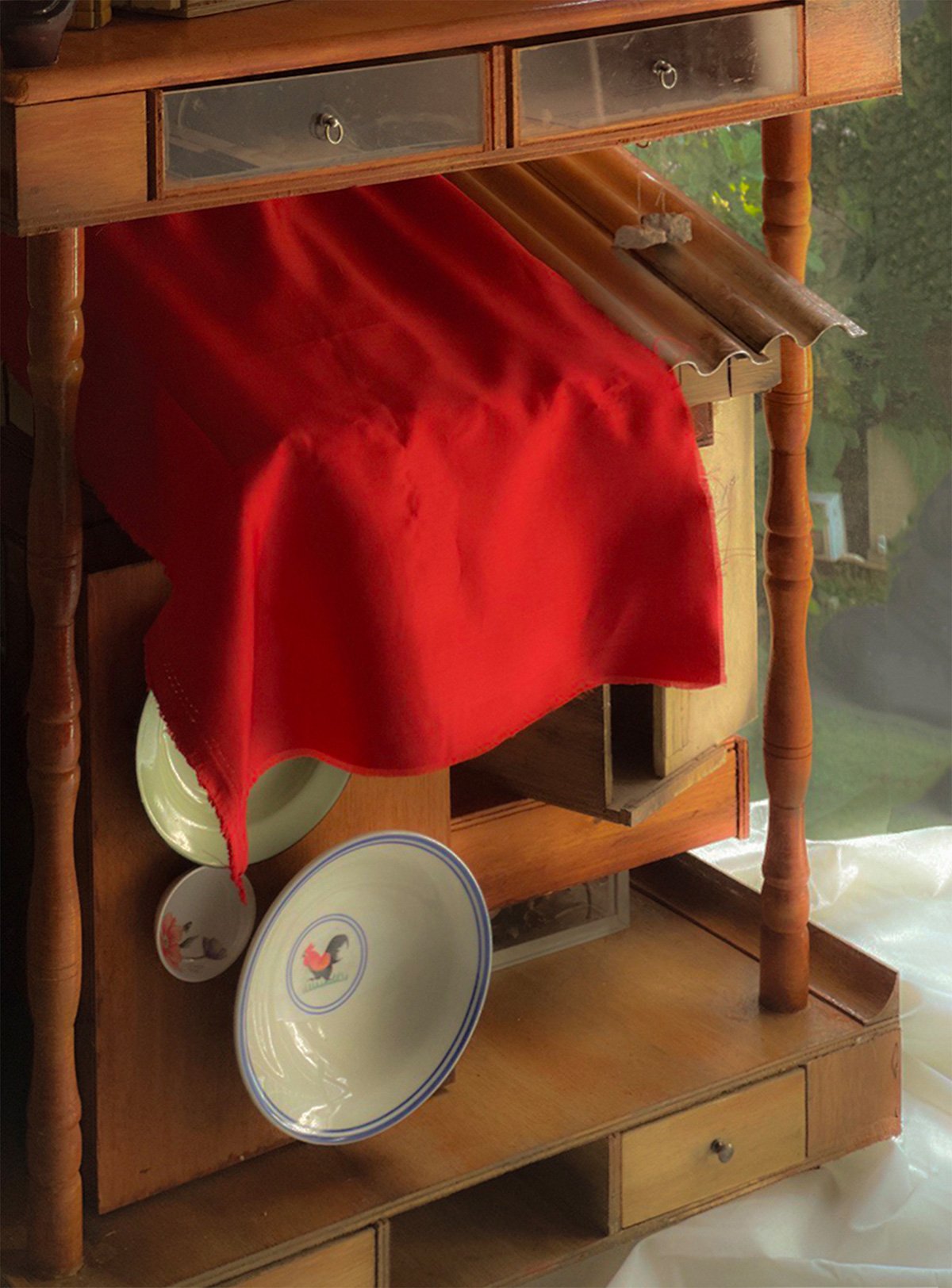
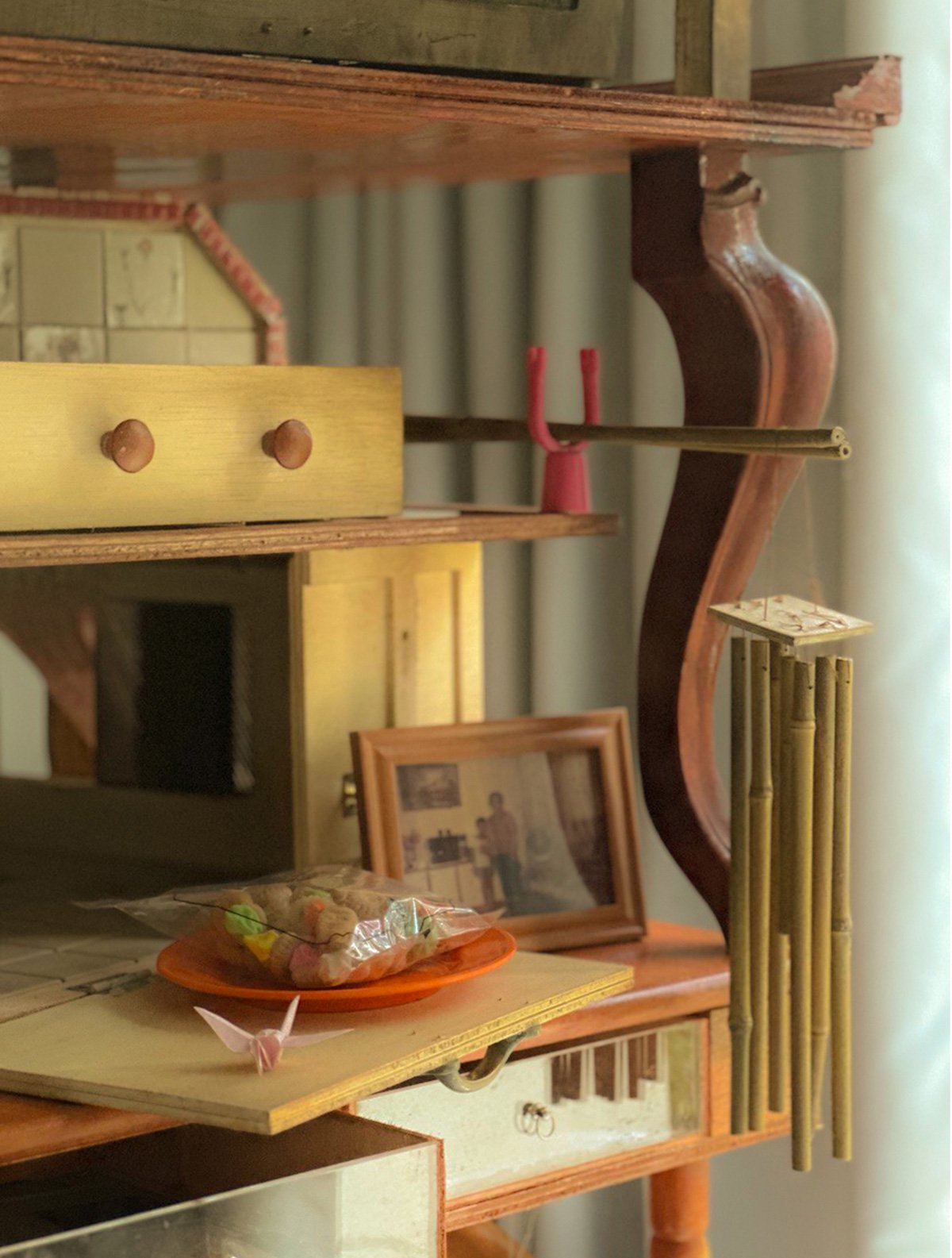
As we collected the fragments along the way through each of her homes, we needed a way to organize them in our current living space. Across all her past homes, the altar stood central, a quiet witness to family and time. The design intervention gathers fragments from each altar across the homes as a way to organize the memories within our present home, stacking them from her younger years to adulthood. We envisioned the hacking of an underutilized bedroom, an expansion of our public living space where each memory vessel is carefully layered and oriented in tune with the site, where daylight can filter through, and where the wind might gently sound a chime.
Final Model
Conclusion: Ultimately, this project shows how design can preserve fading memories by transforming a Mother’s recollections of past homes into tangible vessels within the present one. In doing so, it proposes a quiet, intimate method for holding onto personal histories before they slip away.
[This Academic Project has been published with text and images submitted by the student]
Site Context
Design Process
Final Outcome
To submit your academic project for publication at ArchiDiaries, please visit the following link >> Submit
Get the best of ArchiDiaries, directly in your inbox.
We use cookies on our website to give you the most relevant experience by remembering your preferences and repeat visits. By clicking “Accept All”, you consent to the use of ALL the cookies. However, you may visit "Cookie Settings" to provide a controlled consent.
This website uses cookies to improve your experience while you navigate through the website. Out of these, the cookies that are categorized as necessary are stored on your browser as they are essential for the working of basic functionalities of the website. We also use third-party cookies that help us analyze and understand how you use this website. These cookies will be stored in your browser only with your consent. You also have the option to opt-out of these cookies. But opting out of some of these cookies may affect your browsing experience.
Necessary cookies are absolutely essential for the website to function properly. These cookies ensure basic functionalities and security features of the website, anonymously.
Cookie
Duration
Description
cookielawinfo-checkbox-analytics
11 months
This cookie is set by GDPR Cookie Consent plugin. The cookie is used to store the user consent for the cookies in the category "Analytics".
cookielawinfo-checkbox-functional
11 months
The cookie is set by GDPR cookie consent to record the user consent for the cookies in the category "Functional".
cookielawinfo-checkbox-necessary
11 months
This cookie is set by GDPR Cookie Consent plugin. The cookies is used to store the user consent for the cookies in the category "Necessary".
cookielawinfo-checkbox-others
11 months
This cookie is set by GDPR Cookie Consent plugin. The cookie is used to store the user consent for the cookies in the category "Other.
cookielawinfo-checkbox-performance
11 months
This cookie is set by GDPR Cookie Consent plugin. The cookie is used to store the user consent for the cookies in the category "Performance".
viewed_cookie_policy
11 months
The cookie is set by the GDPR Cookie Consent plugin and is used to store whether or not user has consented to the use of cookies. It does not store any personal data.
Functional cookies help to perform certain functionalities like sharing the content of the website on social media platforms, collect feedbacks, and other third-party features.
Performance cookies are used to understand and analyze the key performance indexes of the website which helps in delivering a better user experience for the visitors.
Analytical cookies are used to understand how visitors interact with the website. These cookies help provide information on metrics the number of visitors, bounce rate, traffic source, etc.
Advertisement cookies are used to provide visitors with relevant ads and marketing campaigns. These cookies track visitors across websites and collect information to provide customized ads.