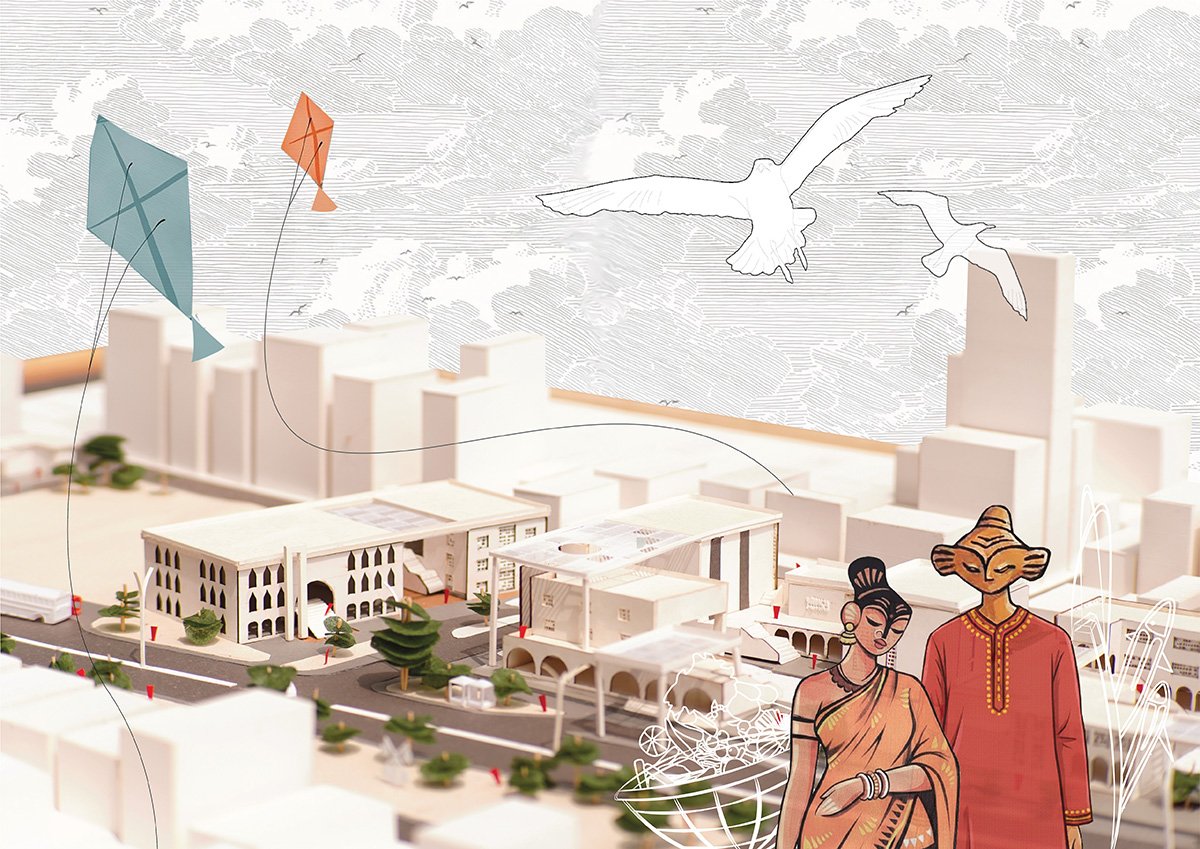
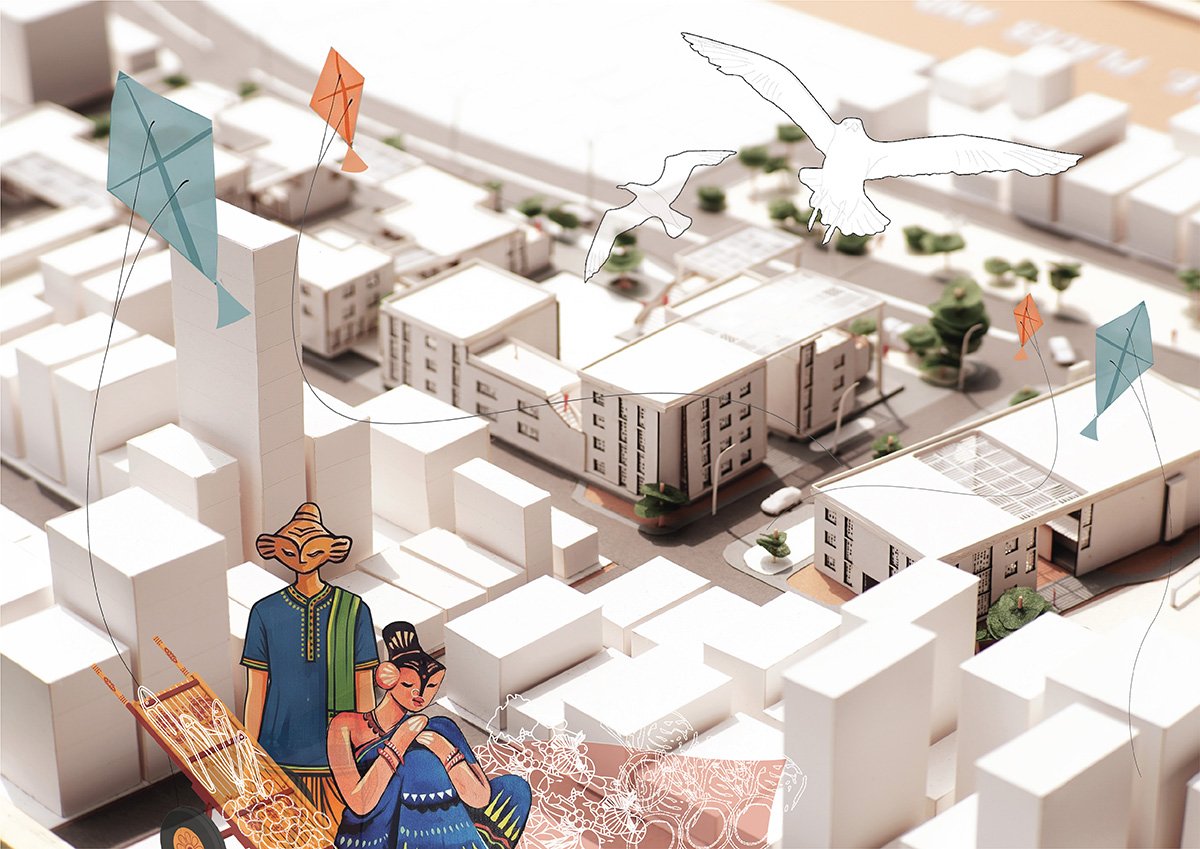
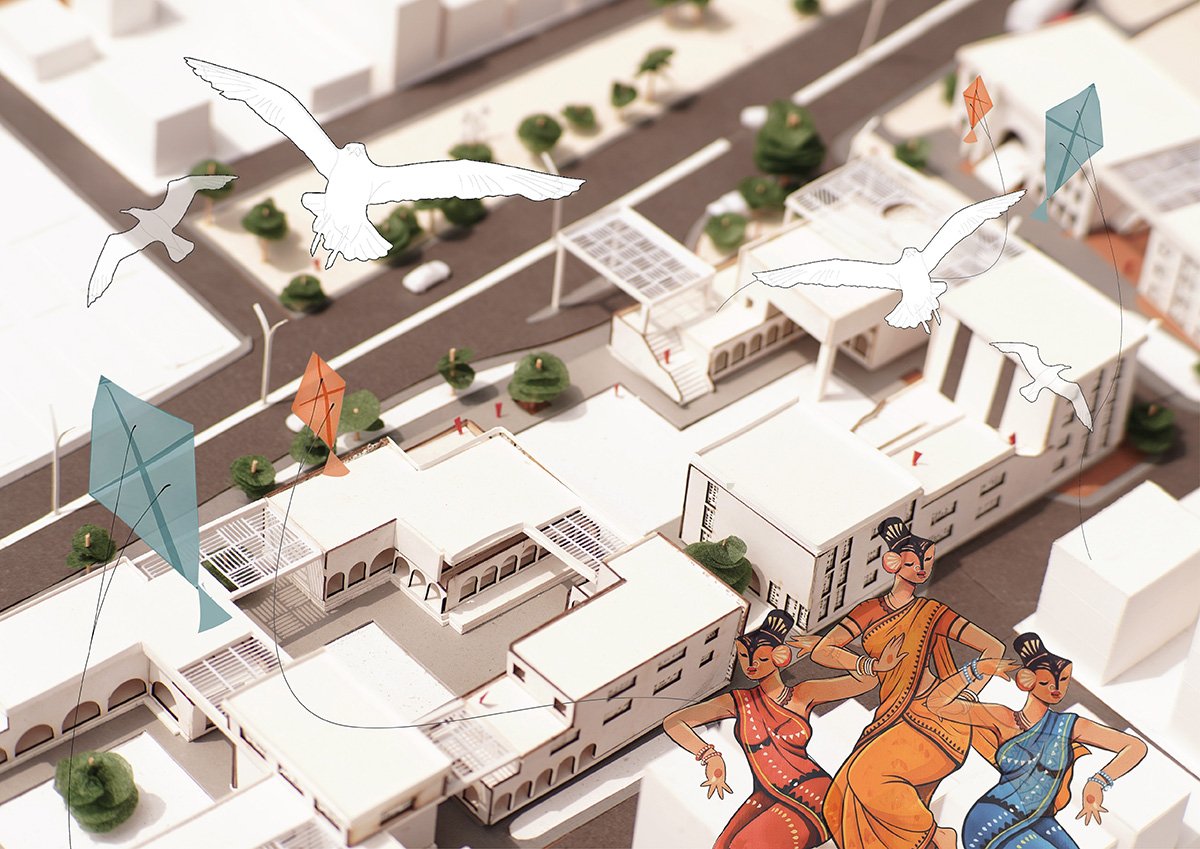
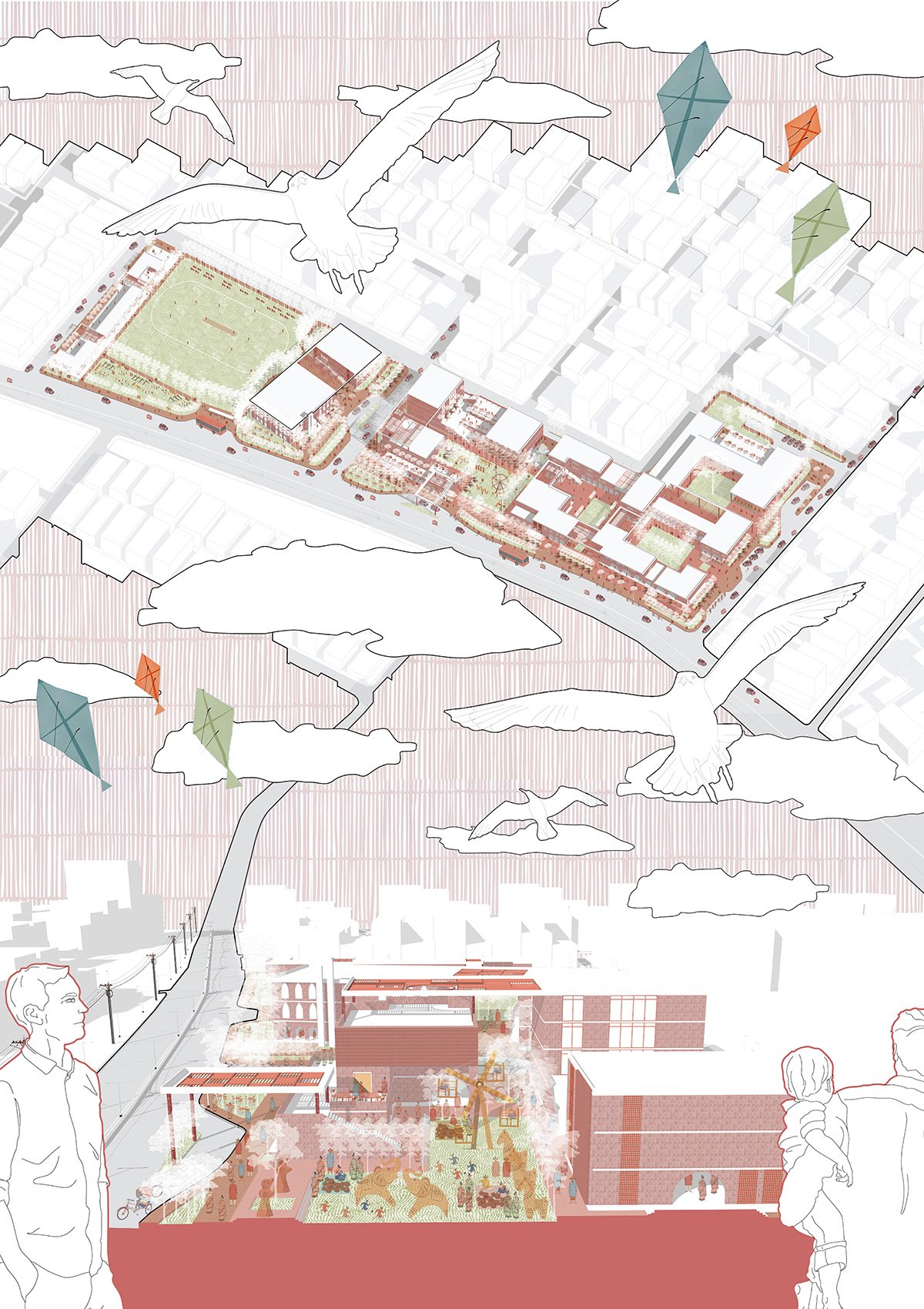
Home » Academic projects » Rethinking The Urban Façade Of Mohammadpur Town Hall Bazaar: Connecting People, Place And Architecture | Bachelors Design Project
Rethinking The Urban Façade Of Mohammadpur Town Hall Bazaar: Connecting People, Place And Architecture | Bachelors Design Project
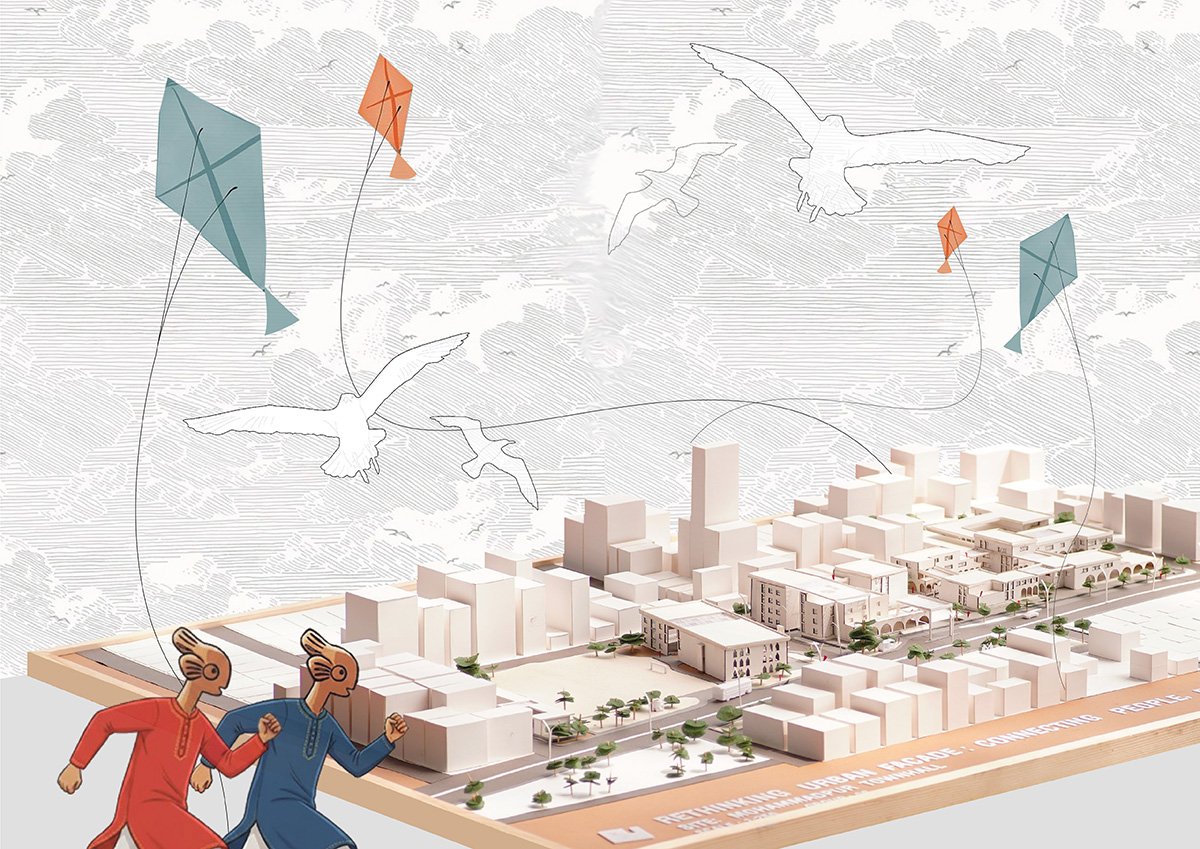
Excerpt: ‘Rethinking The Urban Facade Of Mohammadpur Town Hall Bazaar’ is an architectural urban design studio project by Adib Bin Abrar, Asfat Islam Abir, Nadira Anjum Neeha, & Wasifa Nusrat Shamma from the ‘Department of Architecture – Military Institute of Science and Technology.’ The project aims to restore Mohammadpur Town Hall Bazaar’s cultural identity by redesigning the everyday activity in a more organized way and form. Through a network of channeling functional activities gradually in a form—the bazaar, the civic building, and the local and artisan spaces—the project re-established the bazaar as a celebration of daily activities.
Introduction: This academic urban design proposal reimagines the existing Town Hall Bazaar of Mohammadpur as an inclusive, sustainable, participatory, and culturally vibrant civic space. More than a commodity hub, the envisioned marketplace celebrates the ethos of inclusive transaction—where architecture becomes a medium of relativity, companionship, and collective belonging. Rooted in the principles of regional modernism, the design draws inspiration from the nostalgic facade language of the existing structure, framing an architecture of people and place.
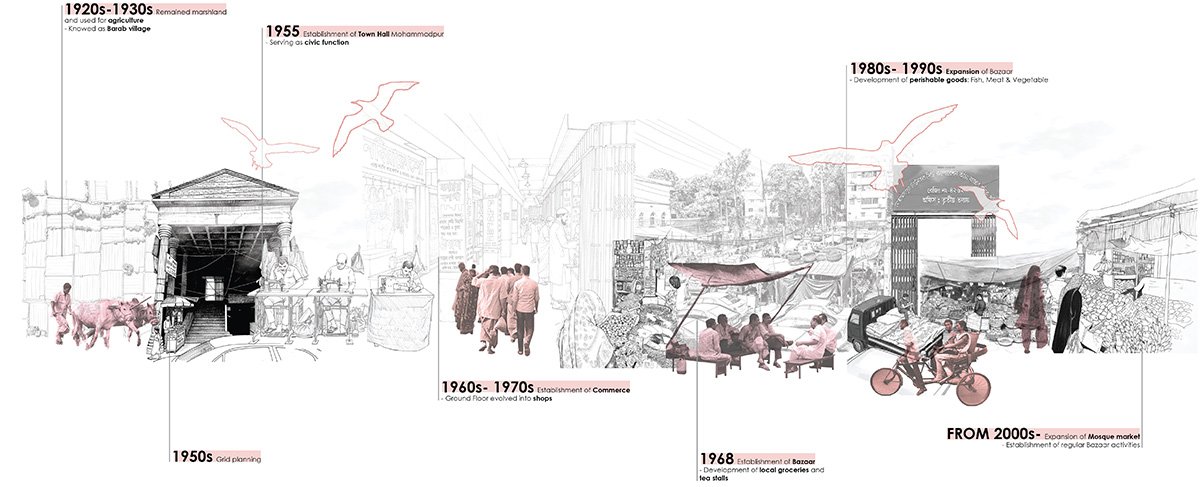
The site’s historical evolution reflects a layered transformation from agrarian roots to a vibrant urban marketplace. Originally known as Barab village, the area remained marshland and was primarily used for agriculture through the 1920s and 1930s. The mid-20th century marked a shift toward civic and spatial planning, with the establishment of the Town Hall Mohammadpur in 1955 and the introduction of grid planning in the 1950s.
Site Historical Chronology
Commercial activity began to take shape in the 1960s and 1970s, as ground floors were repurposed into shops, culminating in the formal establishment of the Bazaar in 1968. The following decades saw a steady expansion of market functions, particularly in perishable goods such as fish, meat, and vegetables. Since the 2000s, the emergence and growth of the Mosque Market have further institutionalized regular bazaar activities, embedding the site as a central node of everyday commerce and community life.
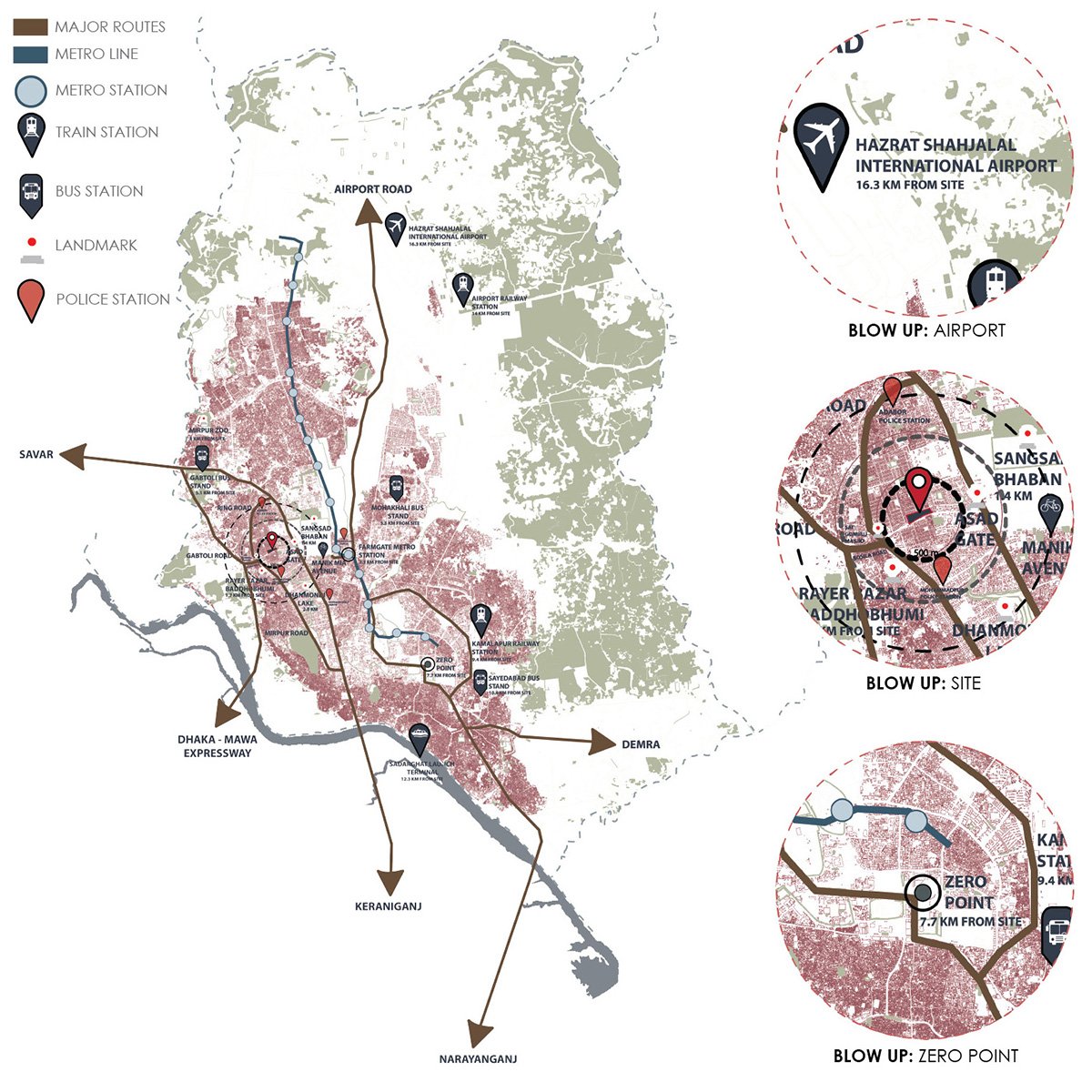
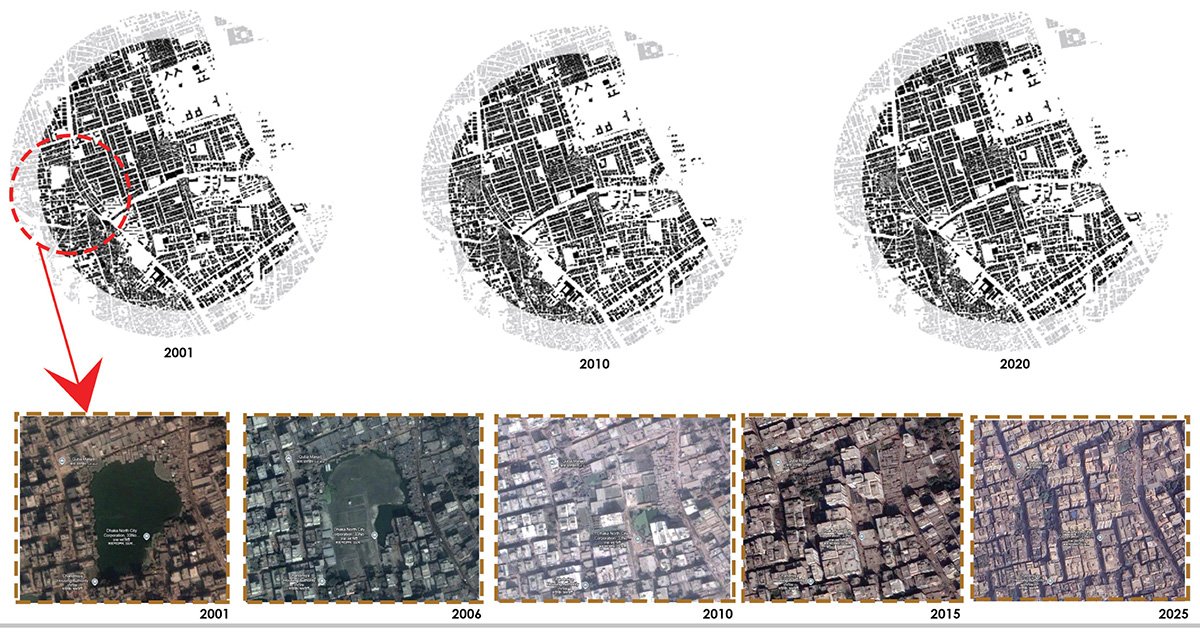
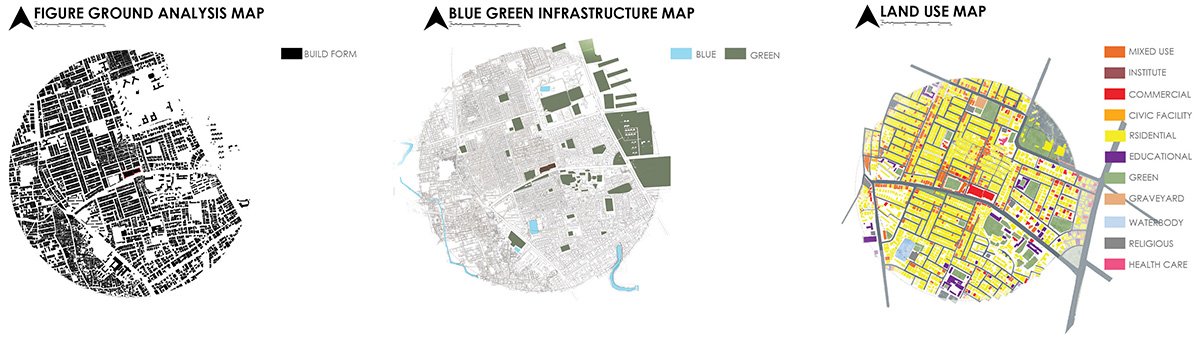
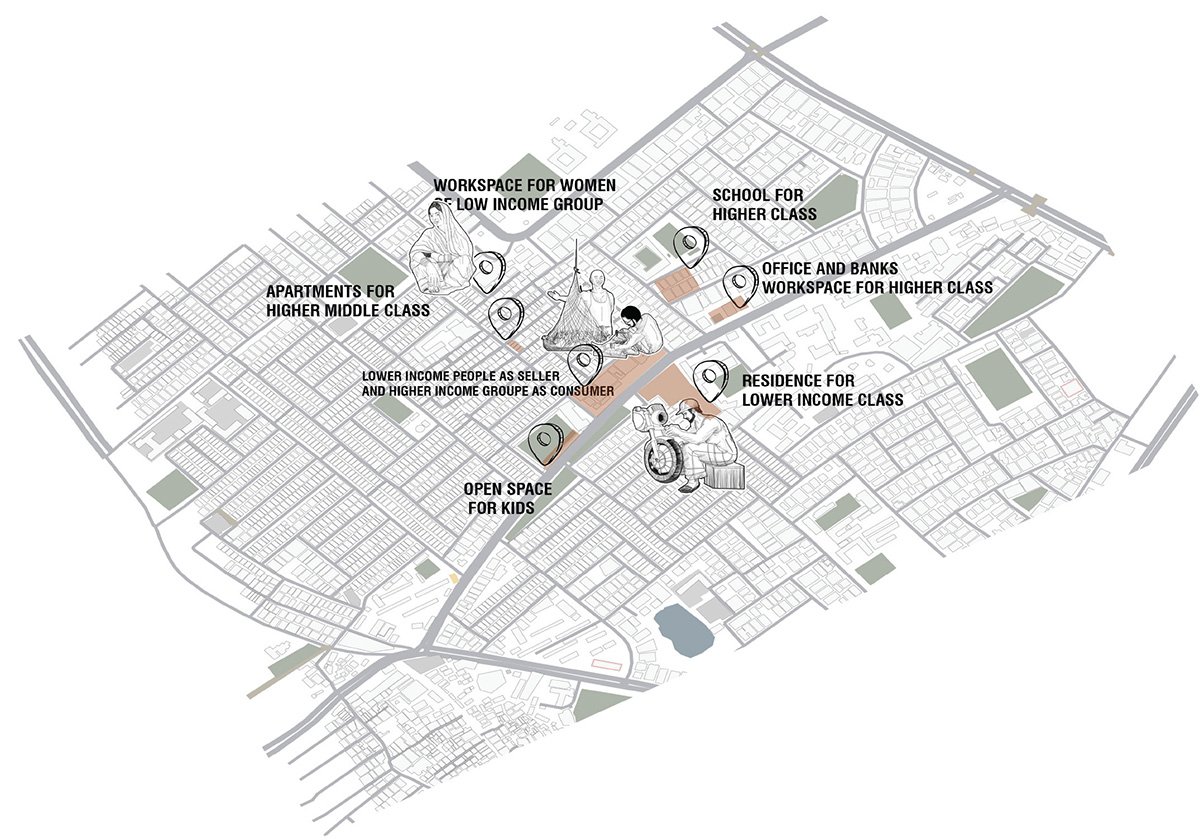
The study begins with a strategic site analysis, positioning the area within a central business district enriched by robust transit connectivity and commercial intensity. A series of layered maps—morphological, topographical, and infrastructural—reveal the spatial dynamics of the site, including urban density, elevated zones, fragmented blue-green networks, and diverse land use typologies. Road connectivity and building height maps highlight circulation patterns and vertical zoning, while rent range and public transport maps expose socio-economic gradients and accessibility. Active location highlights and demographic traffic analysis, segmented by weekdays and weekends, provide insights into user behavior, income distribution, literacy levels, religious majority, and household sizes—forming a nuanced understanding of the site’s lived rhythms.
Site Active Location HighlightsConceptual ZoningVision
From this diagnostic foundation, the study identifies both opportunities and constraints. Opportunity appraisal maps point to civic nodes, waterfront edges, and embedded commercial corridors ripe for activation, while constraint maps flag regulatory barriers, infrastructural gaps, and spatial fragmentation. These findings inform a clear vision: to transform the site into a vibrant, inclusive urban environment that fosters equity, resilience, and civic engagement. The objectives are sixfold—ensuring gender-sensitive design, ethnic inclusivity, civic gathering spaces, economic resilience, participatory governance, and scalable development models. Together, they form the ethical and functional backbone of the proposed interventions.
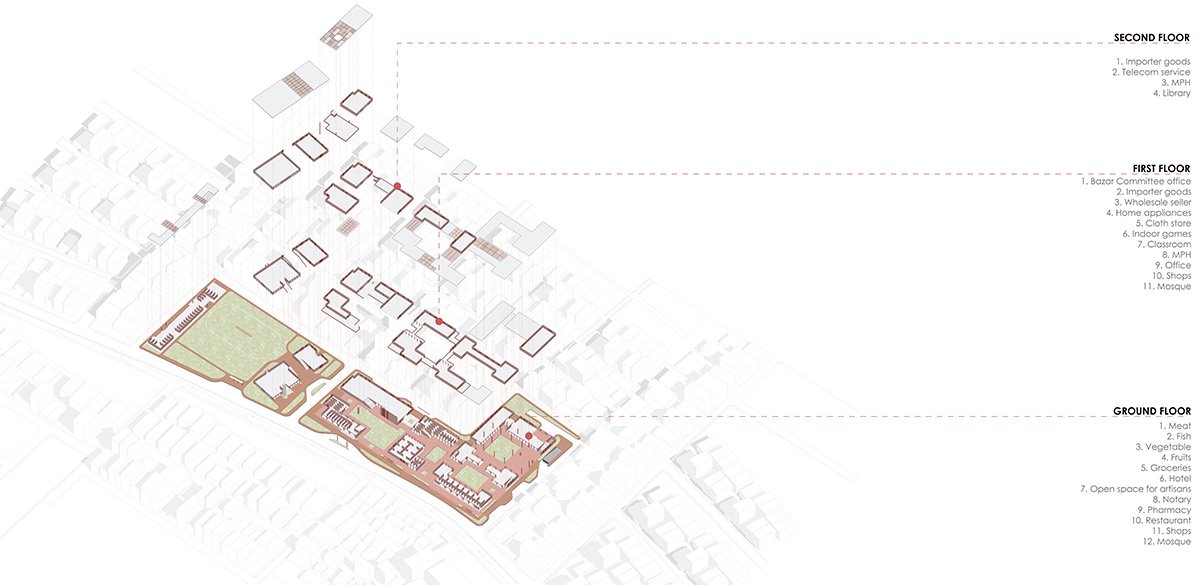
StrategyStrategyZoning Finalization, Progression Of Massing Through Exploded Axonometric Projection Analysis
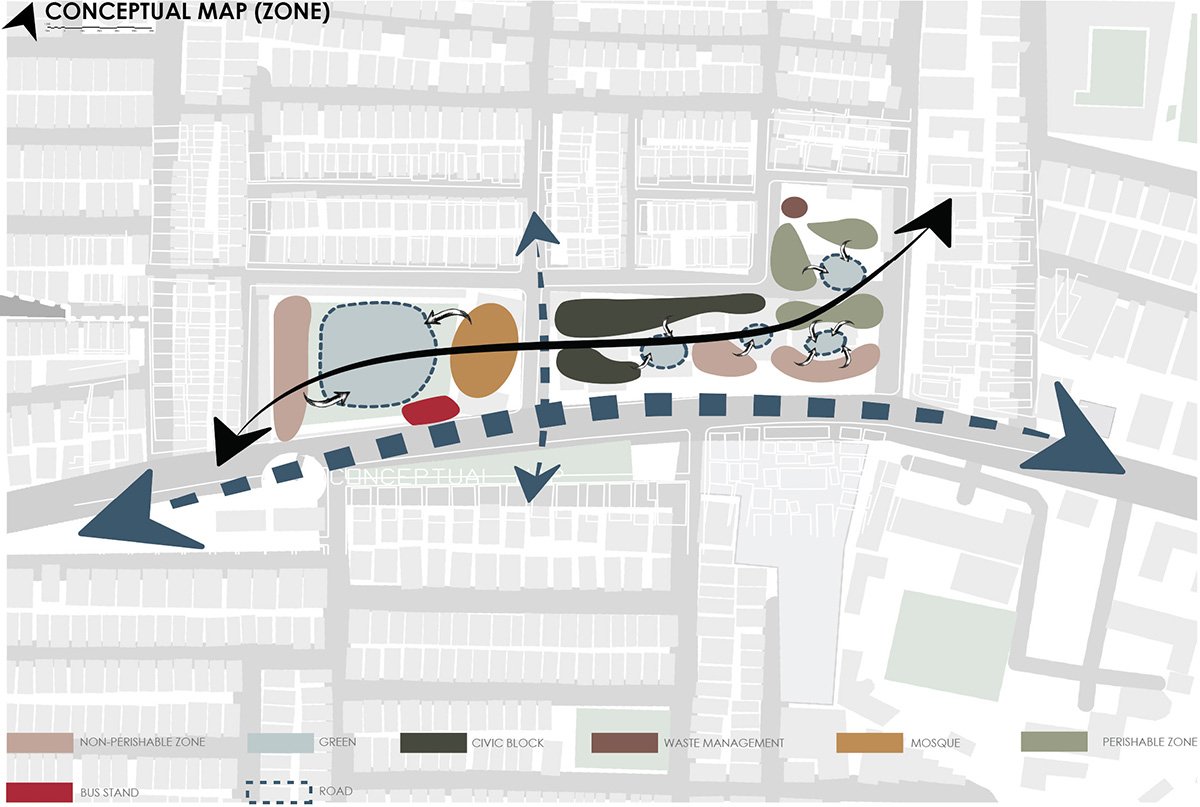
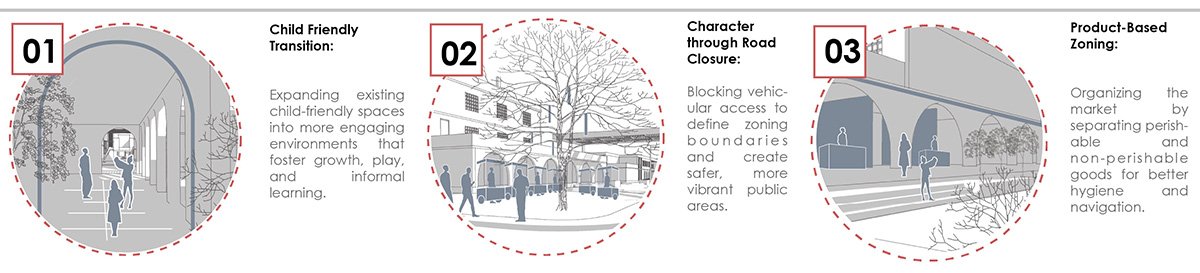
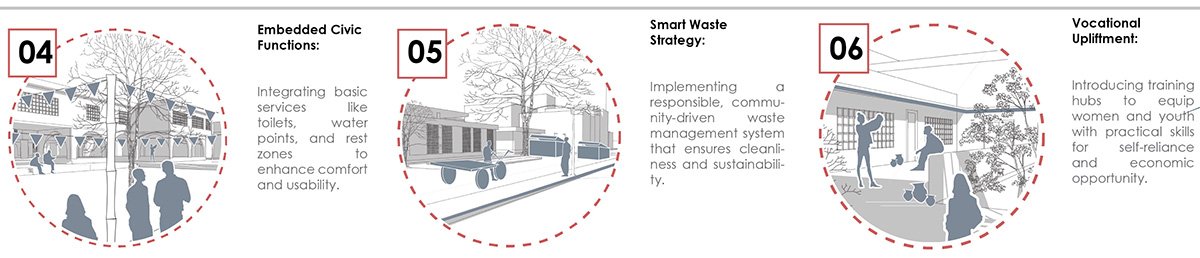
To operationalize this vision, six strategic approaches are proposed: Child-Friendly Design, Clean-Up Initiatives, Product-Based Zoning, Embedded Civic Participation, Smart Waste Management, and Waterfront Activation. These strategies are spatially synthesized in the conceptual zoning map, which organizes directional flows, functional clusters, and civic anchors into a coherent urban framework. The zoning plan integrates commercial vibrancy with inclusive public spaces, aligning infrastructural upgrades with community needs and future scalability. This layered approach ensures that the site evolves not only as a marketplace but also as a resilient, participatory, and culturally grounded urban node.
Final Outcome
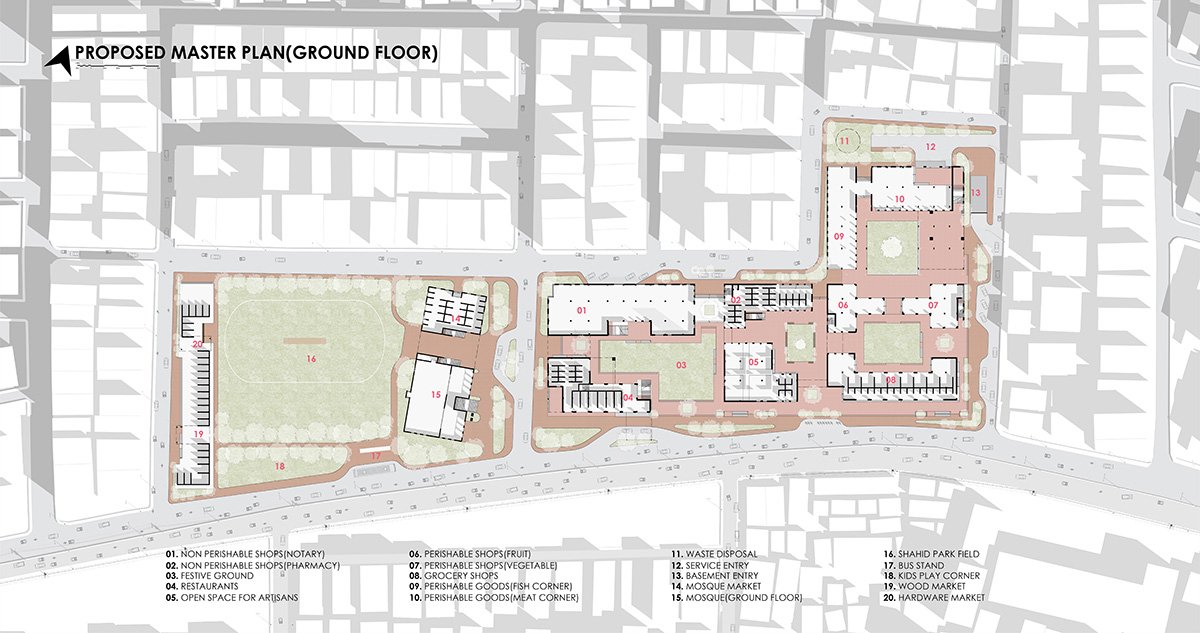
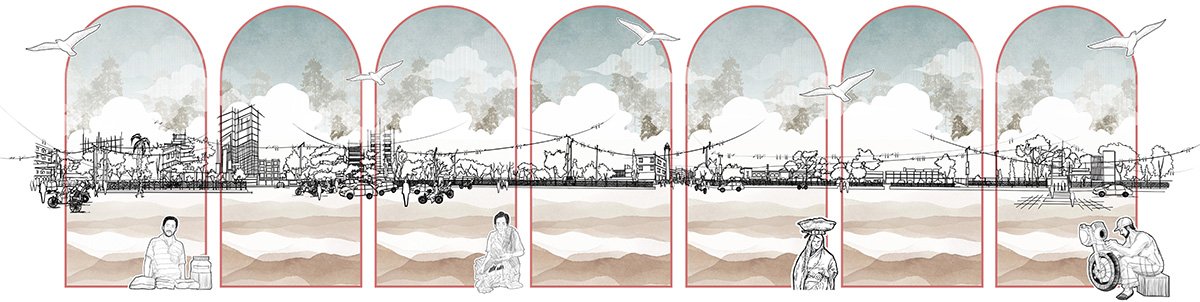
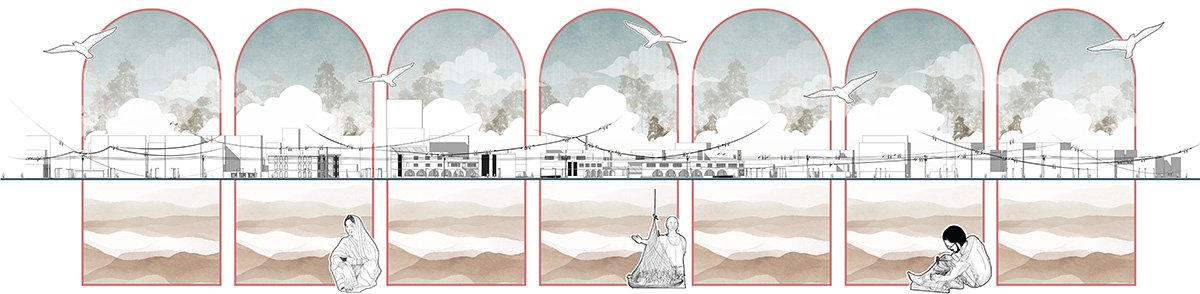
Proposed Master Plan Of Mohammadpur Town Hall Bazaar, DhakaExisting Elevation Study: Juxtaposition Of Existing Built Form With The Surrounding Forms And Activity AnalysisProposed Elevation Treatment: Use Of Sustainable Materials, Visually Merging With The Surrounding Forms, Inspired From The Existing Arched Facade
The spatial organization is anchored along a central axis that prioritizes visibility, connectivity, and circulation. Functional masses are strategically segregated yet unified through a grounded plaza—a classic plinth that offers both a fearless and humble welcome to all users. The primary massing zones are categorized into three essential components: perishable goods, non-perishable goods, and marketing goods. The wet market, comprising perishable and non-perishable zones, is located in the northeast, while the dry market, dedicated to marketing goods, occupies the southwest—an orientation informed by considerations of natural ventilation, solar access, and efficient drainage.
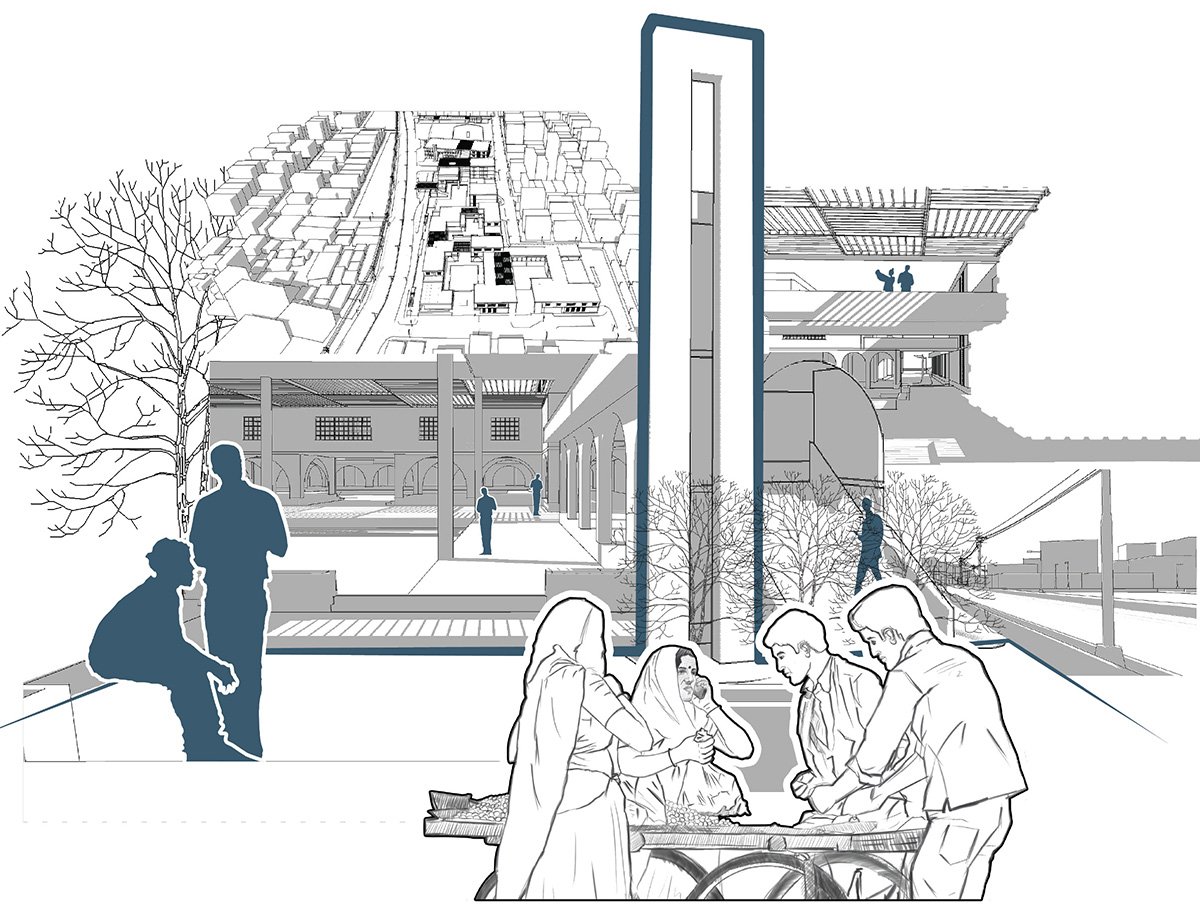
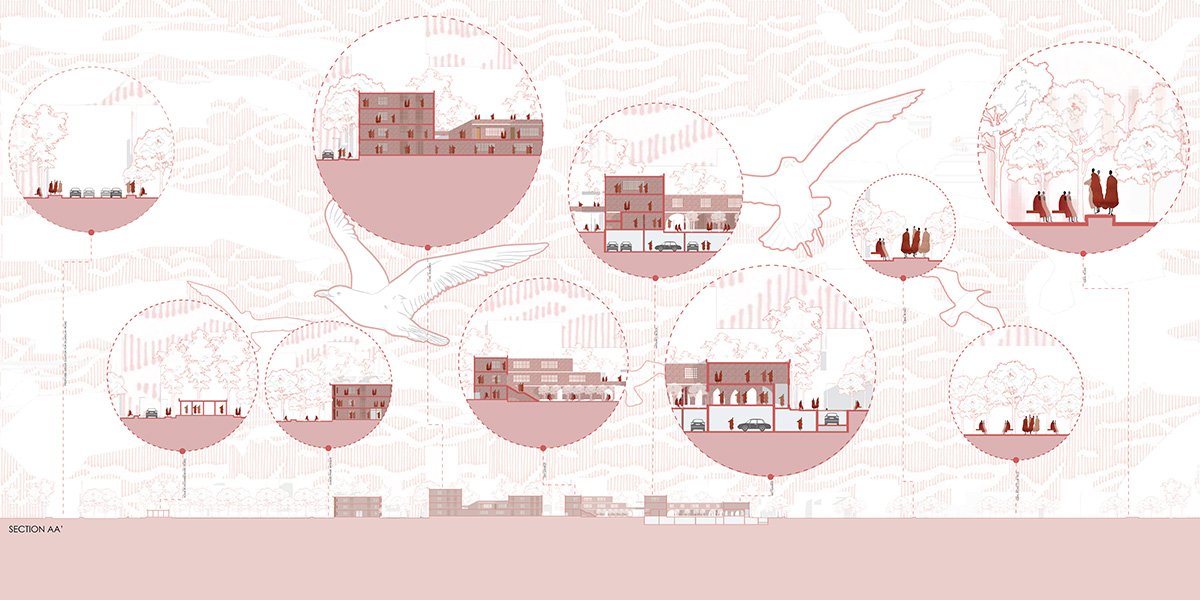
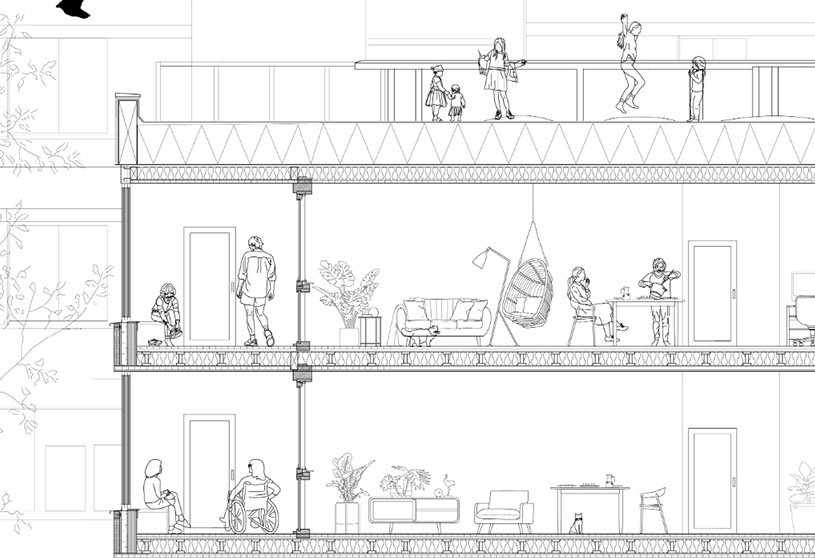
Section Study: Functional Flow, Human-Form Activity & Commuters Circulation AnalysisCommunity Engagement: Sectional Perspective Analysis Of Local People Gathering Space
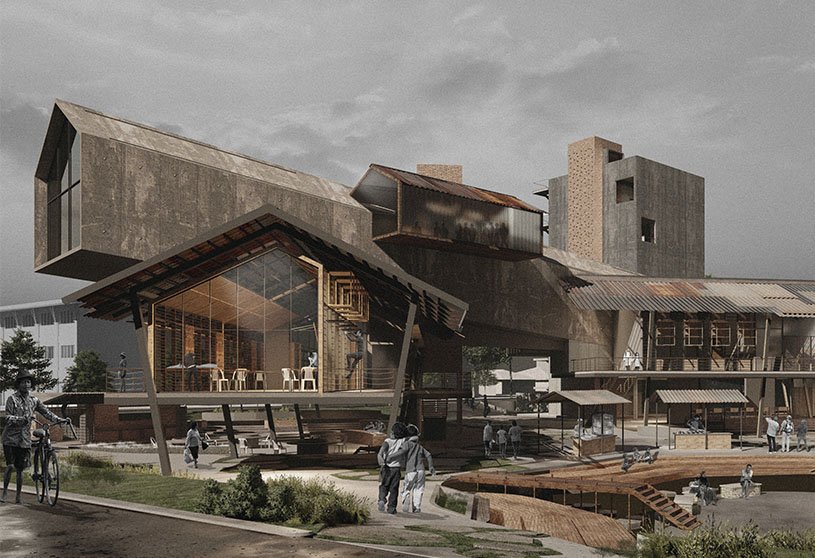
The architectural form emerges from contextual responsiveness—shaped by functionality and neighboring conditions. Rather than asserting a distinct formal identity, the design seeks a humble integration with its surroundings. The architectural vocabulary includes geometric volumes, raw material expression, perforated brick infill, sustainable facade treatments, and clear circulation paths that facilitate seamless movement across functions.
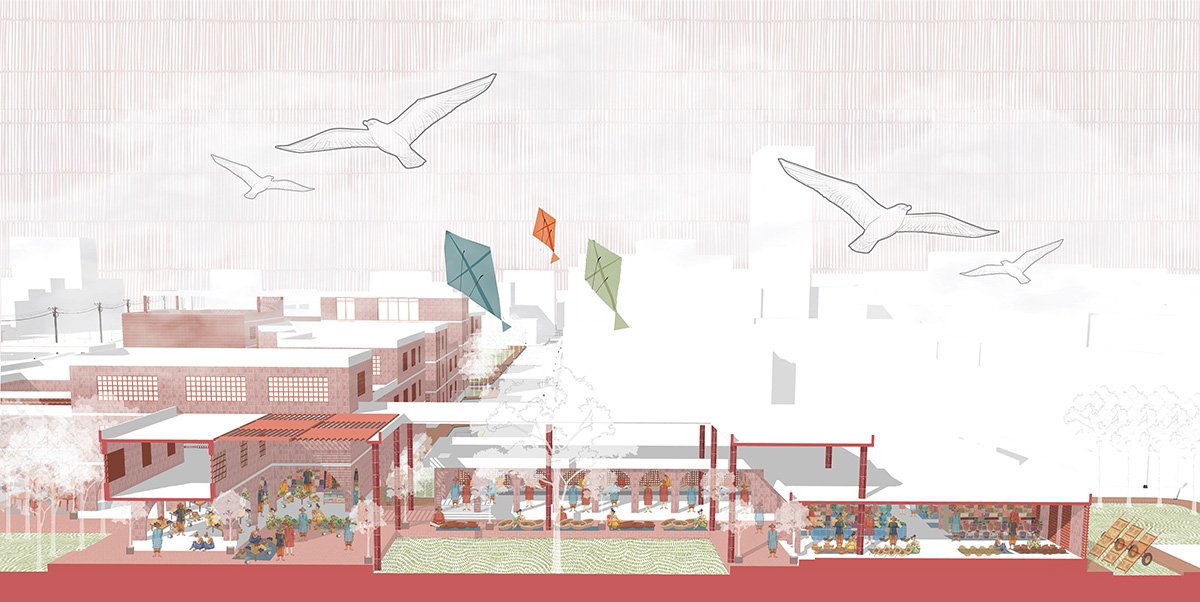
Town Hall Bazar: Sectional Perspective Analysis Of Perishable & Non-Perishable Goods3D Representation: Entrance, Artisans Space & Shohid Park Mosque
Circulation is a celebrated aspect of the design. From the welcoming threshold to the festive culmination, the pedestrian journey is enriched with diverse activities and spatial transitions. Linear walkways are intentionally choreographed to evoke a sense of progression—both in form and function. A key intervention involves the transformation of a vehicular road at the southeast corner of Iqbal Road into a pedestrian-oriented paveway, connecting an otherwise inaccessible field to the bazaar. This decision is grounded in collective survey data and reflects a participatory planning approach.
3D Representation: Civic Center & Permanent Shops
The facade treatment retains its historical resonance through the continued use of archways, fostering a sense of local belonging and cultural continuity. Material choices are guided by considerations of economy, climate responsiveness, and local availability—primarily brick, concrete, wood, and steel.
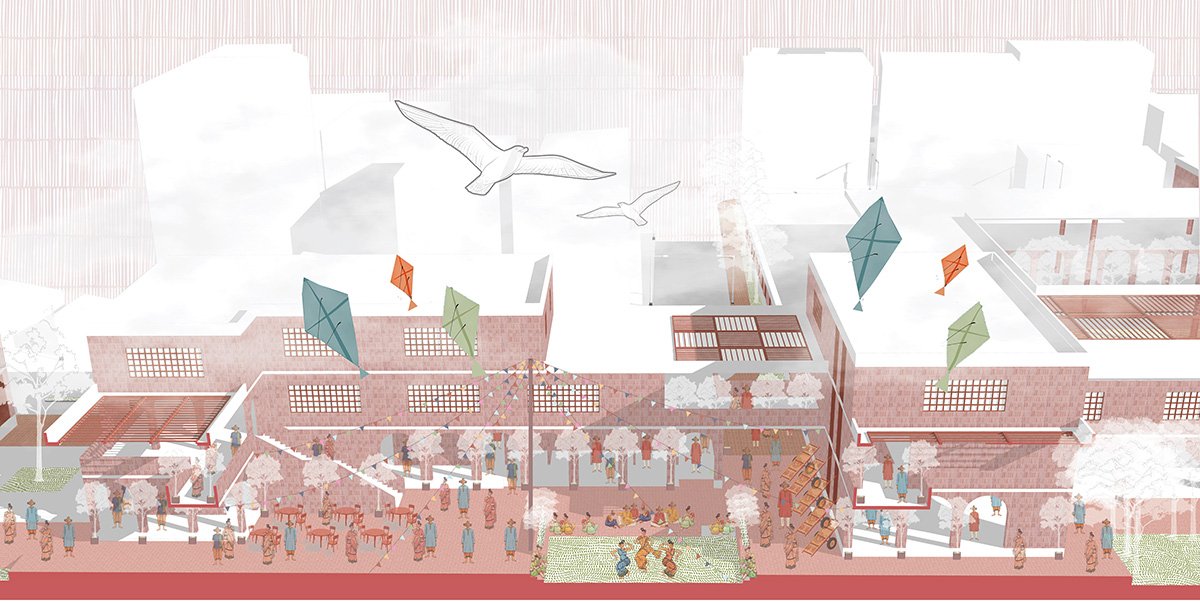
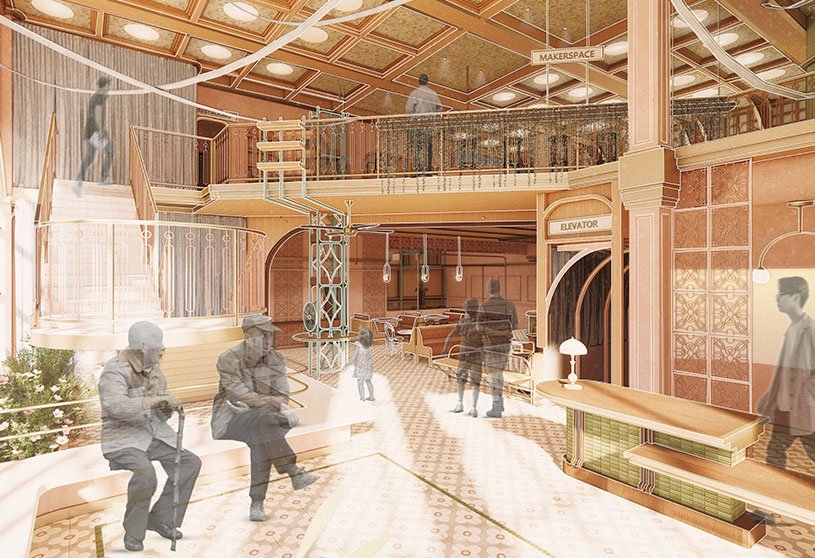
3D Representation: Bazaar, Festive Ground & Community Gathering Space
Conclusion: In essence, the project envisions the bazaar as a civic celebration—an organized, inclusive space where daily necessities are accessed, transactions are humanized, and community life is enriched. It integrates the processes of developing, pricing, promoting, and distributing everyday goods within a spatial framework that enhances consumer satisfaction and supports broader organizational objectives.
[This Academic Project has been published with text and images submitted by the student]
Site Context
Design Process
Final Outcome
To submit your academic project for publication at ArchiDiaries, please visit the following link >> Submit
Get the best of ArchiDiaries, directly in your inbox.
We use cookies on our website to give you the most relevant experience by remembering your preferences and repeat visits. By clicking “Accept All”, you consent to the use of ALL the cookies. However, you may visit "Cookie Settings" to provide a controlled consent.
This website uses cookies to improve your experience while you navigate through the website. Out of these, the cookies that are categorized as necessary are stored on your browser as they are essential for the working of basic functionalities of the website. We also use third-party cookies that help us analyze and understand how you use this website. These cookies will be stored in your browser only with your consent. You also have the option to opt-out of these cookies. But opting out of some of these cookies may affect your browsing experience.
Necessary cookies are absolutely essential for the website to function properly. These cookies ensure basic functionalities and security features of the website, anonymously.
Cookie
Duration
Description
cookielawinfo-checkbox-analytics
11 months
This cookie is set by GDPR Cookie Consent plugin. The cookie is used to store the user consent for the cookies in the category "Analytics".
cookielawinfo-checkbox-functional
11 months
The cookie is set by GDPR cookie consent to record the user consent for the cookies in the category "Functional".
cookielawinfo-checkbox-necessary
11 months
This cookie is set by GDPR Cookie Consent plugin. The cookies is used to store the user consent for the cookies in the category "Necessary".
cookielawinfo-checkbox-others
11 months
This cookie is set by GDPR Cookie Consent plugin. The cookie is used to store the user consent for the cookies in the category "Other.
cookielawinfo-checkbox-performance
11 months
This cookie is set by GDPR Cookie Consent plugin. The cookie is used to store the user consent for the cookies in the category "Performance".
viewed_cookie_policy
11 months
The cookie is set by the GDPR Cookie Consent plugin and is used to store whether or not user has consented to the use of cookies. It does not store any personal data.
Functional cookies help to perform certain functionalities like sharing the content of the website on social media platforms, collect feedbacks, and other third-party features.
Performance cookies are used to understand and analyze the key performance indexes of the website which helps in delivering a better user experience for the visitors.
Analytical cookies are used to understand how visitors interact with the website. These cookies help provide information on metrics the number of visitors, bounce rate, traffic source, etc.
Advertisement cookies are used to provide visitors with relevant ads and marketing campaigns. These cookies track visitors across websites and collect information to provide customized ads.