Home » Academic projects » Rooting Cities: Organic and Urban Integration Systems in “Parque Gustavo Knoop” as Catalysts for Recognition, Identity, and Collective Belonging in Los Teques | Architecture Thesis on Urban Revitalization
Rooting Cities: Organic and Urban Integration Systems in “Parque Gustavo Knoop” as Catalysts for Recognition, Identity, and Collective Belonging in Los Teques | Architecture Thesis on Urban Revitalization
Project Name: Rooting Cities: Organic and Urban Integration Systems in “Parque Gustavo Knoop” as Catalysts for Recognition, Identity, and Collective Belonging in Los Teques
Excerpt: ‘Rooting Cities’ is an architecture thesis by Edgardo José Gómez Rodríguez from the ‘Departamento de Diseño, Arquitectura y Artes Plásticas – Universidad Simón Bolívar.’ This project aims to revitalize Gustavo Knoop Park by analyzing its historical, cultural, and ecological connections with Los Teques. Rooted in the legacy of the Gran Ferrocarril de Venezuela, the park embodies memory, resilience, and natural heritage. Strategies focus on heritage preservation, environmental education, green infrastructure, and recreational design, fostering a symbiosis between city and nature.
Introduction: The city of Los Teques has been marked by the influence of the “Gran Ferrocarril de Venezuela” (GFV), the railway between Valencia and Caracas, whose infrastructure not only transformed its urban fabric but also gave rise to the current “Parque Gustavo Knoop” as a reforestation response to the environmental impact of the tracks and natural phenomena. This park, initially conceived as a green lung and healing space, became a reference point for identity and collective memory.
The project focuses on analyzing the interconnection between the city, the park, and the natural heritage it represents, understanding how history, culture, and geographical context shape its unique value. Based on this diagnosis, strategies are proposed in four key areas: historically, the preservation and reinterpretation of heritage; scientifically, the promotion of research and environmental education; ecologically, the consolidation of green infrastructure that connects the city and the park; and recreationally, the design of multifunctional spaces that strengthen urban life.
In this way, a symbiosis between architecture and nature is proposed, aimed at revitalizing Gustavo Knoop Park as a catalyst for recognition, identity, and collective belonging in Los Teques.
Route of the Old Great Railway of Venezuela (GFV)Urban Composition of Los TequesEl Encanto railway station. Remains on the outskirts of Los Teques
The project is being developed in “Parque Gustavo Knoop,” an urban space in Los Teques historically linked to the “Gran Ferrocarril de Venezuela.” Conceived at the end of the 19th century as a reforestation initiative in response to the environmental impact of the railway, the park is the country’s first botanical garden and a landmark green space for the city. Its strategic location makes it a meeting point between the mountainous topography, the expanding urban fabric, and the collective memory.
Gustavo Knoop Bust Square. Gustavo Knoop Park, Los TequesPaths in Knoop Park. Gustavo Knoop Park, Los TequesAbandoned house dating back to the railroad era. Opposite Gustavo Knoop Park, Los Teques
Currently, the park faces problems associated with the loss of heritage value, the fragmentation of edges, the deterioration of infrastructure, and disconnection from urban dynamics. These conditions have limited its potential as a space for social and ecological integration.
Remains of the rails still standing above the park valley. Gustavo Knoop Park, Los TequesBottom view of the rails above the valley. Gustavo Knoop Park, Los Teques
The project provides a comprehensive vision that seeks to reactivate the park as a living infrastructure for the city. It proposes to reinforce its historical identity by recovering railway and heritage remains, while incorporating ecological management strategies that improve environmental quality and urban resilience. In addition, it promotes the creation of flexible facilities and meeting spaces that encourage citizen interaction, collective learning, and integration between natural and urban systems. The park is projected as a laboratory for city-nature symbiosis and a catalyst for sustainable development in Los Teques.
Design Process
Macro analysis of potential elements and action nodes. Los Teques
The design process began with a historical and territorial analysis of Los Teques, focusing on its heritage and natural attributes linked to the “Gran Ferrocarril de Venezuela.” This perspective positioned the park as a node between collective memory, urban infrastructure, and ecological lung, while revealing its current fragility due to fragmented edges, loss of heritage, and disconnection from the city.
The environmental and urban diagnosis highlighted problems of deterioration, real estate pressure, and reduced ecological continuity. The interpretation of the dynamics and flows of the site defined the key actions to preserve and reconnect natural systems. From there, a multi-scale integration strategy emerged: reconnecting the park and the city at the urban level, redefining boundaries with adaptable architectural installations, and incorporating pedestrian-scale interventions that encourage daily interaction.
Collage summarizing the approach and strategies for the project
The resulting framework of nodes and solutions allows for flexibility during and after the design process, ensuring adaptability to long-term needs, for which sustainable strategies are proposed that minimize ecological impact inside and outside the park. The search is a project that conceives the site as a living laboratory where nature, history, and urban life converge, shaping a replicable model of symbiosis between the city and nature.
Final Outcome
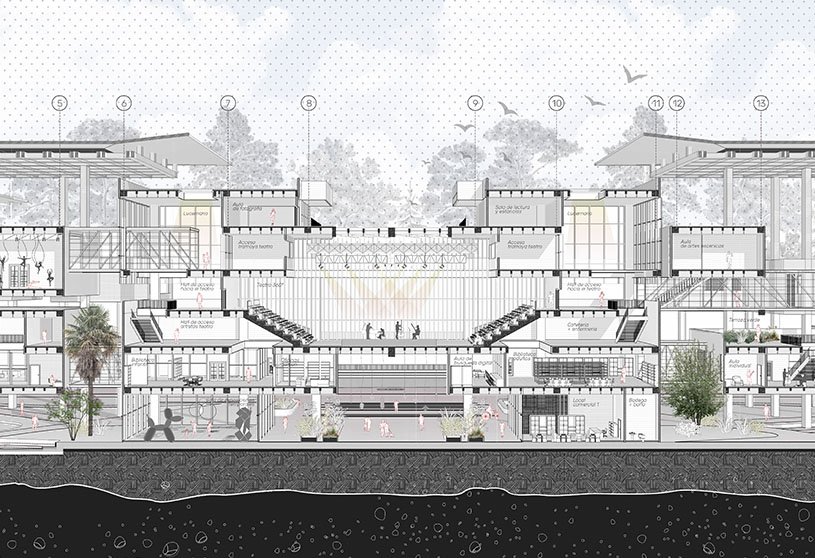
Visual overview of the proposal, areas of interventionMacro sections of the proposal focusing on nodes that will serve as links between the city and the parkArea of intervention 1: “Llano de Miquilen,” the area with the highest level of urban activity
The final result of the project is the revitalization of “Parque Gustavo Knoop” into an integrated landscape where history, ecology, and urban life converge.
Zoom in on the intervention area immersed in the city. Expansion of green space between urban cracks, focusing on “Boulevard Bermúdez.”New railway museum based on the remains of houses abandoned since the railway boom in Los TequesNew Park access hub, agricultural market square
Inspired by Knoop’s vision of rainforest preservation, the proposal reimagines the park as a living system that restores its connection to the legacy of the Great Railway of Venezuela. At the same time, it redefines the park’s role as both an ecological lung and a cultural landmark for Los Teques.
Proposal for a bio-fence over the Camatagua stream. Stream sanitation.Intervention sector 2: Edge of the park with informal settlements of “El Vigía.”Parque de la Naciente, area of Gustavo Knoop Park affected by spontaneous urban growth.Equipment for the edge. Connections between the neighborhood and the park
The design introduces a multi-scalar approach that works across different levels. At the urban scale, the park is reconnected to the city through ecological corridors and public infrastructure. Adaptable facilities are incorporated to recover heritage while also creating new spaces for education, culture, and recreation.
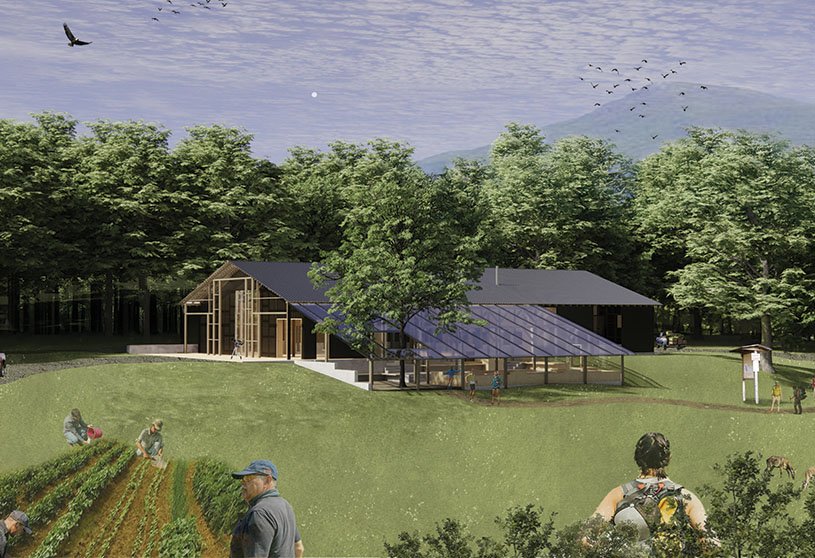
Intervention sector 3: Gustavo Knoop Park. Forest area and botanical gardenFacilities immersed in the parkAgricultural market. Open area and sales premises
Flexible nodes are added to foster daily encounters and reinforce a sense of collective identity, with sustainability, biodiversity, and community engagement guiding each intervention.
Source of the Camatagua stream in Gustavo Knoop ParkBird watching tower. Equipment immersed in the forest area bringing visitors into contact with natureGustavo Knoop Bust Square. Commemoration of the engineer who created the nature reserves in response to the impact of the railway line
Conclusion: Ultimately, the project demonstrates how historical memory and ecological systems can act as drivers of urban resilience today. Its approach suggests a replicable framework for reactivating the former “Gran Ferrocarril de Venezuela” railway corridor. In doing so, it envisions neglected landscapes transformed into vibrant hubs of cultural, ecological, and social integration across multiple regions.
[This Academic Project has been published with text and images submitted by the student]
Site Context
Design Process
Final Outcome
To submit your academic project for publication at ArchiDiaries, please visit the following link >> Submit
Get the best of ArchiDiaries, directly in your inbox.
We use cookies on our website to give you the most relevant experience by remembering your preferences and repeat visits. By clicking “Accept All”, you consent to the use of ALL the cookies. However, you may visit "Cookie Settings" to provide a controlled consent.
This website uses cookies to improve your experience while you navigate through the website. Out of these, the cookies that are categorized as necessary are stored on your browser as they are essential for the working of basic functionalities of the website. We also use third-party cookies that help us analyze and understand how you use this website. These cookies will be stored in your browser only with your consent. You also have the option to opt-out of these cookies. But opting out of some of these cookies may affect your browsing experience.
Necessary cookies are absolutely essential for the website to function properly. These cookies ensure basic functionalities and security features of the website, anonymously.
Cookie
Duration
Description
cookielawinfo-checkbox-analytics
11 months
This cookie is set by GDPR Cookie Consent plugin. The cookie is used to store the user consent for the cookies in the category "Analytics".
cookielawinfo-checkbox-functional
11 months
The cookie is set by GDPR cookie consent to record the user consent for the cookies in the category "Functional".
cookielawinfo-checkbox-necessary
11 months
This cookie is set by GDPR Cookie Consent plugin. The cookies is used to store the user consent for the cookies in the category "Necessary".
cookielawinfo-checkbox-others
11 months
This cookie is set by GDPR Cookie Consent plugin. The cookie is used to store the user consent for the cookies in the category "Other.
cookielawinfo-checkbox-performance
11 months
This cookie is set by GDPR Cookie Consent plugin. The cookie is used to store the user consent for the cookies in the category "Performance".
viewed_cookie_policy
11 months
The cookie is set by the GDPR Cookie Consent plugin and is used to store whether or not user has consented to the use of cookies. It does not store any personal data.
Functional cookies help to perform certain functionalities like sharing the content of the website on social media platforms, collect feedbacks, and other third-party features.
Performance cookies are used to understand and analyze the key performance indexes of the website which helps in delivering a better user experience for the visitors.
Analytical cookies are used to understand how visitors interact with the website. These cookies help provide information on metrics the number of visitors, bounce rate, traffic source, etc.
Advertisement cookies are used to provide visitors with relevant ads and marketing campaigns. These cookies track visitors across websites and collect information to provide customized ads.