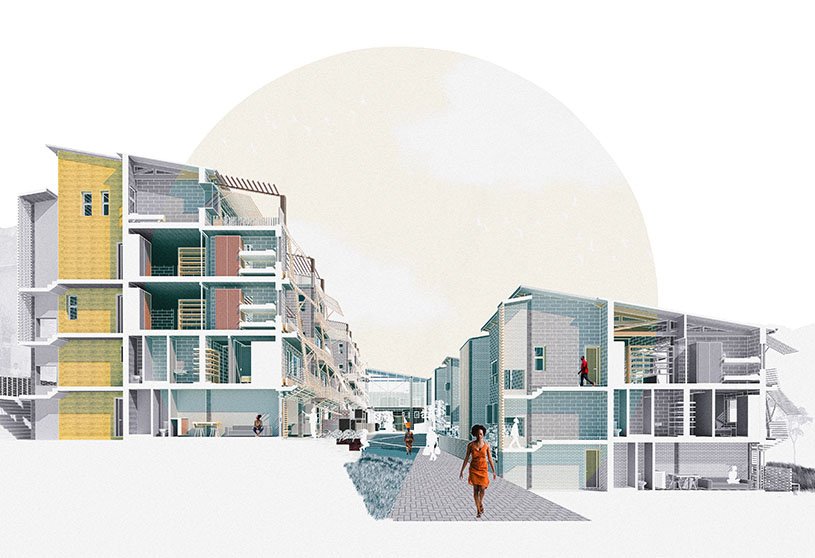
Excerpt: ‘Shelter Dynamics: Expand, Extend, Self-Sustain And Grow’ is an architecture thesis on Urban Shelter by Ruheen Aijaz Chhapra from the Kamla Raheja Vidyanidhi Institute of Architecture and Environmental Studies (KRVIA) that seeks to create a housing program that integrates a city’s social and commercial infrastructures, promoting hybridity and duality. It aims to address marginalized communities’ needs for subsistence and promote a more inclusive urban environment, transforming single-purpose structures into multifunctional components.
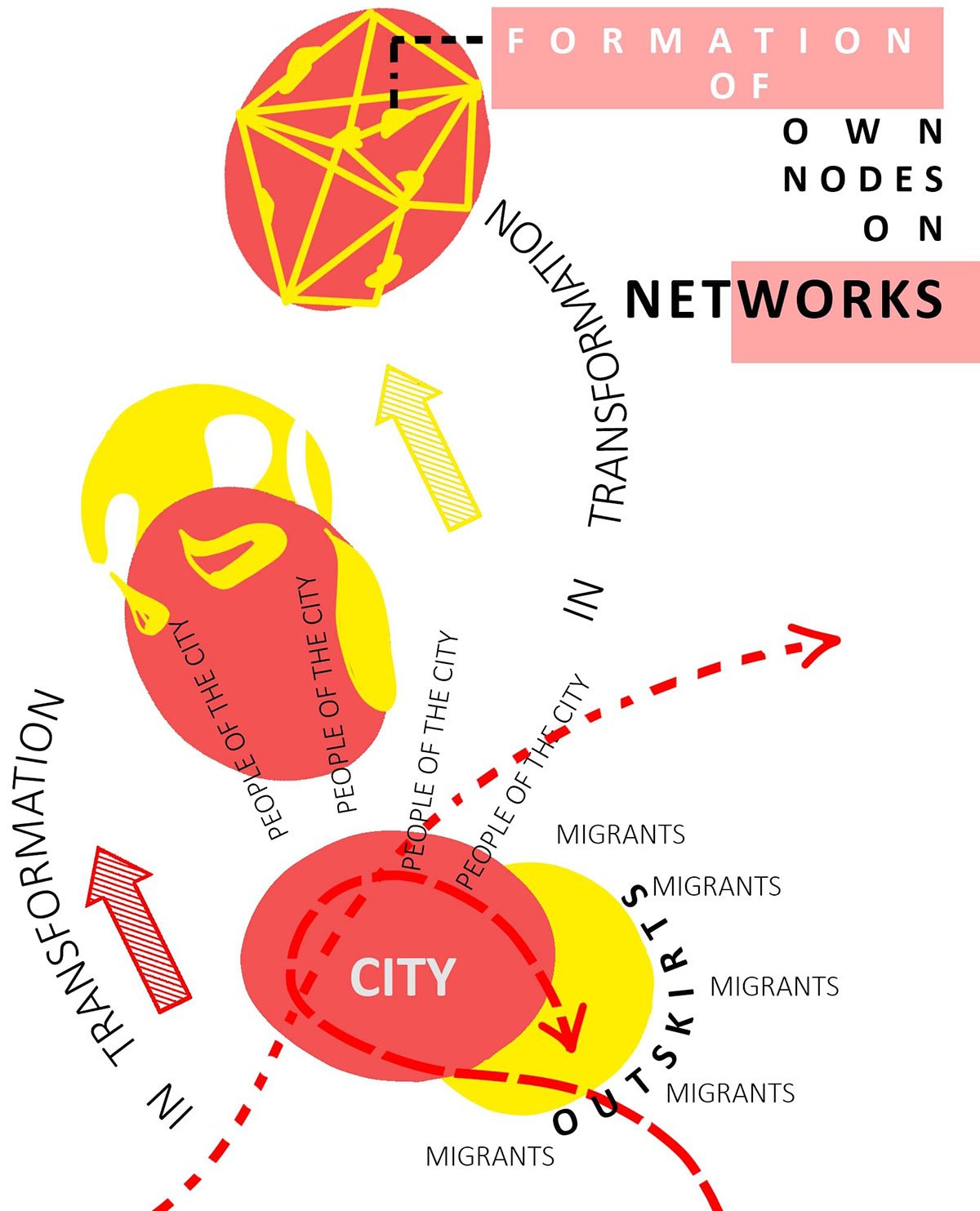
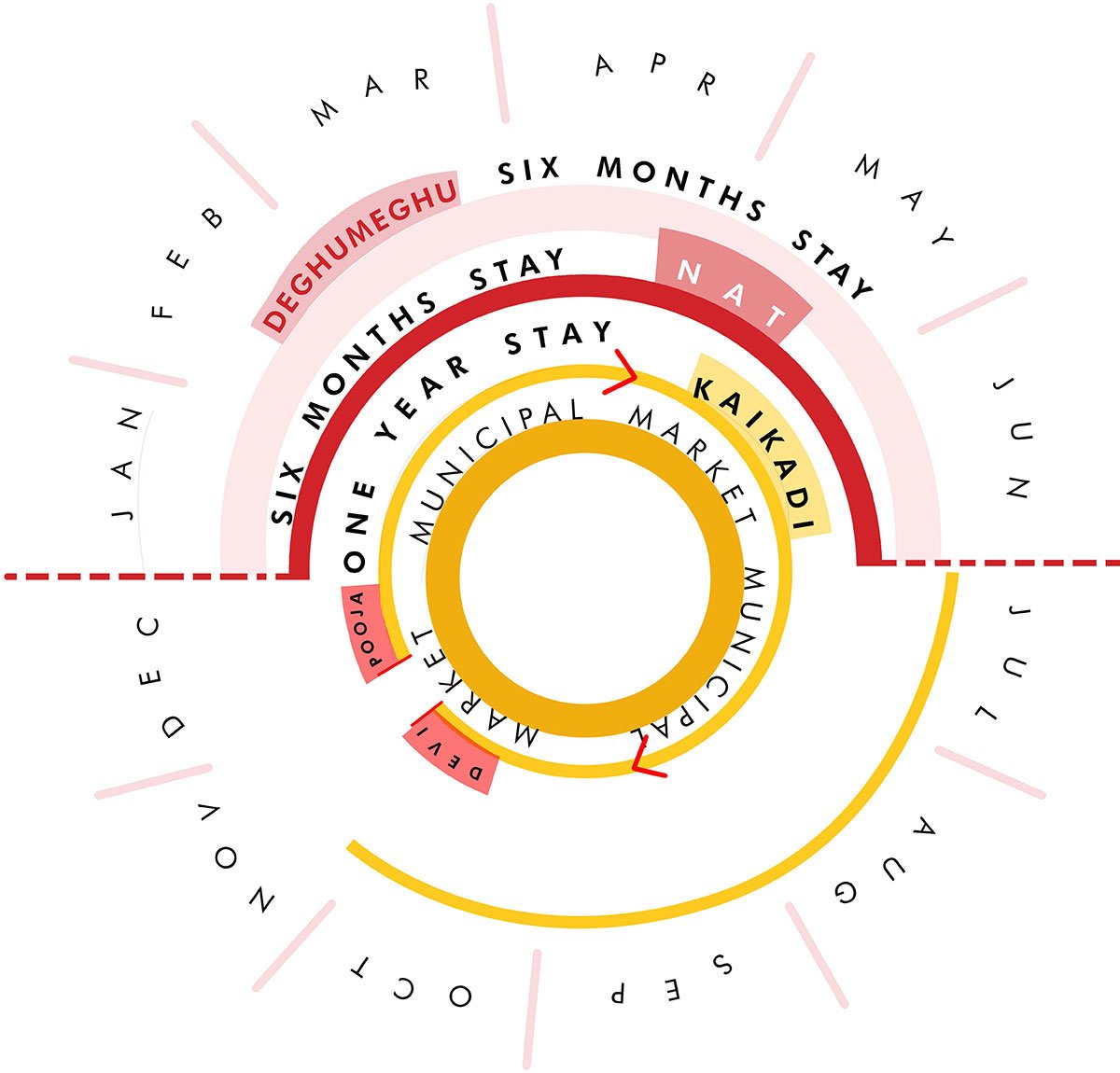
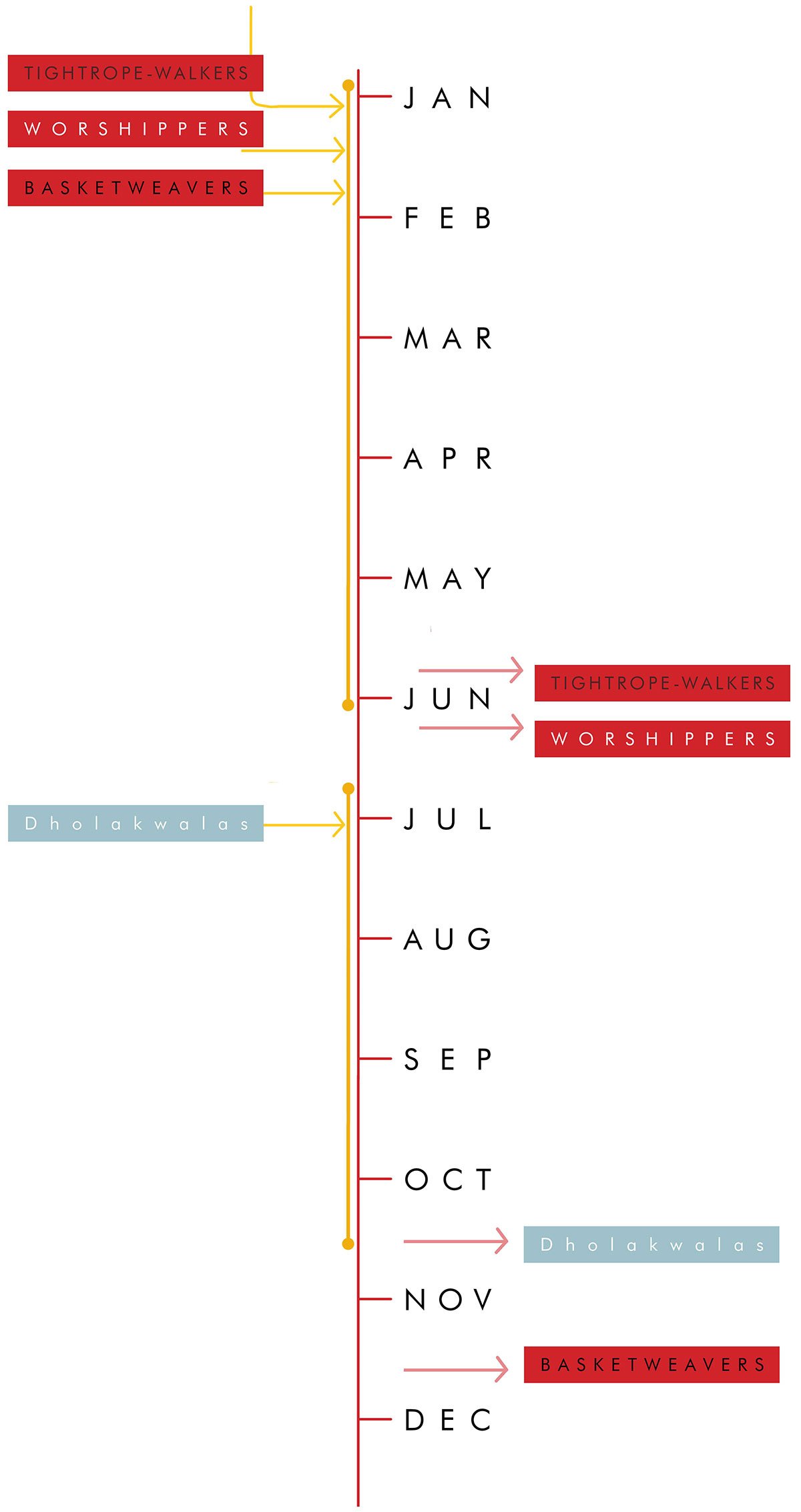
Introduction: Mumbai, the financial capital of the country, welcomes people with a variety of prospects. People from low-income groups prefer to settle in areas that can meet their basic needs since living expenses in Mumbai appear to be high. Taking into account various nomadic communities or groups that prefer to stay in the city for a certain period of time and depart after they complete their work, they begin to associate their basic needs with the city’s public realm, which can support their stay. This also applies to labourers and others who are visiting the city for medical services.
Users
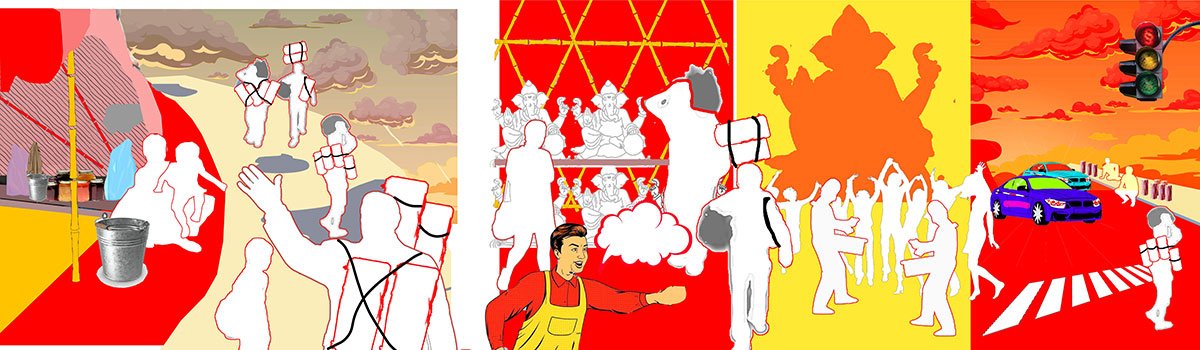
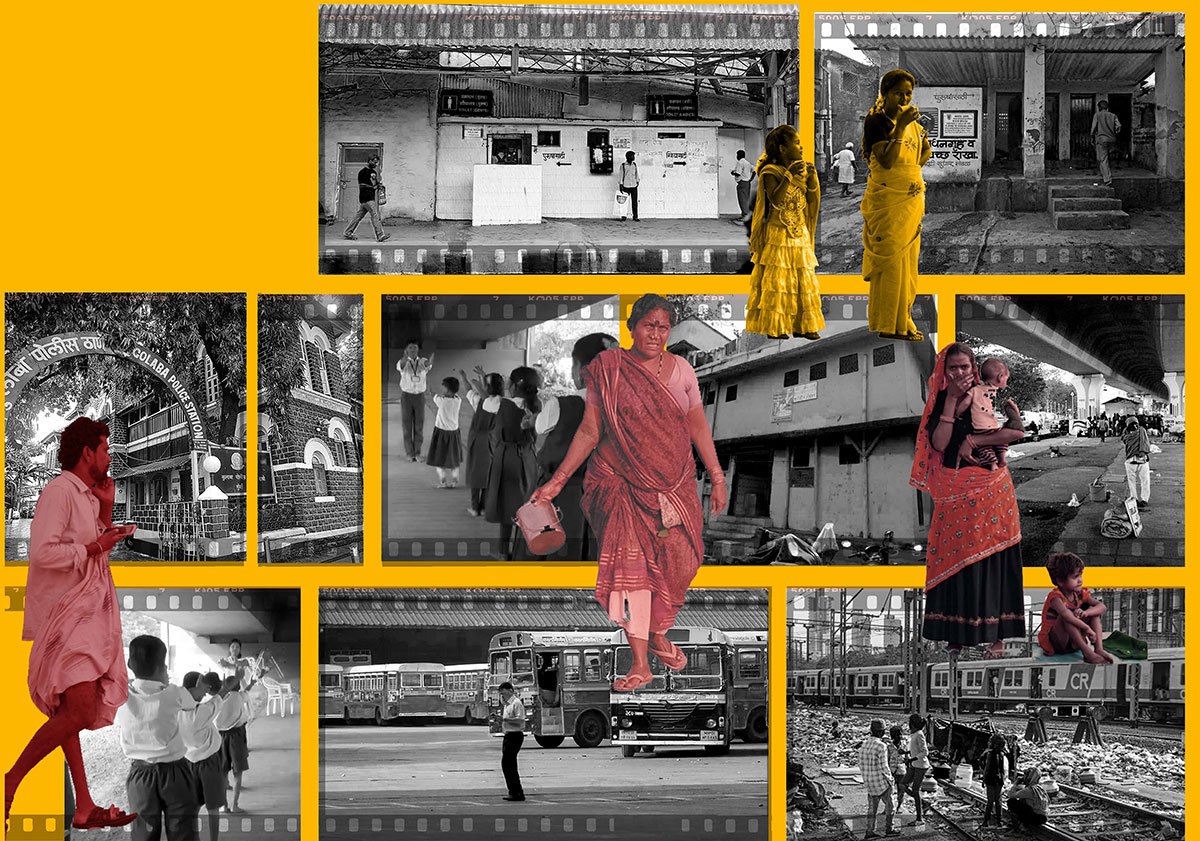
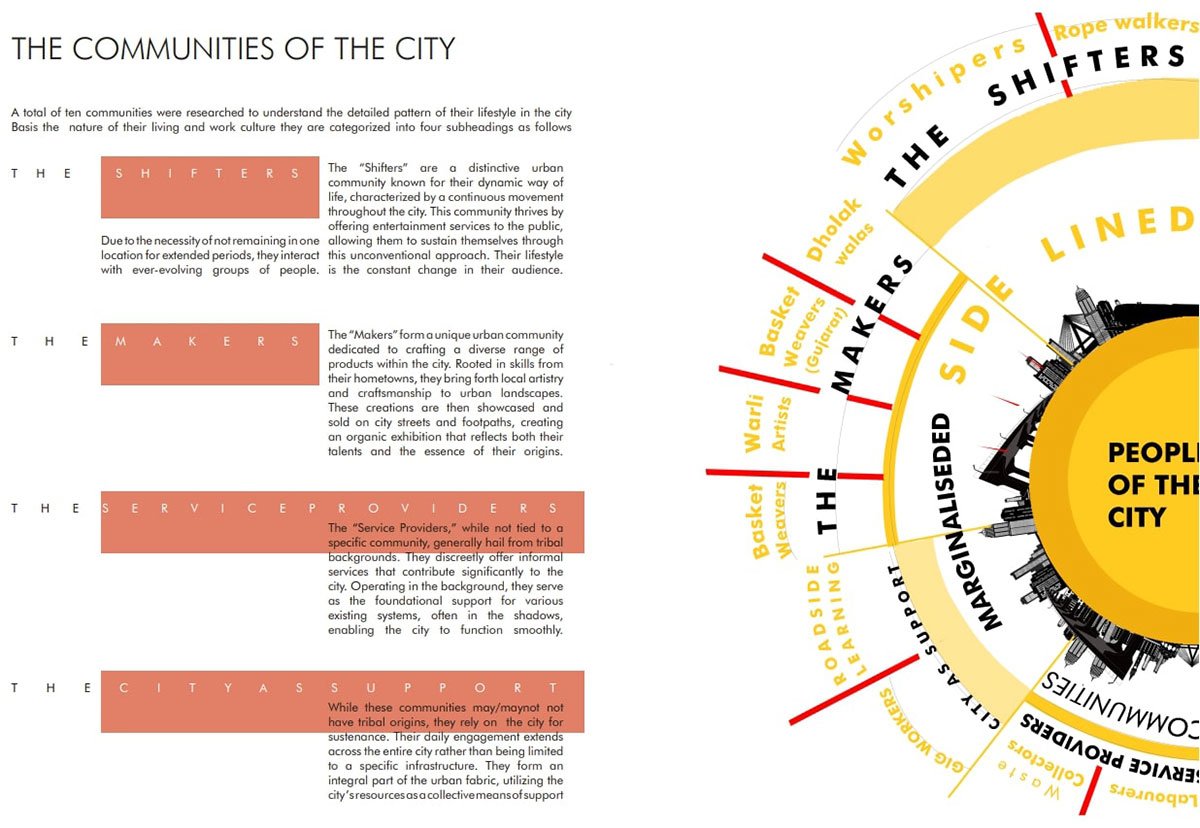
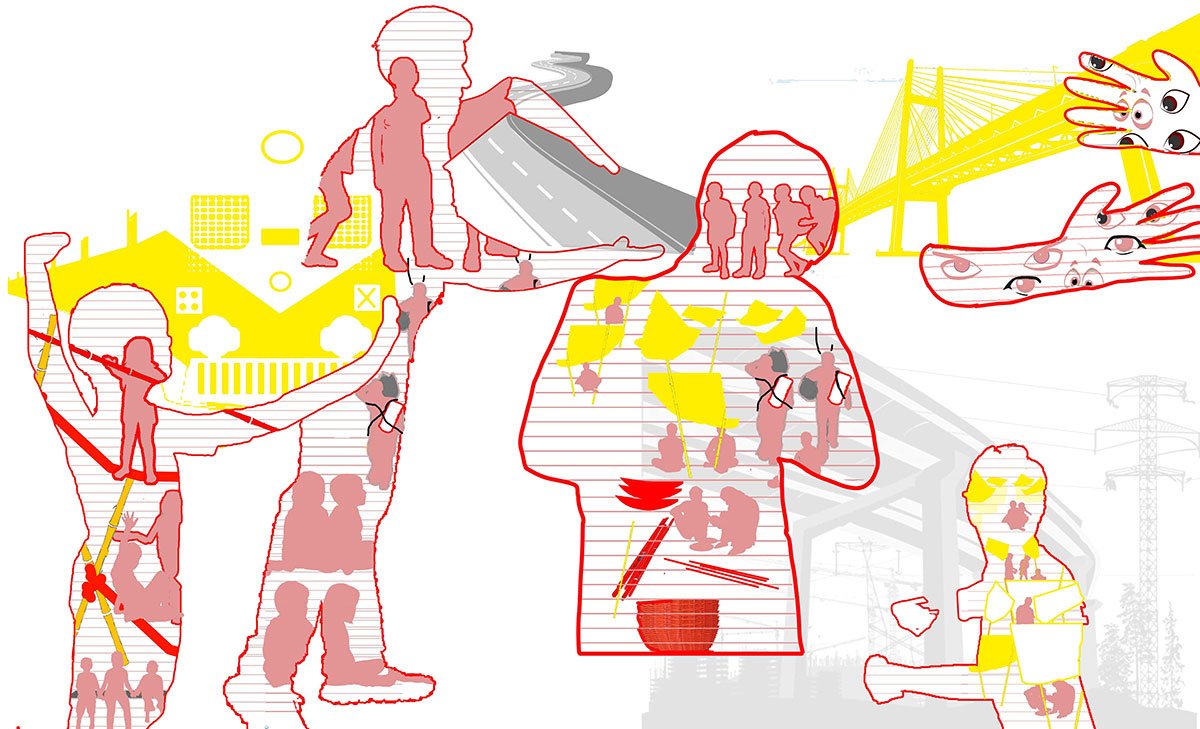
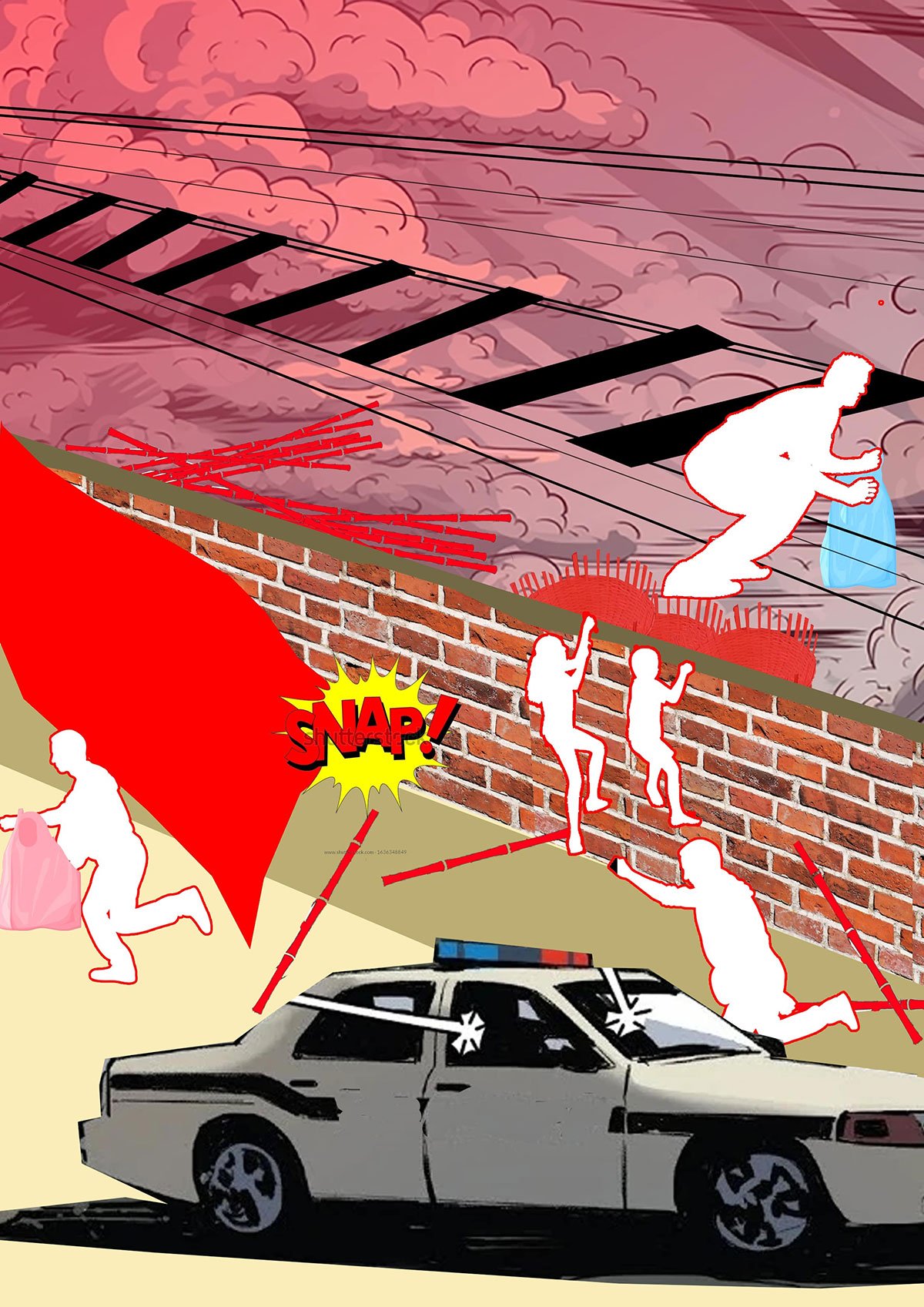
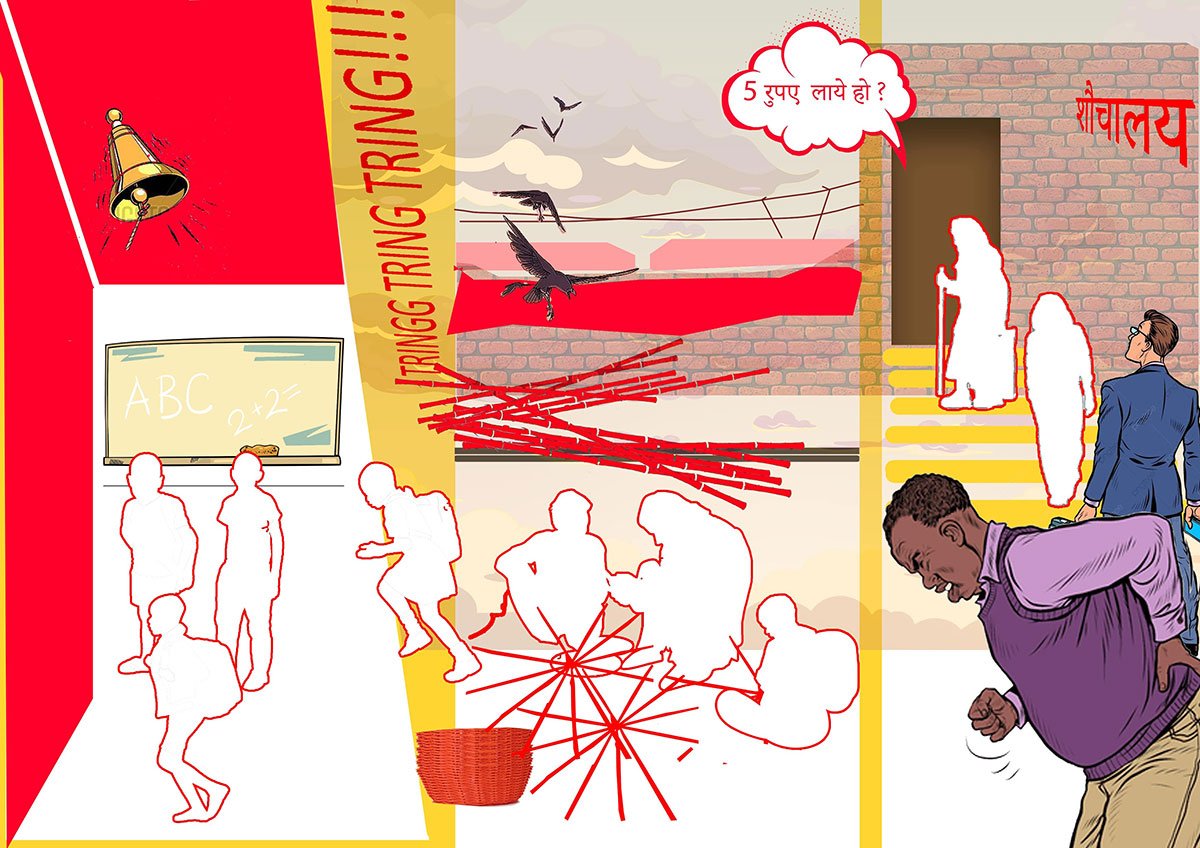
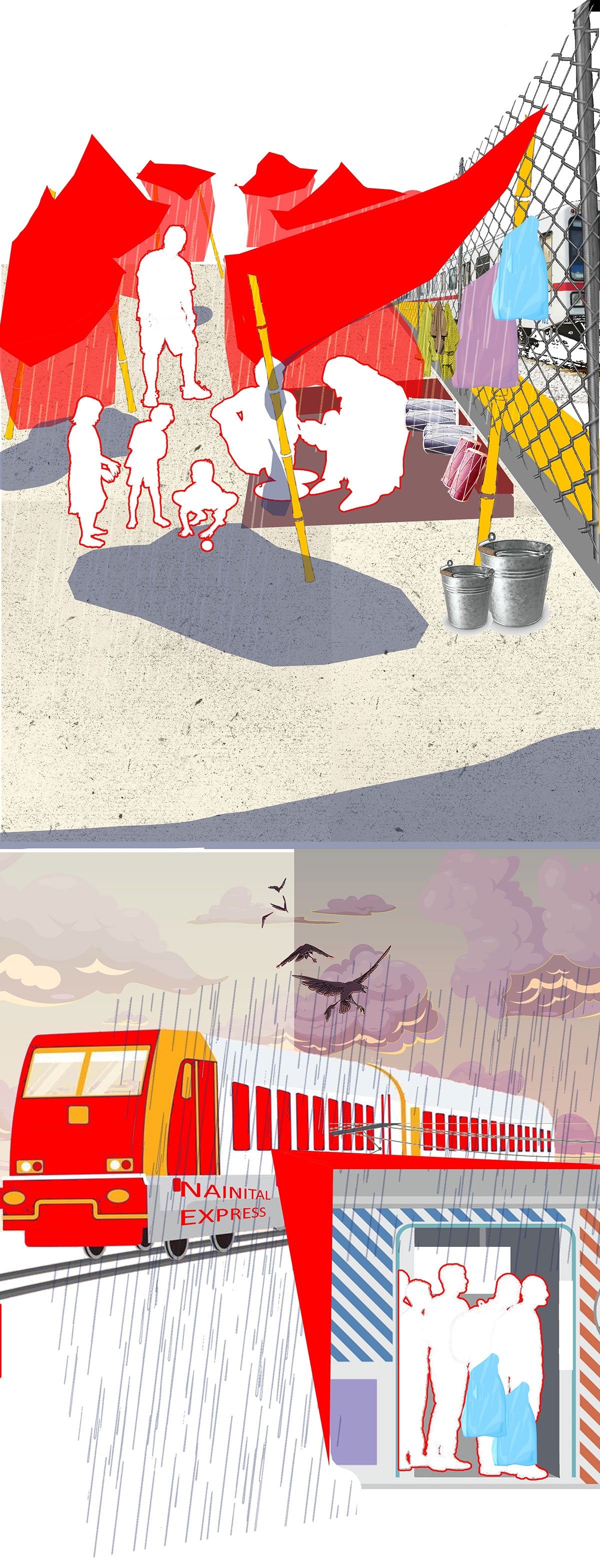
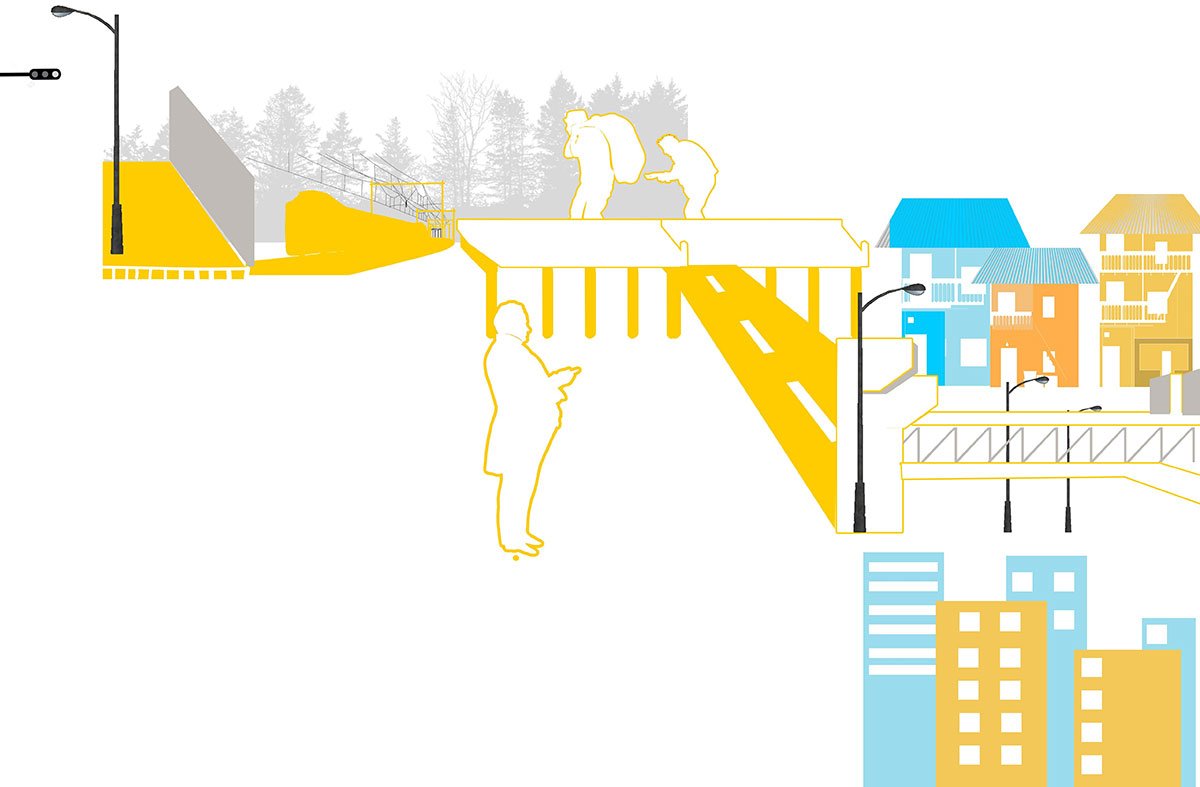
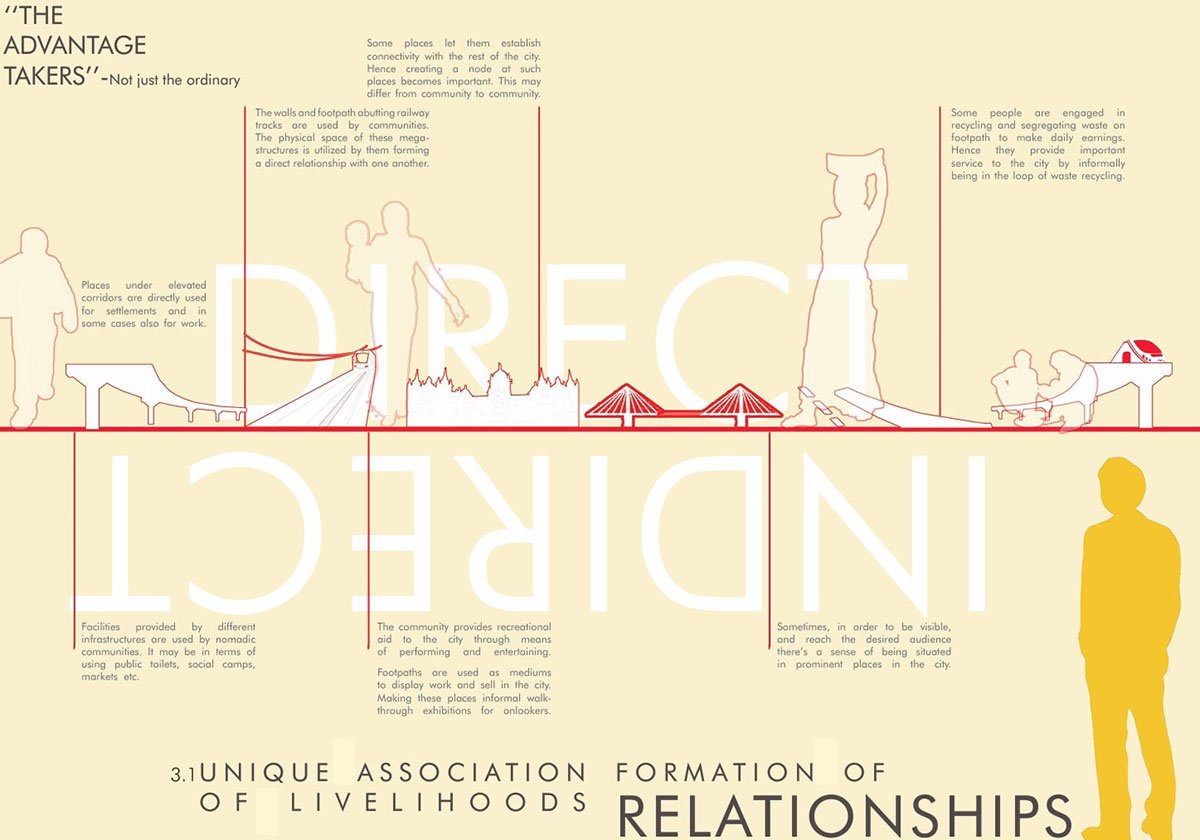
These communities are often seen using the city’s various infrastructures for purposes other than those for which they were intended. Observations include railway stations, the undersides of flyovers serving as shelter, streets serving as marketplaces or exhibition areas for their products, roadside learning serving as a permanent form of schooling, etc. Surprisingly, these communities not only pursue their self interests but also support the vitality of the city by providing services like informal recycling, entertainment, leisure, and the formation of commercial chains. Strategic livelihood linkages form a symbiotic relationship with Mumbai’s urban fabric.
User Day to Day Life
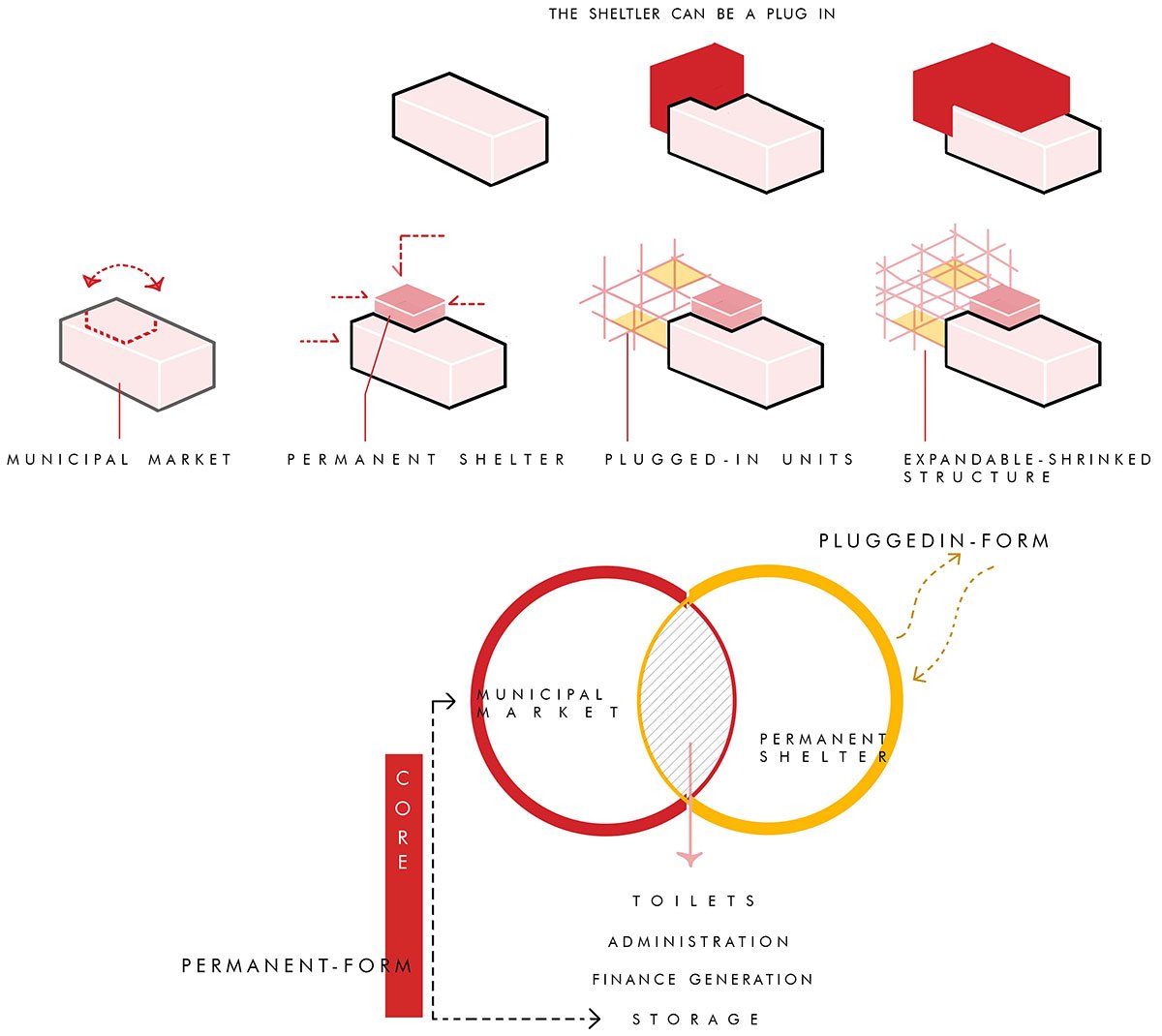
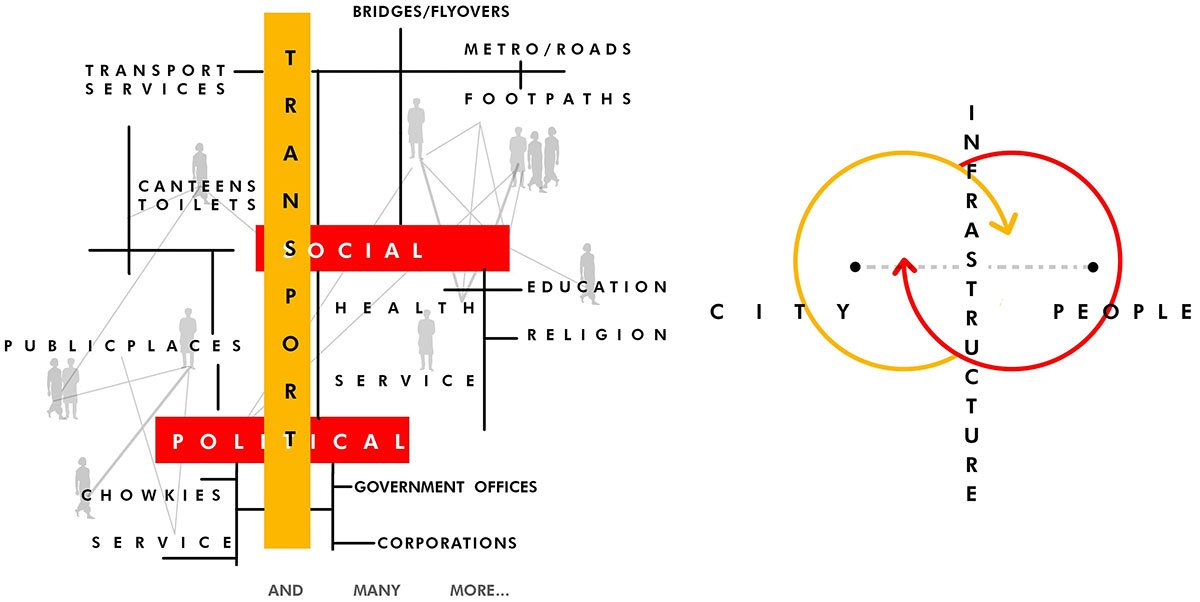
As a result, the thesis explored these connections and relationships in greater detail, looking at the ways in which a built form can offer alternative infrastructure features that are suitable to these urban communities. This dual approach serves their needs while also improving Mumbai’s broader urban context. The thesis explores whether architecture could propose a housing programme that integrates the social and commercial infrastructures of the city while emphasizing hybridity and duality to challenge preconceived notions about shelters.
This approach seeks to address the needs of marginalized communities for a means of subsistence and promote a more inclusive urban environment in the face of land pressures in the city by converting single-purpose structures into multifunctional components that benefit the city in return. How can flexible design and adaptive architecture support the livelihood activities of marginalized communities, where hybridity and plugins become important in a city that is struggling with a shortage of space and escalating land pressure?
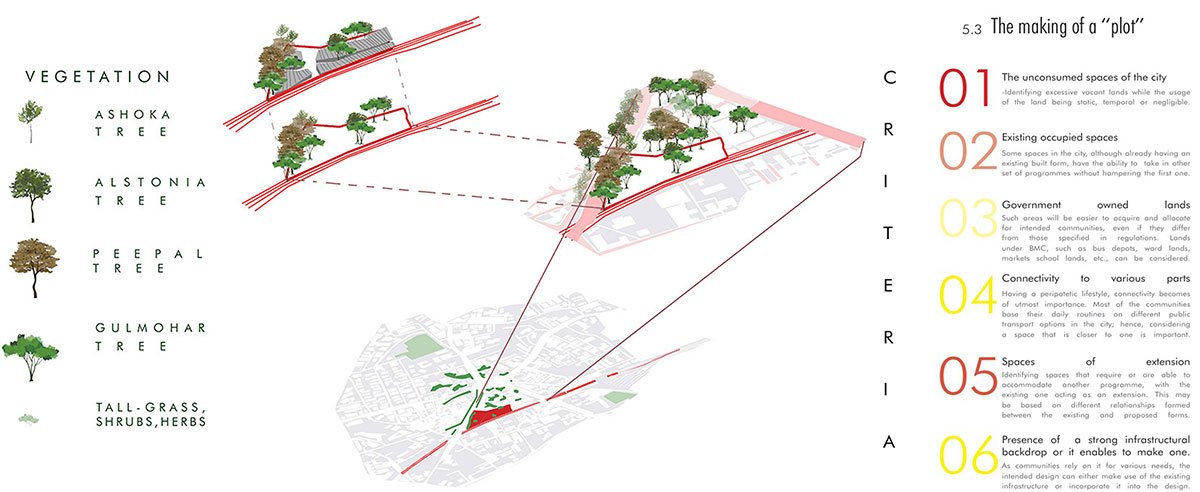
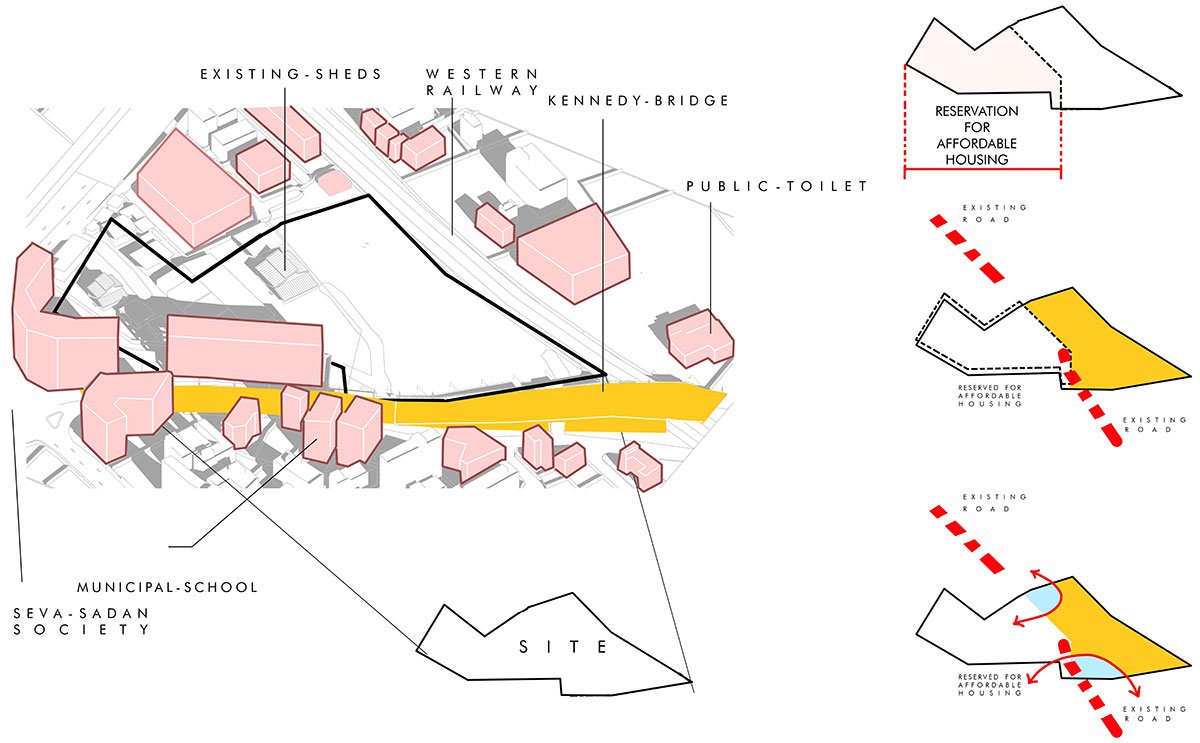
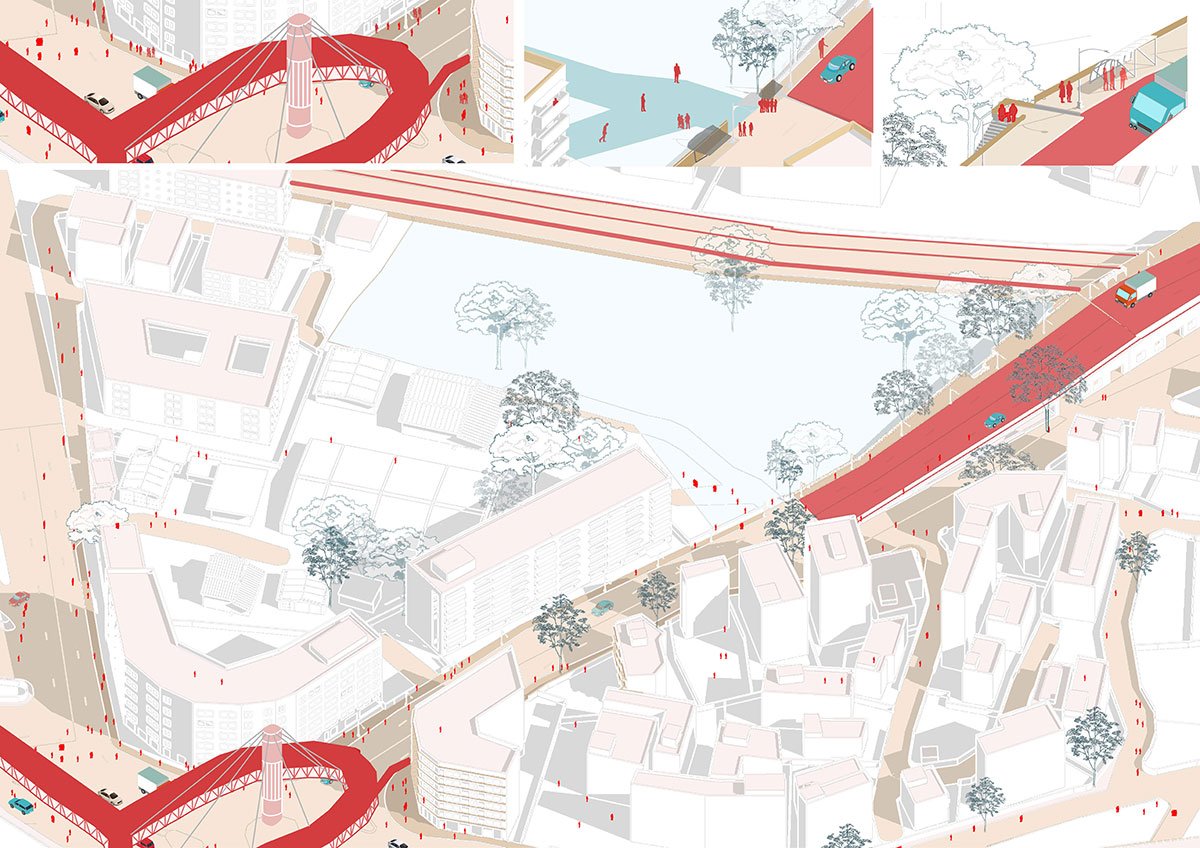
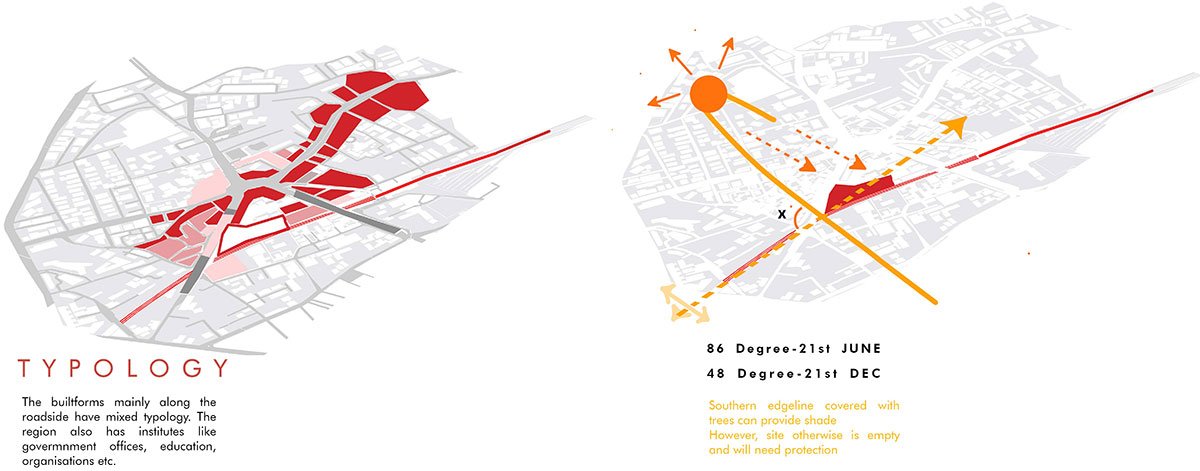
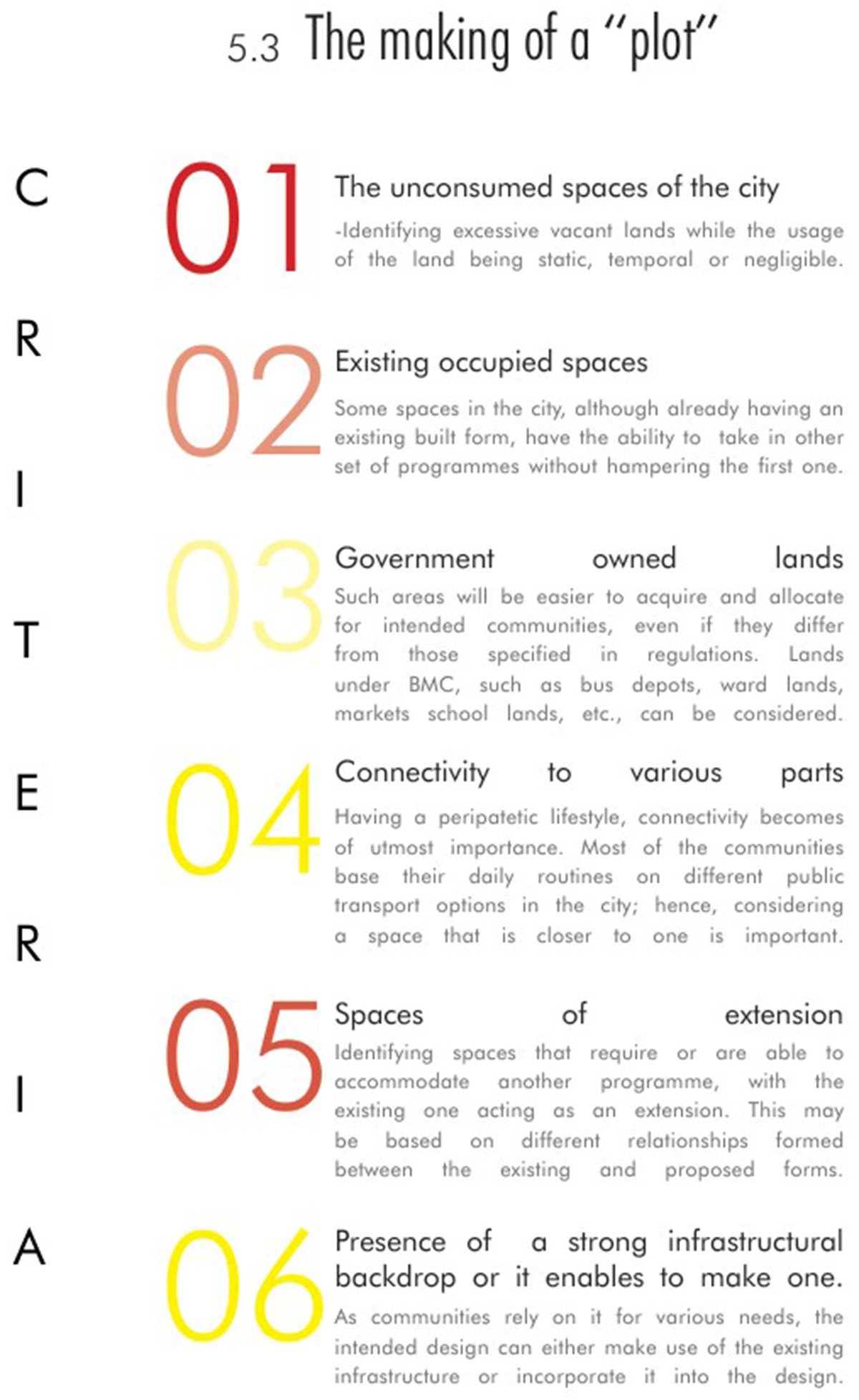
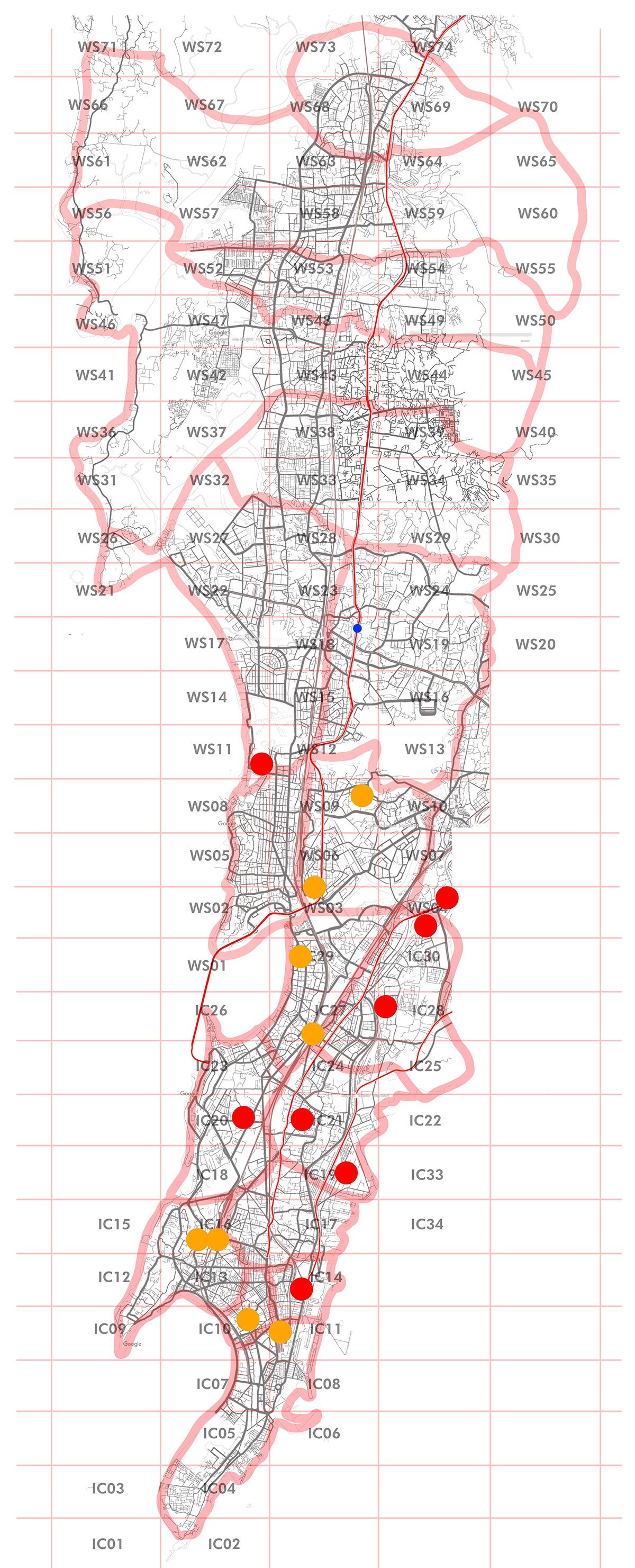
The intervention site is located in Grant Road, Mumbai. For site selection, several possibilities were listed based on the needs of the user group within the city. It was essential to examine plots that may be influenced by one or more of the following criteria to establish a connection with the diverse influences of the city.
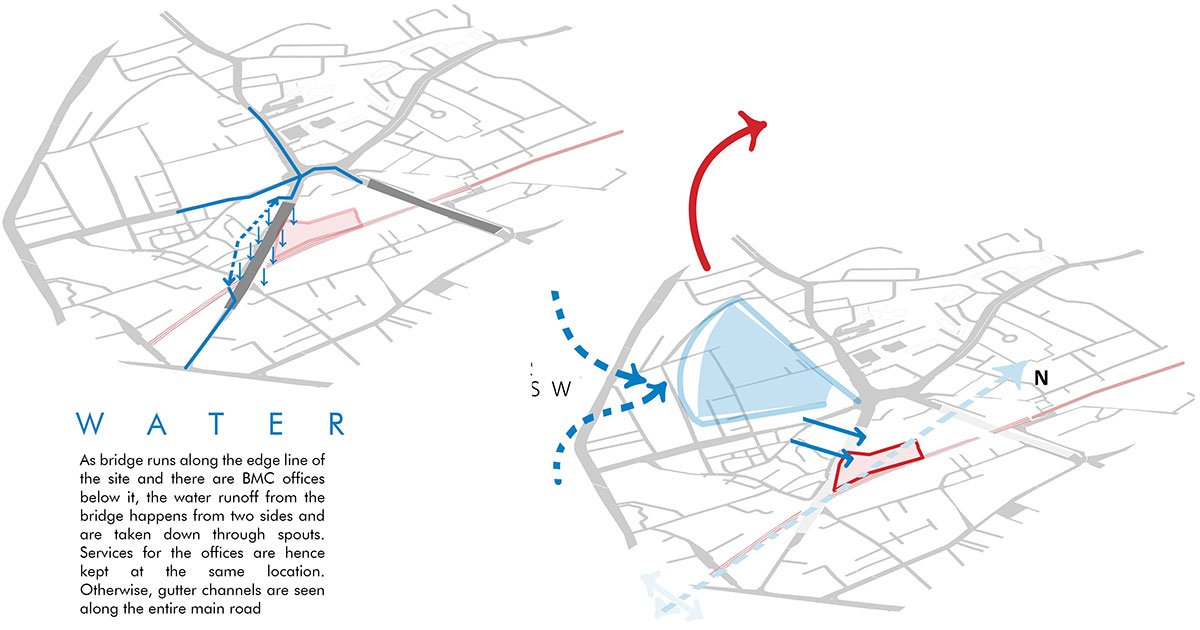
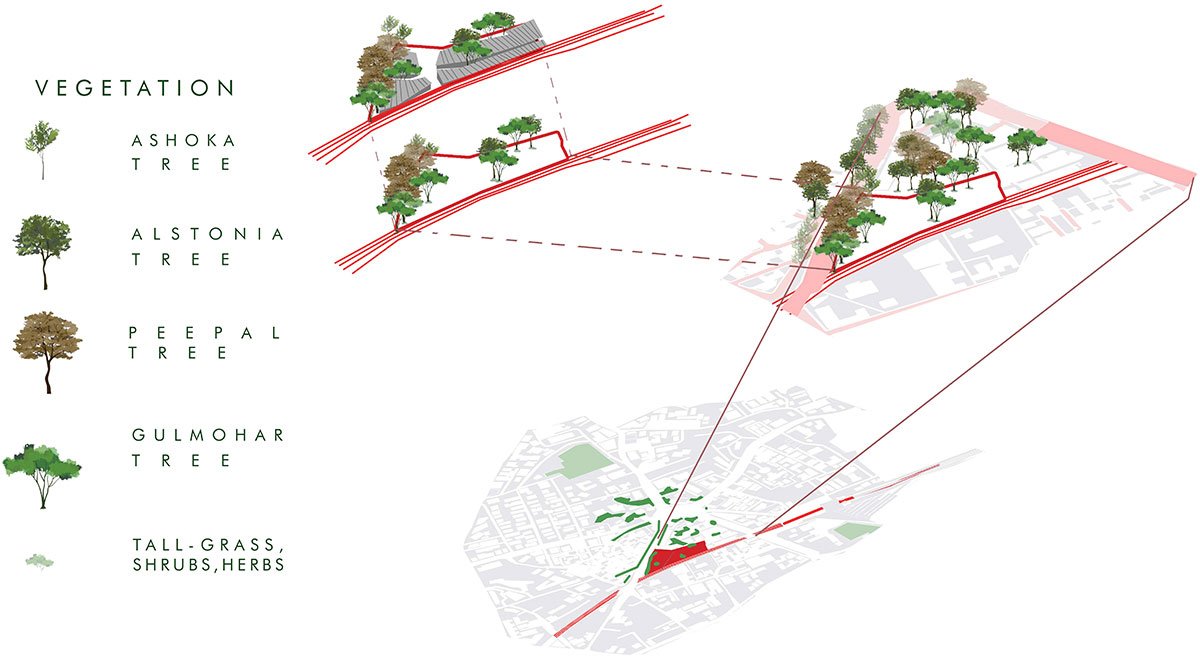
Site Analysis | Site Selection Criteria
During the planning stage, the government can further shortlist sites with specific features like those mentioned above to ensure the creation of productive spaces for incoming individuals. Therefore, within the city, users are trained and made self-sustainable through their course of stay in the shelter. They contribute to the city by offering recreational services, subsidized markets, worker communities and many more.
Design Process
City InfluencePeriod of StayUser Day to Day Life
A thorough study was conducted during the design process to analyse various users, their activities, and the nature of stay in the city. In order to improve and further iterate to create their own homes in the city, interviews were conducted and various types of spaces they occupy were studied. A total of 106 different communities were studied to examine their patterns, needs, and wants.
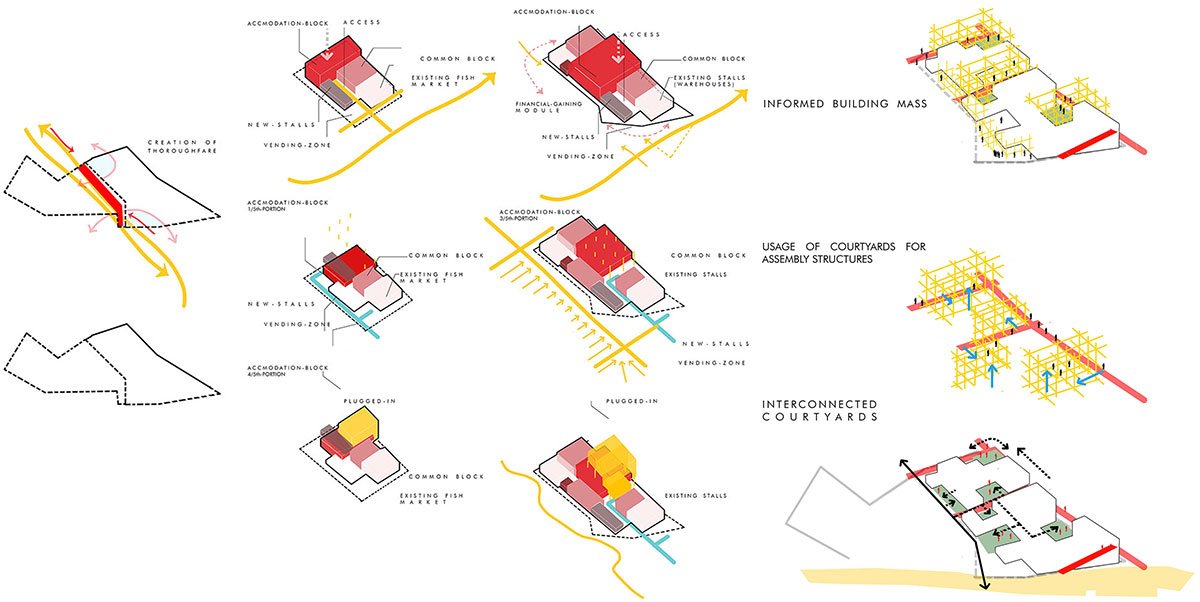
IntentConcept DevelopmentConcept Development | Concept Massing
Understanding the various relationships they formed while in the city and observing their work nature also played a significant part in the research and design process. Therefore, the research and design process seek to capture various aspects that are specific to each community.
Final Outcome
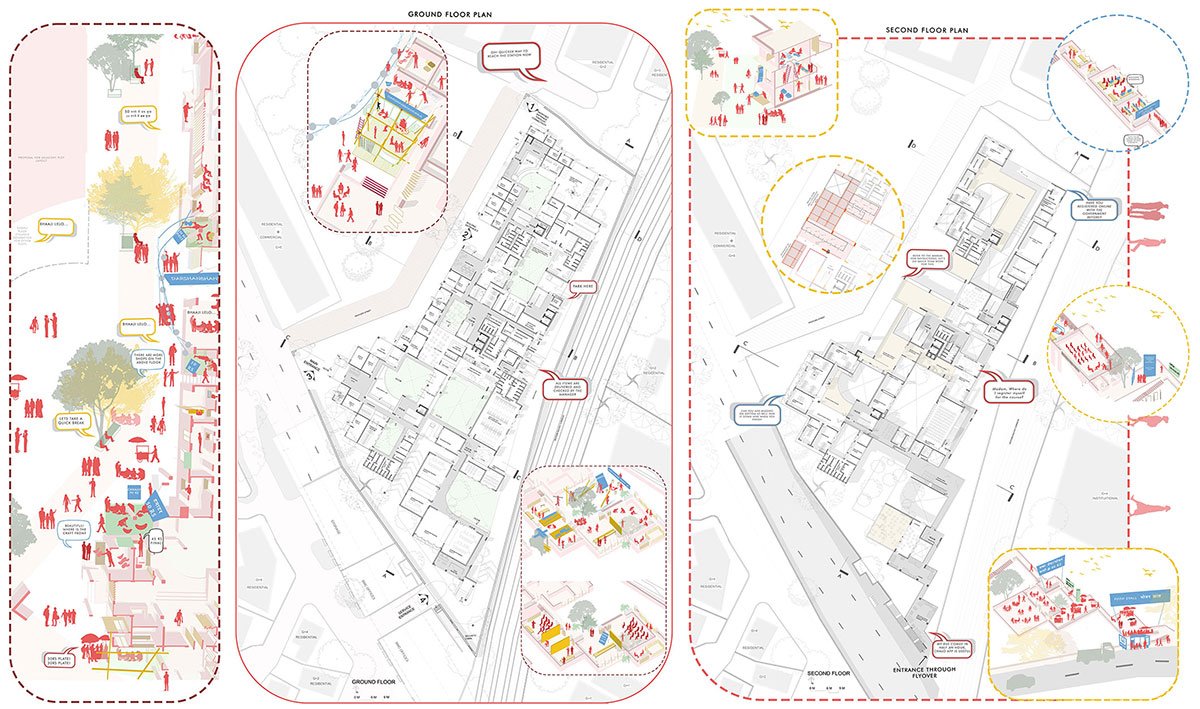
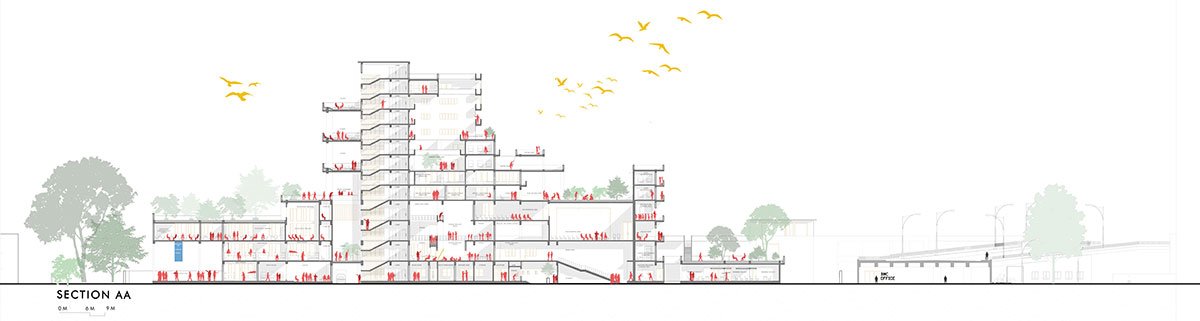
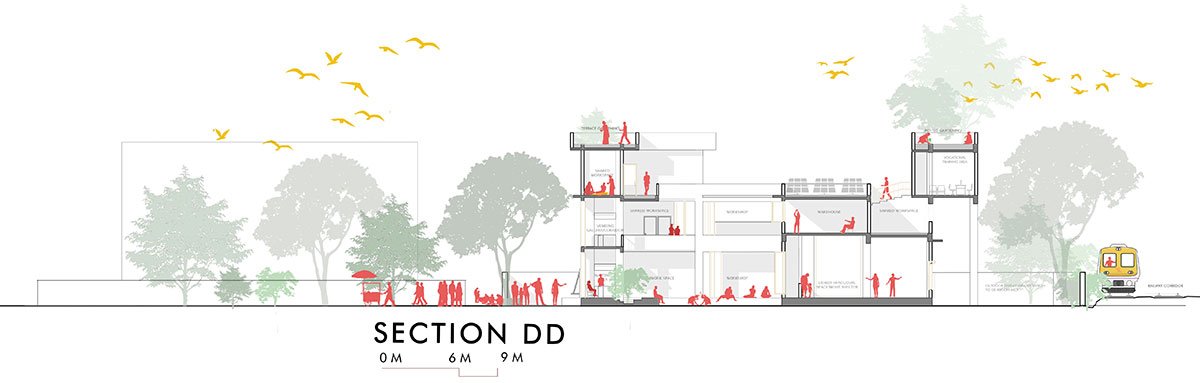
Ground Floor Plan | Second Floor PlanSectionFire Safety Axonometric
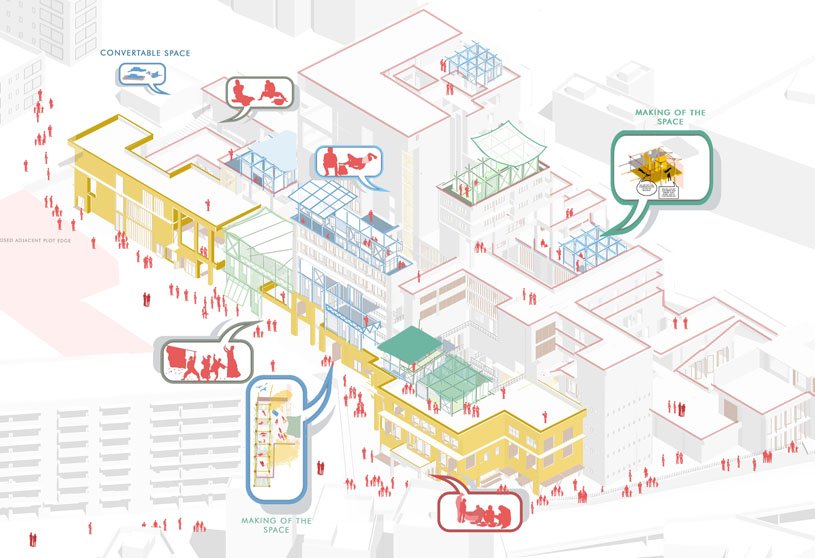
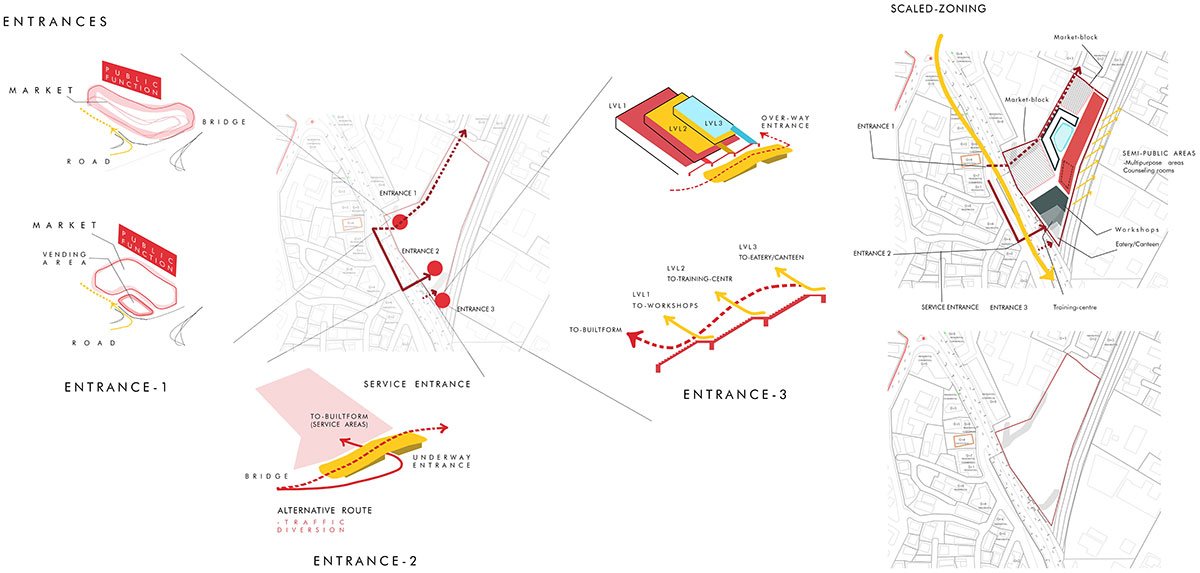
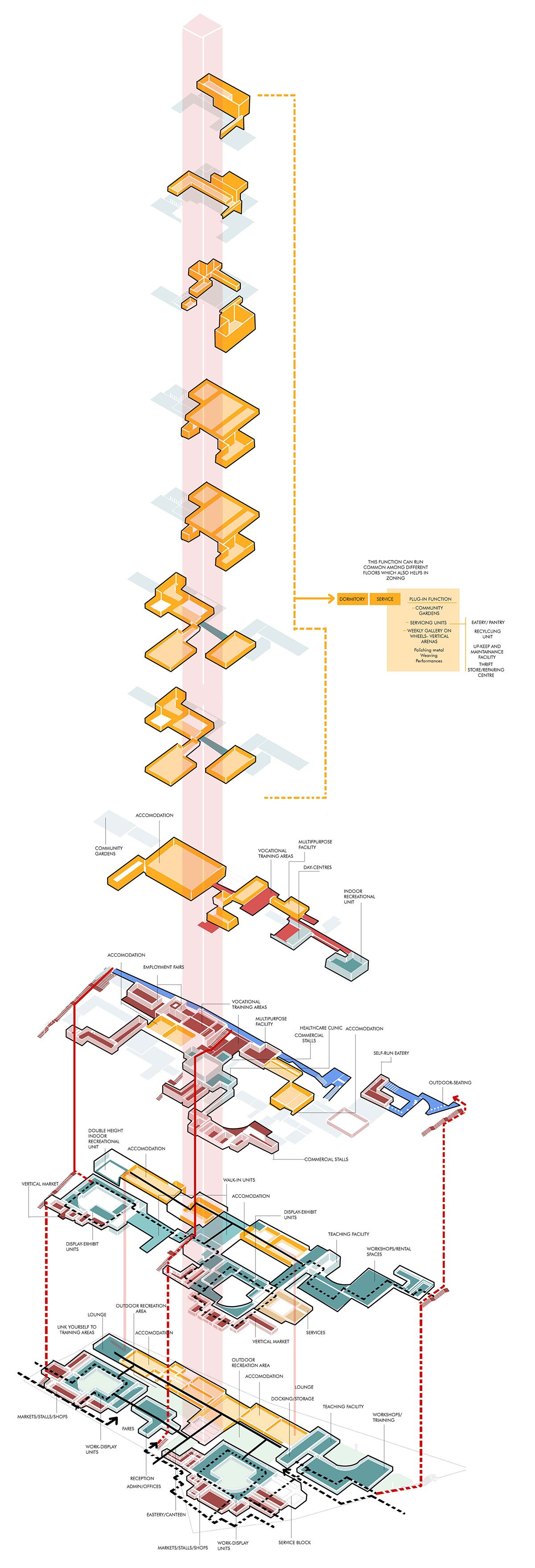
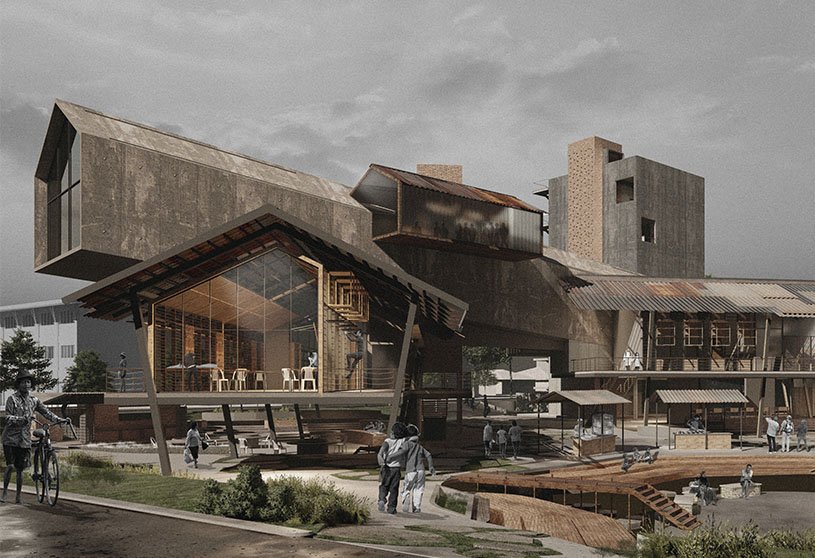
The Program Intent: The initiative seeks to challenge conventional stereotypes while providing shelter for marginalised communities. With a focus on the nomadic community, the shelter offers essential amenities and services to all low-income groups. In addition to providing areas for people to sell goods commercially, it also supports a strong infrastructure that enables locals to produce, learn, and sell.
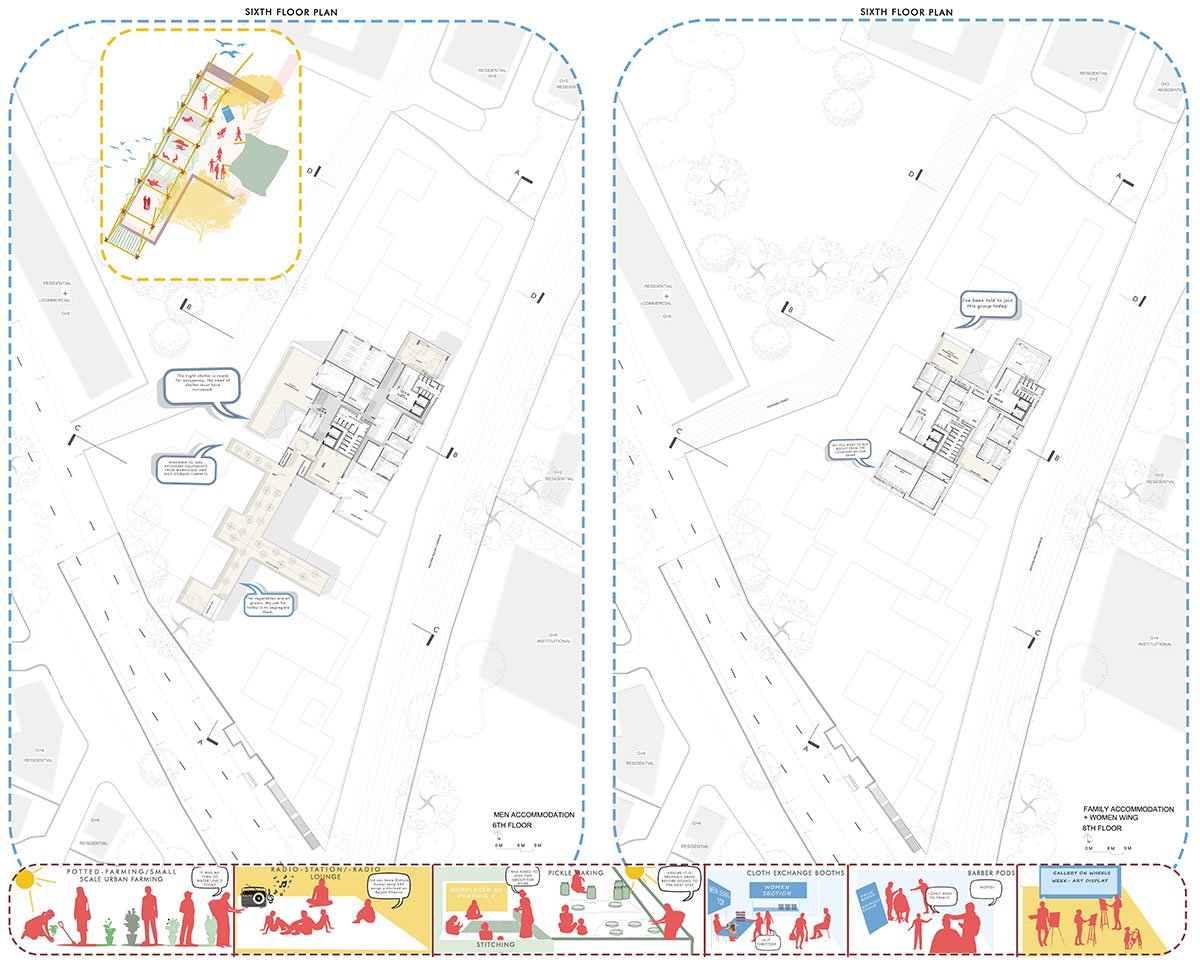
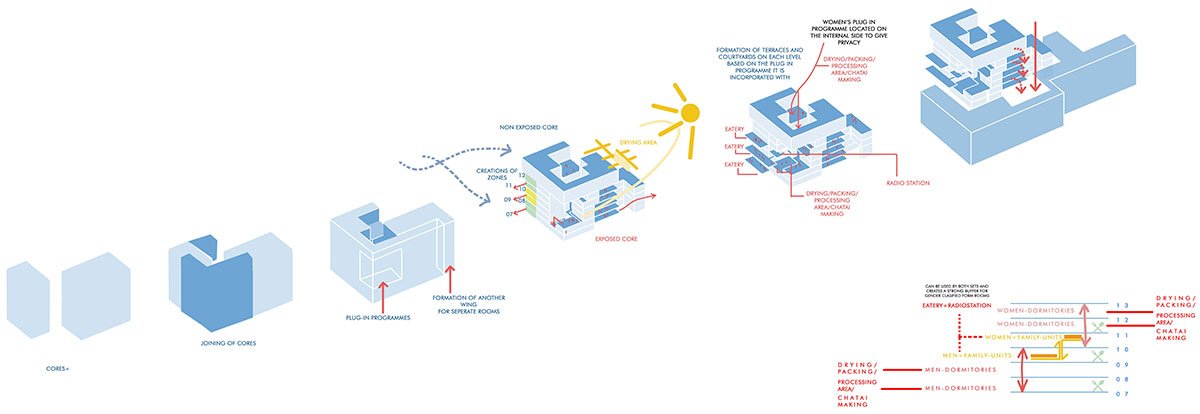
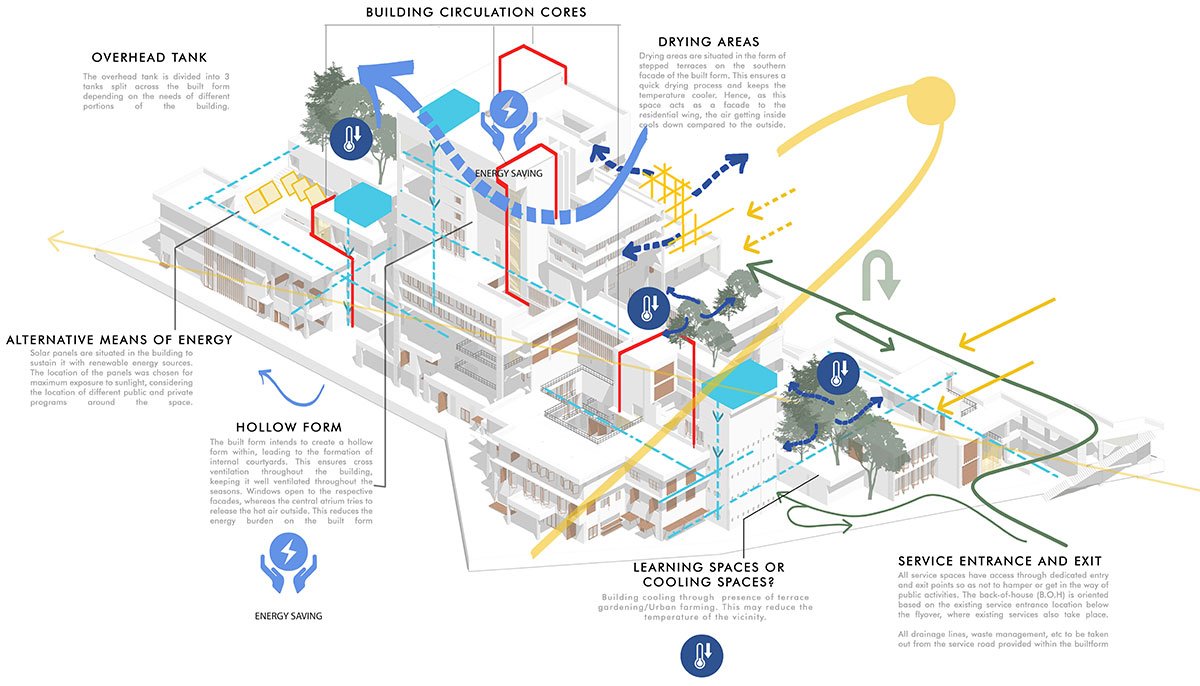
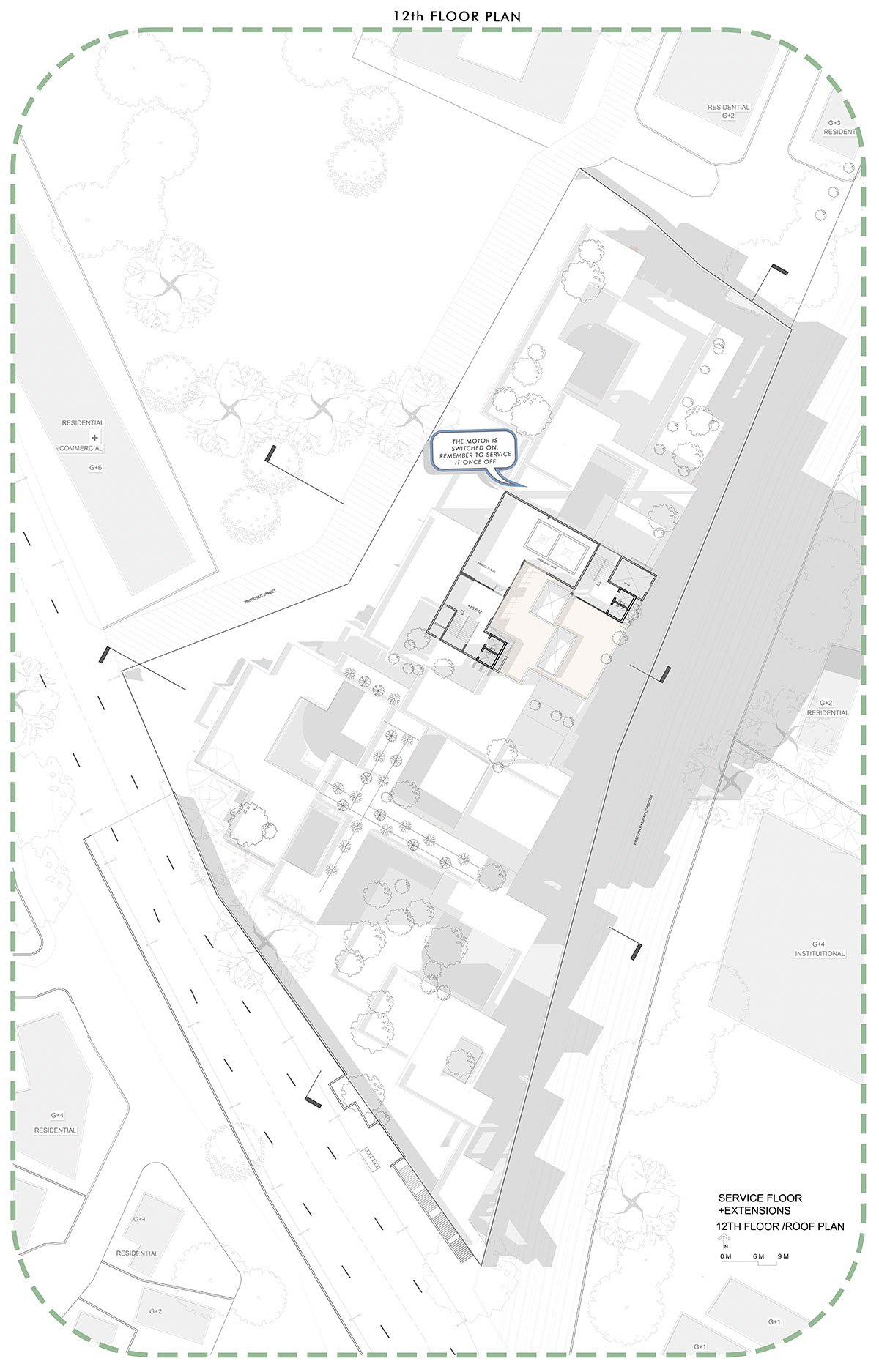
Sixth And Eighth Floor PlansSectionShelter MassingSustainability Diagram
This strategy makes it possible for the city to provide services and maintain a sustainable budget. In order to provide residents with the opportunity to actively manage the shelter, it takes on a composite form that includes markets, learning areas, and temporal systems. Everyone involved gains from this inclusive atmosphere and mutually beneficial relationship with the city.
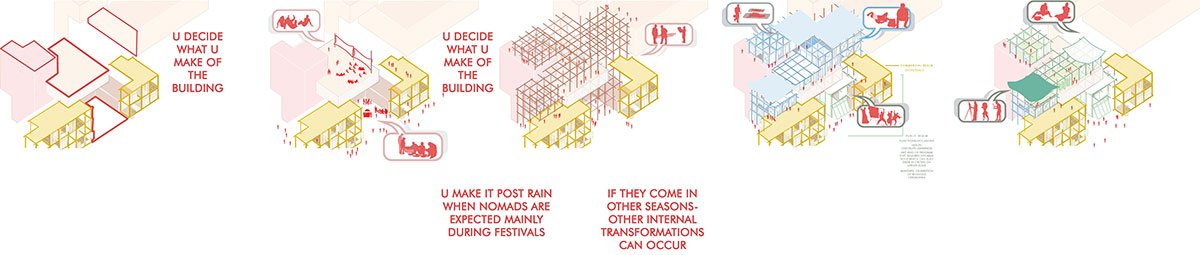
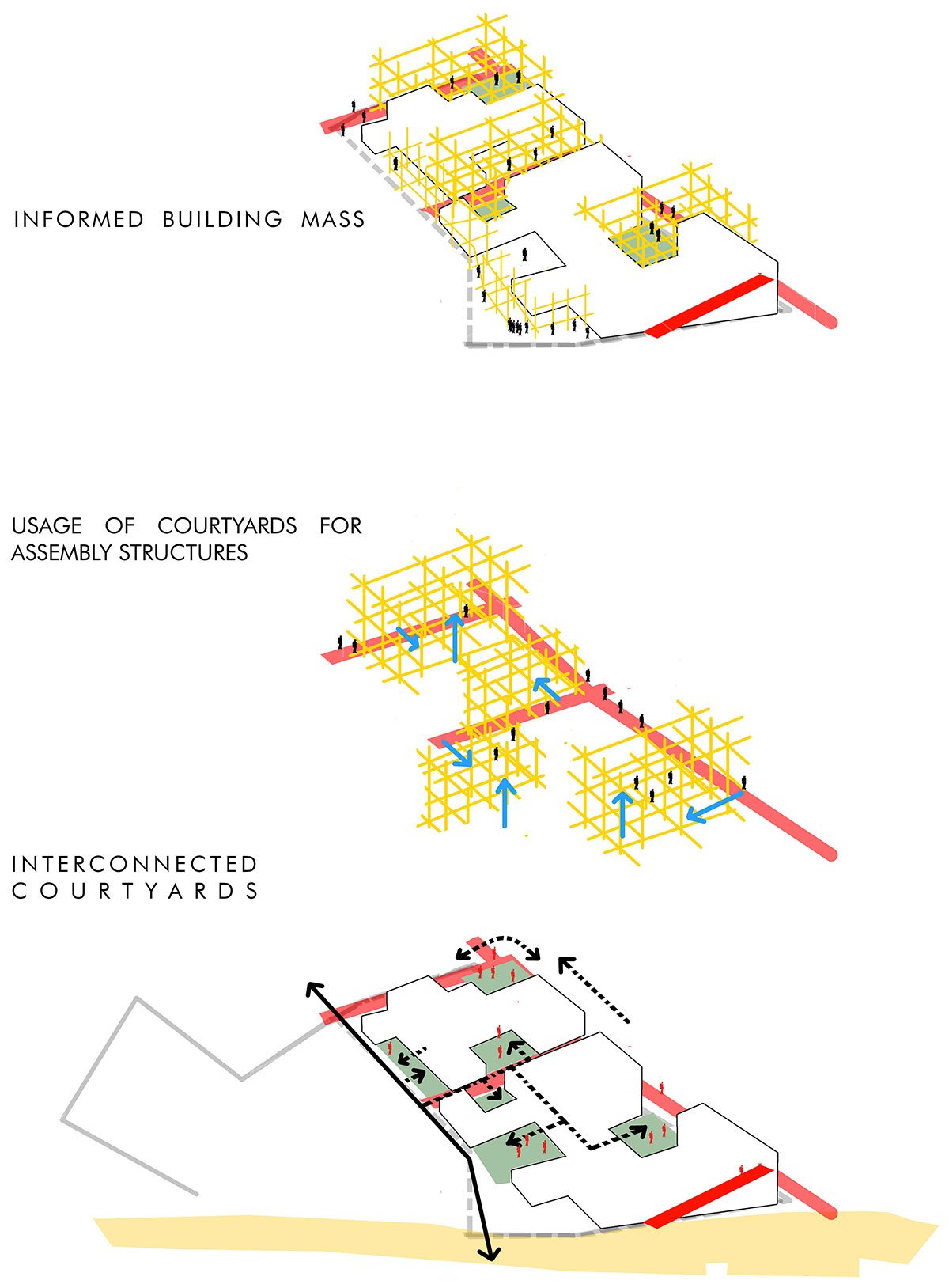
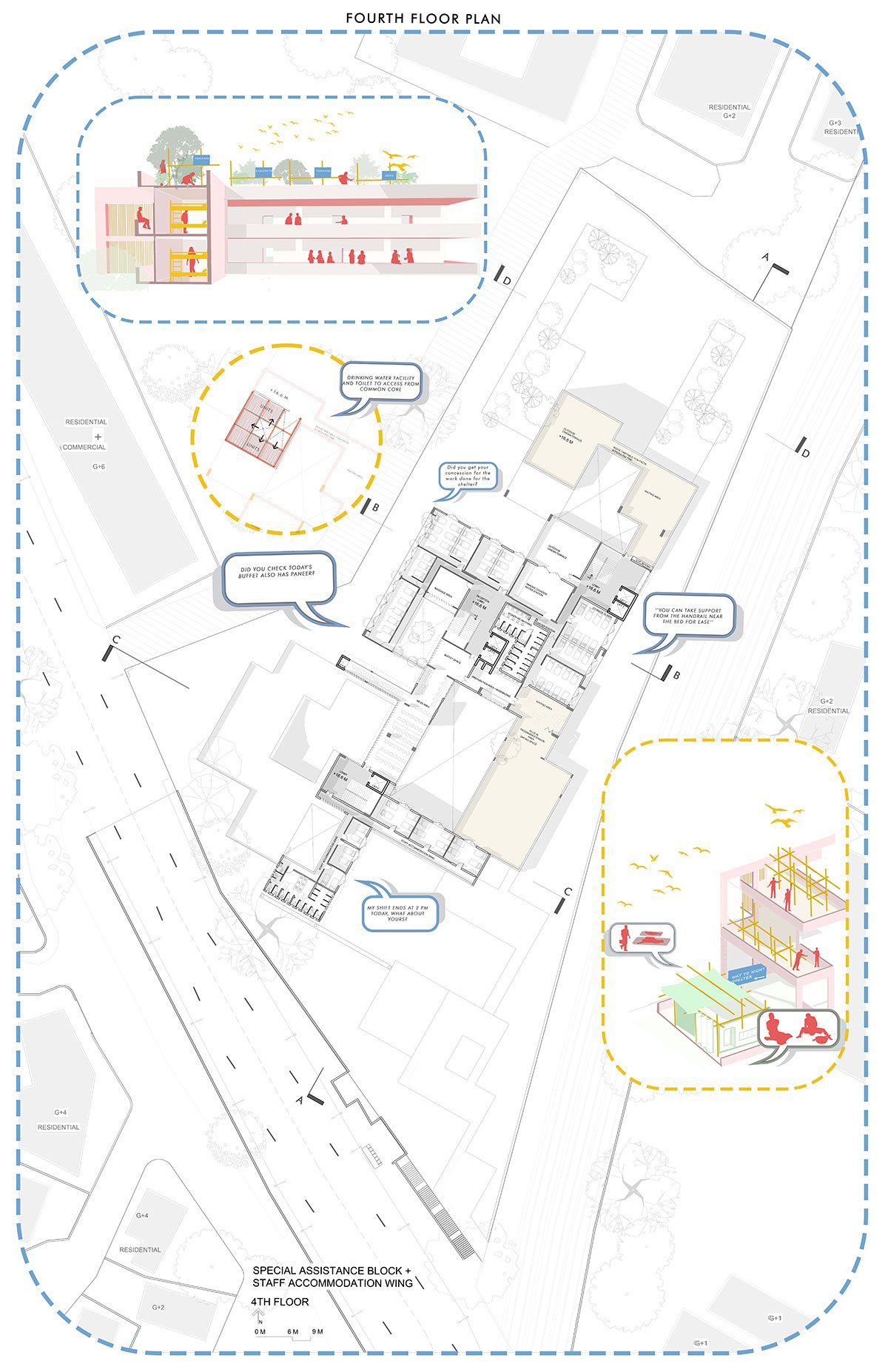
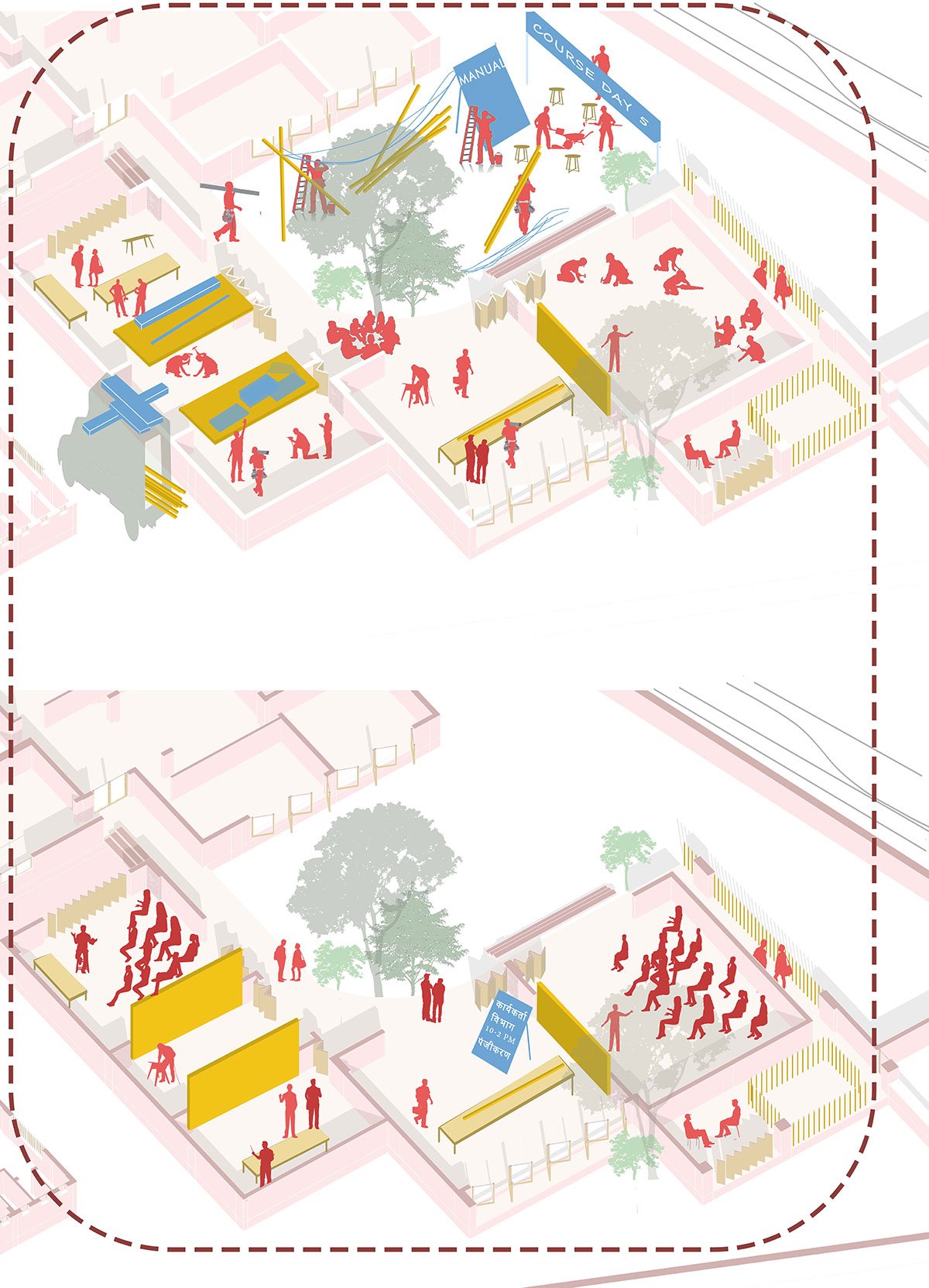
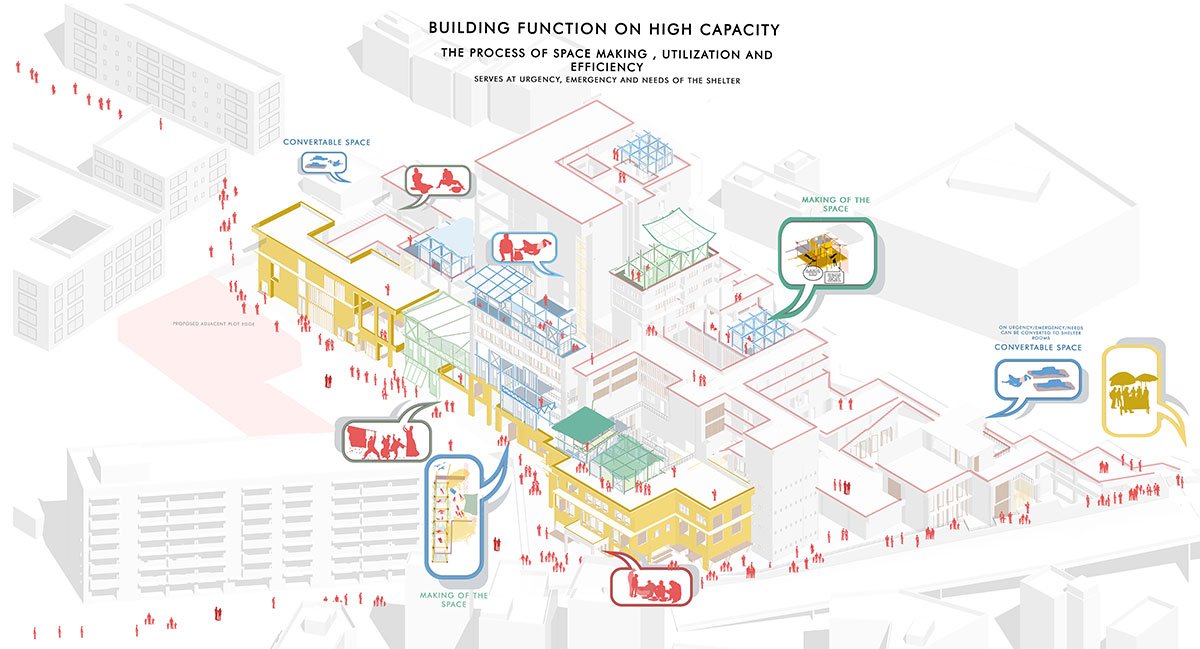
The Design Intent: In order to accommodate nomadic communities that visit the city on a seasonal basis, the design attempts to create a flexible space for emergencies and special needs. It can be expanded to accommodate housing, camps, and rescue shelters in addition to serving as a workspace, display area, and night shelter.
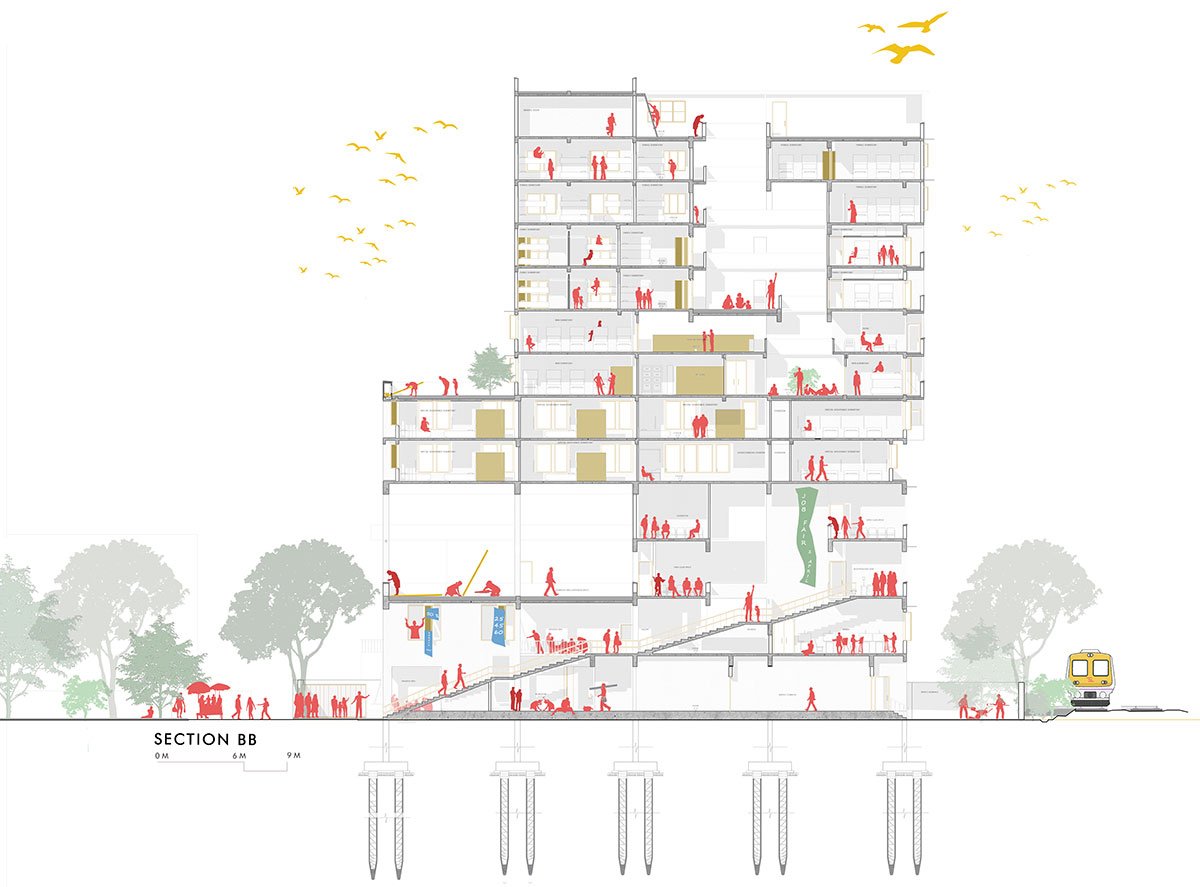
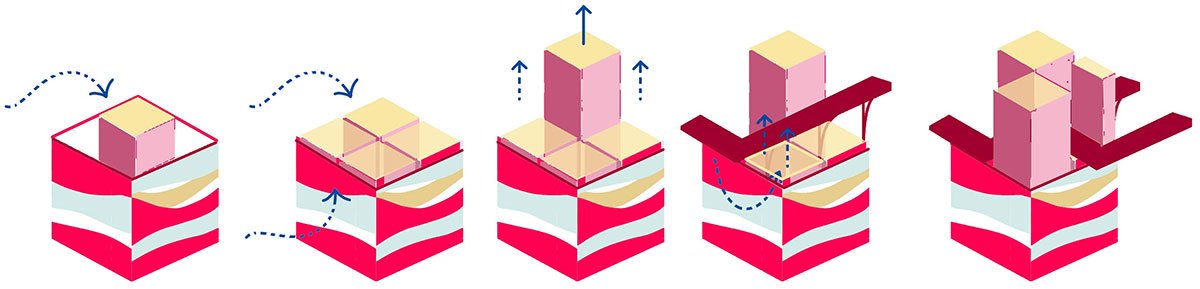
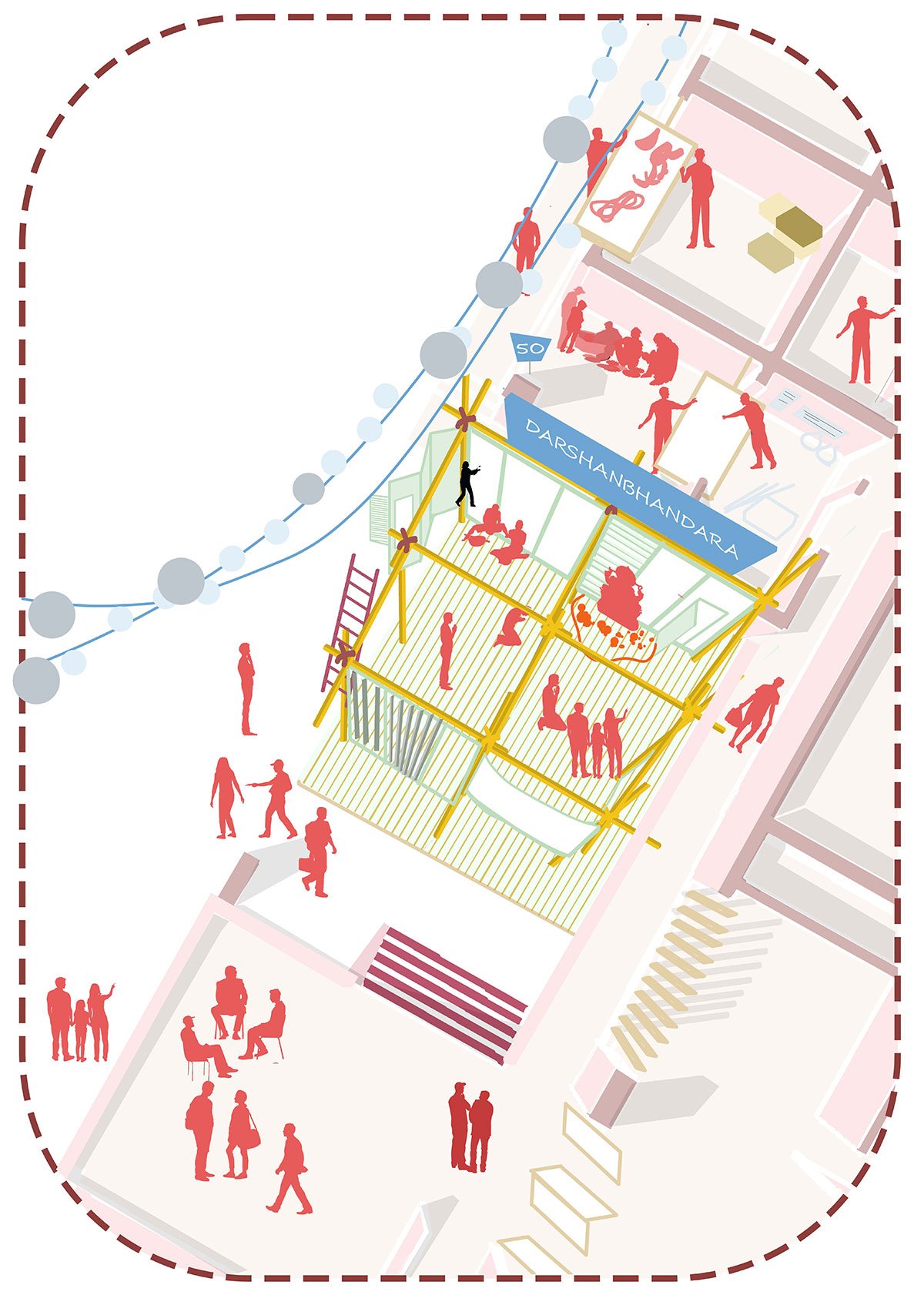
SectionMaking Of Temporal FormsProcess Of MakingSynthesis Drawing
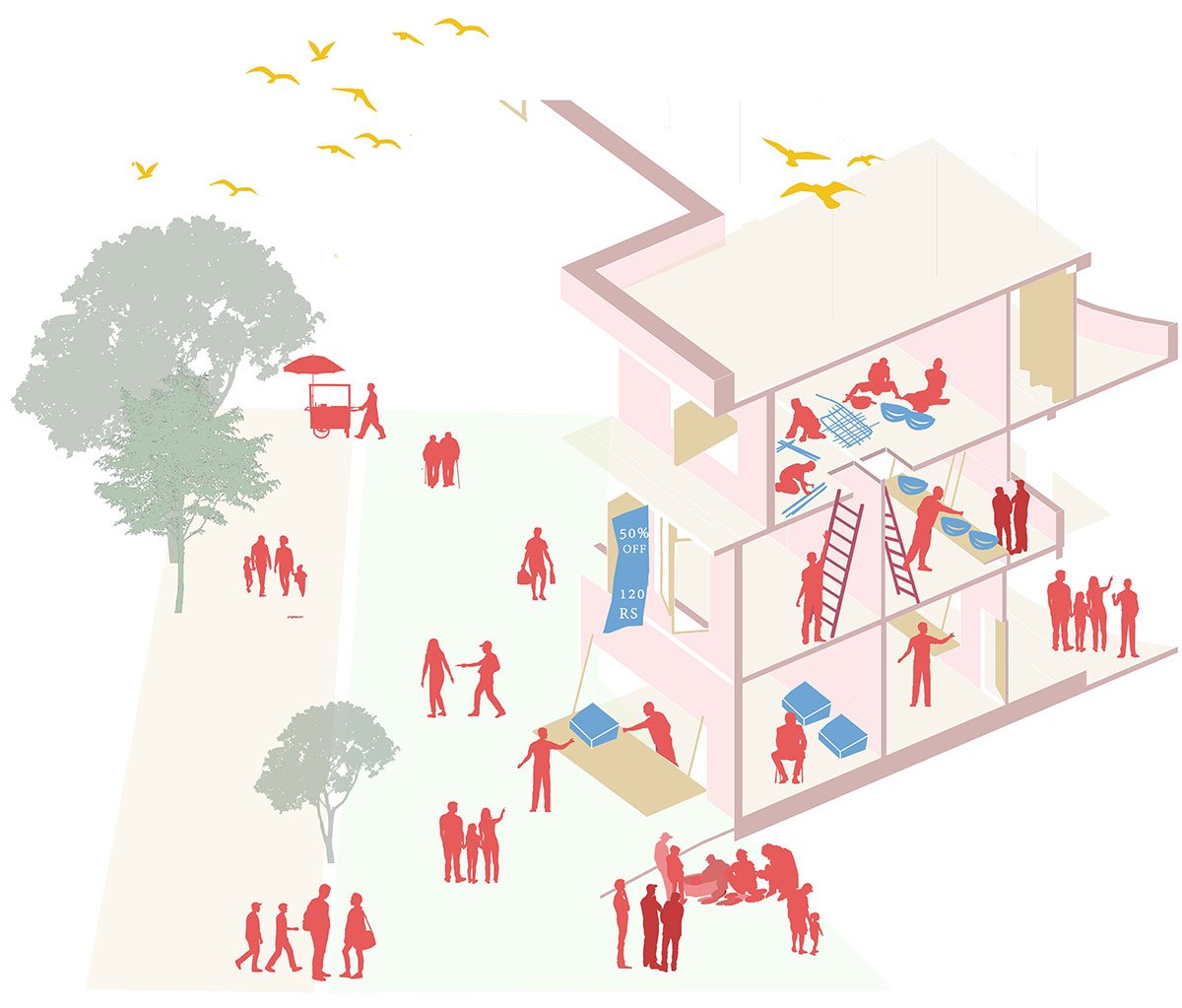
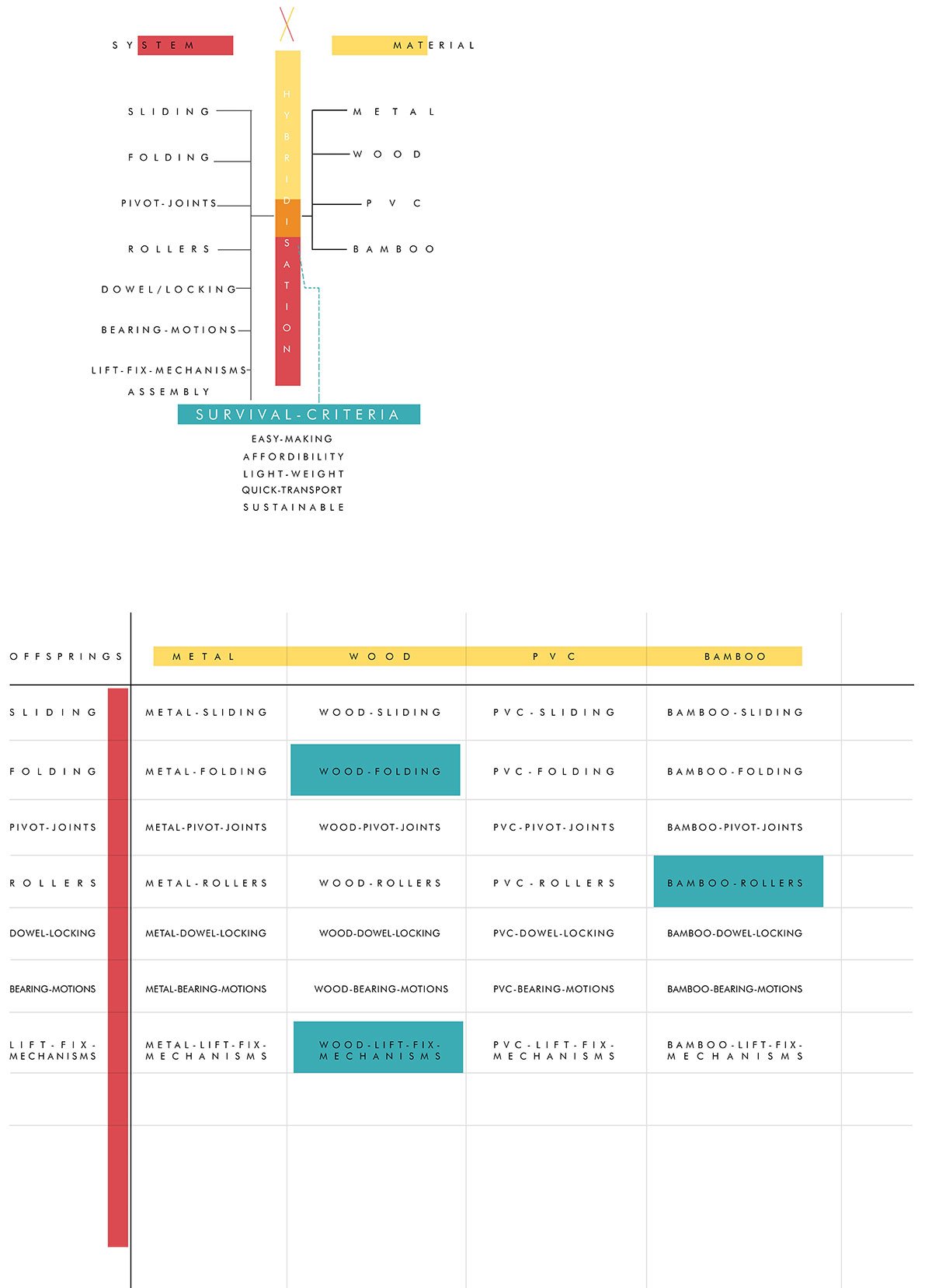
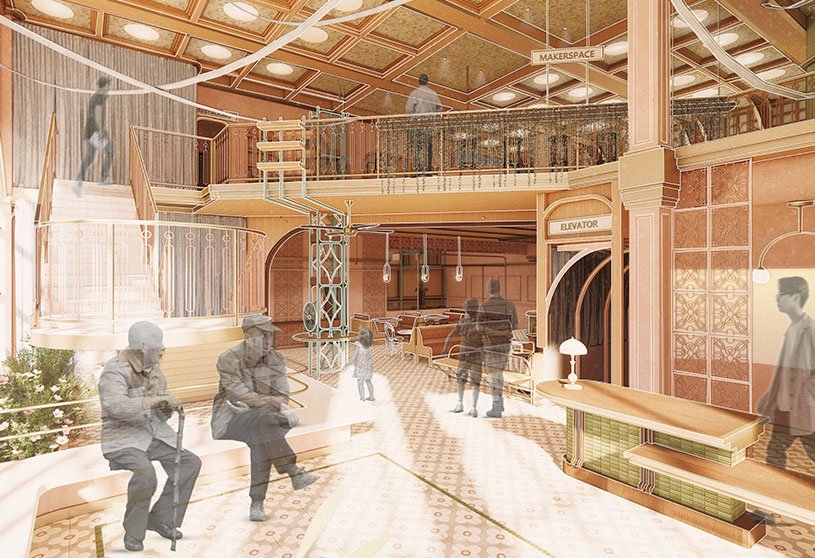
Internal conversions, like folding partitions, maximize space utilization, comfort, and user preferences. Through plug-in programmes run by NGOs, participants can use their existing skills and pick up new ones in this building. These initiatives support the shelter’s broad concept by providing crash courses, subsidised benefits, and facilitated buying-selling relationships within the building.
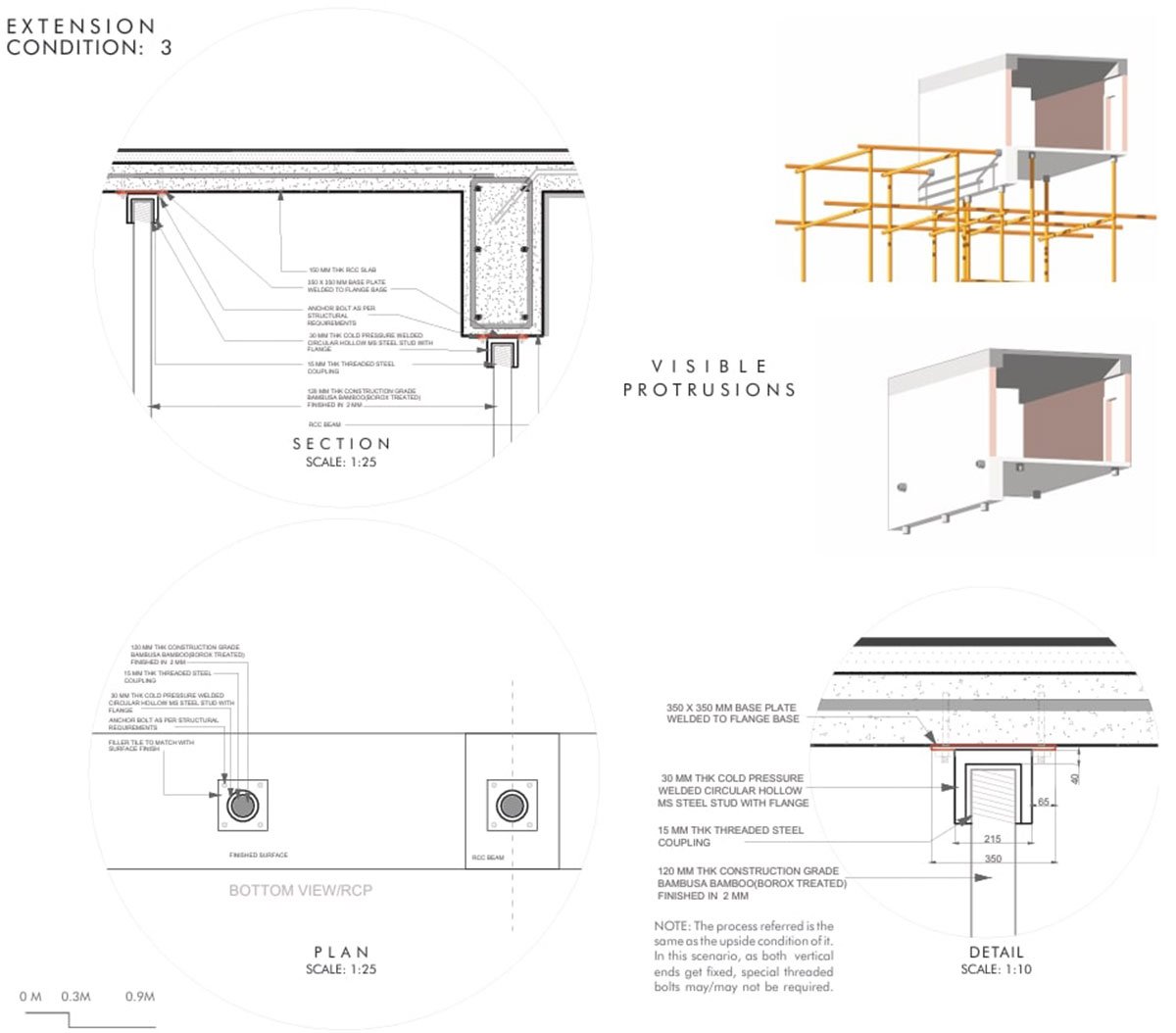
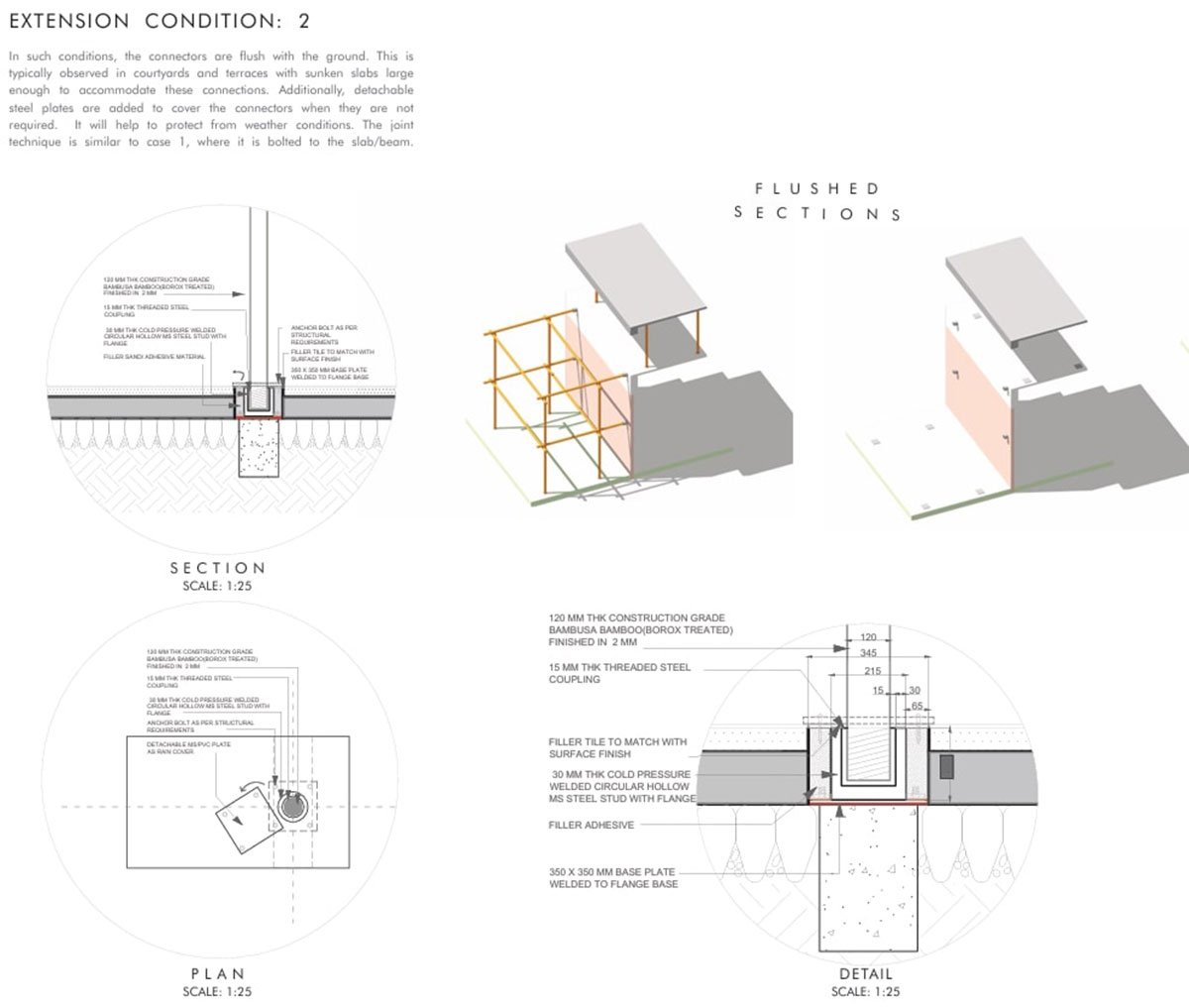
Section DetailsLoft – Second Floor | Drying Space – Fourth Floor
Conclusion: The project challenges stereotypical notions about the hybridity and duality of shelters and explores an architectural solution that proposes a housing programme that integrates the social and commercial infrastructures of the city.
[This Academic Project has been published with text submitted by the student]
Site Context
Design Process
Final Outcome
To submit your academic project for publication at ArchiDiaries, please visit the following link >> Submit
Get the best of ArchiDiaries, directly in your inbox.
We use cookies on our website to give you the most relevant experience by remembering your preferences and repeat visits. By clicking “Accept All”, you consent to the use of ALL the cookies. However, you may visit "Cookie Settings" to provide a controlled consent.
This website uses cookies to improve your experience while you navigate through the website. Out of these, the cookies that are categorized as necessary are stored on your browser as they are essential for the working of basic functionalities of the website. We also use third-party cookies that help us analyze and understand how you use this website. These cookies will be stored in your browser only with your consent. You also have the option to opt-out of these cookies. But opting out of some of these cookies may affect your browsing experience.
Necessary cookies are absolutely essential for the website to function properly. These cookies ensure basic functionalities and security features of the website, anonymously.
Cookie
Duration
Description
cookielawinfo-checkbox-analytics
11 months
This cookie is set by GDPR Cookie Consent plugin. The cookie is used to store the user consent for the cookies in the category "Analytics".
cookielawinfo-checkbox-functional
11 months
The cookie is set by GDPR cookie consent to record the user consent for the cookies in the category "Functional".
cookielawinfo-checkbox-necessary
11 months
This cookie is set by GDPR Cookie Consent plugin. The cookies is used to store the user consent for the cookies in the category "Necessary".
cookielawinfo-checkbox-others
11 months
This cookie is set by GDPR Cookie Consent plugin. The cookie is used to store the user consent for the cookies in the category "Other.
cookielawinfo-checkbox-performance
11 months
This cookie is set by GDPR Cookie Consent plugin. The cookie is used to store the user consent for the cookies in the category "Performance".
viewed_cookie_policy
11 months
The cookie is set by the GDPR Cookie Consent plugin and is used to store whether or not user has consented to the use of cookies. It does not store any personal data.
Functional cookies help to perform certain functionalities like sharing the content of the website on social media platforms, collect feedbacks, and other third-party features.
Performance cookies are used to understand and analyze the key performance indexes of the website which helps in delivering a better user experience for the visitors.
Analytical cookies are used to understand how visitors interact with the website. These cookies help provide information on metrics the number of visitors, bounce rate, traffic source, etc.
Advertisement cookies are used to provide visitors with relevant ads and marketing campaigns. These cookies track visitors across websites and collect information to provide customized ads.