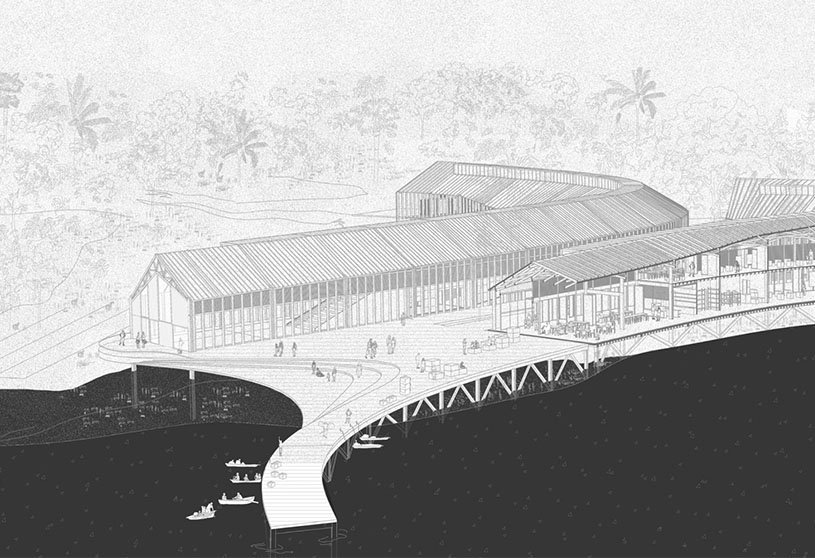
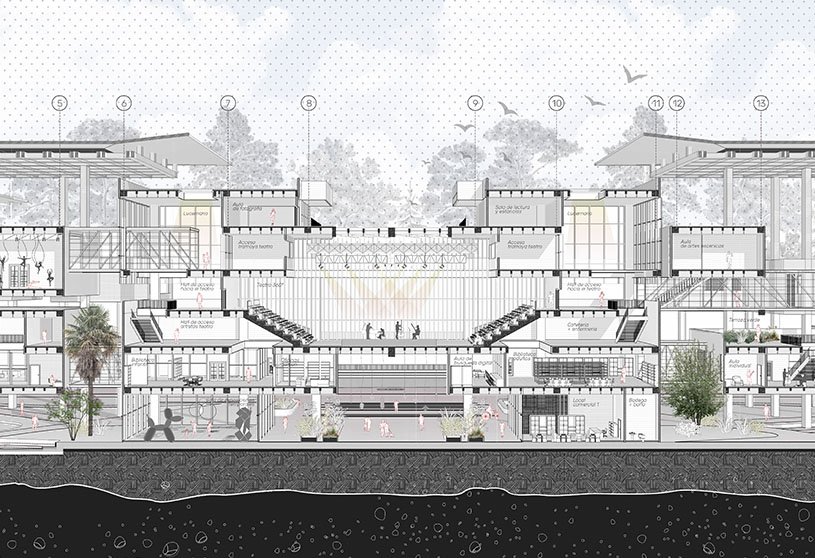
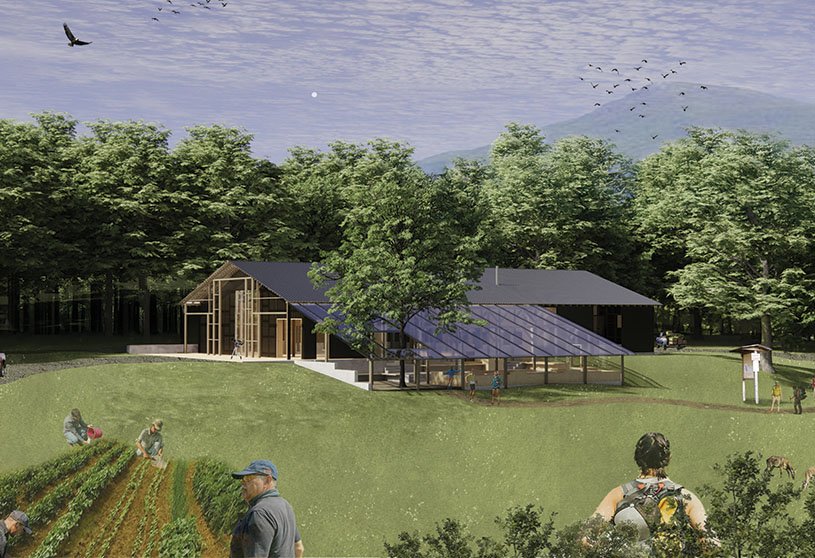
Excerpt: ‘Shopping Universe’ is an architecture thesis by Wei-Chieh Wang and Meng-Jung Ho from the Southern California Institute of Architecture (SCI-Arc) that explores how consumption and labour are intricately related within the context of shopping mall architecture. The study proposes redefining shopping centres as dynamic, hybrid spaces that combine labour and commercial functions, addressing pressing concerns like unsustainable consumption patterns and declining visitor engagement.
Introduction: The ‘Shopping Universe’ explores how consumption and labour are intricately related within the context of shopping mall architecture. The project examines how these spaces function as both commercial hubs and labour environments, challenging traditional dichotomies like work/consumption and public/private. This approach reveals the intricate relationship between labour and consumption, which is often overlooked and misleads the perceptions that these two activities are distinct.
The thesis focuses on redefining shopping centres as dynamic, hybrid spaces that combine labour and commercial functions, rather than just transactional places. The pressing concerns that malls are currently facing are addressed by this change, such as unsustainable consumption patterns and declining visitor engagement. Malls can develop into vital “third places” for socialising, leisure, and civic engagement by creating an environment that promotes community interaction and environmental responsibility.
The site for the intervention is Hawthorne Plaza, an abandoned mall in southwest Los Angeles County. The site has been inactive for almost 15 years, despite numerous failed attempts at redevelopment since the late 1990s. The site is an ideal location for transformation because of its extended vacant status and the dearth of public green spaces in the neighbourhood. The project intends to breathe new life into the area by fusing entertainment options with new developments, expanding retail, employment, and leisure opportunities while promoting environmental sustainability and community engagement.
Final Outcome
Ground Floor Plan
The proposed design for the shopping center at Hawthorne Plaza integrates three essential elements: the production space, the commercial space, and a communal area known as “the third place.” A community-based recycling system connects these spaces seamlessly, creating a dynamic and mutually beneficial environment that breathes new life into the idea of a mall.
This innovative design encourages local community participation in the upcycling process. The center will actively collect unwanted waste from the community, which is then converted into raw materials. On-site designers use these materials to create customised products that are then sold in the same place, encouraging a closed-loop production and consumption system.
Circulation Diagram
The facility houses four specialized reprocessing units for glass, plastic, textiles, and paper, each designed to transform waste into reusable raw materials. These materials are managed by a sophisticated automated system, including a vertical conveyor that facilitates the transfer of sorted waste to designated storage areas.
Each reprocessing station is equipped with all the necessary machinery to maximize both the functionality of the space and the efficiency of the process. After being redirected to the proper rooftop facilities, waste materials are transformed into usable raw materials and then stored on-site so that designers can access them.
Roof Plan
The layout of the mall encapsulates a vibrant mix of retail stores, dining options, and galleries, showcasing the entire lifecycle of products. The design strategically separates but visually integrates the flow of materials and visitors, enhancing the educational and immersive experience. This transparency not only allows visitors to witness the art of craftsmanship and repurposing up close but also cultivates a deeper appreciation for sustainable practices.
Additionally, the mall’s architecture incorporates recycled materials into its undulating façade, reflecting the properties of the textiles, papers, or plastics reprocessed within. These materials are creatively adapted into diverse building elements with varied shapes, colors, and patterns, symbolizing the innovative spirit of our space.
Beyond a mere shopping destination, the mall is reenvisioned as a dynamic venue that redefines consumer interaction with production. This hybrid space, part commercial and part creative hub, facilitates a new model of consumer engagement, blending economic transactions with educational moments.
Paper Reprocessing Facility
Complementing the sustainable design, the rooftop features landscaped greenery that serves both as a primary observational pathway for visitors and a scenic connector between different parts of the mall. The proposal envisions a sustainable, open-air shopping center that harmoniously integrates with its environment, promoting a sustainable lifestyle through innovative design and operation.
Industrial Space and Storage
This shopping mall promotes environmentally responsible building practices by introducing transparency to product lifecycles and establishing a circular production chain. Consumers are actively repurposing used objects, giving them a second life and redefining the role of buying and discarding. The unique identity of the products is achieved through regionally sourced materials, resulting in a variety of final products reflecting local characteristics, rather than mass production standards.
The reimagined shopping mall aims to create a system of spatial and labor-product relationships, extending beyond the physical building. It outlines the entire production reality, from material extraction to product assembly and customization. Machines play a crucial role in recycling waste, bridging the gap between the product and manufacturing processes. The mall also encourages consumers to repurpose consumption and redefine their roles in social and ecological environments. By associating itself with sustainability and nature, it could create a distinctive identity.
Conclusion: Ultimately, this project envisions shopping malls as pivotal spaces in promoting a circular economy, where every phase of a product’s lifecycle—from creation to repurposing—is visible and integral to the consumer experience. This model not only challenges the traditional roles of buying and discarding but also redefines the mall’s role in a modern urban landscape, making it a cornerstone of sustainability and social interaction.
[This Academic Project has been published with text submitted by the student]
Final Outcome
To submit your academic project for publication at ArchiDiaries, please visit the following link >> Submit
Get the best of ArchiDiaries, directly in your inbox.
We use cookies on our website to give you the most relevant experience by remembering your preferences and repeat visits. By clicking “Accept All”, you consent to the use of ALL the cookies. However, you may visit "Cookie Settings" to provide a controlled consent.
This website uses cookies to improve your experience while you navigate through the website. Out of these, the cookies that are categorized as necessary are stored on your browser as they are essential for the working of basic functionalities of the website. We also use third-party cookies that help us analyze and understand how you use this website. These cookies will be stored in your browser only with your consent. You also have the option to opt-out of these cookies. But opting out of some of these cookies may affect your browsing experience.
Necessary cookies are absolutely essential for the website to function properly. These cookies ensure basic functionalities and security features of the website, anonymously.
Cookie
Duration
Description
cookielawinfo-checkbox-analytics
11 months
This cookie is set by GDPR Cookie Consent plugin. The cookie is used to store the user consent for the cookies in the category "Analytics".
cookielawinfo-checkbox-functional
11 months
The cookie is set by GDPR cookie consent to record the user consent for the cookies in the category "Functional".
cookielawinfo-checkbox-necessary
11 months
This cookie is set by GDPR Cookie Consent plugin. The cookies is used to store the user consent for the cookies in the category "Necessary".
cookielawinfo-checkbox-others
11 months
This cookie is set by GDPR Cookie Consent plugin. The cookie is used to store the user consent for the cookies in the category "Other.
cookielawinfo-checkbox-performance
11 months
This cookie is set by GDPR Cookie Consent plugin. The cookie is used to store the user consent for the cookies in the category "Performance".
viewed_cookie_policy
11 months
The cookie is set by the GDPR Cookie Consent plugin and is used to store whether or not user has consented to the use of cookies. It does not store any personal data.
Functional cookies help to perform certain functionalities like sharing the content of the website on social media platforms, collect feedbacks, and other third-party features.
Performance cookies are used to understand and analyze the key performance indexes of the website which helps in delivering a better user experience for the visitors.
Analytical cookies are used to understand how visitors interact with the website. These cookies help provide information on metrics the number of visitors, bounce rate, traffic source, etc.
Advertisement cookies are used to provide visitors with relevant ads and marketing campaigns. These cookies track visitors across websites and collect information to provide customized ads.