Home » Academic projects » t.bs – tu. blisko swoich (here. close to your people): Affordable Social Housing in Poland That Reimagines Community Living | Bachelors Design Thesis
t.bs – tu. blisko swoich (here. close to your people): Affordable Social Housing in Poland That Reimagines Community Living | Bachelors Design Thesis
Excerpt: ‘t.bs – tu. blisko swoich’ is an architecture thesis by Martyna Chudalewska from the ‘Faculty of Architecture – Wrocław University of Science and Technology.’ The project proposes an alternative to speculative housing in Poland through affordable social housing with high spatial quality. It seeks to support neighbourly relations and a sense of community through diverse dwellings with private outdoor spaces and a shared green atrium. Inspired by human-centred ideas, it proves social housing can be attractive and meaningful.
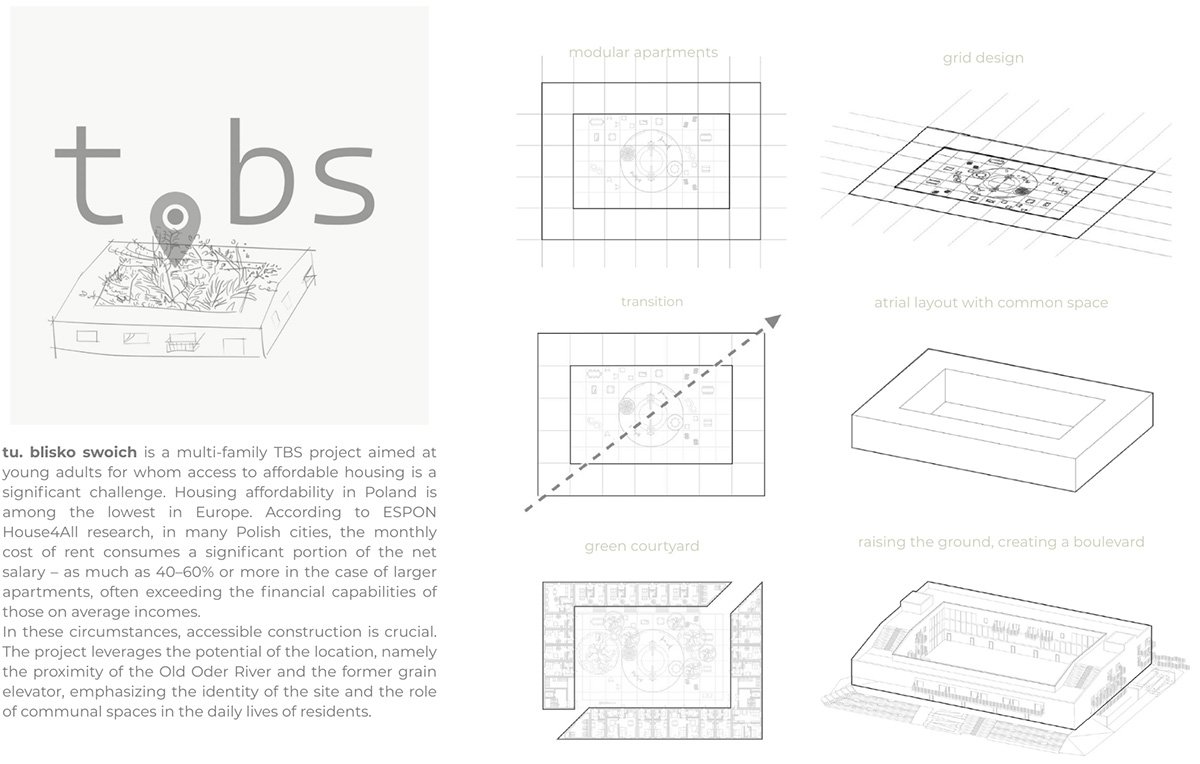
Introduction: In response to the deepening housing crisis in Poland, dominated by expensive and speculative developer investments, the project proposes an alternative building model: affordable social housing with high spatial quality. The aim was to create a building that not only provides a roof over one’s head but also genuinely supports everyday neighbourly relationships and a sense of community. The building contains 38 dwellings of various sizes, from compact studios to larger family units, all with access to private outdoor space in the form of a balcony, loggia, or garden.
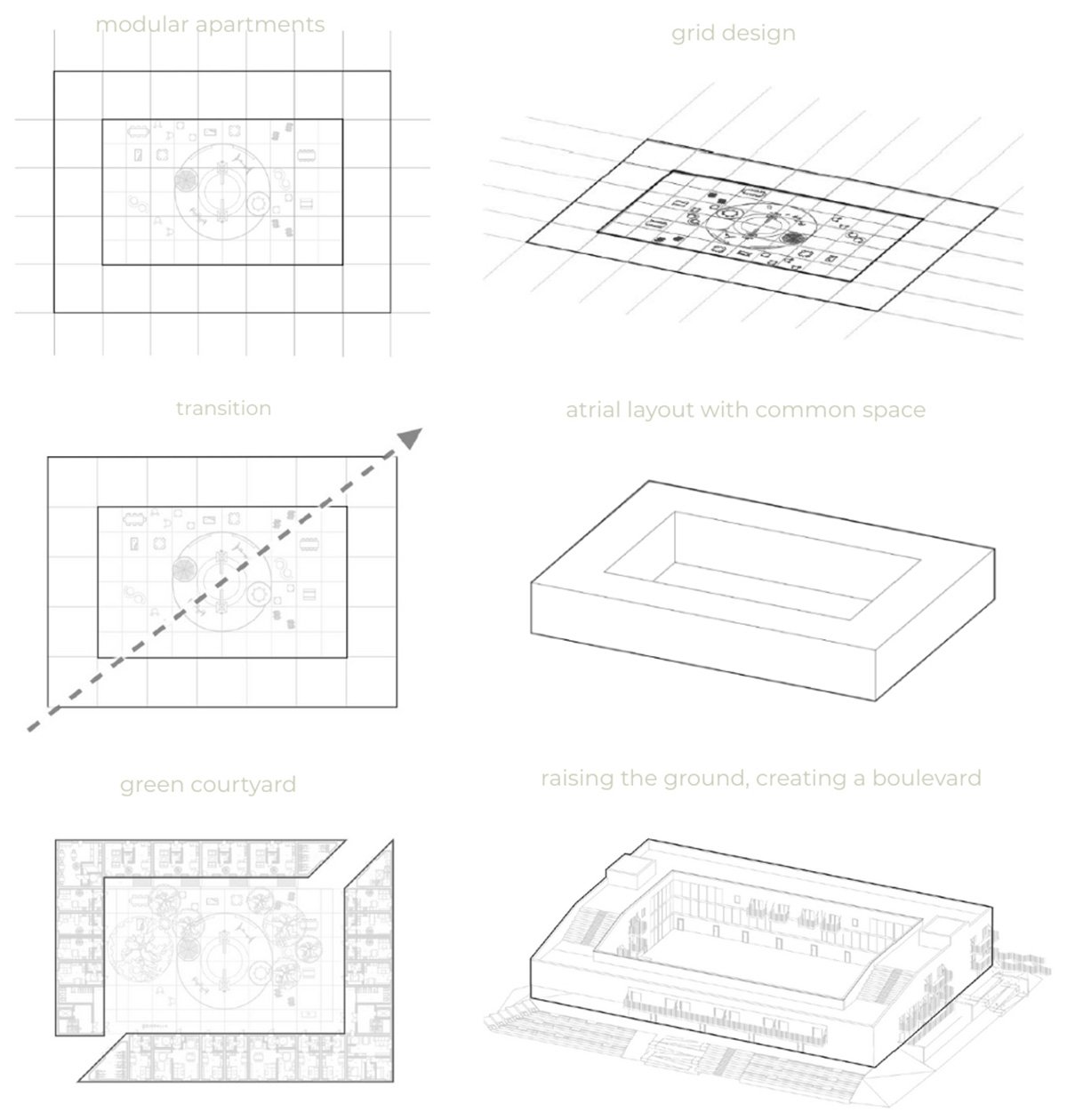
The core of the project is a green atrium with common functions, which acts as a semi-public courtyard for residents. The inspiration came from human-centered and everyday-life-oriented design ideas present in the work of Ralph Erskine, Lucien Kroll, and David Sim’s “Soft City” concept. The project demonstrates that social housing in central urban areas can be attractive, integrating, and architecturally meaningful.
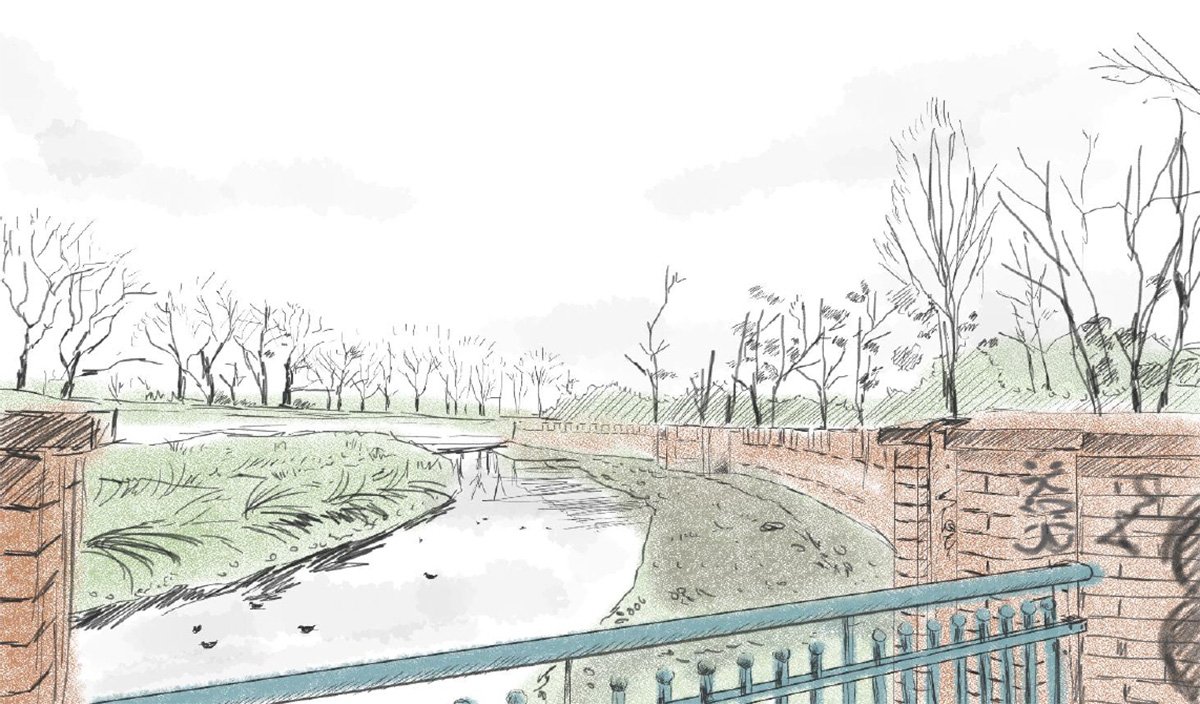
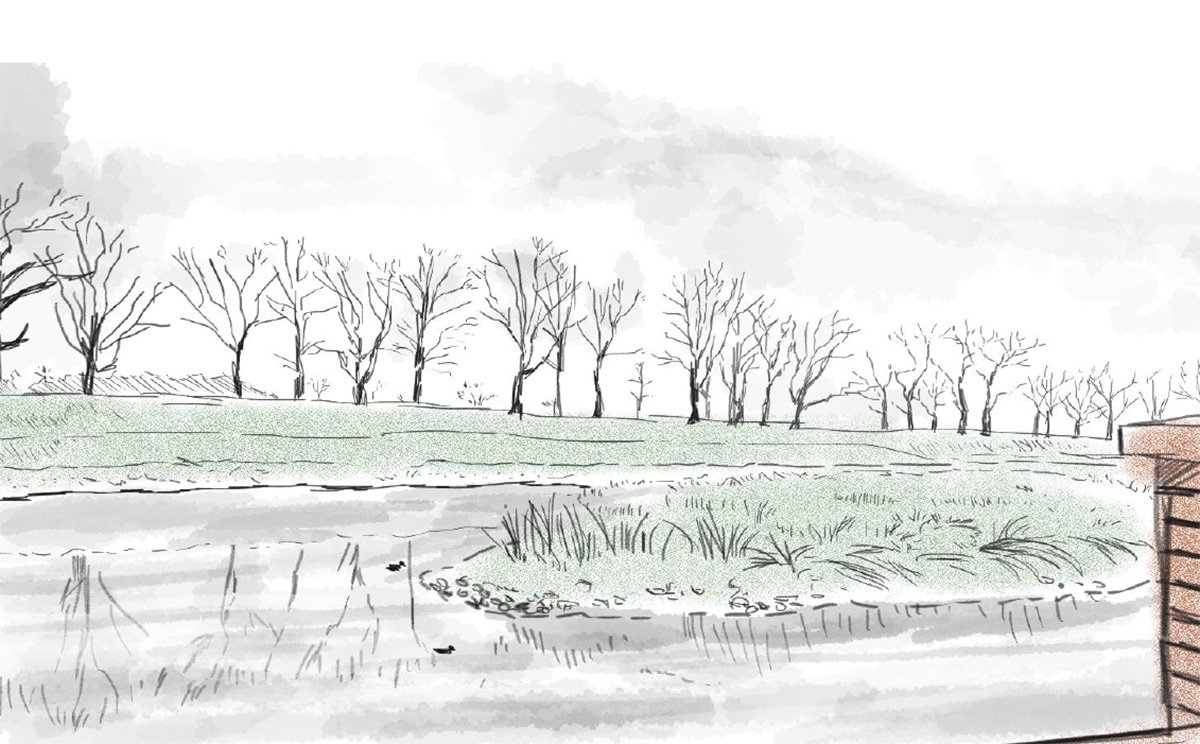
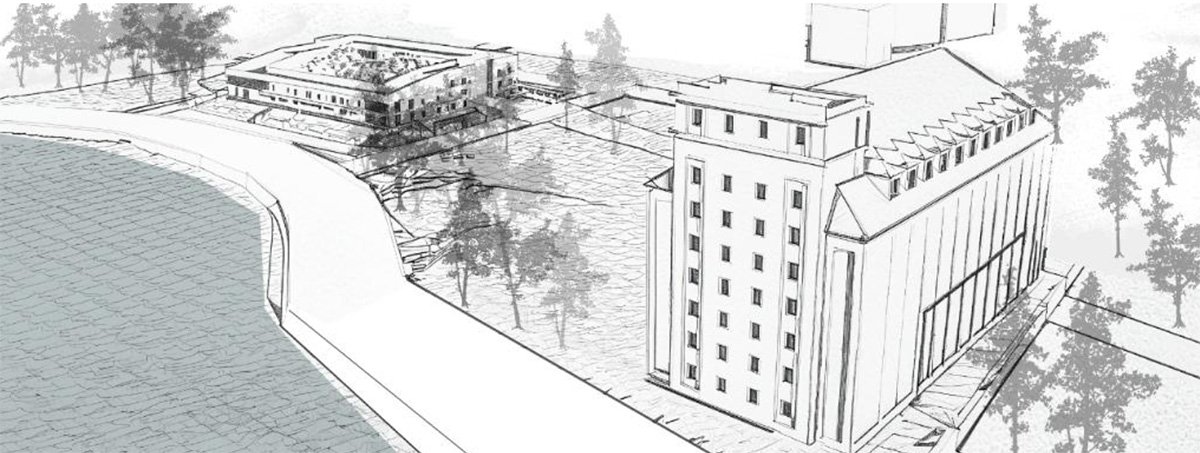
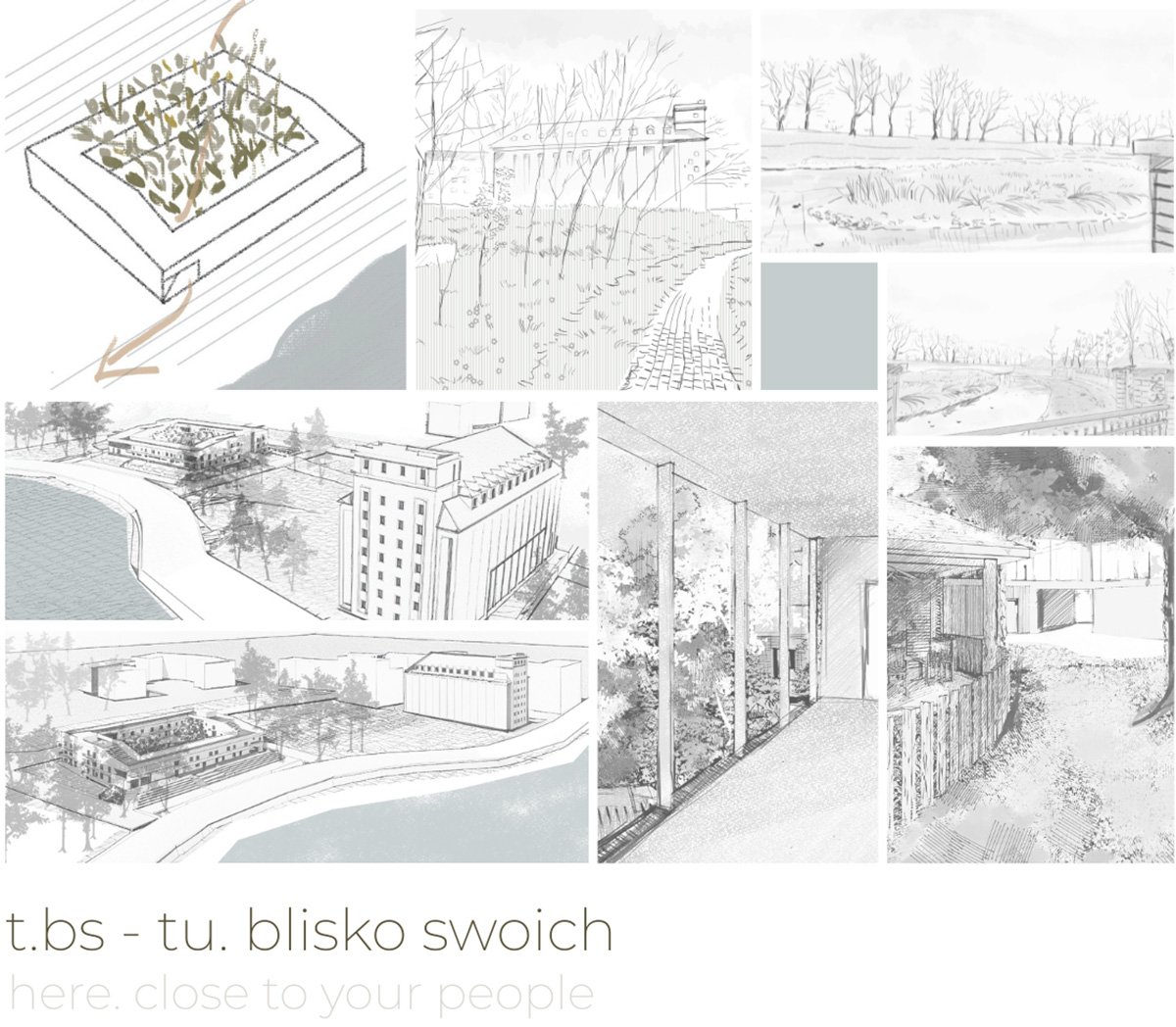
TBS* housing estates in Wrocław; *TBS = Towarzystwo Budownictwa Społecznego (Social Housing Society) – affordable rental housing for middle-income families.Inventory. Original sketches of the view of the Oder River.Inventory. Original sketches of the view of the Oder River.
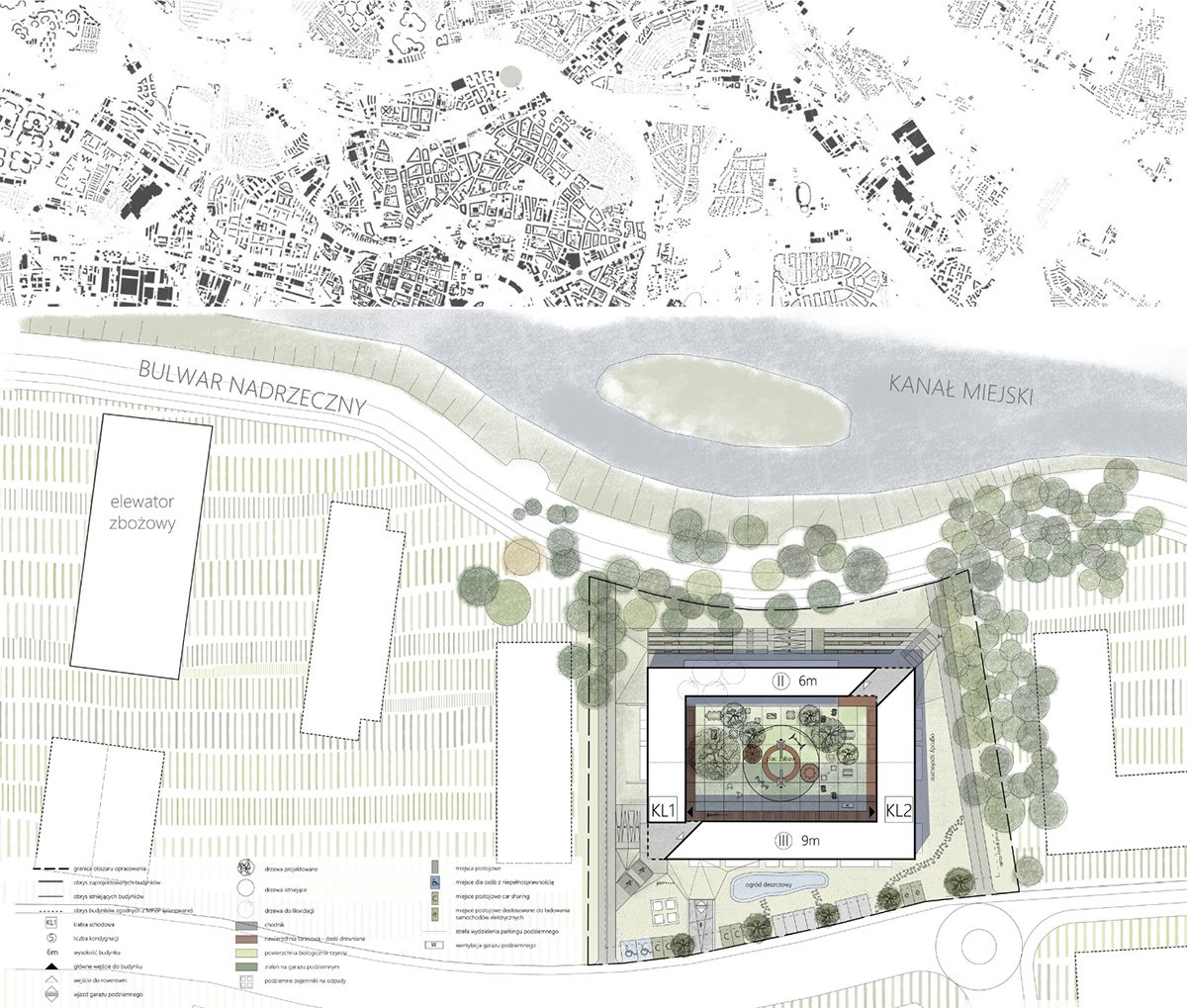
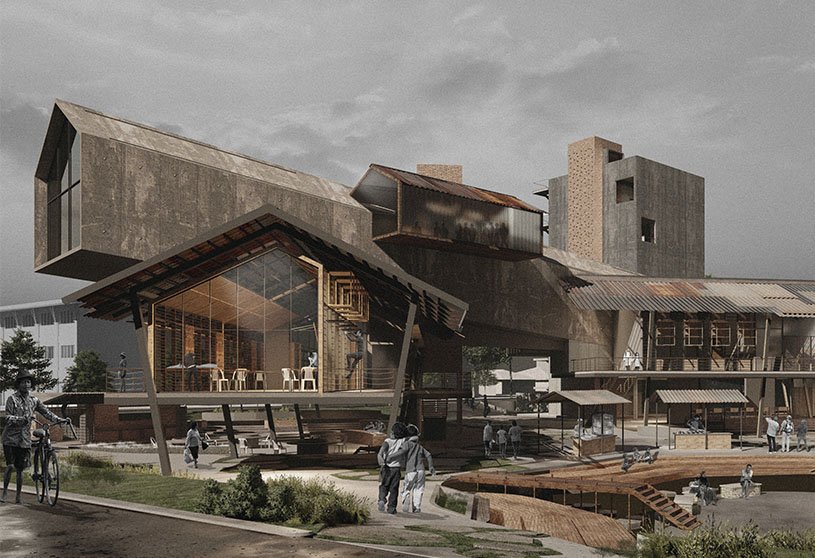
The site is located on Rychtalska Street in Wrocław, in a transitional area between the inner city, post-industrial land, and new residential developments. It is a fragment of the city with a diverse structure, where different scales and typologies of buildings coexist side by side. The project consciously inscribes itself into this mosaic, proposing a model of social housing as an equal component of the urban fabric.
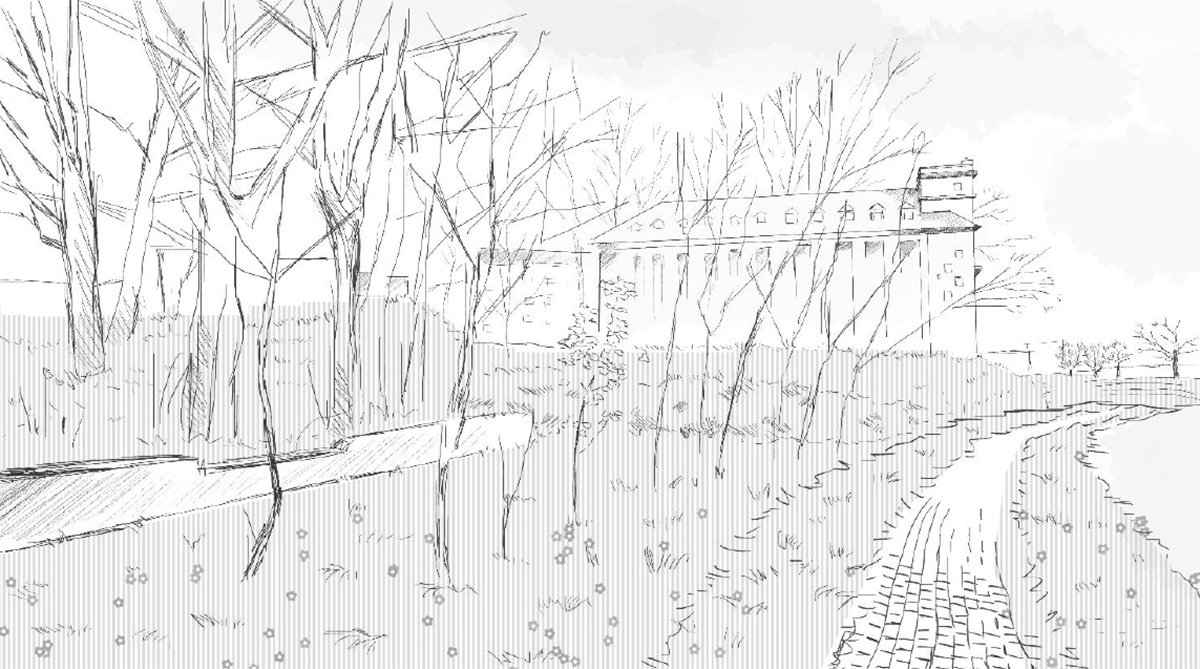
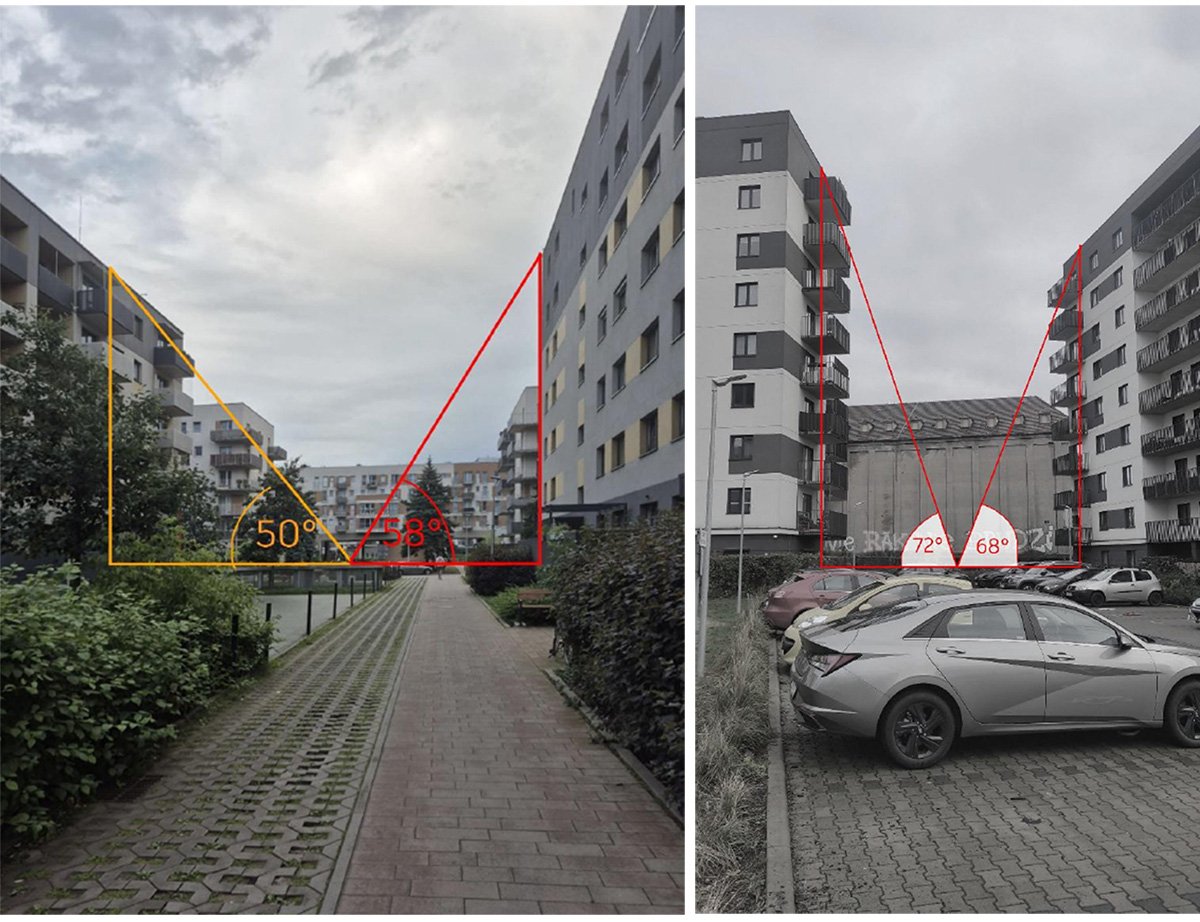
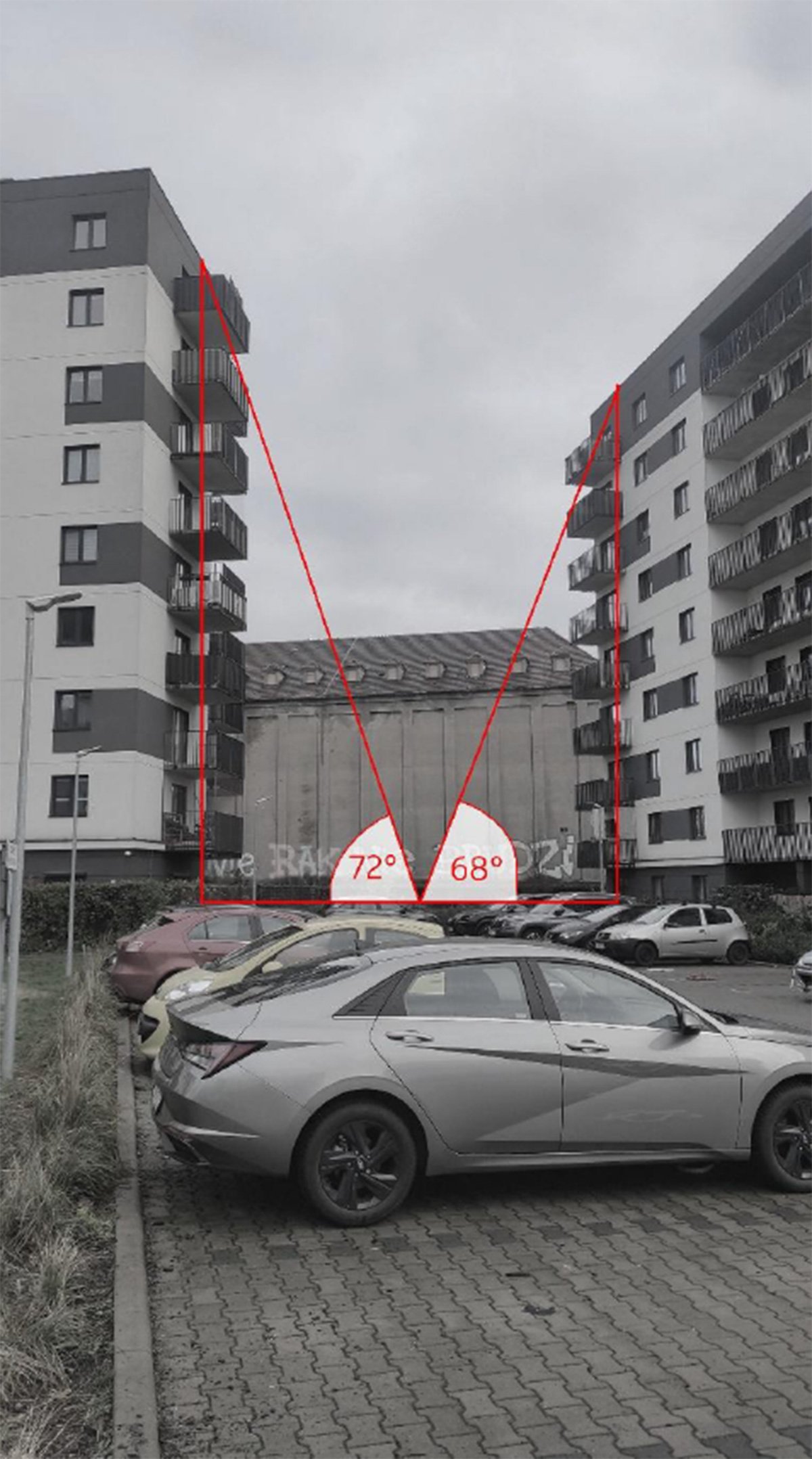
Inventory. Original sketch of the view of the unused grain elevator.Photos from a nearby housing estate, analyzing the central viewing angle at which users perceive surrounding buildings. Angles between 45–60° fall within the acceptable range. | Overwhelming interiors exceed 60°
The building programme combines residential use with everyday services and shared spaces. In addition to the flats, a bakery on the ground floor, a shared laundry, extensive bicycle rooms, and accessible recreational areas are planned. A special role is played by intermediate zones—the semi-public ground floor, the green atrium, and the accessible roof—which create a gradient of privacy between the dwelling and the city. In this way, social life is not an add-on but an integral part of the architectural structure.
Design Process
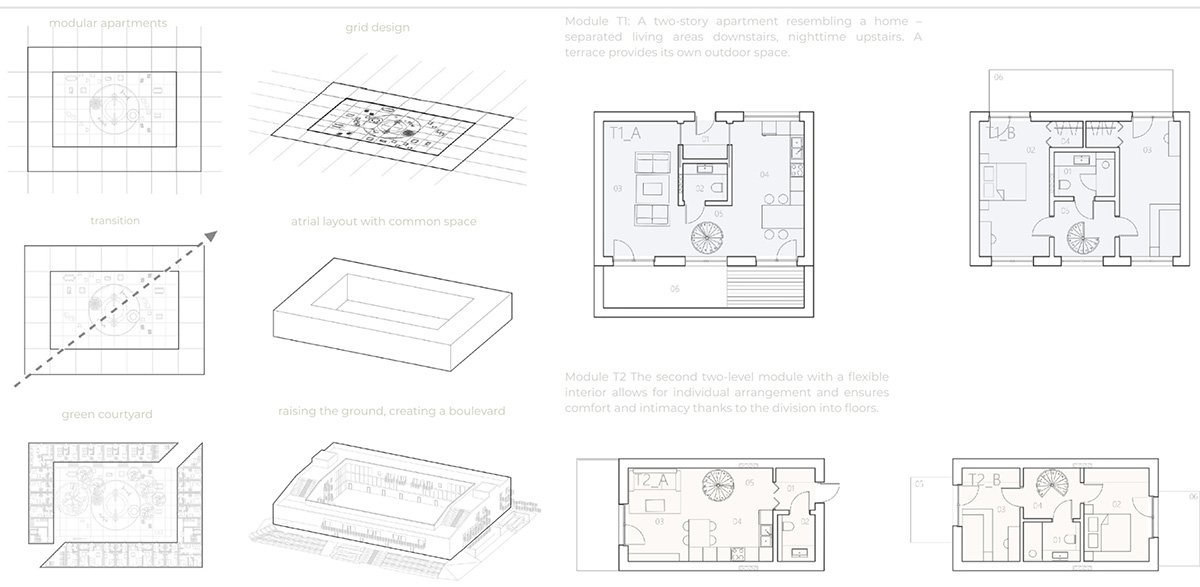
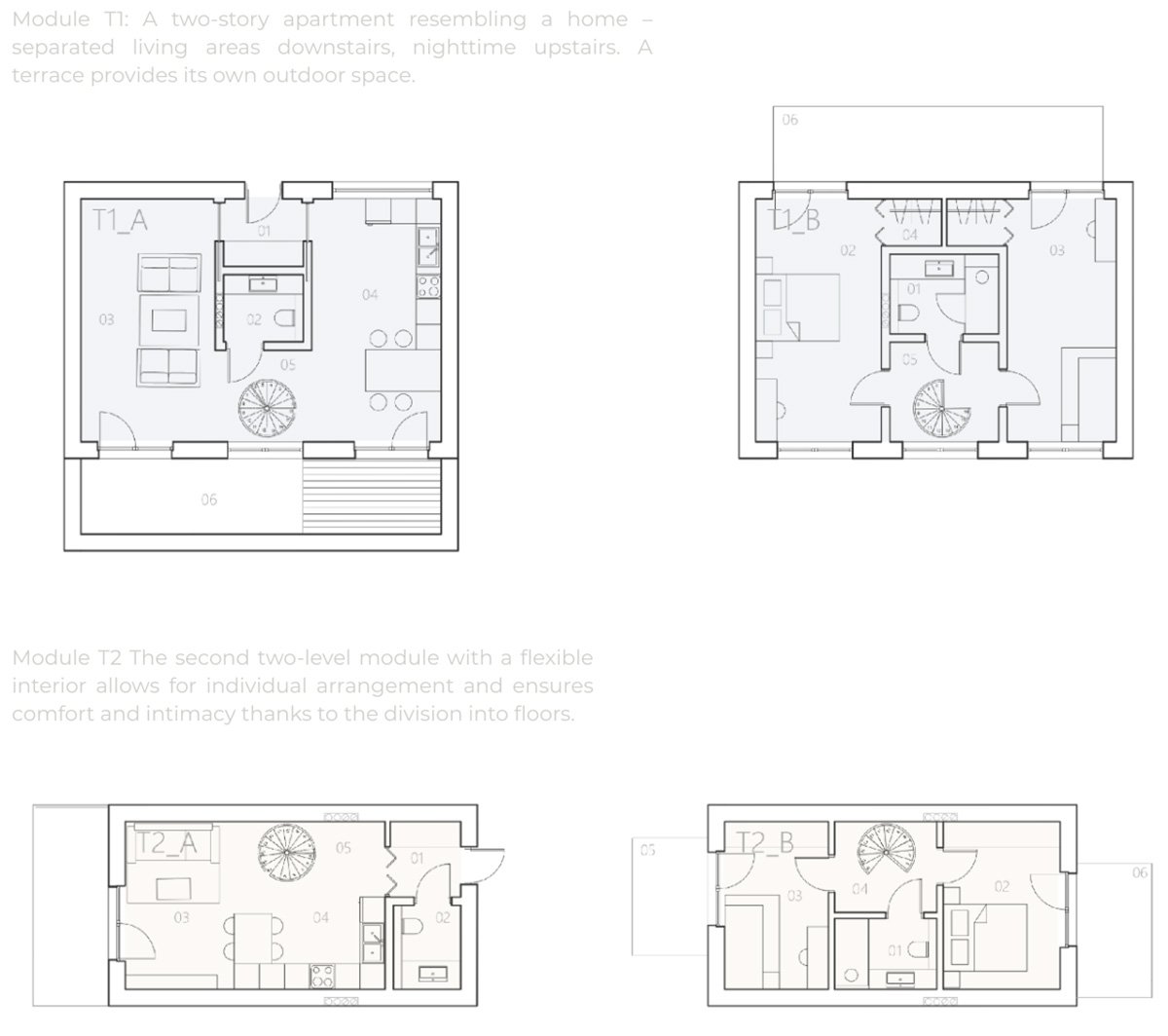
Shaping the building’s plan and mass | Apartment layouts – two-story modules.Apartment layouts – remaining modules.
The design process began with an analysis of urban relationships and patterns of use in the surroundings—pedestrian routes, building scale, and potential neighbourhood connections. In the first phase, multiple massing variants and layout schemes were developed, testing different ways of daylighting the apartments and organising circulation. A key moment was the move away from a conventional stair-core layout towards a building with an internal green courtyard as a space that both integrates residents and structures the plan.
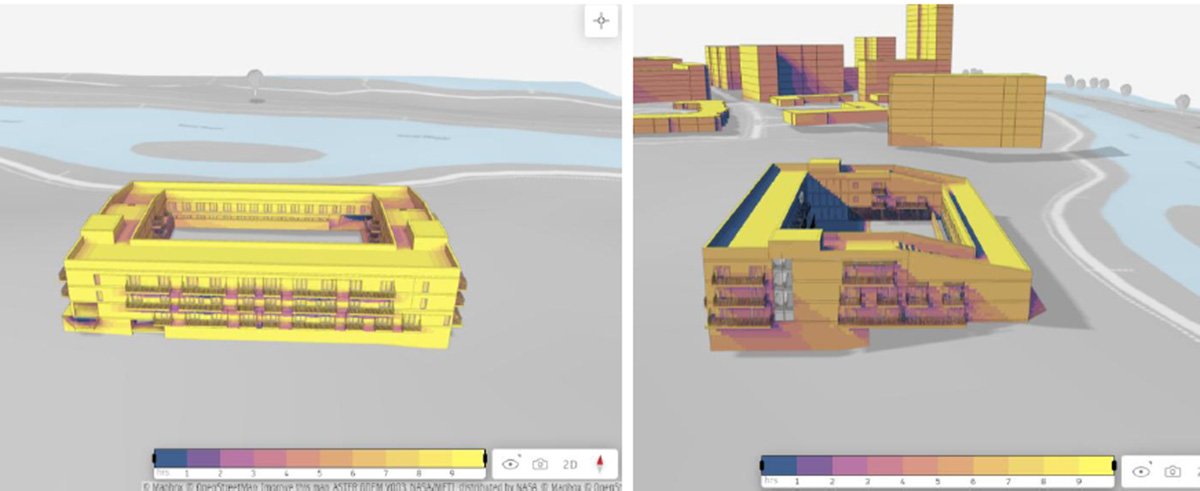
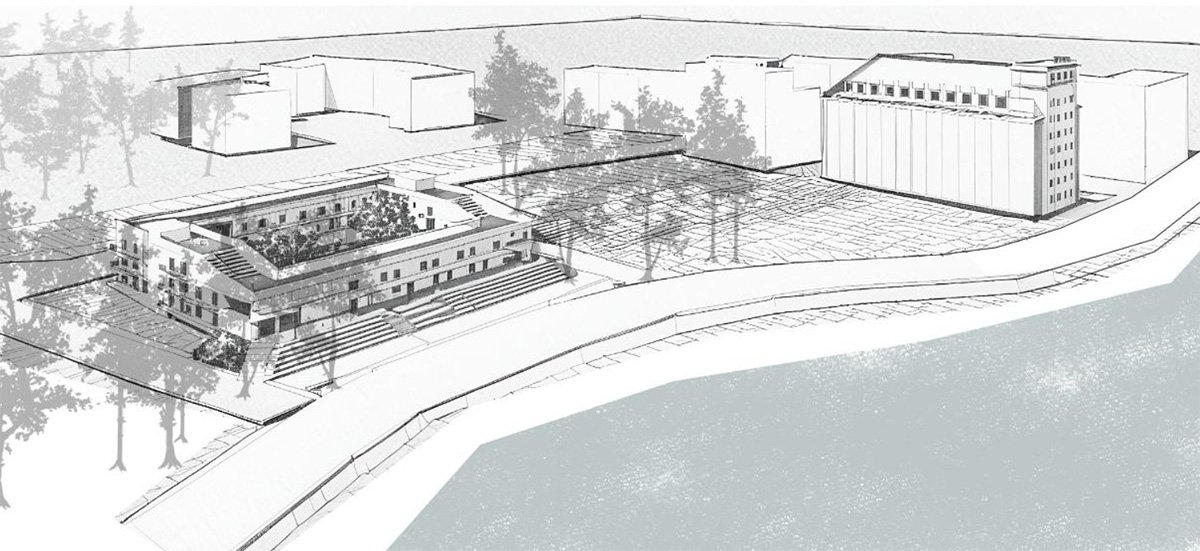
Sunlight analysis. The cross-ventilated apartment arrangement provides residents with access to natural sunlight throughout the year.Sunlight analysis. The cross-ventilated apartment arrangement provides residents with access to natural sunlight throughout the year.Sketch concept of the buildingSketch concept of the building
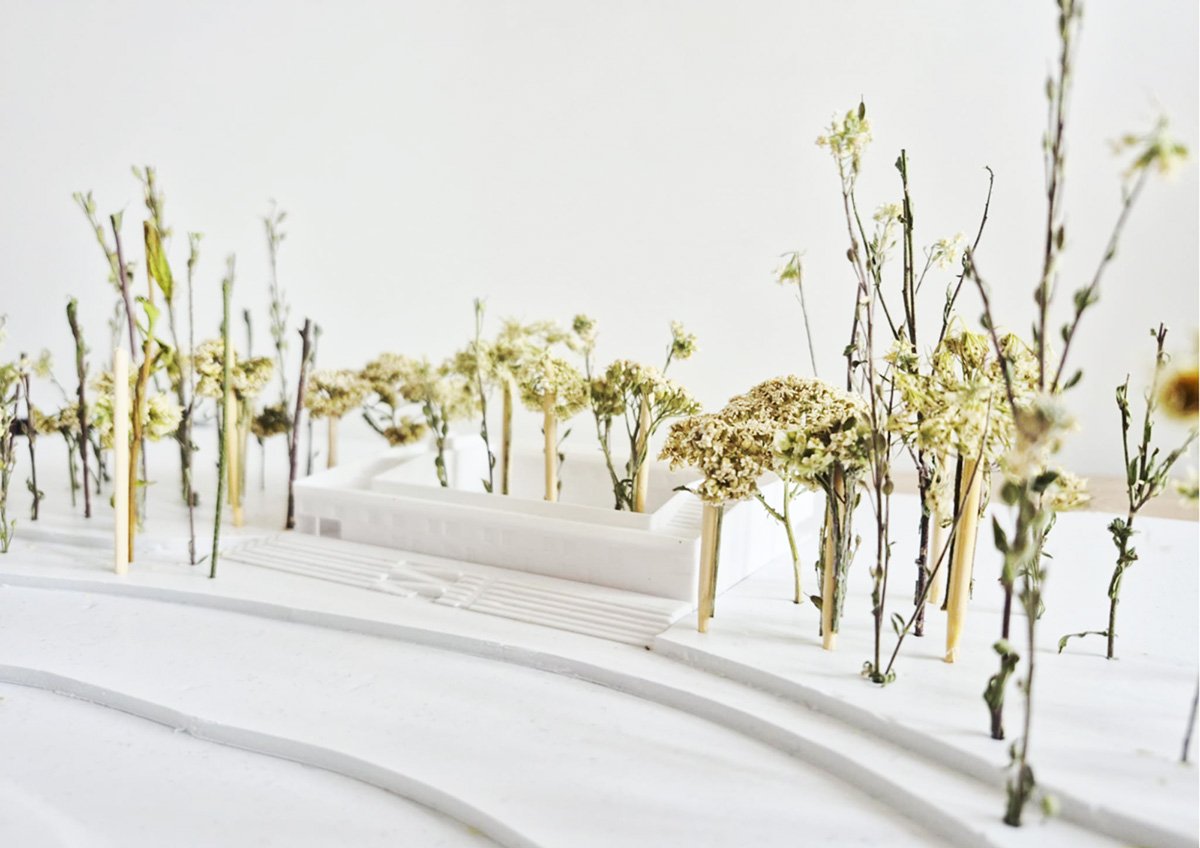
The apartment layouts were developed “from the inside out”—from everyday use scenarios. Priority was given to clarity of layout, flexibility, and a clear division between day and night zones. Each dwelling was given its own outdoor space. During the design, physical and digital models were used to study the courtyard proportions, visual relationships, and degree of privacy in the various zones. Important references were housing precedents with a strong social component and a clear human scale.
Final Outcome
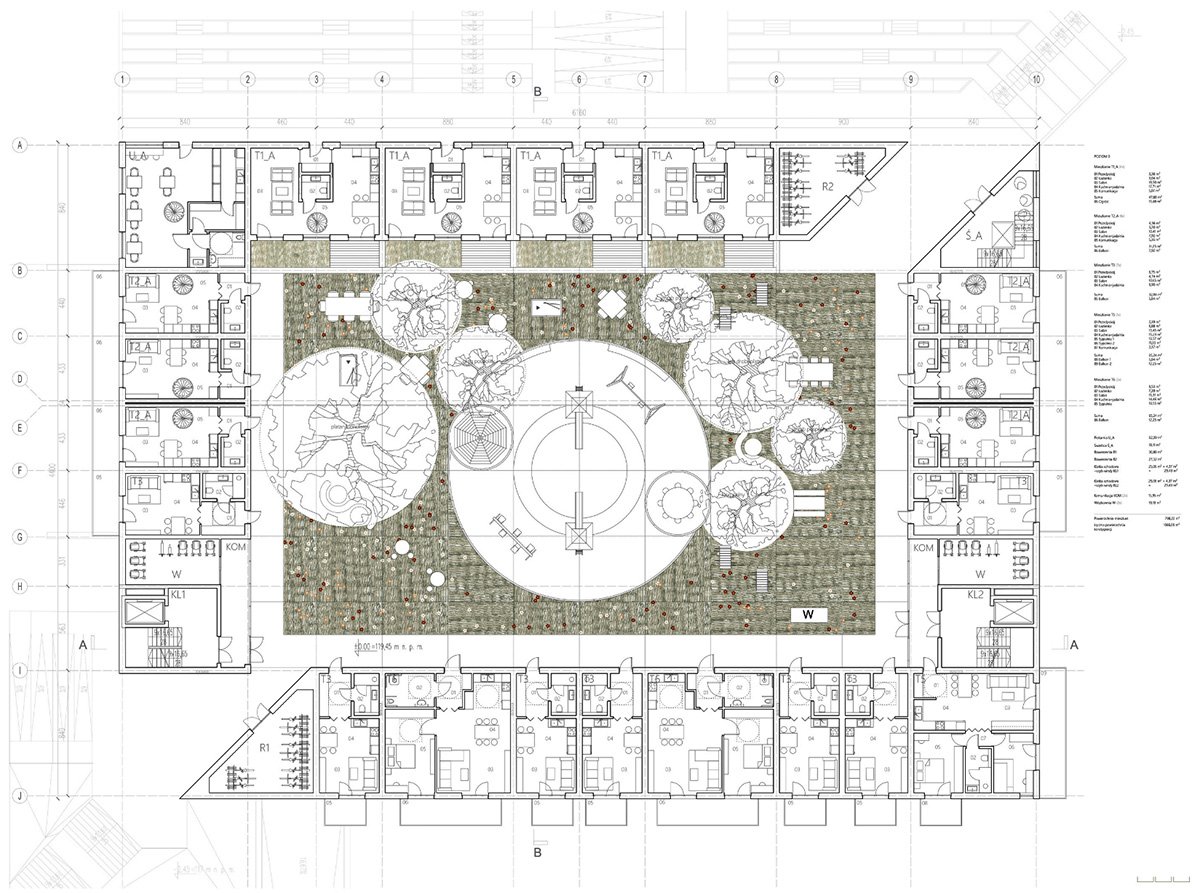
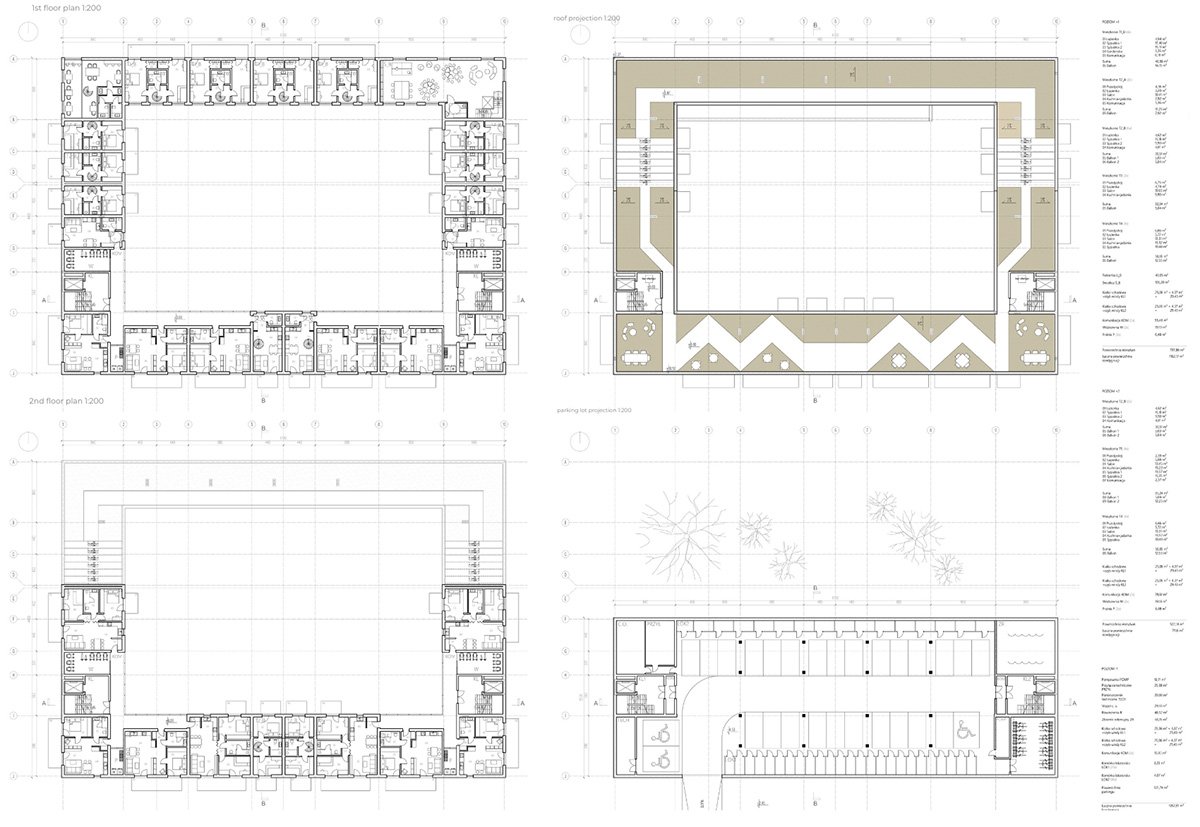
Site Development Concept Of The BuildingGround Floor PlanOther Floor Plans
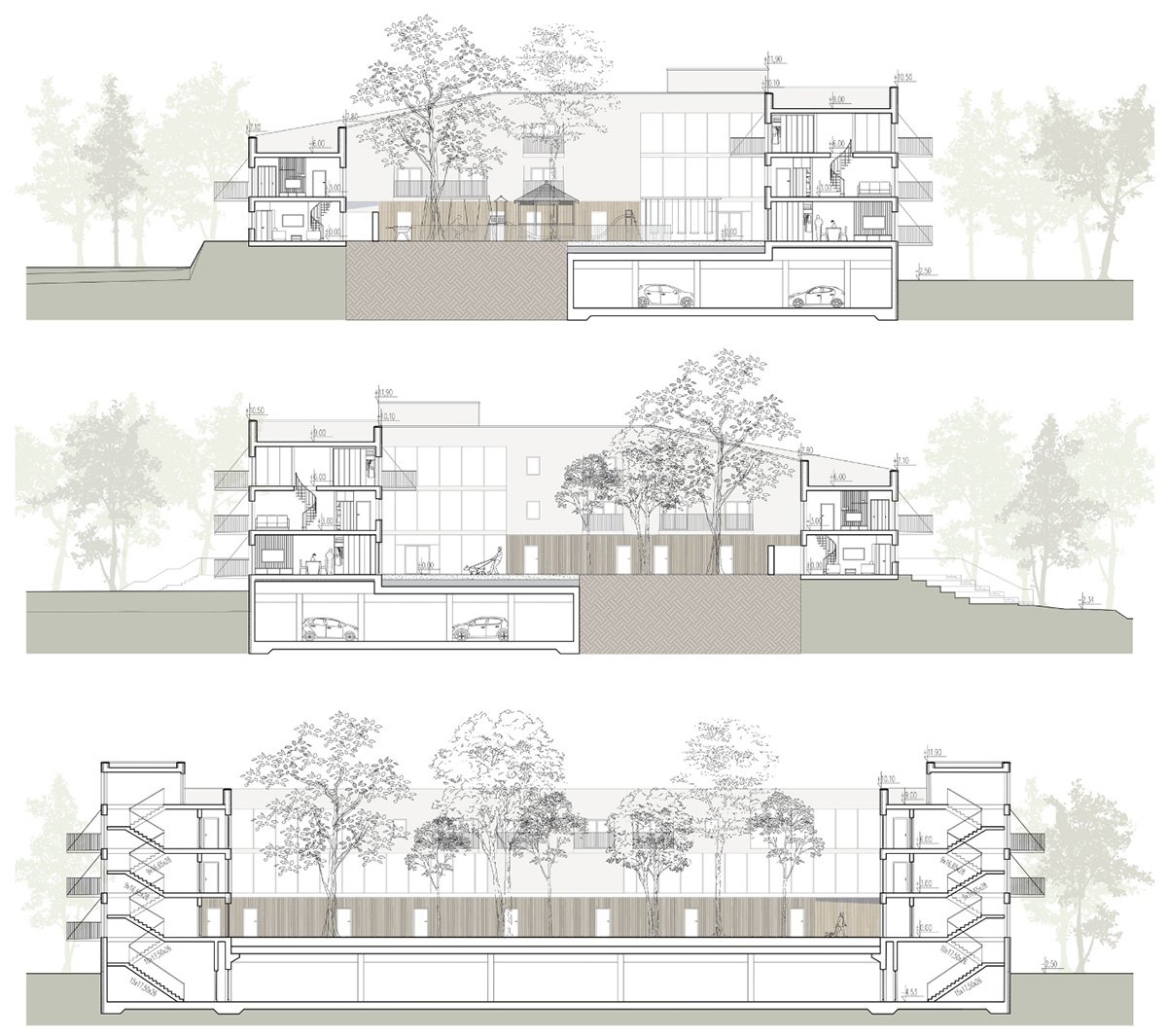
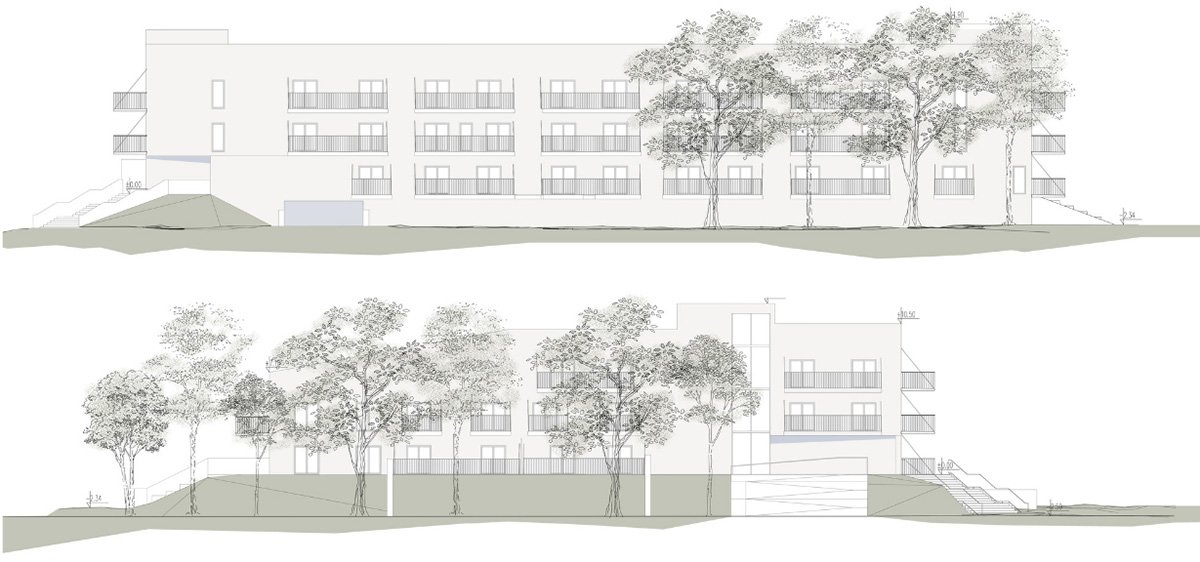
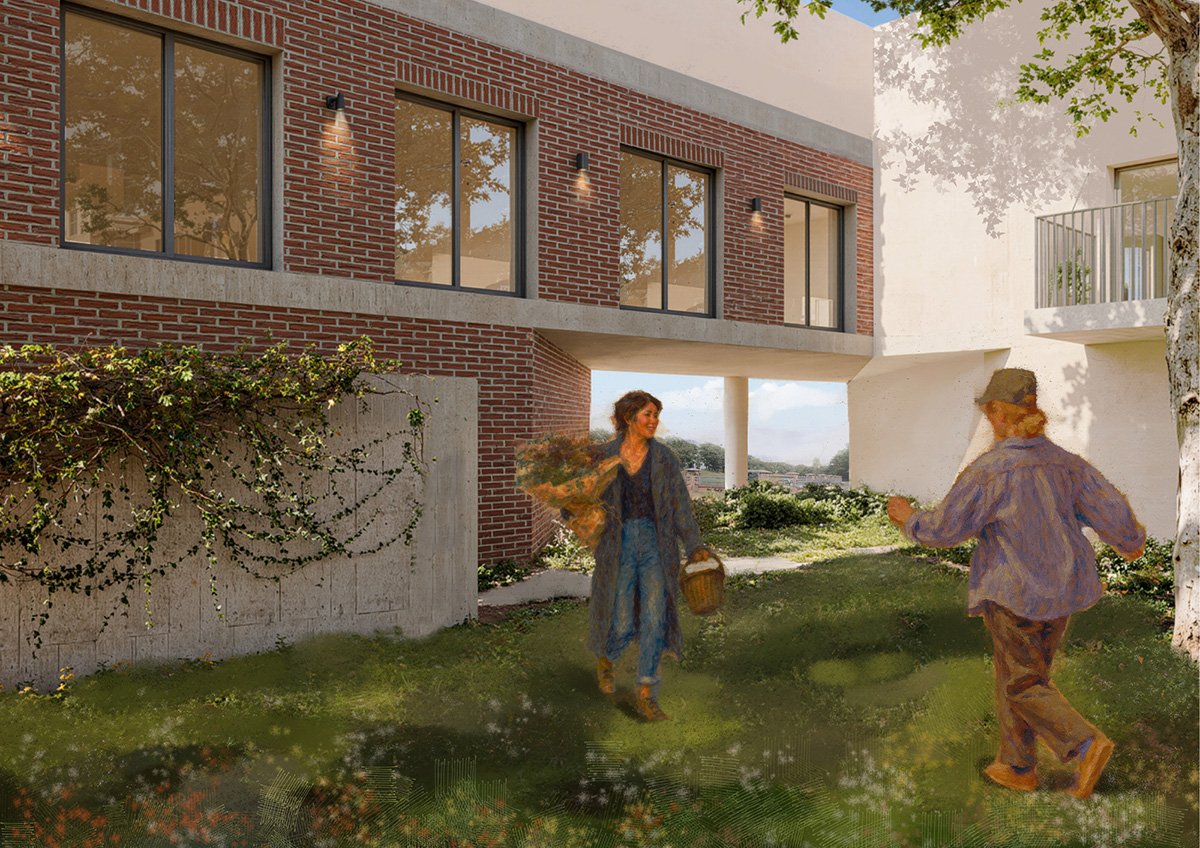
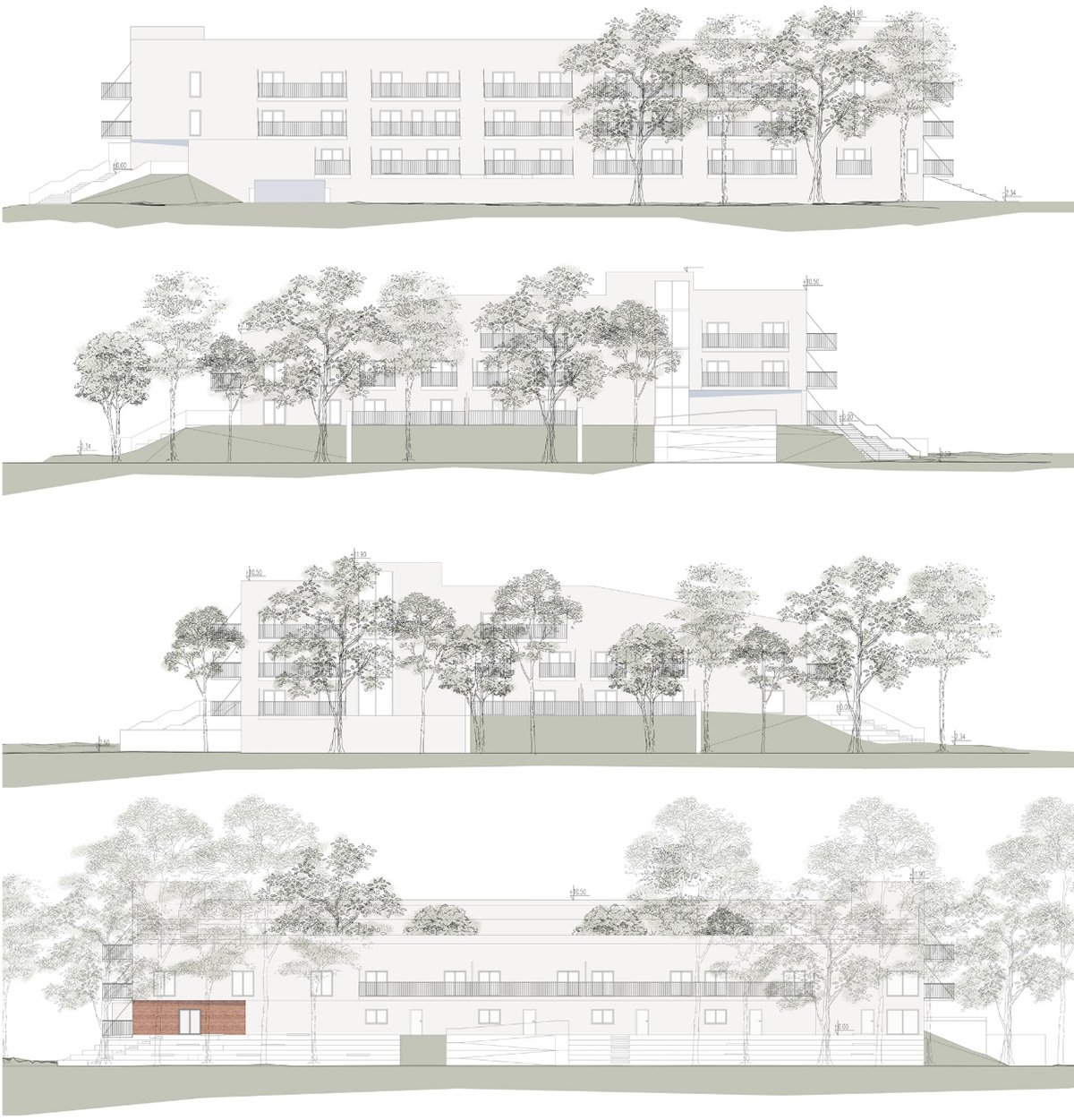
The result of the project is a three-storey residential building with an atrium layout, combining a compact form with a rich system of shared spaces. The building forms a clear street frontage on the side of Rychtalska and a more open, green interior on the courtyard side. The atrium functions as a communal garden and meeting area, with places to sit, play, and spend time outdoors on an everyday basis.
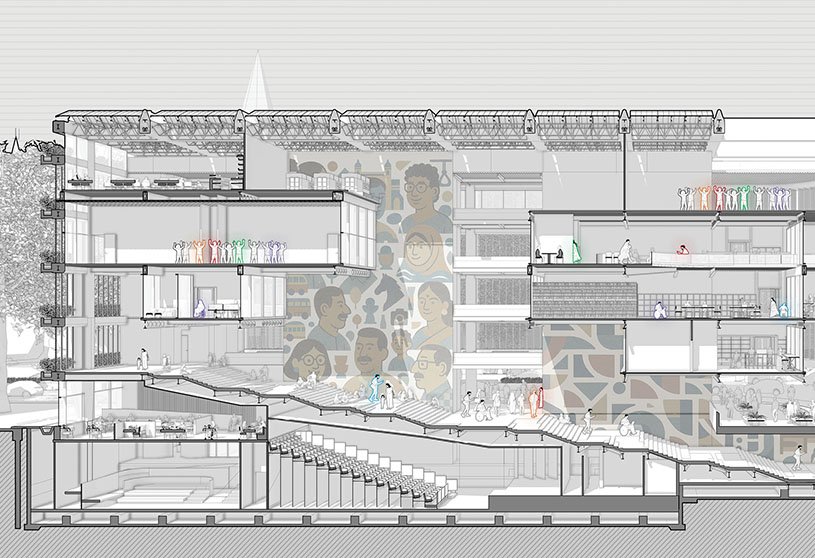
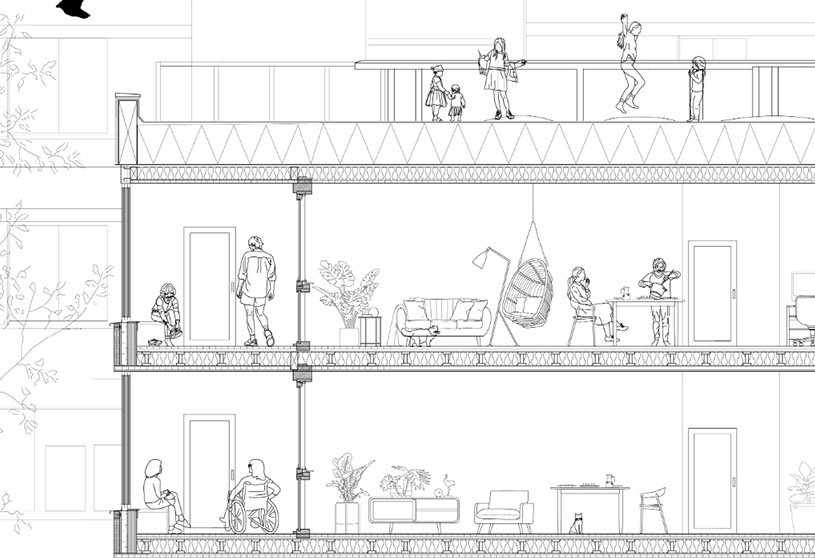
SectionsElevations
The ground floor has been designed as an active and partly accessible layer, with a bakery, shared spaces, and bicycle rooms visible from the outside. Circulation is arranged via galleries and staircases opening onto the courtyard, which enhances visual contact between residents.
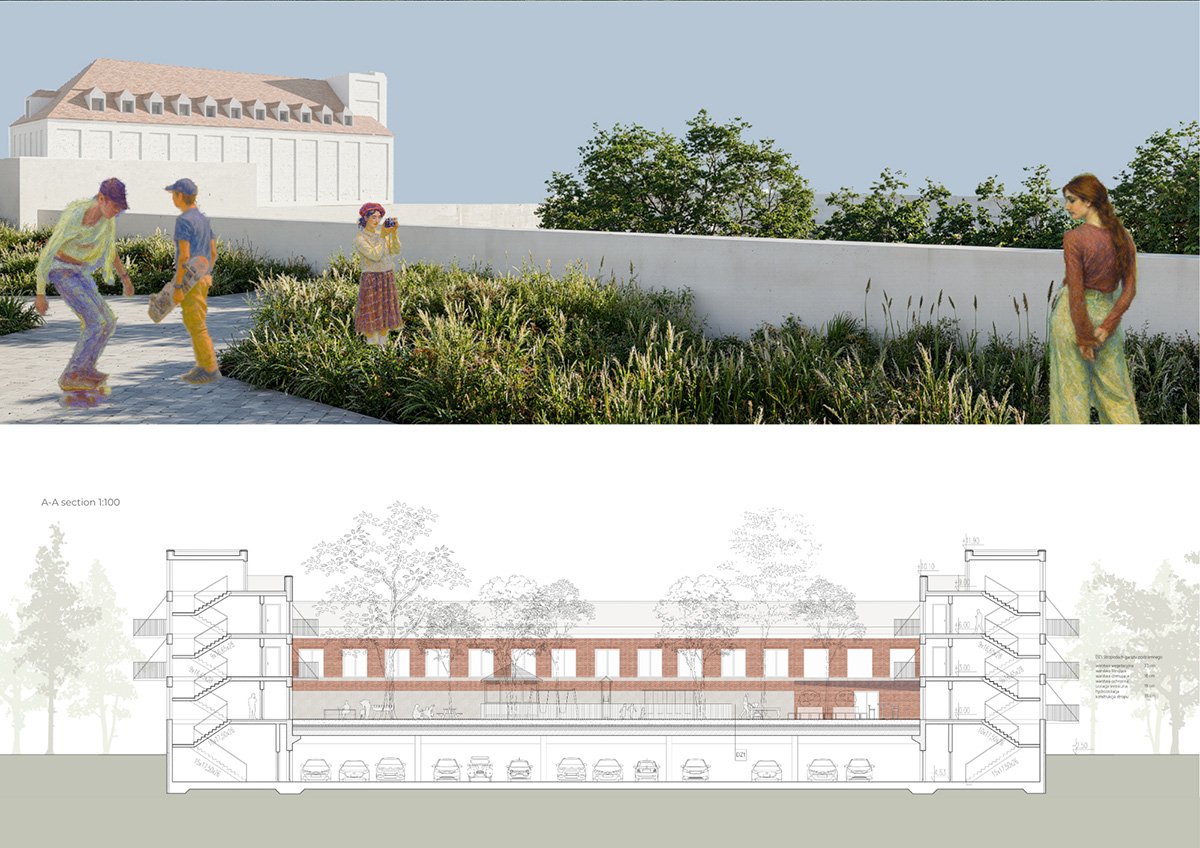
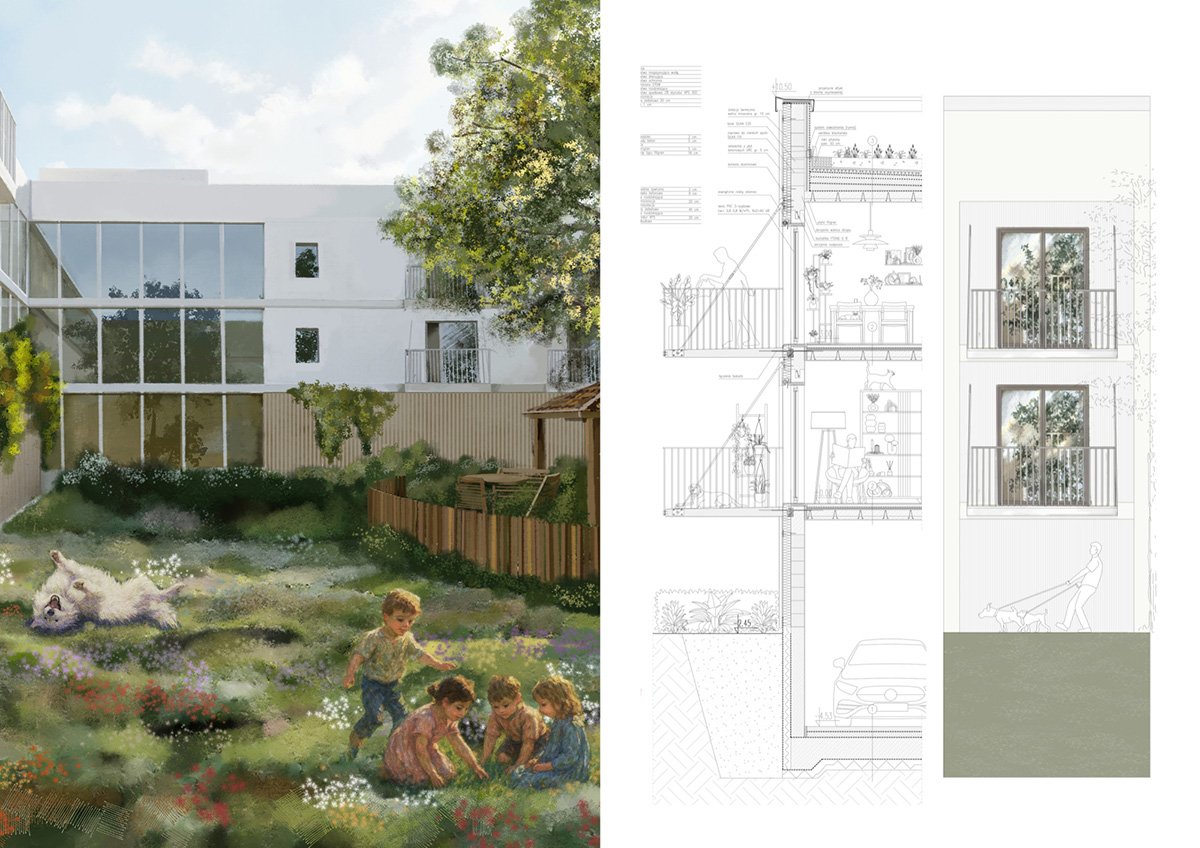
Section And Roof VisualizationBuilding Detail And Courtyard Visualization
On the roof, a common recreational area for residents is planned as an additional communal layer. The architecture of the building is based on simple, durable material solutions and a modular logic of flats, which makes it possible to control construction costs without losing spatial quality.
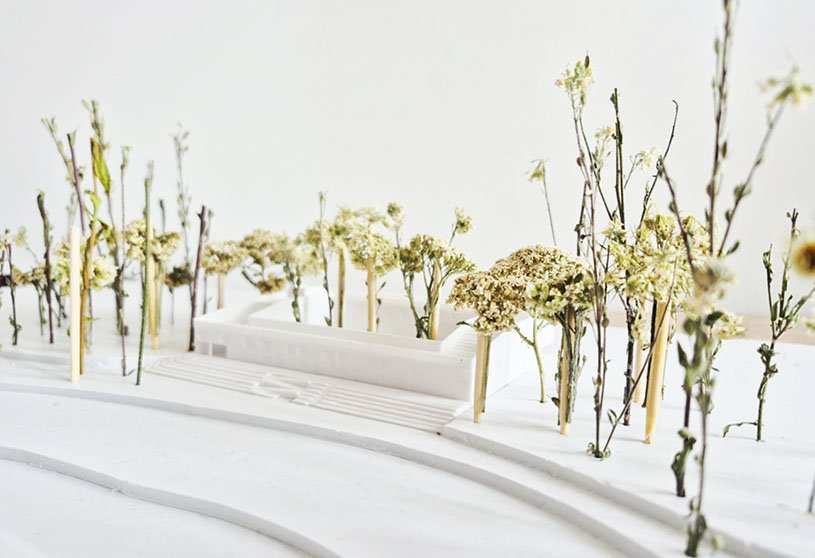
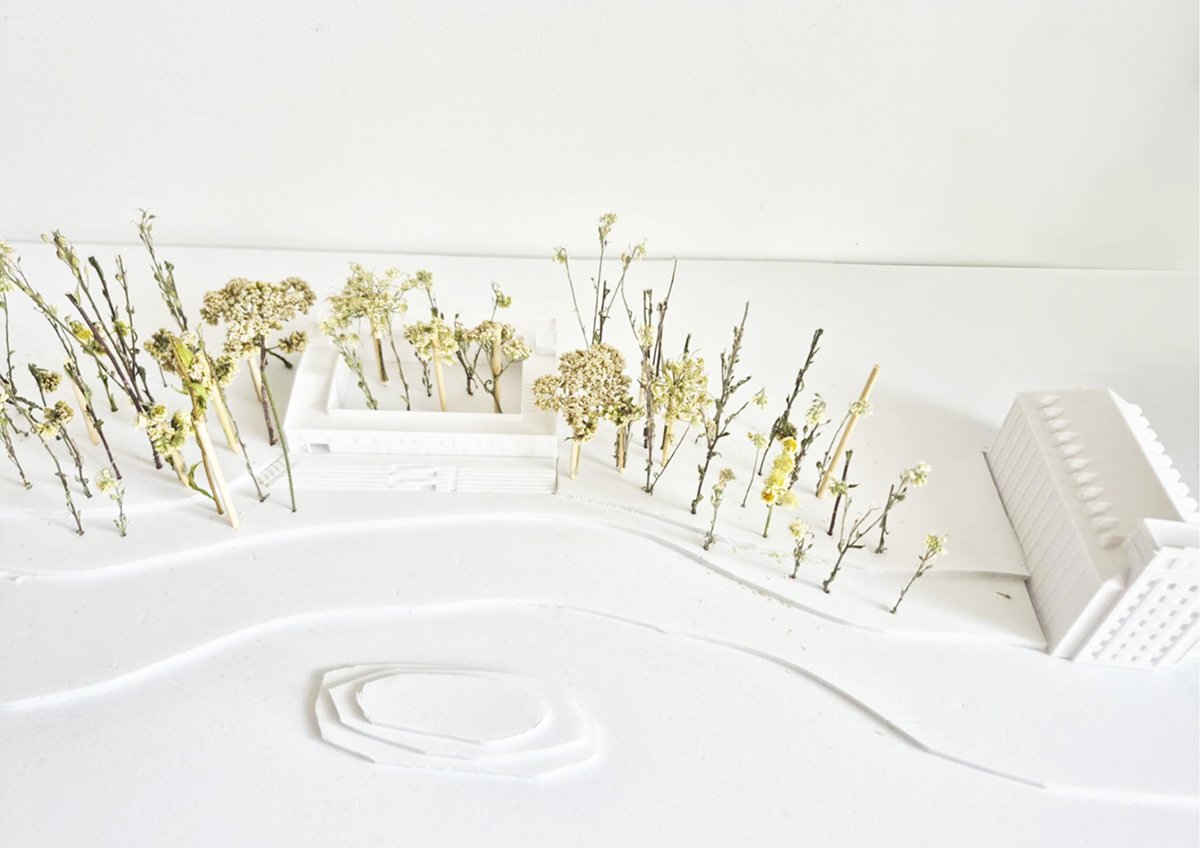
VisualizationModel
Conclusion: Ultimately, the project shows that social housing can be economical, flexible, and community-building at the same time and that well-designed shared spaces have a real impact on residents’ quality of life.
[This Academic Project has been published with text and images submitted by the student]
Site Context
Design Process
Final Outcome
To submit your academic project for publication at ArchiDiaries, please visit the following link >> Submit
Get the best of ArchiDiaries, directly in your inbox.
We use cookies on our website to give you the most relevant experience by remembering your preferences and repeat visits. By clicking “Accept All”, you consent to the use of ALL the cookies. However, you may visit "Cookie Settings" to provide a controlled consent.
This website uses cookies to improve your experience while you navigate through the website. Out of these, the cookies that are categorized as necessary are stored on your browser as they are essential for the working of basic functionalities of the website. We also use third-party cookies that help us analyze and understand how you use this website. These cookies will be stored in your browser only with your consent. You also have the option to opt-out of these cookies. But opting out of some of these cookies may affect your browsing experience.
Necessary cookies are absolutely essential for the website to function properly. These cookies ensure basic functionalities and security features of the website, anonymously.
Cookie
Duration
Description
cookielawinfo-checkbox-analytics
11 months
This cookie is set by GDPR Cookie Consent plugin. The cookie is used to store the user consent for the cookies in the category "Analytics".
cookielawinfo-checkbox-functional
11 months
The cookie is set by GDPR cookie consent to record the user consent for the cookies in the category "Functional".
cookielawinfo-checkbox-necessary
11 months
This cookie is set by GDPR Cookie Consent plugin. The cookies is used to store the user consent for the cookies in the category "Necessary".
cookielawinfo-checkbox-others
11 months
This cookie is set by GDPR Cookie Consent plugin. The cookie is used to store the user consent for the cookies in the category "Other.
cookielawinfo-checkbox-performance
11 months
This cookie is set by GDPR Cookie Consent plugin. The cookie is used to store the user consent for the cookies in the category "Performance".
viewed_cookie_policy
11 months
The cookie is set by the GDPR Cookie Consent plugin and is used to store whether or not user has consented to the use of cookies. It does not store any personal data.
Functional cookies help to perform certain functionalities like sharing the content of the website on social media platforms, collect feedbacks, and other third-party features.
Performance cookies are used to understand and analyze the key performance indexes of the website which helps in delivering a better user experience for the visitors.
Analytical cookies are used to understand how visitors interact with the website. These cookies help provide information on metrics the number of visitors, bounce rate, traffic source, etc.
Advertisement cookies are used to provide visitors with relevant ads and marketing campaigns. These cookies track visitors across websites and collect information to provide customized ads.