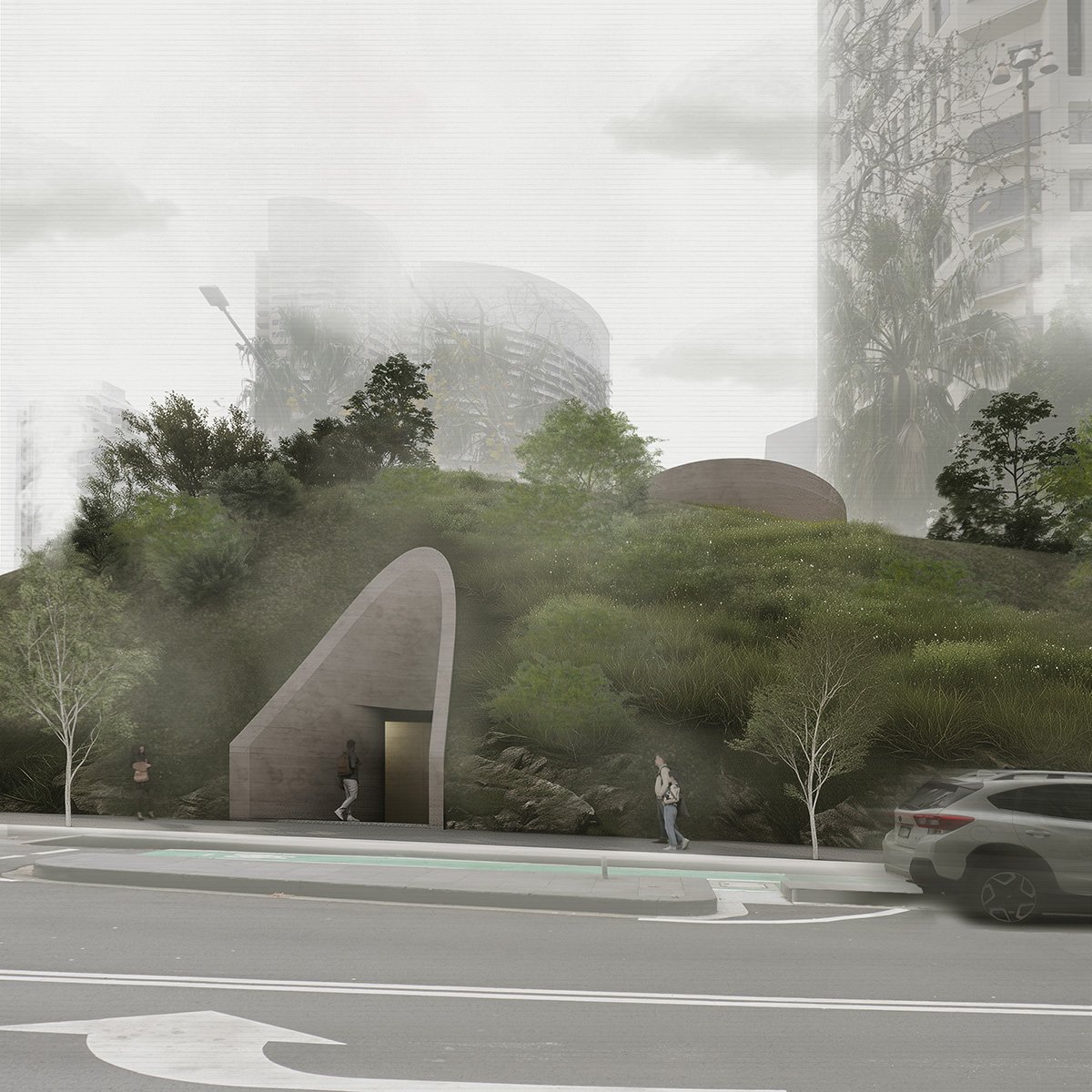
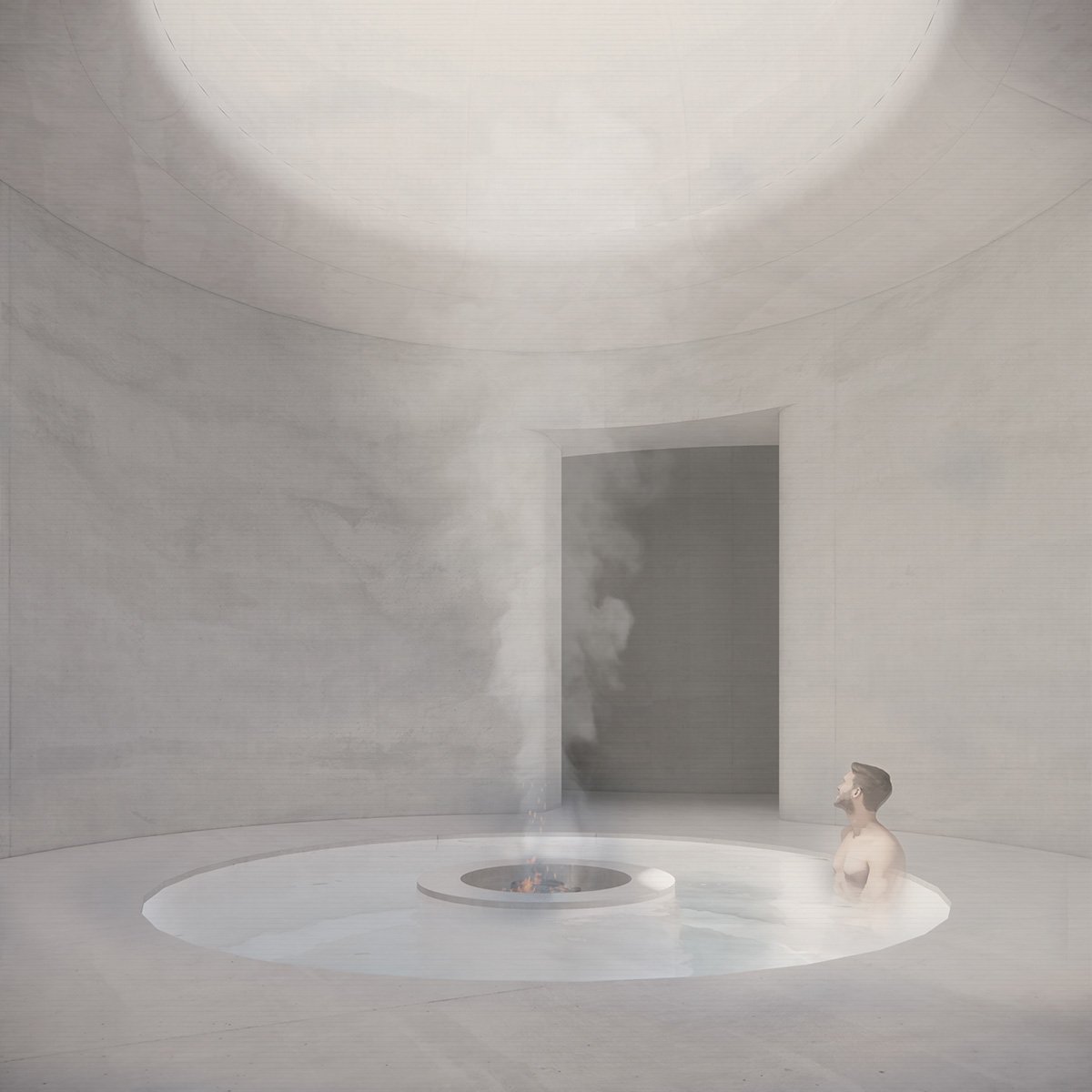
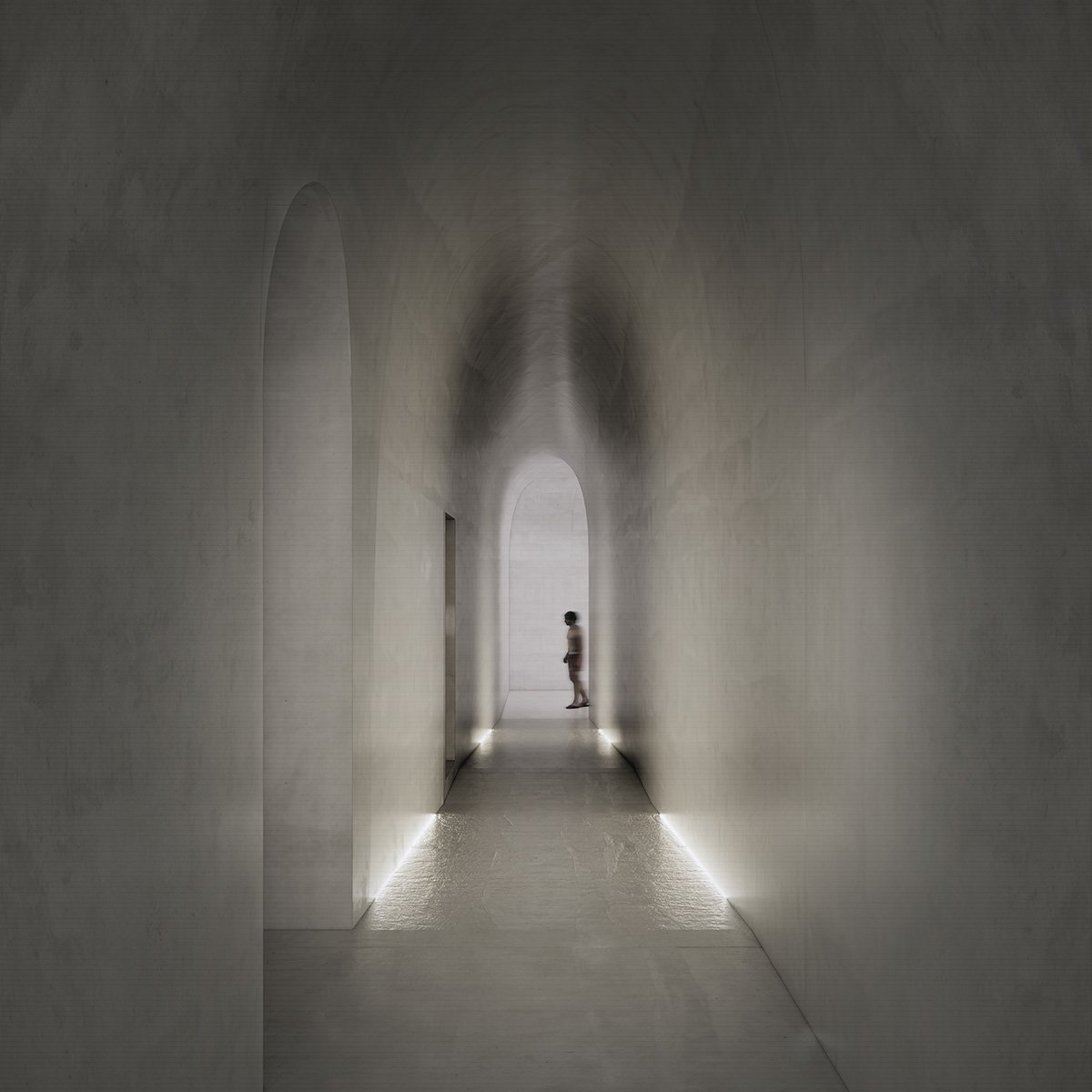
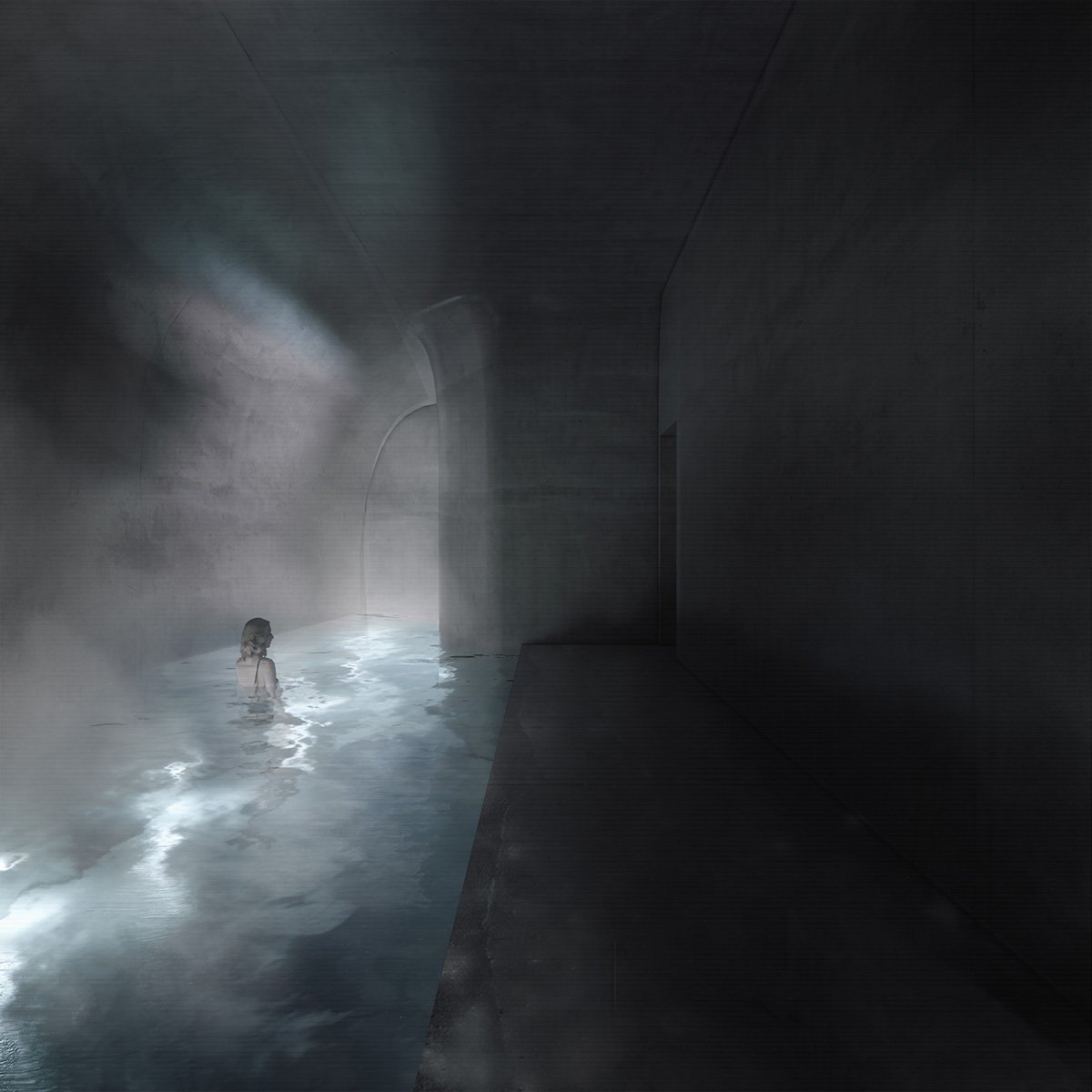
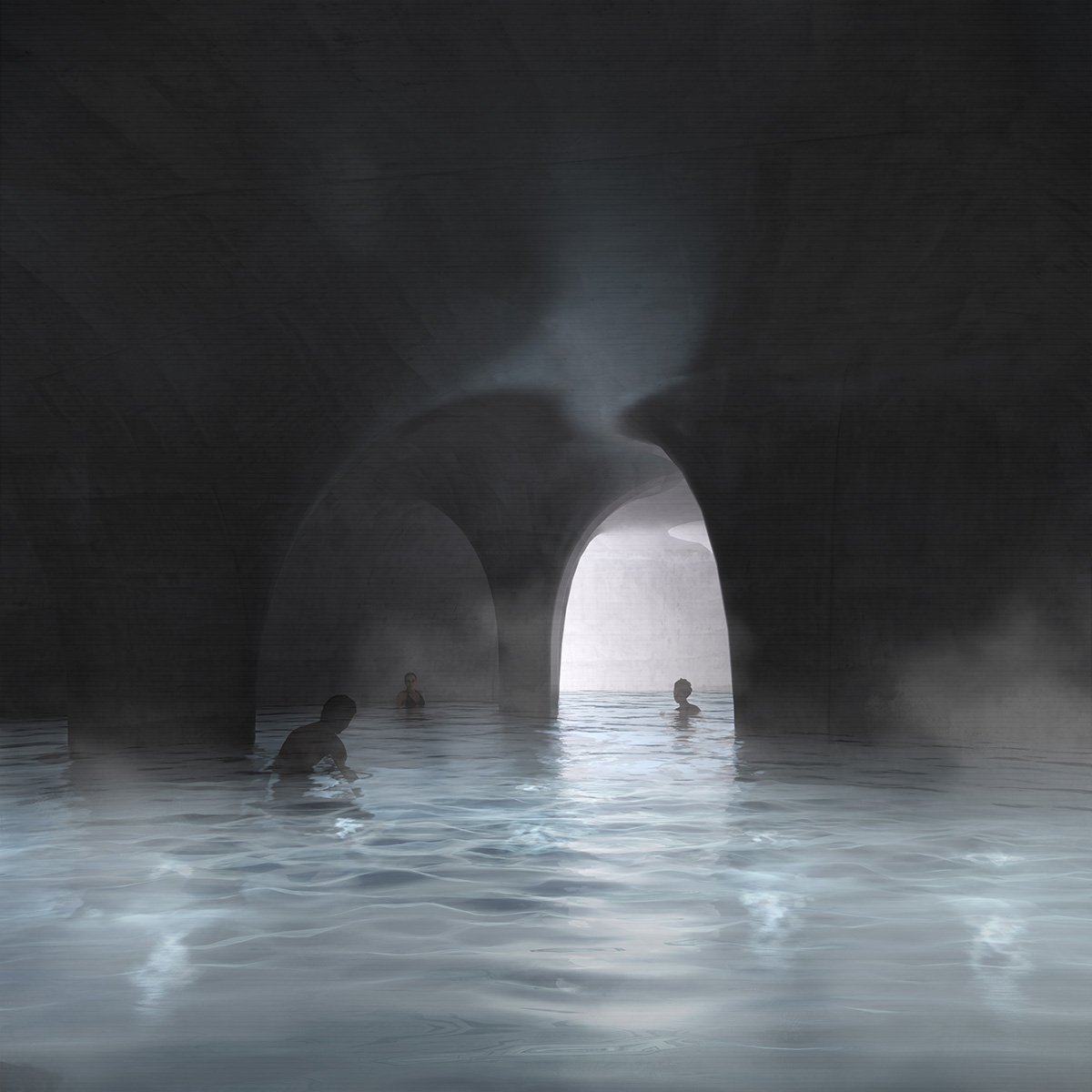
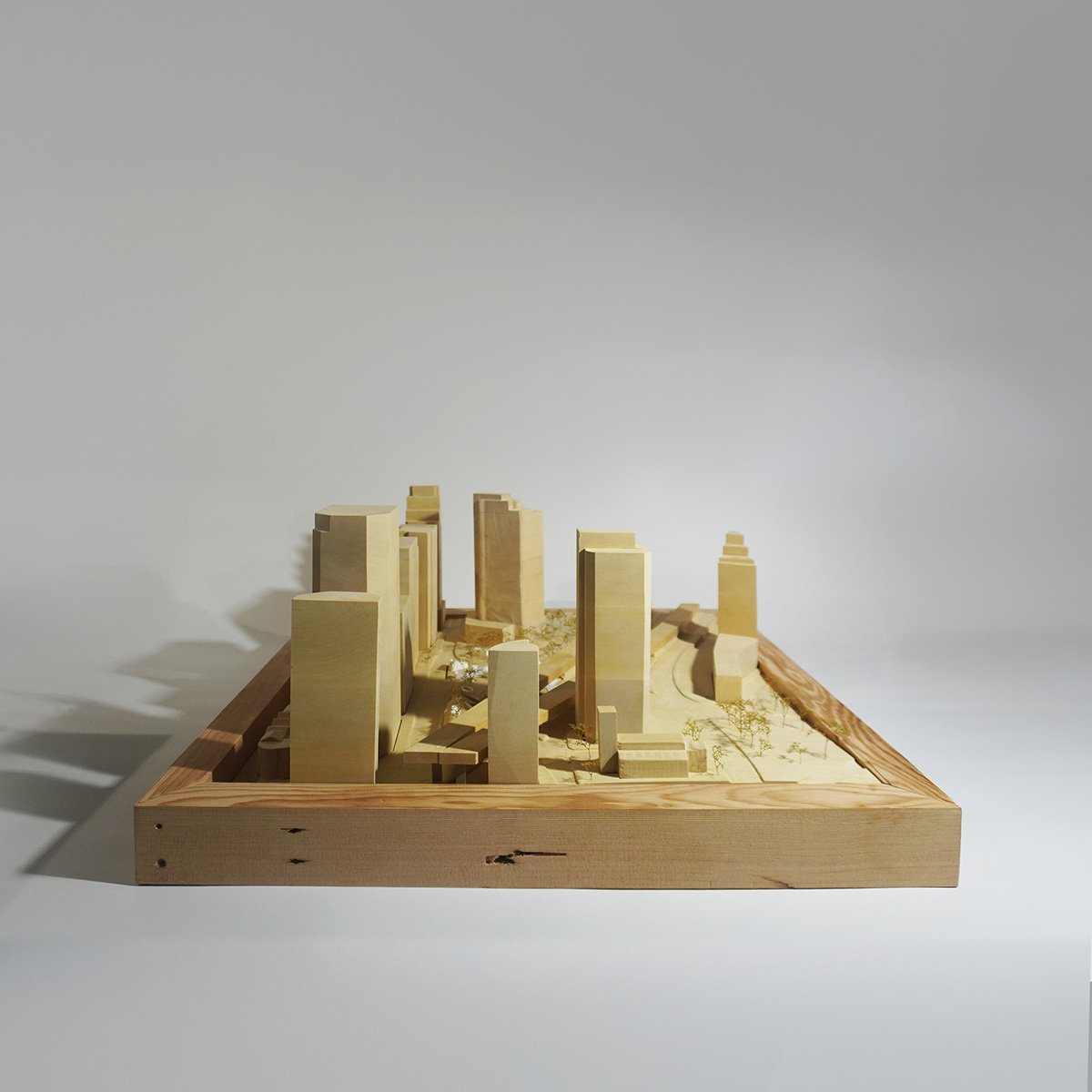
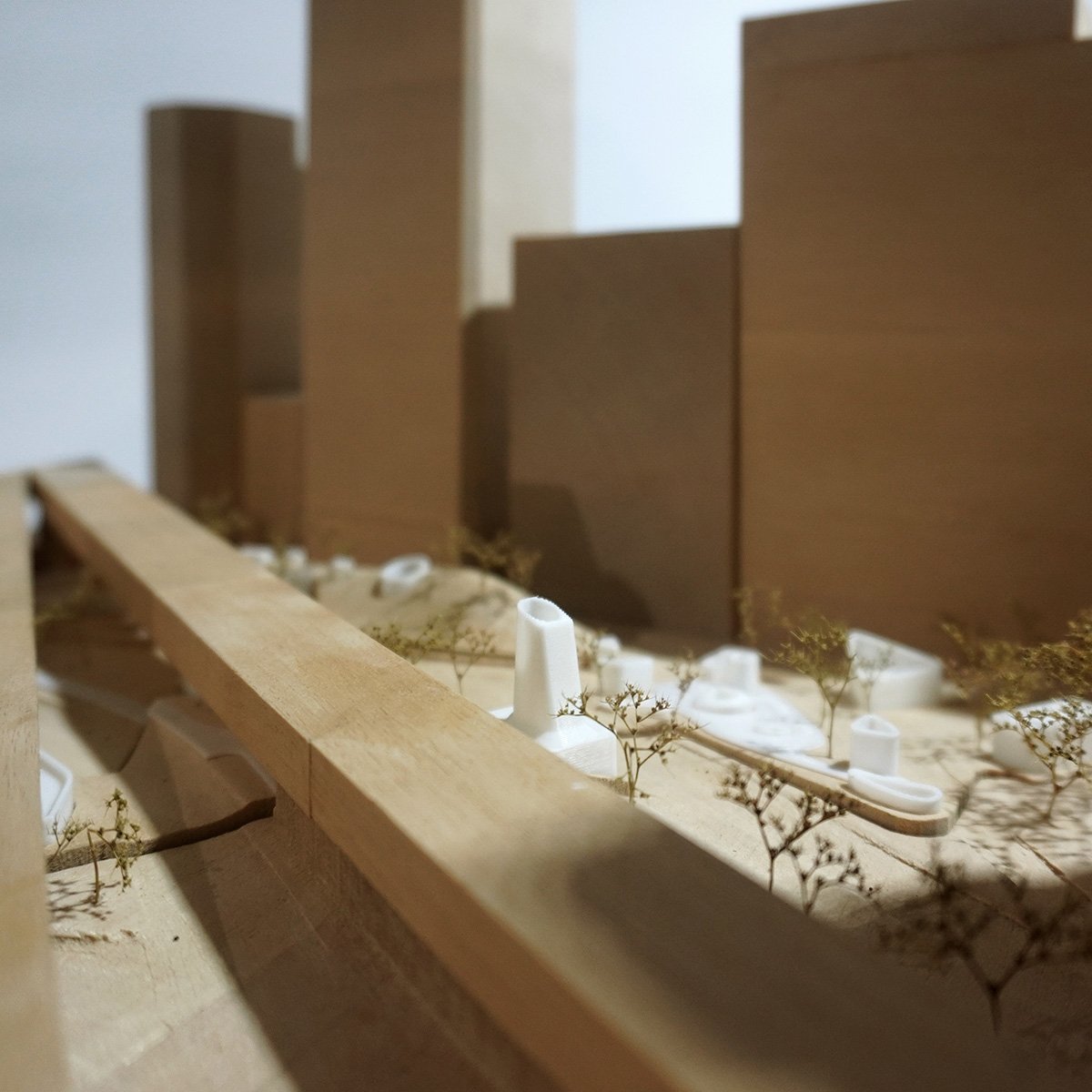
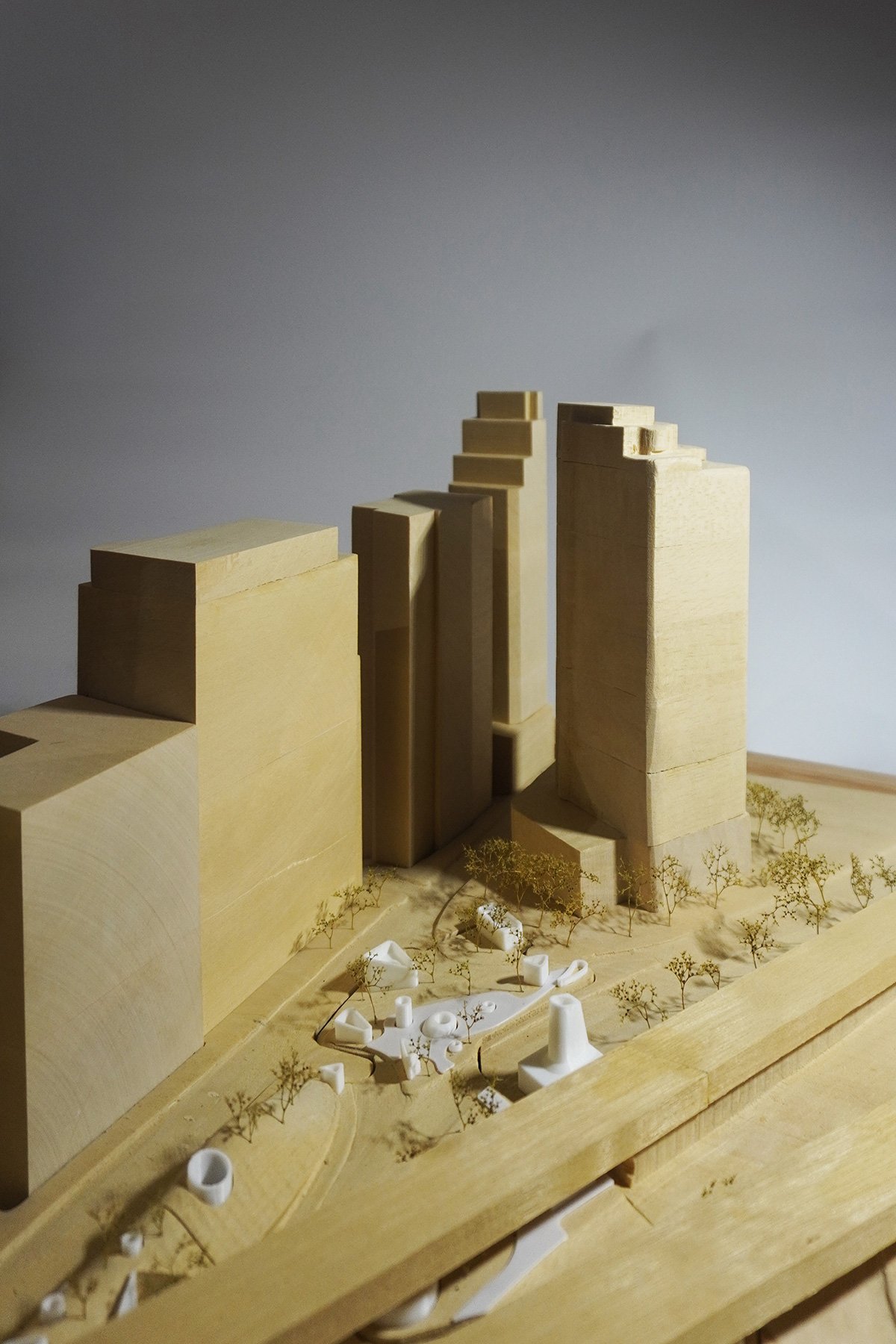
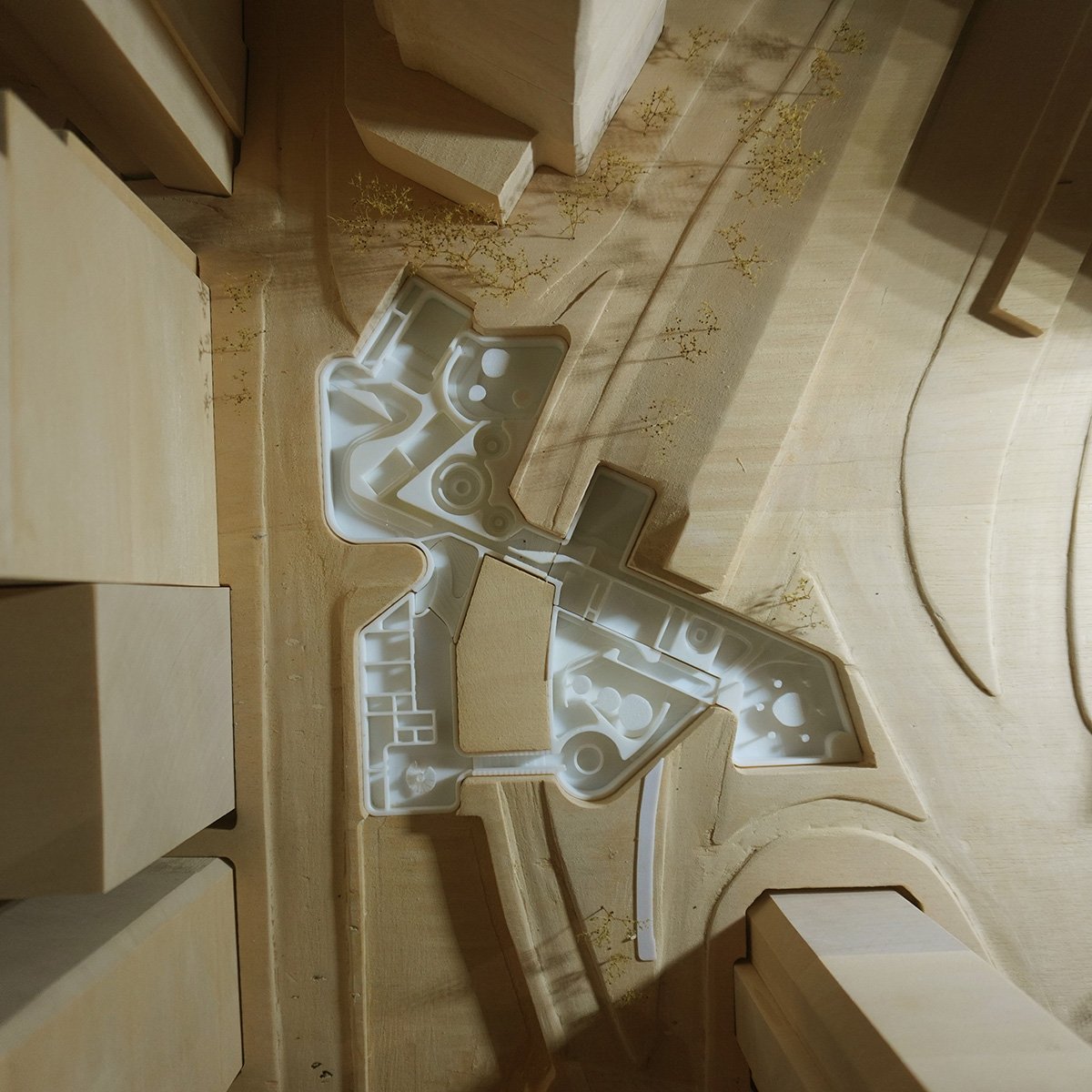
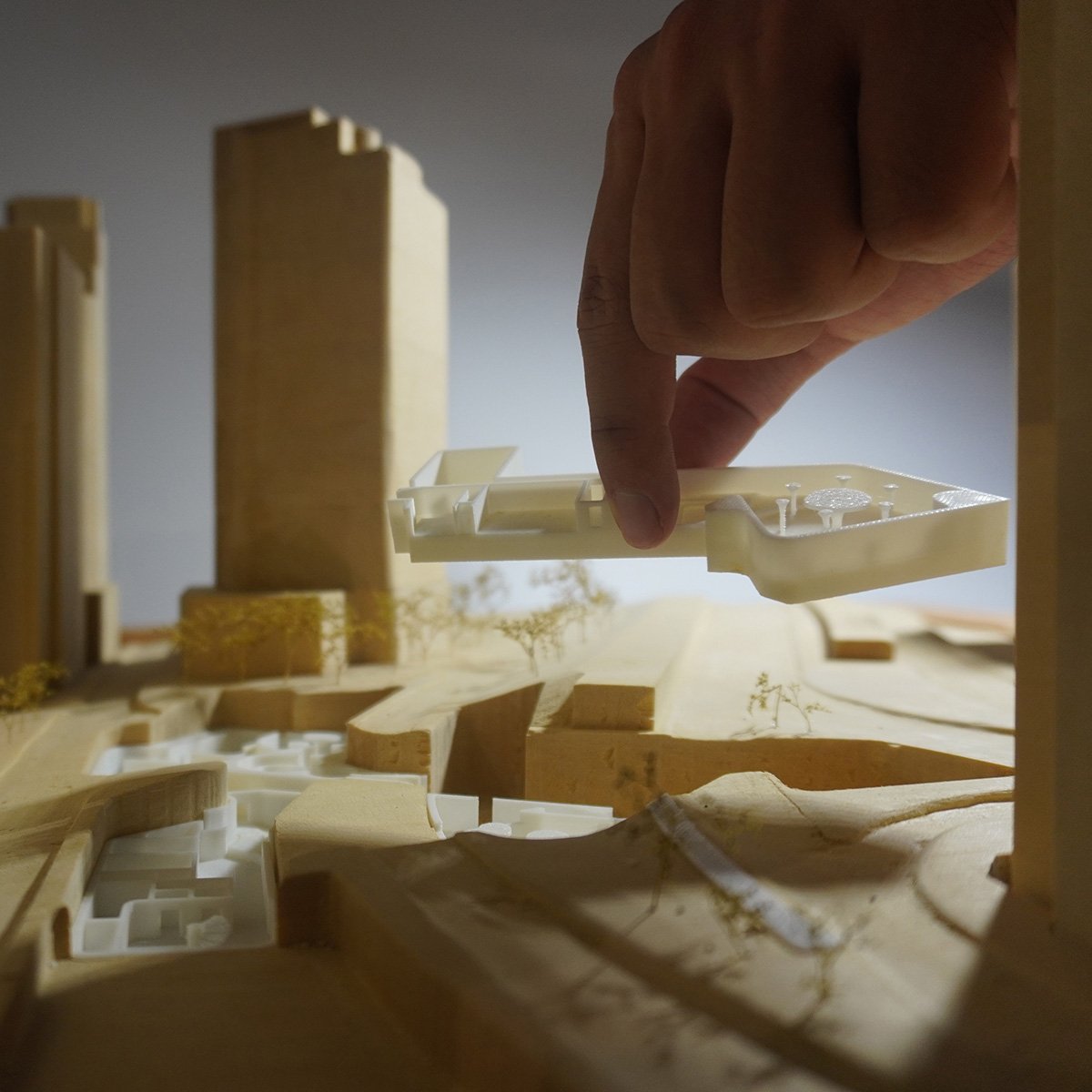
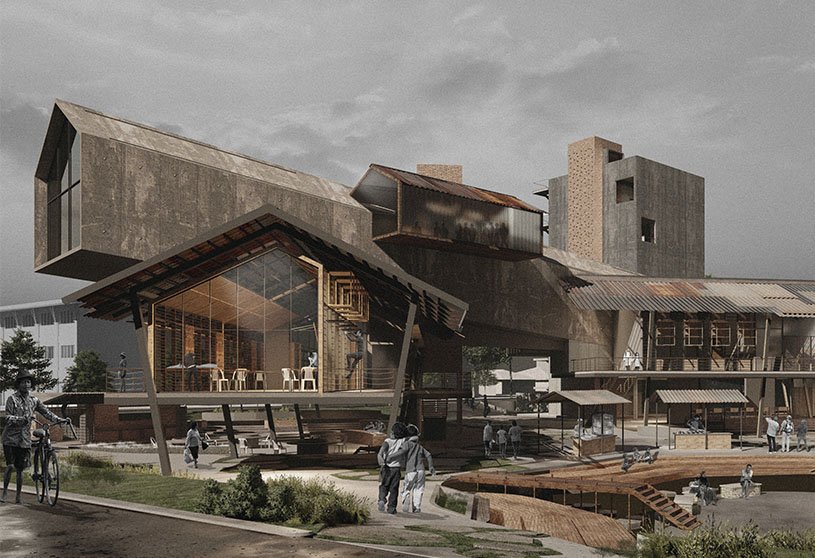
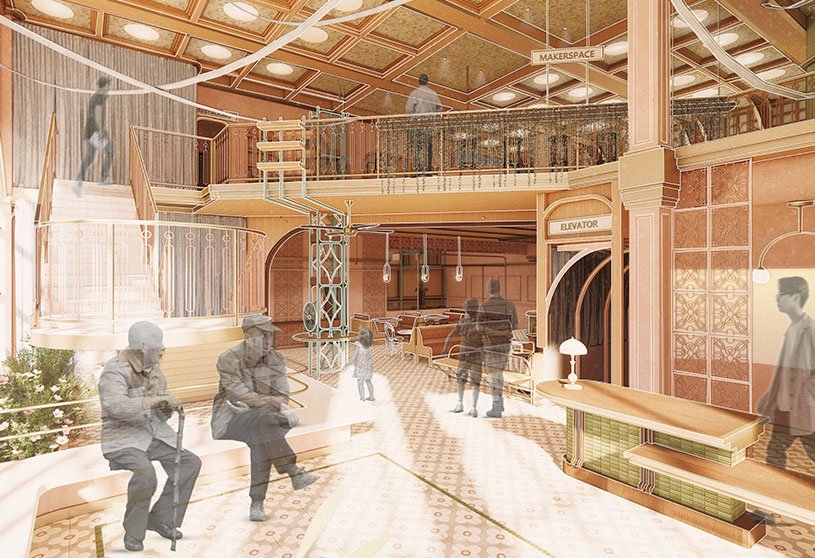
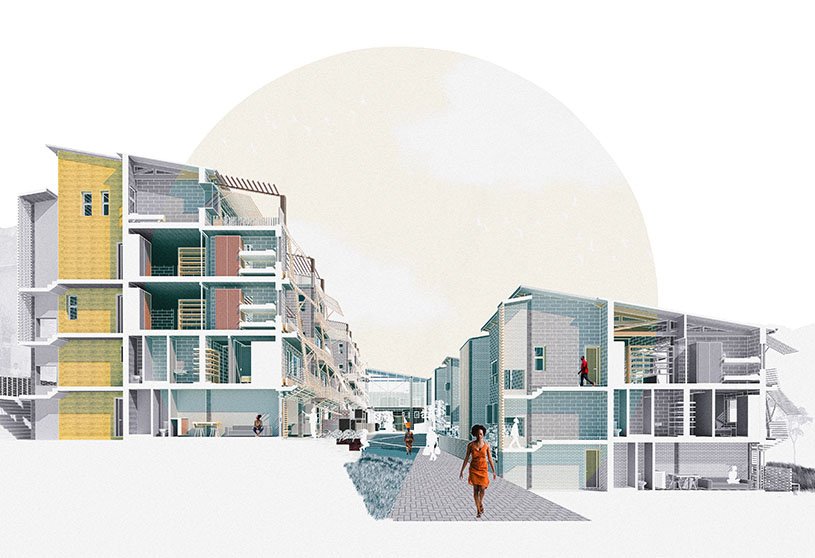
Excerpt: ‘The Eddy’ is a Masters Design Project by Han Lin and Michael Yeh from the ‘Sydney School of Architecture, Design and Planning.’ The project aims to create a slow, immersive space within Sydney’s fast-paced CBD, using the thermae as a model to reconnect people with leisure, water, and social interaction. By treating water as a journey of temperature, form, and flow, the bathhouse encourages pause and reflection, transforming the urban environment into a site for sensory engagement, relaxation, and restorative experiences.
Introduction: The bathhouse (thermae) is often perceived as a place devoted to “doing nothing,” typically imagined as a singular space containing perfectly tempered water. From the public baths of Mohenjo-Daro in the ancient Indus Valley civilization around 2500 BCE to modern saunas and onsens, history positions the bathhouse as a civic environment for leisure, cleansing, and social interaction. This raises the question of how and where a foundational model might be proposed to shape a renewed appreciation for this typology within metropolitan Sydney.
Despite its long urban history and global recognition as a major business centre in Australia, Sydney exhibits a limited culture of leisure. The relationship between the city and its inhabitants is largely defined by rapid commutes to and from work, with leisure confined to the domestic realm. In response, this proposal introduces a model bathhouse as an architectural intervention that promotes slowness and pause. By situating its geometry among dense clusters of skyscrapers and high-speed transport networks, the bathhouse creates visual and experiential contrast — a “third space” intended to enrich and rebalance Sydney’s urban landscape.
Existing Urban PlanExisting Site Plan | Existing North Section
Proposed in 2015 and completed in 2016, the Kent Street Underpass comprises an existing network of tunnels and passageways linking York Street, Middle Street, and Kent Street. Formed beneath a complex arrangement of overhead highways, the underpass establishes a clear and efficient route for pedestrian movement.
Pedestrian Pathway Photo – Sydney Harbour Bridge | Existing Infrastructure Photo – Kent Street Underpass
This infrastructure revealed opportunities for the insertion of thermae, while also prompting investigations into how complementary programs could be integrated—either recessed below or extended outward from the existing conditions. Periods of favourable weather further revealed optimal natural lighting possibilities, with the overhead road infrastructure offering potential for controlled daylight penetration or larger openings in areas free from obstructions above.
Design Process
Preliminary Circulation DiagramsInterior SketchInterior Space Test Model
In natural river systems, eddies form where fast-moving currents slow at points of low pressure, creating pockets of calm. Kayakers often use these zones as moments of rest amid the intensity of downstream movement. Translated to an urban condition, similar points of slowness can emerge within extensive networks of fast-flowing highways. Conceptually, water is treated as a linear passage, with filtration units acting as obstacles along its course. Each intervention introduces a distinct modification or enhancement to the water before it is purified for daily use.
Zoning, Volume, Pool PlansWater Course, Servicing, Circulation PlansExisting, Underpass, Street Level Axonometrics
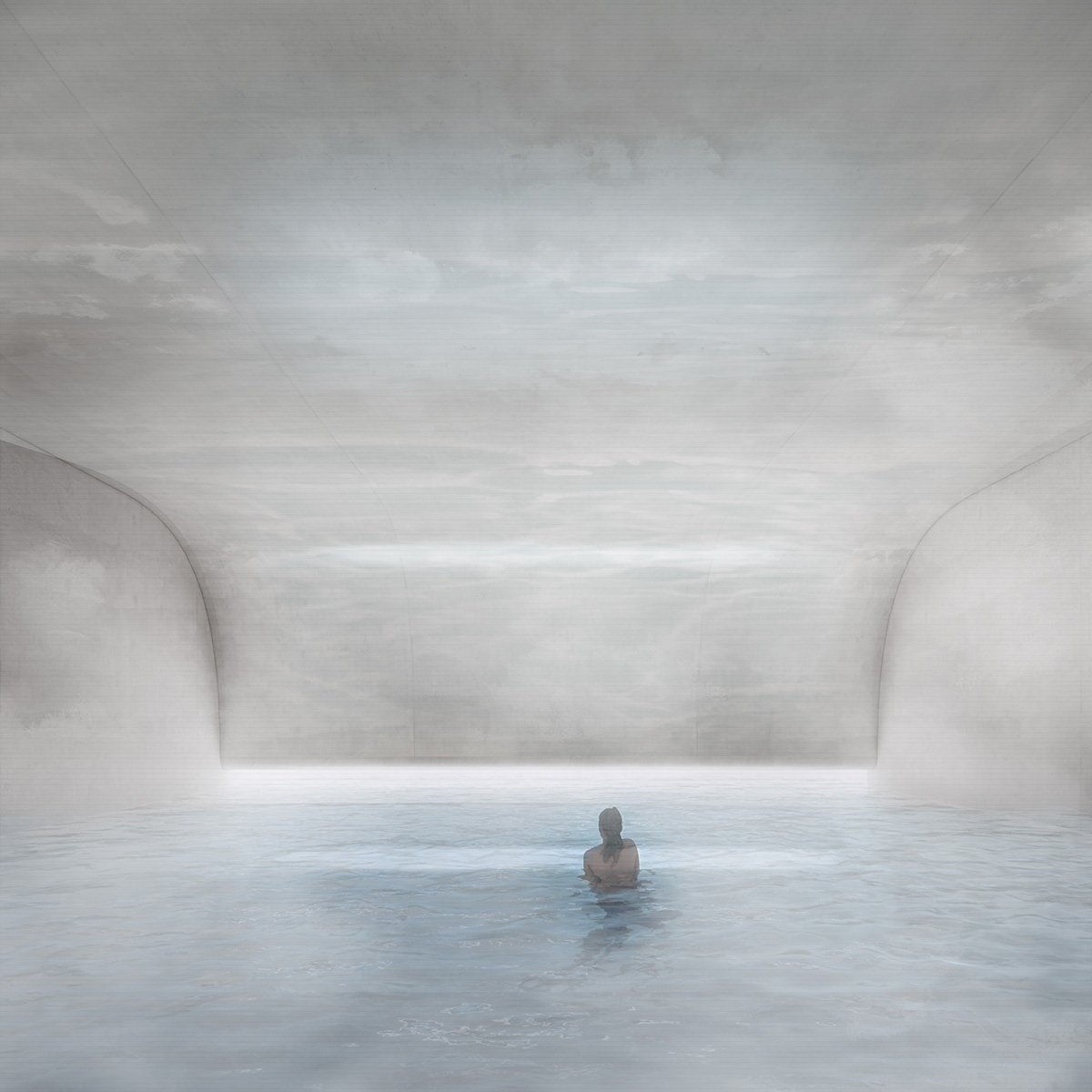
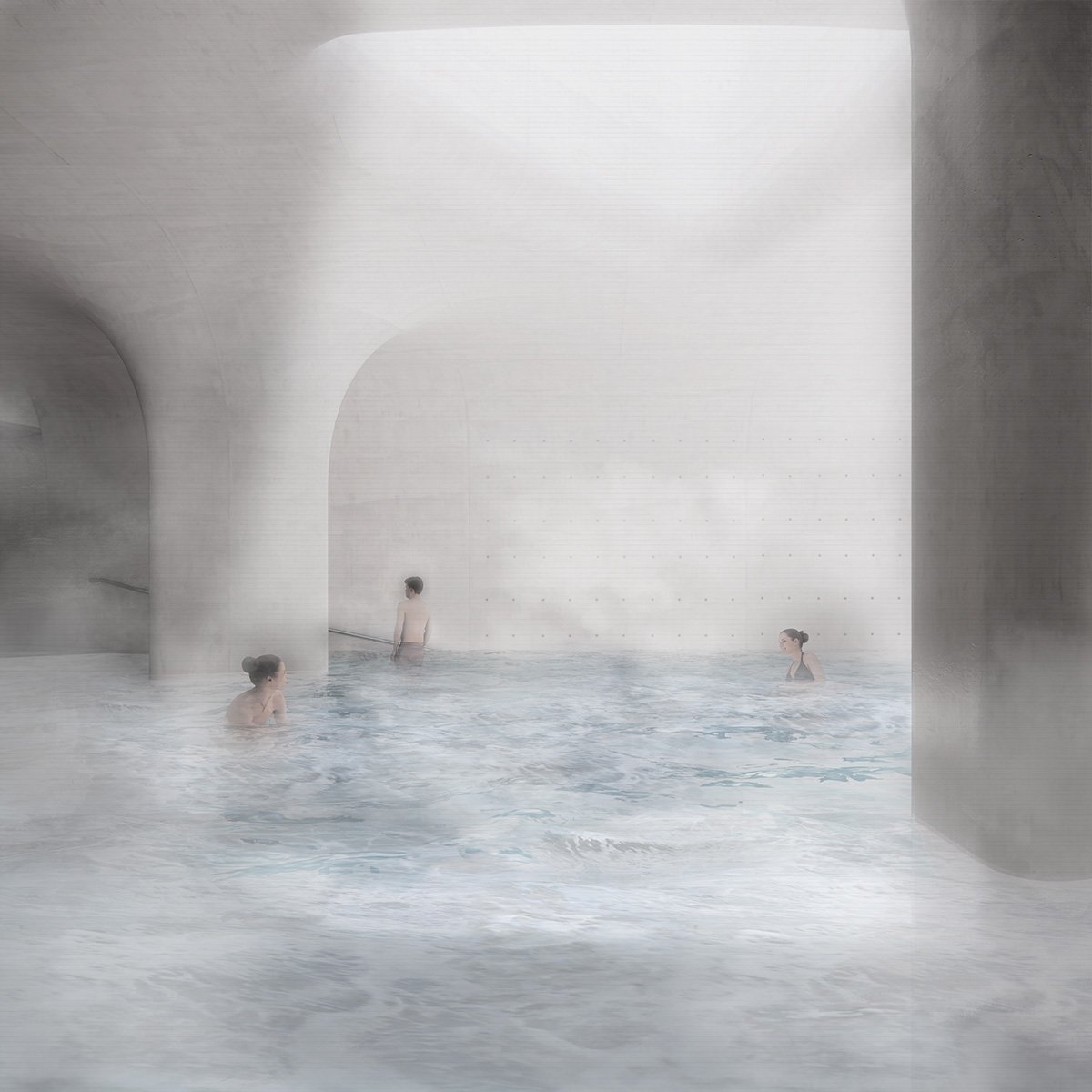
By compressing this extended journey, opportunities arise for an architecture of slowness. The sequential stages of water treatment operate in parallel with recreational bathing, allowing infrastructure and leisure to coexist. These obstacles are transformed into immersive interior environments, offering moments of distraction and sensory variation that enrich the bathing experience.
Final Outcome
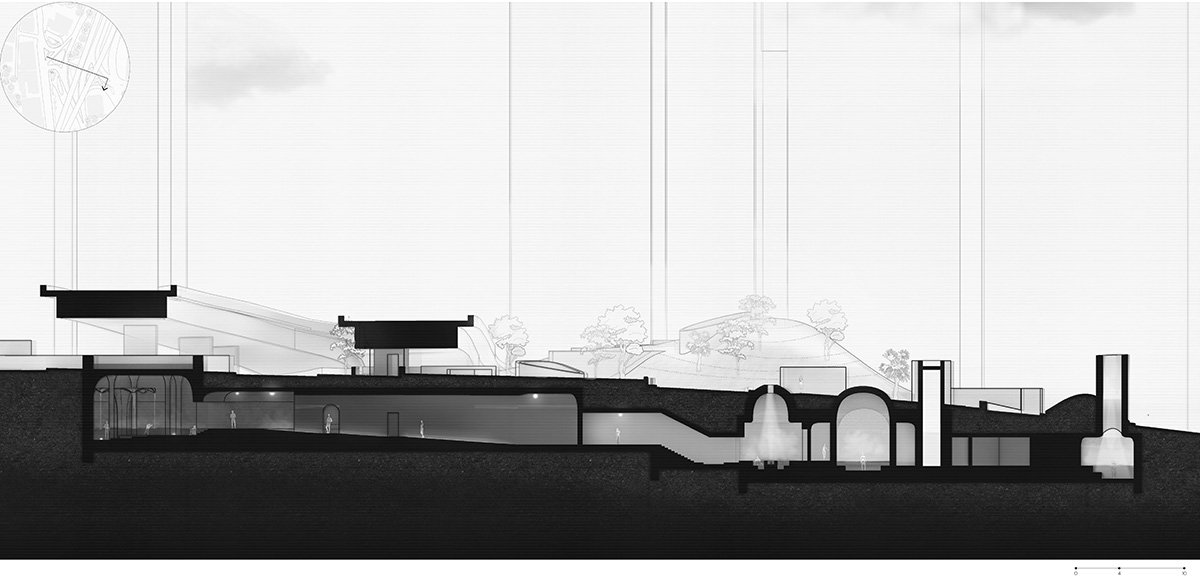
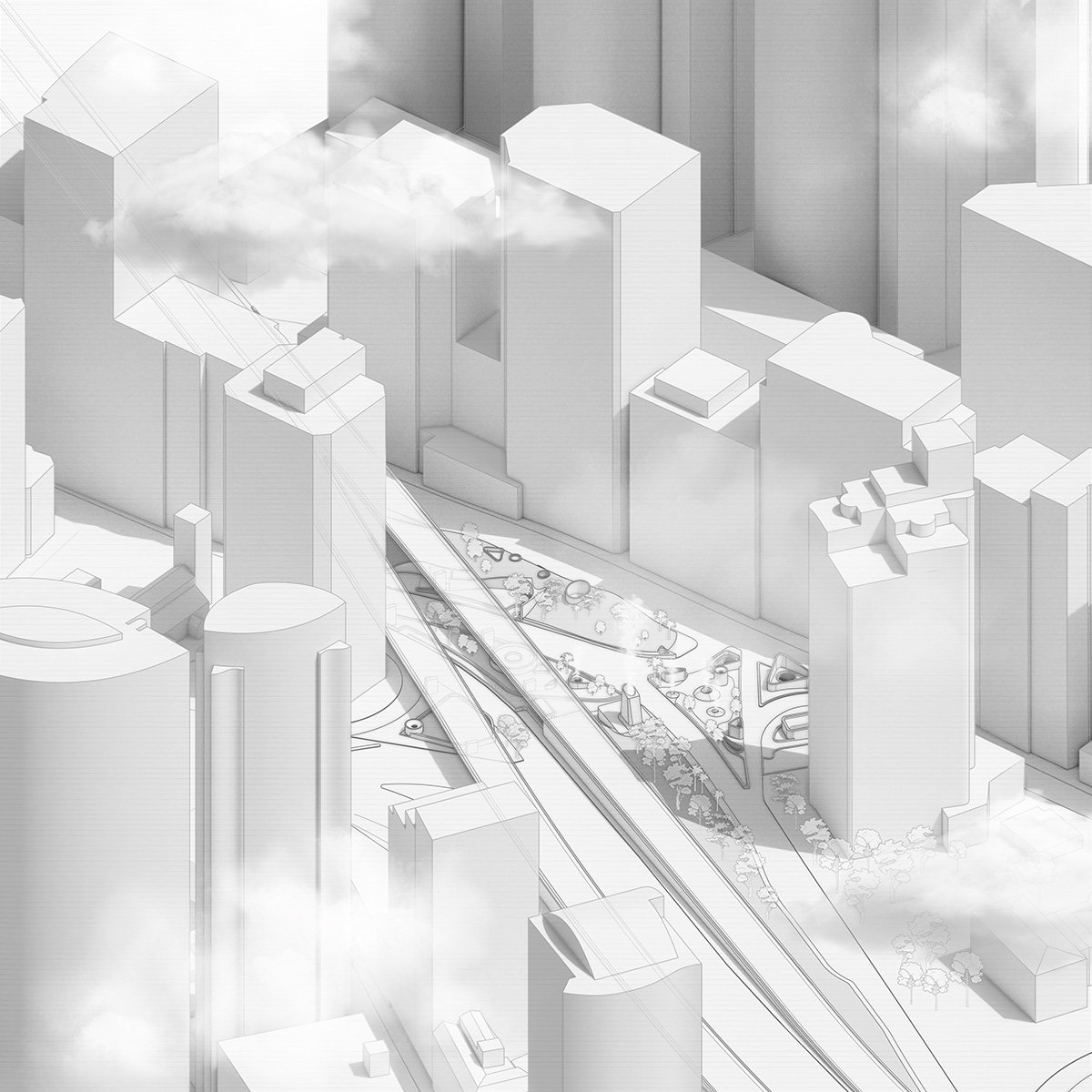
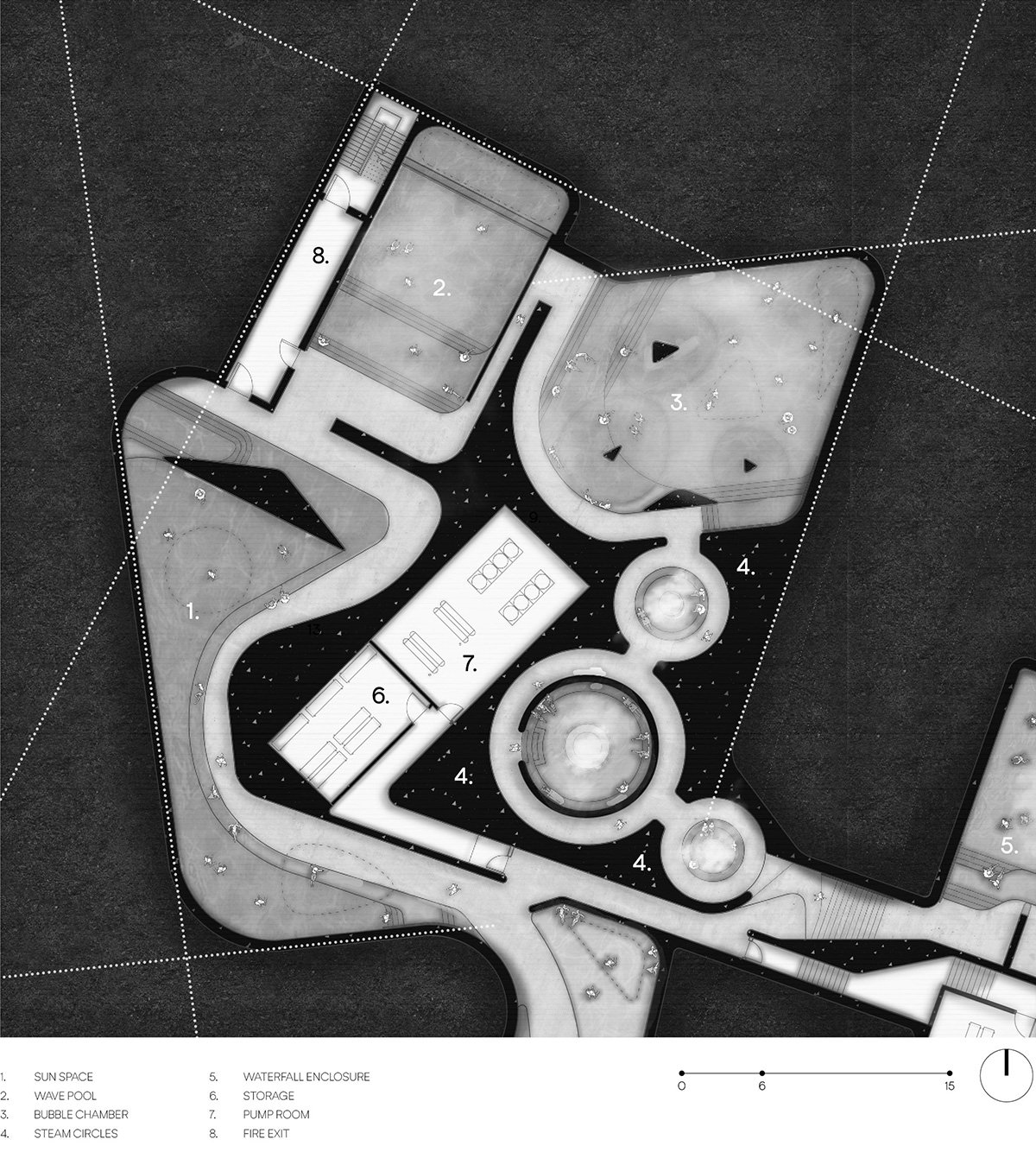
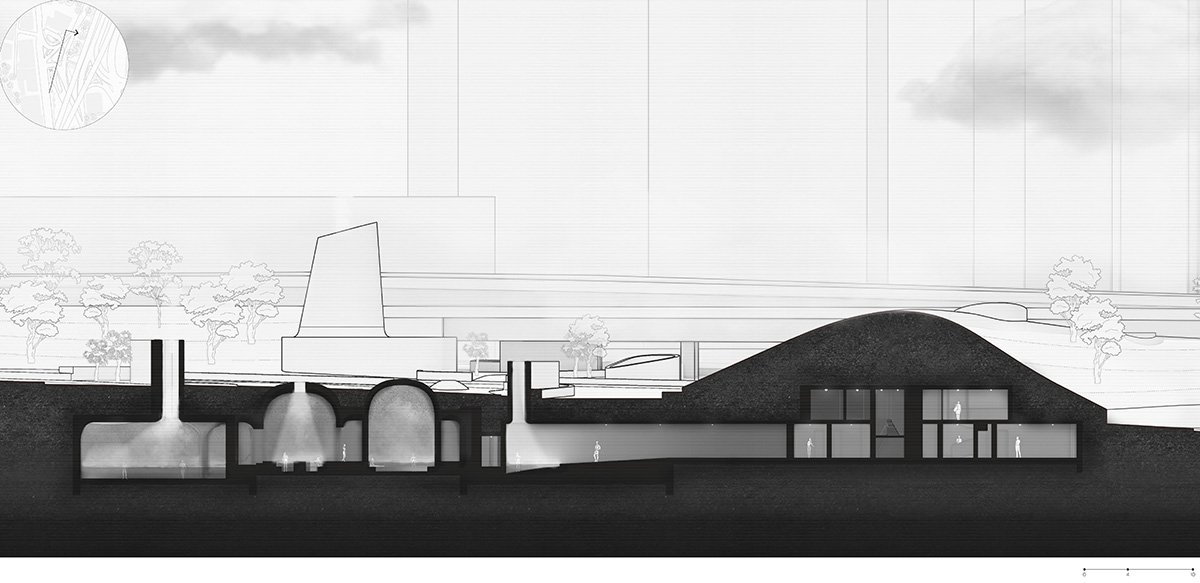
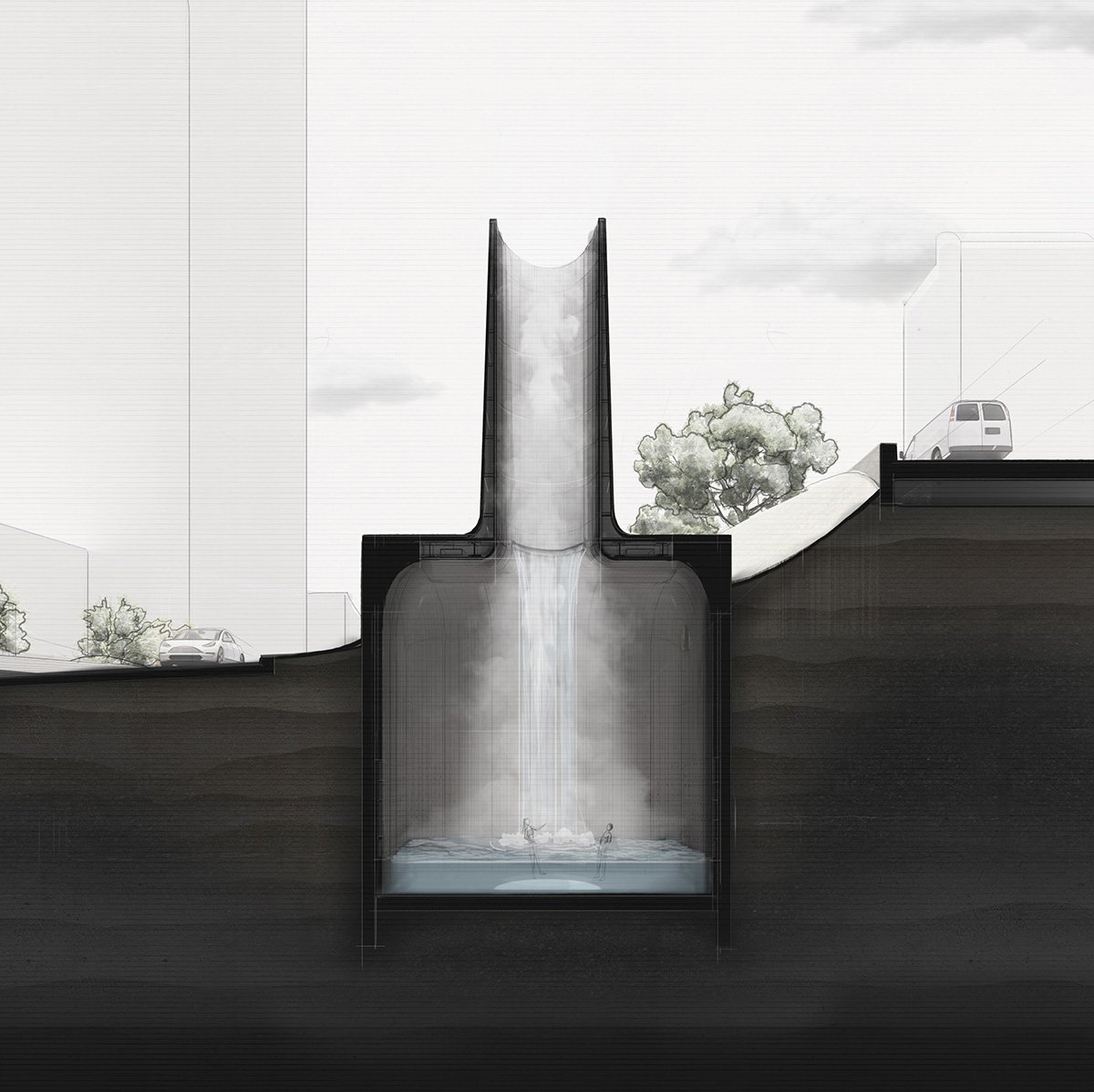
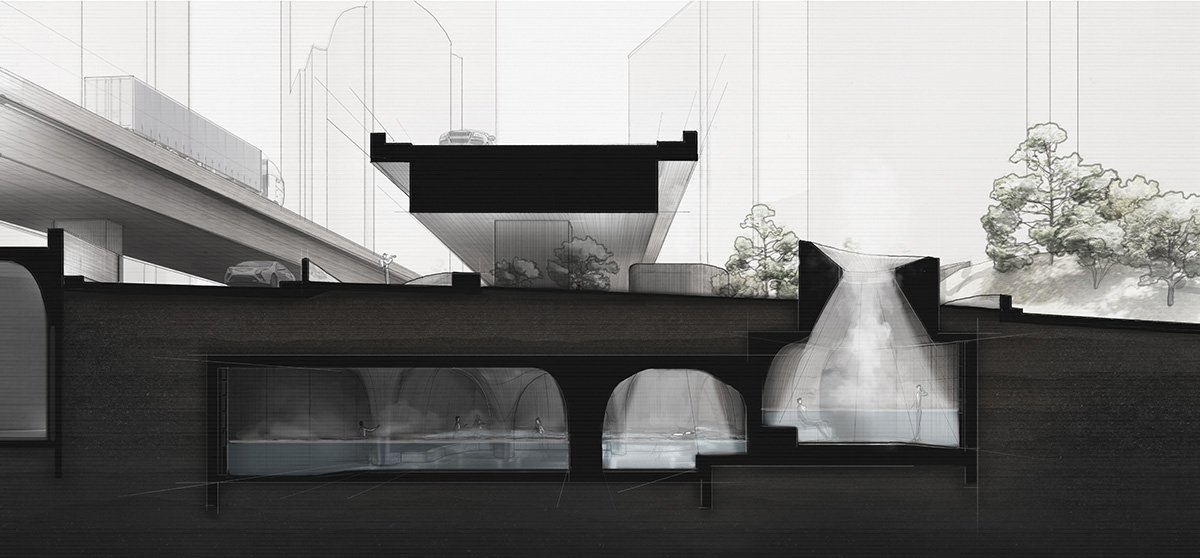
North East Axonometric | Aerial Level PlanNorth SectionEast SectionStreet Level Plan | Underpass Level Plan
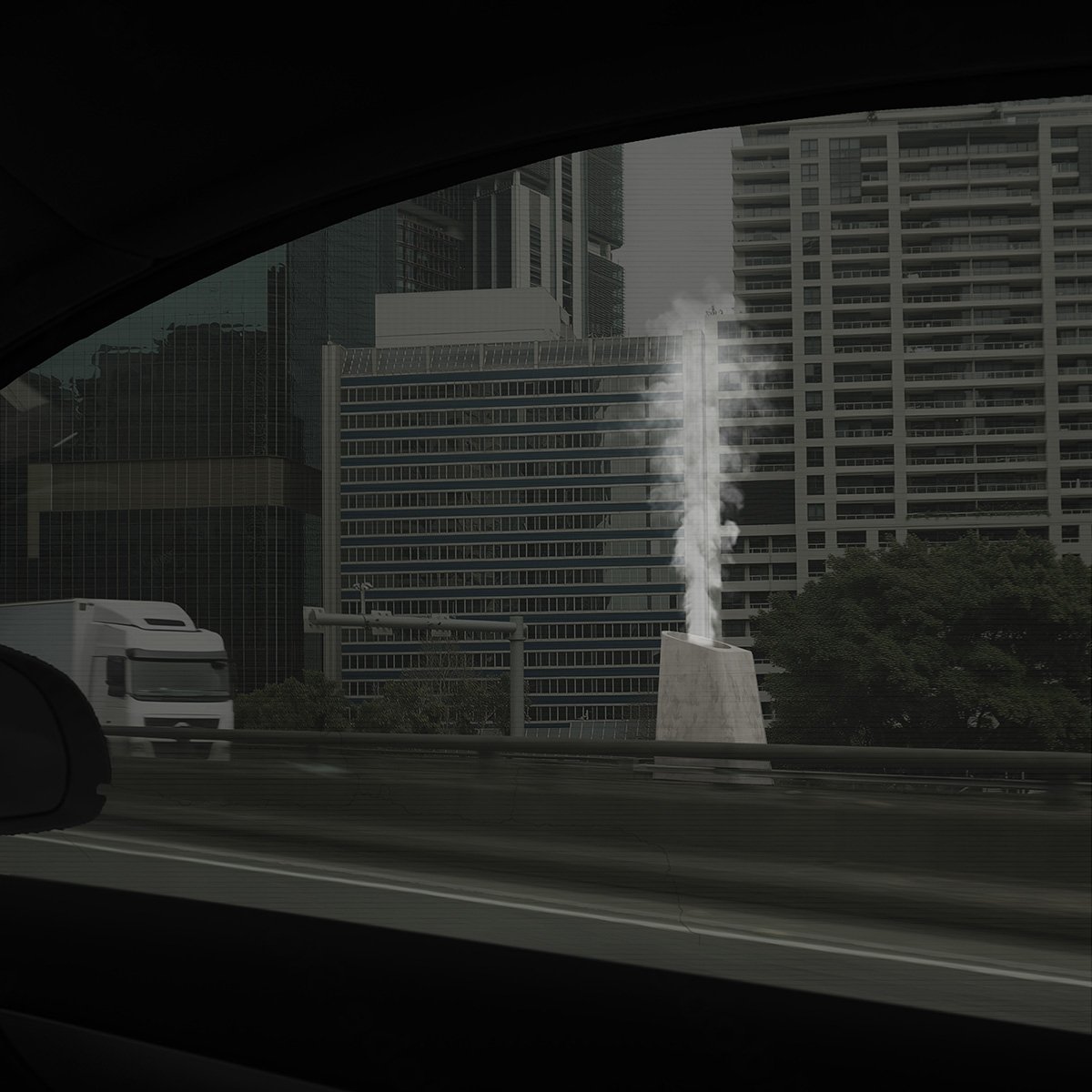
The placement of the thermae establishes a striking contrast within its urban context. It is conceived as a deliberate counterpoint to the rapid pace of transit and movement in the CBD—a sanctuary of slowness amidst a high-speed environment.
Entrance | Highway – Sydney Harbour BridgeZone 01 – Light Thermae Plan | Zone 02 – Dark Thermae PlanSection Perspective Sketch | Bubble SpaceSteam Circle | Corridor
A space moving at 1 km/h under a city moving at 100 km/h. This “slow space” celebrates a profound engagement with leisure in water. In this context, the qualities of water—its temperature, form, fluidity, and treatment—become central to the spatial experience. These aspects reinforce the notion of water as a journey, one in which visitors actively participate and are immersed.
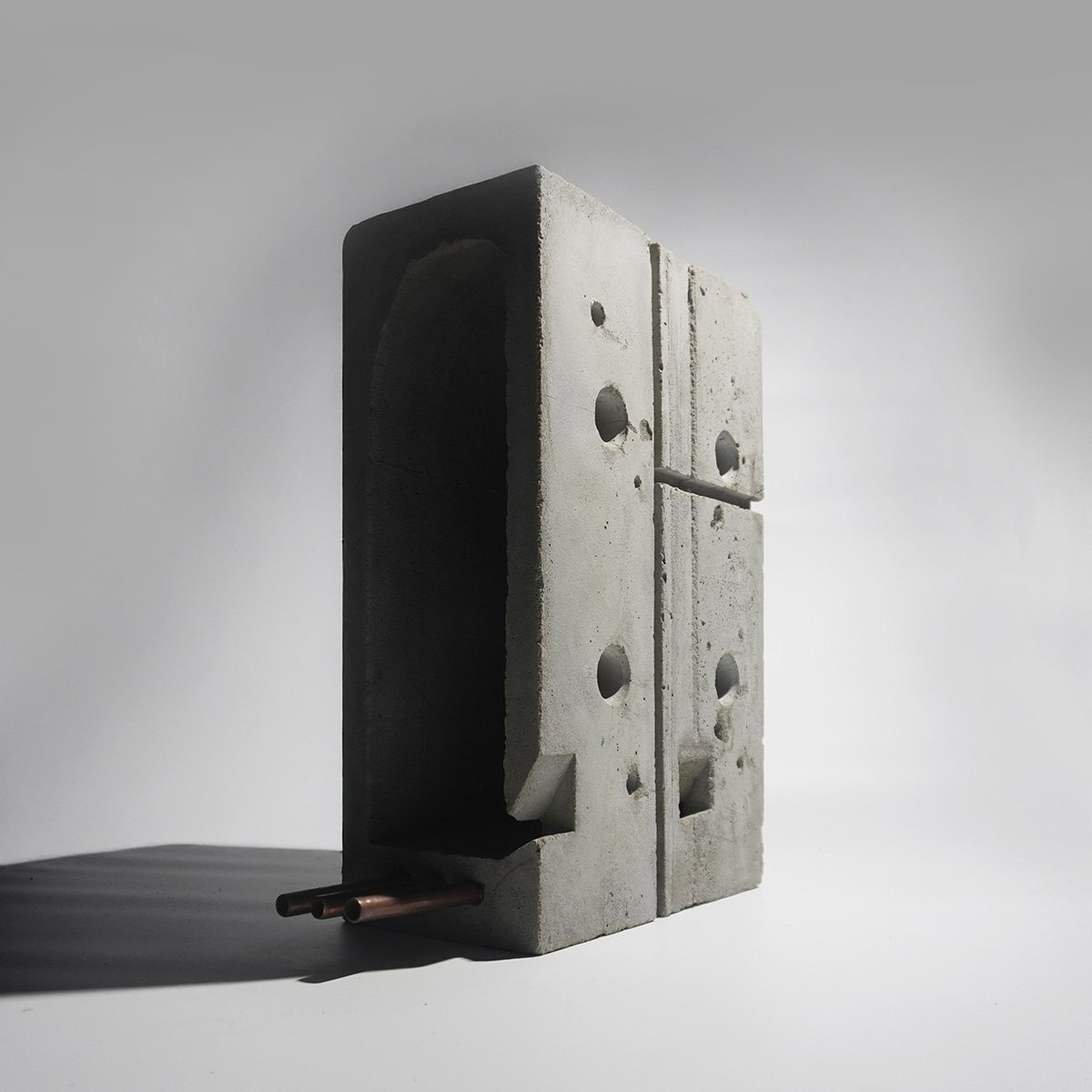
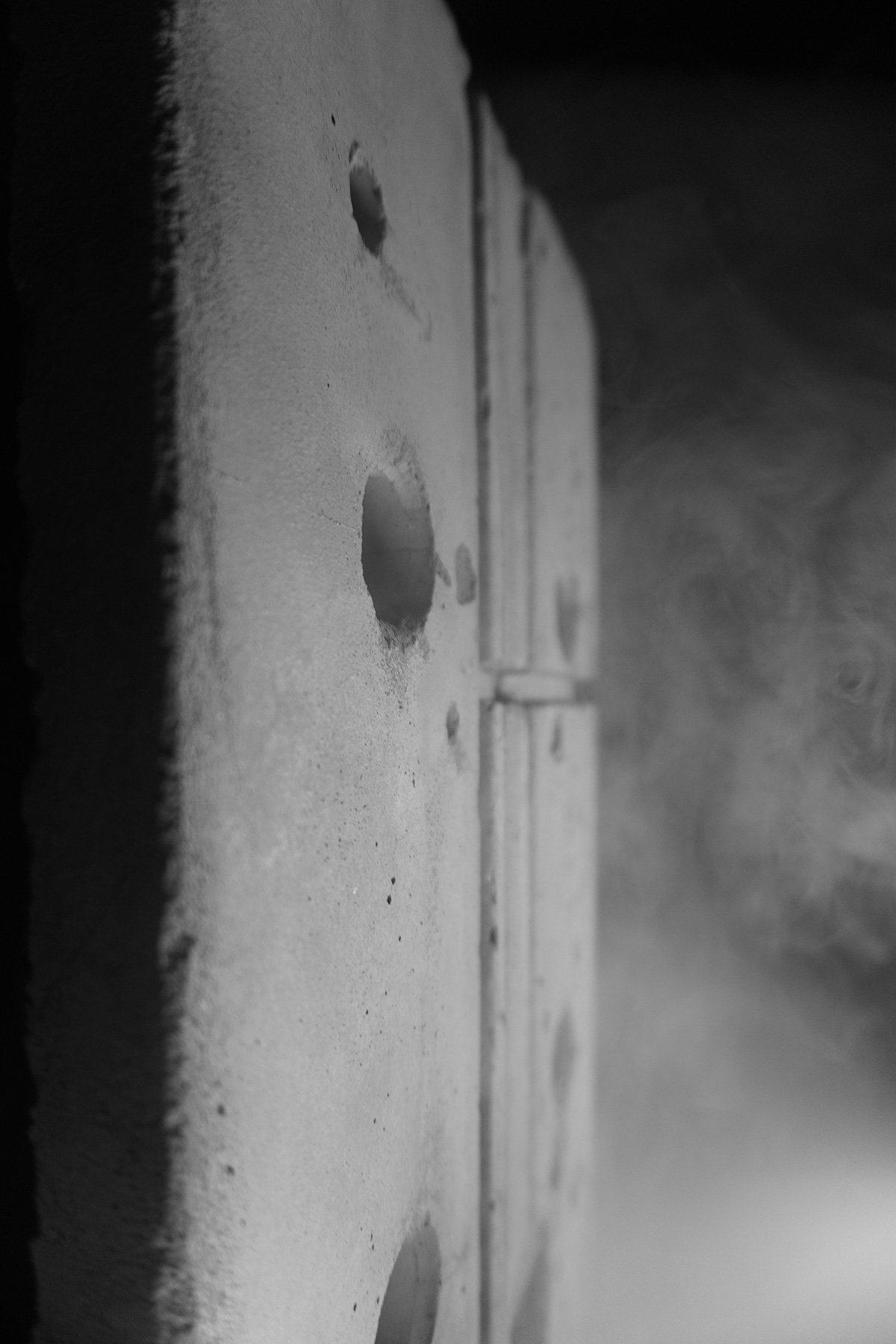
River LagoonInterior Wall Panel – 1:1 Model |Axonometric – 1:500 Model | Underpass Level – 1:500 Model
Conclusion: Ultimately, the thermae introduces a slow, restorative space within Sydney’s fast-paced CBD, using water as a journey to foster leisure, sensory engagement, and social connection. It offers a model for integrating moments of pause into the urban fabric.
[This Academic Project has been published with text and images submitted by the student]
Site Context
Design Process
Final Outcome
To submit your academic project for publication at ArchiDiaries, please visit the following link >> Submit
Get the best of ArchiDiaries, directly in your inbox.
We use cookies on our website to give you the most relevant experience by remembering your preferences and repeat visits. By clicking “Accept All”, you consent to the use of ALL the cookies. However, you may visit "Cookie Settings" to provide a controlled consent.
This website uses cookies to improve your experience while you navigate through the website. Out of these, the cookies that are categorized as necessary are stored on your browser as they are essential for the working of basic functionalities of the website. We also use third-party cookies that help us analyze and understand how you use this website. These cookies will be stored in your browser only with your consent. You also have the option to opt-out of these cookies. But opting out of some of these cookies may affect your browsing experience.
Necessary cookies are absolutely essential for the website to function properly. These cookies ensure basic functionalities and security features of the website, anonymously.
Cookie
Duration
Description
cookielawinfo-checkbox-analytics
11 months
This cookie is set by GDPR Cookie Consent plugin. The cookie is used to store the user consent for the cookies in the category "Analytics".
cookielawinfo-checkbox-functional
11 months
The cookie is set by GDPR cookie consent to record the user consent for the cookies in the category "Functional".
cookielawinfo-checkbox-necessary
11 months
This cookie is set by GDPR Cookie Consent plugin. The cookies is used to store the user consent for the cookies in the category "Necessary".
cookielawinfo-checkbox-others
11 months
This cookie is set by GDPR Cookie Consent plugin. The cookie is used to store the user consent for the cookies in the category "Other.
cookielawinfo-checkbox-performance
11 months
This cookie is set by GDPR Cookie Consent plugin. The cookie is used to store the user consent for the cookies in the category "Performance".
viewed_cookie_policy
11 months
The cookie is set by the GDPR Cookie Consent plugin and is used to store whether or not user has consented to the use of cookies. It does not store any personal data.
Functional cookies help to perform certain functionalities like sharing the content of the website on social media platforms, collect feedbacks, and other third-party features.
Performance cookies are used to understand and analyze the key performance indexes of the website which helps in delivering a better user experience for the visitors.
Analytical cookies are used to understand how visitors interact with the website. These cookies help provide information on metrics the number of visitors, bounce rate, traffic source, etc.
Advertisement cookies are used to provide visitors with relevant ads and marketing campaigns. These cookies track visitors across websites and collect information to provide customized ads.