Home » Academic projects » The Lighthouse – From Waste to value: Regenerative Architecture for Ecological and Social Transformation in Barreiro | Architecture Thesis
The Lighthouse – From Waste to value: Regenerative Architecture for Ecological and Social Transformation in Barreiro | Architecture Thesis
Excerpt: ‘The Lighthouse’ is an architecture thesis by Elisabetta Maifredi from the ‘Accademia di Architettura di Mendrisio – USI.’ The project seeks to transform an abandoned industrial site into a center for soil regeneration, material recovery, and community engagement. It treats phosphogypsum to extract valuable resources for industry while involving Barreiro’s youth in creative workshops to renovate and secure the building. Open to the public, it combines environmental restoration, education, and sustainable reuse, ensuring long-term social and industrial value.
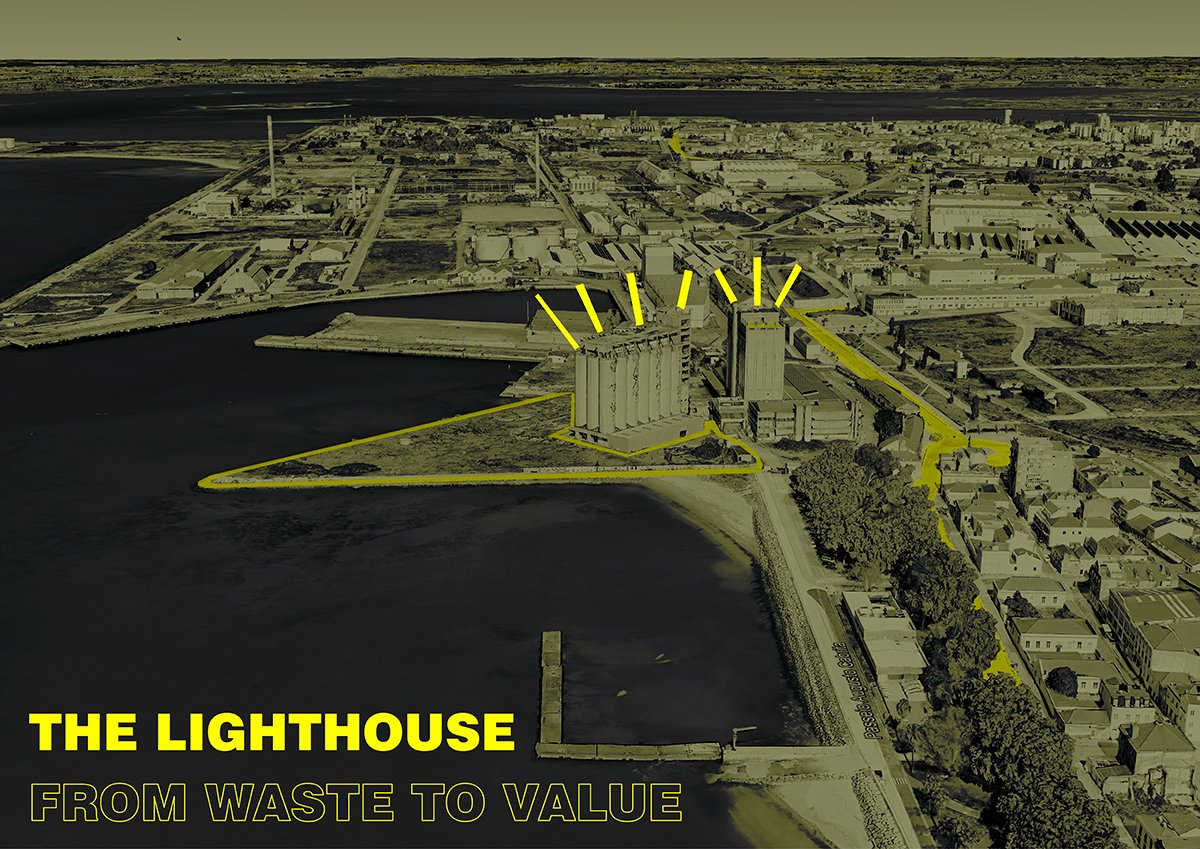
Introduction: The triangular platform in the Tejo was originally formed as a dumping site for phosphogypsum waste. The silos built on top once produced animal feed using by-products from the CUF industries. These silos are now being transformed into a soil regeneration facility that studies, cleans, and extracts phosphogypsum—the very material forming their foundation. Simultaneously, the silos are being opened to the community and repurposed as a social hub through a process of self-renovation and collective use, involving Barreiro’s youth—those who once vandalized the site—by turning their energy into a driving force for creativity and renewal.
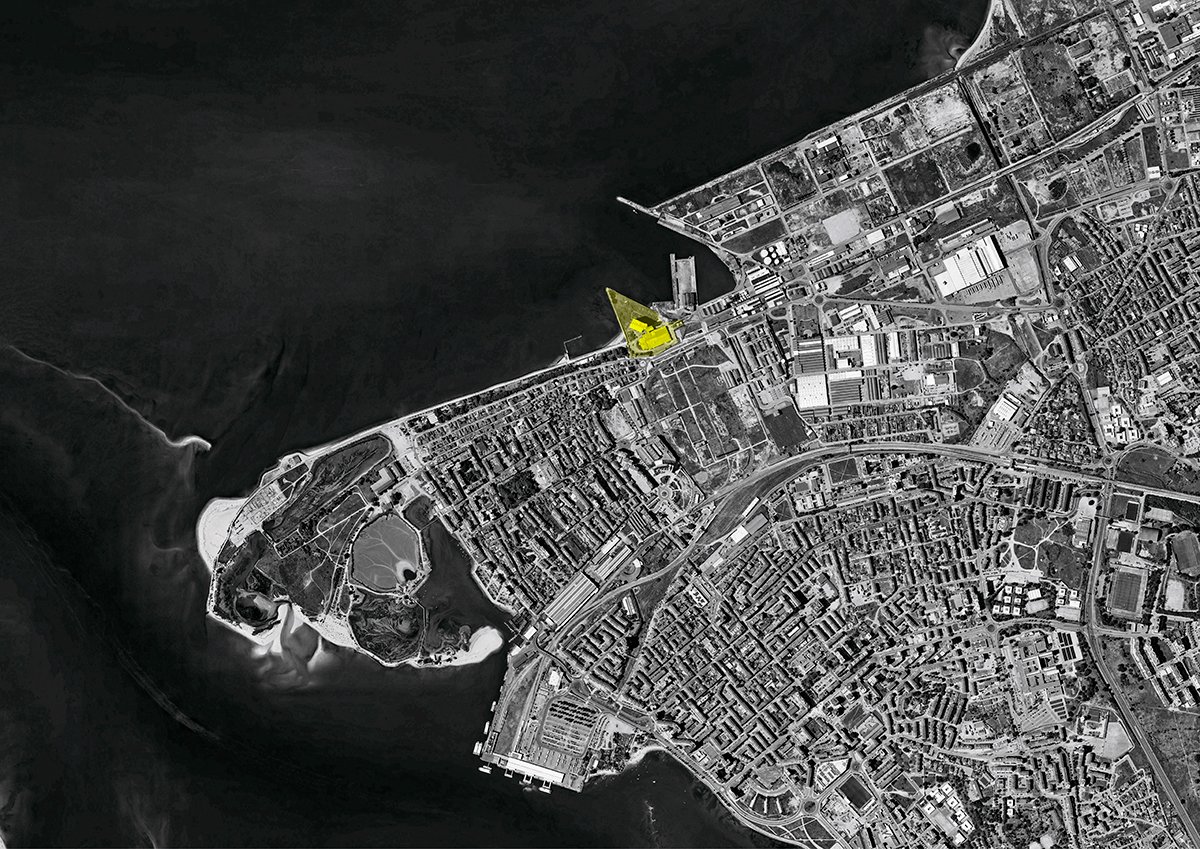
The silos are located on a triangular plot of land that was artificially constructed to extend the industrial complex. This site was strategically selected for its convenient access to both maritime and railway transport routes. To convert the original marshland into stable ground suitable for industrial activity, retaining walls were erected to shield the area from tides and river currents. After the enclosure was completed, the basin was filled with industrial waste—mainly by-products from CUF’s chemical production and dredged sediments from the riverbed.
Transformation in Time
The primary waste material used was phosphogypsum, a by-product of phosphoric acid manufacturing. Phosphoric acid played a key role in CUF’s production of fertilizers and animal feed, where it was neutralized to provide phosphorus and calcium. For every ton of phosphoric acid produced, between four and five tons of phosphogypsum were generated. Because of its availability and low cost, phosphogypsum was widely used at the time as landfill material. However, despite being largely composed of gypsum, it can also contain heavy metals and radioactive substances, posing risks of soil, air, and water contamination. Recent research, however, indicates that this material has potential for revalorization.
Final Outcome
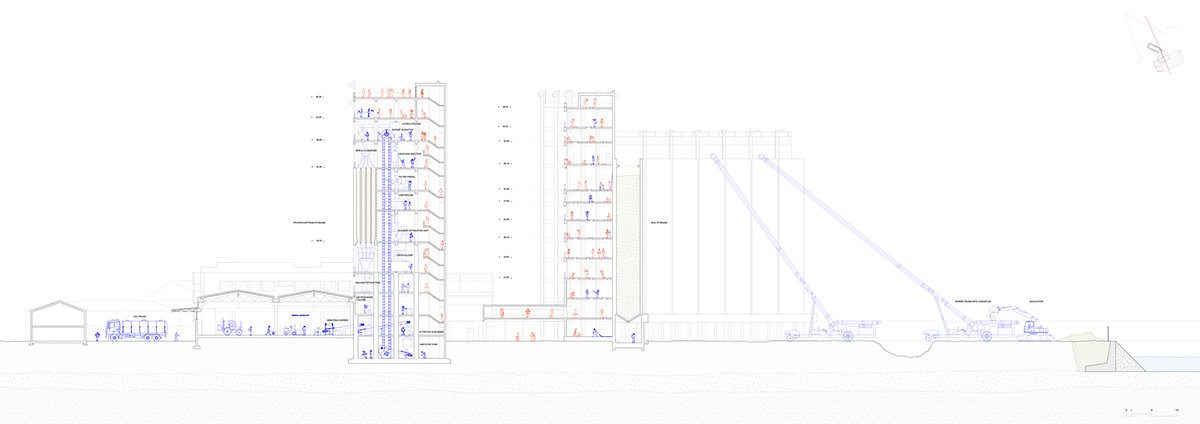
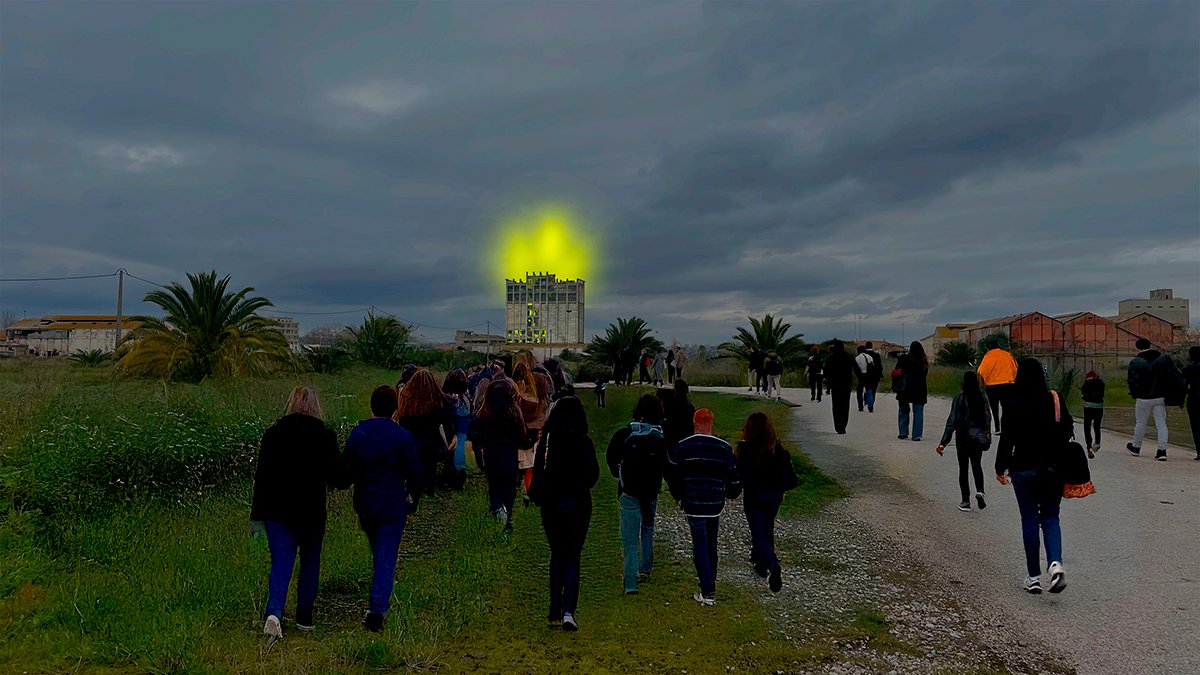
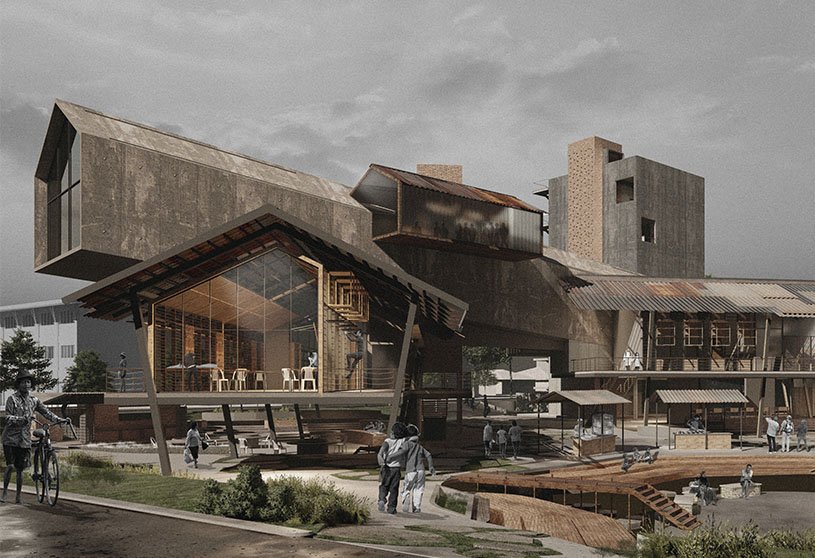
Site PlanSectionExterior Image
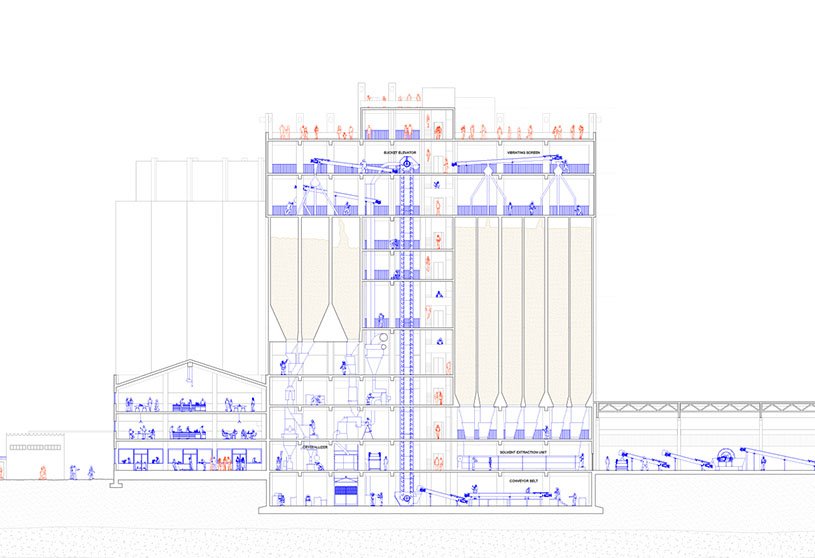
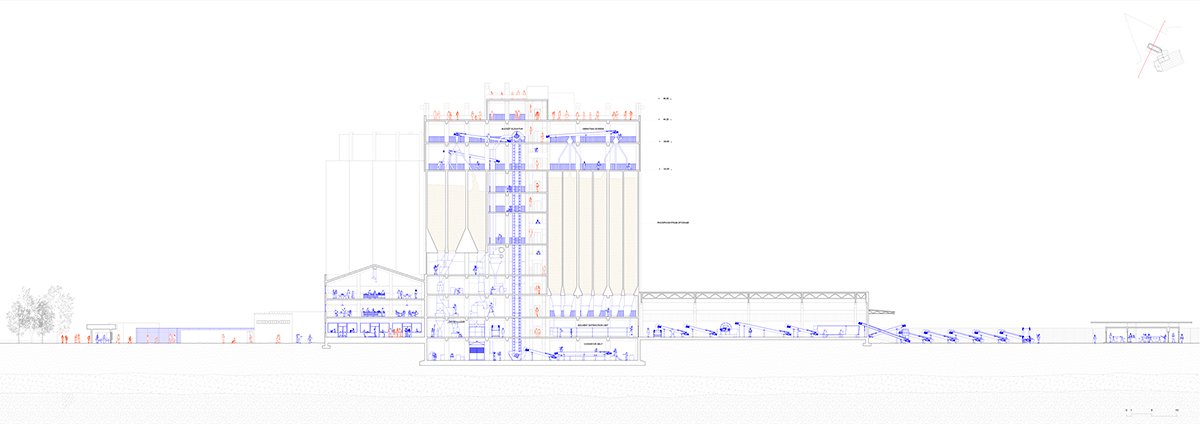
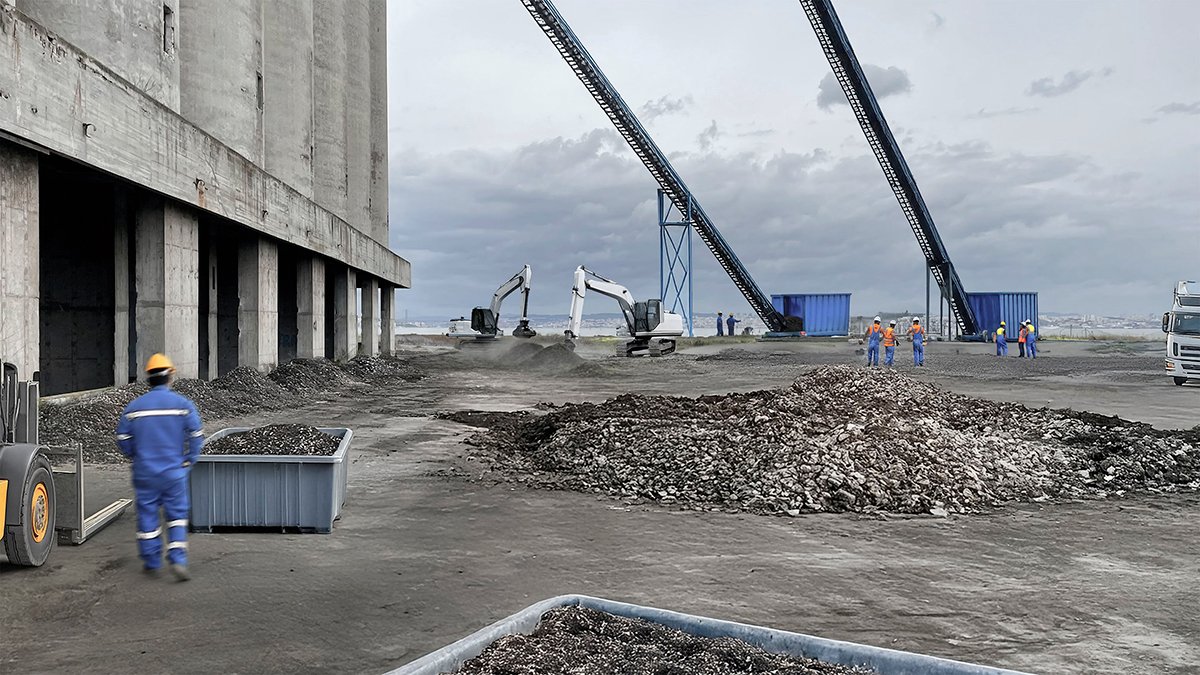
The Lighthouse Project reimagines the existing silos as a center for soil regeneration and material recovery, processing phosphogypsum to extract valuable components for industries like paper, detergents, and agriculture. The project begins by excavating the contaminated soil, which is temporarily stored in the silos. These silos contain 21 cells with a combined capacity of 18,700 cubic meters, sufficient to hold about one-third of the soil at a time.
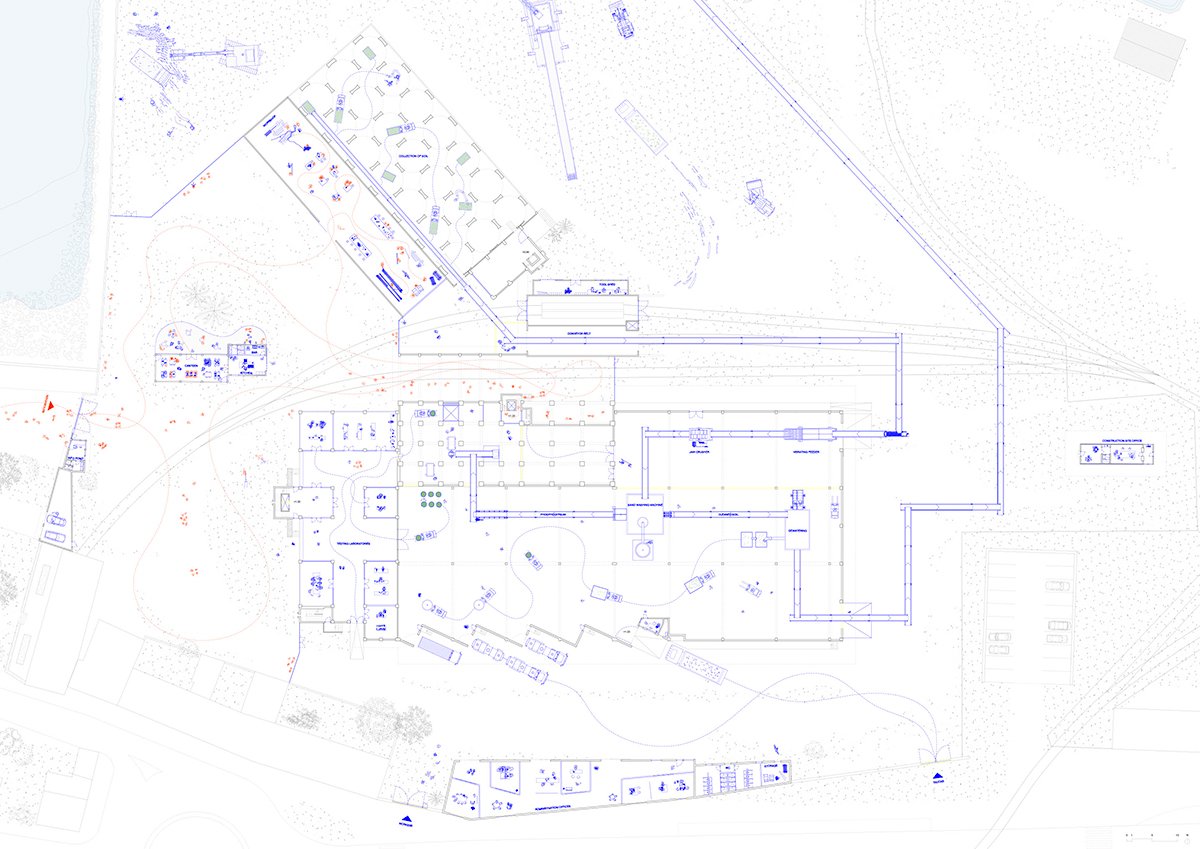
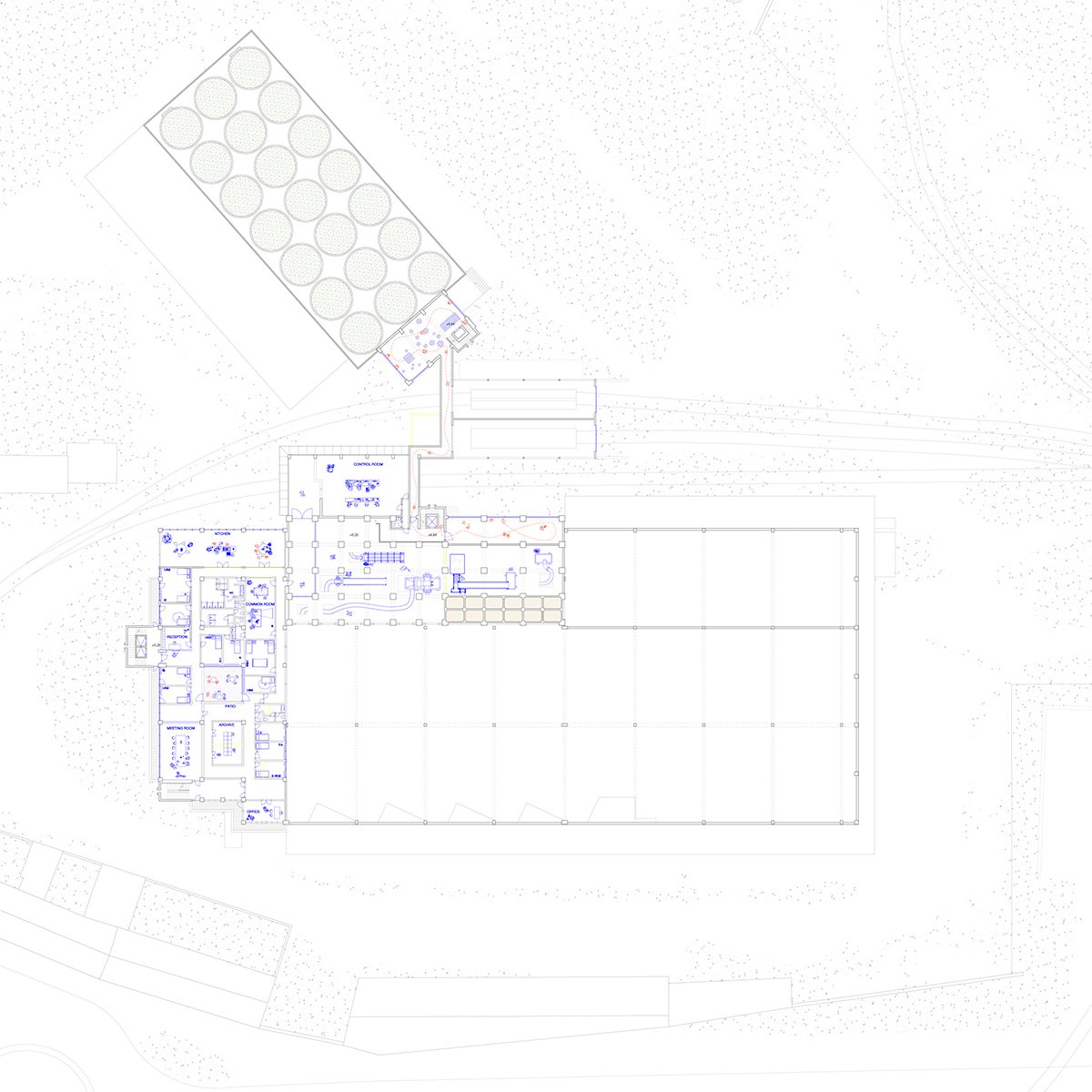
Ground Floor PlanSectionExcavation Phase
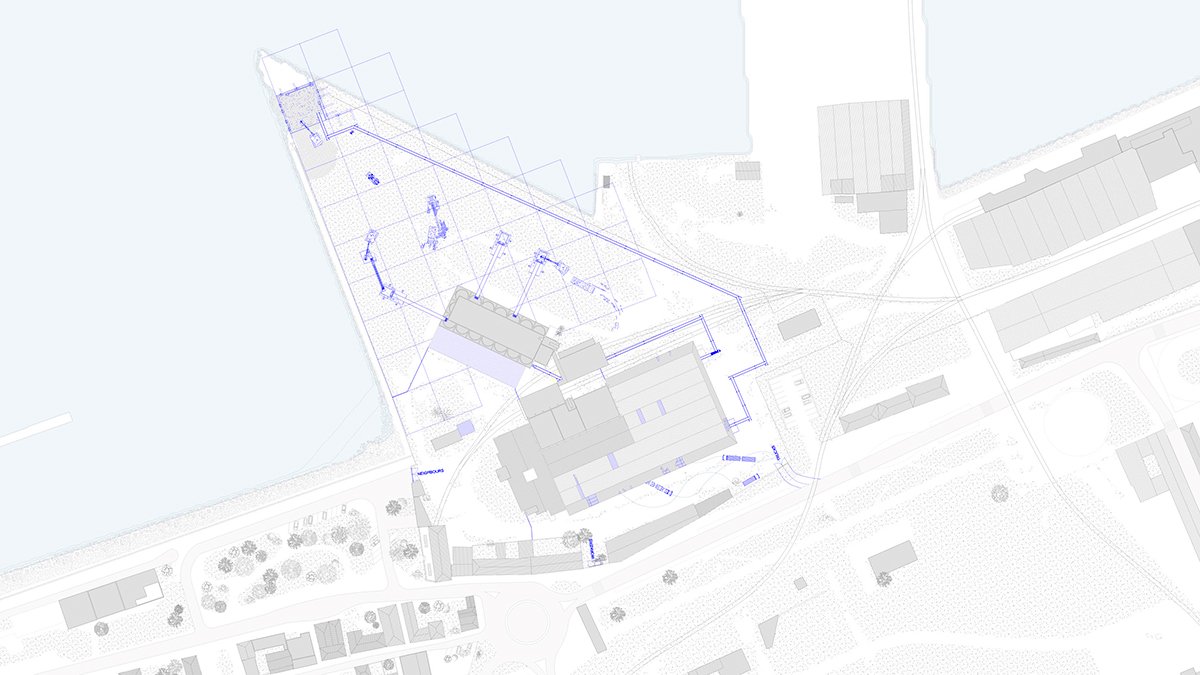
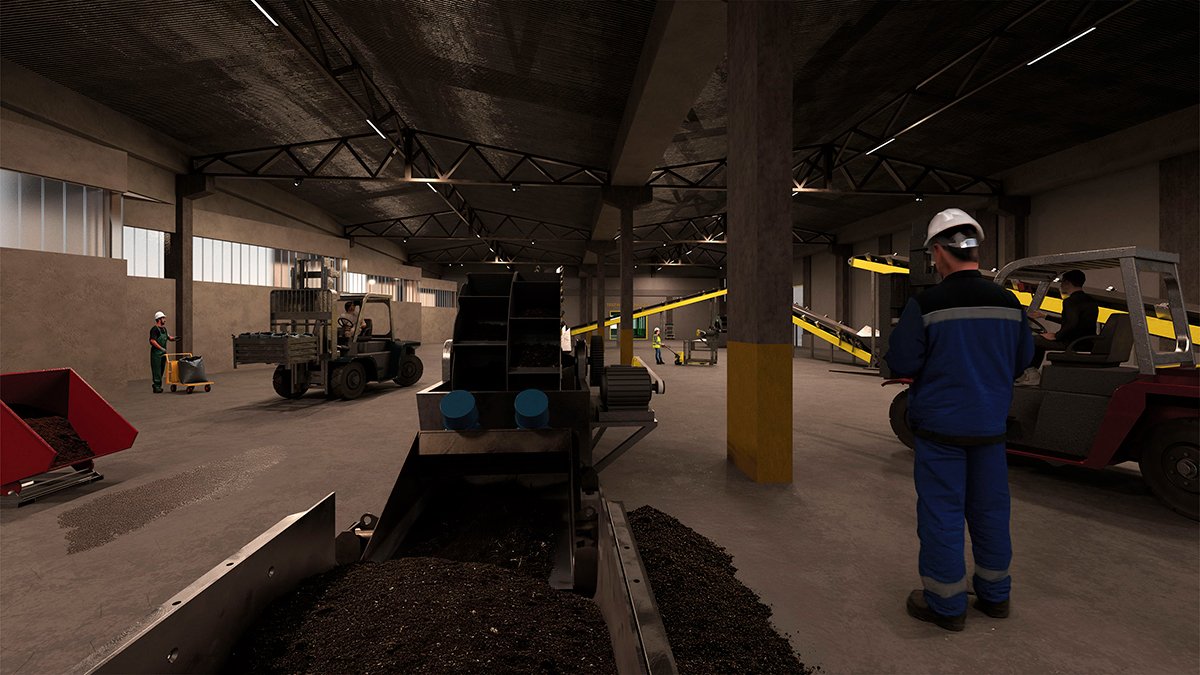
Following the ground floor plan, the soil is transported by conveyor belts into a washing facility. Adjacent to this, a research laboratory enables continuous testing and analysis. The material is then lifted via bucket elevators, separated, and treated with acids and leaching agents. The second silo, composed of rectangular cells of varying sizes, allows different treatment methods to be applied simultaneously to different batches.
First Floor PlanSoil Washing Phase
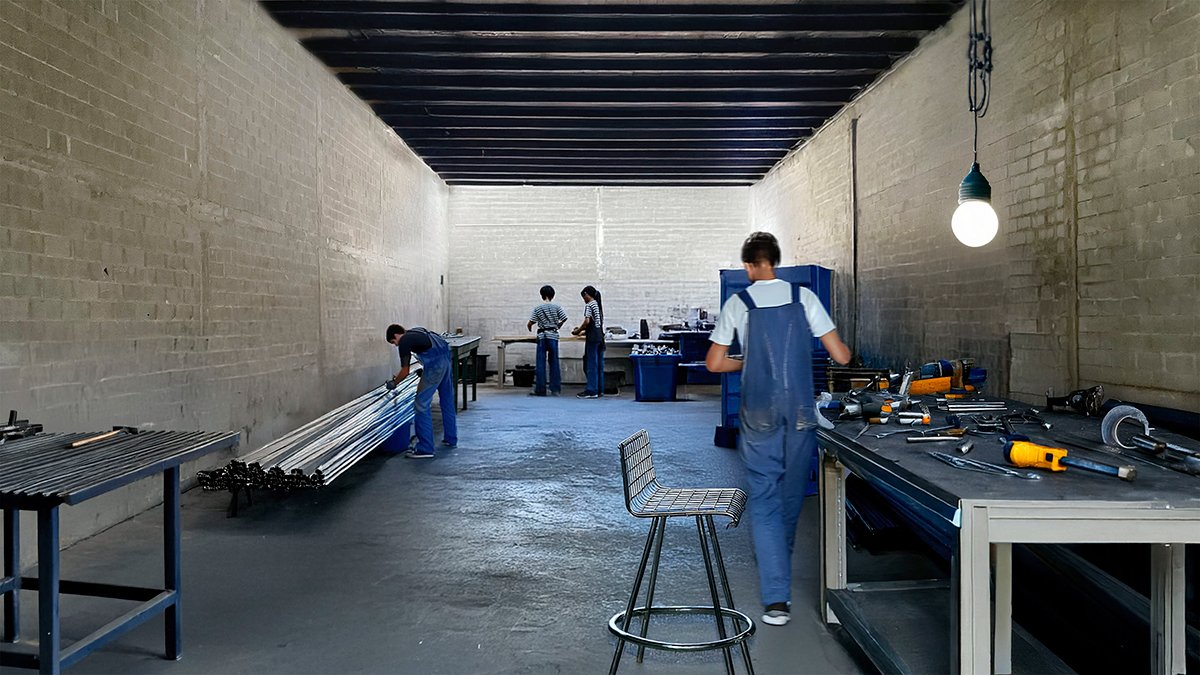
A key aspect of the project is addressing the building’s current abandoned and unsafe condition. The plan includes engaging Barreiro’s youth—who previously vandalized the site—to redirect their energy into constructive activity. A metal workshop will allow young people to contribute to securing the building, transforming destructive behavior into creativity by producing railings, outdoor furniture, and safety elements for the site.
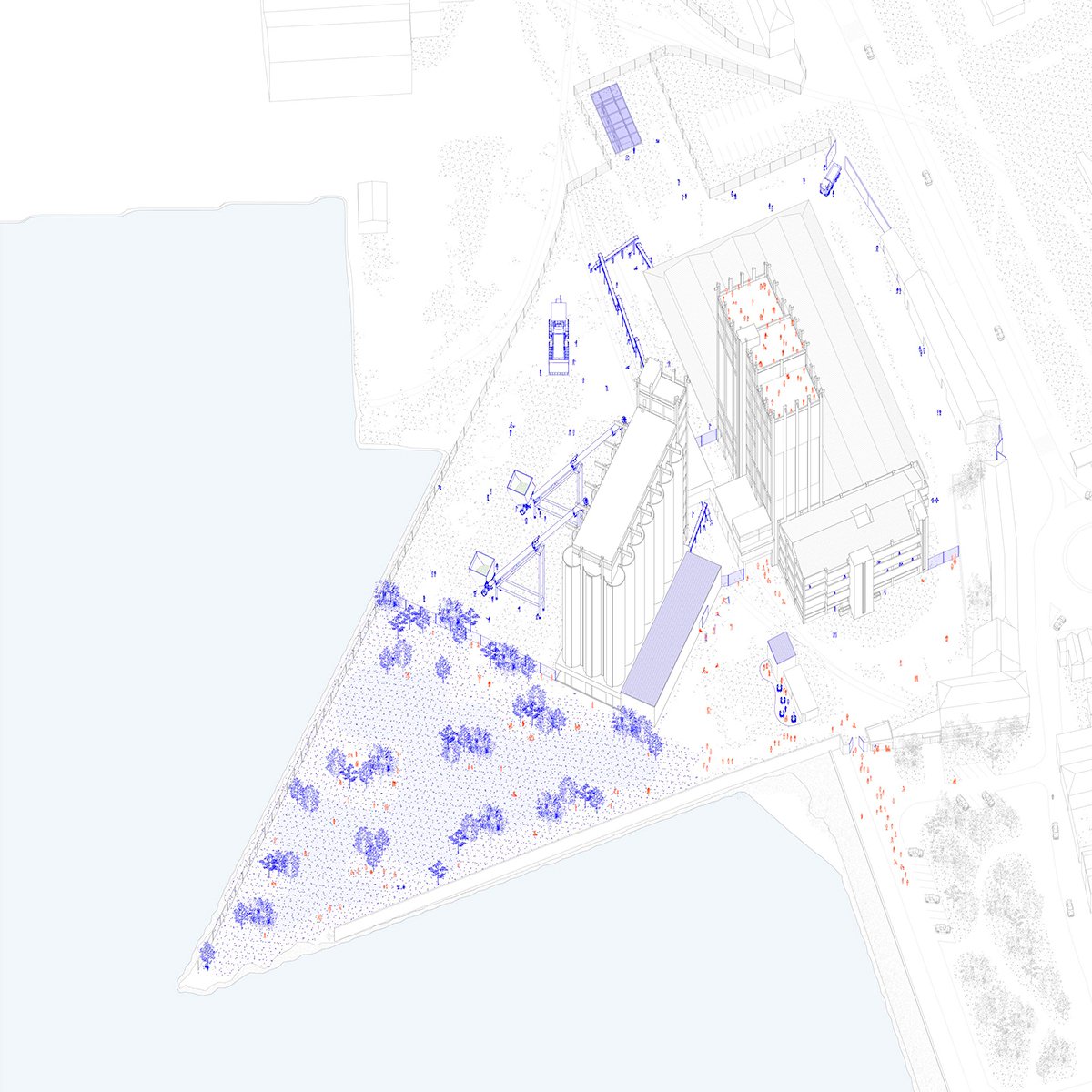
AxonometryMetal Workshop PhasePublic Use
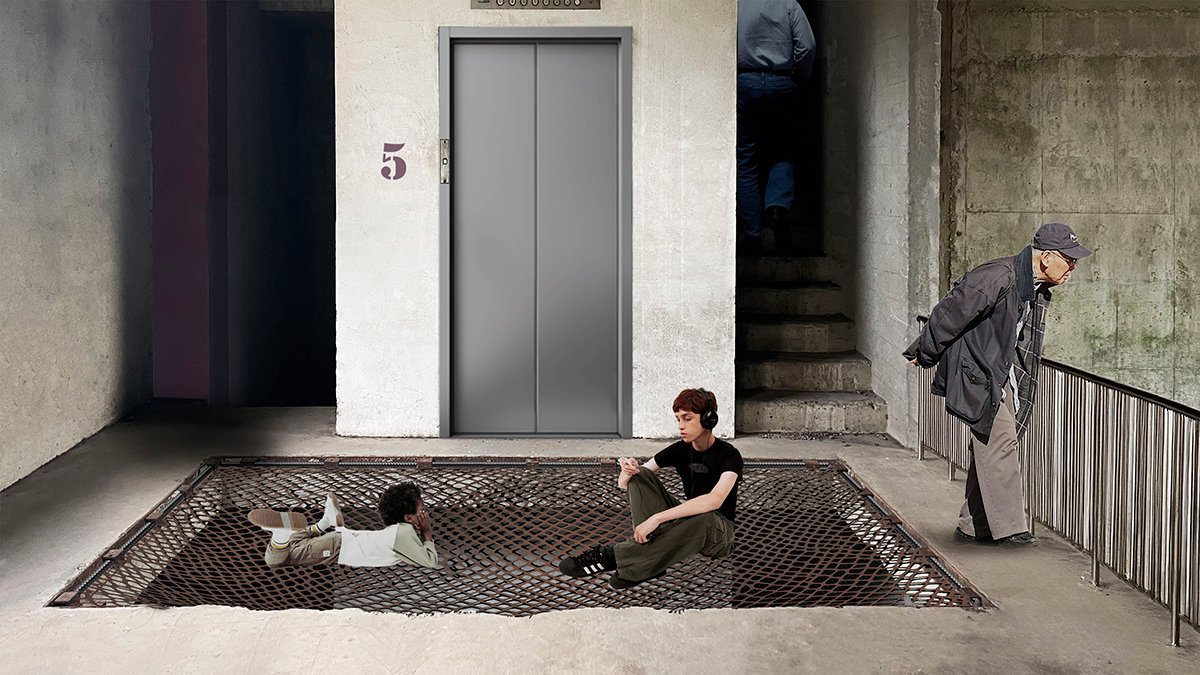
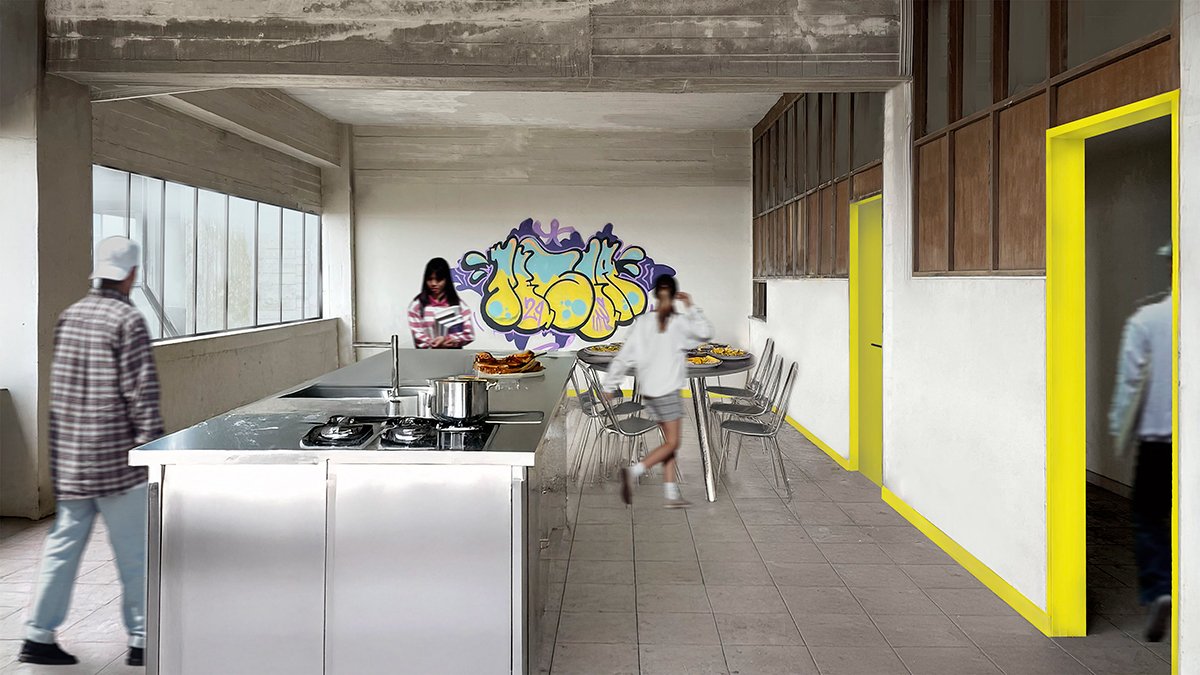
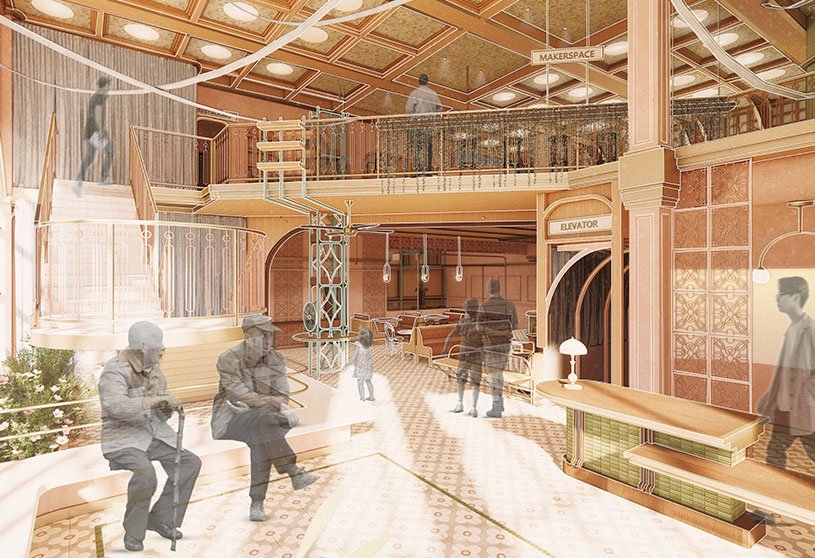
Once stabilized, the silos will be opened to the public. Visitors can explore the full height of the structure, observe the ongoing processes, and actively engage in the transformation. Upper levels will be dedicated to public use, offering panoramic views of the industrial operations, Barreiro, and Lisbon. Researchers will operate from the former employee facilities, working and staying on-site during studies.
After decontamination, the site will continue functioning as a soil washing and resource recovery center, receiving materials via ship, train, and truck. This ensures the project’s long-term sustainability, turning industrial waste into a valuable, renewable resource for the future.
Workers Facility
Conclusion: Ultimately, the project illustrates the potential of revitalizing industrial heritage into a center for sustainability, innovation, and community involvement. Through soil regeneration, resource recovery, and public engagement, it converts a contaminated, abandoned site into a valuable asset for Barreiro, laying the groundwork for a greener and more creative future.
[This Academic Project has been published with text and images submitted by the student]
Site Context
Final Outcome
To submit your academic project for publication at ArchiDiaries, please visit the following link >> Submit
Get the best of ArchiDiaries, directly in your inbox.
We use cookies on our website to give you the most relevant experience by remembering your preferences and repeat visits. By clicking “Accept All”, you consent to the use of ALL the cookies. However, you may visit "Cookie Settings" to provide a controlled consent.
This website uses cookies to improve your experience while you navigate through the website. Out of these, the cookies that are categorized as necessary are stored on your browser as they are essential for the working of basic functionalities of the website. We also use third-party cookies that help us analyze and understand how you use this website. These cookies will be stored in your browser only with your consent. You also have the option to opt-out of these cookies. But opting out of some of these cookies may affect your browsing experience.
Necessary cookies are absolutely essential for the website to function properly. These cookies ensure basic functionalities and security features of the website, anonymously.
Cookie
Duration
Description
cookielawinfo-checkbox-analytics
11 months
This cookie is set by GDPR Cookie Consent plugin. The cookie is used to store the user consent for the cookies in the category "Analytics".
cookielawinfo-checkbox-functional
11 months
The cookie is set by GDPR cookie consent to record the user consent for the cookies in the category "Functional".
cookielawinfo-checkbox-necessary
11 months
This cookie is set by GDPR Cookie Consent plugin. The cookies is used to store the user consent for the cookies in the category "Necessary".
cookielawinfo-checkbox-others
11 months
This cookie is set by GDPR Cookie Consent plugin. The cookie is used to store the user consent for the cookies in the category "Other.
cookielawinfo-checkbox-performance
11 months
This cookie is set by GDPR Cookie Consent plugin. The cookie is used to store the user consent for the cookies in the category "Performance".
viewed_cookie_policy
11 months
The cookie is set by the GDPR Cookie Consent plugin and is used to store whether or not user has consented to the use of cookies. It does not store any personal data.
Functional cookies help to perform certain functionalities like sharing the content of the website on social media platforms, collect feedbacks, and other third-party features.
Performance cookies are used to understand and analyze the key performance indexes of the website which helps in delivering a better user experience for the visitors.
Analytical cookies are used to understand how visitors interact with the website. These cookies help provide information on metrics the number of visitors, bounce rate, traffic source, etc.
Advertisement cookies are used to provide visitors with relevant ads and marketing campaigns. These cookies track visitors across websites and collect information to provide customized ads.