Home » Academic projects » What is Home? Celebrating Individuality in the Strong Community Setting of Kampung Kalianyar, West Jakarta | Bachelors Design Project
What is Home? Celebrating Individuality in the Strong Community Setting of Kampung Kalianyar, West Jakarta | Bachelors Design Project
Excerpt: ‘What is Home?’ is a Bachelors Design Project by Dennis Elwando Angir from the ‘School of Architecture & Built Environment – UCSI University’ that proposes a flexible housing design that enables Kalianyar (a kampung in West Jakarta) residents to build, modify, and personalize their homes, celebrating individuality within a strong community setting. Through innovative strategies, the project aims to transform Kalianyar into a dynamic community that supports economic growth and enhances the quality of life for its residents.
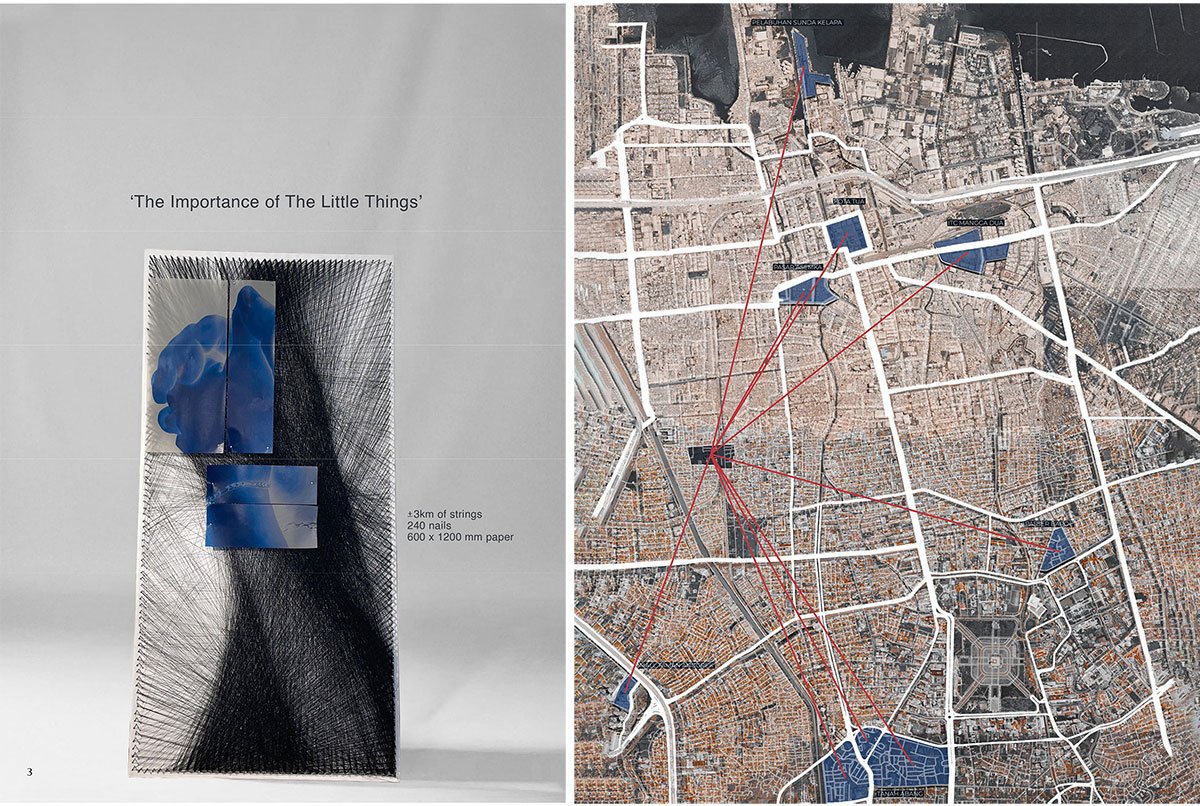
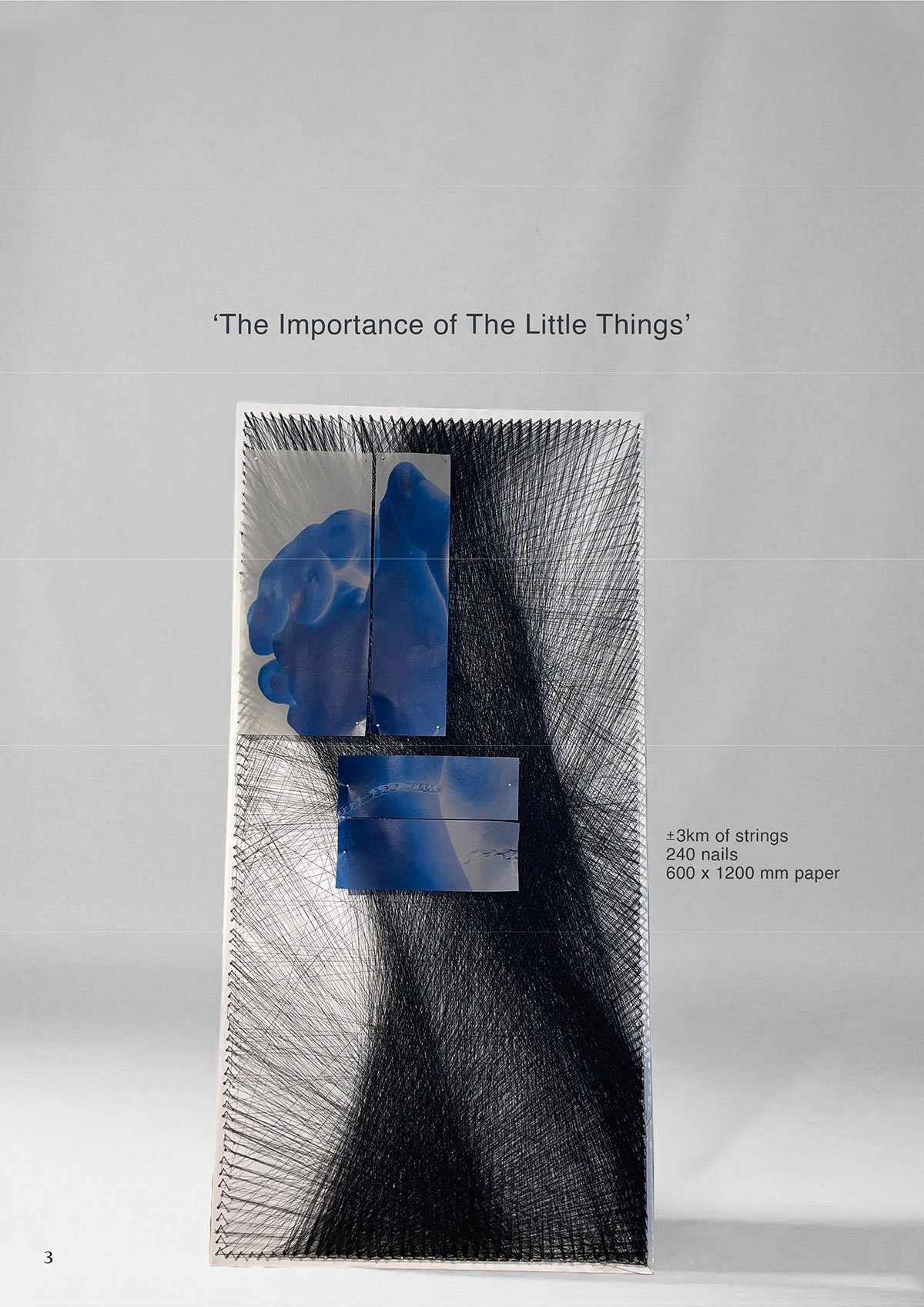
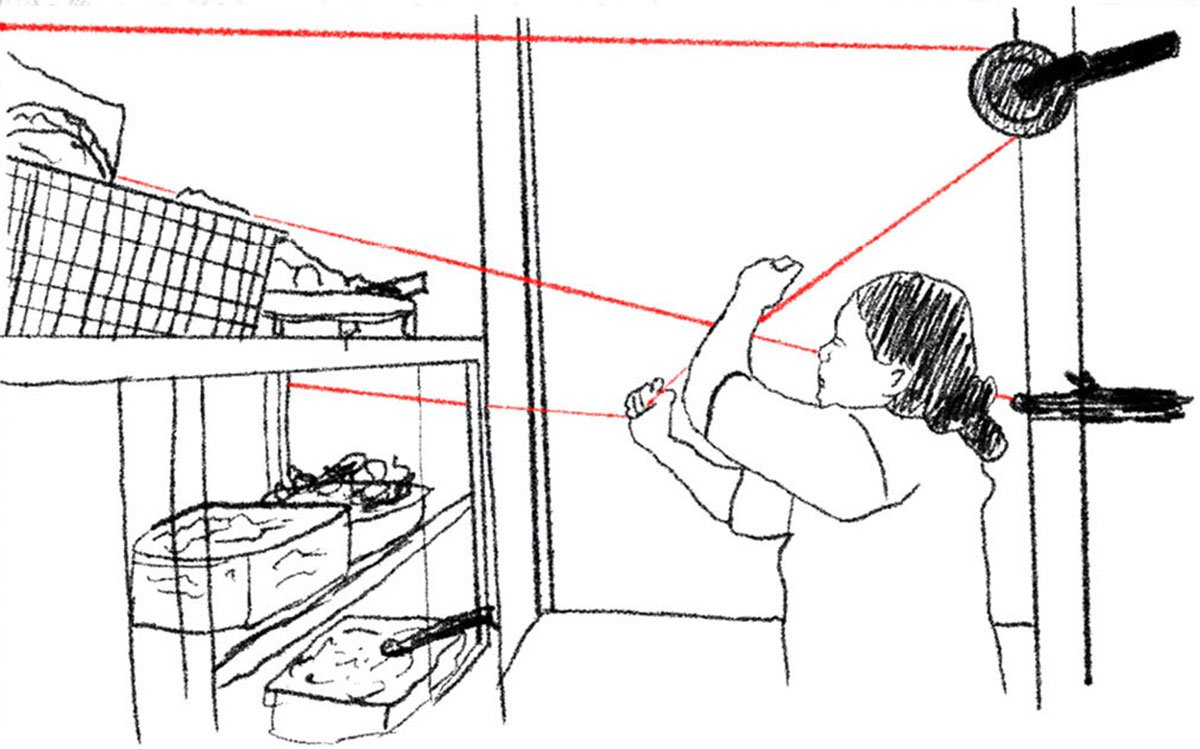
Introduction: This project delves into the concept of home and our personal connection to space through three interconnected studies. The first study, inspired by Gaston Bachelard’s ‘The Poetics of Space,’ emphasizes the intimacy of small, often overlooked areas within a home. This connection is illustrated through string art, symbolizing moments that shape our sense of belonging. The second study introduces a zip line transportation system aimed at supporting Kampung Kalianyar’s textile industry and local businesses in Jakarta, improving logistics and bolstering the local economy.
Finally, the project ‘What is Home?’ expands on these ideas through a flexible housing design that empowers Kalianyar residents to build, adapt, and personalize their homes, fostering individuality while strengthening community ties. Collectively, these studies examine how spaces can embody both personal and collective identities.
Site Location | A Small Alley in KalianyarBuilding Heights
Kampung Kalianyar, located in Tambora, West Jakarta, is one of Southeast Asia’s most densely populated urban slums. Known for its vibrant atmosphere and rich cultural heritage, the area blends residential, commercial, and cultural spaces, reflecting the diverse traditions of its community. Historically tied to waterways, its name, “Kalianyar,” derives from the Indonesian words for “river” (kali) and “new” (anyar).
Building TypologyIndustrial Zoning
The local economy is driven by the textile industry, supported by small businesses and street stalls that sustain this self-sufficient community. Its proximity to Tanah Abang, Jakarta’s largest clothing hub, offers a strategic advantage for economic revitalization. However, challenges such as narrow streets, overcrowded spaces, and limited opportunities hinder growth and restrict development.
Building MaterialityTypical Building Plans
Despite these obstacles, Kalianyar’s skilled textile workforce and rich traditions provide a strong foundation for renewal. By leveraging innovative strategies, the project aims to transform Kalianyar into a dynamic community that supports economic growth and enhances the quality of life for its residents.
Design Process
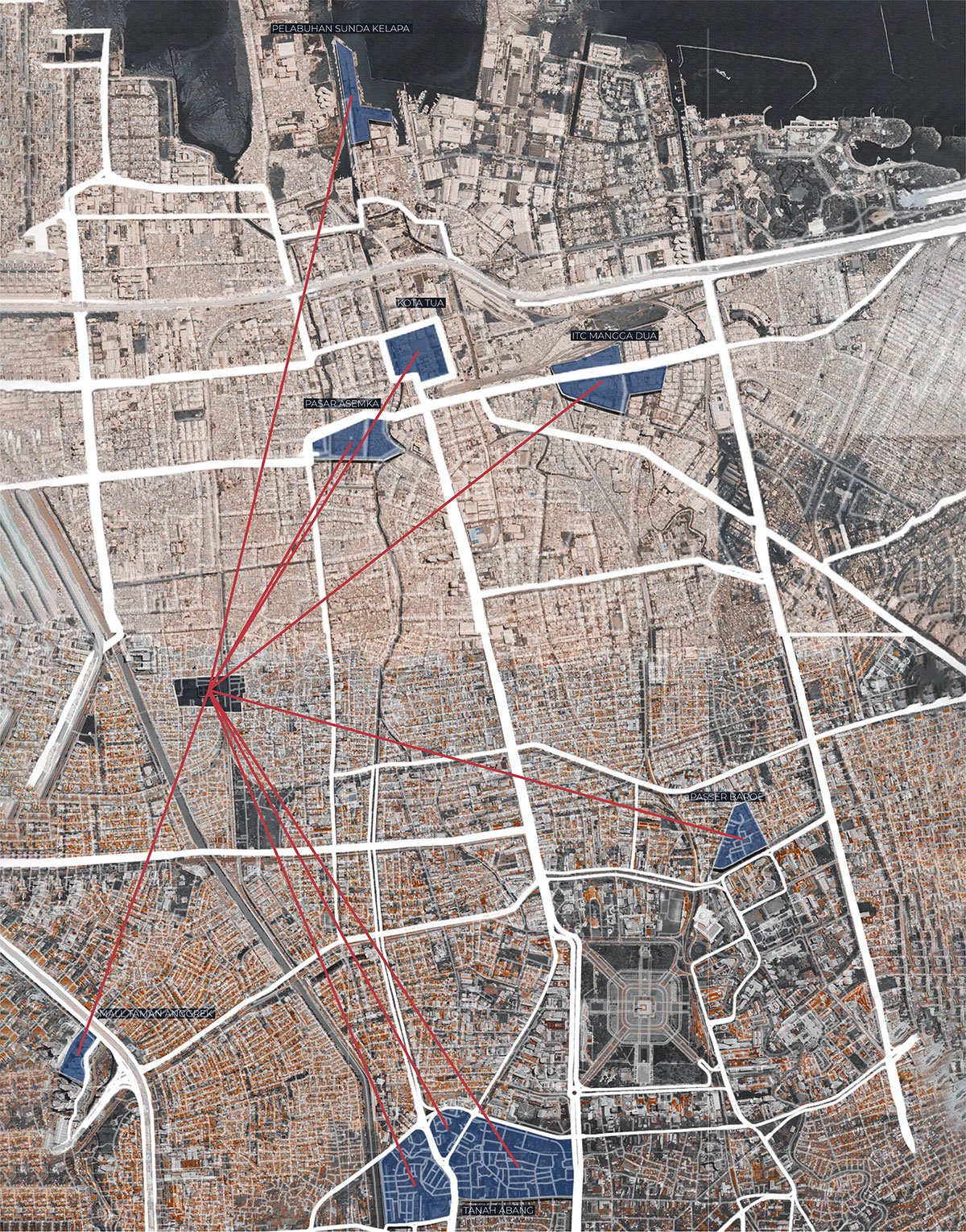
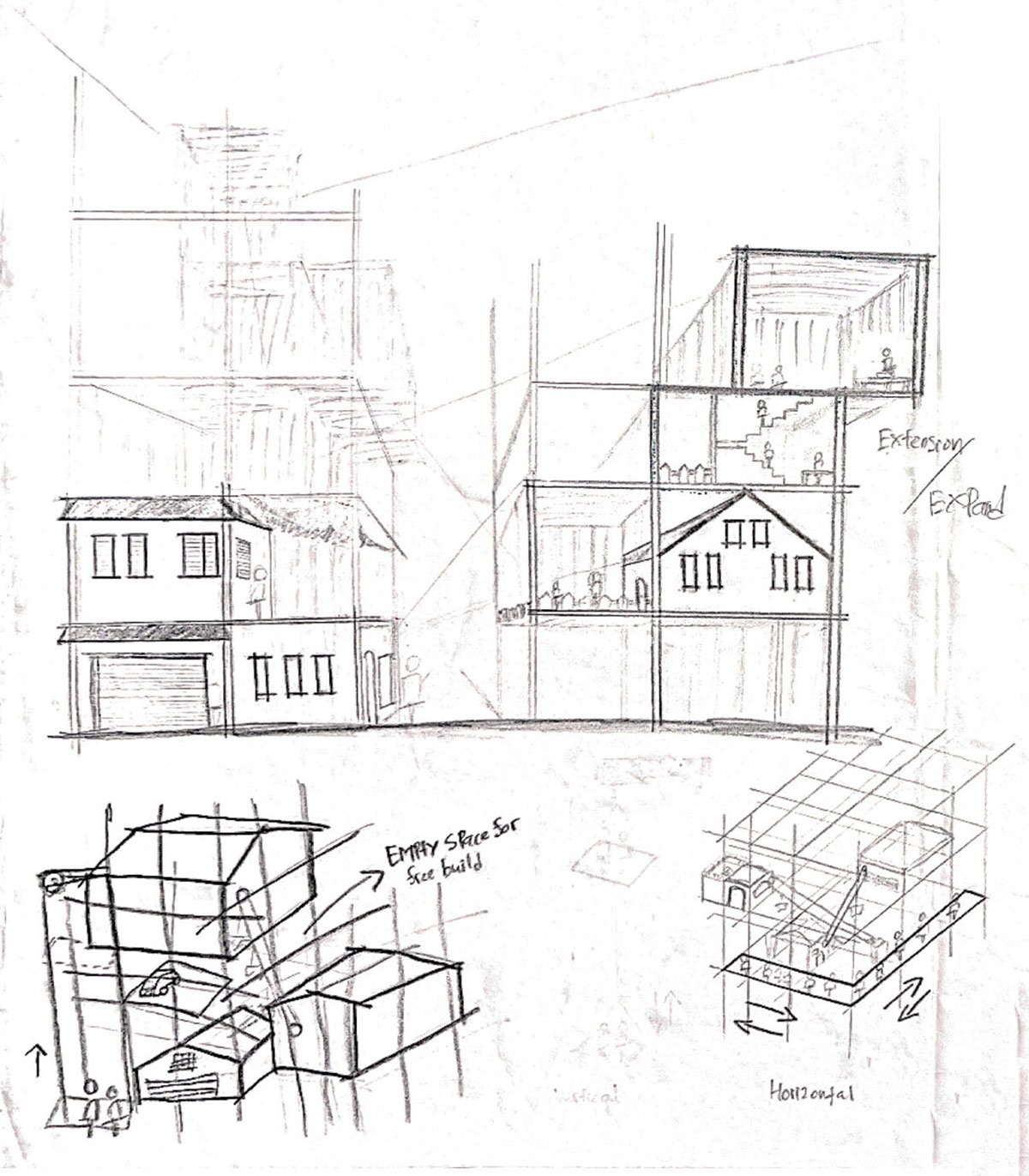
String Art Installation Inspired by the ‘Poetics Of Space’ | Map Of Intervention: From Site (Kalianyar) to the Big Textile Markets Across JakartaZipline Sketches in Kalianyar
The design process began with an exploration of intimacy in overlooked spaces, inspired by Gaston Bachelard’s ‘The Poetics of Space.’ This phase highlighted the personal significance of small spaces, such as drawers or chests, which often hold cherished memories. To symbolize these connections, a string art installation was created, representing the ties that shape our sense of home.
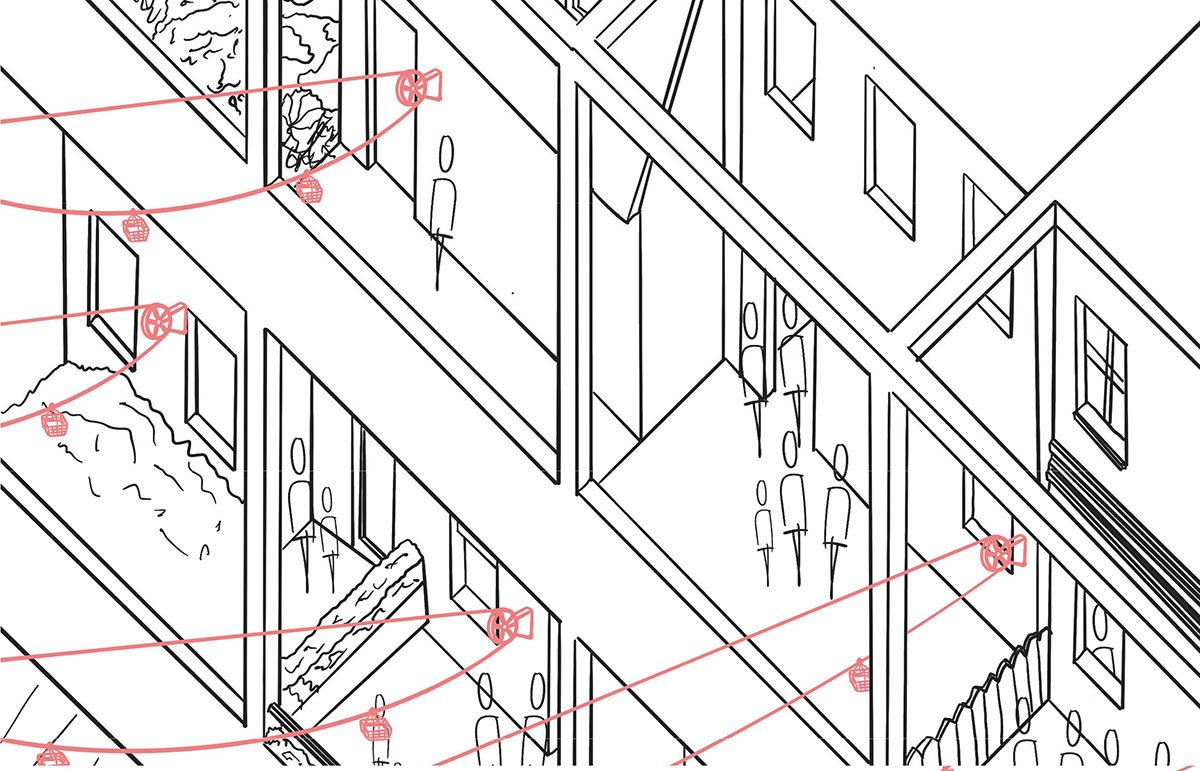
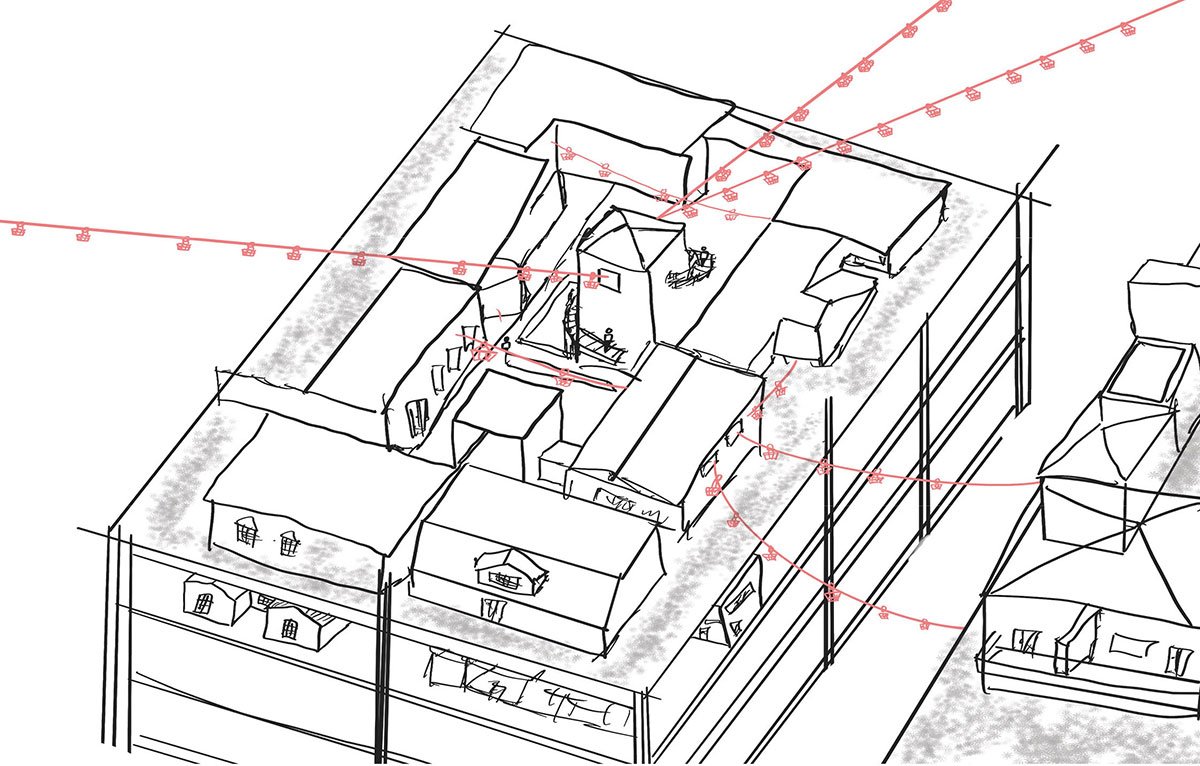
Conceptual Sketches: Zipline System MicroConceptual Sketches: Zipline System Macro
The second phase focused on Kampung Kalianyar’s logistical challenges, particularly the impact of transportation limitations on the textile industry and local businesses. This analysis inspired the concept of a dual-function zip line system to streamline textile distribution while improving access to goods for local shops (warungs), ultimately strengthening the local economy and enhancing daily life for residents.
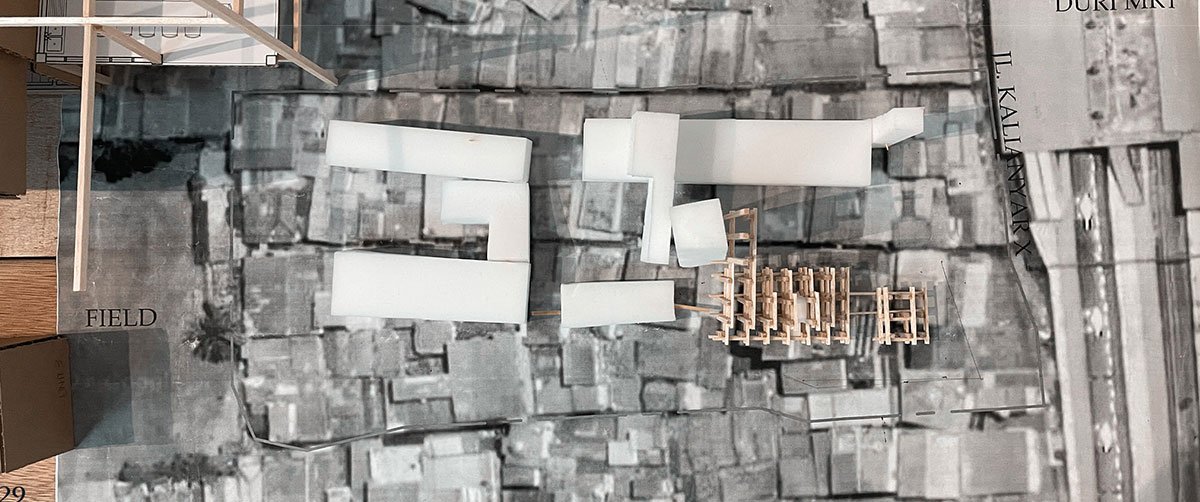
Site ZoningMassing Model on the SiteConceptual Model
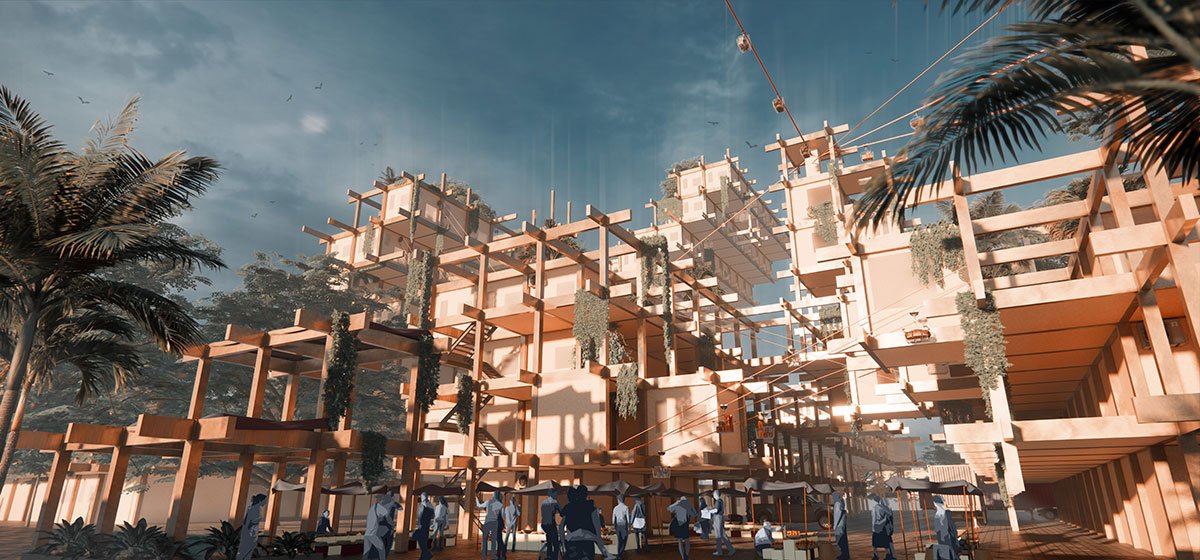
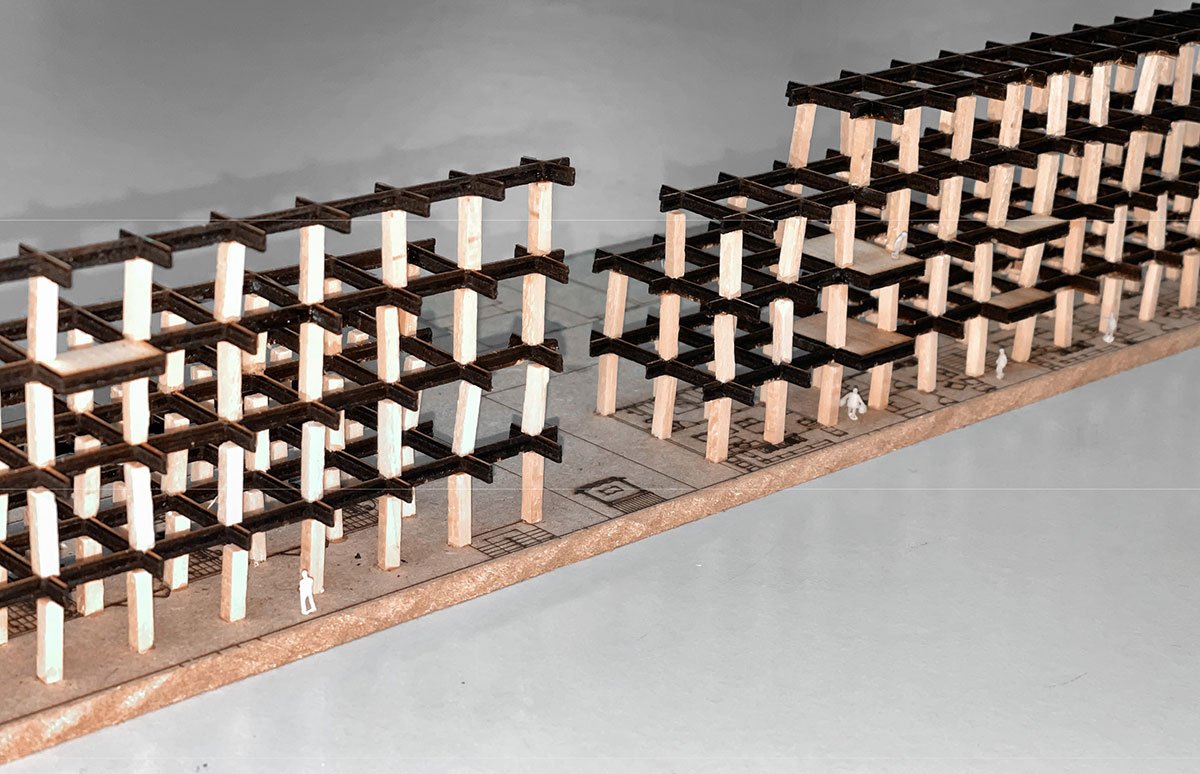
In the final phase, ‘What is Home?,’ these concepts were scaled to a community-level adaptable housing project. The design included three housing types tailored to the needs of textile workers, families, and warung owners. Each unit was designed for flexibility and future growth, enabling residents to expand and adapt their homes over time. This approach celebrates the unique identities of Kalianyar’s residents while fostering a strong sense of community.
Final Outcome
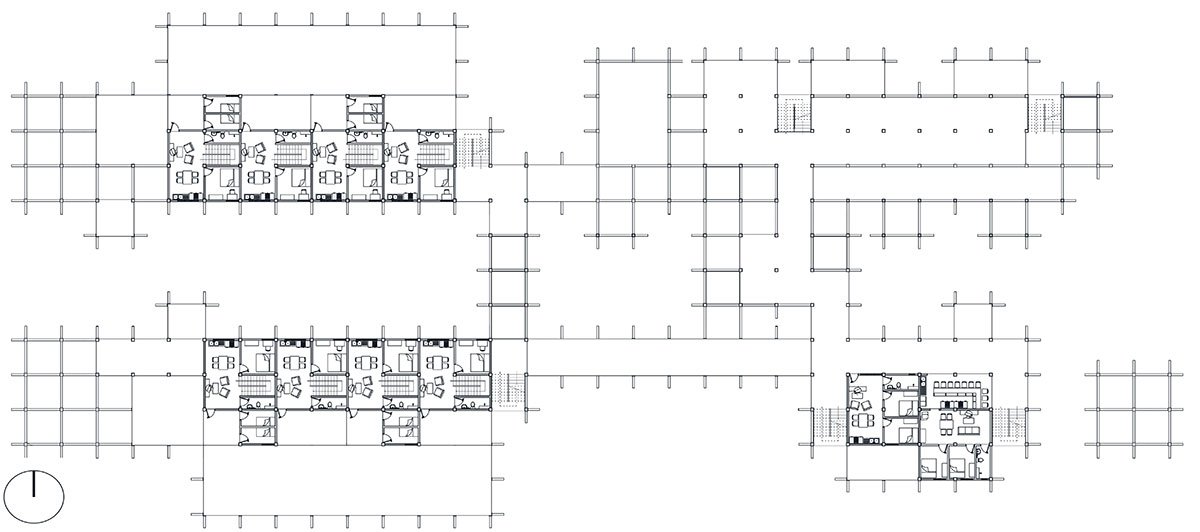
Ground Floor PlanSecond Floor PlanElevation A & B
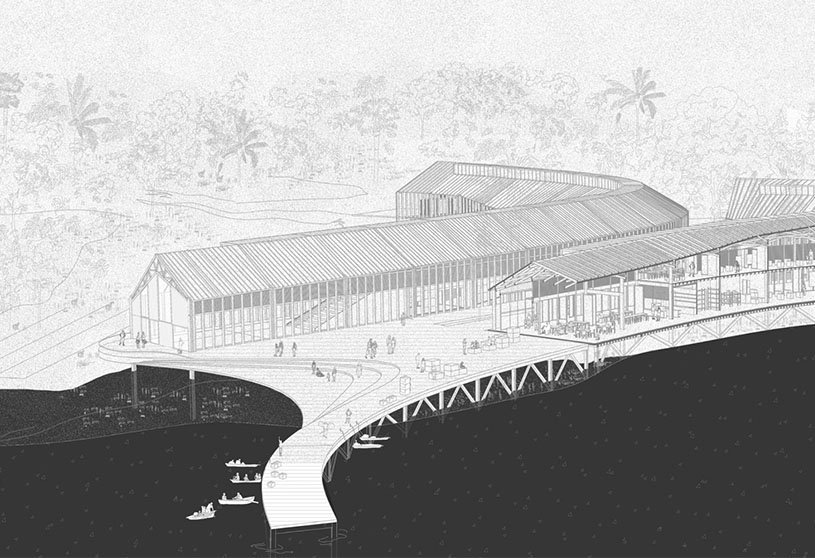
The ‘What is Home?’ project builds on themes of intimacy and individuality to create a community-centric housing solution tailored to the diverse residents of Kampung Kalianyar, West Jakarta. It celebrates the area’s cultural diversity and strong communal bonds by empowering residents to define their own sense of “home.” Each adaptable housing unit is designed for flexibility, enabling families to expand, modify, or renovate their spaces as their needs evolve. This fosters a lasting sense of ownership and belonging while reflecting the unique identities of Kalianyar’s residents.
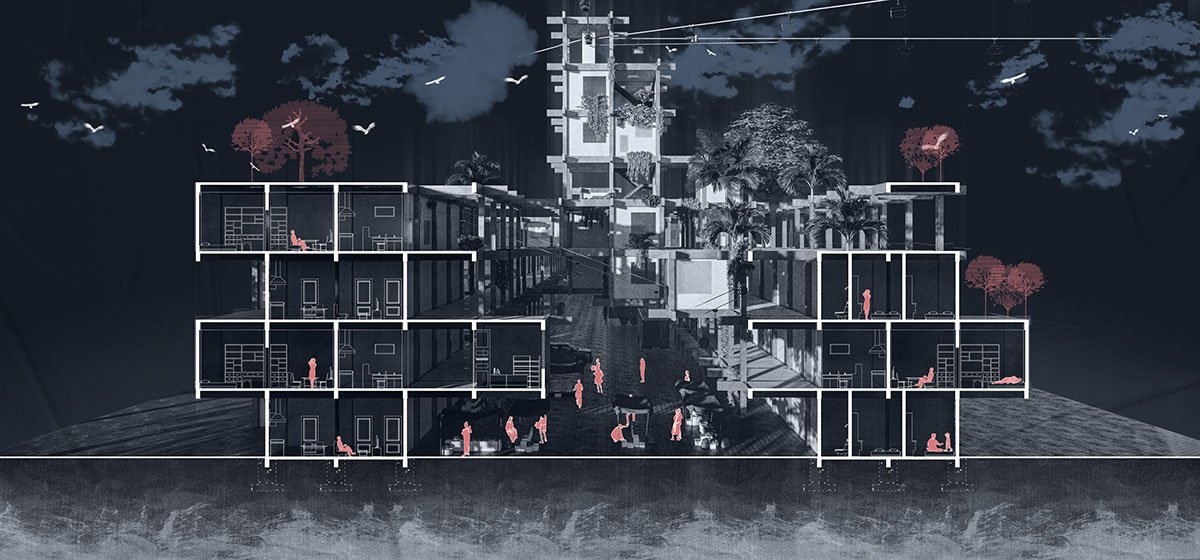
First Floor PlanSection X-X’Section Y-Y’
Key Components of the Proposal are vertical zoning, zipline system. adaptable housing units, and future projections.
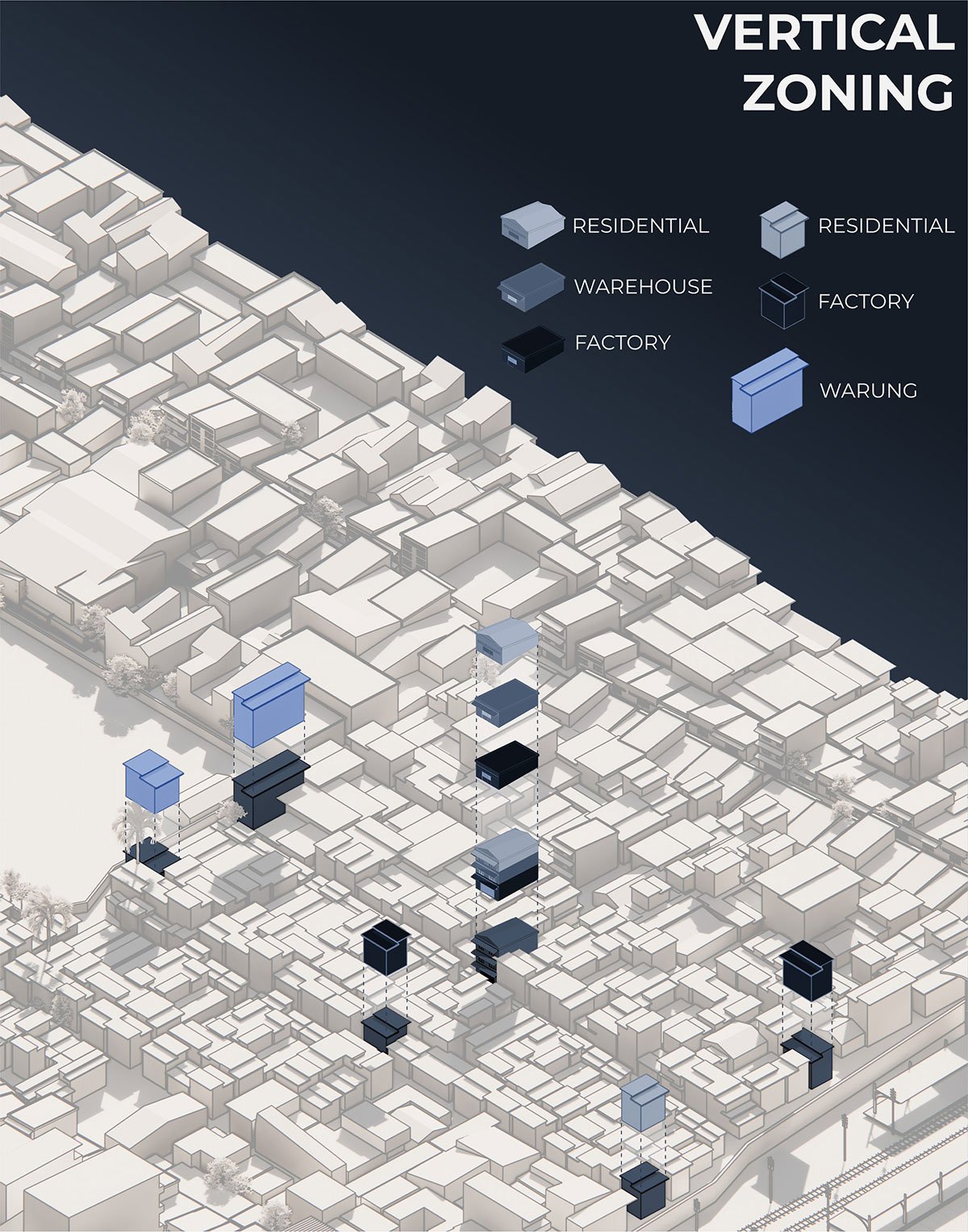
Vertical Zoning: To maximize limited land, textile factories are transformed into mixed-use spaces, with commercial areas on the ground floor and residences above. This approach creates multifunctional spaces that promote economic growth while optimizing land use.
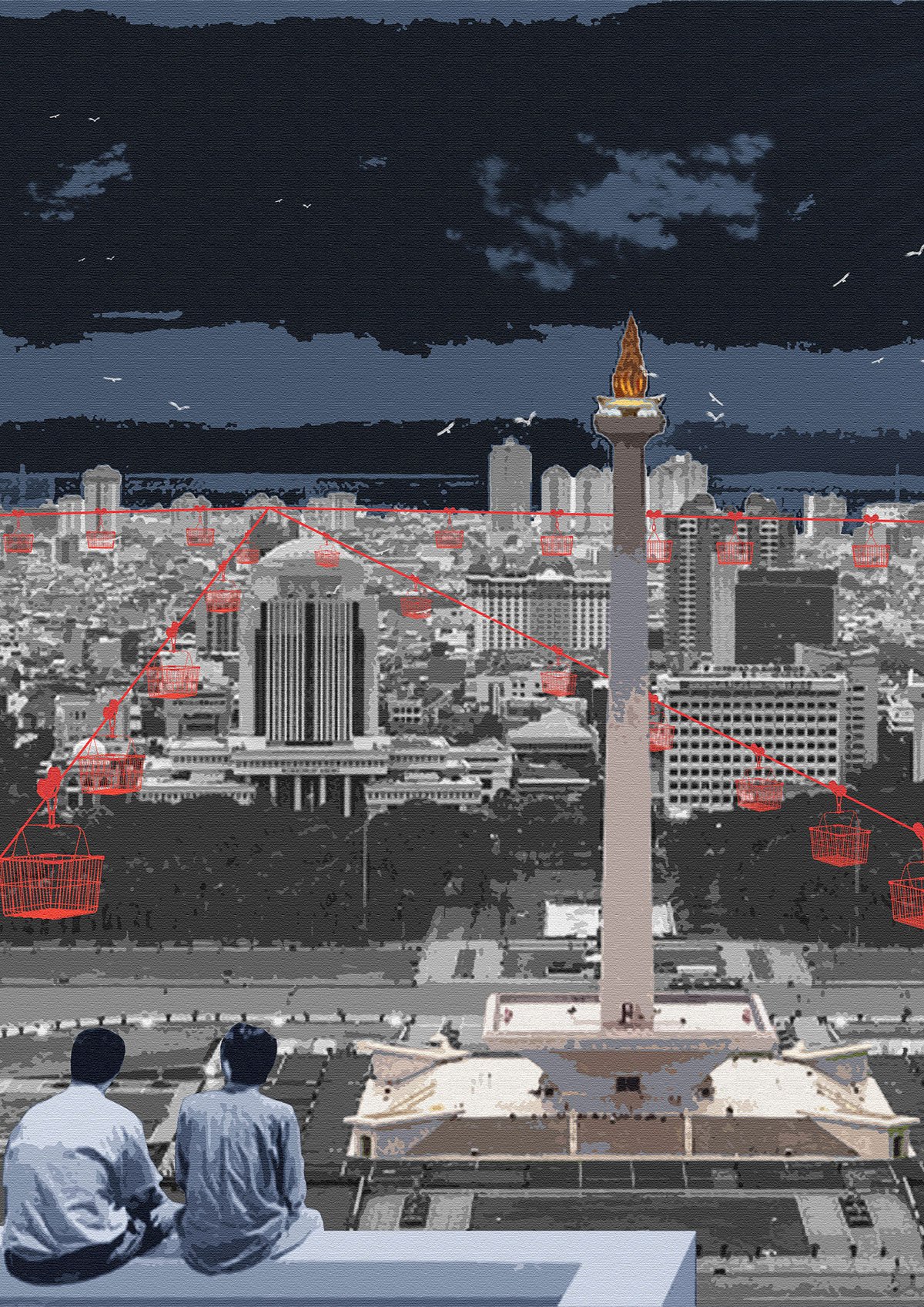
Illustration Of the Intervention
Zipline System: A sustainable zipline transportation network addresses circulation issues and connects Kalianyar to key textile markets like Tanah Abang and Pasar Baru. This eco-friendly solution streamlines goods delivery, reduces congestion, and supports the local textile industry.
Detail PlansDetail Plans
Adaptable Housing Units: Three housing types cater to the community’s specific needs:
Unit 1: Combines workspace for textile workers or factory owners with living quarters and room for future expansion.
Unit 2: A standard residential unit for families or individuals, designed for flexibility and comfort.
Unit 3: Integrates business space (e.g., food kiosks) with residential areas, supporting local entrepreneurs.
All units allow for commercial versatility, such as serving as a warung, clinic, or pharmacy, to meet both economic and social needs.
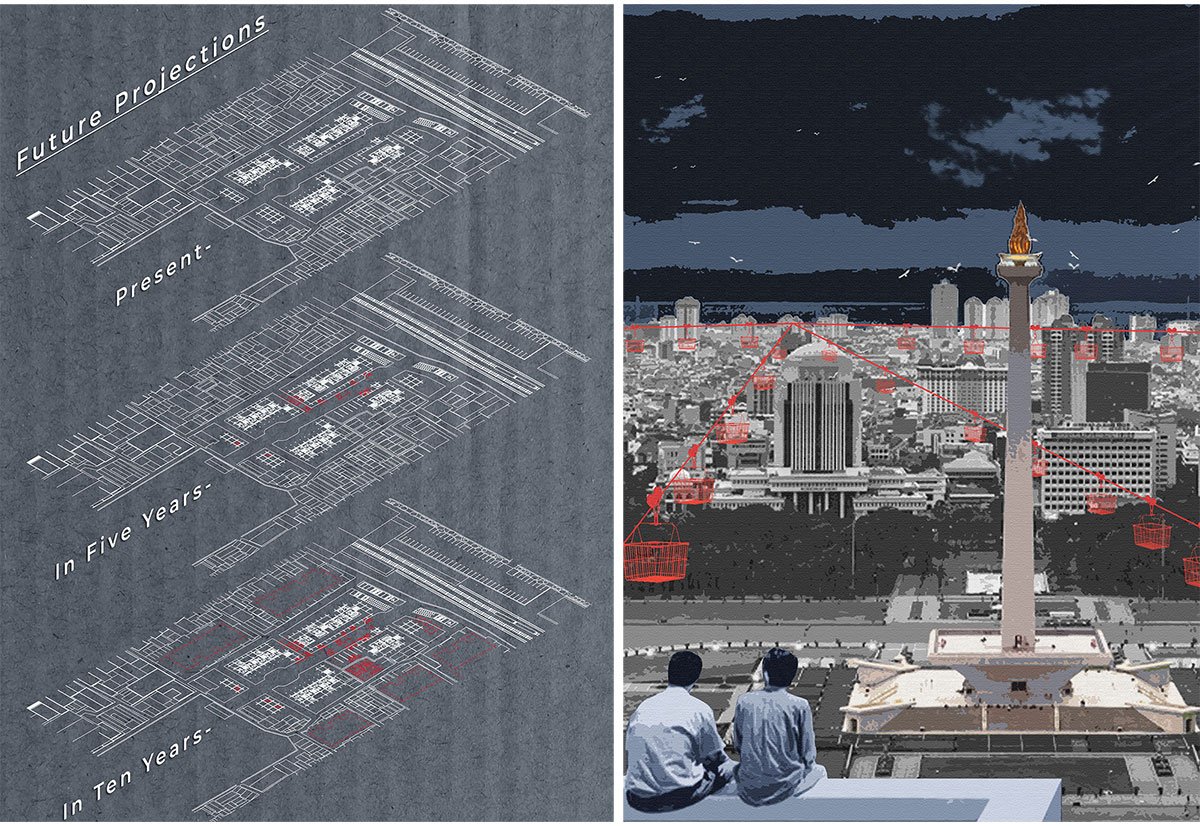
Future Projections: The Project’s Growth Over Three Stages: Present, Five Years, And Ten Years | Zipline Intervention
Phased Development: The project’s growth is depicted through three stages: Present, Five Years, and Ten Years. Over the five years, it gradually will expand, adding new buildings and connections. By ten years, it continues to evolve into a thriving community.
What Is Home? Project Illustration
Conclusion: By integrating adaptable housing, vertical zoning, and innovative transportation, the project transforms Kalianyar into a dynamic neighborhood that not only provides housing but also enriches residents’ lives through connectivity, economic opportunities, and a strong sense of community.
[This Academic Project has been published with text and images submitted by the student]
Site Context
Design Process
Final Outcome
To submit your academic project for publication at ArchiDiaries, please visit the following link >> Submit
Get the best of ArchiDiaries, directly in your inbox.
We use cookies on our website to give you the most relevant experience by remembering your preferences and repeat visits. By clicking “Accept All”, you consent to the use of ALL the cookies. However, you may visit "Cookie Settings" to provide a controlled consent.
This website uses cookies to improve your experience while you navigate through the website. Out of these, the cookies that are categorized as necessary are stored on your browser as they are essential for the working of basic functionalities of the website. We also use third-party cookies that help us analyze and understand how you use this website. These cookies will be stored in your browser only with your consent. You also have the option to opt-out of these cookies. But opting out of some of these cookies may affect your browsing experience.
Necessary cookies are absolutely essential for the website to function properly. These cookies ensure basic functionalities and security features of the website, anonymously.
Cookie
Duration
Description
cookielawinfo-checkbox-analytics
11 months
This cookie is set by GDPR Cookie Consent plugin. The cookie is used to store the user consent for the cookies in the category "Analytics".
cookielawinfo-checkbox-functional
11 months
The cookie is set by GDPR cookie consent to record the user consent for the cookies in the category "Functional".
cookielawinfo-checkbox-necessary
11 months
This cookie is set by GDPR Cookie Consent plugin. The cookies is used to store the user consent for the cookies in the category "Necessary".
cookielawinfo-checkbox-others
11 months
This cookie is set by GDPR Cookie Consent plugin. The cookie is used to store the user consent for the cookies in the category "Other.
cookielawinfo-checkbox-performance
11 months
This cookie is set by GDPR Cookie Consent plugin. The cookie is used to store the user consent for the cookies in the category "Performance".
viewed_cookie_policy
11 months
The cookie is set by the GDPR Cookie Consent plugin and is used to store whether or not user has consented to the use of cookies. It does not store any personal data.
Functional cookies help to perform certain functionalities like sharing the content of the website on social media platforms, collect feedbacks, and other third-party features.
Performance cookies are used to understand and analyze the key performance indexes of the website which helps in delivering a better user experience for the visitors.
Analytical cookies are used to understand how visitors interact with the website. These cookies help provide information on metrics the number of visitors, bounce rate, traffic source, etc.
Advertisement cookies are used to provide visitors with relevant ads and marketing campaigns. These cookies track visitors across websites and collect information to provide customized ads.