Home » Academic projects » Where The Moon Touches The Street: Reclaiming Muralla Street In Havana By Transforming Urban Fragments Into Spaces Led By And For Women | Masters Design Project On Urban Regeneration
Where The Moon Touches The Street: Reclaiming Muralla Street In Havana By Transforming Urban Fragments Into Spaces Led By And For Women | Masters Design Project On Urban Regeneration
Excerpt: ‘Where the Moon Touches the Street’ is a Masters Design Project by Karolina Hejduk from the ‘School of Architecture and Cities – University of Westminster’ that seeks to challenge gendered divisions in urban space by reclaiming overlooked areas of Muralla Street as a space of empowerment, visibility, and shared ownership. By weaving ancestral wisdom with urban regeneration, the project reimagines the street not just as a path through the city but as a journey toward equality and inclusive opportunity.
Introduction: In Havana—a city often seen as one where boundaries blur—the divide between masculine and feminine spaces remains distinctly defined. This project confronts the gendered division of public space and time, challenging the idea that men dominate the streets during the day while women appear only at night. It advocates for women’s right to the city and economic opportunity at all hours. Drawing inspiration from the moon’s symbolism in Taíno and Afro-Cuban cultures, the project connects ancient wisdom with contemporary urban challenges to highlight the often-invisible realities of women’s lives.
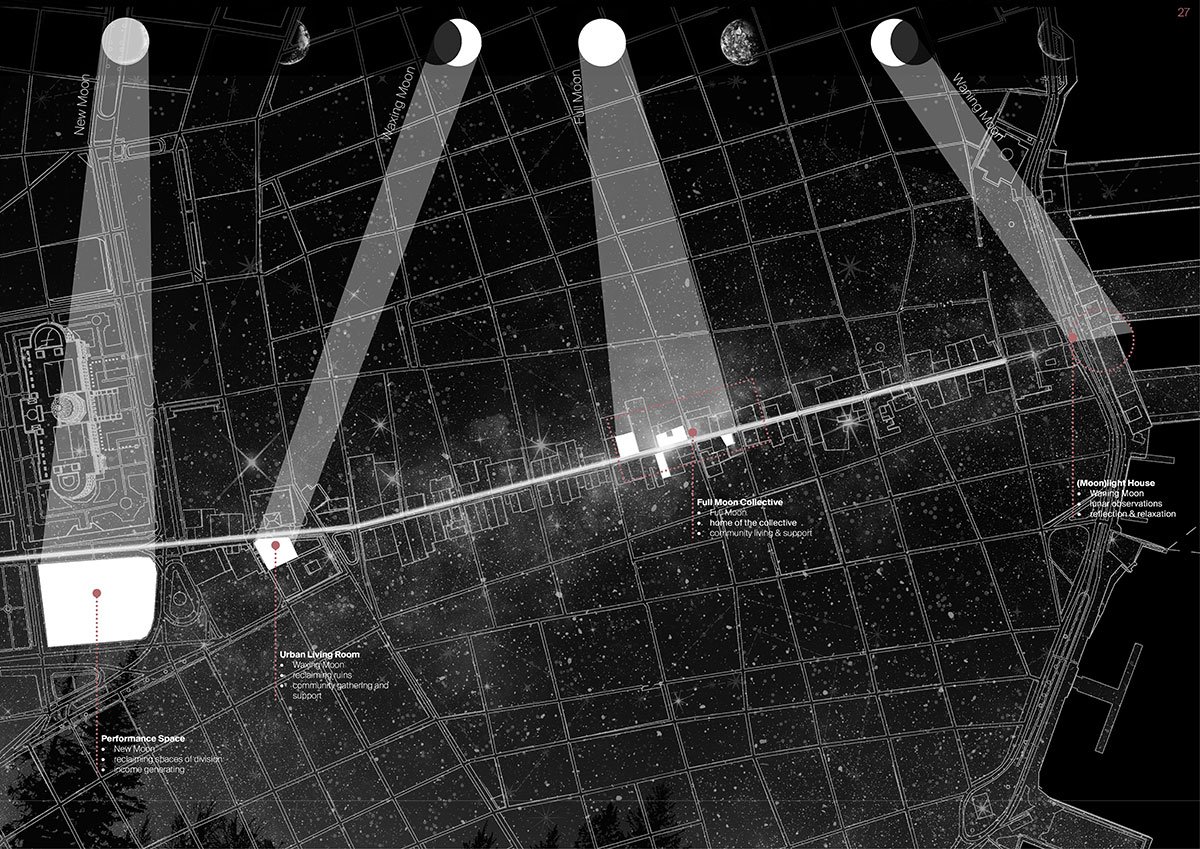
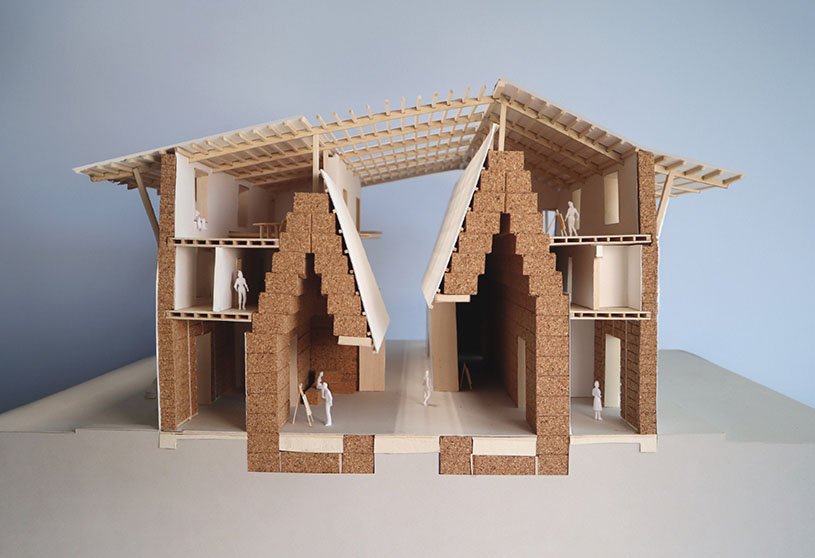
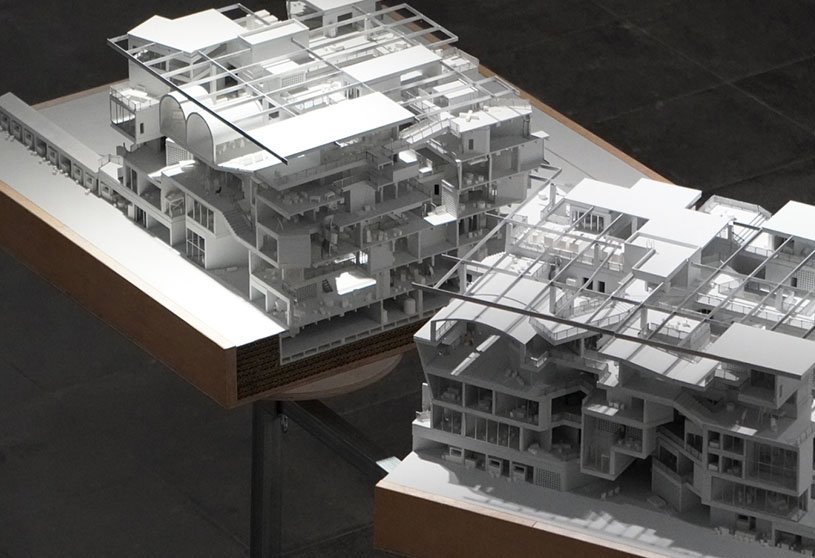
Site Strategy: Overlooked urban fragments are transformed into spaces led by and for women, shifting ownership of the city. Each part of the Collective corresponds to a moon phase, which informs its design and function.
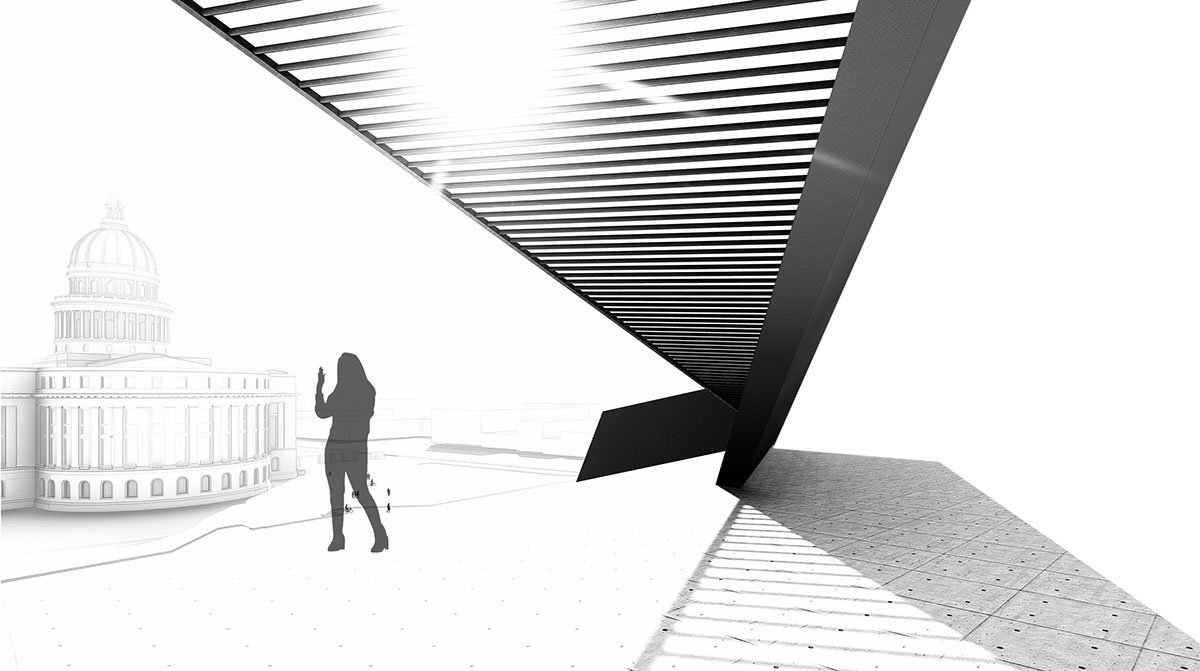
Muralla Street, nestled in Old Havana, is a lively and narrow thoroughfare shaped by centuries of transformation. Lined with decaying colonial buildings and crowded informal housing, it pulses with the rhythms of daily life. Stretching from the iconic Capitol building to the sea edge, the street runs atop the historic Zanja Real aqueduct, symbolically and physically connecting civic power, water infrastructure, and everyday survival.
Design Process
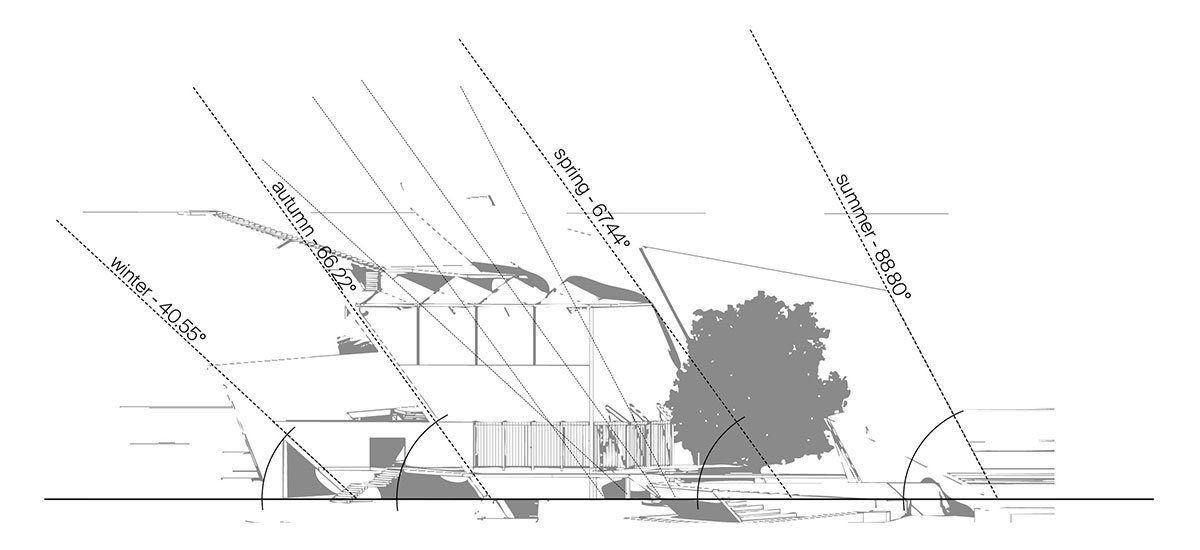
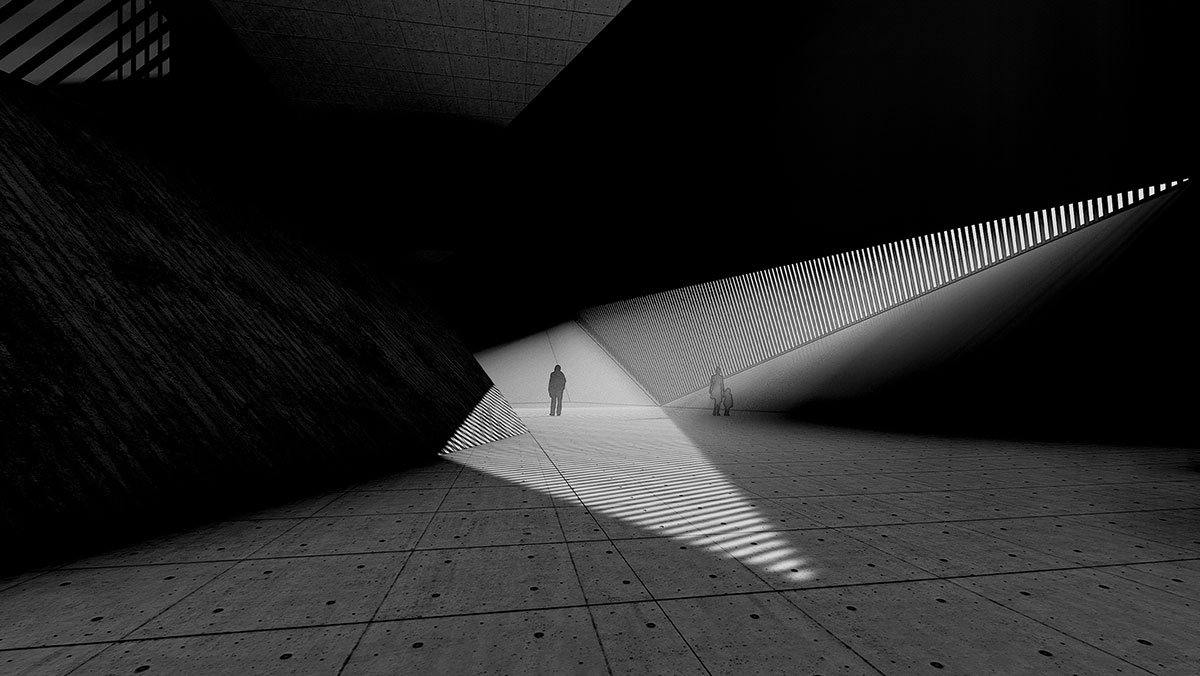
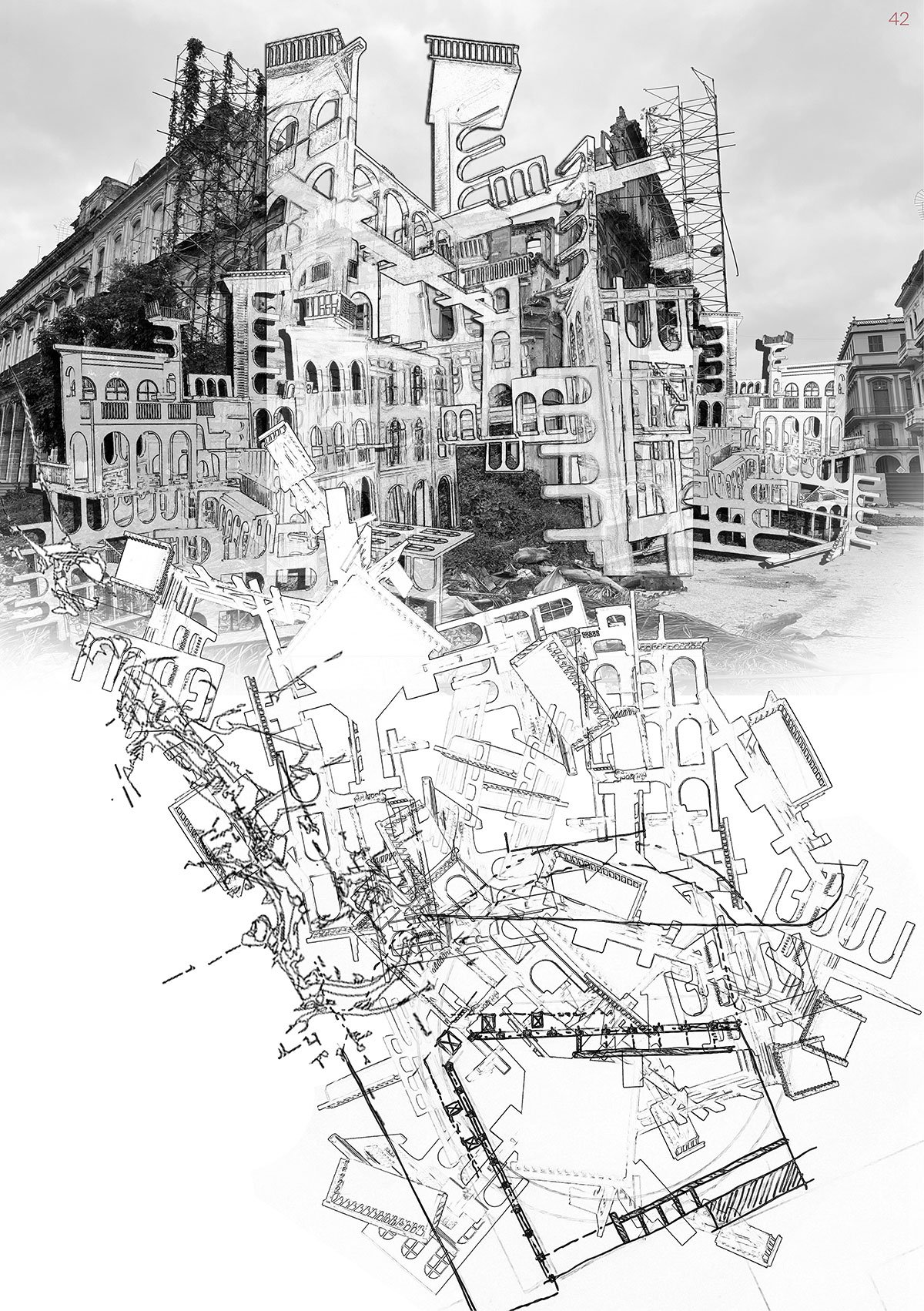
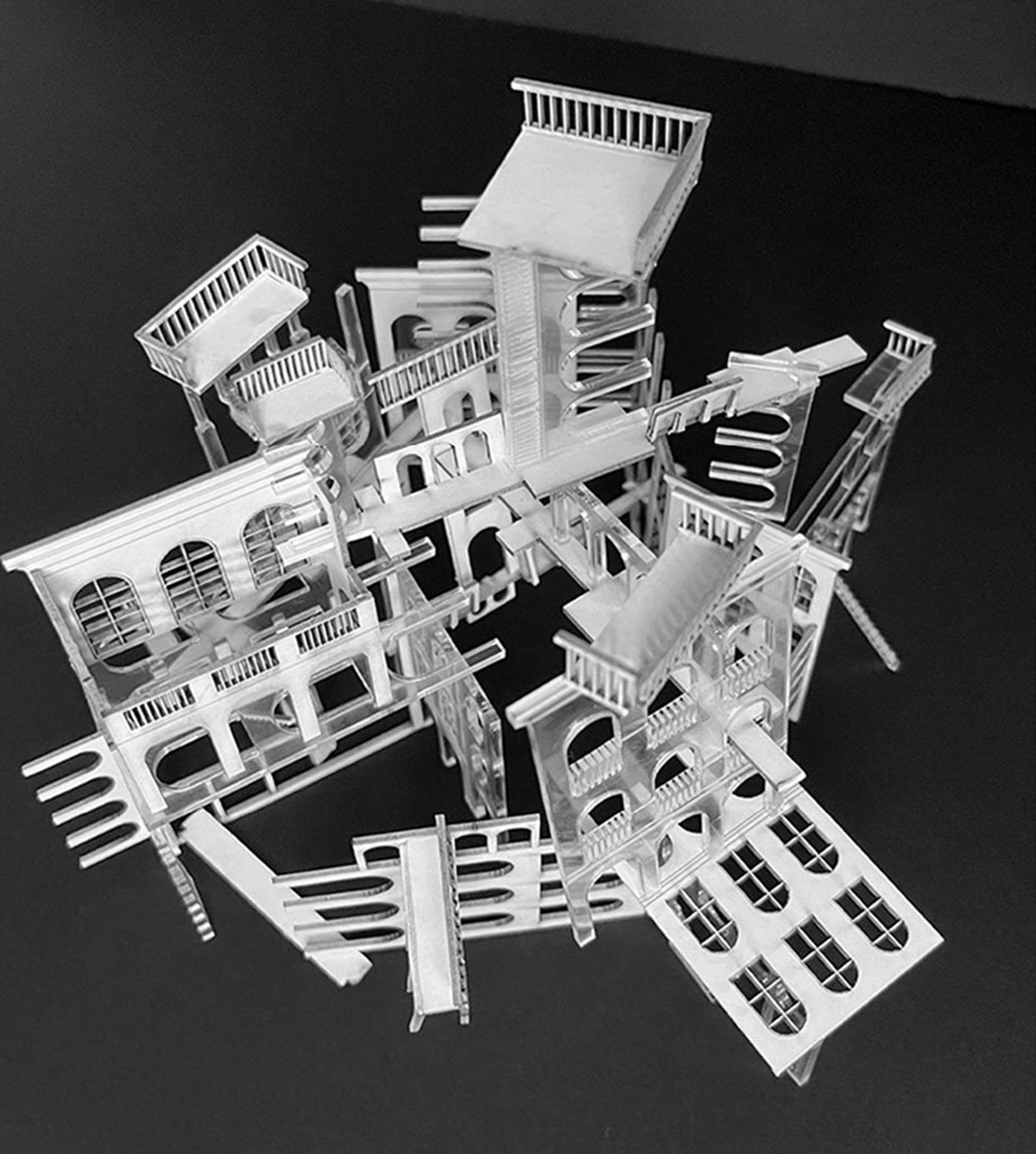
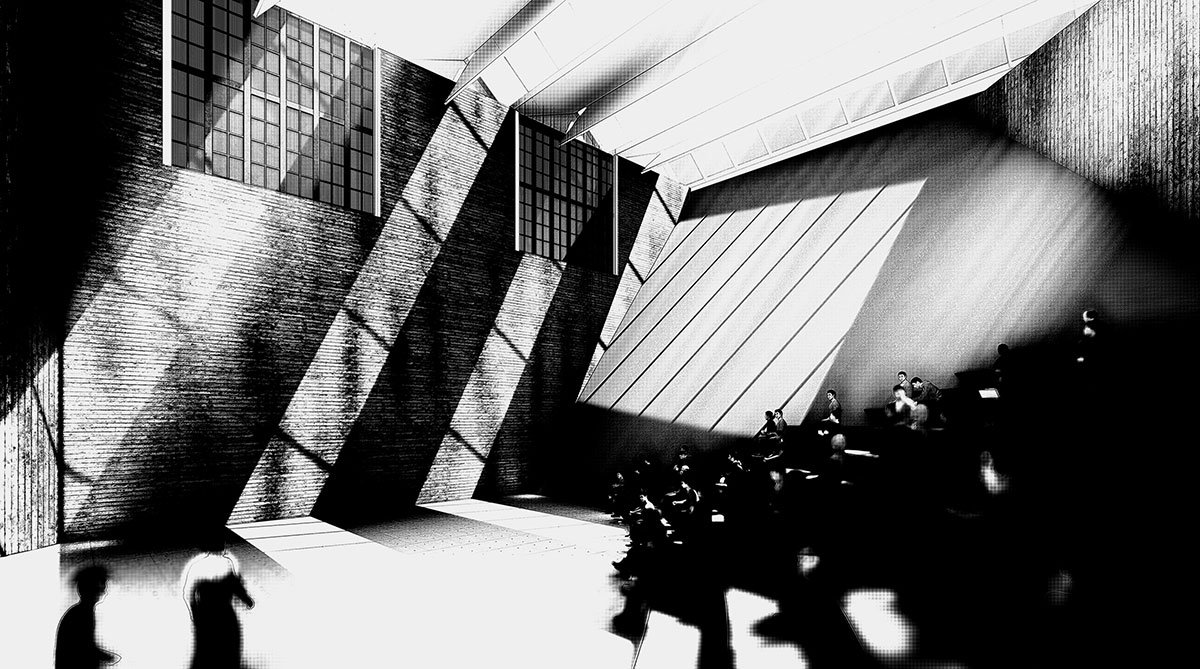
Breaking Into The Existing Typology – Reclaiming Ruins Through Deconstruction And Reconstruction Of Havana’s SolaresAnalysis Of Shadow Placement On Site At Key Seasonal Solar Events – Solstices And EquinoxesNew Moon Configuration: Why the Moon Is Not Visible New moon is positioned between the Earth and the Sun, causing its illuminated side to face away from Earth. As a result, the moon is not visible in the sky. Therefore the New Moon Performance Space focuses on the movement and angles of the sun rather than the moon – using solar light and shadow as primary design drivers.
The idea is to revitalize neglected urban spaces by disrupting conventional architectural typologies. Guided by both the sun and the moon, the design will shape spatial experiences across four distinct sites, each aligned with a phase of the moon.
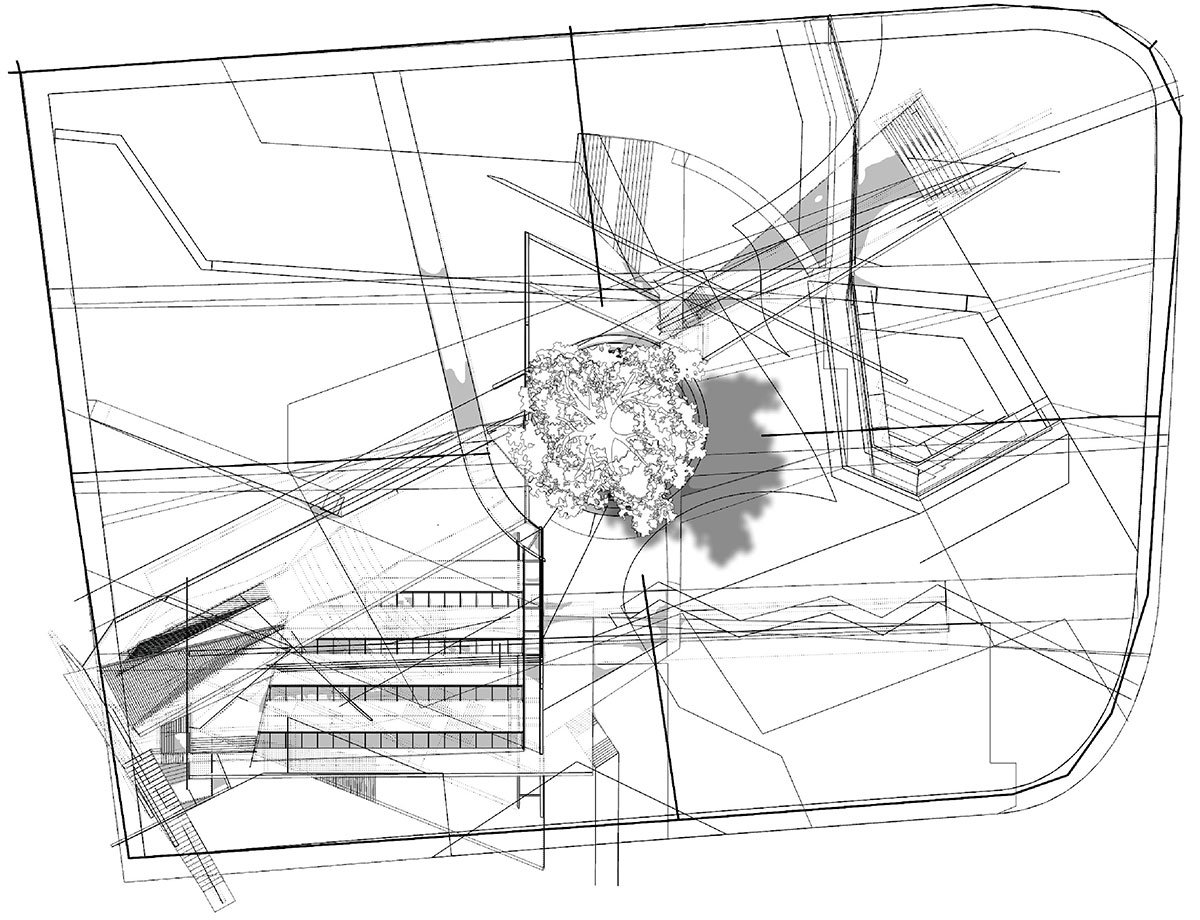
Solar Altitude Angles At Key Solar Events – Maximum Solar Altitudes Throughout The YearShadow Geometry – Translating Shadows Into FormConcept On Site
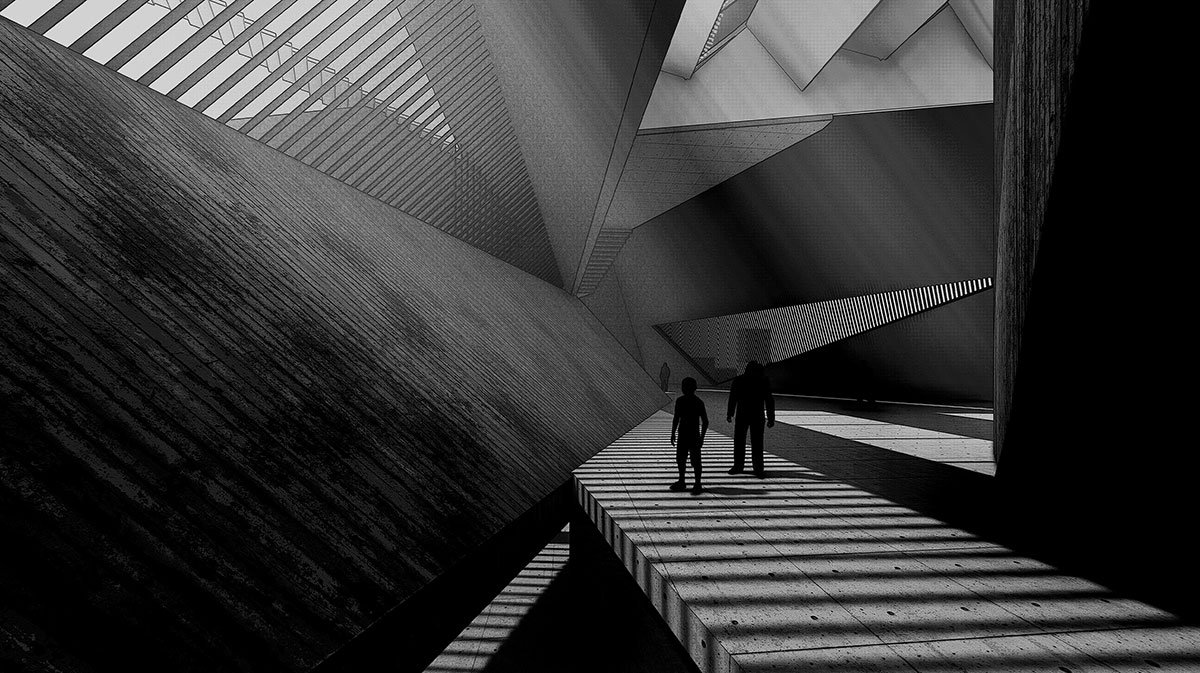
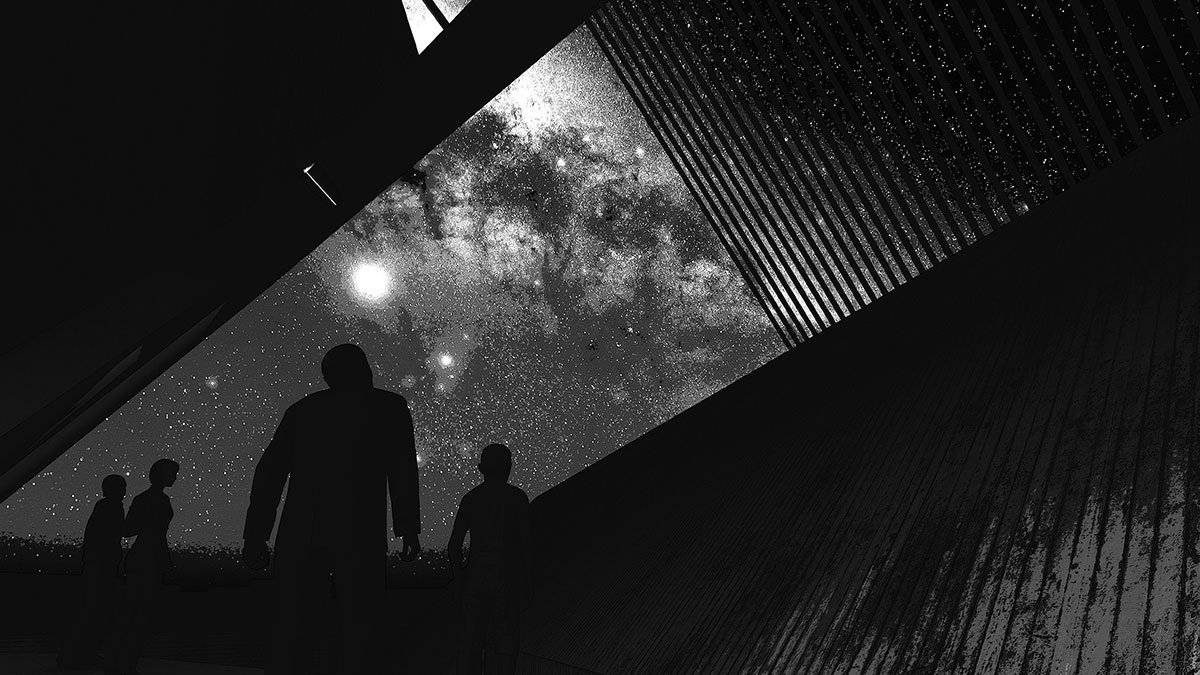
The play of shadows and projected moonlight directly influence the spatial arrangement, using celestial bodies as transient yet integral elements of the architecture.
Final Outcome
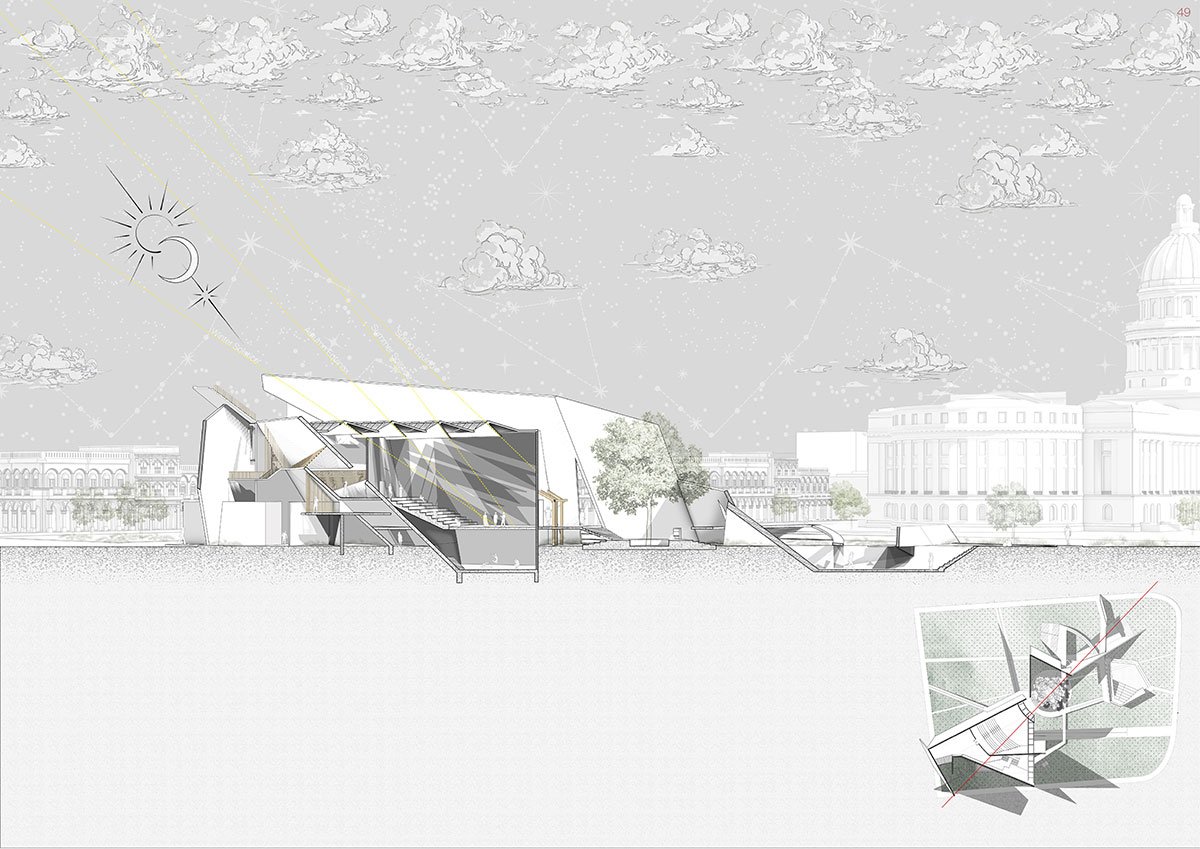
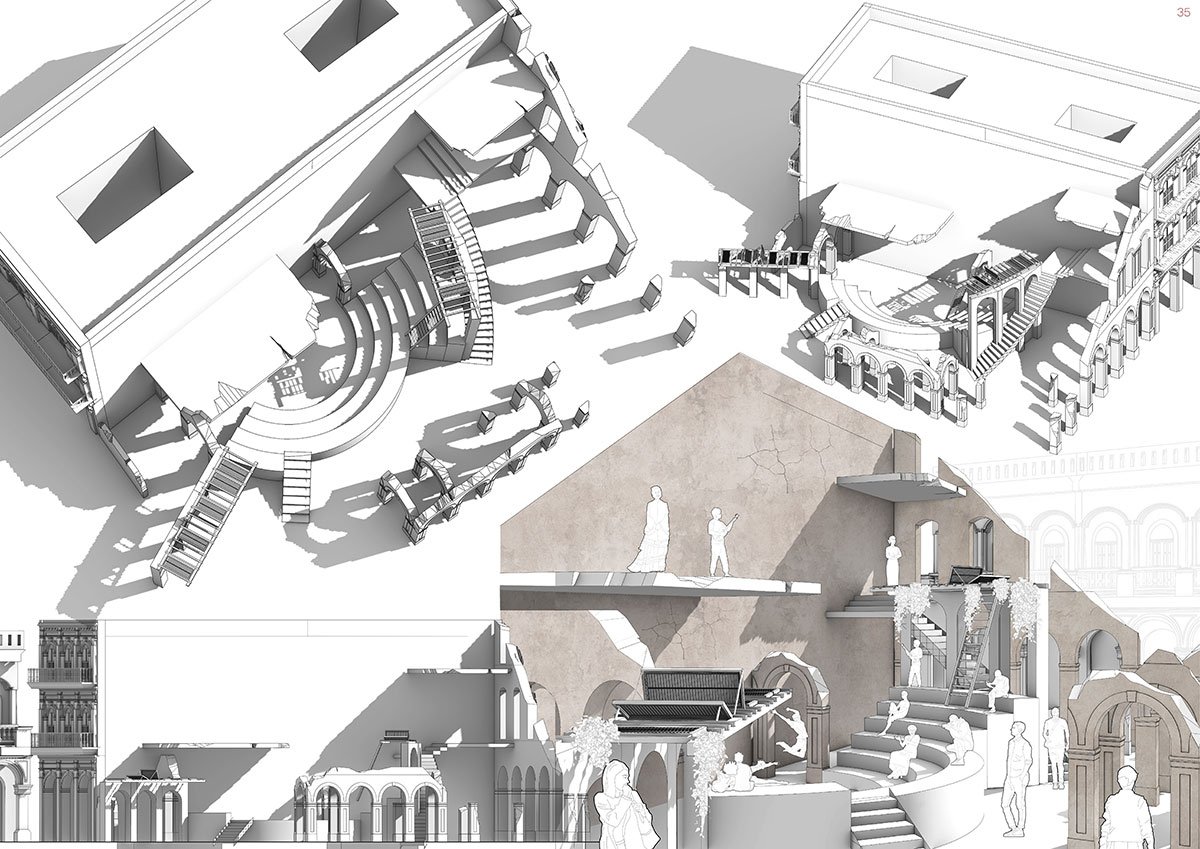
New Moon Performance Space Upper Floor PlanPerspective Section Through New Moon Performance SpaceBathhouse Moon Plan Extracted From Lunar Projections
Drawing inspiration from the moon’s symbolism in Taíno and Afro-Cuban cultures, the project connects ancient wisdom with contemporary urban challenges to highlight the often-invisible realities of women’s lives. Each element of the Collective reflects a specific moon phase, influencing both its design and function.
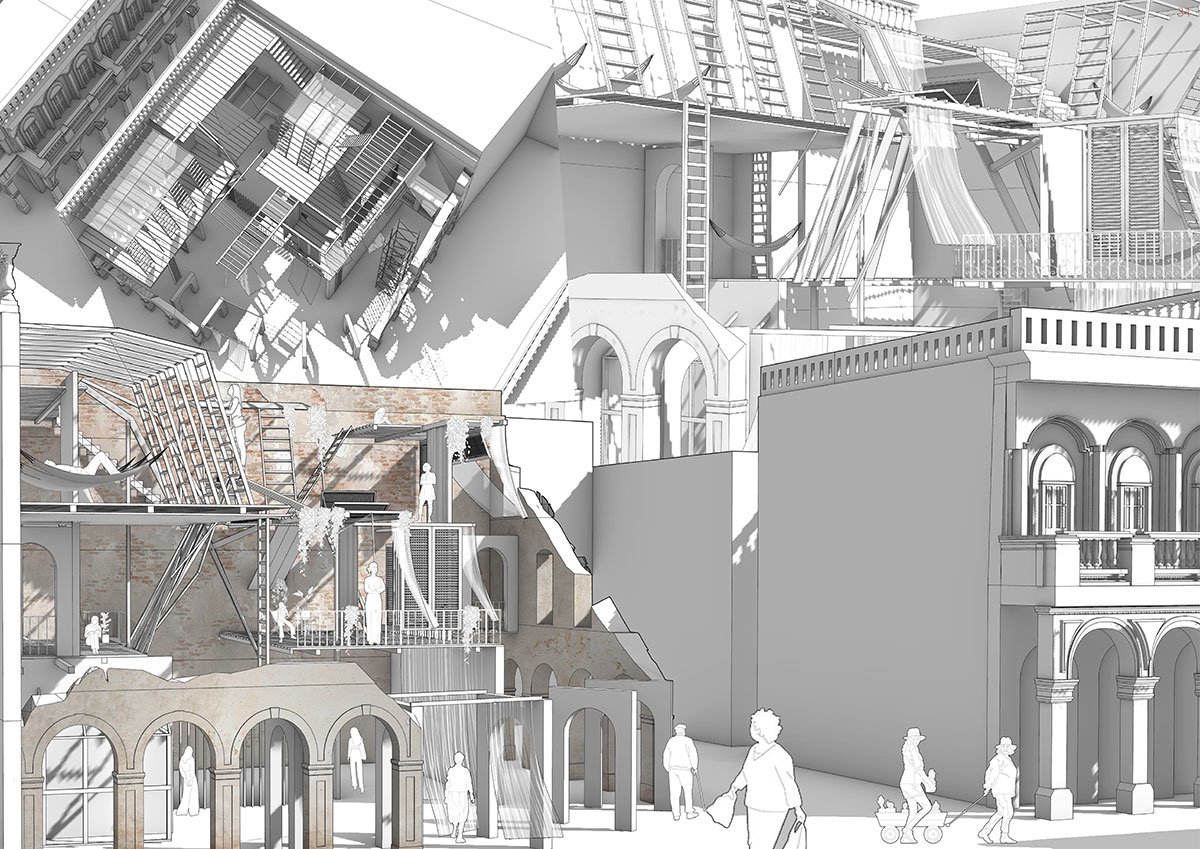
Urban Living Room – Aerial Perspective | A Journey Through Muralla Street Collective | Moments In Time Documented Through Light And ShadowFull Moon Collective – BedroomFull Moon Collective – Communal Living Room
By reclaiming Muralla Street, neglected parts of the city are reimagined as places shaped by and for women, shifting urban control from isolation to collective empowerment. Extending the Collective toward the Capitol enables women to engage with tourism’s economic potential, disrupting entrenched gender roles and redefining the street as a space of shared opportunity and collective growth.
Full Moon Collective – Reclaimed Courtyard GardenInternal Moments At NightInternal Moments At Night
The journey through Muralla Street starts at the Lunar Gate—an entryway and observatory marking the threshold of the journey. Passing through the Full Moon Collective and the Urban Living Room, one arrives at the New Moon Performance Space, which serves as the Collective’s primary hub for opportunity. Strategically positioned, it enables women to engage with and benefit from the tourism economy in a space typically dominated by men. Drawing inspiration from the new moon—often unseen due to its alignment with the sun—the design is closely informed by solar orientation and shadow analysis.
External Moments Of New Moon SiteExternal Moments Of New Moon Site
Conclusion: Through lunar phases and celestial rhythms, the architecture becomes a living reflection of collective strength and resilience—reclaiming the street not just as a path through the city, but as a journey toward equality and inclusive opportunity.
[This Academic Project has been published with text and images submitted by the student]
Site Context
Design Process
Final Outcome
To submit your academic project for publication at ArchiDiaries, please visit the following link >> Submit
Get the best of ArchiDiaries, directly in your inbox.
We use cookies on our website to give you the most relevant experience by remembering your preferences and repeat visits. By clicking “Accept All”, you consent to the use of ALL the cookies. However, you may visit "Cookie Settings" to provide a controlled consent.
This website uses cookies to improve your experience while you navigate through the website. Out of these, the cookies that are categorized as necessary are stored on your browser as they are essential for the working of basic functionalities of the website. We also use third-party cookies that help us analyze and understand how you use this website. These cookies will be stored in your browser only with your consent. You also have the option to opt-out of these cookies. But opting out of some of these cookies may affect your browsing experience.
Necessary cookies are absolutely essential for the website to function properly. These cookies ensure basic functionalities and security features of the website, anonymously.
Cookie
Duration
Description
cookielawinfo-checkbox-analytics
11 months
This cookie is set by GDPR Cookie Consent plugin. The cookie is used to store the user consent for the cookies in the category "Analytics".
cookielawinfo-checkbox-functional
11 months
The cookie is set by GDPR cookie consent to record the user consent for the cookies in the category "Functional".
cookielawinfo-checkbox-necessary
11 months
This cookie is set by GDPR Cookie Consent plugin. The cookies is used to store the user consent for the cookies in the category "Necessary".
cookielawinfo-checkbox-others
11 months
This cookie is set by GDPR Cookie Consent plugin. The cookie is used to store the user consent for the cookies in the category "Other.
cookielawinfo-checkbox-performance
11 months
This cookie is set by GDPR Cookie Consent plugin. The cookie is used to store the user consent for the cookies in the category "Performance".
viewed_cookie_policy
11 months
The cookie is set by the GDPR Cookie Consent plugin and is used to store whether or not user has consented to the use of cookies. It does not store any personal data.
Functional cookies help to perform certain functionalities like sharing the content of the website on social media platforms, collect feedbacks, and other third-party features.
Performance cookies are used to understand and analyze the key performance indexes of the website which helps in delivering a better user experience for the visitors.
Analytical cookies are used to understand how visitors interact with the website. These cookies help provide information on metrics the number of visitors, bounce rate, traffic source, etc.
Advertisement cookies are used to provide visitors with relevant ads and marketing campaigns. These cookies track visitors across websites and collect information to provide customized ads.