
(“Text as submitted by architect”)
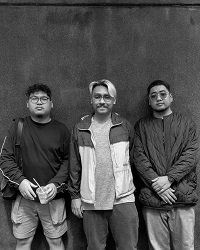 Polipat Naksawat
Polipat Naksawat holds a bachelor’s degree in Architecture (Architectural Program) from Rajamangala University of Technology Thanyaburi and a master’s degree in Architecture (Conceptual in Architecture) from Silpakorn University. During his postgraduate studies, he integrated knowledge from various disciplines into the field of architecture, sparking his interest in exploring new possibilities and enjoying problem-solving from the design process to construction. He continues to seek innovative approaches to architectural design. Currently, he is a guest lecturer in the Department of Architecture at the Rajamangala University of Technology Thanyaburi, a role he has held since 2023.
Teerakan Wattanayon
Teerakan Wattanayon graduated with a bachelor’s degree in Architecture from the Rajamangala University of Technology Thanyaburi and a master’s degree in Architecture from Silpakorn University. He is particularly interested in space utilization systems and the relationships between humans and their surroundings. He serves as a guest lecturer at the Rajamangala University of Technology Thanyaburi, a position he has held since 2023.
Ratasakon Chantaluxsul
Ratasakon Chantaluxsul graduated with a bachelor’s degree in Architecture from the Rajamangala University of Technology Thanyaburi, with a strong interest in construction processes, techniques, and the design of practical details that are functional and help minimize post-construction issues. He believes that good design, when paired with efficient construction processes, can enhance the completeness of a project and ultimately provide users with a better experience.
Practice Ideology
The practice aims for every project they design to be feasible within their constraints. Their designs continue to question various aspects of each project, such as context, site location, the daily lives of the residents, spatial needs, and the joy of problem-solving in every project.
In design competitions, they often propose ideas or methods to create outcomes that may not necessarily be right or wrong but serve as a starting point for thought-provoking conversations among those who come across and engage with their work.


