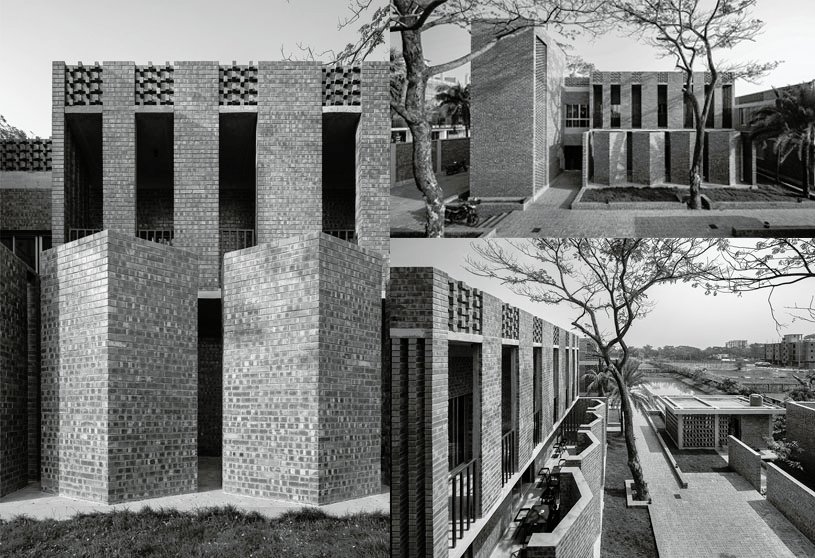
(“Text as submitted by architect”)
 Quazi Wafiq Alam
Quazi Wafiq Alam is the Director of Program and Knowledge Management at the Community Development Centre (CODEC), a national NGO dedicated to empowering Bangladesh’s coastal and riverine communities. Trained as an architect, he applies a design-thinking lens to development, integrating spatial planning with community participation. His work with CODEC began in humanitarian response, where he led the design and construction of learning centers and women-friendly spaces in Rohingya refugee camps, creating safe and culturally sensitive environments that upheld dignity.
Wafiq now leads a multidisciplinary team of architects, planners, and development professionals to ensure programs and design complement one another in addressing the complex realities of coastal life. Under his leadership, CODEC’s initiatives in education, climate resilience, and livelihoods are grounded in evidence, participatory insights, and long-term impact. He oversees systems that capture grassroots innovations, strengthen partnerships with government, donors, and international agencies, and inform policy engagement aligned with national priorities and the Sustainable Development Agenda.
Passionate about inclusive development, he has championed initiatives amplifying the voices of women and youth. Through policy dialogues, research contributions, and capacity building, Quazi Wafiq Alam continues to guide CODEC’s adaptive, evidence-driven responses in Bangladesh’s most climate-vulnerable regions.
Practice Ideology
Our architectural practice is rooted in a belief that design is a catalyst for social transformation rather than merely a tool for constructing buildings. Drawing on my experience at CODEC, where I lead multidisciplinary teams designing learning centers, women-friendly spaces, and climate-resilient interventions, I see architecture as inseparable from community empowerment. Spaces must do more than provide shelter; they should uphold dignity, strengthen social bonds, and respond to local culture.
We work with a visionary approach to community development—one that integrates social, environmental, and cultural well-being. By embedding sustainable principles into design, we create environments that balance human needs with the stewardship of natural resources. This means using participatory insights and evidence to inform planning, preserving local identity, and amplifying the voices of women and youth.
Our goal is to design and support spaces where people can thrive physically, mentally, and culturally. Such spaces inspire pride, foster cohesion, and nurture resilience in climate-vulnerable regions. In doing so, I aim to align architecture with broader development goals, turning built environments into living frameworks for prosperity, harmony, and long-term impact. This is the ethos guiding my work and the future I strive to build through architectural practice.


