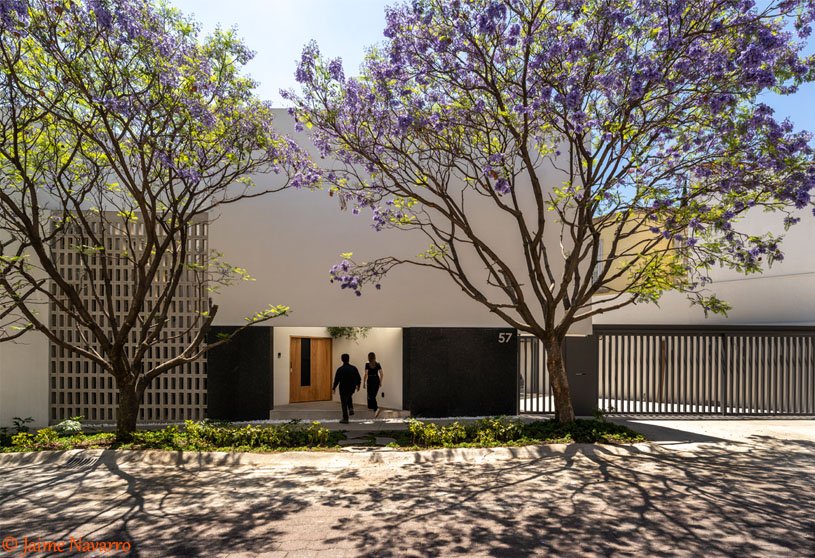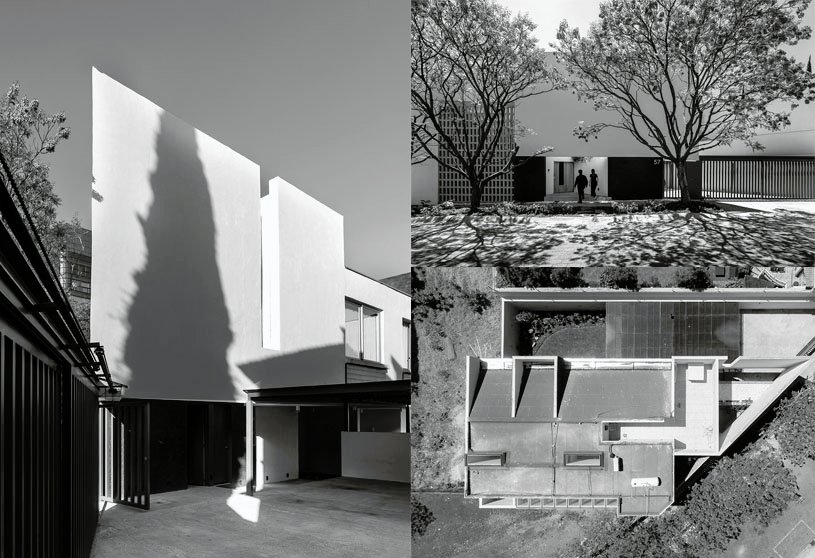
(“Text as submitted by architect”)
 Antonio Rivas
Antonio Rivas is a founding partner of Graus, where he focuses on architecture as a tool for informed decision-making. His work emphasizes clarity, buildability, and long-term value, integrating design intent with construction logic and operational realities. At Graus, he contributes to the development of Design as a Service, positioning architecture as a professional service that reduces uncertainty and supports complex investments through precise and responsible design decisions.
Jorge Garcia
Jorge García is a founding partner of Graus and helps define the studio’s strategic and conceptual direction. His approach centers on analysis, synthesis, and spatial clarity, aligning architectural thinking with performance, use, and efficiency. At Graus, he reinforces an architecture understood as a service, where design adds value by organizing resources, experience, and intent into coherent, durable systems.
Practice Ideology
Graus approaches architecture as a disciplined act of decision making. Each project begins with an examination of context, constraints, and purpose, long before questions of form or style arise. Architecture is understood not as an object, but as a framework that organizes resources, time, and human experience.
The practice emerged from architectural training and was shaped through direct involvement in construction, budgeting, and execution. This background informs a pragmatic yet rigorous way of working, where design is inseparable from feasibility. At Graus, architecture is conceived as a service that supports complex choices and transforms uncertainty into clarity.
Rather than pursuing a recognizable aesthetic, the studio prioritizes method. Program, site conditions, climate, regulatory frameworks, and financial parameters guide each decision. Material choices and spatial strategies are not imposed, but derived. The result is an architecture that is specific, measured, and grounded in real conditions, capable of adapting across residential, commercial, corporate, and institutional contexts.
Every project is treated as a system, where architectural decisions have tangible consequences on cost, performance, operation, and longevity. This awareness leads to a careful balance between precision and restraint. The objective is not excess, but coherence, spaces that function efficiently, age with dignity, and remain relevant over time.
Environmental responsibility is embedded in this logic. Reuse, optimization of existing structures, and responsible material selection are considered from the outset, not as secondary gestures, but as fundamental criteria that shape the project’s direction. Clients engage with Graus to navigate complexity.
The practice operates as an advisor and strategic partner, translating abstract ambitions into concrete, viable outcomes. Through Design as a Service, architecture becomes a tool to generate confidence, reduce risk, and align spatial quality with long term value.
Graus is defined less by what it produces than by how it operates. The focus remains on thoughtful decisions, informed processes, and architecture that serves its users, its context, and its time.