Excerpt: 889GLO Art Space by SpActrum reimagines a commercial site as a dynamic cultural hub, using architectural design to reveal the hidden structures of consumption. Rooted in material transformation and spatial fluidity, the project challenges conventional aesthetics by repurposing industrial elements. It acts as an “architectural provocation,” sparking social awareness through conscious design and collective curiosity.
Project Description
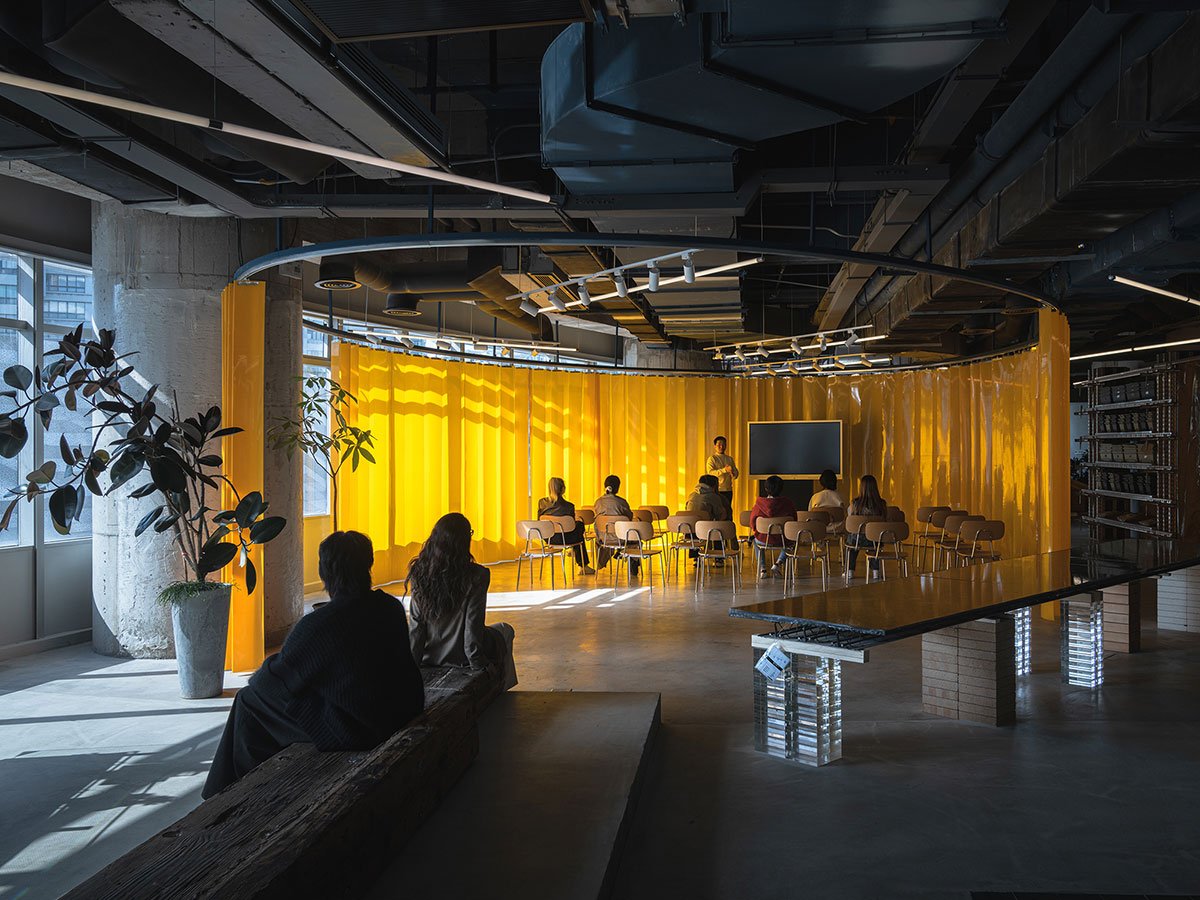
[Text as submitted by architect] Nestled in the heart of Caojiadu, Jing’an District, Shanghai, the 889 Plaza embarks on a transformative journey to redefine itself as a distinctive community art/creativity hub within the city’s fiercely competitive commercial landscape. In mid-2024, curator Susan’s visit to SpActrum’s newly completed Shanghai office sparked a collaborative venture, culminating in the creation of 889GLO Art Space – a nearly 1,000-square-meter creative platform designed to activate community art exchanges, integrate scenographic displays, and foster diverse social interactions. This project extends SpActrum’s ongoing investigation into the unseen forces of construction, expanding their architectural inquiry into the realms of commerce and consumption within the context of China’s massive urban development.
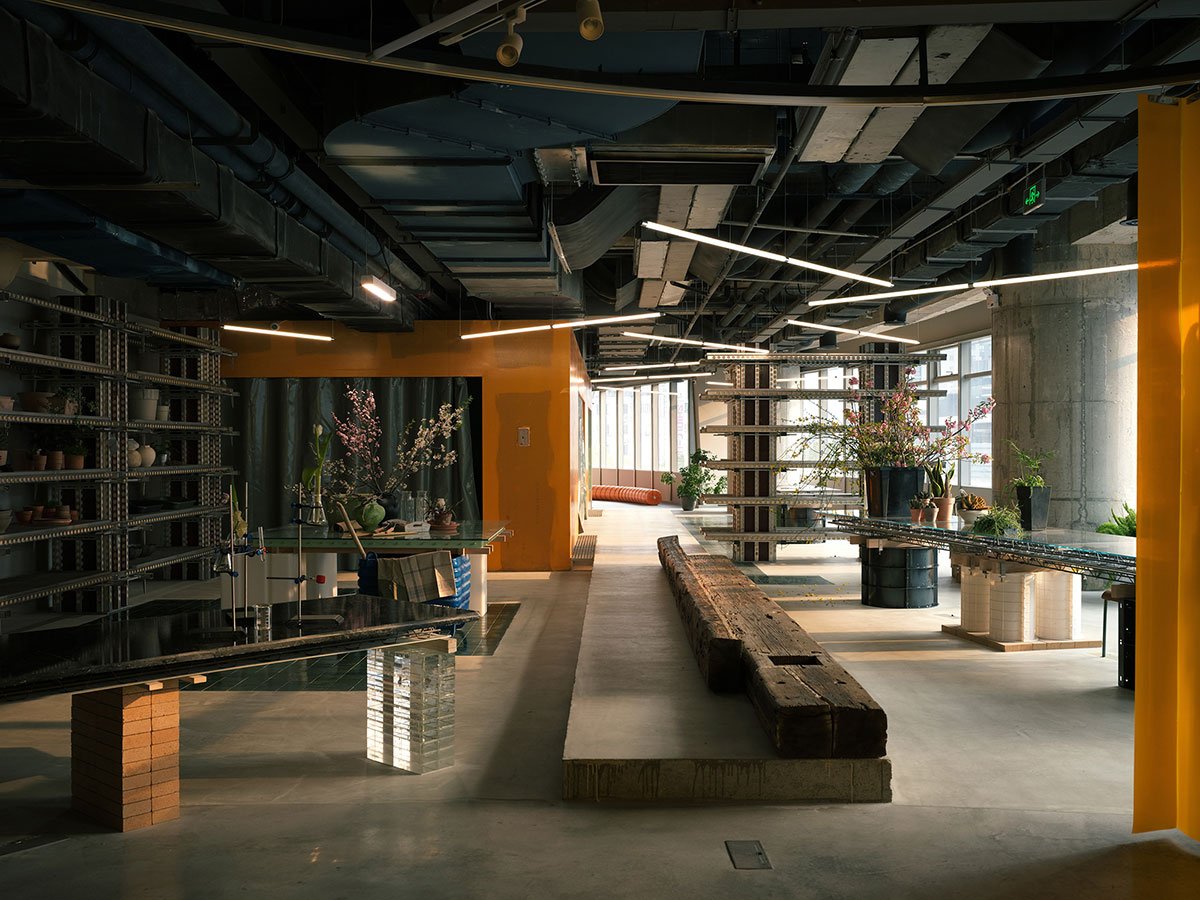
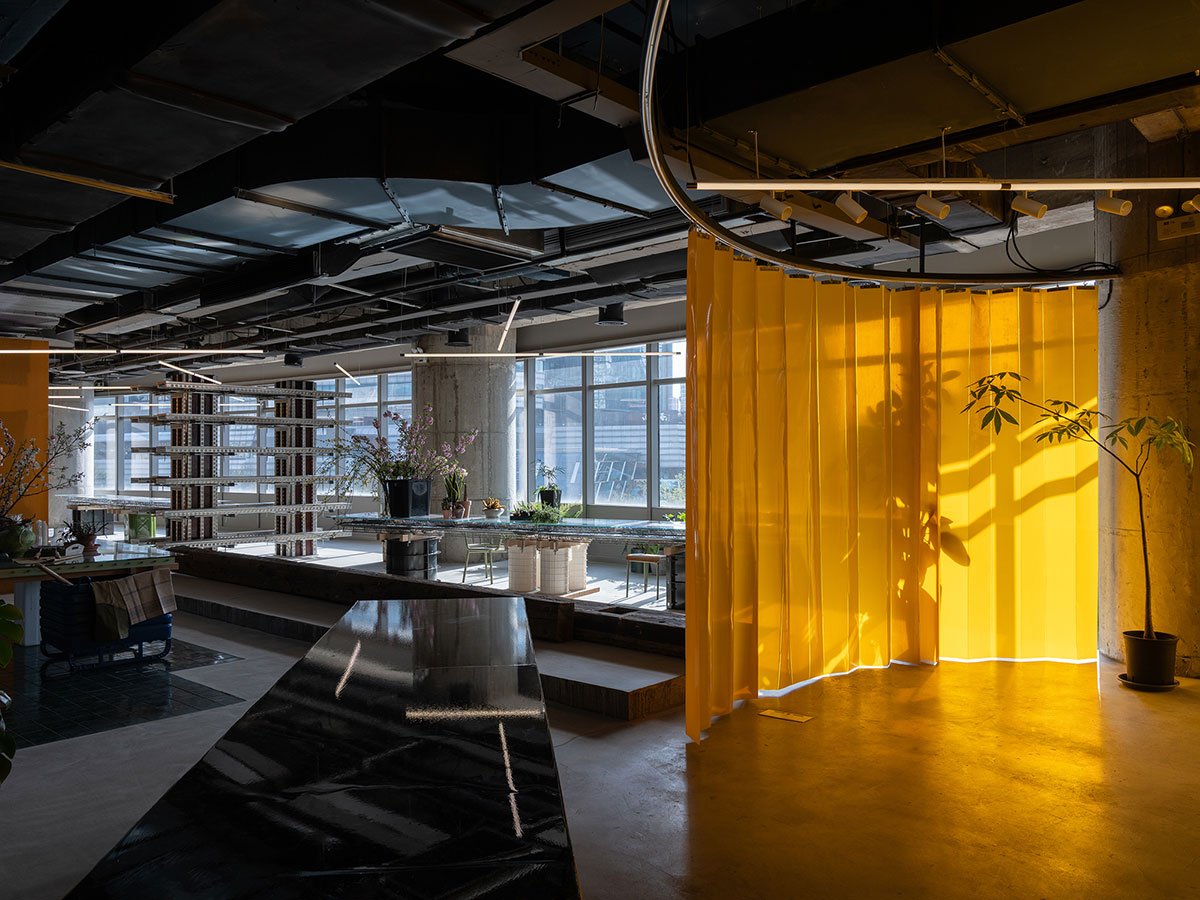
The design takes its conceptual foundation from staggering consumption statistics: China’s projected 2025 usage of 1.283 billion tons of iron ore, 17 million barrels of petroleum per day, nearly 2 billion tons of cement, along with 2023 figures of 5.72 billion tons of coal consumption, 590.65 billion cubic meters of water usage, and approximately 33 million civilian trucks in operation. These numbers reveal not just ecological impacts, but entire ways of life, social organizations, and technological systems that remain largely invisible. “Landscape of Consumption” emerges as an architectural manifesto, assembling a material library from these hidden support structures of consumer society to challenge collective blindness and awaken conscious perception.
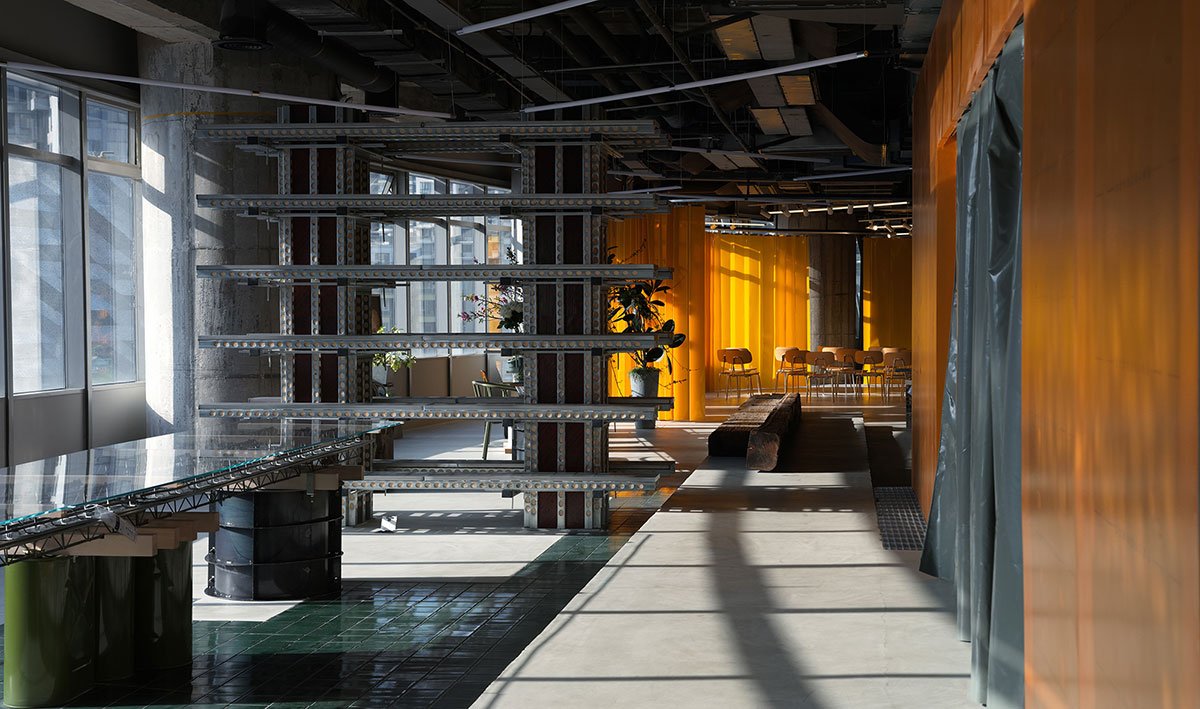
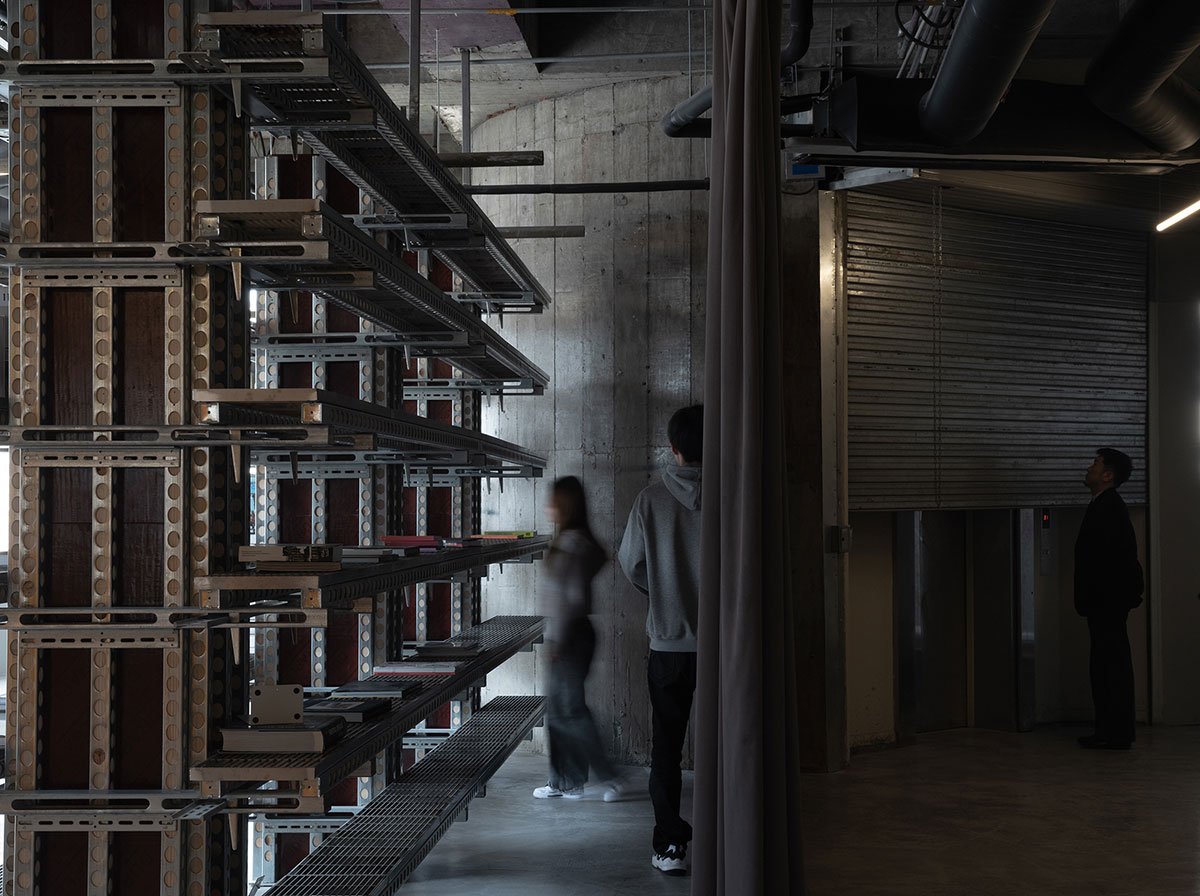
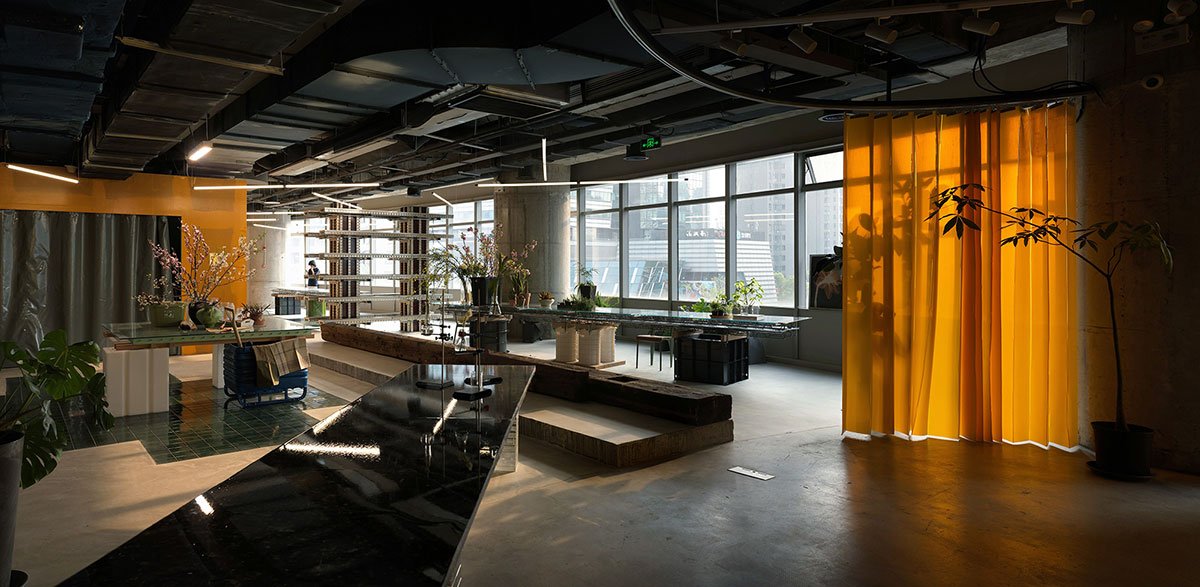
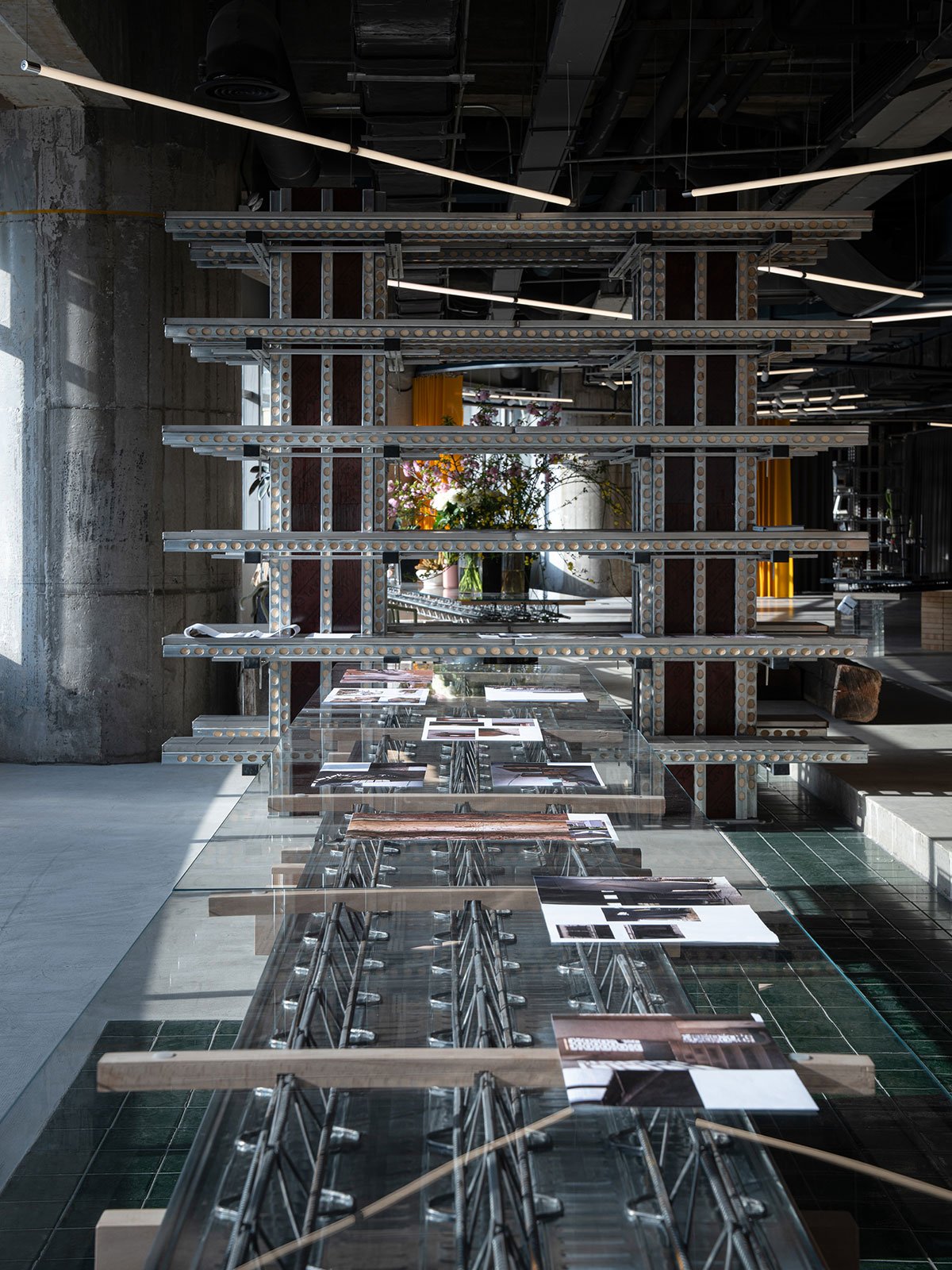
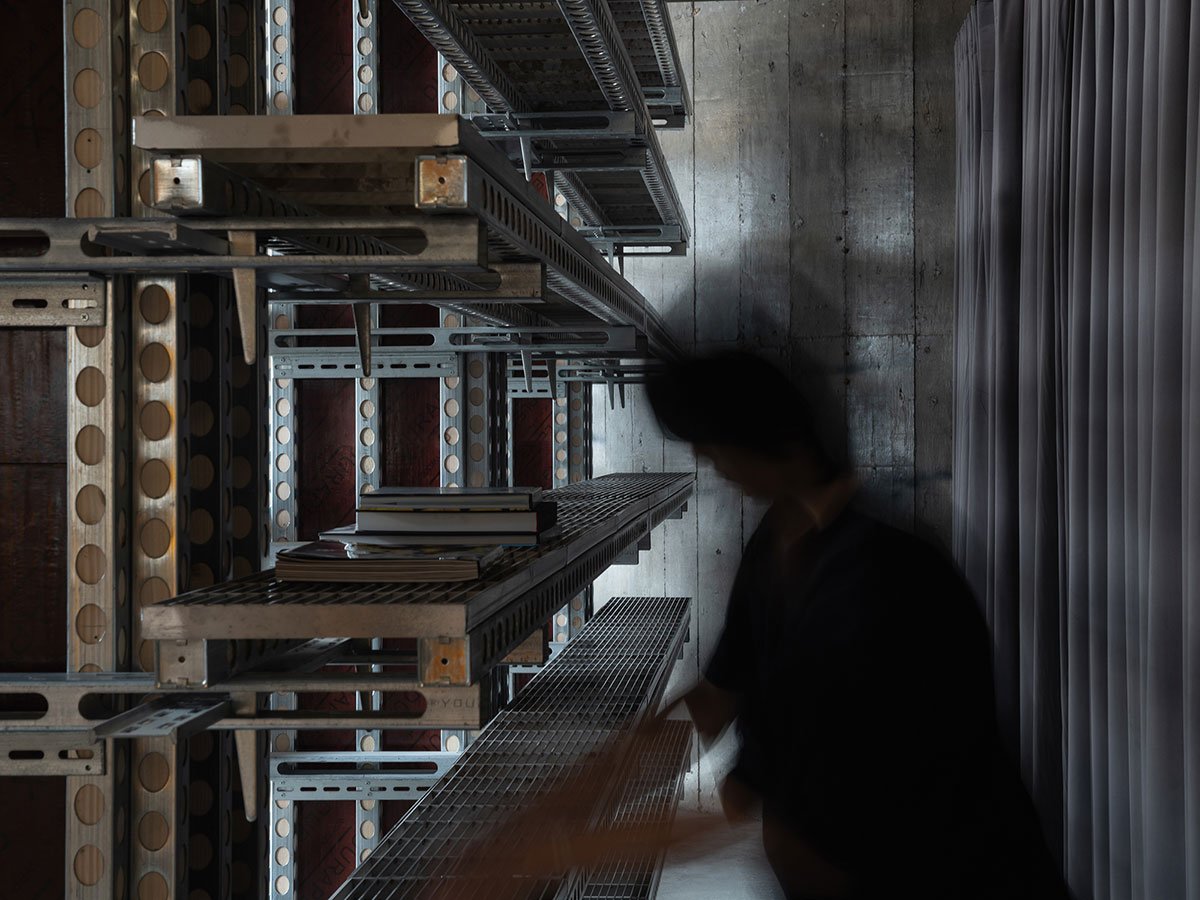
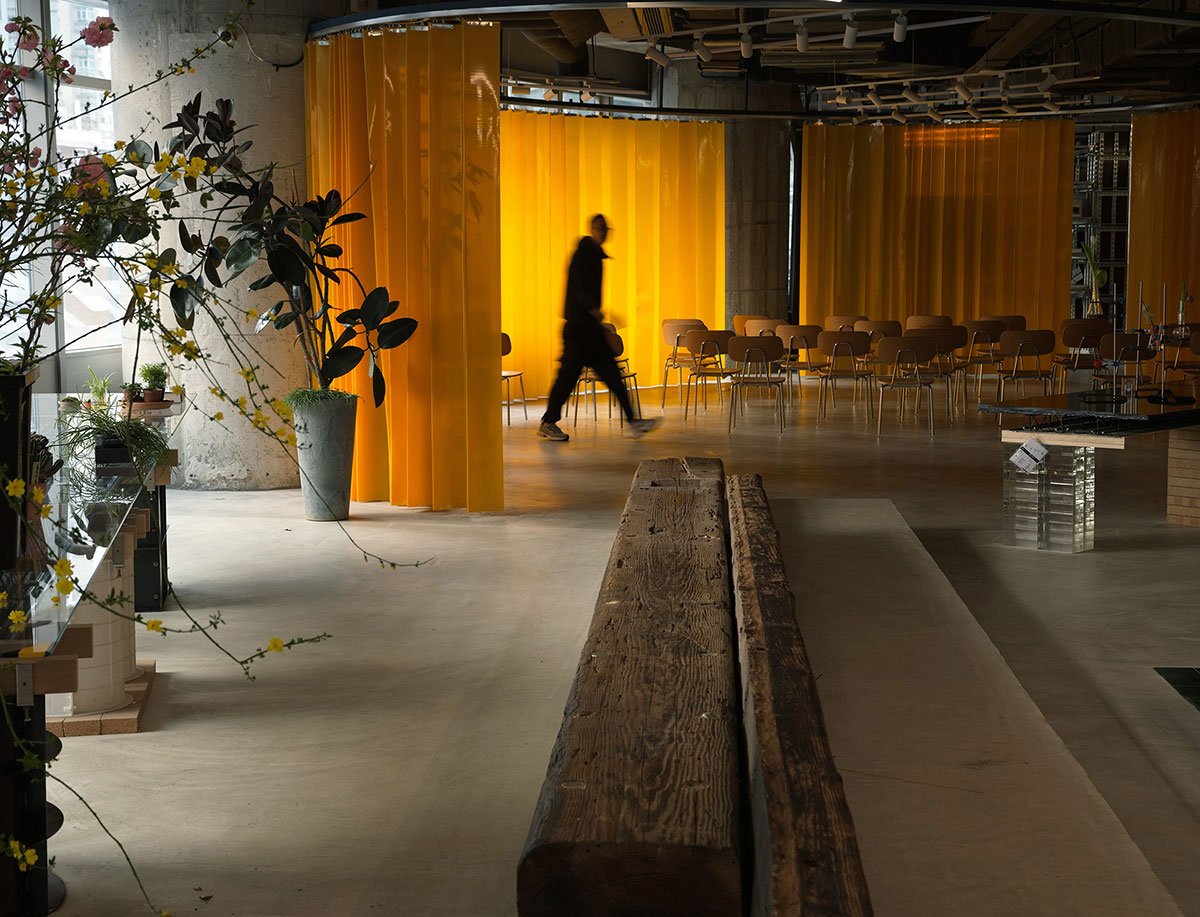
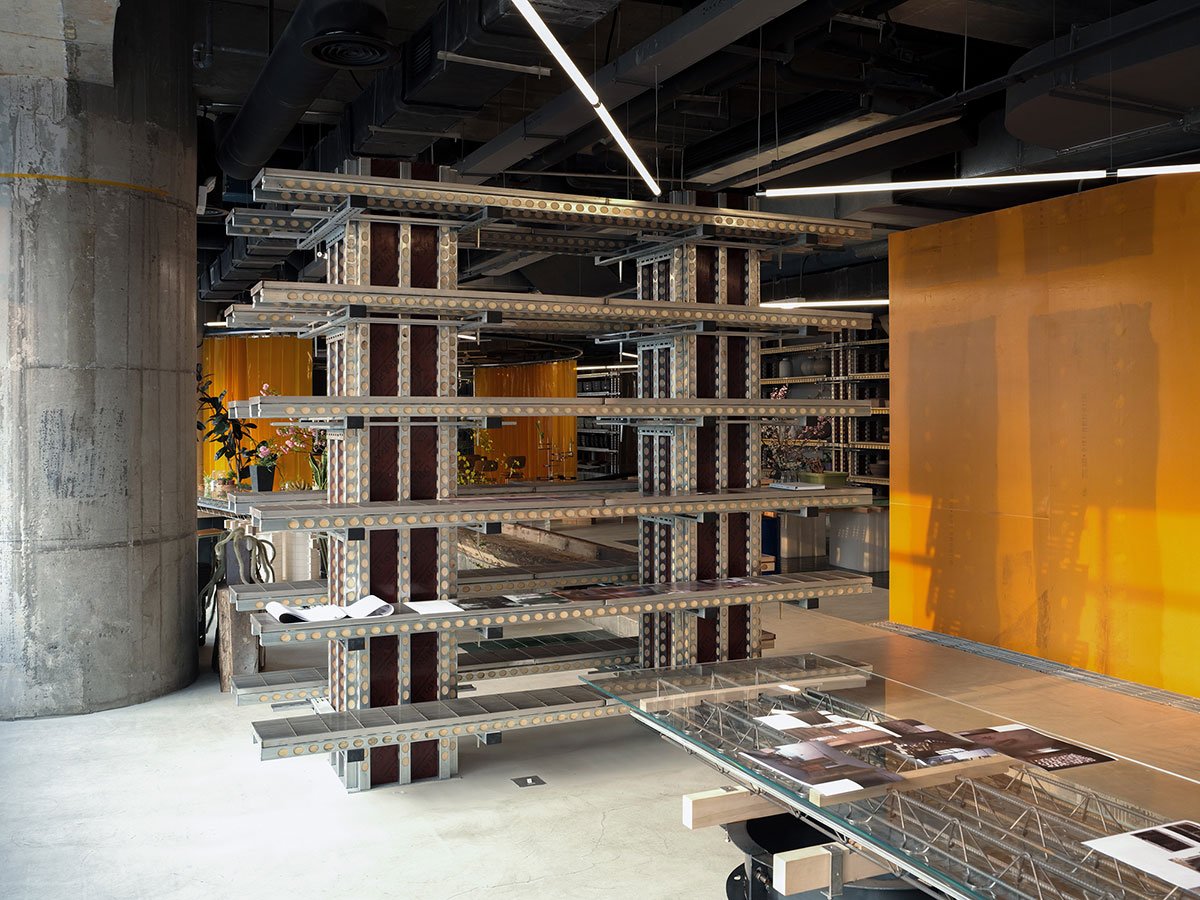
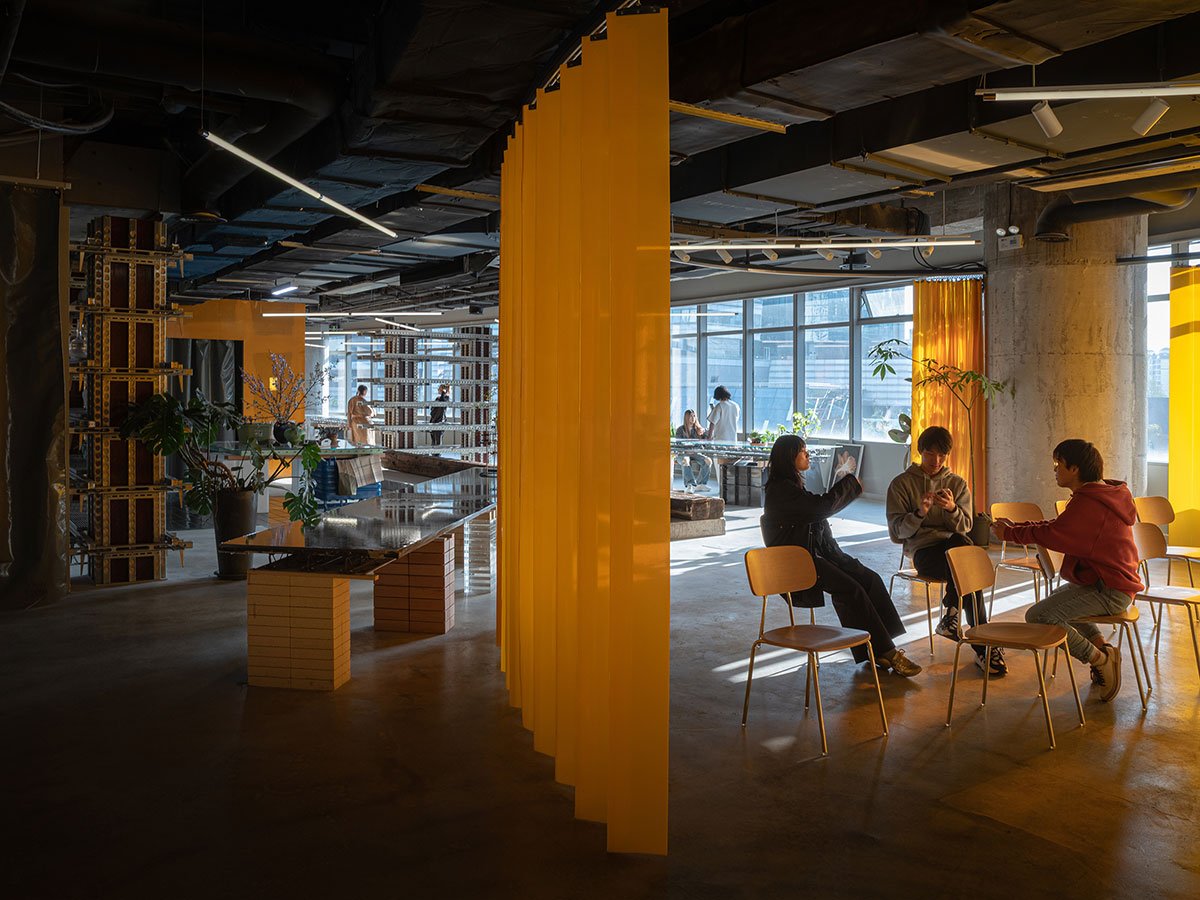
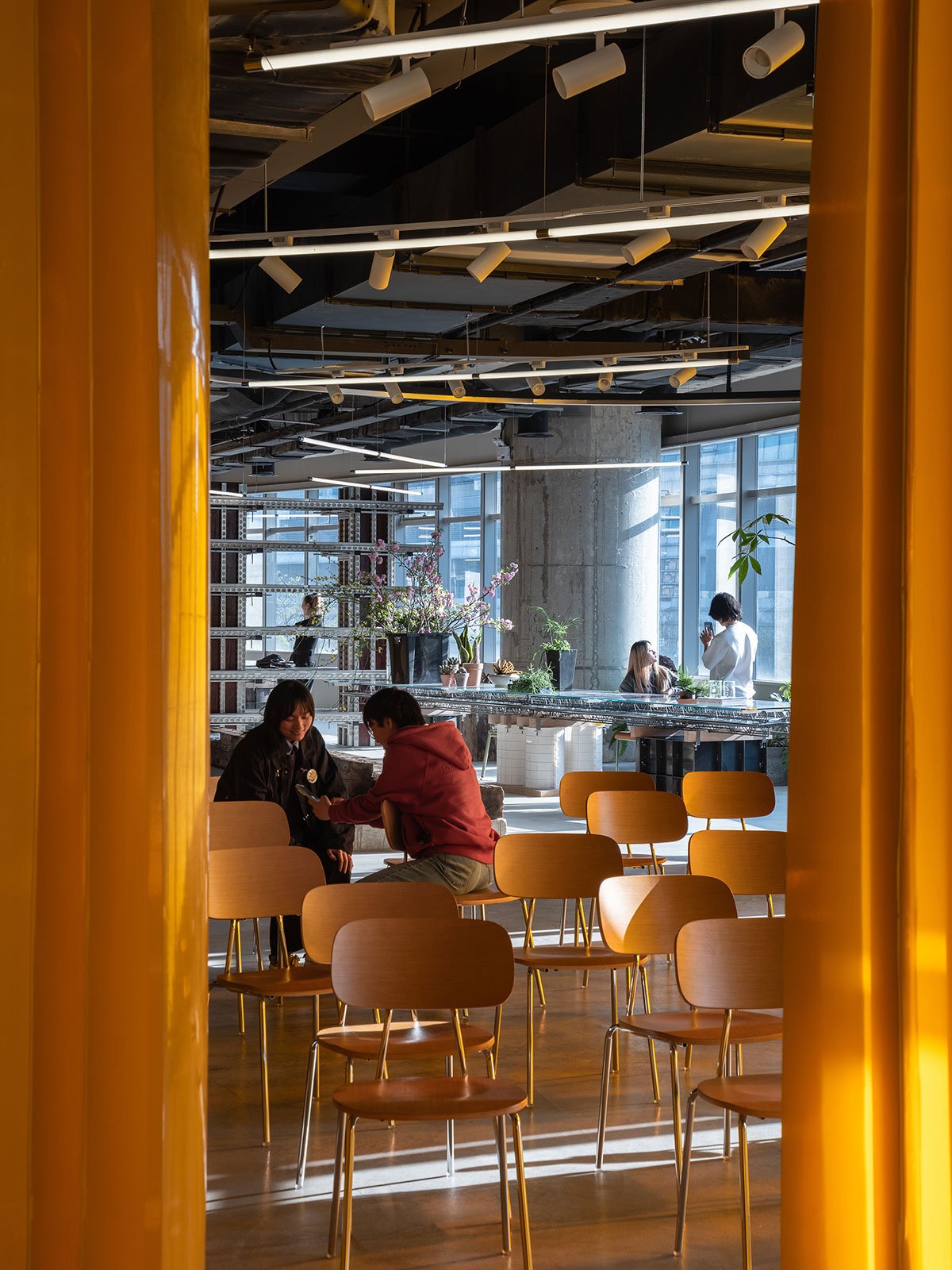
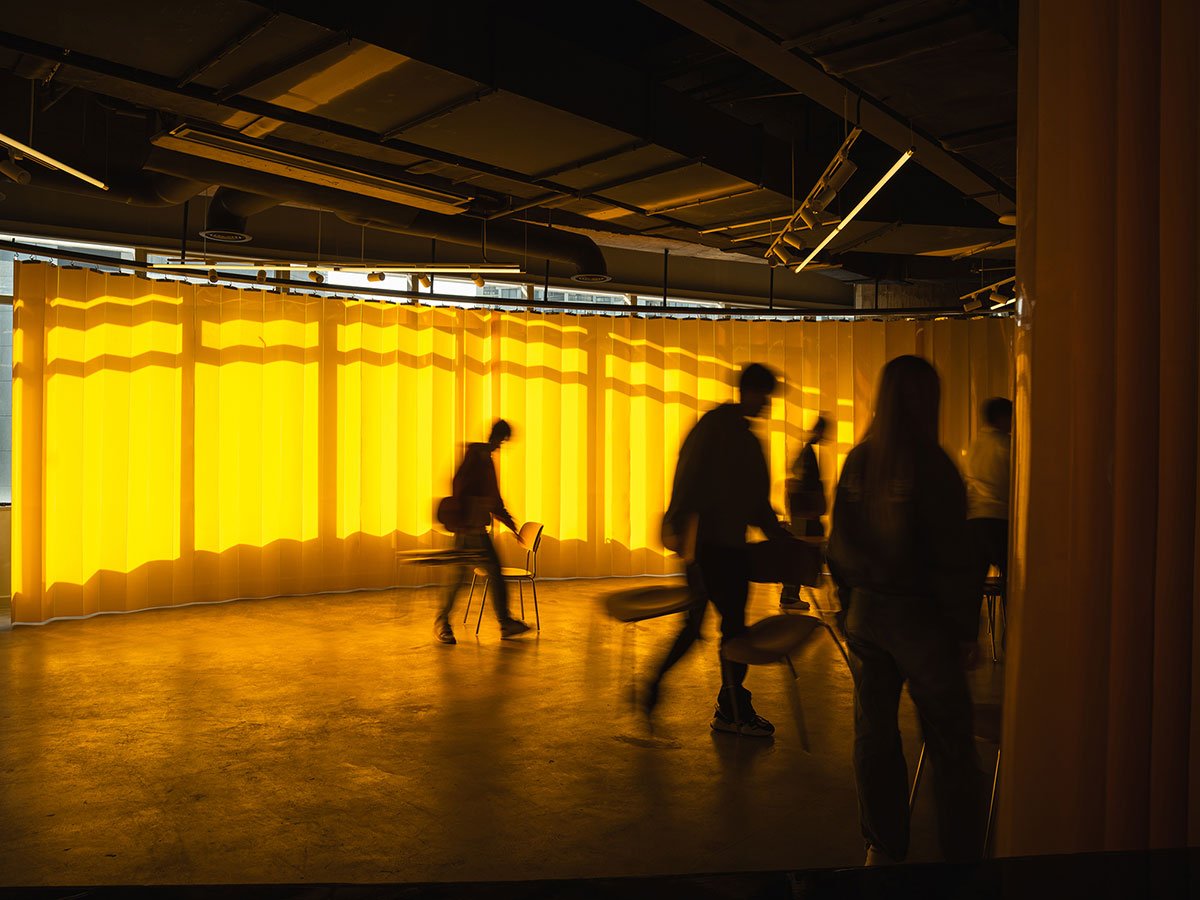
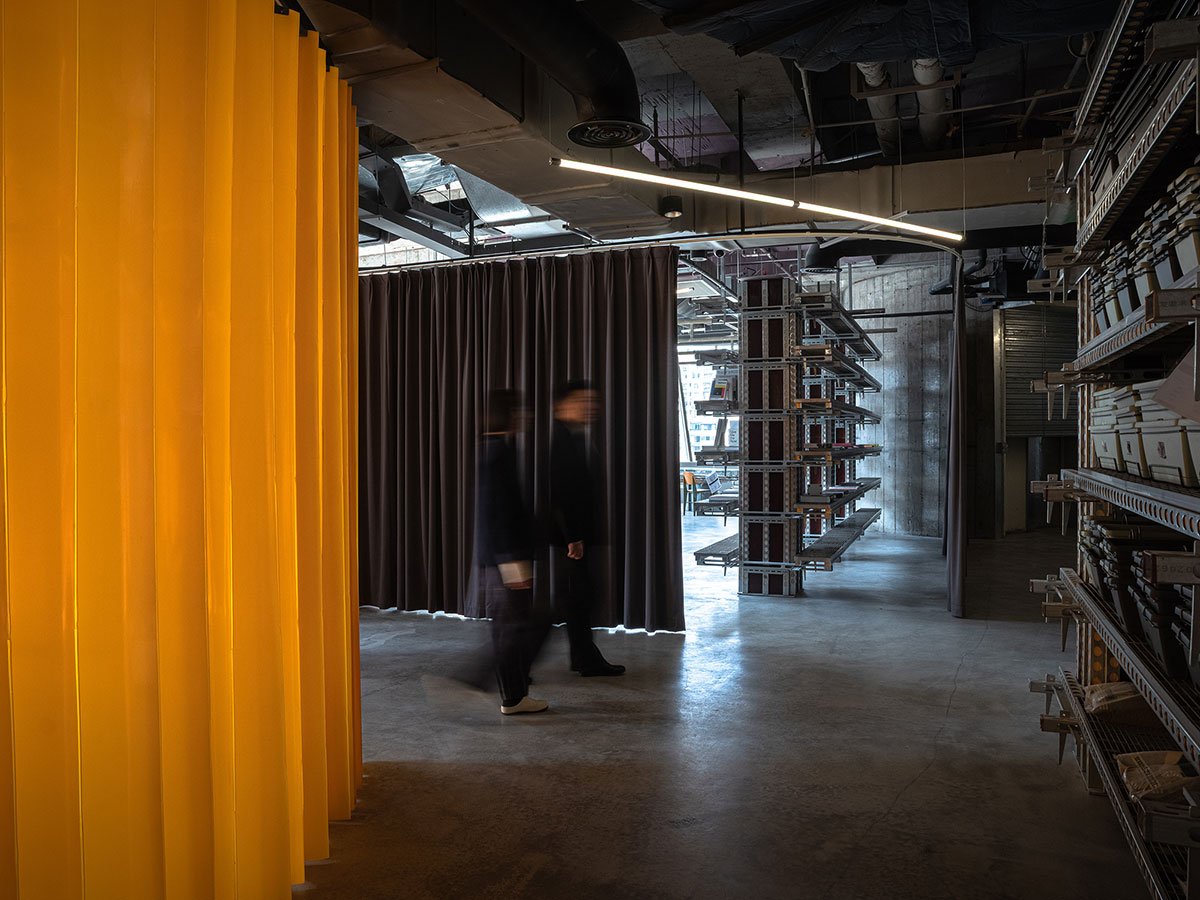
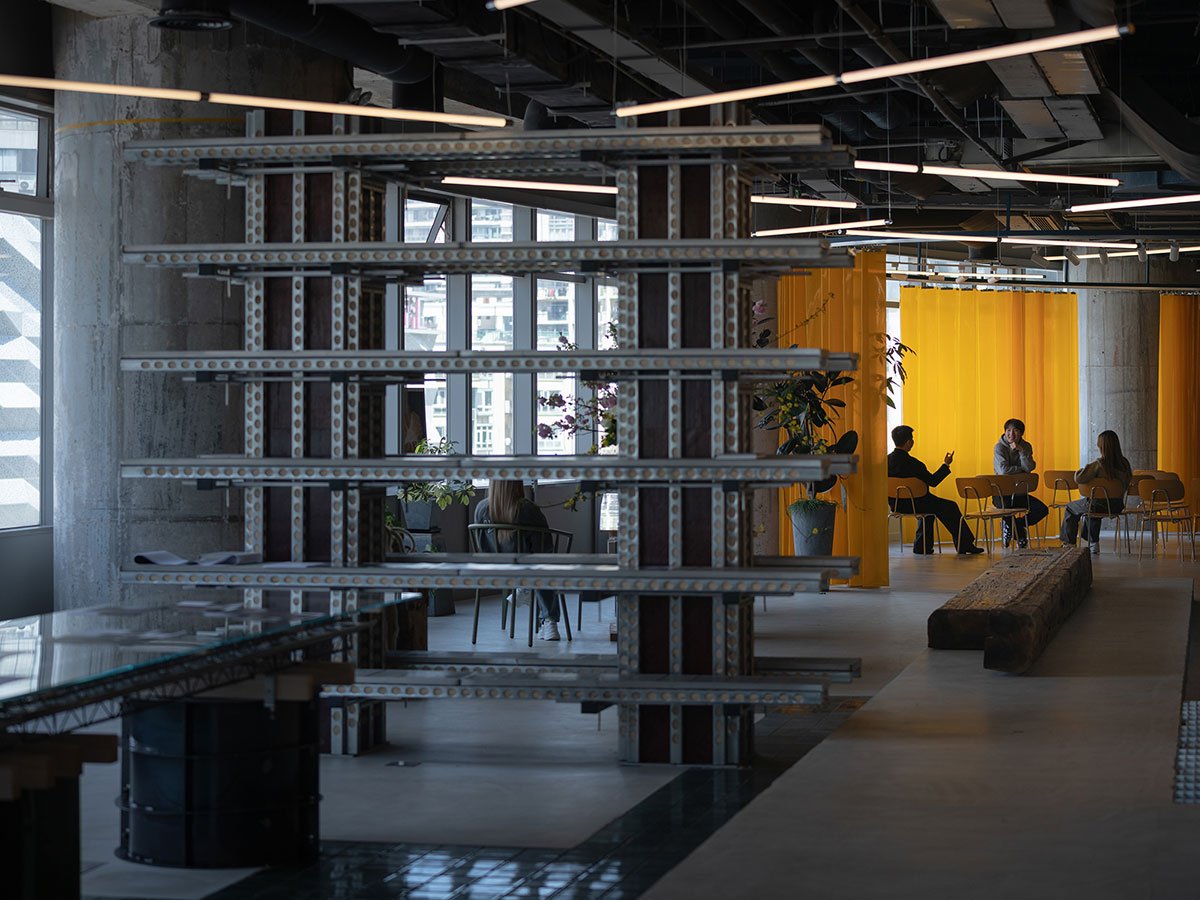
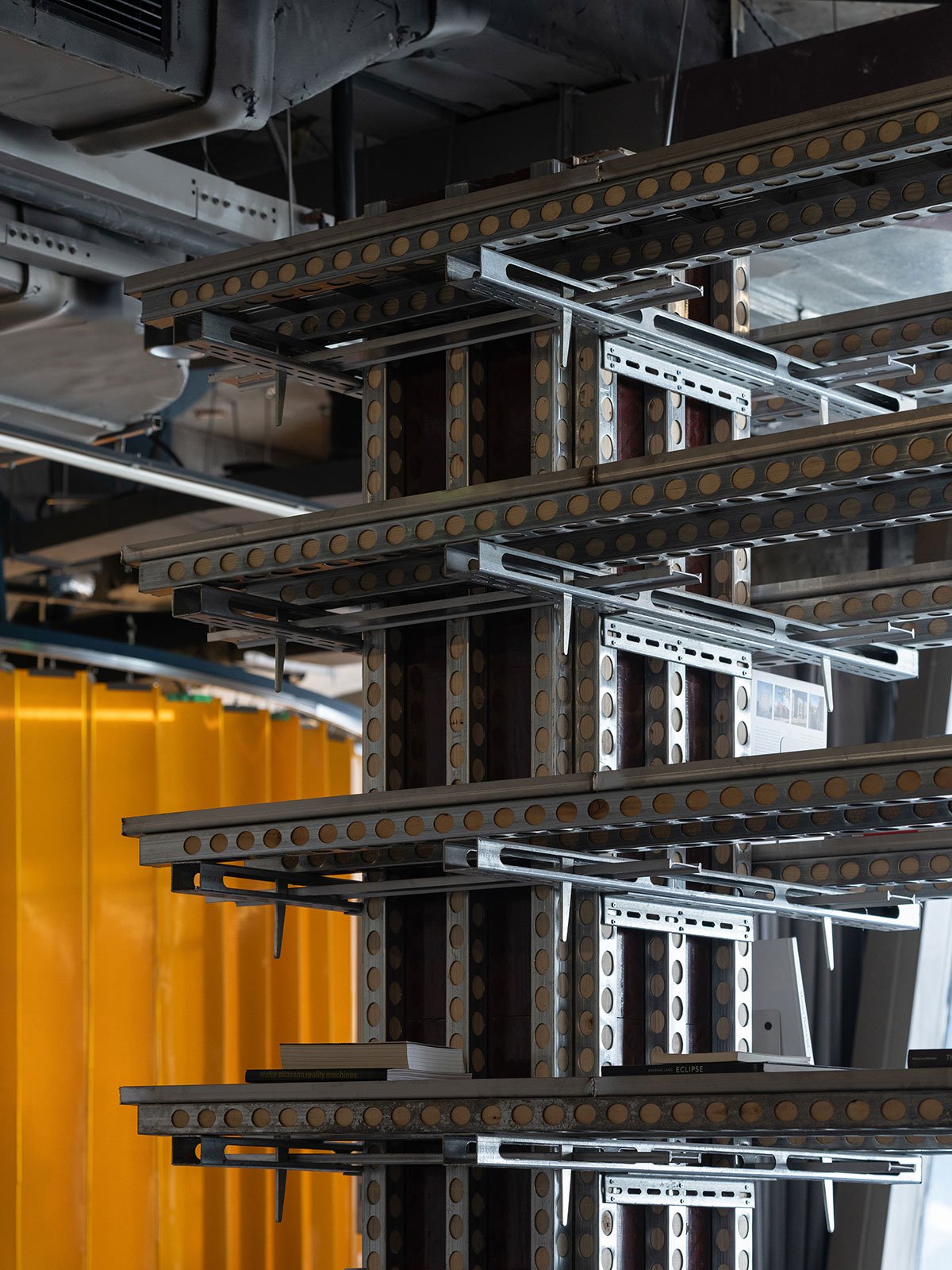
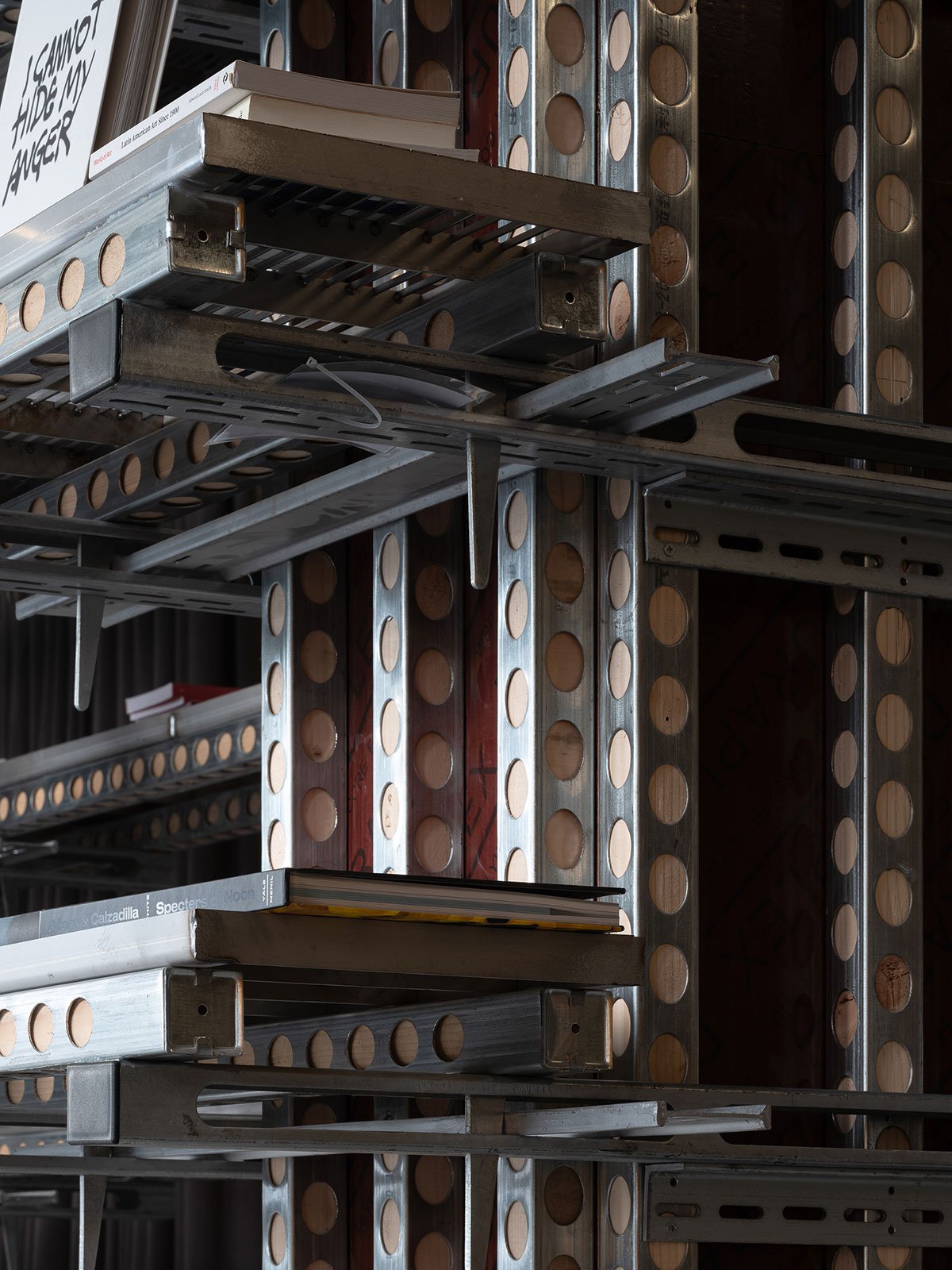
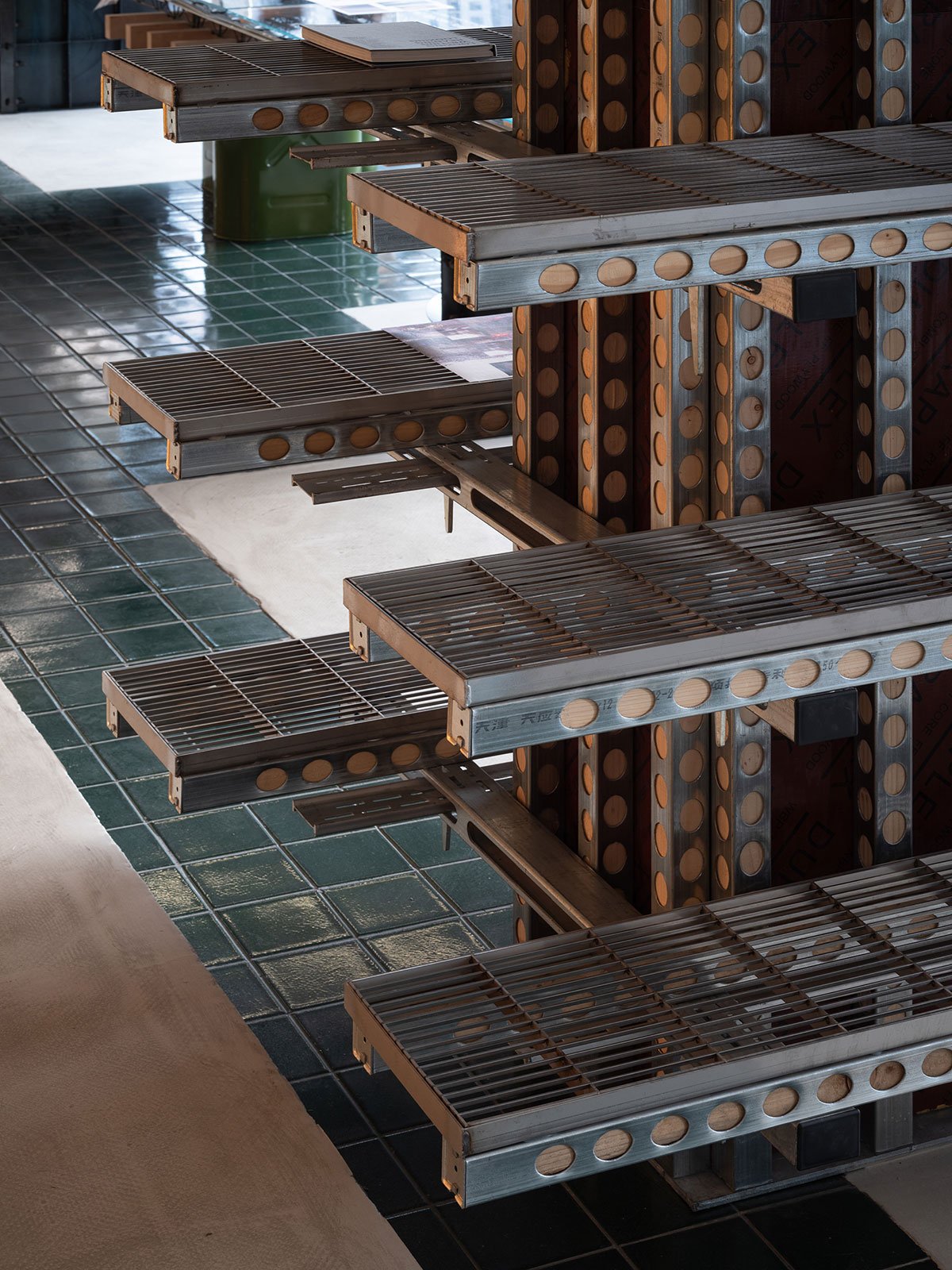
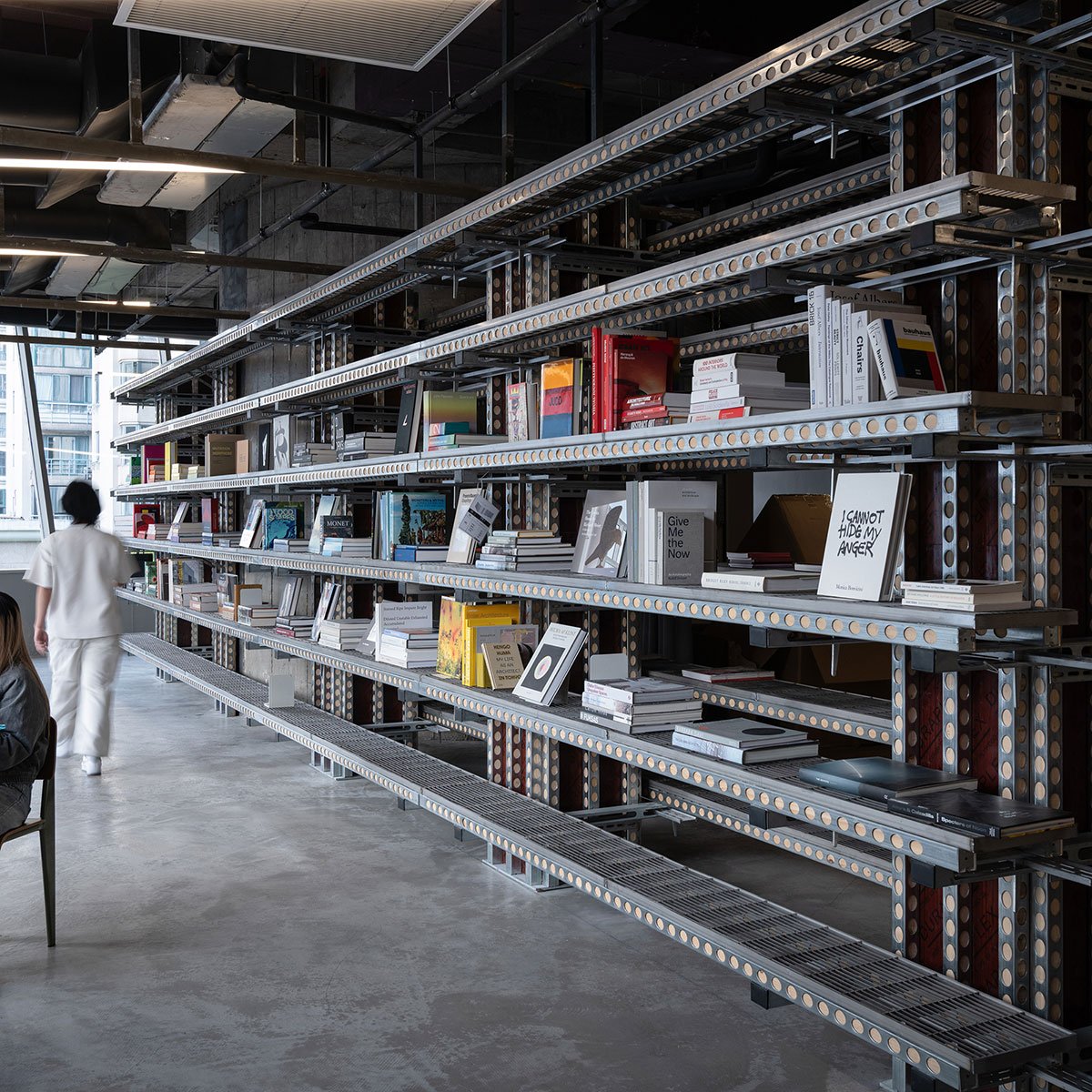
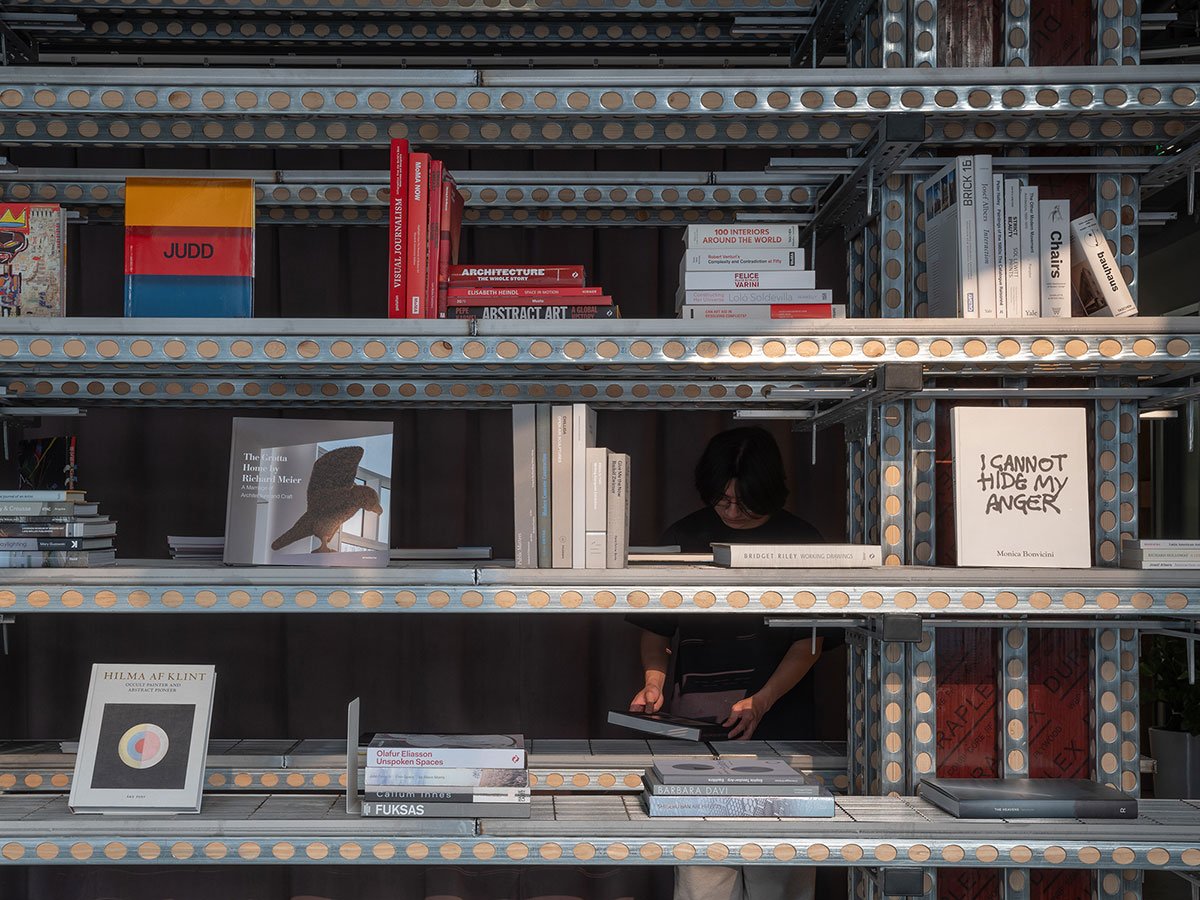
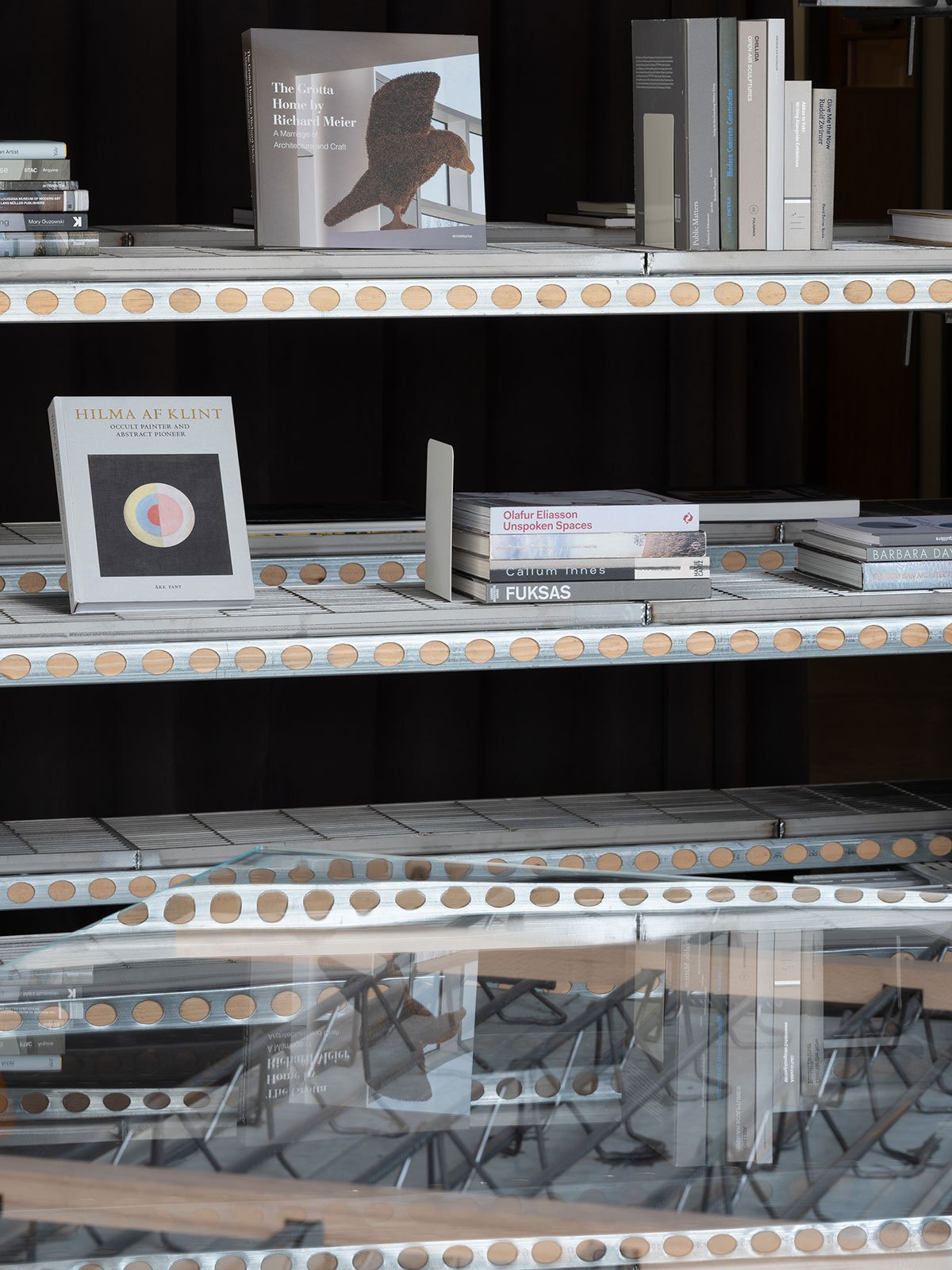
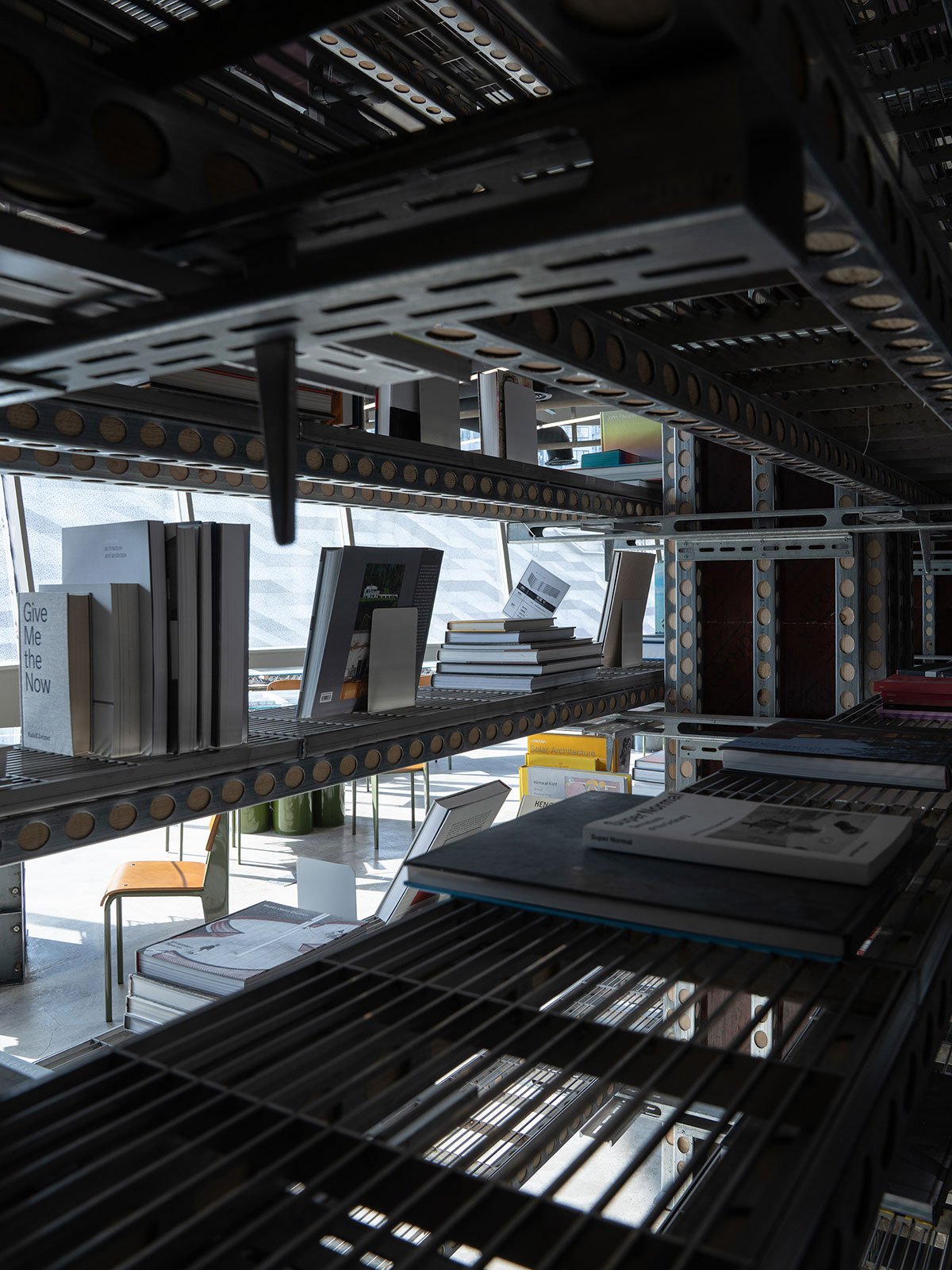
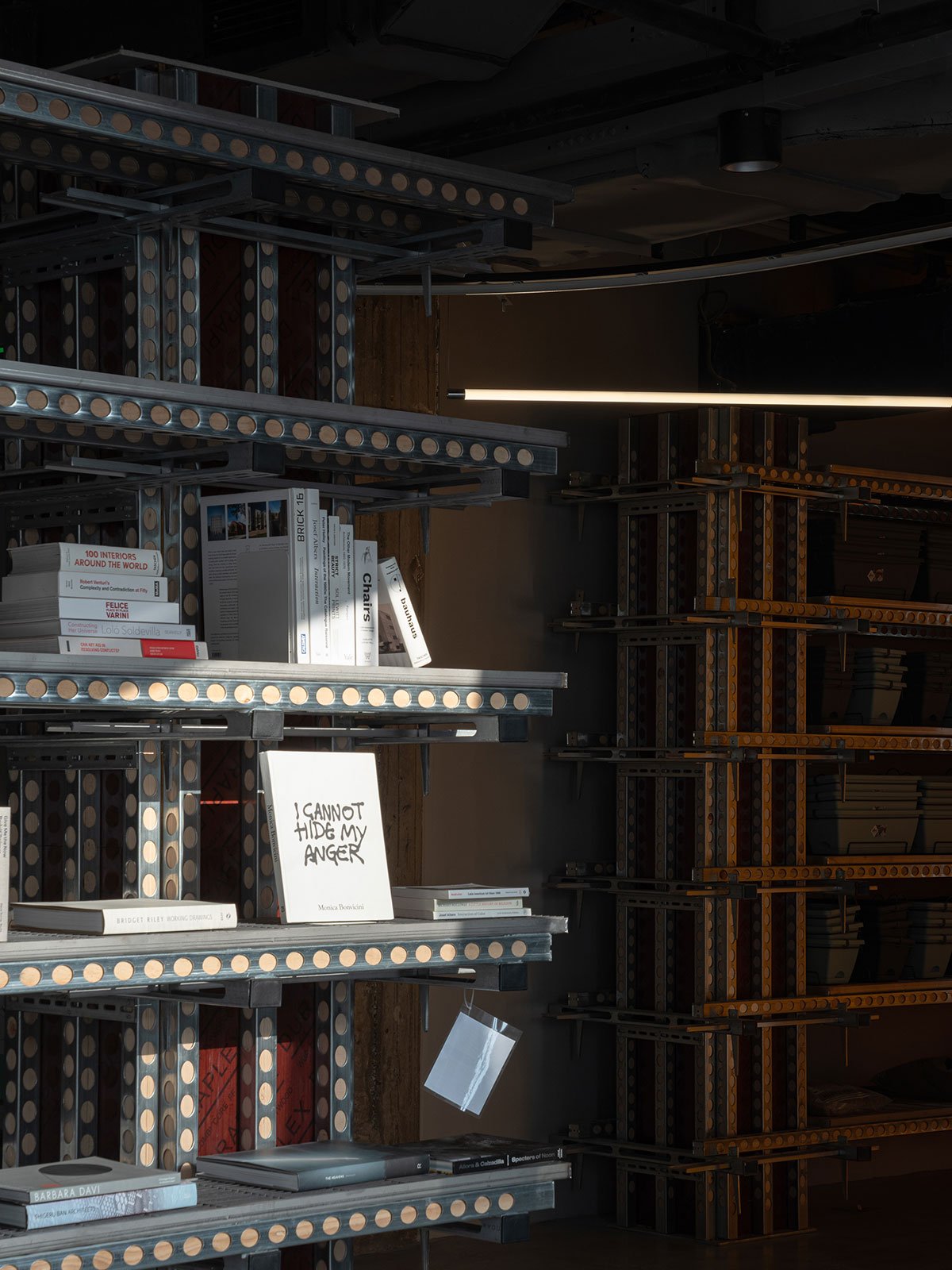
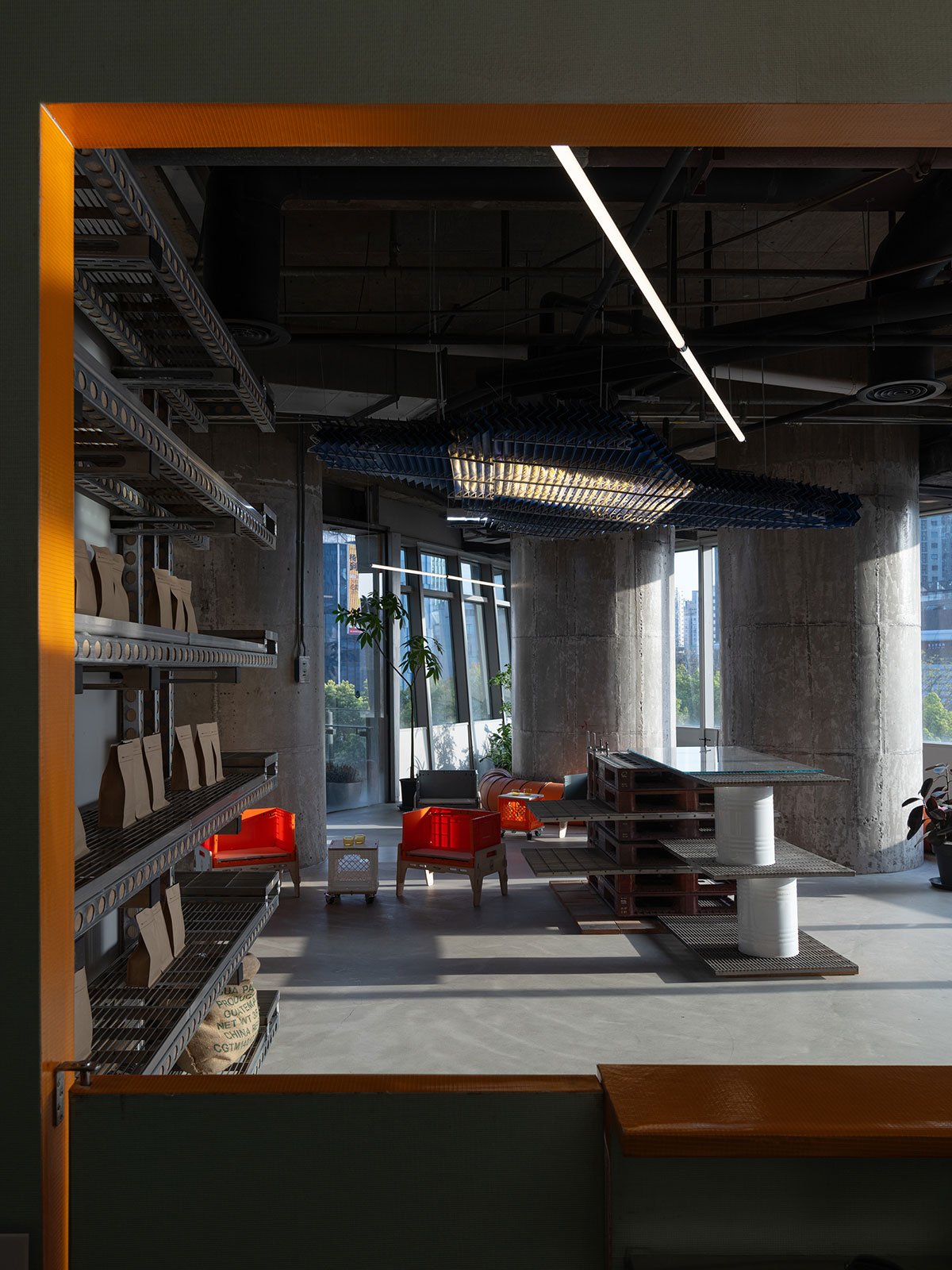
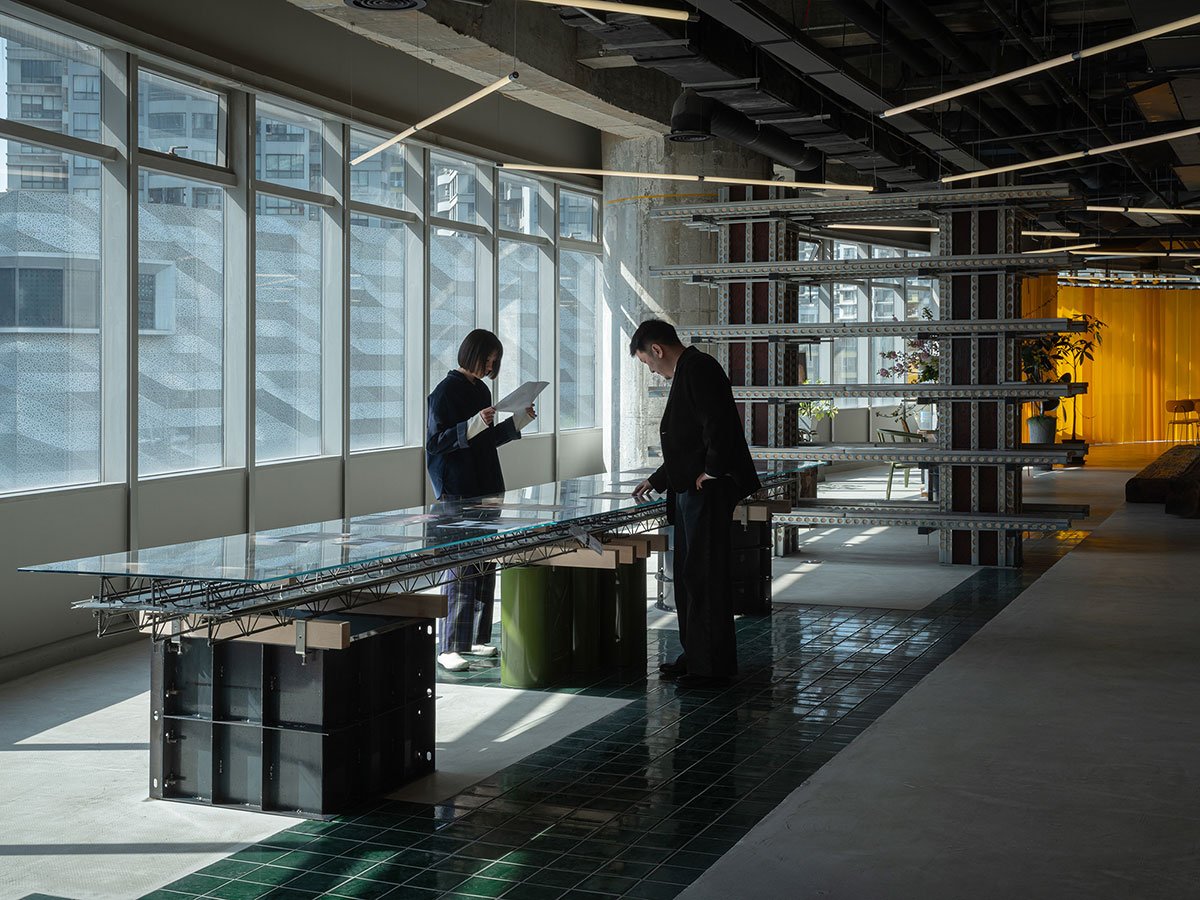
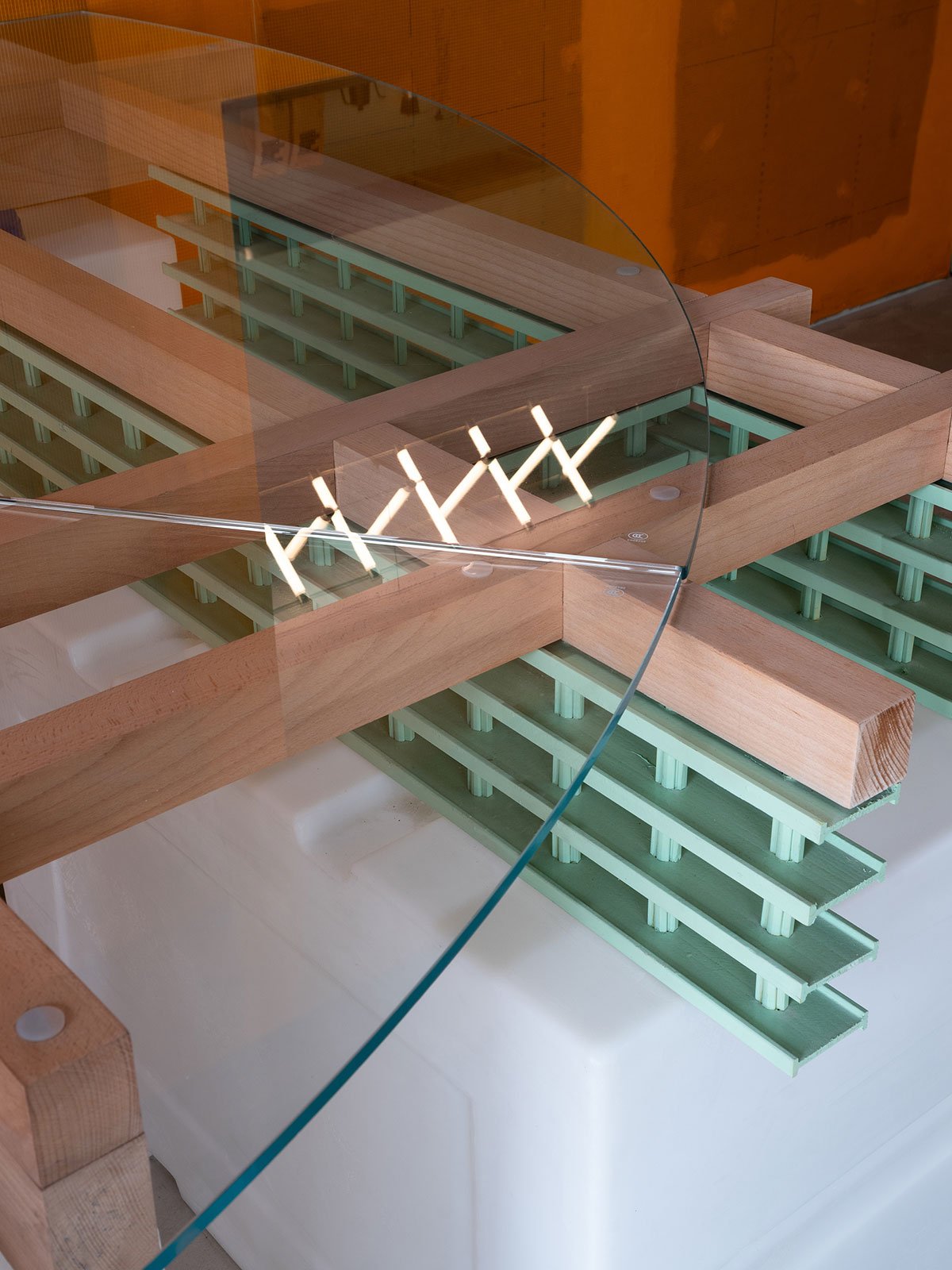
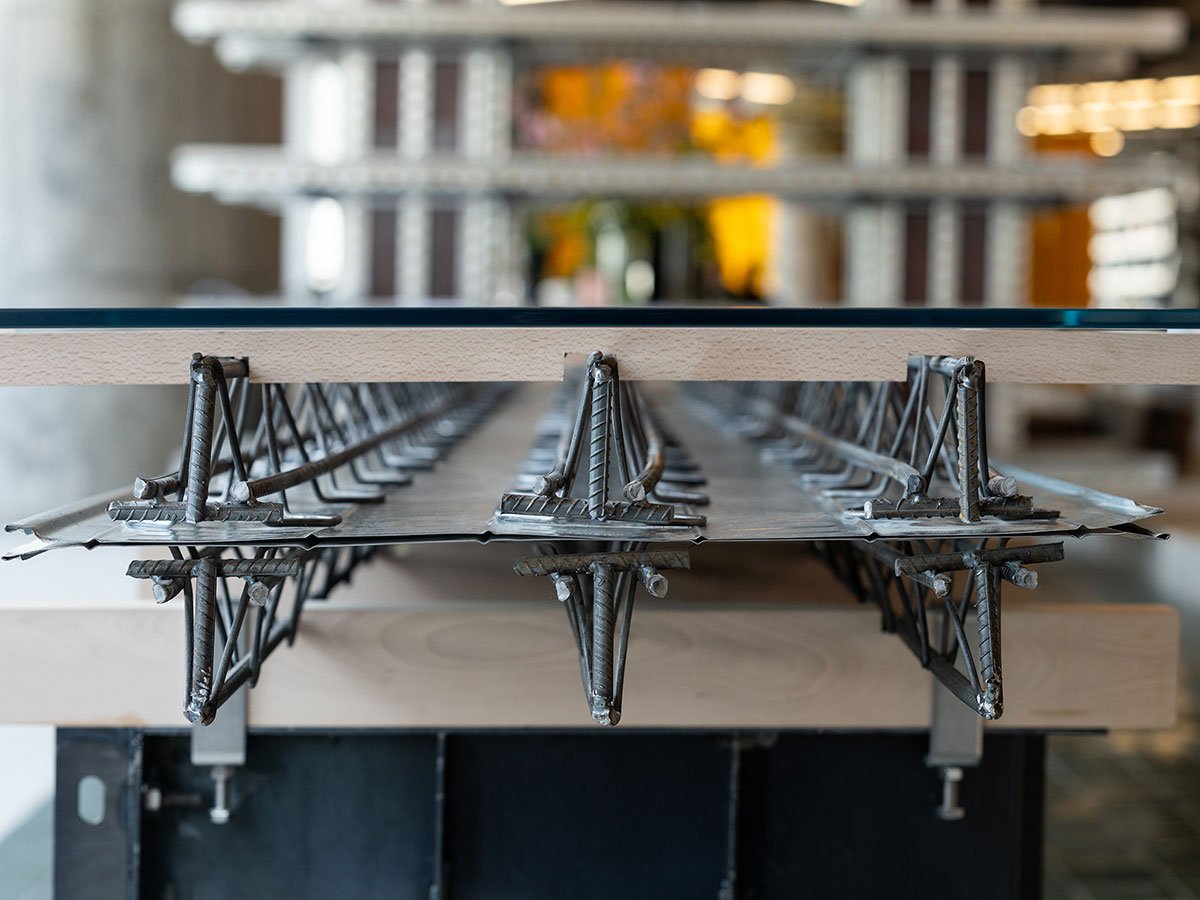
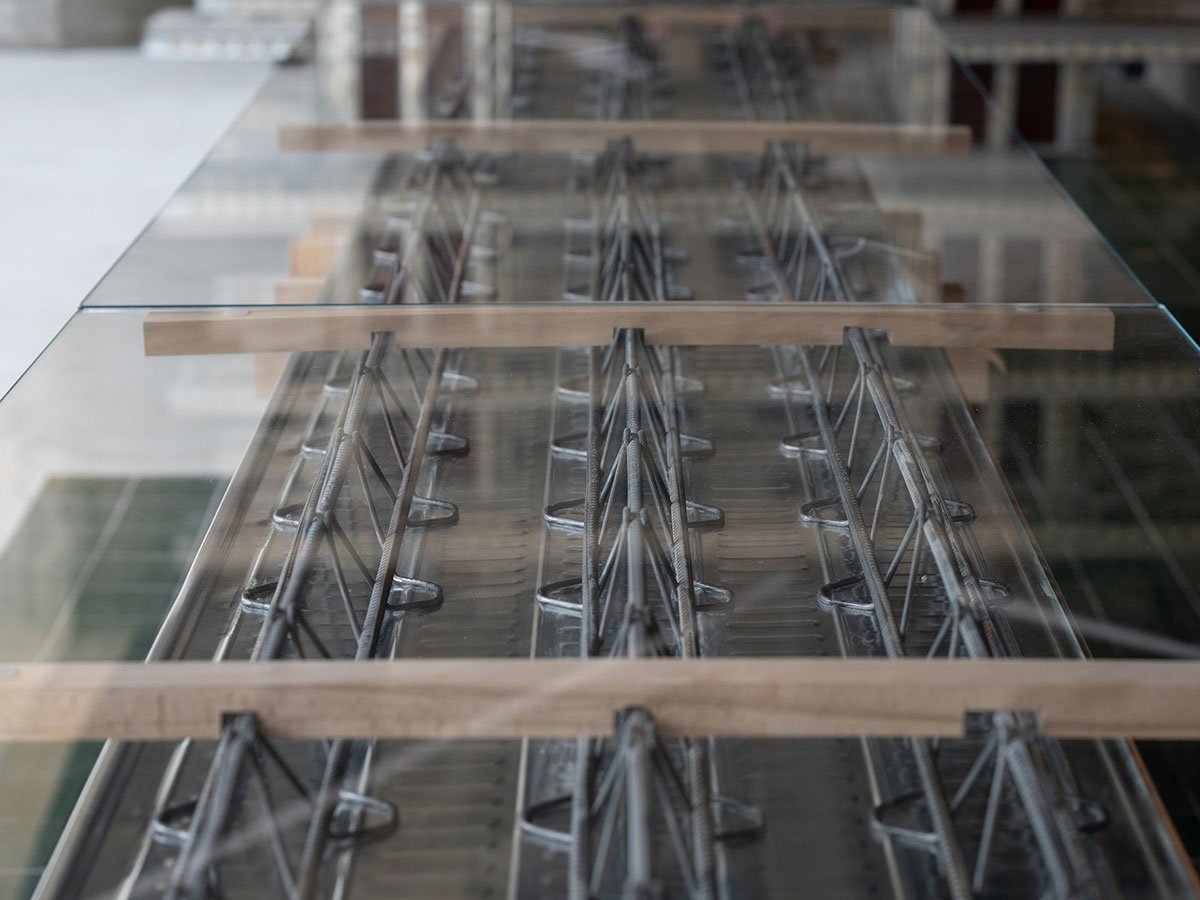
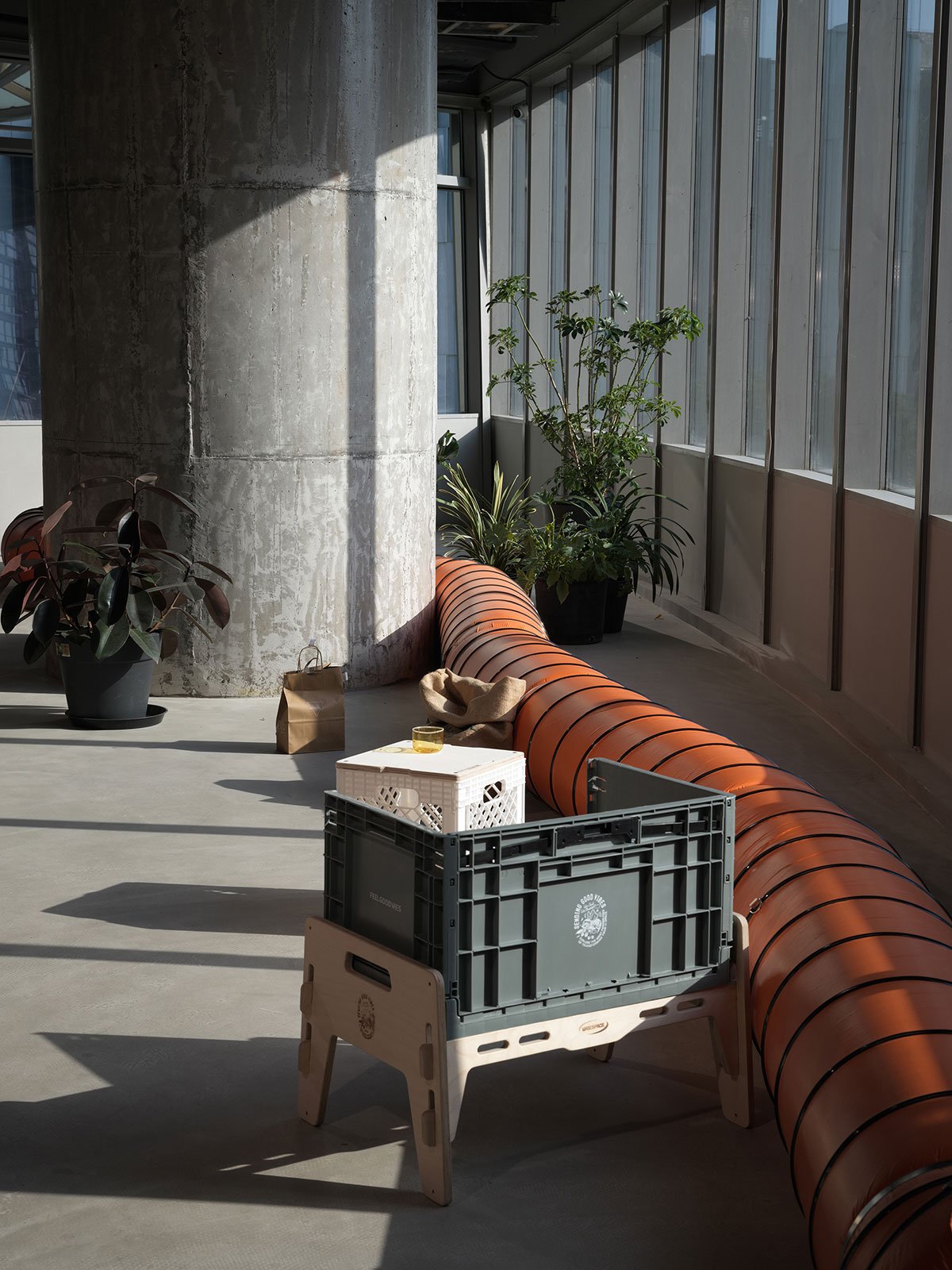
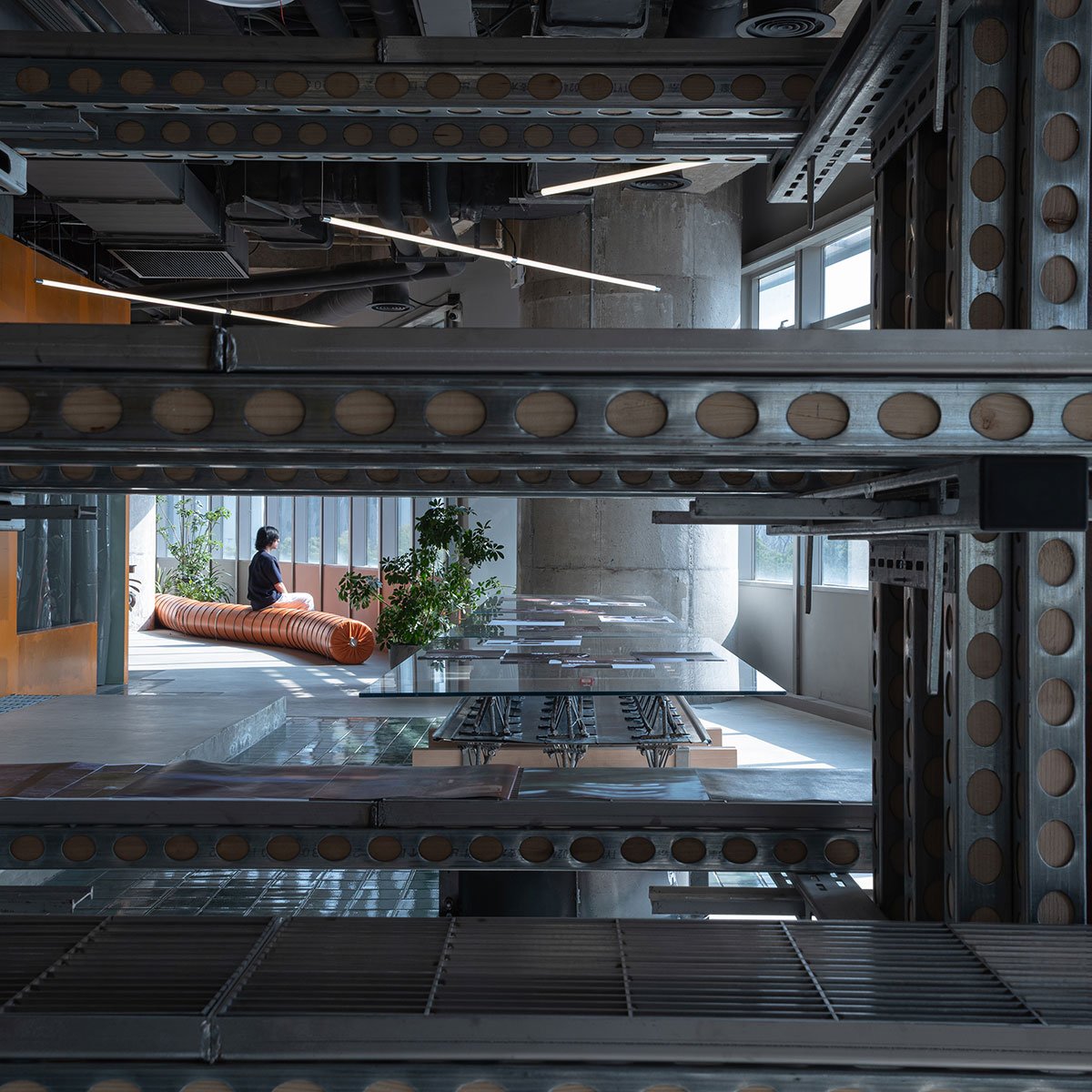
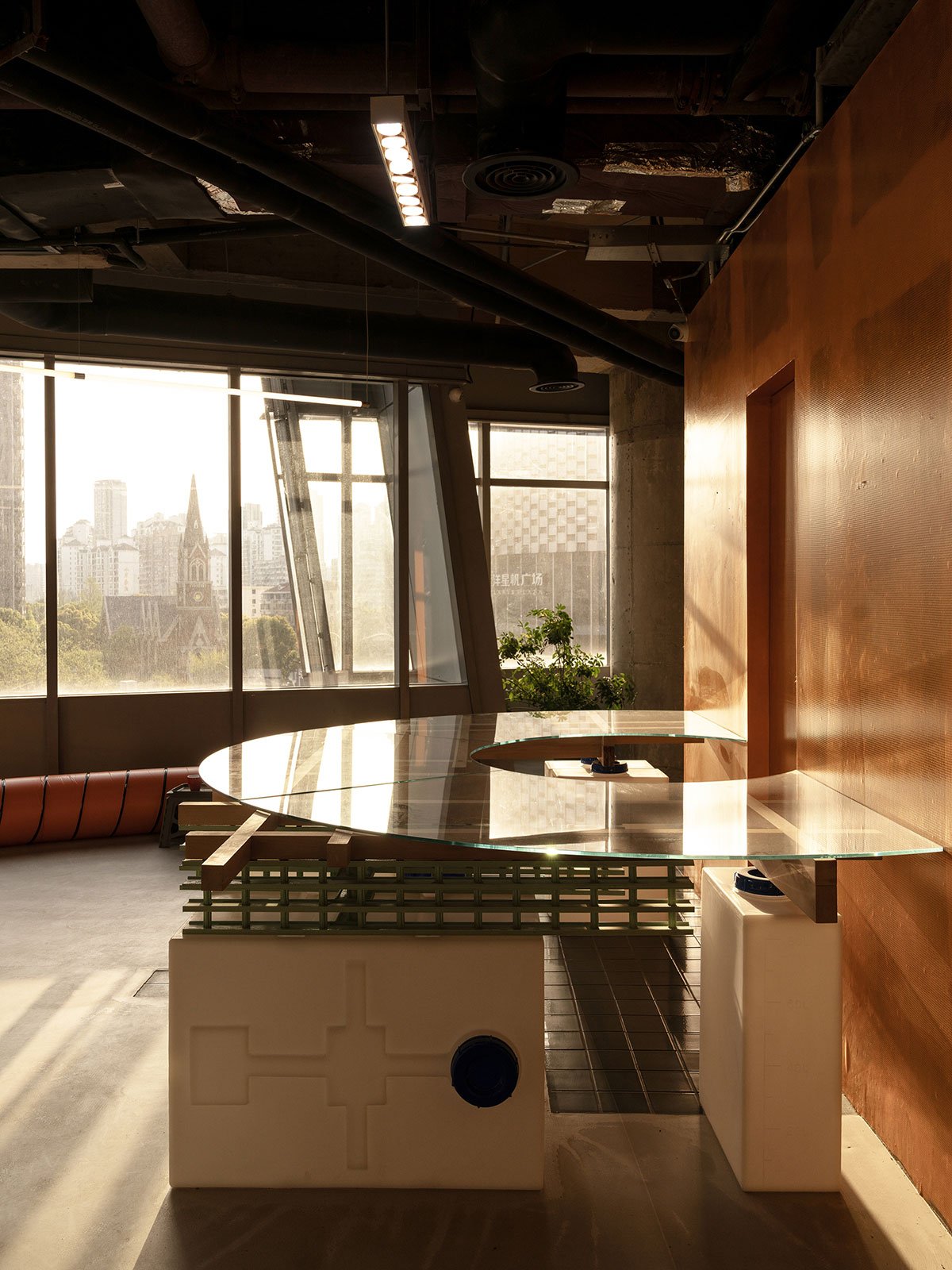
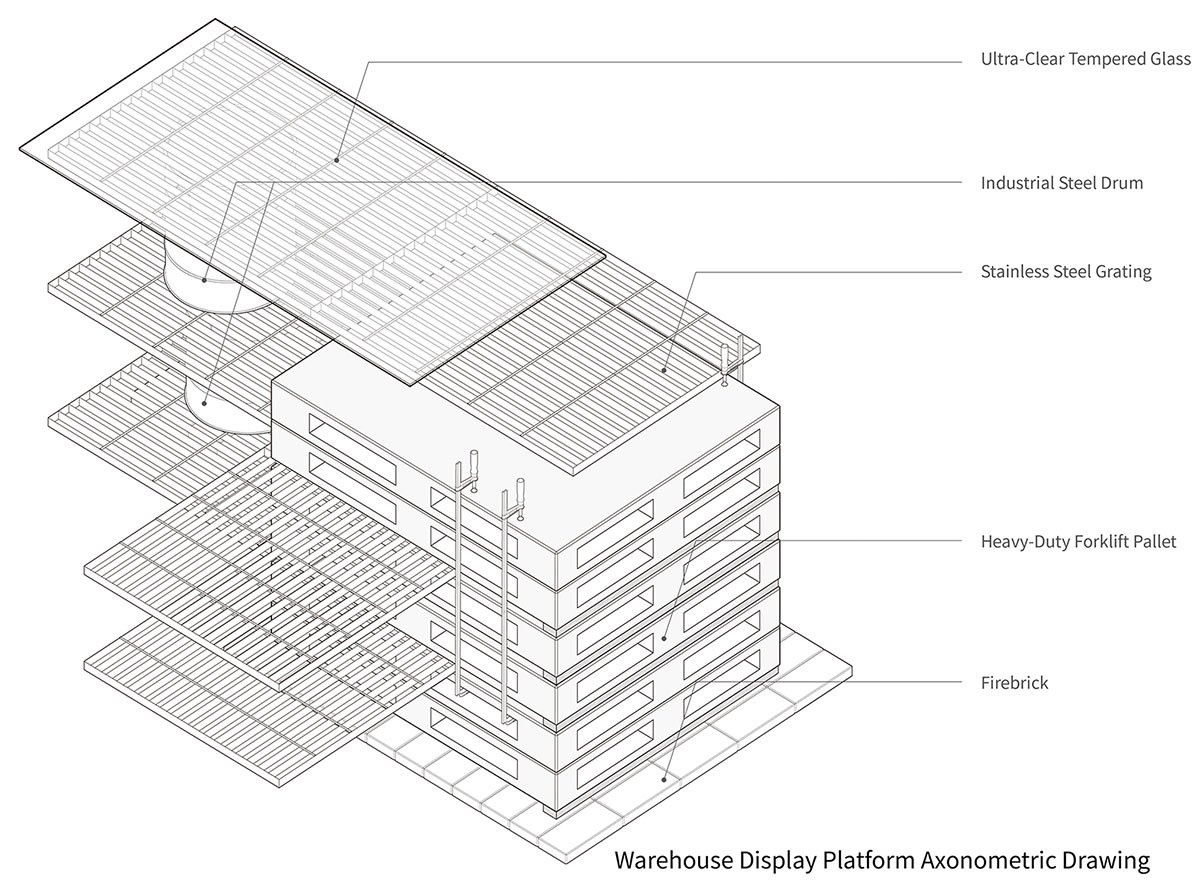
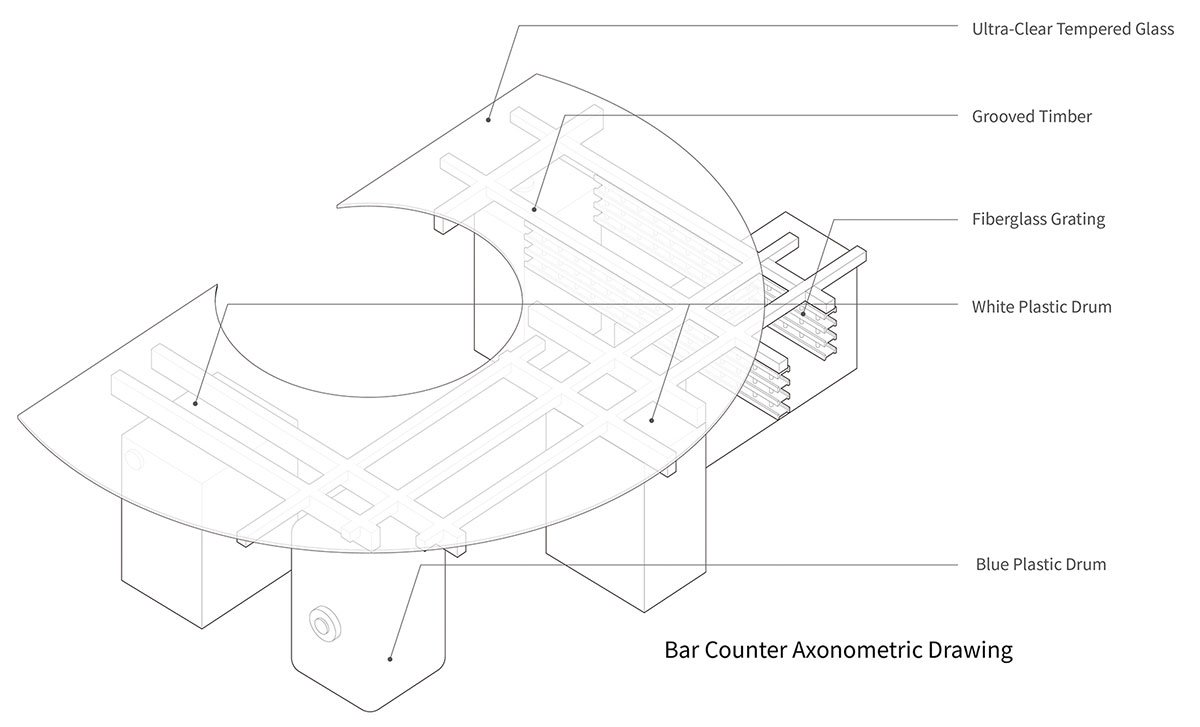
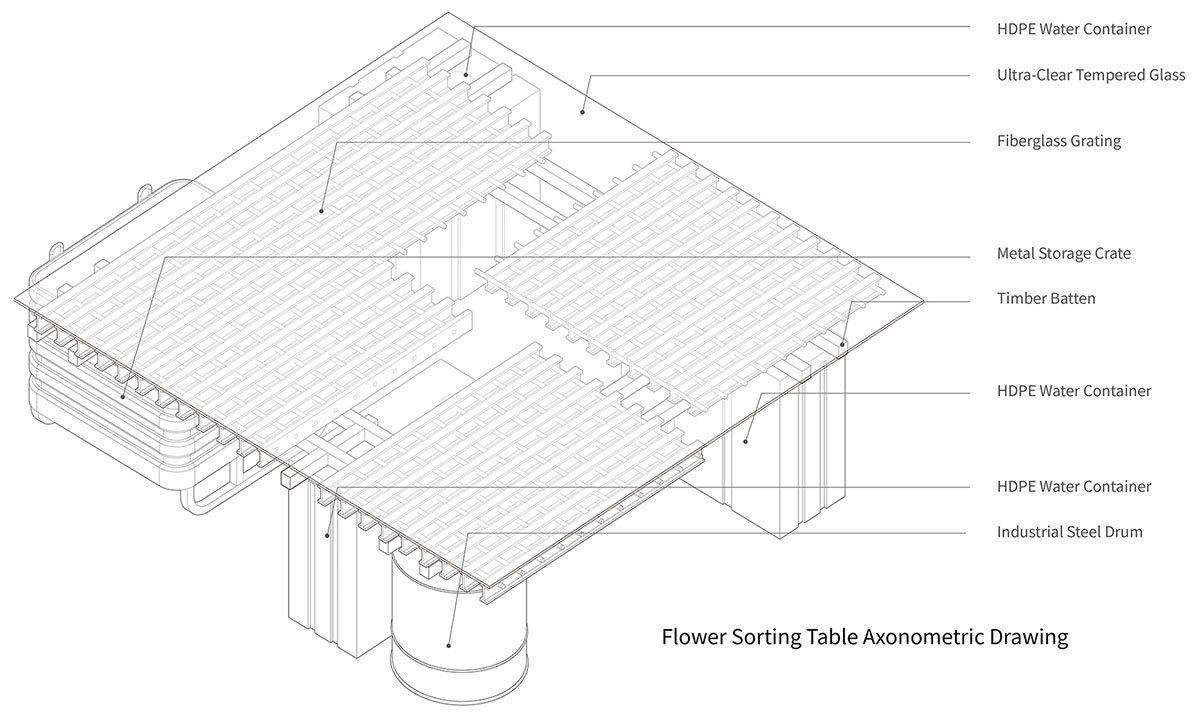
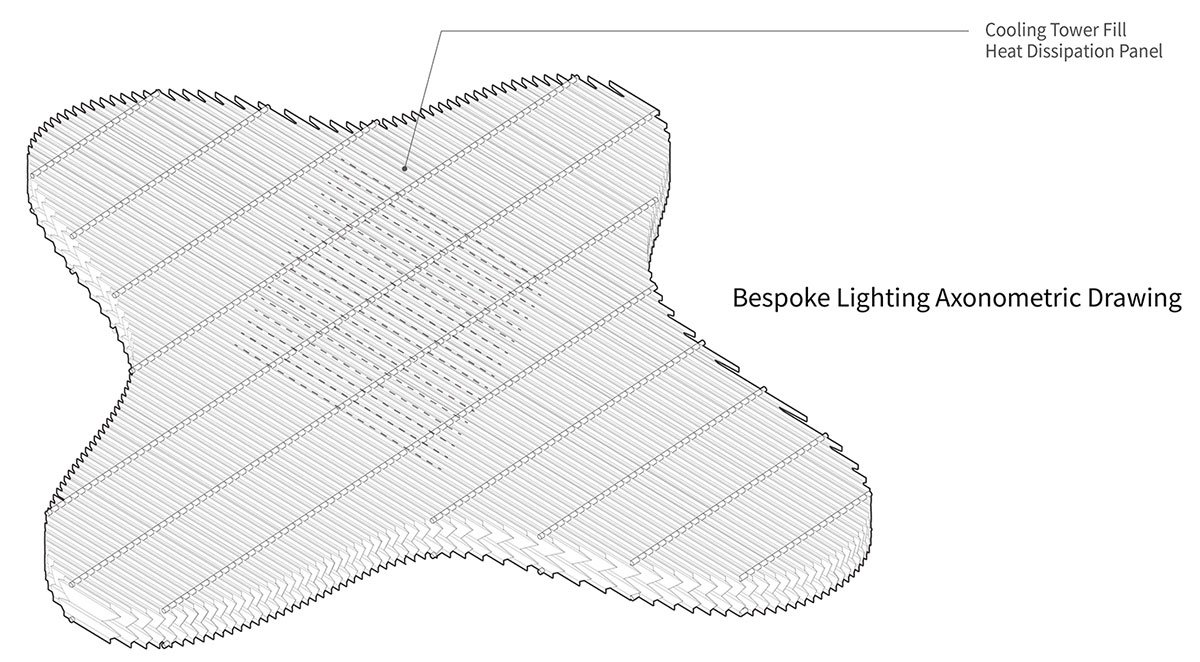
The spatial design transforms construction tools into architectural elements: long tables crafted from factory made floor bearing plates, GMT pallets made from rapid concrete formwork systems. Modern logistics is an essential support for daily consumption. The Materials for logistics are converted to interior fittings: liquid containers and mineral transport baskets repurposed as furniture bases. Factory ventilation grilles become pendant lights, truck tarps transform into space-dividing curtains, and fireproof plastic membranes coat walls in regulatory orange – not as aesthetic choice but as documentary evidence of material realities. This chromatic strategy reveals how technical requirements unconsciously shape our visual environment.
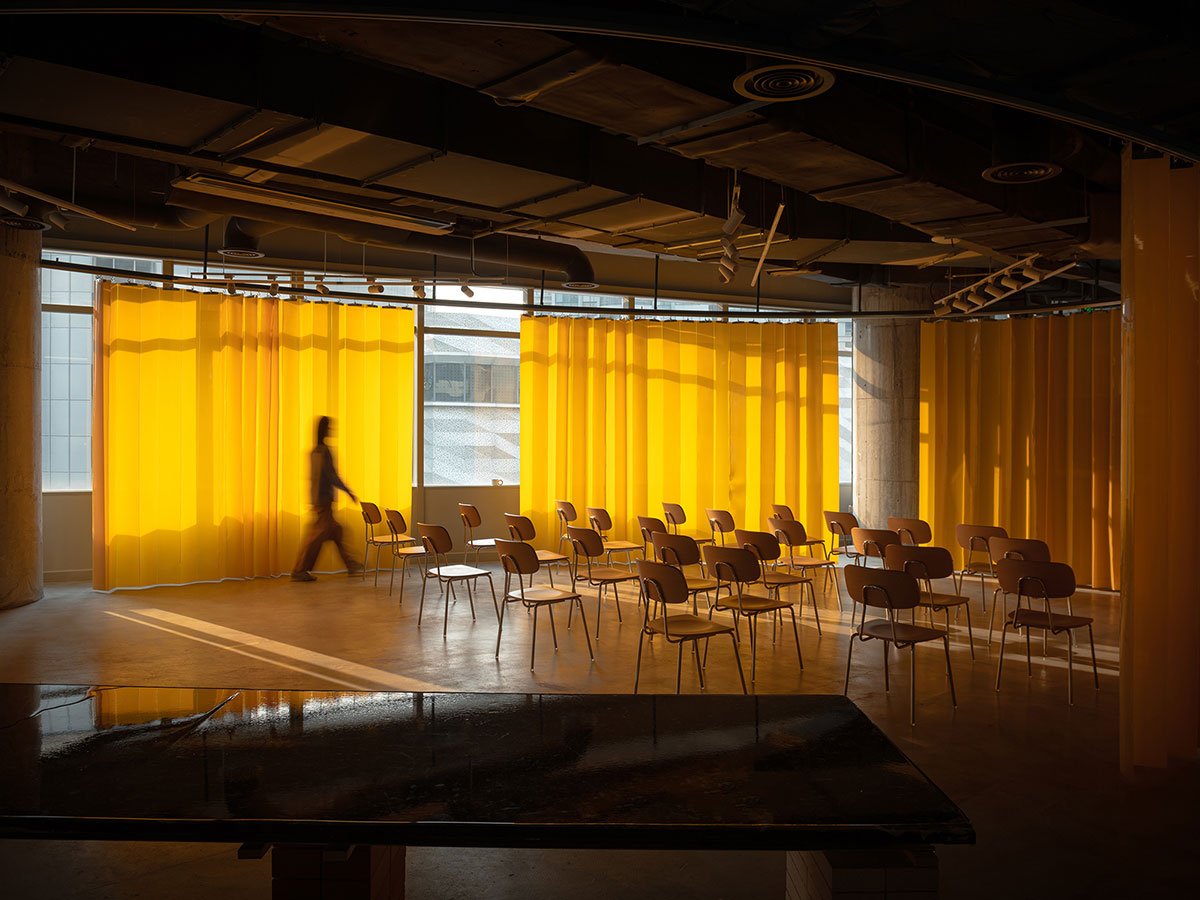
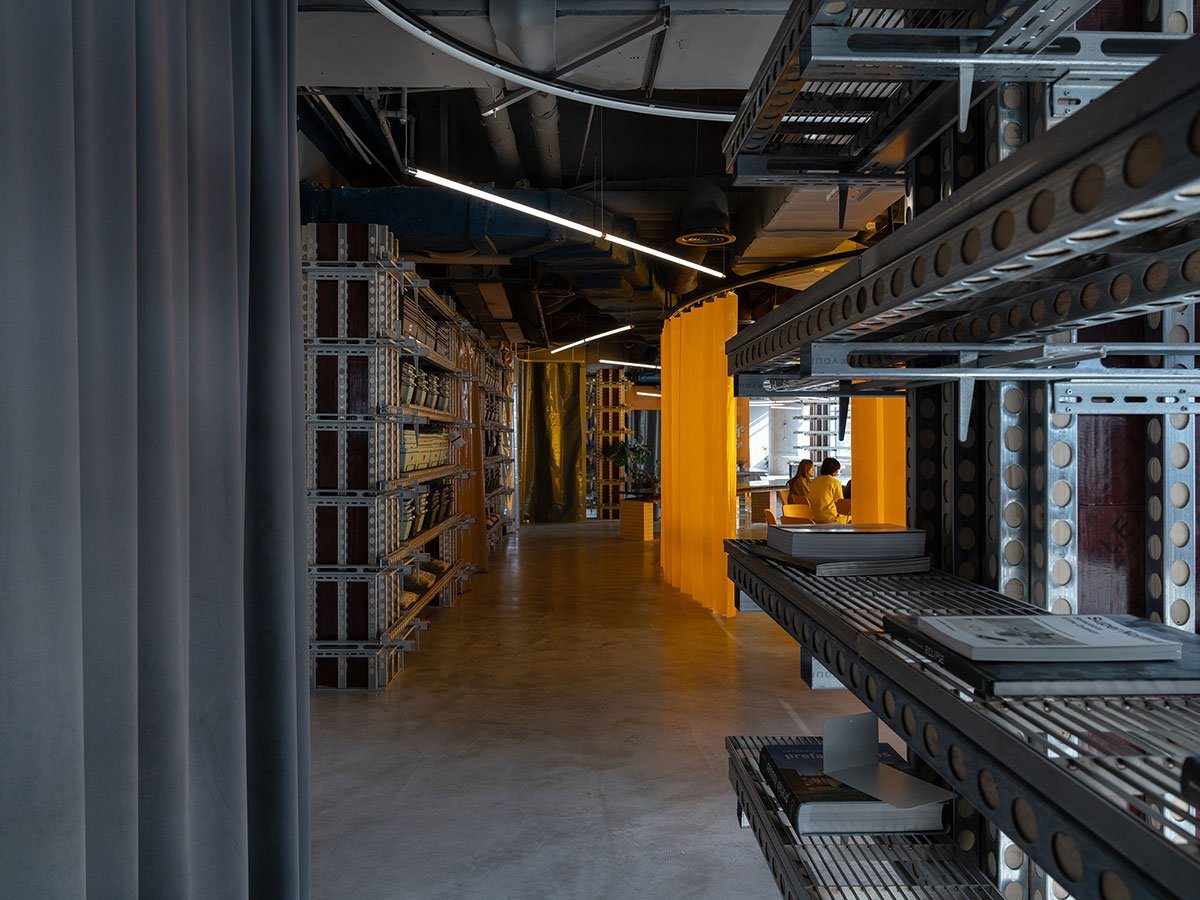
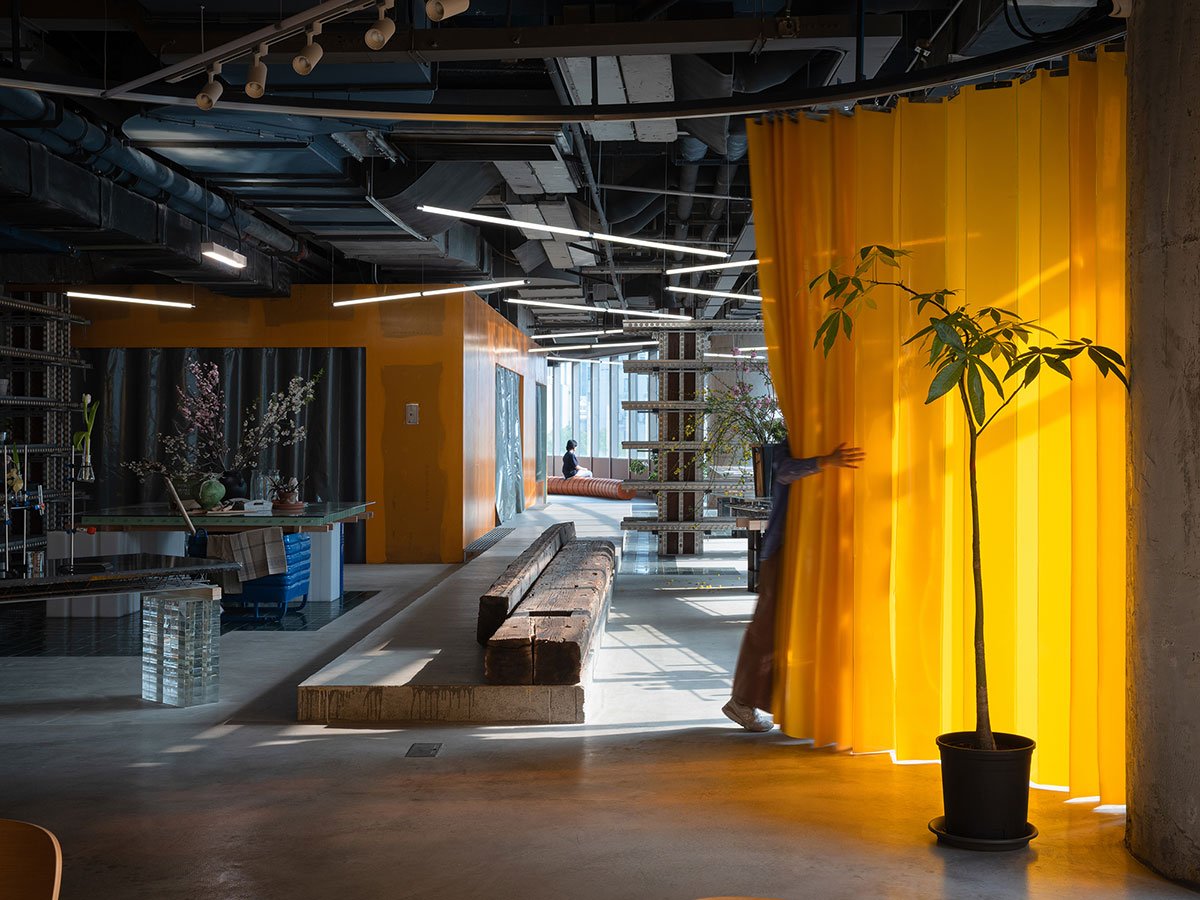
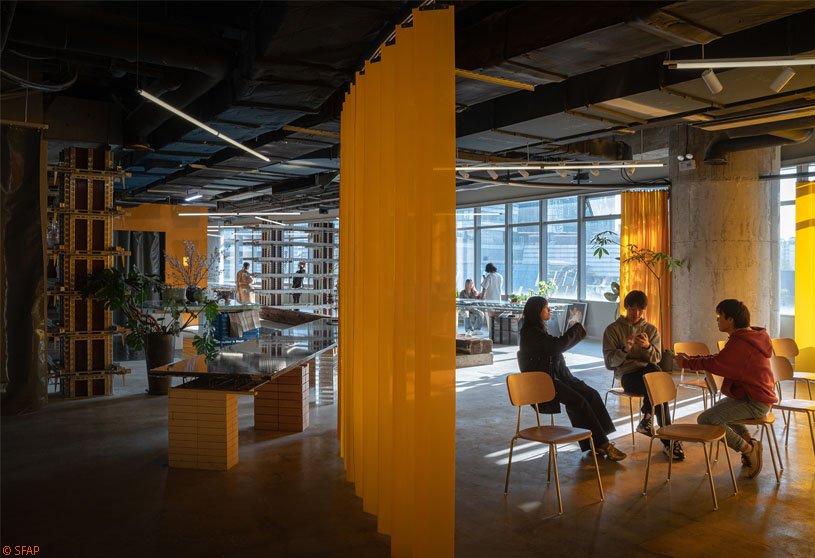
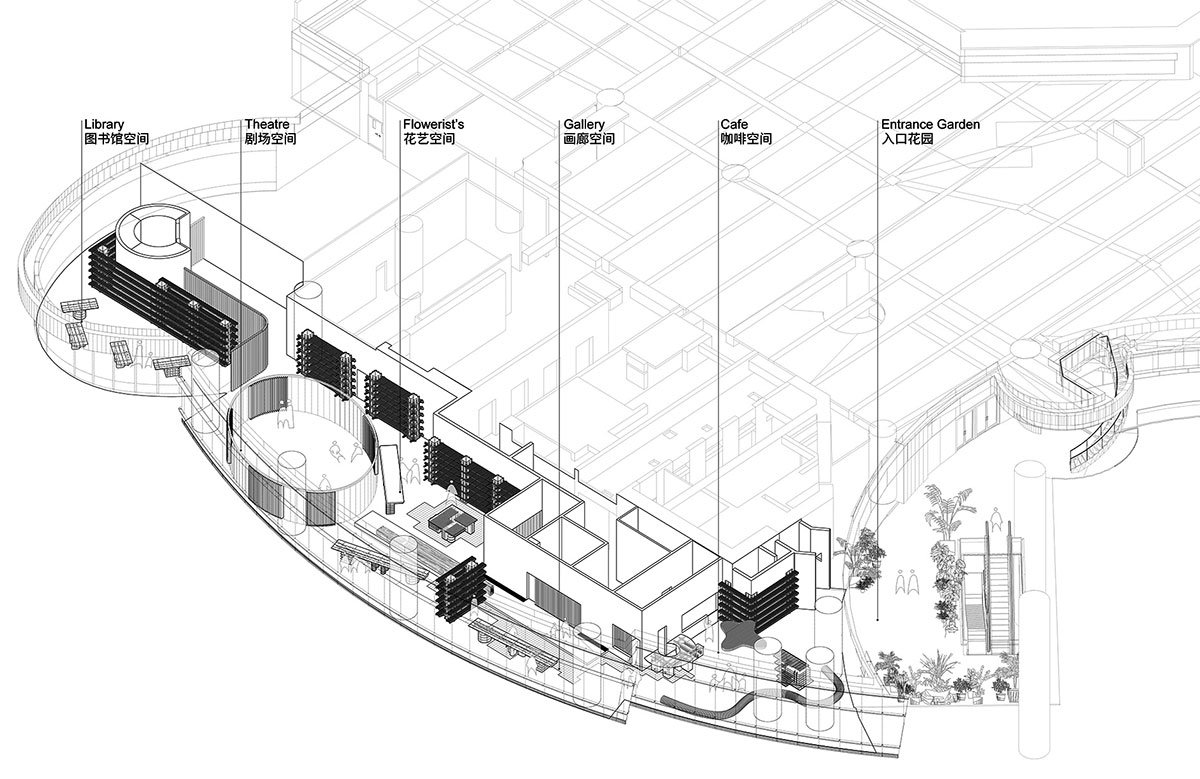
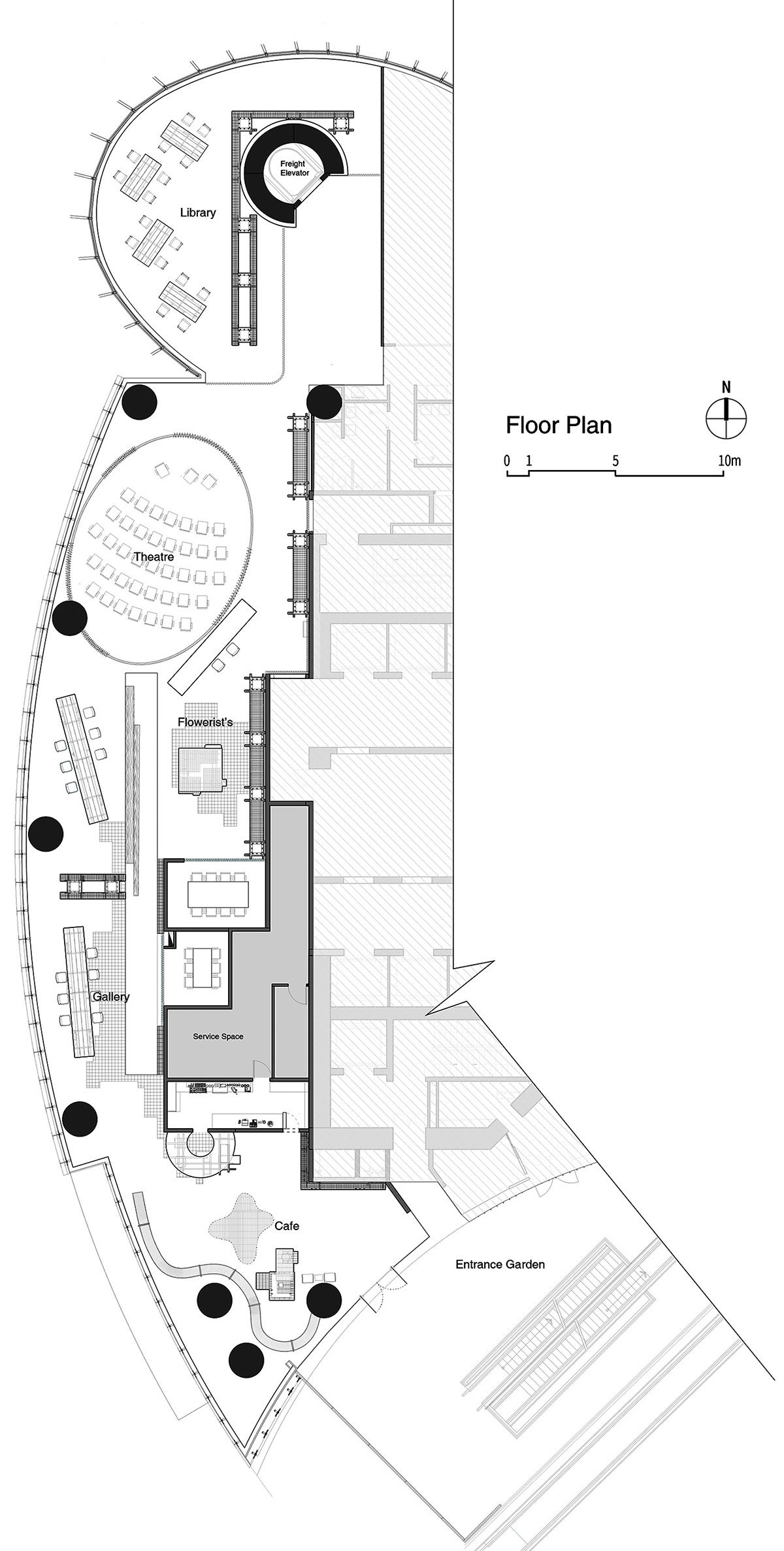
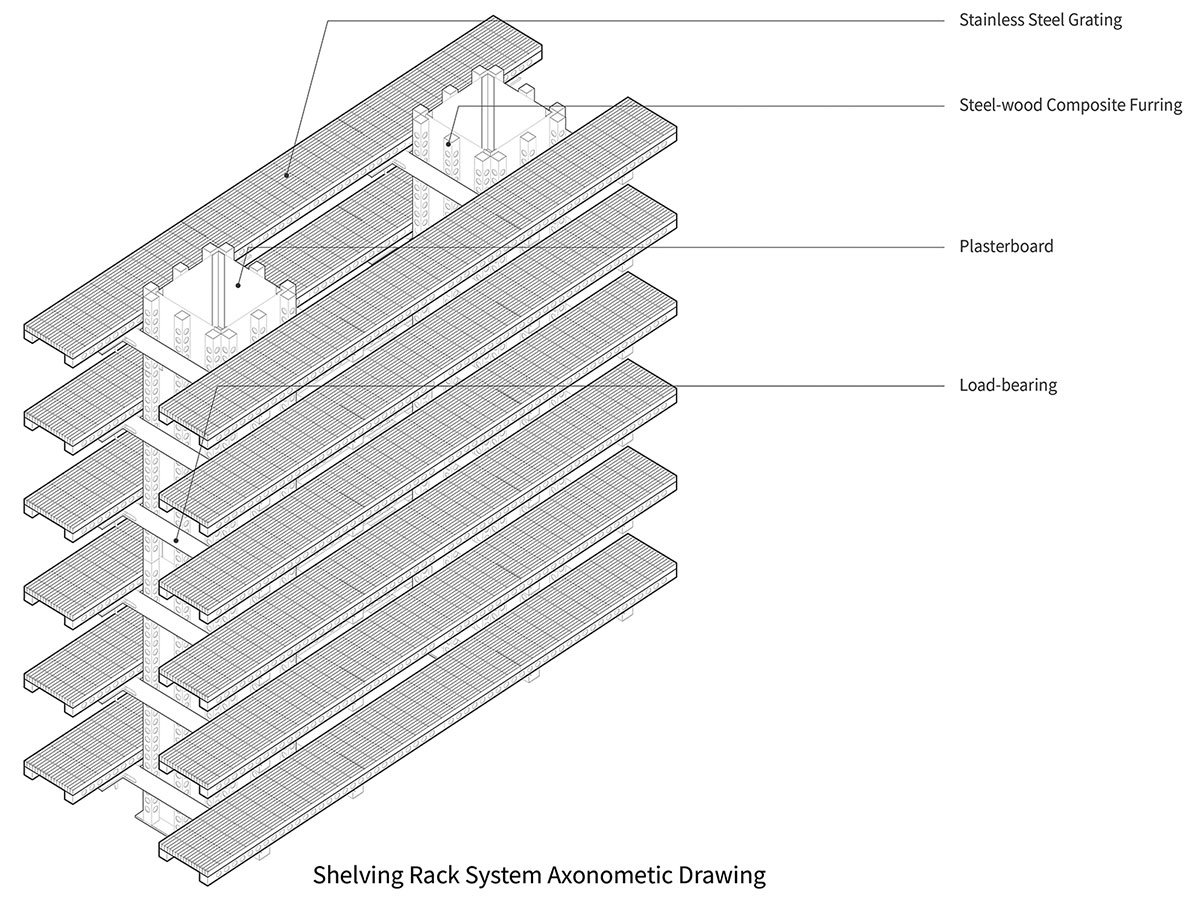
Envisioned as a hybrid cultural space combining library, lifestyle showcase, and art platform, 889GLO’s design preserves the building’s historical layers while creating fluid new connections. The removal of previous tenants’ partitions opened panoramic city views along the southern and western facades, while the slightly elevated corridor linking former small rooms was intentionally preserved. The ceiling maintains its archaeological record of different occupants through residual paint layers on exposed concrete. The spatial sequence unfolds as a continuous narrative: from the cafe merging with plant-filled terraces, through gallery areas flanked by orange fireproof membranes, past floral workspaces with repurposed gardening tables, to the yellow-curtained lecture arena, finally arriving at the monumental library space defined by towering bookshelves. Throughout, boundaries dissolve in favor of spatial permeability.
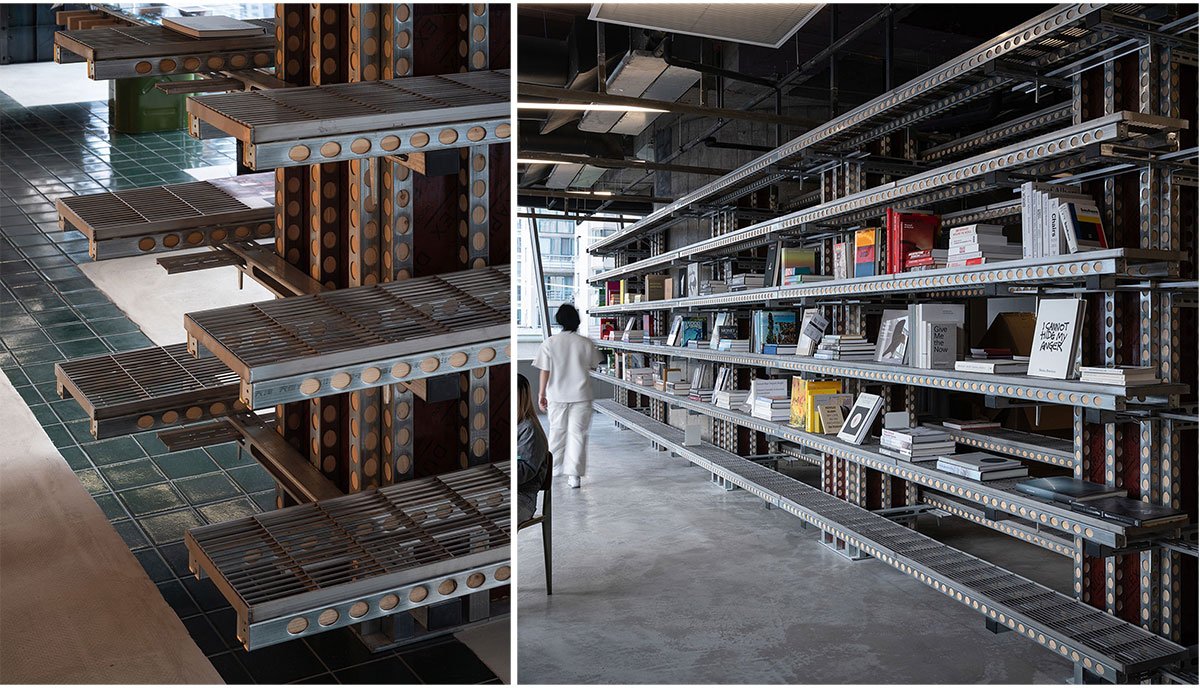
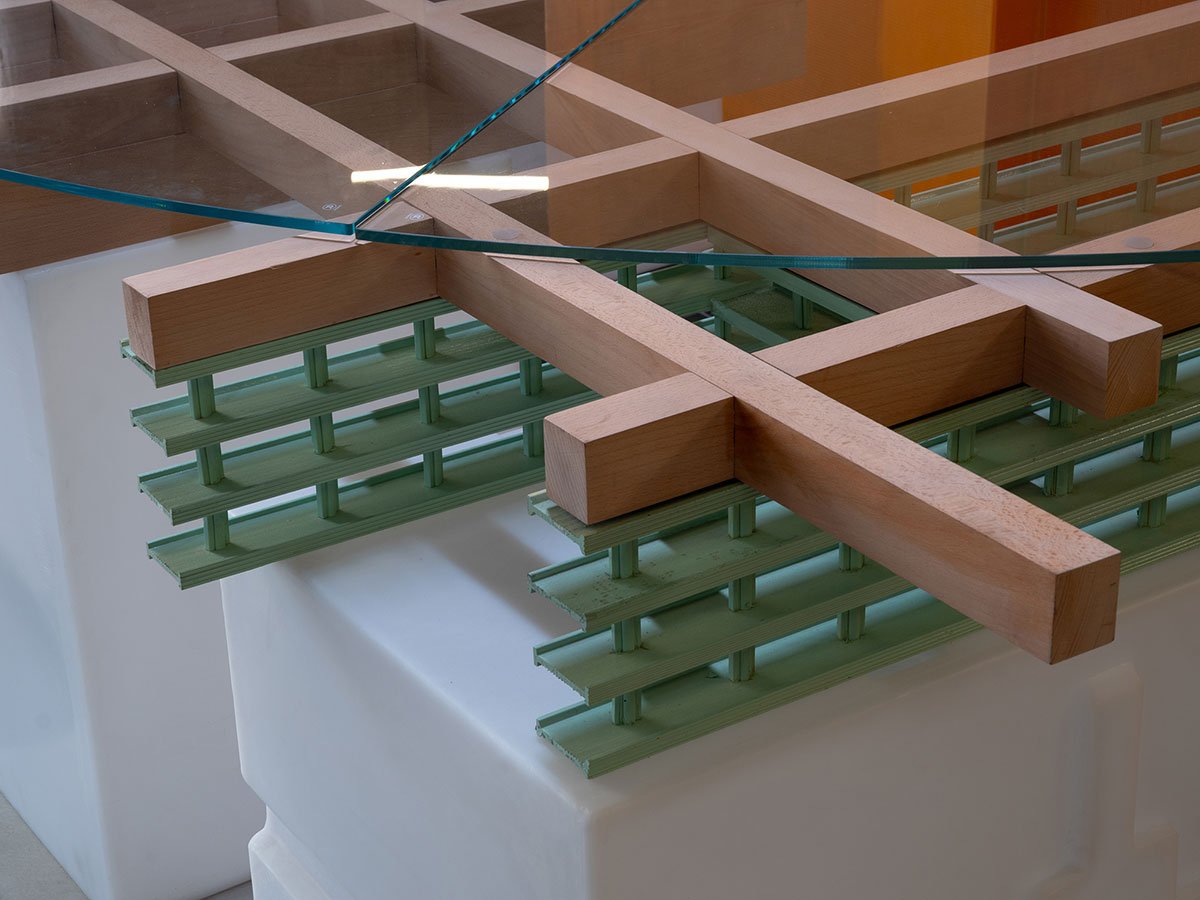
889GLO continues SpActrum’s exploration of form-making methodologies, establishing what they term “hyperlinks” between social issues and practical scenarios through material transformations. This approach inverts conventional design processes: beginning with value-based material selection, progressing through physical and aesthetic reinterpretation, and culminating in new formal configurations that maintain multiple interpretive possibilities. The architects describe this as creating “a deliberate ambiguity between materials and their use contexts” – a strategy that challenges standardized commercial design workflows.
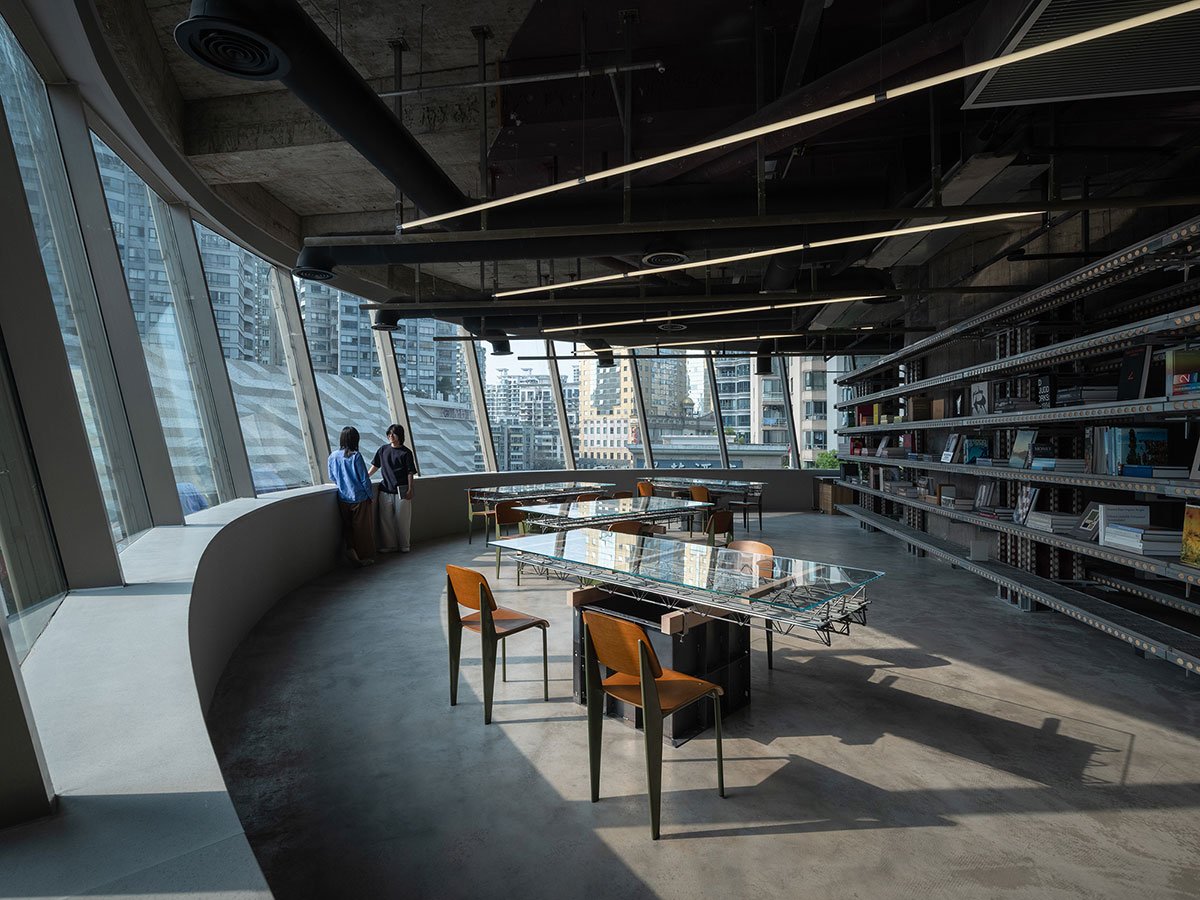
By making visible the hidden landscapes of construction and consumption, the project posits architectural revelation as the first step toward social engagement and change. The intentionally undefined space prioritizes fluidity and transparency, evoking what SpActrum calls “the undifferentiated joy of childhood” – a state before professional boundaries and behavioral categorizations. The practice maintains that good design should not merely solve problems but pose questions. Through shared encounters with these reconstituted industrial objects – each prompting inquiries about origins, purposes, and connections to our lives – the space becomes what might be called an “architectural provocation.” While not claiming to effect direct change, 889GLO suggests that such awakened curiosity represents the beginning of social awareness, using spatial design to reframe our understanding of the material world that sustains us.
Drawings
Images