Excerpt: AKG Bhavan by De Earth Architects reimagines political architecture as an open, community-centered space rather than a closed institutional form. Emphasizing transparency and accessibility, the design blurs boundaries between public and private through porous volumes, local materials, and flexible, interconnected programs. It transforms a party office into a civic hub that fosters dialogue, memory, and collective engagement.
Project Description
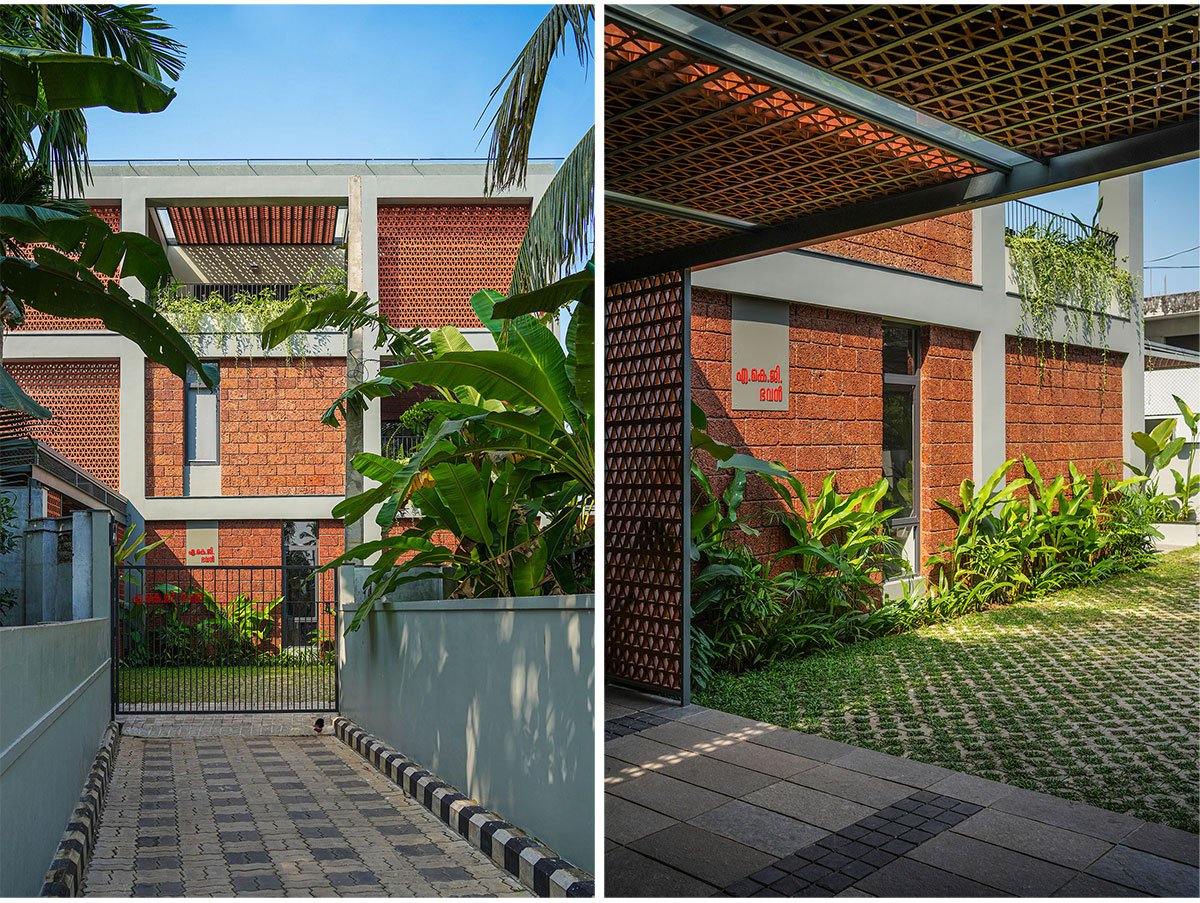
[Text as submitted by architect] AKG Bhavan redefines the typology of political architecture by transforming a conventional party office into a porous, community- centered civic space. Located in Westhill, Calicut, just 100 meters off the National Highway, the project sits on a compact 10-cent site and proposes a bold departure from rigid institutional formality. Instead of imposing boundaries, it embraces openness, transparency, and fluidity.


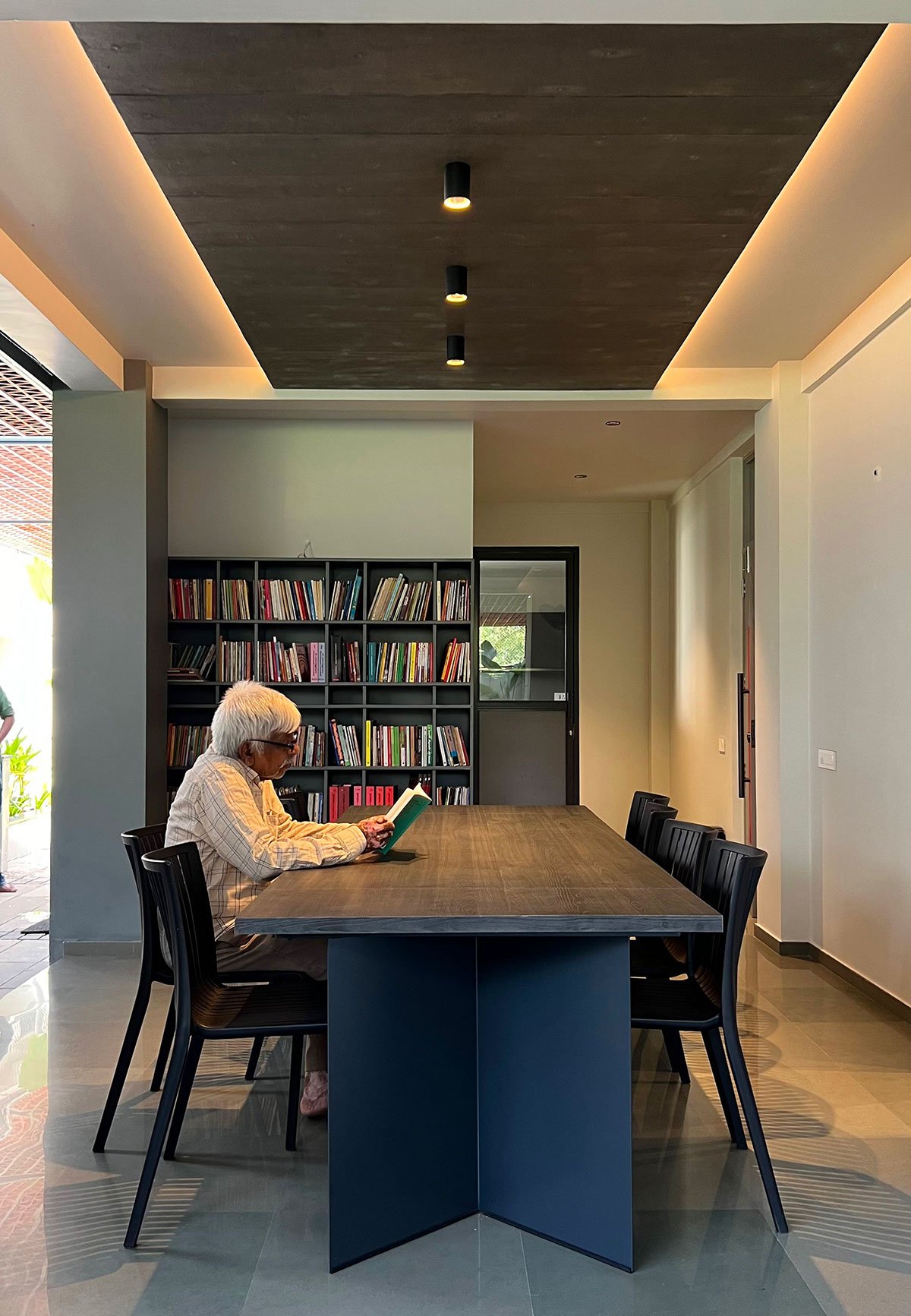
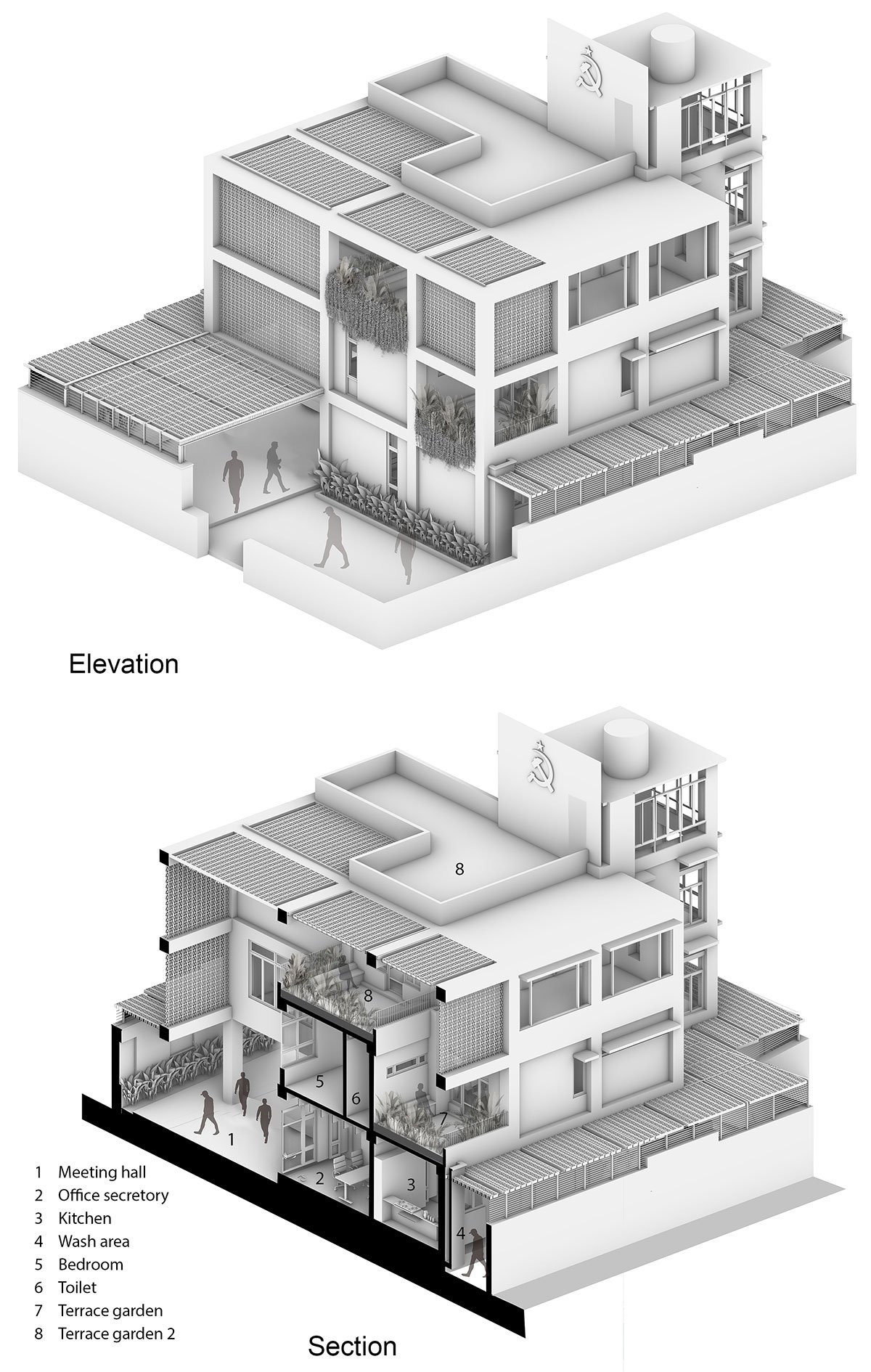
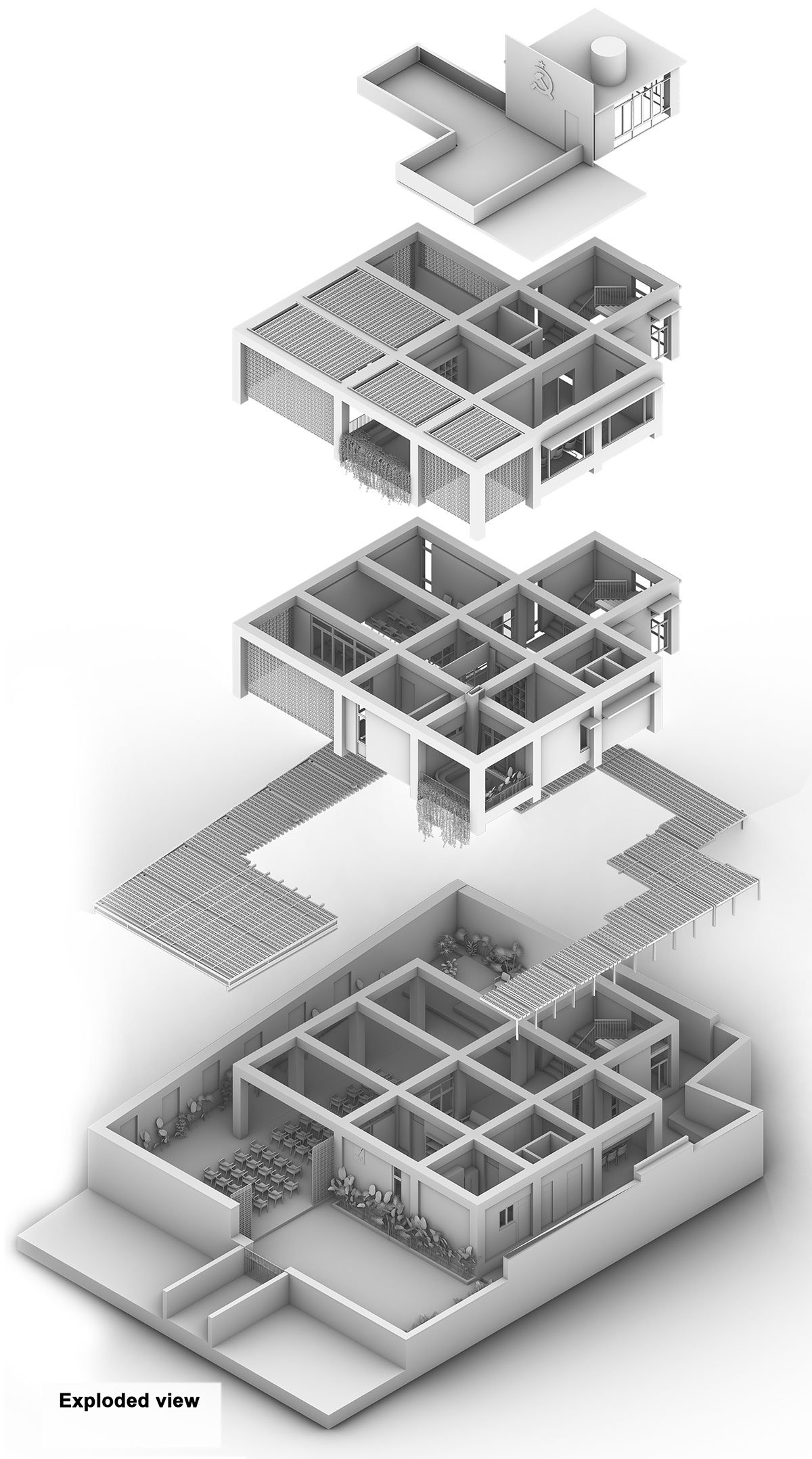
The design approach centers around carving spaces out of the site itself, with the structure conceived as a permeable shelter rather than a closed volume. Visitors are welcomed through an open, threshold-free entry that leads seamlessly into a history museum and gathering space, flowing further into the open-access library, dining area, and garden seating on the opposite side. These interconnected programs create a democratic spatial experience that encourages engagement and interaction across age, background, and ideology.


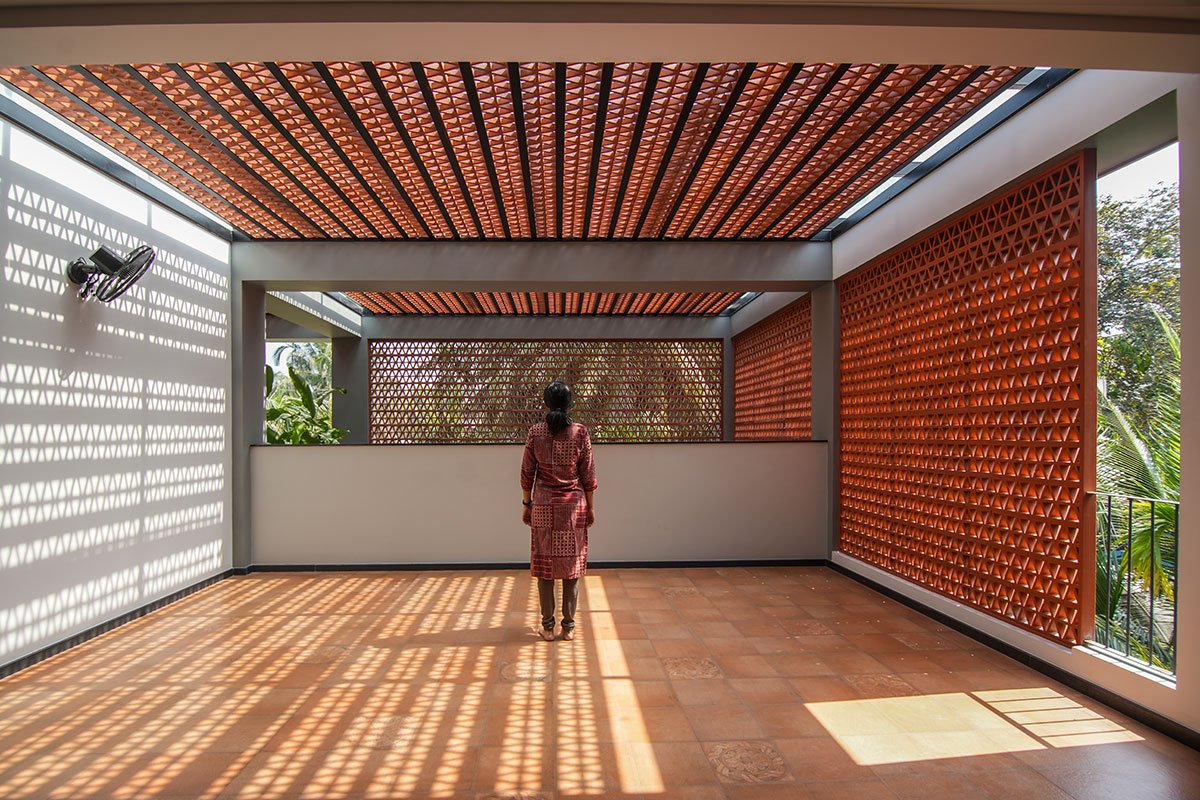
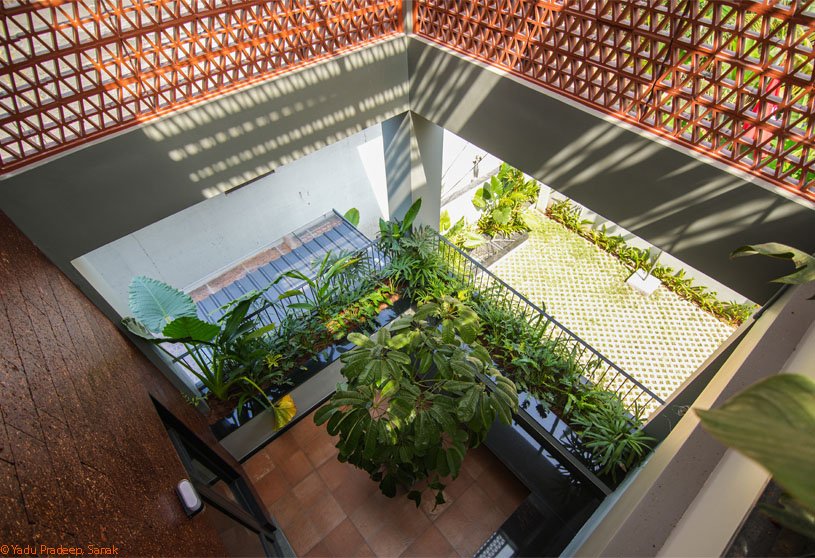
Architectural Language and Materials: The building’s massing is informed by a modular grid system, allowing for a thoughtful play of solids and voids, creating double-height volumes, visual transparency, and terrace gardens. These elements come together to ensure that the structure remains breathable and interactive, blurring the lines between inside and out, public and private.
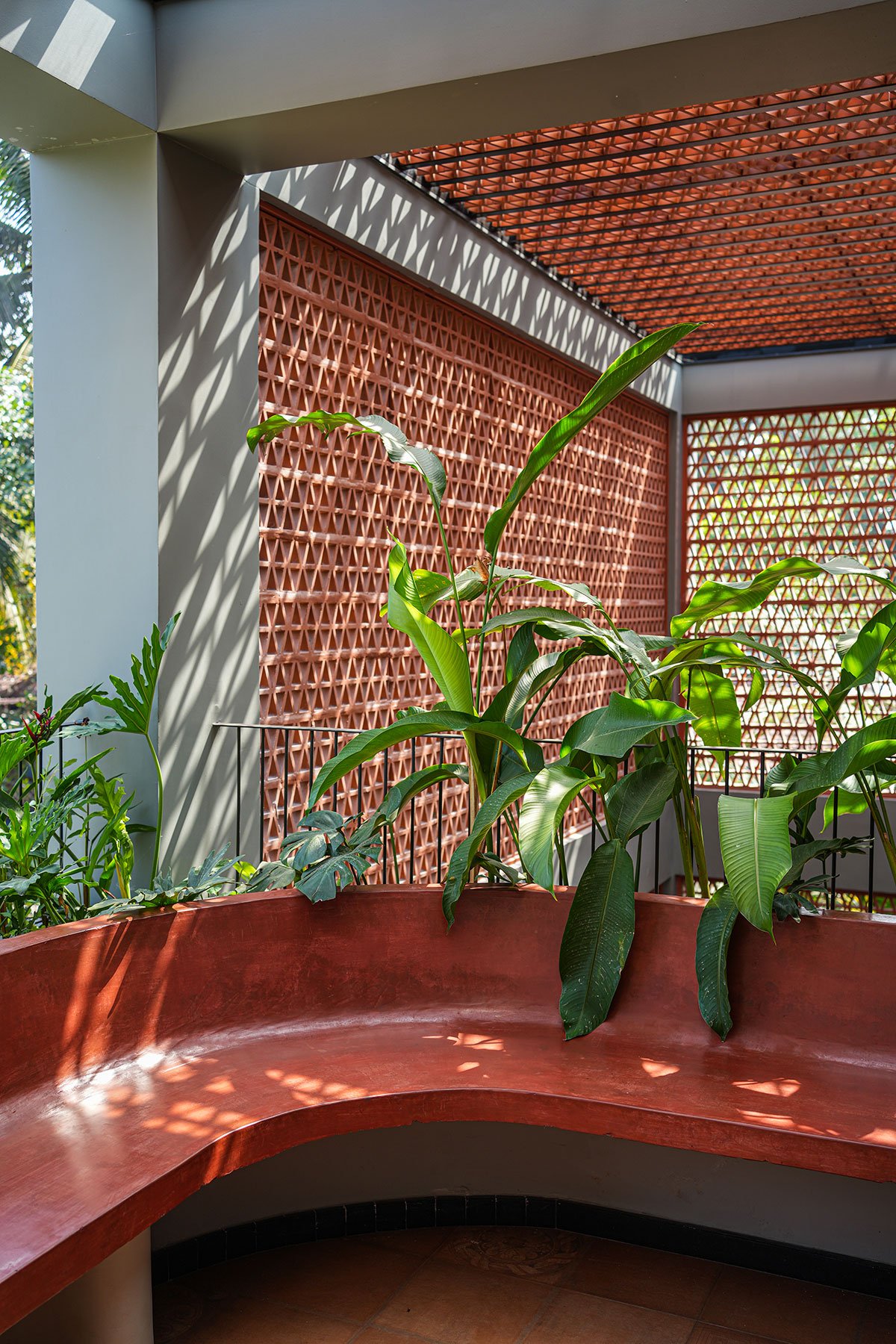
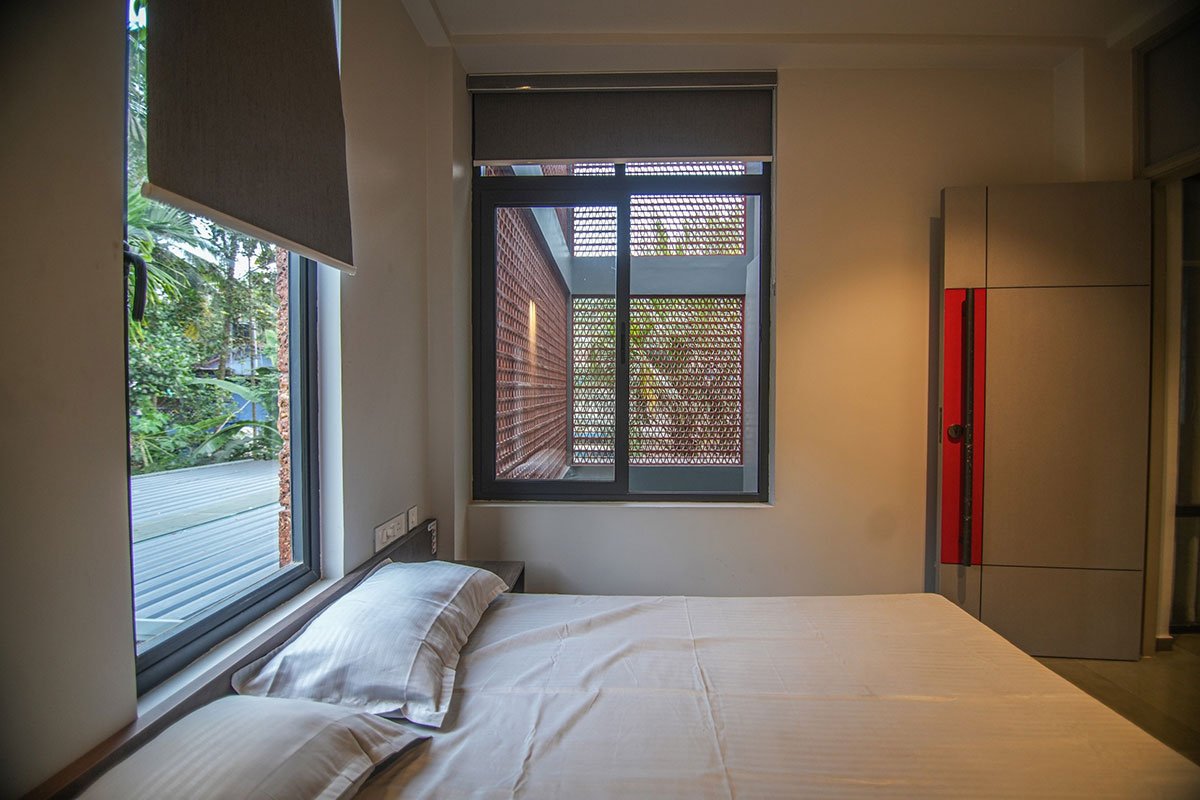
The material palette draws from the local vernacular, with exposed laterite stone walls and mud jali screens that lend both texture and thermal performance. The mud jalis offer passive cooling, cast dynamic light patterns, and become a symbolic gesture—representing the party’s evolving ethos of openness, transparency, and adaptability.
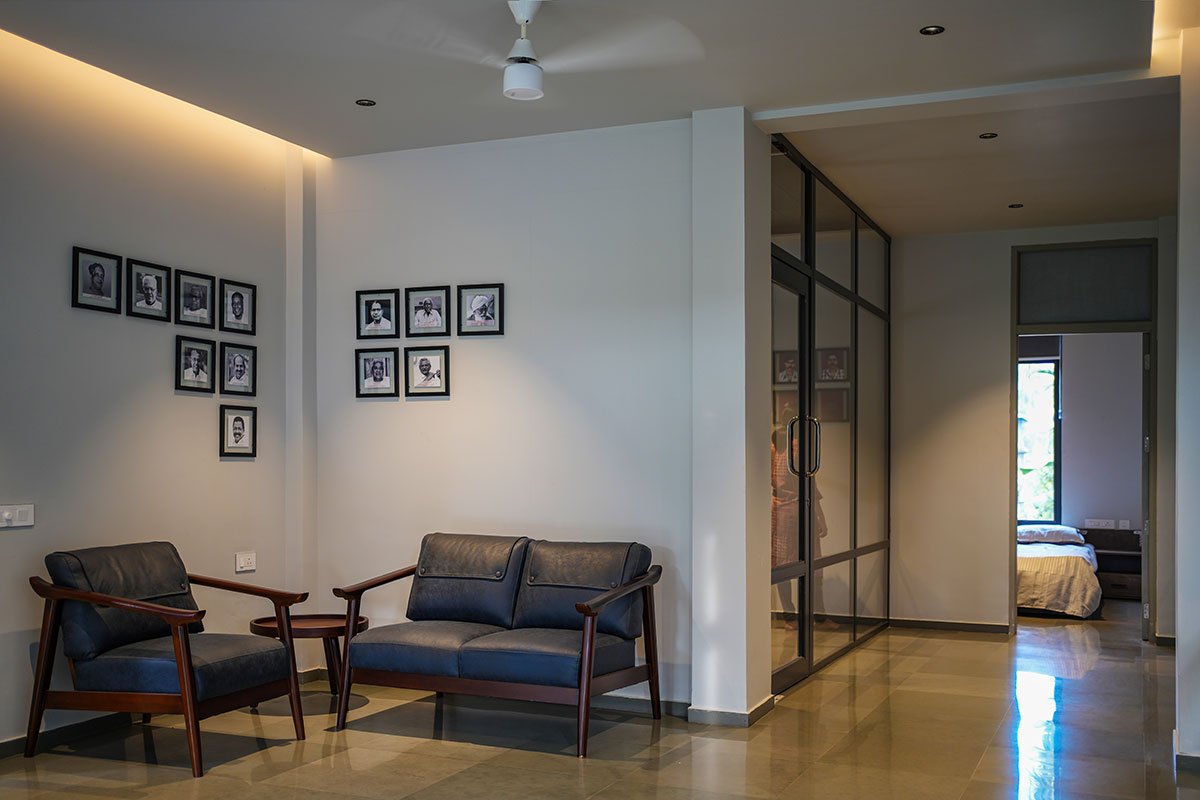
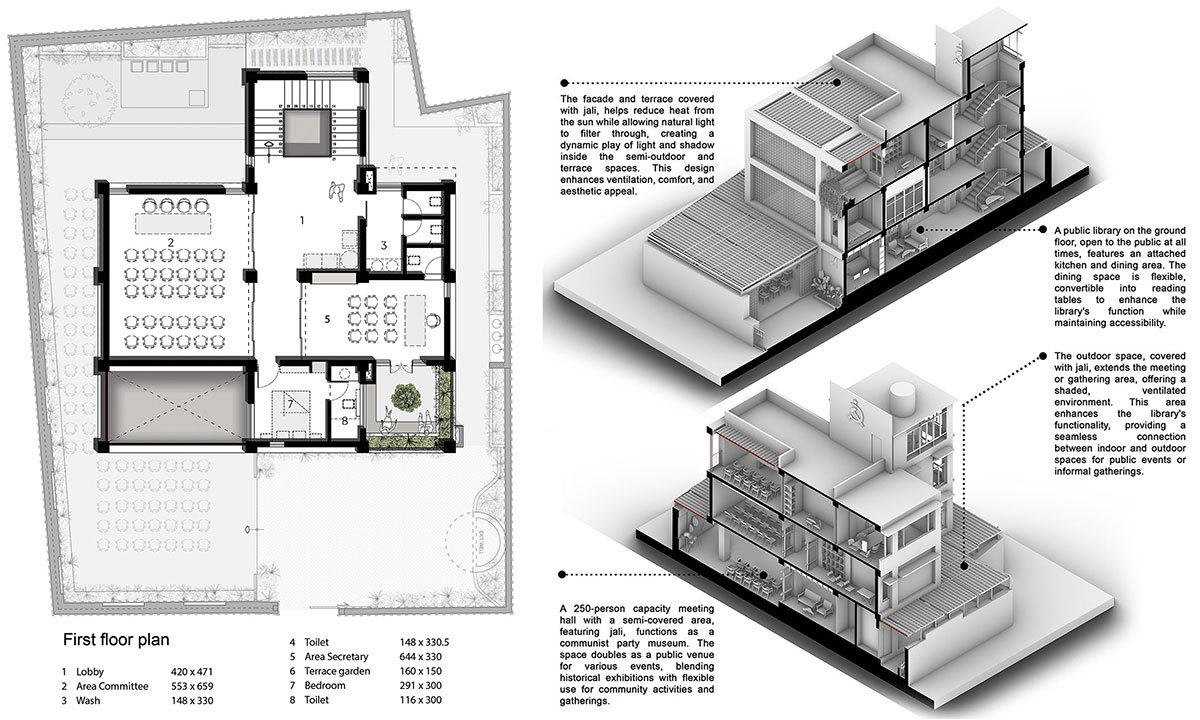

A Space of Collective Memory and Civic Engagement: At the heart of AKG Bhavan is a commitment to preserving history while shaping the future. The museum chronicles the ideological journey of the party, while the public library serves as a space of education and dialogue. These anchor spaces are framed by terraced greens and reading lounges, encouraging informal encounters and reflection.
A multipurpose hall, rooftop meeting terraces, and garden courtyards promote continual use, fostering an architecture that grows with its community. Each space is designed with flexibility in mind—capable of transforming from everyday activity zones to stages for collective expression.
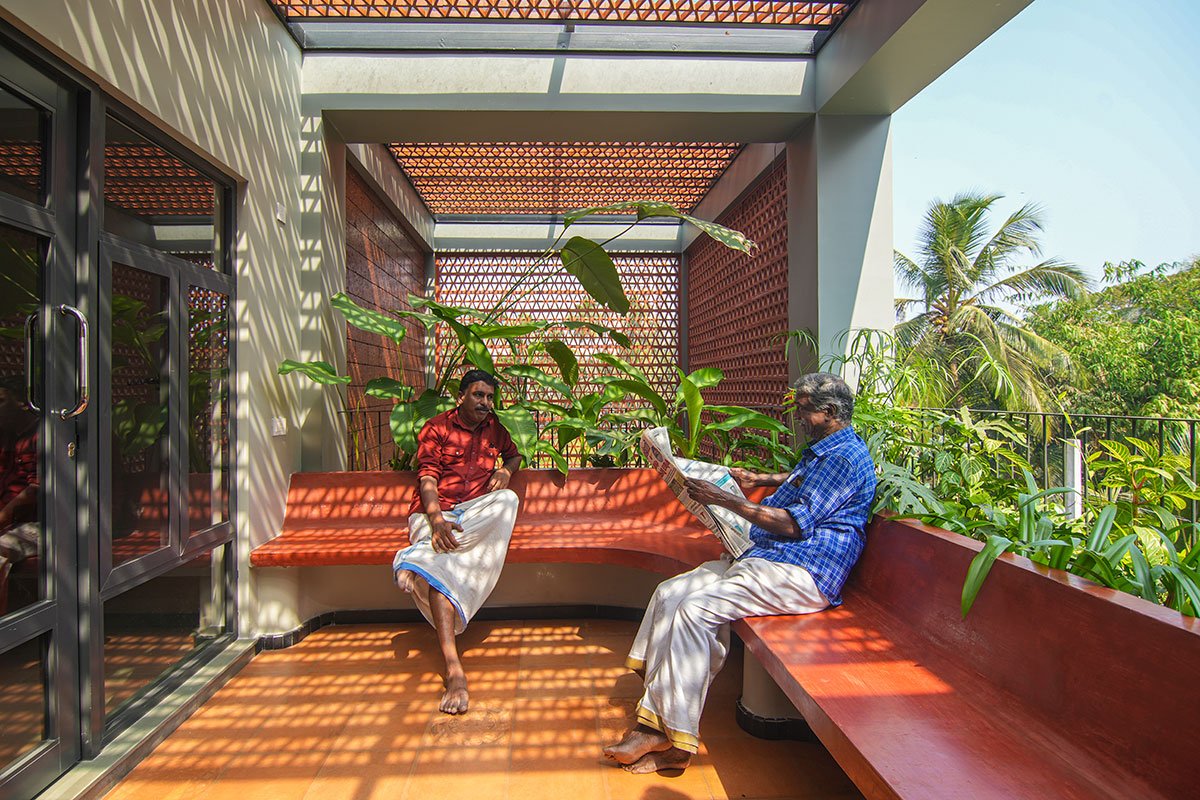
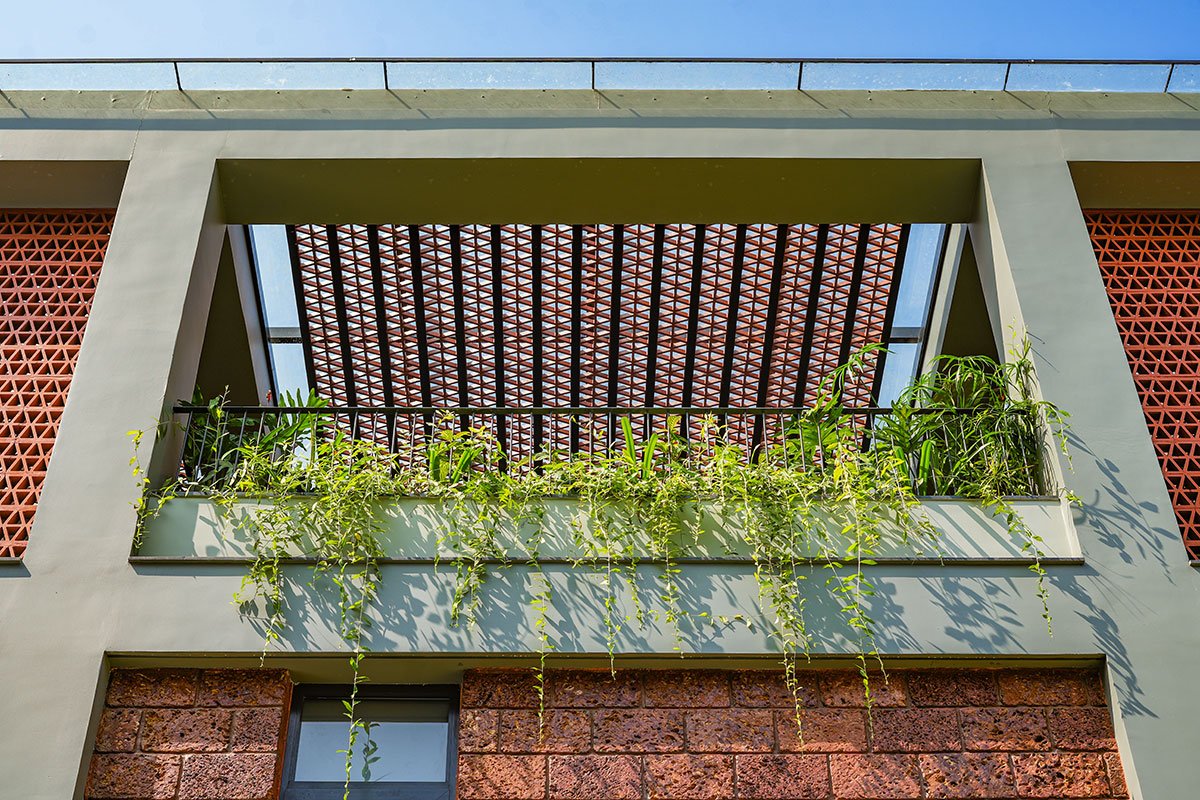
Design as a Political Act: AKG Bhavan challenges conventional notions of political architecture—typically characterized by grandeur and detachment—and replaces them with human-scaled spaces, tactile materials, and an inviting atmosphere. By removing symbolic thresholds and promoting access and transparency, the design poses essential questions:
- Can a party office transcend its political function to become a community institution?
- How can civic buildings—especially publicly funded ones—achieve high design quality within economic constraints?
- What role can architecture play in engaging youth and fostering public participation in political processes?
- How does built form influence the perception and accessibility of institutions?
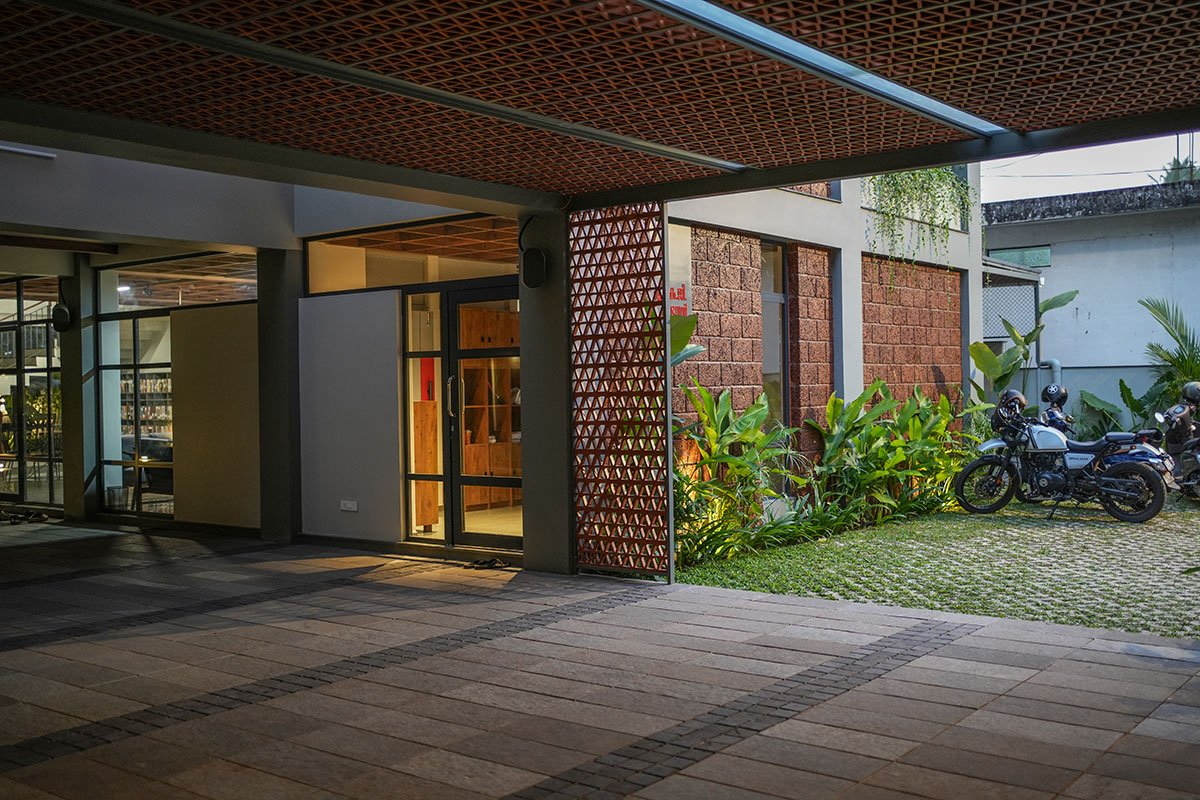
AKG Bhavan is not just a structure; it is a manifesto in built form. It reimagines the role of architecture in shaping civic identity and sets a precedent for future public-oriented design that is democratic, inclusive, and deeply rooted in context.
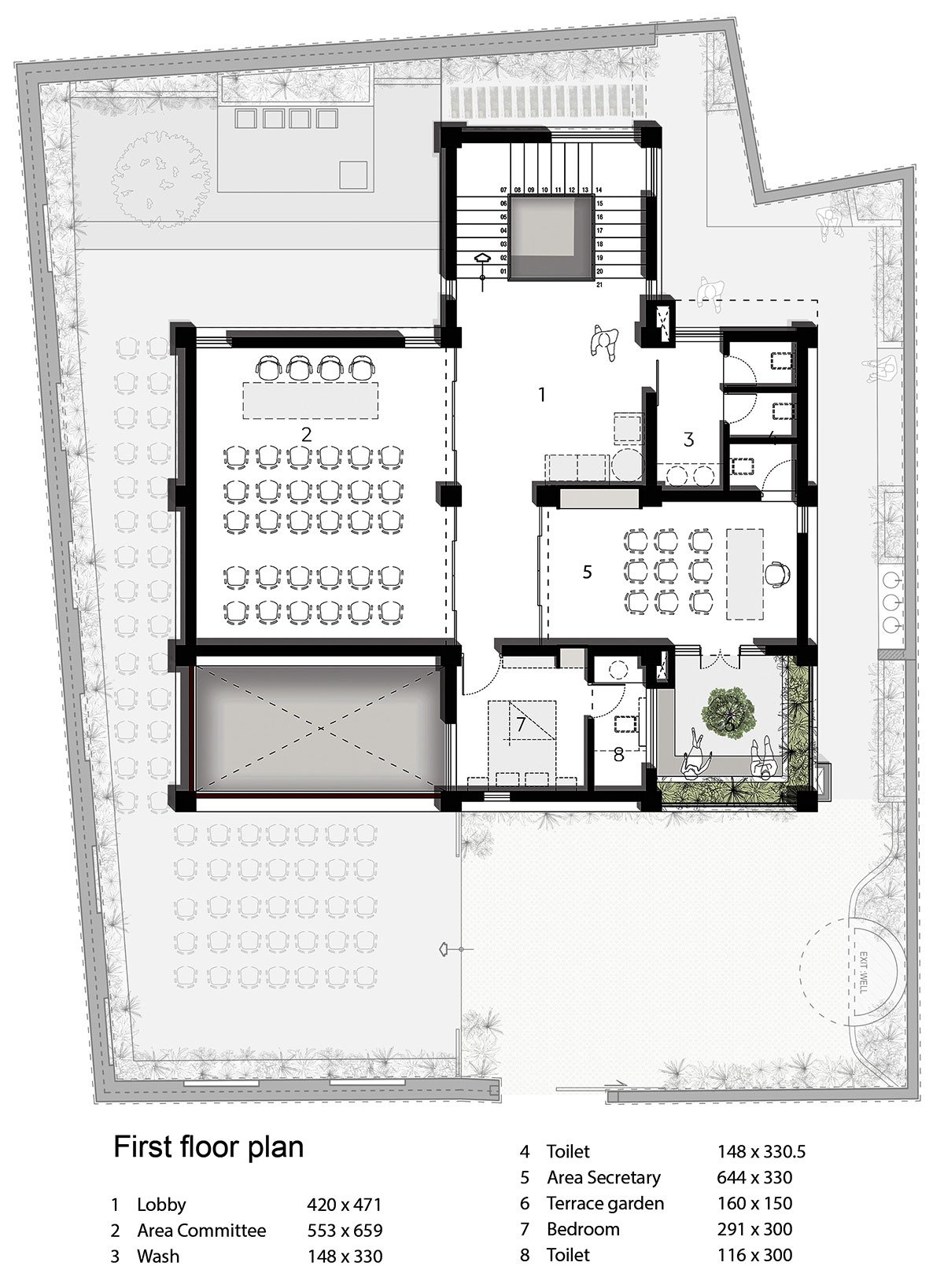
Drawings



Images