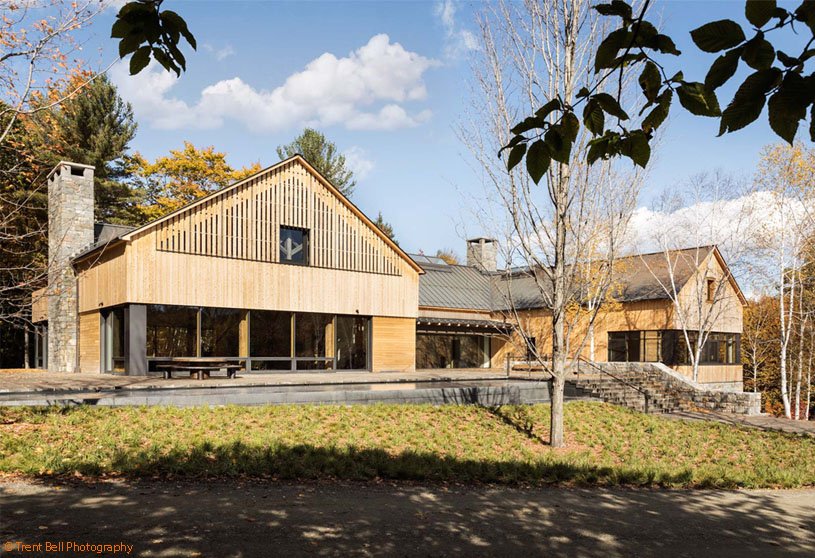
Excerpt: Everything Passive House by OPAL is a multi-functional gathering facility in rural New Hampshire, designed to Passive House standards. Its design expresses contemporary New England rural traditions, with barn-like forms, timber frames, and natural materials, creating strong indoor-outdoor connections. The project supports leadership training, meetings, and events in harmony with the surrounding 600-acre landscape.
Project Description
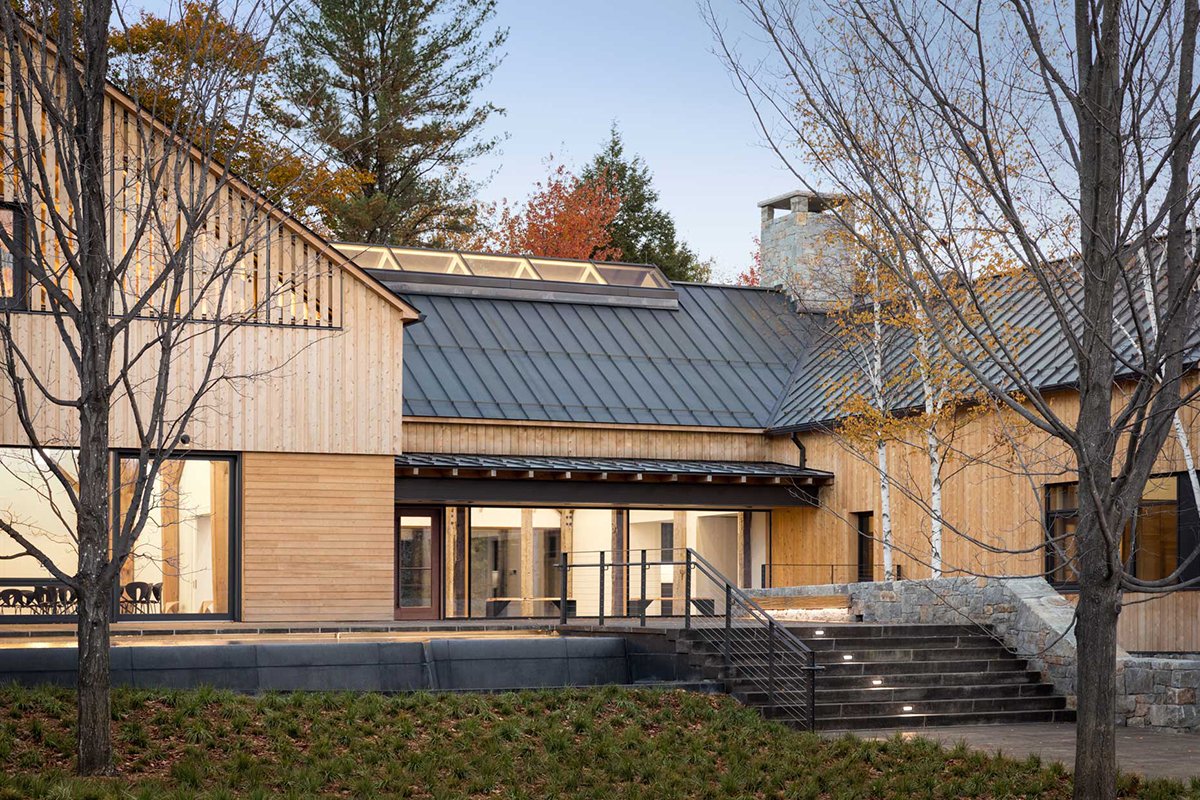
[Text as submitted by architect] Alnoba “Everything Passive House” is a multi-functional gathering facility in rural New Hampshire built to Passive House Standards. The client—Alnoba, a family foundation focused on supporting strong activist leaders to promote social and climate justice—commissioned the complex to support leadership training programs and host meetings and events in the pristine, natural setting of its 600-acre site. The building’s design intent, in keeping with the foundation’s environmental focus, was a contemporary expression of New England rural traditions that meets the highest technological and building-performance standards.
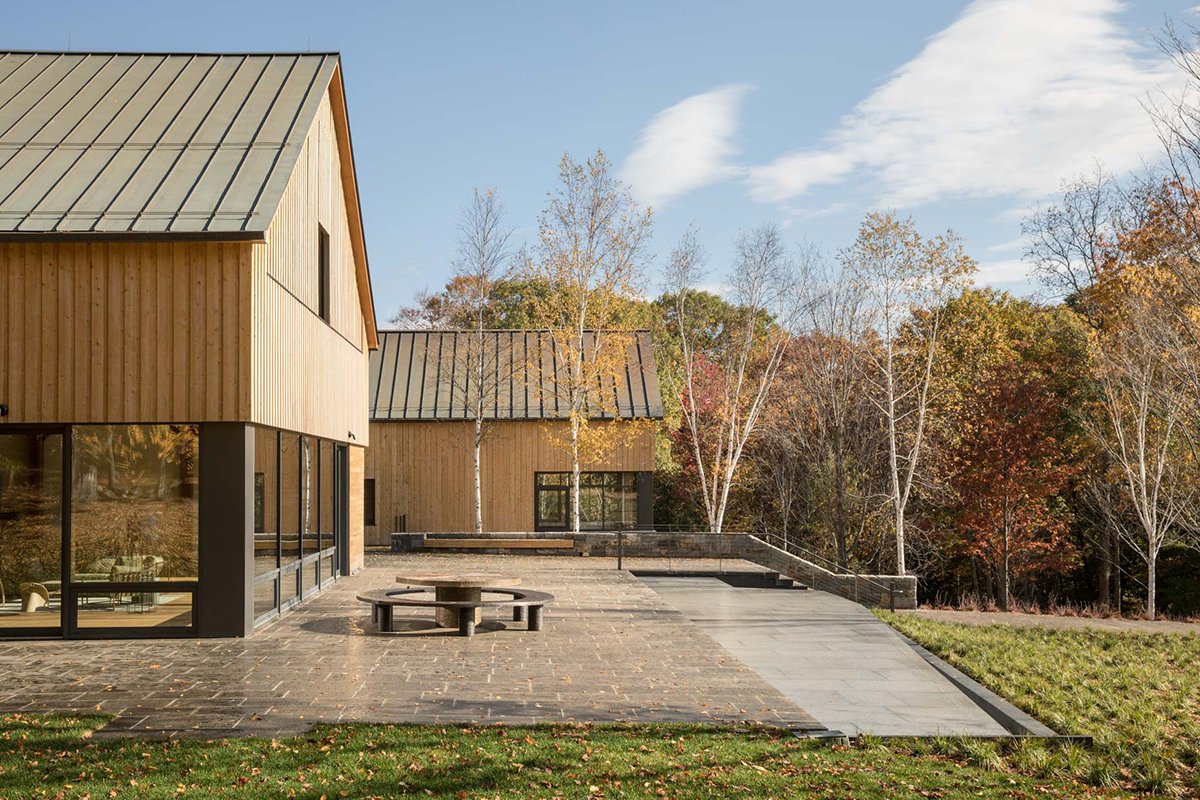
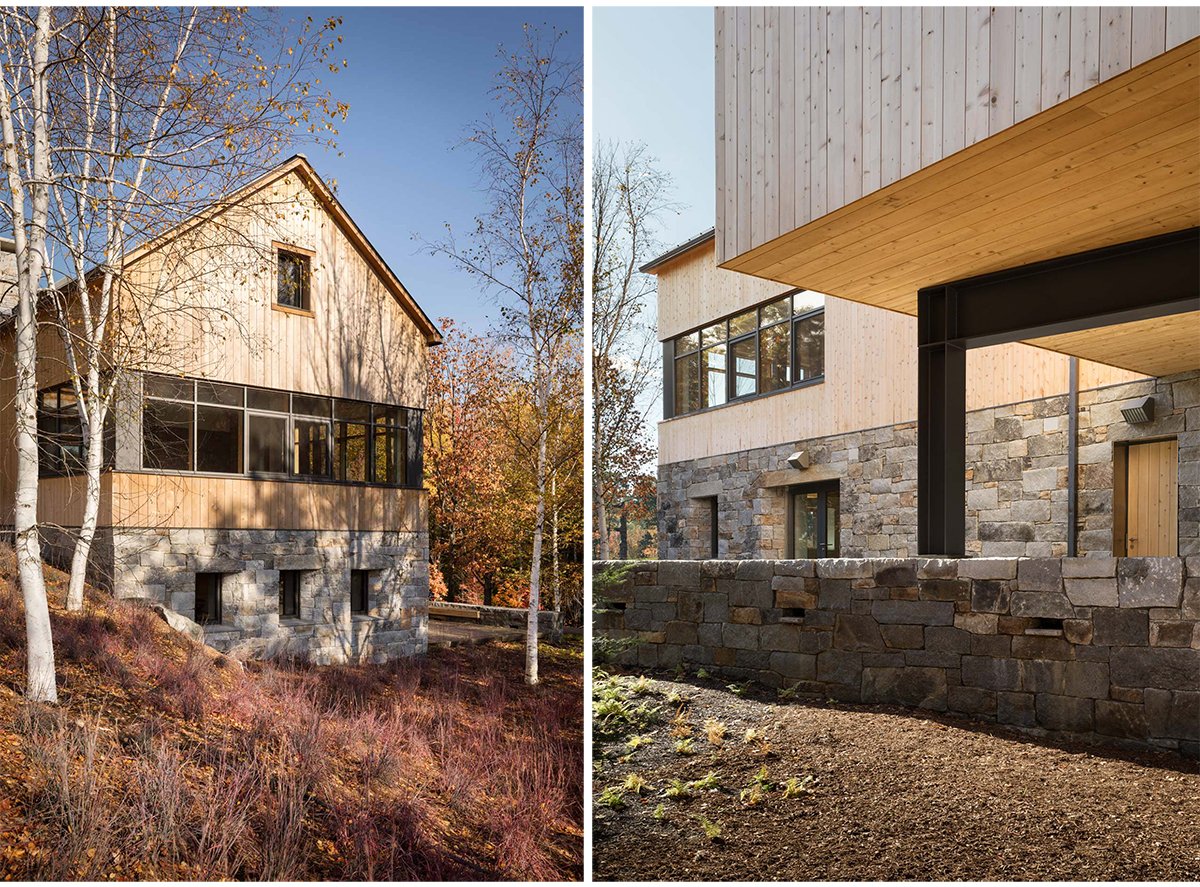
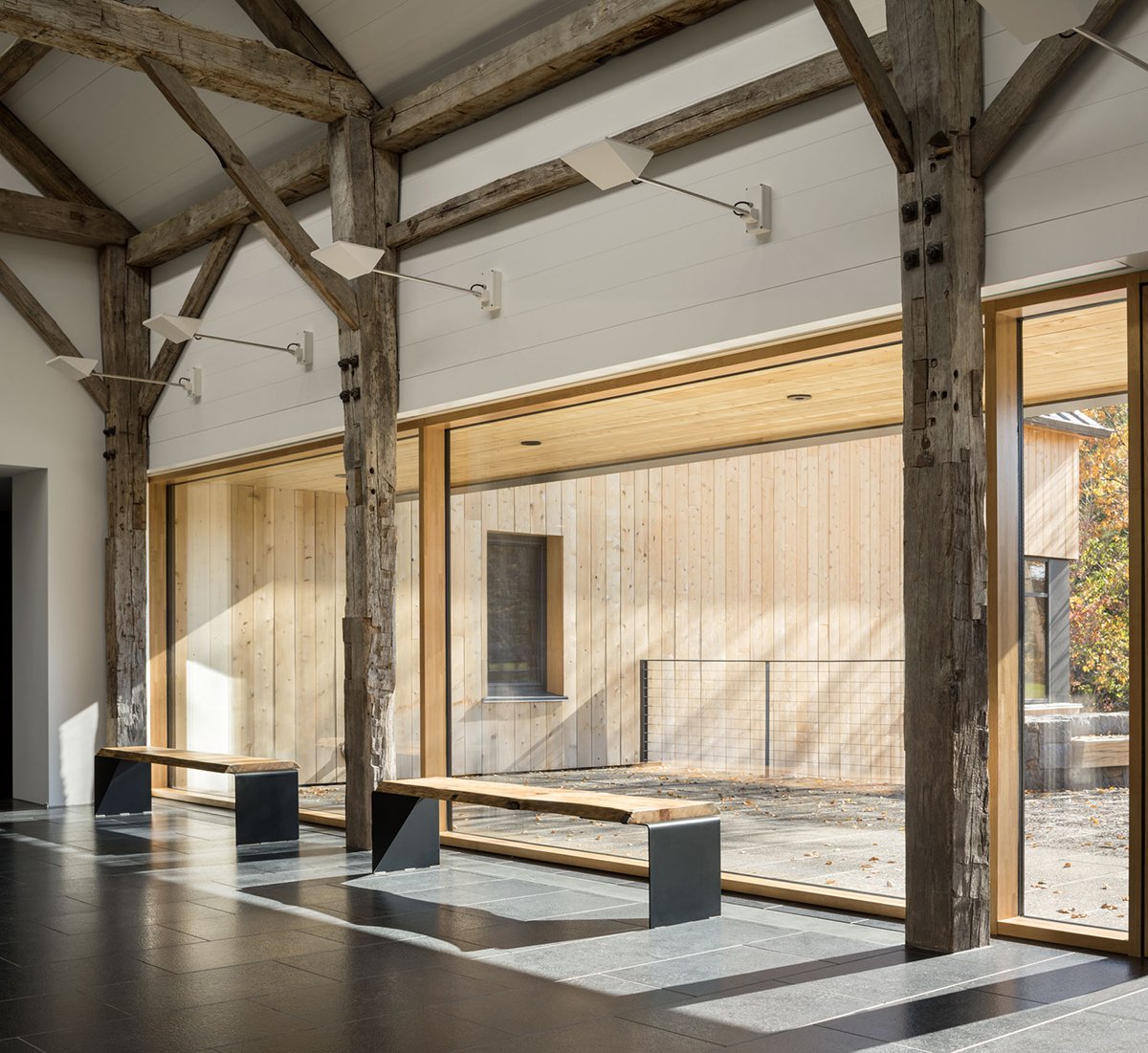
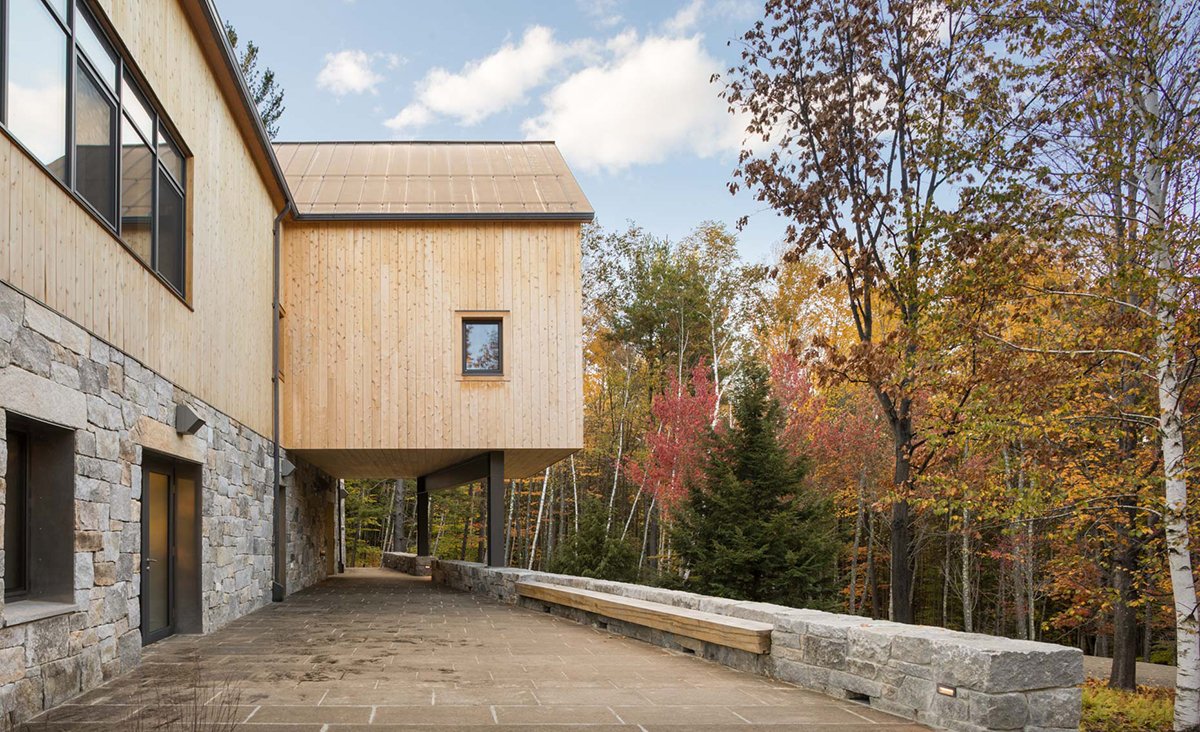
The design team located the 13,000-square-foot building at the forested margin of a sloping meadow, allowing the existing grades to flow around the structure in the traditional pattern of a bank barn. The building consists of connected, barn-like elements, grounded by granite-faced foundations and articulated with bands of white cedar siding in varied patterns. Dark-framed glazing wraps the building’s corners, lending a contemporary element of transparency and creating strong indoor-outdoor links.
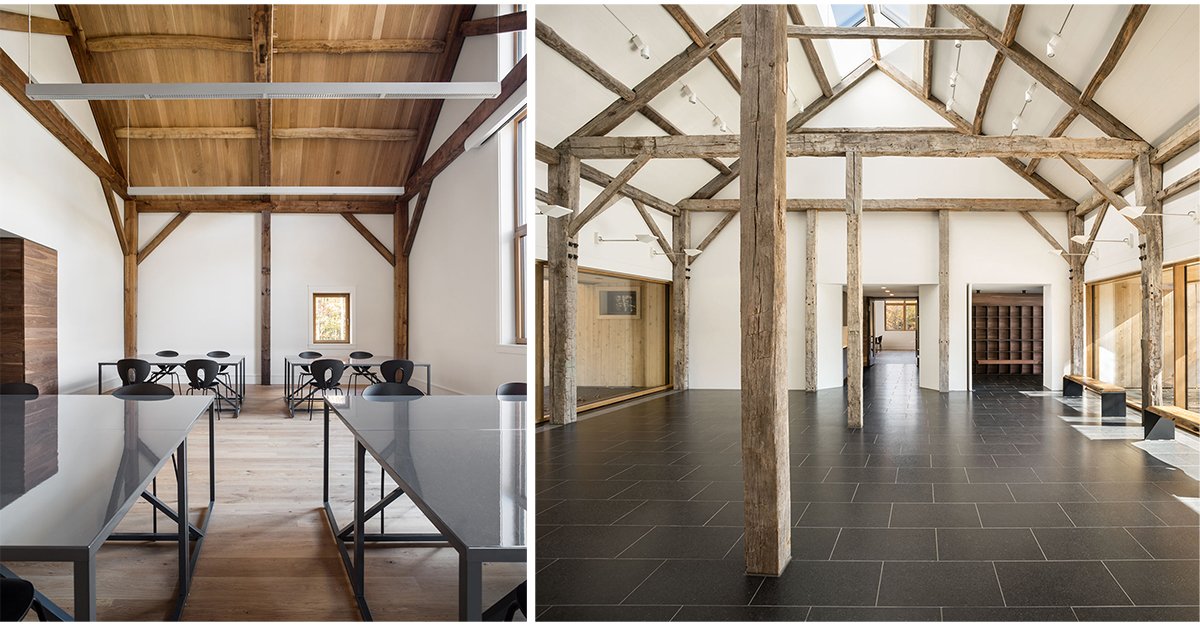
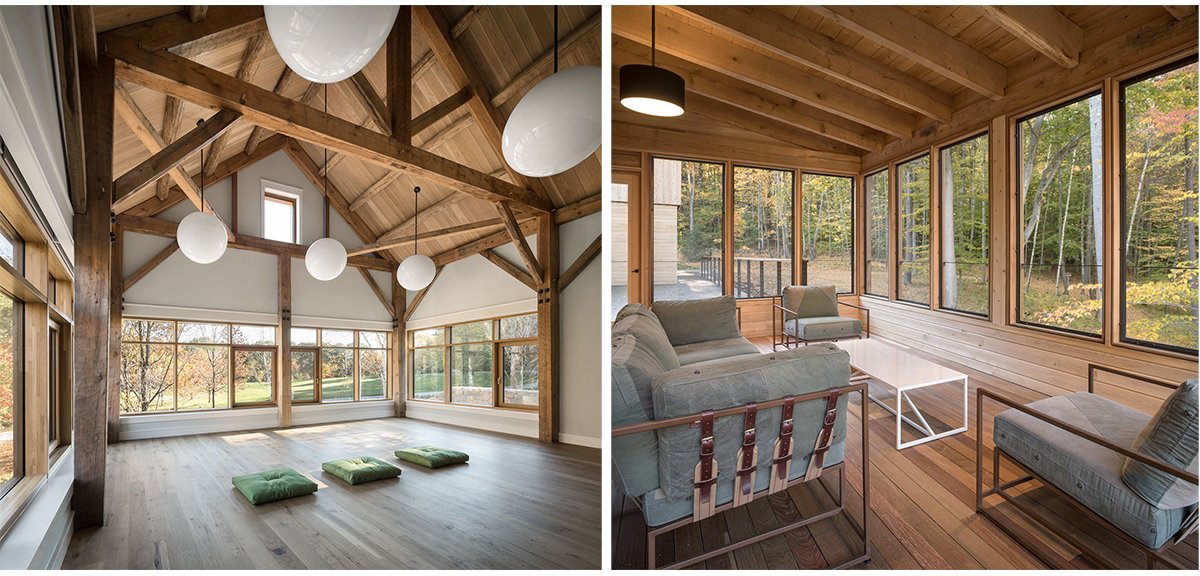
The building’s structure consists of a series of exposed frames that support its four major public spaces. The frame at the entry is reclaimed, and the others are created in a traditional manner from local timber. Each frame increases in scale from the relatively intimate meditation room to the expansive meeting room, with its 60-foot-long double-top-chord trusses. Glazing along roof ridges and behind slatted screening at the meeting room gables admits filtered daylight, recalling patterns of sunlight through the cracks in barn siding. A simple, elemental material palette of wood, stone, and plaster is layered behind the timber frames.
Concealed from view are the building assemblies, mechanical systems, and equipment required to support and cater large gatherings while meeting both local codes and the rigorous Passive House standard. The meeting room’s massive six-foot-high fireplace—a nonnegotiable program feature—posed a particular challenge. By completely air-sealing the chimney, fitting an airtight damper, and providing a dedicated supply of make-up air, the design team was able to gain Passive House International (PHI) Low Energy Building Certification.
Images


