
Excerpt: The AnShe Headquarters Park by Milanesi | Paiusco transforms a former natural pocket into a human-scaled complex with offices, exhibitions, and retail spaces. Designed around the metaphor of “The Net,” the project symbolizes connection and structure while embedding itself quietly in the urban fabric. With open, flexible spaces, rich planting, and sustainable concrete use, it creates a contextual, shared community environment.
Project Description
[Text as submitted by architect] Located in a prominent urban core of Linping, the AnShe Headquarters Campus occupies a site that was once one of the last remaining natural pockets within the ever-intensifying urban grid.
The total planned site area is approximately 14,470 square meters, comprising three main buildings and attached brand concept stores. The complex includes hybrid functions: offices, exhibitions, and brand-owned retail spaces. Designed by milanesi | paiusco, the project will serve as the headquarters campus of AnShe, housing the integrated office and operational spaces of its brands including Chuu and NO ONE ELSE.

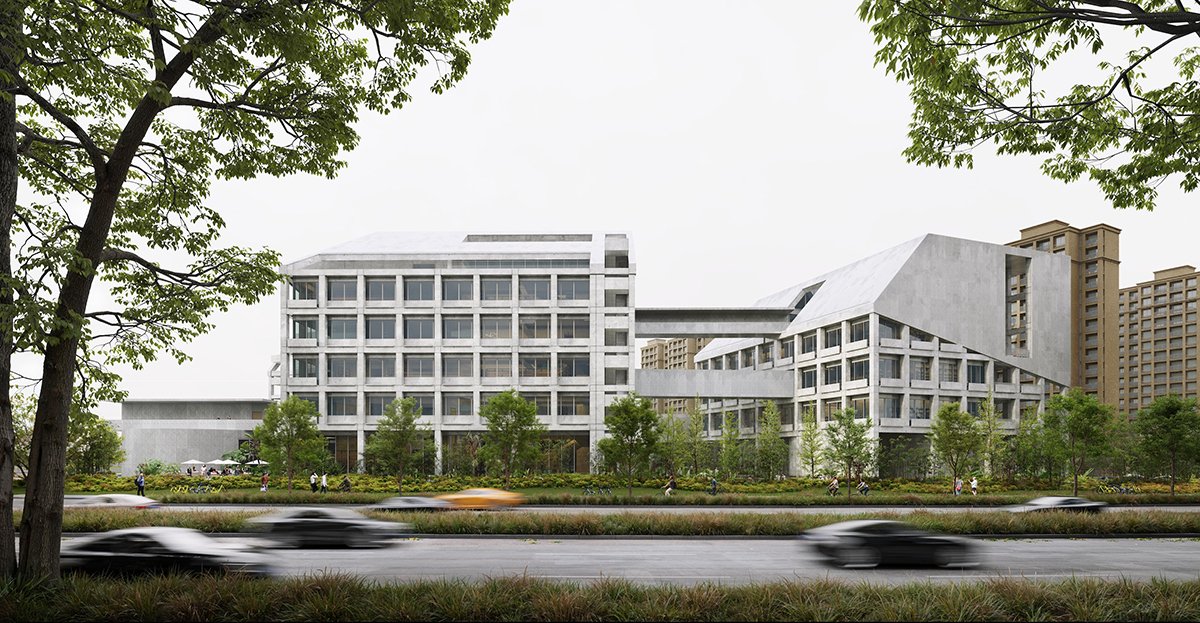

Concept: At the heart of the project is a clear metaphor: “The Net”—both the structural framework of the buildings and a symbol of the invisible order and connection among people, society, cities, and industries. The design also responds to the expectations for nature, authenticity, and a sense of ease within the context of China’s urbanization. m|p collaborated with Z+T Studio, using a rich and diverse planting system to create vibrant natural layers.
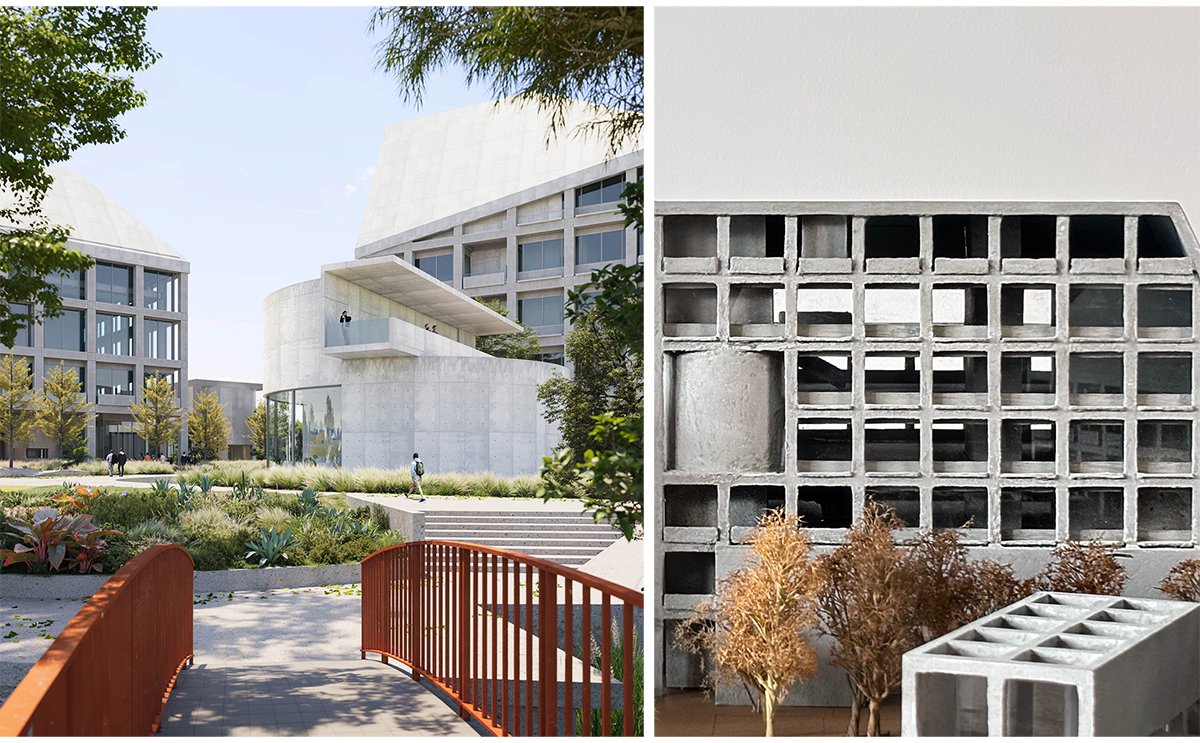

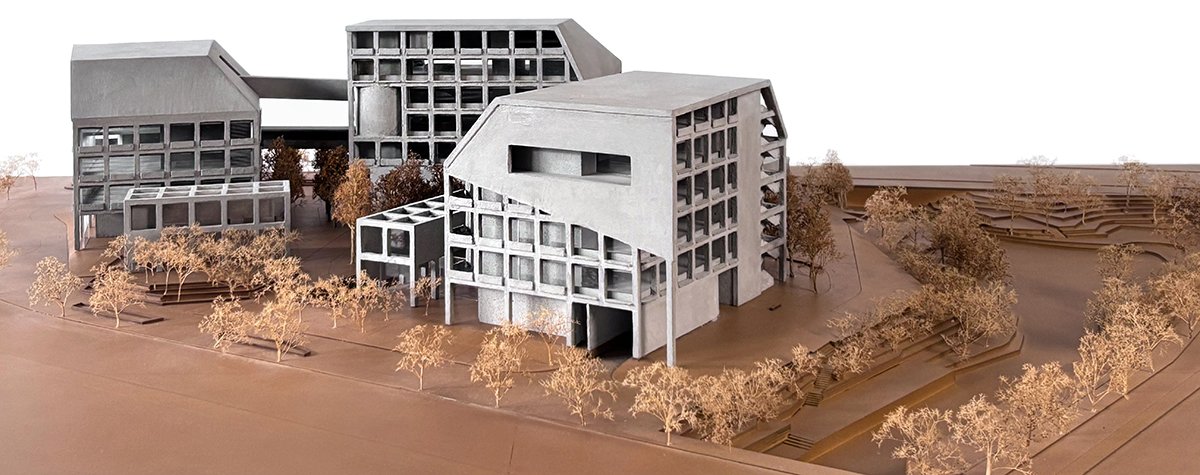
Urban Context: In response to the public’s growing attention to human-scale and urban integration, the project adopts a strategy of “non-dominant intervention”: instead of overwhelming its surroundings, it quietly embeds into the neighborhood with openness and restraint.
Originally designated for office towers, the site was re-imagined through close collaboration among the design team, client, and planning authorities. The resulting scheme caps building height at seven stories—reflecting a shift toward human-scaled environments and a more contextual approach to urban integration. Brand-operated cafés, restaurants, and cultural spaces anchor the site in daily life, fostering a shared community environment open to both brand members and neighbors.
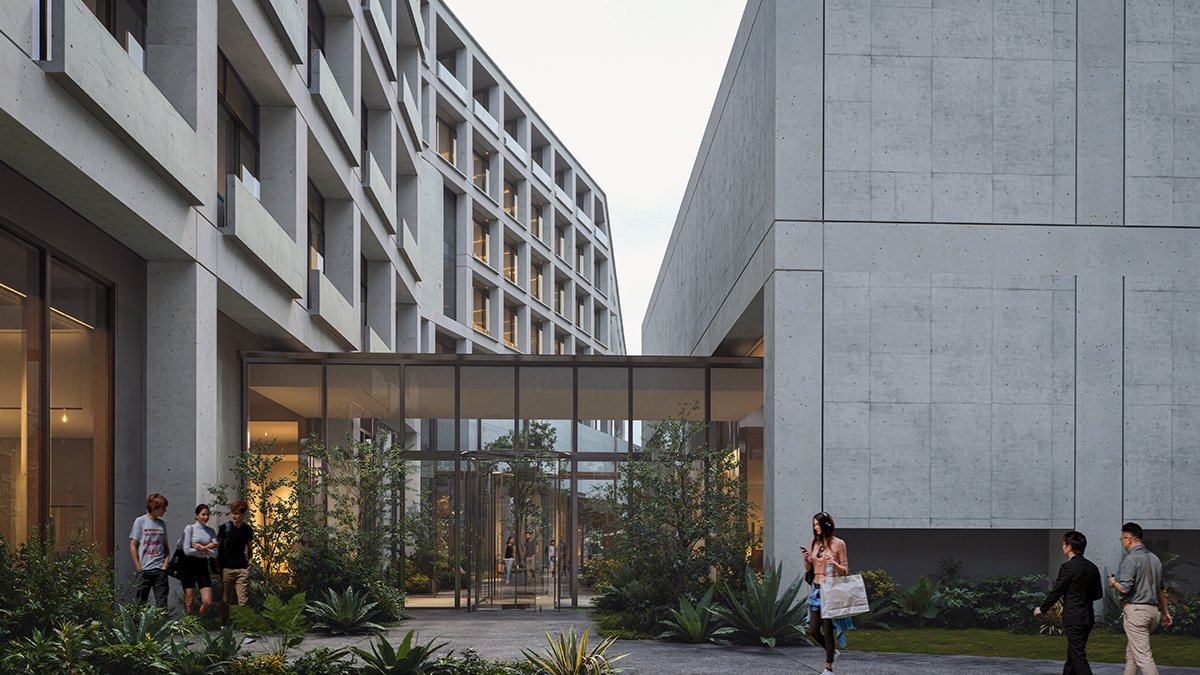

Structure, Materiality, and Sustainability: The project approaches design through its concrete structure, using it as a shared foundation for both spatial organization and architectural expression. By rationalizing the load-bearing elements, the total concrete volume was reduced by approximately 30%, resulting in a lighter and more efficient structural system. At the same time, the design departs from traditional column grids, enabling clear and open office floors that allow for future flexibility.

To reduce environmental impact, the design uses low-clinker mixes, where 30% of the cement is replaced with recycled industrial byproducts. This approach helps reduce carbon emissions while maintaining structural performance.
In terms of construction techniques, the project adopts a pragmatic hybrid strategy. The main structure employs cast-in-place concrete, while the façade utilizes a prefabricated assembly system. This combination strengthens construction control while preserving the tactile honesty of the material.
Drawings


Renders & Sketches


