Excerpt: Aruma Split Garden, an architectural project by RAD+ar, explores split-level design, while incorporating nature within the built environment. The project seamlessly blends various elements, ensuring a harmonious relationship between functionality, aesthetics, context, sustainability, and user experience. This approach creates a cohesive and balanced design that enhances the overall quality and effectiveness of the space.
Project Description

[Text as submitted by architect] In the challenge of rising land values, the Split garden was created as a study of how split-level design can evolve, creating distinct zones within a compound of multiple tenants while incorporating nature within the built environment in a relatively compact footprint. The iteration of the design reflects RAD+ar’s search for significance and evolving roles in optimizing circulation.
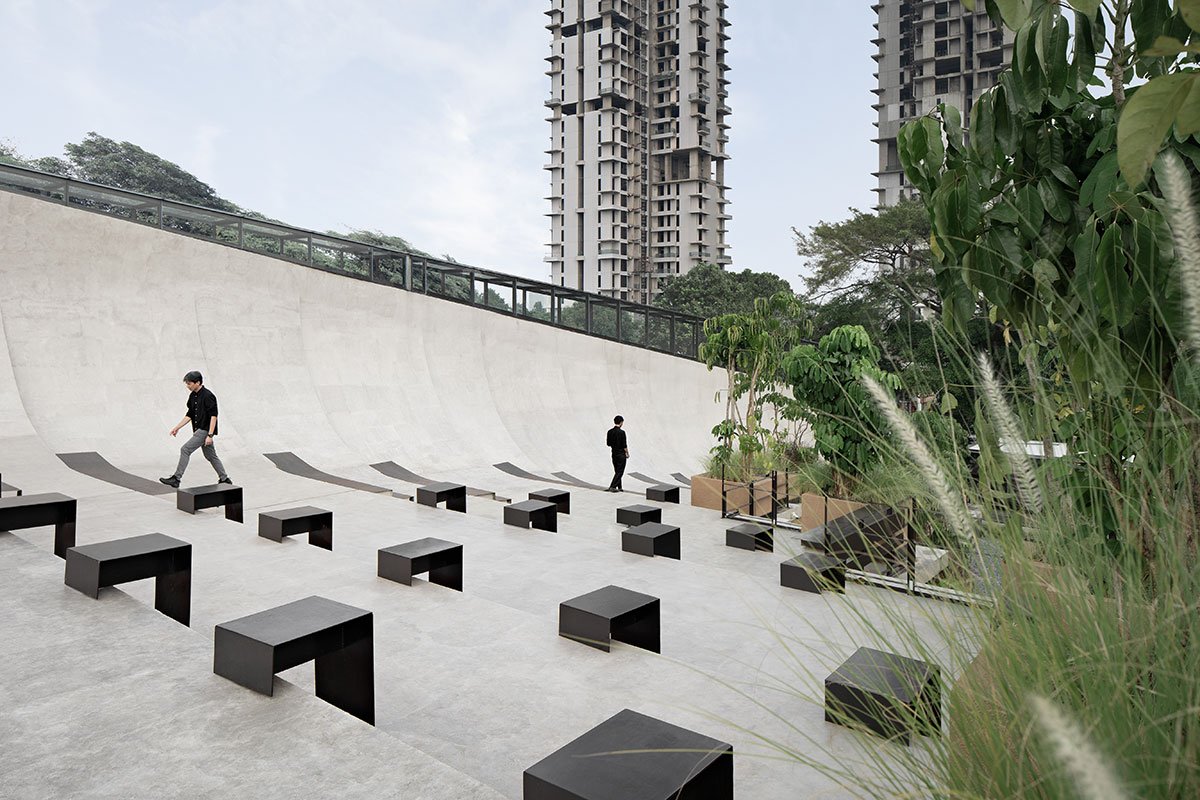
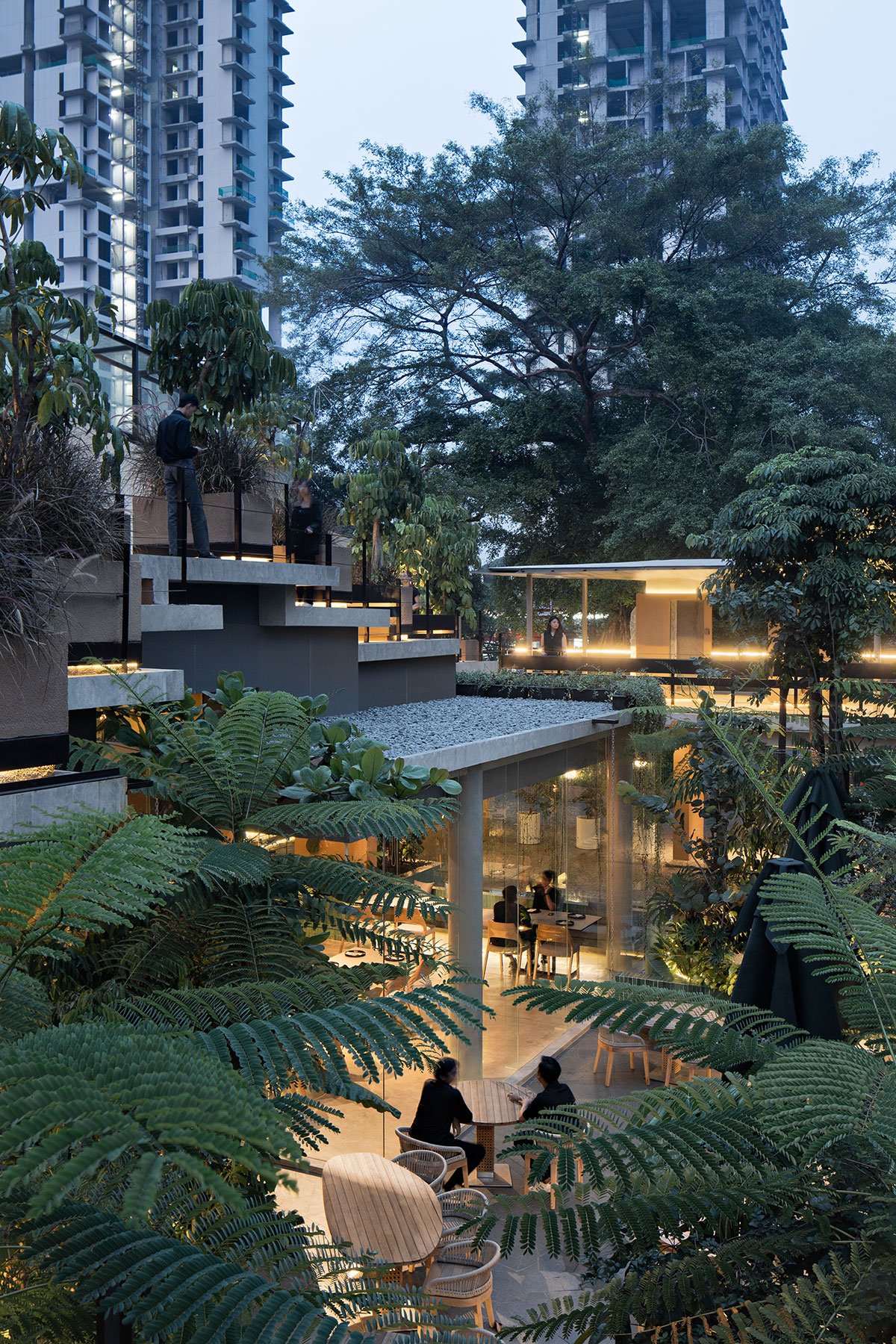
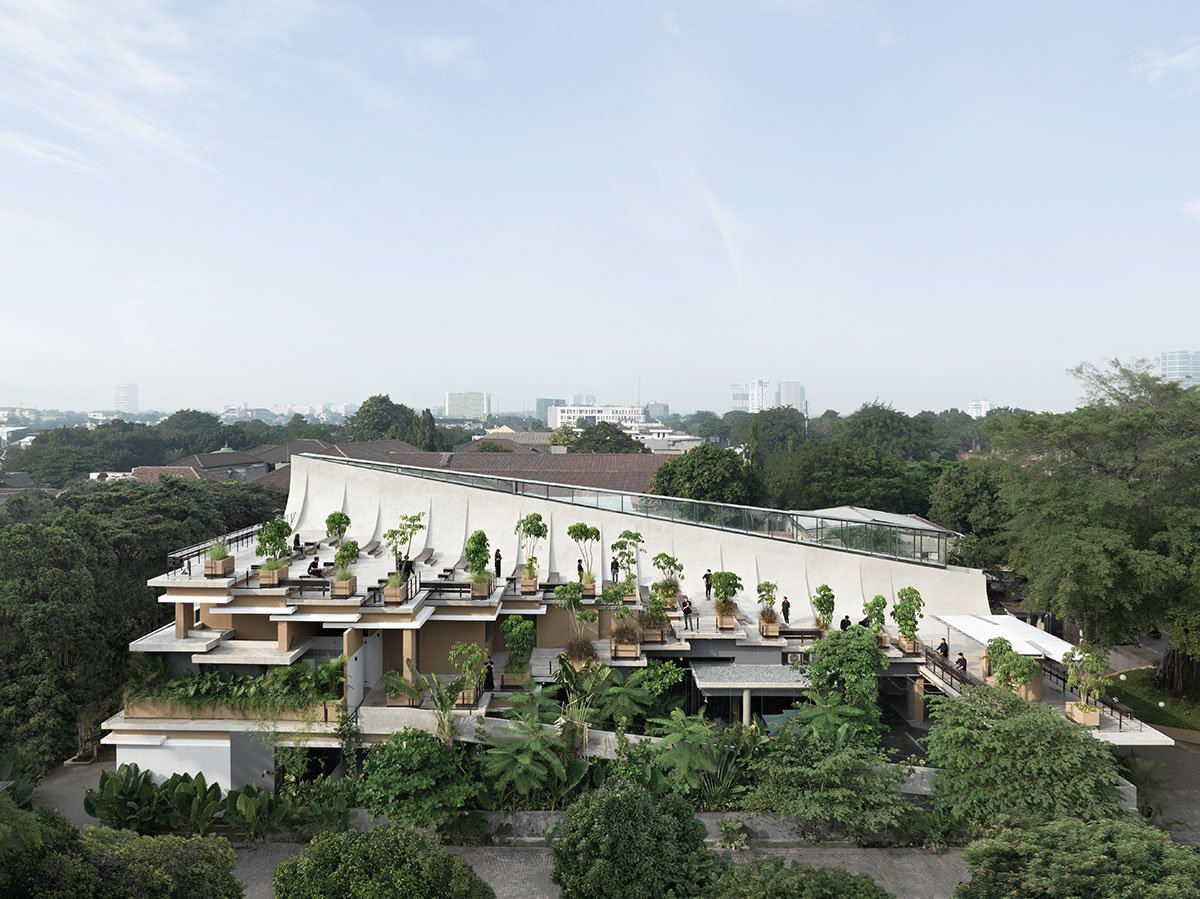
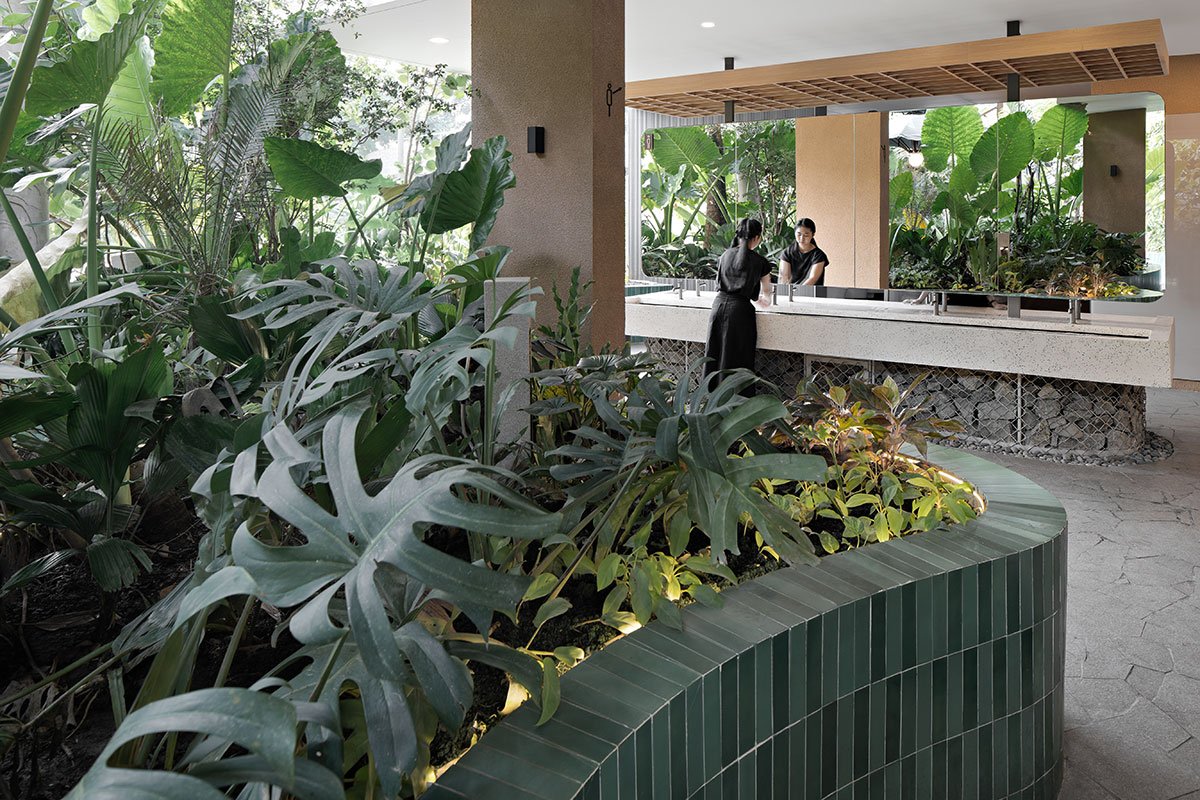
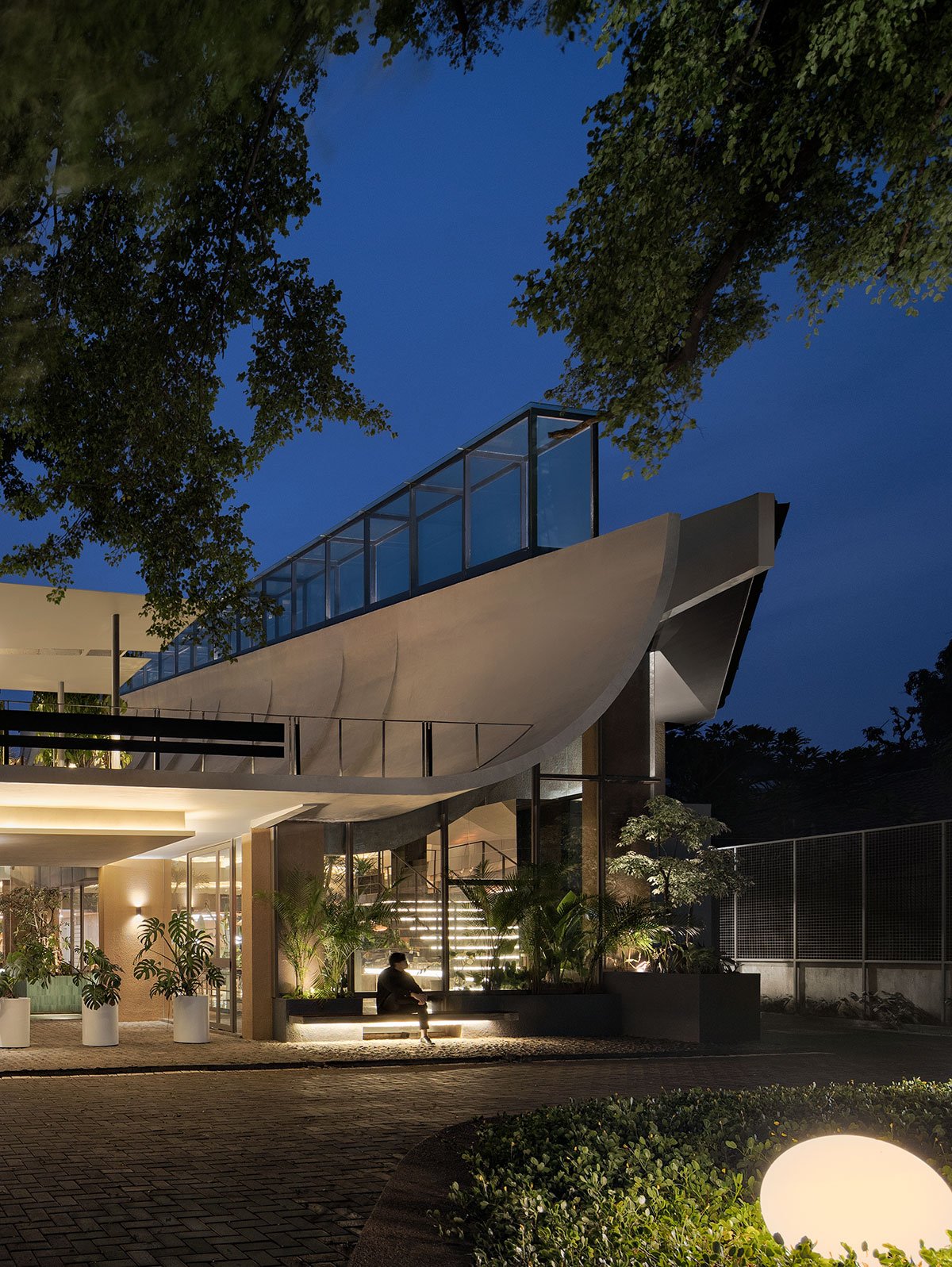
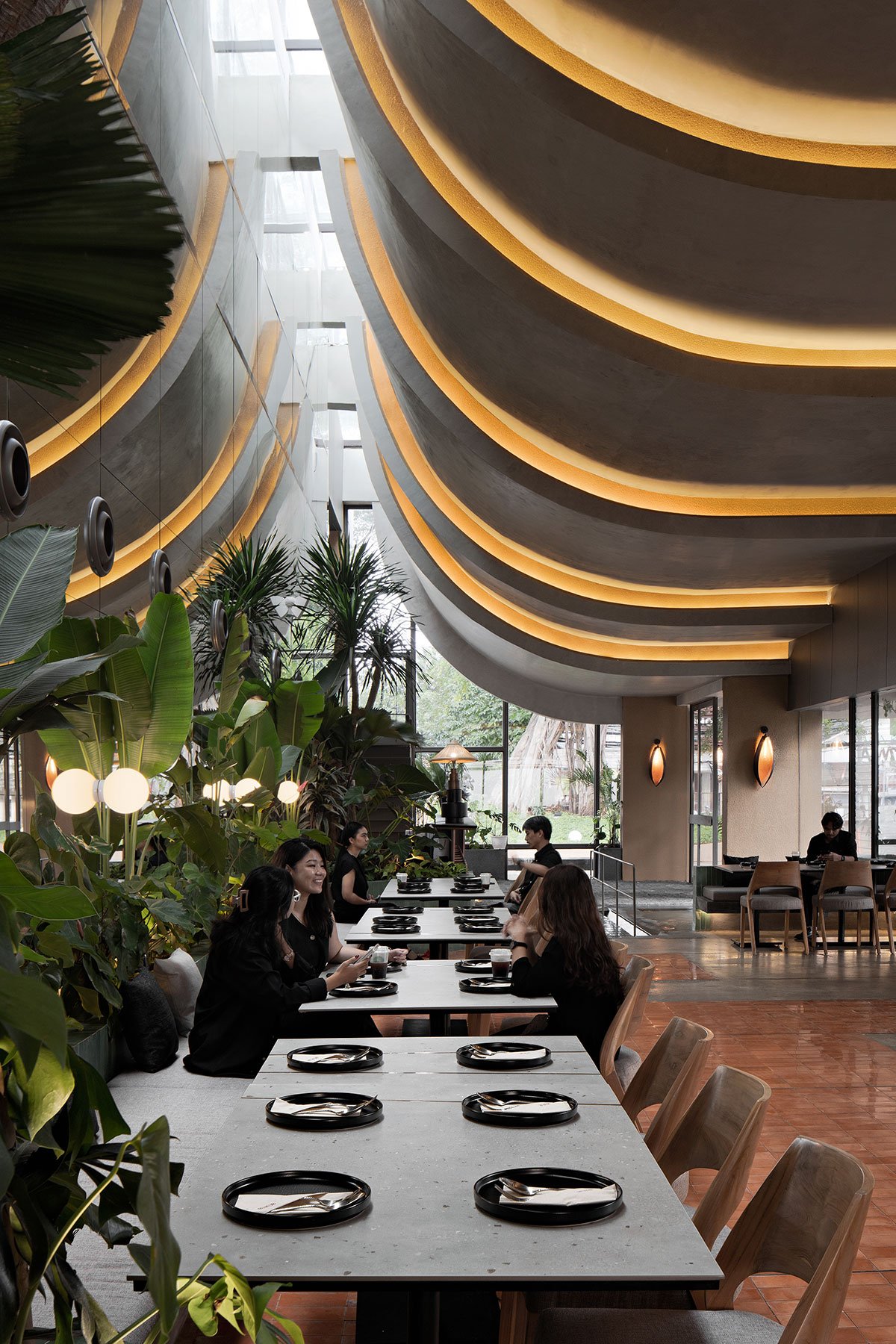
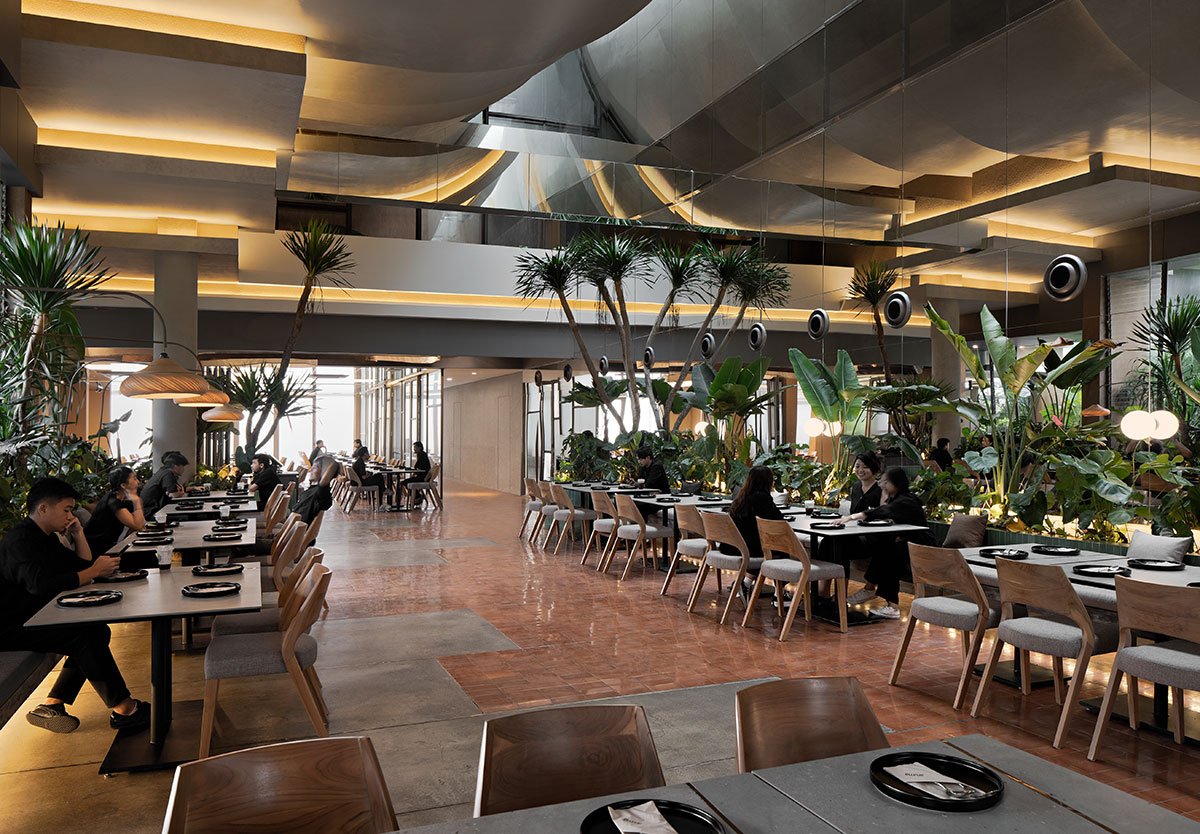
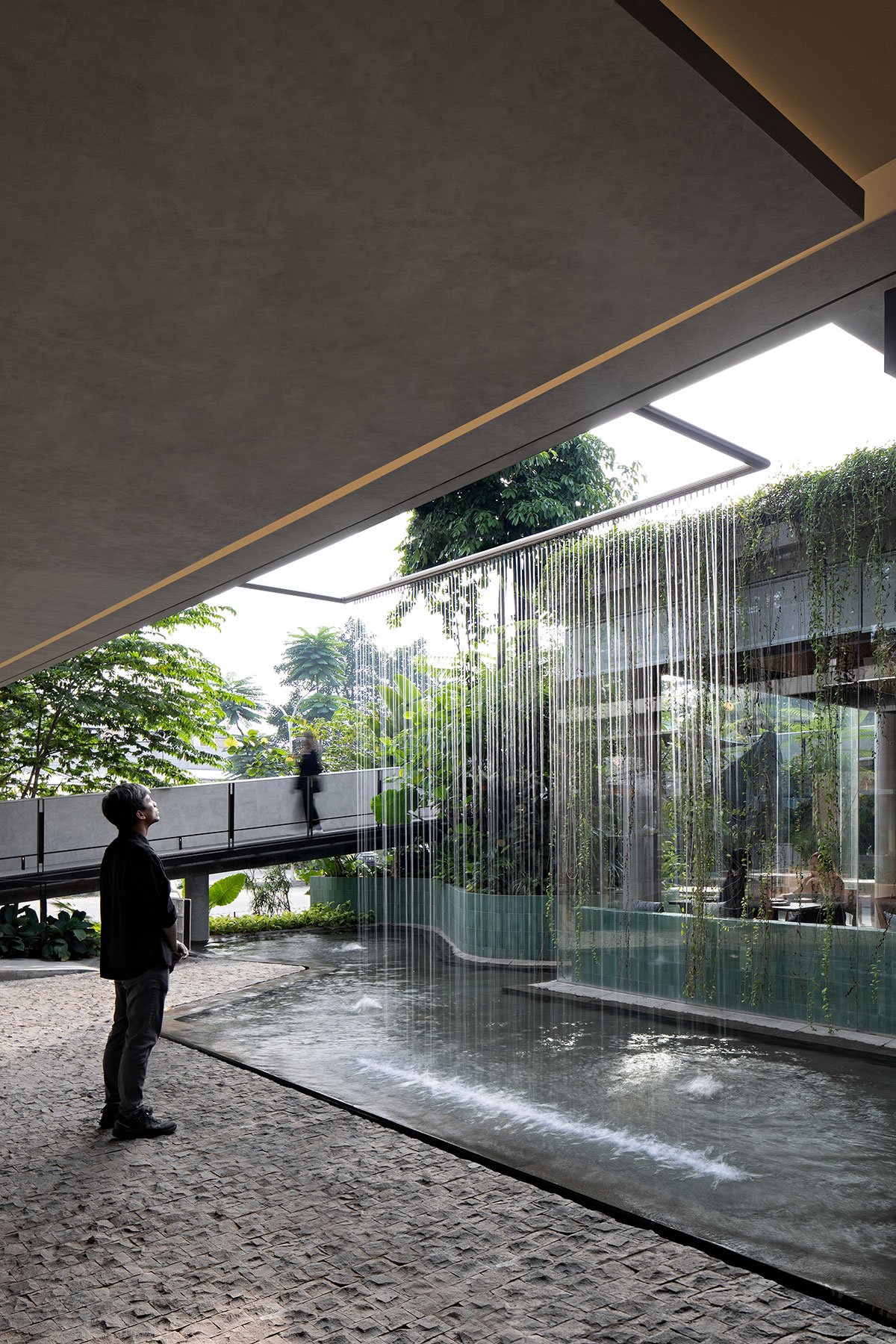
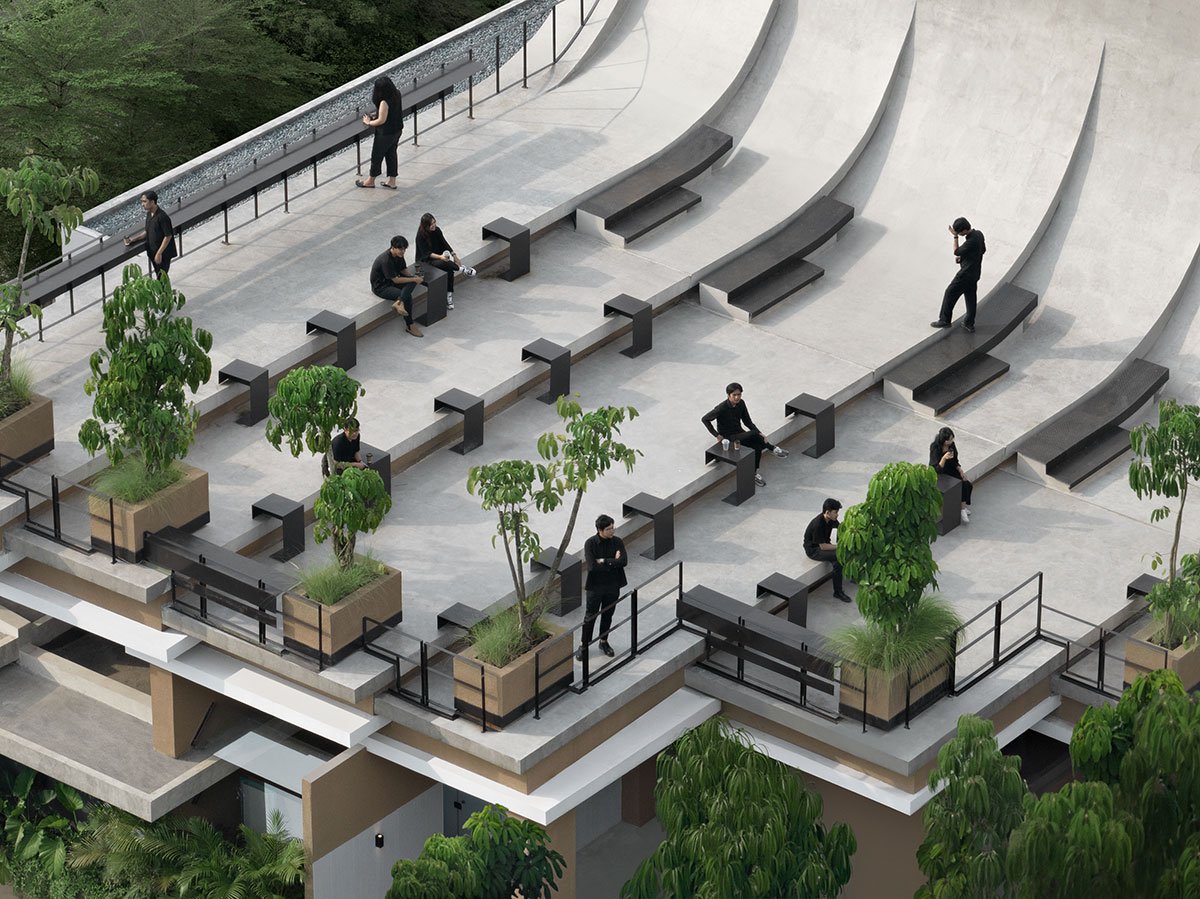
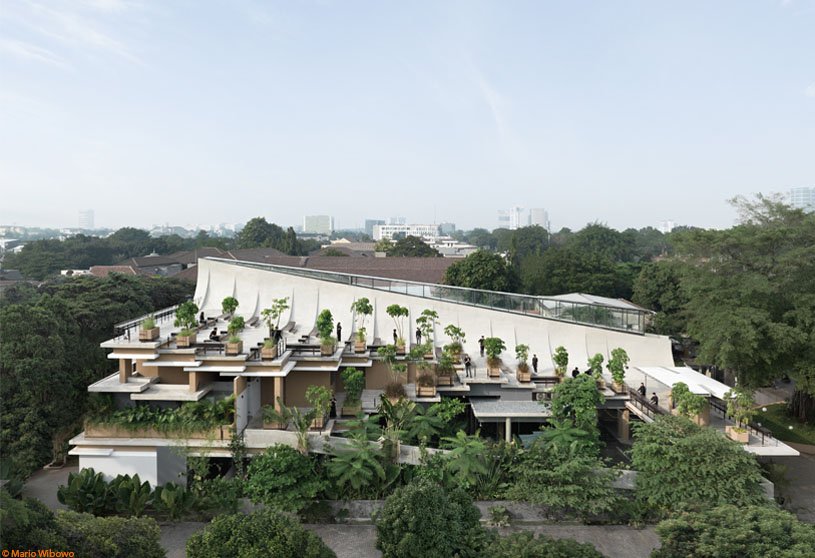
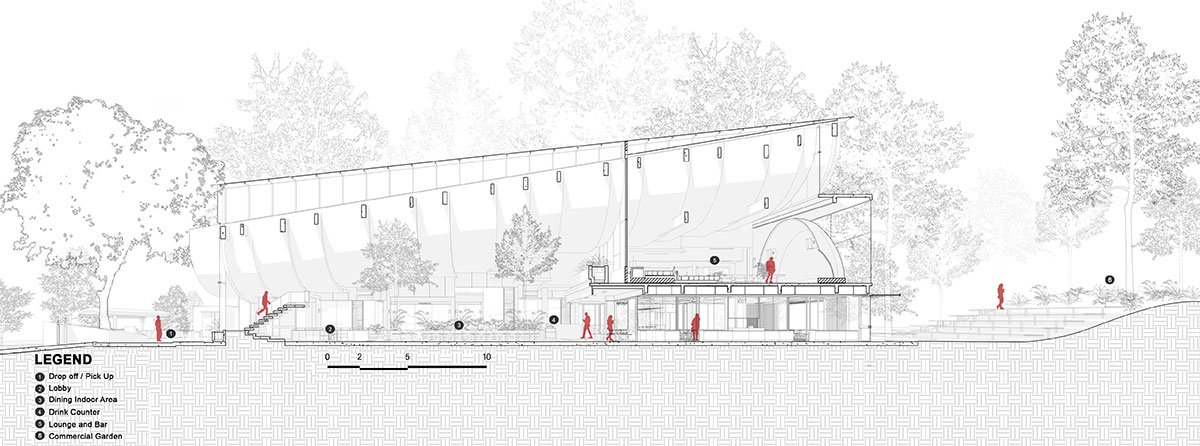
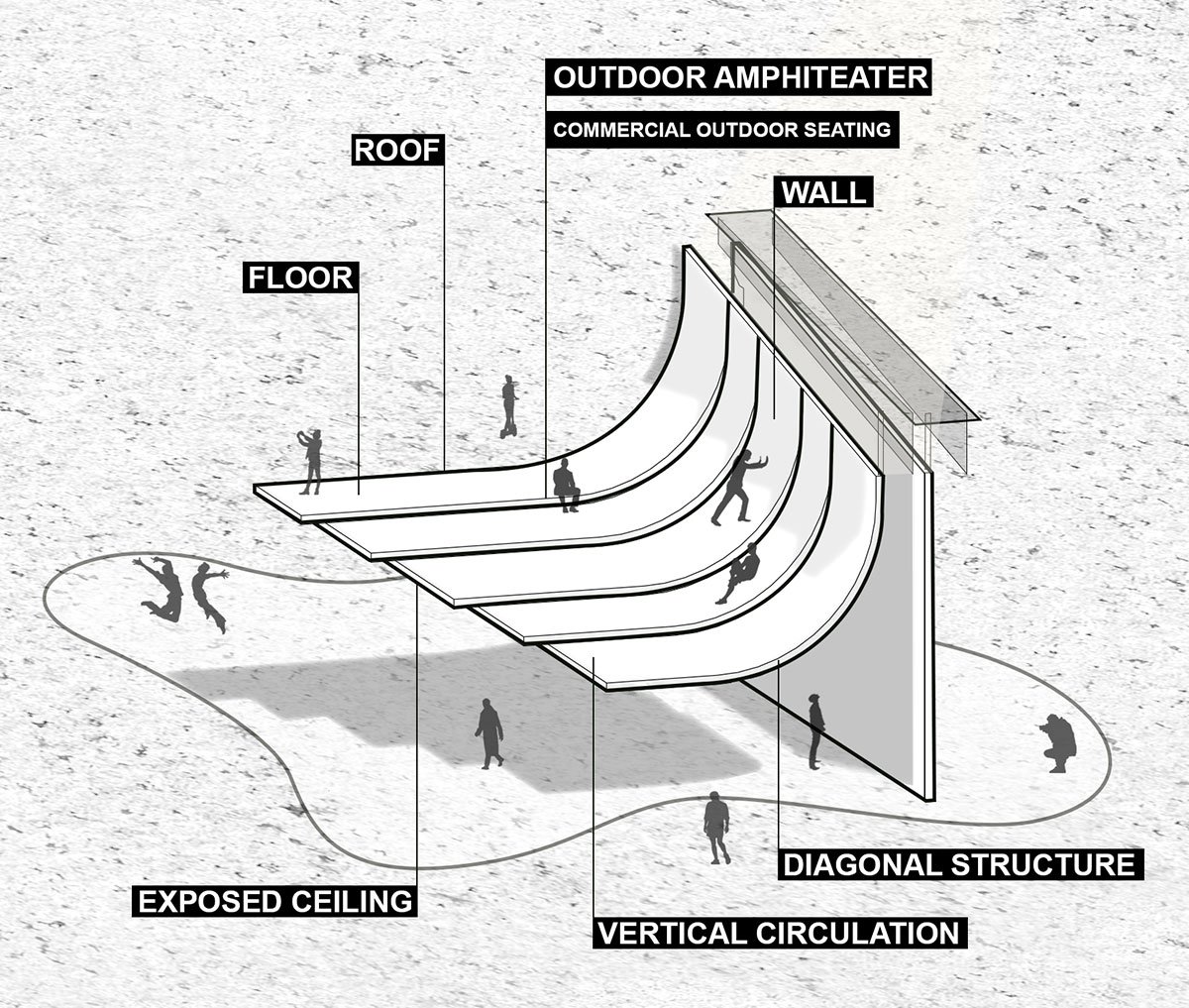
The design incorporates elements such as roofs, facades, walls, diagonal cantilevered structures, and furniture elements, all in a contemporary design that blends with the tropical surroundings of the commercial area. Integration elements like natural light, greenery, views of nature, natural materials, and other sensory experiences are incorporated into the buildings and spaces.
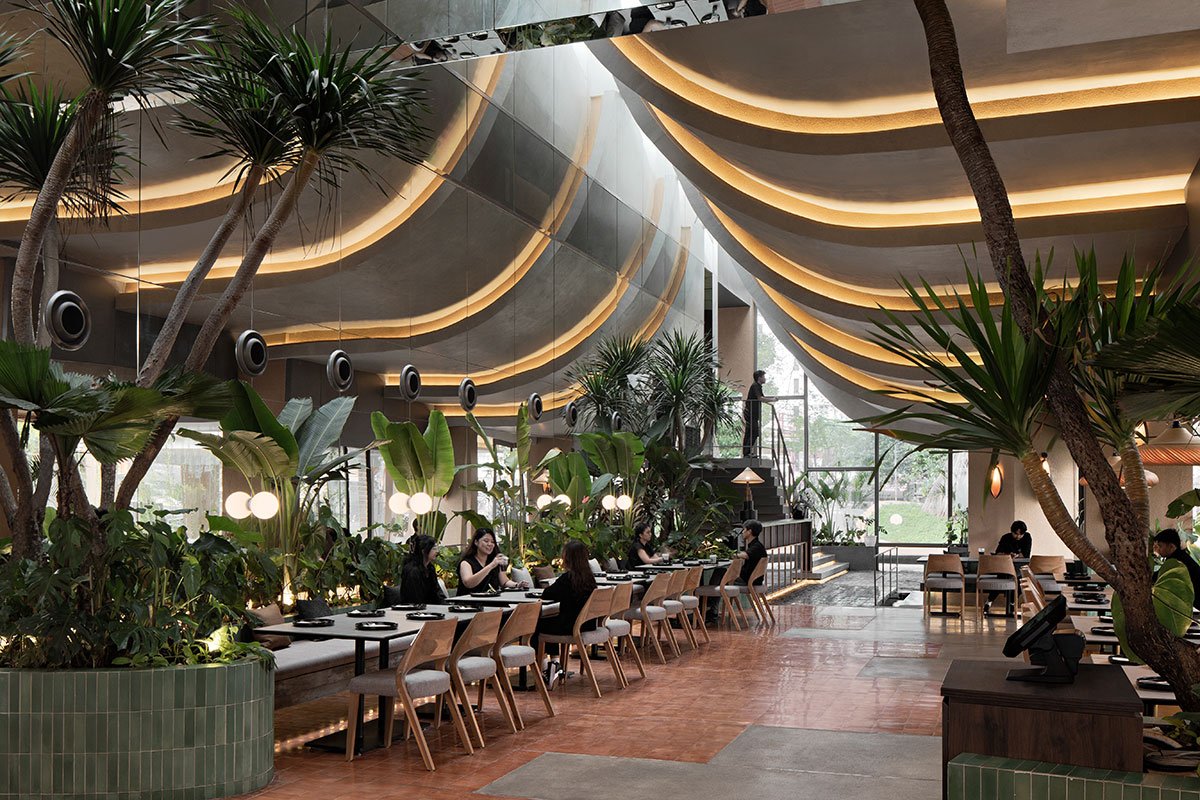
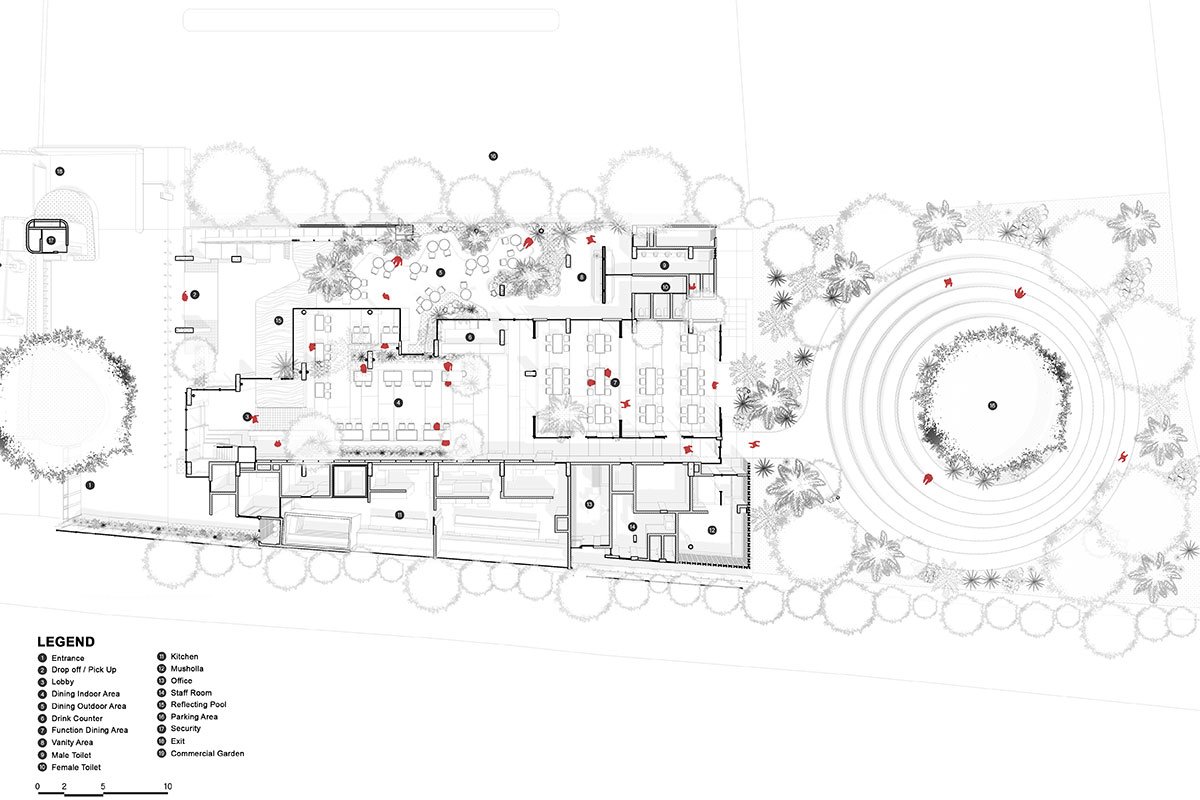
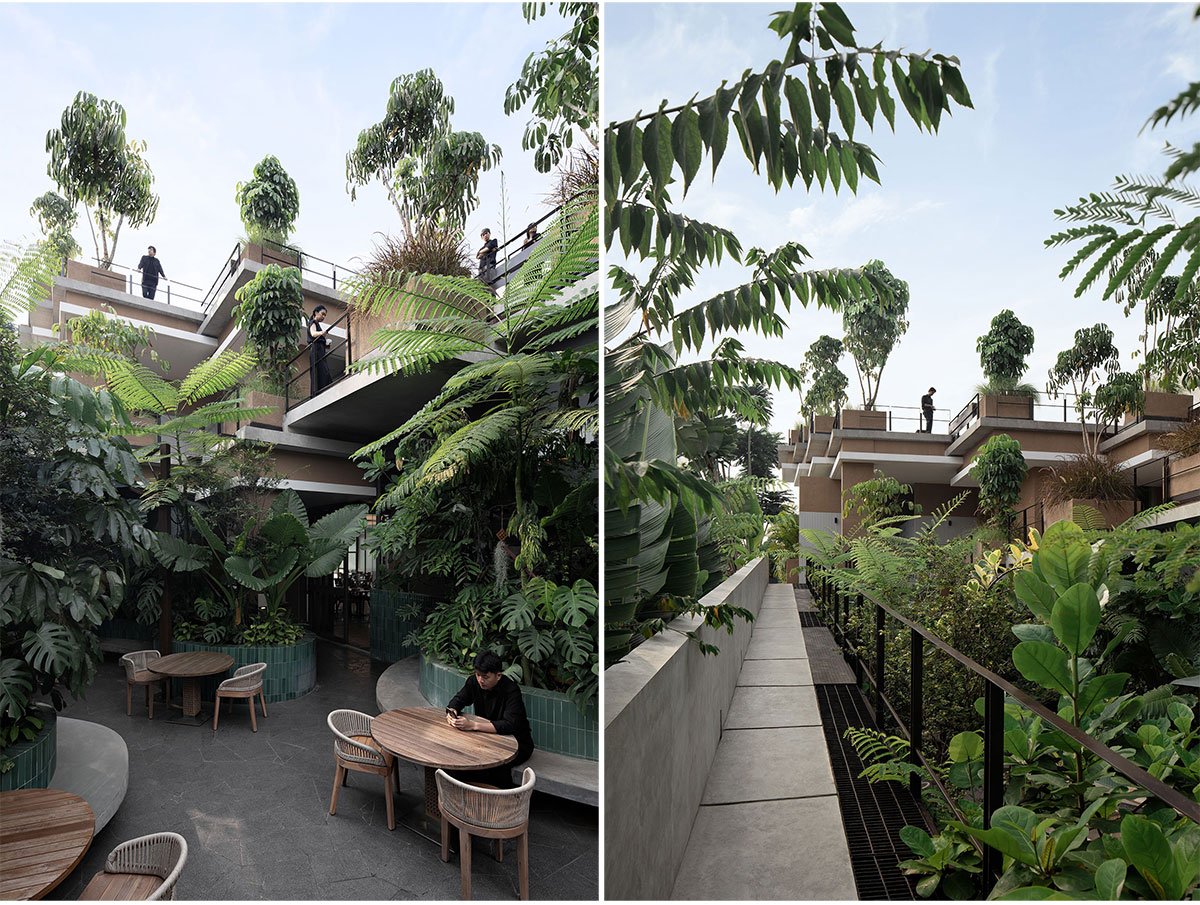
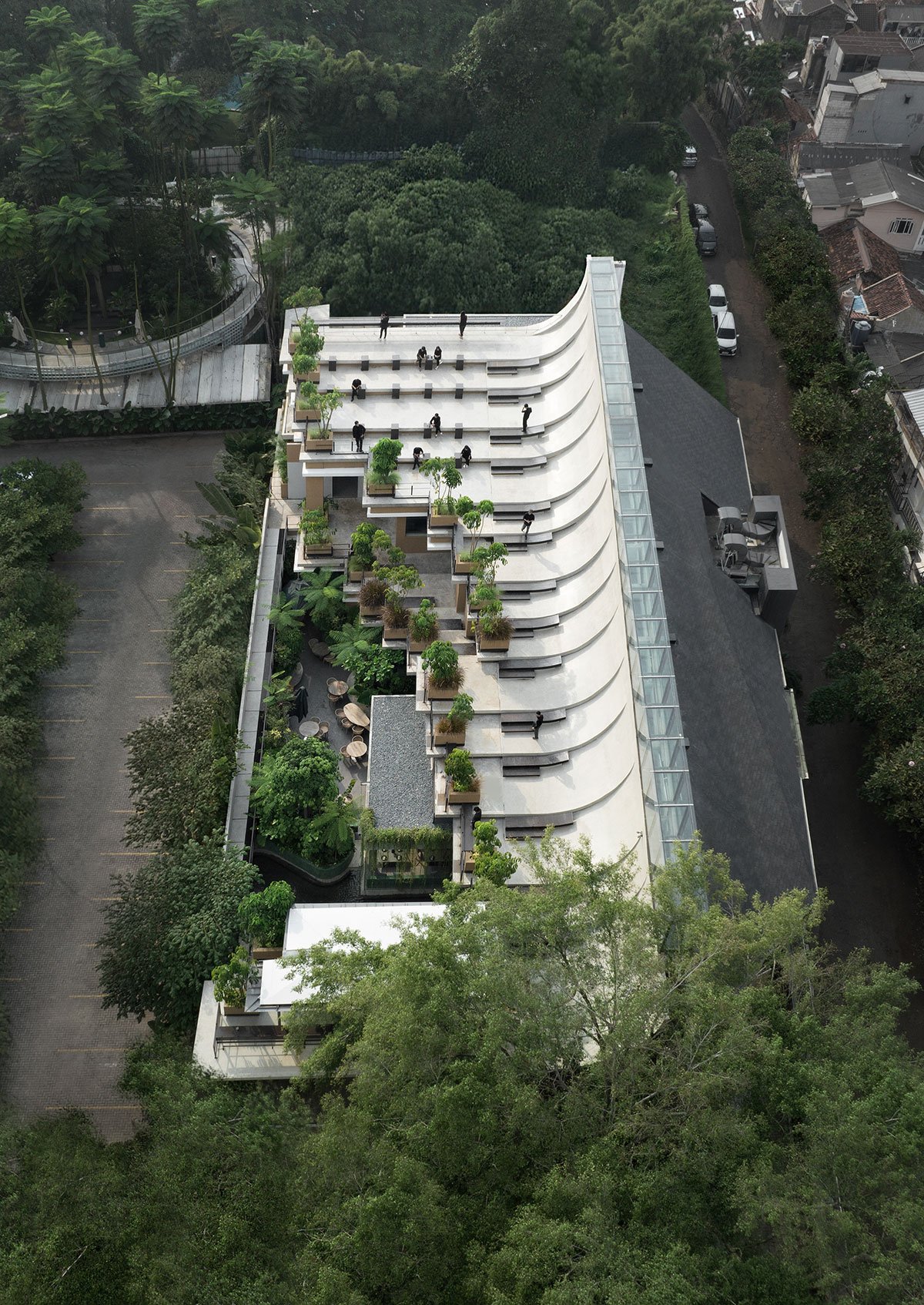
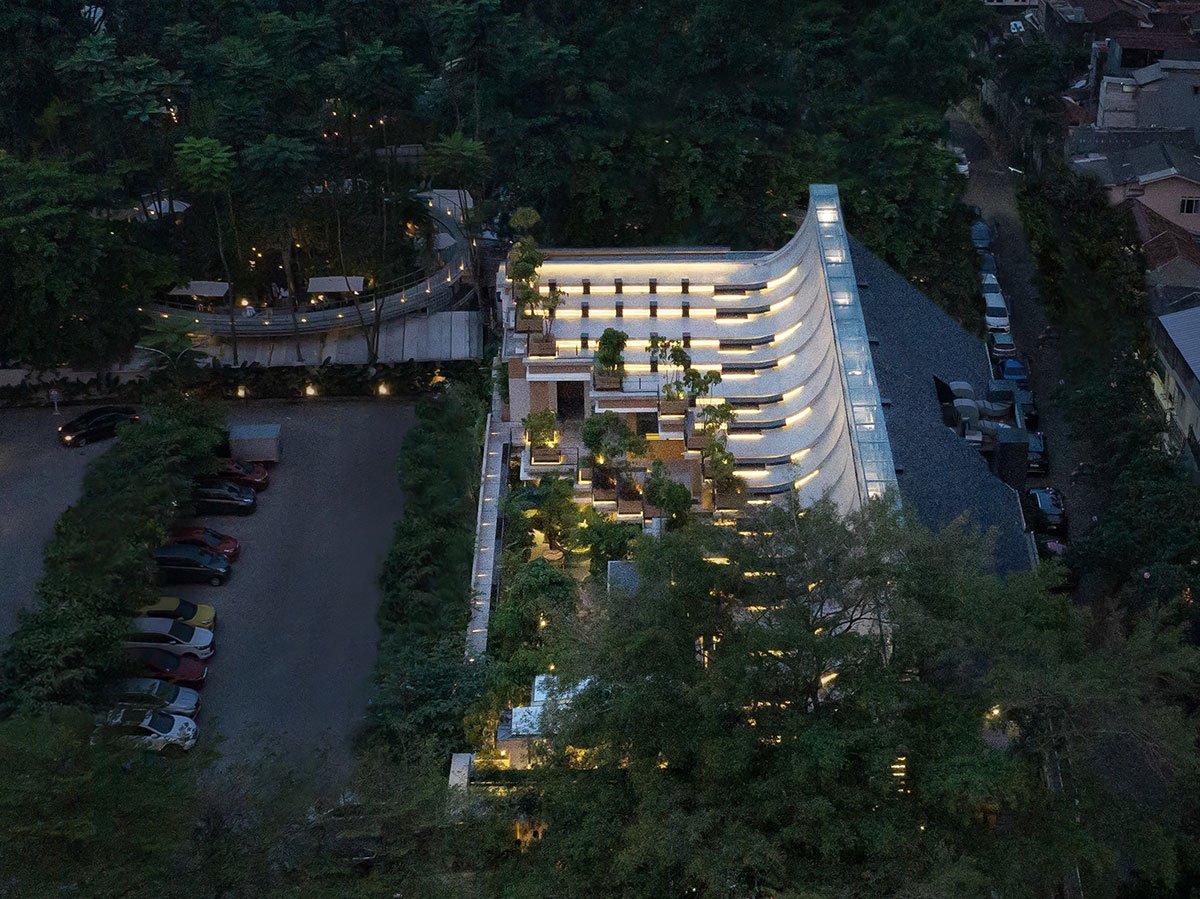
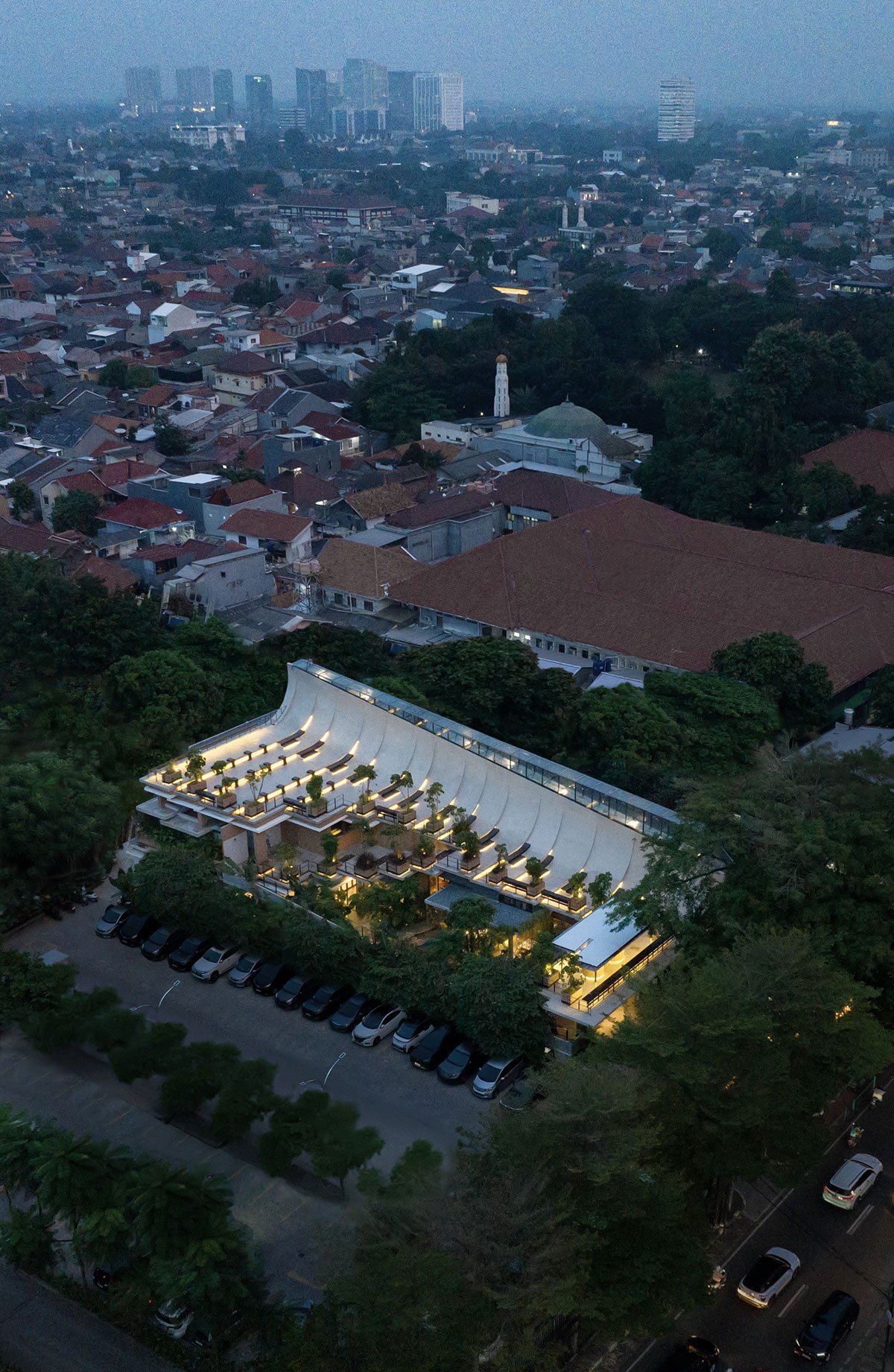
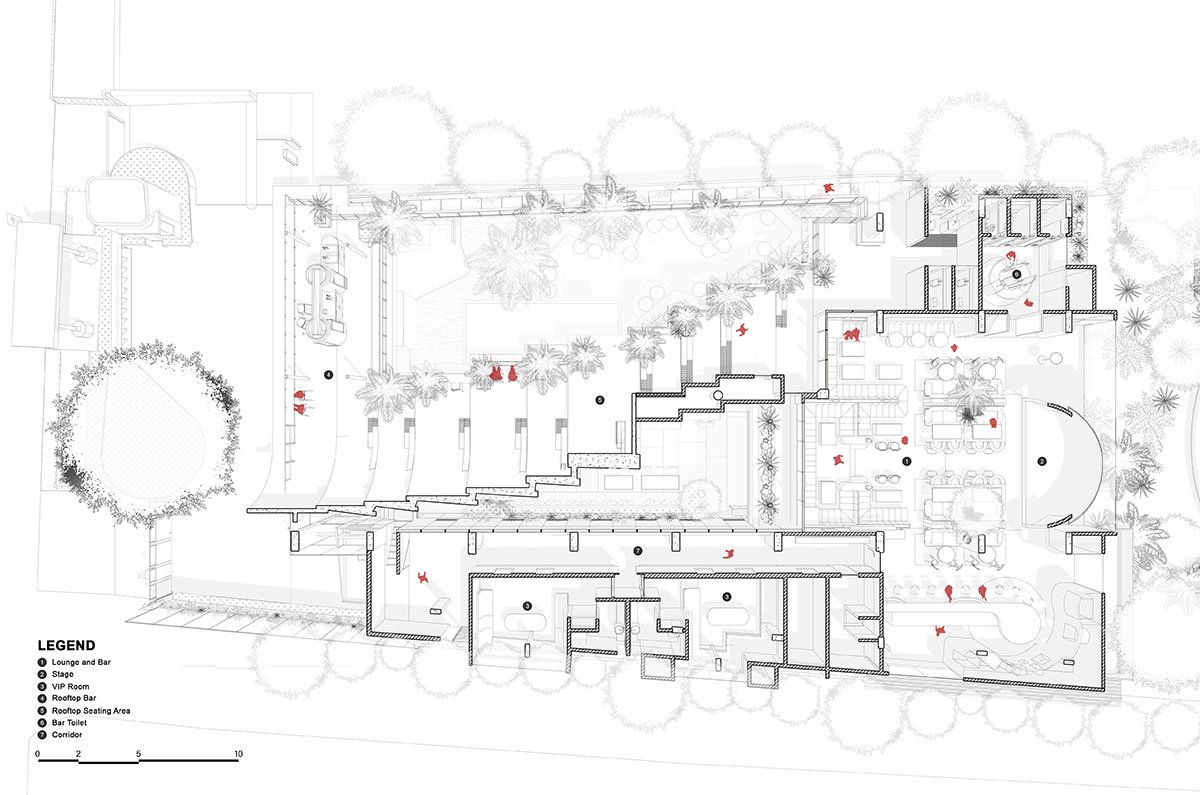
The design of the building was oriented north-south to preserve the existing greenery in the rear garden. This design approach aimed to expand the spatial experience by creating a wind tunnel that connects the two giant trees at both ends. However, this situation posed a challenge in optimizing the multi-level commercial spaces without sacrificing any greenery.
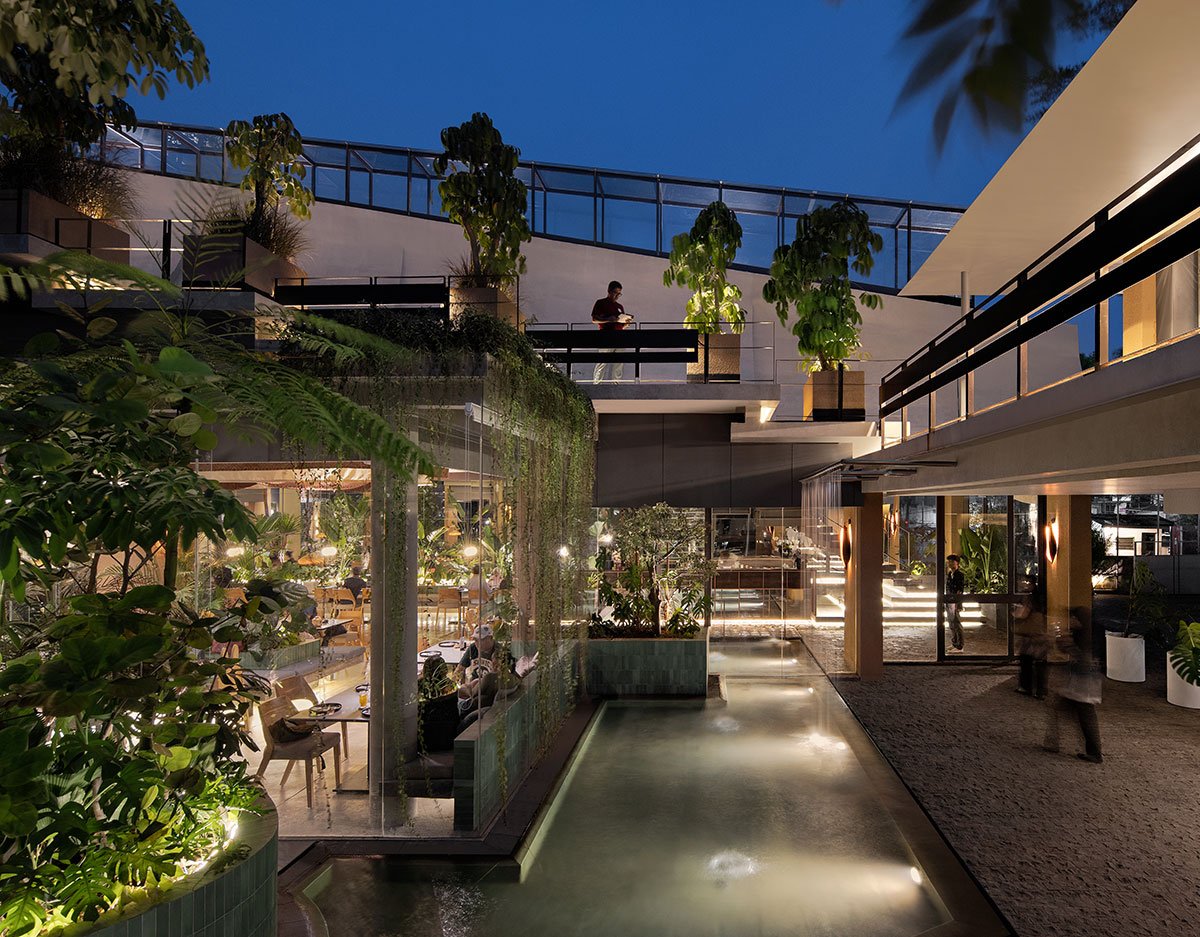
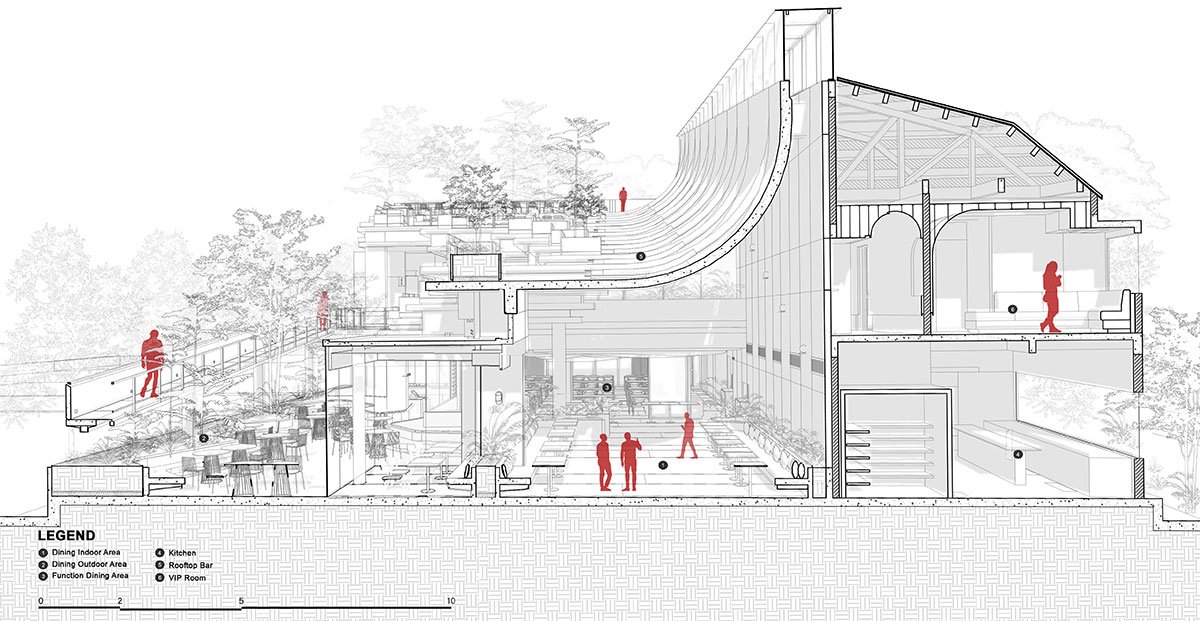
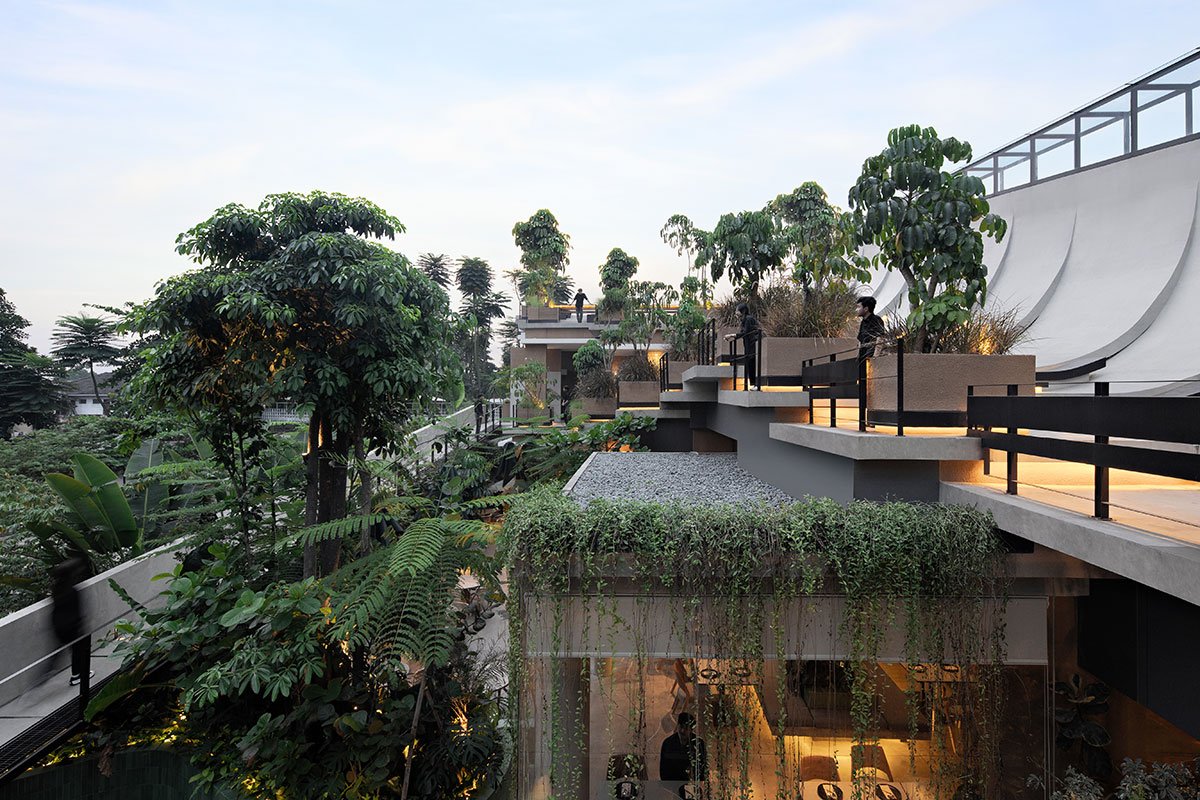
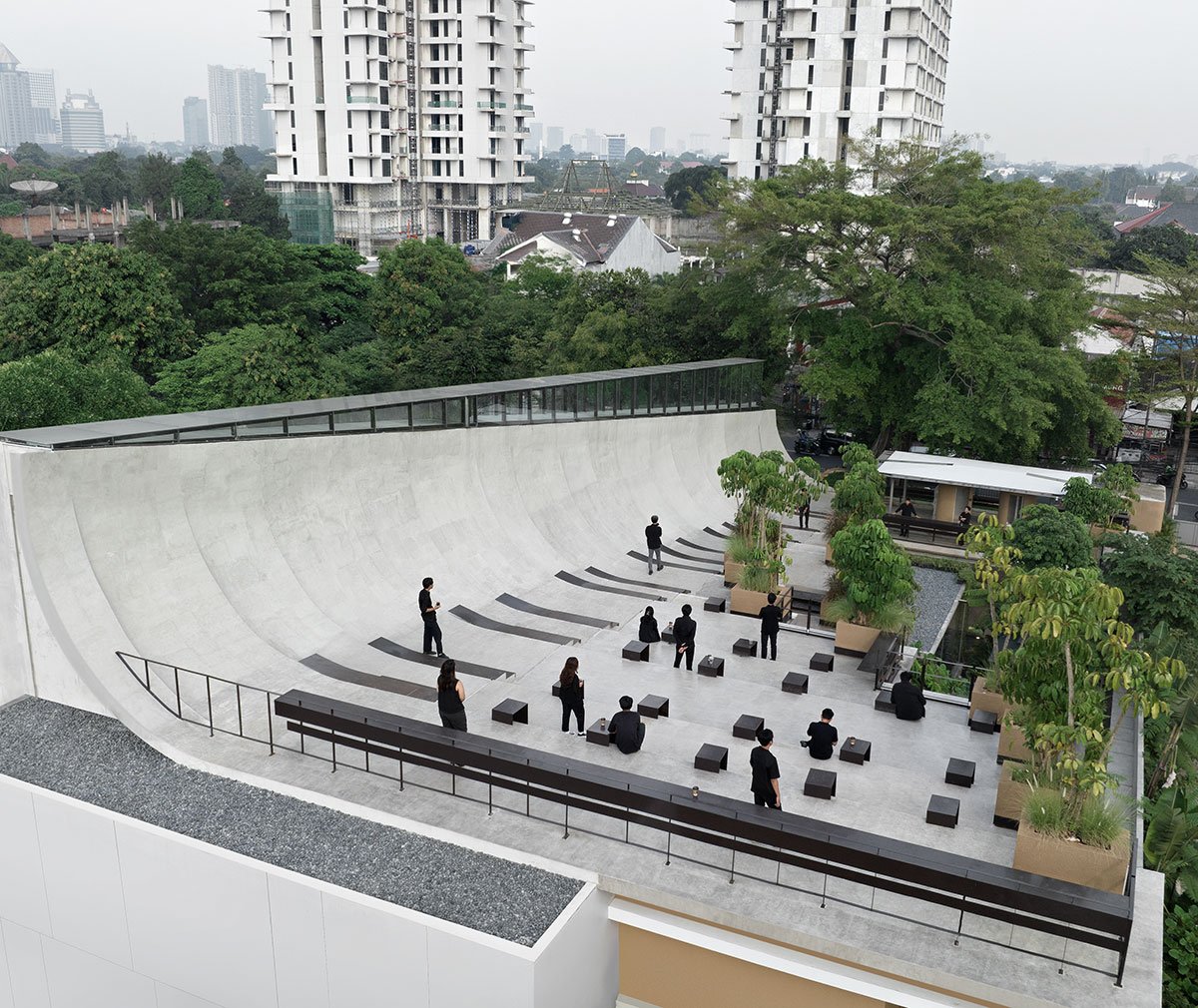
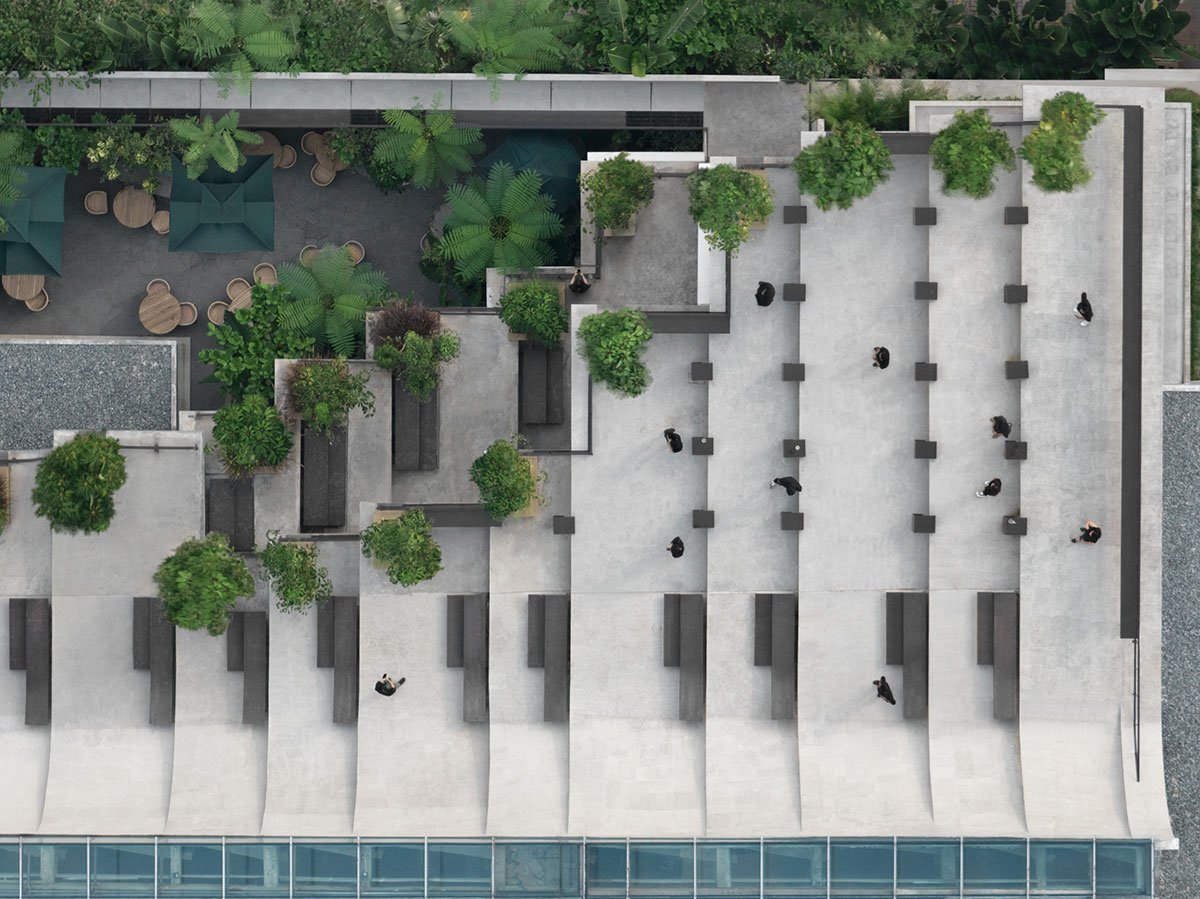
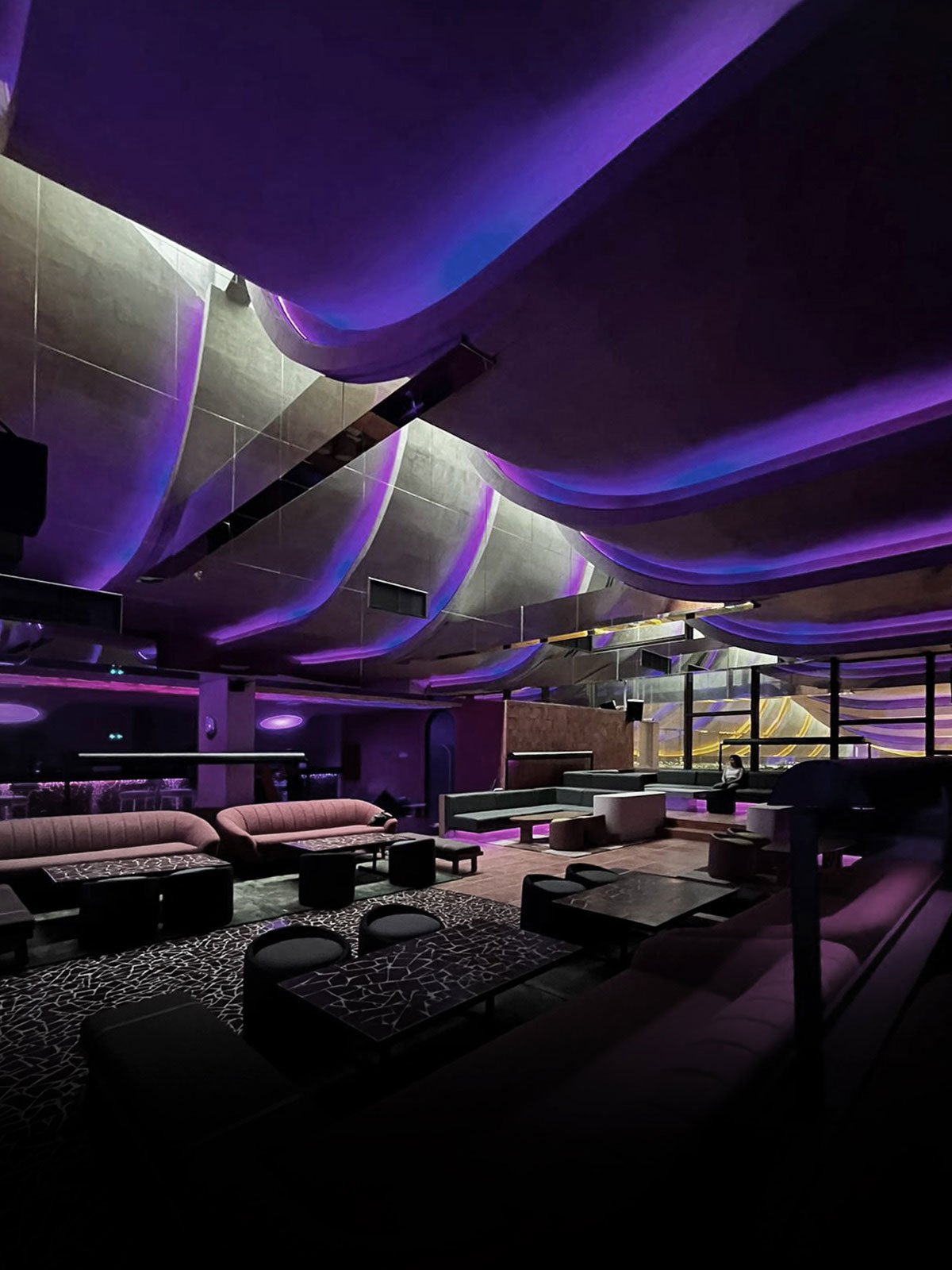
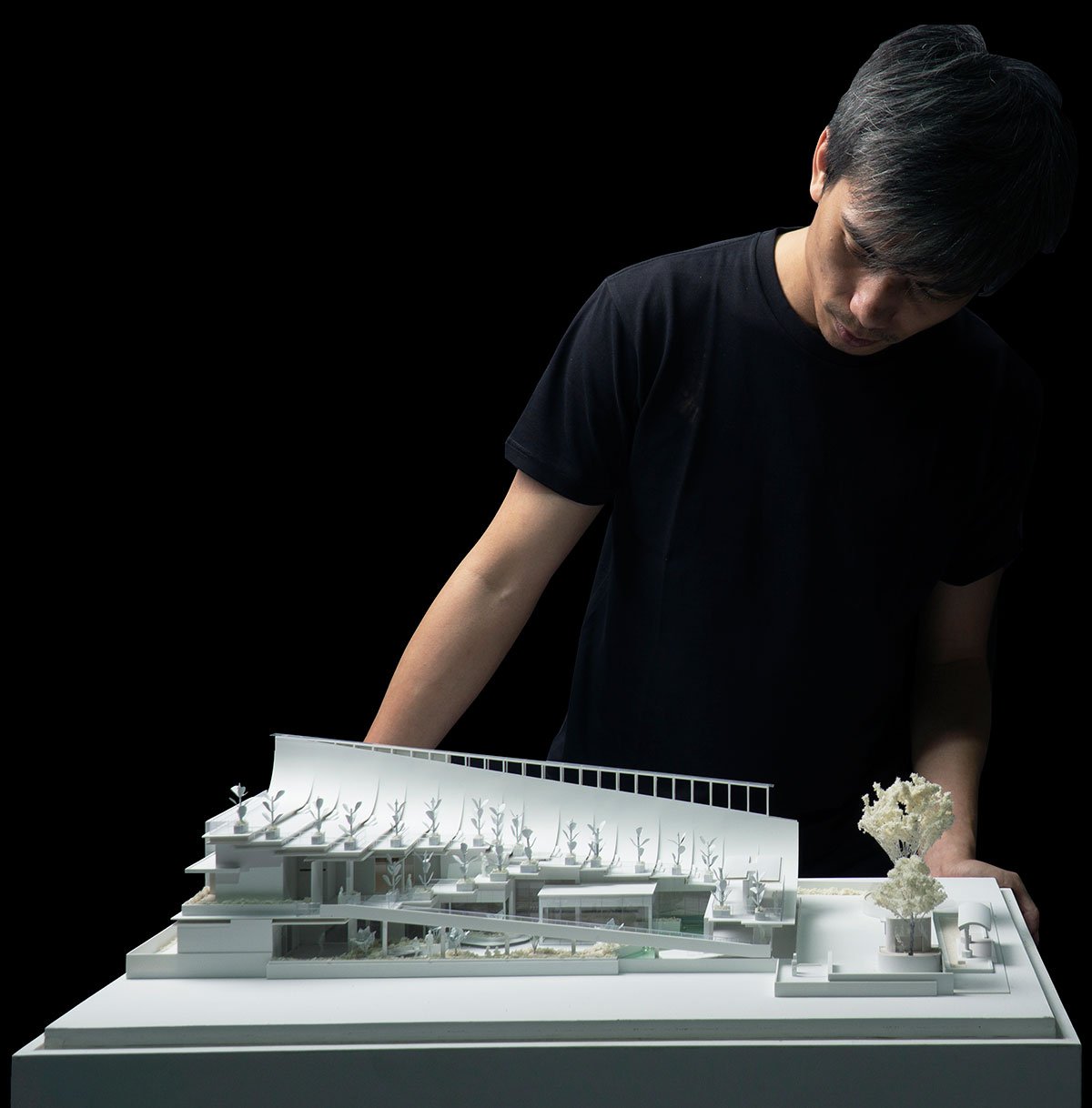
To address this challenge, the structural elements were integrated into the spatial planning of the design. This allowed for a seamless transition from the front garden, diagonally creating a loop connection for three tenants: restaurants on the ground floor, a bar in the mezzanine space, and a beer garden in between spaces extended to the rooftop. This integration of different spatial experiences and characters within the development ensured a cohesive design.
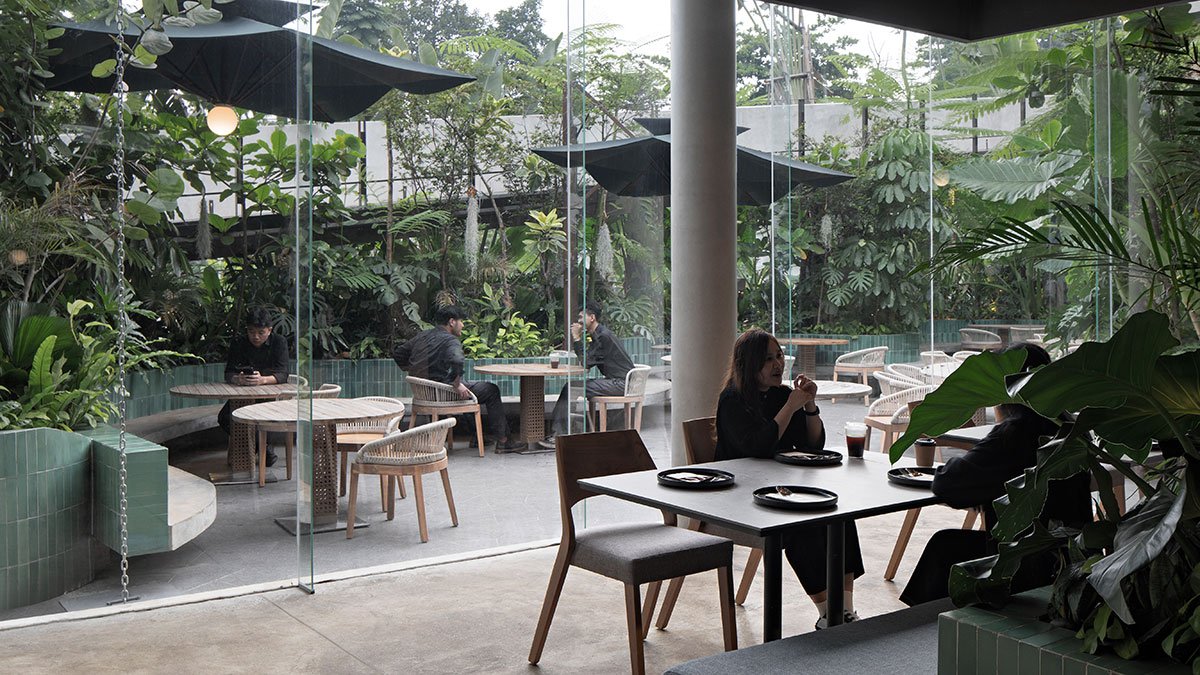
In addition, gardens were appreciating between spaces to ensure smooth and seamless connections between different materials and components. This not only created a visually pleasing design but also enhanced the overall user experience.
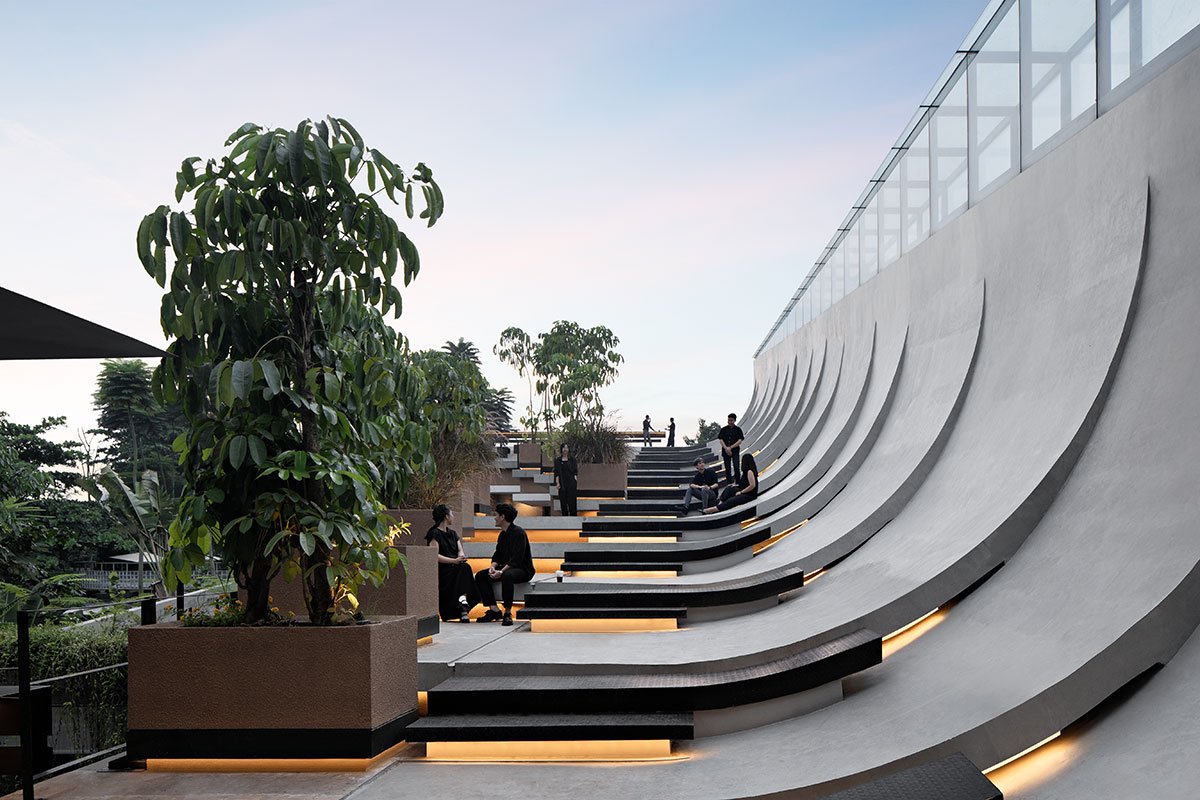
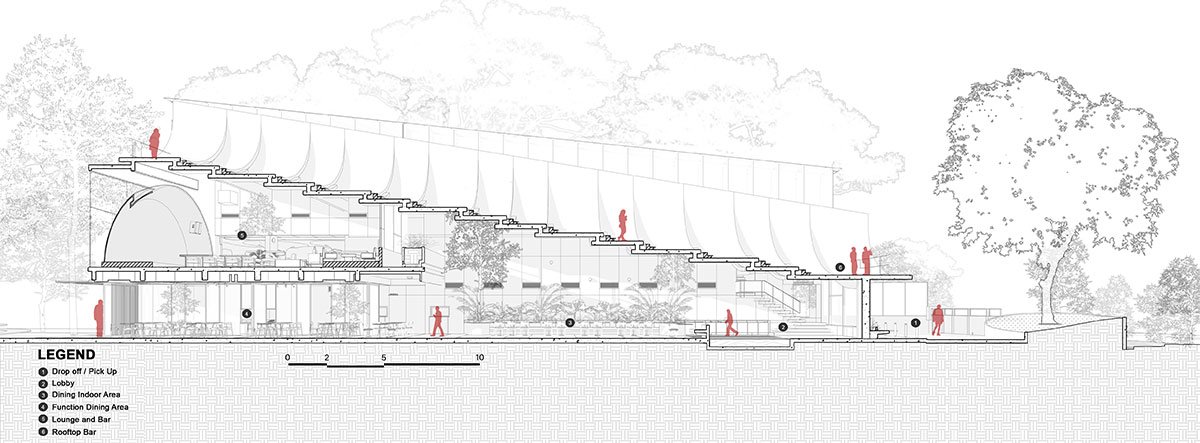

To optimize the structural design, the goal was to minimize material usage and energy consumption. This was achieved by carefully considering the load-bearing capacity of the structural elements and using efficient construction techniques. Furthermore, sustainable finishing materials were chosen, taking into account their environmental impact and attributes. By targeting optimal integration and considering sustainability, the design achieved a balance between functionality, aesthetics, and environmental responsibility.

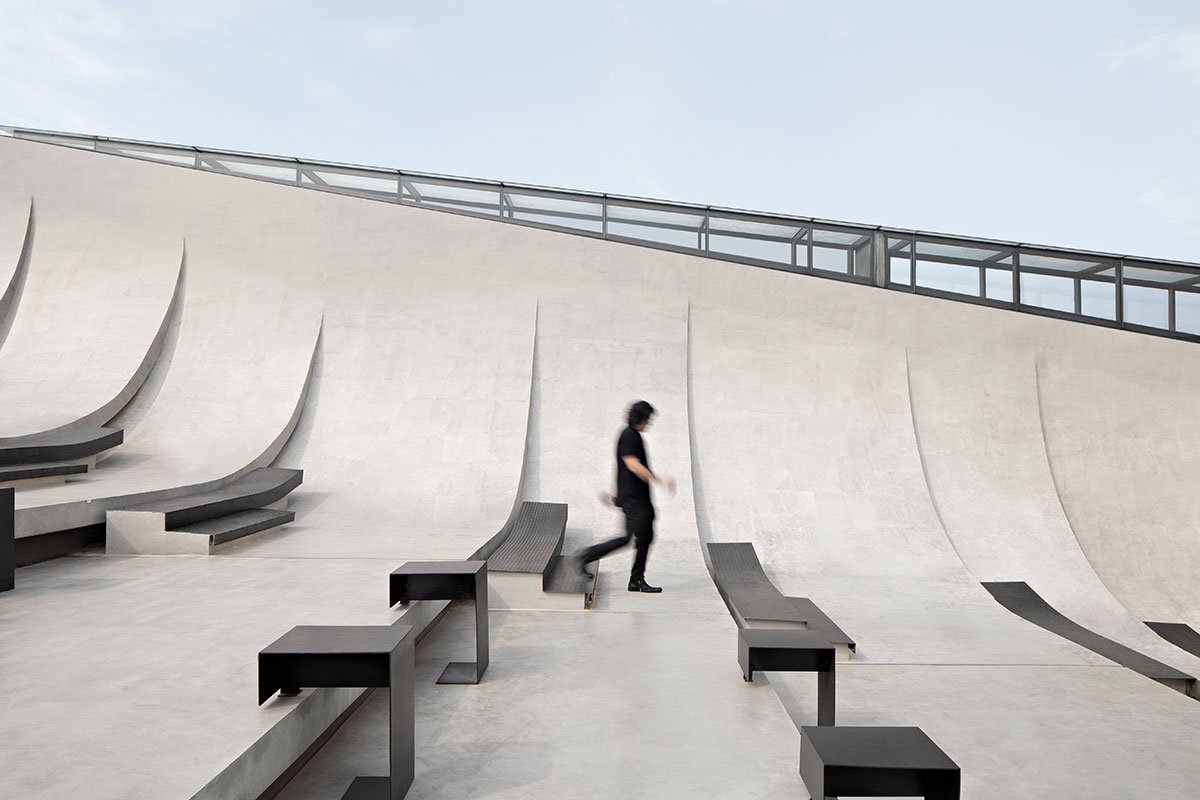
Targeting optimal integration implemented in design refers to a careful and thoughtful design approach that aims to seamlessly blend different elements and components within a building. This approach creates a harmonious relationship between various aspects such as functionality, aesthetics, context, sustainability, and user experience. The goal is to achieve a cohesive and balanced design where all elements work together to enhance the overall quality and effectiveness of the space.
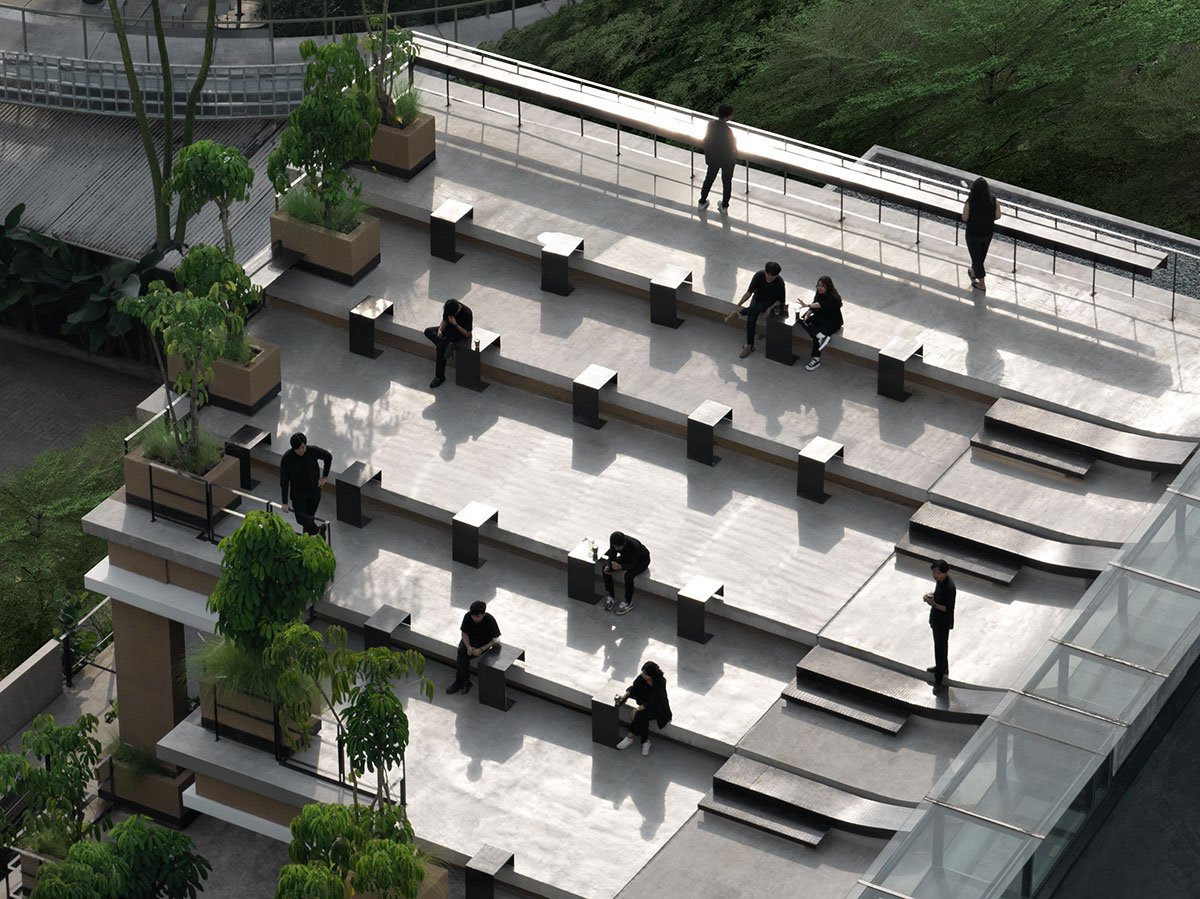
Aruma split garden is one of many iterations from RAD+ar to showcase their commitment on decentralizing sustainability amongst many commercial projects that might inspire many developers in developing countries such as Indonesia to follow. Promoting sustainability by educating building occupants and users about the sustainable features and practices incorporated into the design that can encourage responsible behavior and a commitment to sustainable living.
Drawings


Images