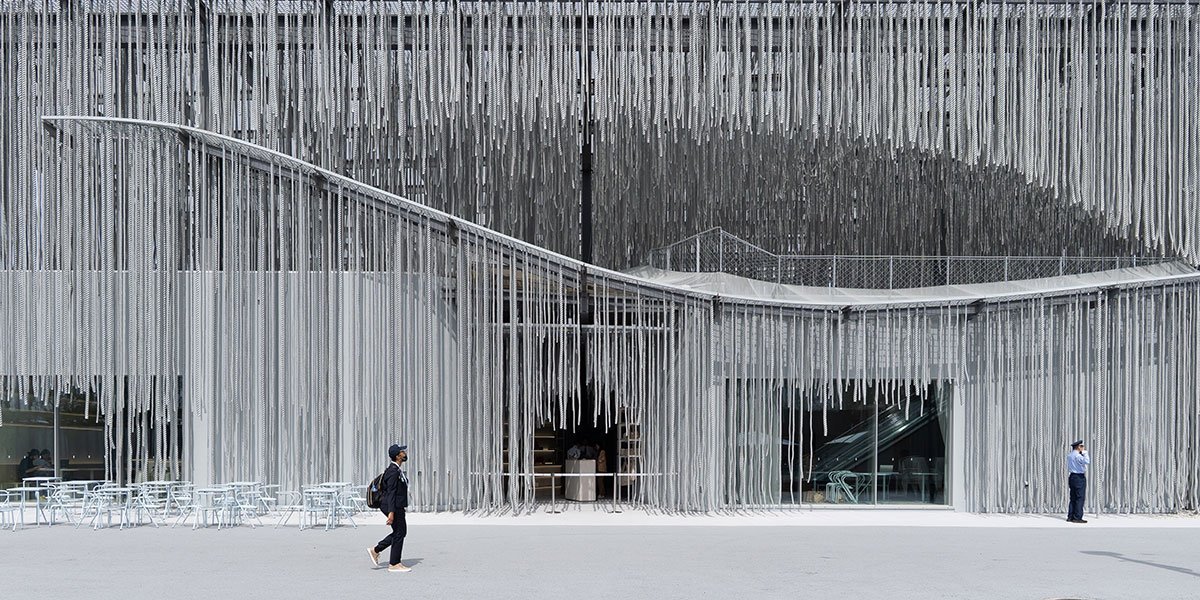
Excerpt: Expo 2025 Portugal Pavilion by Kengo Kuma & Associates reimagines architecture as a fluid, dynamic experience, reflecting the deep maritime connection shared by Portugal and Japan. Using boat lines that sway with wind and light, the design evokes the ever-changing nature of the sea. Rather than a fixed form, the pavilion creates a sensory space—light, vibrant, and alive—bridging cultures through a poetic expression of architecture.
Project Description
[Text as submitted by architect] Portugal, like Japan, is a country of the sea, with a deep connection to the ocean. During the Age of Discovery, Portuguese explorers sailed the world’s oceans bringing Western civilization to Tanegashima and opening Japan to the West.
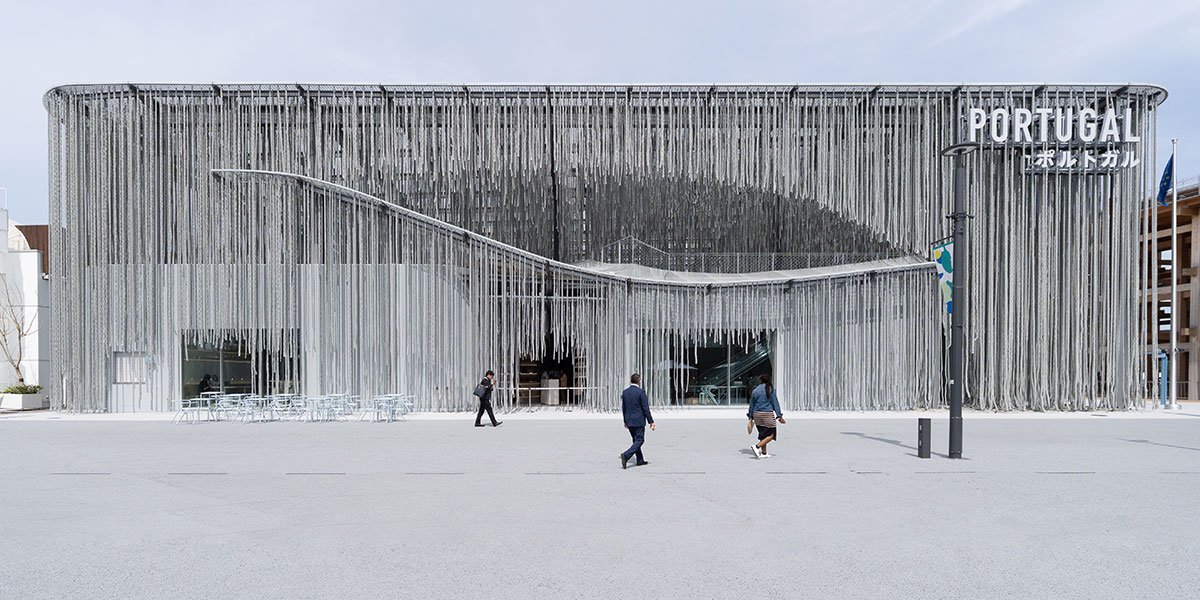

We aimed to create a pavilion that reflects this connection, where visitors could feel the maritime presence on the Expo site, which sits on an island of Seto Inland Sea. Unlike mountains, the sea has no form, so it is not easy to express it as architecture, but it was a goal worth tackling. We came up with the idea of creating an actual place -not a form- where one could experience the nature of the sea as a physical sensation.


We used boat lines that were one of the main tools for sailing ships during the Age of Discovery. The wind blows through the myriad of lines that vary in thickness, causing them to sway slowly or vibrate minutely. Light filters through and reflects off the lines, creating a shifting pattern. Together, these elements evoke the essence of the sea – an ever changing space shaped by waves and vibrations.
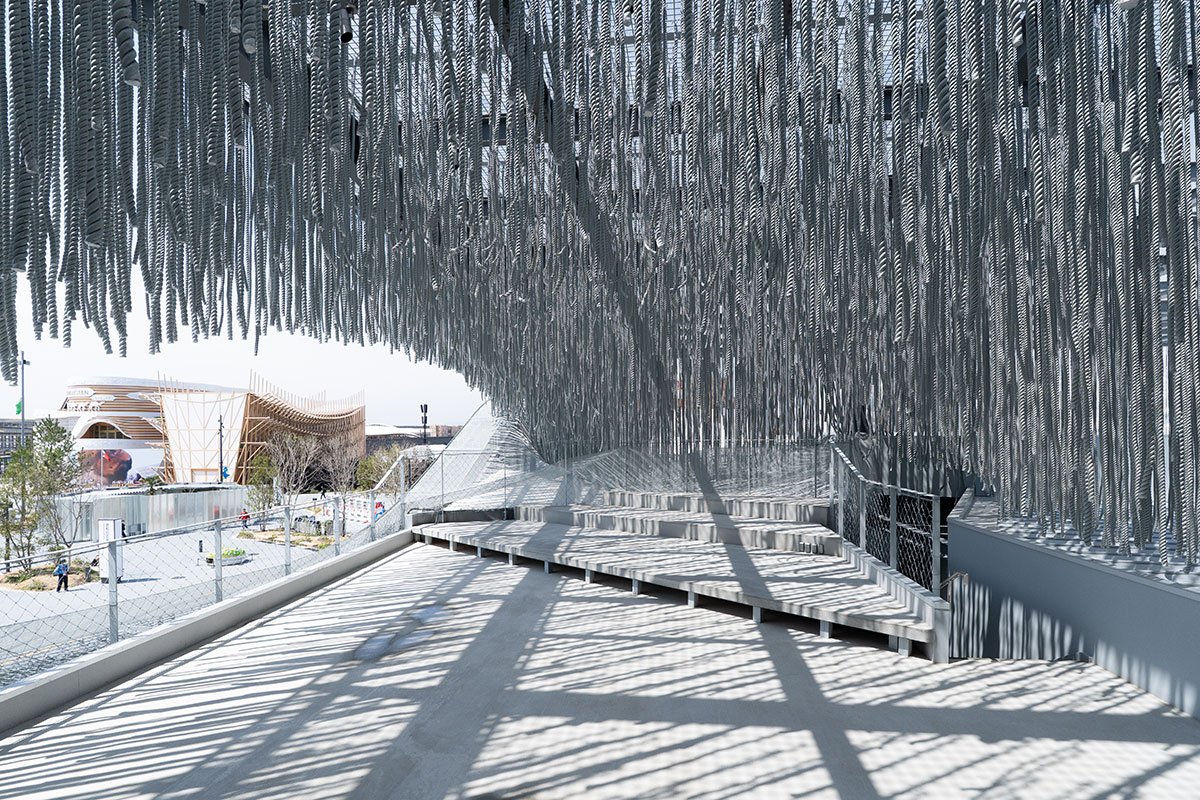
Architecture is perceived as a heavy, solid volume that is firmly fixed in site, but this Portugal Pavilion is an unprecedented kind of architecture that continues to move and vibrate. It is an architecture that is as free and light as a living creature, which replaces the lumps made of heavy concrete and steel structures that have conquered the world since the 19th century. By bridging Portugal and Japan, the two marine countries, we wanted to create a new, free and humane architecture.
Images