Excerpt: Garden Home Design by The Vrindavan Project is an off-grid farmhouse near Gurugram, built to provide the users self-reliance during the pandemic lockdowns. Featuring a robust and compact design, the residence is minimal, cost-effective, and rooted in sustainability—using local materials, passive cooling, and traditional techniques. It serves as a personal retreat that enables organic farming and a life aligned with nature and independence.
Project Description
[Text as submitted by architect] Mr. Arvind Saxena – the former President & MD of General Motors India, was appointed as chairman of the Union Public Service Commission, which conducts examinations to select bureaucrats, diplomats and police officers. Mr. Saxena’s tenure as UPSC chairman would last till August 2020 when he would accomplish a well-deserved retirement, at the graceful age of 65 years.
Having occupied a long-term leadership role in the automotive industry, and upon serving the Government of India in a crucial position of authority as well; Mr. Saxena would definitely be considered as a vital captain of industry and visionary for National development. His wife Archana is a gentle and caring woman who loves to maintain her garden, while taking great care of Arvind’s health and wellbeing throughout his stellar career. They adopted an outdoor oriented lifestyle and enjoy trekking, travelling and adventure sports. Archana insists on eating organic food sourced directly from
local farmers and is mindful of every detail of their diet, down to the source of their dairy products.

On the 22nd of March 2020, India observed a 14 hour ‘Janata Curfew’ lockdown. At 5 p.m. that day, all citizens were asked to stand in their doorways, balconies and windows – to clap their hands or ring their bells in appreciation for professionals delivering essential services. Citizens of our country remained under effective house arrest for the next 250 days. Meanwhile, India’s fourth economic recession since Independence was simultaneously taking shape – where the country’s gross domestic product’s growth rate from April to June in 2020 was (minus 23.9%); which may well have been the worst economic contraction recorded in Indian history.


Another 70-day lockdown was again imposed from April to June of 2021. It was during this second national scale shutdown of the material supply chain, that Mr. and Mrs. Saxena decided to take matters into their own hands. With great courage, they ideologically turned their backs on a ‘system’ that they themselves served and managed for decades; to search for an affordable piece of land near their Gurugram apartment, with a vision of setting up their own off-grid homestead. Arvind could no longer bear witnessing his wife suffer the effects of consuming chemically infused produce, owing to being cut off from their carefully curated alternative sources of nutrition.
As a man of action, he realised that it was time to acquire enough space to build a retreat from a city that could be immobilised at a moment’s notice. A refuge where his adoring wife could grow her own food in peace, without the interference of larger scale global and national authoritarian influences.


About two hours drive from their current residence, Arvind found a modest L-shaped two-acre plot of land in an originally predominantly Muslim neighbourhood of Sohna near Gurugram. Mr. Iqbal was the real estate dealer who directed them to this site, and it was decided that Mr. Iqbal himself would be appointed as contractor as well, owing to his resourcefulness as a local in this region.
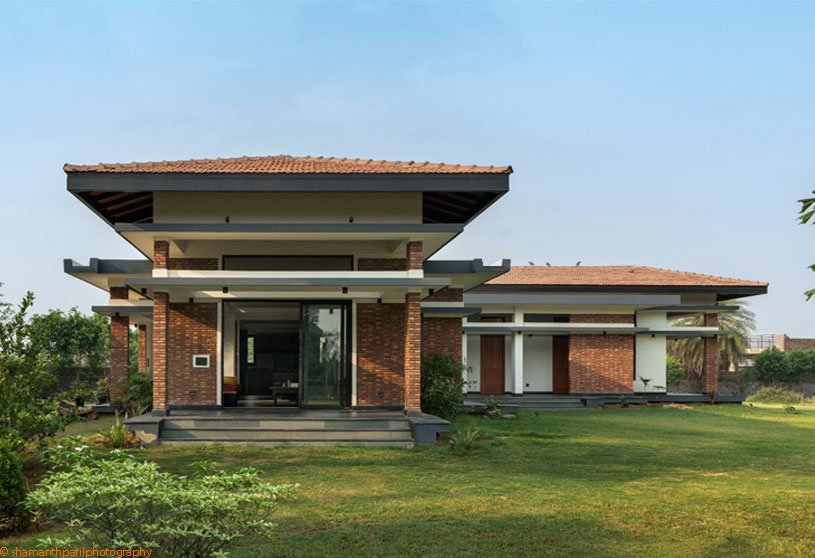
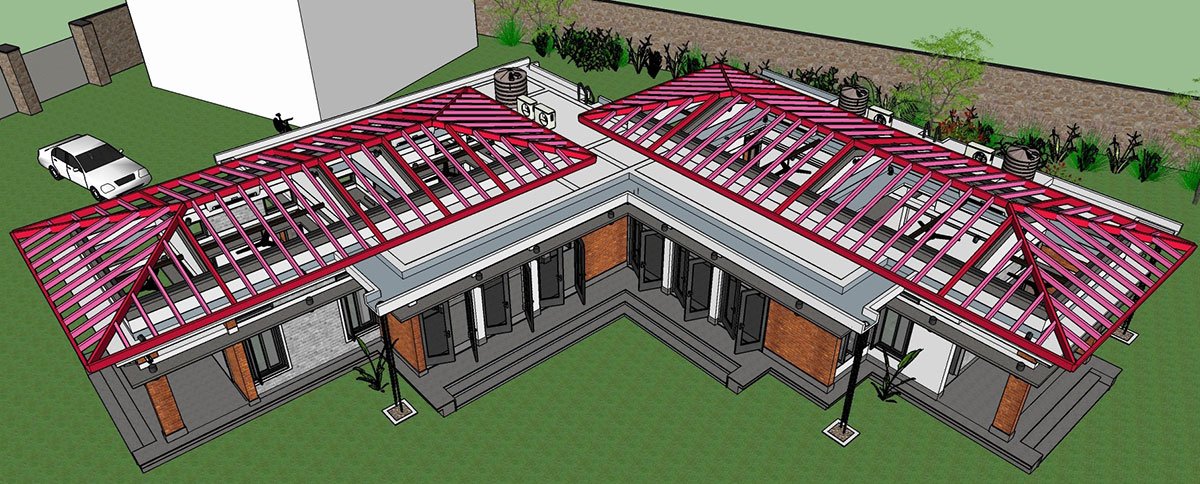
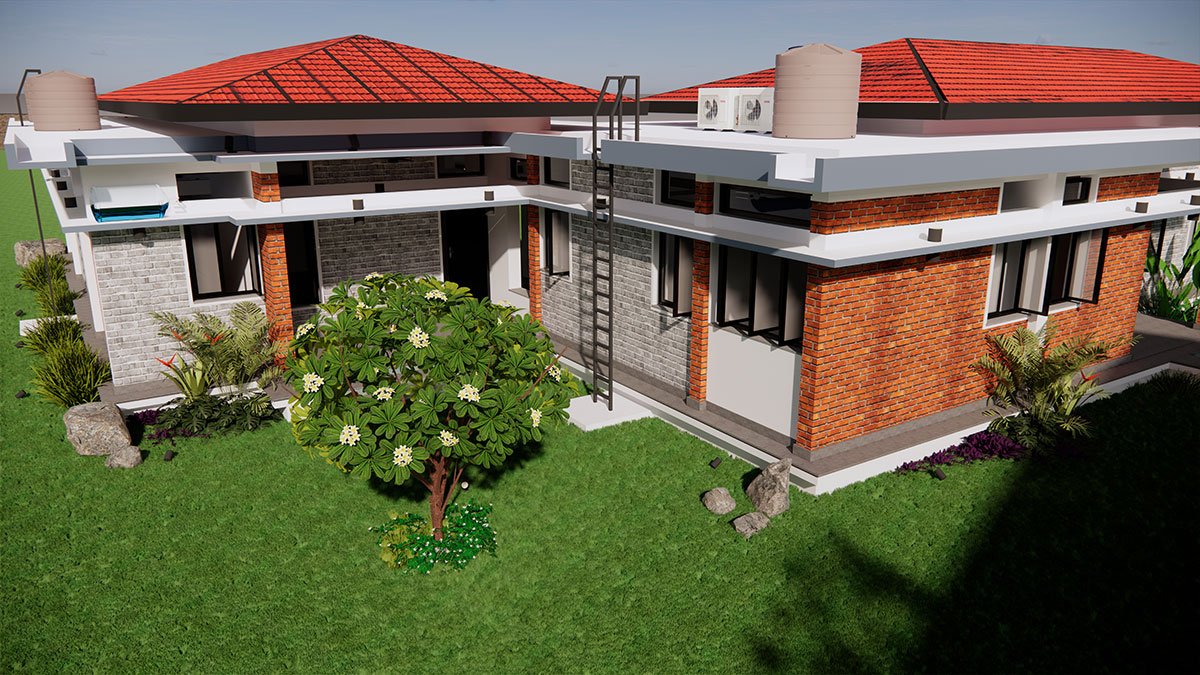
Architect Ranjeet Mukherjee of The Vrindavan Project was approached to design this farm house residence, with a clear brief that the place should be robust, compact, utilitarian and minimal. The goal was to work within the Saxena’s fixed budget of funds that were painstakingly saved over their career, for a contingency like this situation at hand. In synchronisation with the features of the given site, Ranjeet envisioned an L-Shaped residence with a separation of the living, dining and kitchen wing from the two bedrooms and bathrooms. Placement of this building’s footprint would allow for maximum free open space available for farming purposes all around the house.

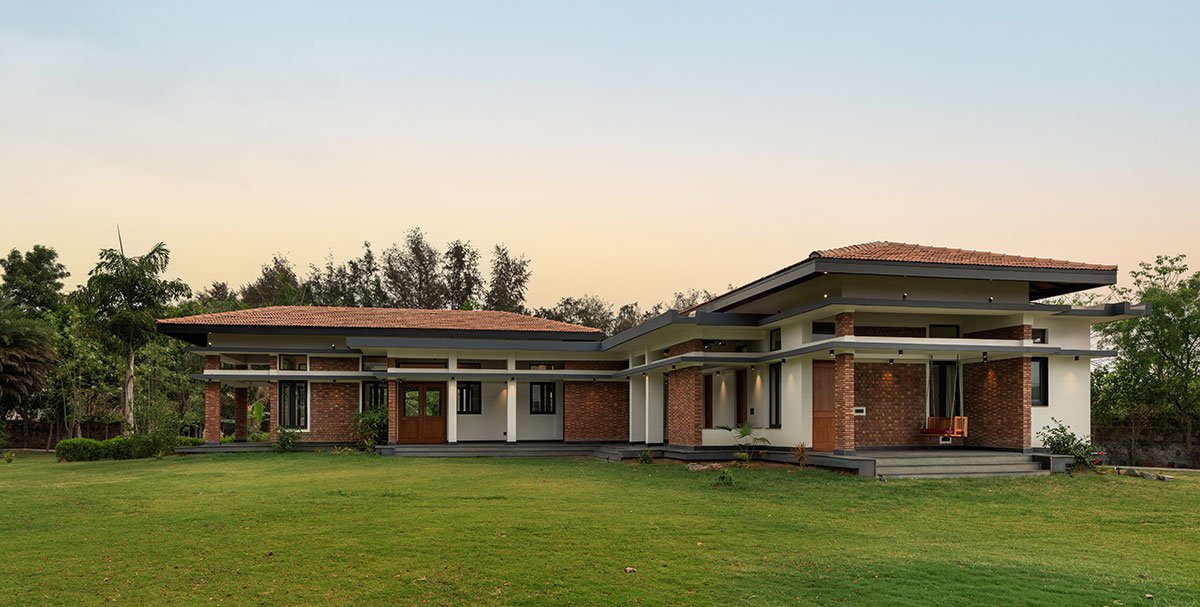
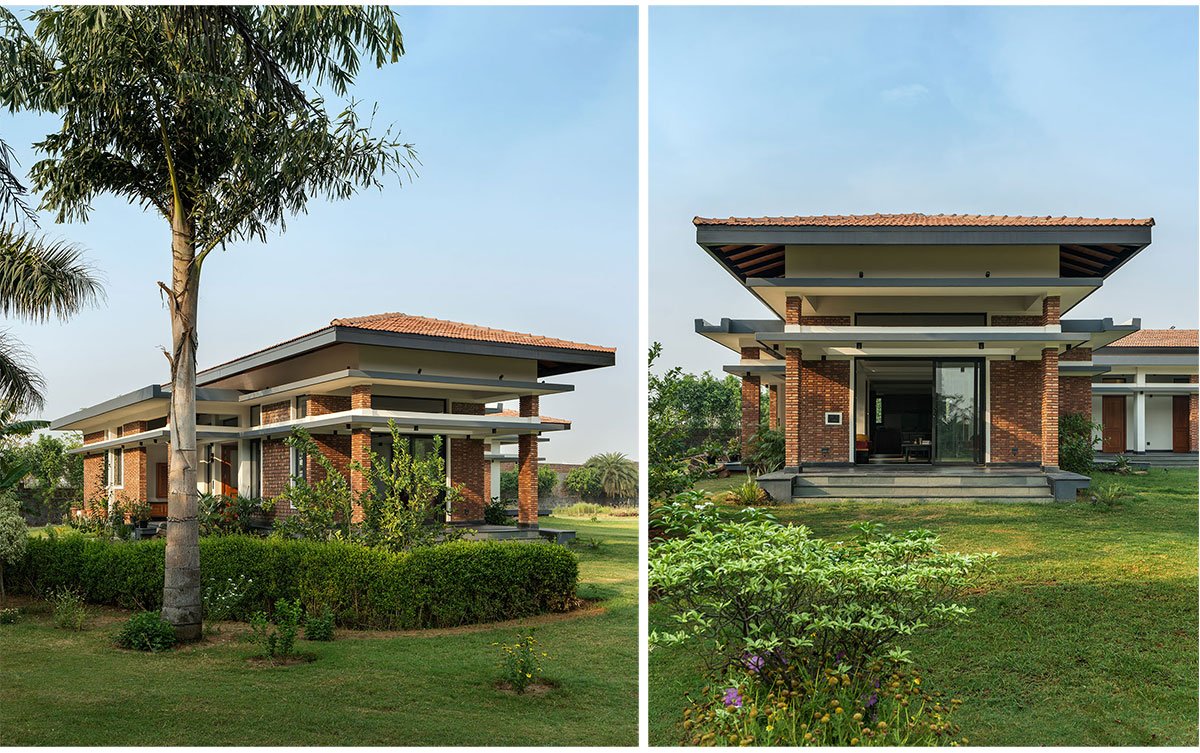
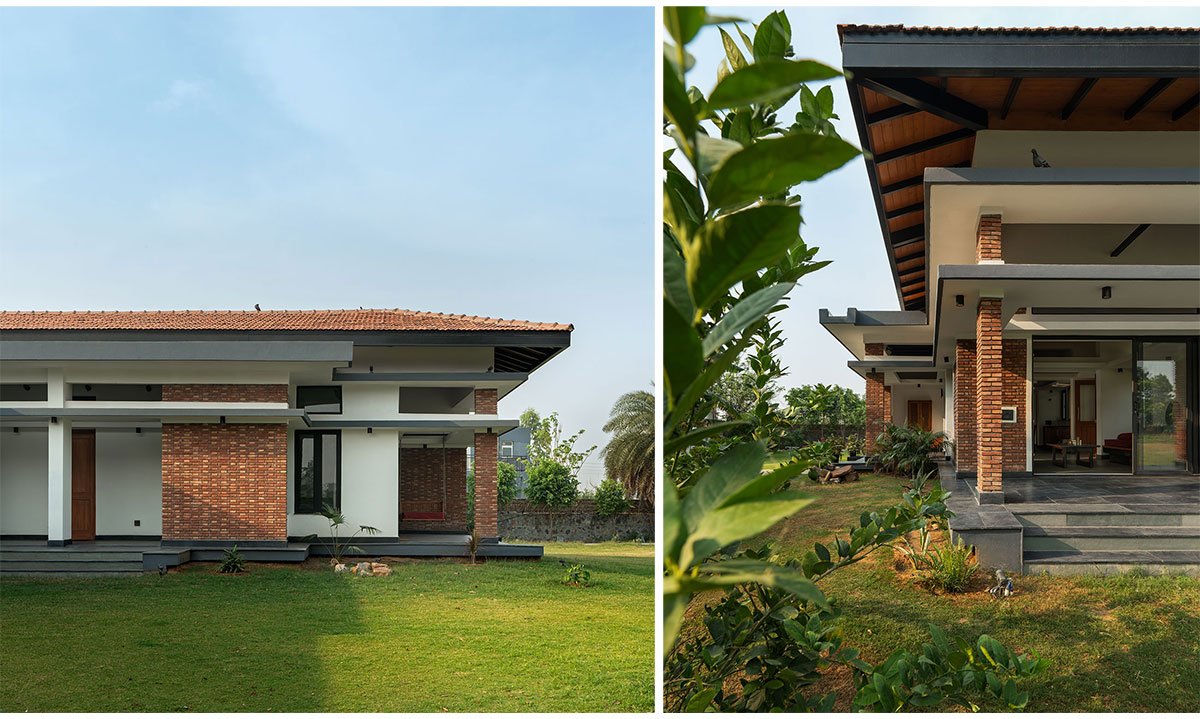
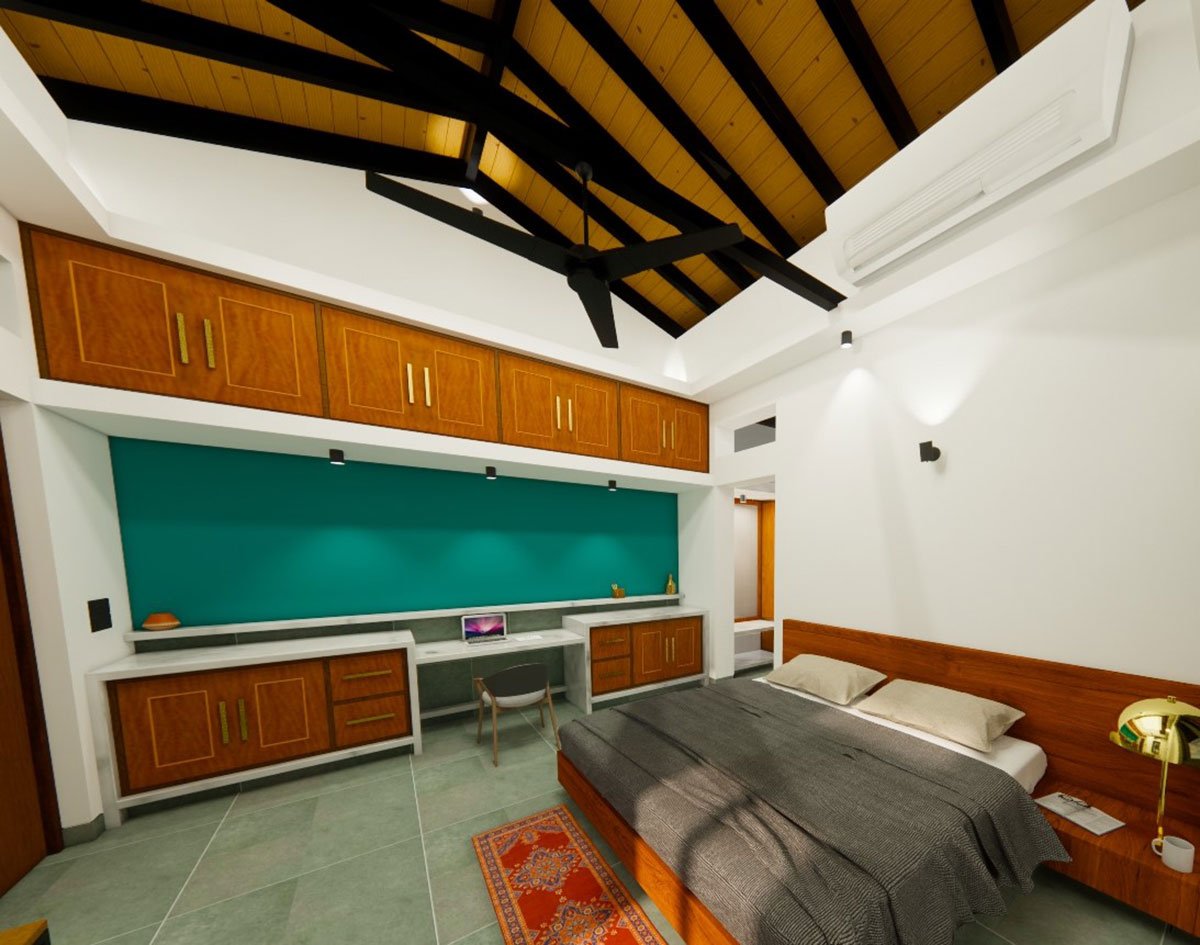
Exposed local country tile brickwork was used to avoid additional costs of plaster and paint. The entire building is sheltered by two independent four-way pitched roofs to allow for larger interior volumes of slender linear spaces. Verandas on all sides have been crafted by deploying the traditional technique of using stone slabs resting steel girders to omit the need of expensive concrete shuttering and scaffolding apparatus during construction. Ventilators above doors and windows allow for hot air to rise and escape outwards to keep the interior naturally cool via solar passive technology.
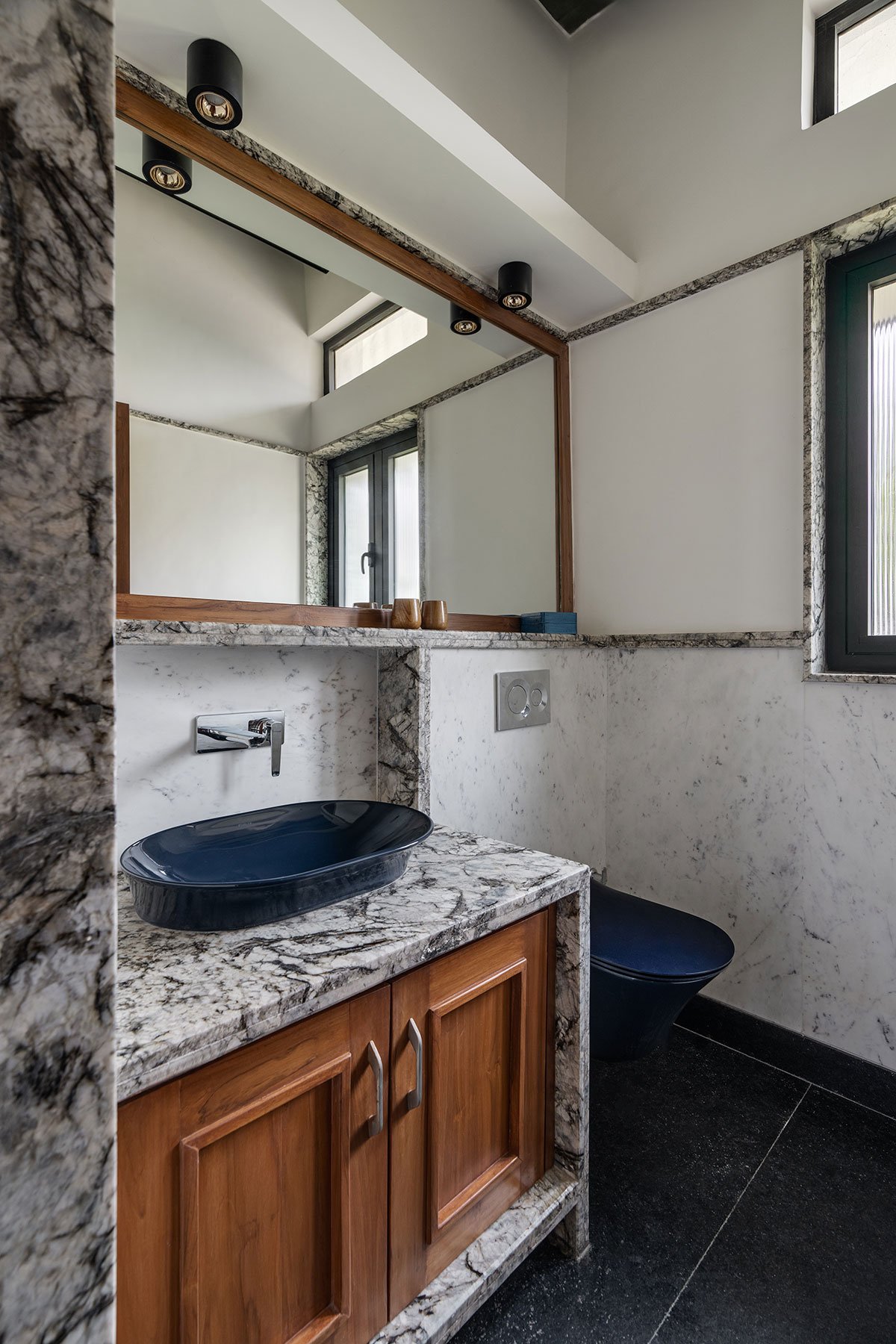
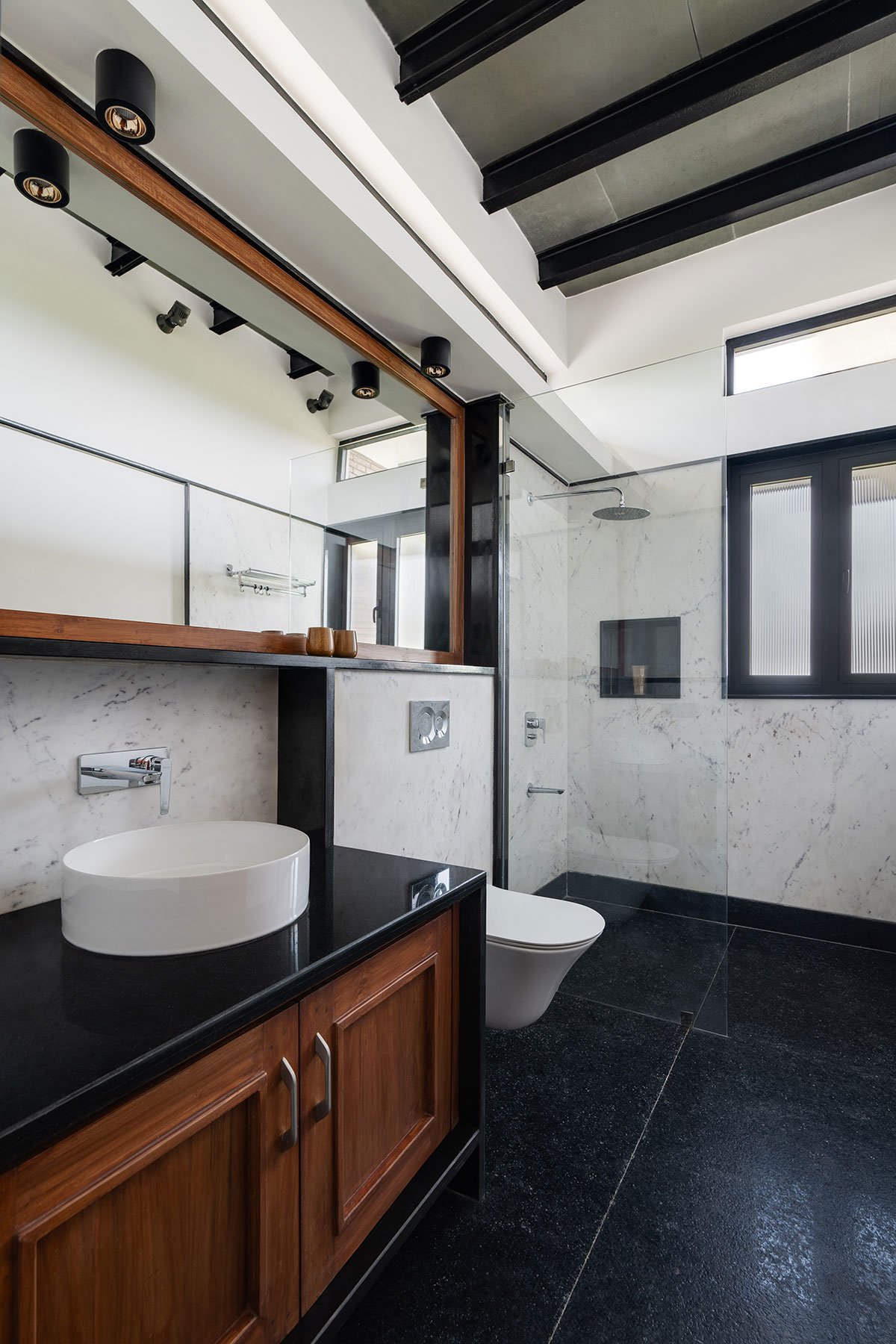
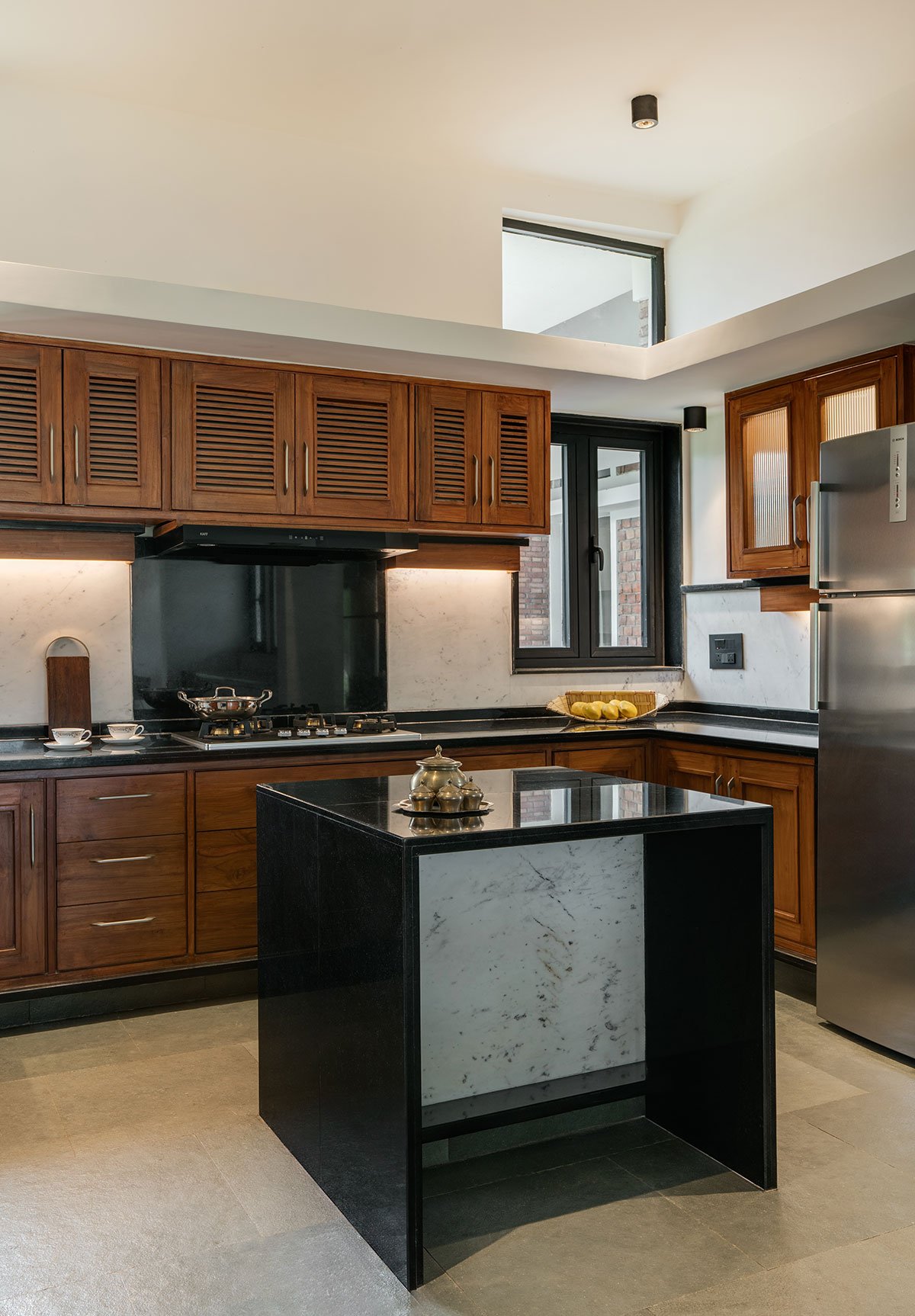
All walls are thick load bearing structures that provide insulation to interior spaces, while rough natural stone complemented with built-in marble and granite furniture and utilities, have been extensively used throughout the building. Continuous lintel level projections provide ample overhead storage space for farm produce and pickling jar collections to preserve foods.
Drawings & Renders




Images