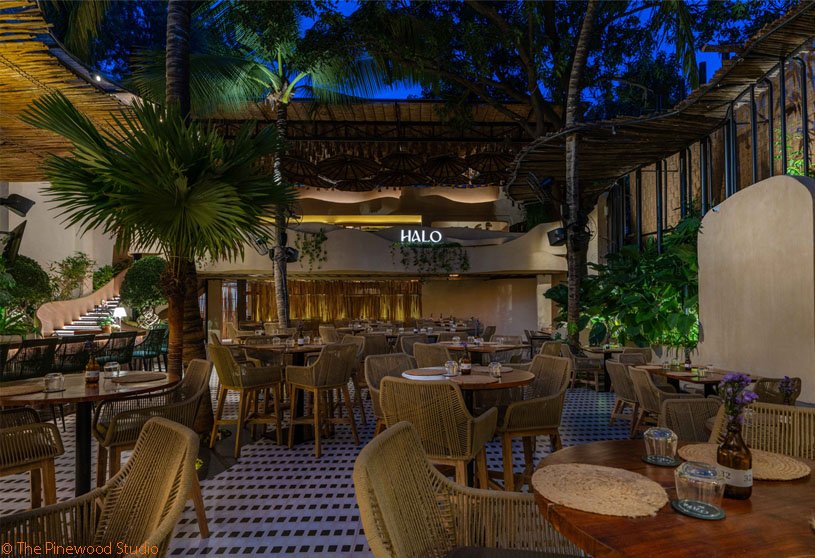
Excerpt: Halo by The Pinewood Studio is envisioned as a tropical refuge where you walk in and the city slips away. Designed as a Goan beach club–inspired restaurant, the outdoors is not an accessory but a living, breathing experience. Flowing planter boxes, layered palms, and cascading creepers blur architecture and landscape, creating an immersive green world that envelops visitors and transports them into a relaxed, warm, and timeless environment within the city.
Project Description
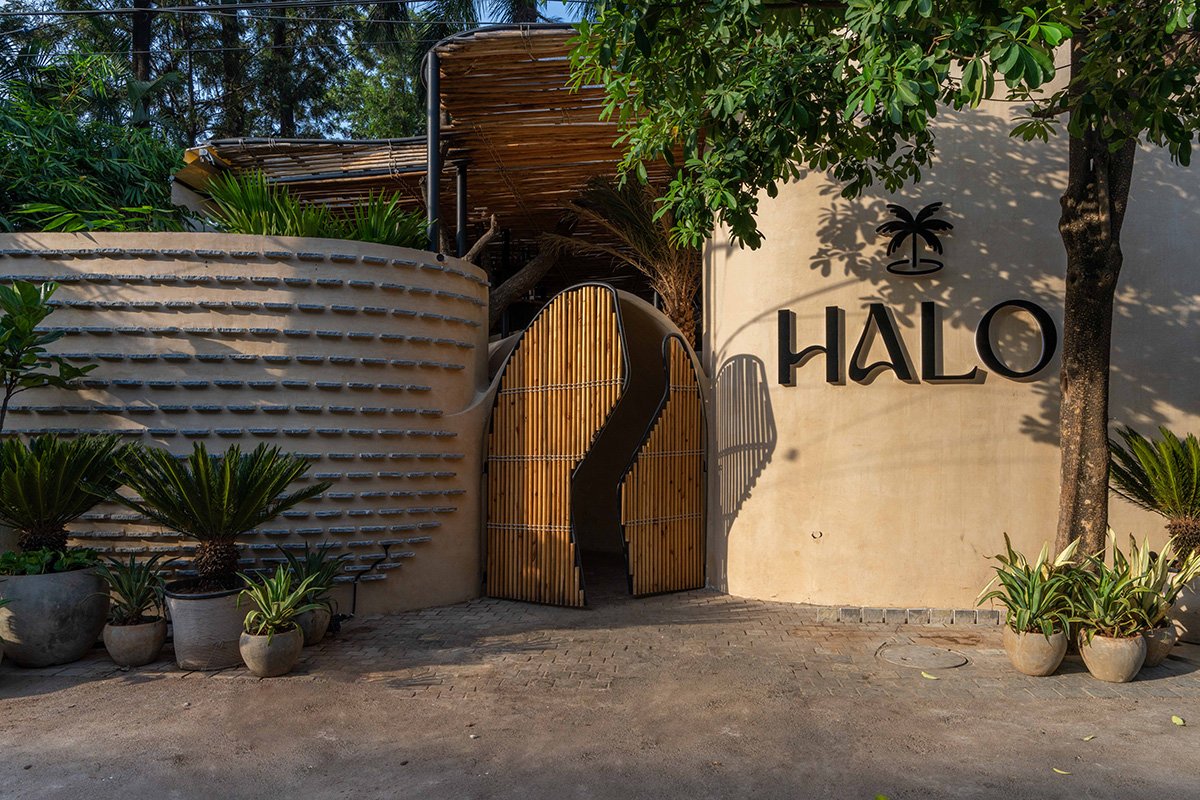
[Text as submitted by architect] “You walk in and the city slips away. The bustle of Jubilee Hills becomes a distant memory, and you’d pause to think that this is the gateway to somewhere tropical, somewhere green and warm,” recalls Meghna Dulani, Founder at The Pinewood Studio. At Halo, an 8000 sqft restaurant, this shift is almost theatrical. A dome greets you at the entrance, but what lies beyond isn’t formality. It’s the flow. Planter boxes unfurl like rivers through a sea of people, palms rise overhead, and creepers are already finding their way down from the roofline. The outdoors isn’t an accessory, rather a refuge that pulls the visitors into another world.
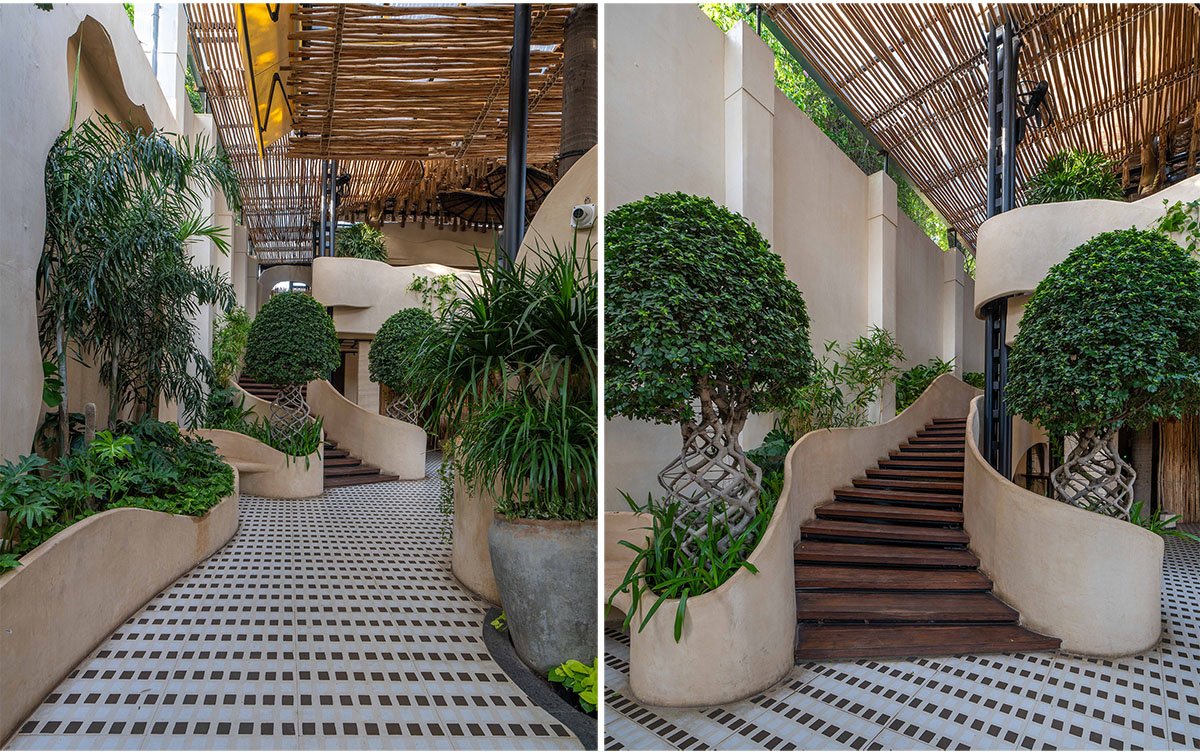
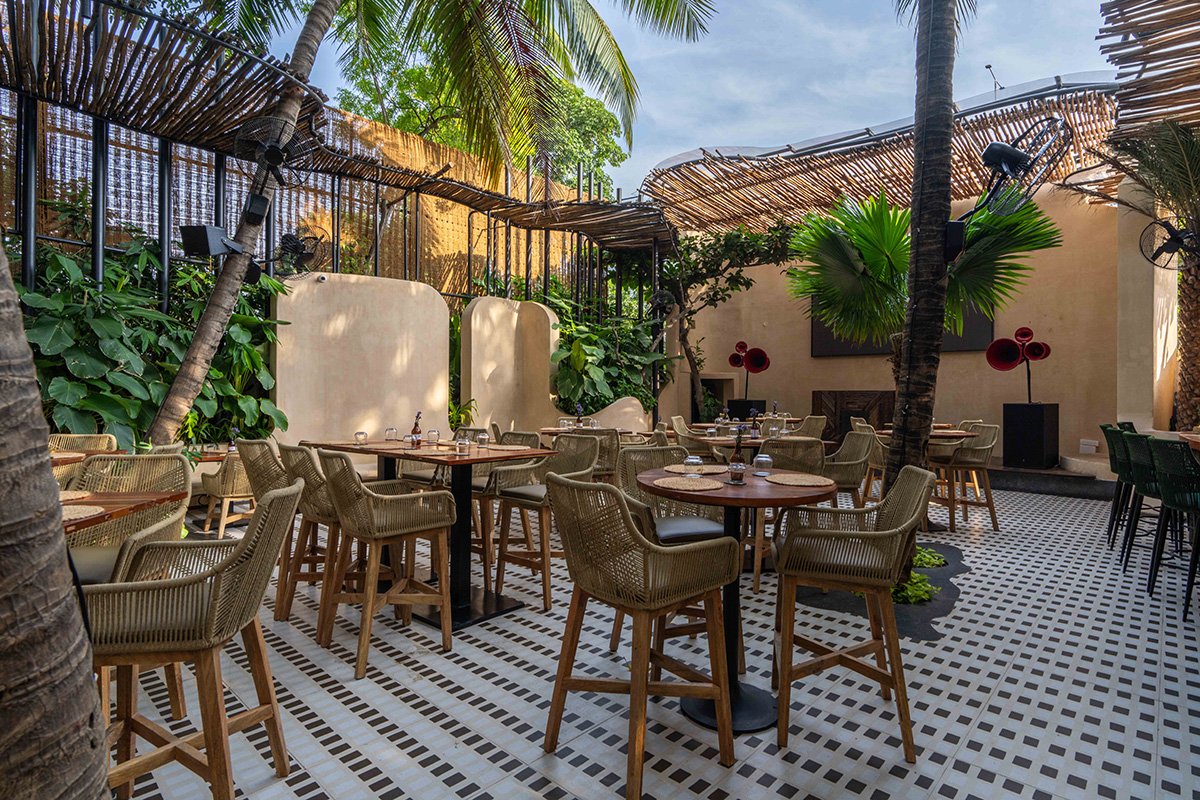
This vision came from architect Sandeep of CFT Studio, who imagined the outdoors as a tropical refuge, evoking the relaxed energy of a Goan beach club. The Pinewood Studio translated it into a layered, immersive planting strategy that lets the landscape move and breathe around visitors. Lecula grandis, table palms, raphis palms, and Calathea luthea rise in a structured yet abundant canopy, providing shade, rhythm, and scale. Hanging money plants punctuate the space from above, casting shifting shadows and adding a subtle sense of motion, while pockets carved into benches and walls allow greenery to emerge unexpectedly, so the architecture itself seems to come alive with plants.
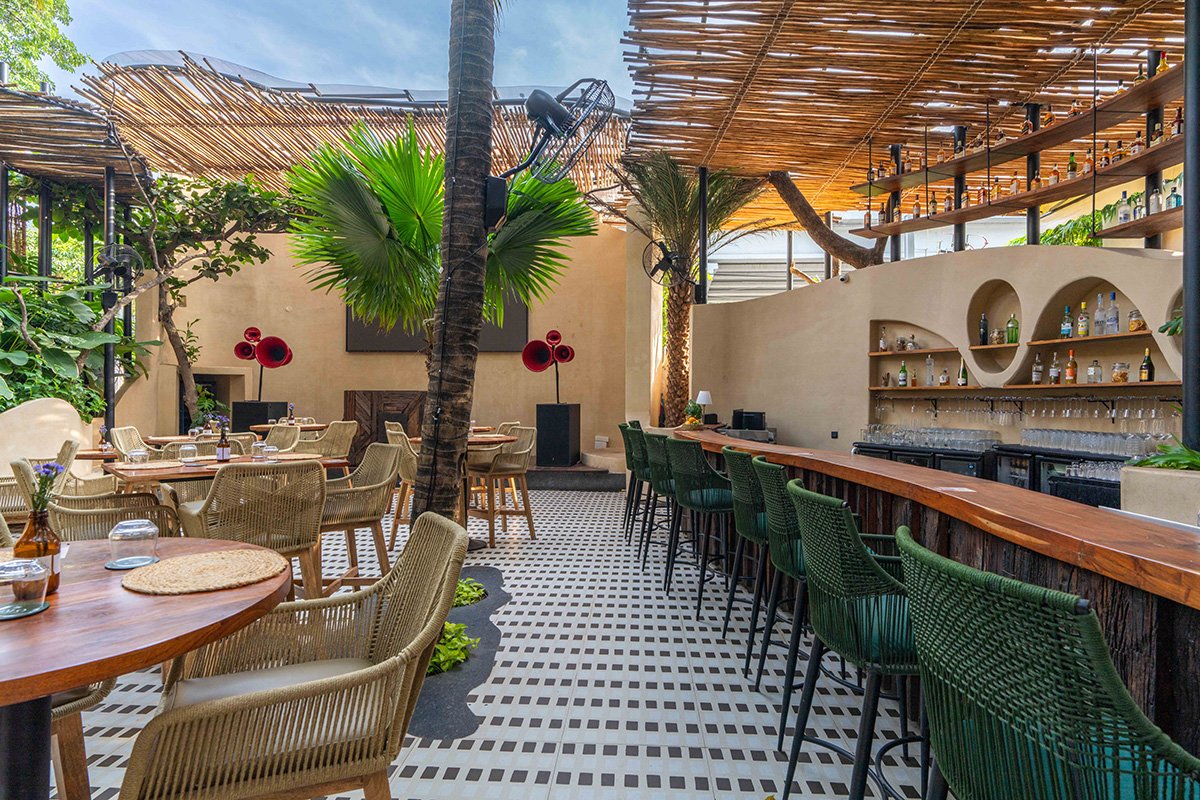
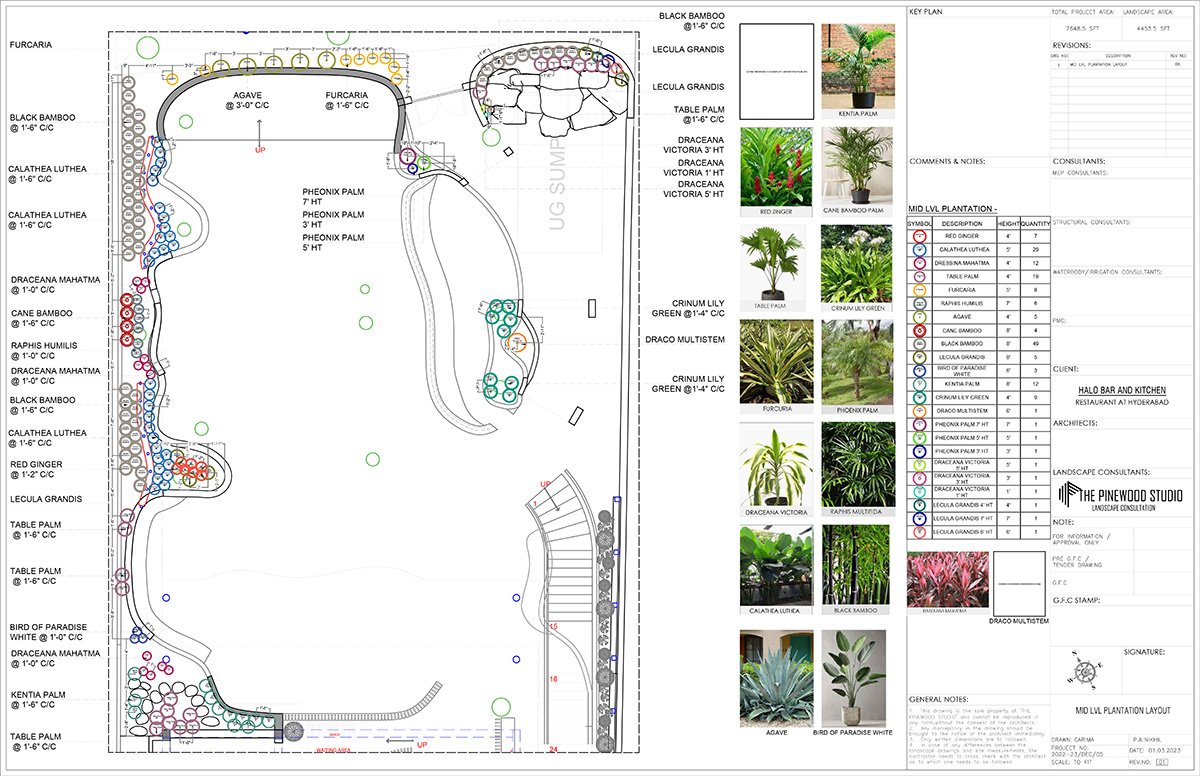
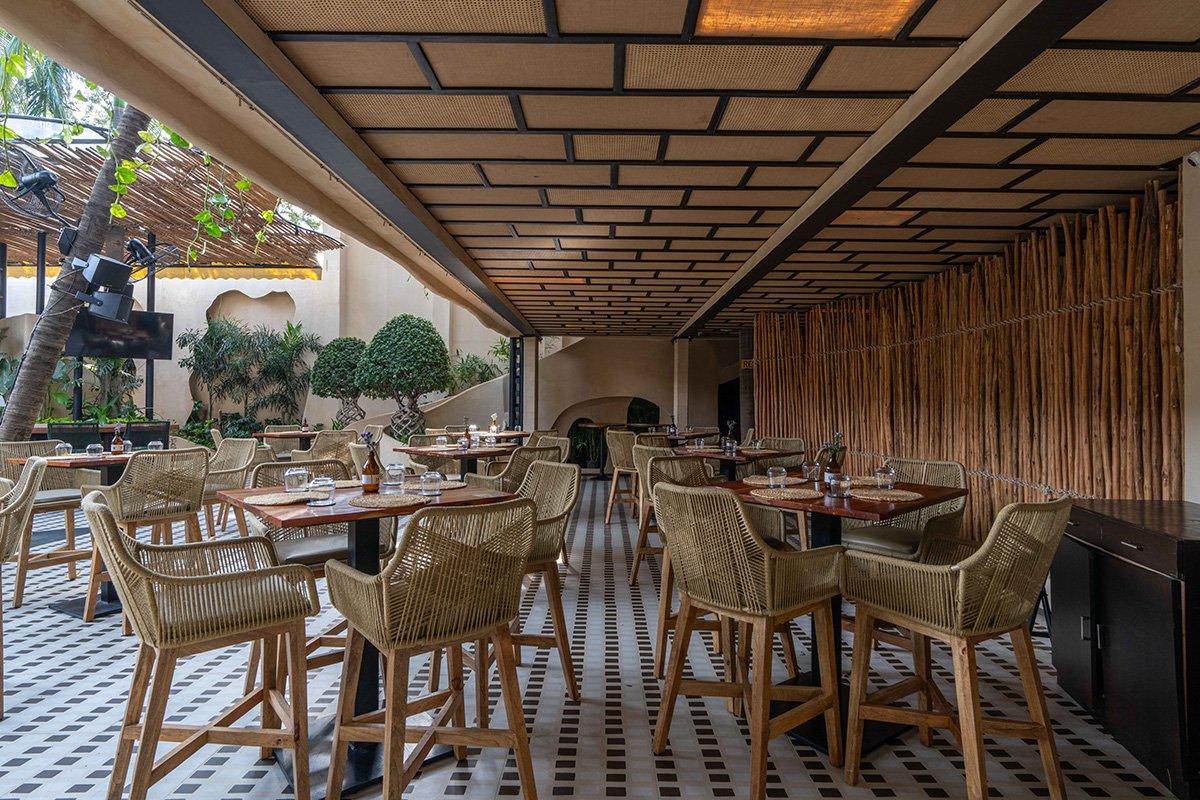
Materiality reinforces the escapade. Bamboo and thatch frame the pathways and seating areas, their textures brushing the eye and drawing the visitor deeper into the landscape, while lime plaster provides seamless continuity between floors, walls, and planting beds. Existing coconut trees were preserved, becoming anchors within the new layout and giving the planting a sense of age and rootedness. Even narrow corners and paths feel enveloped in greenery, letting the city outside fade almost entirely from view.
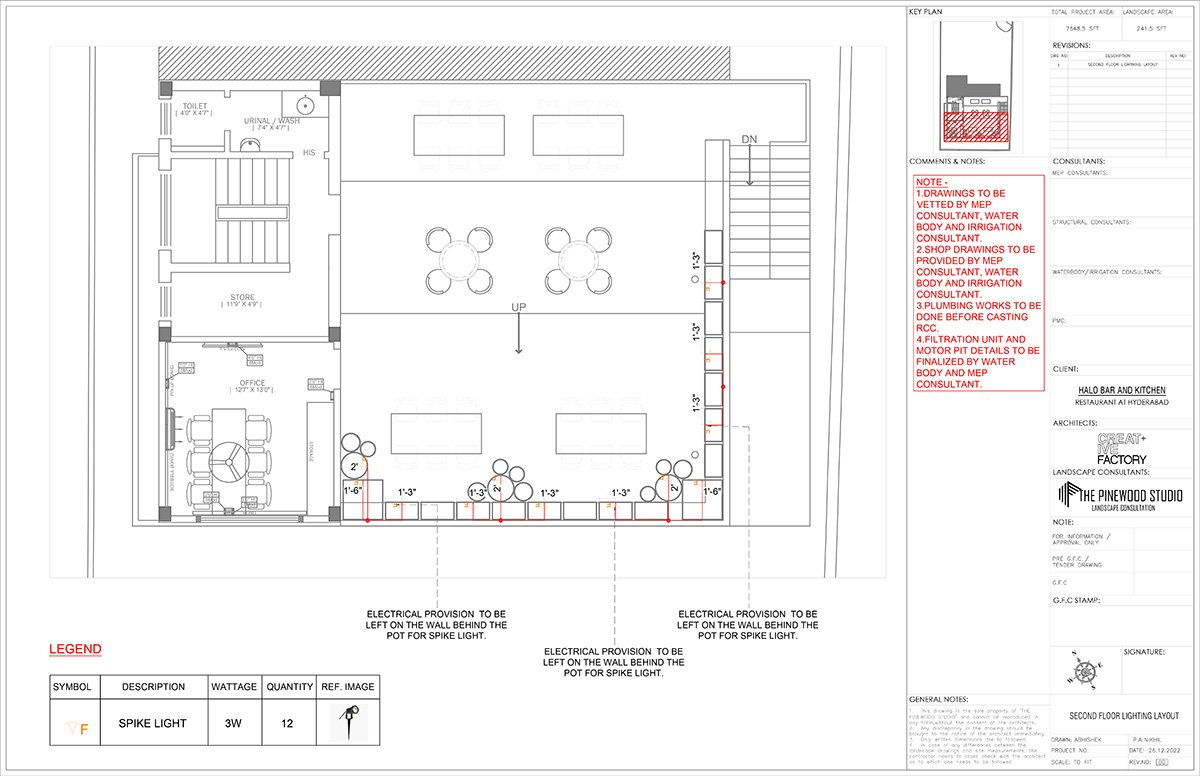
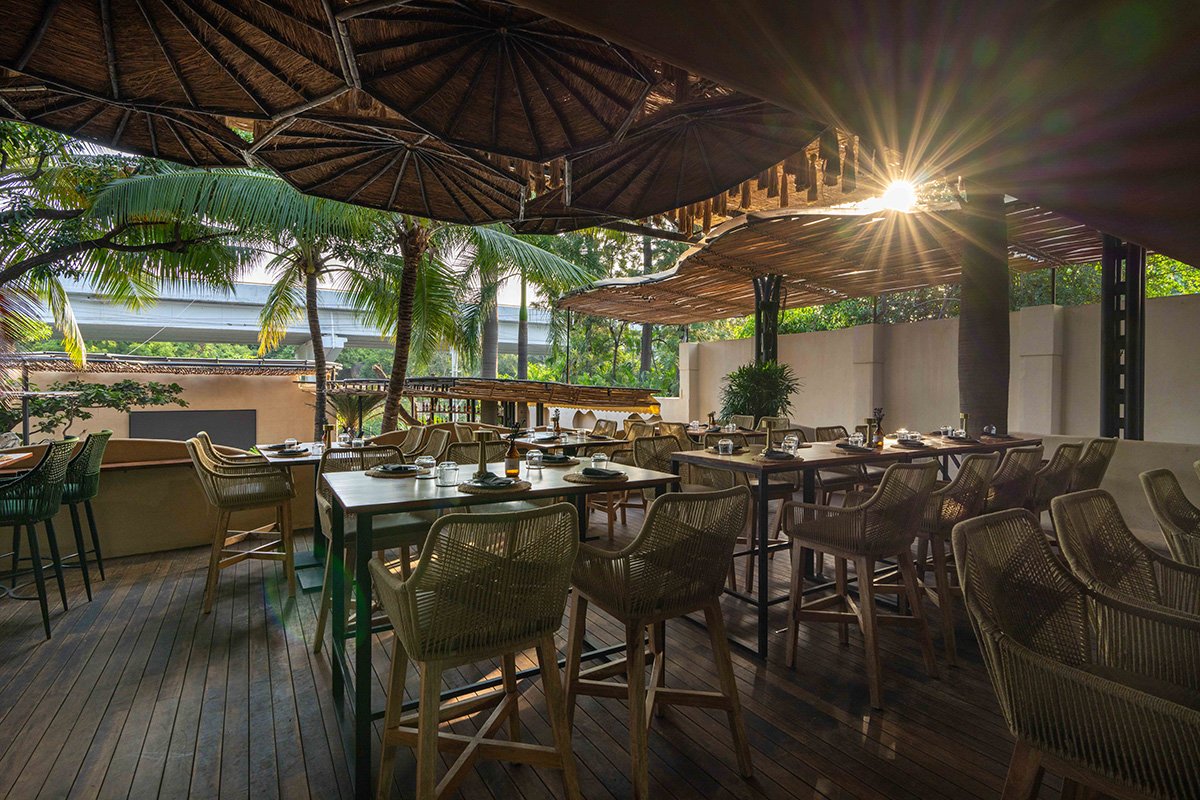
Details punctuate the experience. A cave-like passage, initially rigid and sculptural, was punctured to let plants grow through its openings, softening its mass and offering unexpected moments of discovery. Creepers planted along the roofline will, over time, drape and cascade, deepening the sensation of walking through a living, breathing tropical canopy and heightening the sense of immersion with each visit.
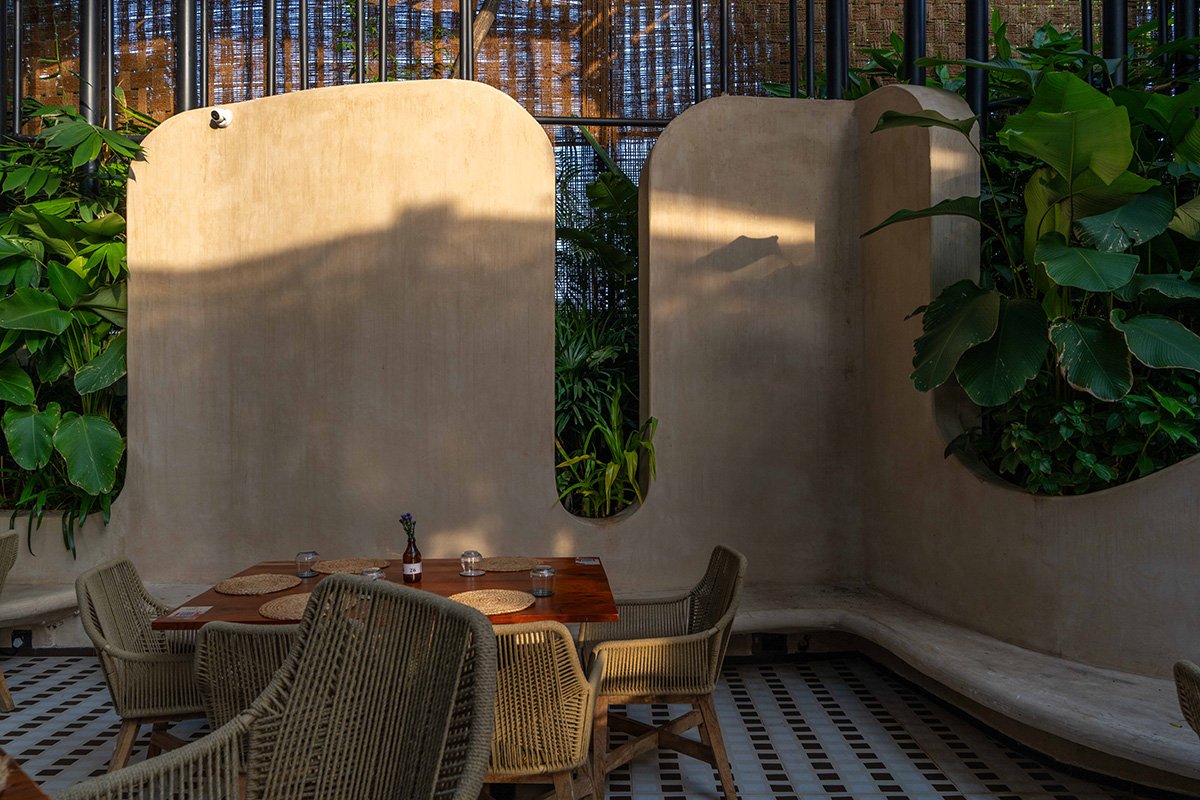
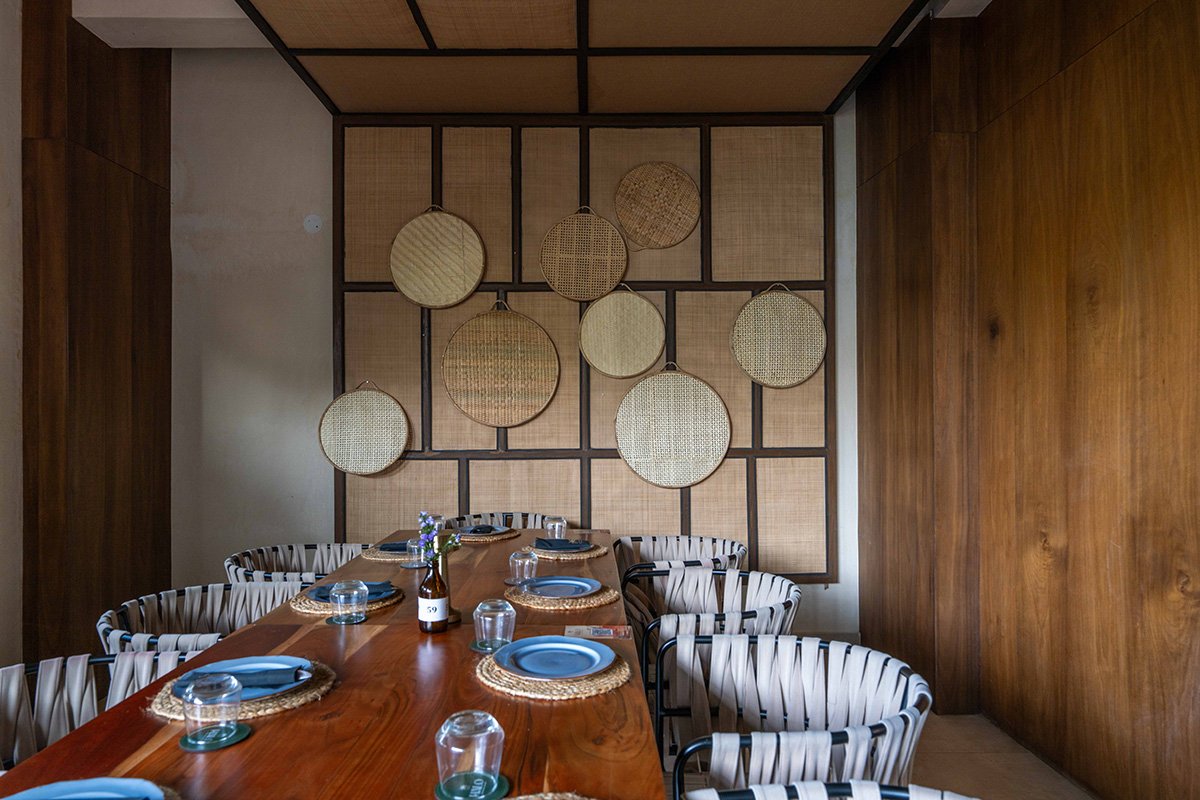
The collaboration between the architect and landscape was blurred. “We worked closely with Sandeep on entryways, seating, and plant walls. It wasn’t a handoff. From the start, it was a shared vision, unfolding together,” recalls Shashwat Gehenwar, Founder at The Pinewood Studio. Every decision, from the scale of palms to the placement of pockets for planting, was guided by the intent to transport visitors, to make them feel enveloped in greenery while still within the city.
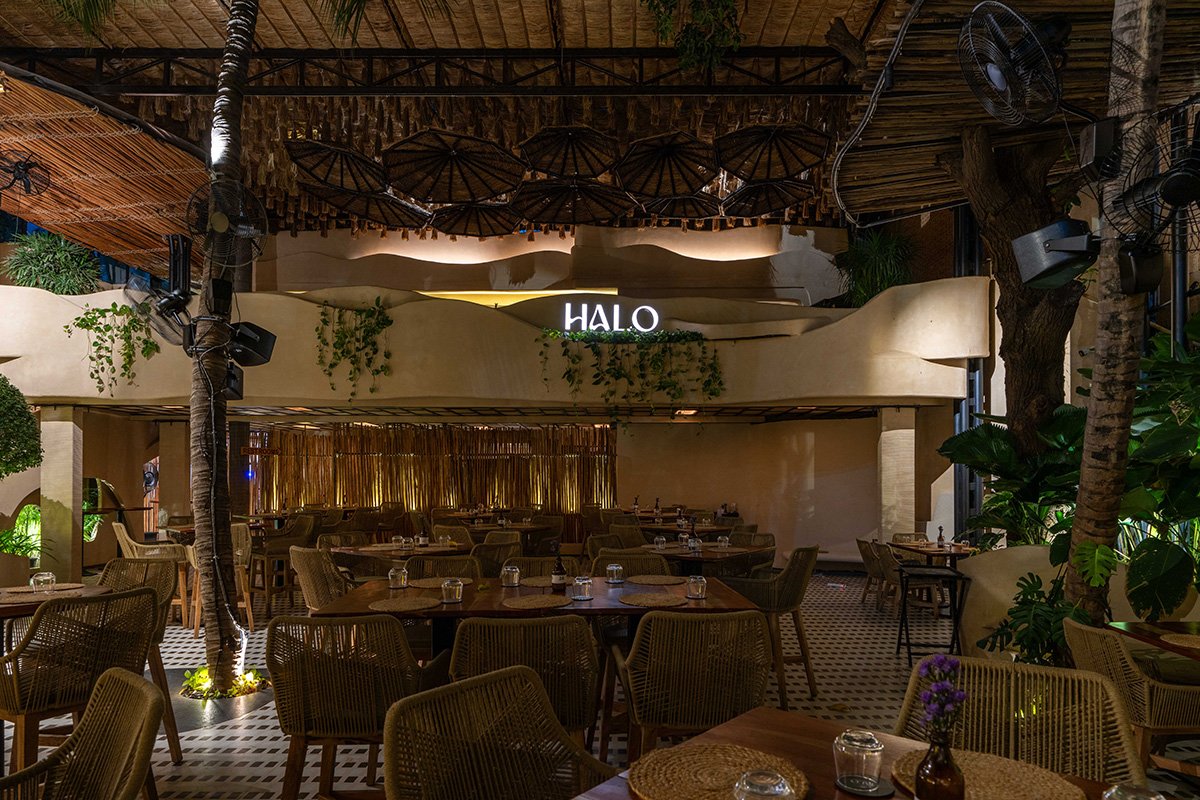
Halo’s landscape is designed to grow into itself. Over time, the palms will spread, vines will tumble, and pockets of greenery will thicken, amplifying the tropical effect. Stepping into it feels like holding a passport to a tropical retreat: the city fades, palms sway above, vines spill with gentle drama, and the air itself seems to carry a different rhythm. Shaded pathways, unexpected bursts of greenery, and layered planting reveal themselves gradually, each moment designed to linger in memory. And when the city inevitably returns, the sense of being elsewhere, in a Goan inspired escape remains, tempting visitors to return again and again.
Drawings


Images


