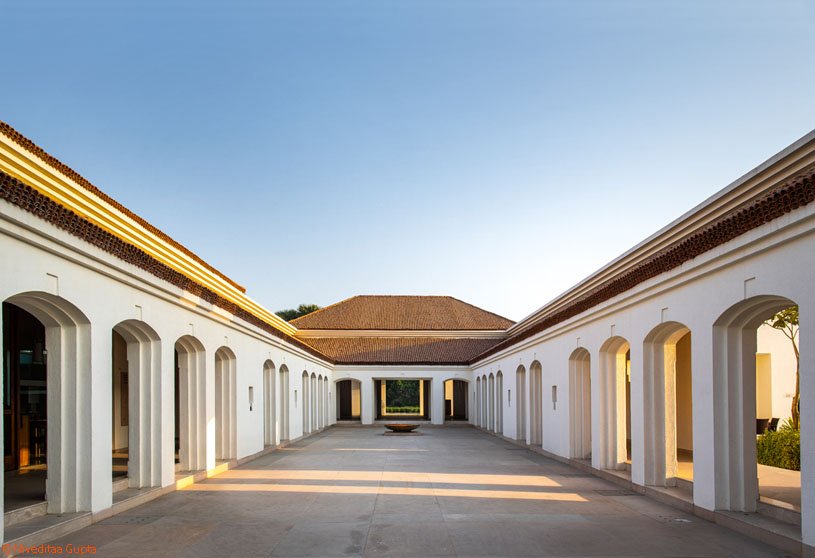
Excerpt: The hotel at Bodhgaya by SJK Architects is designed to serve tourists in the holiest city for Buddhists, invoking memory and emotion to create immersive architecture embodying Buddhist tenets. Traditional features, gentle transitions, and a serene palette evoke simplicity and compassion, while Buddhist philosophy and symbology guide wayfinding to shape a tranquil, meaningful experience rooted in place.
Project Description
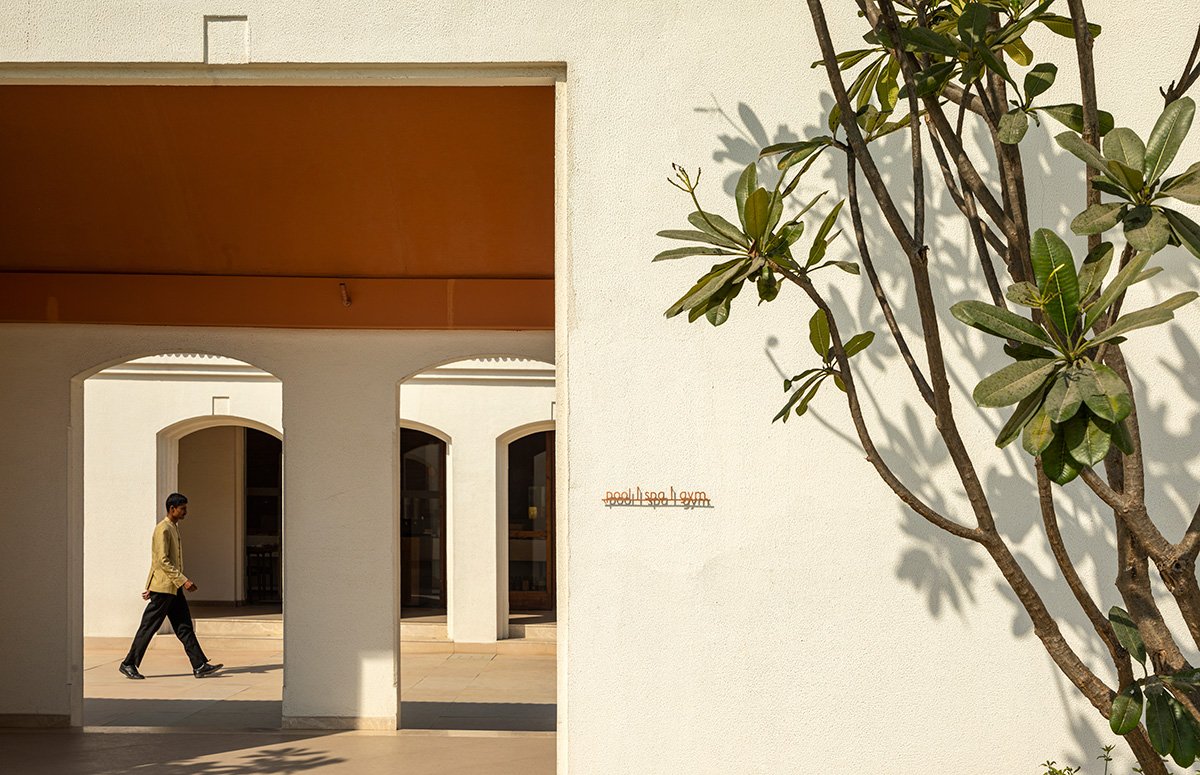
[Text as submitted by architect] Designed to serve tourists in the holiest city for Buddhists, the Hotel in Bodh Gaya uses the power of memory and emotion to create immersive architecture embodying Buddhist tenets.
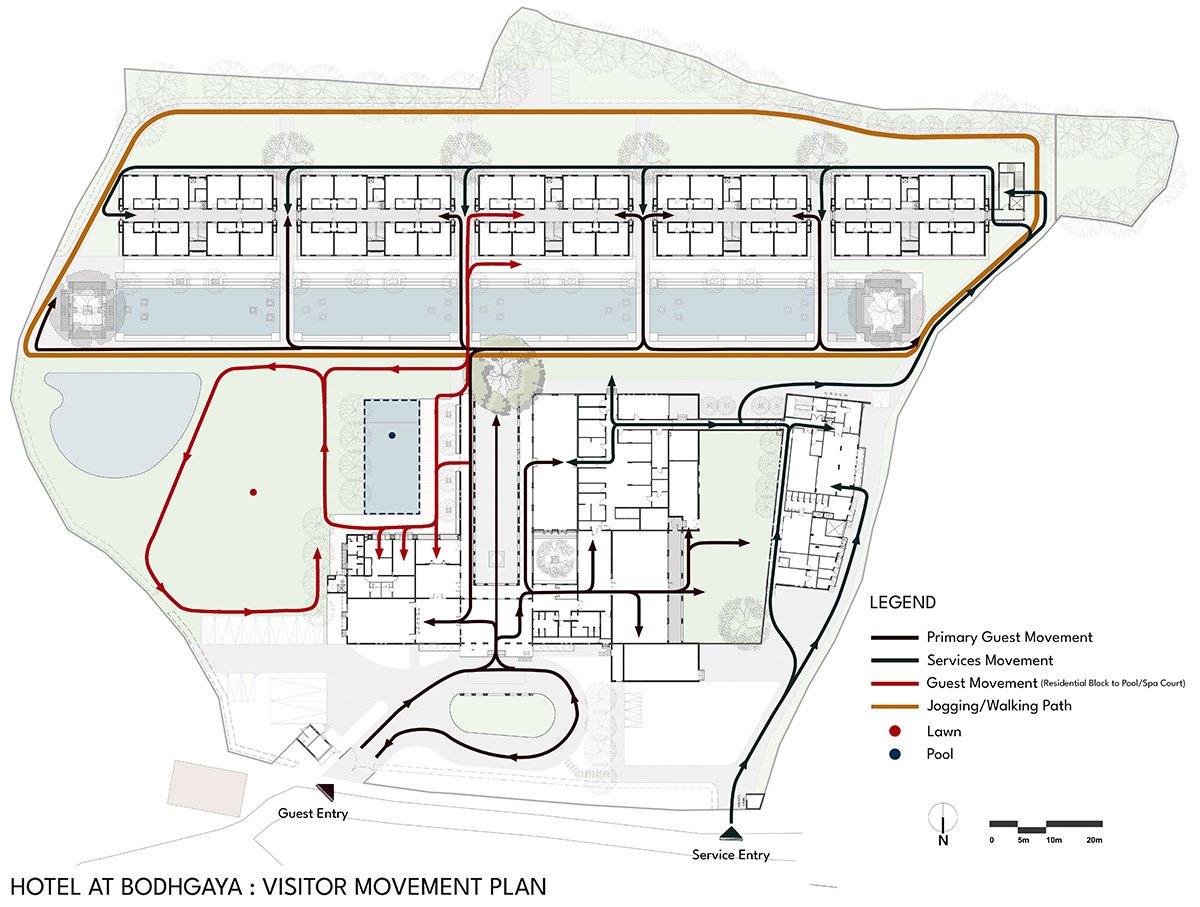
Spread over 5 acres, the 78-key hotel consists of two key zones—the public block closer to the northern access road and the guest block on the site’s southern end. All vehicular movement is restricted to the site periphery.


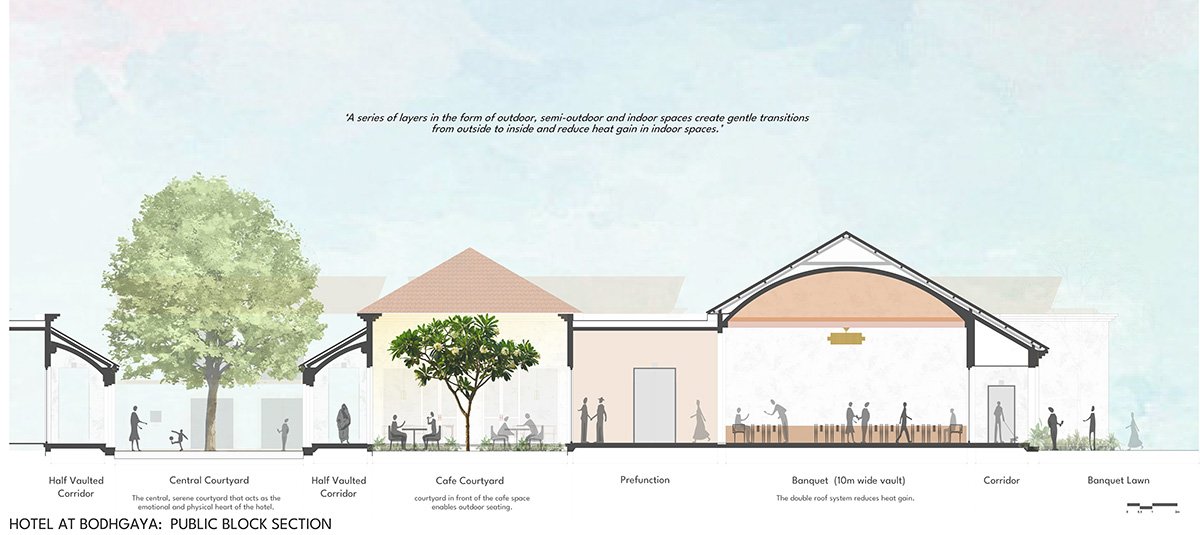
Invoking Memory and Emotion: Each space in the hotel represents the tenets through two key architectural lyrics—memory and emotion. Memory is invoked through traditional features of Buddhist architecture, such as vaults, corbelled arches and stepped jambs. Gentle, layered transition spaces, a humble scale, and a soothing colour palette of muted whites and warm terracotta help convey simplicity, compassion, and serenity.

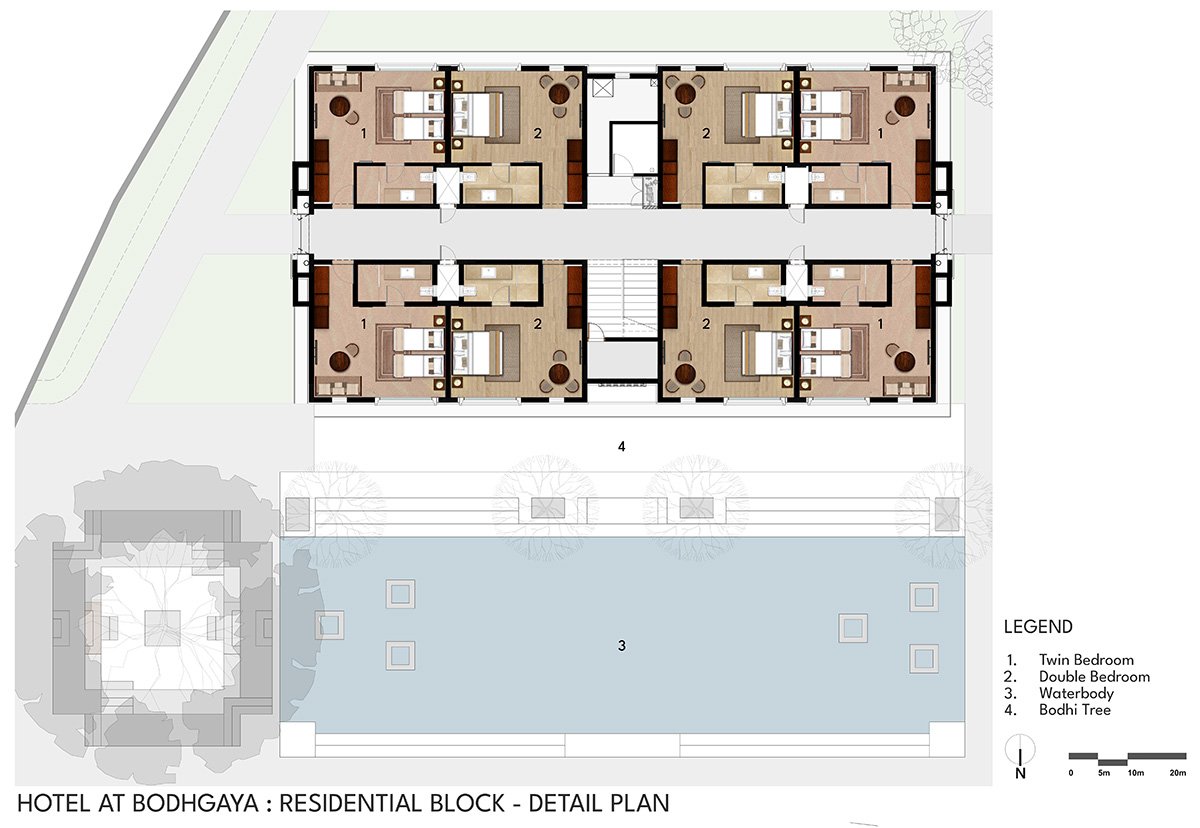
Buddhist Philosophy and Symbology as a Tool for Wayfinding: Ideas from Buddhist philosophy are translated into the interiors, artwork and signage to ease navigation. The interiors of the five public spaces correspond to the colours, seasons, elements and symbols associated with the five wisdoms in the Buddhist icon of Vajradhatu Mandala. The residential blocks, located along the edge of the water body, are named after the 5 lotuses associated with the Dhyani Buddhas, symbolising tranquillity and peacefulness.


Collaborating with the Local Community: The architects collaborated with 26 local families in 12 villages near Bodh Gaya to handcraft 80,000 clay tiles, which insulate the vaulted ceilings, helping support the local economy while lending the project an earthy, crafted visual appeal. This approach is cheaper and far more sustainable than industrial insulation alternatives.

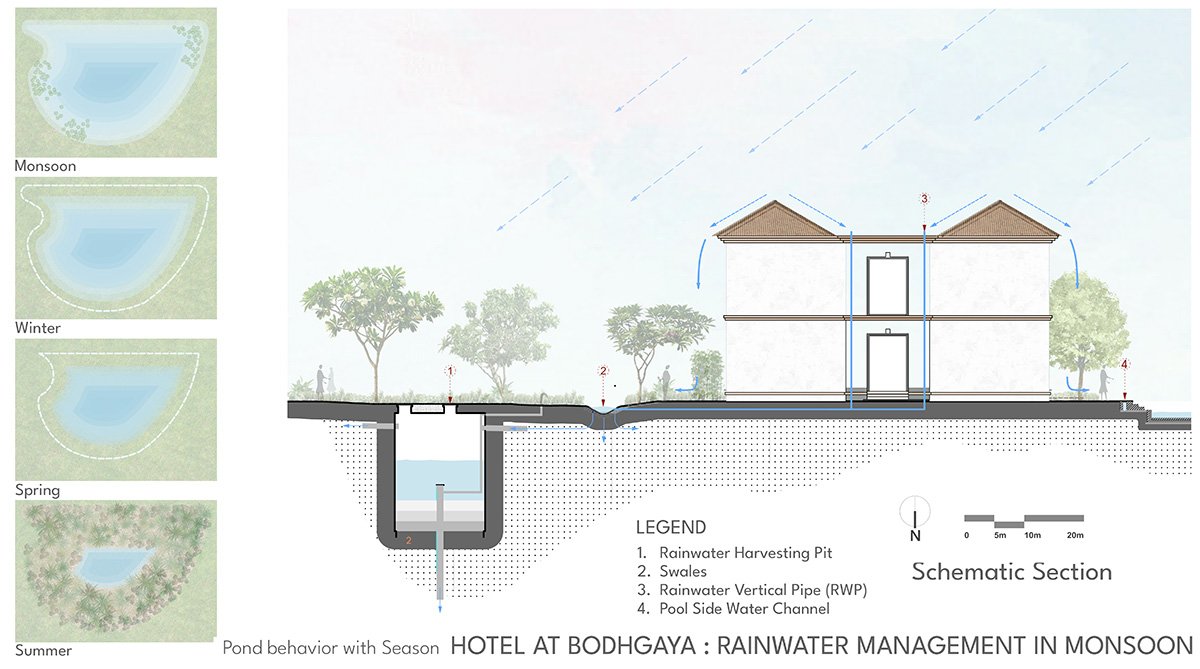
Passive Design Strategies to Regulate the Local Microclimate: Residential blocks are oriented north-south to reduce heat gain; the use of aerated concrete blocks, double-glazed windows, and a double roof system creates a well insulated envelope; and the integration of courtyards facilitates natural ventilation—offering thermal comfort while reducing energy consumption significantly. Furthermore, an extensive water management system is designed to harvest rainwater as well as prevent seasonal flooding.
Drawings




Images


