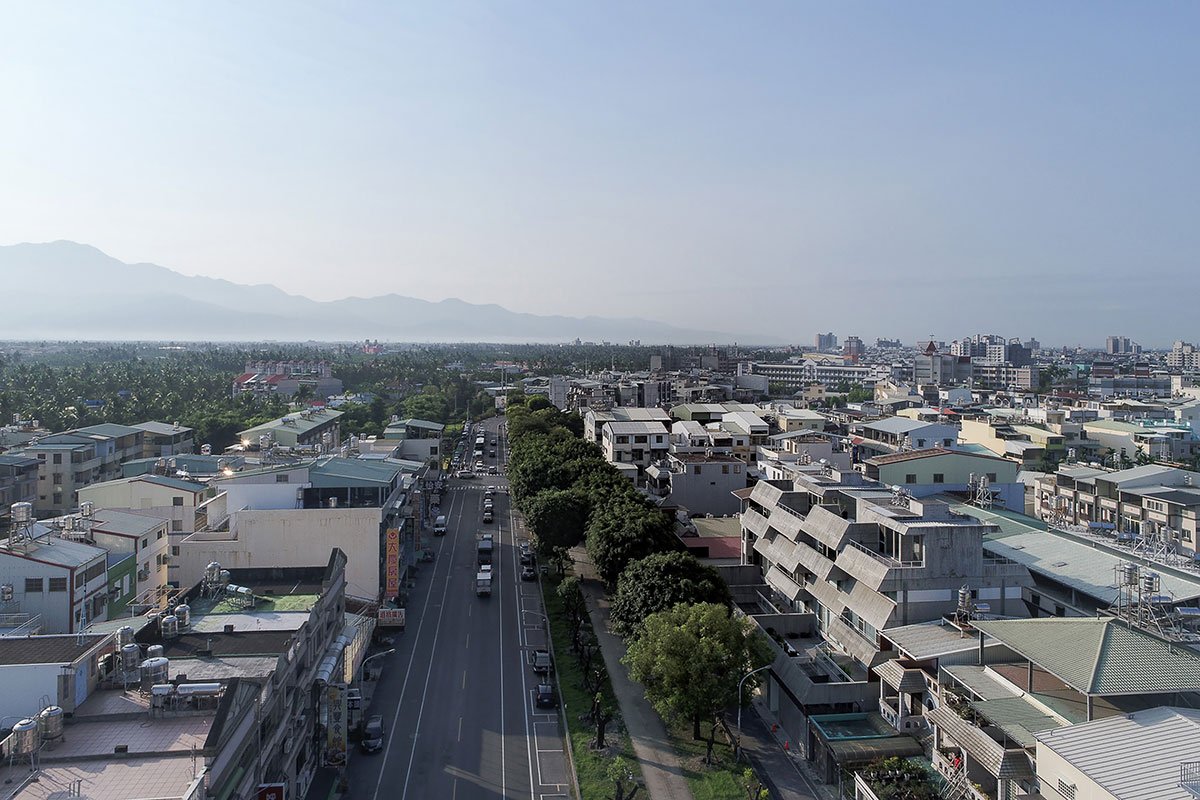
Excerpt: House of Roofs by Behet Bondzio Lin Architekten features stacked and shifted terraces that create shaded zones between interiors and exteriors. By shielding interior spaces from heat and rain, these overhangs enable residents to efficiently cool their rooms through cross ventilation. Additionally, they offer shade for a healthier living space and, with moving canopies, promote communication between floors and units.
Project Description

[Text as submitted by architect] We can often recognise from a region’s roofs how its architecture has developed to adapt to its natural conditions and culture. The ordinary buildings in Pingtung exhibit a wide variety of roof structures to deal with the volatile weather conditions which average 30-34 degree celsius temperature during most of the year and a tropical wet climate all year long.


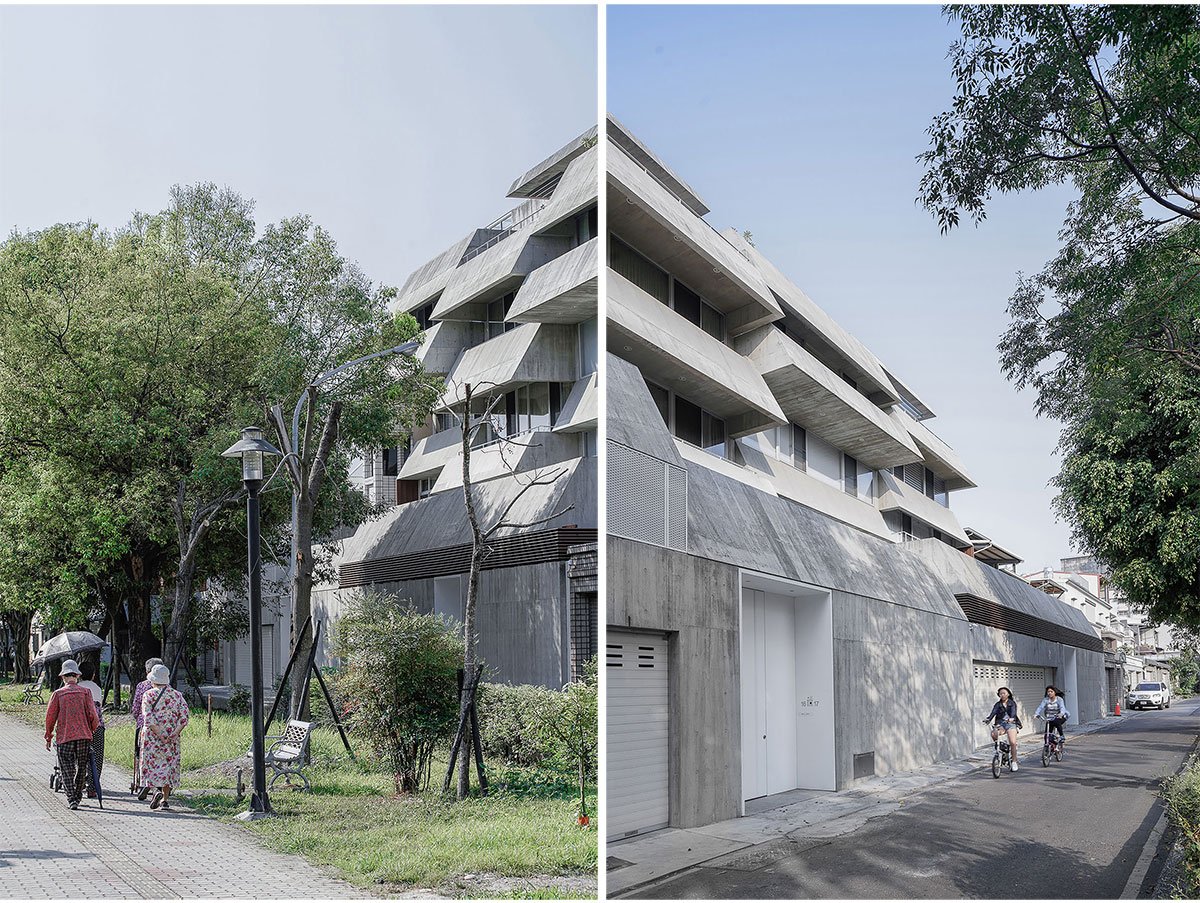
Community life is enjoyed mostly in shaded zones between interior space and uncovered streets. It takes the form of loggias, canopies, tree foliage, pavilions and temples. The omnipresent additive temporary metal roof structures might seem unauthentic, yet they are true to a regional building solution that is versatile, interchangeable and pragmatic. Located in the tropical region of the Pingtung Township at the southernmost tip of Taiwan, this building for 2 multi-generation families (each made-up of 8 units) unfolds in a long linear volume with 16 stacked and shifted roofs/terraces.

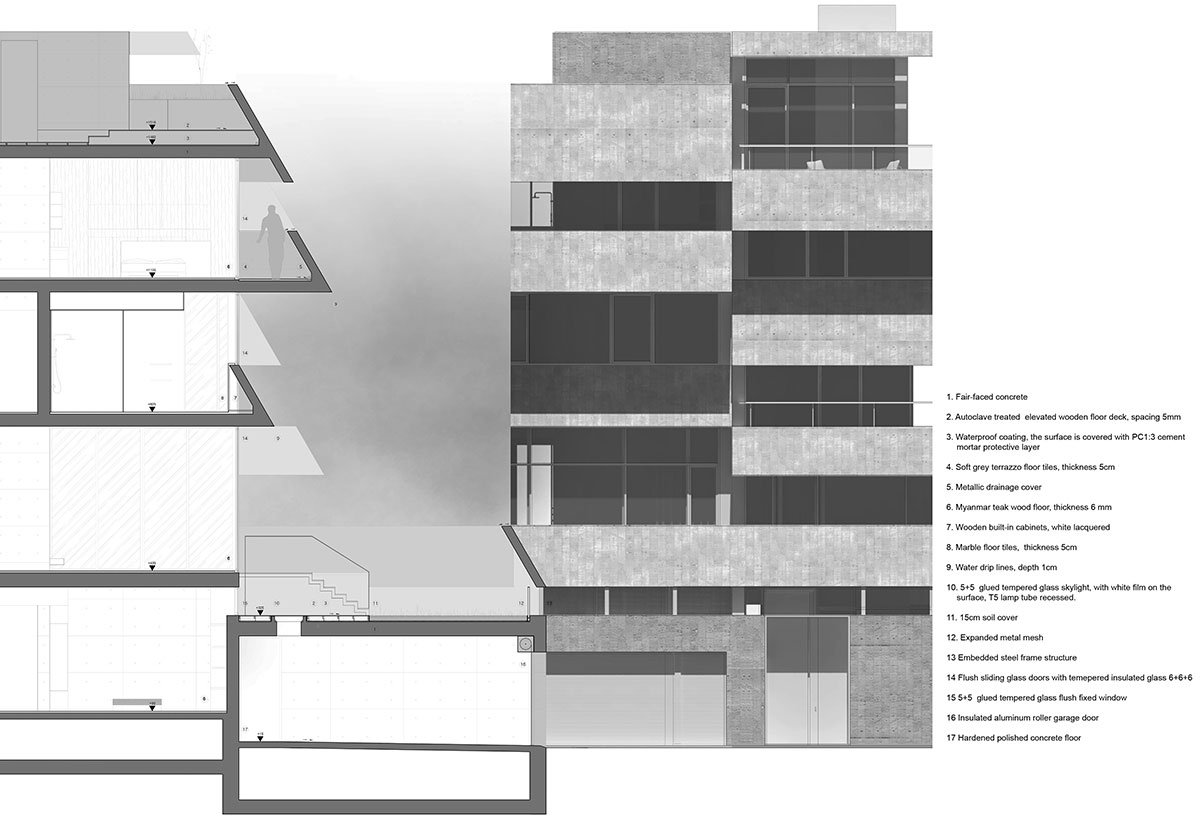


The shape, depth and light filtering of each individual overhang depends on the interior space behind it. Large living rooms have garden terraces on the ground floor. Master bedrooms above have terrace-gardens whereas reading rooms have large bay windows for great views but shade provided by deep overhang. Bedrooms are provided with green balconies while the TV room canopies only accommodate a ribbon window.
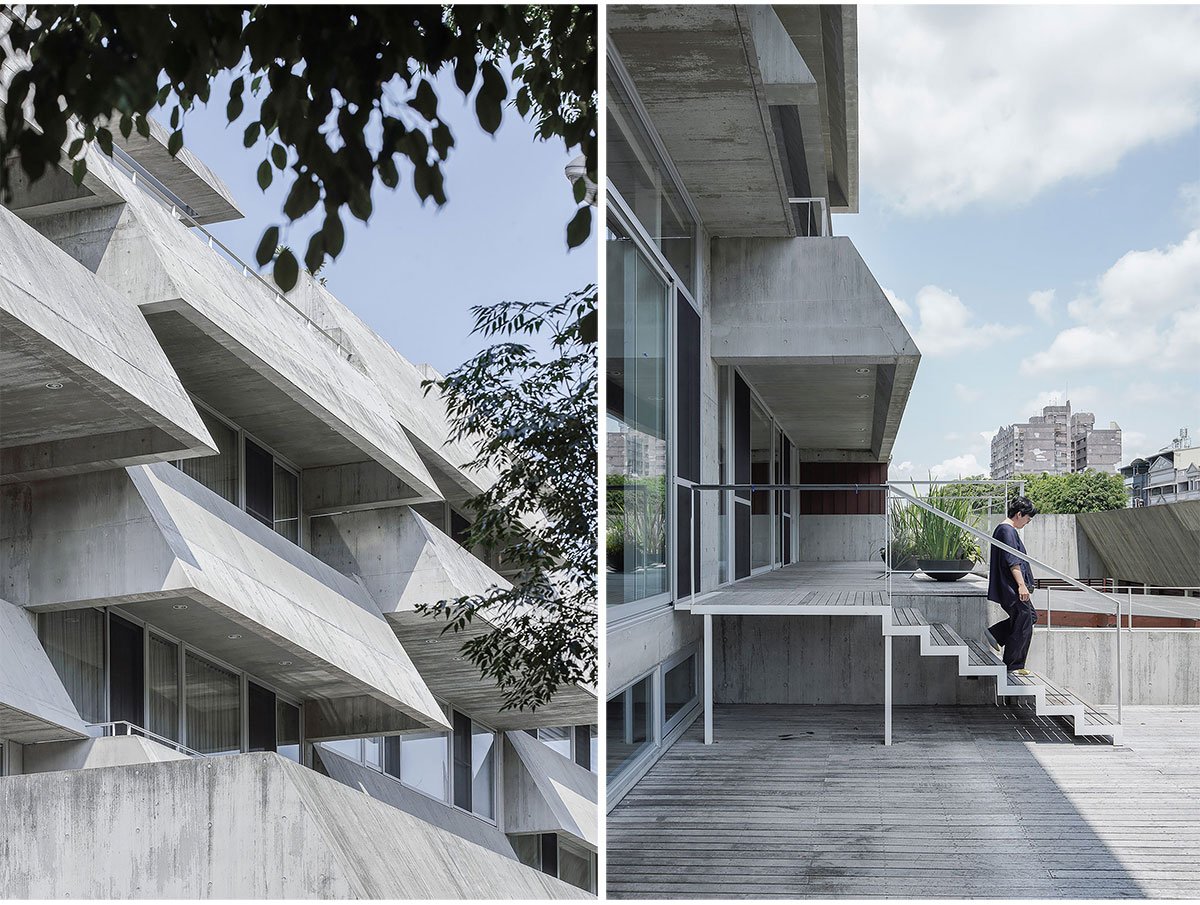

60 degrees is the most efficient slope for sun shading in Taiwan. Falling rain slides down from one canopy to the next all the way down to the garden, watering the vegetation and finally seeping down to the water collector that recycles the water back to the building.
The overhangs protect the interior from rain and reduce heat admission (further achieved by usage of white Portland cement). They also allow the inhabitants to open their windows anytime to let through cross ventilation and cool down the rooms.

In addition, it provides them with that precious shaded zone for a greener, healthier way of living. Finally, the shifting of these canopies encourages communication across the levels/units.
Drawings


Images